Category Archives: Agriculture

12 GPs in Kodagu to get ‘Amrith’ benefits

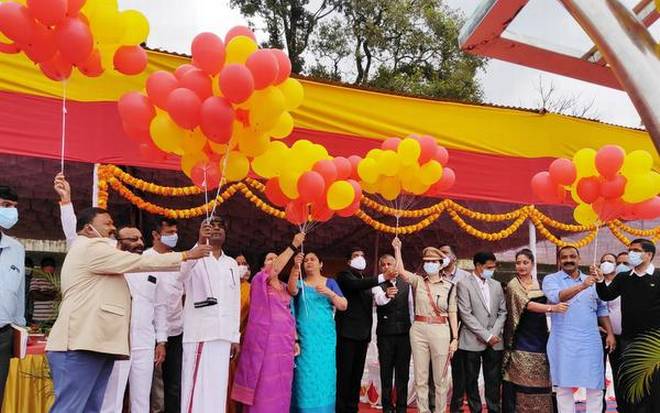
Minister in charge of Kodagu district Kota Srinivas Poojary and others at the Kannada Rajyothsava celebrations in Madikeri on Monday.   | Photo Credit: Special Arrangement

Labs, libraries for 15 govt. schools: Minister

Minister in charge of Kodagu district Kota Srinivas Poojary on Monday said each household in the limits of 12 gram panchayats in Kodagu will be getting drinking water, 100 per cent segregation and collection of solid wastes, scientific handling of sewage generated daily besides the installation of solar projects and setting up of digital libraries in the respective villages.

All these works will be done as part of ‘Amrith’ Grama Panchayat programme which has been announced in the State identifying 750 GPs as part of platinum jubilee celebrations of Independence. The 12 GPs in Kodagu are Peraje, Kunchila-Kakkabbe, Maragodu, Kedamullur, Karmad, Nalkeri, Thithimathi, Koodumangaluru, Shirangala, Igooru, Haradooru and Dundalli, the Minister said in his speech during the Kannada Rajyotsava celebrations in Madikeri.

As part of the 75th independence daycelebrations, the State government has announced 13 special programmes and they include Amrith gram panchayat, Amrith rural housing scheme, Amrith farmer producer organisations, Amrith Nirmala Nagara, Amrith anganwadi centres, Amrith self-help micro enterprises, Amrith community development programme, Amrith health infrastructure upgrade programme, Amrith skill training programme, Amrith startup programme, and Amrith sports adoption programme.

As part of Amrith Rural Housing scheme which is being implemented in the district, housing will be provided to the homeless persons who will be identified in the 12 GPs in the coming days.

The Minister said farmers, fishermen and weavers will get financial support as the government has launched Amrith farmer producer organisations. Each organisation will get a sum of ₹30 lakh in a span of three years. Amrith Nirmala Nagar scheme has also been launched in the district where programmes will be taken up for maintaining hygiene in the limits of local bodies.

Amrith school scheme entails funding of ₹10 lakh to each identified school for developing buildings, labs, libraries, toilets and other facilities. The 15 schools identified in Kodagu are at Hodawada, Sampaje, Kadanga, Madapura, Kodlipet, Walnoor, Thagattur, Hebbale, Suntikoppa, Heggala, Pollibetta, B. Shettigeri, Thithimathi, Gonikoppa and Kutta.

In Kodagu, 25 anganwadi centres will be upgraded with each one of them getting a sum of ₹1 lakh under Amrith Anganawadi scheme.

The Minister said the government is committed to protecting Kannada and the culture of the land and expressed happiness that the use of Kannada language in digital mediums has been on the rise. Karnataka is rich in culture and tradition, he said, calling upon the youth to be part of the overall development of Karnataka.

He also called upon the people to adopt Kannada in their lives, showing interest in the language, literature, culture and art of the land, and become successors of the rich tradition of the land.

source: http://www.thehindu.com / The Hindu / Home> News> States> Karnataka / by Special Correpondent / Mysuru – November 01st, 2021
Kodagu DC releases credit plan of Rs 6,205.84 crore

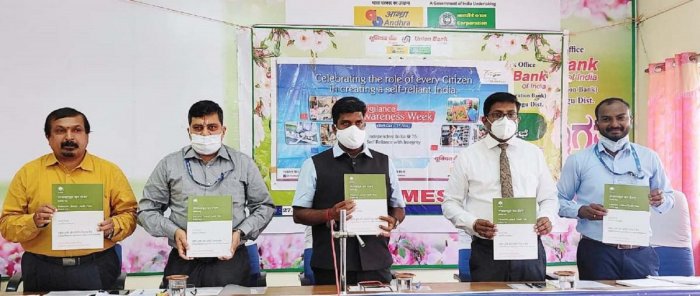
Deputy Commissioner Dr B C Sateesha and others release a credit plan prepared by Nabard in Madikeri.

Deputy Commissioner Dr B C Sateesha released a credit plan of Rs 6,205.84 crore prepared by the National Bank for Agriculture and Rural Development (NABARD) for 2022-23 on Wednesday.

He reviewed the progress of the banks after releasing the credit plan at the Lead bank hall in Madikeri.

The credit plan has given emphasis to priority sectors of agriculture, small industries, education and housing. The loans should reach the eligible beneficiaries, said NABARD district manager V Ramesh Babu.

More emphasis has been given to agriculture, dairy farming, fisheries, horticulture and small industries. The credit plan has also given the emphasis on basic facilities in agriculture markets, he added.

More loan facilities will be available for self-help groups under the Pradhan Mantri Formalisation of Micro food processing Enterprises (PMFME) scheme, he said.

Even schemes under Atmanirbhar Bharat are also being implemented. Priority has also been given for skill development, he added.

Venkatesh Gopal representing the RBI said that the banks should work towards the welfare of the farmers.

Union Bank regional manager Jyothi Krishnan said that the government has implemented several programmes for the welfare of the farmers. 

Funds allocated

Of the total credit, an outlay of Rs 3,794.29 crore has been earmarked for the agriculture sector, while Rs 154.63 crore for agriculture-related basic facilities, Rs 801 crore for medium and small enterprises, Rs 409.60 crore for the export sector, Rs 121.50 crore for education, Rs 676.80 crore for housing, Rs 9.17 crore for alternative energy and Rs 27.70 crore for basic facilities.

Zilla Panchayat project director Srikanta Murthy and others were present on the occasion.

source: http://www.deccanherald.com / Deccan Herald / Home> State> Mangaluru / by DHNS, Madikeri / October 27th, 2021

Board proposes soft loans to promote new variety of coffee

KG Jagadeesh, CEO and Secretary of the Coffee Board, told The New Indian Express, “This new variety of cuppa yields more, and has a good cupping quality.

For representational purposes

Bengaluru :

To boost coffee economy, help farmers and consumers, the Board has decided to promote a new variety of brew. To ease farmers into adopting the new variety of Chandragiri coffee, the board has asked the state and central government to provide planters a soft loan with lower interest rates and moratoriums.

KG Jagadeesh, CEO and Secretary of the Coffee Board, told The New Indian Express, “This new variety of cuppa yields more, and has a good cupping quality. The beans are bold and has a lot of resistance to leaf pests. The taste and quality of this variety is also good, but its acceptability among farmers is only 10 per cent. Since getting a subsidy is difficult, the board has asked the government to offer them soft loan schemes. Farmer will not clear their standing crop and sow fresh saplings and wait for five years, without any returns. This issue needs to be addressed to have a better market.”

The Board is not just working on promoting Chandragiri in Karnataka and southern states of Tamil Nadu and Kerala, but to other Indian states like Odisha.

Jagadeesh said that the aim is to increase productivity, so that the exports and domestic sales also increase.

The Board officials pointed out that in Karnataka and southern regions, the most grown variety is Cauvery and Arabica, but assessment of samples have shown that Chandragiri is better.  According to the Board’s statistics, the yield has been good at 1,037 kg per hectare of Arabica and Robusta in Karnataka in the year 2020-21. 

source: http://www.newindianexpress.com / The New Indian Express / Home> States> Karnataka / by Bosky Khanna, Express News Sevices / October 21st, 2021

Cultivation chits distributed to 32 families

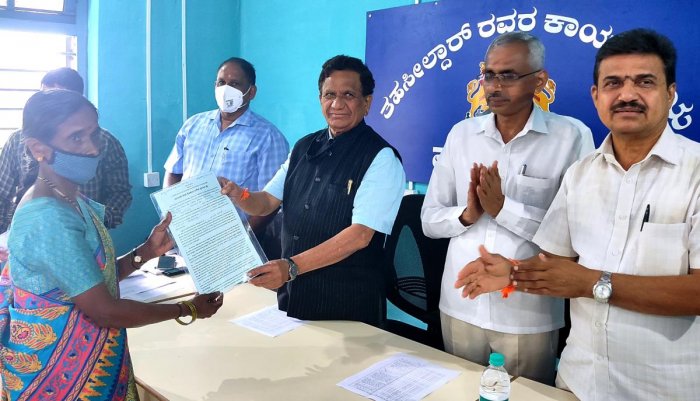
MLA K G Bopaiah distributes a cultivation chit to a beneficiary coming under the Virajpet Assembly constituency in Madikeri taluk.

MLA K G Bopaiah distributed cultivation chits to 32 families under the Akrama Sakrama Scheme. 

The cultivation chits were handed over to eligible beneficiaries from Sampaje, Bhagamandala hobli, Peraje, Hakathoor, Chembu, Made, Kolagadalu, Bettathooru, Korangala, Kaggodlu, Bengoor, Karugunda, Tavoor and other villages. 

Speaking on the occasion, Bopaiah said that the cultivation chits have been distributed to those who have been cultivating on the said land for several years.

The land should not be sold. The land can be used for the construction of houses and carrying out agriculture activities, he said. 

Madikeri Taluk Akrama Sakrama Samiti president Nagesh Kundalpadi said that owing to the efforts of the MLA, the cultivation chits could be distributed. 

source: http://www.deccanherald.com / Deccan Herald / Home> State> Mangaluru / by DHNS, Madikeri / October 09th, 2021

Farmer succeeds in cultivating apples in Kodagu

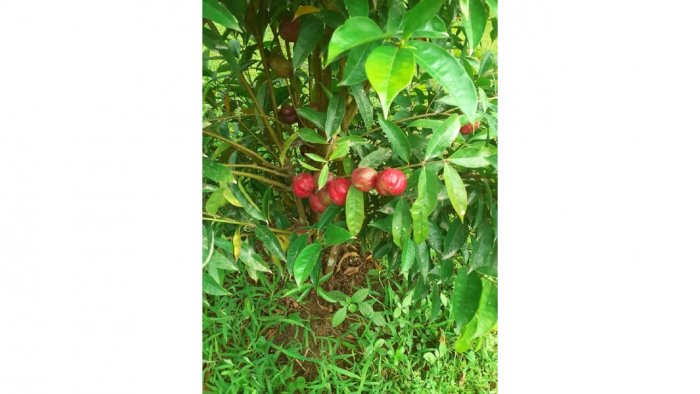
Ketolira Shammi has been cultivating about 50 varieties of fruits on his land. Now, apple is added to the list

Apples cultivated by Ketolira Shammi.

Along with varieties of fruits, a farmer in Kolakeri near Napoklu has grown apples.

He had procured the plant from Ooty four years ago and now the plant has borne fruits.

He has harvested about 4 to 5 kg of apple as a first crop.

The weather in Kodagu is conducive for apple cultivation as well, he said.

Normally, the growers in Kodagu cultivate oranges amid coffee plantations. However, after the orange plants were infected with diseases, the growers have started looking for alternative crops.

Ketolira Shammi has been cultivating lychee, rambutan, dragon fruit, egg fruit, butter fruits and others.

source: http://www.deccanherald.com / Deccan Herald / Home> State> Mangaluru / by DHNS, Napoklu / October 10th, 2021

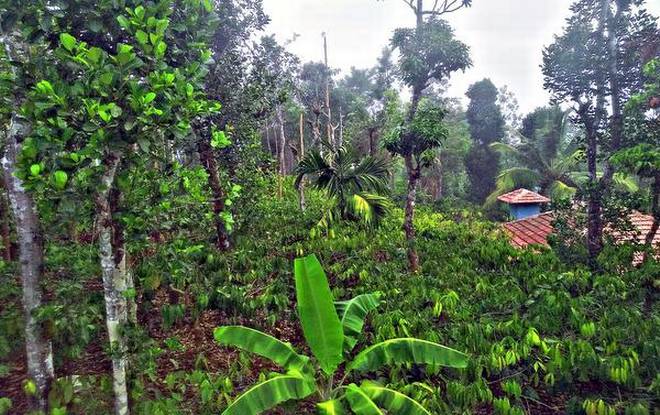
Native shade trees in coffee plantations vital for diversity, abundance of birds, says study

The joint study found bird species richness to be higher in shade coffee plantations that had 78 species than in open coffee plantations that had 55 species

‘Alteration of canopy, woody plant composition can influence pattern of functional composition of resident birds’

Verdant coffee and tea plantations are more than an ideal backdrop for photos; they support a thriving avian population. In a study that underscores the need to understand the patterns and drivers of bird species composition and diversity outside Protected Area (PA) networks to develop landscape-level conservation strategies, researchers found that they varied in differently-managed plantations.

The findings were the result of collaborative work by Kannur University, Kerala, Salim Ali Centre for Ornithology and Natural History, Coimbatore, Ashoka Trust for Research in Ecology and the Environment (ATREE), Bengaluru, and Ferns Nature Conservation Society, Wayanad. It was published in July 2021.

Focussing on the coffee plantations in the Western Ghats, which are an important agro-ecosystem and help maintain a significant portion of regional avian diversity, the researchers compared the composition and functional diversity of resident birds between shade and open coffee plantations.

They counted 3,846 birds of 87 species, and found species richness to be higher in shade (78 species) than in open coffee plantations (55 species). “Interestingly, 32 species were unique to shade and nine were unique to open coffee plantations, with 46 species found in both types of plantation. Species richness and abundance were higher in shade coffee,” the study says, adding that the results reveal that different farm management practices can affect functional bird richness and its abundance in coffee plantations. They have made a case for retaining shade-trees of native varieties in coffee plantations to support high functional diversity, richness, and abundance of birds in the coffee plantation of the Western Ghats.

The study, ‘Resident birds show different patterns in species composition and functional diversity in differently managed coffee plantations in the Western Ghats, India’, was published by the Ornithological Science journal in July 2021.

Speaking to The Hindu, Santhanakrishnan Babu, one of the authors, said the study was conducted between May and August, 2016, in the northern part of Wayanad district. “Wayanad is a major coffee producer, producing 90% of the Kerala’s coffee. Our study aimed to understand how resident birds respond to differently-managed coffee plantations – shade and open,” he said.

The Kerala government recently passed an order to chop all resident trees on private land except sandalwood. This will lead to extensive chopping of resident trees from the coffee plantations which will affect biodiversity, he added.

Another author Athira S. Variar and Mr. Babu said retaining shade trees of native varieties in coffee plantations is important for supporting high functional diversity, richness, and abundance of birds. “Shade plantations support several habitat specialists and range-restricted birds, and alteration of the canopy and woody plant composition can influence the pattern of the functional composition of resident birds. Since our study covered only one season, year-round study in these plantations may shed more light on the composition of resident, breeding and migratory bird species,” they said.

Conservation strategies

They have called for landscape-level conservation strategies. Author Anoop N.R. pointed out that the Forest Department has little authority over the plantations located outside forest areas, and trees in these plantations are increasingly being replaced with exotic trees such as Grevillea robusta. “To promote the protection of large native trees in coffee plantations, we recommend initiating programmes to provide financial incentives to private landowners. Education programmes will also help to improve community support for retaining texisting indigenous tree varieties and promote planting more of the same,” he recommended, adding that a framework needs to be developed with regard to which species can be planted and which must be maintained, or removed, from the plantations.

source: http://www.thehindu.com / The Hindu / Home> News> States> Karnataka / by K C Deepika / Bengaluru, October 04th, 2021

International Coffee Day observed at Raja Seat

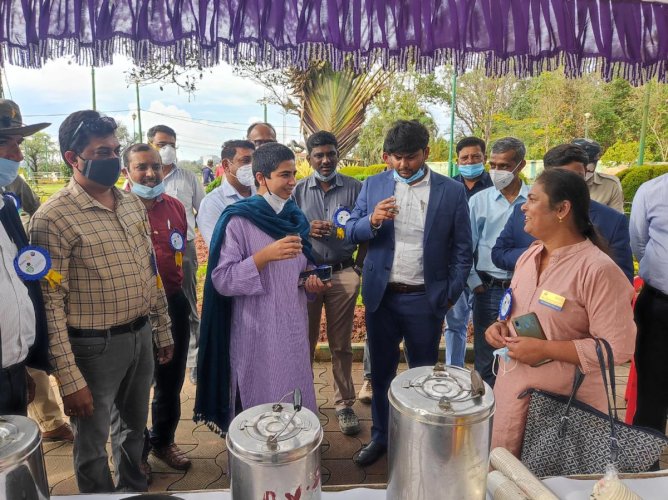
Deputy Commissioner Charulata Somal sips coffee at Raja Seat on Friday, on the occasion of International Coffee Day

Deputy Commissioner Charulata Somal said that the International Coffee Day celebrated in Kodagu, highlights the hard work of coffee growers, which is behind the taste of coffee.

She was speaking during the International Coffee Day programme observed by Rotary Misty Hills, at Raja Seat, on Friday.

The deputy commissioner added, “I got to know about every detail of coffee cultivation after I was posted to Kodagu. The dedication and effort by coffee growers in producing the best quality of coffee is commendable.”

Rotary Misty Hills president Anitha Poovaiah said that more than 1,500 visitors at Raja Seat were served coffee on account of International Coffee Day.

Rotary Deputy Governor H T Anil said that the quantity of coffee powder used by a person in India is 4 to 5 kg per year whereas, in a foreign country, a person uses 15 kg of coffee powder annually.

Therefore, there is a need to increase the usage of coffee in India, he added.

Misty Hills project director Devanira Tilak also spoke on the occasion.

Madikeri CMC commissioner Ramdas, horticulture department deputy director Sridhar, senior assistant director Pramod, Coffee Board deputy director Shivakumar Swamy and others were present.

‘Coffee export’

Kodagu Mahila Coffee Jagruthi Sangha distributed free coffee at various places in Madikeri on account of International Coffee Day. 

The Coffee Day observed at Tadka House on Raja Seat Road was inaugurated by Kodava Samaja president K S Devaiah.

When the coffee industry was in distress women had started a unit to instil confidence in coffee growers in the district. The sangha has been promoting coffee consumption, said K S Devaiah.

Women have been actively engaged in managing coffee plantations and the industry. Kodagu’s coffee is known for its taste, he said. 

Kodagu Coffee Growers’ Cooperative Society president M B Devaiah said the society is the largest coffee cooperative in Asia.

It is now mulling about exporting coffee and requires financial assistance from the government for exports, he added. 

Advocate Pasura Preetham said the International Coffee Day is being observed since 2015. 

Dr Mohan Appaji said that the consumption of coffee by those above 40 years is good for health. 

Kodagu Mahila Coffee Jagruthi Sangha president Chitra Subbaiah, general secretary Anitha Nanda and others were present. 

source: http://www.deccanherald.com / Deccan Herald / Home> State> Mangaluru / by DHNS, Madikeri / October 01st, 2021

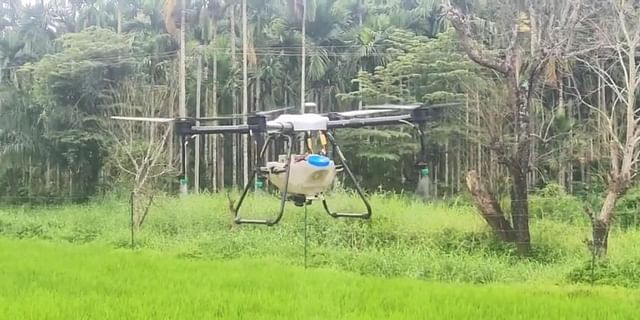
Drones spraying chemicals a hit among farmers at paddy fields, arecanut estates in Kodagu

“Usually it takes seven to eight days to complete chemical spraying across a 10 acre estate. However, the job was completed in four hours using the drone,” said an arecanut estate owner.

Drone facility used in a paddy field in the district (Photo | Special arrangement)

Madikeri :

Agriculture has taken a hit in several ways amid the pandemic and labour shortage and lack of maintenance are among the top struggles faced by farmers. However, this is now being addressed technologically with drones taking over jobs at many estates in Kodagu.

Vikram Appaiah, a arecanut estate owner in Karadigodu village, first heard of drones helping in agriculture activities in a social media group. He opted for the technology and the first drone experiment was done across his estate in May.

“I hired the drone to enable maintenance work at the estate. Fungicide spray was mounted on the drone and all the arecanut trees were uniformly sprayed with the chemical,” recalled Vikram. He added, “Usually it takes seven to eight days to complete chemical spraying across a 10 acre estate. However, the job was completed in four hours using the drone.” Following the success story, Vikram hired the drone for the second round of chemical spraying in September.

The drones are outsourced from the local agro company Omega in Gonikoppal. “Prior bookings have to be made and the drones help in systemic spray of chemicals or organic sprays. Many farmers are approaching us to opt for the facility as it is time-saving and convenient,” said Naj Chengappa, the proprietor of Omega.

He explained that Rs 2200 is charged for spraying chemicals with drones across one acre of arecanut estate and Rs 950 across one acre of paddy field.

He, however, confirmed that this facility cannot be used across coffee estates due to the uneven terrain alongside increased shade trees in the estates.

source: http://www.newindianexpress.com / The New Indian Express / Home> States> Karnataka / by Prajna GR, Express News Service / September 22nd, 2021

Kailpodh Festival of Kodavas: A Unique Festival of Weapons

Festival season is approaching and so are the moments of colorful traditions and culture. Some of them are celebrated within communities and some of them nationally and globally. Community festivals are significant to the respective community and connect them with their families and social structure of living.

Festival of weapons

Situated at 3000 feet above sea-level, Coorg is beautiful and is known as the Scotland of India and is home to the Kodagu Community, where this festival of weapons is celebrated. Coorg is home to various agricultural crops  like coffee, pepper, oranges, avocado and cardamom. The delicacies include dishes cooked with pork, mutton, rice, wild mushroom, bamboo shoot and smoked meat.

About the Kodagu Community:

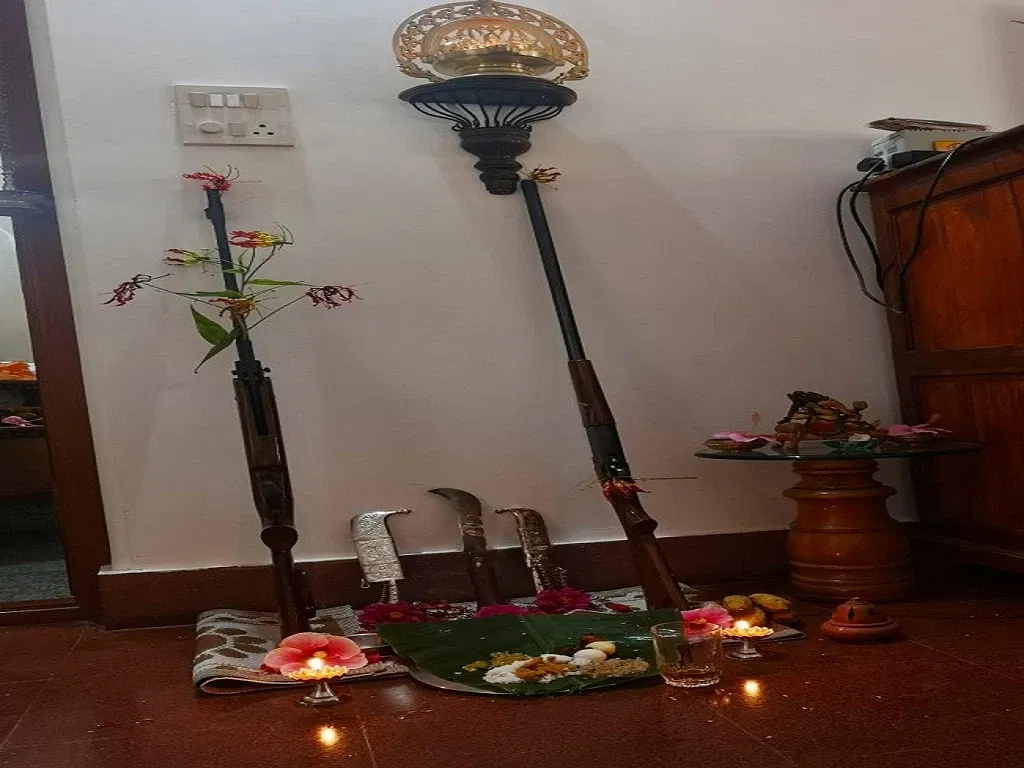
The Kodagu community has got its own rituals and very interesting traditions still kept alive. One such Festival they still celebrate within their community is Kailpodh, which is celebrated in the month of September. ‘Kail means armory and Podh means festivals, so Kailpodh means “Festivals of Weapons”.   This Unique traditional festival is celebrated within the Kodagu community where arms and weapons like guns, knives, swords, bows, and arrows are cleaned and prayer lamps are lit. The hanging prayer lamps are called Thookbolcha in Kodava and flowers called Thokk Poo (Gloriosa Superba flowers) are placed on the nozzles of guns.

The Kodavas have always maintained an intimate relationship with their weapons. Its been said that during weddings they use a large Kodava Knife to cut banana Stalk with one single cut. During the death and birth, they fire a single shot into the air to share the news with the neighbours. Largely there were forest land where they lived and hunting used to be their favourite past time. At present even if hunting is not done, these weapons are passed down from generation to generation.

This is a time which marks the end to the sowing season and then they have to remain watchful and protect the crop. The weapons used to protect the crop hence are taken and decorated on this day and pooja is offered. The river deity Kaveramma, and Mahaguru Igguthappa and the supreme ancestor Guru Karana, are invoked during this day.

The festivities:

Kodava cuisine includes well-prepared, tasty food such as steamed dough balls called kadambuttu, and rice cakes, string hoppers meat dishes such as Pork curry, Chicken curry and Mutton Curry as well as desserts like Rice kheer. They also wear traditional costumes and play various games like folkdances ,shotput, rifle shooting , traditional dances.

source: http://www.krishijagran.com / Krishi Jagran / Home> Others / by Dr Lakshmi Unnithan / September 07th, 2021

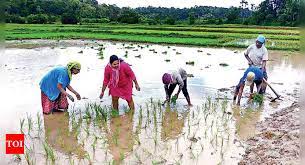
Women in Karnataka’s Virajpet form self-help groups, buy field and cultivate paddy

Question of livelihoods: Women self-help groups purchased an unused paddy field and have now become full-time farmers

Madikeri :

Following the Covid crisis, several women have taken to cultivating paddy in the district, giving a new lease of life to uncultivated land.


Women — mainly from Virajpet taluk — under the banner Sanjeevini Okkuta, are growing paddy on land that had remained uncultivated for years. Fifteen women self-help groups joined the Okkuta, which purchased an unused paddy field.

Okkuta president Indira and assistant secretary Nisha have helped members with initial capital for the work.

Villagers say owners of the field had stopped cultivating the crop as paddy cultivation requires a huge workforce to plough, sow and transplant plants. This demands high wages.

National Rural Livelihood Mission district programme manager, who indentified himself only as Kumar, was pleased with the latest move by women of Sanjeevini Okkuta.

source: http://www.timesofindia.indiatimes.com / The Times of India / Home> News> City News> Mysuru News / by TNN / August 06th, 2021