Category Archives: Agriculture

2,868 families in flood-risk zones in Kodagu to be evacuated

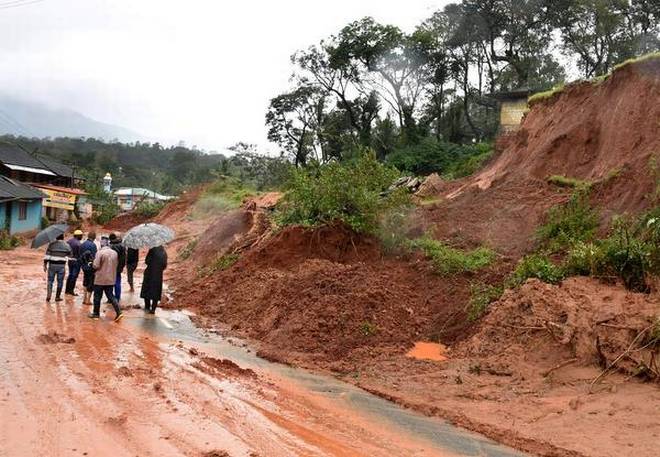
A file photo of a landslide in Kodagu district.  

77 places have been identified as prone to landslide and flood based on experts’ advice and previous years’ data

Even as the monsoon turned active in Kodagu district, 2,868 families living in areas identified as vulnerable to flood and landslide are expected to be evacuated to relief centres by July 15.

The officers in charge of evacuation are in touch with the families who are being persuaded to leave their houses in ‘risk zones’ as a safety measure.

Seventy-seven places in towns and villages have been identified as sensitive and prone to landslide and flood based on experts’ advice and also previous years’ data. Accordingly, steps are being taken to ensure the safety of dwellers.

“The families will be shifted out from the sensitive zones by July 15. The nodal officers have been instructed to ensure their safe relocation at the earliest,” said Deputy Commissioner Charulatha Somal on Saturday.

Besides, 618 cattle from the risk zones would also be evacuated. Measures had been taken for establishing 17 animal shelters, she said.

A 20-member NDRF team is camping in Kodagu. Four teams each of the Fire and Police Departments dedicated for rescue operations are also ready. In addition, civil society groups and volunteers have come forward to offer their services.

The gram panchayats in the risk zones have set up local teams for rescue and relief works.

The highway connecting Mangaluru to Madikeri has been identified as a ‘sensitive’ road based on previous years’ data (the road was damaged by landslides). The Kodagu district administration has banned movement of heavy goods transport vehicles, barring those supplying essentials in view of rains.

Ms. Somal said the onus is on the PWD to reduce the risk with necessary and timely interventions, she added.

The current spell of rains has already damaged electrical poles in certain areas. The Chamundeshwari Electricity Supply Corporation (CESC) is already on the task of restoring supply, and replacing damaged lines and poles.

As the rescue operations may need more earthmovers, steps have been taken to hire machines in addition to those available with the PWD and RDPR.

“We need to be prepared to deploy more such machines for rescue operations,” she said.

Ms. Somal said the authorities of Harangi dam near Kushalnagar have been asked to be on alert and ensure that the 2018 episode was not repeated. The problems faced earlier may not recur since silt has been removed, the DC added. Unexpected and excessive release of water from the dam had led to floods. Areas close to the Cauvery river in Kushalnagar town were flooded.

source: http://www.thehindu.com / The Hindu / Home> News> States> Karnataka / by Special Correspondent / Mysuru – June 19th, 2021
Lockdown badly hits Coorg mandarin sales

Lockdown badly hits Coorg mandarin sales

HIGHLIGHTS

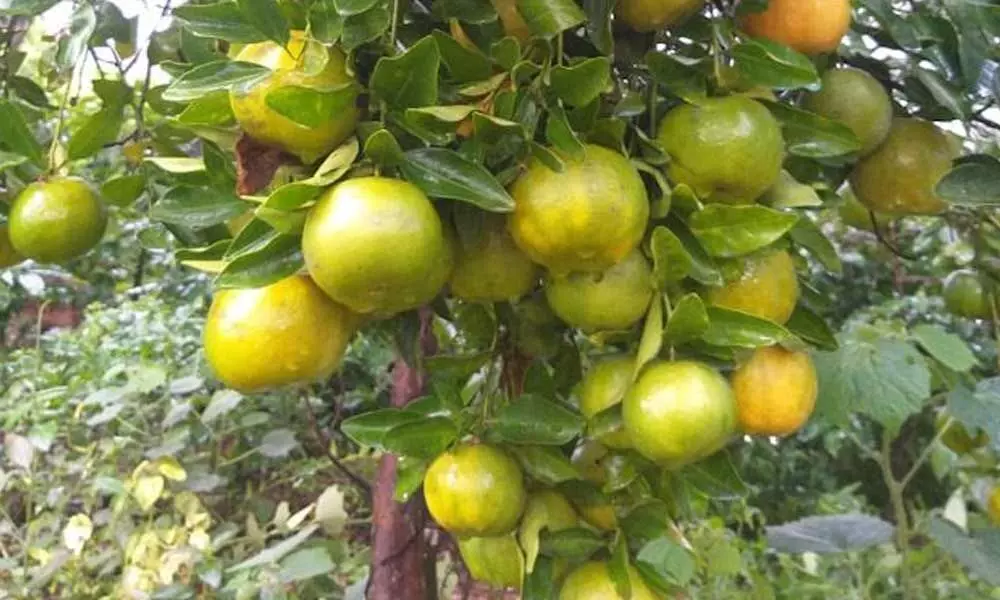
The demand for Coorg oranges, also known as Coorg mandarin, has dipped in the State owing to lockdown. Mandarin was almost wiped out in the district due to diseases a couple of decades ago.

Madikeri:

The demand for Coorg oranges, also known as Coorg mandarin, has dipped in the State owing to lockdown. Mandarin was almost wiped out in the district due to diseases a couple of decades ago. However, this variety of orange is being grown in many coffee estates, fetching a sizeable income to growers. It is being grown as a mixed crop in coffee estates along with pepper twice a year in December and June.

Grown in eight thousand hectares, this tiny district produces nearly 30 thousand metric tonnes of mandarin.

Many coffee estates have bountiful mandarin crop, but no buyers due to lockdown. Normally, coffee growers lease orange crop to Kerala-based traders. But this season there are hardly any buyers. The crop is mostly exported to Kerala, Tamil Nadu and Andhra Pradesh and other parts of Karnataka.

Though Nagapur organges have good market in the State, with good taste and aroma, Coorg variety has its own customer base. Speaking to The Hans India on Friday, a mandarin grower, Ponnachettira Suresh Subbaiah , a native of Ibnivalamudi near Madikeri, said that he has been growing the orange crop for decades, but has never faced such a situation. He said he used to export oranges to Calicut market. But this season, he sees no hope of good market for his produce. Subbaiah who grows mandarin crop in his 12-acre estate, has incurred losses this time.

There are no takers locally also as tourism has come to a standstill. The district which witnesses at least 4-5 thousand tourists daily in normal time is badly hit by lockdown and Covid restrictions.

Though production is increasing year by year in district, the demand for mandarin variety of oranges is discouraging.

source: http://www.thehansindia.com / The Hans India / Home> News> State> Karnataka / by Coovercooly Indresh / Hans News Service / June 18th, 2021

Families In Kodagu Hunt For Tasty Mushrooms

Mushrooms or toadstools are found mostly during the monsoon season especially when thunder and lightning strikes the landscape

Madikeri:

It is that time of the year when many edible mushrooms grow in the wild in the hilly district of Kodagu, making it a mushroom-lovers’ dream destination. 

Mushrooms or toadstools are found mostly during the monsoon season especially when thunder and lightning strikes the landscape. As soon as the first showers hit the dry earth, residents and families, who are familiar with the areas where usually mushrooms grow, head there to reap the annual harvest — where the dormant spores lie from the previous year. And the person who sees it first, it’s all his.

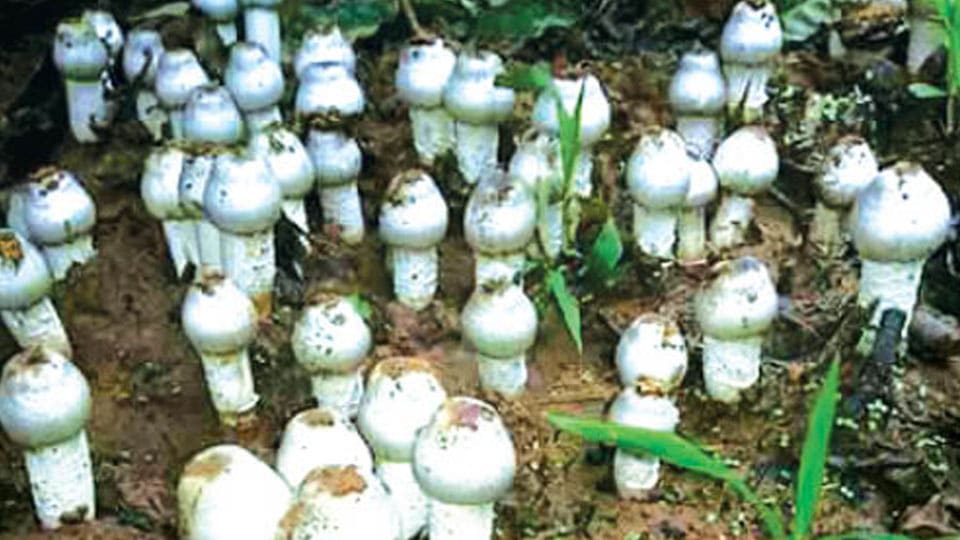
A particular mushroom that evokes interest this time is the ‘Aland Kumm’ in Kodava language. Its scientific name is ‘Agaricus bisporus’, an edible basidiomycete mushroom, native to grasslands in Europe and North America. It has two colour states while immature — white and brown.

A high-fibre content food product, these mushrooms usually rise near paddy fields and sometimes seen under dense cover of coffee estates. ‘Aland Kumm’ is prepared as curry using coconut masala or as masala fry too. 

The other well-known variety is ‘Kode Kumm’ (umbrella mushroom) with scientific name ‘Termitomyces clypeatus’ (solitary, grows in soil and also on termite mounds) and ‘Nuchchi Kumm’ (Termitomyces microcarpus). The cluster of this mushroom is usually spread all throughout the location in specks of white. While the ‘Kode Kumm’ is usually salted and toasted on a raw flame in the fireplace, the others are prepared as curry to consume them with rice rotis.

Interestingly, according to an on-going research, lightning makes mushrooms more plentiful. The research is based on a Japanese traditional knowledge where they welcome storms over their fields based on the belief that lightning strikes provoke plentiful harvests of mushrooms. A research is being conducted by scientists in northern Japan where they are bombarding a variety of mushrooms in lab-based garden plots with artificially induced lightning to see if electricity actually makes the fungi multiply. 

The results show that lightning-strength jolts of electricity can more than double the yield of certain mushroom species compared with conventional cultivation methods.

source: http://www.starofmysore.com / Star of Mysore / Home> News / June 14th, 2021

COVID-19 vaccination soon in Kodagu’s coffee estates

Growers agree not to bring workers to estates from other places until June 21 as a measure to control the spread of infection

Coffee workers in Kodagu will soon get the jabs against COVID-19 with the authorities planning to launch vaccination drive in plantations for making the coffee land safe from the pandemic.

The support of large plantations and companies operating in the district has been sought for making it successful.

Former Speaker and MLA K.G. Bopaiah, who spoke about the vaccination plans, advised the owners of plantations not to use workers returning from COVID-19 Care Centres, after recovering from COVID-19, immediately for work in estates. They must be placed in quarantine for at least a week before redeployment.

“The owners must follow the guidelines and ensure control of the infection. Give priority for saving lives and health. The essential works in estates can be done using the locally available workers,” he said at a growers’ meeting in Madikeri on Thursday.

Various coffee growers’ associations in Kodagu have pledged support to the district administration for making Kodagu COVID-19 free even as the lockdown in the coffee land has been extended till June 21 based on its positivity rate.

The growers have resolved not to bring workers from other places for work in estates across Kodagu until June 21. It was decided to make use of the locally available workers.

Earlier, Mr .Bopaiah, who chaired the meeting, said COVID-19 was coming under control in Kodagu. However, there have been reports of infection being reported among workers coming here for work. “The estate owners must avoid bringing workers from other places for the time being. This measure can help us in fighting the pandemic effectively and preventing the spread,” he observed.

Mr. Bopaiah warned of seizing vehicles ferrying workers from other places.

The growers urged the former Speaker to take a delegation to New Delhi after the lockdown ends to highlight the plight of coffee growers and the difficulties faced by the industry.

source: http://www.thehindu.com / The Hindu / Home> News> States> Karnataka / by Special Correspondent / Mysuru – June 11th, 2021

Jackfruits Dumped On Roadsides In Kodagu To Feed Wild Elephants

Coffee growers find novel ways to protect their estates from herd raids

Kushalnagar:

Jackfruit is elephants’ favourite fruit and they can smell the ripe ones from miles away. Elephants are dead clever and determined. If the fruit is too high for them to reach they’ll shake the tree with their trunk until the fruit falls to the ground. And if there is an electric fence, they will break it down with a dry tree trunk and enter any plantation. 

It is jackfruit season in Kodagu now and wild elephants raiding coffee estates in search of jackfruits is commonplace. They camp for days inside estates putting the lives of estate owners and also labourers in jeopardy as no one can venture into the estates till the herd or even a lone tusker leaves the property. 

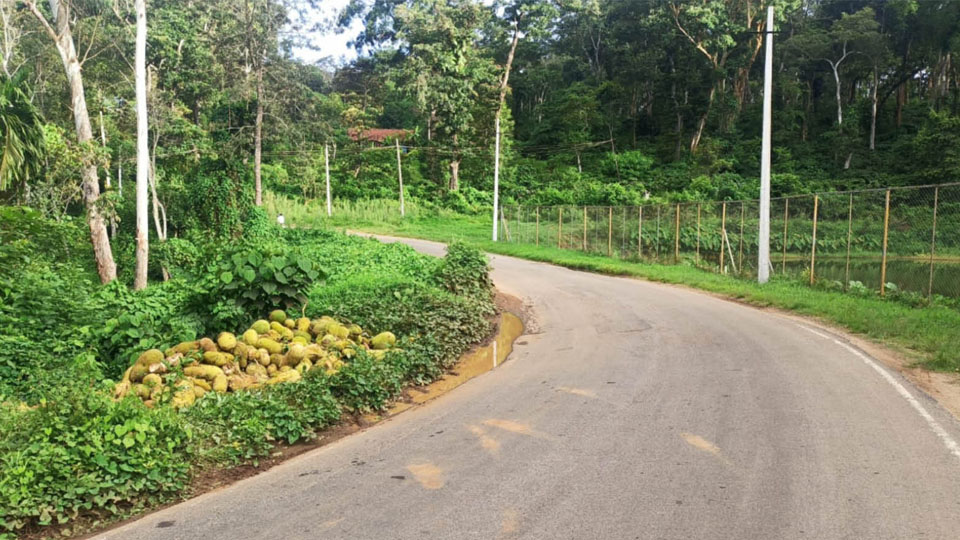
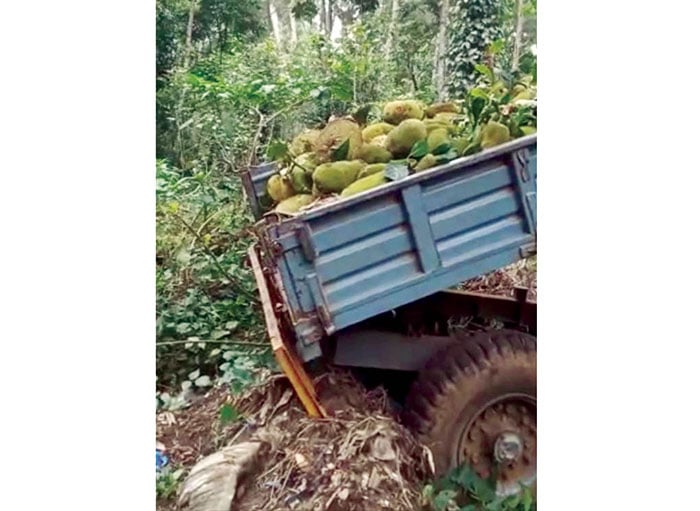
Wary of elephant raids, farmers and coffee growers have adopted newer ways and means to save their lives and property. They are plucking jackfruits from the trees and dumping them on the elephant path. 

In fact, the Forest Department has to intervene in such elephant raids. But with no help forthcoming from the Department officers, who don’t even pay compensation to the loss of coffee plants, estate owners have taken this initiative and it has proved a success too. The elephants entering estates has minimised, if not totally prevented. 

Wild elephant menace is rampant in Aiguru, Kandanakolli, Kodlipet, Shirangala Nakoor, Abyathmangala, Chettalli and Seventh Hoskote in the North of the district and Srimangala, Ammathi, Thithimathi, Ponnampet, Kutta and Balele in Virajpet and Ponnampet taluks. 

Forests in these areas mostly comprise teak wood which is why elephants are falling short of food and in jackfruit season, they raid the estates. Repeated requests of the villagers to the Forest Department to chase elephants back to the forest have fallen on deaf ears. 

Path identified and dumped

Now in this season, jackfruits are found piled up on the roadsides and growers hope the elephants hog these jackfruits instead of entering into their plantations. But the planters cannot cut the jackfruit trees inside their own estates as they do not have tree rights and have to seek permission from the Department — a tedious job, especially during COVID times.

“We identify the path usually taken by elephants roaming around and dump tractor-loads of jackfruits on the way and also near lakes that are frequented by elephants. It is a big loss if a herd of 20 to 25 elephants enter an estate. We are not worried about them eating jackfruits but in the process, they destroy many coffee plants,” says Arun Kumar, an estate owner at Abyathmangala. 

On an average, over 1,000 kgs of jackfruits are dumped on the roadsides in the vicinity of every major estate. “We spend extra money and pay the labourers who make time to cut jackfruits amidst the tree-topping work,” he added. 

Villagers oppose move

However, the trend has been opposed by some villagers in Abyathmangala-Kushalnagar Range who fear for their safety. They claimed that some of the estate owners’ move is endangering their lives. Anil a, villager said that despite many pleas, the estate owners dump jackfruits by the side of the road and they can’t even go on the road fearing wild tuskers. 

However, Ajith Kumar, an estate owner on the Siddapura Road said that he had asked his estate workers to dump the fruits by the side of a lake that is frequented by elephant herds. “By mistake they have dumped on a roadside near the village and next time we will dump fruits on elephant path. Last year, we faced severe losses as many coffee tree branches were broken as herds entered my estate. This is the only visible solution,” he said.

source: http://www.starofmysore.com / Star of Mysore / Home> News / June 05th, 2021

Assam polls, lockdown hit coffee plantations in Karnataka hard

File picture of people from Assam working in a coffee estate near Arehalli in Belur taluk of Hassan district.  

Workers from the north-east have not returned, affecting seasonal work ahead of the rainy days

Hundreds of plantation workers in Karnataka, who went to Assam to vote in the Assembly elections held in March-April this year, have not returned, affecting the seasonal work ahead of the rainy days.

Restrictions on public transport as part of the lockdown over the COVID-19 pandemic has not allowed them to travel, though they wish to come back.

Thousands of people from Assam and other neighbouring States in north-east India work in coffee estates of Hassan, Chikkamagaluru and Kodagu districts. They stay in the quarters provided by the planters and visit their native places once a year. Whenever elections are held, they take a break from work and travel to exercise their franchise.

Mahesh C.S., former president of Hassan District Planters’ Association, says many planters had not been able to complete tree pruning and plant pruning, mandatory seasonal work ahead of the rains. “Normally, we finish this work before June and keep the ground prepared with medicinal spray and manure. All these works have remained undone,” he said. Planters are forced to depend on local workers, who demand higher wages and work for fewer hours than the Assam workers do, he added. The wages for tree pruning, a skilled job, is around ₹700 to ₹800 a day. For other works, a worker gets around ₹300 to ₹350 in normal circumstances.

B.S. Jairam, former president of Karnataka Growers Federation, who has an estate in Mudigere Ttluk, is worried that the present situation could affect the production of coffee later this year. “The planters are already facing too many problems due to the pandemic. The payments are stuck due to restrictions on shipment and many have not recovered from the loss suffered in the floods in previous years. Only those who could retain workers in their quarters with sufficient supply of ration have completed the seasonal work”, he said.

Over the years local workers hardly stay in estate quarters. They reside in their villages and commute to estates daily by vehicles. But now they cannot do so as there are restrictions on vehicular movement “The police do not allow ferrying workers to estates. Only those settled in the nearby areas reach to the estates by walk and work,” he said.

Besides the people from Assam, many from the north Karnataka districts also work in the estates. They also return to their native places during March-April. This year they too could not return. Prasad Raxidi, a planter at Raxidi in Sakleshpur taluk, said the local workers were getting work and also good pay these days. “Only those who have returned from bigger cities after losing their jobs in the lockdown are not getting jobs that suit them,” he said.

source: http://www.thehindu.com / The Hindu / Home> News> States> Karnataka / by Sathish G T / Hassan – June 10th, 2021

Coffee, critters and climate change

With temperatures rising and pests proliferating, Indian coffee growers are fighting challenges beyond their control.

Unpredictable rise in temperatures followed by an uncertain monsoon cycle has gradually started taking a toll on coffee yields. (Chevanon Photography, Pexels)

Coffee is the first thing I see, smell and taste in the day. But as caffeine-junkies like you or me ride the wave of premium specialty brews, we need to pay attention to growers across major regions in India, such as Karnataka, Kerala and Tamil Nadu, who are battling a host of challenges due to a changing climate.

As spring transitions to summer, the pattern of unpredictable rise in temperatures followed by an uncertain monsoon cycle has gradually started taking a toll on yields and impacting the livelihood of coffee farmers.

Bengaluru based Tej Thammaiah, a co-founder of Maverick & Farmer Coffee Roasters and third-generation coffee farmer, says his team of growers on the 150-acre estate have meticulously documented the cultivation process to pinpoint the impact of increasing temperatures over the last decade. The mild, aromatic Arabica plant with its nuanced flavours, second only to Robusta in production volume in India, is highly susceptible to even the slightest change in climate. As temperatures increase, it hastens fruit ripening, leading to a loss in the overall quality of beans.

To fight this temperature change at estates such as Pollibetta in Coorg, his growers strive to find plots at higher, cooler elevations. But in this new environment, the finicky coffee fruit typically takes longer to mature. Moreover, changing plot locations is not a sustainable solution since coffee fruits in India are grown primarily in “shady” conditions, under a canopy of trees. And deforestation and logging is taking a toll everywhere.

It gets worse: When plants aren’t grown in ideal conditions, it leaves them more vulnerable to pests and diseases. Sunalini Menon, president of a coffee grading and training institute called Coffeelab in Bengaluru, mentions that a beetle known as white stem borer has been particularly harmful, spreading through India and Sri Lanka. It prefers plants exposed to sunlight and after burrowing in hard wood and roots as a larva, it hatches and feeds off the plant, destroying the woody tissue, leading to stems wilting and leaves yellowing. The beetle seems to have a particular liking for Arabica.

Not all hope is lost, though. Menon says India was one of the first countries to battle another infamous dweller, a fungus known as leaf rust, at the Mysore Coffee Experimental Station established by the British in 1925 at Chikmagalur, Karnataka. Known as the Central Coffee Research Institute, this research centre now run by the Coffee Board of India is researching and guiding growers on pest control, as well as initiatives such as diversifying shade patterns with local balsa and cedar trees and introducing new varietals of Arabica and Robust suited for tropical growth.

But she does believe it’s important to let go of the hesitancy to uproot plants. Farmers, perhaps for cultural reasons, have typically been hesitant to replant their land though research suggests that shorter plant life-cycles increase quantity, improve bean quality and even give growers some reprieve from emerging pests and diseases.

Ultimately, however, no practice can replace the tedious, time-consuming process of screening crops regularly. A task which falls squarely on growers.

Some shift to growing other crops. Those who stick it out, especially in smaller estates, need more support–in the form of agritourism, research on new techniques, investment in weather stations or, simply, from consumers.

If that doesn’t happen, we may in time find it increasingly difficult to get that morning fix.

For those new to coffee: Thammaiah suggests Selection 795 or Cauvery to taste domestic Arabicas (while we still can).

Nightcap is a column on beverages by Varud Gupta, author of Bhagwaan Ke Pakwaan and Chhotu. @varudgupta

source: http://www.lifestyle.livemint.com / Live Mint / Home> Mint Lounge> Food / by Varun Gupta / April 26th, 2021

Beehive boxes distributed to 130 families

Beehive boxes were distributed to beneficiaries in Kodagu district. Credit: special arrangement

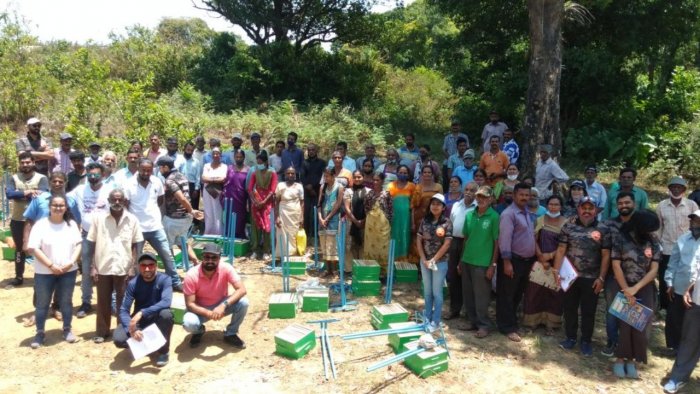
Kodagu Seva Kendra and Kodagu for Tomorrow organisation handed over beehive boxes to 130 families in Soorlabbi, Kumbaragadige, Mankya, Kikkaralli and Muttlu. Each family was given two boxes.

All the beehive boxes along with the families of bees have been procured from Everyday Honey Farm in Tumakuru.

Seva Kendra’s Pramod Sommaiah said that whoever engages in apiculture using the beehive boxes will get additional four boxes next year.

Kodagu for Tomorrow convener Ponnolatanda Kaverappa said that the organisation will impart training in beekeeping.

source: http://www.deccanherald.com / Deccan Herald / Home> State> Karnataka Districts / by DHNS, Madikeri / April 17th, 2021

Pepper comes to coffee growers’ rescue

Higher prices of the spice help offset lower returns from the bean

For coffee growers battling a drop in bean prices following weak global demand, the pepper that they grow as an inter-crop is coming to their rescue.

Of late, pepper prices have gained by at least 10 per cent on firm demand even as the harvest is in progress in the key producing regions of the Western Ghats.

According to the Spices Board, garbled pepper was quoted at ₹388 a kg on Tuesday against ₹380 on March 20 and ₹345.17 a month before that.

Globally, Indian pepper is quoted at a premium of $5,275 a tonne compared with the spice from other origins such as Brazil, Vietnam and Indonesia. Prices of other origins are ruling at $4,000 and below a tonne.

KK Vishwanath, Co-ordinator of the Consortium of Pepper Growers Organisation in Kodagu, said the Centre’s move to strictly implement the import norms is aiding the rise in domestic prices.

The Centre has taken several measures such as fixing a minimum import price of ₹500 a kg, including cost, insurance and freight.

While the pepper prices are higher by 10-12 per cent, coffee prices are trending lower to the same extent. The higher prices is helping those coffee growers, who also grow the spices crop meet their cash flow requirement, Vishwanath said.

Pepper is largely cultivated as an inter-crop with coffee and arecanut in parts of Karnataka, Kerala and Tamil Nadu, the main producers of the spices crop.

Demand for pepper continues to be firm in the short term, as end users such as masala manufacturers and ready-to-eat food producing firms have started procurement, said Kishor Shamji, general convenor, Indian Pepper Spice Traders Growers and Planters Consortium, Kerala chapter.

The commencement of wedding season in North India has also led to a demand revival. However, the local demand in Maharashtra has slowed down in the last fortnight following the re-imposition of Covid restrictions, Shamji said.

In Karnataka, the harvest is still going on though some regions in Kodagu and Chikkamagalur have faced the impact of erratic weather.

“The crop still being picked, will need to wait a bit before we get clearer assessment on the crop size. Lot of vines damaged last 3-4 years due to wilt and weather conditions,” said Jeffrey Rebello, Chairman of UPASI Coffee Committee. Pepper growers are also facing a major challenge in harvesting the crop due to acute shortage of skilled labour, said S Appadurai, Chairman, Karnataka Planters’ Association. Pepper crop is reported to be good in parts on North Kodagu, Hassan and Sakleshpur, he said.

Lower crop size

The plantation sector depends on migrant labour for the harvest. With States such as Tamil Nadu and Assam going for elections, the labourers have gone back to their native places to cast their votes, planters said.

On the crop size, Shamji said the Idukki farmers’ reports of a lower 2021 crop size has turned out to be prophetic as the sector is estimating a crop of 50,000-55,000 tonnes compared to 60,000-65,000 tonnes last year. Delayed rains in December coupled with strong winds in the growing regions in 2020 resulted in washing off and scattering of berries from pepper wines.

The delayed harvest — which started in December-January in Kerala’s Idukki, Kottayam, Pathanamthitta districts — was over. Normally, the harvest in these regions is carried out in November-December. The crop in Wayanad is also reported smaller, but the harvest is still on. In Karnataka, it started from mid-March.

But the Kerala pepper market missed the Sabarimala pilgrim season last year due to Covid restrictions. Normally, pepper sale during the season is between 3,000 and 5,000 tonnes, he said

source: http://www.thehindubusinessline.com / Business Line / Home> AgriBusiness / by V Sajeev Kumar / Bengaluru-Kochi / March 30th, 2021

‘End Man-Animal Strife In Kodagu Through Policies’

Former President of Coorg Wildlife Society writes to CM and suggests sustainable ways and means

Mysore/Mysuru:

In the wake of increasing man-animal conflict and tiger attacks in Kodagu where at least three human lives have been lost within a span of 15 to 20 days, former President of Coorg Wildlife Society Col. (Retd.) Cheppudira P. Muthanna has written to Chief Minister B.S. Yediyurappa drawing his attention towards how the people are being victimised by mindless destruction of wild habitats in the name of big projects and how wild animals are entering human areas in search of food. 

Keeping in mind the increasing human killing by wild animals including tigers and elephants, Muthanna has suggested the appointment of an Officer on Special Duty in the rank of Deputy Conservator of Forests exclusively for Kodagu. This officer must be based in Thithimathi with adequate staff and resources and he must be able to be a link between the Government and the people to solve pressing problems of the district, he stated. 

Sharp-shooters

Secondly, tigers that kill human beings must be hunted down at the earliest to prevent further deaths and the existing regulations should be modified accordingly. “Kodagu has a number of excellent shooters and ten such shooters should be identified and provided with sophisticated telescopic rifles and ammunition. Whenever there is a dangerous situation arising due to tigers or leopards outside the forest habitat, they should be given permission to assist the Forest Department,” Muthanna said and added that local shooters will be more familiar with the terrain and conditions and would be able to defuse a dangerous situation without loss of time and it would save human lives.

According to Muthanna, a major reason for the tiger menace is due to vast areas of the forests covered by invasive species like Lantana Camara and Senna Spectabilis. “Deer and other prey congregate in small patches of forests that are free from weeds and are fit for grazing. This leads to a number of tigers also congregating in the same restricted area and causes the tigers to fight one another. In most such cases one of the tigers will be wounded and forced out of the forest. Therefore sufficient funds are required for eradication of invasive species,” he has suggested. 

Some of the other measures suggested to the CM are, opening up of wildlife corridors from Nagarahole to Brahmagiri area in Kutta region of South Kodagu, establishing an Ecological Territorial Army Unit for Kodagu. “These units comprise mainly of able-bodied ex-servicemen who can join as volunteers and the unit can be utilised for forest land restoration, forest fire mitigation and eradication of invasive species,” he said. 

Destruction and fragmentation of forest habitat is a primary cause of human-animal conflict and there is a need for a policy decision to prevent further destruction of forests due to so-called development projects such as dams, highways, railways, powerlines etc., he added. 

Tourism has done tremendous damage to Kodagu. There should be no further investment in Kodagu for tourism. Tourism in Kodagu should be regulated and not promoted, he wrote. All the proposed project investments in Kodagu must be diverted to improve the economic condition of the people in the district through sustainable living and also to prevent human-animal conflict, he opined. 

“There is a need to protect Kodagu as the principal catchment of River Cauvery and the proposals for multi-lane National Highways, railway lines and airport for Kodagu must be scrapped as none of these projects will benefit Kodagu or its people in any way and will only serve to further destroy the environment and landscape of Kodagu,” he urged the CM. 

Tiger menace: Overnight protests continue

Overnight protests in parts of South Kodagu demanding the capture or shooting of elusive tiger still continues. The protests began five to six days back and residents of Bellur, Thavalageri, Shettigeri and Srimangala are participating in the dharna. They light campfires daily to keep themselves warm. Tents have been pitched by the side of the road for protection from rain. Protesters are upset as despite the Government shoot-at-sight orders and the intervention of MLAs K.G. Bopaiah and M.P. Appachu Ranjan and MLC Veena Achaiah, who came to Bellur recently, the Forest Department has failed to net the tiger. 

source: http://www.starofmysore.com / Star of Mysore / Home> News / March 13th, 2021