Category Archives: Agriculture

A taste of Kodagu

Commonly known as black vinegar, ‘kachampuli’ is indigenous to the district and is prepared by locals.
Madikeri :

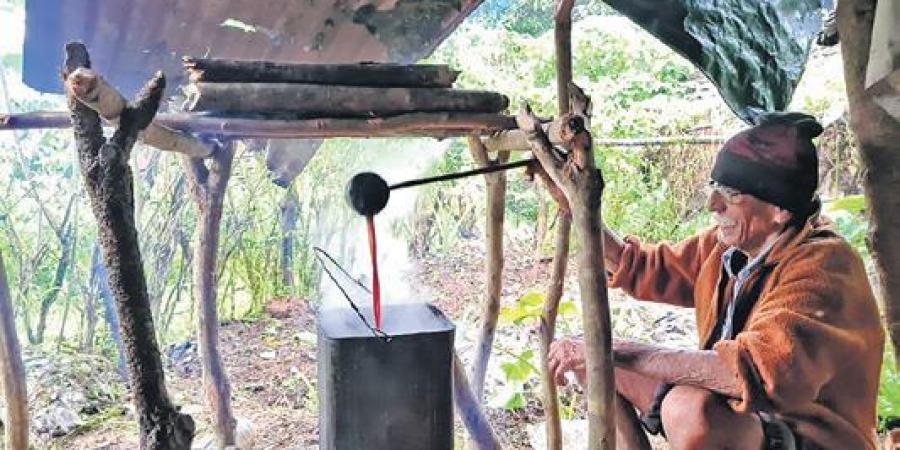
Udiyanda Subbaiah, a 90-year-old resident of K Nidugane in Madikeri, is always busy during the rainy season. While most of the residents stay indoors due to the wet and chilly weather, Subbaiah (aka thaatha) goes out early in the morning and begins his search for the Malabar tamarind fruit – scientifically called  Garcinia gummi-gutta.

With his feet buried in slush, Subbaiah walks miles to collect the ripened fruits. He rushes back home with a basketful and sits down to remove loads of bloodsucking leeches that have crept all over him. He later sets up a make-shift tent and begins the tedious job of brewing vinegar from the fruit – popularly known as Kodagu’s ‘kachampuli’.
Kodagu district is known for its exclusive traditional culinary and the ‘pandi’ (pork) curry tops the table. And adding the special tang to these traditional non-vegetarian dishes is ‘kachampuli’ or ‘pulineer’ (puli in Kodava language means sour). Commonly known as black vinegar, ‘kachampuli’ is indigenous to the district and is prepared by the locals during the rainy season.

 “The ‘kachampuli’ fruits start to ripen following the first rain in the monsoon season. Every day, we collect the ripened fruits that are mostly fallen on the ground. We take the fruits home and separate the seeds. Next, we put the fruits on a handmade wooden grill, which is fixed atop wood fire. The fruits have to be dried at high temperature continuously for nearly two days. The dried fruits are then put in boiling water (measured in proper proportion) and kept in a container for over a day.

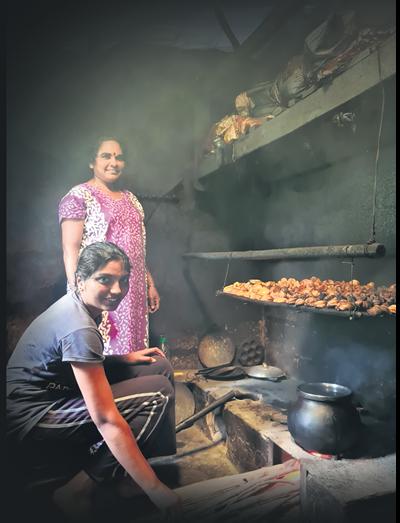
The pulp gets separated from the fruit in the boiling water and the water is strained, which is then heated constantly on wood fire for nearly two days…the water must be heated until it gets thick and starts foaming. It might take more than two days sometimes,” explains K A Vedavathi, a resident of Galibeedu, about this sour extract. She has been brewing ‘kachampuli’ for nearly 25 years now. 

While there are various methods of making ‘kachampuli’, Subbaiah follows the simplest one. “Until the extracted vinegar is thick and filled with flavour, the method used to brew it will not make much of a difference,” he opines. Subbaiah collects the ripe fruits, squeezes the pulp and brings the liquid to perfect blend by constantly heating it – sometimes for two days straight.

Kodengada Sumithra Nanaiah of Kiruguru village has been brewing ‘kachampuli’ in the most authentic way for 25 years now.  “A funnel-like structure is raised using wooden logs and this structure is called ‘bhalley’ in Kodava language. Banana leaves are used to cover the funnel and the ‘bhalley’ is filled with the ripened fruits. The structure is covered to prevent rainwater entering it and a container is placed under the filter. Once the fruits start to ferment, the juice drops down into the container. The liquid collected is then heated on wood fire and the thickened extract is ‘kachampuli’ or ‘pulineer’,” explains Anju Thimmaiah, daughter-in-law of Sumithra.

The popularity of this black vinegar is reaching worldwide even as Michelin Star Chef Gordon Ramsay was introduced to its authentic taste during his recent visit to Kodagu. ‘Kachampuli’ is usually bought from the locals who prepare it without adulteration. The numerous spices shops that have opened across the district have become good marketers for the product and the vinegar is reaching all across the country. “We sell the thickened vinegar at Rs 700 to Rs 800 per 750 ml bottle. The same is sold at a higher price in retail shops, but the product at retail shops is prone to adulteration and is usually watery,” explains Ramyashree, daughter of Vedavathi.

The Ponnampet Forestry College has now started an initiative to rejuvenate the Garcinia gummi-gutta trees.  They have started a nursery where grafts of the plant are sold to farmers. The college administration is also promoting the traditional art of brewing ‘kachampuli’ as the Garcinia gummi-gutta fruits are collected in large numbers from the farmers and the students of the college are involved in brewing the traditional vinegar.

PULI POINTS

  • ‘Kachampuli’ is locally brewed by many residents and this earns the local families an annual income
  • This vinegar has a shelf-life of nearly three years
  • Malabar tamarind trees are not cultivated but are found naturally across the terrains of the district

Mother-daughter duo Vedavathi and Ramyashree at work. Nonagenarian Subbaiah brewing Kachampuli. Inset: Garcinia gummi-gutta fruit | Express

VARIOUS USES

Nothing goes waste while preparing ‘pulineer’. There is great demand for the dried pulp in neighbouring Kerala. It is sold between Rs 75 and Rs 100 per kg

source: http://www.newindianexpress.com / The New Indian Express / Home> States> Karnataka / by Prajna G R / Express News Service / October 25th, 2020

Avid Birder’s Wildlife Message Cards 2020

Mysore/Mysuru:

 Dr. S.V. Narasimhan, a family physician based at Virajpet in Kodagu district, is an avid birder, nature lover, adept at computers, Karnatak music and astronomy.

Author of Feathered Jewels of Coorg, a field-guide to 310 species of birds found in Coorg, Dr. Narasimhan is the pioneer in spreading wildlife conservation messages through his unique hand-painted Wildlife Message Cards that are sent free to individuals throughout the world to mark the Wildlife Week.

Total number of hand-painted cards made by him this year is 1,930; in 36 years, 72,655 cards. Total recipients this year including Star of Mysore – 1,010; in 36 years – 13,004 persons.

The Special Wildlife Messenger of this year is Red-whiskered Bulbul (Pycnonotus jocosus) — This is the most common garden bird of India. It has a black chest that is turned forwards and has bright red patches on the cheeks and vent. Melodiously vocal, it feeds on fruits, nectar and small insects.

Bulbuls are mostly monogamous. They build an open cup-shaped nest made of rootlets and leaves lined with soft fibre. They live for about 10-11 years.

source: http://www.starofmysore.com / Star of Mysore / Home> News / October 20th, 2020

Rare blue Indian Robin eggs found in Kodagu

Kodagu:

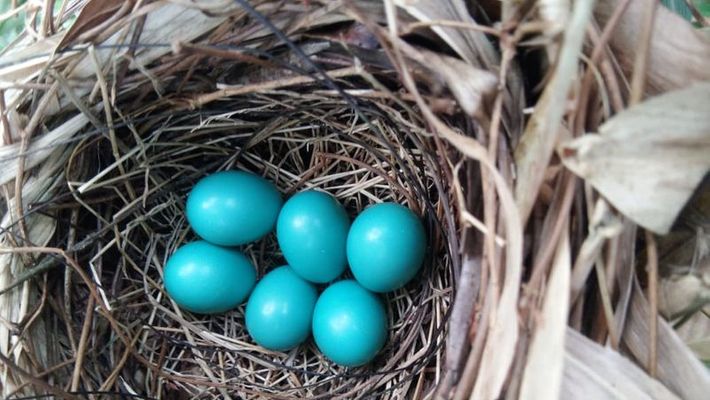
Six blue eggs of the rare Indian Robin bird were found at a coffee estate in Kodagu recently.

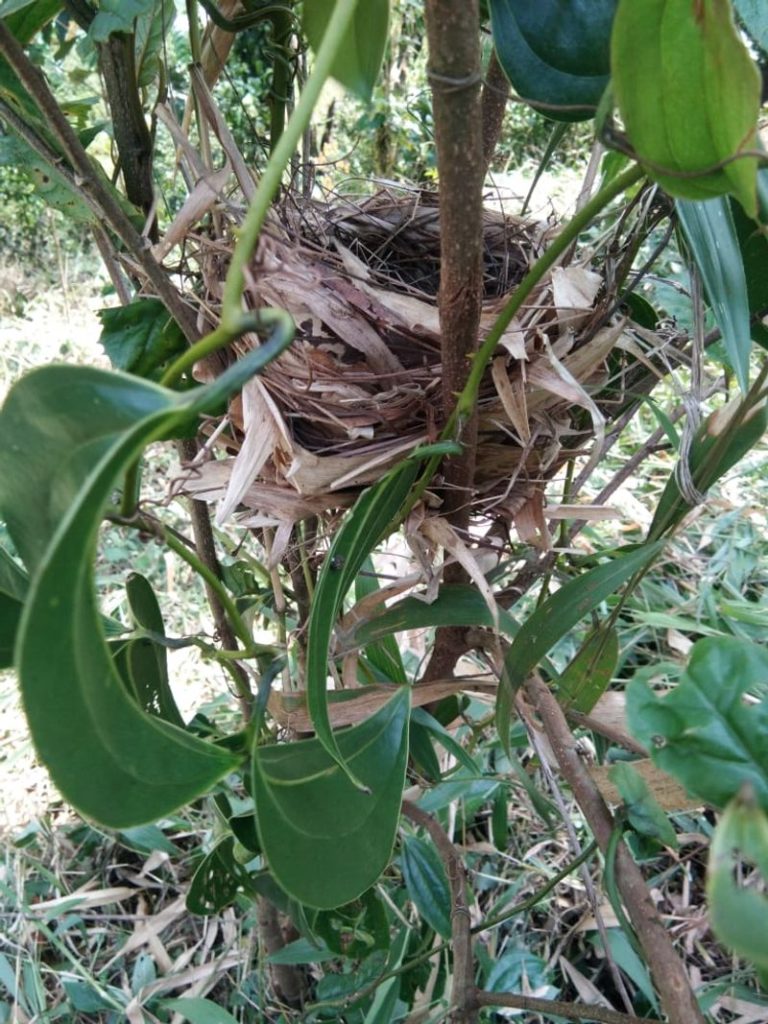
The 6 eggs were found nesting securely in a nest made of hay on a plant amidst the coffee estate.

The eggs were found by the farm workers of the estate owned by a woman named Pushpa in Bettathur village in Kodagu.

While the mother was found nowhere around the nest the eggs nested safe and secure from the current harsh climate.

According to reports Robins usually lay four eggs and then stop. However, Pushpa and her staff found six bright blue eggs in this nest.

It is the female bird’s job to maintain the proper incubation temperature, keeping the eggs warm during cold weather and shaded during hot weather.

The blue colour in robin eggs is due to biliverdin, a pigment deposited on the eggshell when the female lays the eggs.

There is some evidence that higher biliverdin levels indicate a healthier female and brighter blue eggs. Eggs laid by a healthier female seemed to encourage males to take more interest in their young ones.

source: http://www.newsable.asianetnews.com / Asia Net Newsable / Home> English News> India / by Team Newsable / Bengaluru – October 15th, 2020

How To Grow Coffee In Your Balcony: Bengaluru Lady Shares Expert Tips

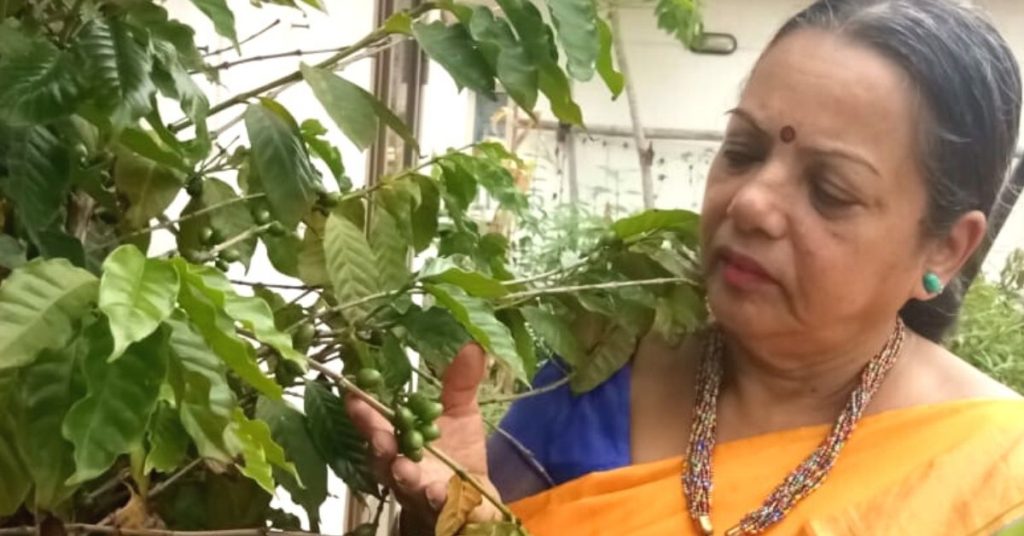
Indira Ashok Shah, a Bengaluru terrace gardener, shares tips on how to grow and care for a coffee plant at home.

For my parents, the day begins only after that first sip of filter coffee makes its way into their bodies. I’ve heard people refer to filter coffee as the elixir that gives them the energy to take on the day.

For all the coffee fanatics out there -what if there was a way to grow your own coffee plant, perhaps in your terrace or even balcony. You need not be living in Coorg, or Chikmagalur for this – you can grow them anywhere, says Indira Ashok Shah, an avid terrace gardener based in Bengaluru has successfully been nurturing a coffee plant on her terrace and in this article, she shall show you how you can do the same.

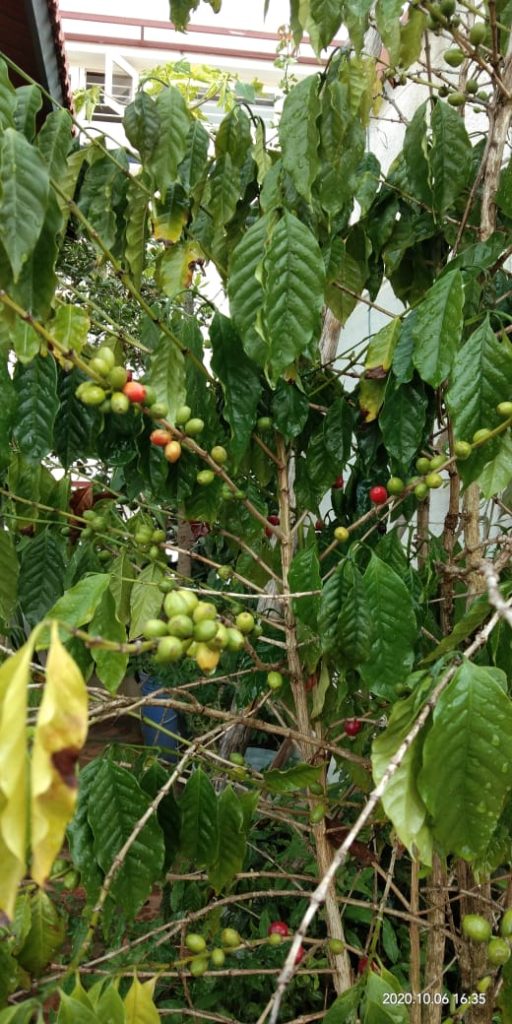
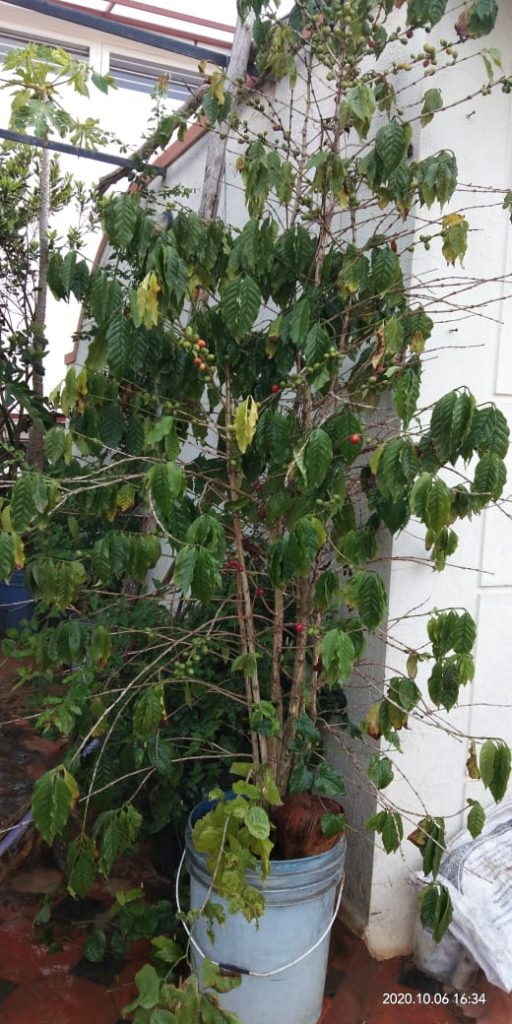
Indira’s coffee plant is almost ten feet tall from the ground and is lush with coffee berries. She also mentions that it has been with her for almost six years now. “I get about one kilogram of coffee powder annually thanks to my plant,” she says.

Things You Will Need To Grow Coffee Plant

Coffee plant in Indira’s terrace.

  • A 20-litre bucket (Indira has used a regular paint bucket)
  • Compost
  • Cocopeat
  • Soil
  • Stones
  • A well shaded area

Step 1

  • You will need to make three holes in the bucket you are using. This is for drainage and is extremely important that you do this. Once you make the holes place a small slab or piece of stone over the holes.
  • Do not cover the hole completely; it is important that when there is excess water in the bucket, it is able to drain out comfortably.
  • Fill the bucket with two parts of soil, two parts of cocopeat, and two parts of compost.

Click here to read up on how to make your own compost at home.

Step 2

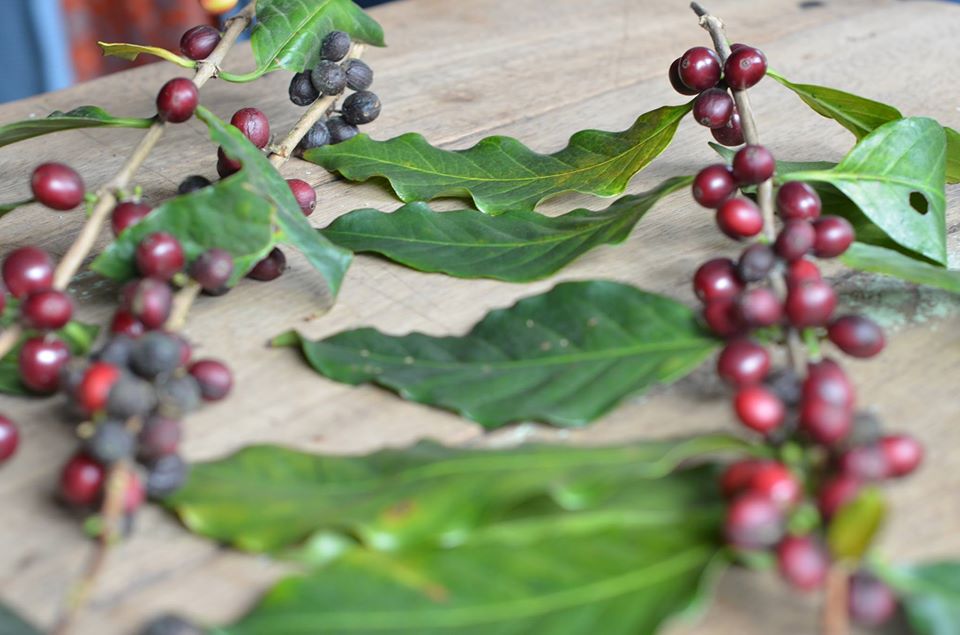
The coffee cherries after being harvested

  • Find a semi-shaded place to keep your coffee plant.
  • Do make note that coffee plant does not need direct harsh sunlight so find a good place for it to grow well.
  • It can also be kept indoors as long as they get some amount of sunlight each day.

Step 3

  • The coffee plant likes moisture and therefore you must ensure that the soil is always slightly moist and does not get dry.
  • The test to check whether the soil is adequately damp is to insert a stick in the soil. If it goes into the soil easily, then the soil moisture content is good.
  • While the soil must be moist there must not be any stagnant water on the surface.
  • Cocopeat is added to the soil to help it retain moisture.

How To Propagate Coffee Bean

  • Allow the coffee bean to ripen well. Once it is dried up, sow the bean into the same pot that you have made.
  • Once sown, ensure that the plant is kept under indirect sunlight.
  • Air Layering is another method that is used to propagate
  • Click here to watch the video about following the air layering technique.

Things To Know

Coffee growing in a bucket.

 Once every 10 or 15 days, do add more compost
2. Do not add any chemical fertiliser, pesticide, or anything additional to the plant
3. If you have a pest attack, just use a neem spray or make a mixture of Ginger-Garlic-Green Chilli (GGG)
4. To make the GGG mixture, take equal quantities of all three, make a paste, strain it and use that solution on plants, which have been attacked by pests.
5. Once the berries start turning brown, you can harvest them.
6. This can then be taken to a local coffee blender.
7. To add richness to the coffee, Indira adds chicory to the coffee powder and says her blends are usually 80 per cent coffee and 20 per cent chicory.
8. You can grow coffee across India, and Indira says that all one needs to keep in mind is to provide it with a shaded area to grow.
9. There is no particular season in which one needs to start growing coffee, just make sure that it is placed in a shaded area.
10. Coffee beans may be available at your local nursery and if you are unable to find it you can reach out to Indira as well.
11. If you get a graft and grow it, the plant will take about two years to grow and fruit.
12. Whereas if you start from scratch and sow the seeds then a minimum of five to six years is needed. So patience is the key.
13. Ensure that you water the plant every day and if the soil surface feels dry then twice a day as well.
14. You could also consider making your own cocopeat, which is nothing but the dried husk of the coconut churned in a mixie to get a good powder-like consistency. This, when sprinkled on the plant surface, helps to retain moisture for longer.

How And When To Harvest Coffee Berries

  • Wait for the berries to ripen and turn brown.
  • Pluck the ripened berries and remove the skin off the seed/bean.
  • Immerse all the seeds/beans into water and let it be until the skin and pulp completely leaves the seed/beans.
  • Sun dry the seeds/beans well to remove all water and moisture.
  • Once done, you can take the seeds/beans and get the coffee ground or do it at home.

You can click on the video below for a better understanding of how to grow coffee and care for the plant.Prom

“Please grow it by yourself and just refrain from using chemical fertilisers. Collect all your wet waste and make your own compost,” she says in conclusion.

If you want to reach out to Indira and get coffee seeds from her to grow your coffee then you can reach out to her via this Whatsapp group or through her Facebook group.

(Edited by Vinayak Hegde)

source: http://www.thebetterindia.com / The Better India / Home> The Better Home / by Vidya Raja / October 06th, 2020

Kodagu farmer producer company exports first direct shipment of coffee to Europe

For the first time Kodagu coffee growers, who formed a farmer producer company, Biota Coorg FPC, have exported their crop directly to a roaster in Europe.

IB Bopanna, one of the founding directors of Biota Coorg

After suffering 50-70 per cent crop loss due to excessive rainfall and landslides over the last three years, small, mid-sized and large coffee growers in Kodagu district of Karnataka, who pooled in their coffees under Biota Coorg, are set to receive a 15-20 per cent premium, on an average.

Incorporated in January, Biota Coorg made its first direct export shipment of bulk branded coffees to a large roaster in Europe last week. A container consisting of 320 bags (60 kgs/per bag) of Robusta Cherry AB sourced from 75 of its members was shipped from Mangaluru port on September 30. The company plans to ship 10 more containers to different roasters across Europe, of which two containers are scheduled to be shipped in October and the rest by December. In addition, since its inception, Biota Coorg has directly sold Arabica coffees to local roasters and local cafes at a premium. The 10 founding directors of Biota Coorg, collectively have over 100 years of domain expertise in coffee growing and allied areas including exports of agri commodities, global marketing of coffees, agro-forestry, plantation management, organisation development and coffee quality enhancement through cupping.

Unique flavour

Grown under the shade of multiple species of endemic rainforest trees at an elevation of 3,000– 4,000 feet above sea level, Coorg coffees have distinct fruity notes because of the wild figs, citrus fruits that grow in the rainforests and caramel notes from the leaf litter-enriched soil. Because of the higher elevation, Robusta coffees from Kodagu take a longer time to mature and ripen, thereby resulting in a softer cup.

“The objective of incorporating Biota is to market and put Coorg Coffee on the world map by elevating its quality based on the region’s ecology and biodiversity,” IB Bopanna, one of the founding directors of Biota Coorg and former Senior Global Director- Coffee, The Coca-Cola Company, Atlanta, USA, told BusinessLine.

“Earlier growers were selling their coffee in bulk with little differentiation to local traders, at prevailing market prices. We are a cohort of 75 members (in our first year of operation) who have committed to superior on-farm harvesting and post harvesting standards that will command a premium in the international and domestic markets. We are committed to uphold the legacy of the region’s biodiversity by adhering to an audited standard in addition to RFA (Rainforest Alliance) certification, which we have applied for. All the coffee we procure is 100 per cent traceable. Every grower’s coffee is segregated, processed at the Tata Coffee facility in Kodagu, cupped and prepared specially to fit the requirement of high quality roasts, blends and brands.”

Community initiative

MB Ganapathy, former Chairman of KPA, said: “There are many large coffee growers who export their coffees in their individual capacities however, the majority who are small growers are dependent on the local traders to sell their coffee. Biota Coorg is a great community initiative that will benefit small coffee growers who can join hands and realise better prices for their produce by following quality practices set by Biota that will adhere to international standards of roasters.”

Bose Mandanna, a large grower and Biota member, said: “The advantage for international roasters is that they are ensured of a consistent supply of quality coffees from Biota. We have received a standard of good agricultural practices from Biota which we strictly follow including the use of chemicals and labour. We harvest the coffee at the right time, pulp it on the same day, wash it clean and dry it to the correct moisture levels, after which it is inspected by a Biota representative, who then further processes it in the curing works.”

source: http://www.thehindubusinessline.com / Business Line / Home> AgriBusiness / by Sangeetha Chengappa / Bengaluru / October 05th, 2020

Jai Jagadish: We discuss only cinema in our house

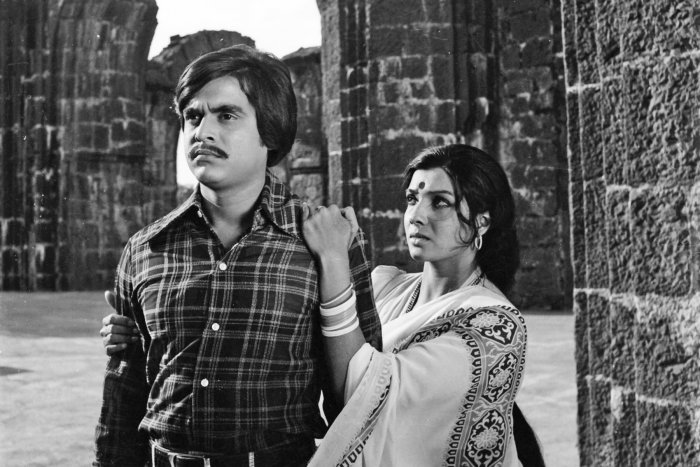
Puttanna Kanagal cast Jagadish as the lead in ‘Phalitamsha’ even though he had no prior experience in acting.

After the first few days of shoot of Phalitamsha, he wanted to give up

Filmmaker Jai Jagadish had no background in films or interest in it during his childhood. He belonged to a family, where his father, a farmer, insisted on Jagadish becoming a double graduate.

Puttanna Kanagal cast Jagadish as the lead in ‘Phalitamsha’ even though he had no prior experience in acting. Filmmaker Jai Jagadish had no background in films or interest…

Childhood and films

Hailing from Somwarpet taluk, Kodagu, he belonged to a family of coffee, pepper, cardamom and paddy growers. “My family consisted of five daughters and two sons. My father was a farmer.”

The filmmaker studied at the government school nearby. “I was a naughty child and uncontrollable, so I was sent to study in Sri Ramakrishna Vidyashala, Mysuru.” Jagadish’s father insisted on him becoming a double graduate. He did his BA from St. Philomena’s College, Mysuru.

Jagadish never acted in a drama, and never thought of acting in films. “Cinema was not my cup of coffee. My friend, Manjappa, a college leader from Maharaja’s College asked me if I would act in a Puttanna Kanagal’s film, if he got me the role. I was amused by the idea and I challenged him to find me a role,” he says.

Jagadish had read in film magazines that no actor had been finalised for ‘Phalitamsha’. In a couple of days, he got a call for the role, against four heroines. “I said I wasn’t going to act in it. My friends tried to convince me. I told them that I had other intentions and want to start my own business,” he says.

Even so, he went to Bengaluru, to meet Puttanna Kanagal. “I was asked if I knew anything about acting and I immediately responded that I didn’t. My looks and physique came in my favour, I was offered the role. I was shocked.”

Jagadish was told to leave to Badami and join the shoot immediately, but he insisted on informing his family. “I made a lightning call to my father. I knew he wouldn’t agree, and as expected after I called and explained, expletives followed. In the corner of mind, I knew I shouldn’t let go off the opportunity so I went for it,” he says.

After a few days of shoot, he wanted to give up. “I had only one lungi and a toothbrush on me and I decided to flee from the sets. Kitty, Kanagal’s wife’s brother, saw me from a distance and asked me what I was doing, he told me to rethink and give best shot at acting,” Jagadish says.

Jagadish’s first film released in a grand manner but didn’t do well. “In ‘Phalitamsha’, some shots were taken at the flying training school, Jakkur. The principal of the school, Patil, was impressed by me and I spoke about my interest in flying. A year later, I met him on M G Road and he told me to meet him at the school next day,” he says.

Jagadish was asked to do some medical checkups and joined the school. He studied for almost two-and-a-half years, while he waited for acting roles. “S Siddalingaiah called me and asked me to play the role of Vishnuvardhan’s brother’s role in ‘Biligiriya Banadalli’,” he says.

The role with dark shades, created a new turn in his career. “Directors were looking for a young villain, which led me to many other films.”

He was soon seen in films like ‘Bandana’, ‘Paduvarahalli Pandavaru’, ‘Daranimandala’ and ‘Parajitha’

He has worked with different actors like Vishnuvardhan, Srinath, Rajkumar (in Guri), Puneeth Rajkumar. Ravi Chandran. “I’ve worked with maximum films with Vishuvardhan, he was my favourite hero and a good friend. I’ve acted with films in Ambareesh to…

Planter now

Jai Jagadish has an estate in Kodagu, and he calls himself a planter and farmer now. “This is my work now. I have decided to stay away from filmmaking as I won’t be able to withstand the losses now,” he says.

Demonetisation soaked the spirit of filmmaking off him. “Most people decided to not invest into films. After ‘Yaana’ that was directed by my wife and starred daughters Vainidhi, Vaibhavi and Vaisiri, didn’t do as expected in the box office, I decided to stay awayfrom production,” he adds.

source: http://www.deccanherald.com / Deccan Herald / Home> Entertainment> Entertainment News / by Tini Sara Anien / DHNS / October 04th, 2020

Appointed As Mysore University Syndicate Member

Mysore/Mysuru:

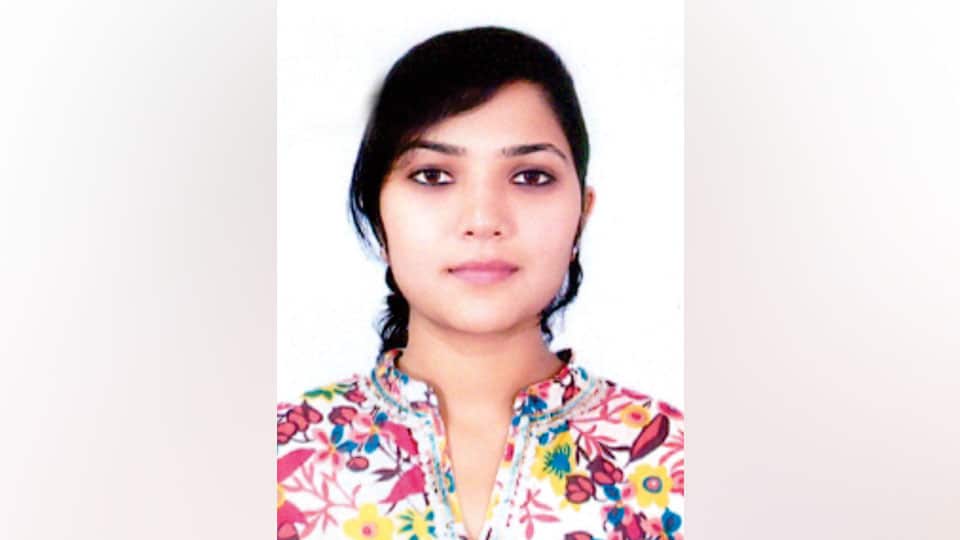
Dr. Chaitra Narayan, an entrepreneur, has been appointed as the Syndicate Member of University of Mysore. 

As per the notification issued from the Office of the Governor, the term of office shall be for a period of three years with effect from Sept. 22, 2020. 

Dr. Chaitra, Founder of Codagu Agritech and Shivam Distillations, holds a Ph.D and MSc in Microbiology from the University of Mysore. 

She was selected by Rashtrapathi Bhavan, New Delhi, for the Festival of Innovation and Entrepreneurship in 2018 to present her ideas before President Ram Nath Kovind. She also presented the Biocapsule technology, which is a ‘Make in India’ initiative before Prime Minister Narendra Modi. 

Currently working for the farmers of Kodagu, Hunsur and Periyapatna regions since 2016 towards alternative farming which involves cultivation of medicinal and aromatic plants, it has successfully led to an increase in revenue generation of farmers along with an assured buy-back market. 

Codagu Agritech is a Biocapsule Manufacturing Company which helps farmers go for safe and sustainable farming while Shivam Distillations focuses on providing farmers of Hunsur and Periyapatna regions to cultivate aromatic crops as an alternative to tobacco cultivation.

An aromatic plant processing and distillation unit has been set up in the region to provide the farmers with the market at their doorstep.

source: http://www.starofmysore.com / Star of Mysore / Home> News / September 29th, 2020

Kodagu roads: ZP seeks ₹20-cr. grant for repair

Public criticism forces ZP to seek government’s help to deal with the situation resulting from bad roads

The members of Kodagu Zilla Panchayat have met Minister for Rural Development and Panchayat Raj K.S. Eshwarappa and urged him to release a sum of ₹20 crore for urgent repair of roads that have become unmotorable following heavy rains over the last three years.

Kodagu had witnessed widespread floods and landslides three years in a row, resulting in extensive damage to the road infrastructure and causing hardships to the local people. The bad roads have led to resentment against the elected representatives, especially the members of the Zilla Panchayat whom the public are blaming for the apathy.

The public have been resorting to novel protests across the district demanding immediate repair and asphalting of damaged roads. There have been instances of public planting saplings on the potholed roads to vent their ire.

A delegation from the Kodagu ZP led by president Harish met Mr. Eshwarappa in Bengaluru on Tuesday and apprised him of the condition of roads besides the urgency for releasing funds for their repair and asphalting.

In a letter to Mr. Eshwarappa, Mr. Harish said tourists had been sharing messages and photos on the poor condition of roads in Kodagu on various social media platforms.

He sought an immediate grant of ₹20 crore for improving the condition of roads.

source: http://wwww.thehindu.com / The Hindu / Home> News> States> Karnataka / by Special Correspondent / Mysuru – September 24th, 2020

KSIIDC Lists Kushalnagar Airstrip As Priority One

Karnataka State Industrial & Infrastructure Development Corporation Limited also plans to develop a helipad

Kushalnagar:

The Karnataka State Industrial & Infrastructure Development Corporation Limited (KSIIDC), the nodal agency for the development of airstrips across Karnataka, has listed the proposed airstrip at Kushalnagar as a priority one. 

In its website, the KSIIDC has listed the 950-metre Kushalnagar airstrip as located adjacent to Sainik School with land availability of 49.5 acres. There is a proposal to develop the area as an airstrip and a helipad. An airstrip would have  basic minimum facilities like the airstrip, terminal with security post, fencing and security by local Police. 

The Government Order to develop Kushalnagar airstrip along with other airstrips at Chikkamagalur, Karwar, Raichur, Gadag, Bagalkot, Davanagere and Udupi was issued way back in 2018 after the Narendra Modi Government announced Regional Connectivity Scheme (RCS) or the Ude Desh ka Aam Nagarik (UDAN) Scheme. Among them, airstrips at Chikkamagalur, Karwar and Kushalnagar are being taken up on priority.

Last December, the Union Civil Aviation Ministry had selected Kushalnagar airstrip under the fourth round of RCS-UDAN Scheme. The airstrip was listed under unserved airport category — any airport at which there have been no scheduled commercial flights. But there were no bidders last time as the Kushalnagar airstrip was in nascent stage. Now that the land has been identified, the Government is looking forward to private companies to develop the airstrip under Public-Private-Partnership (PPP) model.  

Agri Minister unhappy

The land for the airstrip has been identified behind the Kodagu Sainik School at Koodige. Over 49.5 acres land owned by Agricultural Department at Doddathoor village till the border of Basavanathoor village has been identified for the airstrip and in June last year, a team of officials from the Airports Authority of India (AAI) had visited the site and accepted the land proposal. 

But Karnataka Agriculture Minister B.C. Patil has not taken the land issue lightly as 49.5 acres is being taken from his Department. At a recent meeting of Agriculture Department in Madikeri, the issue was brought to his notice by some officials and the Minister categorically stated that the Department land would not be handed over to the airstrip. 

Justifying his move, Patil told the officers that the Department had 475 acres of flat land in Kushalnagar. A part of the land was later given to Sainik School which occupied over 66 acres. Likewise, over 15 Departments including Koodige Sports School, Dairy and Poultry Farms of Animal Husbandry Department and Horticulture Department have got lands. 

“If we go on giving lands to all, our Department would suffer as we too need land for our agriculture research and extension activities,” Patil reasoned, refusing to hand over the land to the airstrip. 

Ideal place for airstrip: MLA

Patil’s statement notwithstanding, Madikeri MLA Appachu Ranjan, who first proposed an airport to Kodagu when he was the Minister for Youth Services and Sports in 2012, told Star of Mysore that the land has been finalised and there is no question of changing it at this juncture. 

“A 50-acre flat land is not available anywhere in Kodagu that is a hilly terrain. This land is ideal and we will get it for sure. As there is a Sainik School next to the airstrip, there is a proposal to establish an Aviation Training Academy where this Academy can train flight aspirants from Kodagu, Mysuru and surrounding regions. This is an ideal place for the airstrip, helipad and the Aviation Training Academy,” he explained. 

source: http://www.starofmysore.com / Star of Mysore / Home> News / September 12th, 2020

Obituary – Maneyapanda C. Belliappa

Mysuru :

Maneyapanda C. Belliappa (Bollu), a coffee planter and a resident of Balaji in Gonikoppal, passed away last evening at a private hospital in city.

He was 78. He leaves behind his wife Revathy (Kollera), daughters, sons-in-law, grandchildren, sister, brother and a host of relatives and friends.

Last rites were performed at Muktidhama in Vijayanagar here this morning.

source: http://www.starofmysore.com / Star of Mysore / Home> Obituary / September 05th, 2020