Category Archives: Agriculture

Brew-tiful Coorg

The Karnataka district is a rich blend of history and hospitality
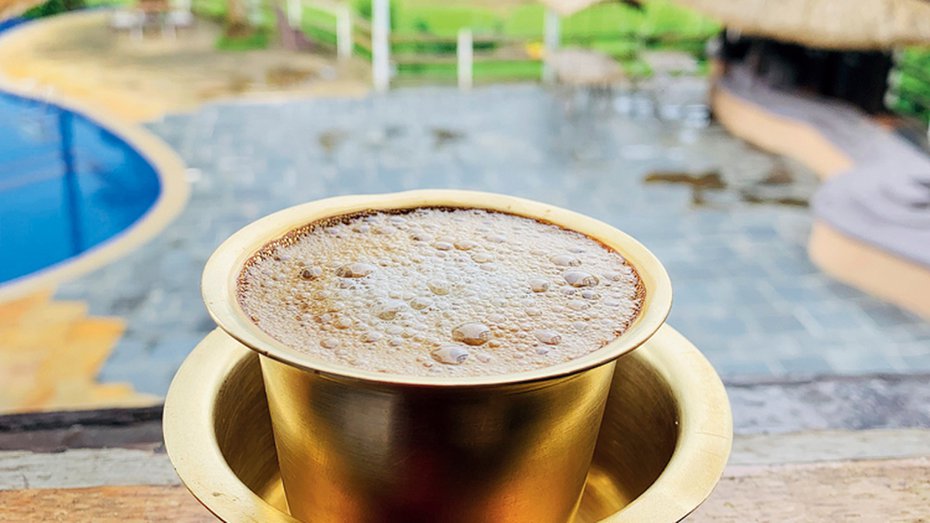
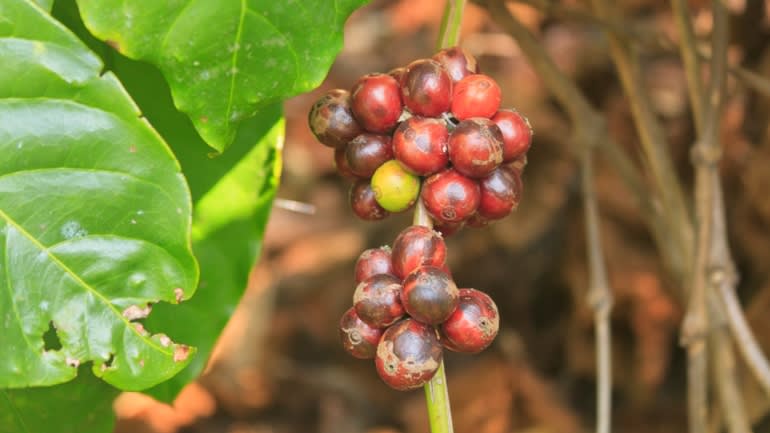
Coorg coffee is grown at a high altitude and under a well-defined two-tier mixed shade canopy /  Picture: Karen Anand
Coorg coffee is grown at a high altitude and under a well-defined two-tier mixed shade canopy /
Picture: Karen Anand

I recently visited Coorg in southern India. And as my dear husband keeps saying, I immerse myself so wholeheartedly wherever I am that I invariably want to move there… or at the very least make plans to revisit very soon! Coorg is no exception.

About 250km from Bangalore, it’s an area with a sense of nobility and belonging, of dense forests, coffee plantations and some spectacular estates. The terrain is very, very different from the rest of south India. As you take the gentle climb from the plains to Coorg, or Kodagu as it is now known, you have beautiful mountainous rocks, areca palms that produce betel nut, palm trees and then paddy — it’s a really stunning scape that looks like a painting at every glance.

The capital of Madikeri or Mercara as it was called before, looks like a town like any other town in India, but as you dig a little deeper, visit the vast estates and eat with locals, you find a generosity of spirit, an unbelievably high education level (almost 100 per cent literacy) and a joy of preserving traditions… and that includes food.

Coffee and spices

Kodavas look physically very different to people from Karnataka and the neighbouring Tamil Nadu. They are traditionally warriors, hunters and now landowners. Their livelihood is mainly coffee and this area of just 5,000sq km is the largest coffee-producing area in India. History has it that there was a gentleman called Baba Budan who brought coffee beans to the Chandragiri Hills in Chikmagalur from Yemen in the 17th century. Then the British came in the 19th century and found that this was a crop that could be exploited since conditions for growing coffee were pretty perfect. That was the birth of widespread coffee plantations and coffee farming in this area.

Coorg coffee is grown at a high altitude and under a well-defined two-tier mixed shade canopy. Among the bigger evergreen trees are tall jackfruit, rosewood and wild fig trees which protect the coffee from seasonal variations in temperature and also enhance the soil by providing nutrients from deeper layers. The second layer is pepper, cardamom, cloves, orange and banana. It also protects the coffee from the harsh rays of the sun in summer. Conditions are similar in Colombia and Kenya, considered the best coffee-producing regions in the world.

Coorg is known for “spicy” food. There are lots of spices in their spice mixes — pepper, cardamom, cloves and the tiny bird’s eye chilli known as parangi. Spices are roasted and ground, which gives complexity and density of flavour to their dishes, both vegetarian and meat. Although Coorg is known for the famous pork dish, pandi curry, which is a specialty, there are a host of vegetable dishes that use local vegetables like bamboo shoot, wild mushrooms and a kind of red-leafed spinach, all quite delicious and different.

The method of most of their cooking is roasting and dry-grinding spice combinations, which are thrown into a pot of meat or vegetables with a little black vinegar from the kachampuli, a very sour mangosteen-like fruit which is dried till it’s black and from which an intensely sour vinegar is made. Rice is the staple grain and is eaten as is or made into dumplings with coconut and steamed (kadambuttu), rice rotis and rice cakes (paputtu).

Contrary to what I have up to now believed about food in five-star hotels, the cuisine at the rather magnificent and spanking new Coorg Wilderness Resort exceeded all my expectations. It was beautifully served and tasted like real home cooking. From painstakingly researched local recipes to produce wondrous Coorg lunches to the perfect Chicken 65 and velvety fish molee, chef Ranjan and his team nailed it every time. It poured while we were there but the resort itself is something quite fantastic in terms of space and facilities. So if you do want to experience the wilderness, want to have a memorable lunch set in the middle of a forest and come back from a plantation visit to the comfort of a heated bathroom floor and a glass of Paul John single malt, this is the destination for you.

Plantation life

A one-stop shop in Madikeri for all things Coorg is the utterly delightful AINMANE (www. ainmane.com). Thamoo Poovaiah and his partner Narendra Hebbar started the shop four years ago. They source local products like coffee and chocolate made from south Indian cacao beans. You’ll get a brilliant espresso here and have the opportunity to try many blends before you buy.

They produce and package pickles and squashes (passion fruit is a local delicacy), spices and the most extraordinary honey. The problem with Coorg coffee is that half the world’s great brands use Coorg beans in their roasts and blends. The Coorg plantation owners themselves seem content to sell their raw green Arabica and Robusta beans and leave it to others to create the magic, do the marketing and reap the benefits.

We went to Petu Kariappa’s enchanting 100-acre estate called Harangal in Madapur — by Coorg standards this is small. He is one of the few farmers who successfully grows the much-sought-after “diva” of coffee beans, Arabica. The beans are much more difficult to grow than the better yielding and bigger bushes of Robusta. Like many growers, he washes, removes the pulp and dries his beans and sells green coffee to bigger companies who then cure, roast and blend.

We also visited Sadat Sathak, the young man behind Old Kent Estates. One of India’s oldest coffee plantations, it was developed in the 1800s by lieutenant colonel W.R. Wright, an army officer in British India. After his death in 1898, the property remained with his family until 1964 when it was bought by its present owners. Sadat has studied abroad, speaks fluent Italian and has an MBA. It shows. He already successfully exports his beans to Italian coffee companies. The stunning little British-style bungalow has been restored and converted to a boutique hotel with spacious cottage accommodation (the bathrooms are large and built with skylights designed to allow you to have a private spa-like experience) and an English country garden.

We had lunch at the much-talked-about Evolve Back (aka Orange County Resort). It does all it promises in keeping with tradition and nature. And I must say for a 25-year-old property, it has sustained and still gives an excellent level of hospitality.

The rain unfortunately hampered our plans to see more but I will go back and so should you.

Karen Anand is a culinary consultant, food writer and entrepreneur. In recent times her name has been synonymous with farmers’ markets. Follow her on www.facebook.com/karenanand

source: http://www.telegraphindia.com / The Telegraph, online edition / Home> Travel / by Karen Anand / November 02nd, 2019
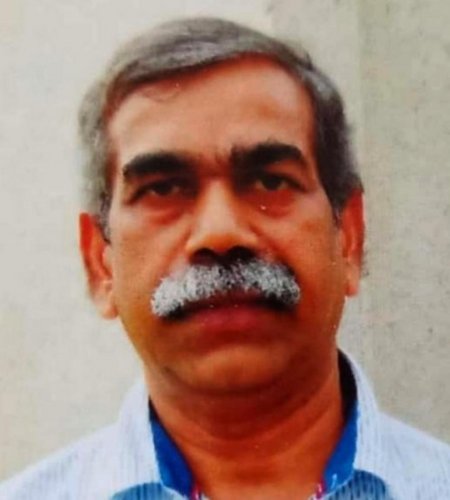
DCF of Madikeri division passes away

T P Shivaiah
T P Shivaiah

T P Shivaiah, who was serving as Deputy Conservator of Forests of Madikeri Wildlife Division, passed away on Friday. He was 59.

He had suffered a heart attack on April 19 and was admitted to a hospital in Mysuru. However, he did not respond to the treatment and breathed his last on Friday morning.

The final rites were performed with state honours at his native place in Bidalli village in Somvarpet taluk on Friday evening.

Deputy Commissioner Annies Kanmani Joy, CCF Hirelal, DCF Prabhakaran, Nagarahole DCF Mahesh Kumar, Virajpet DCF Shivashankar and other paid their respects to the departed soul.

Shivaiah is survived by wife, a son and a daughter. Both of his children could not take part in the last rites as son is based in USA and daughter in Australia.

source: http://www.deccanherald.com / Deccan Herald / Home> State> Mangaluru / by DHNS, Somwarpet / April 24th, 2020

Ration Articles Distributed To Mahouts At Dubare Elephant Camp

MahoutKF20apr2020

Kushalnagar:

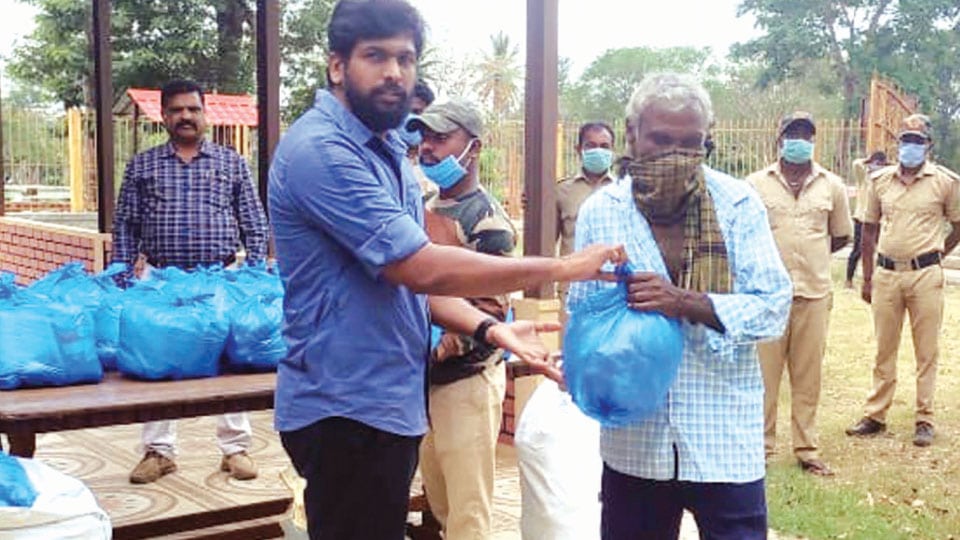
The Forest Department distributed ration to over 60 Mahouts and Kavadis of Dubare Elephant camp near here on Saturday.

Speaking after distributing ration, Madikeri Sub-Division Conservator of Forests (CF)Prabhakar said that the families of Mahouts and Kavadis who live in tribal hamlets were facing a lot of difficulties due to the lockdown.

The Department, taking note of their plight, decided to distribute ration and essential items kits to them. Asking the Mahouts, Kavadis and their family members to stay at home in order to maintain their health in the wake of COVID-19, he highlighted the need for everyone to maintain social distance in order to be safe.

Somwarpet ACF Nehru, Virajpet ACF Dayanand, Kushalnagar RFO Ananyakumar, Dubare Sub-Division Forest Officer Ranjan and others were present.

source: http://www.starofmysore.com / Star of Mysore / Home> News / April 12th, 2020

CNC Celebrates Edmyar-1 Kodava New Year Day By Ploughing Paddy Fields

Edmyar01KF15apr2020

Madikeri:

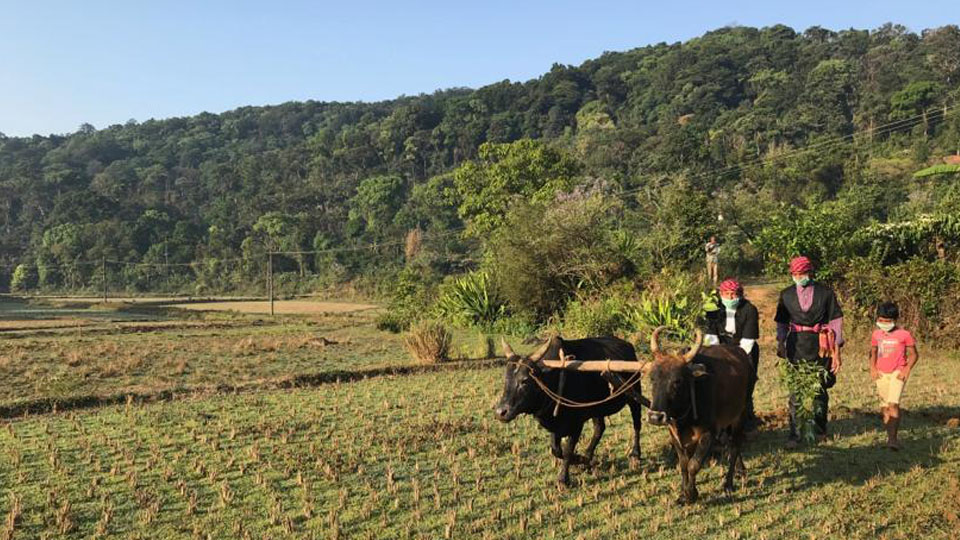
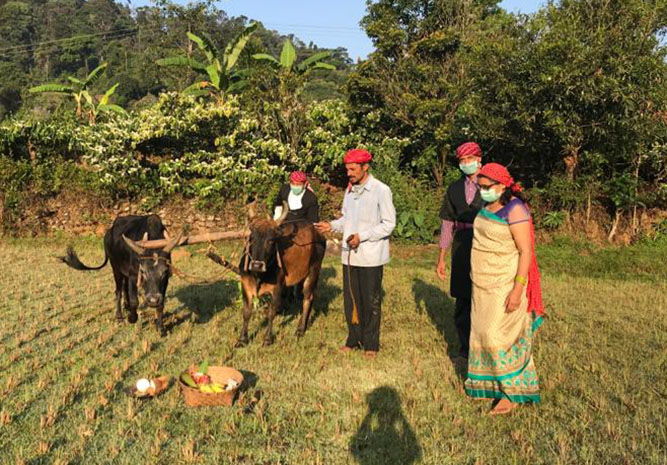
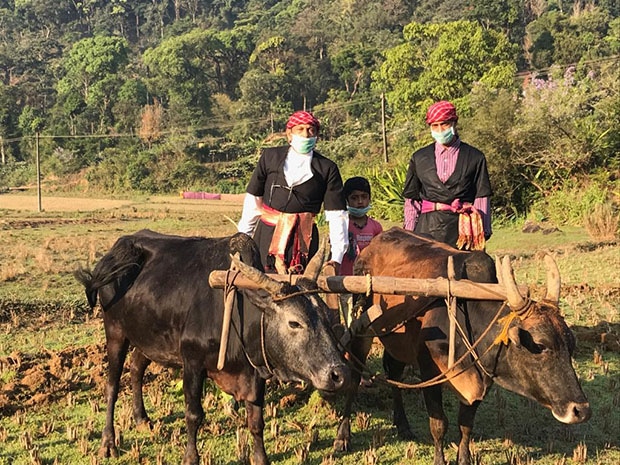
Codava National Council (CNC), which is aspiring for Codavaland Geo-Political Autonomy and ST tag for Kodava tribalism, celebrated its 26th Annual Codava (Kodava) New Year Day Edmyar-1 as per Kodava tribal almanac by ritualistic ploughing of paddy fields.

CNC President N. U. Nachappa offered prayers to Guru-Karonas at Koopadira clan and reverential prayers to Mother Earth, Sun, Moon before two bullocks named Karianna – Kulla, ploughed a few rounds in the wetlands of Koopadira clan.

To herald the unbreakable bondage of Kodava tribal world with mother soil to entire universe, CNC is determined to showcase and display the age-old folkloric cultural traits and genus of Kodava tribal ancestry. In other words, all these ancient festivities enriched the civilisation of Kodava martial tribe.

Edmyar02KF15apr2020

CNC also prayed for the well-being of all the people of this world that is reeling under the pandemic COVID-19. Koopadira Sabu, Koopadira Mohan Muthanna, Lt. Col. Parvathi, Kompulira Myna Purandara and Koopadira Pranam participated in the celebrations.

Due to Corona pandemic, CNC’s Annual Edmyar-1 evening’s torchlight (pombolak) procession at Gonikoppal, is not being celebrated today. Speaking on the occasion, Nachappa said, “All Codava folkloric festivities and rituals mirror the agro-pastoral commitment, hunting skills and warrior hood of Codava tribal folk from time immemorial which depicts that we are above the tenets of caste and religion who are living in the rustic hills, mountainous terrain in the midst of rivers and rivulets.”

Edmyar03KF15apr2020

“We are happy that the Founding Father of the Constitution of India, Dr. B. R. Ambedkar’s birthday coincides with Codava New Year. We are ever grateful to Dr. Ambedkar for his yeomen contribution of accommodating space for expressing grievances of micro-minority tribes like Codava tribe,” he observed.

source: http://www.starofmysore.com / Star of Mysore / Home> Covid News / April 14th, 2020

All about an extreme love of Coffee: In this novel, a young couple on an adventure quest discovers their passion for warm frothy concoctions and each other

An excerpt from Harish Bhat’s book “An Extreme Love of Coffee”. Harish Bhat is the author of the bestselling book “Tatalog” and chairman of Tata Coffee Ltd.

Author Harish Bhat. Harish is chairman of Tata Coffee Ltd. and brand custodian of Tata Sons Pvt. Ltd.

Three shrines of coffee have I now foreseen, three goddesses that nurture our love for the bean. From river to ocean, each shows you the way. Find me these shrines, and then will I say: Here’s my treasure, let it fill up your day.

Rahul read the lines aloud to Neha for the tenth time that morning. What did they actually mean? Both of them looked at each other silently and acknowledged that they were stumped. Totally clueless.

Outside, dawn had broken and they could hear the high-pitched charr-charr notes of a single woodpecker breaking the stark silence of the coffee plantations around them. Inside, most of the coffee beans had fallen off the bed and were strewn all over the floor. It had been a memorable night and now they knew for sure that coffee was a great stimulant.

But where was the stimulant that would help them figure out this puzzle, one written by a mysterious monk who had died long ago, leaving a great treasure hidden? Where were these three shrines that the monk had spoken of? Where exactly should they begin?

Pooviah brought them their morning coffee in an elegant tray with a pot and two cups of white bone china. ‘Sir, I used those pink coffee beans you gave me to make coffee for Madam and for you today. The smell of this coffee is getting better with each passing day, Sir.’

The old woman’s coffee! In the midst of all the other excitements of the past two days, Rahul had nearly forgotten about this. ‘Yes, yes, Pooviah, please pour coffee for us.’

The walnutty flavour came back to them once again. Superb! As they sipped the coffee, Neha leant back and read the puzzle once again. Suddenly, she could clearly see the author himself, the venerable monk. He appeared vividly in her mind. Orange-robed monk, fat, bald and peaceful, walking somewhere. Where was he walking to? And then, behind the monk, she saw flowing waters. A few words from the puzzle swam in front of her now-dilated pupils: From river to ocean, each shows you the way.

She sat up with a start. ‘Rahul, listen. Listen to me. We need to go to a river, one that will show us the way to the first shrine. That’s what the monk meant when he wrote “from river to ocean”. The river first, and then the ocean will show us the way. That’s why he put those words in his note, to give us a clue. I can see him in my mind, Rahul. He is walking by that river, right over there, right now.’

Rahul glanced at the lines once again. What Neha said made sense. They had nothing else to go on anyway. Then, he remembered something, a local guidebook kept in their room that he had briefly gone over yesterday. It spoke of a river nearby. He went into the room, brought out the small guidebook, turned a few pages, and began reading aloud:

The Kaveri is the patron goddess of all coffee growers in Coorg. Flowing through the beautiful coffee plantations and nurturing them like her own special children, the Kaveri is the great river of this region. Originating in the foothills of the Western Ghats, the river meanders through the region of Coorg and the vast Deccan plateau before it eventually flows into the Bay of Bengal. The Kaveri quenches this region’s thirst for water and makes it one of the most fertile lands known to mankind. From these lands of the Kaveri come some of the finest coffees the world has ever known.

Rahul turned to Neha. ‘Neha, I think you are absolutely right. We must go to the Kaveri. That’s where we will begin.’

He continued reading the guidebook.

The Kaveri is not merely a river, but a goddess who is worshipped by everyone in this coffee growing region of Coorg. The unique coffee of Coorg springs from the sweet waters of this sacred river. Coffee requires a lot of water for its flowering, and the Kaveri provides it in abundance. The varieties of coffee grown on the fertile banks of the Kaveri are known for their robust body, light acidity and soft liquor, making them some of the most sought-after beans in the world.

Rahul paused here, absorbing this beautiful description of the coffee. ‘Robust body, light acidity, soft liquor, wow! I must taste these coffees from the banks of the Kaveri.’ Then he saw something in the guidebook which made his pulse quicken. He read it out in hushed tones:

There are many shrines built for the Kaveri, to worship and celebrate this goddess, who is the presiding deity of the region. The best known shrine is located at the source of the river called Talakaveri. The river originates near this shrine, as a spring, and the water then flow underground to emerge as the magnificent Kaveri some distance away. The road to Talakaveri is surrounded by coffee plantations and suffused by the intoxicating aromas of coffee. Many monks and holy people visit this shrine throughout the year.

Rahul turned to Neha. ‘We must go to Talakaveri, Neha. I am sure that is where our Japanese monk has left directions for us. He must have visited this shrine and left something there. This is a shrine of the river that nurtures coffee, and so it is a shrine of coffee itself. That is what the monk must have meant. This is where our search must begin.’

CoffeeBookKF31mar2020

Excerpted with permission from An Extreme Love of Coffee: A Novel, Harish Bhat, Penguin India. Read more about the book here and buy it here.

source: http://www.thedispatch.in / The Dispatch / Home> Book House / by Harish Bhat / March 30th, 2020

India’s coffee-growing tradition thrives with new gourmet producers

Family tragedy prompted Kambihalli Estate’s revival in Karnataka

In addition to growing coffee, the women of Kambihalli Estate also run Halli Berri cottages, a luxe homestay. (Christabel Lobo)

When Nalima Kariappa took over the day-to-day management of her family’s 200-acre coffee estate in Chikmagalur, in the southwestern Indian state of Karnataka, after her husband’s death in 2007, she never imagined just how far the family business would come.

“Frankly, I wanted to close and go after my husband was diagnosed with cancer. At the point that he was preparing the estate’s affairs, we had decided that we would sell and go settle in Mysore or Coorg,” says Nalima. “But toward the end, I think he got emotional and sentimental and said no.”

Nestled in the foothills of the Baba Budangiri mountain range, the Chikmagalur district is a densely forested region in which coffee plants flourish. Legend has it that Baba Budan, a revered Sufi ascetic, smuggled seven unroasted seeds of the coffee plant from Mocha in Yemen on his journey back to India in 1670. Until then, coffee cultivation was exclusive to the Middle East and the sale of seeds was strictly forbidden; only roasted or ground beans could be exported.

Baba Budan’s first coffee farm started a practice in India that thrives in estates like Nalima’s Kambihalli centuries later. Today, the state of Karnataka is the largest producer of coffee in the country, with Chikmagalur the second most productive district in India, growing an estimated 78,000 tons of coffee in 2018-19.

While most of India’s coffee estates are now owned by large corporations, a few still belong to families like the Kariappas, who are hoping to keep the tradition alive.

KambihalliEstate02aKF27mar2020

KambihalliEstate02bKF27mar2020

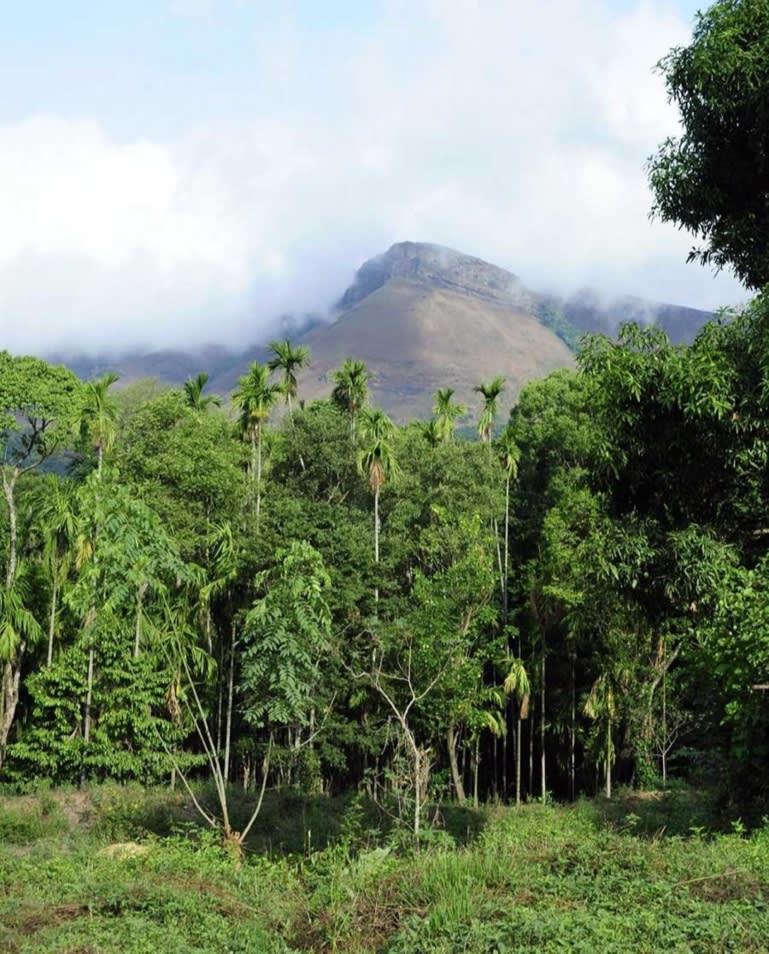
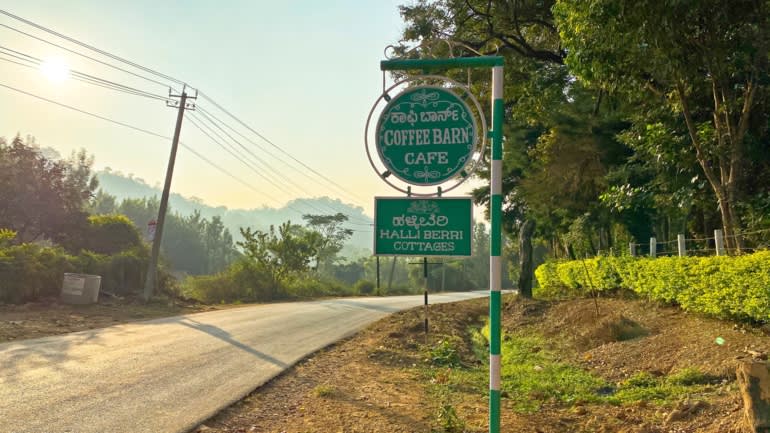
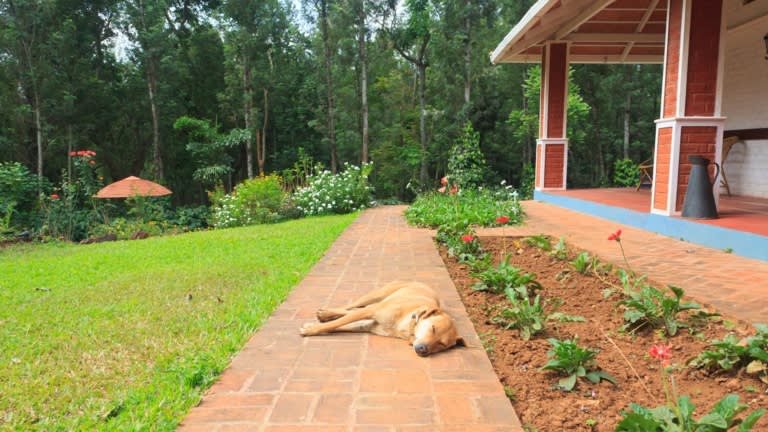
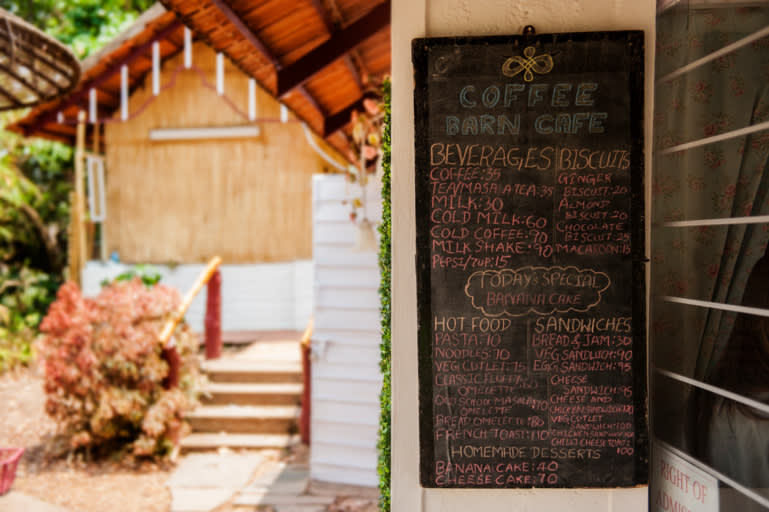
Top: Nestled in the foothills of the Baba Budangiri mountain range, the lush estate also grows Areca palms, cinnamon and cardamom plants. Middle: A sign for Coffee Barn Cafe, a casual spot along the main road run by the Kariappa women. Bottom: Lucky, one of the estate's two guard dogs, takes a mid-afternoon nap. (Top photo courtesy of Halli Berri; middle and bottom photos Christabel Lobo)
Top: Nestled in the foothills of the Baba Budangiri mountain range, the lush estate also grows Areca palms, cinnamon and cardamom plants. Middle: A sign for Coffee Barn Cafe, a casual spot along the main road run by the Kariappa women. Bottom: Lucky, one of the estate’s two guard dogs, takes a mid-afternoon nap. (Top photo courtesy of Halli Berri; middle and bottom photos Christabel Lobo)

In 1948, after cashing out of his inheritance, the grandfather of CP Kariappa, Nalima’s husband, moved from his hill station hometown of Kodagu, formerly known as Coorg, and headed north to Chikmagalur, where he purchased 40-50 acres of lush, fecund land to open the Kambihalli Estate.

Named after the iron-rich soil that the area is known for — kambi is iron in the local Kannada language, halli means village — the estate grew over the years to its current size of almost 180 acres.

As a result of her husband’s untimely death, Nalima and her three daughters — Maanavi, Anusha and Tejini — found their way along an uncharted path. In 2008, they opened the Coffee Barn Cafe, a casual spot along the main road for travelers. It was around the same time that they had their coffee beans certified by the Rainforest Alliance, an international nonprofit focused on ensuring that farmers meet adequate international standards of environmental, social and economic sustainability.

KambihalliEstate03aKF27mar2020

KambihalliEstate03bKF27mar2020

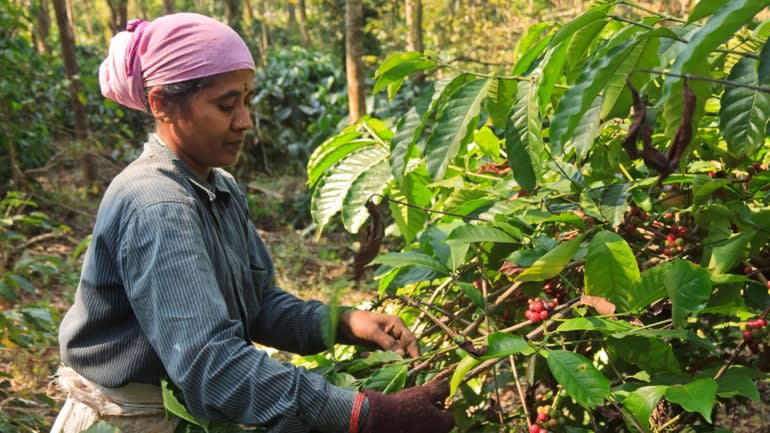
Top: A permanent worker deftly picks cherries. Kambihalli has a permanent workforce of approximately five people that work year-round. Middle: Ripened robusta cherries ready to be picked during harvest. Bottom: Fresh-brewed cups of coffee are not the only thing on Coffee Barn Cafe’s menu. Customer favorites include their homemade cheesecake and cookies. (Top and middle photos Christabel Lobo; bottom photo courtesy of Halli Berri)

In 1948, after cashing out of his inheritance, the grandfather of CP Kariappa, Nalima’s husband, moved from his hill station hometown of Kodagu, formerly known as Coorg, and headed north to Chikmagalur, where he purchased 40-50 acres of lush, fecund land to open the Kambihalli Estate.

Named after the iron-rich soil that the area is known for — kambi is iron in the local Kannada language, halli means village — the estate grew over the years to its current size of almost 180 acres.

As a result of her husband’s untimely death, Nalima and her three daughters — Maanavi, Anusha and Tejini — found their way along an uncharted path. In 2008, they opened the Coffee Barn Cafe, a casual spot along the main road for travelers. It was around the same time that they had their coffee beans certified by the Rainforest Alliance, an international nonprofit focused on ensuring that farmers meet adequate international standards of environmental, social and economic sustainability.

KambihalliEstate04aKF27mar2020

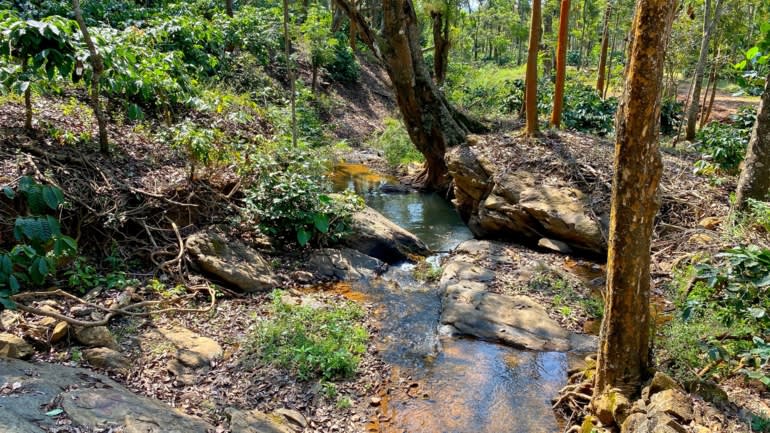
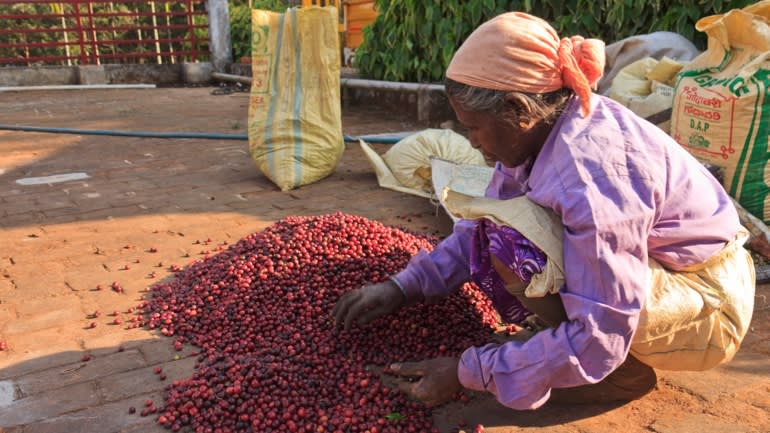
Top: The 200-acre estate offers well-marked trails, many that run along the river, for visitors to explore. Bottom: Manual sorting for underripe or overripe cherries is always carried out before the day’s harvest can be weighed and processed. (Christabel Lobo)

India is one of several countries where coffee plants grow under the shade of a verdant rainforest canopy. These trees not only prevent soil erosion but provide an additional source of income for coffee farmers — intercropping with pepper vines, areca palms, cardamom, cinnamon and orange trees is common practice.

The canopy promotes a thriving and diverse ecosystem for wild animals and birds to inhabit. Sambar deer, leopards, peacocks, wild boar, giant flying squirrels and 32 species of migratory birds call the Kambihalli Estate home.

During harvest season, typically December to March, the estate is abuzz with activity from dawn till dusk. Contract workers begin hand-picking ripened berries, commonly known as coffee cherries, averaging approximately 1,000 kg per day. This cumbersome process begins after green, unripe cherries from arabica coffee plants have turned a bright or dark red color, signaling peak ripeness.

KambihalliEstate05aKF27mar2020

Top: The skin and pulp collected during processing ends up in a huge pile that is eventually converted into manure used to fertilize the soil for next year’s harvest. Bottom: Separated coffee beans are left to dry out in the sun for several days before they can be de-hulled and sent off-site to be roasted and packaged. (Christabel Lobo)

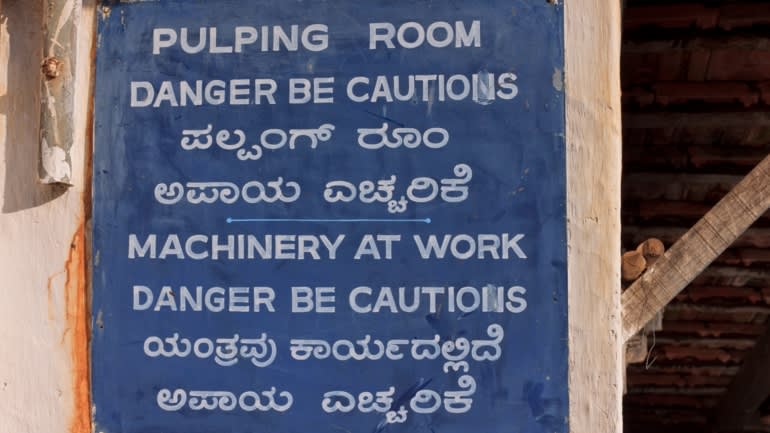
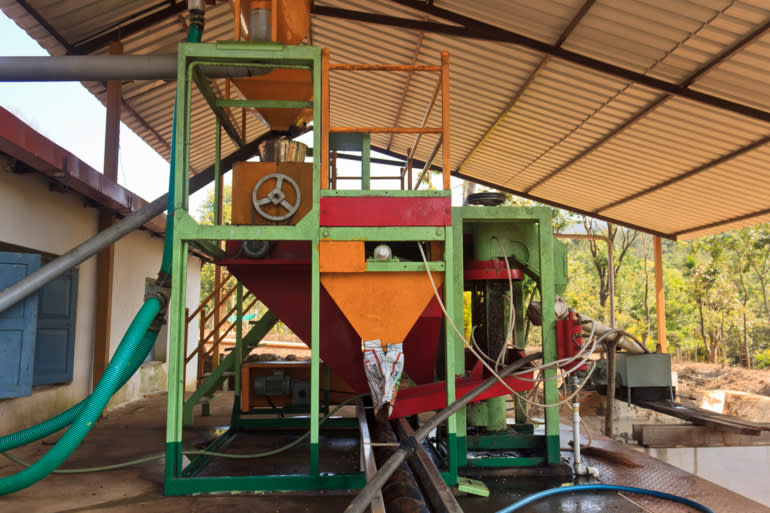
Once picked, the ripe cherries are immediately processed to ensure quality and freshness. Unripe or overripe ones are separated by hand before the day’s harvest can be weighed. Kambihalli makes use of the wet-process method, separating the beans from the skin. This results in a cleaner coffee that is fruitier in flavor, and overall is a less labor- and resource-intensive process.

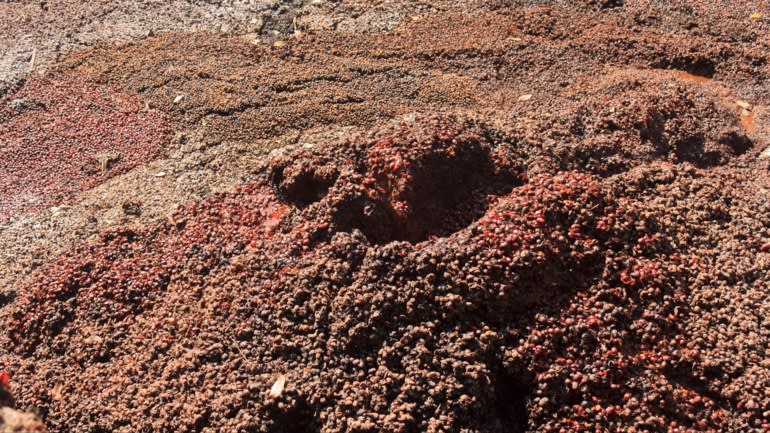
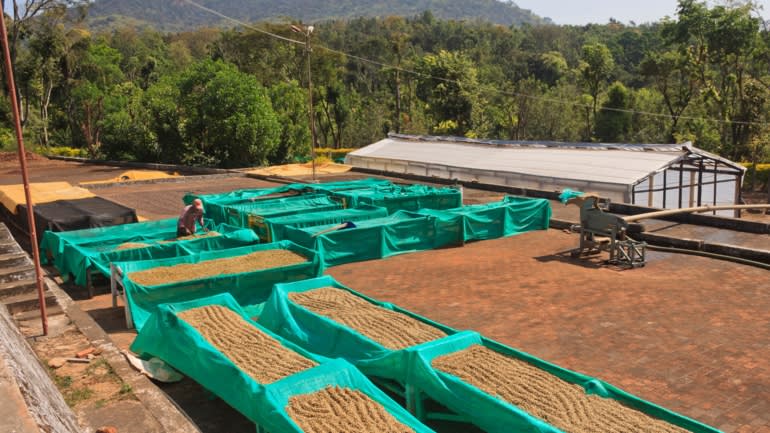
The skin and pulp collected during the process are eventually converted into manure and used to fertilize the soil for another year of growth. The separated coffee beans, now referred to as washed, are then left to dry in the sun for several days. Finally, they go through hulling, where the dried husks are removed before being sent off-site, where they are graded, roasted, powdered and packaged.

Kambihalli sells its robusta beans in the wholesale market, while its arabica beans are marketed as Halli Berri, which plays on the term “coffee berry.” (It is not meant to have any connection with the actor Halle Berry.) Served throughout the estate and sold at their on-site cafe, a freshly brewed cup of Halli Berri’s single origin ground coffee has a slightly acidic flavor profile with notes of cinnamon, citrus and nuts — all thanks to the iron-rich soil and intercropped plants.

KambihalliEstate06aKF27mar2020

Top: Kambihalli uses a wet-process method to separate the beans from the skin. The day’s harvest, after being weighed, passes through the pulping room where the bean is separated from the skin and pulp. Bottom: The machine used to separate the coffee bean from its skin and pulp. (Christabel Lobo)

It has not been easy, of course. Infestation by white stem borers, pests notorious for attacking the stems of arabica plants, early on in Nalima’s tenure led to a drastic decrease in annual coffee production, which she says is just now starting to recover.

“From 10 loads — each load is 10 tons — we’ve gone down very drastically to producing just three loads,” she says, attributing it to her lack of experience in coffee farming. “We lost a lot of acreage to the infestation. As a result, we had to cut everything down and start planting robusta instead.”

Today, Kambihalli grows an equal amount of robusta and arabica coffee plants; arabica ripens faster and tastes better but robusta is more resilient to insect attacks. According to the Rainforest Alliance, diversification is the key to helping farmers protect themselves from market volatility and the increasing effects of climate change.

KambihalliEstate07aKF27mar2020

KambihalliEstate07bKF27mar2020

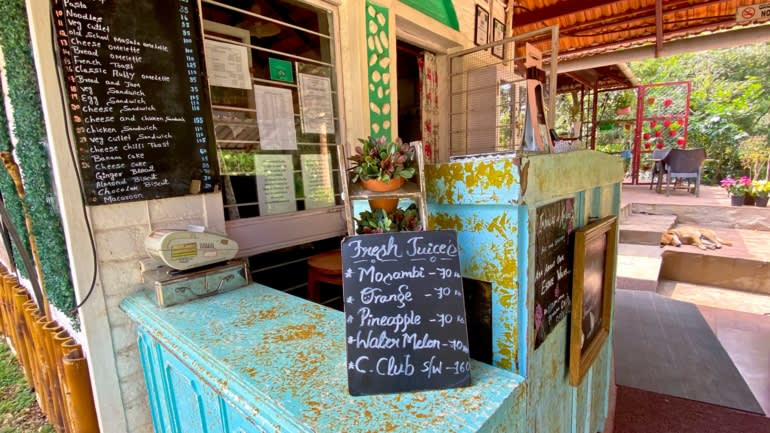
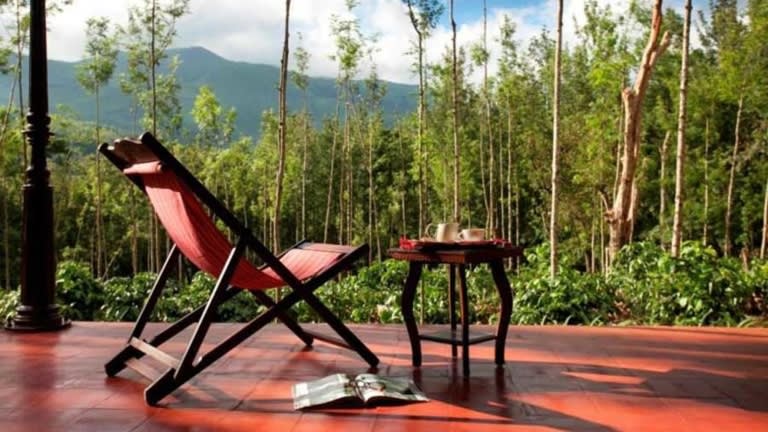
Top: Fruit from the local farmers market is used to make the selection of seasonal fresh juices on offer at Coffee Barn Cafe. Middle: The colonial-style cottages at Halli Berri are bright, TV-free spaces with distinct handmade Athangudi-tiled floors. Bottom: A cozy private veranda overlooks the verdant rainforest canopy with the Baba Budangiri mountain range in view in the distance. (Top photo Christabel Lobo; middle and bottom photos courtesy of Halli Berri)

Charan Kumar of the Indian Coffee Board says that while most of the coffee made in the Chikmagalur region is exported, the board is pleased Kambihalli chooses to sell its arabica within the country. However, “As India currently stands fifth in terms of worldwide coffee production, many [producers] still choose to sell directly to the wholesale market for a guaranteed source of income.”

Halli Berri is also the name of the luxe homestay which the Kariappa women run on-site. “Whenever relatives came, or guests came, we would put them up there, and they would love it,” says Nalima of the colonial-style cottages with rustic details and antique furnishings initially built for her daughter Anusha. “People started asking to book rooms, and I said, ‘Why don’t we just start doing that?'”

In 2010 they converted part of the property into a getaway for up to 18 guests, which is not just TV- and WiFi-free but emphasizes sustainability: Solar lights are used on the garden pathways at night, while the bathrooms utilize recycled water and are stocked with homemade soaps, shampoos and shower gels.

A series of trails through the expansive property offers visitors a chance to be mindful — the only guaranteed sounds are of the birds playfully chirping, frogs croaking, brooks babbling and the wind rushing through the treetops.

“I never even thought that we would make it this far,” Nalima says with a sigh as she reflects on Kambihalli’s success. “I’ll admit I was a little bit weary. But thanks to the support of our family and through word-of-mouth, we’ve made it work.”

As harvest season comes to a close, Nalima’s plans for the year include a focus on bean specialty and taste. “If we put a little more effort into the use of organic fertilizers, we found that we’re getting a better taste that our customers thoroughly appreciate. So even if I am a little brand, my coffee can be far superior, which I think is the way forward for us.”

source: http://www.asia.nikkei.com / Nikkon Asia Review / Home> Life / by Christobal Lobo, Contributing Writer / March 25th, 2020

Crops Grown In 86,000 Hectares Washed Away In Kodagu Floods

FloodsKF19mar2020

Madikeri:

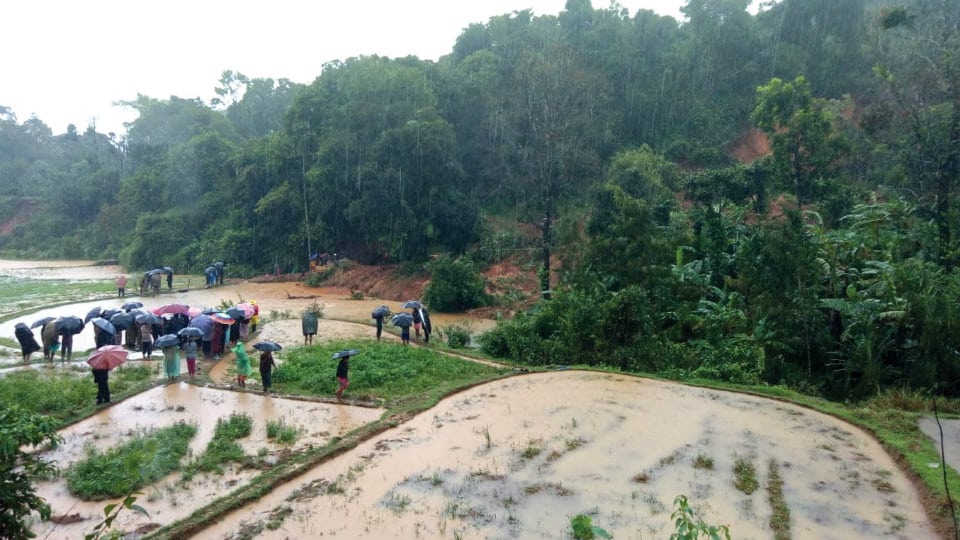
The Kodagu district which was devastated by last year’s floods, lost crops grown in over 86,000 hectares due to the floods.

Replying to a question by Madikeri MLA Appachhu Ranjan in the Legislative assembly recently, Agriculture Minister B.C. Patil said that agriculture crops grown in 2,460 hectares, horticulture crops grown in 10,331 hectares and coffee grown in 73,774 hectares across Kodagu district were washed away in last year’s floods, that caused havoc in the entire district.

Maintaining that crop loss compensation has been directly credited to the bank accounts of the affected farmers through a software specially developed for the purpose, Patil said that compensation has been paid in accordance with the guidelines for crop relief.

Pointing out that farmers have been paid Rs.10,000 per hectare in addition to the input subsidy, over and above the guidance value notified by the Union Government under SDRF/NDRF guidelines, Patil said that the additional cost has been borne by the State.

Pointing out that farmers have been paid input subsidy of Rs.16,800 for rain-fed crops and Rs. 23,500 for irrigated crops, Patil said the total amount paid to farmers as input subsidy stands at Rs.10,093.38 lakh and a total of 38,900 farmers in Kodagu have been benefited.

Replying to another question, the Minister clarified that the Agriculture Department itself was not directly purchasing agricultural equipment from dealers and agencies, but was only providing subsidy to the equipment purchased by farmers as a measure to encourage farm mechanisation.

source: http://www.starofmysore.com / Star of Mysore / Home> News / March 18th, 2020

Two Day Kisan Mela Conducted at KVK, Gonikoppal, Kodagu ( Athur Farm )

KisanMelaKF18mar2020

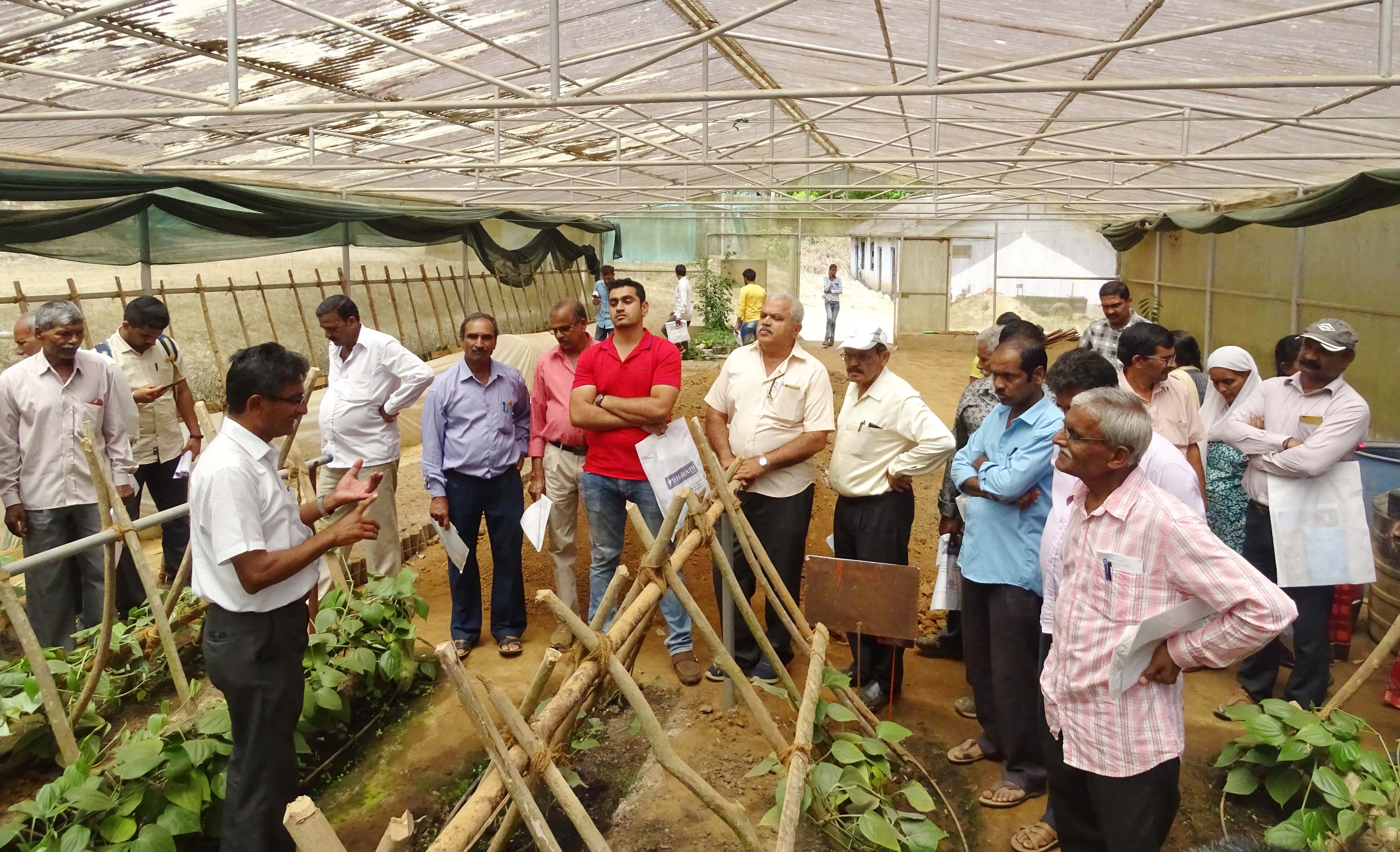
A two day district kisan mela and Krishi Abhiyana programme was held at Athur farm of KVK Gonikoppal from 11th to 12 March, 2020. An array of farmers friendly technologies were on display in the Krishi Mela organized in collaboration with the Agricultural Technology Management Agency (ATMA). Dr. Shankara Hebbar, Principal Scientist, IIHR Bangalore gave a brief introduction about vegetable cultivation and polyhouses. Later Joint Director of Agriculture, Kodagu Dr. K Raju said that the programme was to create awareness among district farmers about latest agricultural technologies and schemes. Dr. Saju George, Head, KVK spoke on the different demonstrations units in the KVK Demonstration farm.

The programme was inaugurated by Shri. B A Harish, President, Zilla Panchayath, Kodagu.The Chief Guest Smt. Sarojamma, Zilla Panchayath Member , inaugurated the Exhibition stalls. Dr. C. G. Kushalappa, Dean, College of Forestry, Ponnampet also addressed the inaugural session. Dr. M R Dinesh, Director, IIHR, Bangalore, in his presidential address highlighted different farmer friendly technologies of horticultural crops, machineries, bio-fertilizers, bio-pesticides, micro nutrient formulation, incubation facilities for entrepreneurship available through ICAR-IIHR, which can be extended to the Kodagu district farmers through the KVK Gonikoppal. He said that there is lot of potential in the district for the adoption of horticultural technologies and thereby increasing increasing farmers income.

During the inaugural session , Shri M.M Aiyyappa, a farmer from Virapet was felicitated for brining the AMC technology to Kodagu through KVK. Shri Kishor Nachappa the farm journalist was felicitated for his role in promoting farm technologies through farm journalism. Smt Suja, was felicitated for her success in mushroom cultivation after undergoing training at KVK through ASCI sponsored skill development training programme. The Agriculture department felicitated the Kodagu district farmers for their achievements.

In the technical session, Dr. Shivaprasad, Deputy Director, gave a talk on the importance of soil testing and INM practices in coffee. Mr. Devaiah, K. A. Subject Matter Specialist spoke on the trellies method of black pepper multiplication. Sri. Thimmiah, S. C. Krishi Pandit, spoke on his experiences of mechanization in paddy for better realization of yield.In the second day technical session, Dr. S. J. Ankegowda, Principal Scientist & Head, Regional Station, IISR, Appangala gave a talk on holistic management of black pepper in the coffee based farming system. Dr. A. S. Shanthesh, Chief Veterinary Officer, Department of Animal Sciences and Veterinary Sciences, Virajpet taluk spoke on the importance of livestock for milk, meat and manure in the mixed farming system. Dr. S.C. Suresh, Subject Matter Specialist (Livestock) spoke on scientific piggery farming. Smt. Veena Sudheer, awardee farmer shared her experience of integrated farming system. Mr. K P Subbaiah, President, Puthari Farmers Producers Organization spoke on recent developments in marketing of coffee and initiatives of Puthari FPO.

In the Valedictory session, Mr. Srinivas, P. V., DDM, NABARD, Kodagu spoke on the different NABARD schemes for farmers, rural institutions. Mr. Vijay Angadi, Programme Officer, All India Radio, Madikeri spoke on the relevancy of this type programme and he opined that in coming programmes a separate session can be conducted on organic farming. Farmers were also taken to different demonstration plots in KVK Viz. vegetable demonstration plot where different varieties (Chilli- Arka Meghana & Kyathi, Brinjal -Arka Keshav, Pole bean- Arka Sukomal, yard long bean- Arka Mangala, cowpea- Arka Suman, Dolichos- Arka Adarsh were raised in one acre with raised bed, polyethene mulch with fertigation, different livestock units –piggery, Goatary, Diary, Poultry, Fodder crops, Propagation unit of Black pepper, arecanut, coffee, Solar irrigation unit, farm machineries unit etc. during the occasion.

More than 20 exhibition stalls were arranged for the benefit of the farmers on the occasion involving the government, private and FPOs. More than 750 farmers witnessed the event in two days and interacted with the scientists, specialists and officials. Overall the participating farmers appreciated the efforts and felt that such melas give the farmers the technological guidance for increasing the farmers income in a sustainable manner.

source: http://www.iihr.res.in / ICAR – Indian Institute of Horticultural Research / Home / March 2020

Arabica parchment coffee hits record price of Rs 10k per bag

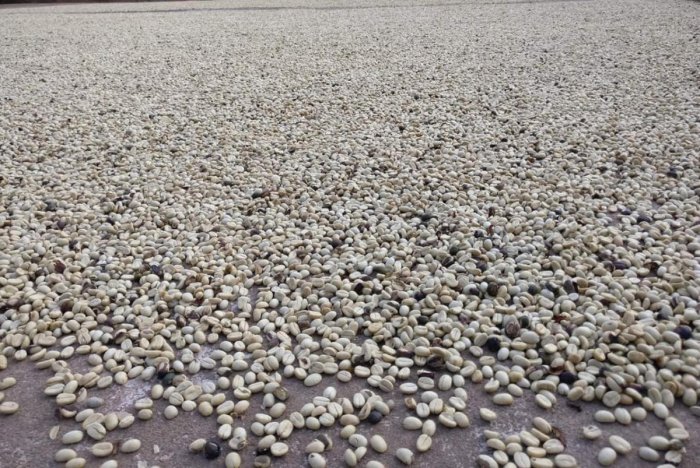
Coffee beans spread for drying. DH Photo

Coffee growers are happy as the market rate of Arabica parchment has reached a record rate of Rs 10,000 for a bag of 50kg. The rate has been the highest in the last eight years.

As on Wednesday, a 50kg bag of Arabica Parchment coffee was sold between Rs 10,400 to Rs 10,500, which according to the vendors, is the highest rate for Arabica parchment.

The cost of Robusta Parchment has increased to Rs 7,000 per bag. The last time when Arabica coffee reached the highest rate was in 2014. It was Rs 9,600 to Rs 9,800 per bag then. Later, the price moved downward and had touched Rs 6,000.

Arabica cherry costs Rs 4,000 per bag while the rate of Robusta cherry is Rs 3,200 to Rs 3,400 per bag.

Growers in Kodagu, Chikkamagaluru and Hassan have expressed their happiness on the improved market rate of coffee, despite problems of shortage of labourers and feasibility issue in the maintenance of the plantation.

The vendors said that the rates of Arabica parchment might increase further. Expecting the same, the growers who have stored coffee in ABC and other curing centres have decided to sell coffee after it hits an all-time high.

The increase in the rate of coffee was due to a significant decrease in production in Brazil and Columbia. There was a plunge in the production of coffee in Chikkamagaluru, Kodagu and Hassan districts as well, owing to floods. This has created an increase in demand.

Even though the market rates have increased, the quantity of coffee production is significantly less compared to previous years. The growers who grew 50 bags of coffee in the past have ended up producing only 10 bags of coffee.

“The coffee plants have been damaged due to the water-logging of the plantation. It might take another four years to restore the coffee plantations to its original condition,” said coffee grower Nanaiah.

Coffee vendor Abdul said that around 60% of coffee growers have sold their coffee. Those who had stored coffee have reaped benefits.

source: http://www.deccanherald.com / Deccan Herald / Home> States> Mangaluru / by Adithya K A / Madikeri – March 04th, 2020

Visitors throng Raja Seat for flower fest on weekend

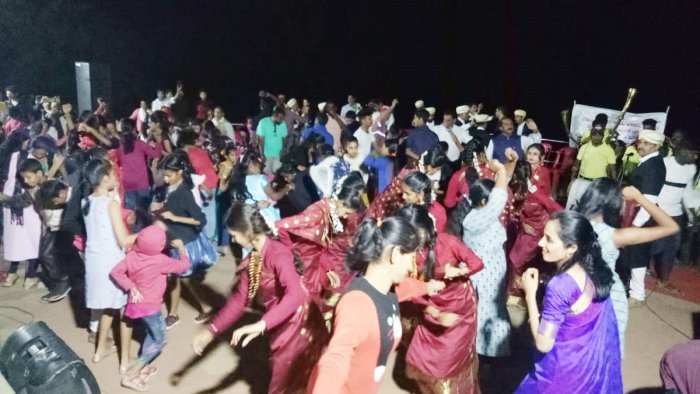
People dancing to the tune of the traditional ‘Kodava Valaga’, during the fruit and flower show at Raja Seat. DH Photo

Hundreds of visitors thronged the Raja Seat in Madikeri on Saturday and Sunday, for the fruit and flower show.

The four-day-long fruit and flower show organised by the district administration and the department of horticulture, began on Friday.

On Sunday, the localities and tourists who gathered in the venue, danced to the tunes of traditional ‘Kodava Valaga’ during the cultural programmes organised by Karnataka Kodava Sahitya Academy. ‘Arebhashe Kolata’ and ‘Sobhane Pada’ enthralled the audience.

Selfie zones set up at various parts of Raja Seat, were the centre of attraction among youth during the flower fest. Photo frames were designed with flowers for the purpose.

Open street

The police department restricted the movement of vehicles from M M Circle till Kundurumotte junction, from 6 pm to 10 pm on the evenings of the fruit and flower show. Raja Seat was made completely free from vehicular movements and the stalls featuring various snacks were opened on the road, reminding the ‘Open Street Festival’ organised during the Pravasi Utsav held in Kodagu last year. Traditional Kodava snacks were also sold in the stalls.

Students were provided with a chance to watch the fruit and flower show free of cost. A lot of students witnessed the show on Saturday and Sunday. Most of them were accompanied by their teachers.

The people also visited the stalls set by the departments of agriculture, horticulture, animal husbandry, fisheries and various other departments.

‘Mamateya Marukatte’

Various items such as children’s toys, unused clothes, stationery items, and electronic items in the working condition, were featured at ‘Mamateya Marukatte’ stall set up by Green City Forum and Madikeri City Municipal Council. The items were collected at Kaveri Kalakshetra.

The amount collected from the sale of these items were provided to the civic workers and stree shakti groups. Most of the items have been sold, said Satya, a member of Green City Forum.

source: http://www.deccanherald.com / Deccan Herald / Home> State> Mangaluru / by DHNS, Madikeri / February 10th, 2020