The annual fruit and flower show which began at Raja Seat in Madikeri on Friday has been attracting tourists and nature lovers in large numbers.
The traditional ‘Ainmane’ house made out of flowers, is the main attraction in the fruit and flower show in Raja Seat, Madikeri.
Artifacts featuring Virat Kohli, Wing Commander Abhinandan, Kuvempu, Atal Bihari Vajpayee, Narendra Modi, B S Yediyurappa, A P J Abdul Kalam, Mahatma Gandhi, Siddaganga seer, Dr B R Ambedkar, Field Marshal K M Cariappa, General Thimmaiah and Pejavara seer— all carved out of watermelons, mesmerise visitors, at the entrance of Raja Seat.
6,000 flower pots
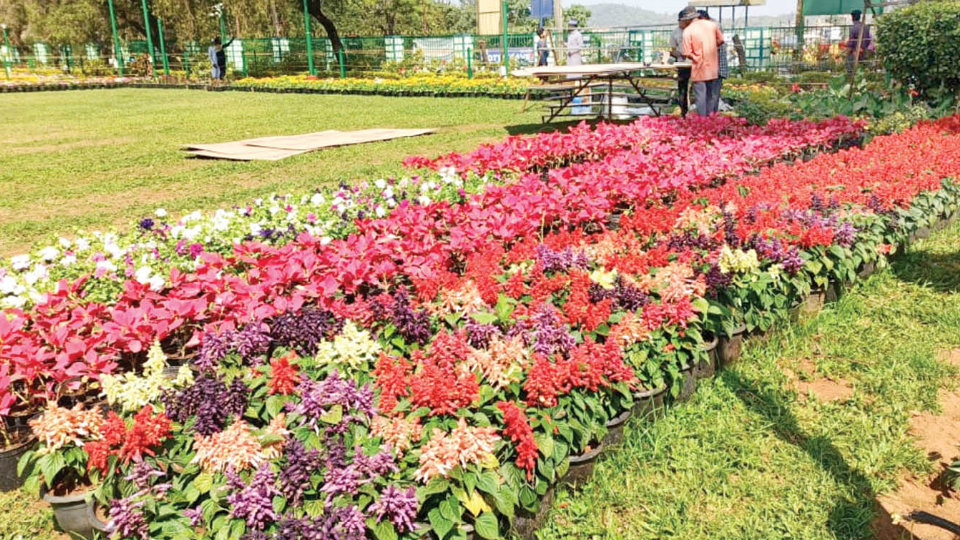
A total of 6,000 flower pots have been arranged in the park. Flowers exhibiting a wide spectrum of colours and species, arranged in artistic patterns, have been providing a visual treat.
Raja Seat, which had lost its sheen owing to lack of flower-bearing plants, is now wearing a refreshed look.
The main attraction, however, is the traditional ‘Ainmane’ (house), designed with lakhs of flowers. A lot of visitors were seen taking selfies in front of the Ainmane.
Rocket
The heart made out of roses, rocket launching station of ISRO, coffee pot and the cup, Mickey Mouse, Swami Vivekananda and other artefacts made out of flowers are making the people spellbound.
Cultural programmes will be held in the evenings, as a part of the fruit and the flower show. Food festival is being held in Gandhi Maidan. People have been relishing their taste buds with sugarcane juice from Mandya and other delicacies. Stalls have been put up by the Horticulture Department and private nurseries, featuring the sale of various flower-bearing plants.
MLA’s praise
Speaking after inaugurating the fruit and flower show, Madikeri MLA Appachu Ranjan called upon the people to come to Raja Seat in large numbers to see the show.
The show is being organised by the Department of Horticulture at a cost of Rs 20 lakh. Cultural programmes are being organised by the Department of Kannada and Culture and Karnataka Kodava Sahitya Academy, he said.
Deputy Commissioner Annies Kanmani Joy said it has been a tradition to organise fruit and flower show in the month of January or February every year. The show will be on till Monday.MLC Veena Acchaiah, MLC Sunil Subramani, Kodagu Zilla Panchayat President B A Harish, Vice President Lokeshwari Gopal, Hopcoms President Biddatanda Ramesh Changappa and Horticulture department Deputy Director Chandrashekhar were present.
source: http://www.deccanherald.com / Deccan Herald / Home> State> Mangaluru / by DHNS, Madikeri / February 07th, 2020
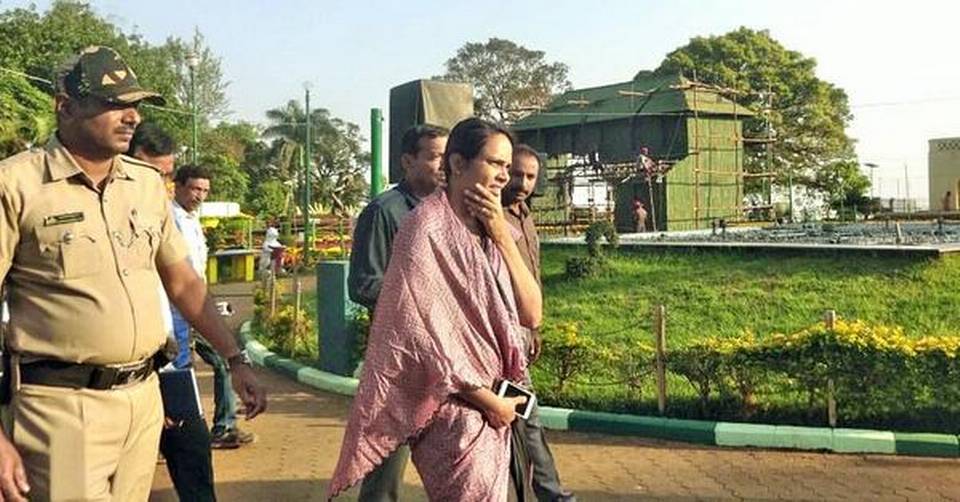
Kodagu Deputy Commissioner Annies Kanmani Joy inspect
The event at Raja Seat in Madikeri will be held from February 7 to 10
This year’s flower show in the sprawling garden of Raja Seat in Madikeri from February 7 to 10 will be plastic-free. The organisers have banned visitors from carrying plastic inside the show, which is expected to attract a lot of locals and tourists.
The organisers have urged the visitors not to carry plastic carry bags and bottles.
Kodagu Deputy Commissioner Annies Kanmani Joy on Wednesday inspected the arrangements for the show and later held a meeting with officials of the Departments of Horticulture and Tourism.
The Departments of Kannada and Culture, Kodava Sahitya Academy and other academies and cultural institutions will be presenting cultural shows on each day.
While the show is free for schoolchildren if they come wearing their uniform or with a letter issued by the heads of their schools, the entry fee for others would be ₹10, said Deputy Director of Horticulture Chandrashekar.
He requested the Police department to make arrangements for the parking of visitors’ vehicles and barricades at the venue.
Police Inspector K.B. Belliappa said temporary parking can be arranged at the old private bus-stand in view of the show from 5 p.m. to 9 p.m. and private buses can operate from the APMC premises until the flower show gets over.
Ms Joy told the officials to ensure convenience to the public and communicate information well in advance in case of changes in the arrangements.
Tourism officials urged the Deputy Commissioner to allow food stalls at the venue for the convenience of visitors.
The appeal was considered and those willing to set up food stalls will be getting space at the venue for free, a release said. Interested persons can call Tourism Department Assistant Director on 94480 04466 or 08272-228580 for information on establishing stalls and other details.
source: http://www.thehindu.com / The Hindu / Home> News> States> Karnataka / by Special Correspondent / Mysuru – February 05th, 2020
The Kodagu District Administration and the Department of Horticulture will conduct a Flower Show at Raja’s Seat in Madikeri from Feb. 7 to 10 in order to attract tourists, an official statement said. A special feature of the Flower Show will be the depiction of the lifestyle and traditions of Kodavas through floral replicas of “Kodagu Ainmane” or ancestral home.
According to the statement, this is to promote and create awareness of the lifestyle, culture and traditions of Kodavas to the present generation. Nearly 25 species of flowers and about 10,000 plants will be part of the show with floral decorations depicting the cultural facets of Kodagu.
Horticulture Department officials said the topiaries (practice of training perennial plants by clipping the foliage and twigs of trees, shrubs to develop and maintain clearly defined shapes, whether geometric or fanciful) will be brought for the festival.
In a bid to attract the children, floral statues depicting well-known personalities, will be created and serve as a selfie point for the visitors.
There will be cultural programmes in the evening on all the days of the Flower Show besides floral rangoli competition for women. Stalls will be put up for sale of handicraft items, the statement added.
As part of the Flower Show, thousands of flower pots are being arranged at Raja’s Seat. Flower pots and a large variety of flowers including African marigold, Celosia, Lady Lace, Gladiolus, Gerbera, Anthurium, Bird of Paradise, Carnations, Lilium, Tuberose, Orchids, Stasis, Chrysanthemum, and Limonium will attract visitors. Exclusive selfie spots will be created for tourists to click selfies and share on social media. Works are underway at Raja’s Seat.
source: http://www.starofmysore.com / Star of Mysore / Home> News / January 31st, 2020
IBM has launched a global high-resolution atmospheric forecasting system, IBM GRAF, saying more accurate weather forecasting can help governments and companies greatly improve their operations. IBM said GRAF can help bridge the gap between Indian …
New Delhi :
As many as 94% of top Indian business leaders believe climate change and adverse weather conditions have had a negative impact on business operations while around 72% believe they disrupt local economy, a study by IBM and The Weather Company shows.
The report released on Thursday also said a significant number of Indian citizens said they were not confident about the local weather forecasts.
IBM has launched a global high-resolution atmospheric forecasting system, IBM GRAF, saying more accurate weather forecasting can help governments and companies greatly improve their operations.
“We work with 168 different governments today around the world, and we are in touch with Indian government as well,” said Cameron Clayton, general manager at IBM Watson Media and Weather. “We want to work on providing accurate forecasts as it has a massive impact on the GDP.”
IBM said GRAF can help bridge the gap between Indian forecasting system and global models.
The 15-day weather forecasts released in India start from 80% accuracy and by the end of the 13th day the accuracy percentage falls to 50%, Cameron said. IBM GRAF claims to keep the accuracy levels consistent throughout the 15-day.
“In the tests we ran, our model is around 30% more accurate (than Indian system) and we have so far designed to issue 12 million pieces of forecast information through IBM GRAF, which will improve the forecast quality massively in India,” Cameron said. “While we have collaborated with various governments across the country, we believe that the only way to get there is through public-private partnership.”
IBM is keen to present its forecasting models to India through a publicprivate partnership agreement.
IBM said its weather forecasting models have helped farmers in Kenya receive crop insurance in less than three days.
The company has received some interests from private insurers in India, too.
“Insurance companies are slowly consuming our data, mostly historic and advisory, to make better decisions,” said Himanshu Goyal, India sales and alliances lead at IBM. Two insurance companies in the country are using its models, he said without naming them.
Several businesses in sectors ranging from aviation to agriculture, have welcomed IBM GRAF.
Tata Coffee is leveraging IBM weather prediction products to receive accurate forecasts, soil moisture and soil temperature information for better results.
“In the aviation industry, our models have helped bring down turbulence by 50%, and the same capability is being brought to India,” Cameron said.
source: http://www.economictimes.indiatimes.com / The Econonmic Times / Home> Business News> News> Economic News> Agriculture / by Bhavya Dilipkumar, ET Bureau / December 13th, 2019
Title : An Autobiography of a Kodava Forester
Author : Dr. Kodira Achappa Kushalapa, IFS (Retd.)
Pages : 228
Price : Rs. 200
Year : 2019
Publisher : Dr. K.A. Kushalapa, Mysuru.
In the film of 90 minutes duration, titled “Beautiful people: Some call them animals,” a comic allegory produced in 1974, focussing on various animals that live in arid desert environment of Africa by Jamie Uys, humorously draws parallels between animal and human behaviour. Dr. K.A. Kushalapa can vouch for the message in the film that the denizens of the forest are indeed beautiful people in a wide sense of the term, having shouldered the arduous duties of conserving India’s forests, steadily shrinking as a percentage of the total geographical area of the country. His empathy for the denizens and concern for enduring the flora have not witnessed even an iota of diminishing to this day despite retiring from an illustrious service for long years as a professional forester. Circle for Mysuru’s intelligentsia and senior citizens who have known him can testify to the vast knowledge of the author about A to Z of forest and its importance of vital role in sustaining the balance between human beings and other species on earth.
The narrative divided into 16 chapters, each with a caption indicative of specific aspects of the author’s early life and landmark events relating to his professional career culminating in his elevation to the highest post in the Department of Forest in the State Government.
Writing about Dr. Kushal-apa, in his foreword, Man-depanda K. Appayya, former Principal Chief Conservator of Forests, Government of Karnataka, has expressed his admiration of the author’s noble qualities of head and heart, that earned him respect, recognition and rewards by his achievements both academic and professional.
The events of the author’s childhood and in later stages presented in all humility and graphic details trigger in the minds of readers what a person can achieve by being stoic and steadfast along with the support of family members, as revealed by the author himself in his preface. The trials and tribulations that he has encountered at different periods of life but overcome with courage and hope sound poignant. His life’s saga belies the myth of Kodavas as a community of only planters and warriors, by emerging as a star among them in the world of academics also. The 128 published papers listed in the book’s Chapter 14, 10 abstracts of technical papers and 10 titles of social articles listed in Chapter 15 give the readers an insight into Dr. Kushalapa’s deep interest in enlightening the lay people dispelling their utter lack of knowledge about forests.
Dr. Kushalapa has thought-fully included 69 photographs, many in colour, with images of his family members as well as people who were his colleagues, showing him as an impeccable handsome person. If his dream of generating in Kodava youth the desire to spread out into various areas of challenge by pursuing professions outside the ambit of restricted areas for which Kodavas are known, is fulfilled, the author’s autobiography gets full worth of the work of writing and publishing. The proceeds of the sale of the publication is meant to be utilised for philanthropic cause. —BRS
source: http://www.starofmysore.com / Star of Mysore / Home> Feature Articles / December 22nd, 2019
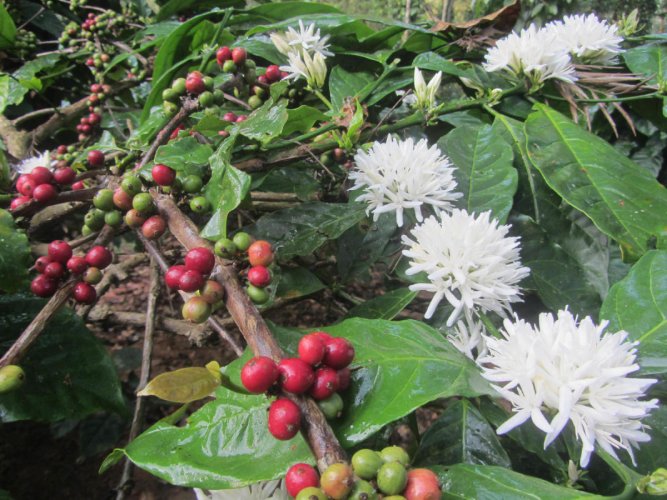
Coffee cherries and flowers. Photos by Author and Adithya K A
Coffee pervades the lives of people in Hassan, Chikkamagaluru and Kodagu districts. From the decades-old jaggery coffee to the current flavoured ones, coffee as a product has seen a huge transformation. What has remained unchanged is its association with almost anything momentous in our lives.
The journey of coffee to India is well- documented and etched in our memories through the story of Arab traveller Bababudan bringing seven coffee beans to Chikkamagaluru in 1670 AD. He sowed these seven seeds in Chikkamagaluru’s Bababudangiri hills (Chandradrona Parvatha). Today, India is world’s third-largest producer of coffee.
The earliest and most prominent coffee planters of the yesteryears in the country were the British. They introduced the system of check-rolls which is an attendance register of the labour. They maintained a diary which explained the daily activities in the estate to which the owner signed every day. These rather important systems are intact and in place even today, and any estate that you visit here will show you daily records from as back as 50 years ago!
These documents serve as important pieces of information for future generations. The British were particular about closing the accounts by the end of March wherein the savings and loans availed by the labourers were tallied. This tradition continues to this day.
Other customs that we have inherited are the practices of maintaining lush green and colourful gardens at our homes, rearing about half a dozen hunting dogs and possessing rifles and pistols for safety from wildlife.
Blossom shower
Coffee plantations receive blossom shower (rains) around March every year. Coffee estates that blossom with white flowers are a sight to behold. While this is a visual treat for us, this also guarantees a good crop for the coming year.The joyous mood is also seen before coffee picking when the entire family thanks god and prays before picking the berries.
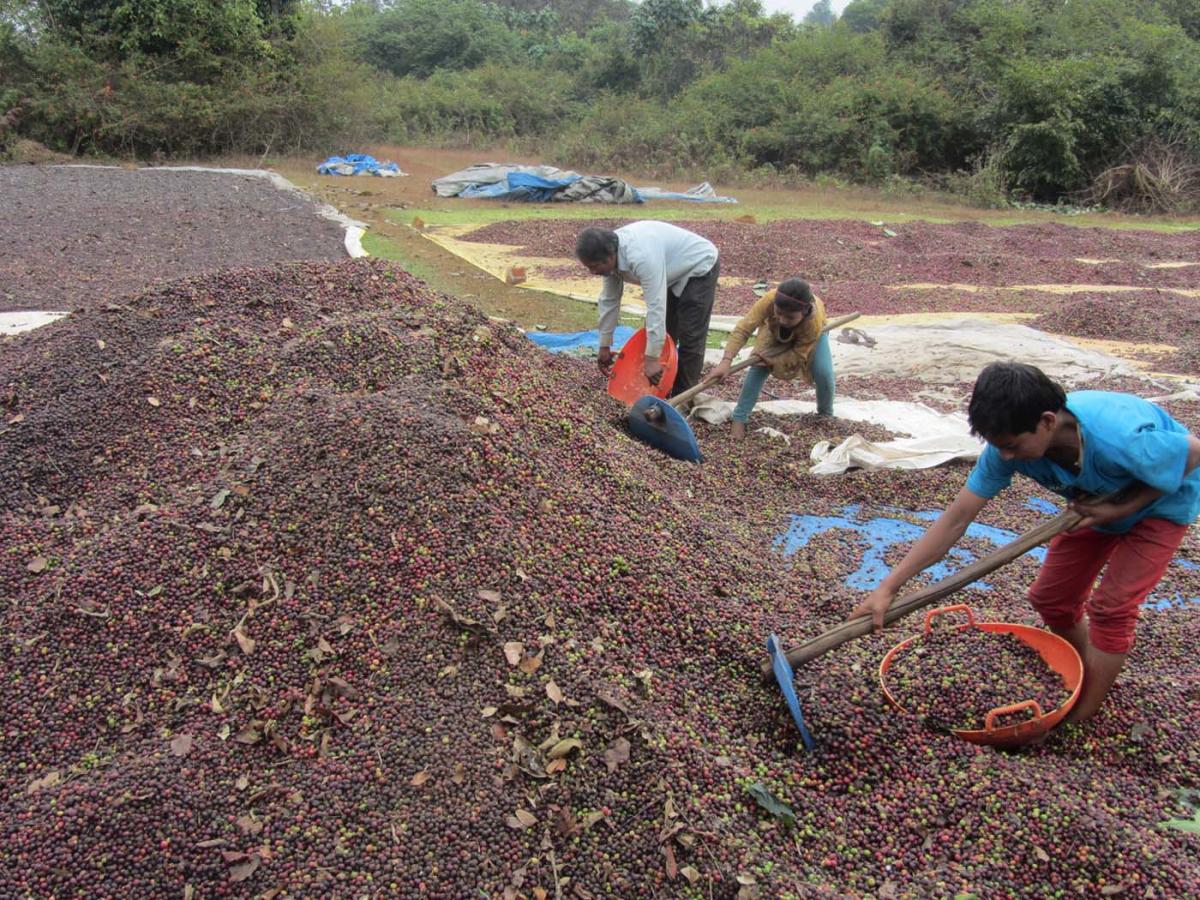
Cherries being dried
The book Bettadindha Battaligey by H N Nagegowda beautifully traces the history of coffee in India and also the culture associated with it.
Coffee estates coexist with thick and lush green forests in these Western Ghats districts. These estates are also home to a rich variety of endangered flora and fauna. Each year, hundreds of varieties of birds migrate to coffee estates. These plantations nurture forest species which act as nesting grounds for these birds.
Estate owners take an active interest in increasing the number of trees that they have on their lands. Artificial lakes and tanks in the estates quench the thirst of animals including elephants and tigers.
The vibrant culture of coffee land in the state could also be traced to the presence of major rivers such as Cauvery, Tunga, Bhadra, Nethravathi and Hemavathi.
A majority of the labour force in Karnataka’s coffee estates hails from Dakshina Kannada. Of late, a healthy influx of migrant labourers from Assam can be seen in the estates. The estate owners provide accommodation and healthcare facilities to the labourers.
The monsoons of 2018 and 2019 played unimaginable havoc in the lives of growers in the core coffee zones of Kodagu and Chikkamagaluru.
They lost all their lands overnight to mudslides and torrential rainfalls. Despite this, they are trying hard and not giving up in their quest to rebuild everything that they lost.
However, their spirit to endure and rebuild is shattered due to the failure of markets. Coffee growers are going through their worst crisis ever where they are not able to make ends meet because coffee prices have crashed to record lows.
Prices have collapsed to as low as what it was 26 years ago while the cost of inputs like fertilisers and machinery has skyrocketed.
Also, the price of spices like pepper which are grown as intercrops has fallen to 60% lower than the price received half a decade ago. As a result, the growers are saddled with neck-deep debts.
Key driver
There is a misconception that the consumption of coffee leads to health problems such as gastritis. This problem arises when one consumes coffee that is blended with a high quantity of chicory.
As per the Coffee Board of India statistics, coffee is grown in 4,00,000 hectares of land in the country. Karnataka grows 70% of the country’s total coffee production, with its annual production of up to 2.75 lakh metric tonnes. About 65% is robusta variety while 35% is of the arabica variety. The country exports 75% of the yield. India is home to 2,20,825 coffee growers of which 98.5% are small-scale growers. The economy of Kodagu, Chikkamagaluru and Malnad regions of Hassan district is heavily influenced and dependent on the coffee industry. It is the key driver of the economic activities of these regions.
Karnataka Growers’ Federation (KGF)which was formed in 1985 brings the coffee growers in one platform and works towards their welfare while also representing them in international platforms. This apex organisation is well networked with 21 regional organisations. KGF is headquartered at Sakaleshapura, Hassan district with a membership of 50,000 women and men.
U M Thirthamallesh, president of Karnataka Growers’ Federation said that the coffee price crash is mainly due to the surplus supply of coffee into India from international markets. Southeast Asia, he claims, has unfair market practices, low labour standards and excessive state subsidy which are all in violation to World Trade Organization norms while Indian Coffee growers follow all international norms by the book.
Coupled with this is excessive addition of the additive chicory into coffee which results in the substandard taste of the coffee. Labour shortage and disease are other problems that have affected the coffee industry.
Value addition
In an effort to overcome challenges, the coffee community is also paying attention towards the value addition of coffee. In the process, some brands have become popular. They’re involved in the preparation, marketing and sales of coffee powder; garlands made using coffee beans; coffee chocolates and coffee-based wine. In some areas, specialised coffees, like organic coffee and tribal coffee are also being tried.
Copsy Coffee Powder which is produced at Arehalli Co-operative Society and 7 to 7 Coffee which is produced by a group of women at Women’s Coffee Promotion Council, Sakaleshpura are some well-known local brands.
Another brand which has caught the attention of coffee connoisseurs is Talacauvery Eco-Coffee Works which is based out of Kodagu. This coffee is produced by an all-women self-help group called Sri Rajarajeshwari Self Help Group in Kargunda.
A vibrant culture has evolved around coffee in the last three centuries in the coffee land of the state rooted in self-reliance and innovation.
source: http://www.deccanherald.com / Deccan Herald / Home> Spectrum> Spectrum Top Stories / by Poornima Kanahalli / December 14th, 2019
10,000 rare Mahseer fingerlings released to Harangi River at Koodige
Kushalnagar:
There are many possibilities of utilising Harangi Reservoir in Kodagu and its backwaters. One among them is fishing and fisheries development. Realising this potential, an exclusive fishing cultivation pond will be set up at Kushalnagar with Rs. 2 crore assistance from National Bank for Agriculture and Rural Development (NABARD).
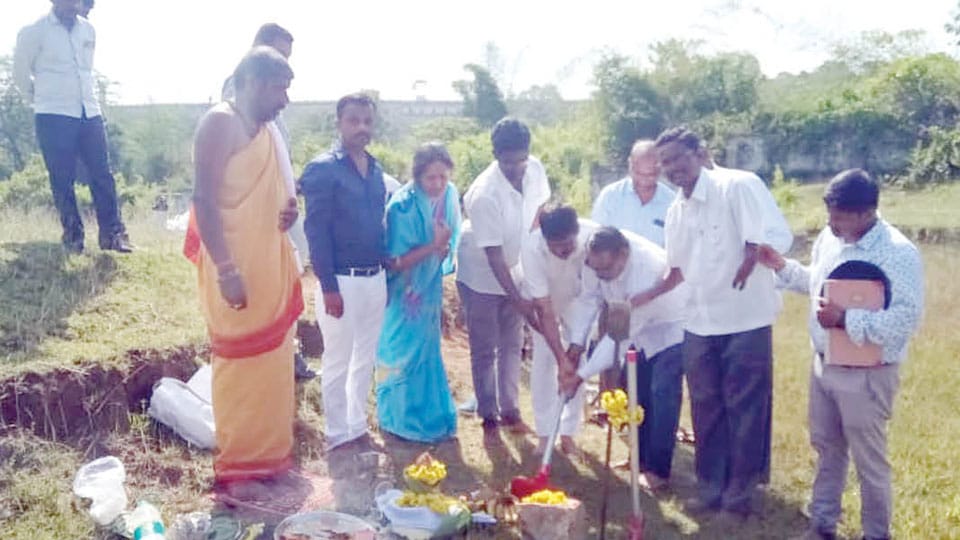
The Bhoomi Puja for the 2-acre pond was performed recently in Kushalnagar by Madikeri MLA M.P. Appachu Ranjan. Speaking on the occasion, the MLA said Harangi was one of the major reservoirs built across River Cauvery. “Due to the reservoir, there are great possibilities of pisciculture in a large scale due to abundant availability of water backed by groundwater support. Rare fish varieties like the Mahseer can be cultivated and six such ponds will be constructed in the land owned by the Fisheries Department,” he said.
Traditional fishing is being held from many years in the backwaters of Harangi, which spreads over 1,886 hectares in area. Lakhs of fingerlings are released into the reservoir every year. “As part of the project, fish cultivation enclosure has been set up in the backwaters of Harangi Reservoir and the sample of fish is being collected to study the growth of fingerlings, said Sachin, Assistant Director, Harangi Fish Rearing Centre.
He added that the Centre was set up by the Government 25 years back to support farmers who are willing to rear fish in the cultivation ponds. Varieties of fish, including Mahseer, Katla and Rohu, are reared in the Centre. Along with these, fingerlings procured from Kabini and Bhadra reservoirs are being provided to farmers at subsidised costs, he said.
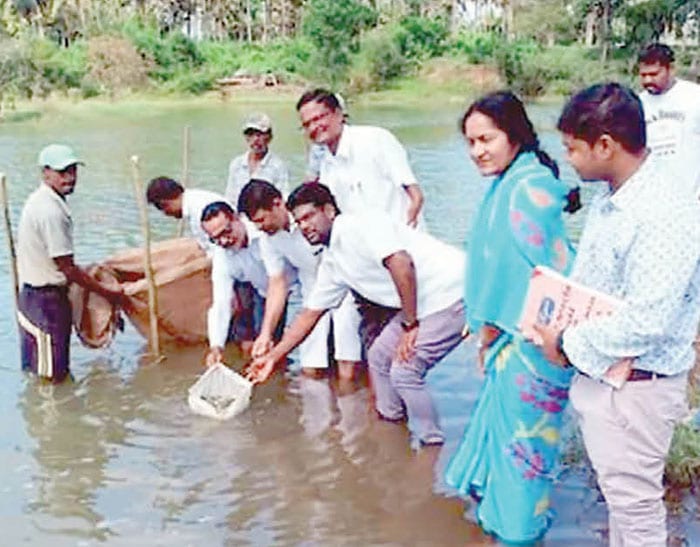
On the occasion, over 10,000 Mahseer fingerlings were released to 5.6 km Harangi River stretch from the Dam to Koodige Bridge. “Through this, we intend to cultivate the Mahseer fish that is on the verge of extinction. Fishing has been banned on this particular stretch to save the Mahseer variety,” he added.
source: http://www.starofmysore.com / Star of Mysore / Home> News / November 25th, 2019
After a tepid launch earlier this year, the Coffee Board of India‘s (CBoI) blockchain coffee marketplace is seeing rising demand. The platform now has about 30,000 farmers registered compared to just 23 when the platform was launched, reported Down To Earth.
CBoI is one of the first government agencies in the country to have an in a production blockchain platform. The Coffee Board has developed a mobile app and a web portal with support from Eka Software Solutions.
The coffee supply chain is highly fragmented, with intermediaries such as farmers, traders, roasters, curers and other processors. In the past few years, global coffee prices have also stumbled. To remedy the situation, the Coffee Board has turned to blockchain and its ability to immutably track and trace products in supply chains.
“Blockchain offers unmatched traceability and increases the transparency, accountability and efficiency of the coffee supply chain,” Shuchi Nijhawan, vice-president, New Business and Global Human Relations, Eka Software Solutions told Down to Earth.
The platform aims to enable farmers to get better prices for their produce by eliminating agents and other intermediaries.
Based on Ethereum distributed ledger technology, the marketplace employs smart contracts to capture information regarding the product and ensure settlement. The Coffee Board is also training its staff to provide certificates to guarantee the quality of coffee, which can be uploaded to the marketplace.
Food traceability is in high demand due to conscious consumers who want to know what they are buying. Blockchain for coffee traceability is being trialed elsewhere in the world as well. Two months ago, blockchain firm GrainChain signed agreements with the Honduras coffee industry participants to unite them on its platform.
Another project is being led by blockchain startup Farmer Connect which has onboard coffee companies such as The J.M. Smucker Company and Jacobs Douwe Egberts (JDE) for coffee traceability. Farmer Connect’s platform is planned to go live in 2020.
Meanwhile, the coffee brand Starbucks is working with Microsoft Azure Blockchain for coffee traceability.
source: http://www.legderinsights.com / Ledger Insights / Home> News> Supply Chain / by Ledger Insights / November 21st, 2019
Surendra Varma, a scientist at Indian Institution of Science, said he was happy to see the turnout during the festive season.
Bengaluru :
Heavy rain and Deepavali celebrations didn’t stop corporate communication professional, Danielle S, to attend an event organised by Friends of Elephants, an informal group dedicated to promote wildlife diversity. “I have attended previous events of this group. I was out of town and came back soon to attend it. These are good knowledge-sharing platforms,” she said, adding that she and her friends believe in celebrating festivals in meaningful ways like this.
Friends of Elephants conducts panel discussions and art and cultural activities on every fourth Sunday. Titled Elephants, Tigers and Lions (conservation and conflict), their last event on October 27 included movie screenings like Shanti Samsara by Ricky Kej, talks by Manoj Kumar, chief conservator of forests, Kodagu Circle, and Ravi Chellam, wildlife expert, and panel discussion with speakers and villagers from Bandipur. The forest officers shared their experiences of tackling wild animal attacks in estates and their translocation, while villagers shared how difficult their day-to-day life is because of animal attacks.
Surendra Varma, a scientist at Indian Institution of Science, said he was happy to see the turnout during the festive season. “We had organised one event during an IPL match in the city. There was no drop in the number of participants,” he added.Prabha Ramakrishnan, a resident of Indiranagar, said she always tries to attend the events. “We are a small group of women who are interested in nature and wildlife. We go for trekking, visit wildlife sanctuaries and attend events. Why should one miss such events in the name of festival?,” she asked.
source: http://www.newindianexpress.com / The New Indian Express / Home> Cities> Bengaluru / by Lesly Joseph / Express News Service / October 29th, 2019
Indian and European bees are the most sought after while stingless bees are slowly catching our attention for its medicinal properties.
(Photo | Meghana Sastry, EPS)
Your favourite mango will definitely become dearer if not extinct, if we don’t act now. Pollinators, which include bees, need a major protection boost.
There are 2,00,000 pollinators of which honeybees are the most sought after, why?
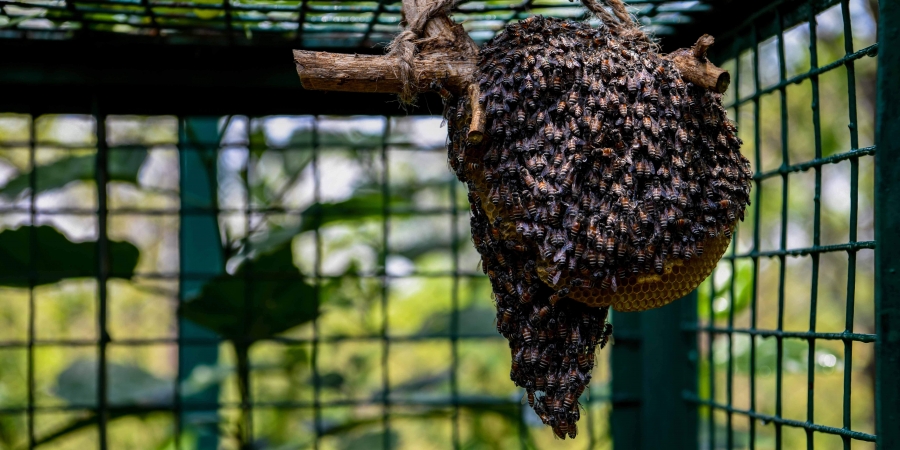
There’s a popular saying ‘as busy as a bee’. That term comes from the fact that honey bees are the only species who identify a flower and make multiple visits to the same flower until they get all the nectar and pollen out of it. They are the best pollinators and work in the most methodical fashion. From identifying to communicating and dividing work. Their social structure is fascinating and one that we can learn a lot from. There are 20,000 types of bee species of which the ones mentioned below are the most popular types in India. Indian and European bees are the most sought after while stingless bees are slowly catching our attention for its medicinal properties.
Common Name Scientific Name Natural Nesting Site Honey Yield
(KG)
____________________________________________________________
Indian Bees Apis Cerena Cavity, Termite Mounds, Tree Hollow etc. 8-10
European Bees Apis Mellifera Cavity 25-30
Rock Bees Apis Dorsata Tree Branches, Buildings etc 30-35
Dwarf Bees Apis Florea Twig in a bush <1
Himalayan Rock Bees Apis Laboriosa Underside of rock cliffs 40-45
Indian Stingless Bees/Dammer Bees Tetragonula Iridipennis Cavities, Hollows in tree trunks and walls <500 grams
_______________________________________________________
There’s been a lot of buzz about bees going extinct and people have been trying to find a way around it.
Here is a story from beekeepers who have found it very lucrative to harvest them.
There are multiple beekeepers like Apoorva - the bee man of India and organisations like the University of Agricultural Sciences in GKVK, Bangalore who conduct workshops and help people understand the importance of bees, train them on beekeeping and provide them with bee boxes.
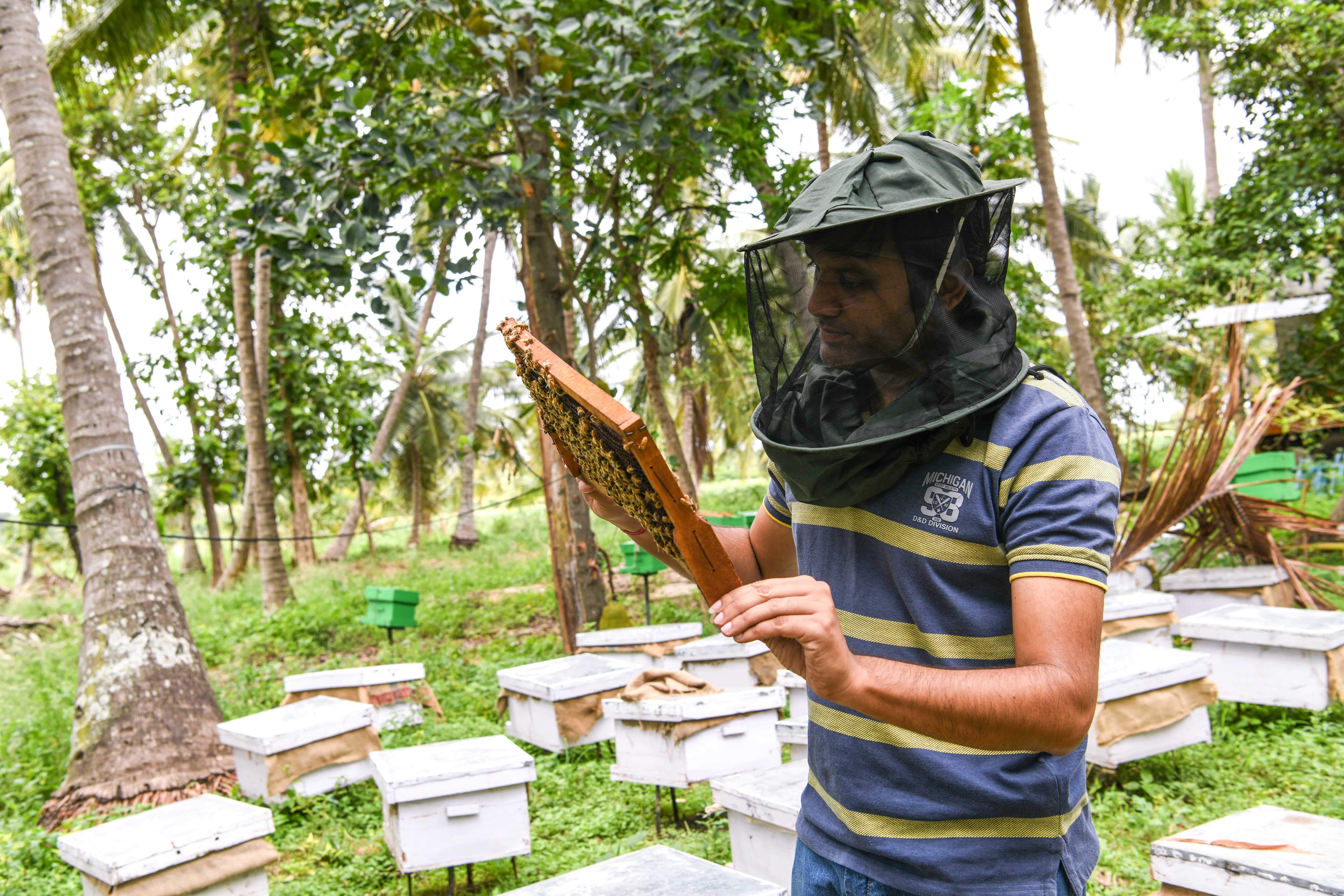
Apoorva visits his bee farm in Bidadi regularly to check the health of the bees. He is a mechanical engineer but a beekeeper by profession. He found his passion for bees even before he graduated and took it up soon after. He’s been working on bees for over 10 years and works closely with farmers across the country. He travels, meets farmers, trains them, gives them bee boxes, follows up with them on the progress and reviews the health of the bees regularly. He also helps them sell their produce. While Apoorva works with a lot of people across the country, this is a story close to home where he’s been working with flood victims in Coorg.
He is involved in multiple activities such as honey production, bee breeding, manufacturing beekeeping equipment, selling honey and beehive by-products, mainly wax. His company’s annual turnover is over 2 crores. He has both Indian and Italian bees.
He initially collected bees from hives and then started breeding them in his apiary during the natural division season of bees. He also buys colonies from farmers when they multiply. This bee farm is near a cornfield which is rich in pollen. It is important to understand your demography he says. Having bee flora next to an apiary is very beneficial to harvest more honey and keep bees in good health. He harvests Indian bees in forests and hilly regions and also promotes only Indian bees to farmers as it’s easier since most of them cannot handle migratory beekeeping.
European bees which in India are Italian bees requires 4-7 migrations in a year for which, he travels around 1,200 kms pollinating thousands of acres in North Karnataka mainly Sunflowers, Til, Niger, Coconuts, Arecanuts, Banana, Avacado, Litchi and more. Honey yielding fields for Italian bees are Sunflowers, Eucalyptus, Til and Niger. He has more than 200 colonies now and will split them to make about 800 during the breeding season. A farmer keeps anywhere between 4-25 boxes. He needs about 3 boxes per acre and has to distance each colony by at least 10 feet.
Bee Harvesting has helped Coorg flood victims make a livelihood
Vijay Panduranga talks about the effects of the flood and the rehabilitation work in Coorg.
After the floods in 2018 that hit Coorg, a lot of farmers lost their land in turn livelihood and haven’t received much relief from the government. There were rescue operations but then not much is being done on the rehabilitation front.
With paltry compensation from the govt. Coorg flood victims are finding solace in the new beekeeping venture. Nectar flow is an initiative/program started by a few local people, spearheaded by Retd. Brigadier Devaiah to help provide a steady income to people interested in beekeeping. People have seen returns in the 1st few months. They say that the money that comes in lets them breathe. While beekeeping in an age-old tradition in Coorg, the methods are ancient. Devaiah was on the lookout for someone with a scientific approach to help them and that’s when he found Apoorva and sought help. Apoorva readily agreed and continues to work closely with the farmers. He has helped the farmers understand the species better, eventually getting them better yields. At Coorg, each farmer makes a minimum of 5 kgs of honey per year and each box sells at Rs. 600/- per kg. They also make money by selling colonies at Rs. 1,500/- per colony. Farmers produce about 2-3 kgs of beeswax per year which is approximately Rs. 350/ kg
Farmers from the North East, Chhattisgarh, Coorg and other parts of India find it difficult to sell the honey and wax that they produce. Apoorva helps them by buying the whole lot from them, filters them further if there’s moisture and sells them as and when he gets enquires. Honey is labeled as per the flowering season such as litchi, cardamom, clover, mustard, chilli, etc., the honey tastes different too.
The by-products such as beeswax, royal jelly and bees venom are other sources of income and, used in pharmaceuticals and beauty products.
The below-mentioned statistics are only an example of how bee pollination increases the yield anywhere between15% – 80%. These are scientifically proven numbers in ideal conditions (these are underestimated values).
Estimated global economic value of pollination is 217 billion USD in 2005
_______________________________________________
Crop Increase in yield per acre (%) Increase in yield per acre Income generation by pollination per acre
_______________________________________________
Coffee 15% 5 Bags 15,000/-
Aracanut 25% 2 Quintals 64,000/-
Coconut 20% 3,000 nuts 36,000/-
Banana 20% 5 Quintals 10,000/-
Watermelon 80% 4 Tonnes 20,000/-
___________________________________________
Farmers tell us their personal stories of how beekeeping has helped increase their yield with pollination in crops such as coffee, fruits and spices. They also make a good livelihood but extracting honey and wax. What they make is pure and unadulterated making the quality far more superior than the ones available off the shelves at supermarkets.
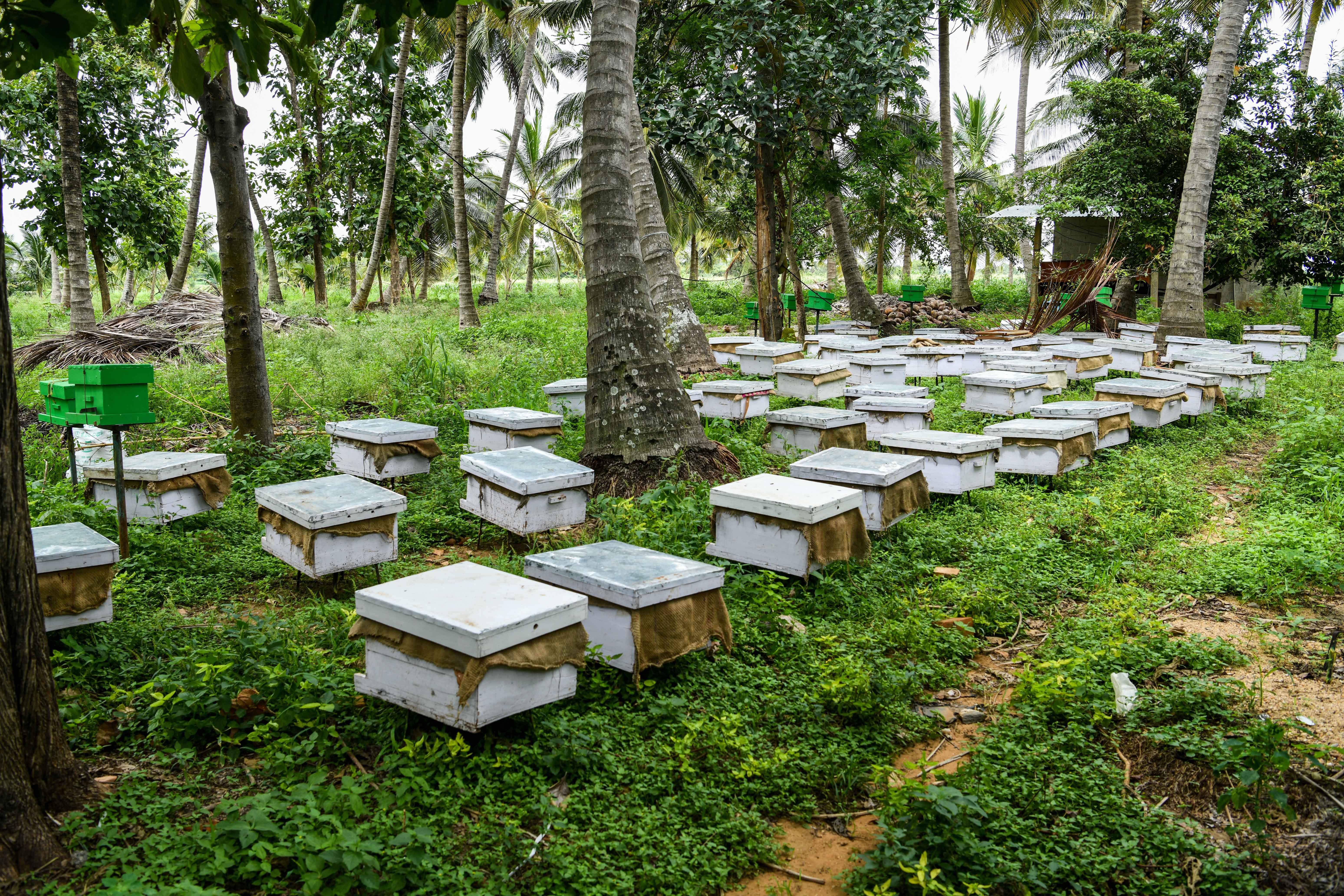
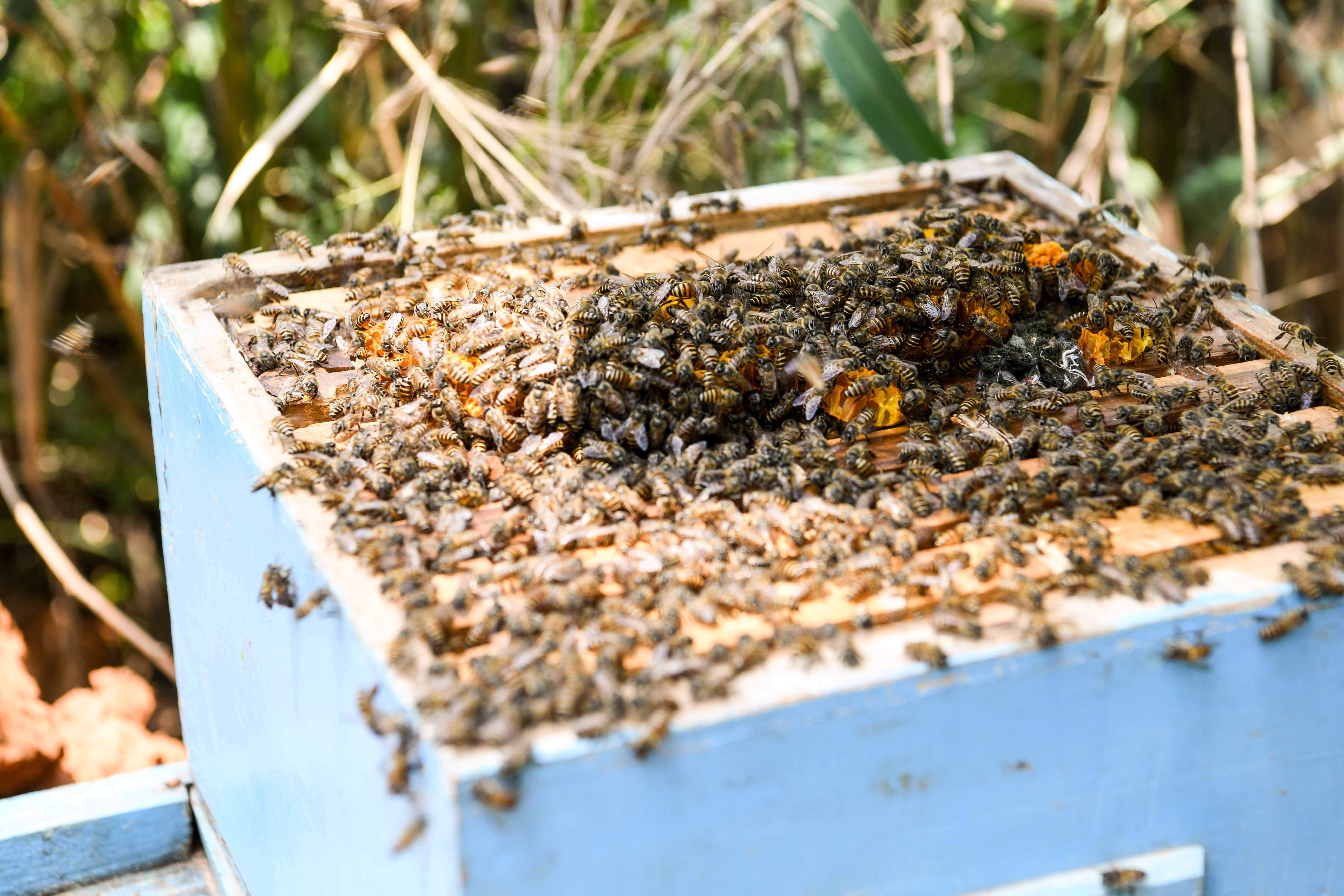
This is what a bee box looks like. This is one bee colony. They come on top to feed. There are multiple wooden frames inside quoted with wax, which help them construct combs.
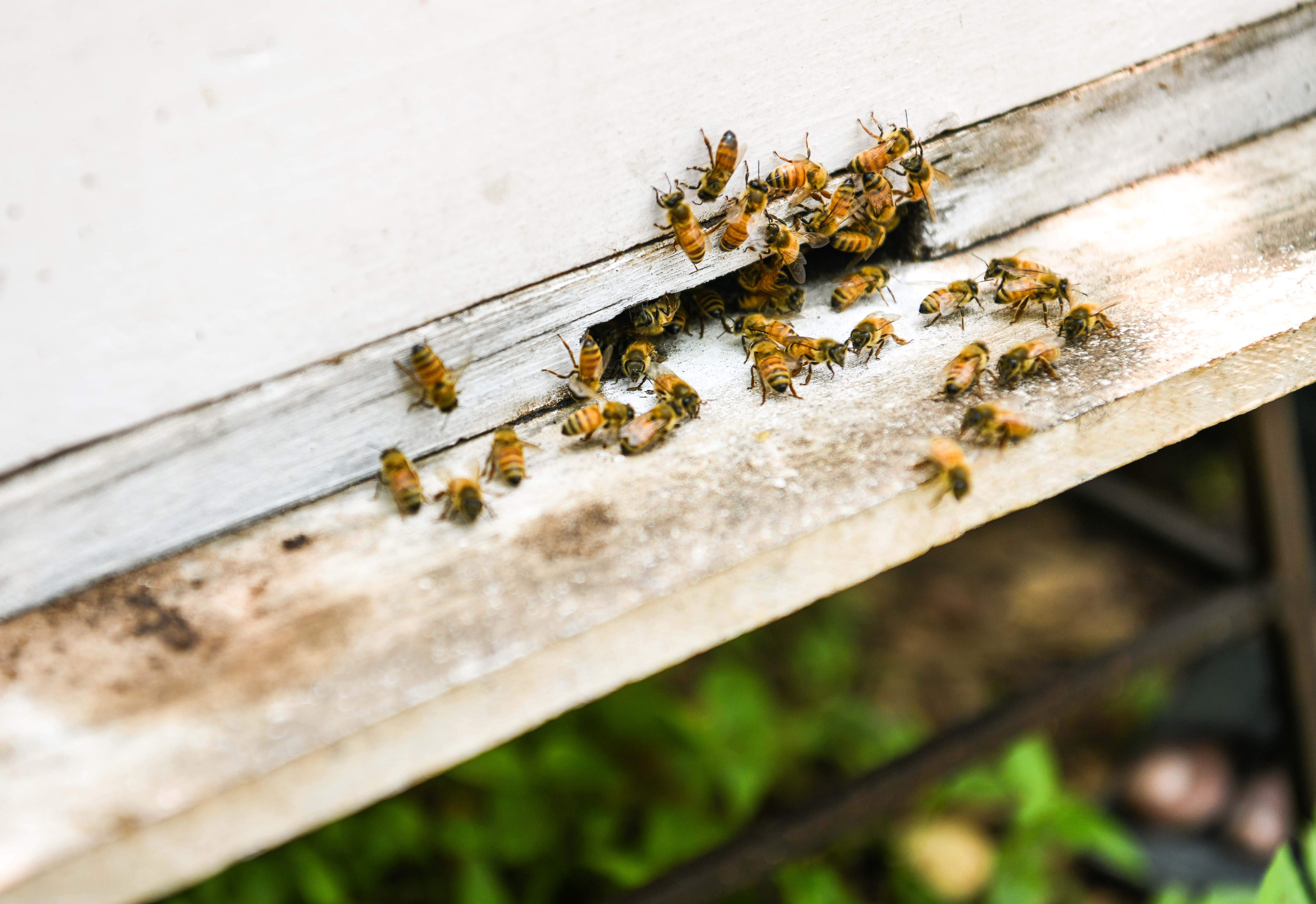
Every bee box has an opening at the bottom which allows the bees to move in and out of it, to go out and collect nectar and pollen. Some farmers who have these bee boxes are also given out on rent for pollination to seed producers or other farmers who are in need of pollination.
Naganna (Saachi) Kalappa lives 3 kms away from the main Madhapur town in Somwarpet Taluk. He has been harvesting bees for 18-20 years. Bees were available in abundance then as the ecology was healthy and rich, and filled with plants that the bees needed to survive. However, the species has seen a massive decline in numbers as the human population has been increasing and trees are being cut down for personal benefits such as planting silver oak trees as it yields timber and in a short span of time. Since the decline in numbers, they now need to procure boxes and up their skills and knowledge. After adopting this scientific method, he has benefited as his crops are multiplying. He is making enough money to take care of the needs of his family. He also says I request people to stop destroying forests and help in sustaining them and grow trees that are required for agriculture instead of timber to improve the ecology.
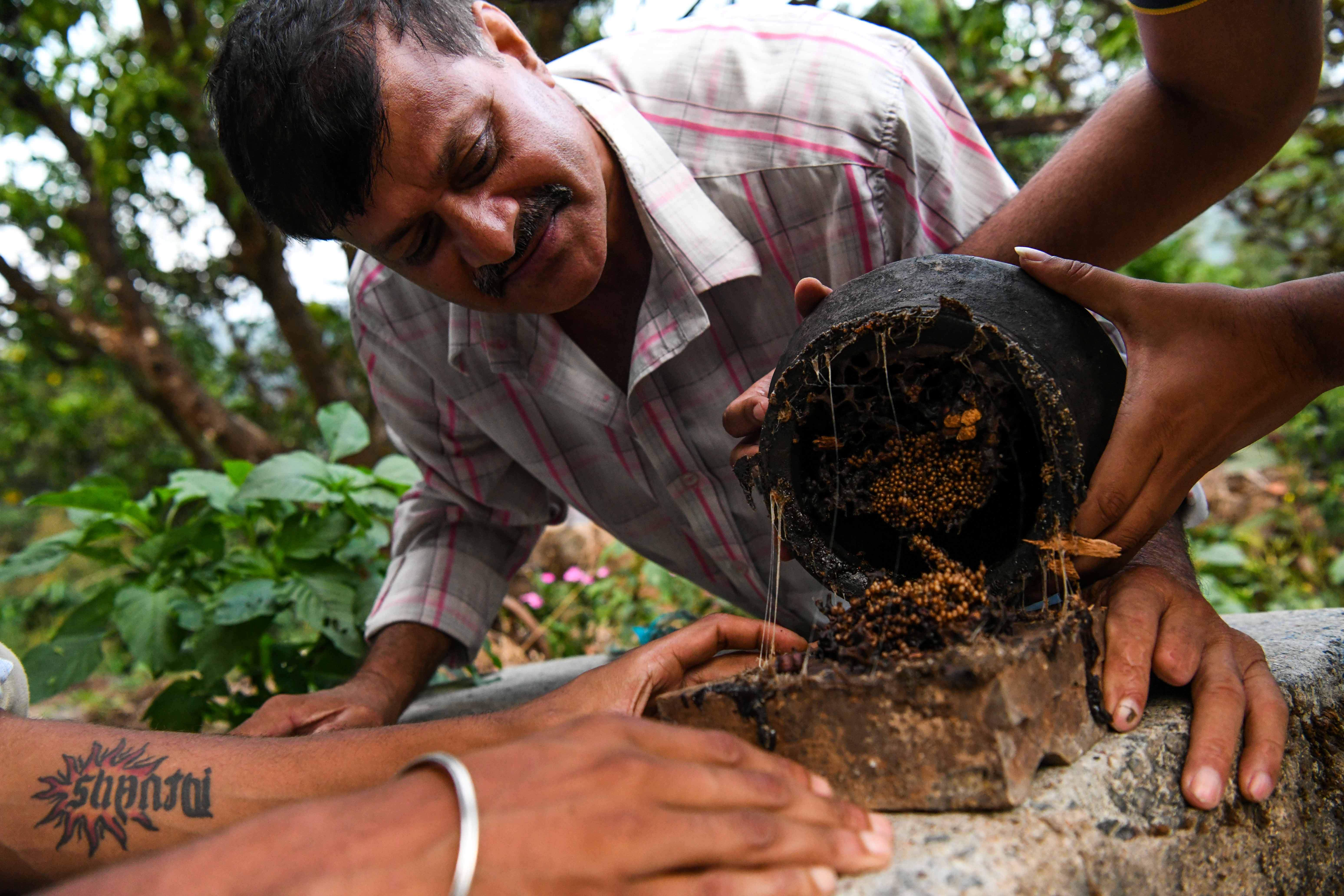
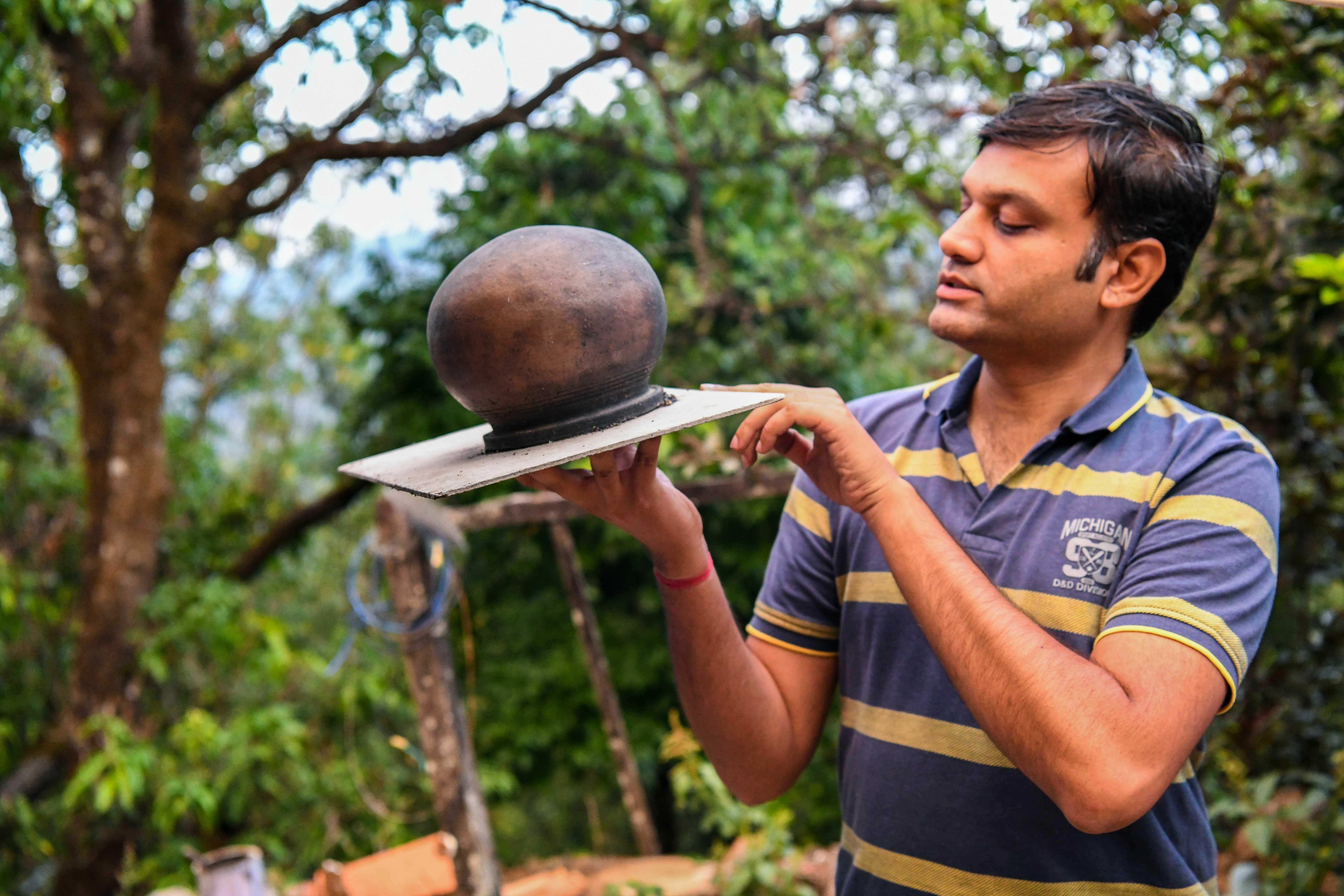
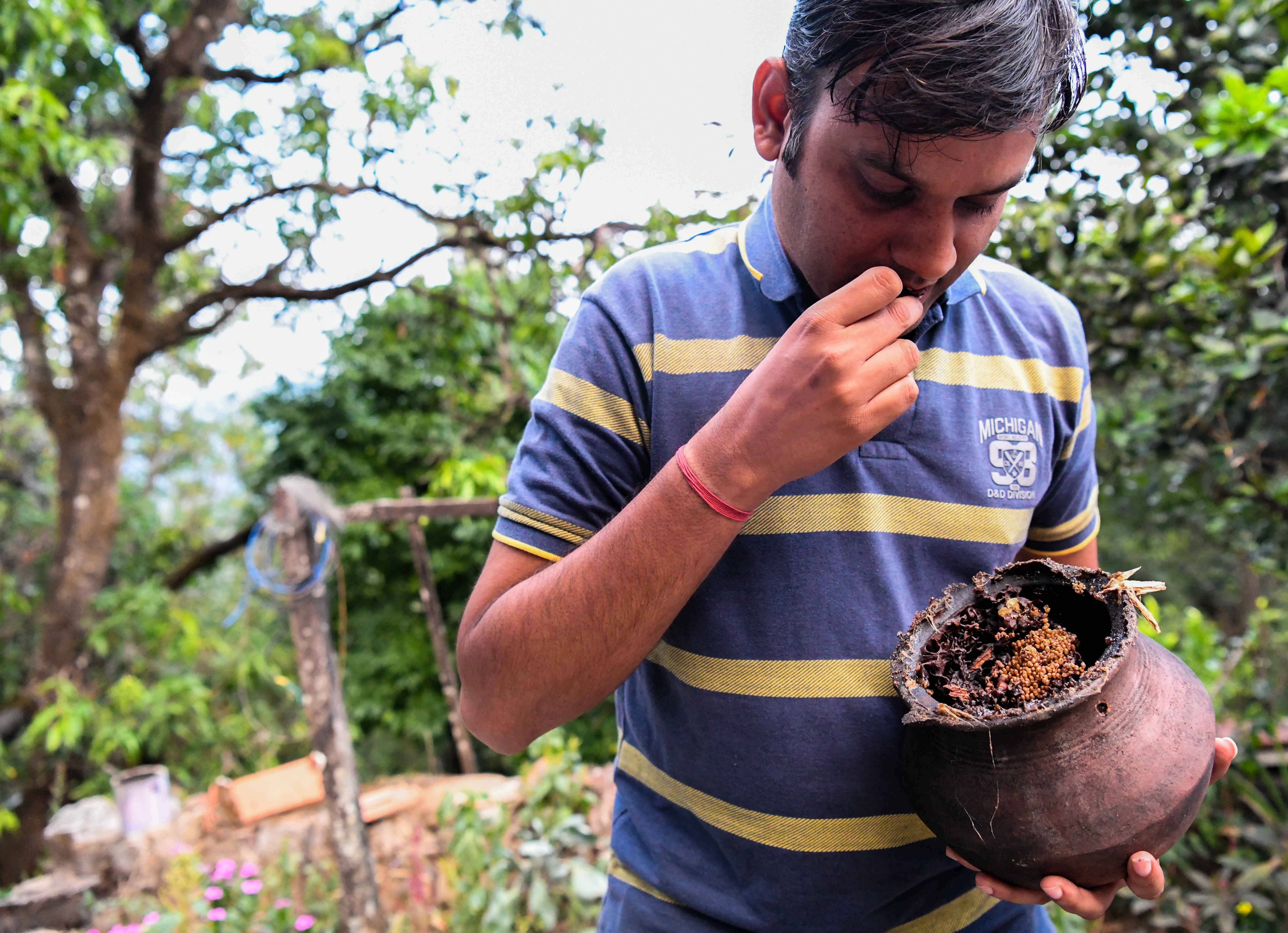
Thammaiah CB (Dolly) lives 7 kilometers away from the main Madhapur town in Somwarpet taluk in the Coorg district. This part of Coorg witnessed the worst of nature’s fury in 2018. While he has been harvesting Indian Apis Cerena Bees in boxes he also harvests stingless bees in pots. The quantity of honey is way lesser than what is produced by other bees however, the quality is far more superior as it has a lot of medicinal properties and is sold at a much higher rate.
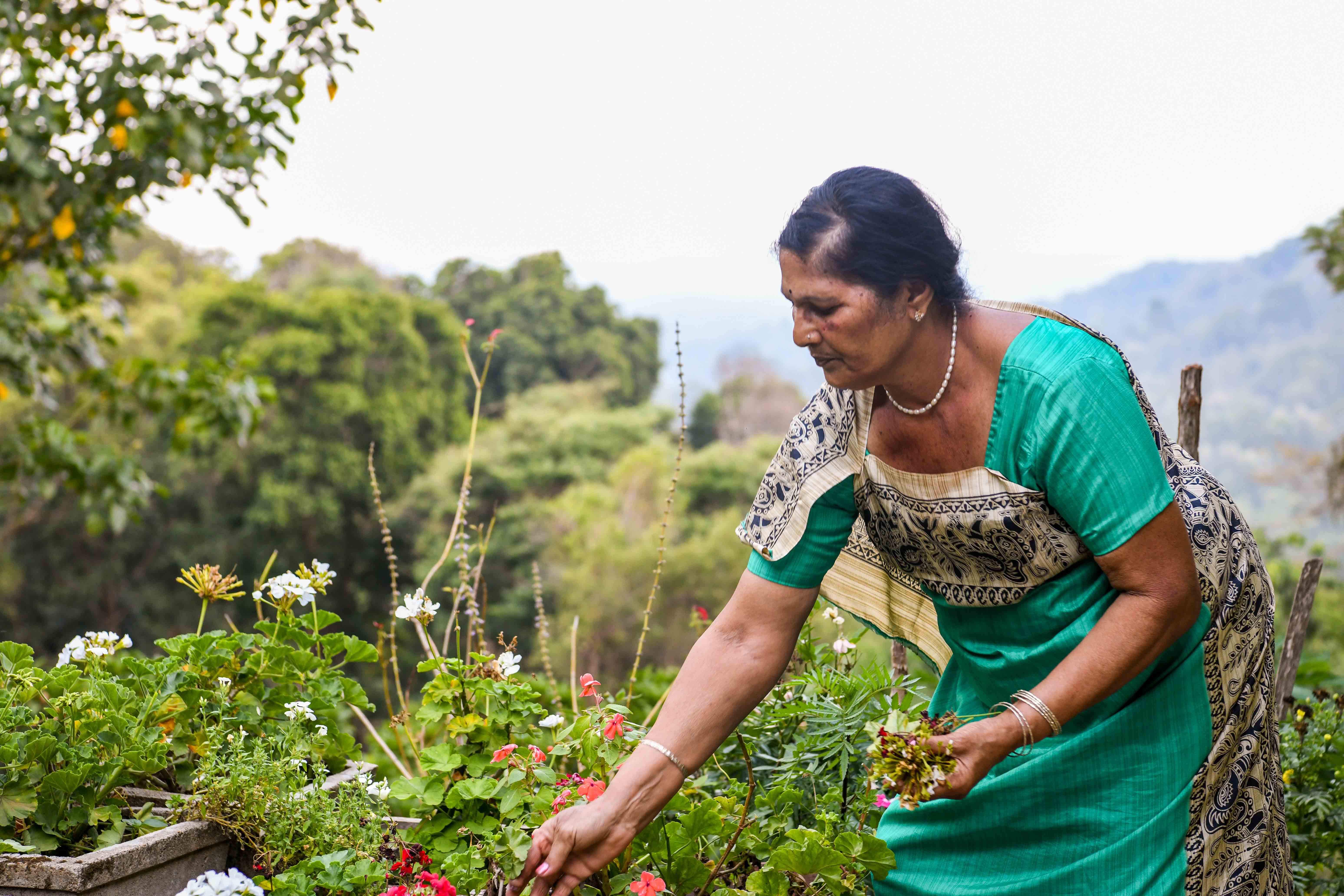
Thammaiah’s mother tends to her garden every day. She says it isn’t enough if you just harvest bees and have a coffee estate, it is very important to understand what kind of flowers and fruits attract them and cultivate them in your garden. This helps in increasing pollination and nectar production.
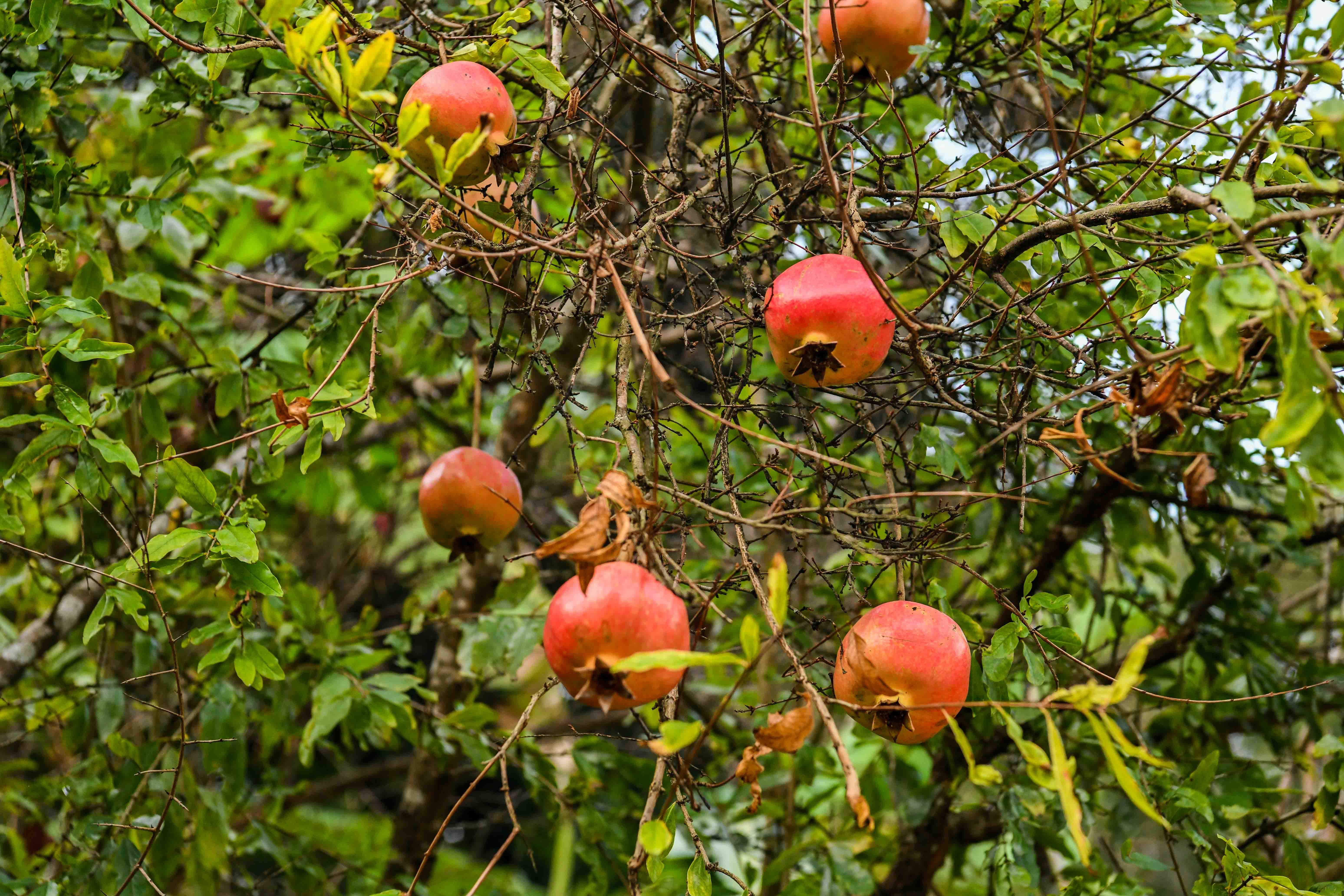
Fruit especially those with seeds are good pollinators.
Plants that one should cultivate to yield better results
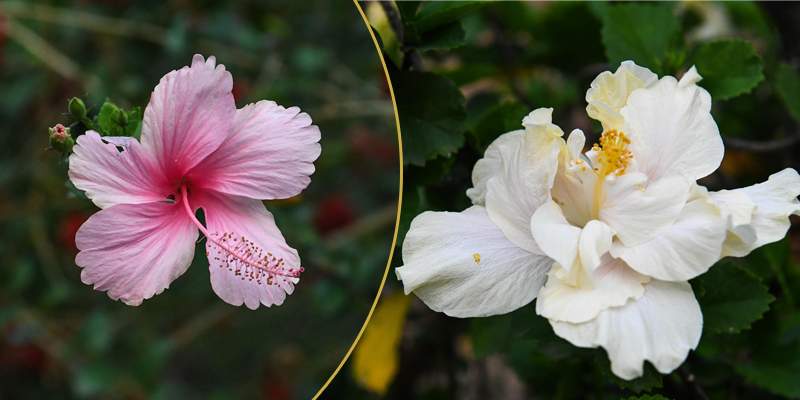
Nectar: Plants such as Avocado, Litchi, Hibiscus etc.
Pollination: Plants such as Sunflower, Sesame, Mustard, Coriander, Niger, Coconut and more (bees are attracted to vibrant colours such as yellow and blue)
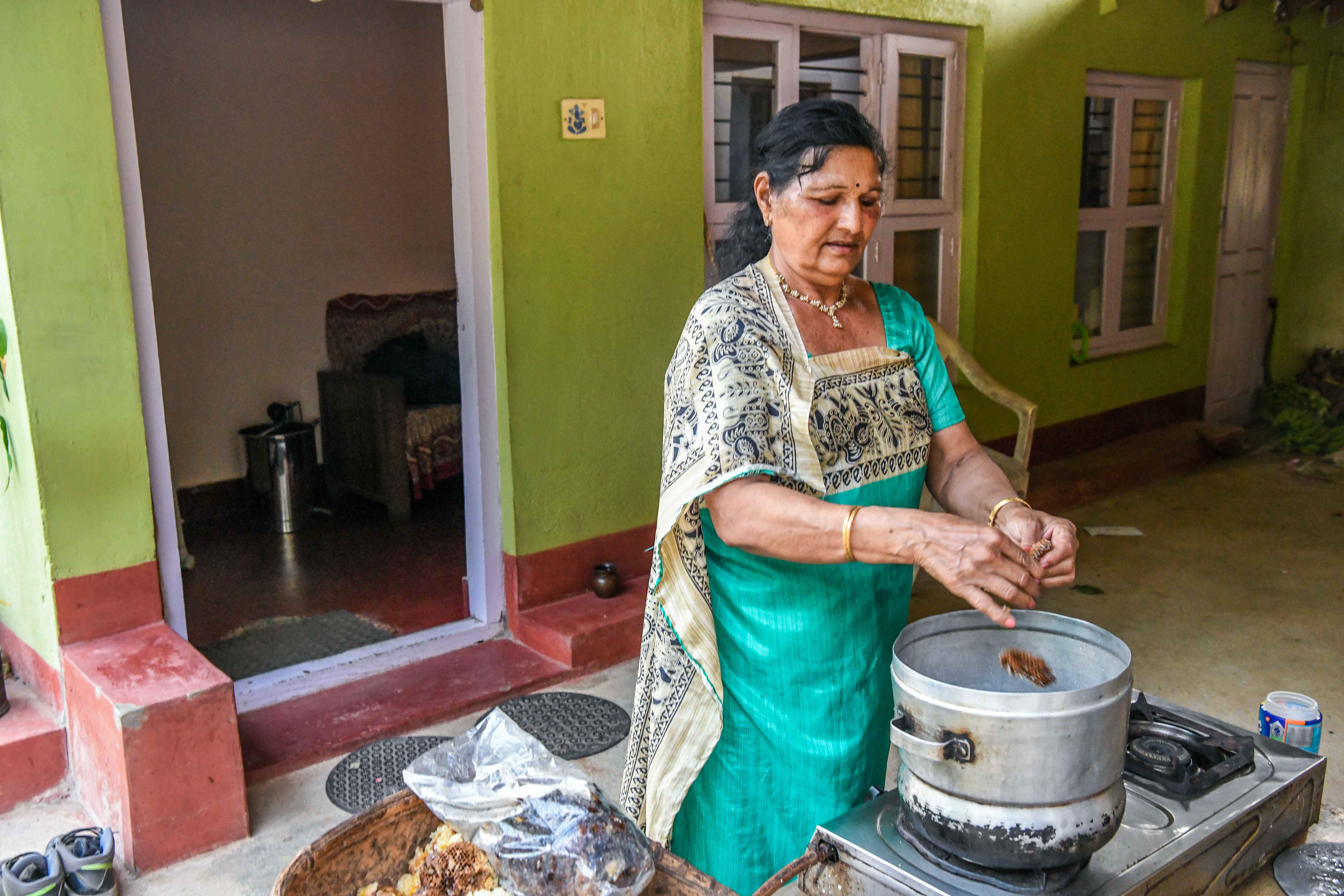
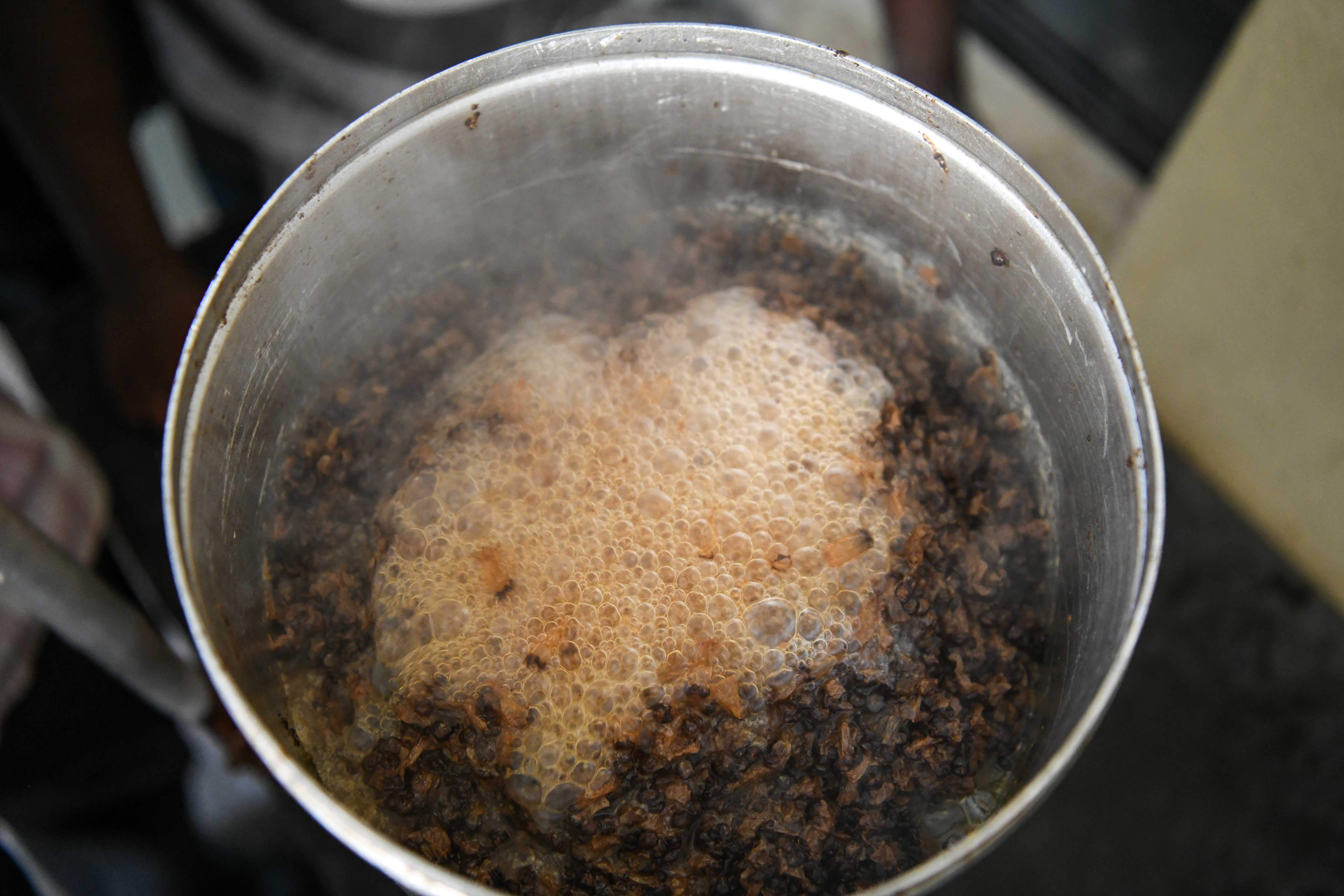
She also makes beeswax at home which is another income generator. She says that it is not a very laborious process and demonstrates. You first break the comb into a utensil with enough water and let it boil.
You let it boil until it reaches the required consistency.
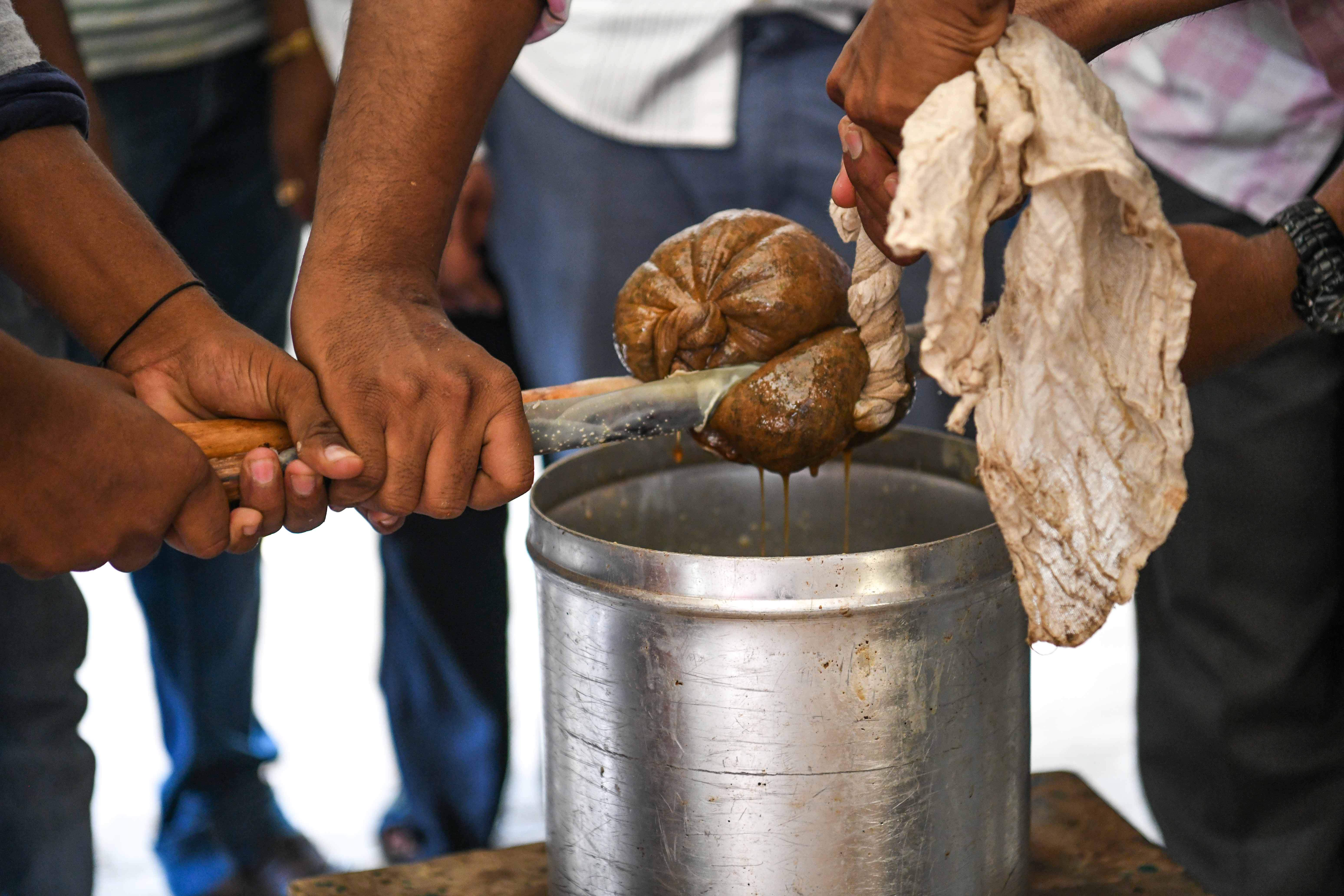
You then squeeze out all the excess water and use the residue to make wax cakes.
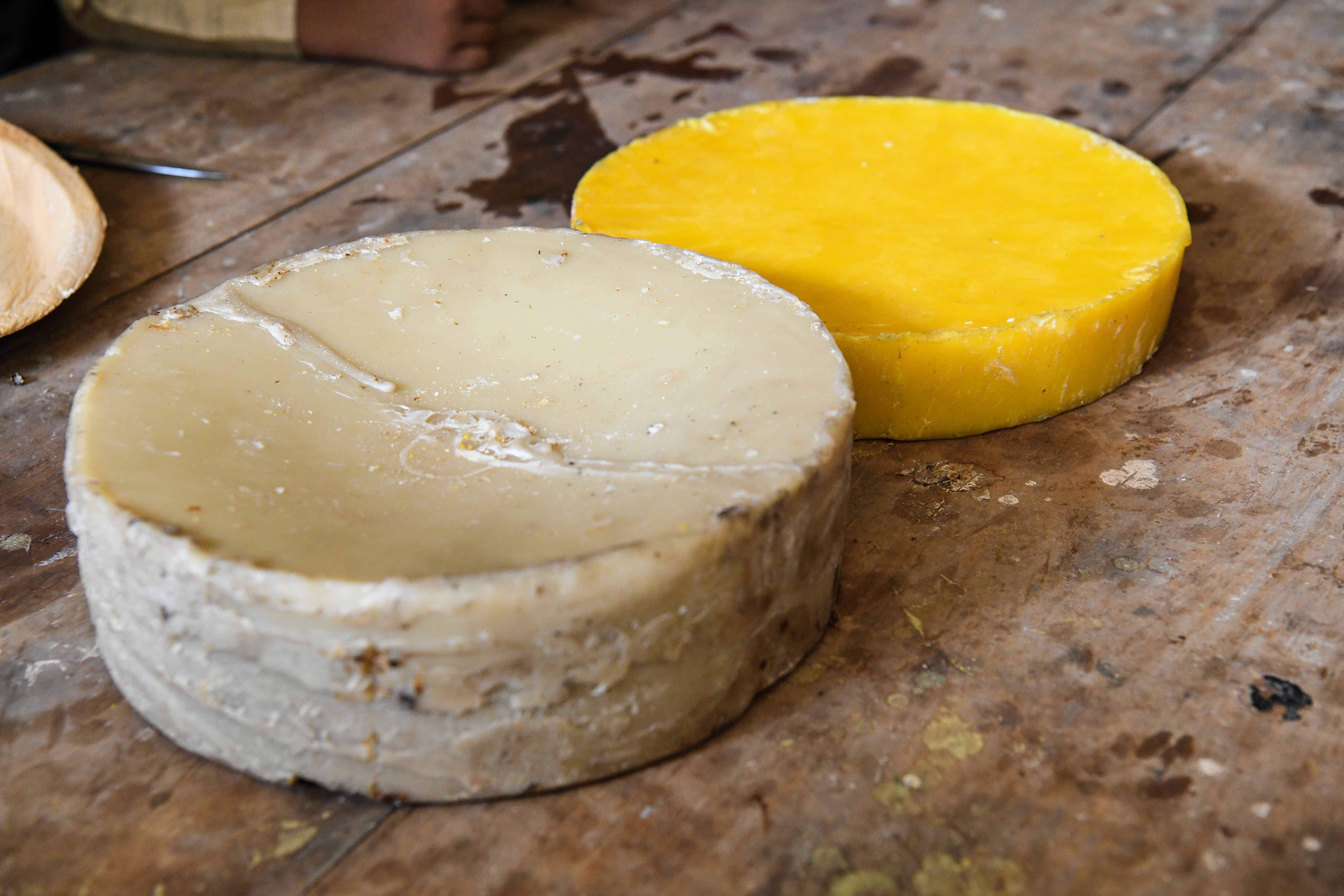
This is the final product.
Apoorva pays regular visits to all the farmers across the country and conducts a health check.
It is very important to taste it as well. Every house he goes to gives him honey to taste. He jokes and says I am glad I don’t have diabetes. If I did, for the amount of honey I consume, I would be in a lot of trouble.
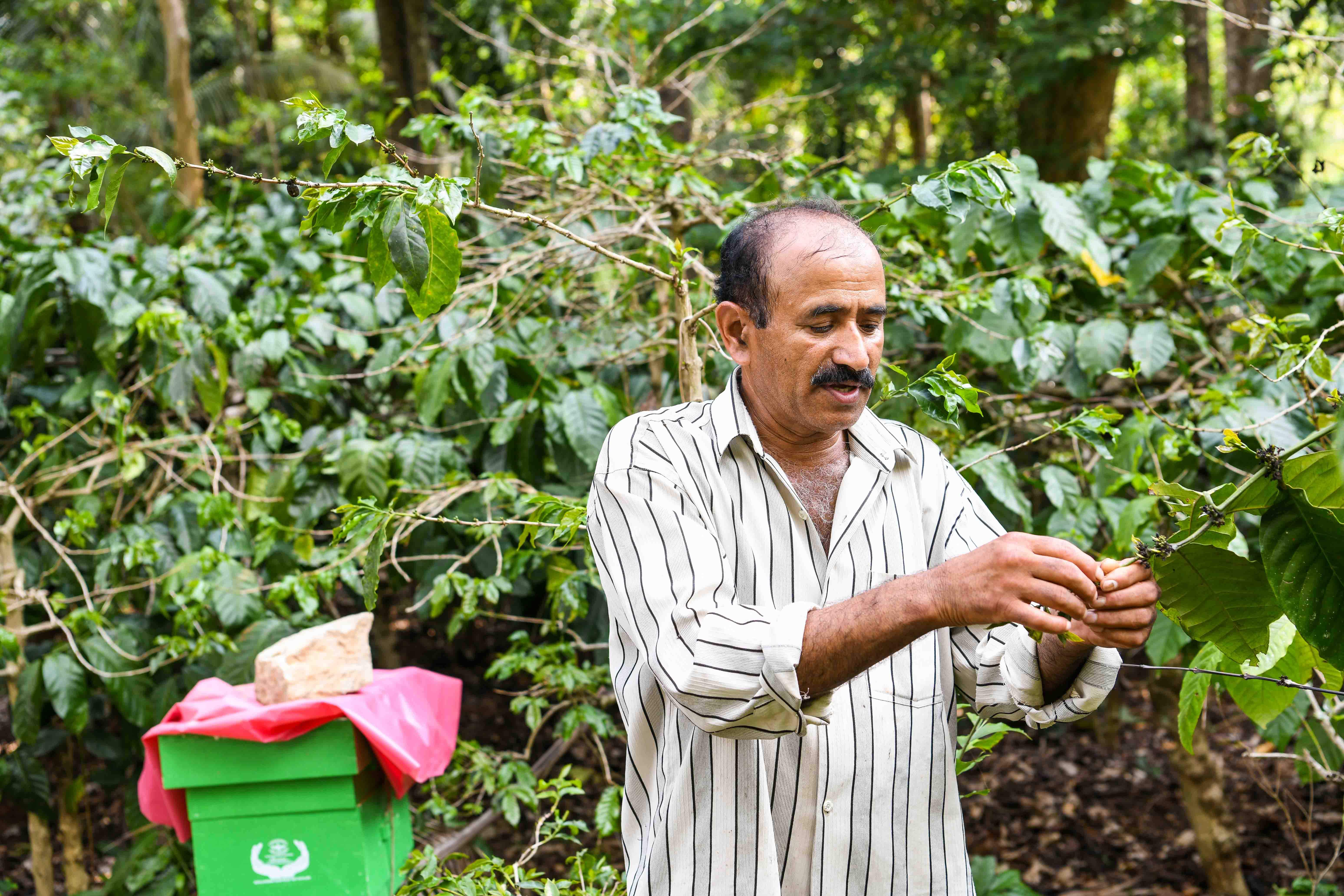
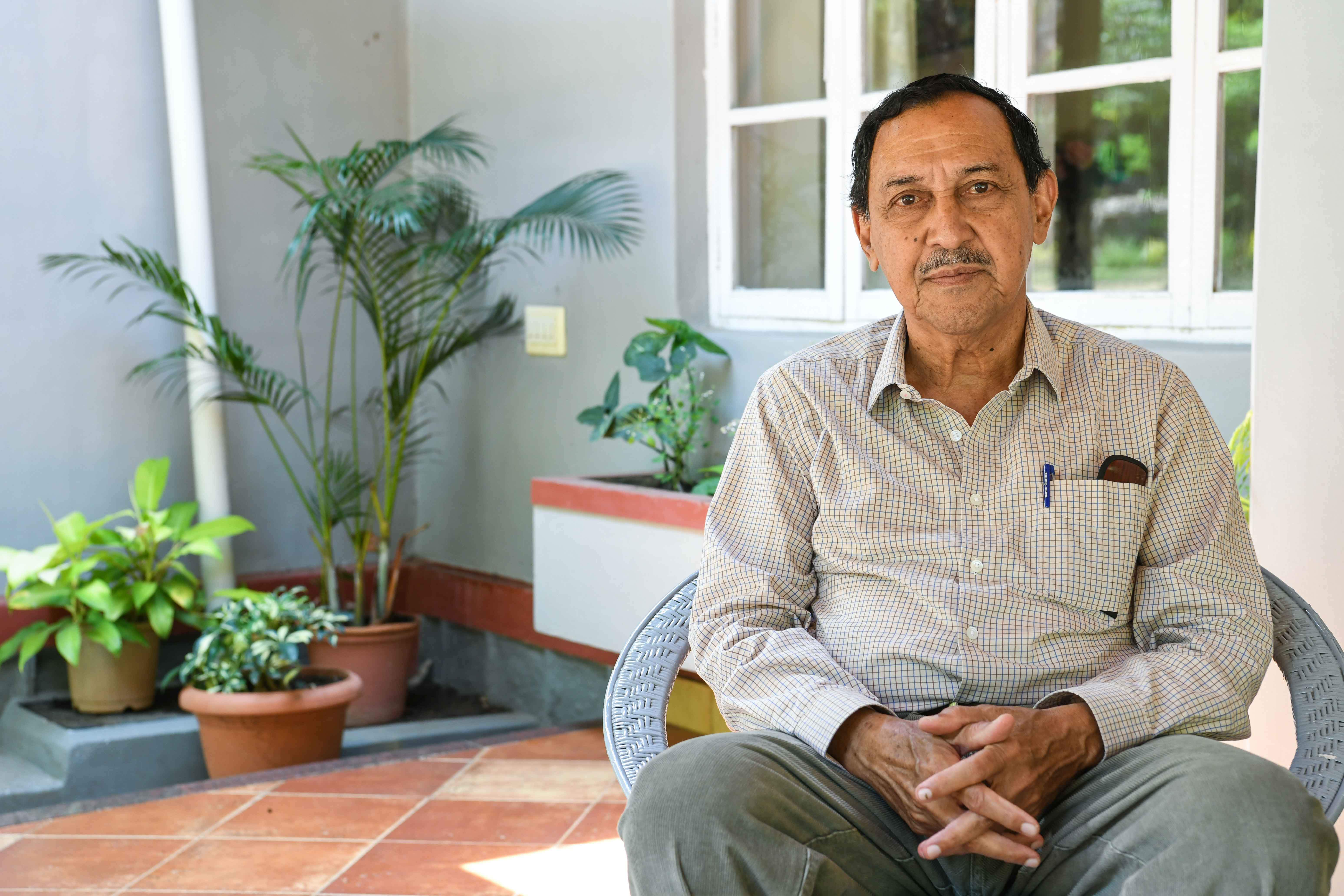
Bose Mandanna is the fourth generation coffee grower. He moved back to Coorg 53 years ago after completing a bachelor’s degree in Agricultural Economics. He talks of how he has seen farming change in the years to come. Back in the day farming was done in a very environmentally friendly way. Over a period of time, when they found pests taking over the plantation, they used some chemicals to deal with the pest issue. However, they soon realised that they were not only harming humans but also the bees and other pollinators in the environment. These chemicals known as weed killers have cancer-causing properties. On realising this, they decided to go back to organic farming. However, a lot of farmers have been affected by this chemical especially in Punjab as they are one of the largest agriculturists, and the Punjab mail is popularly called the cancer express as a lot of them are coming to Bombay for treatment. Also to note the groundwater gets affected by these chemicals. People are saying that there are bee-friendly pesticides available. He jokes and says “there are all chemicals and they cannot be friendly, they might not kill you but make you unconscious”. Please avoid chemicals and use bio controlled agents.
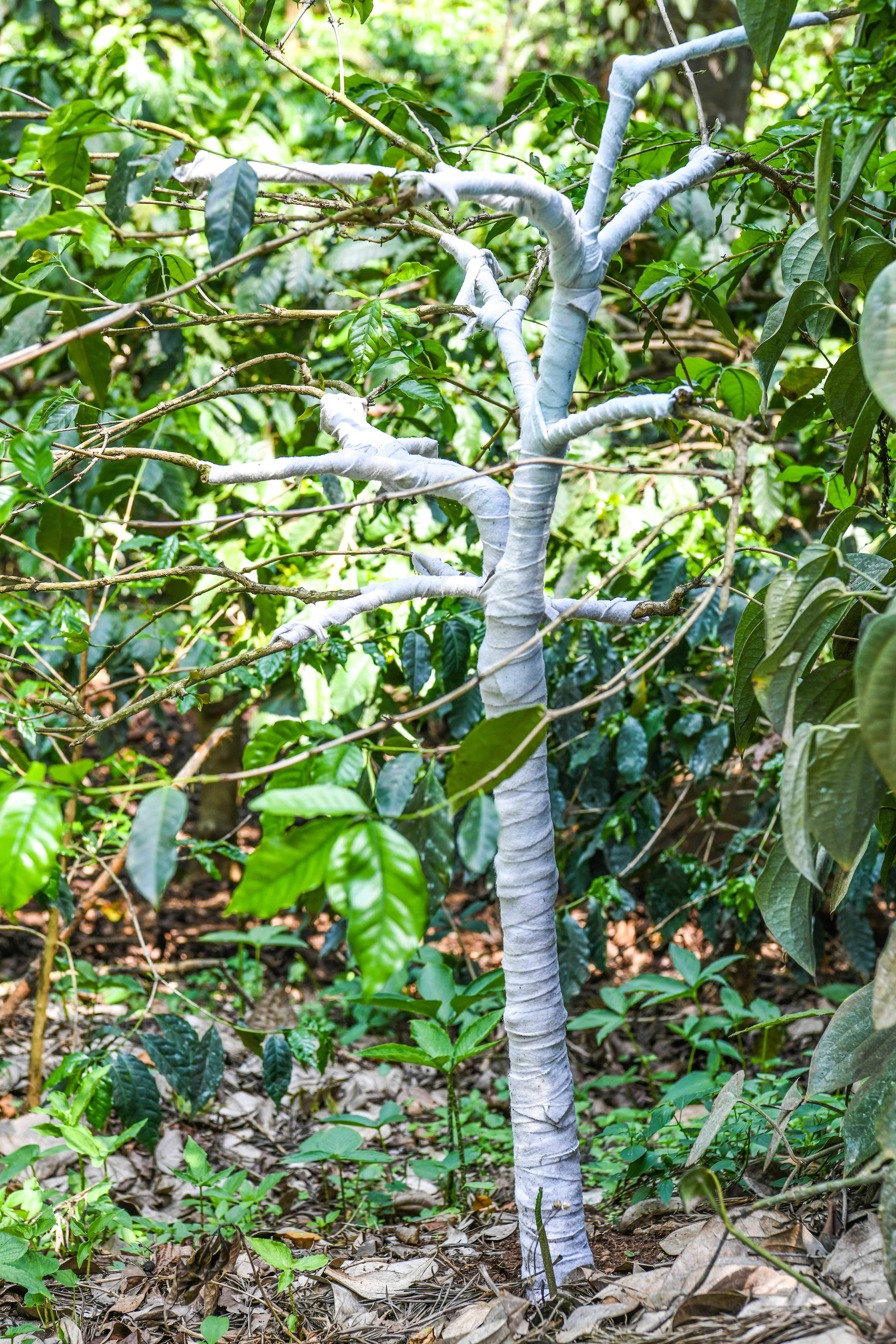
White Stem Borer Problem: These pests are known to attack the coffee plants and wreak havock hence they wrap the plants with white cloths to avoid this menace. There is a mild chemical in it but it only
touches the trunk of the plant and does not reach the coffee flower thereby not harming humans or bees.
May 20th is International Bees Day. UAS in GKVK conducted a 2 day class for people interested in beekeeping. Urban beekeeping is also becoming popular as people from the cities have started showing
interest.
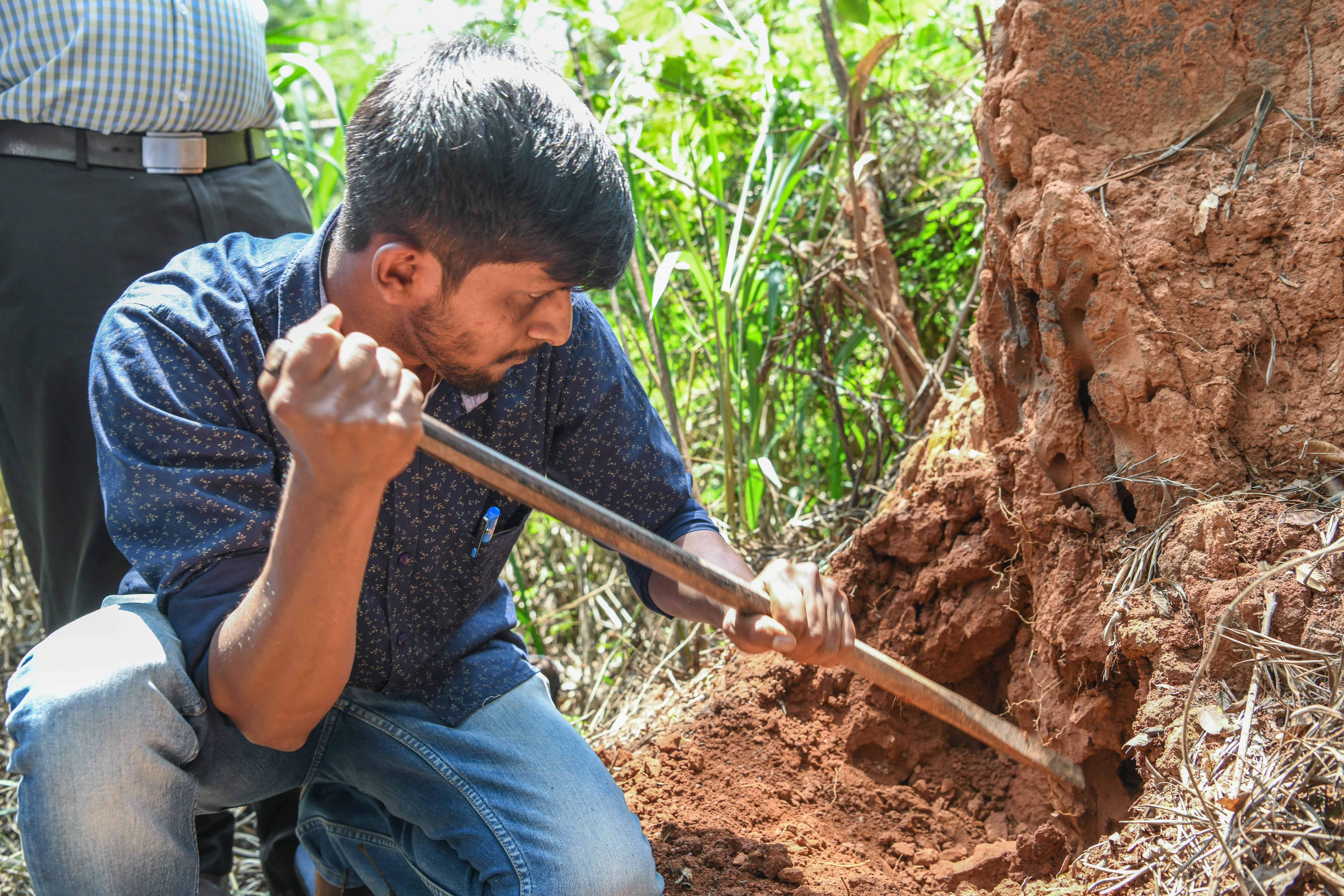
The staff showed them how to identify and dig out for a beehive as they can build hives anywhere. This has to be done with caution so as to not break the hive.
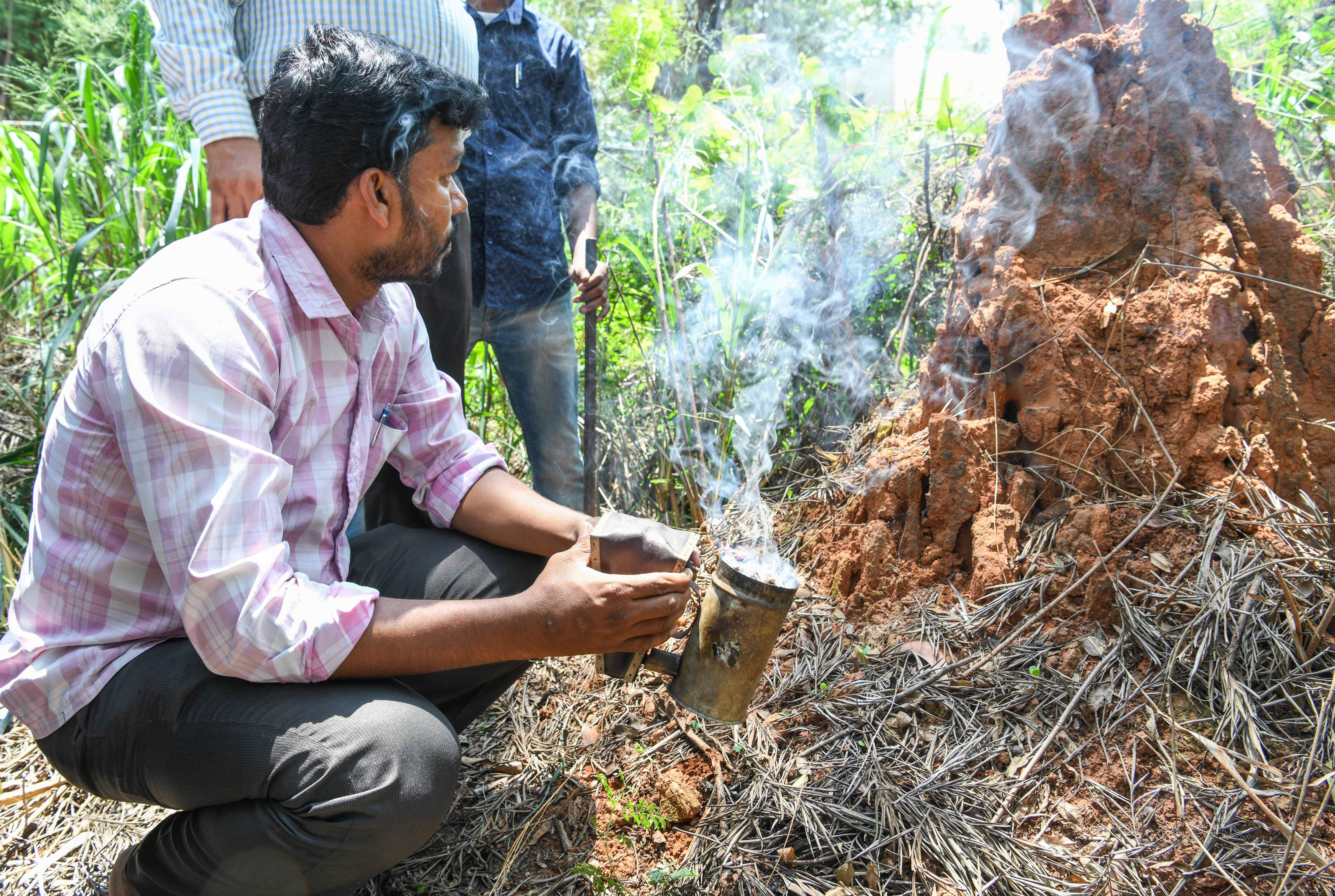
You then mildly sedate the bees with some smoke by burning dry cotton cloth and get the comb out
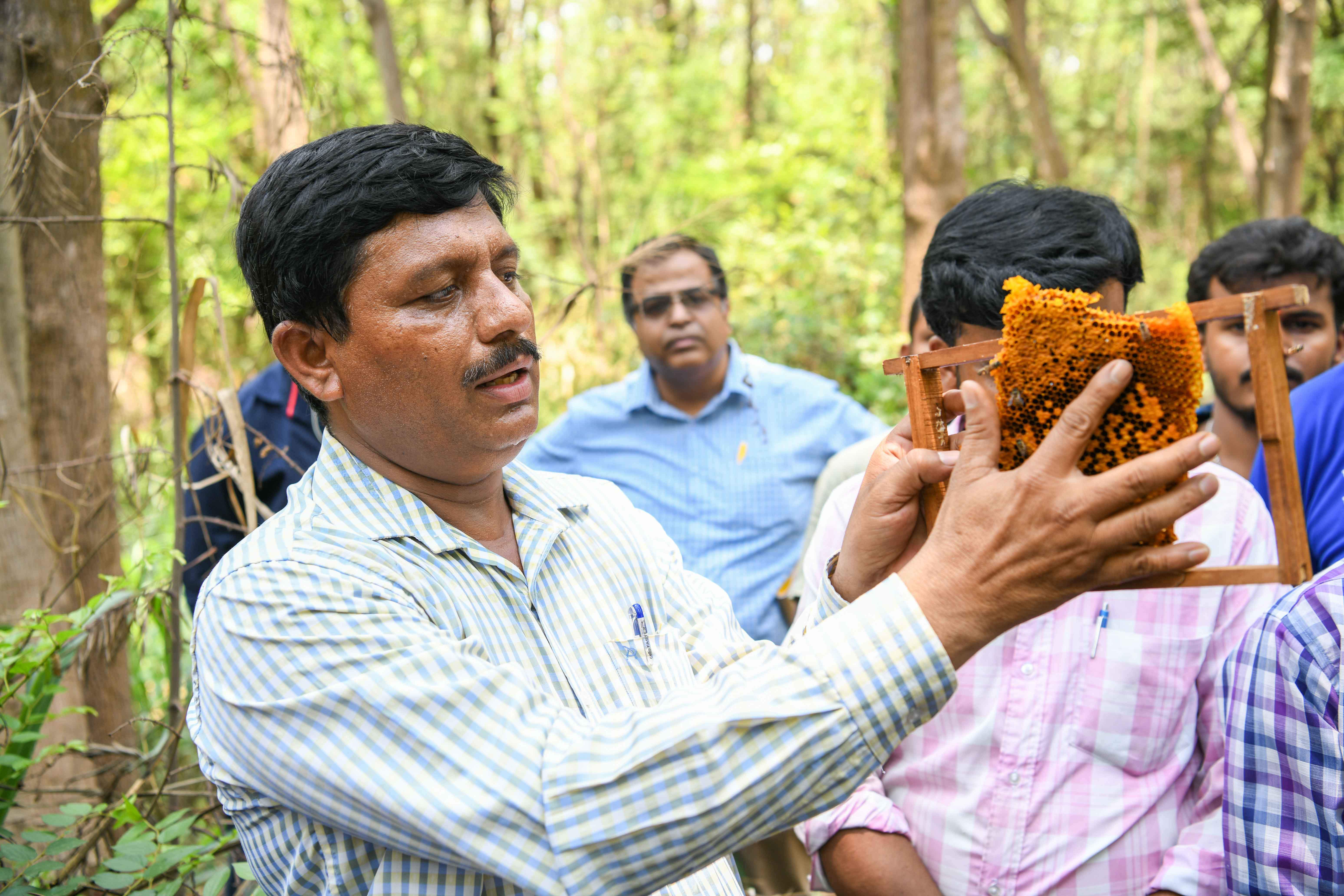
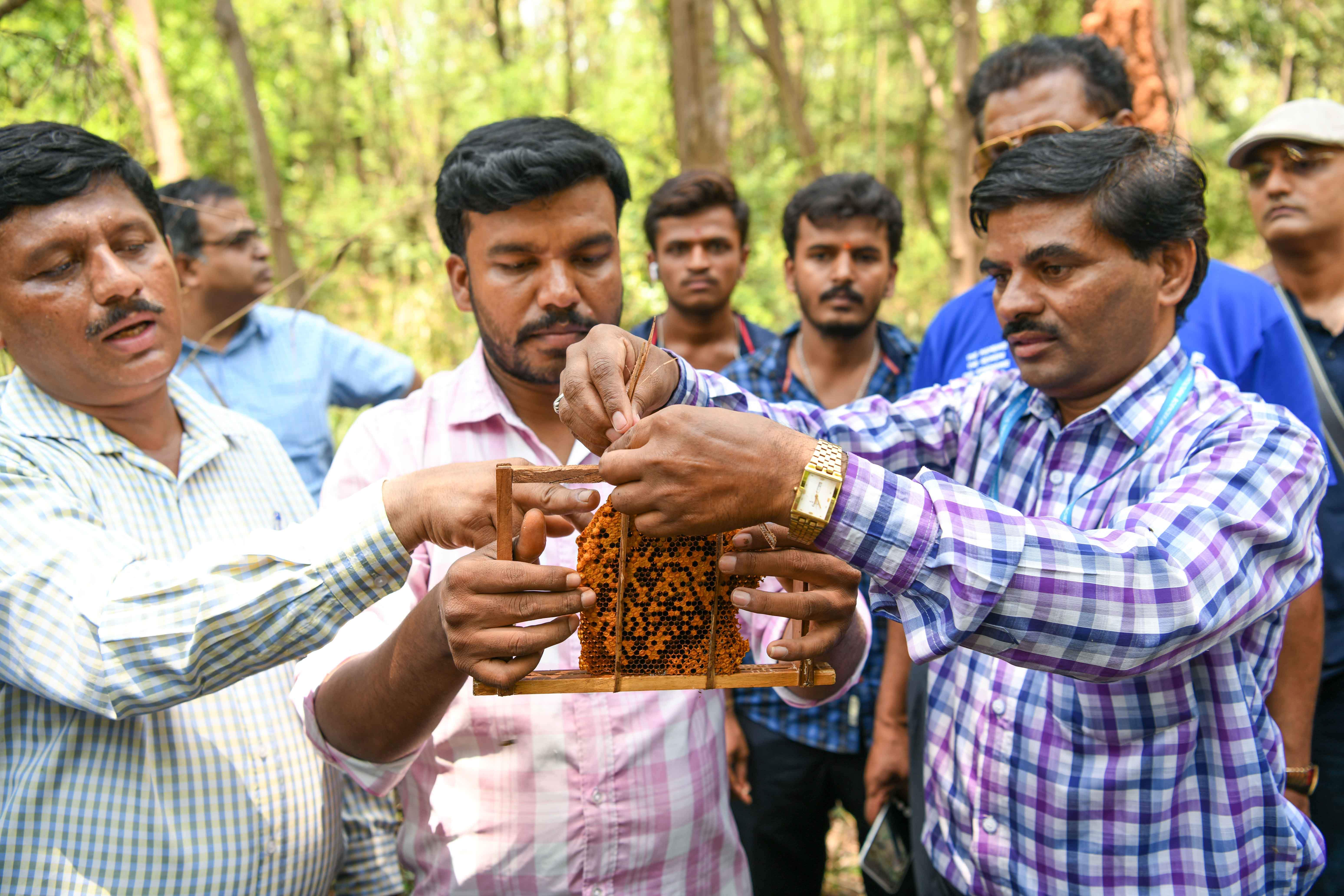
Once you get the comb out, you tie them tightly to a frame but not so tight that they break.
Students learn to tie the comb to the frame.
While they learn to make honey, a student observes the comb.
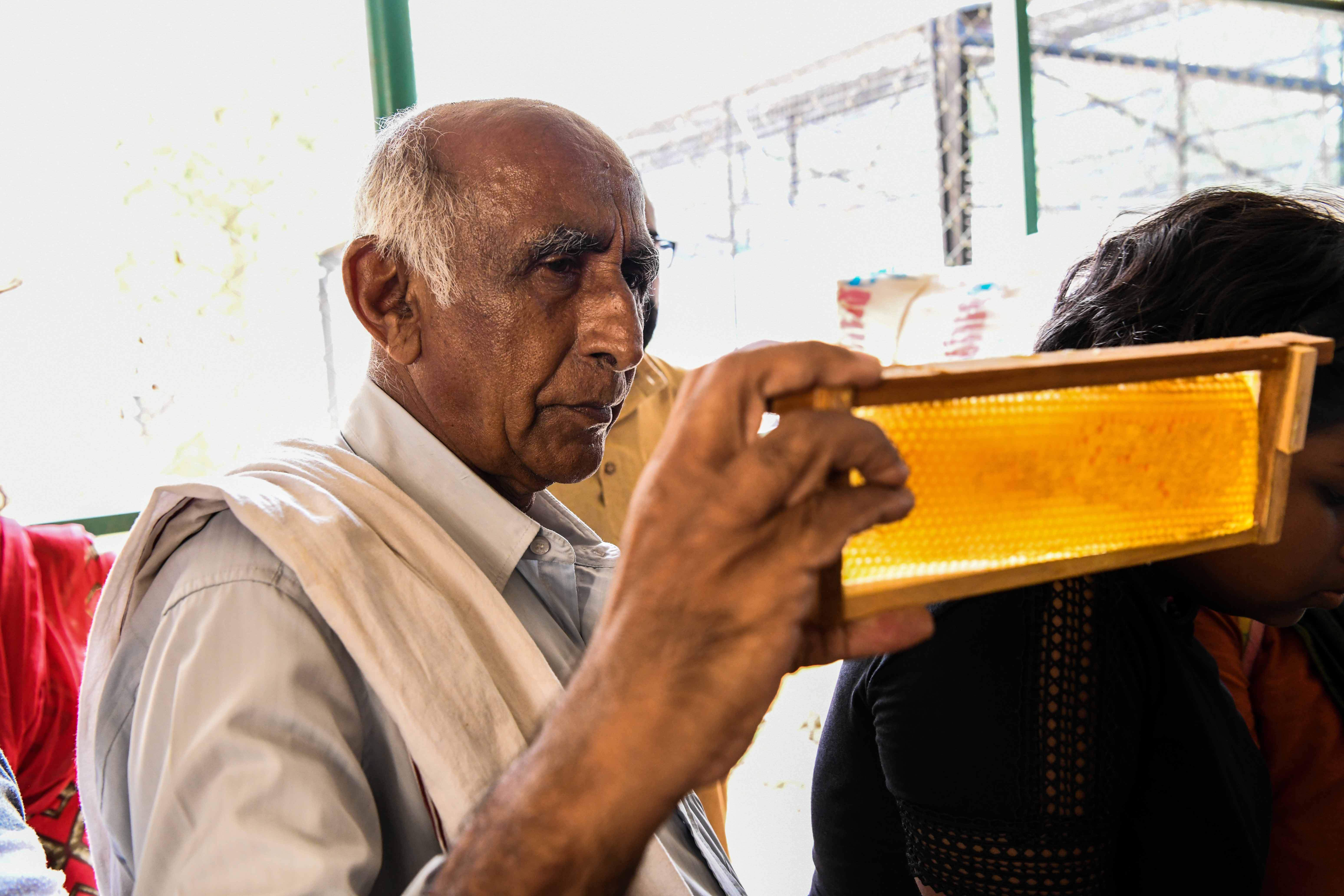
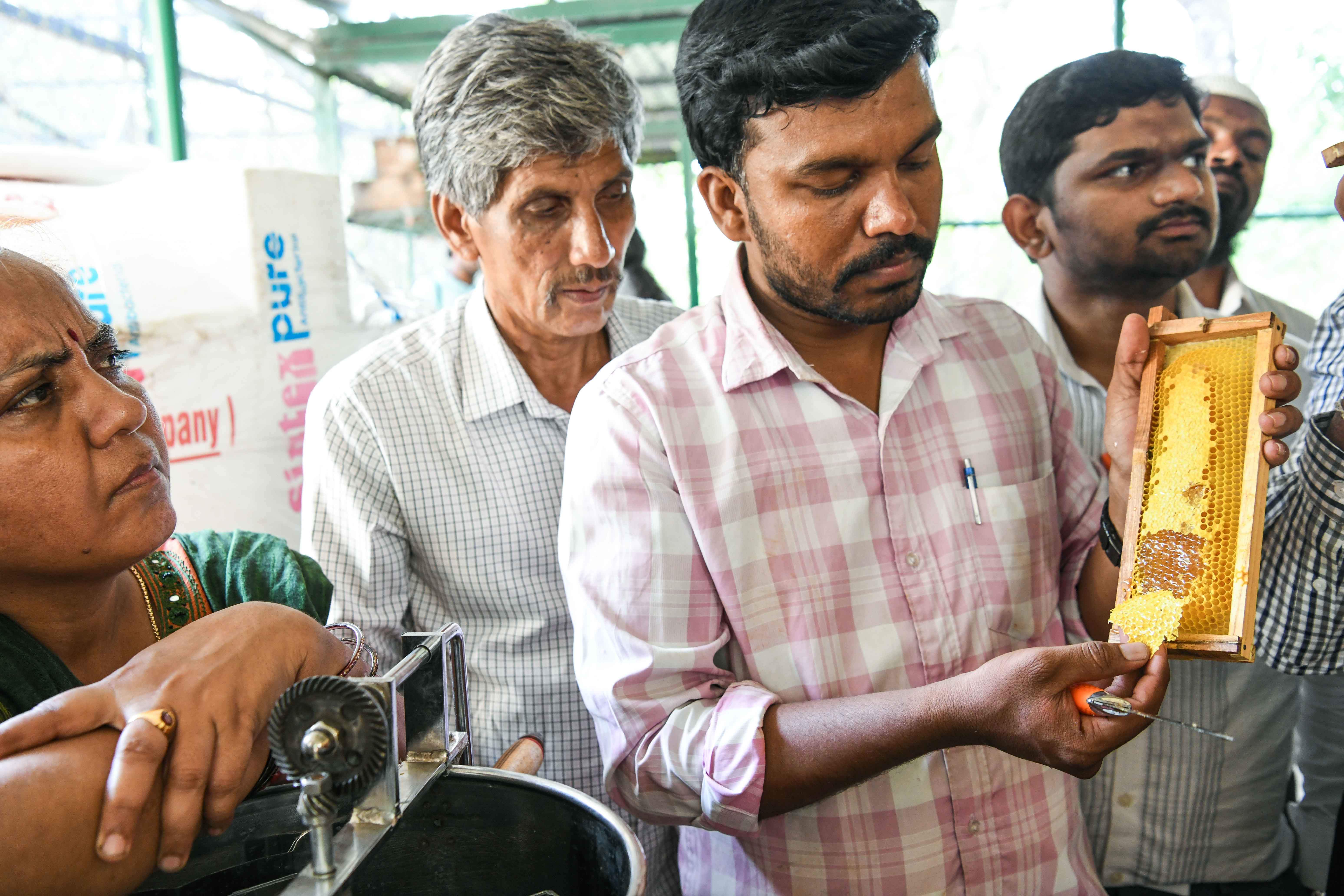
Santosh from the faculty shows the class how to peel the comb before you can put it into a vessel to churn honey. The peeling has to be very fine.
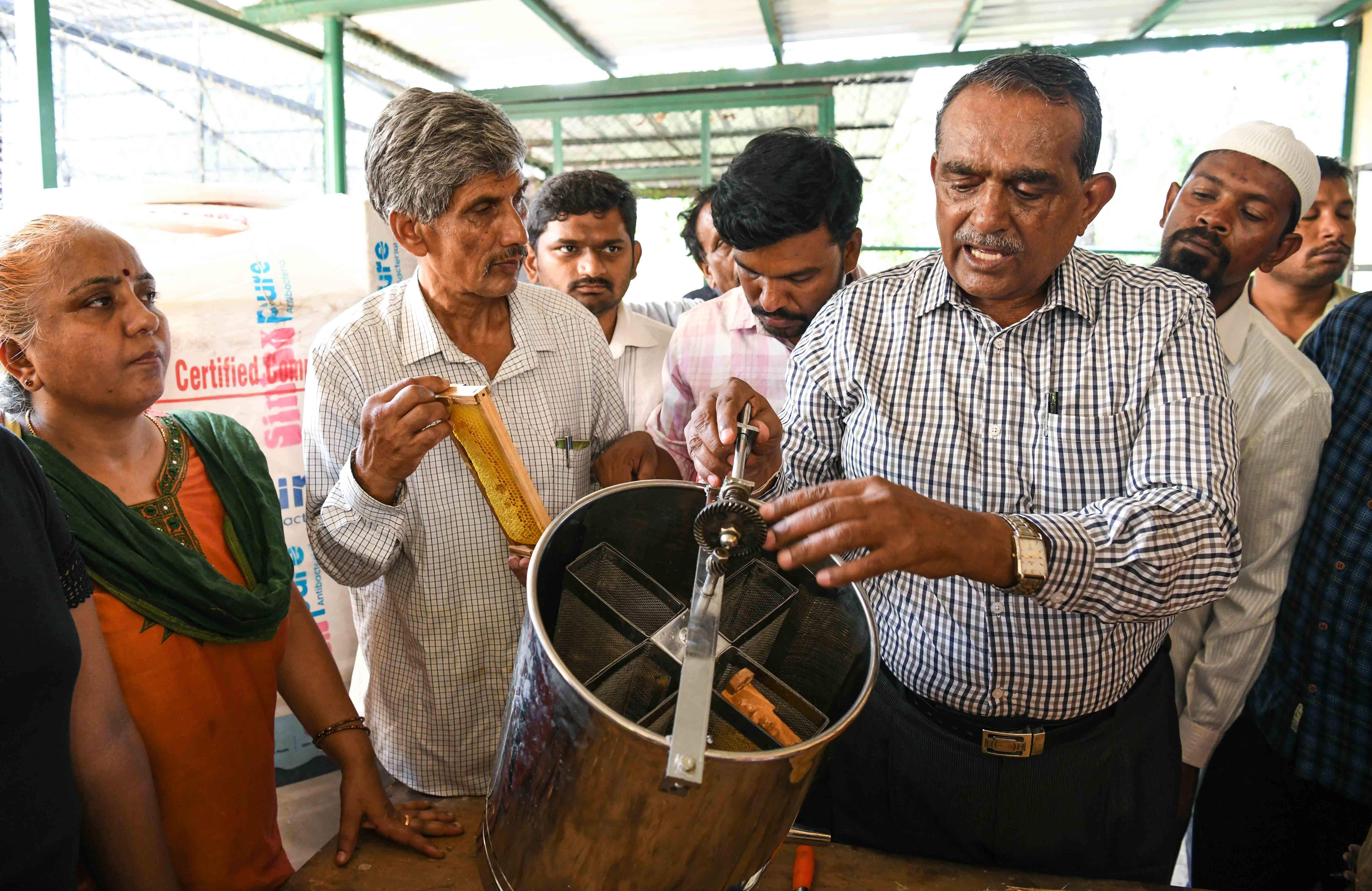
These are the machines in which you put the combs in to extract honey. These machines are also made by Apoorva and sold to the farmers. There is a particular way the combs have to be kept and then manually churned.
A small community of farmers can only do so much, the government needs to step up and help take this initiative forward, make this bigger and reach more people.
source: http://www.newindianexpress.com / The New Indian Express / Home> Specials / by Meghana Sastry / Express News Service / October 28th, 2019
WELCOME. If you like what you see "SUBSCRIBE via EMAIL" to receive FREE regular UPDATES.
Read More »