The winners of the 2019 Nobel Prize in Economics in the screen grab — Abhijit Banerjee, Esther Duflo and Michael Kremer (AP file)
– Michael Kremer, a Harvard University professor, was the co-Founder of ‘Precision Agriculture Development’ or PAD
– It advised the Coffee Board to pilot a missed-call enabled service to help coffee farmers in Karnataka
___________________________________
Bengaluru:
India’s Coffee Board, a state-run body that promotes coffee production and drinking, shares a slice of history with Michael Kremer, who won the Nobel Prize in Economics along with Esther Duflo and Abhijit Banerjee.
Kremer, a Harvard University professor, was the co-Founder of ‘Precision Agriculture Development’ or PAD, which advised the Coffee Board to pilot a missed-call enabled service to help coffee farmers in Karnataka. The IVR call service can give precise advise to the grower from scientists at Central Coffee Research Institute.
“Under his guidance and leadership, Team PAD have been working with Coffee Board of India and the coffee ecosystem for more than one year now. Thanks to the stellar efforts of Michael, Shawn, Madhur, Niriksha and Team Coffee Board, we have been able to have a positive impact on the lives of 15000 coffee farmers using a simple missed call service, free of cost to coffee farmers,” said Srivatsa Krishna, Chief Executive Officer of Coffee Board, in a statement to the media.
The service, Coffee Krishi Taranga, gives registered growers a weekly advisory on critical farm operations and daily market statistics through an automated push call when a farmer places a missed call on the helpline (080-37685000) run by the Board. It has helped growers improve productivity, profitability and environmental outlook, and will be expanded to cover 50000 growers shortly, according to the Coffee Board.
The PAD’s journey in India begun as an academic experiment in Gujarat with cotton farmers in 2011, when Narendra Modi, then chief minister of Gujarat, encouraged testing a similar service in his state called Krishi Tarang, said Srivatsa. “On behalf of the entire Indian coffee ecosystem, the finest shade-grown, hand-picked rainforest Coffees in the world, we congratulate Dr.Kremer and thank Team PAD for their contributions,” said Srivatsa Krishna.
source: http://www.livemint.com /Live Mint / Home> Explore / by Nidheesh M.K. / October 15th, 2019
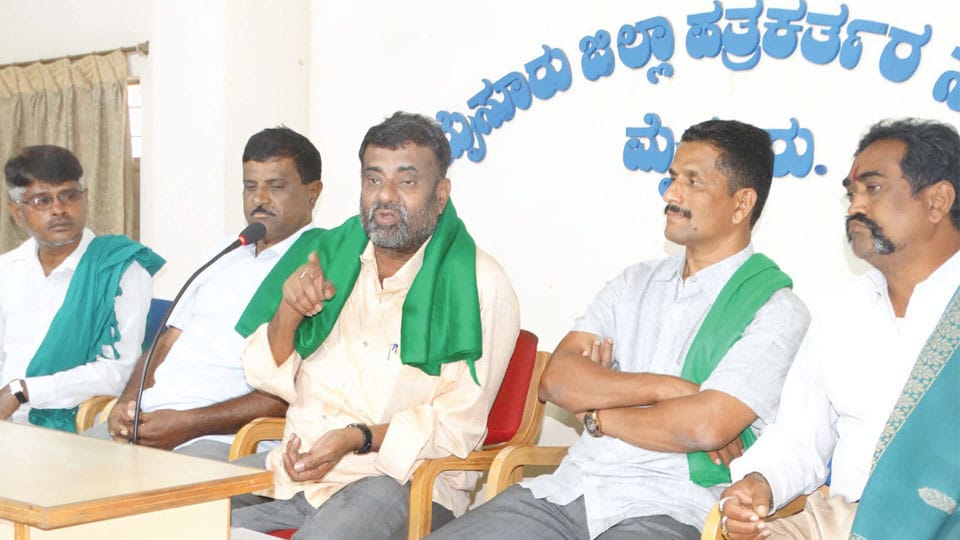
Urging the State Government for effective tackling of floods and drought in the State, the Karnataka Rajya Raitha Sangha (KRRS) will take out a bike rally from Talacauvery to Bengaluru next month.
Addressing farmers from 6 districts of Mysuru region at Jaladarshini Guest House here recently, KRRS President Badagalapura Nagendra said the bike rally will be launched at Talacauvery, the birth place of river Cauvery, on Oct.12.
The rally will pass through Periyapatna and Hunsur to reach Mysuru where a massive farmers meet will be held at Town Hall on Oct.13. After the meet, the rally will travel to Mandya, passing through Srirangapatna. The rally will then travel to Shivapura near Maddur where a farmers meet will take place. After the meet, the rally will proceed to Channapatna, where the rallyists will stay for the night.
The rally will reach Bengaluru on Oct.14, where a massive conference of farmers will take place at 1 pm, Badagalapura Nagendra said and added that over 10,000 farmers from different parts of the State are expected to take part.
He further said that the farmers meet will demand a special package for restoration of flood hit areas, scientific compensation to displaced farmers and constitution of an expert committee for management of drought and floods.
source: http://www.starofmysore.com / Star of Mysore / Home> News / September 27th, 2019
This is in response to the letter by Geologist Mrinmoy Chakraborty (SOM dated Aug.11, 2019) defending the views of the Geological Survey of India (GSI) published in SOM dated Apr.25. I write this to bring to light a few facts that go to show that Chakraborty has hastened to defend the warnings given by GSI a bit too early and to furnish some clarifications regarding the extreme events that wreaked havoc in Kodagu this August and perceptions arising out of them.
The series of landslides that devastated Kodagu in 2018 occurred mostly during the period 15th, 16th and 17th August. Some intriguing data on rainfall pertaining to this period tells the story. This data is from the rain gauge at Kudigana, a place near the border of the catchment of Harangi, which witnessed the worst kind of disasters in 2018.
Record rainfall
Till 6th August, the station had recorded about 5,500 mm of rain, and then on rainfall on the successive days read (in mm): 81, 250, 269, 90, 115, 121, 262, 295, 320, 461 (16th), 394, 197, 164, 95, the total for the fortnight amounting to 3,114 mm (Mysuru’s annual rainfall is 780 mm). Probably the 5-day extreme rainfall recorded then at Kudigana (1,686 mm) is the highest ever recorded in the rain gauging history of Kodagu (which extends for over 120 years now), the earlier highest being 1,462 mm in 1964 pertaining to the station of Bhagamandala.
On the other hand, the records at Kudigana for this year read thus: Total rainfall up to 1st August – 2,041 mm; then on – 30, 0, 16, 136, 183, 254, 312, 276, 298, 158, 90, 46, 35, 100 (15th), during the next 14 days – this is the period when the floods ravaged the district. The extremes here are just about 75% of last year’s and the total for season up to 20th Aug. is not even half of last year’s (nearly 4,090 and 8,614 mm respectively).
Once in 10-12 years
The highest one-day rainfall recorded this year has been reported from Bhagamandala, places around which contribute to flow in Cauvery and stands at 400 mm. The seven-day extreme for this year here has been 1,142 mm. Strangely, these values have return periods of 12 years and 10 years respectively.
This means, the type of flood-causing rain that fell this year occurs, according to data available, nearly once in 10-12 years. Even the flood magnitudes in the four rivers of the basin that were reported this year have return periods of 15 – 20 years.
On the other hand, the rainfall of 2018 that caused havoc in areas around Madikeri and in the catchment of Harangi shows a return period of over 50 years! This is the reason why even though Kodagu experienced severe floods this August, only just a couple of incidents of severe landslides have occurred.
Technical data
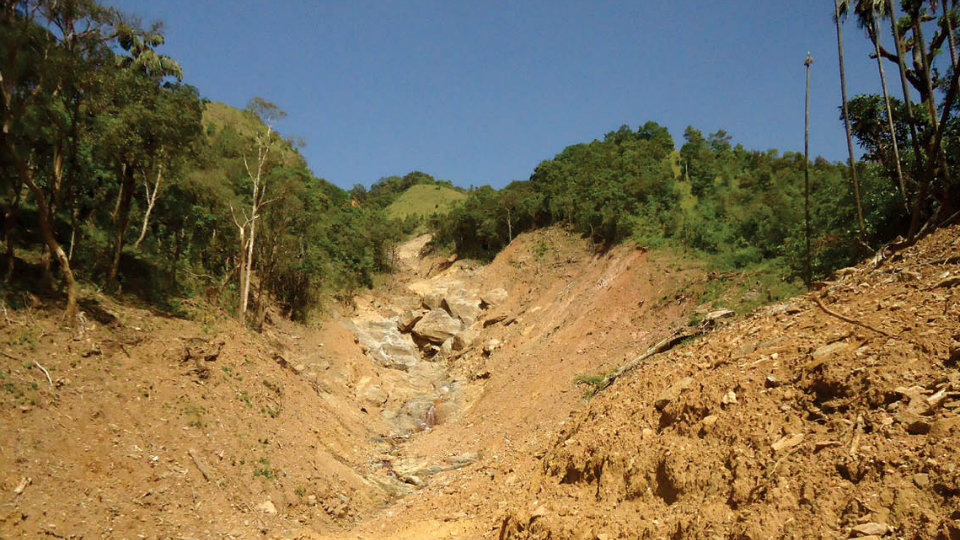
Very often, blockage of roads due to mud falls from tall and nearly vertical cuttings (Plate 1), many times triggered by uprooting of trees and washing away of the valley side road formations, are also termed as landslides, while the landslides of 2018 were removal of unimaginably large portions of hills, mostly in the valleys.
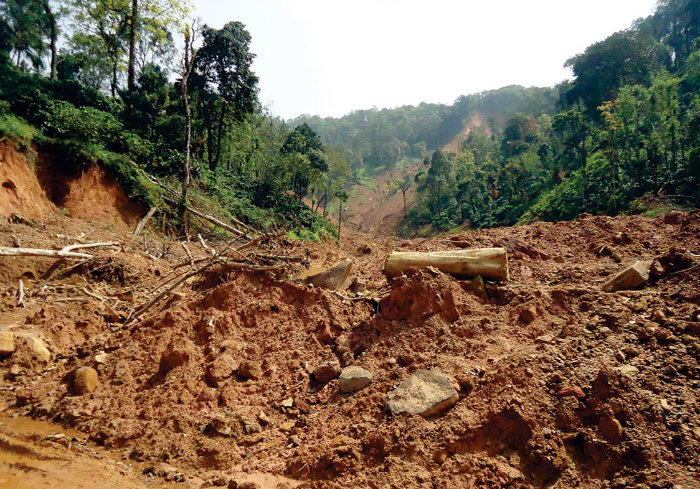
A large number of the over 150 landslides that occurred then got initiated far away from the highways and inhabitations (Plate 2), in total contrast to the common belief that tampering with nature and cutting land indiscreetly is the root-cause of landslides.
Many of these slides carried tens of thousands of cubic meters (like 200 m x 100 m x 2 m) of earth submerging hundreds of hectares of land downstream in mud (Plate 3 and 4). However, even earth falls of volume of a few hundred cubic meters (20 m x 10 m x 2 m) block roads and cause damage to houses — only one landslide of the former nature has been reported this year. It is not strange that extremes not quantified by measurements are blown out of proportion, painted colourfully and projected as catastrophes in this era of rampant use of mass and social media.
Predictions fail
Dr. H.S.M. Prakash, Director General of GSI, is reported to have explained (SOM, 25th April) thus: “There are indications of excessive downpour happening in five phases just like last year …”; “likewise, three to four more similar downpours are likely to be experienced… The rainfall in August is likely to result in floods”. Yes, one spell of rainfall has resulted in floods. But what about the rest? It is a common experience that any astrologer, once approached, would point out a number of cases in which his predictions have gone perfectly right, hiding others! The fact is that rainfall in Kodagu this year has been very poor except for that one spell — even after that week of deluge, the total seasonal rainfall for the year remains 25-40% lower than the normal (except in small pockets of Virajpet), while the last year it was about 25-50% higher than the normal.
Strong low pressure
It is claimed by Chakraborty (SOM, 11th Aug.) that the predictions for this year have been those based on “evidences”. Dr. Prakash had explained: “There is a possibility of heavy rain being caused due to volcanic eruptions in Hawaii and Mauritius. And, as if an indication, it has already started raining in Kodagu (in April)”.
It is utterly sad that an agency with a legacy of 200 years has fished out evidences for the floods in August, in the excessive rainfall of April! It is well established that the pre-monsoon rains of April and May are a phenomenon occurring due to local convections, while the monsoon rains in Kodagu are due to the global circulation, aided by strong low pressures in North/ Central India and the local orography (high rising mountains) of the Sahyadris.
It is now popularly known that the excessive rainfall of the ten days of August this year has been due to a strong low pressure that developed in the Odisha coast, and experts from GSI claim it to be due to excessive heat of magma in Mauritius!!
Better to err on safer side
Being half correct about events not known of is one hundred perfect in Statistics — probably the messengers, the people at the helm of affairs, believe that it is better to err on the safer side than on the other. Sweeping and arbitrary long-range predictions are not only unwarranted, but are also dangerous.
Rather, there shall be healthy introspection and debate on why even extreme events of smaller magnitude have been resulting in excessive damages in recent days. Further, very little of the Hydrology of this region has been understood, much remains to be done. It is hoped that the agencies concerned take a more pragmatic and purposeful look at the recent events and use them to learn about the region.
– Yadupathi Putty, Mysuru, 3.9.2019
You can also mail us your views, opinions, and stories to voice@starofmysore.com
source: http://www.starofmysore.com / Star of Mysore / Home> Voice of the Reader / September 16th, 2019
Isha Foundation Chief Sadhguru Jaggi Vasudev at the launch of ‘Cauvery Calling’ campaign, at Talacauvery in Kodagu, on Tuesday. Actors Rakshith Shetty and Diganth took part in the rally.
Cauvery Calling, a campaign conceptualised by Isha Foundation was launched in Talacauvery, the birthplace of River Cauvery, on Tuesday.
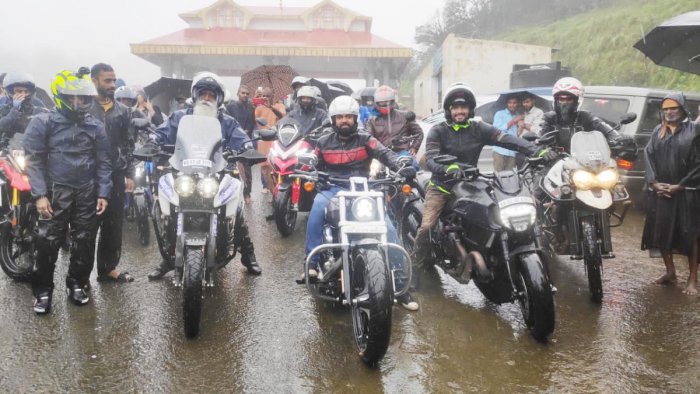
Isha Foundation Chief Sadhguru Jaggi Vasudev rode a motorbike himself to arrive in Madikeri on Sunday. Film actors Rakshith Shetty, Diganth and Shashi followed him.
A puja was offered at the ‘Theerthakundike’ in Talacauvery, earlier to the launch event.
Sadhguru Jaggi Vasudev said that through the campaign, there is an aim to plant 242 crore saplings on the banks of River Cauvery.
Trees help to increase the capacity of soil to retain water. Isha Foundation will work towards getting the necessary assistance from the government, he said.
He pointed out that the River Cauvery has become thinner by 39% in the last 70 years.
“The groundwater level in the river catchment area has been depleting drastically. Due to excessive deforestation in the catchment areas of the river, water is not flowing further and the river is getting dry even before reaching the sea. As a result, a drought-like situation has been arising during the months of April-May itself. This has created repercussions in terms of droughts in Karnataka and Tamil Nadu. Around 47,000 farmers living on the banks of River Cauvery have ended their lives in the last 10 years. It is noteworthy that the places of massive landslides have been due to excessive human interference. It is the need of the hour to wake up to the warning sign,” said Sadhguru Jaggi Vasudev.
Udupi-Chikmagalur MP Shobha Karandlaje said that the Central and the state governments will support the ‘Cauvery Calling’ campaign.
This month, the state government will sign a memorandum of understanding with Isha Foundation in this regard, she said.
MLA K G Bopaiah strongly felt the need to conduct a scientific study so as to know the reason behind massive landslides in Kodagu. He also demanded action against those who have encroached the government lands.
Air Marshal (retd) K C Nanda Cariappa and sportsperson Ashwini Nachappa were present during the programme held at Crystal Hall in Madikeri.
PM tweets
Replying to a tweet by Sadhguru Jaggi Vasudev, Prime Minister Narendra Modi tweeted at 4.13 pm on Tuesday, conveying his wishes to ‘Cauvery Calling’ campaign.
“Happy to know about your effort. It will surely add to the endeavour of harnessing Jal Shakti and preventing unnecessary wastage of water,” said the prime minister.
He also wished Sadhguru on his birthday saying, “Also wishing you a Happy Birthday! Praying for your long life and best health!”
15-day bike rally
The motorbike rally organised as a part of ‘Cauvery Calling’ campaign will pass through Hunsur, Mysuru, Mandya and Bengaluru. Public functions will be held in these places. The rally will reach Bengaluru on September 8.
The bike rally will traverse a distance of 1,500-km in Karnataka and Tamil Nadu and will culminate in Chennai on September 17.
source: http://www.deccanherald.com / Deccan Herald / Home> State> Mangaluru / by DH News Service, Madikeri / September 03rd, 2019
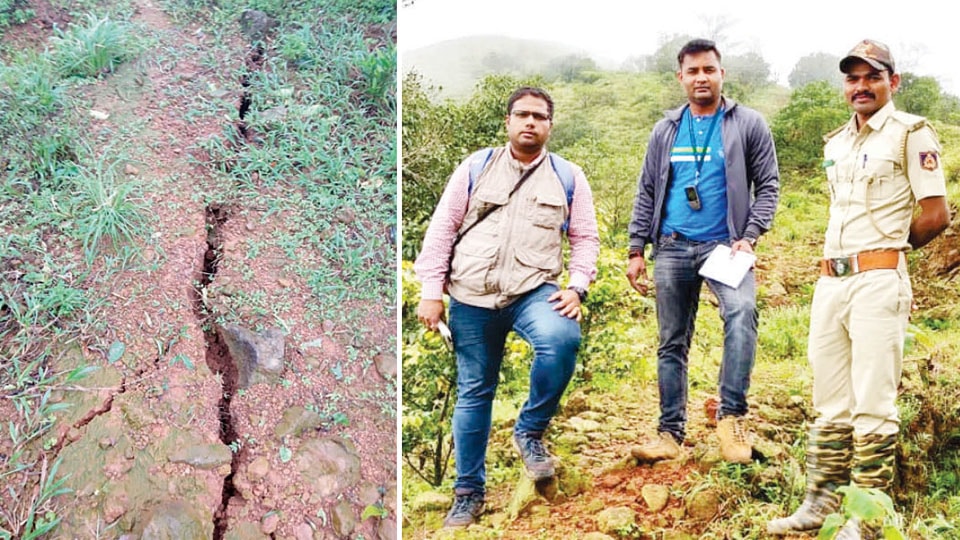
A day after inspecting cracks developed at Ayyappa Swamy Hill in Virajpet, a two-member GSI (Geological Survey of India) team visited Brahmagiri Hill range in Talacauvery on Sunday, following reports that huge cracks had developed at several locations in the Hill range.
The GSI team comprising Sunandan Basu and Kapil Sharma inspected Brahmagiri Hill range and studied the hill’s ecology, geology and geographical characteristics.
The team also got to know that the Forest Department had dug pits and planted saplings using heavy machinery, which may have caused loosening of the soil layer on the Hill range, leading to wide cracks.
Basu and Sharma also visited Korangala, where massive landslides were reported and studied about the reasons for such huge landslips.
The cracks on Brahmagiri Hill in Talacauvery, the birthplace of River Cauvery, the lifeline of crores of people along the river basin, has been a cause of worry for local people.
The residents have appealed the Government and the District Administration to take immediate measures to save Brahmagiri Hill range, which they consider as holy and also ecologically sensitive for its lush green cover.
The GSI team, after conducting a thorough study on all factors that have caused cracks in hillocks, is likely to submit a report to the Government on the measures to be taken.
Many Hills under threat of collapse
Meanwhile, many other hillocks elsewhere in Kodagu district are facing the threat of collapse, as cracks have reportedly surfaced in some of them.
After Brahmagiri Hill range in Bhagamandala, Ayyappa Swamy and Malethirike in Virajpet and Manipare Hillock at Thora village along the Kerala border, several other Hills too are said to have developed cracks, giving rise to serious concerns among local people.
Although the district has got a break from rains for the past couple of days, the people living near the hillocks still feel that their troubles are not far from over.
Many residents of Kodagu feel that this year’s rainfall is the highest in decades and has similarities with the 1972 deluge, when rain caused havoc and untold misery. But then, there were not much causalities as the population was less and urbanisation was yet to pick up pace.
But this year, the damage has been extensive with many homes collapsing and hundreds of people taking shelter in relief camps set up by the District Administration.
The district is facing the deluge for the second successive year. Last year, the deluge had devastated the district to such an extent that it will take many years for reconstruction.
Following last year’s rain ravage, a GSI team had extensively toured the district to undertake a detailed study of landslides and landslips. The GSI then had classified dangerous zones under four categories and had warned that villages coming under these zones could face nature’s fury once again. As such, the District Administration had taken many measures on a war-footing to prevent casualties and damages to properties as much as possible.
source: http://www.starofmysore.com / Star of Mysore / Home> News / August 21st, 2019
‘They are stuck in their home State owing to NRC procedures’
The ongoing verifications for National Register for Citizens (NRC) in Assam have stopped thousands of workers from returning to the coffee estates of Karnataka. The Assamese workers left the estates in March-April, ahead of the parliamentary elections, and a majority of them are yet to return.
In Hassan district alone, more than 10,000 people from Assam are employed in many estates. Similarly, they work in estates of Chikkamagaluru and Kodagu districts. For the last 15 years, the estates in the three districts have been dependant on workers from northeastern States, Odisha and Madhya Pradesh.
Estates suffer
The final draft of the NRC was published in July 31, 2018. Many workers, whose names did not figure in the draft, were worried. They left to resubmit documents to claim citizenship. B.N. Jagaish Shetty, manager of IBC company-owned Hasirugudda Estate in Belur taluk, said last year more than 100 workers from Assam were in the estate. Now, there was none. “A few of them had returned very late and by then, we had made alternative arrangements. They must have gone to other estates,” he said.
The final NRC is expected to be published on August 31 and people are worried about leaving their native until then. U.M. Thirthamallesh, president of the Karnataka Growers’ Federation, said 25 Assamese were working in his estate and they had not yet returned. “The last communication I received was that they would come back after Bakrid (August 12). I hope they return as our estates are dependant on them,” he said.
This year owing to decrease in rainfall, the demand for labour is minimum. Anticipating dip in production, estate-owners are trying to manage with the available workforce. “But if the workers delay further, the activities in the estates will suffer,” he added.
“Coffee production has always been dependant on outsiders. In the past, there were workers from Dakshina Kannada. Later, it was Tamil Nadu. Many of them settled here over the years,” said B.A. Jagannath, planter and former member of the Coffee Board. People from Assam are stuck in their home State because of the NRC procedures and the floods. They will not return until their citizenship issue is settled, he said.
source: http://www.thehindu.com / The Hindu / Home> News> States> Karnataka / by Sathish G. T / Hassan – August 05th, 2019
The foreign pest, which is thought to have arrived in India through trade routes, devours tender leaves and stems, completely destroying plants.
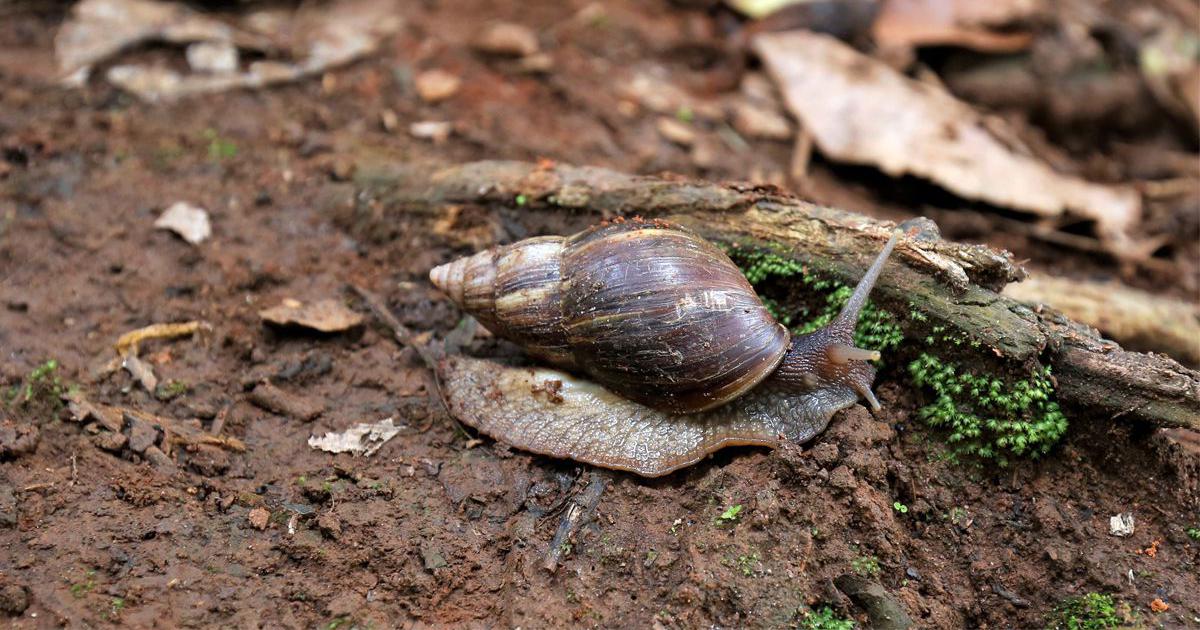
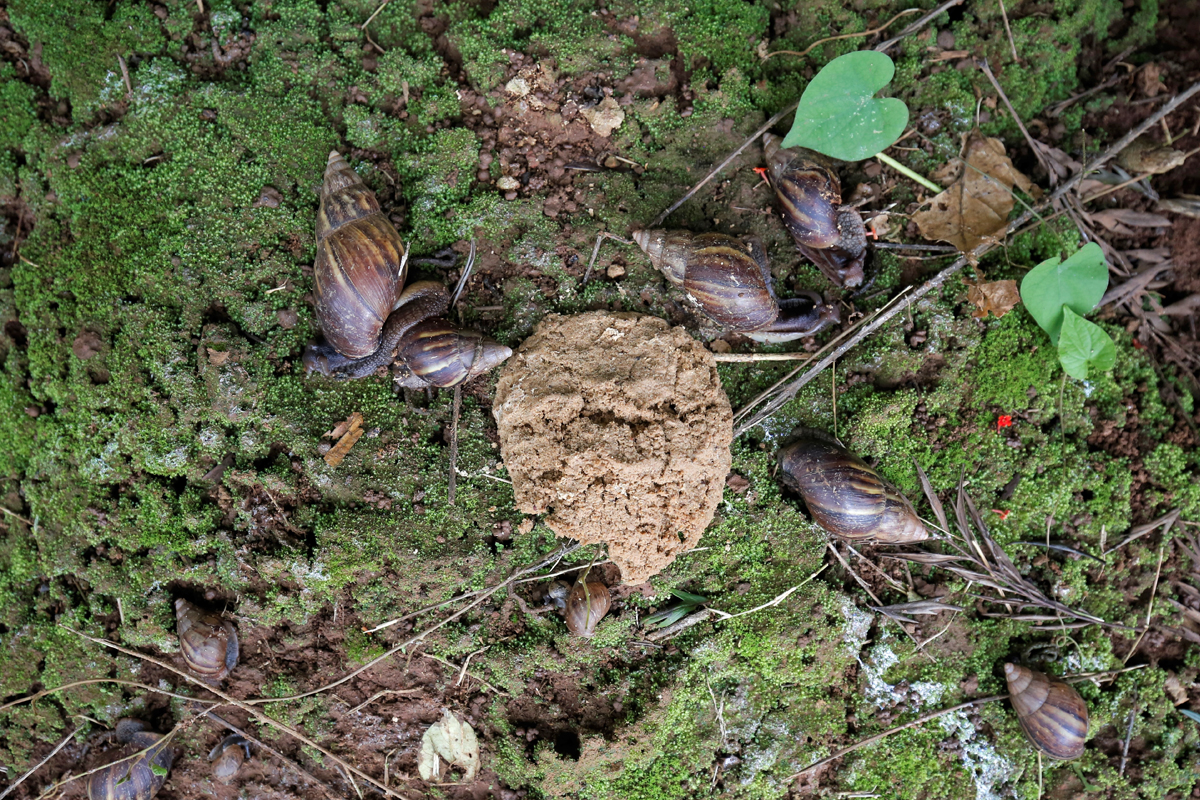
A giant African land snail, Achatina fulica, in a coffee estate in Kodagu district, Karnataka. | Abhishek Chinnappa/Mongabay
The monsoon rains have arrived late this year in the verdant hills of Kodagu – commonly known as Coorg – in Karnataka, the coffee capital of India. For some planters, it’s a mixed blessing. A delayed monsoon is bad news in the Western Ghats mountain range, where farmers and planters have found themselves at the receiving end of extreme weather events triggered by climate change. Last year in August, unprecedented rains and floods harmed crops and coffee plantations, affecting many lives and livelihoods.
In recent years, the rains have brought another problem with them – an infestation of giant African land snails that have caused massive losses to some 40-45 plantations spread over 300 acres of land in Northern parts of Kodagu.
The foreign pest, which is thought to have arrived in India through trade routes, attacks young coffee plants and devours tender leaves and stems, completely destroying the plants. These giant snails, whose shells can grow up to 20 cm in length, are not picky eaters. They eat over 500 plant species and adapt easily to different ecosystems, researchers have found.
Giant African land snail, an invasive species, infest a coffee plant in Kodagu, Karnataka. Planters lose up to Rs 12,000 per acre in efforts to get rid of the pest. Credit: Pradeep Kumar/Mongabay
A fast breeder, this snail has emerged as a major problem for planters in the Shanivarasanthe area of Somwarpet taluk in Kodagu. “They multiply in large numbers within a short span of time,” said Pradeep B Shekar, who owns 40 acres of a coffee plantation.
The giant African land snail, locally known as shanku hoola or conch worm due to the shape of its shell, appeared in Kodagu for the first time in 2012-’13 in 50-60 acres of coffee plantations in Shanivarsanthe. The local plantation owners fought the infestation and thought they have ridden themselves of the pest.
But in 2017, the snails reappeared, wreaking havoc in an expanded area of 300 acres belonging to some 40-45 plantations. The planters say the pest attack costs them an additional expense of between Rs 10,000 and Rs 12,000 per acre, mainly due to the efforts to contain them. This shrinks their profit margins from the produce.
source: http://www.youtube.com
Invasive species
The International Union for Conservation of Nature lists the giant African land snail Achatina fulica as one of the worst invasive species in the world. An invasive alien species is “a problematic species introduced outside its natural, past or present distribution,” the International Union for Conservation of Nature says. “They may lead to changes in the structure and composition of ecosystems, detrimentally affecting ecosystem services, human economy and well being.”
African snails spread to new locations via trade routes, piggybacking on agricultural products, equipment, cargo and plant or soil matter. While there is no consensus on how they found their way into the pristine landscape of Kodagu, it is certain that these pesky visitors have come with no exit plan.
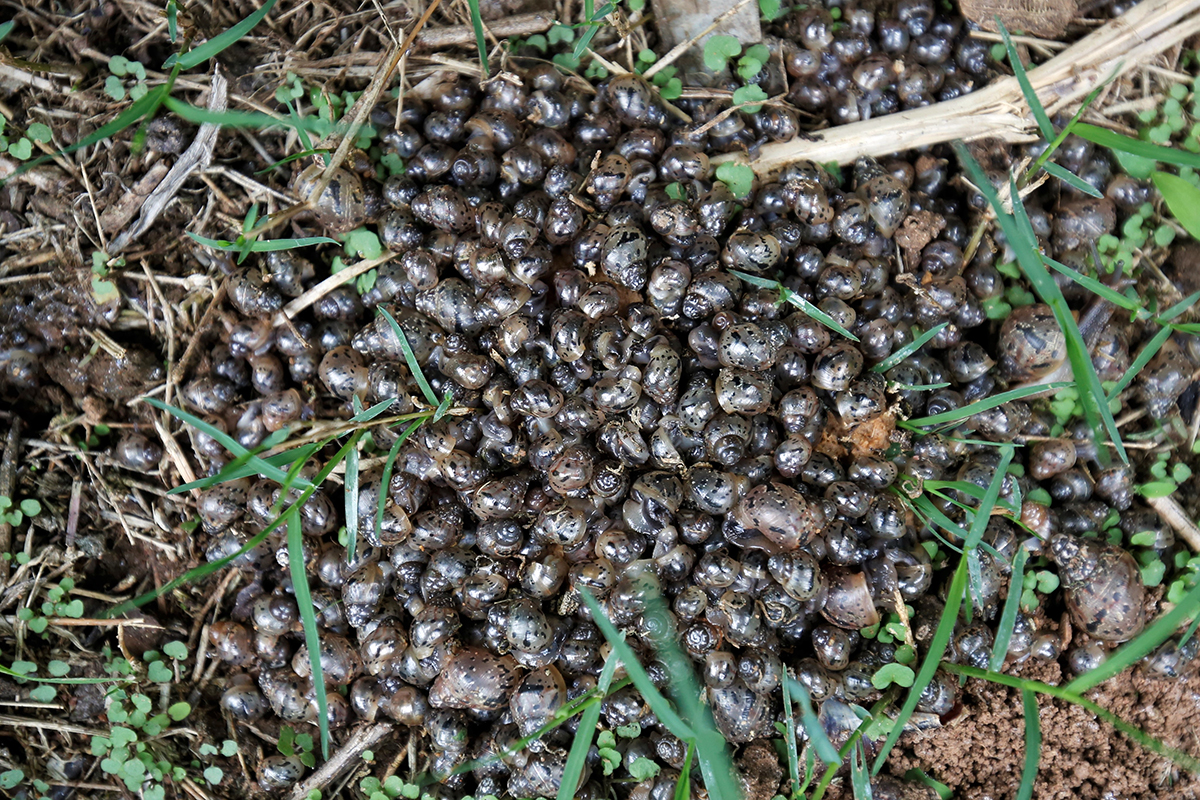
Giant African land snails in their early development stages inside a coffee estate in Handli village, Kodagu district. These fast-breeding snails have a lifespan of almost 15 years and can produce approximately 1,000 eggs in that period. Credit: Abhishek Chinnappa/Mongbay
Achatina fulica is one of the four species of giant snails belonging to the Achatinidae gastropod family native to Africa. It is classified as an obligate-outcrossing hermaphrodite, which means that just one externally fertilised snail can establish a population. These snails reproduce in large numbers.
The snails begin laying eggs at six months of age and can lay around 100 eggs in their first year, and up to 500 in the second year. Their life expectancy is around five years, and one snail can produce up to 1,000 eggs by then. The shell length of these snails ranges from 5 cm to 10 cm, though some adults may exceed 20 cm, and their average weight is about 32 gm.
Effective solution
Despite the destructive potential of the giant shells, the planters in Kodagu have been successful in tackling the infestation. They have reduced the infestation by about 90%, a remarkable achievement given that people in the neighbouring state of Kerala have been fighting this pest unsuccessfully for close to three decades.
The Coffee Board of India has emerged as the unlikely hero in this battle with the African snail. Researchers at the Central Coffee Research Institute in Balehonnur in Chikmagalur district of Karnataka and research sub-station in Chettalli in Kodagu devised a bait for the snail, in a method they dubbed “catch and kill”.
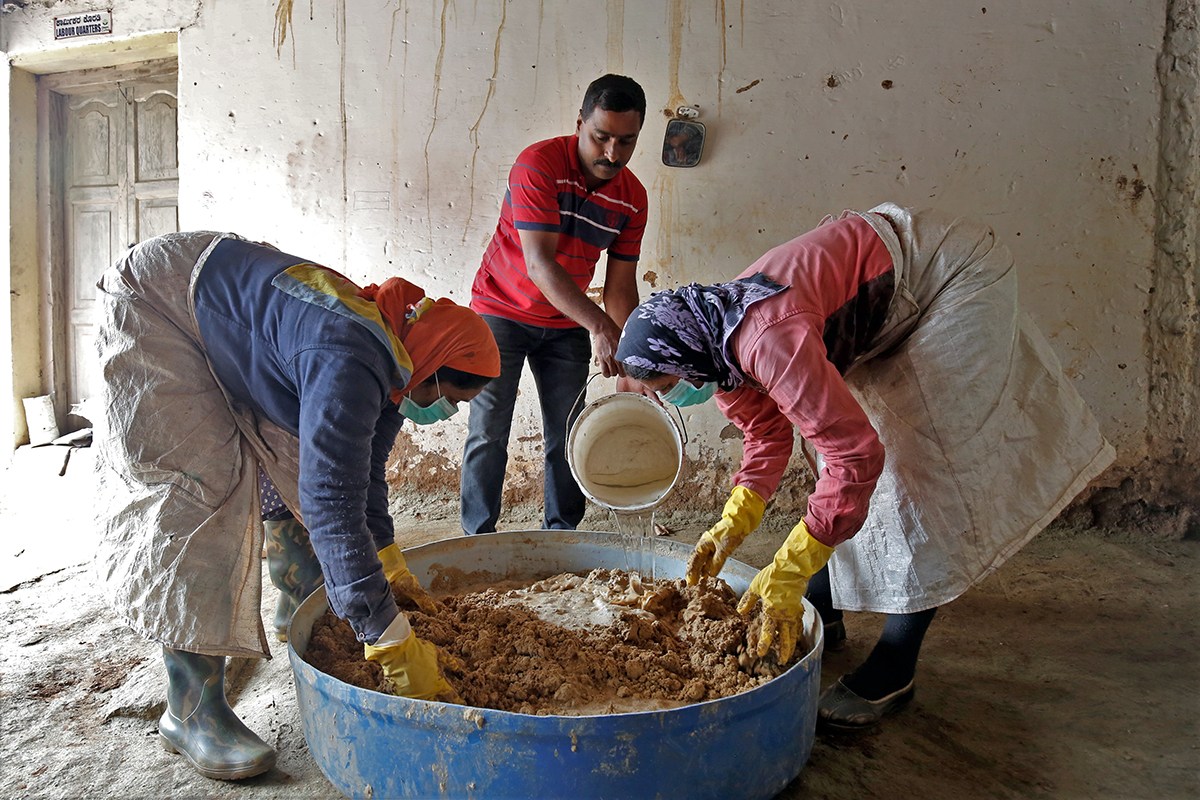
“The bait is made of rice bran, jaggery, castor oil and a chemical, thiodicarb,” explained Vishwanath Hadagalli, junior liaison officer of Coffee Board at Shanivarsanthe. “These are mixed together and balls of it are placed between four coffee plants.”
Researchers at the Central Coffee Research Institute in Chikmagalur district of Karnataka devised a successful catch-and-kill method to control the snail’s invasion. A bait made of rice bran, jaggery, castor oil and a chemical, thiodicarb, is used to lure and kill the pests. Credit: Abhishek Chinnappa/Mongabay
The researchers experimented with methomyl, a broad-spectrum insecticide, but it has been banned because the cost to the soil is too high. Thiodicarb is considered a less harmful insecticide that is effective against in killing the giant snails. “We tried every method available in the literature to get rid of these pests and this bait was found to be the most effective,” said Manjunath Reddy, assistant entomologist, coffee research sub-station at Chettalli, Kodagu.
In 2015, the Coffee Board used this bait and killed as much as 30 tonnes of snails. Encouraged by this, the Board, with active participation from Karnataka’s Horticulture Department and the Planters Association of Shanivarsanthe, upped their act through regular awareness meetings and distribution of bait kits to all the affected planters. The kit consists of a pair of gloves, 25 kg of rice bran, 100 gm of Larvin branded thiodicarb, 3 kg of jaggery and 100 ml castor oil. It costs Rs 1,000 but is distributed among the farmers at a subsidised rate of Rs 100.
Co-ordinated operation
“This has to be a collective effort,” said Pradeep Kumar, an affected farmer from Handli village in Shanivarsanthe. “If one affected farmer doesn’t participate, the infestation cannot be contained.” Hadagalli said there’s 90% success in eliminating these pests from Kodagu farms. “While we did not maintain records properly for the years 2014, 2015 and 2016, dead snails weighing 24 tonnes were collected in 2017, which came down to eight tonnes in 2018,” he said. “We expect much lower infestation this year.”
The Coffee Board also came up with the innovative idea of buying back the dead snails. It initially offered Rs 4 per kg of dead snails, which has since been increased to Rs 8 per kg. “The dead snails are disposed of in a pit that’s one-and-a-half feet deep,” said Hadagalli. “Salt is put over the dead ones to ensure even the last of the caught snails are dead and then buried.”
This burial is a precautionary measure against the spread of any disease through the snails. The giant snails are known to serve as intermediate hosts of several parasites that cause diseases in pets, free-ranging vertebrates and humans. They are hosts of rat lungworm Angiostrongylus cantonensis, which causes Eosinophilic meningitis in human beings.
Workers prepare a concoction to bait the giant African land snails inside a coffee estate. Co-ordinated efforts of farmers and officials have recently helped curb the infestation. Credit: Abhishek Chinnappa/Mongabay
Kerala experience
“In the past 5-6 years, seven children and at least one adult have been reported to have contracted meningitis through contact with giant African land snails,” said TV Sajeev, a scientist at Kerala Forest Research Institute, which who has been involved in the eradication of these snails in Kerala.
Although the fight against the snails has been largely successful in Kodagu, the experience is Kerala, where these creatures are seen as a nuisance, has been different. There have been as many as 223 outbreak points from 12 districts out of 14 in the southern state.
There is a cogent reason for this, said Sajeev. “The chemical used in the bait is not suitable for areas where there is human activity. These chemicals are found to be harmful, especially to aquatic organisms,” he said. “The case of Kerala, where the infestation is in towns and villages, is very different from that of an estate.”
Sajeev said one of the main problems that an invasive species brings with it is the invitation to use strong chemicals to eliminate them. Research has shown that exposure to chemicals like thiodicarb can be detrimental to human and animal health. The Kerala Forest Research Institute has been spraying an organic decoction of tobacco mixed with copper sulphate on snails that are lured with crushed papaya and cabbage leaves as bait.
Another big challenge in Kerala, said Sajeev, is the difficulty in organising people in these areas to work in tandem. “In Kerala, more than the destruction of agricultural crops, snails are a nuisance because they are seen in and around houses,” he said, adding that it is nearly impossible to get all the people in these houses to work together against the snails.
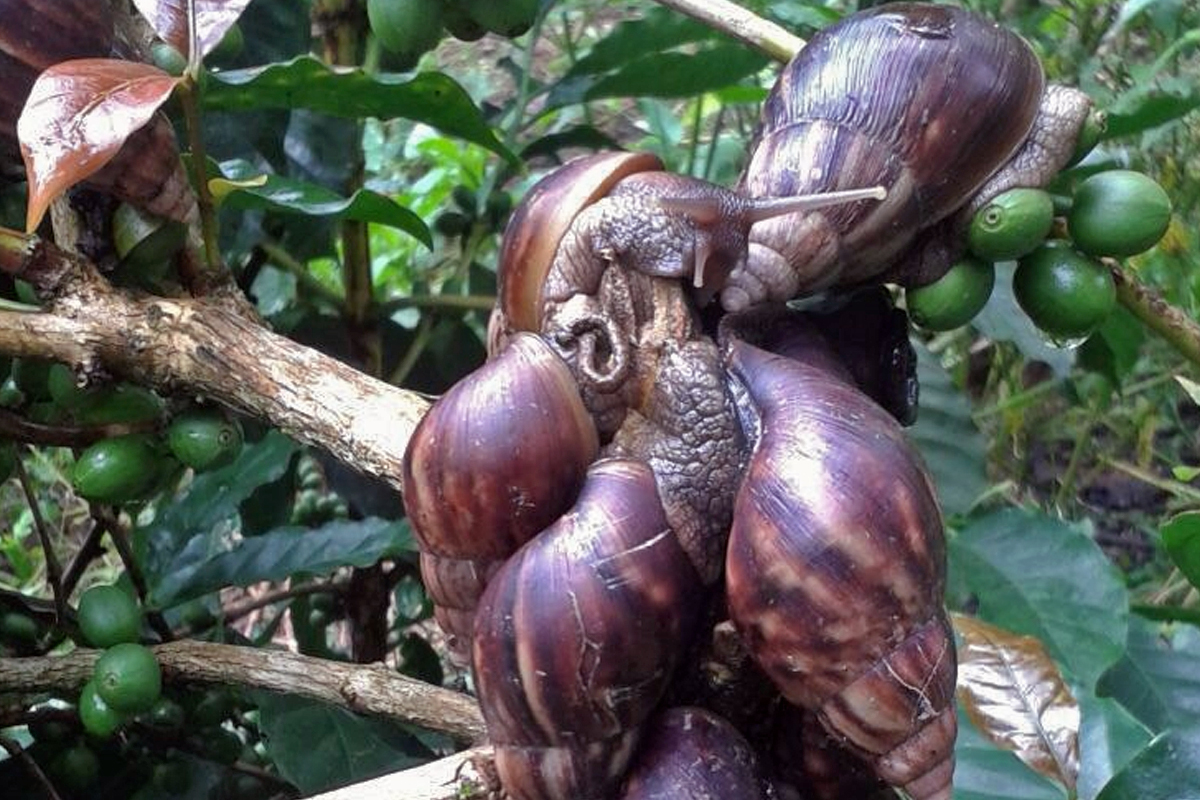
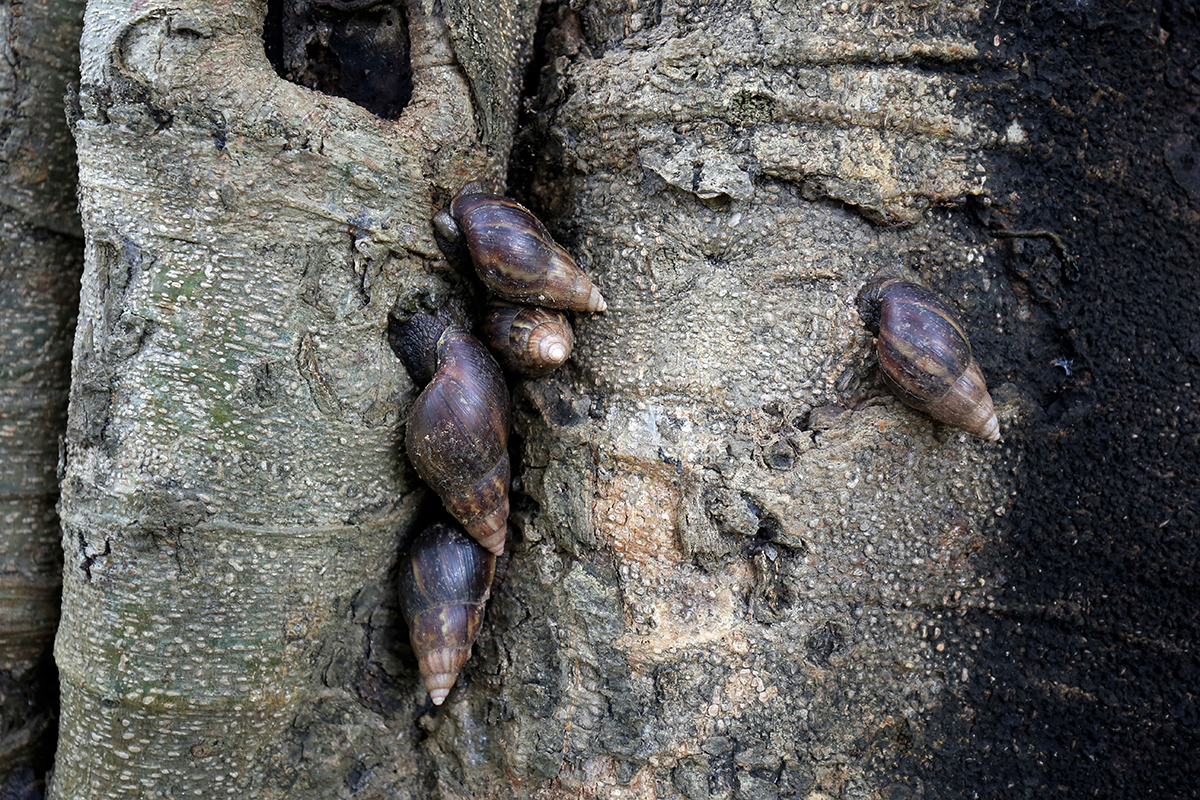
An escargatoire of giant African land snails on a ficus tree inside a coffee estate in Kodagu. While the infestation seems to be under control in the estates of Kodagu, Kerala is yet to find a solution. Credit: Abhishek Chinnappa/Mongabay
This article first appeared on Mongabay.
source: http://www.scroll.in / Scroll.in / Home> Pest Control / by Arathi Menon / August 05th, 2019
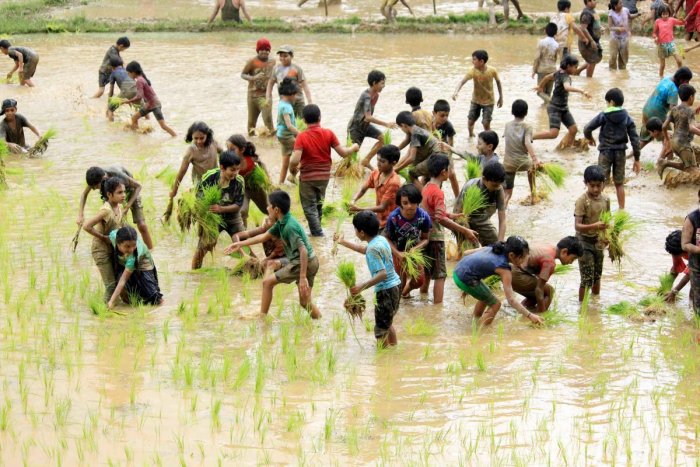
Students of Kodagu Vidyalaya transplanted paddy seedlings in a field at Ibnivadi in Madikeri taluk recently.
Children played to their hearts’ content in a slush-filled paddy field at Ibnivadi during the ‘Nati Sambhrama’ programme.
The Ibni Springs Cottage and Green City Forum jointly organised the programme – in which more than 40 students from the Kodagu Vidyalaya took part and got an experience of paddy transplantation for the first time.
Children soiled their body and clothes to gain practical knowledge of transplantation. Even though the children did not have any training in paddy transplantation, they learnt it through trial and error and transplanted paddy as they fancied.
They also took part in rounds of football, throw ball and tug-of-war that were organised in the field while their parents cheering them.
Kukkera Jaya Chinnappa, Green City Forum president, who spoke on the occasion, said that the forum intends to send out messages on environment conservation, agriculture, waste management and cleanliness to the people. Programmes are being conducted in this regard in both urban and rural areas, he added.
The winning teams were awarded prizes.
Kodagu District Working Journalists’ Association President Savitha Rai, Kodagu Press Club President Ajjamada Ramesh Kuttappa, Green City Forum founder-president Cheyyanda Satya Ganapathy, former president Ambekal Navin Kushalappa, general secretary Polakanda Rakesh and director P Krishnamurthy were present.
source: http://www.deccanherald.com / Deccan Herald / Home> State> Mangaluru / by Adithya K A / DH News Service, Madikeri / August 03rd, 2019
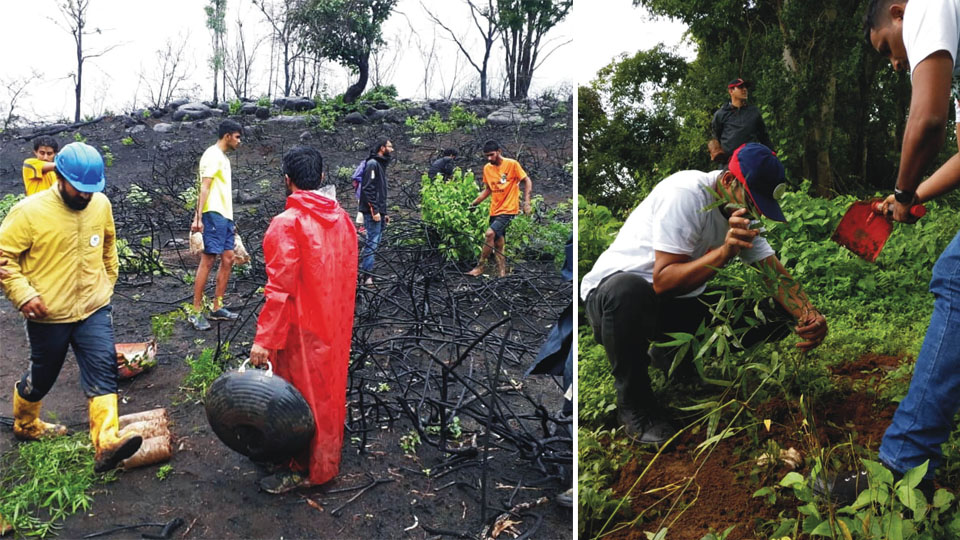
Over 400 volunteers to plant 50,000 seed balls, 10,000 saplings near Anechowkur on July 27
Mysuru:
Year-by-year weakening of regular rainfall in Kodagu and depleting green cover along the Cauvery River basin and the resultant shortage of water has made environmentally conscious groups to come together to organise a massive tree-plantation drive in Kodagu, the principal catchment of Cauvery.
An initiative taken up by Kodavaame, Team Roots of Kodagu, Kodagu Jawa Yezdi Motorcycle Club and Forest Department of Karnataka, TATA Coffee, Madikeri Akashavani, Kodava Samaja Bengaluru and over 72 organisations and voluntary groups from Kodagu, Mysuru, Bengaluru and Chennai are coming together for the tree-plantation drive on July 27 from 9 am onwards near Anechowkur Gate, Thithimathi Forest Range in Kodagu under the Nagarahole Tiger Reserve.
This plantation drive is kick-started by individual volunteers to help rejuvenate and rebuild green cover in Kodagu. Volunteers have sourced more than 50,000 seed balls to be planted during the drive and the Forest Department will provide 10,000 saplings of various wild species that are native to Kodagu and the Nagarahole forests.
Kodavaame initiated this annual tree-planting drive three years back and last year, saplings were planted at Aanekaadu forest near Kushalnagar.
Speaking to Star of Mysore yesterday, Shammi Belliappa of Team Roots of Kodagu said that the Forest Department will identify the places where saplings are to be planted and all the necessary permissions and approvals have been taken.
“Different groups and individuals are coming together in Kodagu to work towards the common goal of protecting the flora and fauna. This event can be an ideal start to a great new direction in Kodagu and further can spread to other districts,” he said and added that as it is an annual event, the next plantation initiative is likely to be taken up at Chennangi in Kodagu.
All volunteers have been directed to wear water-proof jackets, rain coats and gum boots or rain shoes. While many volunteers will be grouped to plant saplings and seed balls, the rest will look into the supply of logistics and will ensure smooth traffic flow.
Organisers are expecting over 400 volunteers and as it is a Tiger Reserve, the volunteers will strictly follow the instructions from the Forest Department, he said.
While Lions Club-Gonikoppal and Rotary Club Kushalnagar will provide food and beverages for the volunteers, Kodava Samaja, Bengaluru, will sponsor the free bus ride to and fro for volunteers who are travelling for this greening event.
source: http://www.starofmysore.com / Star Of Mysore / Home> News / July 24th, 2019
Provides sensor-based online real-time data on storage level to officials in New Delhi
Madikeri/Mysuru:
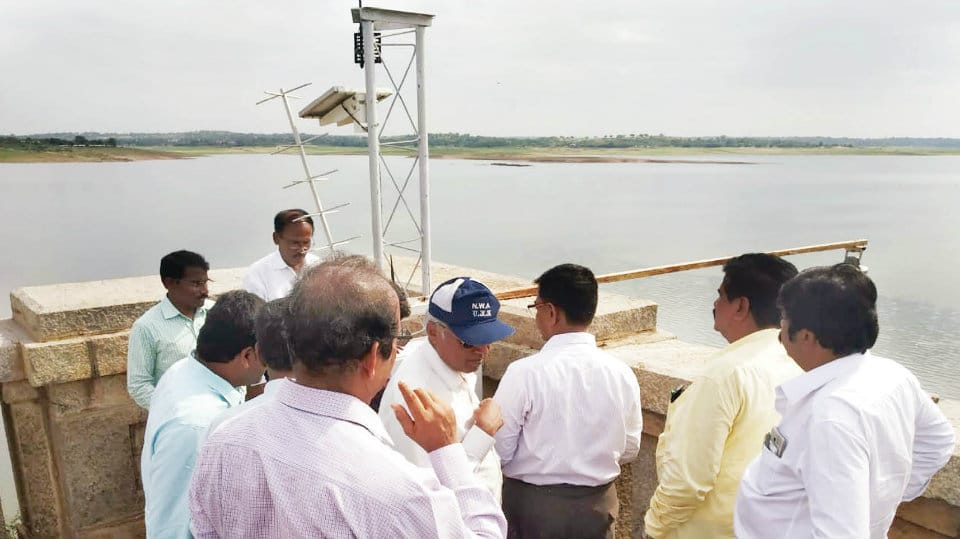
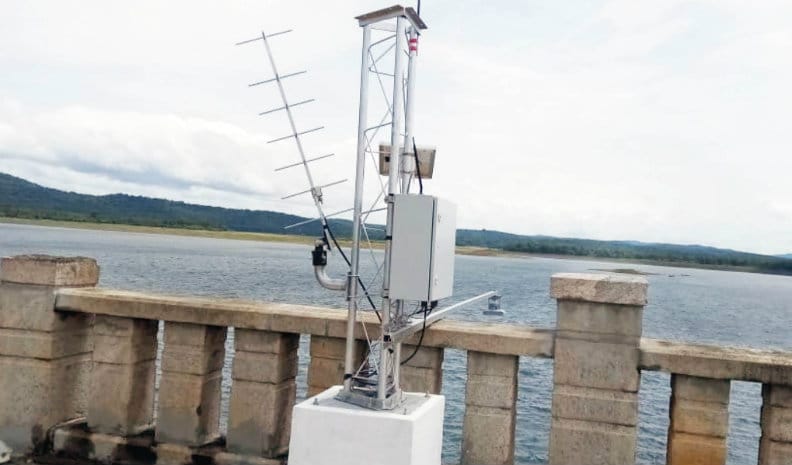
Telemetric Water Gauge has been installed at Krishna Raja Sagar (KRS) Dam in Mandya district and also at Harangi Dam in Kodagu for sensor-based real-time data on the storage level, inflow and outflow of the reservoirs.
The installation comes weeks after an Internal Committee of Cauvery Water Management Authority (CWMA) visited the two Dams in the first week of June this year. The team, after studying the water levels and reporting mechanisms, had decided to set up Online Monitoring System for all the reservoirs in Cauvery Basin through Telemetry-based Real-time Data Acquisition and Transmission.
The facility transmits data to CWMA Office in New Delhi and the authorities who decide on the water release as mandated by Supreme Court need not wait for the data from the Dams. They can easily access the data through the Telemetry Transmission system.
No room for errors: All these years, the authority sitting in New Delhi had to obtain data from each reservoir every day to determine the storage levels, inflow and outflow. This system was prone to errors as the people manning the Dams take physical measurements. Now with the new system, errors are eliminated and accurate real-time data can be accessed, making the decision-making process easy and accurate.
The Union Government has constituted the CWMA and and Cauvery Water Regulation Committee (CWRC) as directed by the Supreme Court and an Internal Committee comprising Irrigation experts from the Cauvery Basin States of Karnataka, Tamil Nadu, Kerala and Puducherry has been formed.
Real-time data acquisition
During their visit, the CWMA team discussed real-time data acquisition and transmission, installation of water-level sensors, flow rate sensors at all canals / outlets taking off from all the eight Reservoirs coming under Cauvery Basin and technical issues such as capacity enhancement of Dams, safety of Dams, prevention of leakages, modernisation of canals for prevention of seepage, etc.
The new advanced telemetry system has been installed based on the directions from CWRC. Sources said that such a system has been installed at Reservoirs including Hemavathy, Harangi, Kabini and KRS in Karnataka and in Banasura Dam at Kerala and Lower Bhavani, Amaravathi and Mettur dams in Tamil Nadu.
On mobiles
Speaking to Star of Mysore this morning, Vasudev, Assistant Executive Engineer of Cauvery Neeravari Nigam Limited (CNNL) that manages KRS and Harangi, said that the Telemetric Water Gauge gives live data to CWMA and CWRC authorities and they can access the data at any given point of time on their mobile phones.
The system transmits live data from the Dams and an exclusive cell has been set up at CWMA Office in New Delhi to receive the data and send them real-time through mobile phones. “With this system, now no one can bluff the CWMA by constantly claiming more water, hiding the real storage level data at the Dams. Even the CNNL authorities can access the data,” he said.
The data will measure minute details about number of canals and their location, water levels inside the canals, their turbulence, number of sluice gates, size of gates and the amount of water discharged from the crest gates. It also records spill- over water.
source: http://www.starofmysore.com / Star of Mysore / Home> News / July 26th, 2019
WELCOME. If you like what you see "SUBSCRIBE via EMAIL" to receive FREE regular UPDATES.
Read More »