Category Archives: Agriculture

Fresh trouble brews for Kodagu coffee growers

After rains, coffee planters in Kodagu are gripped by the fear of black rot disease and berry droppings. Spices like black pepper and cardamom produced in the coffee estates have also perished, beside paddy fields being washed away.

The district, which is known for its coffee production worldwide, may have abysmally low coffee and agriculture output this year. The coffee growers, especially small planters, will be hit by the black rot disease, increase in berry droppings and fungal disease to the crop.

Naj Chengappa, a coffee planter, said, “The disease will affect both Arabica and Robusta coffee due to excess rainfall. The most striking symptoms are blackening and rotting of the leaves and tender berries.”

The growers are already worried about falling coffee prices in the past two years. The diseases following the flood will add to their sufferings. Black pepper crop, grown extensively in coffee plantations in the district, also suffers from droppings and fungal diseases. Cardamom is grown in parts of North Kodagu. The crop has suffered heavy damages due to landslides and flood. “Since there is no proper sunlight in Kodagu for almost a month now, this will cause fungal disease to coffee, black pepper and cardamom grown particularly in the North Kodagu areas like Madikeri, Napoklu, and Somwarpet,” said Naj.

According to Kaibulira Harish Appaiah, president of Kodagu Growers’ Association, the rain this year has caused 60% loss for coffee and pepper crops in the district. “Due to rain-related disease to coffee, 98.5% small growers will be affected. The crop requires at least two years to recover from rain-related diseases.” “The government has to waive the loans of farmers and come out with relief packages to compensate for the crop damages,” he said. According to sources in the Horticulture department, an estimated 47,000 hectares of arecanut plantations have been affected due to heavy rain. Arecanut is majorly grown in DK, Uttara Kannada, Kodagu, Chikkamagaluru and Shivamogga. “The rain has caused fungal diseases in arecanut crop, which will affect the output this year,” said Y S Patil, horticulture department commissioner.

source: http://www.deccanherald.com / Deccan Herald / Home> State / by Darshan Devaiah B P, DH News Service / Bengaluru – August 22nd, 2018

Instant messaging, first line of defence against moving herds

ForestDeptKF13aug2018

WhatsApp group launched by Forest Department staff goes a long way in reducing human deaths

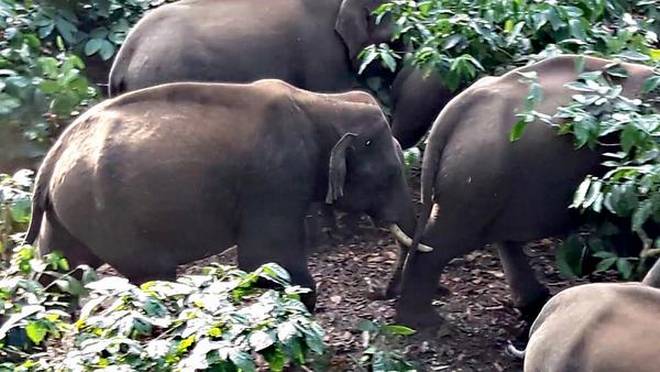
Like many of us, Deputy Range Forest Officer K.M. Devaiah scans his WhatsApp messages every morning. And, they trigger him into instant action. Far from being ‘good morning’ messages, these are SOS from estate workers and owners in Ammathi range of Virajpet forest division in Kodagu district seeking his help to clear a wild herd of elephants from their terrain.

A routine act initiated among the Forest Department staff at the beat level, has become the first line of defence for people facing the brunt of conflict with elephants in the coffee plantations of Kodagu.

A WhatsApp group launched by Mr. Devaiah in 2016, with eight guards as members of the group, sharing information on elephant herds, has expanded and is now christened ‘Rapid Response Team’.

It has now become the most popular interface between the people and the department in tracking the movement of elephants in the estates around Ammathi.

“Ever since the WhatsApp group was launched, we have been on our toes following the herds wherever they are. Our very presence is an indication to the local community that the herds are not far off and they become more alert and cautious,” said Mr. Devaiah.

With almost half a dozen alerts received daily, Mr. Devaiah and his team map the areas of elephant presence and this information is passed on to all stakeholders, who take precautionary measures to stay safe.

A senior forest official said it is a small initiative that has made a big difference at the ground level by minimising human deaths. Between 2011 and 2016 there were about 8 to 10 human deaths reported every year. But in 2017, the number of human deaths was down to one or two and there have been none so far in 2018, the official added.

However, the authorities admit that in the perception of the public, the larger issue — of the presence of elephants in plantations and estates and threat posed by them — remain, and this is only a temporary reprieve.

But given the potential to reduce loss of life, the model is now being replicated across the district.

source: http://www.thehindu.com / The Hindu / Home> News> States> Karnataka / by R. Krishna Kumar / Mysuru – August 13th, 2018

Marshy field sports meet in Kodagu on August 11

The 27th state-level open-to-all marshy field sports meet will be held at a field belonging to C D Bopaiah in Kaggodlu village in the taluk on August 11, said Zilla Yuva Okkoota President M D Harish.

Addressing reporters here on Monday, he said that the sports meet is being organised jointly by the district Youth Empowerment and Sports Department, Nehru Yuva Kendra, Youth Hostel Association of India and Zilla Yuva Okkoota.

The inaugural programme will be held at 10.30 am. MLA K G Bopaiah, District-In-charge Minister Sa Ra Mahesh, ZP President B A Harish and MP Pratap Simha are expected to take part among others.

The valedictory programme at 5.30 pm will be presided over by Hakattur Gram Panchayat President Sharada Ramakrishna. MLA Appacchu Ranjan, MLC Sunil Subramani, Superintendent of Police Sumana and others will take part.

Volleyball (for men), throw ball (for women), tug of war for high-school boys and girls, 50 metre race for primary school boys and girls, 100 metre race for higher primary school boys, 200 metre race for high school and PU college boys, 300 metre race for girls, open running race for men and women from general public will be conducted for the villages of Kaggodlu.

Volleyball, throwball, and tug of war teams should pay a fee of Rs 500 before August 10 at 2 pm.

The winning teams will get attractive prizes.

High school students who are willing to take part in the tug of war must bring a certificate from their respective heads of the institution.

The games will begin at 9 am on August 11. For details, you may contact: 94499 52008, 97404 04520

Youth Hostel Association of India President C B Devaiah, Secretary Ayyanna C A, Madikeri taluk Yuva Okkoota President Navin Derala and Taluk Yuva Okkoota Secretary Baladi Dilip Kumar were present in the press meet.

source:http://www.deccanherald.com / Deccan Herald / Home> State> Districts / by Adithya KA, DH News Service, Madikeri / August 06th, 2018

‘Kakkada Padnett Namme’ festival observed

CNC members transplant paddy seedlings, in Madikeri as a part of Kakkada Padnett Namme on Friday.

The Codava National Council celebrated ‘Kakkada Padnett Namme,’ at Capitol Village, in Madikeri on Friday. The festival was flagged off by transplanting seedlings into a paddy field.

Later, they had sumptuous lunch with payasam made of “Maddu soppu” and chicken delicacies. Payasam made of maddu soppu is known for having medicinal values and usually consumed on the 18th day of the Ashada month. All the participants wore the traditional Kodavas attire.

CNC President N U Nachappa urged the government to accord union territory status to Kodagu and include Kodava in the eighth schedule of the Constitution. Study of the genealogy of Kodavas should be restarted,” he added.

source: http://www.deccanherald.com / Deccan Herald / Home> News / by K A Adithya, DH News Service, Madikeri / August 04th, 2018

Chasing the Cauvery

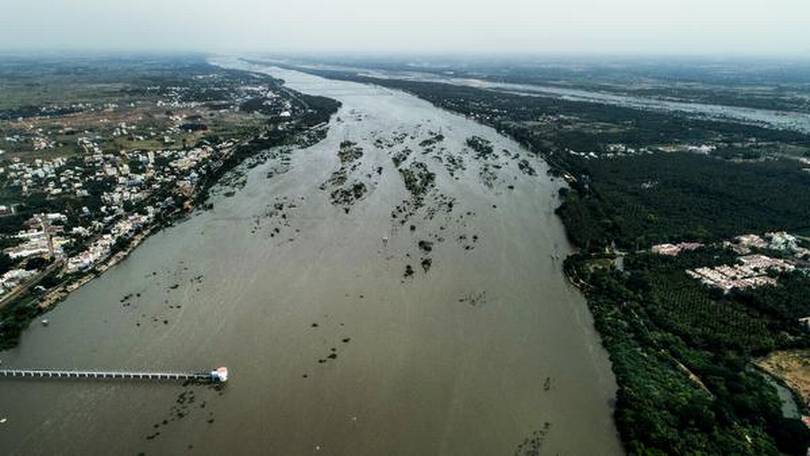
Side by side: The Cauvery (left) and the Kollidam at the Kambarasampettai check dam near Srirangam in Tiruchi. PHOTO: M. MOORTHY
Side by side: The Cauvery (left) and the Kollidam at the Kambarasampettai check dam near Srirangam in Tiruchi.
PHOTO: M. MOORTHY

Broad, menacing and gushing, the river has gained new life aided by a generous southwest monsoon

Originating as a small spring at Talacauvery in the Brahmagiri Hills of Kodagu district in Karnataka and through its 802-km journey before emptying into the Bay of Bengal at Poompuhar on the Coromandel coast, the Cauvery evokes strong emotions, both sublime and mundane. The generous monsoon this year has infused new life into the river. All the major dams in Karnataka (Krishnaraja Sagar, Hemavathi, Kabini and Harangi) are brimming over. With the combined rate of outflow from the reservoirs being 75,000 cusecs to 1,00,000 cusecs, the Cauvery, barely visible in summer, is now a river in spate.

Among the more popular sights on its course is the Abbey Falls in Madikeri, where a few natural streams jump off the cliff and join the river downstream. The Lakshmantirtha, a bigger tributary originating from Brahmagiri, jumps down the cliffs in a series of rapid falls from a height of nearly 170 feet to form the Iruppu Falls and snakes through the Nagarahole tiger reserve before merging with the Cauvery at the Krishnaraja Sagar. Meandering and gliding along through the rough and rocky terrain, the Cauvery splits into two and forms the riverine island of Shivanasamudra and presents the breathtaking sight of the Gaganachukki and Bharachukki segmented falls, plummeting from a height of 320 feet (and almost a 1,000 feet wide) with a deafening roar before hitting the rocky gorge below releasing clouds of vapour and foam.

It is at the Hogenakkal falls that the river tumbles down, after traversing for 64 km along the inter-State boundary. The river spreads into the Mettur Dam in Salem district, the largest in Tamil Nadu with a capacity of 93.47 thousand million cubic feet. From Mettur, the river proceeds south and turns eastward.

At the Upper Anicut, or Mukkombu (which is about 15 km above Tiruchi), the Cauvery splits into two, with the southern branch retaining the original name and the other, known as Coleroon (Kollidam in Tamil), and drains into the sea near Portonovo (Parangipettai) in Cuddalore district.

Text by R. Krishnakumar and T. Ramakrishnan

source: http://www.thehindu.com / The Hindu / Home> News> States> Tamil Nadu / July 29th, 2018

Mother Mirra’s Coffee’s 100-year legacy

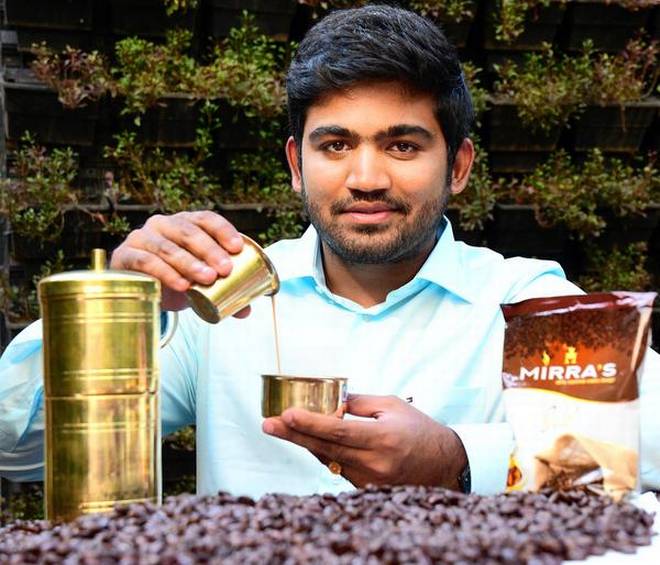
Chasing the perfect brew Sundar Subramaniam, Executive Director of Mirra's Coffee   | Photo Credit: S_SIVA SARAVANAN
Chasing the perfect brew Sundar Subramaniam, Executive Director of Mirra’s Coffee | Photo Credit: S_SIVA SARAVANAN

As Mirra’s Idhu Namma Veetu Kaapi now steps into the new age with its latest filter coffee variants, we look back at the company’s 100-year-old legacy.

“I promise, you will keep coming back for more,” declares Sundar Subramaniam with a confident smile. The executive director of Mother Mirra Group of Companies offers me a fragrant brew, made with coffee powder from Mirra’s Idhu Namma Veetu Kaapi brand. The group recently launched three variants of filter coffee. It’s limited to retail in Tamil Nadu and Puducherry for now, but Sundar is bursting with plans.

“We are marketing Mirra’s Coffee with the line ‘I want you to buy my coffee once’… we plan to give away free brass coffee davara sets with every packet soon. And, there will soon be wet sampling at malls and stores.”

Mother Mirra’s Coffee has a 100-year-old legacy. It comes from the house of the first Asian planter, PPR Subramaniam (Sundar’s great-grandfather) and his Virakesari Plantations. PPR was an entrepreneur and journalist from Avanipatti village, in the Sivagangai district of Tamil Nadu. He also started Virakesari, the first Tamil newspaper in Sri Lanka in the 1930s, to give a voice to the rights of plantation workers.

“Back home, our community was often associated with the money-lending business. My great-grandfather set a new path. He moved to Sri Lanka at a time when plantations were still owned only by the British and the Scottish,” Sundar says with pride.

Later, PPR moved to Malaysia, where he bought more plantations. “My grandfather Sundarakesari continued the tradition and owned plantations in Coorg. My father S Subramanian followed suit,” says Sundar, now settled in Coimbatore.

Today, their plantation AA — or Premium Arabica — variety of beans is exported to countries within Asia and beyond. They also have a line-up of Arabica and Robusta with varying ratios of chicory content in them.

“Our wholesale market is thriving. We also sell online on Amazon, Flipkart, Paytm, and Big Basket, something I introduced after I took over in the last six months. My focus is on digital marketing. We are getting a good response from our active social media pages too.” The group has also branched into budget homes and service apartments.

“I did my masters in business marketing at Cornell University in New Zealand. I wanted to work abroad, but my father had other plans. He met me at Singapore and handed me my return ticket to Coimbatore,” laughs Sundar.

What followed was the launch of the retail brand. They added more German machineries to the factory at Coorg and introduced three new products — pure coffee (100% premium Arabica), premium filter coffee (with 15% chicory) and Gold (with 47% chicory). A network of 350 dealers ensures that the filter coffee reaches stores in Coimbatore, Madurai, Chennai and Puducherry. “In a couple of months, we want to start exporting to Singapore and New Zealand.” They also plan to enter the Sri Lankan market, from where it all began. A particular street in Colombo, from where Virakesari was born, still goes by the name Chettiar Street, to honour his great-grandfather.

Among new products, a green coffee is in the offing. Sundar also plans coffee counters at airports: where one can sow coffee, roast, grind and brew a perfect davara.

source: http://www.thehindu.com / The Hindu / Home> Life & Style> Food / by K Jeshi / July 20th, 2018

Marshy field sports held in Madikeri amidst rain

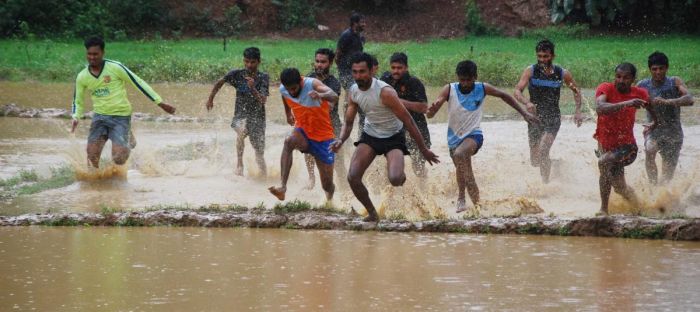
Youth take part in a marshy field race in Madikeri. DH PHOTO

From tiny tots to the elderly, a large number of people became a part of fun and frolic amid rain, at a marshy field in Madikeri on Sunday.

Various competitions were held at a marshy field belonging to Kukkera Palangappa in Devasturu village in Madikeri taluk, as a part of ‘Aatinaati Koodukoota’ organised by Karnataka Arebhashe Samskruthi mattu Sahitya Academy.

Men and women took part in volleyball, tug of war, throw-ball and running race. Rural games were conducted for children.

Speaking on the occasion, MLA M P Appacchu Ranjan felt the need to preserve paddy transplantation for the next generation.

“People should not think about profit alone and should get into the marshy field, as an effort to rediscover traditional agriculture which is vanishing,” said Ranjan.

Pattedar of Devastur, Kukkera Thammaiah flagged-off the paddy seedling transplantation and marshy field race.

He said that agriculture was a social activity in the past and people in the village help each other in paddy seedling transplantation work. But, today, fields have been left fallow.

In a good development, a few youth associations have come forward to carry out paddy transplantation work, he added.

Karnataka Arebhashe Samskruthi mattu Sahitya Academy Chairman P C Jayaram said that the traditional methods of agriculture reflected social harmony.

MLA K G Bopaiah, Kolar Excise Department Deputy Commissioner Sumitha Lingaraju, academy members Ramesh Joyappa, Kakkera Pradeep and A K Himakara were present among others.

source: http://www.deccanherald.com / Deccan Herald / Home> State> Districts / by DH News Service, Madikeri / July 22nd, 2018

Video Of Class 8 Boy Narrating Kodagu’s Rain Woes Goes Viral

KalleraFatehMPOs16jul2018

Madikeri:

While many people have expressed their dissatisfaction about Chief Minister H.D. Kumaraswamy (HDK) for not sanctioning any funds to Kodagu in his Budget, this little boy from Yemmemadu village near Napoklu takes the cake. In a video that has gone viral, the boy vents his anger at the CM and at the same time highlights how Kodagu is ravaged by rain and how man-animal conflict has made lives miserable in this tiny district.

In the video, the Class 8 student, Kallira Fateh, son of Kallira Ummar and Rukya, says the district which has given River Cauvery to Mysuru, Mandya, Bengaluru and Tamil Nadu has got nothing from Kumaraswamy.

Hailing from a farming and daily wager family, Fateh, holding an umbrella, is seen pleading with the CM to provide relief to the rain-affected Kodagu farmers. Taking a dig at the Chief Minister for ‘neglecting’ Kodagu district in the Budget, Fateh said, “Mysuru, Mandya and half of Tamil Nadu get water, if it rains in Kodagu district. But the unrelenting rain has destroyed coffee, pepper, areca and paddy crops in Kodagu.”

“The wild elephant menace is on the rise in Kutta, Birunani, Balele and Ponnampet because of which daily wagers and agriculture farmers fear to venture out of their houses. The rain-battered Kodagu-Kerala Road has become non-motorable. “Who should people approach to get their problems addressed? It is you (CM), who else,” he said.

He continued, “Kumaraswamy has meted out injustice to Kodagu by not sanctioning grants to Kodagu and added that the CM should treat all districts equally.”

The boy then addressed BJP State President B.S. Yeddyurappa to impress upon Prime Minister Narendra Modi to announce compensation for the distressed farmers.

“Modiji is Prime Minister for 130 crore people of the country. He should treat people of all religions and castes on equal footing. This holds good for the CM too,” Fateh said.

The video went viral and reached the CM too. Kumaraswamy told reporters in Bengaluru that since Independence, many rulers have come. “Why am I being targeted, that too after taking charge just two months ago? I know about the problems faced by people of Kodagu. I will visit Kodagu and stay there for two days and hear the grievances of people and solve their problems,” he said. Fateh’s father Umar said his son was pained by the destruction of standing crops on 3,500 acres of paddy fields in the village.

“Our paddy field has been waterlogged for the past 13 days. No official or people’s representative visited our area. In our village, we get electricity only for six months a year. All this upset him,” he said. “I’m happy that the State Government and the CM have responded to our demands,” he said.

source: http://www.starofmysore.com / Star of Mysore / Home> News / Madikeri – July 15th, 2018

Tree Lovers Club Plants 700 Saplings At Vijayanagar

Urban greening initiative…

TreeLoversKF14jul2018

Mysuru:

The newly-floated Tree Lovers Club, Vijayanagar, planted around 700 saplings including fruit-bearing indigenous trees in Vijayanagar 3rd Stage on Sunday last.

The Club, an offshoot of Vekare Ex-Servicemen Trust (VKET), will take up urban greening and promote it by example and through public campaigns.

Speaking to SOM, VKET and Tree Lovers Club President Mandetira N. Subramani said that it is the responsibility of every citizen to take care of the ecology and environment around their neighbourhood, first by planting a couple of fruit-bearing saplings in places wherever it is feasible. Subsequently, it should be the individual’s responsibility to nurture them after their maintenance for five years till they grow at least 15 feet in height.

He said, it is the collective responsibility of the residents and NGOs to take the initiative to impress upon the Forest Department to plant more saplings.

He further mentioned that the Tree Lovers Club will accomplish its mission of apprising the Chief Conservator of Forests in Mysuru to plant over 5,000 different species of saplings including fruit-bearing trees in Vijayanagar 1st, 2nd, 3rd & 4th Stages.

Vice-President Shakunthala Subramani, Gen. Secretary A.B. Bojappa, Jt. Secretary Poornima Raghu, Treasurer S. Somashekara and Hon. Advisor P.S. Bose Subramani led the morning walkers and residents of Vijayanagar 3rd Stage, numbering over 150, in planting the saplings.

Addressing the gathering after planting over 25 fruit-bearing trees in the Park opposite Heritage Club, the Tree Lovers Club President thanked the participants, members of Brahmagiri Kodava Association and Heritage Club for giving moral support to the Club in accomplishing the greening initiative. Tree Lovers Club intends to adopt the Park in Vijayanagar 3rd Stage for development and maintenance after obtaining the consent of authorities concerned.

Speaking on the occasion, A.B. Bojappa said that the Club would form a Committee of Tree Lovers to look after the saplings already planted in Vijayanagar 3rd Stage in the past one week.

The Secretary also requested those present to give their suggestions to improve the ecology of Vijayanagar 3rd Stage via e-mail: tree.lovers@yahoo.com or infowicket@gmail.com

source: http://www.starofmysore.com / Star of Mysore / Home> News / July 10th, 2018

Mulled and brewed at home

Bottled Goodness

WineKODAGU11jul2018

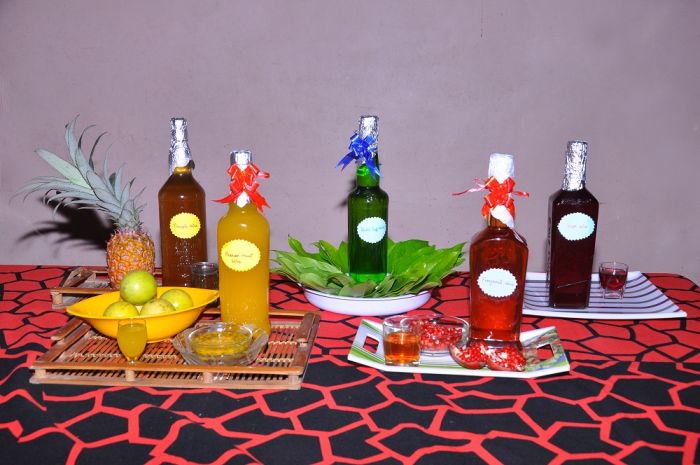
It is common to think of grapes when we talk about wines. But women of Chikkamagaluru, Kodagu and Hassan districts have shown that there’s more to wine than just grapes. Here, wine is made from a wide range of locally grown fruits and spices like jamun, ginger, pepper, betel leaf, gooseberry, orange, cashew apple, rice, banana, coffee, etc. These wines, traditionally mulled and brewed in the coffee estates of the State, are being perfected to be sold in domestic and international markets. Women entrepreneurs, who are at the helm of winemaking, ferment different flavours of wines as well.

In these districts, it is a custom to serve a cup of freshly brewed coffee to guests. In addition to coffee, homemade wine is now offered as a welcome drink at weddings and other joyous gatherings. It is also presented as a gift to relatives and friends. Not just that, it has become a good addition to the various products that travellers look for in these places.

Wine heritage

Amongst the three districts, Kodagu holds a prominent place as the producer of wine. The district has a uniformly distributed wet climate. The British have left their cultural footprints here, which reflects in the culture and lifestyle of the Kodavas. The wine has historically been a part of the Kodava diet and heritage and has been bettered through generations.

With the tourism sector experiencing a steady growth in the district, more than 1,000 women are now engaged in winemaking. While many of them brew for home consumption, the number of women taking it up as an income-generating activity is also on the rise. Winemakers say that since they produce wine in small quantities, they don’t have to register with the Wine Board.

Wine is made throughout the year and the ingredients change with the season. This art of perfecting homemade wine has seen higher success rates with the involvement of self-help groups. One such group is Rajarajeshwari Self-Help Group(RSHG) established by the women of Kargunda village in Madikeri taluk. For the past 16 years, the members of this group have been selecting the best quality fruits grown in their coffee plantations and blending them with various other locally sourced ingredients to make homemade wine.

RSHG is one of the first such groups to be formed by the Coffee Board of India. With 18 women entrepreneurs in its fold, two women work every day to ensure continuous production. “The health benefits of these wines are significant. For instance, black plum has positive effects on controlling diabetes and ginger has several medicinal effects,” says Jarina Uthappa, president of RSHG. Members Saroja Kalappa, Girija Chermanna and Gowramma Kaverappa say that over the years, there is an increase in tourist footfall to their shop, which is located on the route from Madikeri to Bhagamandala. And, many consider this outlet as a must-stop place for tourists.

The process

Sugar and the fruit of choice are added to boiled water and stirred at regular intervals for a period of five days. Then it is kept for 25 days, after which the fruit and sugar mixture is filtered into a bottle without any traces of the pulp being mixed. In order to separate the pulp from the liquid, Muslin cloth is used in the filtration process.

Only good quality fruits are used in winemaking. They do not use alcohol, yeast or any other form of preservatives during preparation. Of late, sugarless wine is also prepared. Customers can buy their products after tasting samples. The wine wine has a shelf life of up to two years. However, due to the natural process of fermentation, as years go by, the wine acquires five to 10% of alcohol content in it. It is safe to consume wine up to 60 ml after which it leads to intoxication. They sell about 150 to 200 bottles in a month and one bottle costs Rs 200.

Another successful self-help group, Coorg Wine Association(CWA) in Suntikoppa, is also a known name in wine production. Manu, a member, states that Kodavas have a cultural association with wine and it is seen as an energy drink here. At CWA, the process of fermentation is carried on for 90 days. Along with fruits, they also use pudina(mint), Bermuda grass and mulberry. At CWA, the filtration process takes place after 50 days and the wine is sold at Rs 250 to 300 per bottle.

Distinctive methods

Though the wine culture is not as widespread as Kodagu, the concept of homemade wine is catching up in Chikkamagaluru and Hassan districts, mainly because of the demand created by the tourists. “It has also become a source of regular income for women entrepreneurs,” states winemaker Divya Uday of Kitthagalale estate in Sakaleshpura.

Every winemaker follows a distinct method and even the ingredients vary. For one kilogram of fruit, Divya Uday adds one handful of rice, wheat flour, cloves, cinnamon, a pinch of yeast and little black pepper. The wine is sold at homestays in and around Sakaleshpura. She adds that beauty parlours are now placing orders for grape wine, which is used in facial cleansing.

I then interacted with two innovative entrepreneurs, Geeta Sunil and Sumitha Raghudev, in Chikkamagaluru. They have created a niche for themselves in the field with a wide variety of wines such as cashew wine, rose wine, passion fruit wine, pomegranate wine, pineapple wine and betel leaf wine. They have been supplying these unique flavours to homestays located in the region.

Bhagya Lakshman, an experienced winemaker in Mudigere taluk, remembers that in her childhood, after a day of hard labour, to de-stress from the physical and mental strain endured, people used to consume a primitive form of wine before dinner. The ingredients were mainly fruits and berries picked from surrounding community forests and plantations. The fruits were blended with jaggery, sprouts, ginger, black pepper and rice.

Over the years, there has been a lot of changes in the preparation and consumption practices, reflecting the evolution of customs, traditions and culture. And the change is for the better, she feels. She says that many Ayurvedic practitioners recommend consumption of one spoon of betel leaf wine or ginger wine on a daily basis to maintain good health.

It is very fashionable these days to serve wine as a welcome drink in the social gatherings that women organise. It is always served in limited quantities. Wine must always be stored in glass bottles and must never be refrigerated. Wine, when preserved for more than seven years, gives the same intoxicating feeling as whiskey.

So, when you visit this part of the State next time, don’t forget to try these fruity flavours.

source: http://www.deccanheral.com / Deccan Herald / Home> Spectrum> Spectrum Top Stories / by Poornima Kanahalli / July 07th, 2018