Category Archives: Agriculture

It’s Honey Calling

CoorgHoney01KF02july2018

Madikeri:

Any talk of Kodagu often begins with the aromatic coffee, golden-glazed honey and some lip-smacking authentic delicacies. Honey has a special place in the district and Kodagu is known to produce distinct and rich honey that is famous for its originality, purity, taste and longevity even when stored in closed containers for years together.

However, the district hit a low in honey production in the 1990s as Thai Sac Brood disease hit the industry hard. Said to have originated in Thailand, the disease killed bees, including the queen bee and so far there has been no effective remedy for the disease. Also, the red ant menace further crippled the industry and most of the apiculturists were forced to switch to other means of livelihood. So badly affected was the industry that the honey production in Kodagu has dipped to a low of 50 percent in the late 1990s.

Now slowly the industry is regaining foothold and thanks to people who are growing conscious about their health and healthy habits, there is a global market for Coorg Honey. Honey is produced mainly in Bhagamandala, Galibeedu and Cherangala of Madikeri taluk, Birunani, T. Shettigeri and Kedamulloor in Virajpet taluk, Shanthalli, Jakkanalli, Soorlabbi, Hammiyala, Hachchinadu, Kumbaragadige and Mutlu in Somwarpet taluk.

CoorgHoney02KF02july2018

At present, Kodagu has over 7,000 bee-keepers and Bhagamandala region alone accounts for more than 50 percent of production of the district with the total being about 850 tonnes.

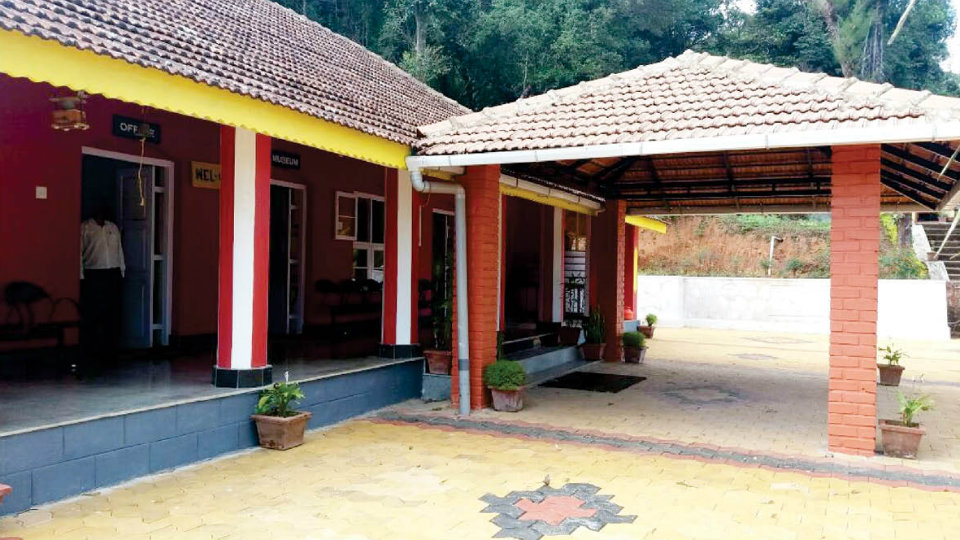
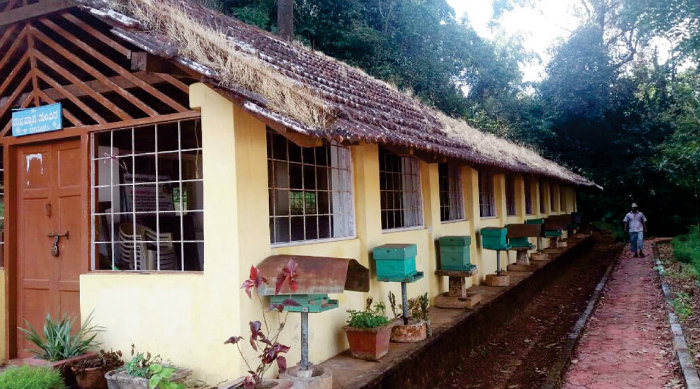
To bring back the glory of honey production in Kodagu, the State government has set up a Honey Park in Bhagamandala where the only Apiculture Technical Training Centre of State is located. The Park also houses a Honey Museum. The Park and the Museum are the first in the State.

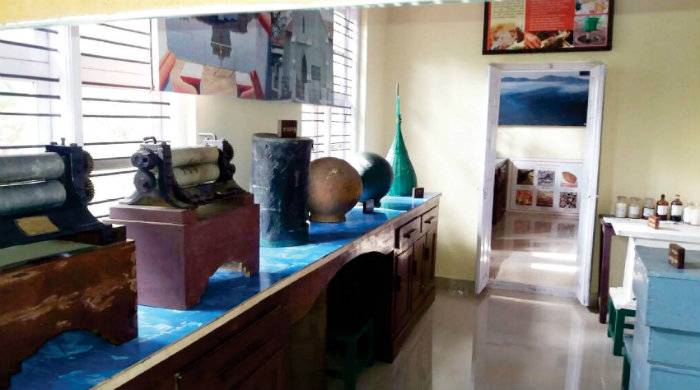
Honey extractors, beehives, honey containers, honey pots on display at the Honey Museum.

Built at a cost of Rs. 1.42 crore, works on the Honey Park began in 2015 and is completed now. The Park is housed at Apiculture Technical Training Centre that was established at Bhagamandala way back in 1948 by the then Coorg State Government. Funds for the Honey Park was released by the State Horticulture Department and initially in 2015-2016, Rs. 50 lakh was released. Later, in 2016-2017, Rs. 82 lakh was released and Rs. 10 lakh was released in 2017-2018.

A honeycomb kept for demonstration at the Honey Park.

The Honey Park acts as a comprehensive centre for honey production and related activities. It would also endeavour to provide marketing facilities for the product in the entire State. The Park is being maintained by food processing division of Agriculture Department. The Park has been set up to promote apiculture, which will supplement the income of the farmers.

According to officials managing the Honey Park, they get regular visitors who want to know about honey production, the costs and apiculture procedure.

CoorgHoney05KF02july2018

Certificate course

“We will provide a three-month certificate course during November-December-January for students and professionals who want to take up apiculture as a part-time business,” they said. Hostel facilities will be provided to the trainees during their three-month stay at Bhagamandala and already many students from Mysuru, Belagaavi, Koppal and Dharwad have enrolled for the training programme.

This apart, the Honey Museum traces the history of honey in Kodagu, its origin, golden period, its gradual decline owing to diseases and the present state. Also, it gives the visitors information about global honey growth and how it has become popular among health freaks. Models have been prepared and ways and means of honey extraction with machines and bare hands without getting bitten or stung by bees are demonstrated here.

A short movie screening is another attraction in the Honey Park. It captures the honey development in Kodagu. The centre will train local tribals and farmers in apiculture. Tribals will be trained in collecting honey in forests. This in turn will help in improving their economic conditions.

source: http://www.starofmysore.com / Star of Mysore / Home> Feature Articles> News / June 30th, 2018

Coffee sector seeks govt support for re-plantation

City: Chennai

With a large majority of coffee plantations having turned old and unproductive, coffee sector is seeking a Colombian-model re-plantation support from the government.

Abysmally low yield, lower price realisation and high levels of debt have been restraining the sector from taking up re-plantation on its own.

Re-plantation is long overdue for 65-70 per cent of India’s coffee farms. About 65 per cent of plants are more than 40 years old and for those varieties, the maximum yielding age of the plants is 35-40 years. Some of the better-yielding newer varieties have a shorter life of around 25 years and a good number of these newer varieties are also due for re-plantation, said AL RN Nagappan, coffee committee chairman of UPASI.

By retaining the older plants, both production and yield has been coming down. Coffee production, especially arabica production has been falling year-after-year in the past five years. From 120,000 tonnes, it has dropped below 90,000 tonnes.

The yield too is abysmally low. “We cannot even compare our yield with that of Brazil or Colombia. If an acre of coffee plantation provides 1.5 tonnes of coffee in Brazil, it would hardly produce 300 kg in India,’ said Nagappan. Inability to mechanise the plantations due to the hilly and rocky terrain also has been affecting the yield. According to Ramesh Rajah, president of the Coffee Exporters Association, coffee growers in the India are not in a position to take up the task of such large-scale re-plantation as most of the growers are incurring losses due to lesser price realisation and higher input cost.

“If the input cost on an acre is around Rs 70,000, the income would be around Rs 40,000 to Rs 45,000. The grower is incurring a loss of around Rs 30,000 on an acre of coffee plantation,” said Boje Gowda, chairman, Coffee Board of India.

The growers have been relying on the pepper vines to make up for the losses. “But the pepper prices too are down this year,’ added Nagappan.

According Gowda, almost 80 per cent of the growers have defaulted on their loans and the non-performing assets of the coffee plantation have become a burden for the banks.

In such a scenario, the sector is looking forward for support from the part of the central and state governments. “The government should take a leaf out of the re-plantation scheme being provided for growers in Columbia. The government has been providing financial support for the past few years and now the country has been able to enhance its production significantly,” said Rajah.

Since 2009, Colombia has been replanting around 85,000 hectares of coffee plantations every year. The government has been providing subsidy for the every replanted coffee.

“We have been requesting both central and state government to provide subsidies on the inputs like fertilizer electricity and machines,’ said Gowda.

As the grower has to forego the income during re-plantation, he also wants financial support during that critical period. “We are also expecting an interest waiver for the loans so that the growers can pay back at least the principal,” said Nagappan.

source: http://www.mydigitalfc.com / mydigitalfc.com / Home> Miscellany / by Sangeetha G

Demand for crabs, bamboo shoots rises in Madikeri

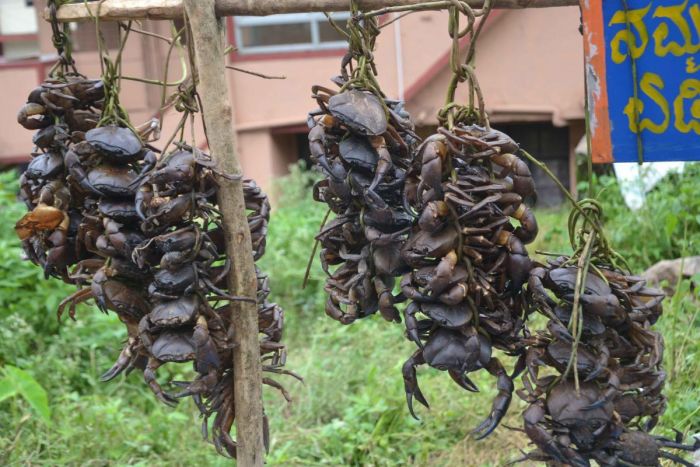
Crabs kept for sale beside a road in Madikeri.

It is the time of the year when people in Madikeri throng to purchase crabs and bamboo shoots.

Crabs, bamboo shoots and “Marakesu” have already entered markets in the district.

People consider crab as good for generating heat in the body which helps in braving the chill during monsoon.

The crab sellers collect 30kg to 40kg of crabs from H D Kote, Bheemanahalli and come to Madikeri to sell them. A bundle of crab (12 crabs) are priced at Rs 300. Crab fetches Rs 250 per kg.

In the past, crabs were available in plenty in paddy fields and water bodies. Now in spite of an increase in demand, there are a few people who sell it.

The availability of crabs has also declined, said crab seller Kumar.

Even the tourists who come here during weekends purchase bamboo shoots while returning home. The bamboo shoot is sold for Rs 40 to Rs 50 for half a kg.

The demand for “Marakesu” leaves also increases during the monsoon. The leaves are used for the preparation of “pathrode” and “bajji.”

The monsoon delicacies are served not only at home but at homestays and resorts as well.

There is a good demand for crab curry, crab fry, bamboo shoot pickle and bamboo shoot dry curry, said homestay owner Suyog.

source: http://www.deccanherald.com / Deccan Herald / Home> State> District / by DH News Service , Madikeri / June 24th, 2018

Rampant land conversion in Kodagu leads to reduced flow of water in Cauvery

Kodagu district is the major watershed and catchment for the Cauvery and has witnessed rampant conversion of not just forest land but also wetlands and coffee plantations.

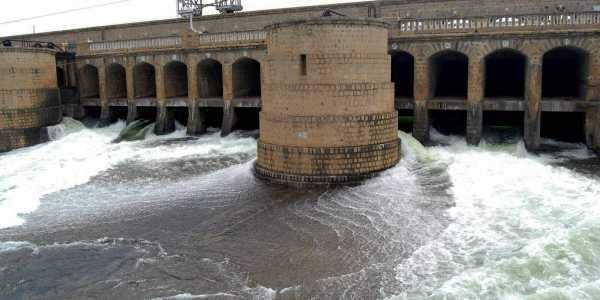
Water flowing from a dam across the Cauvery river. (File | EPS)

Bengaluru :

With 2,800 acres of land converted for commercial purposes in the last decade in Kodagu district, environmentalists decry the continuing change in land use and say it has decreased the annual flow of water in the Cauvery.

Kodagu district is the major watershed and catchment for the Cauvery and has witnessed rampant conversion of not just forest land but also wetlands and coffee plantations.

The statistics revealed by the district authorities are shocking as between 2005 and 2015, more than 2,800 acres of paddy field, coffee plantations and highlands were converted to residential layouts, sites, commercial complexes and resorts.

Col C P Muthanna, president, Coorg Wildlife Society said, “We have received this data from the district authorities as a reply to our RTI application. This is a matter of grave concern as the tiny district is the lifeline of not only south Karnataka but also Tamil Nadu. The river’s catchment areas have made way for buildings … the district has also been losing its tree cover to infrastructure projects, high tension power lines and railway lines.”

The Coorg Wildlife Society has met the district authorities in this regard and submitted a memorandum highlighting how large scale conversion of wetlands/highlands without even getting a NoC from the gram panchayats have taken off and legalised later by paying bribes. They have requested the authorities concerned to carry out a site inspection in the three taluks and a proper assessment on conversions. Col Muthanna adds, “The DC has tentatively agreed to our request. Further, we have requested for a study on carrying capacity of tourism in Kodagu that may finally result in policy measures for sustainable tourism.”

Environmental activist Sundar Muthanna, who has started an online petition ‘Stop the two railway tracks to Kodagu and Save Cauvery River’ and addressed it to PM and 14 others says, “Implementing the two railway lines will involve cutting of lakhs of trees in the catchment region. Kodagu has already lost 54,000 trees for a high tension power line to Kerala and now hundreds of fresh applications for conversions are pending with the department. Land conversion seems to be the government term for ‘ecological suicide’.”

Railways and highways are being planned to promote tourism and business. “When tree-holding agricultural land is converted for commercial purposes, the trees are cut for construction activities. In river catchment area, less trees is … simply put … less river. The Cauvery went completely dry in Kodagu in March this year … we don’t seem capable of understanding the many warnings that nature is giving us,” Muthanna says.

Environmentalists say a study done by researchers of Indian Institute of Science has already revealed the decreasing water flows to the Cauvery from the catchment areas of the district. Prof T V Ramachandra, head of Wetland and Energy Research Group, IISc headed this study — Modelling Hydrologic Regime of Lakshmanthirtha Watershed, River Cauvery. The study outlines how change in land use in Kodagu has decreased the flows into Cauvery. The assessment showed that out of five watersheds, four had high deficiency of water for over three months.

Kodagu DC was not available for her comments.

source: http://www.newindianexpress.com / The New Indian Express / Home> States> Karnataka / June 13th, 2018

Vintage Car Collector In Kodagu Dies As Tree Branch Falls On Him

AhmedKuttiMPOs12jun2018

Madikeri:

A farmer and a vintage car collector died after a tree branch fell on him at Nellihudikeri village near Siddapura in Kodagu district yesterday.

The deceased, 67-year-old P.C. Ahmed Kutti Haji, was working in his Mubarak Estate along with his son Ashraf at around 11.30 am. Due to heavy rain and wind, a branch of a banyan tree fell on Ahmed Kutti. He was immediately rushed to a hospital. But he succumbed to his injuries in the hospital. Kodagu Deputy Commissioner P.I. Sreevidya has announced Rs.5 lakh compensation to his family. She sent the cheque through the Tahsildar.

With his death, Kodagu has lost a collector of Vintage ‘beauties

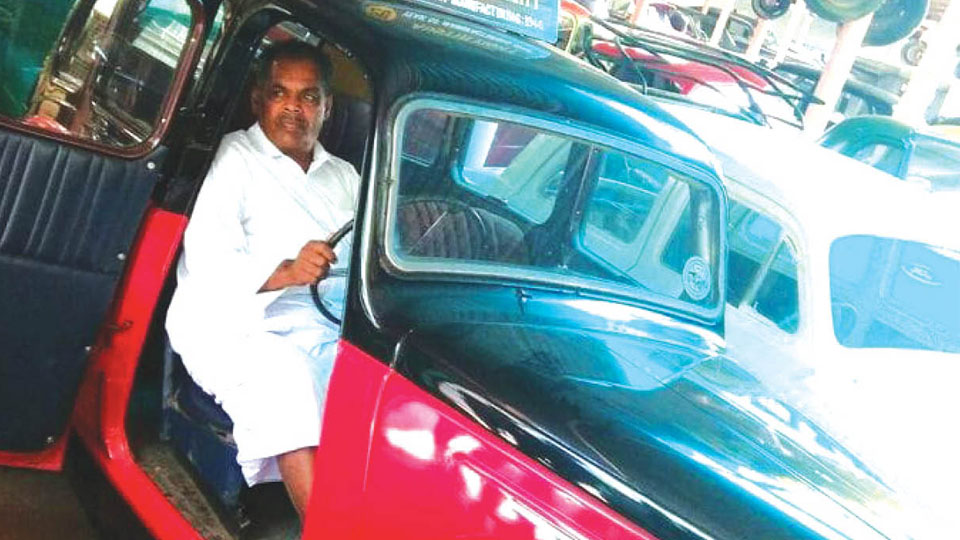
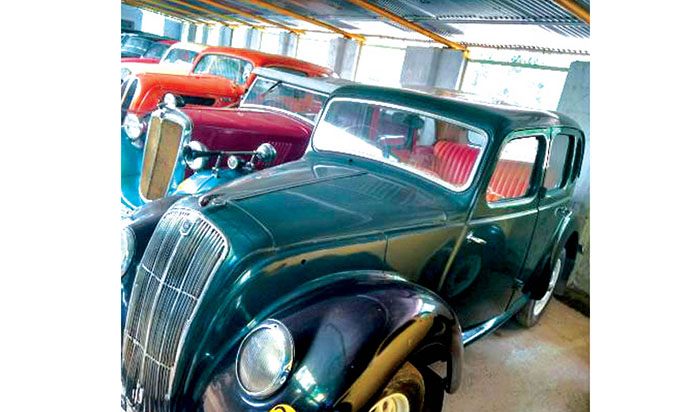
Ahmed Kutti Haji is a coffee planter and also an industrialist. He has a huge collection of vintage cars which he threw open to public. Collecting vintage cars was a hobby for Ahmed who has 86 of them and over 15 vintage petrol jeeps. Not to stop there, he also has 20 old two-wheelers, a 125-year-old bicycle and a 200-year-old bullock cart. The oldest car in the collection is 1925 model.

Normally vintage car collectors eye Bengaluru to add cars to their collection. Changing the trend, Ahmed focussed on old workshops in Kodagu and surrounding areas to hunt vintage ‘beauties.’ After picking them, Ahmed gave old cars a fresh coat of paint and tuned them to working condition.

Almost all foreign cars owned by Ahmed were manufactured between 1925 and 1965. Barring Dharmasthala, no other place in the State has such a wide collection of vintage cars.

With his death, Kodagu has lost a vintage automobile enthusiast.

source: http://www.starofmysore.com / Star of Mysore / Home> News /June 10th, 2018

Karnataka: Solar fencing of Thithimathi forest begins

The tentacle solar fencing project, aimed at reducing man-elephant conflict in Kodagu district, kick started in Kushalnagar-Thithimathi forest range.

Madikeri :

The tentacle solar fencing project, aimed at reducing man-elephant conflict in Kodagu district, kick started in Kushalnagar-Thithimathi forest range. The 67.91 lakh project will have improved fencing hanging from 20 ft above and promises to keep the check the conflict.

Green tall posts were planted beside the roads bordering Maldare and Chikka Reshme forest area and steel wires were hung from these posts as opposed to the earlier fences that ran across the polls vertically. Solar power generation systems too were connected and had a tagline ‘save wildlife, save forest’ imprinted on them.

Forest officials confirmed that the fencing would be carried out across 24 km of the stretch. One km fencing with two posts will cost `2.80 lakh and the tender for this project was grabbed by Mysuru bidder Ambarish Gowda.

While the old solar fences in the range were blamed for their under-maintenance, the new project promises to overcome this issue as the bidder has signed the contract agreeing upon to maintain the installed solar fences for a span of three years.

source: http://www.newindianexpress.com / The New Indian Express / Home> States> Karnataka / by Express News Service / April 20th, 2018

A symbiotic bond with tribal communities

For 38-year-old S Thanaraj, a visit to study the impact on the lifestyle of Paliyar tribal community due to globalisation in 2006 was a life changing moment. He was impressed by how tribal communities embrace nature and live in forests complementing each other.

A native of Radhapuram in Tirunelveli, he shifted to Madurai to pursue law. Being a dalit, Thanaraj has witnessed caste discrimination at a very young age. He always stood against it and had the tendency of helping others since childhood. This came true after his formal education, when he turned an activist. The law graduate has worked in various areas like youth empowerment, environment and total prohibition by joining hands with various organisations including CESCI, Ekta Parishad and People’s Education for Action and Liberation.

Thanaraj became an Adivasi activist after he extensively worked with the Paliyars, educating them about the Forest Act which ensures their right over forest land. The Scheduled Tribes and Other Traditional Forest Dwellers Act passed in 2006 promises tribal rights over agriculture land which traditional belonged to them, accessing forest produces and right to protect and manage the forest, which had been denied for long.

“I went to educate them, but ended up learning so many things from them. Their life is an exemplary one in conserving forest, which needs to be learnt by all. I have taken these lessons to over 1.5 lakh school and college students so far,” Thanaraj said.

For instance, Adivasis do not kill pregnant animals for meat. When they collect roots, they plant more and they never cut living trees, they only use dead trees. They treat woman equally and encourage widow remarriage. There is no dowry system either, said Thanaraj.
While he worked for Paliyars till 2008, he expanded his horizon and started working for various communities like Kadar in Valparai and Anaimalai, Malasar in Amaravathi, Udumalaipettai and Anaimalai, Muduvan in the interior forests of Theni and Valparai forests and Mahamalasar from Anaimalai and Topslip.

Thanaraj’s has a strategy in empowering the Adivasi community. To create leaders among them, unite them to retrieve their rights over forest and defend themselves from exploitation, he along with the organisations he works for help Adivasis in various areas in the state by getting them housing facility and agricultural land. Only recently, Kadar tribe from 24 villages in and around Valparai in Coimbatore received 10 acres of land after several stages of protest.
Thanaraj has taken part in various national-wide protests carried out to ensure the rights of Adivasis. He has also organised many state-level protests demanding total prohibition. He has also extensively worked in the Tsunami rescue and rehabilitation throughout the TN coast. He also played active role in the protests against Sterlite and Koodankulam nuclear plant.

Thanaraj was lucky to get married to a like-minded person like K M Leelavathi, a daughter of a tribal leader from Coorg, in 2010. An MSW graduate, she too joined him in the work towards helping deprived communities. Recently, he joined the Centre for Justice and People and continues his work towards Adivasi empowerment.

source: http://www.timesofindia.indiatimes.com / The Times of India / Home> City News> Madurai News / TNN / April 11th, 2018

Patience helps Nagarathar kin to enter TN coffee market

With coffee running in the blood lines of the family the Mother Mirra Group has owned coffee plantations for four generations.

Sundar Subramaniam, executive director of Mother Mirra Group of companies releasing their company product in Coimbatore. (Photo: DC)

Coimbatore:

His family is introduced as the ‘first Asians’ to own a plantation in Asia. Ironically, it took several years and four generations of entrepreneurs of the ‘Mother Mirra Group of Companies’ to foray into retail coffee market.

Speaking to DC, Mr. Sundar Subramaniam executive director of group said, “way back in the 1930s, my great grandfather Mr. PPR. Subramanian Chettiar owned and managed estates in Malaysia at a time when only British and Scots owned coffee plantations. Since then on, my family is in the business of supplying coffee powder and roasted beans from our estates in Coorg to different parts of India. Entering into the domestic filter coffee market is a dream come true for my father Mr. S. Subramanian, who is a third generation entrepreneur of our family.”

With Mirras Coffee the company has entered the domestic filter coffee market. Two options of coffee powder were launched in Coimbatore recently. Mirras Premium blend is a combination of 85 per cent coffee and 15 per cent chicory while the Mirras Gold variant is a combination of 53 per cent coffee and 47 per cent chicory.

Available in 200 grams sachets, for a cost that is affordable, the traditional filter coffee tastes just like home-made coffee, sticking to the tag line of the product ‘idhu namma veetu kaapi’.

The product is available across big and small stores and supermarkets across the city. The firm has a strong dealership network in Tamil Nadu and Puducherry. “We have partnered with 350 dealers across both the regions. In a year’s time we are hopeful of capturing 3.50 per cent to 4 per cent of the filter coffee market,” Mr. Sundar Subramaniam said.

The company already has a strong market hold in the wholesale filter coffee market segment with regular consignments of their coffee powder delivered across India. Karnataka and Tamil Nadu is where the company does thriving business. The coffee is customized for their wholesale clients.

With coffee running in the blood lines of the family the Mother Mirra Group has owned coffee plantations for four generations.

It is home where three generations of employees have worked and it has to its credit more than seven decades of experience of growing and producing coffee powder. At the product launch in the textile city, one-year-old master Shiv Ram Alagappan, the founders’ grandson, gracefully received the first packet of coffee.

source: http://www.deccanchronicle.com / Deccan Chronicle / Home> Nation> In Other News / by Lakshmi L Lund, Deccan Chronicle / April 08th, 2018

Cauvery: A time to pause

The role played by Kodagu, which has nourished and nurtured the Cauvery over time, needs to be recognised.

The Supreme Court of India has determined the manner in which the waters of the Cauvery river are to be shared among the beneficiary States. In its recent judgment on the long-pending issue, the court virtually pulled the proverbial rabbit out of the hat. The decision has received with muted acceptance, understandably, by all concerned, and some token opposition.

The Cauvery dispute has been a long-standing issue among the States, each one trying to tweak the 1924 Agreement forged during the British administration. Much water has flowed down the river since, and each State was trying to secure the best deal for itself.

A noteworthy aspect is that the matter has engaged some of the brightest minds, be it engineering, law, administration or politics, and the fortunes of many rose and fell at each turn of events. The din has for the present subsided. The bigger and immediate challenge now is to save the river to ensure lasting harmony and sustained development of the beneficiary States of Karnataka, Kerala, Puducherry and Tamil Nadu.

Amid all the arguments, the role played by Kodagu district in Karnataka, which has nourished, nurtured and nursed the river over time, has hardly been recognised or acknowledged.

Kodagu is part of the lower Western Ghats and at its highest point, is around 5,000 feet above sea level. Originally administered directly by the British from Madras, it became a Part ‘C’ State at the time of Independence, with its own legislature and Ministers. Subsequently, after the Reorganisation of States it became the smallest district, with a wealth of natural resources. It is in the Brahmagiri hills of Kodagu that the Cauvery rises and disappears, till it is seen again outside the boundaries of the district. The scenic beauty of the Brahmagiri range is a feast for any nature-lover. A mind-boggling phenomenon can be seen between October 14 to 17 every year unfailingly, when the Cauvery, which is nowhere to be seen, suddenly gushes forth from a spring and then swells into the river that bestows its bounty on millions of people along the way, till it reaches the Bay of Bengal in Thanjavur district of Tamil Nadu.

Kodagu has the largest acreage under coffee in the country, with one of the Tata companies owning approximately 40,000 acres. Trees of vintage growth, bamboo, pepper vines, spices, fruits and other agricultural produce make Kodagu a nature’s paradise. Kodagu hosts many species of wildlife, including the tiger, making it an attractive tourist destination.

Kodavas, the numerically small Hindu ethnic community, are different from neighbouring communities in their costume, language, and social practices. Suffice it to say that they have distinguished themselves in many fields and contributed to India significantly. This, however, is not about the Kodavas.

Journey to Tamil Nadu

Abundant green cover in Kodagu is of vital importance as this will ensure that the district receives sufficient rainfall to bring the river to life and flow in all its glory up to Tamil Nadu. Unlike Himalayan rivers, which are snow-fed, the Cauvery depends primarily on the Southwest monsoon. The river is impounded at the Krishnaraja Sagar dam, outside Mysore, conceived and constructed during the British period by the legendary engineer Sir M. Visvesvaraya. From here water is released, reaching Tamil Nadu, where it is stored in the Mettur Dam (Stanley Reservoir). Further release of water is dependent on the agricultural requirements of farmers downstream.

It would be facile to assume that the court decision has solved all problems and that the States concerned will live happily ever after. In a year when there is copious rainfall in Kodagu and the Cauvery is in spate, Karnataka releases water freely, making a virtue out of necessity. There is then no need for any water- sharing formula. It is only in years when rainfall in Kodagu and the catchment of the Cauvery is below par that the problem arises. This results in constant wrangling, and heated arguments between the States over the quantity of water released, the timing of the release and the manner of release, often resulting in violence. Matters get worse if the ‘deficit’ year happens to be an election year. This is the real issue and to date no satisfactory acceptable formula for sharing the distress has evolved, nor is a sound mechanism in place, for delivery in such situations.

It would be relevant to examine data for the decade 2007-2008 to 2017-2018 relating to release of water. Flows received from Karnataka were measured at the Mettur Reservoir up to 2012-13, and from 2013-14, at the Biligundlu gauging site maintained by the Central Water Commission. Against an annual 205 tmc ft (thousand million cubic feet) at Mettur, only 69.727 tmc ft was realised in 2012-13. At Biligundlu, against an annual figure of 192 tmc ft, the receipt in 2015-16 was 15.385 tmc ft. In 2016-17 the figure was 69.316 tmc ft and in 2017-18 it was 113.084 tmc ft. The statement shows that in the preceding decade there was deficit in four years. This is a matter of concern.

Reason for ‘deficit’

The main reason for deficit is reduced rainfall in the catchment area of the Cauvery in Kodagu district, mainly on account of loss of ‘green cover’. One needs to understand the reason for this loss. It is stated that construction of high tension power lines across Kodagu required felling of large number of mature trees, which reduced the ‘green cover’ substantially along the alignment. Perhaps that was the price to be paid for providing sustained power supply to areas beyond Kodagu. But who paid the price? The farmers in Karnataka and Tamil Nadu were the ones directly affected, along with all those areas that depend on assured water supply, such as Bengaluru which supports major industrial activity and large populations. In recognition of this need, the Supreme Court has specifically earmarked a certain quantity of water for Bengaluru.

Disturbing news

A matter of serious concern is news that certain infrastructure projects have been lined up for implementation in Kodagu. Two railway lines are planned: the Mysore-Kushalnagar-Madikeri (Makkandur) line and the Thalasssery-Kodagu-Mysore line. Four National Highways are planned. These are the Mysore-Kodlipet-Sunticoppa-Madikeri- Gonikoppal- Kutta-Mananthawadi; the Bangalore-Bantwal highway via Kushalnagar and Madikeri; Pannathur-Bhagamandala-Madikeri, and Mattanur-Gonikoppal- Thithimathi-Hunsur. This will connect the new Mattanur airport to Mysore and Bangalore at a cost of Rs. 1,000 crore. Additionally, existing roads are to be upgraded into four-lane highways.

These projects will undoubtedly result in the felling of a large number of trees, constant influx of persons transiting Kodagu without any concern or commitment for the local environment, increasing issues of waste disposal and management. Many other unacceptable activities will disturb the ethos of Kodagu and its natural environment.

The question to be asked is whether Kodagu, which is the major watershed and catchment for the Cauvery, requires these projects that are likely to cause more harm to the beneficiary States, while bringing only marginal and doubtful benefits. The ryots in the Thanjavur delta of Tamil Nadu that covers vast acreage, the farmers of Mandya in Karnataka, the drinking water supply needs of burgeoning cities such as Bengaluru and Chennai and many areas in the other States will be affected by any reduction in the flows of the Cauvery. There is no indication that the long-term impacts of these actions have been considered. No consultation with local communities appears to have been done. The impression at the ground level is that a very short-sighted view has been taken, and these projects have been mooted at the instance of local politicians as part of vote bank politics, in some cases backed by lobbies eager to monetise the natural wealth that will need to be extracted before implementation.

The way forward

It is clear that India needs to walk the ‘development path’. The right way is ‘sustainable development’, which does not appear to be the case in respect of the above-mentioned projects. The waters of the Cauvery have nourished downstream civilisations for centuries. It is the life blood of the States that now comprise the region. The time has come to save the river, bring back its glory as a provider and nourisher of humans, enabling them to live in peace, harmony, and rise to their full potential in every sphere of endeavour. There is no case for inter-State political one-upmanship or victory or loss for any group. The goal and cause are one…. save the Cauvery for the good of all, for all time to come, by taking a long-term view. Everyone needs to be on the same page.

The following steps need to be taken immediately.

1. Suspend all infrastructure projects, proposed or under implementation, for six months or a year. This short postponement will give time to study the issues necessary for saving the Cauvery.

2. Set up a competent neutral body to assess the real need for connectivity through Kodagu with contiguous areas and examine alternative options.

3. Identify the best option that will cause least damage to the environment and catchment of the Cauvery.

4. Having completed the above three tasks, arrange for a ‘carrying capacity study’ to be done by a credible professional body.

5. On the basis of the findings of this study, the implementation of projects should be supervised by an empowered body to be named the ‘Kodagu Sustainable Infrastructure Projects Board’, with the Deputy Commissioner of the district as Chairman, and the representatives of different agencies and local non-officials as members, to ensure timely implementation in accordance with project specifications.

6. Quarterly meetings of Chief Secretaries of the four States to be convened by the board to update them on the progress and the status of safeguards for the Cauvery.

The need of the hour is statesmanship, avoiding political short-sightedness. It should not become a case of winning the battle of sharing the Cauvery waters and losing the war of saving the river for posterity.

The author, who retired from the Indian Administrative Service, has written this as a concerned citizen. Email: sonnabel@gmail.com

source: http://www.thehindu.com / The Hindu / Home> Opinion> Open Page / by P.M. Belliappa / March 18th, 2018
Rains in Karnataka seen good for next coffee crop

The blossom showers and the subsequent backing showers are crucial for a good crop.   -  NS The blossom showers and the subsequent backing showers are crucial for a good crop. – NS

Bengaluru :

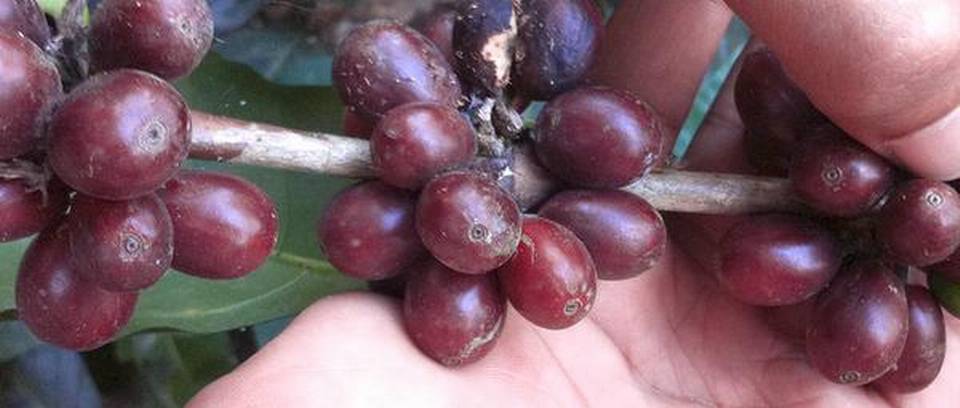
For the beleaguered growers of robusta coffees in Karnataka, the largest producer of the bean, the ongoing spell of rains has raised the hopes for next crop year starting October 2018.

The low pressure and depression off the West Coast has brought rains to several parts of the key coffee growing regions of Kodagu, Chikmagaluru and Hassan among other districts in Karnataka, which accounts for over 70 per cent of the coffee produced in the country.

Crucial showers

The pre-monsoon showers are crucial for blossoming of the coffee floral buds. The blossom showers and the subsequent backing showers are crucial for a good crop. Traditionally, the robusta and arabica areas should receive pre-monsoon showers by March 15 and April 15, respectively, for a good blossom, growers said.

“For the growers who had taken up irrigation through sprinklers for robustas from late February and where coffee has blossomed, the current spell of rains are acting as backing showers,” said HT Pramod, Chairman, Karnataka Planters’ Association. The rains will be of some help for the growers, who have harvested a poor robusta crop this year.

“The current spell of rains are good for the coffee sector as a whole. However, the rainfall has not been uniform and several robusta areas in Kodagu have not received the rains. The forecast is that it would rain for the next two days and we are hoping for some good showers,” said N Bose Mandanna, a grower in Suntikoppa.

Coffee growers have suffered from a poor crop and bearish price trend this year. Robusta growers have seen their crop shrink by up to 40 per cent in several areas on account of erratic rainfall last year.

source: http://www.thehindubusinessline.com / Business Line / Home> News> Specials / by The Hindu Bureau / Bengaluru – March 16th, 2018