Category Archives: Agriculture

Karnataka is now biggest pepper producer in the country

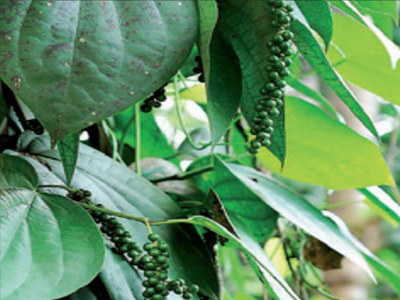
For the second year running, Karnataka has been named the country's largest pepper producer, accounting for 45% of the spice produced in India
For the second year running, Karnataka has been named the country’s largest pepper producer, accounting for 45% of the spice produced in India

Karnataka has overtaken Kerala and become the country’s leading pepper producer, accounting for 45% of the total production.The Centre’s Spices Board data puts Karnataka ahead of Kerala for the second year running. While Karnataka produced 33,000 metric tonnes of pepper in 2014-15, against Kerala’s 28,000MT, the margin widened in 2015-16 as Karnataka’s yield remained 33,000MT and Kerala’s fell to 26,000MT.

Kerala’s decline, to a great extent, has been because of its black pepper vines falling to quick wilt, a disease that causes sudden wilting, drying and death of the vines. In Wayanad district in Kerala, farmers lost almost 90% of their vines to the disease. The Spices Board has taken up extensive research to contain the pest. The sudden scourge, however, has turned the focus on pepper production in south Karnataka districts.

Pepper is grown in several parts of Karnataka, mainly in Chikkamagaluru, Shivamogga, Madikeri and Kodagu.

Alternative to areca, rubber

The state’s plantation growers have adopted the spice as an economically profitable alternative to areca (palm), coffee, rubber and coconut. The spice crop is grown in the middle of coffee plants, said Bose Mandanna, former vice-president of Coffee Board and a leading planter in Suntikoppa in Kodagu. At least 40 pepper vines are planted in an acre of robusta coffee plantation. This goes up to 80 vines if it is an arabica plantation, because these are grown at lower heights and produce less coffee per hectare.The harvest is done during February-March.

“Kodagu accounts for 25% of the pepper production in the country,” Mandanna said. An acre fetches 100kg to 150kg of pepper but with intensive cultivation, some growers get up to 500kg.

There is some difference in the production data of the government’s Spices Board and the National Commodity & Derivatives Exchange (NCDEX), but both sources indicate that Karnataka is beginning to unseat Kerala from the No.1 spot. NCDEX data shows Karnataka having a big lead over Kerala in 2014-15, marginally losing out to Kerala the following year, but regaining the lead in 2016-17.

NCDEX says India accounts for 17% of the world’s production of pepper, and is the second largest producer after Vietnam. The exchange relaunched its pepper contract on the platform in July, after about five years. In just three days, it saw a total volume of 807 tonnes of pepper, valued at Rs 38 crore, being traded.

Sarat Mulukutla, chief (commercial segment) of NCDEX, said considering the rise in pepper production in Karnataka, the exchange is launching a third delivery centre in Hassan. The other two are in Kochi and Kozhikode in Kerala.

Attractive price

Anish Madappa of T Shettigeri in south Kodagu said pepper production had grown in Karnataka for a decade due to the good price it fetches. Ten years ago, a kilo of pepper fetched Rs 260, now it is about Rs 680. Coffee planters have started growing pepper on poles with the help of biomass, leading to a jump in production. Drip and sprinkler irrigation have helped minimise water loss and increased the yield per acre. “Once a high rising (pepper) creeper is planted, it will provide yields for 35 to 50 years with little or no investment,” said Kannagi Sheshadri, a farmer cultivating plantation crops in Theerthhahalli taluk. “The plants need to be carefully treated to achieve maximum yield. I reaped 12 tonnes last year and hope to double it this year,” said Joney Mathew, a farmer with crops in Shivamogga and Chikkamagaluru districts.

“Pepper produced in Kodagu is of the best quality,” said Madappa. “This is because we normally use only Bordeaux spray, which contains lime and copper sulphate.” The spray helps protect the pepper vines from fungal problems and resists quick wilt disease.

source: http://www.timesofindia.indiatimes.com / The Times of India / News> City News> Bangalore News / by Shalina Pillai & G. Rajendra & CV Raghavendra Rao / TNN / September 26th, 2017
World’s costliest coffee made with cat-poop is now available in India. Here’s where you can get a hot cuppa

Take your love for cats to the next level by consuming their faeces. Yes, coffee made out of cat poop is now available in India.

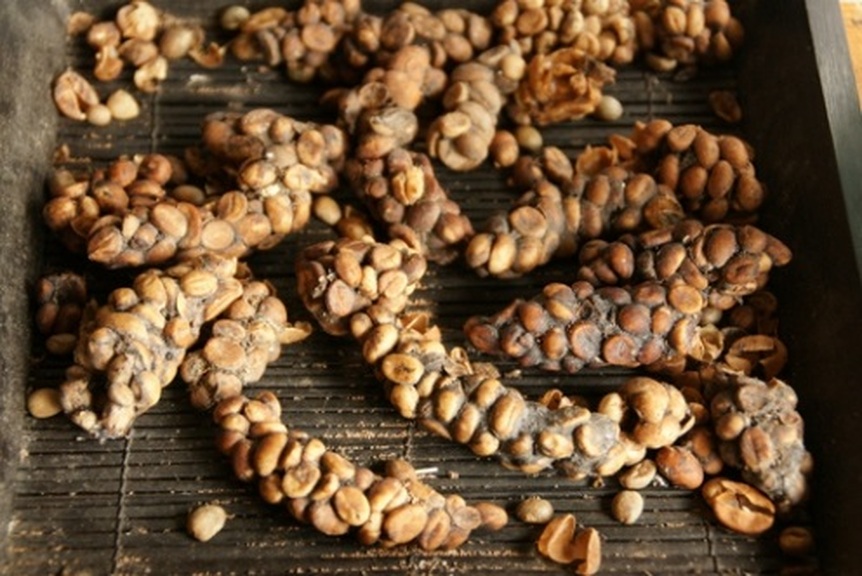
What happens when you take your love for cats to the next level? You consume their faeces. Yes, you read that right. Civet coffee is the most expensive coffee in the world and is made from the excreta of civet cats. India has recently delved into the production of this purr-fect coffee and we’re pretty excited. The production will start at a very small scale at Coorg in Karnataka. Being the third largest producer of coffee, we gotta try out everything that’s out there, right. If you’re wondering what this coffee looks like, here you go:

CivetKF18sept2017

Here’s the icky part: The coffee is made by getting the civet cat to ingest coffee beans. Then the cat’s poop is collected and processed. Why would someone do that, you ask? And WHY is this cat-poop thingy the most expensive coffee on the planet? Well, this coffee is considered more nutritious than other varieties of coffee and there are a lot of certifications involved too. The cat eats the flesh off of the coffee berries and not the actual bean plus the enzymes in the cat’s stomach enhance the bean flavour and that’s why this coffee is such a big hit all over the world!

A startup called Coorg Consolidated Commodities is producing this cat poop coffee and they’ve also decided to open up a café to serve this coffee locally! This coffee is presently being sold locally under the name ‘Ainmane’ and is available only at the Club Mahindra Resort at Madikeri for Rs 8,000 per kg.

source: http://www.inuth.com / inUth.com / Home> Lifestyle> Food / by Fukres / September 14th, 2017

Bengalureans plant groves to save Ghats

GrovesKF07sept2017

Bengaluru :

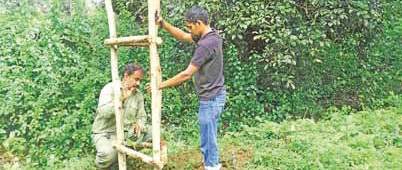
The Western Ghats has been plundered over the years, resulting also in progressively hotter summers in Bengaluru. While afforestation efforts to save the Ghats have been on for years, a team of passionate and dedicated Bengalureans is trying a different approach to save the many tree species. They are planting acres-wide groves in private and public lands that fall in the range, for now focussing on Coorg and Wayanad.

Meera, Rajesh, Sheshadri Ramaswamy, Uma, Anil Panolil Chirikandoth and Dhandapany collectively form Forest First Samithi (FFS) – a society that aims to engage and empower local communities in ecological conservation by educating them about endangered and endemic plant species. What started off as a team of four has today grown into a family with ten permanent members and over 30 volunteers.”FFS is trying to conserve endangered tree species by creating an eco-system where birds, small mammals and insects can also thrive,” says Meera, one of the founders of FFS, adding that the organization was started in 2008, and that most of their early years were spent on learning.

FFS’ vision for degraded lands in Kodagu started this May, and they have already spoken to local organizations and communities to get them on board. “Since we started work in Kodagu, we have already managed to add 35 species of endangered plants into the groves we worked on, and plan to touch 100 species,” she says, adding that the lands they are focusing on are public spaces ranging between 5 acres and 30 acres.

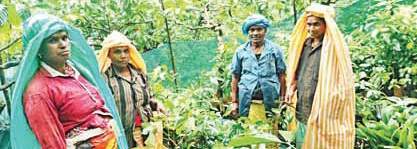
Workers in Wayanad grove  Pics courtesy: Meera Rajesh

How it all started

FFS started work in the biological hotspot that is Wayanad, where a lot of native tree species have been chopped to give way to silver oak, coffee and teak plantations. Meera says that unless one ventures deep into the forest, it is unlikely you’ll come across any traditional species. “During the summer months, we noticed how trees in Wayanad were being chopped at an alarming rate for timber. That’s when we decided to do something about it. We got involved in a lot of discussions with research organizations and experts on how to go about it, and also spoke to locals to get them involved,” she says.

Years of hard work and research resulted in the complete transformation of a private farm land in Wayanad, where a section of it was partitioned to create what is called a ‘farm grove’. This grove comprises endemic, endangered tree species, while the rest of the land can be used for economic purposes. By getting farmers and land owners involved in understanding how these endangered species will actually better their crops in terms of soil quality, water retention and pollination, FFS has managed to conserve 100 species of trees in Wayanad.

source: http://www.newindianexpress.com / The New Indian Express / Home> Cities> Bengaluru / by M Shriya Sharma / Express News Service / September 06th, 2017

Farmers’ collective sets up black pepper gene bank

The gene bank features 42 native varieties of black pepper

Kozhikode :

In a bid to arrest the declining fortunes of black pepper in its historical home turf, a farmers’ collective in Wayanad has set up a gene bank featuring 42 native varieties, including rare accessions, of the spice indigenous to Kerala. The Wayanad Social Service Society (WSSS) hopes to protect and popularize the native pepper varieties many of which have better disease resistance and drought tolerance but had been abandoned by farmers following the advent of high yielding hybrid varieties.

Apart from protecting the diversity of black pepper in the state, the field gene bank of pepper, spread around three acres at Mananthavady, would also make available planting material of native varieties to farmers.

The native pepper varieties which have been collected from Wayanad, Nilgiris, Coorg and other Malabar districts include the once widely cultivated Kalluvalli, Jeerakamundi, Neelamundi, Cherumaniyan, Karimunda, Ibe rian, among others. Farmers say that these varieties are drought tolerant when compared to hybrid varieties.

“Kerala had earned its global monopoly in pepper trade from ancient times onwards. Though the yield of native varieties was less, they were resistant to drought, pests and disease at tacks. The intensive and unscientific high input farming of hybrid varieties using chemical fertilizers and pesticides, have contributed to decimation of pepper cultivation in many regions of Malabar,” said director of WSSS Father John Choorappuzhayil.

He said that native pepper varieties for the gene bank were collected from remote tribal colonies apart from a few wild varieties of pepper from the forests.

“We are still in the process of identifying and adding more native varieties to the gene bank. We hope to collect around 60 native pepper varieties soon,” he added.

Dr N Anil Kumar, the director of the biodiversity programme of M S Swaminathan Research Foundation, said that native pepper varieties could vanish forever if left unprotected especi ally in the wake of increasing challenges posed by climatic variations in the region.

“The diversity of black pepper, which had its origins in the state, has immense genetic value. Also it is a historical and cultural treasure given its role in establishing the spice trade and pepper routes in medieval times originating from Kerala. Even the government should think of exploring the tourism potential offered by the on-farm assemblage of native pepper varieties,” he added.

Anil Kumar said that farmers who took up the cultivation of native pepper varieties should be provided incentives by the government.

“Also it would be prudent for farmers to set apart at least 10% of their land for cultivation of native varieties as is mandatory in some European countries,” he added.

source: http://www.timesofindia.indiatimes.com / The Times of India / News> City News> Kozhikode News / by K R Rajeev / TNN / May 30th, 2017

Augmenting Black Pepper Production – A Success Story From Kodagu

Published by ICAR-Indian Institute of Spices Research Kozhikode

An 11 minute documentary film on success of black pepper farmers in Kodagu district of Karnataka who has been successfully adopted the high production technologies developed by the Cardamom Research Centre of Indian Institute of Spices Research, Calicut in Kerala. The documentary is produced under the NAIP Sub Project, Mobilizing Mass Media Support for Sharing Agro-Information.

Category
People & Blogs
License
Standard YouTube License
Music
“Beckoning Hills” by Ronu Majumdar (iTunes)

source: http://www.youtube.com / by ICAR – Indian Institute of Spice Research / May 31st, 2011

Cauvery Tussle: Who’s siding with the Gods ?

As Tamil Nadu gets set to mark rare event, devotees in the state seek a share

When it comes to Cauvery, nothing is simple between Karnataka and Tamil Nadu. This time, it’s about the puja being offered to the river on the occasion of Cauvery Pushkara, an event that is marked once in 12 years. The religious ceremony is a puja offered to the river aimed at plentiful rainfall and prosperity. While the Karnataka government has not made any plans to celebrate the occasion, Tamil Nadu, at the behest of Kanchi Mutt, has decided to hold elaborate rituals at three places.

The Pushkara tradition is associated with 12 major rivers of India, and this year it is the Cauvery’s turn.

According to Vidwan Ganesh Galapati, the Kanchi mutt has not only written to the Tamil Nadu government but also planned major functions at several places, including Hogenakkal, Nerur, Trichy, Thiruvaiyaru, Kumbakonam, and Mayiladuthurai. While the rituals will be held between September 12 and 23, the pundits in Karnataka are not happy with the fact that there has been no communication from the Religious Endowment department of Karnataka on the celebrations.

“The government did Parjanya japa in the first week of June and similarly it should also take up Pushkara ritual that has come after 12 years. Cauvery has been the backbone for both states. We all know what it would mean to not have any water in the river. As the purpose of the ritual is to pray for bounteous rains and prosperity of the state, the government must initiate a programme to take up the rituals either at Talacauvery or T Narasipur,” said Galapati. Bhagandeshwara Temple’s executive officer Jagadish Kumar confirmed that, so far, no such orders have been issued. “If the government issues any such order, we will arrange for such rituals.”

About the Puja

Vidwan Ganesh Galapati explains: “Each river is associated with a zodiac sign. Depending on where Jupiter is positioned during the cycle, the puja is done. This time, Jupiter will enter Libra (Tula) sign from Virgo (Kanya) by first week of September, which will be regarded as Pushkara Kala. The rituals will not only purify the river but also bring prosperity,” he explained.

source: http://www.bangaloremirror.indiatimes.com / Bangalore Mirror / Home> Bengaluru> Others / by Niranjan Kaggere, Bangalore Mirror Bureau / July 03rd, 2017

Kodagu tops in implementation of podi file clearance, says minister

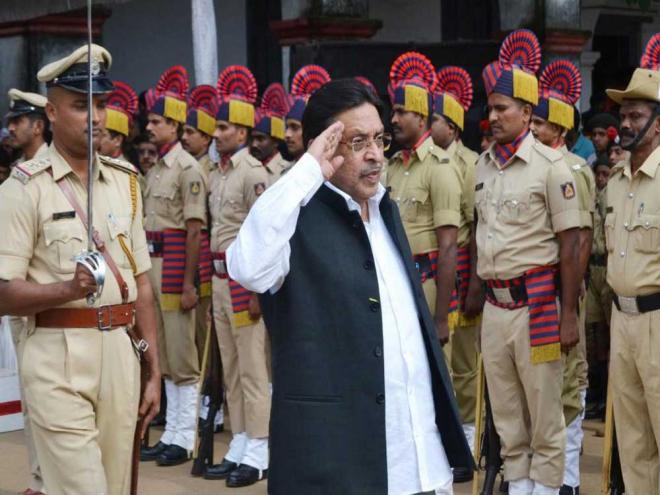
District In-charge Minister M R Seetharam receives guard of honour at the 71st Independence Day celebrations at Old Fort premises in Madikeri on Tuesday. Dh photo

District In-charge Minister M R Seetharam said that Kodagu district tops in the implementation of podi file clearance programme. Under the scheme, the officials have identified the exact boundary lines of land belonging to farmers and recorded them in relevant documents by awarding a new pahani in 115 villages of the district, for free of cost, he said.

Delivering the Independence Day address at the Old Fort premises in Madikeri on Tuesday, he said that 5,338 persons have benefited from the podi file-clearance programme of the government. This will be extended to all the villages in the district.

The minister said the concept of social justice and farsightedness is the guiding force behind the functioning of the State government. “We have to walk on the path laid down by our forefathers. By understanding the concept of freedom, we have to strive for the development of the country by shunning the differences,” he said.

Stating that the state government has taken up development works in the district in the last four-and-a-half years, Seetharam said that displaced Diddalli tribals have been rehabilitated near Kushalnagar. The title deeds will be distributed to them shortly. The department of Science and Technology will builtsub-regional science centre at the district headquarters at a cost of Rs 4 crore. It has been proposed to set up a mini planetarium, at a cost of Rs 5.75 crore in the district, he said.

Further, he said that Rs 50 crore has been released for repair of rural roads in the district. Under Kodagu package, 122 works will be taken up. A sum of Rs 38 crore has been released for the development of state highway and district roads.

He said the work on zilla panchayat administrative building is in progress and is likely to be completed by next June. In the backdrop of drought, the state government has waived Rs 151 crore loans borrowed by 34,000 farmers in the district.

SPC, Seva Dal, NCC, Scouts, Guides, students of General Thimmaiah School, Kodagu Vidyalaya, Rajeshwari Government PU College, GMP School, St Michael Convent, St Joseph Convent students took part in the march past. The students of St Joseph School, St Michael School, Rajeshwari School and Kendriya Vidyalaya presented cultural programmes.

P M Shailaja, Mohammed Rafeeq and M B Muneer, who have been selected for Jeevarakshaka Award were felicitated on the occasion.

Students collapse

Unable to bear the heat, two students collapsed during the march past. The students were given first-aid.

source: http://www.deccanherald.com / Deccan Herald / Home> District / DH News Service, Madikeri / August 16th, 2017

Go gaga over crabs, bamboo shoots

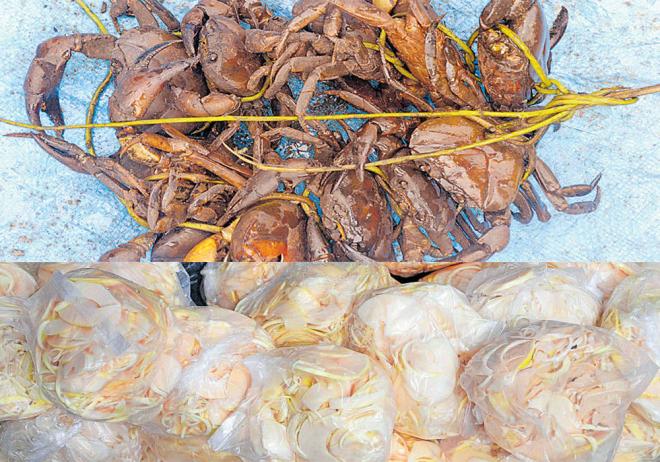
Crabs being sold near Madikeri KSRTC bus stand and Bamboo shoots laid out for sale. DH Photos

It’s that time of the year when the sale of crabs and bamboo shoots in Madikeri goes up. Monsoon is indeed an ideal time to indulge in crabs as they are considered good for generating heat in the body which helps in braving the chill in the air.

To keep oneself warm, people in Kodagu adjust their food habits during monsoon. Likewise, the roadsides in the town are lined up with crabs and bamboo shoots.

Earlier, crabs were available in plenty at paddy fields and water bodies but in spite of an increase in demand, crab sellers have been on the decline. A deficit in rainfall has affected the availability of crabs.

“Demand for crabs increases in the month of Aashada. Since paddy fields have declined in the district and many have been converted into homestays, I collect crabs from Harangi reservoir, Periyapatna, HD Kote and Beemanahalli and bring it to Madikeri for sale. The price of a kg of crab is Rs 200 while a bundle of crab (12 crabs in a bundle) costs Rs 250. A pack of bamboo shoots is sold for Rs 50,” H L Kumar, a seller from Indira Nagara told DH.

Venu said that, “Earlier, crabs were available in the shandy market but with chemical fertilisers and insecticides being sprayed in paddy fields, the number of crabs have declined,” he said. Venu signs off by stating that crabs are delicious to savour as crab fry instead of curry.

source: http://www.deccanherald.com / Deccan Herald / Home> District / DH News Service, Madikeri / July 22nd, 2017

Harangi reaches full reservoir level; Tungabhadra receives good inflow

Hadinarukallu Mantap and the bathing ghat are partially submerged in swollen Kapila river following the release of water from Kabini reservoir in Nanjangud taluk on Sunday. dh photo

Reservoirs in the state continued to receive good volume of water despite a lull in monsoon showers. The inflow to Tungabhadra reservoir has increased following the release of water from Tunga dam in Shivamogga district.

The reservoir near Hosapete has received a staggering 8 tmcft of water since Friday. The storage level in the reservoir on Sunday stood at 26.211 tmcft. It was 18.305 tmcft on Friday. The inflow was 51,162 cusecs while the outflow was 2,359 cusec.

Harangi reservoir in Kodagu district is only 2 feet short of reaching the full reservoir level (FRL). The water level at Harangi on Sunday was 2,857.21 feet while the FRL is 2,859 feet.
About 1,200 cusecs water from the reservoir was released into the river.

Minor Irrigation, Superintending Engineer, M N Chandrakumar, said, “ Based on the volume of inflow to the reservoir, water would be released into the river in phases.

A meeting of the irrigation consultation committee will be held in Bengaluru on July 25. After the meeting, the decision will be taken to release water through canals for agricultural activities.”

Keeping in mind the safety of the reservoir, the water level would be maintained at 2,857 feet, said Executive Engineer S C Rangaswamy.

At present, the Harangi reservoir has a storage of 7.89 tmcft. The reservoir had reached FRL last year on July 10. The reservoir irrigates 1,34,895 acre farm land in Kodagu district and Periyapatna, Hunsur, KR Nagar in Mysuru district and Arkalgud in Hassan district.

Meanwhile, the six low-laying barrages-cum-bridges across Krishna and its tributaries in Chikkodi taluk in Belagavi district continued to remain under water despite a lull in showers in Maharashtra. Krishna river has recorded an inflow of 1.71 lakh cusecs on Sunday while its tributary Malaprabha received 20,113 cusecs. Doodhganga and Vedganga are flowing in full spate.

source: http://www.deccanherald.com / Deccan Herald / Home> State / DH News Service, Bengaluru / July 24th, 2017

Govt, spiritual outfits begin reviving banks of Cauvery

The Cauvery river, considered the state's lifeline, has shrunk into a narrow strip today
The Cauvery river, considered the state’s lifeline, has shrunk into a narrow strip today

Bengaluru :

The first drought reported in the recent history of Kodagu district, the birthplace of river Cauvery, seems to have woken up the state government, spiritual organizations and environmentalists.

In what is believed to be a first-of-its-kind initiative, they have joined hands to take up conservation and management to rejuvenate and restore the river, considered the state’s lifeline, to its former glory. The plan is to restore the flora and fauna of the river’s tributaries in Kodagu with native trees, shrubs and flowers, besides controlling erosion, curbing water-intensive crops like paddy and restricting sand mining in the waterbody.

“In association with the Art of Living and Kodagu district administration, we have started a five-year programme for the restoration of the river which has shrunk into a narrow strip over the years due to poor monsoon and unrestricted sand mining activities,” said C G Kushalappa, dean of College of Social forestry, Ponnampet, Kodagu, which is attached to University of Agricultural and Horticultural Sciences, Shivamogga.

To start with, Kushalappa said they have chosen a 1km stretch on the banks of river Lakshmanatirtha, a major tributary of Cauvery in Kodagu, starting from Nittur village towards Srimangala in Virajpet taluk. Depending on the success of this pilot project, it will be gradually extended to other parts of Kodagu where the river flows.

Kushalappa said conservation work would be taken up across 20 metres on both sides of Lakshmanatirtha for five years. “As part of the programme, we’ll visit farmers/planters and request them to give up paddy cultivation close to the river by offering them monetary incentives. They’ll also be encouraged to go for horticulture crops,” he added.

To ensure a free-flowing river, an action plan has been charted out that includes curbing soil erosion and pollution, planting trees and shrubs of local varieties that existed close to the river since ages and curbing sand mining and fishing activities. “We have to treat different areas differently. While in some areas, rebuilding bunds will be the priority, in others, plantation, including bamboo and pongamia pinnata (honge tree), may be needed. While there are areas where we need to stop pesticides from entering the water, others have issues of encroachment,” said Guddappa M Devagiri, who is overseeing the drive.

That’s not all. Sadhguru Jaggi Vasudev’s Tamil Nadu-based Isha Foundation, which was part of an initiative by the Madhya Pradesh government to restore river Narmada, is reportedly is in talks with the government to launch a similar initiative in Karnataka, said a senior official of Kodagu Zilla panchayat.

He said the foundation plans to take up a massive tree plantation drive on the banks of Cauvery from Bhagamandala, the confluence of three rivers (Cauvery, Kanika and the Sujyothithe) in Kodagu to Krishnaraja Sagar reservoir in Mandya by involving volunteers. “This project would also involve cooperation from people living in nearby areas, saints and ashrams that have been active in Narmada conservation and all those who care for river conservation and management,” he added.

source: http://www.timesofindia.indiatimes.com / The Times of India / News> City News> Bangalore News / by ManuAiyappa Kanathanada / TNN / July 13th, 2017