The state government on Tuesday took a decision to survey the disputed forest land, wherein the Jenu Kuruba tribals of Diddahalli had gone on an agitation, in Madikeri, Kodagu.
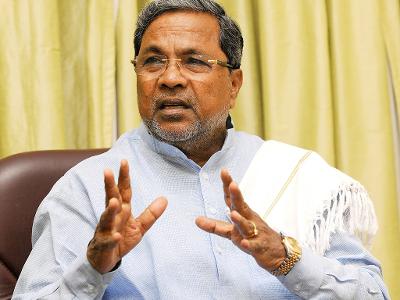
After an hour long meeting with chief minister Siddaramaiah, forest minister B Ramanath Rai, social welfare minister H Anjaneya, revenue minister Kagodu Thimmappa said the government has decided to verify the land records of Diddahalli before taking a final decision.
“After a detailed discussion, the government has decided to verify the land records of Diddahalli on whether the land is forest land or revenue land. If we verify the land records as being forest land, then we will make all efforts to provide them suitable rehabilitation area with amenities. But if the land records show that it is revenue land, then within eight days we will ensure that they have the title deeds for that land,” said Thimmappa.
The revenue minister said he will be personally camping in Kodagu on April 16 or 17 for resolving the issue.
Thimmappa said the deliberation was held with all stakeholders and that valuable inputs were shared on the case from all parties.
“The government is keen on resolving the issue and we will try to do it at the earliest,” he said.
In December 2016, the Jenu Kurubas of Madikeri who were working in the nearby coffee plantations had been agitating against the eviction by forest department and local police citing it was forest land.
Later that month, the Bettale Seve (nude protest) by a tribal woman in Diddahalli and the alleged insensitivity shown by cops in trying to disrupt the protest held by members of Jenu Kuruba (a tribe) had drawn sympathy from several quarters.
This being the last year before elections, this looter government will do anything to get the votes.
The Diddahalli faceoff had put the government in a spot, with members of civil society strongly criticizing the move.
On Monday, former MLC A K Subbaiah who spoke on behalf of the civil society, which has been seeking respite for the agitators, welcomed the government decision and expressed his hope that the state will give justice to the tribals.
source: http://www.timesofindia.indiatimes.com / The Times of India / News> City News> Bangalore News / by Sandeep Moudgal / TNN / April 11th, 2017
Inbreeding among trees and higher rates of offspring deaths may see some tree species in isolated forest patches die out slowly. In perhaps the first elaborate study of its kind in the Western Ghats, a team of researchers from across the globe has found that breaking up forests by even 200 metres can lead to the gradual death of tree species.
The results of the study — published recently in the journal New Phytologist — are disconcerting and show that less than 10% of germinated seeds survive in such patches owing to genetic faults, when compared to over 50% in contiguous forests.
Researchers from ETH Zurich in Switzerland, University of Aberdeen in the United Kingdom, and College of Forestry in Ponnampet, Kodagu, along with Ashoka Trust for Research in Ecology and the Environment (ATREE) and the University of Agricultural Sciences — both in Bengaluru — studied the seed dispersal patterns of Dysoxylum malabaricum (white cedar) which harbours the Malabar grey hornbill. More than 35 sacred groves of Kodagu, protected and worshipped by the local community, were studied across a 216 sq.km landscape where these forest patches are islands surrounded by paddy or coffee plantations.
The team used a combination of GPS and genotyping (DNA sequencing) to find out the lineage of the offspring in these isolated forests. Of the 321 trees that were sequenced, just 0.3% had emerged from “parents” that were in different patches. A staggering 267 trees (83%) had both their “parents” from the same forest patch.
“The seedlings are often mutated and completely devoid of chlorophyll (that is, their leaves have no colour), and these die out in a few months. This has affected forest regeneration,” said G. Ravikanth from ATREE.
The researchers also found that 95% of the seeds were dispersed within 200 m of the parent tree, but the sacred groves are usually situated at least 400 m and even 24.5 km apart; this leaves inbreeding as the only option. “The growth of areca and coffee plantations over three decades has isolated these forests and we are now seeing the effects of inbreeding depression. When the older trees die, we will start to see these forests disappear entirely,” said Mr. Ravikanth.
C.G. Kushalappa, Dean of the College of Forestry, said that while wind-dispersed species could perhaps overcome the gaps in forests, species that rely on birds or insects for pollination will struggle to get genetic diversity to survive.
Re-establishing tree corridors
The disappearance of plant species owing to inbreeding can be contained either through artificial dispersal of seeds or by setting up tree corridors, say researchers.
The research comes at a time when the lush forests of the Western Ghats are fragmented by reservoirs, hydroelectric projects, large highways, industries and plantations. At present, the team is researching on dispersal rates of wild nutmeg (an important tree for the hornbill population), the wild Amla tree in M.M. Hills and B.R.T. Reserve, and other plants in order to study the effect of fragmentation.
While the concept of corridors for elephants and tigers is well established in the country, the need for a similar approach to ensure constant gene flow for trees has been ignored. “We are trying to establish tree corridors to connect broken-up patches. Near Tiruchirappalli, we are restoring the connections of Myristica swamps. These corridors will provide genetic flow between forest patches,” said G. Ravikanth of the Ashoka Trust for Research in Ecology and the Environment.
In terms of conservation, the disappearance of plants and trees will have an adverse effect on animals that are symbiotically linked. For instance, hornbills and butterflies prefer only certain species of trees or shrubs.
source: http://www.thehindu.com / The Hindu / Home> News> States> Karnataka / by Mohit M Rao / Bengaluru – April 03rd, 2017
by : Mandepanda B Appaya was a founder and a former chairman of the KPA
I am perhaps one of the lucky planters to have participated at the inauguration of the KPA and still living. The function held at the Sports Club, Mysore was inaugurated by the late Maharaja.
Late Mr. CL Machia who was my boss, as managing director of Coffee Lands Ltd, had invited me to the function. He read a long report emphasizing the need for the association [KPA].
The late Mr. M. Appaya was seated beside the Maharaja.
As I was the then manager of the Hunsur Coffee Curing Works owned by Coffee Lands, Mr. Machia had asked me to attend the function. Here I was introduced to Mr. Lakshmana Gowda and a few other planters. My association with the KPA began when I had to leave the Hunsur Coffee Works after its sale to its present owners. I then started taking an interest in the KPA and was elected from Kodagu as member very soon, I became the vice chairman when the Late Mr. AC Shivegowda was the chairman. We had a lot of problems at the KPA Level. The Land Ceiling Act was published. Although alI agricultural lands, including coffee, tea and rubber were exempt, if anyone had any other Land, both together could not exceed 48 acres. In other words, our paddy, arecanut plantations got a severe blow. Both, Late Shivegowda and I had to toil and we stayed in Bangalore for 27 days at a stretch to solve the issue.
We met almost all members of the Assembly pleading for exemption for one ceiling area of crops excluding coffee. We had an uphill task.
Fortunately, D Devaraj Urs, the then chief minister of Karnataka, who was a good friend from my days at Hunsur, helped us a lot by convincing the Congress party our case. Thus, we were allowed one ceiling area of other crops much against the will of the then revenue minister.
Mr. UK Lakshmana Gowda, being an MP was helpful from the beginning. He helped us not only for getting the ceiling area, but also with wealth tax.
It cannot be emphasized less that he had a big hand in helping us. He was friendly with all MPs, which helped us in securing wealth tax exemptions on plantations. Mr. FM Khan, MP, has also helped us get wealth tax exemption.
I was the chairman of the KPA in 1973.
My association with the Coffee Board began in 1971. I was a member of the Coffee Board for four terms, though not at one stretch. During 1971 there was a shortage of curing works as the business was not attractive. A committee was formed to visit all the curing works and know of their expansion plans. Mr. PG Gurger and myself visited all the curing works in the state and submitted a report to the chairman. We were both traveling from Hassan to Mangalore. Enroute we heard of the surrender of Pakistan after the Bangladesh war. GeneraI Manekshaw was then made Field Marshal for the success.
Mr. UK Lakshmana Gowda who I used to call Bhishma Pitama, was of great help in the Coffee Board. When we used to have heated arguments on certain issues with the intelligent Kerala members, it was Mr. UK Lakshmana Gowda who used his knowledge and experience to solve the issues. Late Narasimha Rao, IAS, once sent me to Delhi to negotiate with Russian representatives regarding discount on coffee sold to them.
During 1988-89′ both Mr. Lakshmana Gowda and l went to Moscow for that year’s sale to the erstwhile USSR. We had to go during December and stayed for eight days. Finally we agreed to allow 38 percent discount on international prices. The then chairman of the board, Late SK Warrier had come with us.
Normally, we sold 50,000 tones to the USSR. But every year the discount went up. At New Delhi we decided to allow 37 percent discount on the International prices.
We had no choice as we had to sell one-third to the quota countries and one-third for internal consumption and one-third for non-quota countries. For sales in the internal market, the government fixed the minimum price. Thus planters suffered.
To add to their woes we had to pay 102 percent purchase tax since we had lost the case in the Supreme Court. lt was kept pending for 10 years before the retiring chief justice gave the decision on the last day of his sitting. Karnataka government, in addition to this, levied a 15 percent sales tax on every bean sold by the growers.
We met even Rajiv Gandhi in Bangalore and made representations to him. He asked us to meet the adviser to the governor as there was no government then. Mr.Rangarajan heard us patiently for 45 minutes but gave no decision. Finally there was an agitation for the abolition of pooled marketing by the growers and they succeeded and now free trade of coffee is allowed.
I became chairman of UPASI in 1983. Mr. Tika Bedi insisted l should take this position since l did not accept it due to certain physical constraints. Anyway, I served the UPASI in the committees from 1972 to 1983.
So my career in the KPA, Coffee Board ended in 1983. I served the Mysore Race Club for over 15 years which celebrated the centenary in 1992 with an eye hospital for the poor and the needy as a centenary project. I was the chairman of the Race Club from 1988-92.
I am now over 87 years old, yet take keen interest in many of the activities I used to participate in.
source: http://www.kpa.org.in / Karnataka Planters’ Association / Home> About Us> History / by Mandepanda B. Appaya
Not only do they handle business in acres, but also take utmost care to manage the crop sustainably. Care T Acres, a private initiative begun in 1998, has been helping coffee planters in Kodagu manage their properties. This initiative has become a boon to many planters who are unable to look after their estate.
“Care T Acres has stopped planters from selling their property and moving away from Kodagu,” says Nanjappa Kuttaiah, a coffee grower. With eight partners — Bose Mandanna, N K Chinnappa, N P Machaya, K M Cariappa, K Ajit Appachu, Aruna Biddappa, B Ram Bopaiah and K M Appaiah — the team comprises competitive planters with a combined experience of over 300 years!
The beginnings
Kodagu, the coffee haven that contributes to over 40% of India’s coffee production, has a lot of estate owners staying overseas. While selling the property has sentimental issues, maintaining them from overseas is illogical. This is where Care T Acres steps in, with the role of prime mover being Managing Director, N K Chinnappa. So, how did ‘Care T Acres’ come into existence? Among the founding members, Late Arun Bidappa was a well-known coffee trader. However, he needed expertise in maintaining his estate, which he developed with the help of expert planter Bose Mandanna.
Arun’s estate was the first property that received tendering from ‘Care T Acres’. “He (Arun Bidappa) said, ‘I help you trade your coffee, why don’t you help me look after my estate?’” recalls Bose. This conversation got the best planter friends together and thus began ‘Care T Acres’ with a maxim that “no one should neglect or sell their estate in Kodagu,” as Bose states.
The initiative is currently managing 600 acres, all under the constant supervision of Chinnappa — who grooms them like brides-to-be. The bottle green coffee plants nurtured by him are shaped like woven skirts. “Chinnappa’s way of raising and nurturing estates is a win-win proposition,” notes Nanjappa.
Professional care & support
The service (for estates that are more than 30 acres) begins with the client signing a five-year contract. Once done, the company starts looking after the ailing estates and fosters them like their own. When a grower approaches them, the team members visit the estate and analyse it. Then, the operations required to revive the estate are prioritised and the ‘surgery’ begins. “The person who can take care of his estate very well will not come to us. It is always the owner unable to manage his property who comes to us. In many cases, the grower would be suffering financial loss. So, the foremost ‘operation’ would be to clear the debt,” explains Chinnappa.
The team acts not just like a doctor but also that of an antibiotic as the second step towards betterment would be to develop proper infrastructure. Drying yards, labour line, proper cut roads, pulping yard and irrigation facility are developed to make the estates sustainable and self-reliant. Simultaneously, the grooming session begins — coffee plants are pruned, nourished, irrigated and shades are regulated to produce better yield.
With constant efforts, the estate breathes a new life. While they work for remuneration in the first two years, they sign up for a 30% profit from the third year. “I might be getting 70% of the profit, but that is equal to 150% of what I was earning before. Also, you get the profit without having the headache of managing it,” opines Nanjappa.
Another grower, Dalia Chengapa, has her estate being cared for by the company since 2007. She recalls how the estate owned by her father, Late A T Chengapa, lost its focus after he fell ill. “My father was a wonderful planter and he looked after the estate properly. But after his health deteriorated, the estate needed support. My sister Ramona and I stayed in different cities, and we did not have the practical knowledge for growing coffee. My father was unable to guide us as he was unwell. That is when we approached ‘Care T Acres’,” she recalls. While her estate incurred loss before the team took over, it is now making good profit.
Nanjappa’s story goes on the same lines. His mother passed on and the 45- acre estate in Suntikoppa that she looked after relied on him for tending. He had known that ‘Care T Acres’ turned the estates around and yearned for their support; eventually the deal was sealed. “Eight competitive planters, financially trustworthy and among the best planters in the district took over my estate and it was a blessing at the right time,” he says. Chinnappa started the work here and looked at two primary problems. Firstly, he pruned the coffee plants in a better way — there were more branches and nodes earlier, which reduced the picking cost. “When pruning is done properly, the plant flows down and it becomes easy to pick berries. The yield also increases,” explains Chinnappa. Secondly, the roads were laid for convenient movement.
The estates cared for by the team improve their pepper yield as well. With a systematic auction and tendering system in place, planters get an optimal price for pepper. The team has taken up risks as challenges and revived many estates. However, Mandanna explains, “While we have gone beyond limits and put money from our pockets to revive the estates, there are instances where we have rejected a few. These estates are uncultivable and there would be no absolute hope for coffee.” Chinnappa adds, “It is not just about profits but it is about leaving a legacy behind.”
One can contact the team at rkpagastya@gmail.com.
source: http://www.deccanherald.com / Deccan Herald / Home> Supplements> Spectrum / Prajna GR / November 22nd, 2016
At a time when ground water table is depleting in Kodagu, Pradhan Mantri Krishi Sinchayee Yojane will be a boon for conserving the ground water. The Agriculture department has been getting ready to conserve water in 25 gram panchayats.
With the recede in rainfall, the ground water table in the district has depleted drastically. Water would be available by digging 100 feet, 10 years ago. Now, even after sinking for 300 to 400 feet, water is not available in the district.
Though Pradhan Mantri Krishi Sinchayee Yojane came into effect last year, the department has decided to implement it effectively during the current year. The Union government, based on satellite images, has identified a few areas in Western Ghats where water conservation activities can be taken up. Accordingly, percolation pits will be dug in 81 villages in these gram panchayats.
The beneficiaries whose land is identified in the satellite image will get Rs 60,000. The amount could be used for sinking the pits, removing the silt of the pit, development of the pit in the next five years, said an official from Agriculture department.
To increase the ground water table, even ‘Thottilu Gundi’ will be constructed in coffee estates. The work on construction of vented dams, planting of silver trees would be taken up under the scheme. Kodagu district would get a sum of Rs 3.17 crore for five years. If the scheme is implemented effectively, then water table would increase in the district, said officials.
Under the second phase, 11 villages of three gram panchayats in Madikeri taluk, the percolation pits have already been dug. With this, the recharge of ground water table would be taken up during the monsoon. 15 metre long, 15 metre wide and three metre-deep pits have been dug.
In the third phase, 10 gram panchayats in Somwarpet taluk have been selected. In 2018, nine gram panchayats in Virajpet and five gram panchayats in Madikeri will be included.
Agriculture department officer Robert told DH: “Decline in rainfall has depleted ground water table. It is a challenge for the growers in Malnad to safeguard the long term crops. Percolation pits help check erosion of fertile soil. “The department will not select the farmers. Based on the satellite image, the survey number farmer will be the beneficiary.”
DH News Service
source: http://www.deccanherald.com / Deccan Herald / Home> District / by Aditya K A / DHNS- Madikeri, January 28th, 2017
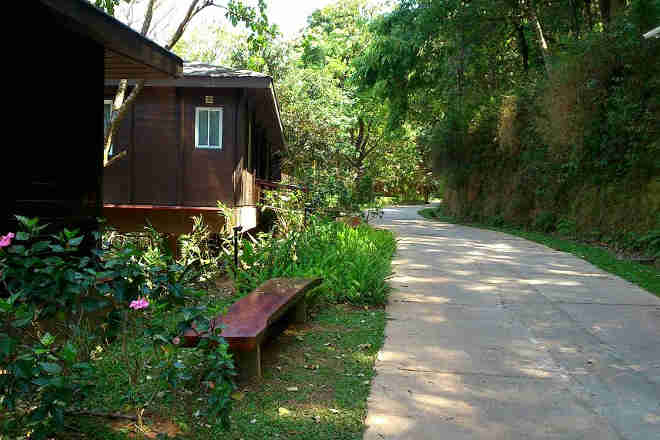
Ibnii Coorg is nestled on 120 acres of which 50 acres is being used for coffee plantation
Ibnii Coorg, an eco luxe resort located in Coorg (Kodagu) district of Karnataka, has become the first hospitality project in India to receive the IGBC Platinum certification for energy and resource-efficient, sustainable, cost-effective buildings.
source: http://www.financialexpress.com / The Financial Express / Home> Lifestyle> Travel Tourism / by Steena Joy, Madikeri / February 21st, 2017
Ibnii Coorg, an eco luxe resort located in Coorg (Kodagu) district of Karnataka, has become the first hospitality project in India to receive the IGBC Platinum certification for energy and resource-efficient, sustainable, cost-effective buildings that impose minimal stress on the environment. The resort is also gearing to get its LEED (Leadership in Energy & Environmental Design) certification by April.
The Indian Green Building Council (IGBC), part of the Confederation of Indian Industry (CII) was formed in the year 2001.The rating systems are based on the five elements of nature (Panchabhutas) and are applicable to all five climatic zones of the country.
Ibnii Coorg is nestled on 120 acres of which 50 acres is being used for coffee plantation. The resort has just finished with its first coffee harvest. Speaking exclusively to FE Online, Dr Sherry Sebastian, director, Ibnii Coorg, informed, “In the last 60 years, no pesticides have been used on this land. So it is an ecological and biodiversity hotspot. Very few trees were cut during construction of Ibnii Coorg. We are also very actively involved in rainwater harvesting as we have three large water catchment areas. We harvest nearly five million litres of water every year. Apart from a waste management plant, we have a state-of-the-art Sewage Treatment Plant (STP) too to further minimise our dependency on fresh water. The treated water is used for landscaping and other utilities. Ibnii is also a vehicle free zone with only electric buggies used for internal movements. Guests are encouraged to walk around the resort.”
The resort also has introduced other ecological initiatives such as an inhouse tailoring facility where many articles are created out of recycled materials like shopping bags out of used cement sacks and bubble wraps; use of steel fruit and vegetable crates in the kitchens instead of the conventional plastic crates; use of drop pops in the restaurants in place of finger bowls for washing hands. The resort is also part of a new project with Madikeri town for making a road using recycled plastic from the resort.
Ibnii Coorg also has TieCop, its Environment Conservation Programme.
Dr Sebastian added, “We also want our supply chain to be eco sensitive – so we source only from vendors who have the same sensitivity towards the environment. Presently, we source the coffee for the resort from Halli Berri, a fourth generation all woman owned concern coffee estate in Chikmagalur with a similar vision towards sustainability, but soon we hope to be able to use our own coffee. We have a vegetable garden where we source most of the vegetables for our salads. Another bigger vegetable garden is being created which is expected to give us around 14 tonnes of vegetables.”
The resort has a robust waste segregation system where the organic waste is used in a vermicompost to generate high-yield, organic manure which is in turn used in the green house to grow fresh organic vegetables and fruits.
source: http://www.financialexpress.com / The Financial Express / Home> LifeStyle> Travel Tourism / by Steena Joy ,Financial Express, B2B / Madikeri – February 21st, 2017
Some of the coffee tasted bland, others were a bit over-the-board bitter. The 33-year-old Arshiya Bose, social entrepreneur and owner of Black Baza Coffee who was in Kochi recently to hold a coffee-tasting session, says that there is no short cut to making a good cuppa of coffee.
So, Arshiya takes her students on a trip on the perfect ways of making coffee. At the end of the session, she introduces them to the Black Baza Coffee, which is warm and has the lure of a refreshing evening drink. What’s unique with this coffee is not only the way it is processed, but that the beans are grown in the most fertile of soils in India – right next to the Kodagu and B R Hills in Karnataka, where the river Cauvery flows in all its glory.
Karnataka-based Arshiya Bose is currently on a mission to promote this coffee, which is grown under large tree canopies, right next to the river beds. According to her, Indians have forgotten the taste of original and eco-friendly coffee, and has hence taken it upon herself to bring back the lost glory.
“Indians drank one of the most unique coffees in the world. In the past, the coffee beans, especially in Karnataka, were grown under forest covers and under shades of trees.
However, constant deforestisation forced our farmers to grow coffee directly under the sunlight,” she said. According to her, this method was detrimental to the environment (as it encouraged deforestisation), and also led to early maturation of the coffee beans, which supposedly also lead to a compromise in quality and taste.
For this, Arshiya got in touch with farmers who were growing coffee beans in Karnataka.
“ This is how we zoomed in on Kodagu and B R Hills. We said we would buy their produce and sell it across the country, if they were willing to heed to the eco-friendly norms. They agreed. So, they started growing coffee under available trees and were given the responsibiltiy to look after it too,” says Arshiya.
Right now, Arshiya’s Black Baza Coffee, named after the small bird of prey found in heavenly dense forests of South and South East Asia, is sold across the country. In Kochi, it is available at Pepper House Cafe.
source: http://www.newindianexpress.com / The New Indian Express / Home> Cities> Kochi / by Princy Alexander / Express News Service / February 05th, 2017
Kodagu, the coffee land of Karnataka, is also known as a major producer of black pepper. Many pepper growers here have opted for innovative methods to get a good and sustainable yield.
One such grower is M G Hoysala, a former banker. Being the son of a farmer, he got exposed to farming at a very young age. After studies, he worked in the banking sector for five years before quitting his job to take up farming.
Once back to farming, Hoysala started following traditional cultivation methods in his coffee plantation with black pepper as the parallel crop.
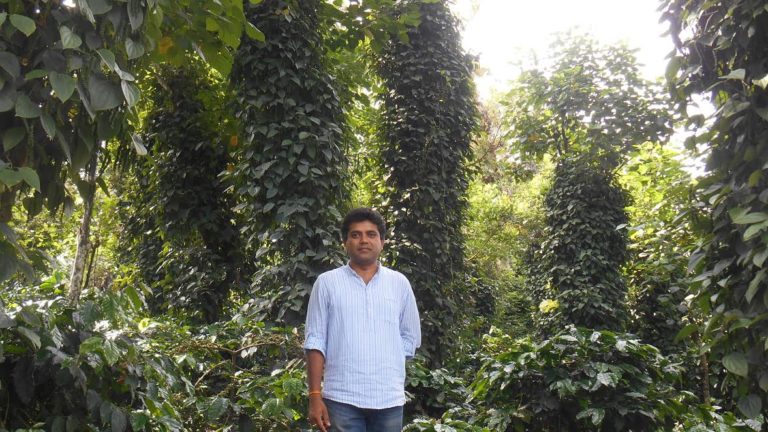
In his 40-acre coffee estate, Arabica coffee is planted at a six-by-six feet spacing in about 30 acres. Since Arabica coffee demands a comparatively higher shade, indigenous trees are grown in the estate. Black pepper vines trail on these plants. Dadap trees with restricted height and silver oak trees are also grown as shade trees.
However, lack of experience and guidance made Hoysala struggle in the initial years.
Meticulous planning
Subsequently, Hoysala came in contact with the Indian Institute of Spices
Research when he participated in a seminar organised by its regional centre in Madikeri, Kodagu. Here, he was able to gather information on black pepper, its production techniques, and know about the processing technologies developed by the institute.
Afterwards, he made it a point to visit the regional centre regularly and interact with the scientists to get more information about the crop. Now he feels that shade regulation, proper irrigation and integrated management practices are key to sustain both coffee and pepper crops. “Though I use both chemical and organic fertilisers to ensure proper growth of the plants, I strictly avoid chemical pesticides and insectides. One can avoid pests and diseases through efficient irrigation and proper nutrient management,” he says.
Even though Hoysala has sufficient water to irrigate his estate, he has stressed on water conservation by constructing water harvesting structures like farm ponds. In some parts of the estate, pits of size 10x1x1.5 feet have been made to check surface runoff, and enrich soil moisture. “These water management practices are not new to estates in Kodagu. With the changing weather patterns, following these traditional techniques becomes more important now than before,” he says.
“By adopting improved technologies and sustainable practices, we are able to increase the pepper yield of the estate from six tonnes to 12 tonnes within a span of five years,” he reveals. Though it is difficult to double the production in such a short span, proper planning and implementation has helped Hoysala achieve this feat.
The black pepper vines are irrigated with 70-100 litres of water in every round (in this estate, it takes three weeks to complete one round), depending on the canopy size, from March to June. Currently, the management of coffee and black pepper in one acre costs about Rs 85,000 per year for Hoysala. In turn, Hoysala earns a net profit of Rs one lakh per annum per acre from these crops.
Encouraged by the success of pepper crop in 30 acres, Hoysala has transformed 10 acres ginger cultivated area into a high-density black pepper plot with silver oak as the standard tree. Here, Robusta coffee is the parallel crop.
Hoysala’s innovative and sustainable methods have inspired many other
pepper growers in the region. Meticulous planning, flawless implementation of agricultural practices, and efficient labour management coupled with relentless efforts to improve production have made agriculture sustainable and helped improve the yield.
To know more about his work, one can contact
M G Hoysala at hoysala.mg@gmail.com or on 9449682430.
Coffee growers in Karnataka, who went through a rough patch recently, are happy, thanks to a huge drop in production and supply from major coffee-growing countries in the global market.
Growers in Kodagu, Chikkamagaluru and parts of Hassan are upbeat after coffee prices hit a five-year high despite the state registering a low yield this time due to severe drought and demonetization.
According to a senior official in the coffee board, Bengaluru, severe drought in major coffee-producing countries like Brazil, Vietnam and Indonesia has resulted in poor yield and quality issues. As a result, there’s a great demand for Indian coffee, 70% of which is produced in Karnataka.
According to Kabir, a leading coffee dealer in Madikeri, Kodagu, coffee prices are rising for the past fortnight and the trend is expected to continue till April. A 50-kg bag of Robusta variety, produced mostly in the state, costs Rs 4,000 while Arabica costs Rs 9,600. Last year, the average price of Robusta was Rs 3,000 and Arabica Rs 4,600.
The prices have picked up in the retail market too after remaining at a low for the past five years. The prices range between Rs 150 and Rs 200 a kg.
Coffee board former vice-chairman Sannuvanda M. Kaverappa added that a shortfall of 2.08 million bag of 60 kgs each in the international market this year will lead to a rise in coffee prices in India.
“About 70% of Indian coffee will be exported and the rest will meet the domestic demand,” he added.
B S Jairam, president, Karnataka Grower’s Federation (KGF), said the Robusta yield has been good this season in the state compared to Arabica.
“Most growers are in distress owing to poor yield. The drought, labour crisis and demonetization have virtually pushed growers to the wall. The marginal current price rise will definitely not compensate for losses over the years,” said Karnataka Planters’ Association chairman M M Chengappa.
(With inputs from G Rajendra in Madikeri)
source: http://www.timesofindia.indiatimes.com / The Times of India / News> City News> Bangalore News / by Manu Aiyappa Kanathanda, TNN / January 26th, 2017
Struggling to improve yield levels with traditional methods at his coffee plantation, Hoysala found great success with technological innovations.
Hoysala at his plantation. Credit: M.J. Prabu
Farming, especially in India, is generally considered to be a traditional field that’s averse to innovation, however M.G. Hoysala’s successful decision to quit banking for farming with the help of technological innovations, shows that keeping an open mind towards new, nontraditional cultivation techniques and interacting with experts in the field is essential for achieving farming success.
While many come into the profession unwillingly, Hoysala represents a section of people that actually wants to take on the family vocation. After spending five years working at a private bank, Hoysala came to realise the importance that the agriculture and plantation sector held for him. So he left his job and took over his father’s coffee plantation.
Since he took over, the Hoysala’s 40 acre farm in Karnataka’s Kodagu district has become a role-model of sorts for the other farms in the area.
As is common in the region, Hoysala grows Arabica coffee on his farm, but what differentiates his farming practices from the rest is the presence of tall indigenous trees that grow alongside the rows of coffee bushes, their height providing shade for the lower shrubs. Another distinguishing factor is the presence of black pepper vines that cover the trees’ trunks.
Starting off as an amateur, Hoysala initially followed the locally practiced traditional forms of cultivation. However, his lack of experience and the absence of proper guidance worsened his predicament. Disease-damaged crops, low productivity and a lack of knowledge about advanced production technologies were just some of the problems Hoysala faced when he took over the coffee plantation.
Collaborating with experts
Hoysala recalls contacting the Indian Institute of Spices Research around the same time as he started to realise that he would need technology if he wanted to stabilise his plantation’s yield level in a sustainable manner. His association with the institute started when he attended an eye-opening seminar organised by the organisation’s regional station at Madikeri, Kodagu.
That first seminar taught him about the varietal wealth of black pepper along with information on various crop production, protection and processing technologies that were being developed at the institute.
Drawing on his experiences from the banking sector, Hoysala was certain that the timely and meticulous adoption of technologies designed to aid crop production were essential to maintaining a profitable plantation.
“The productivity of vines was below the level of expectation and we could hardly harvest six tonnes from an area of 40 acres. We understood that not adopting recommended measures in time, especially to control diseases, could lead to heavy crop loss,” says Hoysala.
“Moreover, we were unaware that instituting shade regulation before the monsoon and irrigation during the summer months would improve the setting of berries and ultimately increase the yield.”
After Hoysala had established a close relationship with the regional station’s scientists, he set about addressing his plantation’s problems one by one.
Shade regulation was the first priority, followed closely by the scheduling of fertiliser, increasing organic inputs fortified with growth-promoting organisms, regularly monitoring the crops for diseases and irrigation during the summer months.
“By adopting these [new and] improved technologies, we have increased the production from six to 12 tonnes. [Which is] on average a two-fold jump within a time span of five years,” said Hoysala.
The plantation’s irrigation system was further strengthened by the construction of water harvesting structures like farm ponds and bore wells. Besides these measures, Hoysala also had pits dug between the rows of coffee plants to harvest run-off water as it also helps with enriching the soil.
The changes extend to pepper cultivation as well. Two years ago, Hoysala took ten acres of land which was used to grow ginger and transformed it into a well-designed pepper plot with silver oaks to serve as standards for the vines and robusta coffee bushes interplanted with the pepper vines.
It currently costs Hoysala a total of Rs 85,000 per acre to implement these measures along with paying the regular operational costs of running the plantation. In return, he earns Rs 1 lakh per acre per annum from the coffee and black pepper grown on the farm, allowing Hoysala to maintain the sustainable, profitable plantation he aspired to.
For further information, contact: M. G. Hoysala, Sri Siddalingeshwara Estate, Hardur P.O., Suntikoppa, Kodagu, Karnataka–571 237, mobile: 09449682430.
Email: hoysala.mg@gmailn and his guiden Dr. S. J. Ankegowda, Principal Scientist and Head, ICAR-Indian Institute of Spices Research Regional Station, Hervanadu Post, Appangala, Madikeri, Karnataka – 571 201, Phone 08272 – 245451; 245514; 298574. Mobile: 09663069241, email: crc@spices.res.in;gowda@spices.res.in
Liked the story? We’re a non-profit. Make a donation and help pay for our journalism.
source: http://www.thewire.in / The Wire / Home> Agriculture / by M J Prabu / December 29th, 2016
WELCOME. If you like what you see "SUBSCRIBE via EMAIL" to receive FREE regular UPDATES.
Read More »