Category Archives: Agriculture

Mysore Coffee Curing Co-op. Society meeting on Sept.1

Virjapet (Kodagu) :

The General Body Meeting of Mysore Coffee Curing Co-operative Society (MCCCS) will be held in Mysuru on Sept.1.

Announcing this at a press meet at Virajpet Press Club on Thursday, the Society’s former President Karnanda Raghu Somaiah called upon all members of the Society to attend the meeting.

Pointing out that the general body meeting of MCCCS, which is one of the most prestigious Co-operative Societies in Mysuru region, has not been called for years, Somaiah said that he had brought a stay from the High Court on July 9, 2015 on the moves to publicly auction the Society’s landed property estimated at about Rs. 200 crore. Earlier, the Court of the Registrar of Co-operative Societies at Bengaluru had dismissed a petition in respect of the appointment of Liquidator and not convening the general body meeting, he said.

Continuing he said that the Liquidator has asked all the members to attend the Sept.1 meeting at Mysuru while setting some conditions. The Liquidator has also asked the members to produce the original copy of share certificates held by them, he said.

Stating that a few members of the Society have died between 1998 and 2014, he demanded the Liquidator to allow all those having ID cards to attend the meeting and to ensure that the meeting is conducted as per the procedures.

Stressing on the need for an united and organised fight for the revival of the society, Somaiah said that the list of Kodagu members of the MCCCS was available at Virajpet Town Bank. The members from Kodagu can visit the Bank during working hours and check the list for their names, he added.

Coffee planter and MCCCS office-bearer Kolathanda W. Bopaiah, in his address, sought co-operation of all the members for the survival of the Society.

Kodagu Central Co-operative Bank former President Mathanda A. Ramesh, K.W. Ganapathy, K.M. Charmana, C.K. Ganapathy, K.P. Nagaraj and others were present at the press meet.

source: http://www.starofmysore.com / Star of Mysore /Home> General News / August 23rd, 2015

Govt ready to respond to farmers’ woes, says George

The 69th Independence Day was observed with patriotic spirit on the Fort premises in Madikeri on Saturday.

The marchpast by police, Scouts and Guides, NCC, NSS, and students and cultural programmes by the schoolchildren added colours to the celebrations.

Speaking on the occasion, District In-charge Minister K J George said the State government is ready to respond to the woes of the farmers. The farmers should not take extreme steps to end lives. Freedom should not be misused. It should be used for the welfare of all, he added.

St Joseph High School student Sreeja and Dechamma were felicitated for securing highest marks in SSLC examination. The highest scorers in second PUC examination — Ahalya Appacchu, B M Neelamma, Amrita Girish, Preethi Riya Pinto and Uthappa — were also felicitated.

The schoolchildren danced to patriotic songs on the occasion. In the cultural programmes, General Thimmaiah Public School team won first place while St Michael High School and Rajarajeshwari School teams stood second and third.

Guides team of St Joseph High School, Sevadala of St Michael School and Scouts of Rajarajeswari School won first, second and third place respectively in the marchpast category. Hoovaiah Gowda, who had entered into the Ginnessh Book of World Records for growing 41-feet tall sugarcane, was also felicitated. Valley Dew team presented traditional Kodava dance. Rajesh and team from Mandya presented Dollu Kunitha on the occasion.

source: http://www.deccanherald.com / Deccan Herald / Home> District / Madikeri / DHNS – August 15th, 2015

Season for Kodagu farmers to produce ‘Ethnic’ Vinegar ‘Kachampuli’

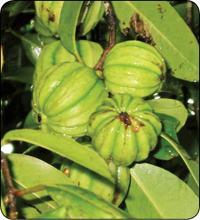
Kachampuli, a vinegar of a kind prepared out of Panapuli fruit (Garcinia gummi-gutta) juice, is an indispensable kitchen ingredient in Kodagu homes, specially for ‘Pandikari’

A bunch of raw Panapuli fruit

Napoklu (Kodagu) :

Kodagu, which is known the world over for its rich and aromatic coffee, is also home to Panapuli fruit and the ‘ethnic’ Kachampuli vinegar produced from it.

Come monsoon, many people in Kodagu, especially the farmers, are busy harvesting the Panapuli fruit as there is a great demand for its dark syrup, also known as Coorg Vinegar, which is used as a souring agent in Kodava cooking.

This thick black vinegar is the concentrated juice of Garcinia gummi-gutta, the tropical fruit that is also used in dried form for cooking by some.

Panapuli fruit trees are found in some coffee estates and forest areas in Kodagu. The tree starts flowering during March-April and the fruits get ripened by June-July by which the fruit colour would have changed to yellow. The pulpy Panapuli fruit also has seeds inside it. To prepare the vinegar, the juice extracted from the ripened fruits, is boiled down in an earthen vessel using firewood till the juice turns thick and dark (brownish black). Then it is cooled and filled in bottles to be sold in the market. The Kachampuli (vinegar) is sold at rates ranging from Rs. 200 to Rs. 900 per bottle, depending upon the demand and can be preserved for years without adding any preservatives.

Kachampuli adds flavour to non-vegetarian Kodava cuisines like pork, mutton and fish. As for pork curry, chops or fry, it is a must culinary ingredient. Without it, pork preparation, specially, cannot be called a Coorg speciality dish.

Apart from extracting the juice to make vinegar, the ripened fruits are also used in dry form by many people including Keralites and Mangaloreans.

The fruit is cut into four parts and dried over an iron net under fire; before drying the fruit, first the 4 feet tall and 6 feet wide iron net with 4 supporting pillars is installed and the fire is lit under the net. The dried fruit is sold at Rs. 120-130 per kg.

Nowadays, Panapuli saplings are sold in nurseries. The fruit is a relative of Kokum, which is used in some Konkan and Maharashtrian cuisines too.

source: http://www.starofmysore.com / Star of Mysore / Home> General News / July 24th, 2015

MP Pratap Simha proposes Spices Park in Kodagu

Mysuru :

Mysuru-Kodagu MP Pratap Simha, who is also the member of Spices Board, has demanded setting up of a Spices Park in Kodagu district.

Pratap Simha, who was in Kashmir to attend the Spices Board meeting along with former Chief Minister and MP B.S. Yeddyurappa, urged the Board authorities to set up a Spices Park in Kodagu district, which is also famous for growing spices such as pepper and ginger apart from coffee.

Speaking to Star of Mysore, Pratap Simha said that Spices Board officials had agreed for a feasibility study and added that a team of officials would visit Kodagu in the coming days to conduct a study for setting up the Spices Park.

Setting up Spices Park in Kodagu would help pepper and ginger growers in Kodagu district and Cardamom growers in Sakaleshpur in Hassan to market and get good rates for their products, he added.

Our aim is to provide a sustainable market for the spices grown in this part of the region, he said and added that there is a proposal to start a Spices Park in Haveri which intends to provide a good market for chilli growers in the region.

But, for the growers to transport spices from Kodagu and Hassan districts to Haveri would be a problem and for that reason it was proposed to set up Spices Park in Kodagu, said Pratap Simha.

He said that the State Government has to provide 50 acre land for the Spices Park like it has been done in Haveri district.

Once the land is allotted, the work on Spices Park would commence after the proposal is approved by the Spices Board officials, Simha added.

Pratap Simha further said that issues pertaining to Saffron growers were also discussed during the meeting held yesterday in Srinagar.

He said that the Spices Board has decided to work towards providing assured market for Saffron within the country and also exporting the same throughout the world.

source: http://www.starofmysore.com / Star of Mysore / Home> General News / Thursday – July 02nd, 2015

India Set to Record Highest Coffee Production in 2015-16

Representational image

New Delhi :

Coffee production in India is expected to touch a new peak of 3,55,600 tonnes this marketing year starting October, as the crop prospects are encouraging due to adequate rains in most growing states, state-run Coffee Board said on Monday.

The country’s total coffee output has reached a record 3,27,000 tonnes in the ongoing 2014-15 coffee year, though slightly lower than the earlier estimate of 3,31,000 tonnes made for the same period, it said in a statement.

The coffee year runs from October to September.

Releasing the initial production estimate for 2015-16, Coffee Board said: “The post blossom crop forecast for the year 2015-16 is placed at 3,55,600 tonnes. This is an increase of 28,600 tonnes over the final crop estimate of 2014-15.”

Of the total, Arabica production is estimated at 1,10,300 tonnes in 2015-16 as against 98,000 tonnes this year, while that of Robusta production is pegged at 2,45,300 tonnes as against 2,29,000 tonnes in the said period, it said.

Arabica and Robusta are the varieties of coffee.

“Overall, the crop prospects of 2015-16 at post-blossom stage are quite encouraging with a promise of highest record crop thanks mainly to the timely and adequate blossom and backing showers in traditional areas and non-traditional areas,” it said in a statement.

According to the Board, much of the production gain is expected to come from Karnataka, where total coffee output is pegged at 2,56,500 tonnes in 2015-16, as against 2,33,230 tonnes in the current year.

“The main reason for increased crop forecast in the state is that all coffee growing areas have received timely and adequate blossom and backing showers during this year.

Additionally, prevalence of good prices encouraged the growers to adopt better husbandry practices which have helped to invigorate production,” it said.

The output in three coffee growing districts Kodagu, Chikmagalur and Hassan is estimated higher at 1,38,075 tonnes, 85,250 tonnes and 33,175 tonnes, respectively, for 2015-16.

Coffee production in Kerala is estimated to increase to 69,800 tonnes in 2015-16 from 67,700 tonnes this year, while the output in Tamil Nadu is likely to improve marginally to 18,800 tonnes from 17,875 tonnes in the said period.

In non-traditional areas, coffee production in Andhra Pradesh is estimated to increase to 9,700 tonnes from 7,425 tonnes, while the output in Odisha is expected to rise to 600 tonnes from 550 tonnes in the said period.

Coffee output in north eastern region is, however, expected to decline marginally to 200 tonnes in 2015-16 from 220 tonnes in 2014-15, the Board added.

Till last week, monsoon rains were 11 per cent more than the average. Monsoon rains are expected to be normal in June but may weaken in the next month, as per the Met department.

India accounts for only 4-5 per cent of the world’s output, but exports 70-80 per cent of its produce. Italy, Russia and Germany are the top three buyers of Indian coffee.

source: http://www.ndtv.com / NDTV / Home> Sections> All India / Press Trust of India / June 23rd, 2015

BSNL Staffer Enters Guinness Book for Growing Tallest Cane

Madikeri :

Hoovaiah, an ex-serviceman, who is serving as a mobile tower operator with the BSNL, entered the Guinness Book of World Records for growing the tallest sugarcane in the world.

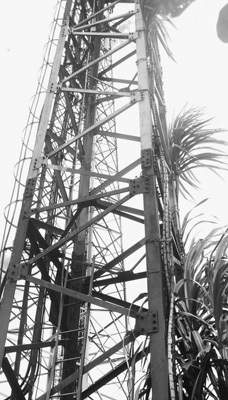
As of now, the sugarcane in Convent Junction in Madikeri is 42-foot tall.

The Sugarcane grown with the support of Mobile Tower in Convent Junction of Madikeri

During an interview to Express Hoovaiah detailed the uphill task and claimed that he had to be convinced to enter the Guiness Book.

Hoovaiah, brought a stem of black variety of sugarcane from Karike four years ago and wanted to eat it once it had grown. He nurtured it with cow dung and ash apart from watering it regularly.

But when it was found that in three years the sugarcane had grown 40-foot tall with the support of a mobile tower, his friends and others advised him to get Guinness Book recognition.

When Hoovaiah approached the Guiness Book officials for recognition they asked him to pay nearly Rs 4 lakh for visiting and verifying the sugarcane.

When Hoovaiah expressed his financial constrain they asked him to submit a 22-page application as it is certified by six gazetted officers, Hoovaiah said.

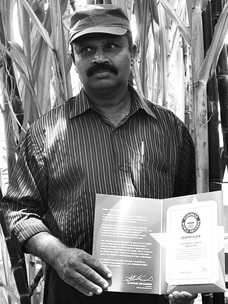
Hoovaiah with the Guinness Book of Records certificate

The team that verified the documents had advocate B B Ananda, Dr Renuka and Dr Tirmala Rao of Ex-servicemen Contribution Service Scheme hospital, Dr Rajashkear and Dr Ramakrishna from Agriculture Department and Dr Sreenivasaiah of Krishi Vignana Kendra Gonikoppa. They inspected the sugarcane and sent a report to Guinness Book of World Records in California of USA on June 21 last year.

After verifying with the records worldwide, they sent a letter of record holder on June 10 this year and asked him to pay Rs 2,593 if he needed an original certificate. After he made the payment, they issued the certificate, Hoovaiah said.

He pointed out that though he was told that the sugarcane will not survive due to the radiation from mobile tower nothing happens so far. He also acknowledge the support of his family, BSNL officials and others in protecting and caring for the sugarcane.

source: http://www.newindianexpress.com / The New Indian Express / Home> States> Karnataka / by B C Dinesh / June 15th, 2015

Spicy tips from Coorg for Wayanad farmers

Pepper farmers from Wayanad visiting a pepper farm in Coorg.

A study tour organised jointly by the M.S. Swaminathan Research Foundation (MSSRF) here and Directorate of Arecanut and Spices Development (DASD), Kozhikode, to various pepper plantations in Coorg in Karnataka provided a fresh experience to the pepper farmers in Wayanad.

Decades ago, Wayanad was known as the land of spices but it lost its fame in pepper production since the 1990s when the vines began to get affected by various diseases.

“We organised the tour to provide an exposure to the farmers on the significance of adopting scientific practices in pepper cultivation to keep the diseases at bay and improve pepper production, P. Ramakrishnan, training coordinator, MSSRF, told The Hindu .

The organisations have been jointly organising training programmes for progressive farmers on modern agriculture practices in pepper cultivation for the past one year. The effort is to bring back the lost glory of the district as a leading pepper producer, Mr. Ramakrishnan said.

As part of the tour, 25 farmers visited various pepper plantations in Coorg, including a farm of the DASD at Appagala in Coorg.

They were told about the way the DASD tackled the quick wilt disease that had spread in various parts of Coorg a decade ago, threatening the pepper plantations here.

Scientific agriculture practices were followed, and farmers in the area were getting an average yield of 7 tonne pepper from a hector, Mr. Ramakrishnan said.

source: http://www.thehindu.com / The Hindu / Home> News> National> Kerala / by E. M. Manoj / Kalpetta, April 01st, 2015

Women in Kodlipet milk the benefits of dairy farming

KodlipetKF30mar2015

Women from the rural areas of Kodlipet hobli near Shanivarasanthe, have achieved self reliance through dairy farming and have also produced significant quantity of milk.

The Nandipura Milk Producers Women’s Cooperative Society was established in 2008 by a couple of women in Kodlipet, with an intention to attain self reliance through farming activities in the rural areas.

Presently, Pramila Ravishankar, Chinnamma and Girija Girish are serving as president, vice president and secretary of the association, respectively. While Nirmala, Yashoda, Umavathi, Kavitha, Shashikala, Manjula and Jayamma are working as directors.

248 members
There are totally 248 members in the society who are engaged in dairy farming. Out of these, 75 members are from Kyathe, Neegunda, Chikkakundha and Kelakodli villages who regularly supply milk.

The milk is tested for its purity and everyday as much as 450 litres of milk is supplied to Kodige dairy.

Thirty HF cows have been provided to members, under Amritha scheme.
The association provides Rs 24 per litre to the members while Rs 4 is be provided by the Government as the subsidy.

Nandini self help group was established after Rs 75,000 subsidy from Karnataka Milk Federation. Interest free loans of Rs 5,000 is provided to 15 members.

When a member repays the loan, another member is be provided the loan. The members pay Rs 500 evey month towards the repayment.

The members said that the income that they earned from the dairy farming had made them self reliant and also helped them save some money after managing the household expenses.

The members also run Stree Shakthi and other self help groups.

25 dairies in Kodagu

“Kodagu district has 25 dairies. The district needs a separate milk union and a better price is to be ensured. Also, the time of the delivery of milk to the dairies needs to be revised,” said one of the Directors Nirmala.

Amidst comments that the dairy farming practices are dwindling in Kodagu, the Nandipura Milk Producers Union has carved a niche for itself, by being a role model to others.

source: http://www.deccanherald.com / Deccan Herald / Home> District / Shanivarasanthe – DHNS, March 30th, 2015

Campaign on forest fires

Public awareness and local community support for prevention are the first line of defence in the fight against forest fires at Nagarahole National Park.

Wildlife First conducted 125 awareness camps on forest fire prevention in January and February. These were held around the borders of Nagarahole National Park in Kodagu district. As many as 23,000 students and 1,100 teachers residing around the national park and other forest areas participated, said Praveen Bhargav, trustee, Wildlife First.

He said two public rallies were organised, including one at Madikeri.. “During the course of the campaign, schoolchildren were told about the need to conserve forests and wildlife. Key facts that all forest fires are man-made and cause irreversible damage to wildlife and the eco-system were highlighted,” Mr. Bhargav said.

More than 30,000 pamphlets in Kannada were distributed with an appeal to alert the Forest Department in case of fire. Wildlife First is planning to put out radio and TV spots on AIR Madikeri Station.

source: http://www.thehindu.com / The Hindu / Home> News> National> Karnataka / by Special Correspondent / Mysuru -March 08th, 2015

From Bean to Cup

The Coffee Board of India serves as the friend, philosopher and guide to the coffee sector in the country covering the entire value chain
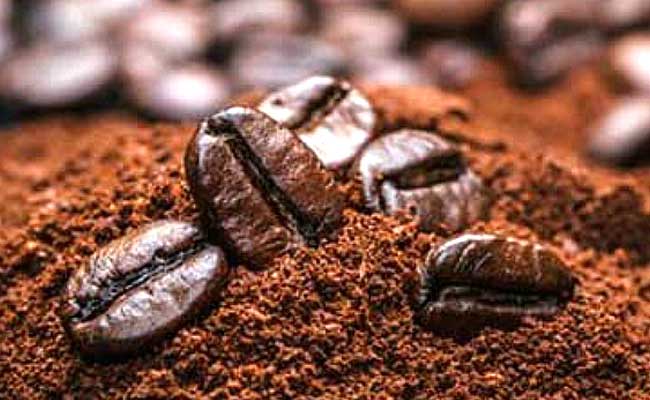
CoffeeBeansKF12mar2015

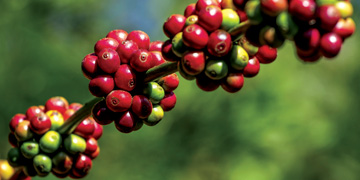
The saga of Indian coffee began on a humble note, with planting of ‘Seven seeds’ of ‘Mocha’ during 1600 AD by the legendary holy saint Baba Budan, in the courtyard of his hermitage on ‘Baba Budan Giris’ in Karnataka. For quite a considerable period, the plants remained as a garden curiosity and spread slowly as back yard plantings. It was during 18th century that the commercial plantations of coffee were started, thanks to the success of British entrepreneurs in conquering the hostile forest terrain in south India. Since then, Indian coffee industry has made rapid strides and earned a distinct identity in the coffee map of the world.

The Coffee Board

During 1940s, the coffee industry in India was in a desperate state due to the World War II resulting in very low prices and ravages of pests and diseases. At this time, the Government of India established the Coffee Board through a constitutional act – Coffee Act VII of 1942 – under the administrative control of the ministry of commerce and industry. The Board comprises 33 members including the chairman, who is the chief executive and appointed by the Government of India. The remaining 32 members represent the various interests such as coffee growing industry, coffee trade interests, curing establishments, interests of labour and consumers, representatives of governments of the principal coffee growing states and members of Parliament.

After pooling was discontinued in 1996, Coffee Board serves as the friend, philosopher and guide to the coffee sector covering the entire value chain. The core activities are primarily directed towards research & development, transfer of technology, quality improvement, extending development support to growing sector, promotion of coffee in export and domestic markets. The activities of the Board are broadly aimed at (i) enhancement of production, productivity and quality; (ii) export promotion for achieving higher value returns for Indian coffee and (iii) supporting development of the domestic market.


Research and Export Promotion

Organised research in coffee was initiated during 1925 by the erstwhile Mysore Government by setting up the Mysore Coffee Experiment Station near Balehonnur in Chikmagalur district. After formation of the Coffee Board, the research station was brought under its administrative control. Presently the Research Department of the Board with its headquarters at the Central Coffee Research Institute and five regional stations has a sanctioned strength of 113 scientific personnel and is involved in development of improved varieties with tolerance to major pests and diseases and standardisation of technology for improving production, productivity and quality.
CoffeeAreasKF12mar2015

After liberalisation in 1996, the marketing functions were deregulated. The Coffee Board plays the role of facilitator and promoter of Indian coffee exports. However, registration of exporters is the responsibility of the Coffee Board. Under the Export Promotion scheme, exports of value added coffees in retail packs and export of coffee to high value far-off destinations are incentivised to offset the transaction costs to some extent and enable the Indian exporters to be competitive in the export market. These incentives provide opportunities to expand the footprint of Indian Coffee in higher value destinations like USA, Japan, Canada, Australia, New Zealand, etc on one hand and reinforcing presence in traditional markets i.e., European Union/ Russia and CIS etc.

Besides, the Board regularly participates in leading coffee trade shows/ exhibitions held in major consuming countries to promote awareness about quality of Indian coffee to the overseas roasters, traders and consumers. The Board also conducts Flavour of India – The Fine Cup competitions to select fine coffees and expose them to the export market. It also promotes coffee consumption in the country through 12 India Coffee Houses located in major cities across the country.

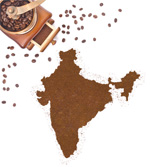
In India, coffee is traditionally grown in the Western Ghats spread over Karnataka, Kerala and Tamil Nadu. Coffee cultivation is also being expanding rapidly in the nontraditional areas of Andhra Pradesh and Odisha as well as in the North East states. Coffee is predominantly an export oriented commodity and 65 per cent to 70per cent of coffee produced in the country is exported while the rest is consumed within the country. Indian coffee industry earns a foreign exchange to the tune of about Rs 4000 crore. In the international market, Indian coffees earn a high premium, particularly Indian Robusta which is highly preferred for its good blending quality. Arabica Coffee from India is also well received in the international market.

Arabica is a mild coffee, but the beans being more aromatic, it has higher market value compared to Robusta beans. On the other hand Robusta has more strength and is, therefore, used in making various blends. India is the only country that grows all of its coffee under shade. Typically mild and not too acidic, these coffees possess an exotic full-bodied taste and a fine aroma.

India cultivates all of its coffee under a well-defined two-tier mixed shade canopy, comprising evergreen leguminous trees. Nearly 50 different types of shade trees are found in coffee plantations. Shade trees prevent soil erosion on a sloping terrain; they enrich the soil by recycling nutrients from deeper layers, protect the coffee plant from seasonal fluctuations in temperature, and play host to diverse flora and fauna.

Coffee plantations in India are essential spice worlds too: a wide variety of spices and fruit crops like pepper, cardamom, vanilla, orange and banana grow alongside coffee plants.


Training courses in coffee culture and management

The Central Coffee Research Institute, popularly known as CCRI, has grown as an internationally recognised, state-of-the-art research centre for carrying out research on all aspects of coffee cultivation. CCRI is committed to introducing emerging technologies and sustainable package of practices to benefit the coffee farmers. It plays an important role in the development and growth of the coffee agricultural sector. CCRI has 133 dedicated scientists working for the development of newer technologies in close association with a number of international institutes, reputed national institutes and pure science and agricultural universities.

The CCRI, apart from the development of new technologies, is involved in imparting training on scientific coffee cultivation to the benefit of all the stakeholders since 1953. The institute is recognised as an international centre of excellence for training in coffee culture by the FAO, Rome. Candidates from several coffee growing countries are being sponsored for these training programmers by the world

CHART

Coffee regions of India

Anamalais (Tamil Nadu): Wildlife sanctuaries in this region are the abode of spotted leopards,while the plantations are home to fine, high-grown Arabicas, including the exotic Kents.

Araku valley (Andhra Pradesh):
Home to colourful parrots, it is not unusual to see a flock of chattering red and green birds, darting through trees in this scenic valley.

Bababudangiris (Karnataka): Bababudan brought seven ‘magical’ beans from Yemen and planted them in the lofty hills of this region. Deer is often spotted, grazing alongside plantations abundant with full-bodied Arabicas.

Biligiris (Karnataka/Tamil Nadu):
Besides full-bodied Arabicas, this region is noted for the sambar – the largest Indian deer with huge antlers.

Brahmaputra: The mighty Brahmaputra which flows through the North Eastern states is the lifeline of this region which is home to the one-horned rhinoceros. This sturdy animal is found in large numbers at the Kaziranga National Park in eastern Assam.

Chikmagalur (Karnataka): Chikmagalur’s forests and wildlife sanctuaries are abundant with beautiful peacocks, India’s national bird. The peacock loves to show off its colourful feathers, especially during its elaborate courtship dance.

Coorg (Karnataka):
Lush coffee plantations are bustling with honeybees which yield the delicious Coorg Honey, collected by nimble-footed tribals

Manjarabad (Karnataka): Gentle sloping terrain with small streams and coffee plants provide a natural habitat for the jungle fowl. This yellow-headed bird with a red comb and multi-coloured plumage is generally seen in pairs, close to the coffee plantations.

Nilgiris (Tamil Nadu): The plantations are home to fine, high-grown Arabicas, including the exotic Kents.

Pulneys (Tamil Nadu): A well-known feature of this region is the bright, bluebell-like Kurinji flower that makes a dramatic appearance, once in 12 years. The high-grown Arabicas however, are a predominant sight, year after year.

Sheveroys (Tamil Nadu):
The magnificent Gaur or Indian bison is an embodiment of vigour and strength, much like the boldsized Arabicas grown here. This massive animal with its huge head and sturdy limbs grazes on the lower hill tracts of this picturesque region.

Travancore (Kerala): The national flower of India, the lotus symbolises purity and beauty. These bright, fragrant flowers with floating leaves and long stems, grow in shallow waters in this region noted for its Arabicas and Robustas.

Wayanad (Kerala):
Wayanad is home to the Indian tiger, India’s national animal – a symbol of valour and courage.

source: http://www.financialexpress.com / Financial Express / Food & Hospitality World / Home> Cover Story / March 05th, 2015