Category Archives: Agriculture

Madikeri Farmer Eyes Record With 41-ft Cane

Madikeri :

B Hoovaiah is a happy man. A stalk of sugarcane grown by Hoovaiah in Madikeri is all set to enter the Guinness Records as the tallest in the world. The earlier record, set in 2001, was held by Venkatesh Gowda of Kolar.

Hoovaiah, a BSNL tower operator in Convent Junction in Madikeri, has been protecting the cane for three years now. All the required inspections have been completed by expert committees and a team from Guinness is expected to arrive shortly, before an official announcement can be made.

Hoovaiah told Express that an expert team inspected the stalk and measured it at 41.1 feet.

He then formally approached the Guinness authorities, asking them to consider it for a world record.

Later, he received an acknowledgement from Guinness records in-charge, Era Norroy.

Hoovaiah, who served in the Indian Army for 26 years, lives at Bettathoor in Madikeri taluk and has served as a tower operator for 11 years.

He expressed happiness that the cane had been grown organically.

source: http://www.newindianexpress.com / The New Indian Express / home> States> Karnataka / by B C Dinesh / July 10th, 2014

Coffee Board finds a way to tackle arabica stem borer

Kochi :

Coffee Board has achieved a breakthrough in its research to combat white stem borer attack, which has become the single largest threat to the survival of arabica coffee cultivation in India.

Management of this devastating pest has been increasingly difficult due to the vagaries of Nature and shortage of skilled work force. It has threatened to bring down arabica crop to 65,000 tonne this year.

Among the various control measures currently available, pheromone technology is the latest one which can be adopted easily. The Central Coffee Research Institute (CCRI) has been working on the refinement of the pheromone technology and had identified the existence of female sex pheromones and some attractants known as kairomones, within the plant itself. Kairomones are the chemicals released by host plants that attract the pests towards them.

Earlier, Coffee Board through a tie up with Bio Control Research Laboratories (BCRL) succeeded on the production of the male pheromone compound. The Board is now providing traps baited with this pheromone at 50% subsidised rates to the coffee growers. The traps help the growers to monitor the borer emergence and assess the spread of the flight season which are crucial to initiate the control measures.

Coffee Board had launched a collaborative research programme with BCRL in 2012 to identify the role of female sex pheromones and kairomones in mating and infestation process.

The studies conducted by BCRL scientists revealed the existence a female sex pheromone compound. A plant volatile from attacked plants, which attracted the stem borer, was also identified.
Preliminary field studies using combinations of these two in traps attracted maximum beetles when compared to the male pheromone alone.

These findings offer scope for improving the pheromone technology, which could form the basis for a breakthrough in eco-friendly stem borer management. Further field trials to arrive at the optimal and cost effective combinations are under way, according to an official statement from Coffee Board.

Source: http://www.articles.economictimes.indiatimes.com / The Economic Times / Home> News> Economy> Agriculture / by ET Bureau / July 08th, 2014

DK drenched, but rain plays truant in Kodagu

Monsoon gained momentum in Dakshina Kannada with the region receiving intermittent rains on Monday. In the last 24 hours, Sullia received the highest of 43.4 mm rainfall, followed by Mangalore—15.2 mm, Moodbidri—13.2 mm Bantwal—14.8 mm, Puttur—11.4 mm.

The rain brought the much-needed relief from the scorching heat for the people.
“If the region continues to receive rain, we can start agriculture activities,” said a farmer. The roof of a house collapsed at Kumpala Hanuman Nagara in Someshwara Gram Panchayat limits, following rain on Monday. The house belongs to Pushpa.

To invoke the blessings of rain god, seers from Karnataka, Tamil Nadu and Kerala conducted ‘parjanya japayajna,’ at Talacauvery (the birthplace of River Cauvery) in Kodagu district on Monday.

There was drizzling in Talacauvery, Madikeri, Napoklu, Gonikoppa, Virajpet and Kutta. The inflow of water to the Harangi reservoir was 221 cusecs. It was 8050 cusecs during the corresponding period last year.

In Shimoga

Parts of Shimoga district received moderate rain on Monday. In the past 24 hours, Shimoga received 2.2 mm of rain followed by Bhadravathi (1.8 mm), Thirthahalli (1.6 mm) and Sagar (0.6 mm).
DH News Service

source: http://www.deccanherald.com / Deccan Herald / Home> State / Mangalore – Madikeri, DHNS – July 08th, 2014

Water from Kundamestri to flow to three water bodies

The ambitious Kundamestri drinking water project is all set to supply water to three keres (streams) in Madikeri. Deputy Commissioner Anurag Tiwari has given his nod for the laying of pipelines at an estimated cost of Rs 20 lakh to flow water Roshanara kere, Pampina kere and Kannandabane open well.

KundamestriKF07jul2014

There were no pipelines to flow water to these water bodies. Hence, barring these areas, water from Kundamestri was supplied to other areas. If the work on laying pipelines are complete, then water from Kundamestri project will reach entire Madikeri town.

Following delay in completion of work on Kundamestri project, the water was flowed to Kootuhole and later to filter house to be supplied to the residents.

Once the work on pipelines are complete, then water can be supplied to the residents directly from Kundamestri.

Normally, Kannandabane kere, Roshanara kere and Pampinakere goes dry during peak summer. The CMC was depending on tankers to supply water to the residents. If the project on supplying water from Kundamestri is success, then the CMC can save money.

The DC has given nod for an action plan of Rs 32.80 lakh for taking up 14 different works under second phase of SFC grant during 2013-14.

Kannandabane, Chaingate and surrounding areas, Raghavendra temple, Tyagaraja colony, Azad Nagara and Putani Nagar will be covered under Kundamestri water project.

The remaining 11 works include cleaning of borewells, installing pumps for borewells at Mangaladevi Nagara and Sudarshana Circle, deepening a borewell at Azad Nagara, drilling borewells at Dasavala Jayanagara and Chamundeshwari Nagara, sources said.

source: http://www.deccanherald.com / Deccan Herald / Home> District / by Srikanth Kallammanavar / DHNS-Madikeri, July 07th, 2014

Total deemed forest area in Kodagu may be ready soon

With the revenue, forest and land survey departments initiating the process of consolidating the land records of deemed forest in accordance with the survey number, a clear picture on the total area of deemed forest in Kodagu district is likely to be available in next 15 days.

According to sources, the decision to accumulate information on deemed forest has been taken in a district level meeting chaired by Deputy Commissioner Anurag Tiwari, based on the government’s order to re-examine deemed forest records.

Deemed forest is described as private land with features of the forest.

The government has already issued notification declaring various classifications of forests including reserve forest, protected/minor forest, sacred grove, Uruduve, sandal-teak reserve, village forest and Paisari. After collecting details about the already declared forest region, the officials are planning to examine private forest.

The deemed forest identified by the government in the past, comprised of Jamma Malai, Bane and C and D land.

The land records of these land was different with forest and revenue department documents, creating confusion not only among the public, but also in the government level.

In order to clear the confusion, the government has directed the district administration to specifically identify the notified forest and deemed forest.

It was based on this order, the deputy commissioner chaired a meeting to discuss the issue on Wednesday.

Additional Deputy Commissioner H Prasanna, Deputy Conservator of Forest Hnaumanthappa and Dhananjay, Land Records Deputy Director Mallikarjunaiah, tahsildars of Madikeri, Somwarpet and Virajpet and other officers were present in the meeting.

Background

In Godaverman case judgement, the Supreme Court had directed all the states to provide information about the forest land in their limits.

The court had specified to consider the word ‘forest’ as per its connotation in the dictionary.

According to the dictionary, forest implies a land spreading across at least 2.5 hectare with minimum 50 trees in it.

Accordingly, a large portion of private land in Kodagu district too comes under the purview of ‘forest’ as they are spread over 2.5 hectare land comprising more than 50 trees.

source: http://www.deccanherald.com / Deccan Herald / Home> District / by Shrikanth Kallammanavar / Madikeri – July 04th, 2014

400 KV- HT line passing through Kodagu Reserve Forest

No justification to sacrifice natural forests

DrKodiraKF02jul2014

by Dr. Kodira A. Kushalapa, IFS (Retd.) and former RCCF, Bhopal under MoEF

Forests all over the world are being threatened with the rise of human population, leading to the increased level of Co2 in the atmosphere, global warming, climate change, submersion of low lying areas due to the rise of water levels in the oceans, disappearing forest areas and trees etc. Therefore, we have to take all possible measures to save natural forests, not only for our survival but also for the future generations to come.

The Central Government has added Article 48A and 51A (g) to our Constitution to protect and improve our environment, safeguard forests and wildlife and we citizens are obliged, duty-bound and responsible to save these natural resources. The common phrase is: think globally but act locally. This will apply in this case also while considering the route for High Tension (HT) line through natural reserve forests of Kodagu.

Fortunately, there are two or three alternate routes to draw the transmission line avoiding natural forests. Therefore, there is ample justification to avoid forests on a priority basis, to save and conserve forests locally. The value of forests cannot be just the timber and firewood value down to certain minimum girth of standing trees, for comparing the costs but should be the value of whole forest ecosystem called environmental values or ecological benefits, which will be lost permanently after clearing the forests.

These values include the absorption of Co2, production and release of oxygen by all plants existing, habitat for birds and wildlife, soil and water conservation, adding fertility to soil etc. These environmental values are far more than whatever the total cost of laying the linear line and is not comparable. Thus the question of shortest route through the forests for cost-cutting is ruled out in the interest of saving forests. The Power Grid Corporation can recover the extra cost by increasing the tariff per unit of electricity.

The HT line can go through the D-line between the erstwhile Coorg and Mysore States, which is now the D-line between Kodagu and Mysore districts, where due to the annual D-line clearances earlier, the trees are smaller in size and less in numbers. The proposed HT line is running almost parallel to the D-line and hence a more feasible alternate route.

The other route is by upgrading the present 220 KV line for which the necessary permission under the Forest Conservation Act 1980 has been already obtained to pass through the National park and requires the replacement of towers only. It is almost a straight line passing through H.D. Kote and D.B. Kuppe. The temporary problem of the PG Corporation is that during the progress of upgrading the 220 KV, they have to de-activate the present line and is left to them to solve by fast progress and using the other grid lines.

The third alternate is to take up the line through an underground tunnel which will be at an exorbitant cost and not feasible through forest areas with standing trees and their root systems.

The FC Act envisages to take up compensatory afforestation in new areas equal in extent of area (twice the extent in forest area) diverted for non-forestry purposes by the forest department at user’s cost. But the fact is that nobody can re-create a “natural forest,” which has by a series of succession over centuries, stabilised into a climax type of forests with rich biodiversity. But at the most we can create a “plantation forest” of few species only, if the new compensated area is good for growing trees. If such plantations are raised in semi-arid regions like Bijapur and Gulburga for want of land in Kodagu, there will be complete failure of the objectives of compensatory plantation. Similar type of areas only should be allotted for compensatory afforestation. It is therefore imperative and justifiable to protect and conserve the existing natural forests than going for compensatory plantations that too, when alternate routes are available for linear projects.

[e-mail: kodira1@hotmail.com/ Mob: 94480-58549]

source: http://www.starofmysore.com / Star of Mysore / Home> Feature Articles / Friday – June 27th, 2014

‘Don’t depend on single crop’

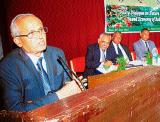
Growers should concentrate on floriculture, pisciculture and piggery units along with coffee, said Shimoga Agriculture University Vice Chancellor Dr C Vasudevappa.

KodaguKF24jun2014

Speaking at a policy dialogue on future of coffee based economy of Kodagu organised by National Research Programme on Plantation Development (NRPPD), Agricultural Scientist Forum, Coorg Planters Association and Bangalore Institute for Social and Economic Change, he said that farmers should not depend on single crop for livelihood. Along with coffee, other crops should be grown.

The growers should focus on technology, quality in coffee, improvised processing technologies to fetch profit.

Coffee Board former vice president N M Bose Mandanna said that there are 90 per cent small growers.

The Board and the Centre should come to solve the problems faced by the growers. Coffee is part of Kodagu’s life. When the prices slashed in 2004, the growers did not stop growing coffee.

Institute for Social and Economic Change (Bangalore) Prof P G Chengappa said that on the lines of National Horticulture Mission, Coffee Mission should be set up. The Central government and the Coffee Board should also focus on marketing of the coffee. “We have failed in marketing coffee,” he added.

Dr K J Joseph of NRPPD, ISEC Director Dr Binay Kumar Patnaik, and ASFK President Dr B C Nanjappa among others were present.

source: http://www.deccanherald.com / Deccan Herald / Home> District / DHNS – Madikeri, June 07th, 2014

‘Panel on deemed forest land to meet within a week’

The district-level committee formed to do a reality check of the deemed forest land in Kodagu district will convene its first meeting in a week and is likely to submit a comprehensive report to the government within six months.

The committee chaired by the deputy commissioner comprises of the deputy conservator of forest, deputy director of land records and officers from revenue and forest departments.

In order to verify the report submitted by an experts committee on deemed forest in 2002, the State government has formed district committee in district level, zonal committee in revenue level and state committee in state level.

According to sources, the district committee will conduct a survey in the district and prepare a report on deemed forest scenario in Kodagu. The functioning of the district committee will be supervised by the zonal committee and state committee on a time bound manner and give suggestions as and when required.

What is deemed forest

If a land has the features of forest, where trees are grown outside the purview of government recognised forest land, it is called as deemed forest. The experts committee formed in 2002 had put the deemed forest land figure in the State at 9,94,881 hectare. About 69,205 hectare deemed forest land identified in Kodagu district, also comprises of Bane, Paisari, Kumki Malai, C and D land and plantation.

It all started with the Supreme Court directing all states to provide information about the forest land, during the hearing of Godavarman Thirumalapad case in 1995. As per the order, the Karnataka government formed the first experts committee, which submitted the report to the government on April 2, 1997.

While submitting the report before the apex court, the government stated that it has completed the process of identifying the area which has been officially declared as forest land. The government requested additional time for identifying the forest land which has not been officially declared.

On observing the delay by the Karnataka government in submitting the report, the Central Empowered Committee of the SC took the government to task, following which the government revised the experts committee.

This second committee identified 33,24,854 hectare land as notified forest and 9,94,881 hectare as deemed forest. The committee, in fact, included even the barren forest land as deemed forest. It also included C and D land, Bane and Paisari.

Due to identifying even Paisari land as deemed forest in various districts including Kodagu, the government is neither able to take up various projects in this land, nor it can make sites to be distributed to poor. Even the work on providing basic facilities like construction of road can not be taken up.

In several cases, the revenue land (Paisari) which has been sanctioned to beneficiaries under Akrama Sakrama, is also considered in the list of deemed forest, due to which RTC can not be made in the name of beneficiaries. To solve the impeding problem the new committee has been formed for conducting a joint survey.

source: http://www.deccanherald.com / Deccan Herald / Home> District / by Shrikanth Kallammanavar / Madikeri, DHNS – June 19th, 2014
400 KV Line : Expert panel gathers public opinion

Kodagu residents oppose the project

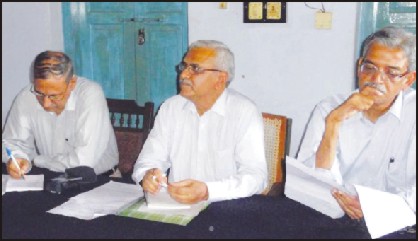
The three-member Technical Experts’ Committee seen gathering public opinion in Madikeri on Thursday.

Madikeri :

A three members Technical Experts’ Committee visited Kodagu district on Thursday to study the possibilities of finding an alternate route to lay 400 KV hi-tension line from Kozhikode in Kerala to Mysore. This has come up in the backdrop of stern opposition from the people against the electricity line passing through Kodagu district.

The committee members visited the places in and around Maldare where the project is implemented and collected public opinion. Representatives from various organisations, including Viju Biddappa from Maldare, Kaveri Sene President Raghu Machaiah, Convener Ravi Chengappa, K.C. Subbaiah, Basavana Devana Bana Trust President B.C. Nanjappa, Chennayyana Kote Gram Panchayat member Shyam, Coorg Wildlife Society President Colonel C.P. Muthanna and others, shared their opinions.

They all said that thousands of trees will be felled if the line passes through Kodagu. This will have negative impact on the environment, wildlife and coffee growers. Therefore, an alternate route has to be found out for laying the wires, they insisted.

Speaking to reporters after the meeting, Committee Head R.S. Shivakumar Aradhya said that a lot of factors like environment and technical feasibility and project expenditure has to be taken into consideration while finding an alternate route. “We will submit the report to the government within a month. We will visit Kutta and surrounding region on Friday and examine the problem,” he said.

The government formed the Committee chaired by Shivakumar Aradhya, in response to the continuous opposition and protest by villagers and various organisations opposing the project. Forest Department senior officials Ajay Mishra and elephant expert Sukumaran are the other two members of the Committee.

source: http://www.starofmysore.com / Star of Mysore / Home> General News / June 14th, 2014

Vietnamese pepper lands here

Kochi :

Bold berries sieved from imported Vietnam pepper were reportedly being sold as material from Wayandu (Kerala) and Coorg area (Karnataka) in the domestic market.

Wayanadan berries are bold and that from Coorg are also almost similar and bold berries are in good demand in the domestic market, market sources told Business Line.

No activities were reported from the primary and terminal markets because of the heavy rains coupled with hartal in Kerala.

On the NMCE, there were buyers at ₹71,100 but no sellers were ready. On the IPSTA, May and June contracts moved up by ₹1,000 . On the spot, prices were notionally raised by ₹500 a quintal to a record ₹72,000 (ungarbled) and ₹74,000 (garbled) a quintal. Export prices declined to $12,800 c&f for Europe and $13,150 a tonne c&f for the US.

source: http://www.thehindubusinessline.com / Business Line / Home> Markets> Commodities / by G K Nair / Kochi – May 08th, 2014