Category Archives: Agriculture

Coffee Board ups output forecast to 3.47 lakh tonnes

CoffeeBlossomKF03aug2013
‘Crop to drop by 20% due to weather-related problems’, says KPA
Bangalore :

Despite rampant white stem borer (WSB) menace and long days of dry period after blossom, coffee production is set to increase by 28,800 tonnes (9.05 per cent) over the final estimate of previous year 2012-13 (3,18,200 tonnes).

The Coffee Board, which released the post-blossom crop forecast, said for the year 2013-14, coffee production is estimated at 3,47,000 tonnes.

Of the total estimate, the arabica and robusta break up is 1,11,000 tonnes and 2,36,000 tonnes respectively. Arabica production has shown an increase of 12,400 tonnes (12.88 per cent) over the final estimate of 2012-13, while robusta increased by 16,400 tonnes (7.47 per cent).

By the states, the production gain has mainly come from Karnataka to the tune of 18,890 tonnes (8.21 per cent) and non-traditional areas (NTA) with 1,780 tonnes (28.57 per cent) while Kerala has shown an increase of 6,350 tonnes (9.89 per cent) and Tamil Nadu by 1,755 tonnes (10.10 per cent) compared to the previous 2012-13 season’s final estimate.

“Due to the drought like conditions (April-May), the crop setting in arabica and robusta has been severely effected. Also there were many incidences of WSB in arabica plantations.

The Karnataka Planters’ Assocation (KPA) estimates that there will be a drop of 20 per cent due to this weather-related problems, said Nishant R. Gurjer, Chairman, KPA.

In Karnataka, all the three districts recorded increase in production over the previous year with an almost equal share of arabica and robusta. Kodagu district recorded the highest increase of 14,420 tonnes (12.02 per cent) which is mainly accrued from robusta (11,620 tonnes or 11.77 per cent) and arabica gained by 2,800 tonnes (13.15 per cent).

Hassan district recorded an increase of 3,535 tonnes (10.84 per cent) which has come from both arabica (2,635 tonnes or 14.02 per cent) and robusta (900 tonnes or 6.52 per cent).

While Chikmagalur showed an increase of 935 tonnes from Arabica, the robusta production showed a decline of 2,940 tonnes (-7.30 per cent) over the previous year final estimate.

“Due to prolonged and unprecedented drought of over 50 days, there has been a spurt in the WSB pest that has devastated the arabica plants. We have also been unable to carry out the regular operations like spraying and manuring on time due to lack of rains in May. As for robusta, due to severe constraints of power and water resources, we were unable to cover our entire area for blossom and backing irrigation. We feel the blossom estimate may have to be revised further downward in view of prevailing conditions,” said Sahadev Balakrishna, Partner, Netraconda Estates, Chikmagalur.

“The arabica production regained in 2013-14 season in Karnataka mainly because of the biennial bearing nature of arabica as last year’s final estimate was low,” said the coffee board official.

The blossom showers are reported to be normal in all most all the coffee growing zones, while there was a delay in backing showers in certain pockets were reported. “In general good crop condition and better husbandry practices have helped to invigorate production in Karnataka. The crop forecast for Karnataka is placed at 86,735 tonnes of arabica and 1,62,380 tonnes of robusta totalling 2,49,115 tonnes,” the official explained.

Kerala coffee zones also have received adequate and timely blossom and backing showers. There was no adverse effect on crop was reported.

Accounting this, the post-blossom estimates for the 2013-14 is placed at 70,550 tonnes, which is an increase of 9.89 per cent (6,350 tonnes) over the previous 2012-13 final estimate of 64,200 tonnes.

Tamil Nadu post-blossom forecast is placed at 19,125 tonnes which also showed an increase of 1,755 tonnes (10.10 per cent) mainly in Pulneys and Shevroys region against the previous year final estimate of 17,370 tonnes.

In non-traditional areas of Andhra Pradesh and Orissa and north eastern region, the post-blossom forecast is placed at 8,210 tonnes against previous final estimate of 6,405 tonnes.

The higher forecast has come mainly from Andhra Pradesh and Orissa due to increase in bearing area.

2012-13 production was 3,18,200 tonnes

The final coffee production 2012-13 estimate is 318,200 tonnes, an increase of 2,700 tonnes (0.86 per cent) over the post monsoon estimate of 315,500 tonnes and an increase of 4,200 tonnes (1.34 per cent) over the previous year’s 2011-12 final estimate of 314,000 tonnes.

The Coffee Board, which released the final crop estimate for 2012-13, said of the total final estimate, the share of Arabica is 98,600 tonnes and that of Robusta is 219,600 tonnes.

The production of Arabica has shown a marginal decline of 1625 MT (-1.62 per cent) while Robusta increased by 4,235 tonnes (2.01 per cent) over the post-monsoon estimate made before crop harvesting in 2012. The loss in Arabica production and the production gain in Robusta has mainly come from Karnataka.

The final crop estimate for Karnataka is placed at 230,225 tonnes with a break up of 77,425 tonnes of Arabica and 1,52,800 tonnes of Robusta. The final production in Karnataka has shown a marginal increase of 3,020 tonnes (1.33 per cent).

The Arabica production has marginally declined in Chikmagalur (-1.32 per cent), Kodagu (-1.87 per cent) and Hassan of (-1.96 per cent) districts, while Robusta production shown an increase in Chikmagalur (8.33 per cent), Kodagu (1.15 per cent) and in Hassan (0.55 per cent) districts.

In Kerala, the final estimate of 2012-13 is placed at 64,200 tonnes with an increase of 375 tonnes (0.59 per cent) from the post monsoon estimate of 63,825 tonnes.

Tamil Nadu final production of 2012-13 is placed at 17,370 tonnes which is a marginal decline of 380 tonnes over the post monsoon estimate of 17,750 tonnes.

In the Non-Traditional Areas and North Eastern Region, the final estimate of 2012-13 is placed at 6,405 tonnes against post monsoon estimate of 6,720 tonnes which showed a marginal decline of 215 tonnes in Andhra Pradesh.

source: http://www.thehindubusinessline.com / Business Line / Home> Industry> Agri-Biz / by Anil Urs anil.u@thehindu.co.in / Bangalore – July 22nd, 2013
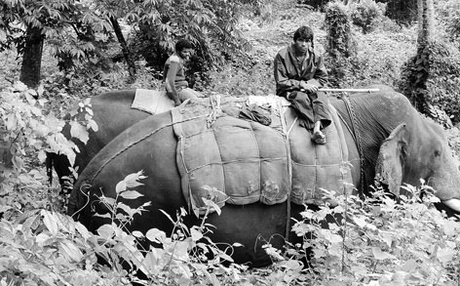
Forest officials drive back elephants into Kodagu forests

The two-day operation to drive wild elephants back into forests by the forest department in South Kodagu in progress | Express photos

The two-day initiative of the Forest Department to drive wild elephants back into the forests came to an end on Saturday.

On Friday, the operation commenced in the presence of chief conservator of forests, Kodagu circle, Brijesh Kumar Dixith, Deputy Conservator of Forests (DCF), Virajpet division, Malathi Priya, Deputy Conservator of Forests, Nagarahole wildlife division, Gokul, assistant conservator of forests and range forest officials and staff from all the forest department divisions of Kodagu district.

14 Jumbos Driven Back to Forests

The teams were able to chase away 14 elephants from Devarapura and Nokya Gram Panchayat limits, ACF Belliappa told Express.

On Saturday, the teams were unable to spot even one elephant.

He said the teams will continue to ensure the elephants do not return.

“The operation will be continued next week in Pollibetta areas. Movement of vehicles and people will be restricted through publicity arrangements,” he said.

Belliappa added that most elephants entered South Kodagu either from Mauvkal or Nagarahole forests.

Need for Public Help

The operation involved tamed elephants, special task force staff, wildlife staff from Nagarahole, Virajpet division forest officers and staff along with watchers. General public and police also extended required assistance to the department.

Chief conservator of forests, Kodagu circle, Dixith told reporters here on Saturday that as per the elephant census taken last year, as many as 6,000 elephants were located in the state. In Kodagu region, covering Gonikoppa, Thithimathi and Maldaare areas, as many as 100 wild elephants are troubling people, he said.

“Another 32 elephants are permanent residents of BBTC coffee estates in Siddapura. These should be captured and shifted,” he said. However, before their capture, a few technical and legal aspects need to be addressed, he said.

In Bramhagiri wildlife sanctuary, 30 elephants on the Kodagu-Kerala border have been identified that need to be captured and sent back into forest cover, he said. All these issues have been brought to the notice of Forest Minister Ramanath Rai, Dixith added.

source: http://www.newindianexpress.com / The New Indian Express / Home> States> Karnataka / by Express News Service – Madikeri / July 29th, 2013

Coffee Board’s forecast for 2013-14 surprises planters

Board has projected an all-time high crop of 347,000 tonnes in current year

At 3,47,000 tonnes, the Coffee Board’s post-blossom crop forecast for 2013-14 has come as a surprise for planters and exporters in Karnataka. The board has projected a nine per cent rise in production, compared with the final estimate of 3,18,200 tonnes for 2012-13. Karnataka accounts for 70 per cent of India’s coffee output.

The board has pegged robusta production at 2,36,000 tonnes and arabica production at 1,11,000 tonnes—7.5 per cent and 12.9 per cent higher than the final estimates for 2012-13, respectively. In 2012-13, 98,600 tonnes of arabica and 2,19,600 tonnes of robusta were harvested.

According to the Karnataka Planters’ Association (KPA), the board’s estimates were too high, considering the growing regions were in the grip of a prolonged drought and high temperatures during the pre-blossom period of February-April. KPA has pegged production at 2,90,000 tonnes.

“There are three main factors affecting production this year. We have seen prolonged dryness, owing to very high temperatures in March and April and the occurrence of white stem borer in arabica plantations. Third, this is an ‘off-year’ for robusta. We cannot have two consecutive years of high production. As a result of the drought, bean development was low this year in major growing regions in the Chikmagalur, Hassan and Kodagu districts,” said Nishant R Gurjer, chairman, KPA.

In fact, robusta production would be 25 per cent lower this year, especially in Karnataka, he added.

Exporters, however, neither agree with the board, nor with planters. “If the Coffee Board’s estimates come true, it will be an all-time high production in India. But it is unlikely to happen, considering various factors. Robusta has seen good rains in April and this year’s crop would certainly be better than last year’s. I think a little over 3,30,000 tonnes looks reasonable,” said Ramesh Rajah, president, Coffee Exporters’ Association of India.

Gurjer said the incessant rains in most growing regions in the last three weeks would have an adverse impact on production. Many planters have already reported fruit dropping and rotting. “There are stray incidents of ‘kole roga’ (a rotting disease) in many areas due to heavy rains,” he said. This year, production could be 2,90,000-3,00,000 tonnes, he added.

The United States Department of Agriculture has projected India’s coffee production at 3,12,000 tonnes.

A Coffee Board official said sampling had been carried out in April-June and the post-blossom estimates were in accordance with the sampling. Realistic production figures would only be released when post-monsoon estimates were prepared in October, he said, adding, “We will take into account all factors, including the impact of heavy rains, when we prepare the post-monsoon estimates.”

source: http://www.business-standard.com / Business Standard / Home> Markets> Commodities> Food & Edible Oils / by Mahesh Kulkarni / Bangalore – July 25th, 2013

Paddy transplantation begins in Kodagu

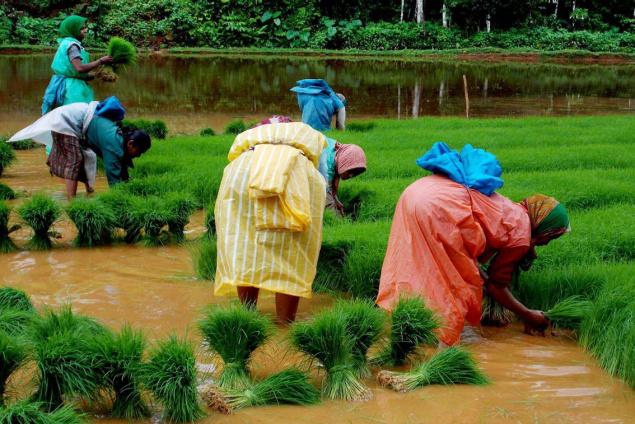
Women readying paddy seedlings at a nursery in Napoklu in Kodagu for transplantation./ The Hindu

Paddy transplantation has begun in the right earnest in Kodagu district, thanks to the copious rainfall which has far exceeded last year’s figures in the corresponding period.

Many farmers are steadfastly continuing the avocation against odds such as expensive labour, high input costs and irrational prices.

Transplantation has started in Napoklu and surrounding areas. Paddy seedlings are ready for plucking in the district and the works are expected to gather momentum in a couple of days, says Deputy Director of Agriculture, Kodagu, Ramakrishna. The target for paddy cultivation was 35,000 hectares of which 1,360 hectares had been covered till date, he told The Hindu.

Farmers in remote villages still depend on agriculture in Kodagu though it is not financially viable for most of them. However, the sheen associated with paddy transplantation where a large group of men and women sang to chorus to mask the tiredness of work cannot be seen any longer.

One would compete with the leader to match his speed of transplantation even if it rained hard. A big column in the middle of the paddy field would be left vacant to facilitate the ‘Nati Vota’, wetland sprint, in which youth would take part with great glee. It used to be the custom in the past. Not many indulge in ‘Nati Vota’ these days. The vacant column used to be covered up with seedlings after the sprint.

According to Monnanda Somaiah, a farmer from Napoklu, expensive labour costs, apart from the shortage of workers, had made many farmers give up agriculture in villages. Many of them had sold off cattle and some had converted fields into housing sites.

Farm mechanisation was a process yet to catch up in the district, though a few progressive farmers had discovered its utilities. Elephant attacks would result in destruction of paddy crops in the district in the recent years.

Fertilizer had replaced cow dung and other leafy manures that were organic, says Subbaiah, another farmer from the same region.

Paddy transplantation would pick up in Virajpet taluk, which had the largest areas in terms of coverage, in a few days as seedlings were ready for plucking, Mr. Ramakrishna said.

Not so long ago, the extent of paddy fields was considered a sign of high social status. Coorg mandarin (orange) cultivation had become popular enhancing one’s social status later onwards.

Coffee holding now symbolises the social status in Kodagu. Paddy crop is seen as goddess Lakshmi as the ‘Puttari’ of ‘Hutri’, the harvest festival for the people of Kodagu, is directly connected with it.

Cutting the paddy sheaves and taking home by chanting ‘Poli poli deva…’ meant appeasing goddess Lakshmi to give them a bountiful crop and abundance. Decrease in the paddy cultivation has robbed the harvest festival of its glory, says, Mr. Somaiah.

Kodagu received 1,602.1 mm of rainfall from January this year till 8 a.m. on July 18. It is more than last year’s figure of 732.89 mm.

Madikeri taluk received 2,372.24 mm, the highest among three taluks, in the same period this year. It was 1,049.2 mm last year. Virajpet taluk received 1,146.61 mm (622.19 mm) while Somwarpet taluk received 1,287.4 mm (527.27 mm).

source: http://www.thehindu.com / The Hindu / Home> News> National> Karnataka / by K. Jeevan Chinnappa / Mysore – July 21st, 2013

Benefits elude forest dwellers in Kodagu

Change in demands by beneficiaries reason for delay, claims dist admn.

The government’s scheme of providing free food items, to people who dwell in forests for the six monsoon months has not been kicked off this year, due to the confusion created by beneficiaries.

The scheme which should have started in the month of June has been delayed, as the beneficiaries are changing their demands every year, complain district administration.
The families that dwell in forests get 15 kg rice/ragi, 2 kg tur dal, 2 kg jaggery, 1 litre cooking oil, 1 kg horse gram and 30 eggs every month. However, the beneficiaries who cannot make up their minds in choosing between ragi or rice, has posed a big problem for the administration.

There are 7,500 families who are benefited from the scheme. Each family is given 15 kg rice or ragi, then there is a need of 1,125 tonnes of food grain every month.

The district administration also faces difficulties in arranging for such huge amount of food grain every month.

Confusion

In 2011,all beneficiaries opted for rice. In 2012, the beneficiaries said that they prefer ragi over rice, and hence ragi was distributed.

The district administration thought that the people would prefer ragi this year and started making preparations for availing the food grain in the month of February. However, this year some families said that they do not want ragi, they want rice instead.Deputy Commissioner Dr N V Prasad, asked the Anganawadi workers to conduct a survey among the families, and ask for their preferred food grain. Majority of the families, opted for rice. Meantime, the town panchayat and assembly electio ns were announced and the tender process for ordering food grains was postponed.

The natives

The natives of Kodagu such as Jenu Kuruba, Yarava, Soligaru, Kudiyara among other communities dwell in forests.

Due to the heavy rains, that lash the district, the forest dwellers feel difficult to work and purchase food items. Due to lack of nutrition, many reportedly die too. Women and children are affected due to lack of nutrition. Many suffer from anaemia.The social welfare department has introduced the nutritious food scheme, in 2011 to help the native people.Integrated Tribal Development Programme Officers took the responsibility of identifying the beneficiaries.

The DC and Taluk Executive Officers are chairing committees with regard to the implementation of the scheme.

“It is not an easy task to arrange for a huge amount of food grain, especially when people change their choices every year. The demands of the natives has been sent to the government, and steps will be taken once the government sends directions,” said DC Dr N V Prasad.

source: http://www.deccanherald.com / Deccan Herald / Home> District / by Srikanth Kallammanavara / Madikeri, DHNS – July 04th, 2013

MRC former Chairman M.W. Chinnappa no more

Thithimathi (Kodagu) :

ChinnappaKF15jul2013Maneyapanda W. Chinnappa (89), former Chairman of Mysore Race Club (MRC) and a coffee planter in Devarapura Hebbale village near here, passed away last evening.

He is survived by his wife, two sons, a daughter, grandchildren and a large number of relatives.

Last rites were performed at Devarapura village today.

He was the MRC Chairman during 1985-87. He was also the member of Sports Club and JWGC.

source: http://www.starofmysore.com / Star of Mysore / Home> General News / July 05th, 2013

Rainfall abates in Kodagu district, except Madikeri

Rainfall abated further in all other places in Kodagu district except Madikeri on Sunday and the rivers that were in spate receded. The average rainfall in Kodagu district from 8 a.m. on Saturday and 8 a.m. on Sunday was 39.41 mm.

Madikeri city received 123 mm rainfall in the period between 8 a.m. on Saturday and 8 a.m. on Sunday.

Sampaje hobli in Madikeri taluk continued to receive heavy rainfall in the district with 140.8 mm. Bhagamandala hobli recorded 76 mm rainfall followed by Shantalli hobli receiving 51.2 mm rainfall.

HARANGI FULL

The inflow into the Harangi reservoir was at the rate of 11,600 cusecs on Sunday and the outflow was at the rate of 8,050 cusecs.

The water-level in the Harangi reservoir stood at 2,855.40 ft as against the maximum reservoir level of 2,859 ft. The water-level during the corresponding period last year was 2,820.06 ft.

AVERAGE RAINFALL

The average rainfall in Kodagu district from January 2013 till July 7 at 8 a.m. is 1,312.76 mm as against 643.47 mm rainfall during the same period last year.

Madikeri taluk received an average rainfall of 1,951.10 mm from January till July 7 at 8 a.m. It was 894.22 mm in the corresponding period last year.

Madikeri taluk recorded an average rainfall of 91.10 mm in the period between 8 a.m. on Saturday and 8 a.m. on Sunday.

Virajpet taluk recorded an average rainfall of 968.90 mm from January till July 7 as against 551.03 mm in the same period last year. Somwarpet taluk recorded an average rainfall of 1,017.07 mm from January till July 7 as against 485.16 mm rainfall in the corresponding period last year, according to meteorological department sources.

source: http://www.thehindu.com / The Hindu / Home> News> National> Karnataka / by Special Correspondent / Mysore – July 08th, 2013

Deputy commissioner surveys encroached canal

Madikeri :

The high court has recently directed the Kodagu administration to conduct a survey to find out about the encroachment of a canal and to send a report to the high court for further action. PuggeraRevathiChengappa of T Shettigeri village in South Kodagu had filed a petition requesting the authorities to evict the encroachers.

In response to the court direction, deputy commissioner N V Prasad, along with assistant commissioner G Prabhu, Virajpet taluk tahasildar Arogya Meri, visited the spot. They have identified the encroached area with the help of surveyors.

The canal was formed 60 years back. Recently some persons have encroached on the canal, adding it to their land. They have closed the canal which was formed to use by farmers for farming activities. The encroachers have built a commercial complex, houses and also have formed sites for business purpose. All these issues were mentioned in the petition.

The officers said that a detailed survey report along with the identification sketches will be submitted to the high court.

source: http://www.articles.timesofindia.indiatimes.com / The Times of India / Home> City> Mysore / TNN / July 06th, 2013

Growers to now sell coffee online

CoffeeKF07jul2013
The Coffee Board of India, an autonomous body under the commerce ministry, has signed an agreement with the National Spot Exchange Ltd (NSEL) to launch a warehouse receipt-based electronic spot market for coffee beans. This is a first-of-its-kind initiative by the Board to provide an opportunity for better price realisation and educate growers about quality assessment. Currently, Rs 2,000 crore worth of is traded in physical form at the farm gate. Agents of exporters collect the beans at estates and transport it for curing (drying and de-husking of coffee beans). Earlier, ABN Amro and ITC had tried to provide online trading platforms for coffee, which did not work well, said growers.

According to the agreement, NSEL will conduct online trading beans for both raw and cleaned coffee. It has tied up with companies for curing after the online transaction. NSEL has set up two warehouses at Kushalnagar in Kodagu district and Chikmagalur in Chikmagalur district for storing coffee on behalf of the growers.

“The aim of this partnership is to ensure that small and medium coffee growers get an opportunity to sell their coffee online. We will provide them quality assessment and grading facilities at their farm gate with the help of the Coffee Board. The growers are free to fix their own prices. There will be no fee for the growers for online trading. We will charge the buyers a small commission,” said an NSEL official.

The partnership between the Board and NSEL is also aimed at providing market linkages and relevant back-end infrastructure, education, training and technical advice to growers. The Coffee Board will carry a mobile laboratory to conduct the grading of coffee beans at the farm gate. The price will be discovered based on transparent electronic bidding. After the online trading is carried out, NSEL will deliver the beans at the doorstep of buyers or curing works through its transport network, the official added. The NSEL is also in the process of providing finance. Federal Bank, Standard Chartered and ICICI Bank, among others, have approached NSEL for providing finance on the warehouse receipts.

Ramesh Rajah, president of Coffee Exporters’ Association of India, said: “It is an excellent idea. The seller will know how much price he will get for his coffee. However, there are many glitches involved in online trading.” He said issues such as Rule 7B, VAT and transaction costs will have to be sorted. As the sale of cured coffee attracts taxation, growers will not come forward to sell through online platform. NSEL and the Board will have to sort out these issues, said Rajah.

source: http://www.business-standard.com / Business Standard / Home> Markets> Commodities> Food & Edible Oils / by BS Reporter / Bangalore – June 28th, 2013

Harangi reservoir reaches brim, almost

HarangiKF03jul2013
The Harangi reservoir in the taluk is just two feet away from reaching its maximum level. On Monday, the level stood at 2,857.14 feet, against a maximum level of 2,859 feet.

A total of 400 cusecs of water is being released from the dam since morning. The inflow into the reservoir stood at 3,600 cusecs at 8.30 am. The present storage in the reservoir is 7.65 tmc feet against the total capacity of eight tmc feet.

The reservoir had reached its brim in August last year. But this time, the rainy season has begun a month early, facilitating good inflow into the dam. Engineers manning the dam said that the irrigation consultative committee would meet on July 15, after which water would be released to the canals for irrigation. Releasing water to the canals would irrigate 1.37 lakh acres of land.

source: http://www.deccanherald.com / Deccan Herald / Home> State / DHNS – Kushalnagar (Kodagu Dist.) / July 01st, 2013