Category Archives: Agriculture

Rs. 100 cr. for mechanising operations in coffee plantations

Centre to provide subsidy to growers to purchase machinery during the 12th Plan period

The Centre has approved an outlay of Rs. 100 crore in the 12th Five Year Plan for implementing the scheme “Support for mechanisation of farm operations” in coffee estates.

Officials in the Coffee Board told The Hindu that the Centre would soon issue an order for implementing the scheme from the current year. The amount would be utilised for providing subsidy to coffee growers to purchase machinery. A sum of Rs. 20 crore would be utilised each year in the Plan period between 2012 and 2017.

SUBSIDY FOR GROWERS

While small growers owning less than 25 acres of plantation are eligible to get 50 per cent subsidy (up to Rs. 2 lakh) for purchase of machinery, large farmers are eligible to obtain 25 subsidy (up to Rs. 4.5 lakh). Self-help groups are eligible to get 50 per cent subsidy (up to Rs. five lakh). Nearly 97 per cent of coffee planters own less than 25 acres of estates in Karnataka.

LABOUR SHORTAGE

Officials said acute shortage of labour and rise in wages in traditional coffee growing States such as Karnataka, Kerala and Tamil Nadu is impeding expansion of area under coffee. The Board has decided to push for more mechanisation of farm activities in plantations to address the problem of absence of skilled labour.

MACHINERY

Planters could utilise funds for purchase of machineries such as weed/brush cutter, pit digging machine, telescopic pruner, hand-held/battery operated coffee harvester, sprayers, mini-tractors, power tillers, mini-transporters/rubber track carriers.

The Board has submitted proposals to the Centre seeking Rs. 1,200 crore during the 12th Plan period. The outlay during the 11th Plan period was Rs. 600 crore.

The Planning Commission, Commerce and Finance Ministries would approve various proposals on research and development, area expansion, replanting etc. in the next couple of months, officials said.

RAIN BRINGS CHEER

Heavy rainfall in the last few weeks is likely to boost the crop prospects in coffee growing districts of Kodagu, Chikmagalur and Hassan. “The situation was alarming a few weeks ago due to deficient rainfall. Heavy rainfall in the last few days helped control spread of the white stem borer disease afflicting coffee plantations,” a top Board official said.

White stem borer is one of the deadly pests that infects Arabica coffee plantations. Its larvae bores into the plant’s stem causing death of young plants. The older plants may survive but their yield is reduced and susceptibility to diseases increases.

EXPECTED YIELD

The Coffee Board has estimated output at 3.25 lakh tonnes in 2012-13 (October-September), which includes 1.04 lakh tonnes of Arabica, and 2.21 lakh tonnes of Robusta. “We analyse the output by the end of the monsoon,” the official pointed out adding that “it is difficult to estimate the production decline at this juncture”.

Karnataka Planters’ Association predicted decline in output in 2012-13 on account of poor monsoon rain in traditional coffee growing States.

source: http://www.TheHindu.com / Home> News> States> Karnataka / by Nagesh Prabhu / Bangalore, August 15th, 2012
Coorg oranges in demand

Kodagu is known for its oranges, which are popular for their unique taste. The oranges have already entered the market. With deficit rainfall, the oranges have entered the markets of neighbouring states as well.

There is a huge demand for oranges from Kodagu in Kerala. The oranges have been harvested just before the monsoon. This year, the yield was good. The deficit rainfall has also helped the merchants in transporting the yield.

Normally, heavy rains in June affects harvesting. Moreover, rains also damage the fruits. However, this year’s weather has brought a smile on the face of the orange growers. The oranges are sold for Rs 30 to 40 per kg.

“The orange harvest had declined over the recent years. The size of the fruit has also come down. Inspite of it, there is a demand for oranges,” said merchant Hamsa.

The oranges have been affected with disease in the recent years, said growers.

source: http://www.DeccanHerald.com / Home> News> District / Napoklu, DHNS, July 21st, 2012

MGNREGS: Kodagu achieves 101 per cent progress

By completing 2,073 work under Mahatma Gandhi National Rural Employment Guarantee Scheme (MGNREGS), the district has achieved 101 per cent progress in implementing the scheme, said Zilla Panchayat Chief Executive Officer N Krishnappa.

The work taken up under MGNREGS include road—367, flood control —348, watershed projects —405, drought control measures—199, minor irrigation—149, SC/ST sub work—144, irrigation work—176, land development work—221, Bharath Nirman work—12.
As many as 494 work were taken up in Madikeri taluk, 963 work in Virajpet and 714 in Somwarpet.

Suvarna Grama scheme

Under Suvarna Grama scheme, a sum of Rs five crore has been utilised so far. In the first and third phase, of 37 work related to road, drains, community centre and anganwadi centres, 33 work has been completed. The remaining four work are under progress.
Drinking water schemes

A sum of Rs 14.24 crore was released to take up work related to drinking water during 2011-12. The work has been completed in 150 village. As many as 113 work are under progress.

Mukhyamanthri Gram Sadak Yojana

The Chief Executive Officer said all weather road was developed in 139 villages in three taluks of the district by the end of March.

The roads were developed at an estimated cost of Rs 8.40 crore. Under special grant, more than 1,000 km road has been developed and asphalted in the district.
The work on 15 roads were developed under Nabard scheme at an estimated cost of Rs 139 lakh.

Tax collection

The 98 gram panchayats in Kodagu district has collected tax of Rs 412.94 lakh and has achieved 92 per cent progress. This includes Madikeri—47.92 lakh, 139.37 lakh in Somwarpet and 225.70 lakh in Virajpet.

A sum of Rs 119.19 lakh has been collected as water tax in 98 gram panchayats and has achieved 82 per cent progress, said the Chief Executive Officer.

source: http://www.DeccanHerald.com / Home> District / DHNS, Madikeri , June 03rd, 2012

Workshop for forest officers

200 officers participate

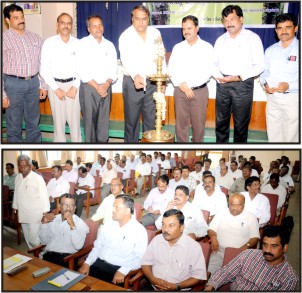
G.V. Sugoor, Additional Principal Chief Conservator of Forests (Development), inaugurating a workshop on Afforestation of agricultural land, organised by the Forest Department at the Aranya Bhavan in Ashokapuram in city this morning as (from left) CF Vijay Kumar, CCF Cariappa, CCF (Chamarajanagar) Dilip Kumar Das, CCF K.H. Nagaraj, DCF D.S. Gaonkar and ACF C.P. Durgegowda look on.
Picture shows a section of officers attending the workshop.
Mysore, May 30

A day-long workshop for Forest Officers on ‘Afforestation of agricultural land’ organised by the Forest Department began this morning at Aranya Bhavan in Ashokapuram here.

Inaugurating the workshop, Additional Principal Chief Conservator of Forests G.V. Sugoor said “The scheme started during 2011-12 is aimed to motivate farmers to plant trees in their agricultural lands.”

He further said that a minimum of 400 saplings should be planted per hectare and the department will provide the approved variety of saplings to the farmers along with Rs. 10 per sapling as an incentive.

Apart from this, the farmers will get Rs. 15 and Rs. 20 during the subsequent two years based on good maintenance of the saplings, said the Addl. PCCF adding that Mysore district has topped in performance with 49 lakh saplings planted last year.

Sugoor advised the participating officers to meet the farmers and motivate them on the novel concept. He also asked them to maintain the nursery in good condition.

Taking a strong objection to the absence of forest officers from Kodagu district, Sugoor said that they would be issued notices.

About 200 DCFs, ACFs and RFOs of Mysore, Mandya and Hassan are attending.

CCF Dilip Kumar Das and CCF K.H. Nagaraj were present

source: http://www.StarofMysore.com / General News / may 30th, 2012

Flowers, fruits to enthral onlookers in Madikeri

Show to be held from May 11 to 13
The flower-fruit show at Rajaseat will be unveiled on May 11 at 4.30 pm.

The yearly programme organised by District Administration, Zilla Panchayat and Horticulture Department will be held from May 11 to 13.

This year, the Government has not released any special grant for the flower show owing to drought in many parts of the State. Despite this, the officials are all set to put up a good show.
Despite organising the show in a simple manner, the show is nothing lesser than the previous shows.

The highlight of the show this year will be the drawing of animals and birds using white stones. Monsoon show using test tubes will also enthral the audience this time.

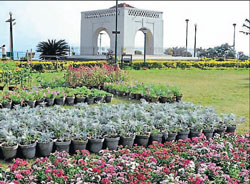
As many as 6,000 flower pots of 125 varieties will be displayed. Some medicinal plants will also be displayed. Names of all the plants will be displayed so as to help the students and general public.

Vegetable carvings will be a part of the show. In the evening, musical fountain and light show will be held.

The programme will be inaugurated by Assembly Speaker K G Bopaiah. Zilla Panchayat CEO M P Appachu Ranjan, MLC M C Nanaiah, M P H Vishwanath among others will take part.

source: http://www.DeccanHerald.com / Home> District / DHNS / Madikeri, May 10th, 2012

Madikeri: Helium Balloon Launched to Keep Tabs on Weather Pattern in Coffeeland

Madikeri:
The Kodagu Technology Users’ Association, in collaboration with the Indian Space Research Organization (ISRO) launched a ‘Sonda’ weather balloon into the open sky on Thursday, April 19 to monitor weather.

The balloon was released by IAS officer and Coffee Board chairman Jawaid Akhtar at Garagandur near Madapur in northern Kodagu. He said the coffee planters in Kodagu so far faced hardships because of changes in weather. With a view to avoid them, and with ISRO collaboration, this unit had been set up. Feedback received from this unit would be useful for the coffee-growers to keep track of the vagaries of weather and plan their agricultural activities, he said.

Akhtar further said that subsidies for coffee-growers had been announced under the 12th five-year plan and assured that the Coffee Board was committed to protecting the interest of the coffee planters.

Kodagu Technology Users’ Association (KTUA) secretary M B Bopanna said that weather information centres had been set up in 21 points in the district. Another 10 were being planned to be opened soon. Launching of each balloon would cost Rs 4,000, he said. Besides reporting the weather conditions at different points in the district, the balloon unit would record the rainfall, direction of the wind, temperature and humidity, water resources and the like.

The unit will rise to an altitude of 32 kms and will, every three minutes, transmit the information to the ISRO centre in Ahmedabad, said Bopanna.

KTUA president Kitty Devaiah, vice president Bose Mandanna and joint secretary Subbaiah provided a variety of information about the weather balloon. ISRO adviser Dr Das, another former IAS officer hailing from Kodagu Rathi Vinay Jha and others were present.

The 21 points of weather monitoring: D Chennamma PU College – Madapur, Coovercolly Estate – Belur, Kaukudi Estate, Durgadevi Estate – Hattihole, Lakshmi Estate – Kanchanakolli, Talacauvery, Ishwar temple – Napoklu, Kattimadu Estate – Margodu, Nakoor Estate – Sunticoppa, Coffee Research Centre – Chettalli, Elk Hill Estate – Siddapur, panchayat office – Maldare, Tata Coffee Estate – Pollibetta, Chennangolli Estate – Devarapura, Nittoor Estate – Nittoor, Sukalia Estate – Kutta, Forest College – Ponnampet, Government Primary School – V Badaga, Dental College – VIrajpet, Ram Prasad Estate – Palangala and Coffee Growers’ Association – Madikeri.

The balloon launching could have taken place a few days earlier, but the requisite permission was yet to be received from the Mangalore airport.

Vice president of KTUA Bose Mandanna, also a former vice president of the Coffee Board said,“It is mandatory for us to get permission from nearby airports to flow the balloon. We have got permission from the district administration and Airports Authority of India.”

Speaking to our Mangalore bureau, Mangalore airport director M R Vasudeva confirmed that the permission had since been given.

Bose Mandanna futher said that based on the data planters could decide if they could wait for the rain or could use the sprinklers. Irrigating an acre of land is estimated to require a lakh litre of water. Almost as a rule, all coffee-growing areas in the state have been facing power shortage, planters have to use diesel to use sprinklers.

source: http://www.mangalorean.com / by Team Mangalorean, Madikeri / by Ashwinin Appaiah with Vartha Pics / April 21st, 2012

Gene treatment may render fertilisers obsolete

Kodagu-origin US scientist works on path-breaking agriculture technology

Crops may soon overcome the need for fertilisers and pesticides. The research for this may be a long-drawn-out process, but will provide path-breaking results.

Dr B W Joe Poovaiah, the Kodagu-based agriculture scientist in Washington State University, is undertaking gene treatment research to eliminate the necessity of fertilisers and pesticides of crops. The research is in the advanced stages and field trials are pending.

He gave details of his research to reporters during a visit to the district. Poovaiah belongs to the Bachittira family of Kiggalu village in the district and settled in the US 40 years ago. His research – Calcium/calmodulin: The grand conductor of signal orchestration in plants – has attracted the attention of the international scientific community. He is working on calcium/calmodulin-mediated signaling to achieve the objectives.

The scientist says that while the CCamK gene – which is responsible for calcium/calmodulin-dependent protein phosphorylation – governs nitrogen fixation in crops, the DWF1 and AtSR1 genes are responsible for growth of plants and their resistance to the effects of pests on them respectively. Poovaiah’s team tasted its first success in identifying these genes. The later stage was the treatment of the genes (cloning) so as to suit their needs.

According to him, monocotyledons (for example, rice and wheat), cannot absorb nitrogen – a key nutrient – from the atmosphere, thus necessitating the use of fertilisers. However, the plants of legumes (dicotyledons – peas, beans) do not face this problem. The CCamK gene in these plants help them absorb nitrogen directly from the atmosphere.

This gene is being created in the lab and introduced into the rice and wheat plants to “teach” them to absorb nitrogen directly from the atmosphere (self-fertilising), thereby eliminating the need for fertilisers. Plants release salicylic acid into the atmosphere, whenever they are affected by diseases, as a means of fighting the diseases (defend themselves against pathogen attack).

The amount of acid release varies from plant to plant. Treating the AtSR1 gene can help increase the amount of acid release, thus increasing their immunity. A success in this task will end the dependence on pesticides for plants.

Similarly, controlling the DWF1 gene – responsible for the very tall growth in some plants – can make them grow less taller (altered growth habits) and give higher yield.

The results of the research document novel regulatory mechanisms where calcium acts as a ‘master switch’ in controlling various physiological processes in plants. The gene treatment will start yielding results in five to 10 years, he said.

His researches have been documented in science magazine Nature and the website of Washington State University.

source: http://www.DeccanHerald.com / Home> State / Madikeri, DHNS / April 10th, 2012

Novel way for coffee planters to check the weather


Many of us look online or rely on the weather reports to find out what the climate and temperature is going to be like.

However, the coffee plants in the Kodagu region of Karnataka have apparently come up with a rather different way of doing things.

According to reports, they have decided to use an unusual means of working out what is happening: by using a balloon.

How does this weather prediction method work?

Apparently, the balloon is filled with helium gas and is equipped with instruments which are able to study the weather systems.

For instance, it is said that the equipment would be able to determine whether rain was likely within a period of around 4 days.

Of course, this information is vitally important to the coffee farmers.

The information will help them work out whether to incur the costs of using sprinklers to irrigate the coffee crops, for example.

The information which is collected by the equipment in the weather balloon would be used alongside information which is collected from the other automatic weather stations (there are about 25 of them) in Kodagu.

Further calculations will then be made by the Madhapur station and sent on to the Indian Space Research Organisation’s research section.

Why go to all this trouble?

Apparently, this way of monitoring the changing weather patterns is an attempt to get predictions which are as accurate as they can be.

The coffee planters have contributed towards the cost of the operation and the Indian Space Research Organisation has agreed to help out too.

source: http://www.WorldCoffeeNews.com / by Clive / Thursday, April 05th, 2012

Forestry students training at zoo

Mysore Zoo is organising training for the final year B.Sc. (Forestry) students of Ponnampet Forest College from April 8 to May 14.

It is proposed to create awareness and opportunity to learn about Zoo management and their activities.

The programme is designed to understand the importance of conservation education, captive breeding research, rescue and rehabilitation.

B U Chengappa, retd principal chief conservator of Forests will inaugurate the training programme on April 8 at 11 am at Mysore Zoo.

M Nanjundaswamy, Chairman, Zoo Authority of Karnataka will preside over the function. R S Suresh, member secretary, Zoo Authority of Karnataka will participate in the inauguration as chief guest, according to a press release from the zoo.

Animal adoption

Mysore zoo has announced that the following persons have adopted the noted animals under “Adoption of Animals” scheme by paying the adoption fee.

Dhananjay Patnakar from Koramangala, Bangalore has adopted the cheetah paying Rs 50,000 for a year from March 24, 2012, to March 23, 2013, while Vaanathi Paulvannan from Coimbatore has adopted a Russel Viper for a year, paying Rs 2,000 .

Sonam Sultana and Prajwal B R from Rayanakere and Hootagalli in the city have adopted a Love Bird and Red Avadavit, respectively paying Rs 1000 each for a year, according to a press release from the zoo.

source: http://www.DeccanHerald.com / Home> District / DHNS / Mysore, April 03rd, 2012

Spending time with the tribals

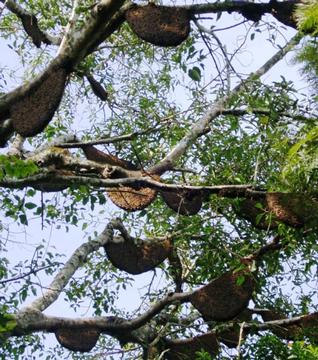
Honey hives: In the forest
It was a day to remember when school kids danced with the Soliga tribals recently at the town hall.
A recent event in Mangalore brought school students closer to Soliga culture. Many of them joined the Soligas as they danced as part of a programme held in the city’s town hall recently.

The students were from Stds. VI and VII. There were 40 students from Government Higher Primary School, Parappade, and 70 students from Government Higher Primary School, Mullakadu.

Song and dance
Enjoying ethnic beats: With the Soliga tribe
The dance was part of a week-long celebration of dances organised by the Information Departments of all the 30 districts of the state.

Most of the students said that they were seeing the dances and songs of the Soligas for the first time.

The Soligas explained to the students about life in the forest. The students asked them several questions about their food, their way of worship and how they lived in the forest.

Telling time

Raghuvir, Std. VII, Government Higher Primary School, Parappade, said, “I liked the way they described how they collect honey and how they tell the time by looking at the blooming of a flower. They should be allowed to live in their forests.”

Nirmala, Std. VII, said, “Women in the tribe have freedom.” Hithesh, Std. VII was thrilled how they could detect a snake hidden in the foliage.

Dhanaraj, Std. VII admired the way they dressed, their views on animals, their ornaments made from what is available and the variety of their dances

Mamatha, honorary teacher, Government Higher Primary School, Parappade, was impressed by their marriage custom, where a girl can choose her life partner and the expense of the marriage came to only Rs.12.50.

The word Soliga means “people of the bamboo”, because they believed they originated from the bamboo. They live close to nature. This is seen in their local tribal laws. They harvest fruits and berries only from trees that has lots of flowers. They leave the overripe ones for the birds.

They cultivate land only for five to seven years. Then the land is left untouched for 50 to 75 years, so that the forest takes over again.

source: http://www.TheHindu.com / Life & Style> Kids / by Renuka Phadnis / April 02nd, 2012