Category Archives: Green Initiatives / Environment

Living in a Rainforest on the Western Ghats

The Travancore wolf snake sprawled near the bathroom mirror of the author’s room / Photo by Medha Saxena
The Travancore wolf snake sprawled near the bathroom mirror of the author’s room /
Photo by Medha Saxena

Homestays in Coorg offer visitors a glimpse of a unique eco-system. Coorg or Kodagu is part of the Western Ghats that have been declared a world heritage site. It has many plantations that host hundreds of threatened species

It had beautiful dark coffee-brown scales with yellowish stripes and a sinuous slender body stretching no more than two feet.

The languid Tranvancore Wolf snake lay sprawled on the bathroom mirror. It had sneaked in to avoid the gentle night precipitation and was basking in the steam left behind by the hot water running earlier. It was hard to miss once the solar light was flicked on.

Gradually, it coiled back and slithered to a safer, darker corner behind the mirror. I was not sure at the time if it was venomous since it resembles the common Krait and is often targeted for the same reason. Suffice to say that I lay awake for most part of the night, wondering whether my nocturnal guest would like to take a peek at the room as well.

This was my penultimate night at the Rainforest Ecolodge on Mojo Plantation nestled at 1100-m altitude in Kodagu, Karnataka. The monsoon in a rainforest comes with its own delights and surprises. Leeches are a case in point. They crave to attach themselves to any warm body passing by to satisfy their desire for blood. But their presence also indicates a fertile soil and ecosystem. They are both the predator and the prey.
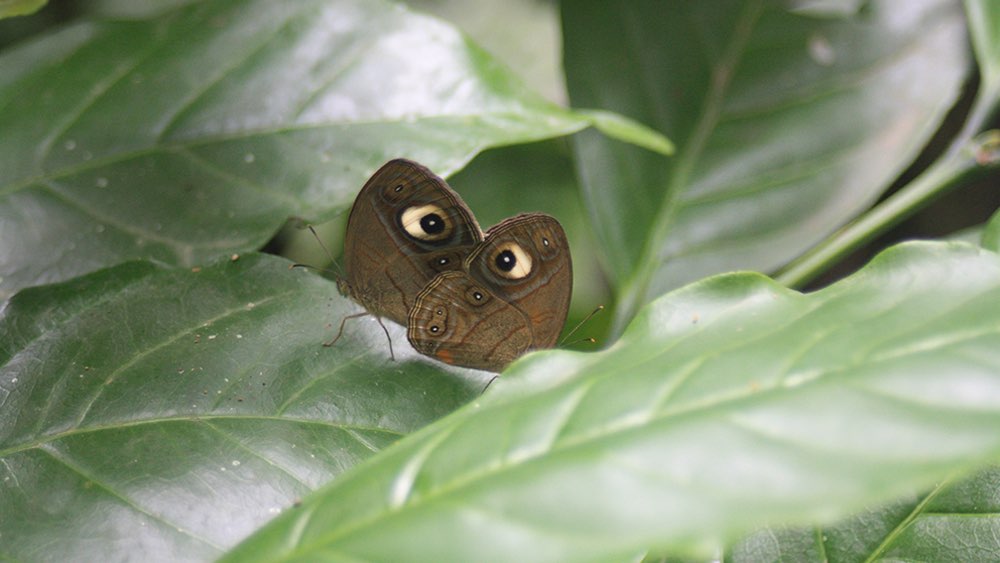
Beautiful butterflies found in plenty during monsoon in the rain forests of the Western Ghats /   Photo by Medha Saxena
Beautiful butterflies found in plenty during monsoon in the rain forests of the Western Ghats / Photo by Medha Saxena

Then there are the frogs, toads, spiders, wasps, dragon flies, lizards, snakes and birds. Their tribe multiplies and diversifies with every shower of water it seems. And the heavens provide them plenty of those here. But they only proliferate in undisturbed habitats. Each one of the creatures that call the rainforest home have adapted themselves to it over the millennia.

Each adaptation and evolution is a fascinating revelation. Weaver ants are a marvellous example. Thousands of them coordinate with each other to stitch together nests out of leaves much bigger than themselves.

Trees themselves appear like curated art installations climbing vertically and horizontally. They are draped with vines, creepers, fungi, moss, lichen, orchids and a variety of other epiphytes that resemble emeralds and jewels on a bride. They glisten and shine best on bright wet mornings.

Twinkling fireflies circle the trunks during nightfall. The valley was covered with a million of these mating fireflies a month or so earlier in a perfect ‘symphony in light’ as the student-interns Meghna and Lily, working at the plantation recounted.

Being in a rainforest during monsoon is also a musical extravaganza. Its inhabitants are engaged in a synchronised performance at all hours of the day. Louder than revellers in a marriage procession the frogs and cicadas often accompany the sound of rain, streams and wind. The cacophony is coupled with serenity in equal measure. If you listen hard enough everything in the forest sings. But how many of us really listen?

Geography and Bio-Diversity

Kodagu is part of the wide-ranging Western Ghats, older than Himalayas, spanning from Gujarat to Kerala for 1600 kms. It directly intercepts the Indian monsoon winds. One of the eight ‘hottest hotspots’ of biodiversity, it has 325 globally threatened species (flora, fauna, bird, amphibian, reptile and fish) and many that are unique to this area.
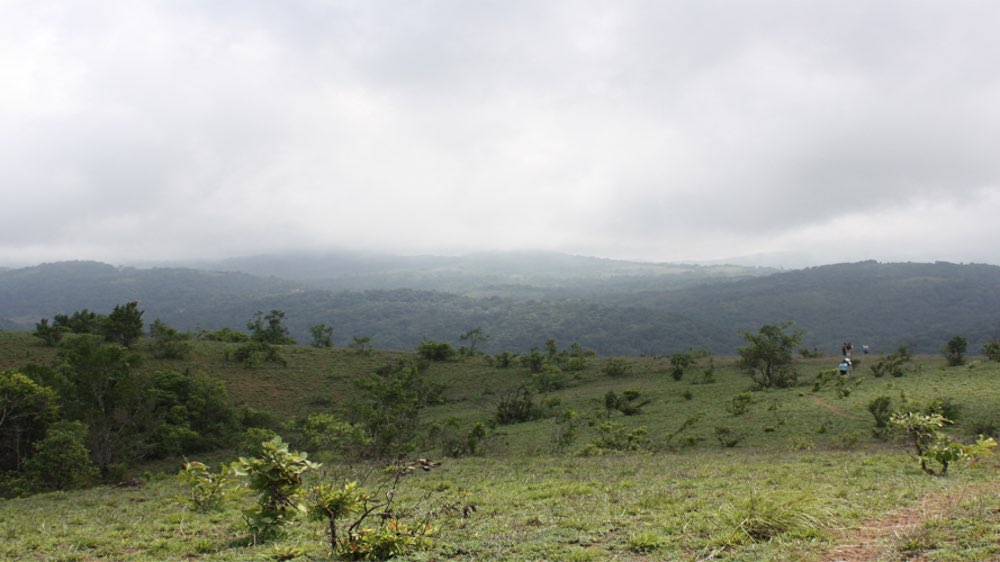
The lush green forests also help with carbon sequestration and reduction of global warming /   Photo by Medha Saxena
The lush green forests also help with carbon sequestration and reduction of global warming / Photo by Medha Saxena

This mosaic of natural beauty was inscribed as a world heritage site in 2012 meant to be protected by the Western Ghats Natural Heritage Management Committee (WGNHMC) and receive international support.

The tag was achieved after much opposition by states that feared that development will be impeded. Critics said that an informed consent was not obtained from the gram sabhas and Forest Rights Act 2006 was not implemented properly during drafting of the proposal for grant of heritage status. It could also violate the historic customary rights of the adivasis.

The forests of Western Ghats, however, aid economy and transportation by keeping the ports and creeks along western coast silt-free. The forests and mangroves also help with carbon sequestration and reduction of global warming.

Other critics say that the declaration has no effect on damaging developmental activities. As recently as June 2, 2017, there were protests in Madikeri over destruction of wildlife habitat, Cauvery river catchment area and forest land for the construction of railways, highways and power lines. As more of the landscape is disturbed there is more human-elephant conflict. Illegal construction, mining and corruption have caused water scarcity during summer months in an area that is generally overfed by rains.

The ensuing struggles repeatedly point us back towards essential questions of what is development. Who is it meant for? Who do the forests belong to? And how are decisions to be taken in the interest of all parties concerned?

Organic Farming

In ancient times the exotic products of the Kodagu region were traded along the Silk Route and on oceanic routes via the Arabian Sea. Cardamom and black pepper were indigenous to this region. Rice was the main crop. Coffee was brought from Yemen to Chikmagalur in India by Baba Budanin in 1670.

Legend has it that the Coorg Rajas may have given land to Moplahs near Nalkanad who introduced coffee seeds to the area. In the mid-1850s many European coffee plantations sprung up followed by private Indian ones. When the British left, they sold their lands to the local population. There are strong remnants of British culture here, like the North Coorg Planters Club dating back to 1883.
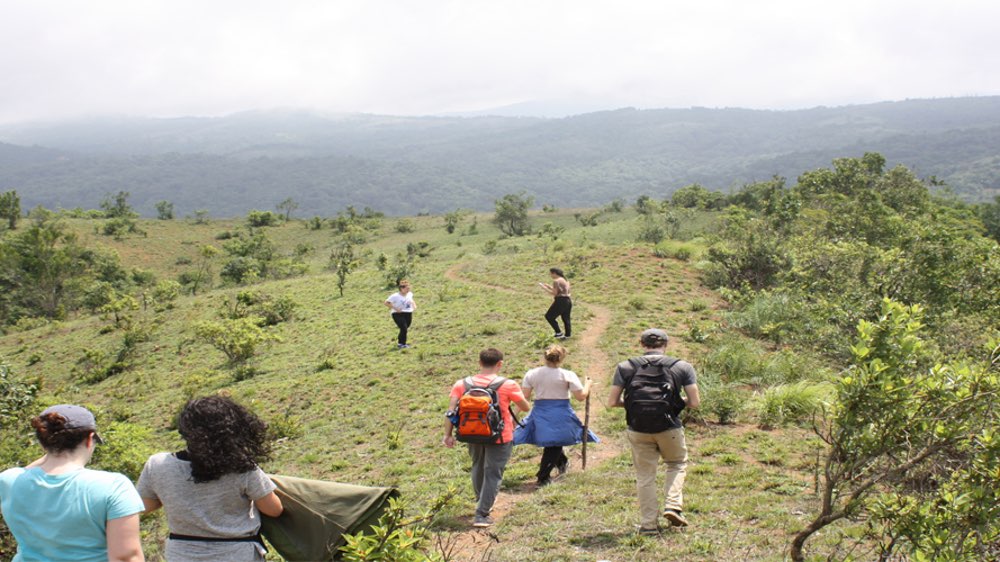
A walk through the greens gives an idea of the rich biodiversity of the region /  Photo by Medha Saxena
A walk through the greens gives an idea of the rich biodiversity of the region / Photo by Medha Saxena

Now a good chunk of the land is covered in coffee, tea, rubber and palm oil plantations. Commercial chemical-based farming and unsustainable agriculture have eroded this landscape. Smaller landholders and farmers still find it difficult to turn a good crop and farmer suicides affect the Western Ghats as well. There has been an attempt to set up farmer-owned companies by Agriculture and Organic Farming Group India. Hundreds of homestays have also come up in Coorg in the past few years to complement agricultural income.

Sujata and Anurag Goel, owners of Mojo Plantation, have successfully experimented with organic farming doing multiple cropping with cardamom, black pepper, coffee and vanilla under the shade of the rainforest. Spice trees, fruits and vegetables are also grown in open areas.

A molecular biologist, Sujata Goel explained that fungi secrete enzymes to release nutrients from decaying wood and dead organisms. Shivani, the manager, described on a tour of the plantation that fungal mycelium act as telecommunication networks for the trees to convey threats. They are also used as biological pest control. Similarly, termites redistribute soil and recycle nitrogen. Even weeds have an important role to play as temporary hideouts for insects.

Plants themselves synthesise compounds (terpenes, tannins, phenolics) to repel insects and convey distress signals to other plants and predators. Chemical pesticides kill the natural defence mechanisms of plants..

The Wise, Old Relic

Meghna and Lily recount a magnolia tree that they variously describe as a ‘tree of life’, ‘tree mother’, ‘earth mother’, ‘magical beautiful wise old relic’ that has twists, turns and huge branches that one can climb and roots that open up into giant cave systems and tunnels underneath – in the middle of a coffee plantation.

It was ‘a metaphor for India’ for them, probably signifying layers of wisdom, age and continuity in a land of general mayhem. Neither trees nor our bodies survive in exclusion to their environment. The commune with nature is complete. If you listen carefully, everything in the forest sings.

The author teaches in Delhi University

source: http://www.nationalheraldindia.com / National Herald / Home / by Medha Saxena / June 10th, 2017
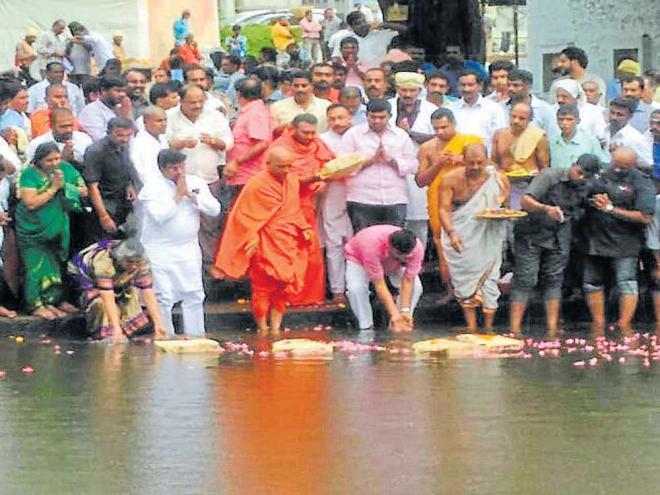
JD(U) leaders offer bagina to river Cauvery

The JD(U) leaders offered baagina to river Cauvery at Triveni Sangama in Bhagamandala on Sunday.

JD(U) state president M P Nadagouda, women’s wing president Manjula Umesh, Kodagu district unit president Sunil Kumar, Mandya district unit president Basave Gowda also offered special prayers at Bhagandeshwara Temple.

Speaking to reporters, Nadagouda said the state government and opposition parties have failed to fulfill the demands of the people. There is a need for alternative forces in the state. In this background, efforts are being made to strengthen JD(U). With the both Centre and state governments mud-slinging against each other with regard to waiver of loans, the farmers are in distress.

Manjula Umesh said that farmers are backbone of the country. Having unable to repay the loans, the farmers are committing suicide.

source: http://www.deccanherald.com / Deccan Herald / Home> District / DHNS / Madikeri – June 12th, 2017

Kodagu : Talacauvery sanctuary declared an eco-sensitive zone

No new hotels or resorts can take shape in the Talacauvery sanctuary

The government has declared the Talacauvery Wild Life Sanctuary spread across 105.59 sq km as an eco-sensitive zone. This comes after the Environment Ministry notification on the proposed ecologically sensitive areas (ESAs) in the Western Ghats. The state has about five national parks and 27 sanctuaries, seven conservation reserve and one community reserve. The draft notification was issued on May 25 last year and the final notification was issued on May 15.

Kodagu Chief Conservator of Forest Manoj Kumar told BM this is an eco-sensitive zone under the Environment Protection Act. As per the Act, the area around the protected area could be heritage sites and others and there has been a provision to declare them as sensitive zones. But this was not being done and the National Wildlife Board based on the Supreme Court direction had stated that it is about 10 km, if not declared. Hence, so far it used to be 10 km. “But we started rationalising the area and had sent a proposal. Each proposal is now being approved and the rest of the sanctuaries in the area around will soon be declared as sensitive zones. It is not the Kasturirangan report. It is a statutory requirement and the state government after discussion with the district administration and representatives had sent a proposal,” he said.

As per the notification the region around the sanctuary from 1-16 km has been declared as the eco-sensitive zone. No commercial activity such as mining can be conducted and no new industries can be set up here. It also prohibits extension of industries that cause pollution, major hydel power plants, saw mills as well as rearing of animals. This declaration is also likely to hamper the union government highway project from Bhagamandala to Kerala’s Panathoor.

source: http://www.bangaloremirror.indiatimes.com / Bangalore Mirror / Home> News> State / Bangalore Mirror Bureau / June 06th, 2017

Parjanya japa held at Talacauvery to propitiate rain god

Water Resources Minister M B Patil, Adichunchanagiri mutt seer Nirmalanandanatha swami, MLA P M Narendraswamy offer baagina at Triveni Sangama in Bhagamandala, Madikeri taluk on Sunday.

To propitiate the rain gods, the officials of Cauvery Neeravari Nigama Ltd (CNNL) chanted Parjanya japa at Talacauvery, the birthplace of River Cauvery on Sunday.

As there was stiff opposition for conducting parjanyahoma using government funds, homa was not performed. Only Parjanya japa and special prayers were held. CNNL Executive Engineer Basavaraj and his wife took part in the special prayers held under the guidance of priest Prashanth Achar. Water Resources Minister M B Patil did not take part in the japa.

Patil, who arrived at Bhagamandala at 3 pm along with the Adichunchanagiri Mutt seer Nirmalanandanatha Swami, offered baagina at the Triveni Sangama in Bhagamandala. Later, he offered prayers at the Bhangadeshwara Temple and Talacauvery.

Speaking to reporters, the minister said “if offering prayers to motheris wrong and a superstititious belief, then I am ready to conduct such prayers several times. Some offer prayers to lifeless stones. Why should one oppose offering prayers to the river Cauvery, the lifeline of crores of people,” he asked.

“The Krishna and the Cauvery are the lifeline of the state. I have offered prayers to mother Cauvery for good rainfall. Offering prayers to rivers is part of our tradition,” he said.

“Chief Minister Siddaramaiah does not believe in Parjanya homa and japa and termed it a superstitious belief. Doesn’t his wife offer prayers at temples? Has he not benefited from it?” Patil retorted.

Though the visit was termed as private, the itinerary given to local elected representatives mentioned it as a government programme. MLA P M Narendraswamy, MLC Veena Acchaiah, Patil’s wife Asha Patil, Water Resources department principal secretary Rakesh Singh, officials Gurupadaswamy, Manjunath and Rangaswamy and Kodava Sahitya Academy President B S Thammaiah were present.

source: http://www.deccanherald.com / Deccan Herald / Home> State / DH News Service / Madikeri – June 05th, 2017

Coffee in Coorg

Weekend getaway

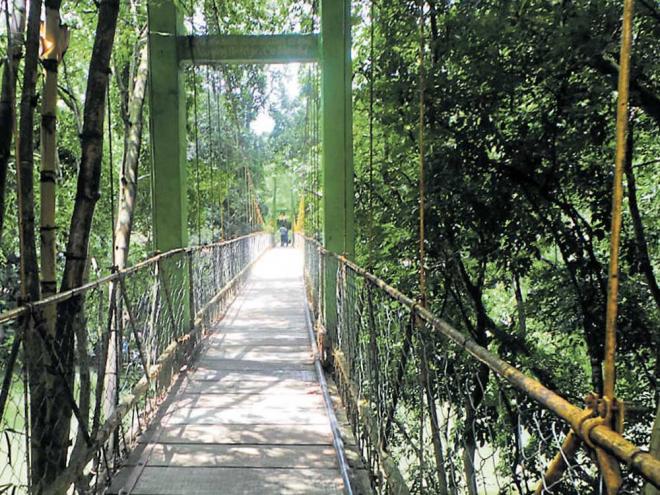
The Hanging Bridge at Nisargadham.

What do you do when you have a long weekend at hand and you wish to escape from the hustle and bustle of the IT capital? Driving to Coorg, the ‘Scotland of India’, is definitely not a bad option. That’s precisely what we did on one such weekend that had a public holiday attached. We decided to make the most of it by driving to that part of the world, where one can be at peace at the Buddhist Monastery, be one with nature at the vast coffee estates sipping a hot cup of filter ‘kaapi’, play Peeping Tom to bathing elephants and relish some delicious local delicacies.

How did we go?
The drive from Bengaluru (Whitefield) can take around six hours with a couple of breaks, so we decided to leave office early post lunch on a Friday with the intention of beating the weekend traffic that piles up on Mysore Road. The drive from Whitefield until the Mysore Road exit can be taxing and no sooner had we entered Bidadi that we started our countdown to the restaurant. We regularly halted on Mysore Road for some nice ‘thatte idli’ and filter coffee. Post our refreshment break, we drove non-stop until we reached Aishwarya Suites (at New Bamboo Bazaar Road, Mysuru City) for our overnight stay. On day two, we got off at around 7 am and headed towards Coorg.

The stay
We stayed at the Leisure Vacation’s Brook Stone Villas at Thalatmane village on the Mysuru-Mangaluru highway. The location is around six km from Gen Thimmaiah Circle as one turns towards Mangaluru. One has to traverse through acres of coffee estates on a ‘kuccha’ road, giving the driver a semi off-roading experience.

What did we do?
Driving through the scenic road flanked by tobacco farms, we visited the Buddhist Golden Temple. After paying homage at the temple, our next port of call was Nisargadhama Island on the Kaveri river. Here one can visit the island via a hanging bridge, suspended over the river. Later in the day, we visited Abbey Falls and called it a day after visiting Raja’s Seat — a picnic spot that offers a West facing beautiful valley and sunset view, a nice flower garden and a musical fountain treat.We covered Talakad on the second day. At Talakad, one can visit the temple and the higher altitude offers some good sights of the valley beneath. On day three, post breakfast, we headed back to Bengaluru albeit with lots of lovely memories.

(The author can be contacted at srikanthmenon@yahoo.com)

source: http://www.deccanherald.com / Deccan Herald / Home> Supplements> MetroLife / by Srikanth Venugopal / May 11th, 2017

This gentleman grows his own coffee . Right here in Bengaluru

Arjun Belmar owns 34 acres in T Dasarahalli, off Tumkur Road

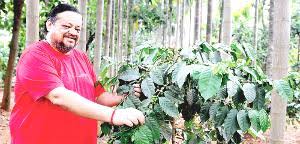
For close to 30 years, Arjun Belmar hasn’t spent a penny on buying coffee. He lives in the city and grows his own coffee. Yes, you read that right. He does. Belmar and his family offer proof that coffee is not only grown in Chikkamagaluru and Kodagu, but also right here in our city.

The businessman has been growing coffee in the face of scorching summers or water scarcity. “Bengaluru is 900mt above sea level and the land can be utilised for coffee. But one needs to grow it properly in the shade,” he explains.

When Bangalore Mirror visited his 3,000 sq ft coffee plantation, it felt like a forest in the middle of the concrete hub.

“Years ago, T Dasarahalli was away from the city. Just about 100 people lived here and we had only one bus to our house from City Market. My father used to love plants and we grew everything on our land. Not just variety of trees and plants, we also had many cows which used to give us 200-300 lt of milk. We used to share it with whoever came to our home,” Belmar says.

The grand old times are gone, but the family continues its green tradition. They keep bees and harvest honey too on their property.

However, Belmar, remembers a time when they just had to dig up to half a foot to find water. “That is how we were able to grow ginger, grapes, vegetables, paddy, wheat, sugarcane, betel, pepper and other plants,” he said.

On how they started growing coffee, Belmar’s explanation is simple – Everyone in the family loves coffee and wanted to taste the authentic thing. “We used to have our own cows and buffaloes for milk and grow sugarcane for jaggery and sugar. Why then, can we not have our own coffee plants, we thought. Then we went to
Chikkamagaluru in search of the plants.”

Though they were unsure if coffee plants can survive in Bengaluru, they kept going with their plan. “Today we have around 50 plants,” he says. “We had other bigger trees on the land. Coffee grows in semi-shade so we put them between these big trees. We watered the plants continuously and saw the first flowers on the plants,” he says.

He recalls that his father had tears in his eyes when he saw the coffee plant flowering at last.

“Each coffee plant gives around 2-3kg of coffee fruit. In a year, we get close to 50 kg. We pluck the fruit and clean it and keep it for drying. Once it has dried properly, we give it for processing and get it done in a customised manner. We tell them whether we want it with or without chicory,” he said.

His friends and family, who visit the farm, are in awe of the plantation. “My friends used to ask me if I were living in Madikeri or Bengaluru. They love the coffee we give them in packets. People who visit us from abroad wait to visit again to refill their stock,” he said.

Belmar also grows the cocoa plant. He has close to 150 cocoa plants, the seeds of which he sends to Mangaluru for processing.

“We drink premium coffee personally handled by us. It is better than the coffee grown in Chikkamagaluru,” he says, with a hint of pride.

It’s all about the honey

Belmar says they started keeping bees as his grandfather was one of the founders of the Bee-keepers Association in the city. “We have been harvesting honey on our land for the past 40-50 years. Keeping bees easy here because of the rich bio-diversity.”

Bee-keeping in the city dates to the times the British were here. Belmar says, “It was during the British rule that the Bee-keepers Association began. These days, people are trained to keep bees and harvest honey.”

He has one special information about the honey. “When the Neem tree is flowering, the honey tastes best and it is clear. In the mango season, the honey is quite reddish and very sweet. When the tamarind tree is flowering, honey is a little sour. For each season, we have a different flavour of honey.”

source: http://www.bangaloremirror.indiatimes.com / Bangalore Mirror / Home> Bangalore> Others / by Kumaran P, Bangalore Mirror Bureau / May 10th, 2017

Severe summer unveils gem in Kodagu

KodaguTempleKF28apr2017

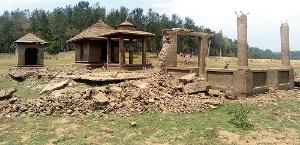
Lord Shiva temple accessible to devotees after 33 years as water in Chiklihole reservoir near Suntikoppa recedes

Summer is peaking in the state to compound the prevailing drought and as a result of receding water levels in dams across the state, submerged structures have been resurfacing. With some of the buildings showing up being temples, people have some reason to celebrate even in the eventuality of a shortage of water. So it is, at the Chiklihole dam near Suntikoppa of Kodagu district, after a lord Shiva temple emerged recently.

The temple that was submerged in the reservoir is visible for the first time in 33 years. The spot has since been attracting tourists, who are otherwise missing the pleasing sight of surging waters in the Cauvery catchment area in Kodagu they have been familiar with.

The Chiklihole reservoir, from which water is supplied to farmers of Kushalanagar, Rangasamudra, Bettageri, Nanjaraya Pattana and Guddehosuru among others, has a storage capacity of 0.18 TMC.

The temple area was included in the Chiklihole dam basin in 1983, after experts concluded the land was a good source of water. The government ordered an alternative temple to be built nearby, and in 1993, a Magdooru family constructed the temple of Vishwanatha and installed the main idol of lord Shiva from the old temple in it.

That Vishwanatha temple of Magdooru went on to become famous.

According to residents of Magdooru, Shivaratri is celebrated grandly in the new temple of their village, but with them now being able to access the old temple, they will celebrate the festival even better. Sai Kumar of the Magadooru family, which hails from Kerala, told Bangalore Mirror, “Our ancestors moved from Kerala to this place
in 1947 and they constructed the temple in 1969. As the temple was sunk in the reservoir in 1983, we constructed another one in 1993 on land allotted by the government. We are very happy to see the original temple now.”

Karthik Prasad, a tourist from Mysuru, visits the reservoir at least once a year. “This year I saw the temple, which was like a fantasy,” he said.

source: http://www.bangaloremirror.indiatimes.com / Bangalore Mirror / Home> News> State / by Bangalore Mirror Bureau / by Manoj Sharma / April 26th, 2017

Docu showcases decline of Kodagu

KodaguKF25apr2017

Coorg: The Untold Story blames mushrooming resorts for district’s garbage pile-up

A six-and-half minute documentary shot by a group of environmentalists highlights the environmental degradation of Kodagu district.

The documentary titled Coorg: The Untold Story was shot by Clean Coorg Initiative in association with Surfing Swami Foundation and Mantra Surf Club. Shot in Madikeri and other parts of Kodagu district, it highlights the garbage pile up due to the mushrooming of resorts across the district.

It further went on to state that illegal land conversion, encroachment and sand mafia were turning out to be a nightmare for the district and how the garbage pile up on the banks of the river Cauvery is a threat not just for the residents of the district but for people living in Bengaluru and other cities.

Blaming the government and tourists, environmentalists have accused authorities of going soft on the resorts.

The activists fear that Kodagu district is not far from becoming the Mandur landfill where Bengaluru’s garbage is dumped.

Speaking on the crises, Col Muthanna from the Coorg Wildlife Society said, “Kodagu has an overall population of 5.5 lakh people whereas the number of tourists who visited the district last year was 13 lakh. In fact, the density of population in Kodagu is just 135 per sq/km, which is one of the lowest in the country.

“There are many resorts which have been constructed near the banks of Cauvery river, which release their bio-waste into the river. The government should never allow the expansion of resorts as it may also lead to the landslides and other disasters. We are not against the resorts but against their expansion,” he added.

Another environment activist Sundar Muthanna said that Kodagu which is known as the Scotland of India was fast becoming the Garbage Dump of Karnataka. He said that all resorts must mandatorily have sewage and garbage processing units in the resorts.

He warned that the district was turning into an urban jungle which will not just impact the people of the district but also people residing in Bengaluru and other parts of the state as the main source of drinking water is from the district.

The untold story

* The documentary titled Coorg: The Untold Story was shot by Clean Coorg Initiative in association with Surfing Swami Foundation and Mantra Surf Club.

* Shot in Madikeri and other parts of Kodagu district, it highlights the garbage pile up due to the mushrooming of resorts across the district.

* It further went on to state that illegal land conversion, encroachment and sand mafia were turning out to be a nightmare for the district and how the garbage pile up on the banks of the river Cauvery is a threat not just for the residents of the district but for people living in Bengaluru and other cities.

* Blaming the government and tourists, environmentalists have accused authorities of going soft on the resorts.

source: http://www.bangaloremirror.indiatimes.com / Bangalore Mirror / Home> News> State / Bangalore Mirror Bureau / April 21st, 2017

An Environmentalist Who is Nothing Short Of a Saviour!

Muthanna01KF05apr2017

We were born to help the world, not to destroy it… Then why we are destroying the very environment we live in?

Too much pollution, loss of biodiversity, not enough clean fresh water, soil contamination, deforestation, global warming are just some of the environmental issues we are facing today. We need to make some changes in our daily lives to live in a greener, more sustainable way.

Saving our planet, lifting people out of poverty, advancing economic growth… these are one and the same fight. We must connect the dots between climate change, water scarcity, energy shortages, global health and food security for the love of protection and preservation of the environment and wildlife.

Muthanna02KF05apr2017

The environment is being destroyed at an alarming rate. Fortunately, there are hard-core environmentalists who are nothing short of saviours that are working tirelessly and round the clock to save our habitat. One such person is the President of the Coorg Wildlife Society – Col C P Muthanna (Retd).

Col Muthanna was born in Coorg (now known as Kodagu) in 1953. His father, late Shri CM Poonacha, was an active freedom fighter and imprisoned a number of times and was once hung in chains for 15 days along with other freedom fighters of Kodagu. In the post-Independence era his father became the first Chief Minister of the erstwhile Coorg ‘Part C’ State, then the Chairman of the State Trading Corporation of India and subsequently the Cabinet Minister for Railway at the Centre. Later during the seventies he served as Governor of Madhya Pradesh and Orissa.

In spite of the political antecedents of his father, Col Muthanna chose the life of the uniform and joined the army in December 1972, commissioned into the 4th battalion of the Maratha Light Infantry. He moved out to a new Raising, 18 Maratha Light Infantry, which he subsequently commanded. On completion of his command tenure in April 1996, he took premature release. One of the reasons for leaving his checkered career from the army was his desire to serve the cause of protecting the environment.

Muthanna03KF05apr2017

After retirement, he founded the Environment and Health Foundation (EHF), India in 1998. The EHF has been working mainly on water related issues. He conducted a number of water management awareness programs and wrote a book in Kannada on rainwater harvesting for Malnad region. He has set up a number of rainwater harvesting structures for institutions and houses in Kodagu.

A conservationist and nature-lover at heart, he was President of the Coorg Wildlife Society from 2003 to 2009, and again from 2012 till date. In 2006, Col Muthanna received the Dr. APJ Abdul Kalam award for his work in the field of environment by the government of Karnataka. He has been nominated on three occasions as ‘Coorg Person of the Year’. He has also founded the Kodagu Boxing Association in order to tap the boxing potential in Kodagu and spot talent at a young age.

Under Col Muthanna, the Coorg Wildlife Society filed a PIL and prevented a hydroelectric project in the Evergreen Hill forests of Kodagu that would have inundated large areas of the Brahmagiri Wildlife Sanctuary in Kodagu. He has also helped a local village community in halting a large stone quarrying unit close to the sanctuary.

He has campaigned for over seven years against a High Tension Power Line through Kodagu which would result in the destruction of more than 54,000 trees. Due to his efforts the power line was realigned and thousands of trees have been saved.

Work on the power line had caused disturbance to wild elephants in the area and had increased attacks by elephants. Col Muthanna was instrumental in compelling the Power Grid Corporation of India to provide Rupees six crore to the Forest Department for mitigation of Human Elephant Conflict.

On behalf of the Coorg Wildlife Society, Col Muthanna has prepared a concept note on Management of Elephant habitat in South India. The primary habitat of elephants in South India is shared between the three States of Karnataka, Kerala and Tamil Nadu. These are known as Mysore Elephant Reserve, Waynad Elephant Reserve and Nilgiris Elephant Reserve respectively.

These three reserves represent a contiguous landscape spread across 12,587 square kilometres and with a population of over 10,000 elephants. It is the largest population of Asian Elephants in the wild. The pressures on the habitat have manifested in serious escalation of Human Elephant Conflict in this region over the past two decades.

Col Muthanna has highlighted the need for a coordinated approach by the three states with directions from the Ministry of Environment and Forests at the Centre so that there is a comprehensive and long term plan that can be implemented. He is in discussion with the Karnataka Forest Department on this very important subject. He has emphasized in his note that improvement of habitat for elephants will benefit all forms of wildlife.

The three elephant reserves also represent important river catchments and watersheds of South India and protection of these forests is vital for the water security of the region.

He is also working on a policy document for protecting the Kodagu landscape, which is the principal catchment for the Cauvery River. The Cauvery is the life line for South India and sustains 8 crore people and over 600 major Industries.

Col Muthanna often states that protection of the Kodagu landscape is in the ‘National Interest’. However, his efforts have met strong and often vicious opposition from local politicians backed by the timber lobby and land mafia. Col Muthanna jokes that the thick hide that the Army has provided him is more valuable than his Army pension!

On behalf of the EHF, Col Muthanna has prepared a proposal termed as the HIMEK Alliance for Stabilization of Climate Change in the Himalayas and the Mekong Basin. The concept is to mitigate climate change through drastic reduction of Black Carbon emissions, which have a regional impact.

This is to be coupled with a massive program of Forest Land Restoration to regain the lost glory of the forests across the Himalayas and the Mekong basin. The proposal has obtained the approval of the International Union of Conservation of Nature and involves 11 countries including the Himalayan nations, Bangladesh and the countries of the Mekong Basin.

Through his coordination, a working group including resource persons from Bangladesh, Nepal, Thailand and India are working on the draft project document. The Rivers originating from the Himalayas and flowing through the Indian Subcontinent and Mekong Basin in South East Asia sustain one fifth of the world’s population. Therefore the HIMEK Alliance could be one of the largest regional initiatives on environment ever.

He is also in communication with the army on protecting the Himalayan ecology. The army is a major stake holder in the Himalayas and he has written an article on this subject which was published in the 2015 July to September edition of the Indian Defence Review. He has also prepared a draft document on Food, Water and Economic Security for India, based on the concept of sustainable development by zoning the country and protecting important catchment areas and food producing regions in India.

The snow fed rivers of the Himalayas sustain over one fifth of the human population. Col Muthanna stresses on the point that it is, therefore, a matter of deep concern to the entire global community and to the people of South Asia particularly that the Himalayan environment is under serious threat due to the effects of climate change. Lester Brown of the World Watch Institute in USA says that due to the effects of global warming, the pattern of precipitation in the Himalayas and the regions contiguous to the Himalayas will undergo a more drastic change in the years to come.

There is agreement that effective reduction of Short Life Climate Forces will enable the temperatures in these principal eco-regions to stabilize over a short period of time and supplement the on-going international agreements and action programs for long term reduction of CO2 levels.

The urgency of the situation has been highlighted by statements from climate scientists who say that the ‘tipping point’ may be a mere five years away. The formation of the HIMEK Alliance comes at an urgent time where the effects of climate change are critical and cannot wait.

We all have a duty to spread the word to Go Green! Dare to be a force of Nature. Each and every one of us has the power to make a difference.

~ Let us join hands to Save the Earth for future generations ~

source: http://www.thecitizen.in / The Citizen / Home> Life / by Rashmi Oberoi / Tuesday – April 04th, 2017

Broken up by man, killed by inbreeding

Inbreeding among trees and higher rates of offspring deaths may see some tree species in isolated forest patches die out slowly. In perhaps the first elaborate study of its kind in the Western Ghats, a team of researchers from across the globe has found that breaking up forests by even 200 metres can lead to the gradual death of tree species.

The results of the study — published recently in the journal New Phytologist — are disconcerting and show that less than 10% of germinated seeds survive in such patches owing to genetic faults, when compared to over 50% in contiguous forests.

Researchers from ETH Zurich in Switzerland, University of Aberdeen in the United Kingdom, and College of Forestry in Ponnampet, Kodagu, along with Ashoka Trust for Research in Ecology and the Environment (ATREE) and the University of Agricultural Sciences — both in Bengaluru — studied the seed dispersal patterns of Dysoxylum malabaricum (white cedar) which harbours the Malabar grey hornbill. More than 35 sacred groves of Kodagu, protected and worshipped by the local community, were studied across a 216 sq.km landscape where these forest patches are islands surrounded by paddy or coffee plantations.

The team used a combination of GPS and genotyping (DNA sequencing) to find out the lineage of the offspring in these isolated forests. Of the 321 trees that were sequenced, just 0.3% had emerged from “parents” that were in different patches. A staggering 267 trees (83%) had both their “parents” from the same forest patch.

“The seedlings are often mutated and completely devoid of chlorophyll (that is, their leaves have no colour), and these die out in a few months. This has affected forest regeneration,” said G. Ravikanth from ATREE.

The researchers also found that 95% of the seeds were dispersed within 200 m of the parent tree, but the sacred groves are usually situated at least 400 m and even 24.5 km apart; this leaves inbreeding as the only option. “The growth of areca and coffee plantations over three decades has isolated these forests and we are now seeing the effects of inbreeding depression. When the older trees die, we will start to see these forests disappear entirely,” said Mr. Ravikanth.

C.G. Kushalappa, Dean of the College of Forestry, said that while wind-dispersed species could perhaps overcome the gaps in forests, species that rely on birds or insects for pollination will struggle to get genetic diversity to survive.

Re-establishing tree corridors

The disappearance of plant species owing to inbreeding can be contained either through artificial dispersal of seeds or by setting up tree corridors, say researchers.

The research comes at a time when the lush forests of the Western Ghats are fragmented by reservoirs, hydroelectric projects, large highways, industries and plantations. At present, the team is researching on dispersal rates of wild nutmeg (an important tree for the hornbill population), the wild Amla tree in M.M. Hills and B.R.T. Reserve, and other plants in order to study the effect of fragmentation.

While the concept of corridors for elephants and tigers is well established in the country, the need for a similar approach to ensure constant gene flow for trees has been ignored. “We are trying to establish tree corridors to connect broken-up patches. Near Tiruchirappalli, we are restoring the connections of Myristica swamps. These corridors will provide genetic flow between forest patches,” said G. Ravikanth of the Ashoka Trust for Research in Ecology and the Environment.

In terms of conservation, the disappearance of plants and trees will have an adverse effect on animals that are symbiotically linked. For instance, hornbills and butterflies prefer only certain species of trees or shrubs.

source: http://www.thehindu.com / The Hindu / Home> News> States> Karnataka / by Mohit M Rao / Bengaluru – April 03rd, 2017