Category Archives: Coffee, Kodagu (Coorg)

Coffee Board Courts Cat Poop Controversy

Issues notice to producer of Civet Cat Coffee in Kodagu; files
Police complaint

Plaint closed as there is no evidence of cats being reared and
tortured for poop
CivetCatKF26may2019

Mysuru:

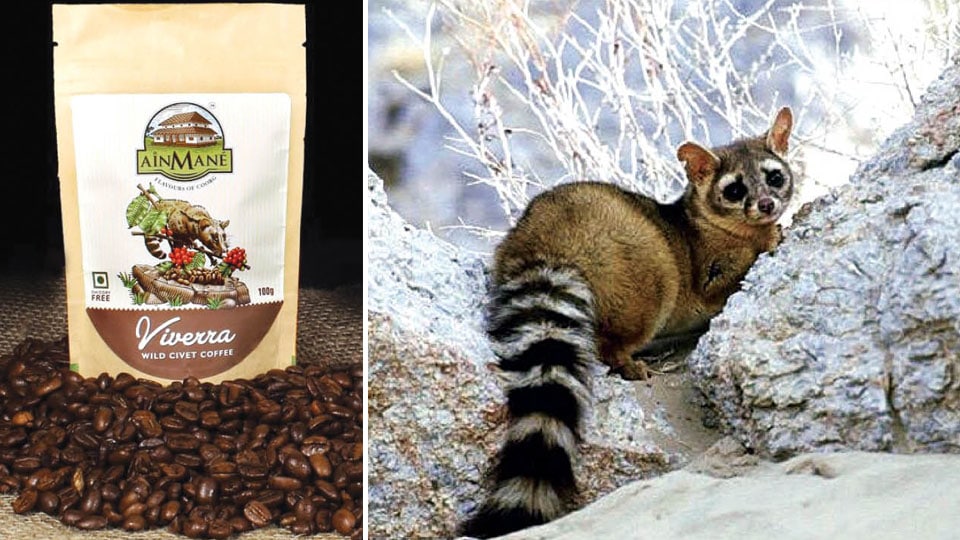
The Coffee Board has issued notice to Coorg Consolidated Commodities regarding what it calls ‘unauthorised sale of Civet Coffee’. The notice has been issued by Deputy Director, Extension, Coffee Board, to Thamoo Poovaiah who markets Civet Coffee in Kodagu.

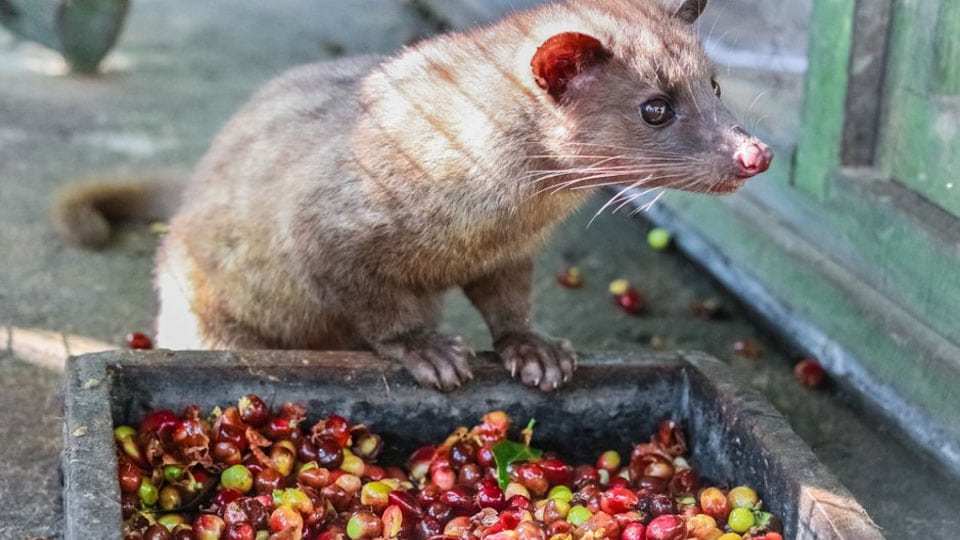
India, Asia’s third-largest producer and exporter of coffee, has been producing the world’s most expensive coffee, made from the poop of Civet Cat, on a small scale in Kodagu district. The Civet Coffee, also called as Luwark coffee, is expensive because of uncommon method of producing such a coffee. It is produced from the coffee beans digested by Civet Cat.

The faeces of this cat are collected, processed and sold. It is highly priced because it is claimed to be more nutritious and high cost involved in sourcing the animal dropping, wastage during processing and quality certification.

The Coffee Board notice, the copy of which is with Star of Mysore, states that the sale of Civet Coffee is banned under Wildlife Act. “It is surprising how can you brand and sell Civet Coffee when you don’t own wild cats in your estate. You are procuring raw coffee in the form of faeces of wild cats which is sold by persons who are known to you,” the notice states.

The Coffee Board has asked Thamoo Poovaiah, who is the managing partner of Coorg Consolidated Commodities that markets the Civet Coffee in brand Ainmane, to provide the names and addresses of those persons who supply Civet Coffee to him.

Police complaint

In addition to sending a notice, the Coffee Board also filed a complaint against Thamoo Poovaiah with the Kodagu SP for allegedly rearing Civet Cats to produce Civet Coffee. The complaint mentions that a well-known animal rights activist has alleged that worldwide, Civet Cats are confined and force-fed coffee cherries for them to produce poop. The complaint alleges that even Thamoo Poovaiah rears Civet Cats in confinement to produce the expensive coffee. Rearing such cats in cages is illegal and punishable under Wildlife Act as it is one of the most endangered species in the world.

Complaint closed

Following the complaint, the case was transferred to Madikeri Rural Police Station and the Police, armed with a search warrant issued by Madikeri Additional Civil Judge and JMFC Court, conducted an inspection of Poovaiah’s estate near Kadagadalu along with Coffee Board and Forest Dept. officials. The team discovered that Civet Cats are not reared at the estate and the case has been closed now and the same has been communicated to the Court.

Reacting on the Coffee Board notice and the subsequent lodging of the case, Poovaiah told SOM that his firm procures Civet Cat poop through legal means and in no way the endangered species are confined and tortured as alleged by Coffee Board.

‘False and malicious complaint’

“This is a false and malicious case. If at all there is a violation in the Wildlife Act, the Forest Department must take action. Why is Coffee Board involved in this? Actually, Coffee Board should be promoting rare coffee produce such as Civet Coffee which are famous worldwide rather than harassing growers who are popularising such exotic coffee,” he said.

“In reply to the Coffee Board notice, I have set them a legal notice asking clarification on their move and how could they act autocratically in collusion with some animal rights activist that they have not named. Their move to lodge complaint and search my premises will amount to defamation and I am ready to take them on in the Court of law,” Thamoo Poovaiah added.

source: http://www.starofmysore.com / Star of Mysore / Home> News / May 25th, 2019
How many coffees are really in your cup?

India is the seventh-largest producer of coffee beans in the world. Some varieties are so prized abroad, you’d be hard pressed to find a cup here. Take a look at six of the most special Indian beans.

Drinking coffee used to be a simple matter of instant or filter. When Café Coffee Day and Barista first began to spread at the turn of the millennium, we began to be able to tell our lattes from our cappuccinos, but we still know more about where our wine comes from, than our brew.

India is currently the seventh largest producer of coffee in the world, and there are Indian coffees so sought-after by foreign markets that they’re hard to find here at home. According to the Coffee Board of India (CBoI), we produce about 3.1 lakh tonnes of coffee beans a year. Most, and the best, of it is exported to Italy, Germany and Russia. “About 75 per cent is exported,” says Babu Reddy, deputy director of market research at the CBoI.

There are 13 major coffee-growing regions in the country, Coorg and Chikmagalur in Karnataka being the largest. Coffee is also grown in parts of Orissa, Andhra Pradesh and the north-east.

Six Indian varieties have recently been awarded the Geographical Indicator (GI) tag by the Government of India, meaning that their names can only be ascribed to beans from those specific regions. Here’s a look at the six, and the brands where you might encounter them.

BABA BUDANGIRI & CHIKMAGALUR ARABICA: DESI MOCHA

Taste notes: Intensity and clarity of a rich mocha flavour
Used by: KC Roasters, Dope Coffee Roasters

The Baba Budangiri hills in Chikmagalur, Karnataka, are where coffee was first grown in the country. According to legend, seven coffee beans were smuggled here from Yemen in the 17th century, hidden in the tunic of a Sufi saint. His name was Hazrat Shah Janab Allah Magatabi, or Baba Budan. The coffee grown here takes his name.

WAYANAD ROBUSTA: THE INSTANT BEAN

Taste notes: Bitter, pungent, but with a mild flavour and full body
Used by: A number of instant coffee and filter coffee brands

The gently sloping hills and rich laterite soil of low-lying Wayanad district in Kerala is excellent for the cultivation of Robusta beans. According to the Coffee Board of India, Wayanad produces 90% of the state’s coffee.

Broken Robusta beans are used to make instant coffee as well as in filter coffee blends. Indian filter coffees are usually a blend of Robusta and Arabica, combined with chicory for a strong flavour base. This type of blend is best suited for the milk-and-sugar coffee that Indian coffee drinkers prefer.

ARAKU VALLEY ARABICA: THE DESI EXPAT

Taste notes: Exhibits a full body coupled with bright citric flavours and striking aroma with a note of chocolate and a sweetness in the finish.
Used in India by: Araku Valley Coffee House in Vishakapatnam

Getting your hand on a cup of Araku Valley coffee might be easier in Paris than in India. This smooth, mellow, complexly flavoured bean grows in a single region on the borders of Orissa and Andhra Pradesh, by tribals who follow traditional practices of growing, selective picking and management. The cherry ripens slowly in the mild climate at the high altitude of Araku Valley, but as with the Ratnagiri Hapus, most of it is exported.

COORG ARABICA: SOUTHERN STAPLE

Taste notes: A well-balanced and mildly sweet taste with subtle body, it’s neither bitter nor sour, has low acidity levels and a mild chocolatey aftertaste.
Used by: Dope Coffee Roasters, Blue Tokai Coffee Roasters

Coorg is the largest coffee-growing district in the country. The Coorg Arabica is identified by its uniform beans that lend itself to an even roast. It is cultivated at high altitudes, and registers a slow growth rate, which prolongs the time for the cherry to ripen. Its balanced flavours are best extracted through a medium roast and hot brew.

MONSOONED MALABAR

Taste notes: Mellow, musty and fruity-flowery flavour, mildly aromatic and reduced acidity
Used by: Marc’s Coffees, Dope Coffee Roasters, The Coffee Co

The Monsooned Malabar was identified and branded as a specialty coffee by the Coffee Board of India in the 1960s. It is harvested just before the monsoon and left to soak up the moisture laden winds of the Western Ghats during the rains, in order to replicate the conditions created during its rocky voyage from India to Europe centuries ago. As the story goes, owing to the monsoon winds en route, the swollen beans at the end of the journey acquired special characteristics that resulted in reduced acidity and mellow taste. It is usually blended with stronger and more acidic varieties of coffee.

source: http://www.hindustantimes.com / Hindustan Times / Home> More Lifestyle / by Natasha Rege, Hindustan Times / May 26th, 2019

Fun-filled Labour Day at Ponnampet

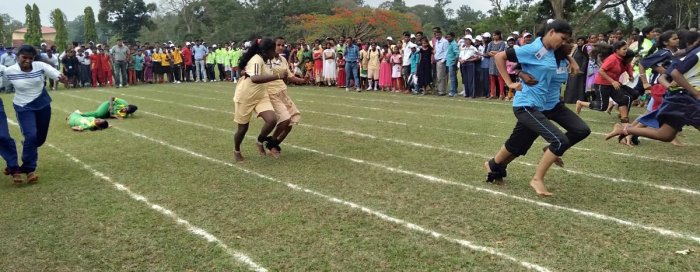
Women workers at Tata Coffee, Palibetta take part in a three-legged race organised by Tata Coffee on Wednesday.

Healthy competition, team spirit, and enthusiasm marked the Labour Day celebrations organised in Ponnampet on Wednesday.

Tata Coffee, Palibetta, organised various sports events for its employees to celebrate Labour’s Day. Around 300 workers from 19 departments of the company, took part in around 23 various events with their spirit aloft.

Sack race, three-legged race, tug-of-war, and many other sports with rural touch, refreshed the players as well as the audience. Workers also took out a march past at the programme.

Sports convener Kiran Madhavan and sports adviser C U Ashok were present.

Speaking at the occasion, Tata Coffee General Manager K G Rajiv said that the company has been providing all facilities to its workers and this has helped in establishing a mutual faith between the organisation and its employees. The Tata Coffee has been conducting sports day every year on Labour Day to boost integrity among workers.

Rajiv advised the workers to follow security measures during their work so as to protect themselves from wild animal attacks and also from other accidents. Senior General Manager M B Ganapthy lit the sports torch.

In Madikeri

City Workshop Labourers Association chief advisor P B Chitrakumar said that the labourers contribute immensely to the economy of the Nation and the government has to respond to their problems.

Speaking at an event organised by the City Workshop Laborers Association at Samudra Hotel auditorium in Madikeri on Wednesday, he said that 60% of the population of every country in the world, comprises of labourers. The Nation strengthens if the the workers are strong.

“The government should take up measures to safeguard the interests of non-organised workers by providing them job security.”

Two categories of people: Capitalists and Labourers were created after the Labour movement in India, and the capitalists started harassing the labour class. Chitrakumar lamented that the politicians have been using labourers for their political benefits.

The organisations should identify good workers in their place and should honour them with awards, he added.

Association president P Ramesh opined that the labourers are deprived of government facilities meant for them, due to lack of information. The labour department should take initiatives in this regard, he said.

Advisor K H Chandrahas inaugurated the formal programme. Association vice president P Vinod, general secretary Charan, former general secretary M G Chandra and A Y Lokesh were present at the programme.

source: http://www.deccanherald.com / Deccan Herald / Home> State> Mangaluru / DH News Service, Ponnampet / May 01st, 2019

Tata Coffee reports total income of Rs 757 crore in FY19

Mumbai :

Tata Coffee, a subsidiary of Tata Global Beverages and Asia’s largest integrated coffee company, has reported standalone total income of Rs 757 crore in April to March 2018-19 compared to Rs 762 crore in the previous financial year.

The profit after tax was Rs 72 crore against Rs 63 crore in the same period due to an improved plantation and instant coffee performance as well as on the sale of its non-core fixed assets.

For the quarter ended March 31, the company reported a total income at Rs 212 crore compared to Rs 207 crore during January to March 2018. Profit after tax was higher at Rs 12 crore compared to Rs 4 crore in the same period.

“The offtakes to Africa and European geographies continue to be strong and our focus on customer acquisition in new geographies has enabled a robust and healthy order book,” said Tata Coffee’s Managing Director Chacko Thomas.

“While volumes are high, the instant coffee business continues to be under margin pressure due to the current competitive scenario in the industry and hardening rupee,” he said.

On March 6, the company unveiled its first off-shore freeze-dried coffee production plant in Vietnam with a capacity of 5,000 million tonnes per annum.

Tata Coffee produces 8,000 to 10,000 million tonnes of shade-grown Arabica and Robusta coffees at 19 estates in south India. Its two instant coffee manufacturing facilities have a combined installed capacity of 8,400 million tonnes.

lt exports green coffee to 40 countries in Europe, Asia, the Middle East, and North America.

source: http://www.newkerala.com / New Kerala / Home> News> Business India News / by ANI / April 20th, 2019

Five coffee varieties get GI tag

Global praise: Tribal women harvesting organic coffee on a plantation near Girliguda in Araku, Visakhapatnam.The Araku Valley coffee which is processed and marketed with the help of the tribal farmers cooperative society recently won the gold medal for the best coffee pod in the Prix Epicures OR 2018 Award in Paris.   | Photo Credit: K.R. Deepak
Global praise: Tribal women harvesting organic coffee on a plantation near Girliguda in Araku, Visakhapatnam.The Araku Valley coffee which is processed and marketed with the help of the tribal farmers cooperative society recently won the gold medal for the best coffee pod in the Prix Epicures OR 2018 Award in Paris. | Photo Credit: K.R. Deepak

The government on Friday said it has awarded Geographical Indication (GI) tag to five varieties of Indian coffee including Coorg Arabica.

The move is expected to help the growers get maximum price for their premium produce.

The Department for Promotion of Industry and Internal Trade, under the Ministry of Commerce and Industry, has recently awarded this tag to — Coorg Arabica coffee from Karnataka, Wayanad Robusta coffee from Kerala, Chikmaglur Arabica from Karnataka, Araku Valley Arabica from Andhra Pradesh, and Bababudangiris Arabica coffee from Karnataka.

The Araku coffee is produced by the tribals, who follow an organic approach in which they emphasise management practices involving substantial use of organic manures, green manuring and organic pest management practices, the ministry said in a statement.

Similarly, it said, Bababudangiris Arabica coffee is selectively hand-picked and processed by natural fermentation.

In India, coffee is cultivated in about 4.54 lakh hectare by 3.66 lakh coffee farmers of which 98 per cent are small farmers.

Coffee cultivation is mainly done in the southern states of India including Karnataka, which accounts for 54 per cent of the total production. It is followed by Kerala (19 per cent), Tamil Nadu (eight per cent).

It is also grown in non-traditional areas such as Andhra Pradesh and Odisha (17.2 per cent) and North East states (1.8 per cent).

India is the only country in the world where the entire coffee cultivation is grown under shade, hand-picked and sun dried, it said adding the country produces some of the best coffee in the world, grown by tribal farmers in the Western and Eastern Ghats, which are the two major bio-diversity hotspots in the world. Indian coffee is highly valued in the world market and sold as premium coffee in Europe.

“The recognition and protection that comes with GI certification will allow the coffee producers of India to invest in maintaining the specific qualities of the coffee grown in that particular region. It will also enhance the visibility of Indian coffee in the world and allow growers to get maximum price for their premium coffee,” it added.

A Geographical Indication (GI) is primarily an agricultural, natural or a manufactured product (handicrafts and industrial goods) originating from a definite geographical territory.

Typically, such a name conveys an assurance of quality and distinctiveness, which is essentially attributable to the place of its origin.

Darjeeling Tea, Tirupathi Laddu, Kangra Paintings, Nagpur Orange and Kashmir Pashmina are among the registered GIs in India.

Experts said that award of GI tag gives protection to the producer of those genuine products, which commands premium pricing in the markets both domestic and international.

“Once the GI protection is granted, no other producer can misuse the name to market similar products. It also provides comfort to customers about the authenticity of that product,” National Intellectual Property Organisation (NIPO) President T.C. James said.

Such products also get premium pricing in the markets, he added.

source: http://www.thehindu.com / The Hindu / Home> Business> Industry / by PTI / New Delhi – March 29th, 2019

Tata Coffee appoints Chacko Purackal Thomas as MD And CEO

– Thomas will replace the current MD and CEO Sanjiv Sarin following
his retirement effective 31 March

– He currently works as the executive director and deputy CEO of the
Tata Group firm

Tata Coffee on Friday announced the appointment of Chacko Purackal Thomas as the managing director and chief executive officer. He will replace Sanjiv Sarin, who retires on 31 March. He will assume the charge from April 1, 2019.

Thomas, currently working as the executive director and deputy CEO of the Tata Group firm, has been associated with the company since 2015.

In a statement to the NSE, Tata Coffee said Thomas has a Bachelor degree in Science, with a specialisation in Computer Science from the University of Jodhpur. He has over 27 years of experience in the plantation industry.

Before joining Tata Coffee, Thomas was managing director, Kannan Devan Hills Plantations Company Private Limited, Munnar.

source: http://www.livemint.com / LiveMint / Home> Explore / March 22nd, 2019

Indian delegation promotes coffees in Canada

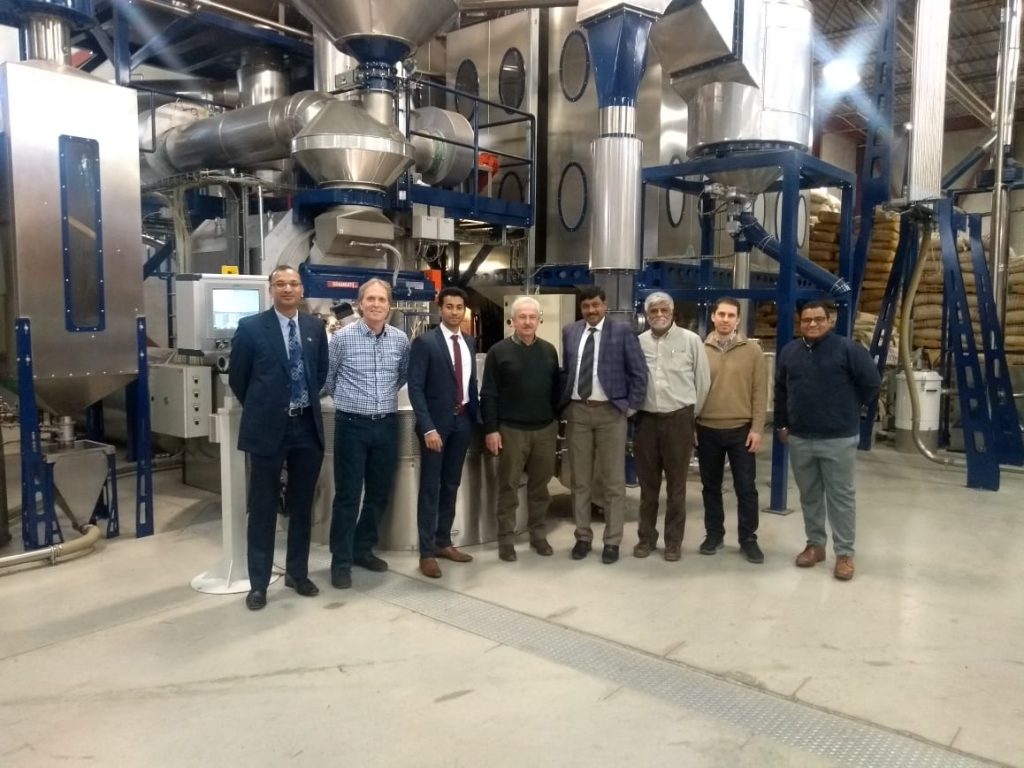
Delegation visits Classic Gourmet Coffee, Vaughan

The Coffee Board of India, Ministry of Commerce & lndustry, Govt. of India in association with The Consulate General of India, Toronto organized a special program to promote coffees of India and to facilitate Indian coffee trade. The Indian Delegation comprised of executives from the Coffee Board of India, key exporters, coffee roasters and a coffee planter.

Coffee occupies a place of pride among plantation crops grown in India. India ranks seventh in global coffee production with an annual average profusion of around 320,000 tons contributing to approx. 3.5% of global production and stands at the fifth position in terms of exports contributing to 5% of the global coffee trade. Indian Robustas are perceived to be the best in the world and high-elevation shade-grown Indian Arabicas are sought after as premium eco-friendly coffees. Canada is one of the major importers and consumers of coffee, and imports around 350,000 tons of coffee annually. However, India’s share in this high-value coffee import market in Canada is quite negligible.

The composite delegation led by Mr. Srivatsa Krishna, lAS, CEO & Secretary, Coffee Board of India met with Canadian regulatory officials and Canadian business community on March 11, 2019 at the Indian Consulate in Toronto. The Consul general of India, Mr. Dinesh Bhatia and CEO of Coffee Board of India, Mr. Srivatsa Krishna opened the program by addressing delegates and guests.

The program included an in depth presentation on ‘coffees of India’ followed by a coffee cupping session and exclusive one-to-one interactions with top coffee manufacturers and key stakeholders from the coffee industry of India. On the following day, March 12, delegates Dr. Mandappa I.M (Coffee Quality Specialist, Coffee Board), Shri. N.N. Narendra (Director of Finance, Coffee Board), Mr. V.E Ovian (Director, Indcaffe), Mr. Kaashif Asghar (Managing Partner, The Aldur Group) and key Indian traders met up with Indo Canadian Chamber of Commerce, South Indian Business Community and prominent Canadian coffee business giants in order to create inroads for Indian coffees with the prime objective to benefit all stakeholders including Indian coffee traders, roasters and farmers. -CINEWS

source: http://www.canindia.com / Can India / Home> Community / by CanIndia News Online Edition / March 22nd, 2019

Bopanna’s Master Blend: Tennis & Coffee

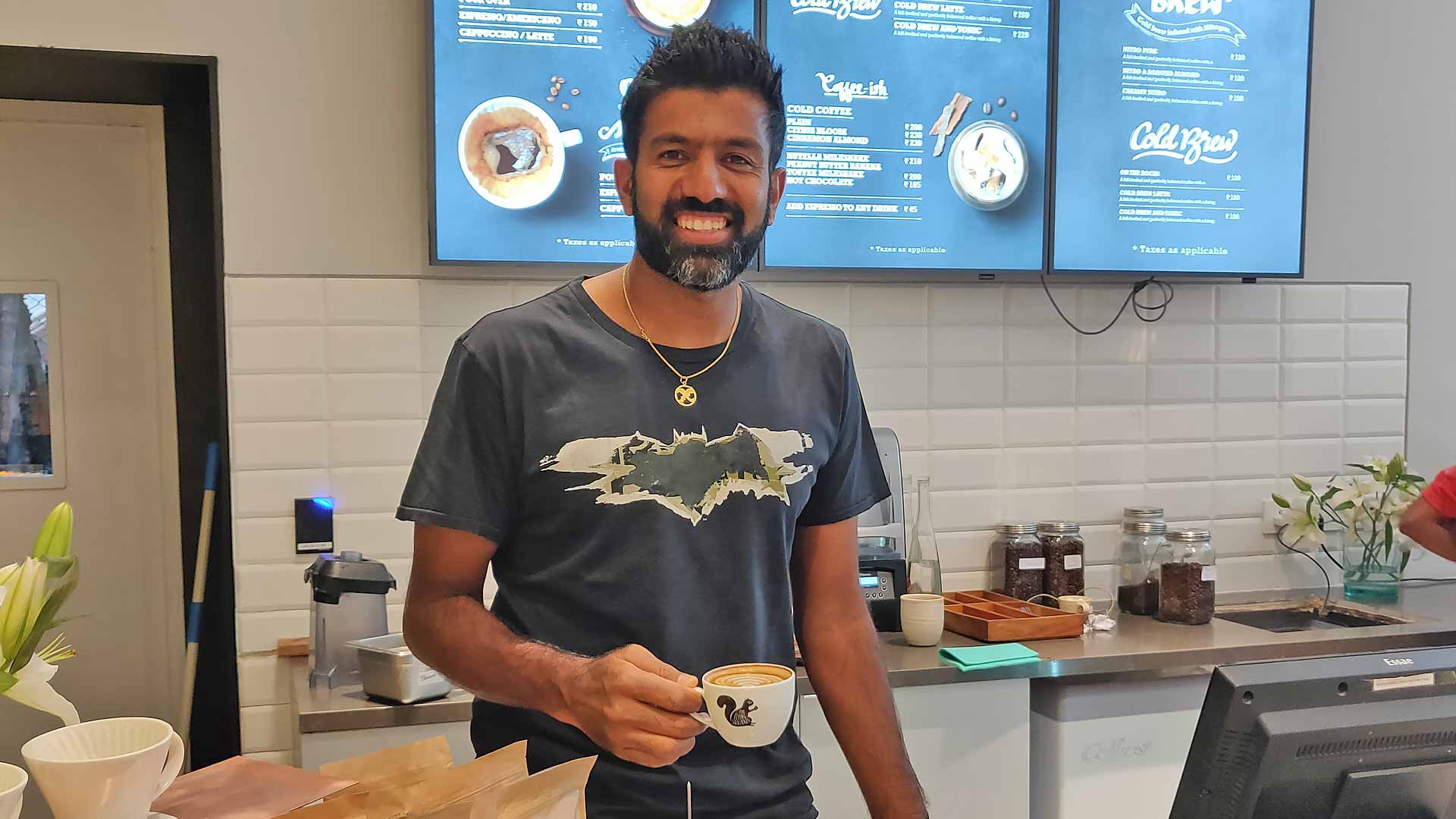
 © Rohan Bopanna Rohan Bopanna has his own blend of The Flying Squirrel Coffee called 'Rohan Bopanna's Master Blend

© Rohan Bopanna
Rohan Bopanna has his own blend of The Flying Squirrel Coffee called ‘Rohan Bopanna’s Master Blend

Learn about Bopanna’s off-court success

Rohan Bopanna has served plenty of aces in his career. But the Indian doubles star also serves something else on the ATP Tour: coffee expertise.

“When I go to the tournaments, everybody comes to me and says, “Rohan, this is bad coffee!’ Bopanna said, cracking a laugh. “I say, ‘I’m sorry but I can’t do anything with it’!”

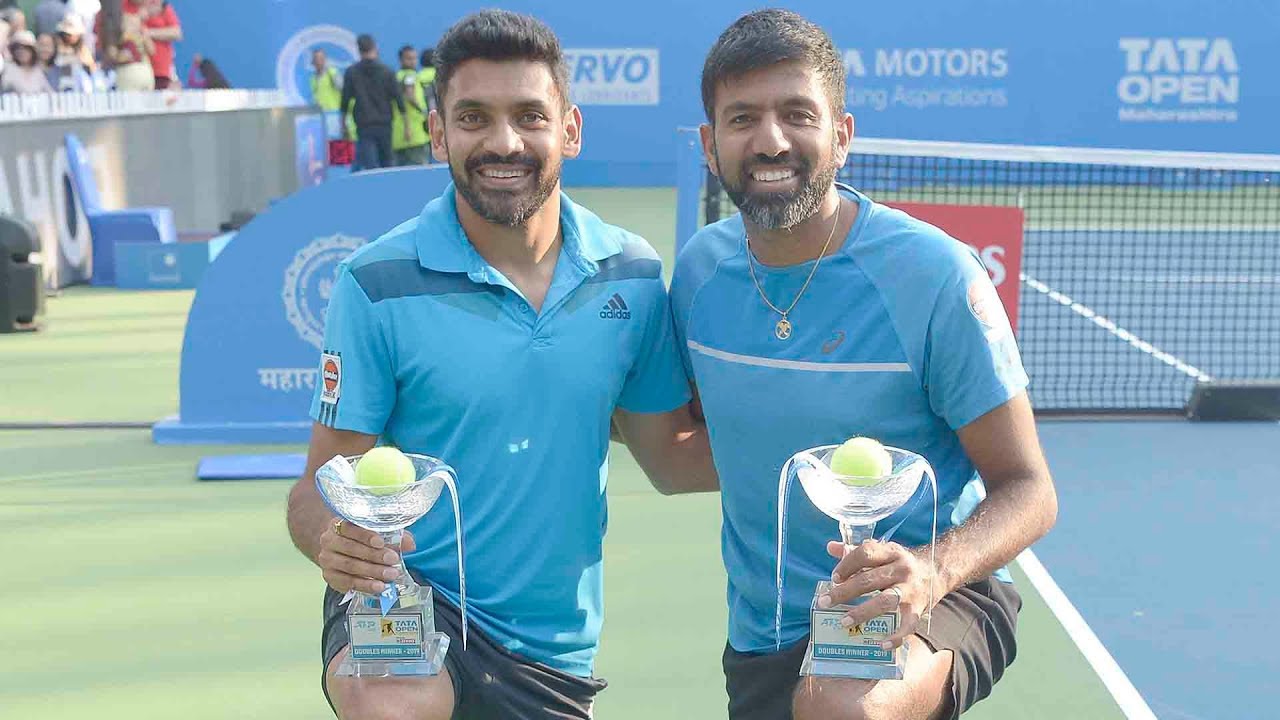
Bopanna is more than just a coffee connoisseur. The 39-year-old, currently No. 36 in the ATP Doubles Rankings, has his own line of The Flying Squirrel coffee: Rohan Bopanna’s Master Blend.

“To be honest, the coffee came first, before my tennis. That’s something which has been part of the family. We grow coffee, hence the coffee love came,” Bopanna said. “I’ve been through the whole process of how it works, how the plants grow. Now I’m learning so much more about getting the right blend, roasting the coffee and everything from the past three years. But the growing part I’ve always known how to grow the coffee and all of that goes back to my childhood.”

Bopanna’s family estate, home of their coffee plantation, is in Coorg, a district in the state of Karnataka, in southwest India. When the former No. 3 doubles player in the world was growing up, his father had not started a coffee company — they simply sold beans to those who were interested in buying. But nevertheless, it’s been a part of his life as long as he can remember.

“Me being the only son, I feel there is an opportunity for me to go back whenever I’m done [with tennis] to take care of that plantation,” Bopanna said. “This [venture] was something added on, something different and yes, of course, I would love to still be very much part of it. One of the reasons I started now is that with tennis, obviously [my life] as a player is going to end one day. There’s something more to look for and coffee’s been a pure love from the beginning, so why not continue with it?”

Not only does Bopanna get to share his work with other players on the ATP Tour, but by travelling the world, he gets to try different blends every week. The 18-time tour-level titlist does bring his own beans and filter on the road with him, though.

“Tennis takes us to some beautiful cities, where automatically I get to taste all the greatest coffees,” Bopanna said. “Australia has some great coffee places. Even last week I was in Phoenix, Arizona. I was in the old town of Scottsdale and that had exceptional coffee places at the different cafes.

“Tennis has given me an opportunity to taste different coffees and hopefully take that experience to improve Indian coffee more.”

BopannaCoffee02KF22mar2019

While it is as catchy as hot shots you see on the court, one may wonder where the name of the company — ‘The Flying Squirrel’ — came from.

“The family friend who I tied up with, at the estate, we have flying squirrels there,” Bopanna said. “When I started my blend, I thought the best way was to tie [my line] up with his [brand] since they already have the roasters and everything… to start everything from scratch would have been tough, hence the name ‘The Flying Squirrel’.”

While Bopanna takes his coffee seriously, he’s certainly not done on the court yet. At this week’s Miami Open presented by Itau, Bopanna is competing alongside #NextGenATP Canadian Denis Shapovalov. The Indian also played with Shapovalov at the BNP Paribas Open in Indian Wells.

“The idea is to obviously try and do well in these big tournaments, big Masters series events. That’s the key,” Bopanna said. “I’m at a stage that when I play these tournaments, I’m looking to obviously do well and try to win the tournament. You’ve been on the [ATP] Tour for such a long time. You know every player out there, you know what to expect and you’re going there to try to win the tournament.”

As Bopanna continues to try to make his mark on the court, he’s trying to win over his colleagues’ taste buds, too.

“Indian coffee I feel has really grown in a big way in India and I feel we can really bring it out to the world to try to experience it. I feel the best way for me is to try to use my tennis platform to give a lot of my homegrown coffee to all the tennis players who love coffee,” Bopanna said. “I’ve gotten great feedback from all these players who have tried it and enjoyed it so far. It’s something very, very different, and I enjoy doing it.”

source: http://www.atptour,com / ATP Tour / Home> News / by Andrew Eichenholz / March 22nd, 2019

Smell the coffee and spirituality at Coorg

Jaggery coffee may not be your cup of tea but expect the brown brew to be presented as a welcome drink at a resort in the middle of a large coffee plantation, such as the Cottabetta bungalow in Pollibetta, Coorg, south Karnataka. Nearly 130 years old, this plantation resort was once the residence of British planters. Owned by the Tatas now, it consists of a Kerala-style house with the bedrooms around the inner courtyard, offering the old-world charm and comfort.

On the hillsides, a dense forest of short and stunted trees bearing this exotic berry, in the shadow of the taller trees on which pepper creepers climb high, abounds. The soil here is good for a host of other spices, too. That’s what the traders from the west came looking for, and then settled down to rule our country.

A tour of this particular plantation gives an insight into the process of producing coffee. According to a tour guide, Udhav, a coffee plant starts yielding berries after seven years, and then goes on doing it for over 75 years. Initially the berries are red, but turn brown once they go through several stages of drying, pulping, roasting and grinding before landing on our tables as the brew with a heady aroma. Robusta is the variety that grows here. It’s the favourite of the elephants, too. Most plantations are surrounded by an electric fence to protect them from pachyderms (animals like elephants, hippopotamus and rhinoceros) but, says Udhav, “sometimes they find out how to switch it off. Generally, it is the matriarch of the herd who knows how”!

DevaKF10mar2019

Monastery

In another direction from Madikeri, about five kilometres off the Bangalore road, lies a Buddhist monastery, Namdroling. This seminary imparts education in the Nyingmapa tradition of Buddhism. Over 3,000 students from the primary to postgraduate level, from the Himalayan regions and abroad, “chant and study, work and practice” here. His Holiness Penor Rinpoche set up this monastery in 1963.

He “attained Mahaparinirvana” in 2009. The Dalai Lama consecrated it and christened it as Namdroling, though its full name is Thegchog Namdrol Shedrub Dargyeling (Land of increasing practice and teaching of the utmost yana that achieves spontaneous liberation). The centre is also known as the Golden Temple because of the three 40-feet high, gilded statues of the Buddhist icons. The entire complex has been elaborately decorated with the Tibetan-style paintings, murals and religious figures. Bylakuppe, a small town where this is located, is a far cry from Tibet in terms of climate and culture but it houses the second largest Tibetan settlement after Dharamsala.

Around 40km from Madikeri is Talakaveri, on the Brahmagiri hill, the source of the Kaveri river. A tank marks the source of the river, and a nearby temple is a popular place for pilgrimage. Not too far from Madikeri lies the Dubare elephant camp. It is located on the banks of Kaveri. Apart from watching big animals, one can do some still-river rafting close by. The best time to visit Coorg is soon after the rains when water cascades down the falls and mist rises up to shroud the mountains. Perhaps, that’s why it’s also known as the Scotland of India.

source: http://www.tribuneindia.com / The Tribune / Home> Spectrum> Travel / by Lalit Mohan / March 10th, 2019

Civet Coffee From Coorg: Rich Man’s Dream Coffee !

CivetCoffeeKF05feb2019

I had heard of people taking their pet dogs for walk in the parks, roads or footpaths for exercise. Also to prevent the animal from committing nuisance, easing itself, at the owner’s house with eyeful of its poop. I also see these dog-walkers daily in my area walking back with a wry smile once the dog does with its pooping, squatting on its hind legs. The poop would lie as a heap on the lawn of the park, walk-way or on the footpath for the unwary morning walkers like me to stamp on, grimace, curse the owners of the dog and move on…

It was in 1992 at the famous Central Park, New York, I was amused to see people armed with a bag and a scoop walk around with their dogs. It was around noon and I was surprised. I made a gentle enquiry with my friend M.P. Prabhakaran, a local resident. In his typical and critical way he said, “Americans are a different species and they often do things differently. You would not be surprised if you find them here at midnight with their pets, the dog, the bag to collect the poop and the scoop. By the way, did you find anywhere in the park any poop fresh or dried ? No. That’s America…”

Before he could denigrate India I interrupted, “That’s why you left India. But where is your dog?” I guffawed.

If the pet-dog’s poop is to be despised and discarded, there is another animal’s poop that is sought after specially in places where coffee plantations are found. My friend N. Raghavan of the pharmacy Raghulal & Co., who keeps sending medicines for my family regularly, last night sent me a packet with an amusing note, “For your use only.” With apologies to James Bond, ‘For your eyes only.’ It was not medicine. Rather a surprise packet. It was Wild Civet Coffee. Wonder, why the word ‘wild’? After all, civet cats are wild. Never domesticated. Let it be.

I have been reading about this super-special civet coffee quite for a few years now though not seen or tasted. Now thanks to Raghavan. Since a few years I have been looking for this animal or its shit with coffee seeds submerged in it in my own plantation at Kutta, Kodagu, without luck. This animal looks like a cat with a long fluffy tail (see pic.) and is both carnivorous and herbivorous found in Central Africa, Indonesia and also in other parts of the world and in Karnataka. In the coffee season they eat ripened coffee fruits (cherry or berries) and poop out the seeds that don’t digest. Civet coffee is the coffee seeds that civet cats excrete after consuming the fleshy berries. An enzyme present in the nocturnal animal’s gut and also in the anal glands produces a strong musky perfume.

Raghavan tells me that a Kodagu planter, Thamoo Poovaiah, is producing this Civet Coffee and marketing it through his partnership firm Coorg Consolidated Commodities (CCC).

There seems to be two issues being discussed about this unique coffee. One, its cost. As much as Rs. 25,000 per kg in foreign market. Real crazy. While it is Rs. 900 for 100 gms of Civet Coffee, it is Rs. 30 for 100 gms of regular coffee available in the market.

Two, cruelty to the animal. It seems civet cats are caught and caged so that they could be fed with coffee berries and collect the poops in plenty. The second allegation is being rubbished by Poovaiah as not true. Of course, NOT in Kodagu. It is obvious more the population of these civet cats, the more Civet Coffee for people like Poovaiah.

Many years ago, I had been to William Shakespeare’s birthplace, Stratford-upon-Avon in England and took a walk along the road in front of Shakespeare’s house. I was surprised to find many shops selling coffee seeds — raw and roasted — and, of course, powder. Each variety was branded, like ‘Mountain Grown Colombian Coffee’, ‘Kenya Special Coffee’, Vietnam etc. But I could not find India’s name anywhere.

In 1950s and 1960s I used to see a display publicity board kept in Coffee Houses at Bengaluru. The board had the image of an old man in typical North-Indian attire with a Hindu religious mark on the forehead and a long white beard along with a steaming hot cup of coffee. The text simply read: “Both are Indian.” Gone are those days of coffee and the way it was promoted…

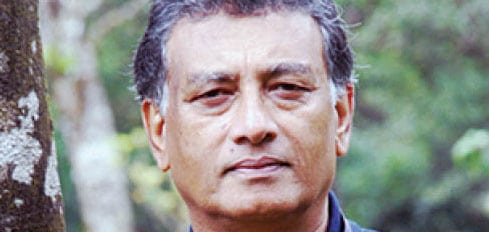
Thamoo Poovaiah
Thamoo Poovaiah

Now we have Civet Coffee. Good luck to Thamoo Poovaiah and dear Raghu. Enjoy this non-vegetarian coffee with the strong musky perfume hitting your nostrils !!

source: http://www.starofmysore.com / Star of Mysore / Home> Columns> Abracadabra / by K.B. Ganapathy / February 04th, 2019 /
Em: kbg@starofmysore.com