Category Archives: Coffee, Kodagu (Coorg)

Tata group’s drive at rainwater harvesting

Mumbai, JULY 14:
The Tata group, which has recycled 1.69 million kilo litres of water across all its entities in 2010-11, is moving to play a major role in rainwater harvesting and groundwater recharge.

While over 30 Taj hotels have zero water discharge, 14 hotels have installed rainwater harvesting techniques. The latter helps to recharge groundwater.

The group has also installed desalination plants in hotels that are close to coastal areas. These initiatives have helped the $100-billion conglomerate reduce the demand from fresh water sources.

Similarly, at Tata Coffee, rainwater harvesting and management of water bodies along the Western Ghats in Karnataka have been undertaken on a war footing.

With the majority of the coffee grown in South India, more so in Karnataka, the company noticed the rainfall pattern had been changing over the years. The planting district has seen an annual rainfall drop by one-third — from 106 inches per year to 70 inches. Kodagu region (in Karnataka) faces a drought-like problem, especially from October to April, when water requirement for coffee and paddy is critical.

Coffee growers, who had not given a thought to irrigation, have had to build water sources by digging tanks in catchment areas.

Tata Coffee, which holds 497 million gallons in its rainwater harvesting tanks, is now looking to bridge the gap between demand and storage of rainwater.

“The most important concern in the Karnataka project is the efficient use of water. Data related to the area, geography, rainfall, water runoff, soil capability, water level, water quality, and water use pattern are available with us. Based on this data, the plan is to initiate a total package of water,” said a company spokesperson.

The package will address the issue of economy of water harvesting, water management and optimum agricultural production correlated with water use.

Similarly, though many of the Taj group hotels harvest and utilise rainwater, 35 per cent of Gateway, Luxury and Vivanta Taj hotels reused treated effluent for horticulture in 2010-11. They have also recycled process water to achieve zero water discharge. This is significant, since luxury and business hotels have large water requirements for landscaping and the swimming pool. Several of the Taj hotels’ 100-odd properties have been investing in water saving methods.

amritanair.ghaswalla@thehindu.co.in

source: http://www.thehindubusinessline.com / Home> Companies / by Amrita Nair-Ghaswalla / Mumbai, July 14th, 2012

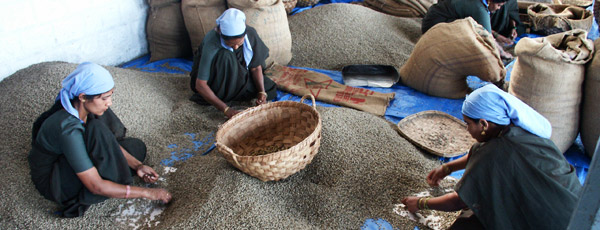
Coffee Board of India

The Coffee Board was founded in 1942 to provide support to local coffee growers. In 1995, the institution withdrew from marketing operations, once the industry became self-sufficient.

Now it focuses on research, development, quality control and market promotion. It advises the government on matters relating to the industry.

The board also provides diploma courses in coffee quality management and holds the Indian Barista Championship to encourage baristas from across the country.

source: http://www.TheHindu.com / Home> Features> Neighbourhood / June 28th, 2012

Coffee marketing, quality issues will be taken up: House panel assures growers


Bangalore, JUNE 11:

A Parliamentary Standing Committee on Commerce has assured growers that issues related to marketing of coffee abroad and boosting the quality will be taken up in the Parliament.

The growers while interacting with the Parliamentary committee had sought marketing assistance for coffee promotion abroad.

Parliamentary Committee, headed by its chairman Mr Shanta Kumar, who is touring coffee growing regions of Kodagu, Hassan and Chikmagalur, said “We are listening to all their woes and demands of coffee industry in Karnataka and all issues will be taken up in the Parliament.”

In Kodagu, growers raised the issue of wild elephant menace and also demanded that the Centre provide financial assistance to construct houses for estate labourers and to provide basic needs like water connection and electricity.

The committee in Hassan visited few coffee curing and interacted with traders.

At Chikamgalur, the committee met all stakeholders of the industry at the Central Coffee Research Station, Balehonnur and later met the members of Karnataka Planter’s Association (KPA).

KPA chairman Marvin Rodrigues, KPA Scientific Committee, Nishant Gurjer and past Chairman, Sahadev Balakrishna, who met the committee members highlighted the issues facing the plantation industry and suggested introduction of farm mechanisation scheme with a budget of Rs 300 crore spread over five years.

According to Mr Rodrigues, the association has requested that CCRI with a five-year plan should take up development of new high yielding varieties of Arabica and Robusta, which are resistant to diseases and pests.

Development of indigenous equipment for different field operations should also be encouraged. “With low technology and innovative ideas many of the field operations can be mechanised locally, at low cost,” said Mr Gurjer.

Mr Balakrishna said “The XII Five Year Plan proposals submitted by us to the Ministry of Commerce/Coffee Board emphasis on re-plantation subsidies to be extended to co-operatives and corporates. Enhancement of the capex cost of replanting which has increased by 100 per cent since the start of the XI Plan.”

For water augmentation, committee was apprised of the need to enhance the rate of subsidy based on actual costs and extending the scheme to all sectors to adopt green technologies.

anil.u@thehindu.co.in

source: http://www.TheHinduBusinessLine.com / Home> Industry & Economy> Agri-Biz / by Anil Urs / Bangalore, June 11th, 2012

Who won the Flavour of India Fine Cup Award?


The results are in and have recently been published in the Hindu Business Line.

The winner of the Flavour of India Fine Cup Award has been decided.

This is a competition which has been organised by the Coffee Board of India on an annual basis, to promote the production of high-end gourmet quality coffee.

The aim?

To introduce these fine coffees to the international coffee industry.

And the results are in for this year… Who won?

The Pedabayalu Coffee has been awarded the best in region for this year.

The coffee is grown in the Visakhapatnam district in the Araku region.

The judges who made this decision were an international jury and they met in Melbourne in Australia.

It was chosen in the Arabica general category of coffee – the arabica bean, of course, is one of the favourites in coffee circles.

This Visakhapatnam district has some 4,000 hectares of coffee and takes the matter seriously.

There are around 3,000 families who work on these coffee plantations and they are obviously doing a good job.

What happens now?

The coffees which have been decreed as being outstanding, such as Pedabayalu coffee, will be chosen on a national level for ‘final cupping.’

This will take place by an international jury of well-regarded Cup Tasters from around the globe.

Hopefully, the Flavour of Fine Cup Award winner will do well on this occasion too.

Whatever the outcome at the final cupping, the profile of Indian gourmet coffee has been raised.

Posted by Clive on Monday the 28th May 2012

source: http://www.worldcoffeenews.com / by Clive / Monday, May 28th, 2012

‘Coffee is becoming trendy’

SPECIAL FEATURE: GLOBAL INVESTORS MEET

Javed Akhtar, Chairman of Coffee Board

IN the late 1960s and early 1970s, good grade coffee beans and powder were in short supply in India. One could buy them only at specially established coffee depots. There would be long queues at these depots to collect a token to purchase the beans or powder. The beans would be taken home, roasted, ground by manual grinders and then used to produce the best-smelling, best-tasting filter coffee. Today, coffee is in abundance, and there is a wide variety of beans to choose from, thanks to improved methods of cultivation, increased production and the liberalisation of the Indian coffee industry.

The credit for promoting the flavour of coffee must go to the Coffee Board of India. Set up under an Act of Parliament in 1942, the Coffee Board is an autonomous body functioning under the Ministry of Commerce and Industry. Its main focus is on basic and applied research in coffee, quality upgradation and promotion of coffee in the domestic and international markets. The Coffee Board until 1995 had a pool (controlled) marketing system for coffee. With economic liberalisation, coffee production became a strictly private sector activity. The board’s Central Coffee Research Institute, located in Chikmagalur district in Karnataka, is one of the premier coffee research institutes in the world.

The Coffee Board will, without doubt, be one of the star attractions at GIM 2012, promoting coffee and showcasing its many flavours. On the eve of the GIM, Javed Akhtar, the Coffee Board Chairman, took some time off to speak to Frontline. Excerpts from the interview:

What plans does the board have to promote coffee?

Coffee consumption in the country has been growing at a rate of 5 to 6 per cent a year. At present, coffee consumption is over one lakh tonnes a year. From being a traditional beverage consumed mainly in south India, coffee has become a trendy beverage with a national presence, consumed in several forms. Its strong presence in the domestic market provides many avenues for enterprise development.

What has facilitated this growth in consumption?

The growth of the domestic market has been possible through the promotion of awareness and consumption of pure coffee. This has been done through generic promotional campaigns using mass media and participation in domestic events and festivals. To facilitate entrepreneurial development in the coffee value chain, the Coffee Board has been training people in coffee roasting and brewing. This business vertical is complemented by providing support for setting up roasting units.

The Deputy Chairman of the Planning Commission Montek Singh Ahluwalia has suggested that tea be declared the national drink.

I am not aware of any drink being declared as the national drink. Anyway, we don’t position coffee as competing with any drink.

How do you plan to attract investors to the coffee industry?

The strong growth in coffee consumption is throwing open opportunities for value addition. The outlook for this sector is much more attractive, given the continuing industry dynamism. The interest in the domestic coffee market can be seen by the high level of investment in the sector with the establishment of a Lavazza unit, the entry of Starbucks [which has a tie-up with Tata Coffee] and the arrival of Dunkin’ Donuts [a United States-based coffee and baked-goods chain]. It is also seen that the existing coffee retailers such as Café Coffee Day, Costa Coffee, Coffee Bean &Tea Leaf, Gloria Jean’s Coffee, Aromas, Au Bon Pain and Testa Rossa are planning to expand their businesses to capitalise on this enthusiasm for coffee. At the same time, small and medium roasting units and stand-alone cafes are also finding their way into niche coffee market development.

Growers complain of a lack of stability in coffee prices.

The price of coffee has never been stable. It depends on demand and supply, the quantity and quality of harvest, the powerful and influential secondary markets in London and New York. Though coffee is grown in developing countries, it is consumed in developed countries, so the state of the economy of these countries goes a long way in determining the price of coffee. What is needed to be provided to the grower is good/adequate returns in capital and labour costs.

Growers complain of a cartelisation of prices by big growers.

There are around 74 or 75 coffee exporters, among whom 10 are big. But there is no cartelisation of prices. There is also no abnormality of prices and it is a free and mature market.

Ravi Sharma

source: http://www.frontline.in / vol.29 , issue. 11 , june 02-15, 2012

Madikeri: Helium Balloon Launched to Keep Tabs on Weather Pattern in Coffeeland

Madikeri:
The Kodagu Technology Users’ Association, in collaboration with the Indian Space Research Organization (ISRO) launched a ‘Sonda’ weather balloon into the open sky on Thursday, April 19 to monitor weather.

The balloon was released by IAS officer and Coffee Board chairman Jawaid Akhtar at Garagandur near Madapur in northern Kodagu. He said the coffee planters in Kodagu so far faced hardships because of changes in weather. With a view to avoid them, and with ISRO collaboration, this unit had been set up. Feedback received from this unit would be useful for the coffee-growers to keep track of the vagaries of weather and plan their agricultural activities, he said.

Akhtar further said that subsidies for coffee-growers had been announced under the 12th five-year plan and assured that the Coffee Board was committed to protecting the interest of the coffee planters.

Kodagu Technology Users’ Association (KTUA) secretary M B Bopanna said that weather information centres had been set up in 21 points in the district. Another 10 were being planned to be opened soon. Launching of each balloon would cost Rs 4,000, he said. Besides reporting the weather conditions at different points in the district, the balloon unit would record the rainfall, direction of the wind, temperature and humidity, water resources and the like.

The unit will rise to an altitude of 32 kms and will, every three minutes, transmit the information to the ISRO centre in Ahmedabad, said Bopanna.

KTUA president Kitty Devaiah, vice president Bose Mandanna and joint secretary Subbaiah provided a variety of information about the weather balloon. ISRO adviser Dr Das, another former IAS officer hailing from Kodagu Rathi Vinay Jha and others were present.

The 21 points of weather monitoring: D Chennamma PU College – Madapur, Coovercolly Estate – Belur, Kaukudi Estate, Durgadevi Estate – Hattihole, Lakshmi Estate – Kanchanakolli, Talacauvery, Ishwar temple – Napoklu, Kattimadu Estate – Margodu, Nakoor Estate – Sunticoppa, Coffee Research Centre – Chettalli, Elk Hill Estate – Siddapur, panchayat office – Maldare, Tata Coffee Estate – Pollibetta, Chennangolli Estate – Devarapura, Nittoor Estate – Nittoor, Sukalia Estate – Kutta, Forest College – Ponnampet, Government Primary School – V Badaga, Dental College – VIrajpet, Ram Prasad Estate – Palangala and Coffee Growers’ Association – Madikeri.

The balloon launching could have taken place a few days earlier, but the requisite permission was yet to be received from the Mangalore airport.

Vice president of KTUA Bose Mandanna, also a former vice president of the Coffee Board said,“It is mandatory for us to get permission from nearby airports to flow the balloon. We have got permission from the district administration and Airports Authority of India.”

Speaking to our Mangalore bureau, Mangalore airport director M R Vasudeva confirmed that the permission had since been given.

Bose Mandanna futher said that based on the data planters could decide if they could wait for the rain or could use the sprinklers. Irrigating an acre of land is estimated to require a lakh litre of water. Almost as a rule, all coffee-growing areas in the state have been facing power shortage, planters have to use diesel to use sprinklers.

source: http://www.mangalorean.com / by Team Mangalorean, Madikeri / by Ashwinin Appaiah with Vartha Pics / April 21st, 2012

Novel way for coffee planters to check the weather


Many of us look online or rely on the weather reports to find out what the climate and temperature is going to be like.

However, the coffee plants in the Kodagu region of Karnataka have apparently come up with a rather different way of doing things.

According to reports, they have decided to use an unusual means of working out what is happening: by using a balloon.

How does this weather prediction method work?

Apparently, the balloon is filled with helium gas and is equipped with instruments which are able to study the weather systems.

For instance, it is said that the equipment would be able to determine whether rain was likely within a period of around 4 days.

Of course, this information is vitally important to the coffee farmers.

The information will help them work out whether to incur the costs of using sprinklers to irrigate the coffee crops, for example.

The information which is collected by the equipment in the weather balloon would be used alongside information which is collected from the other automatic weather stations (there are about 25 of them) in Kodagu.

Further calculations will then be made by the Madhapur station and sent on to the Indian Space Research Organisation’s research section.

Why go to all this trouble?

Apparently, this way of monitoring the changing weather patterns is an attempt to get predictions which are as accurate as they can be.

The coffee planters have contributed towards the cost of the operation and the Indian Space Research Organisation has agreed to help out too.

source: http://www.WorldCoffeeNews.com / by Clive / Thursday, April 05th, 2012

Wake up, smell the filter coffee

Radhakrishnan M with co-founder and wife A Chithra

Fully automated vending machines that serve freshly brewed authentic filter coffee, that’s the business Aromas of Coorg is into. In conversation with co founder Radhakrishnan M.

Origins
After lucrative careers in the corporate world, my wife Chithra and I had the urge to start something on our own. We are from Coorg and have been into coffee cultivation for more than three decades. Aromas of Coorg was born in 2009. Four factors made our idea into a company – our passion for entrepreneurship, our son, our roots from Coorg and our corporate exposure.

Elevator Pitch
We bring the authentic filter coffee experience to businesses at an affordable cost and with modern technology-inspired machines.

Gameplan
We offer end to end turnkey solution for corporate vending (small, medium, large), corporate conferences, tradeshows etc. Our service is a plug-n-play model, where we provide the finest coffee of your choice, equipment, service and maintenance. We also provide services to hotels, hospitality segment and home delivery facility within city limits. We work both on variable and a fixed pricing model where clients can pay based on usage or based on usage plus a fixed monthly costs. Our USP is our focus on technology. Our vending machine is the first its kind and is fully automated to serve freshly brewed authentic filter coffee and freshly brewed tea by simply pressing a button. Our coffee is a blend of six varieties of finest coffees beans hand-picked from our own cultivation. We are shortly launching first of its kind coffee vending machines with both hot and cold options in the same machine. Our vending machines will be the first of its kind to adopt Micron filtration and UV purification technology to purify the water. This means you can even use tap water.

The Challenges
Differentiation. The wave of western form of coffee was so popular that everybody wanted cappuccino, espresso, latte, etc. Also in scaling and maintaining levels of service and quality.

Reward: Fame, Money, Thrill?
Adrenaline rush and the satisfaction that you control your destiny.

Start-up-to-date

Company: Aromas of Coorg
Domain: Beverage solutions
Founder: A Chithra Uthappa, Radhakrishnan M
Founded in: 2009
Funding: Bootstrapped. Mentored by Vaibhav Tewari

source: http://www.BangaloreMirror.com / Home> Columns> Ideas Factory> Story / by Manu Prasad / March 22nd, 2012

Budget 2012: It’s time to wake up and smell the good brews

The coffee business will get an impetus from the reduction in basic customs duty from 7.5% to 5% on specified coffee plantation and processing machinery. Some say it could even encourage home-brewing of coffee.

Coffee growers, brewers, grinders, roasters, processors, curers and retailers will now be able to import machinery and equipment at a lower cost. It will allow more farmers to import farming equipment like weed cutters, berry pluckers, grading and cleaning machines, sprayers and other plantation machinery. Coffee retailers may be able to import coffee dispensers, vending machines, blenders, shakers etc at a lower cost.

Anil Bhandari, president of the India Coffee Trust, said most of these equipment are imported now and therefore the cut in import duty will give a boost to the coffee landscape in general.

Marvin Rodrigues, chairman of Karnataka Planters’ Association, said the reduction in import duty would complement Coffee Board’s mechanization scheme. “The board has been pushing for mechanization, taking cognizance of the acute labour shortage and wide-spread labour migration in the plantation industry. The only way to survive is to introduce mechanization,” he said.

Bose Mandanna, member of the Coffee Board and a large coffee planter from Coorg, said any reduction in import duty would benefit the entire coffee eco-system, be it growers, roasters, curers or retailers.

The coffee culture in India is becoming stronger. The country’s per capita coffee consumption now is 100 grams, up from just 60 grams three years ago. In England it is 9 kilograms, and in the US 5.5 kg.

“Coffee consumption is growing at 40% per annum in northern states, where it has not been the traditional beverage. The favorable duty structure will also help kick start a home-brewing culture. If coffee brewing machines are available in the Rs 5,000 to Rs 8,000 range, many households will be interested in them. Currently they are well over Rs 10,000,” said Bhandari.

source: http://www.articles.timesofindia.indiatimes.com / Business> Budget 2012> Union Budget / TNN / March 17th, 2012

Fight against Central Empowered Committee: A K Subbaiah

Former MLC A K Subbaiah has called upon the people to fight unitedly against the report of the Central Empowered Committee (CEC) constituted by the Supreme Court, which has recommended acquisition of forest grown on private land.

Speaking to press persons, he said the people of Kodagu had grown coffee and forest in their private lands. The coffee plants were not grown in reserve forest.

Fight unitedly

He said: “The private lands may be coffee estates. The people of the district should unitedly fight against the CEC report, which has recommended acquiring private lands.”
“The Supreme Court had directed the CEC to look into the issue of Kadamakalla road. It had to raise the issue of forest in private land along with the road. Pseudo environmentalists were responsible for such a report of the CEC,” he said.

“The CEC report cannot be justified. It is an unilateral decision and is against the interest of the people of Kodagu. The committee has taken into account the statements of pseudo-environmentalists and not local residents.

Opinion

Even I had given my opinion before the committee. However, my opinion did not find a place in the report,” he added.

Coffee growers and the public should file a writ petition against the report in the Supreme Court and argue in favour of rejection of the report and state that there is no deemed forest in Kodagu, he suggested.

‘Need road’

Subbaiah said: “We need Kadamakalla road. The road will provide connectivity to the people of the region to the outside world. The government should provide basic facilities including road, water and electricity to the citizens. Why is there opposition when the government has decided to lay a road?” he asked.

“Elected representatives should respond to the needs of the people. Accordingly, Speaker K G Bopaiah, MLA M P Appacchu Ranjan and former MLA S G Medappa have rendered their duty, by supporting the cause of Kadamakalla road. There was nothing wrong in their action,” he added.

source: http://www.DeccanHerald.com / Home> District / DHNS / Madikeri, March 04th, 2012