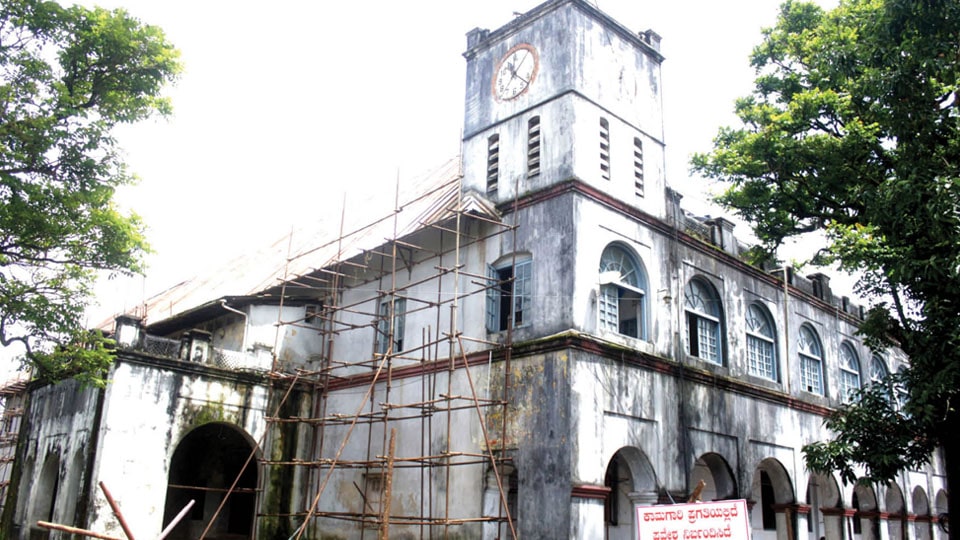
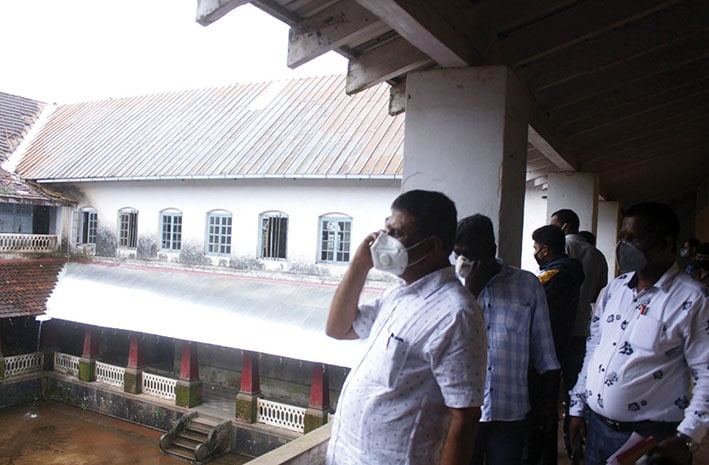
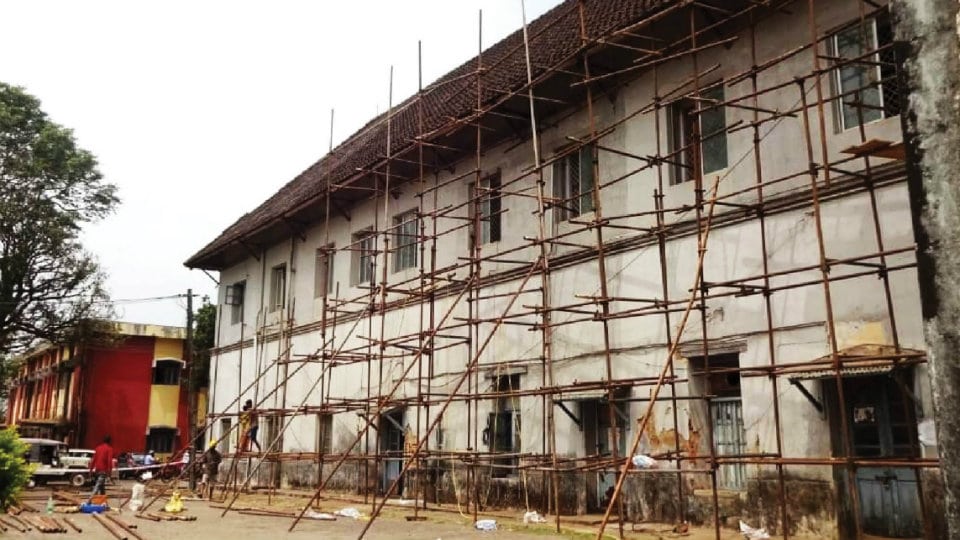
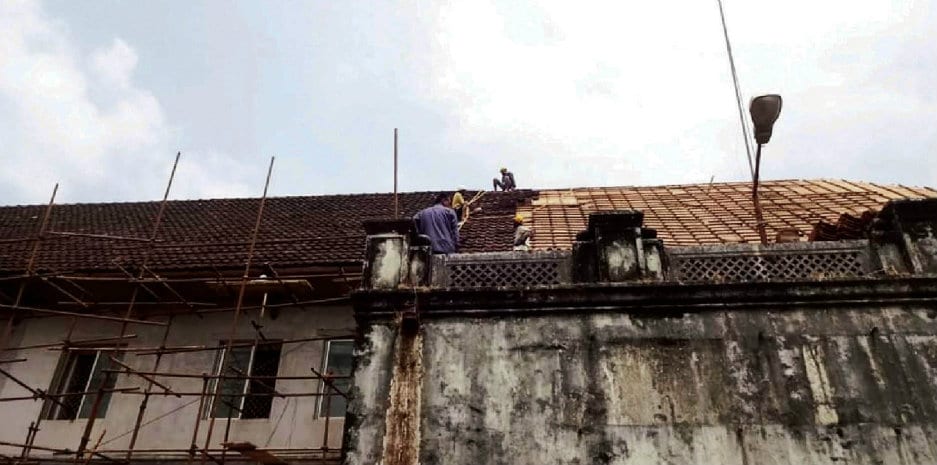
With the State Cabinet on Thursday sanctioning Rs. 8 crore for the renovation of the historical Madikeri Fort, the works on which has been taken up by the Archaeology Department, Madikeri MLA Appachu Ranjan has batted for retention of old architecture and heritage characterisitics of the structure, while also giving a modern touch to it.
Speaking to presspersons after inspecting the ongoing renovation works of the Fort located in the heart of Madikeri City, Appachu Ranjan, who is also a former Minister, said that as an MLA earlier too, he had raised the Fort renovation and development issue a number of times in the Assembly..
Pointing out that the renovation works has been taken up following a High Court order, he said that now the State Government has sanctioned Rs. 8 crore for the works and it is satisfactory to note that the works have been taken up at last.
Asserting that Madikeri Fort and the associated Palace is symbolic of Kodava tribe, he said that it was important to develop the Fort as a Museum, while retaining the original architectural characteristics of the structure.Underlining the need for installation of Sound and Light system in the Fort premises once the renovation works are completed, he said that the richness and uniqueness of Kodava culture, customs and traditions must be portrayed through this system, just as being done in the case of freedom fighters such as Veer Savarkar and Bhagat Singh at Andaman Jail.
Earlier, Appachu Ranjan received inputs on the progress of works from the Department Engineer, who said that 5mm metal sheet has been cemented to the roof of the Fort. Expressing displeasure at the quality of the sheet, he asked the authorities to ensure quality of tiles, wood and other construction materials being used for renovation.
Earlier, Appachu Ranjan received inputs on the progress of works from the Department Engineer, who said that 5mm metal sheet has been cemented to the roof of the Fort. Expressing displeasure at the quality of the sheet, he asked the authorities to ensure quality of tiles, wood and other construction materials being used for renovation.
source: http://www.starofmysore.com / Star of Mysore / Home> News / July 28th, 2020
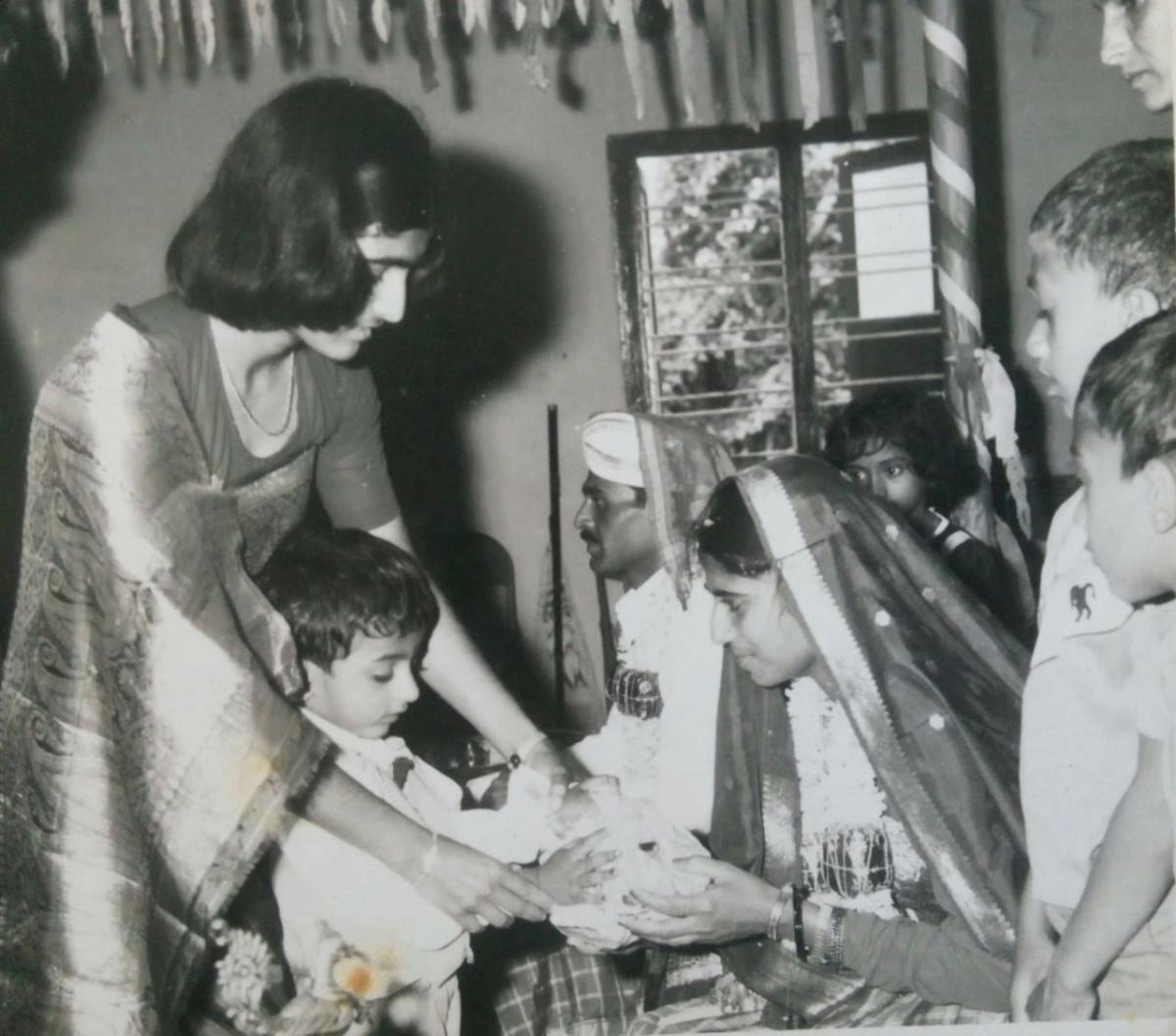
A kodava bride and groom being wished by relatives during muhurtha.
Weddings are perhaps the grandest celebrations in any community. This is especially true of the Kodava wedding which is strikingly unique in the fact that the weddings are not solemnised by priests but by family elders.
While the modern-day weddings are typically held in convention halls, the current restrictions due to Covid-19 have led to people reverting to simpler ceremonies, offering a glimpse of how Kodava weddings, called mangala, took place a few generations ago.
In the earlier days, the wedding would be conducted at ainmanes – the ancestral homes of the groom and the bride – and was purely a family affair. Unlike common perception, there is more to Kodava weddings than just merriment, and each ritual is invested with a deeper meaning.
The wedding ceremonies are held for two-days. On the day before the wedding, Karik Muripa, Punda Pani and Oor Kooduvo ceremonies are held separately at the groom’s and the bride’s homes. It is interesting to note that, Karik Muripa means cutting vegetables for curry; Punda Pani means erecting bamboo stumps as pandal and Oor Kooduvo means gathering of villagers.
On this day, all the villagers and family members of the groom and the bride gather at their respective homes and make all the arrangements for the wedding to be followed the next day.
The bride and the groom offer prayers to the gods and the ancestors before the nellakki bolcha (sacred lamp) at their ainmanes and seek blessings from their parents and all the elders assembled there. The groom’s mother then puts a pavala (coral) mala around his neck, and similarly the bride’s mother ties a pathaak (necklace) around her neck, to solemnise the wedding.
While people pitch in to help during the day, the evenings are reserved for festivities. There’s good food, liquor, music and dance.
On the day of the wedding, the groom dressed in traditional white Kupya Chele goes to the bride’s home, along with other family members, where the Baale Kethuva ceremony is held. In this ceremony, maternal uncles of the groom and the bride cut a row of nine or more banana stumps (in multiples of three) symbolising the obstacles that had to be conquered and the ultimate victory of the groom over other suitors.
The groom is then led inside the bride’s home by the bojakara (the best man), and the bride draped in Kodava sari is accompanied by the bojakarthi (bridesmaid). They offer prayers, are blessed by the elders and exchange garlands during the muhurtha.
The bride is granted all the rights at the groom’s home by the elders. The groom also gives her a bag containing gold, silver and copper coins to symbolise the sharing of his wealth with her.
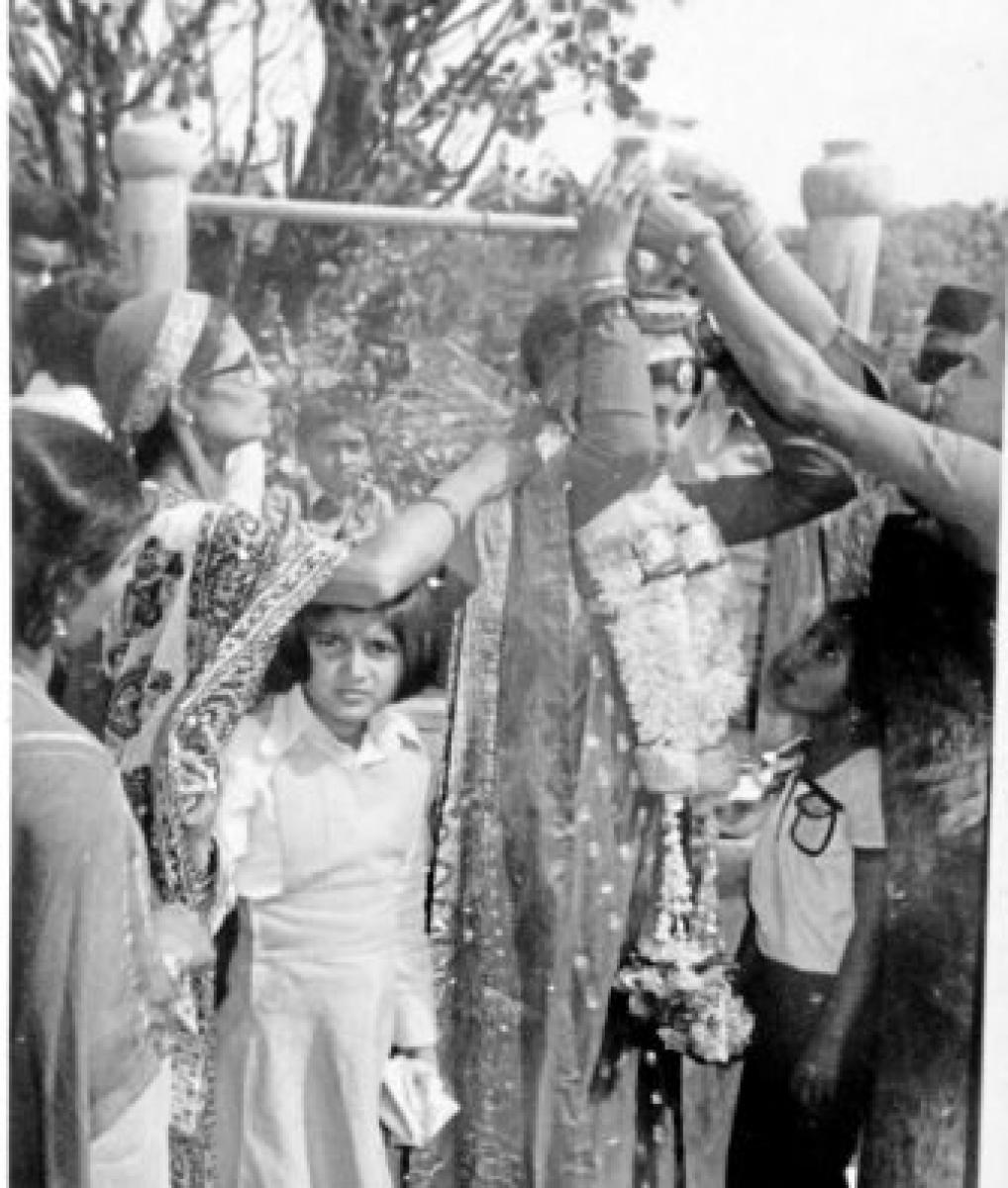
A bride fetches a pot of water from a well during the ‘neer edpo’ ceremony.
The bride then embarks on a journey to her new home with the groom and his relatives. There, as part of the Ganga Pooja or Neer Edpo ceremony, which literally means fetching water, she has to draw water from the well. As a symbol of becoming a part of her husband’s family and taking up the household work, she carries two pots of water from the well to the kitchen. However, the path is blocked by members of the groom’s family, to imply that as a married woman she may have to face hardships. Meanwhile, the youths dance to volaga (traditional music) in merriment.
After her way is cleared, she enters the house and places the pots near the sacred lamp. She is now formally the lady of the house.
source: http://www.deccanherald.com / Deccan Herald / Home> Spectrum> Spectrum Statescan / by Dhanyata M Poovaiah / July 25th, 2020
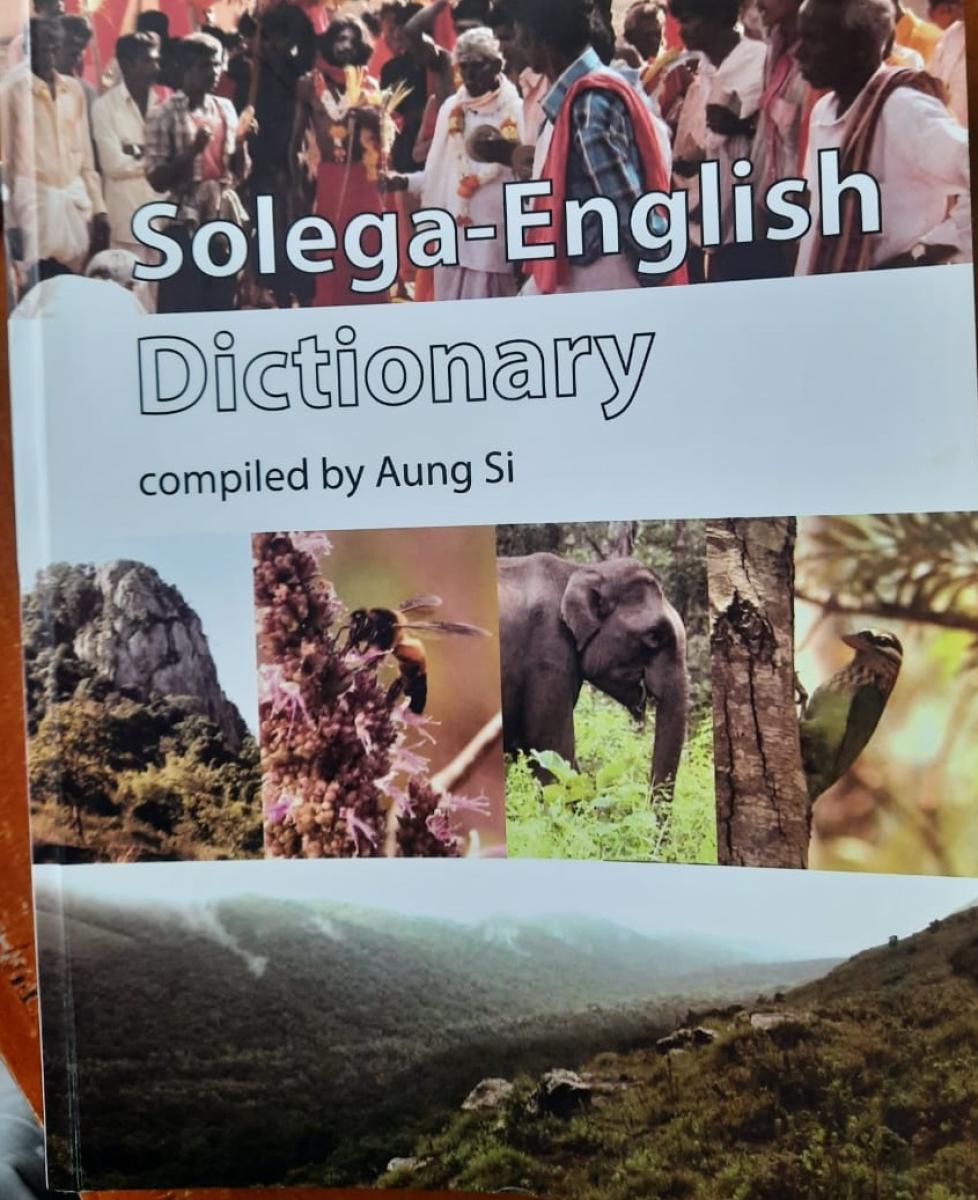
A researcher from Myanmar has compiled an English dictionary on the words used by the people of Soliga tribe, living in and around Biligiri Ranga Hill in Chamarajangar district.
Aung Si has compiled the words used only by the six Soligas tribes, living in the tribal hamlets. The 445-page dictionary has more than 1,500 words, used by Soligas. The words have been written in Kannada script and the explanation and meaning is in English. The book has pictures of rare trees, plants and animals found in BR Hills.
Aung Si has printed around 150 copies, priced Rs 1,500 each. He has handed over the responsibility of the book sales to the Soliga leaders, asking them to utilise the money earned for the development of the tribals.
Aung Si has earned a PhD from the Australian National University, conducting a research on the lifestyle of Soligas in 2012. He has been working hard for around 12 years, from 2008. He has interacted with the tribe of Soligas, learning about their languages.
He has sought the help of Ashoka Trust for Ecology and Environment in BR Hills, to compile the dictionary. He has also taken the help of Soliga leaders and other research persons for his work.
Scientist C Madegowda of Ashoka Trust told DH that there are 148 Soliga tribal hamlets in the district. Only six particular tribes of Soligas in 55 hamlets of BR Hills, still use the words and language, which are on the verge of extinction. Others speak Kannada and have adapted to the new lifestyles. Youngsters are not well versed in Soliga language and culture. This dictionary may be useful for them in future. It will also help those involved in further research on the language, he said.
source: http://www.deccanherald.com / Deccan Herald / Home> State> Karnataka Districts / by Gayathri G R, Chamrajnagar / July 06th. 2020
There is a large volume of public opinion in Coorg in favour of its amalgamation with the Madras Presidency.
This small province is under the administration of the Government of India through the Mysore Resident who is also the Chief Commissioner of Coorg. In him are combined all the functions of a Local Government and a High Court. The Secretariat is at Bangalore where the Assistant Resident is styled Secretary to the Chief Commissioner of Coorg.
During the regime of Lord William Bentinck Coorg was transferred to the Government of the East India Company in accordance with the general wish of the inhabitants. “No people of India,” says Mr. W.W. Hunter, “have given more decisive proof of their loyalty to the British Crown.”
The “Garden of Eden” as His Excellency Lord Willingdon called it is a much-coveted place for the European planters who have made monumental profits in coffee plantations.
The native subjects appear to resent the undue domination of the European settlers over them and demand amalgamation with the Southern Presidency as the result of which they hope to enjoy the “blessings of Reform” and escape the evils of one-man-rule.
A rare opportunity has presented itself to the Government of India to apply the principle of self-determination to the inhabitants of Coorg and grant the prayer by sanctioning the amalgamation as prayer for.
source: http://www.thehindu.com / The Hindu / Home> A Hundred Years Ago – Archives (April 20th, 1920) / April 30th, 2020
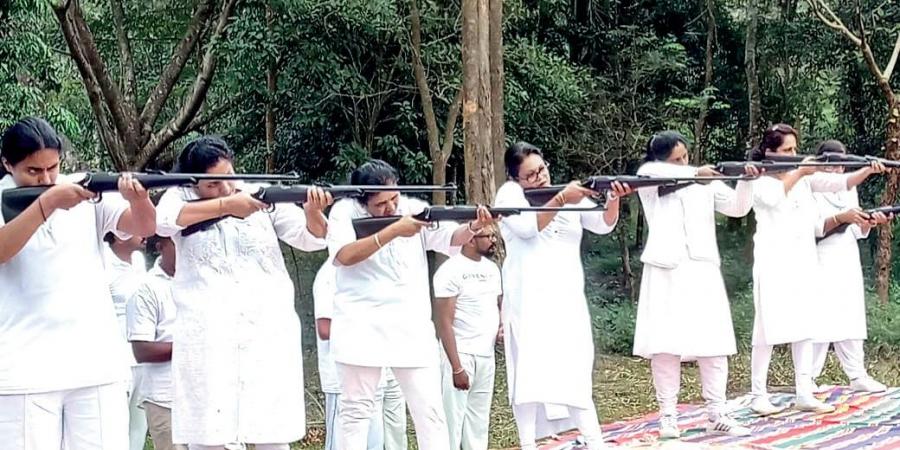
The participants of the training programme were given certification from the police and winners in the shooting event were presented prizes. Women take part in a gun training event in Gonikoppal. (Photo | EPS)
Madikeri :
Every morning for the past five days, a handful of women from South Kodagu had set aside their usual kitchenware in favour of licenced firearms with the aim of becoming expert shooters.
In a land where owning a gun is part of the tradition, taking a break from their daily routine to learn the use of firearms is a small price to pay. It also gives women good self-defence capabilities.
The women who underwent the training needed no coaxing. Proudly dressed in all whites and wearing sneakers, they used to rush to the Cauvery College Grounds in Gonikoppal where they learned to load guns, aim and fire at targets.
The shooting training was organised by the Gonikoppal police and over 60 residents from across South Kodagu took part in the programme. Among the trainees were eight women who have become amateur shooters after the training.
“Gun is worshipped in Kodava culture and it is a cliché to say that shooting is in the blood of Kodavas. However, the men are usually trained in this skill and it is only recently that girls are being trained in this tradition. Nevertheless, when opportunity knocks on the door, you don’t deny it,” said Bharati Bopanna, a resident of Ponnampet, who attended the training programme and won the third place in the shooting competition.
When Bharati heard that the police are training residents in shooting, she registered herself for the programme. “Women, especially married ones, are not used to much physical exercise. And the training programme stressed on physical fitness.
Apart from that, during traditional festivals, women are given loaded guns to perform ritualistic shooting. While I had tried my hands on shooting, I never really knew to load the rifle. After this training, I need not depend on anyone to load a gun.”
The participants of the training programme were given certification from the police and winners in the shooting event were presented prizes.
source: http://www.newindianexpress.com / The New Indian Express / Home> States> Karnataka / by Express News Services / December 30th, 2020
The Karnataka district is a rich blend of history and hospitality
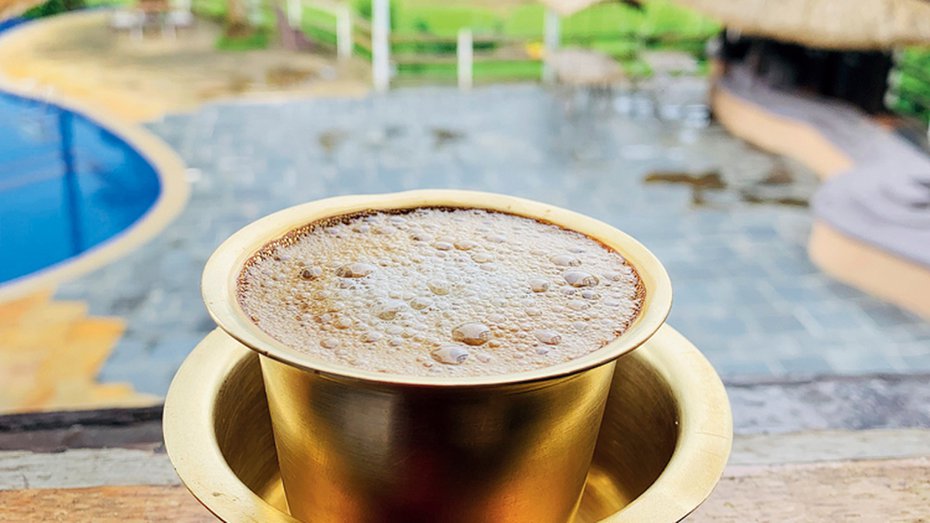
Coorg coffee is grown at a high altitude and under a well-defined two-tier mixed shade canopy / Picture: Karen Anand
I recently visited Coorg in southern India. And as my dear husband keeps saying, I immerse myself so wholeheartedly wherever I am that I invariably want to move there… or at the very least make plans to revisit very soon! Coorg is no exception.
About 250km from Bangalore, it’s an area with a sense of nobility and belonging, of dense forests, coffee plantations and some spectacular estates. The terrain is very, very different from the rest of south India. As you take the gentle climb from the plains to Coorg, or Kodagu as it is now known, you have beautiful mountainous rocks, areca palms that produce betel nut, palm trees and then paddy — it’s a really stunning scape that looks like a painting at every glance.
The capital of Madikeri or Mercara as it was called before, looks like a town like any other town in India, but as you dig a little deeper, visit the vast estates and eat with locals, you find a generosity of spirit, an unbelievably high education level (almost 100 per cent literacy) and a joy of preserving traditions… and that includes food.
Coffee and spices
Kodavas look physically very different to people from Karnataka and the neighbouring Tamil Nadu. They are traditionally warriors, hunters and now landowners. Their livelihood is mainly coffee and this area of just 5,000sq km is the largest coffee-producing area in India. History has it that there was a gentleman called Baba Budan who brought coffee beans to the Chandragiri Hills in Chikmagalur from Yemen in the 17th century. Then the British came in the 19th century and found that this was a crop that could be exploited since conditions for growing coffee were pretty perfect. That was the birth of widespread coffee plantations and coffee farming in this area.
Coorg coffee is grown at a high altitude and under a well-defined two-tier mixed shade canopy. Among the bigger evergreen trees are tall jackfruit, rosewood and wild fig trees which protect the coffee from seasonal variations in temperature and also enhance the soil by providing nutrients from deeper layers. The second layer is pepper, cardamom, cloves, orange and banana. It also protects the coffee from the harsh rays of the sun in summer. Conditions are similar in Colombia and Kenya, considered the best coffee-producing regions in the world.
Coorg is known for “spicy” food. There are lots of spices in their spice mixes — pepper, cardamom, cloves and the tiny bird’s eye chilli known as parangi. Spices are roasted and ground, which gives complexity and density of flavour to their dishes, both vegetarian and meat. Although Coorg is known for the famous pork dish, pandi curry, which is a specialty, there are a host of vegetable dishes that use local vegetables like bamboo shoot, wild mushrooms and a kind of red-leafed spinach, all quite delicious and different.
The method of most of their cooking is roasting and dry-grinding spice combinations, which are thrown into a pot of meat or vegetables with a little black vinegar from the kachampuli, a very sour mangosteen-like fruit which is dried till it’s black and from which an intensely sour vinegar is made. Rice is the staple grain and is eaten as is or made into dumplings with coconut and steamed (kadambuttu), rice rotis and rice cakes (paputtu).
Contrary to what I have up to now believed about food in five-star hotels, the cuisine at the rather magnificent and spanking new Coorg Wilderness Resort exceeded all my expectations. It was beautifully served and tasted like real home cooking. From painstakingly researched local recipes to produce wondrous Coorg lunches to the perfect Chicken 65 and velvety fish molee, chef Ranjan and his team nailed it every time. It poured while we were there but the resort itself is something quite fantastic in terms of space and facilities. So if you do want to experience the wilderness, want to have a memorable lunch set in the middle of a forest and come back from a plantation visit to the comfort of a heated bathroom floor and a glass of Paul John single malt, this is the destination for you.
Plantation life
A one-stop shop in Madikeri for all things Coorg is the utterly delightful AINMANE (www. ainmane.com). Thamoo Poovaiah and his partner Narendra Hebbar started the shop four years ago. They source local products like coffee and chocolate made from south Indian cacao beans. You’ll get a brilliant espresso here and have the opportunity to try many blends before you buy.
They produce and package pickles and squashes (passion fruit is a local delicacy), spices and the most extraordinary honey. The problem with Coorg coffee is that half the world’s great brands use Coorg beans in their roasts and blends. The Coorg plantation owners themselves seem content to sell their raw green Arabica and Robusta beans and leave it to others to create the magic, do the marketing and reap the benefits.
We went to Petu Kariappa’s enchanting 100-acre estate called Harangal in Madapur — by Coorg standards this is small. He is one of the few farmers who successfully grows the much-sought-after “diva” of coffee beans, Arabica. The beans are much more difficult to grow than the better yielding and bigger bushes of Robusta. Like many growers, he washes, removes the pulp and dries his beans and sells green coffee to bigger companies who then cure, roast and blend.
We also visited Sadat Sathak, the young man behind Old Kent Estates. One of India’s oldest coffee plantations, it was developed in the 1800s by lieutenant colonel W.R. Wright, an army officer in British India. After his death in 1898, the property remained with his family until 1964 when it was bought by its present owners. Sadat has studied abroad, speaks fluent Italian and has an MBA. It shows. He already successfully exports his beans to Italian coffee companies. The stunning little British-style bungalow has been restored and converted to a boutique hotel with spacious cottage accommodation (the bathrooms are large and built with skylights designed to allow you to have a private spa-like experience) and an English country garden.
We had lunch at the much-talked-about Evolve Back (aka Orange County Resort). It does all it promises in keeping with tradition and nature. And I must say for a 25-year-old property, it has sustained and still gives an excellent level of hospitality.
The rain unfortunately hampered our plans to see more but I will go back and so should you.
Karen Anand is a culinary consultant, food writer and entrepreneur. In recent times her name has been synonymous with farmers’ markets. Follow her on www.facebook.com/karenanand
source: http://www.telegraphindia.com / The Telegraph, online edition / Home> Travel / by Karen Anand / November 02nd, 2019
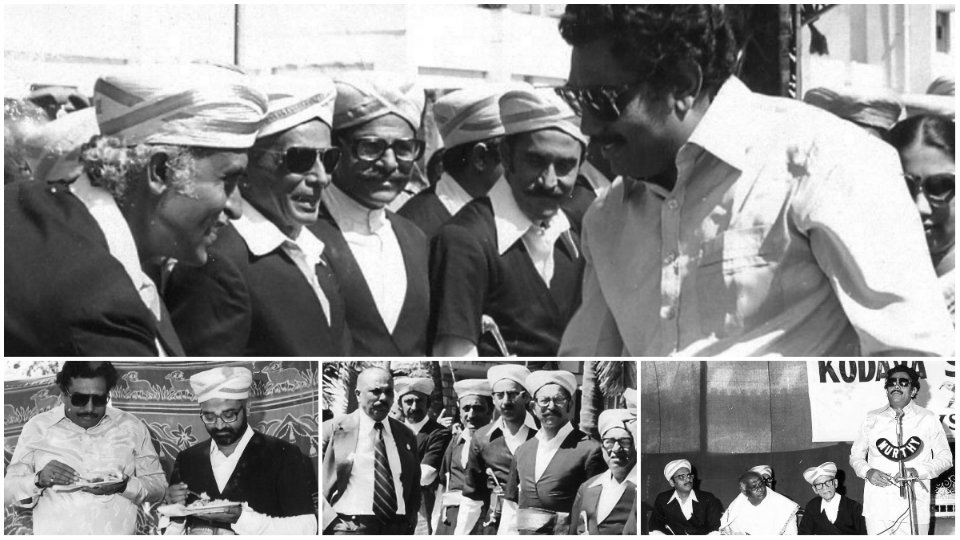
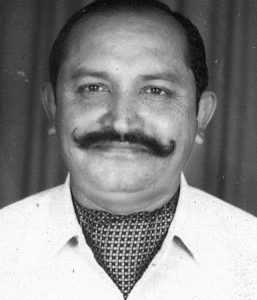
Last week I happened to meet an old friend in Kodagu after a long time. Maneyapanda Mohan (in pic) to his friends and relatives aka Muthanna. A lively person always, ‘hail the fellow well met’ kind. In the 80s, he was the President of Gonikoppa APMC who turned it into a profit-making body for the first time and constructed yards and buildings of its own.
Maneyapanda Mohan
‘Dost se dost mile to do dose’ (when a friend meets a friend it is time for ‘cheers’). So it was and our conversation went rambling to Kodava Samaja Mysore and the birth of its own building.
It was then that he mentioned of having in his possession a photo album containing pictures of Gundu Rao, his uncle Rao Bahadur Kodandera C. Muthanna, the then President of Kodava Samaja Mysore and others including me in my earlier avatar with a beard and thick glass resting on my nose. (see pix)
My interest to see the ‘ancient’ album was because Mohan mentioned that one photograph was of me having breakfast with the then newly-minted Chief Minister R. Gundu Rao who laid the foundation for the Kodava Samaja building in Jayalakshmipuram on Nov. 14, 1981. I was looking at myself after 36 years, well, as an old man now.
Similarly I see many of my friends and Samaja members in these pictures. I am sure, they would love to see the pictures of themselves and their dear and near ones 36 years ago. So here above I produce some of them.
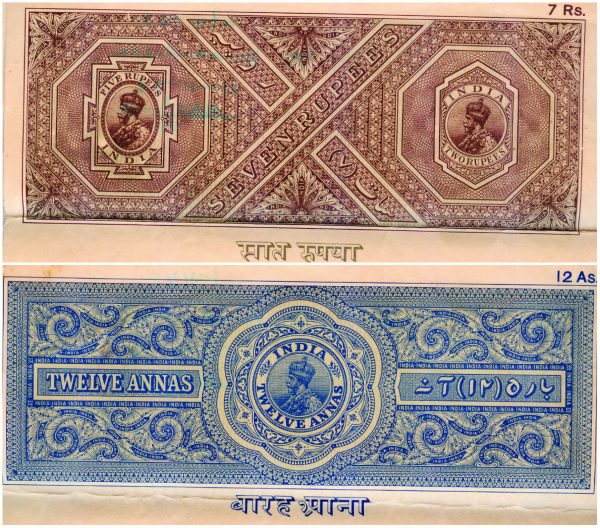
Those were the Days of British Raj…
There were many artefacts, correspondences and records related to the days of British rule. One was the stamp paper used for writing a Sale Document for the purpose of registering it. This one was purchased on 21.11.1932 at Ponnampet Sub-Treasury, Coorg.
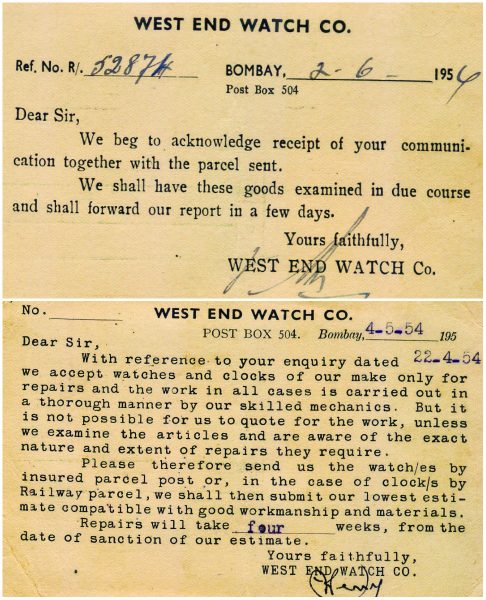
When Customer was the King indeed!
Since the Post Cards reproduced here above are self-speaking, I will not dilate except to say that this watch was duly repaired (free of cost) and returned to its owner “K.N. Kushalappa, Teacher, G.P. School, K. Badaga, Srimangala, S. Coorg.” From Bombay to Badaga village in Kodagu! Well, those were the halcyon days of honesty and concern for the customers. Note the year 1954.
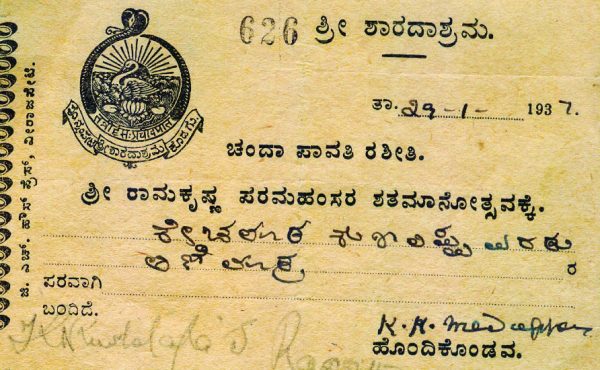
Donation to an Ashrama
Here is a receipt issued for a donation of two annas (present 200 paise) by Sri Sharada Ashrama, branch of Sri Ramakrishna Ashrama in Ponnampet, Kodagu, on 29.1.1937. I was not even born then.
source: http://www.starofmysore.com / Star of Mysore / Home> Columns> Hocus-Pocus / February 16th, 2017
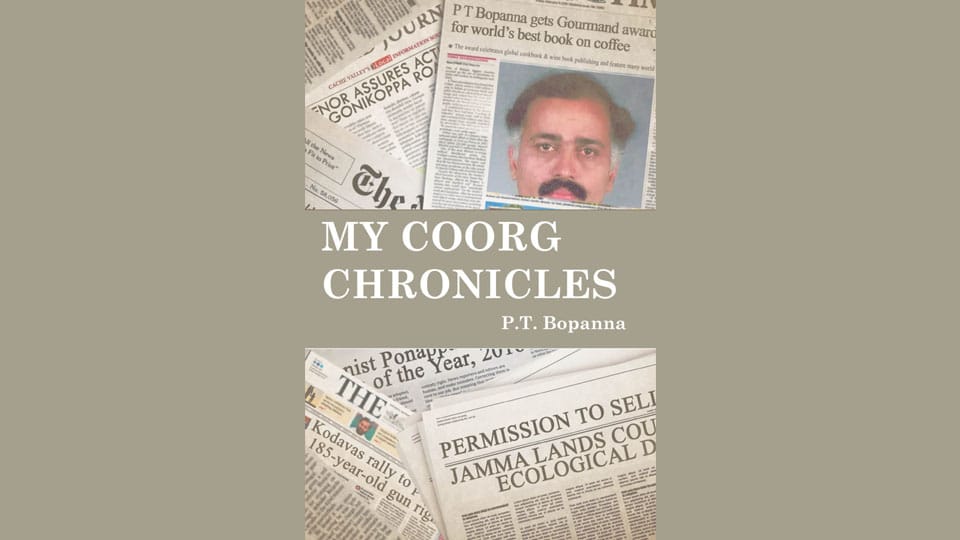
The book ‘My Coorg Chronicles’ traces the journalistic journey of P.T. Bopanna, his foray into writing books, his activism and importantly his efforts to chronicle various facets of Kodagu district in Karnataka.
Bopanna has been covering and chronicling Kodagu for nearly four decades. Besides reporting on the district’s affairs, he has brought out a number of books on this unique region, developed a string of Kodagu-centric websites and produced a documentary video on the land.
His online campaign ‘Repair Hunsur-Gonikoppal Road’ was a significant victory for the people over Government indifference.
He has written extensively to convince policy-makers on the need to retain the Arms Exemption given to the residents of Kodagu to possess firearms.
One of the most popular initiatives launched by Bopanna is the ‘Coorg Person of the Year’ title to recognise outstanding achievers and create role models for the community.
The book discusses the religious beliefs of Kodavas (Coorgs) and also spells out of a political road map for Kodagu.
The foreword for the book has been written by P.M. Belliappa, IAS (Retd). The ‘afterword’ has been written by well-known researchers Boverianda Nanjamma and Chinnappa.
The book has colourful photographs, illustrations and a caricature of Bopanna by cartoonist Ponnappa.
Published by Rolling Stone Publications, the book is priced Rs. 100 per copy.
source: http://www.starofmysore.com / Star of Mysore / Home> Feature Articles / March 15th, 2020
The Karnataka High Court has directed the Archaeology Department (Archaeological Survey of India) to complete Madikeri Fort Palace renovation works by April 18. A two-judge bench comprising Chief Justice Abhay Shreeniwas Oka and Justice Ashok passed the order while hearing a PIL filed by J.S. Virupakshaiah, a retired IAS officer from Kodagu.
Archaeology Department officer Shivakant Vajpayee had submitted an affidavit saying that the tender for renovation works of Madikeri Fort Palace has been invited and roof-tile laying and other works will be taken up at a cost of Rs. 53 lakh. However, N. Ravindranath Kamath, the Advocate representing Virupakshaiah took objection saying that though the High Court had directed the Government and the Department to take up renovation works in August last year, the Department has ignored the order.
Arguing that the building is on the verge of collapse, Kamath prayed the Court for issuing directions to start works at the earliest. Following arguments and counter-arguments, the High Court Bench directed the Archaeology Department to complete renovation works by April 18 and submit an affidavit to this effect on April 20.
Fund release
It may be recalled here that the State Government has given administrative approval to repair the historic Madikeri Fort at a cost of Rs. 8.20 crore. Kodagu Deputy Commissioner Annies Kanmani Joy submitted a proposal to the Government to restore the landmark structure at an estimated cost of Rs. 8,20,45,674.
All these years, several Government offices functioned from the Fort premises and despite this, no official took interest in repairing the structure which is in a dilapidated state. Finally, following strictures from the Karnataka High Court, the District Administration acted and has even taken steps to shift the Government offices to other buildings to help the Archaeological Survey of India (ASI) carry out restoration works.
The ASI is in-charge of the Fort. Retired IAS Officer J.S. Virupakshaiah filed a Public Interest Litigation (PIL) contending that the Fort and Palace premises are heritage sites, dating back to more than three centuries. They are neglected and the exterior walls of the Palace are infected with mold (fungus).
The history of the Old Fort dates back to the 17th century AD. It was built by King Mudduraja of Haleri dynasty. Tipu Sultan rebuilt the Fort with stone. The Palace was built by Lingaraja Wadiyar II in 1812. The Fort was acquired by Dodda Veera Rajendra in 1790 and later came under the rule of British in 1834.
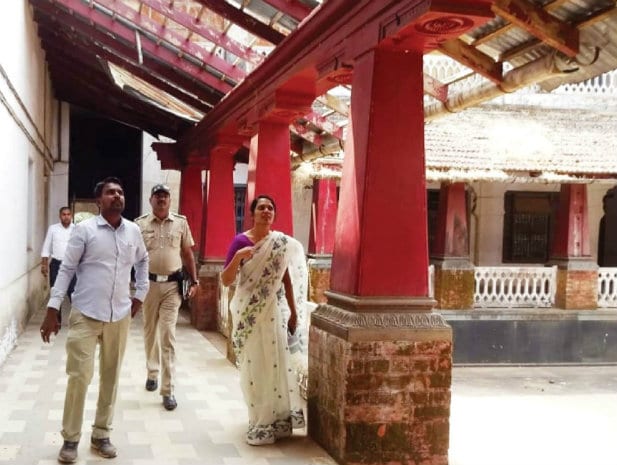
Kodagu DC Annies Kanmani Joy inspecting the Fort renovation works.
DC inspects Fort
Meanwhile, last week, Kodagu DC Annies Kanmani Joy visited the Fort and inspected the renovation work of the Fort and its ceiling being undertaken by the Archaeology Department. She directed the authorities to complete the renovation works in two months.
Speaking to reporters, the DC said that as the first instalment, the Government has released Rs. 40 lakh of the Rs. 54 lakh. The Revenue Department has sanctioned Rs. 8 crore for the renovation project and a request will be sent to the Government to release an additional Rs. 2 crore, she added.
Paltry sum
But in the High Court, Advocate Ravindranath Kamath contended that Rs. 8,20,45,674 was too little an amount to restore the Fort. “Most Government offices in Madikeri functioned from the Fort premises since 1920. As such, the Government has saved more than Rs. 300 crore as rent. The official machinery did not realise this and continued to neglect the Fort without realising the value of the historical structure,” he argued.
source: http://www.starofmysore.com / Star of Mysore / Home> News / March 09th, 2020
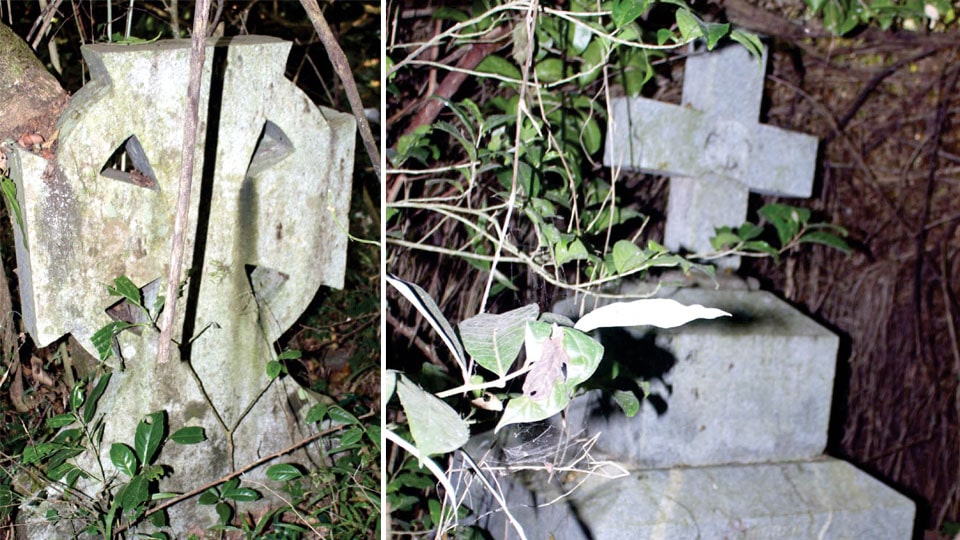
Sad saga of forsaken tombs of British Officers, Soldiers in Madikeri
Madikeri:
Centuries ago, the battlefields of Coorg (Kodagu) thundered with their war cry as they took on marauding armies of the invaders. The British had their own army in Kodagu with thousands of soldiers and officers assisting the Empire to rule the tiny district and also safeguard its borders from marauders.
But the days of the dynasty and the royals are long gone but their remnants — in the form of tombs — are still found in many parts of the district. And unfortunately, these tombs are neglected with no maintenance and weed growth around them.
At Mahadevpet in Madikeri town there is a Gaddige — royal graveyard — built in the Indo-Saracenic style. On the rectangular base, there is a large dome and four turrets. Two Kings of Kodagu (Doddaveera Rajendra and Lingarajendra) and their queens have been buried in the two larger identical structures. The third smaller one has the remains of the Chief Preceptor (Rudrappa) of the Kings.
Beside these three tombs, at a little distance away but within the same enclosure are the tombs of father and son Biddanda Bopanna and Biddanda Somayya. They had served Kodagu and its Kings as Army Generals. While these structures have been maintained (though not very well) by the Kodagu District Archaeology Department, a couple of tombs of British Officers are lying in a pathetic state behind Industrial Training Institute near Field Marshal K.M. Cariappa College.
White marble stone tombs
While some of the tombs are made out of white marble stones that were shining years ago with inscriptions and names on them, other tombs are made in the shape of stone pyramids. Some of the tombs have been dug up by treasure-hunters who were hoping to unearth gold or other valuables buried deep under. Also, some of the tombstones have gone under earth with only a small portion showing up.
Unfortunately, some of the white marble slabs of the tombs have been taken away by people and have been used as steps outside their houses after putting cement on the inscriptions and retaining only the outer white marble frame after polishing them.
Years of neglect
Most of the tombstones have been aesthetically carved and many warriors and their Commanders are buried inside. Some of the names inscribed on top of the tombstones have been covered by hardened fungus due to years of neglect and vagaries of weather. The inscriptions include the name of the deceased officer and the person who built the tomb.
Among the tombs, one tomb belongs to a son of a Lieutenant General who died when he was just 18 years old. Another tomb has the names of four members of one family. However, the cause of death is not known — if they died separately or together. But the name of the person who built the tomb has been carved and it says he is from Bengaluru. This shows that special interest was taken to build this tomb and a person was specially summoned from Bengaluru for the purpose.
Cause of death lost forever
These tombs were carved after 1805 AD and sport different years on them. Except names, there are no other details available on the tombs and as such, the reasons behind their deaths have been lost forever.
Records say that these tombs were earlier located at the place where the present Raja’s Seat stands. These tombs were discovered in the pre-independence era and at that time, Raja’s Seat was on the outskirts of Madikeri town and this may be the reason for the tombs to be built in the vicinity of Raja’s Seat.
Originally near Raja’s Seat
After independence when plans were chalked out for Madikeri’s development including the beautification of Raja’s Seat which was at an elevated place, the tombs were shifted behind Industrial Training Institute. Then, Raja’s Seat came within the jurisdiction of Madikeri town and it was developed into a tourist place.
After the tombs were shifted behind Industrial Training Institute, a protective compound wall was built around them. Over the year, the wall has collapsed and treasure seekers have dug up many graves. Wild weeds and green growth have covered the area and they have grown up to almost 20 feet.
There are no records whatsoever regarding the dead officers. Whether they died naturally or whether they were killed by local kings and chieftains is not known and this may be a good subject of research.
If at all the officers were killed during the freedom struggle, a new chapter on Kodagu’s freedom struggle is set to be written in history books.
source: http://www.starofmysore.com / Star of Mysore / Home> News / by Prasad Sampigekatte / March 10th, 2020
WELCOME. If you like what you see "SUBSCRIBE via EMAIL" to receive FREE regular UPDATES.
Read More »