Category Archives: Historical Links / Pre-Independence

CNC Urges Centre To Accord Geo-Political Autonomy And ST Tag To Kodava Tribe

CNCkf18feb2020

Mysore/Mysuru:

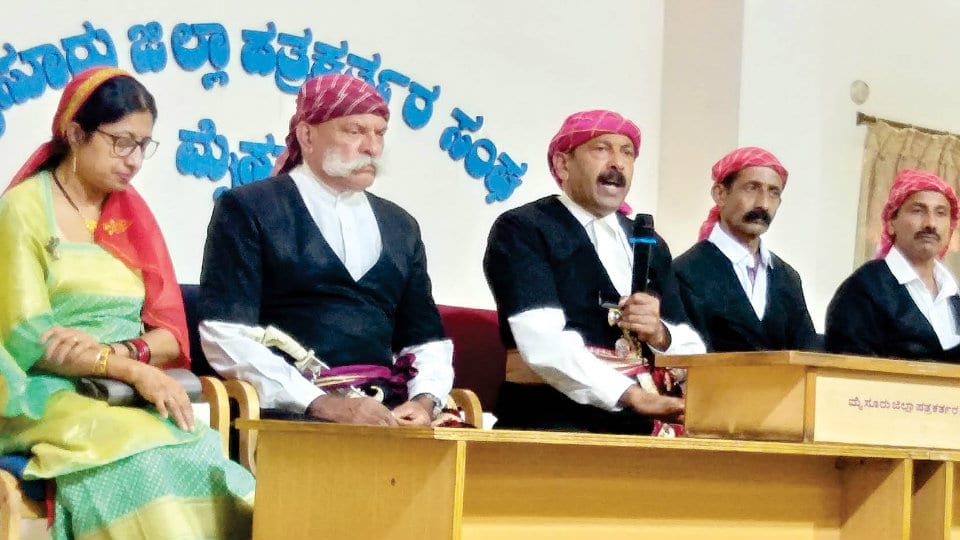
Codava National Council (CNC) President N.U. Nachappa, welcoming the Centre’s enthusiasm and commitment for the creation of Bodoland Territorial Region, has urged the Union Government to expedite the long-cherished aspirations of Kodava Land Geo-Political Autonomy under Articles 244, 371 (read with 6th & 8th Schedule of the Constitution) and also assign ST (Scheduled Tribe) tag to Kodava tribe.

Addressing a press meet at Pathrakarthara Bhavan here this morning, he said that the Union Government, on Jan. 27, succeeded in bringing the curtains down on more than three decades of “militia” activities in one of South Asia’s insurgency-hit region.

“First, the NDA Government in 2019 made its commitment of assigning greater Autonomy to the existing 10 Autonomous regions of North East. Now it has taken first step by entering into a pact with Bodoland people. On Jan. 27, a Tripartite Agreement was signed between the Government of India, the Government of Assam and the National Democratic Front of Bodoland (NDFB) known as ‘The Comprehensive Bodo Settlement Agreement (TCBSA).’ According to this agreement, it gives greater Autonomy and more powers to the body, which will again be renamed as the Bodoland Territorial Region,” Nachappa said.

The five points of the Agreement include:

1. Bodoland Territorial Area District (BTAD) to be renamed as Bodoland Territorial Region. 2. Inclusion of villages having predominant Bodo population into the Council region. 3. Bodo language with Devanagari script to be an associate official language across Assam. 4. Assam Government to set up a Council for welfare of the Bodo-Kachari people living outside BTC. 5. Steps to ensure land rights of the Bodos. As per the accord, Bodos can directly avail monetary aid from World Bank and IMF, he said.

CNC’s five demands are as follows: 1. Kodava land Geo-Political Autonomy should be carved out under Articles 244 and 371. (For traditional and indivisible home land of Kodava tribal community, comprising 45 ancient traditional Kodava Naads, that is from Marenaad to Pathkattnaad, from Gadinaad to Anjigerinaad, from Bengnaad to Kadiyathnaad, from Ballathnaad to Bottiyathnaad, from Noorokkanaad to Poramalenaad, from Muthnaad to Kuthnaad, from Badigerinaad to Paakerinaad, from Surlabbi Naad to Kurchinaad, Thodanaad to Ummathnaad, from Berali Naad to Bepp Naad, Kangalath Naad to Baira Naad, Thavu Naad to Botoli Naad, Perava Naad to Poo Naad, Kirnal Naad to Edenal Naad, Paadi Naad to Kuiangeri Naad, Madikeri Naad to Aarkeri Naad, Noorambada Naad to Kaggod Naad, Nelliya Pudikeri to Kanthamoo Naad, Nelji Naad to Aarayiranaad, Mudigerinaad to Paleri Naad etc.).

2. Indigenous Non-Schedule vulnerable, diminishing Kodava tribe should be included in the ST list under Articles 340 & 342 of the Constitution.

3. Minuscule micro minority dwindling Kodava tribe and their cultural heritage should be included in the Intangible Cultural heritage list of UNESCO.

4. Ancient, rich and living spoken language of the Kodava region and also the mother-tongue of aboriginal Indigenous Kodava tribe ‘Kodava Thak’ should be incorporated in the 8th Schedule of the Constitution.

5. Kodava gun rights should be continued without any time restriction. Kodava tribal folk are exempted under Section 3 and 4 of Indian Arms Act and can possess and carry gun at all times, since weapon is considered by Kodava tribal folk as revered sacrament. Because of their dwindling population and vulnerability there is an existential threat for them and their identity. Hence these minuscule micro minority diminishing ethnic tribe should be protected Constitutionally, the CNC President said.

Continuing he said, for the time being, let them be classified as ST under the Constitution because there is no other classification under the Constitution of India. However, in the long run we Kodavas would like to be classified as a Special Warrior Tribe, he added.

CNC’s demand and claim for Geo-Political Autonomy is most legitimate, logical, feasible and deserving in all sense among any other demands, he opined.

Considering the veracity of the legitimate demands put forth by Codava National Council before the Constitution Review Commission of India headed by Justice M.N. Venkatachalaiah comprising an 11-member stalwarts who are experts in various fields like Constitutional experts, Jurists, Civil servants, Law-makers, Diplomats, bureaucrats and Eminent Journalists have recommended for the creation of Coorg Autonomous Development Council under Article 371 of our Constitution, he said.

Renowned Economist and Rajya Sabha MP Dr. Subramanian Swamy too has taken cognisance of the subject and he is working towards it, Nachappa added.

source: http://www.starofmysore.com / Star of Mysore / Home> News / February 17th, 2020
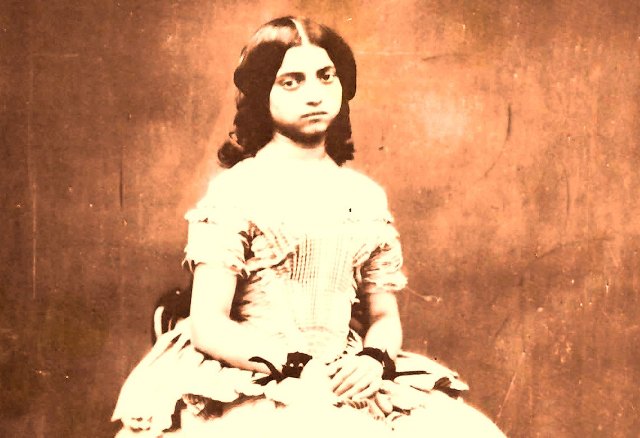
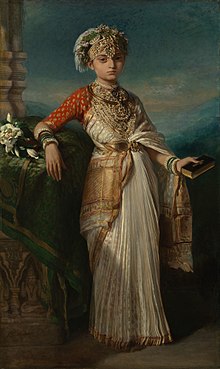
Princess Victoria Gowramma: The Lost Princess Of Coorg | #IndianWomenInHistory

PrincessGowramma01KF31jan2020

The days of March 1841 spent at Chikka Veerarajendra’s modest haveli in Benares were glazed thick with warmth, summer mangoes, and the colored rice flour that danced in the air in celebration of Holi. And for the first time in a long time, the unseated Rajah of Coorg felt a semblance of pride, after a degrading conflict with the British, while observing his favorite daughter Gowramma gurgling in the courtyard. As the mansion’s entrance gates unexpectedly rusted open, interrupting festivities, Veerarajendra was reconnected with Alamanda Somayya, an old ally to his family, who came with word of anglicized Coorg. When introduced to six-month old Gowramma, Somayya studied her tiny paint-smudged palms, prophesizing that ‘this Rajkumari will one day cross the seas’.

Although Princess Victoria Gowramma and her father were the first Indians to reach British turf in 1852, her somewhat diasporic narrative is little-known, forgotten within a bulky history of colonisation and foreign affairs. Perhaps the most articulate source on the royal is C.P. Belliapa’s novel Victoria Gowramma: The Lost Princess of Coorg, which constructs a meticulous timeline that draws on the prospective importance she held in Britain’s colonial system and the Indian religious landscape.

Being christened as the ‘lost princess’ seems fitting in respect to Gowramma’s position in contemporary Kodagu cultural dialogue – she bears our name, a rather ambiguous notability, and a beauty considered ‘exotic’ by outsiders, but upon closer exploration, was alienated from her people and heritage having been raised under the wing of Queen Victoria, and may even be considered a paradigm of what the British hoped for India.

From Benares To Britain

Gowramma’s journey begins with her father’s loss of Kodagu to the East India Company, leaving him bitter and distrusting of the ferenghis (foreigners). The pastoral simplicity of a kingdom fleshed out by generations of his ancestors now seemed fragile in the hands of the British. After being exiled to Benares, Veerarajendra began nurturing a pipe dream of his own, wherein he could restore himself to affluence by filing a legal suit against the East India Company, which would require his physical presence in London.

PERSISTENT COLOURISM SEALED GOWRAMMA’S FUTURE AS A BRITISH ROYAL – A FAIR COMPLEXION DISTINGUISHED HER FROM VEERARAJENDRA’S OTHER CHILDREN.

With the help of British doctor and close friend Dr. William Jeaffreson, Veerarajendra began crafting a trip to world’s most powerful social, economic, and technological center, under the desirable pretense of enabling a Christian education for his daughter. According to the Illustrated London News report in July 1852, persistent colourism sealed Gowramma’s future as a British royal – a fair complexion distinguished her from Veerarajendra’s other children, seeing as he’d dubbed her a “pigeon among crows”.

Image Source: Wikiwand

Grooming Of The Princess

Before their arrival, Dr. Jeaffreson offered a piece of advice to an anxious Veerarajendra saying, “Don’t be too hasty in taking up the legal issue on reaching London. Wait until Gowramma is well accepted by British society. A favorable public opinion is very important. I have received intelligence that the queen herself is eager to meet you and your daughter”. Governor-General at the time, Lord Dalhousie, also hoped for a publicised conversion of Princess Gowramma, which could possibly rescue the British regime’s stagnating reputation among its people.

Another motivating factor was young, recently-deposed Maharaja of Punjab Duleep Singh, who had expressed compliance in converting to Christianity after his state was annexed. The belief that a future marital alliance between Gowramma and Singh, two Christian Indian royals, could be a tool for proselytising the Indian population, had already begun gaining momentum within the monarchy. According to Belliappa, the Logins, guardians to Duleep Singh, were champions of this mentality, strongly believing in the European responsibility to spread the word of the Bible among pagan worshippers of India.

Queen Victoria, a spokeswoman for familial values, industrialisation, and social welfare herself, showed interest in Princess Gowramma’s story of passage from one of the humblest provinces of the British colony in India. Gowramma’s baptism on 30th June 1852 is remembered as an elegant occasion in which the young princess showed poise and grace.

On that day, Queen Victoria gifted Gowramma with her name, and a leather-bound bible with gold embellishments. She then entrusted the newly-christened Princess Victoria to the care of Major and Mrs. Drummond, who were to groom her in Western thought. From learning curtsying to using cutlery, Victoria grew into English ideals, and her consequent popularity in social circles and overall joie de vivre has been heavily-recorded.

Final Years

Overtime, the prospect of marriage between Duleep Singh and Victoria Gowramma began to fall out of the works, due to a lack of attraction, although they remained close friends. It was at this point in Gowramma’s timeline that royal disillusionment began to swell, as she realised her nights spent at royal balls with glasses of wine and attractive Englishmen weren’t the answer to what she wanted: a family and home to call her own.

SHE REALISED HER NIGHTS SPENT AT ROYAL BALLS WITH GLASSES OF WINE AND ATTRACTIVE ENGLISHMEN WEREN’T THE ANSWER TO WHAT SHE WANTED.

An obstacle that came in the way of Gowramma and eligible suitors was actually her father, who’d begun to earn himself the reputation of an ‘old reprobate’ in high society. It’s reasonable to conclude that Victoria’s consistent fear of upsetting the queen and consort contributed to her sad lack of autonomy, and also a naïve willingness. She ultimately married the nearly fifty-year-old Colonel Campbell, a charming friend of Duleep Singh, who was mostly attracted to her fine jewelry and 400-pound sterling allowance.

On 2nd July 1861, Gowramma gave birth to a baby girl, christened Edith Victoria Gowramma Campbell. However, this was only followed by a life of isolation in London, as Campbell was an indifferent husband, often only making contact to ask her for money – but Gowramma was not without great strength, and kept a brave face as a single mother.

In March 1864, Princess Victoria Gowramma succumbed to tuberculosis, just a few months before her 23rd birthday. Unsurprisingly, it’s suspected that Campbell disappeared shortly after her death, but not without her jewels.

Ultimately, Duleep Singh and Victoria Gowramma fell short of the grand scheme envisioned by the queen and British royalty. Perhaps India’s religious history would have shifted if a successful marriage between the Christian Indians had been fulfilled, as historians have realised the greater importance of religious propaganda as a tool of control for those colonised, rather than plain force. In respect to Gowramma herself, it’s impossible to trace her intricate lifetime of tragedy and romance without understanding the people and politics that governed her fate and sense of self.

References
1.Victoria Gowramma – The Lost Princess of Coorg by C.P. Belliappa
2. The Hindu
3. Coorg Jewellry
4. Evolve Back
5. Uk Asian

Featured Image Source: UK Asian

source: http://www.feminisminindia.com / Feminism In India – FII / Home> History / by Anoushka / December 12th, 2018

Why women of Karnataka’s Kodagu are busy learning how to use a rifle

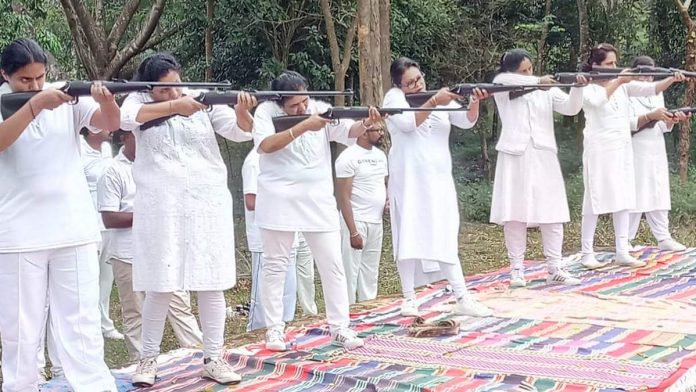
Under a Kodagu police programme, nearly 150 women have been trained in five batches over the last year on 0.22 rifle.

Women undergoing rifle training in Kodagu's Gonikoppal village. | Photo: By special arrangement
Women undergoing rifle training in Kodagu’s Gonikoppal village. | Photo: By special arrangement

Bengaluru:

Women in Kodagu are up in arms, literally.

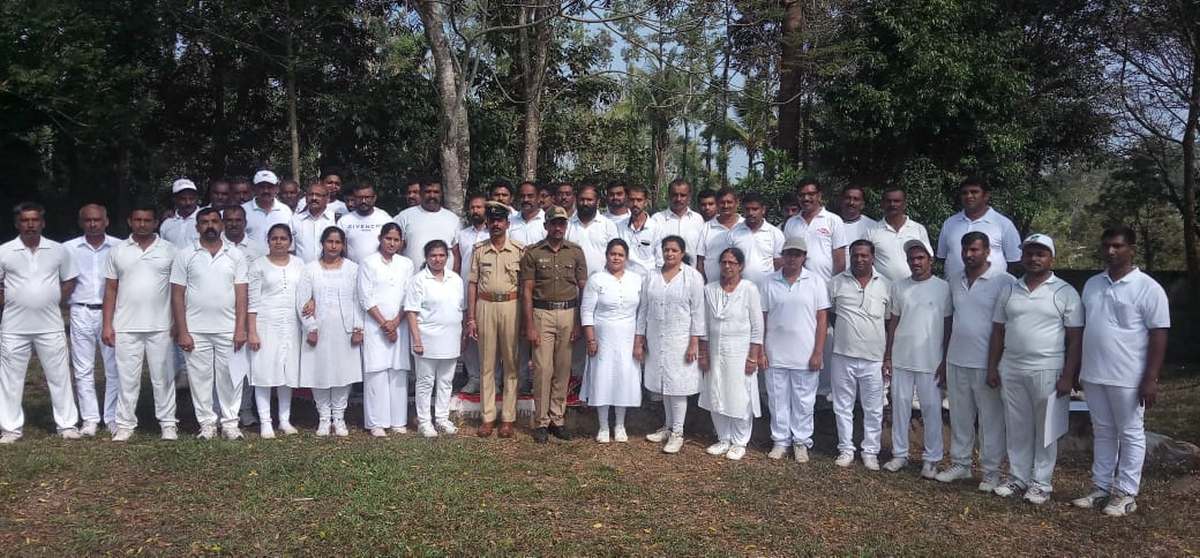
On Sunday, a group of women completed a five-day licensed firearm training programme in the southern Karnataka district under police supervision as a means to self-defence — against violent attacks and a tiger menace.

Under a Kodagu police people-interaction programme, nearly 150 women have been trained in five batches over the last year after the district’s superintendent of police, Suman Pennekar, took charge in December 2018.

The move has come as a response to the rising crime rate in the coffee plantation region, claim the women. ThePrint couldn’t independently verify this claim. However, several reports have emerged of murders and tiger attacks in the past few months.

Pennekar told ThePrint the training has been imparted to ensure that those who possess weapons feel accountable and not become “trigger happy”. The region is dominated by Kodavas — as people of Kodagu are called — a martial race that is one of the few tribes in the country allowed to possess guns without license.

These camps have so far been held across different talukas in Kodagu. The latest one took place at a centre in Gonikoppal village, where these women, dressed in white, learnt to aim and fire.

Women are trained on 0.22 rifle under the Civilians Rifle Training programme, as it is officially called.

Police personnel with women at a rifle training camp in Kodagu’s Gonikoppal village. | Photo: By special arrangement

For self-defence

Bharathi Bopanna enrolled herself for the programme after she received a text on messaging service WhatsApp about the latest camp. She decided it was important for her to know how to use family-owned arms to not just keep herself safe but also to adhere to the Kodava tradition.

In the district famous for its sprawling coffee plantations, Bopanna said there have been instances of attacks on women while they were alone at home during coffee planting and plucking seasons.

“Crime against women has increased, especially those who are home alone. I decided to learn how to operate a gun so that I can use it to defend myself if need be,” Bharathi said.

“One should be able to defend oneself. When the men in the house are not there, there may be criminals who may try to attack us. We should be prepared. When they hear that we are all trained in using a gun, they will think twice before committing a crime.”

A.B. Aarthi, who underwent the same training along with her 20-year-old daughter, said, “I took it up for my personal protection.

“We would wake up early and travel 25 km from our home to Gonikoppal to train. Many of us in Kodagu live in remote areas and sometimes women have to travel alone through isolated places. If something happens, there may be nobody to rescue us, so if we are armed, we will feel safer,” she said.

Apart from rigorous physical training, the women were also tested for their weapons skills at the end of the session.

“I managed to come third, despite handling a weapon for the first time,” said Bopanna while recommending that all women in the country should undergo the arms training.

‘Great responsibility’

Kodagu SP Pennekar told ThePrint that the civilian training programme was initiated in 1962, but the district hadn’t been conducting it regularly.

After she took over, Pennekar made an effort to get people from Kodagu to train as they all possess weapons. Over the year, enrolment has gone up in the camps.

She said many Kodavas have huge landholdings and these rifles help them keep trespassers at bay.

The training is to use the weapon judiciously — not to shoot but to deter, she said.

However, Pennekar has a word of caution for all.

“They should understand that along with handling a weapon comes a great responsibility. They should realise that this training is being given to ensure they understand why they have been given a special privilege and that they should learn to use it responsibly,” said Pennekar.

source: http://www.theprint.in / The Print / Home> India / by Rohini Swamy / January 01st, 2020

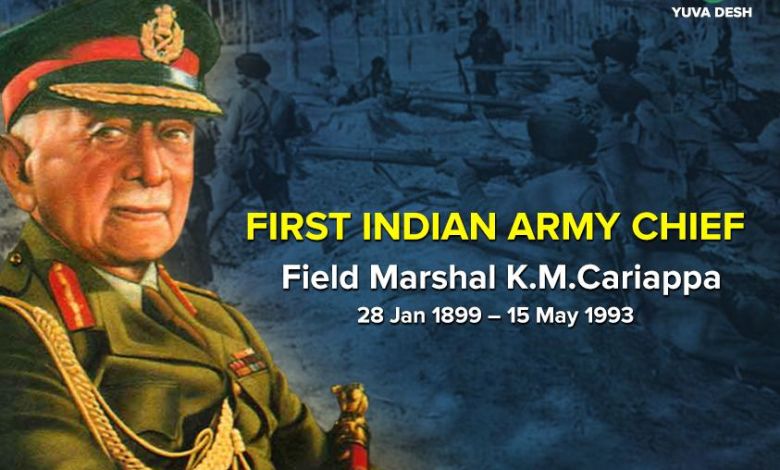
Who was Field Marshal KM Cariappa?

CariappaKF22jan2020

KM Cariappa is a man known for many firsts, but most importantly, he is known as the man who took charge of the Indian Army from its last British Commander in Chief, General Sir Roy Bucher. Born on January 28, 1899, in Coorg, Cariappa completed his education at Central High School at Madikeri and went on to study at the Presidency College in Madras.

However, Cariappa began his Army stint under the British and was among the few selected for the first batch of KCIOs (King’s Commissioned Indian Officers) at the Daly Cadet College in Indore and was commissioned in the Carnatic Infantry. He was in active service with the 37 (Prince of Wales) Dogra in Mesopotamia (present-day Iraq) and then posted to the 2nd Rajput Light Infantry (Queen Victoria’s Own). Cariappa went on to become the first Indian officer to undergo the course at Staff College, Quetta in 1933. In 1946, he got promoted as the Brigadier of the Frontier Brigade Group.

By Indian independence, Cariappa saw action in Iraq, Syria, Iran and Burma and became the first Indian Officer to be given command of a unit in 1942. He went on to receive many awards and accolades in his career spanning three decades. He received the prestigious Order of the British Empire (OBE) for his role in Burma against the Japanese during the Second World War.

In 1947, Cariappa became the first Indian to be selected to undergo a training course at Imperial Defence College, Camberly, UK. His role during the Partition is rarely mentioned, during which he oversaw the division of the Army. Cariappa also led the Indian forces on the Western Front during the Indo-Pak War of 1947 and successfully recaptured Zojila, Drass and Kargil and established a linkup with Leh.

On January 15, 1949, Cariappa became the first Commander-in-Chief of the Indian Army. He held the five-star rank of field marshal, the highest honour in the Indian Army, which Sam Manekshaw is the only other officer to have held.

source: http://www.defenceaviationpost.com / Defence Aviation Post / Home> Defence> Indian Army / source: Indian Express / January 20th, 2020

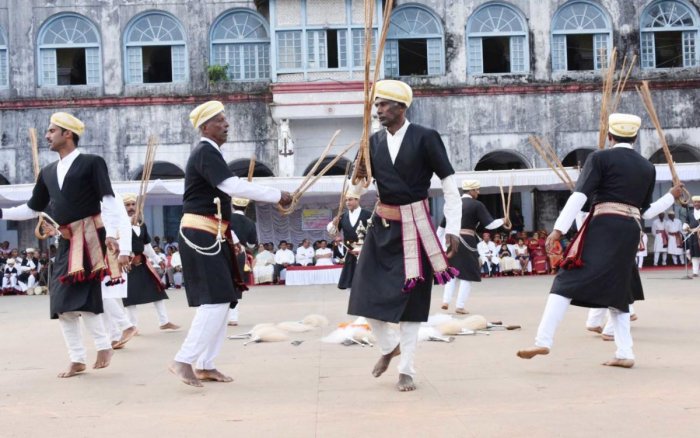
‘Kolata’, sports mark Huthari celebrations

Kodava men perform ‘Huthari Kolata’ on the premises of the Old Fort in Madikeri on Thursday.

Celebrations of Huthari continued with ‘Kolata’ and various sports events on the very next day of Huthari festival in the district on Thursday.

The Pandira family and the management committee of the Omkareshwara Temple organised the ‘Huthari Kolata’ on the premises of the Old Fort in Madikeri.

‘Ummattat’, ‘Bolakkat’, ‘Kolat’, ‘Pariya Kali’, ‘Chowli Aat’ and ‘Kattiyat’ were performed by teams from the Kodava Samaja, the Pandira family and the Pommakkada Koota.

Children added sheen to the Kolata by tapping their feet to the music of the traditional Kodava Valaga, which came as the icing on the cake.

Speaking on the occasion, MLA K G Bopaiah said that Kolata is celebrated soon after Huthari festival in Kodagu. Kolata was performed on the premises of Old Fort since generations, he said.

Stating that a week-long Huthari Kolata will be celebrated in ‘Uru Mand’ and ‘Naad Mand’, the MLA stressed on the need to cherish and preserve the tradition.

Since 2008, Kodagu has been enjoying holiday for Huthari and Kaveri Sankramana, after the government recognised the festivals, he added.

History

The Pandira family members of Hebbettageri village have been performing ‘Huthari Kolata’ or Puttari Kolata, on the premises of Old Fort, since the time of the reign of royal kingdoms in Kodagu.

The paddy is harvested during the festival and brought to homes.

The Puttari Aramane Kolu was held in high regard in the palace in older days and the same is continued today.

‘Will accept minister’s post if offered’

Speaking to reporters, Bopaiah said that he is not in the race for a minister’s position. However, if offered, he will accept the same with humility and work with conviction and handle with responsibility.

He meanwhile stated that he is an honest member of the party and does not believe in lobbying. He denied pressuring any leader to give him the minister’s post. “I have fetched a lot of grants to Kodagu and will continue to strive to solve people’s problems,” Bopaiah added.

source: http://www.deccanherald.com / Deccan Herald / Home> State> Mangaluru / by DH News Service, Madikeri / December 12th, 2019

Portable Memorials: Portrait Miniatures

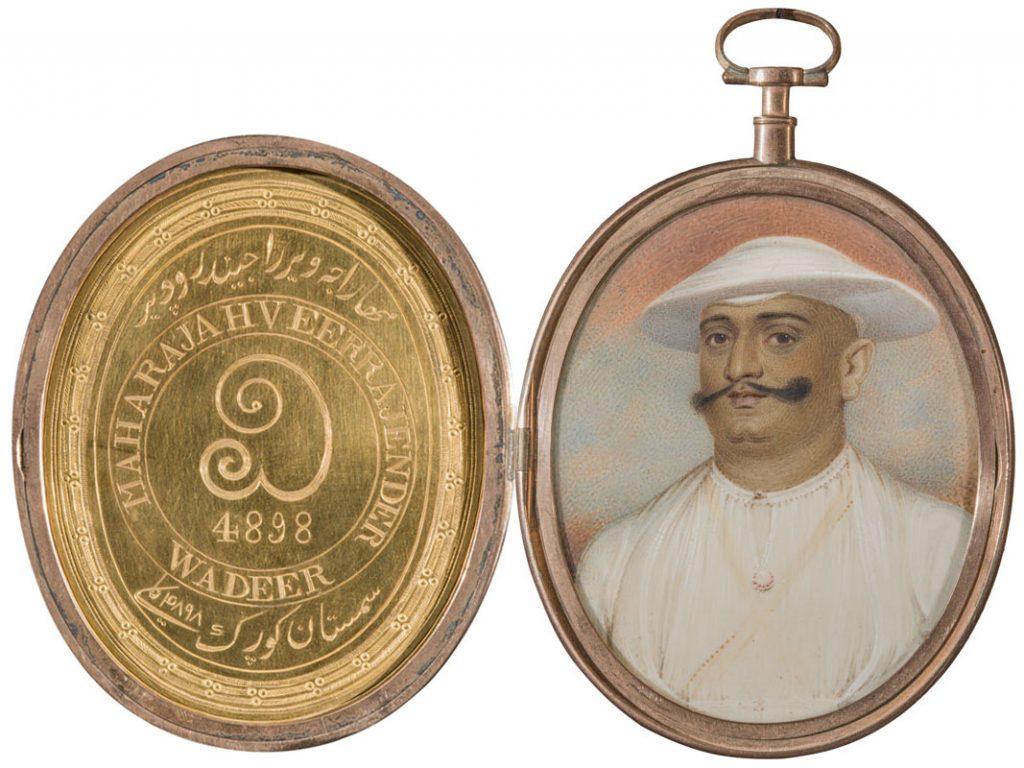
Attributed to Ozias Humphry (British, 1742–1810), Dodda Vira Raja (or, Vira Rajendra Wodeyar), Ruler of Coorg 1780-1809, c. 1787. Watercolor on ivory. Gift of Shirley Latter Kaufmann in memory of Harry and Anna Latter, 74.649.

New Orleans, LA :

The New Orleans Museum of Art (NOMA) presents the museum’s Latter-Schlesinger Collection of Portrait Miniatures. Cradled in the palm of the hand or worn close to the heart, portrait miniatures were never intended for public consumption, but rather, functioned as personal tokens of affection, love, or memorial. Drawing from NOMA’s permanent collection, the installation of more than 100 portrait miniatures is now on view in the Lupin Foundation Decorative Arts Galleries on the museum’s second floor.

“NOMA’s Latter-Schlesinger Collection of Portrait Miniatures, given in 1974 by Shirley Latter Kaufmann in honor of her parents, Harry and Anna Latter, is one of the singularly important collections at this museum,” said Susan Taylor, NOMA’s Montine McDaniel Freeman Director. “Ranging from the court of Henry VIII to Napoleonic France, the collection includes masterful examples of the important artists and techniques used in the art of miniature portraits.”

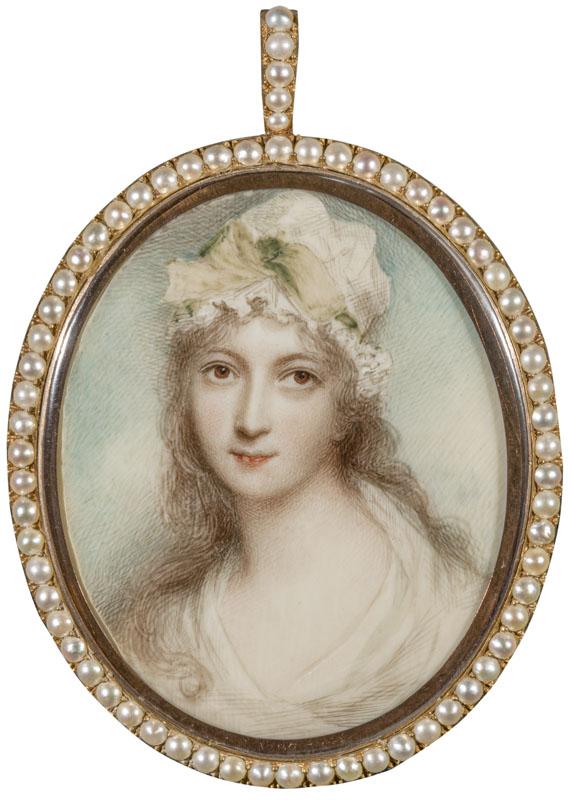
Andrew Plimer (British, 1763–1837), Henrietta Ponsonby, Countess of Bessborough, c. 1795. Watercolor on ivory, frame with pearls. Gift of Shirley Latter Kaufmann in memory of Harry and Anna Latter, 74.654.

Portrait miniatures were the passion of New Orleans collectors Harry and Anna Latter. In 1957, the Latters traveled to London to oversee a government project and dedicated the trip to the pursuit of English portrait miniatures. After her parent’s passing, Kaufmann gifted the comprehensive collection to NOMA, where she was a trustee for more than twenty years and board president in 1978. The family continues Kaufmann’s tradition of supporting the museum through the Milton H. Latter Educational and Charitable Foundation, which sponsored the design and fabrication of a custom cabinet for the magnificent collection.

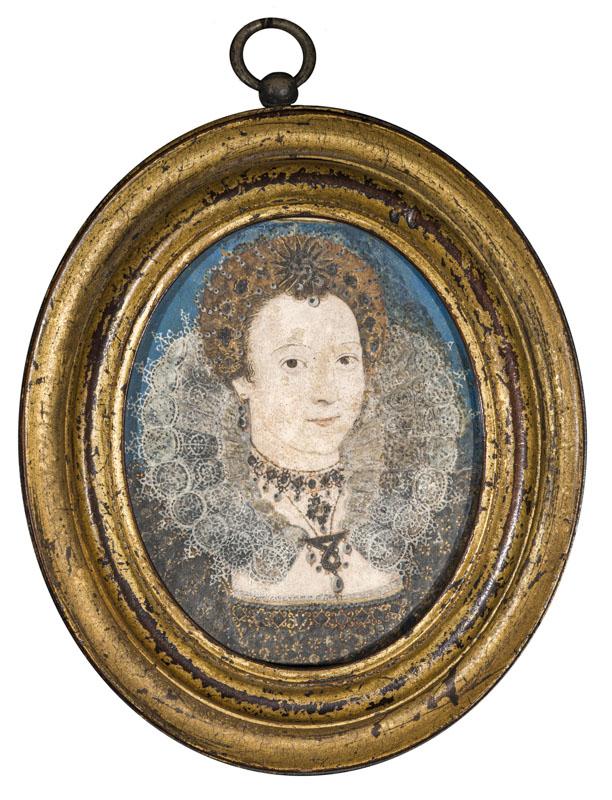
Nicholas Hilliard (English, 1547–1619), Portrait of an Elizabethan Court Lady, c. 1590. Watercolor on parchment. Gift of Shirley Latter Kaufmann in memory of Harry and Anna Latter, 74.337.

Portrait miniatures feature details of historic lace, jewelry, ornate hairstyles, royal adornments and military regalia, all executed by the artist sometimes using a single hair as a brush. The earliest 16th-century miniatures were painted with watercolor onto vellum (animal skin) or cardstock, but by the 18th-century heyday of portrait miniatures, artists painted on thin sheets of ivory for a natural luminescence to the watercolor portraits. NOMA’s collection includes master miniature artists Nicholas Hilliard (English, 1547-1619), John Hoskins the Elder (English, c.1590-1665), Samuel Cooper (English, 1609-1672), Richard Cosway (British, 1742-1821), and George Engleheart (British, 1752-1829). On view are examples of portraits framed with the sitter’s hair, intricately arranged and braided, and two “lover’s eye” miniatures, capturing just an intimate close-up of the sitter’s eye, recognizable only to her dearest confidants.

A tablet produced by NOMA details the stories behind these portrait miniatures, with the stories of royalty and historic celebrities, the highly-skilled craft of miniature painting, and the Latter family collection.

NOMA’s installation was made possible with the support of the Milton H. Latter Educational and Charitable Foundation.

source: http://www.artandobject.com / Art & Object / Home> Museum / December 11th, 2019

Kodavas want autonomy: CNC chief

Codava National Council (CNC), the apex body of the Kodava tribe (original residents of Kodagu) has intensified their demand for a separate Kodava land having jurisdiction of two taluks Madikeri and Virajpet and parts of Somwarpet.

“We are being socially, economically and politically exterminated systematically by well connected political parties. The names of our villages and our festivals are being wiped off, distorted and forgotten. Our contribution to the country’s armed forces is being deliberately wiped under the mat by the people in power,” Codava National Council (CNC) President N U Nachappa Codava told reporters in Mangaluru on Thursday.

“We want our own administration on the lines of the hill council in the North East. An autonomous administrative unit. After the abrogation of Article 370 and subsequent rearrangement of Jammu and Kashmir state by the central government, our hopes of getting administrative autonomy has brightened, Nachappa said, adding the CNC will release a charter of 12 demands on the Kodava National Day planned on November 24 in Madikeri.

“The main objective behind the celebrations of the annual Codava National Day programme by CNC is to rejuvenate our geo-political aspirations in the quest for autonomy,” he added.

source: http://www.deccanherald.com / Deccan Herald / Home> State> Mangaluru / by DHNS, Mangaluru / November 21st, 2019

Ancient coins, notes draw crowds at exhibition

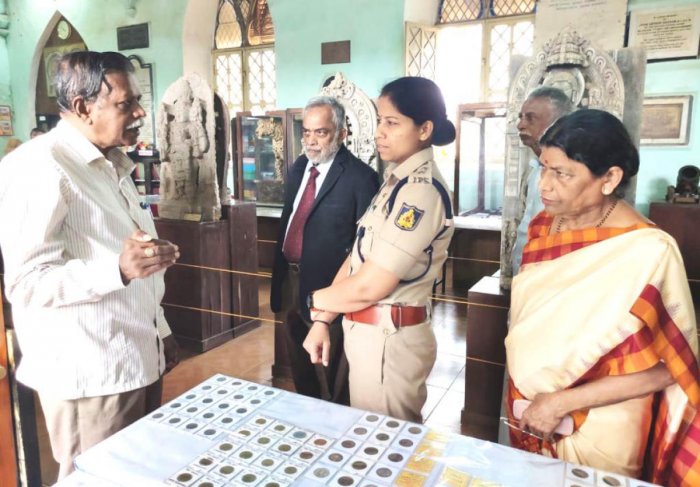
Superintendent of Police Dr Suman D Pennekar at the exhibition of coins and currency notes at Old Fort in Madikeri on Friday.

Rare and ancient coins of half paisa, one anna and two annas, were featured in a numismatic exhibition in the premises of the Government Museum at Old Fort Hall in Madikeri on Friday, as a part of World Heritage Week 2019.

An exhibition of old currency notes and photographs of heritage structures of Kodagu was also organised on the occasion.

The coins and currency notes exhibited on the venue were from the collections of numismatist P K Keshavamurthy from Hunsur. It was the 147th exhibition by him. The collection included the punch mark coins circulated in 5th century AD and coins dating back to the period of Greek and Roman rulers and also those circulated during the period of Gupta, Shathavahana, Kadamba, Chola, Pandya and Mughal empires, British and Portuguese rulers.

People examined the coins belonging to the rulers of Mysuru and Travancore. An array of exhibits included copper, golden, silver, lead and brass coins.

Numismatist P K Keshavamurthy said that he developed the hobby of collecting coins and currency notes when he was an employee in BSNL in Madikeri. Later, he exhibited his collection for the first time in 1992.

He got the chance to conduct his 50th, 125th and 147th exhibitions in Kodagu, he said.

The collections of Dr Patkar, Narayana Bhat, Y Mahalingeshwara Bhat, Nanjappa, Seetharam and Chettalli estate owner C A Appanna were also exhibited in the exhibition.

The photography exhibition of heritage structures of Kodagu featured the Kakkabbe Palace, Rajara Gadduge and Old Fort.

Superintendent of Police Dr Suman D Pennekar inaugurated the exhibition of coins and currency notes.

Dr M G Patkar inaugurated the exhibition of the photographs of heritage structures. Government Museum curator Rekha was present.

The exhibition will be held till November 24.

source: http://www.deccanherald.com / Deccan Herald / Home> State> Mangaluru / by Adithya K A , DHNS – Madikeri / November 22nd, 2019

After rain damage, Kodagu’s historical Nalknad Palace is crying for attention

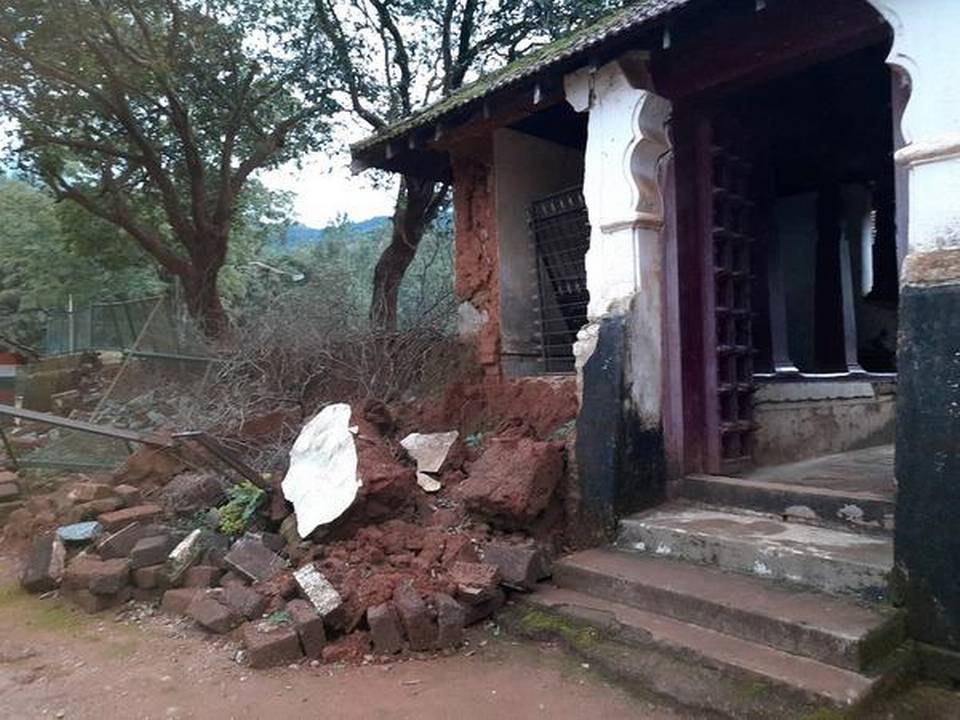
A portion of Nalknad Palace in Kodagu district collapsed a few weeks ago following torrential rains.   | Photo Credit: M.T. Shiva Kumar
A portion of Nalknad Palace in Kodagu district collapsed a few weeks ago following torrential rains. | Photo Credit: M.T. Shiva Kumar

There is no sign of restoration work being taken up by the ASI.

Nalknad Palace, at the foot of the dense Tadiandamol, the highest peak in Kodagu district, once stood as a symbol of elegance, architecture and style. Today, it is crying for protection.

The two-storeyed building with historical significance, which is also known as Naalnaad Aramane, was built between 1792 and 1794 AD to commemorate the victory of Haleri king Dodda Veera Rajendra over Tipu Sultan. It has precious murals, pillars, various wooden carvings, dark rooms [or hiding rooms], secret passages, bathrooms and galleries of the 18th and 19th centuries.

A portion of the palace collapsed a few weeks ago following torrential rains. There is no sign of restoration works being undertaken, according to sources in the Archaeological Survey of India (ASI). An ASI source said repair work can be taken up only after the rains subside fully. As such, the chance of miscreants damaging the precious artefacts and structures at the palace is high, as the lone caretaker leaves after closing time (6 p.m.).

Hiding place
According to the ASI, Dodda Veera Rajendra decided to construct the palace at Yavakapadi at the foot of Tadiandamol as the place was thickly wooded. Although he won a battle against Tipu, he was still under the threat of enemy troupes. The legendary ruler saw the need for constructing an elegant structure with safety features in the dense forest area to use as a hiding place. Thus, Nalknad Palace was built, according to a history lecturer in Hunsur.

A sign put up outside the palace gives brief details of the building, including that Dodda Veera Rajendra built it to protect his family from enemies.

He married again in 1796 to Mahadevamma at the same palace and lived there until she died in 1807. An elegant wedding mantap, constructed for his marriage, still exists there and is the cynosure of all eyes arriving at the palace.

It was also the hiding place and last residence of Chikka Veera Rajendra before he surrendered to the British in 1834 AD.

The palace was a rendezvous point for miscreants till a few years ago, before the ASI took it under its wing. Later, the palace was restored. Unfortunately, irreparable damage has been caused to the murals and paintings on the walls, according to ASI sources.

The Haleri kings might have left precious artefacts at the palace when they deposed to the British. Sources say the artefacts might have been shifted elsewhere or stolen.

According to the visitor register, footfall at the palace is sometimes nil and at other times reasonable.

source: http://www.thehindu.com / The Hindu / Home> News> States> Karnataka / by M. T. Shiva Kumar / Mandya – November 04th, 2019

Centre Extends Gun Licence Exemption To Kodavas Till 2029

KodavaGunsKF03nov2019

New Delhi:

The Centre has decided to continue the British-era rule of exempting Kodavas and Jamma land holders in Kodagu district from obtaining licence for firearms such as pistols, revolvers and double-barrelled shotguns. The exemption has been given for 10 years, till 2029.

Kodavas worship weapons and guns are part and parcel of every festival and ceremony — be it birth or death — and the decision has been taken considering the cultural and religious sensitivities of the community. “Those who have been given the exemption are every person of Kodagu by race and every Jamma land tenure holder in Kodagu,” according to a Home Ministry notification.

Kodavas are the only community in India who are exempted from obtaining arms licences. “The arms or ammunition carried or possessed by any person being from Kodagu by race and every Jamma tenure holder in Kodagu and herein exempted while residing or travelling outside the district of Kodagu shall not exceed one rifle with 100 rounds of ammunition for the same and one smooth bore breech or muzzle-loading gun with 500 cartridges or the equivalent in leaden shot and gunpowder,” the notification said citing conditions of the exemption.

Case in High Court

Kodavas have been getting the exemption of obtaining arms licence since the British era and the Centre has provided exemption in the rules issued under the Arms Act, officials said. However, Captain (Retd.) Yaladalu K. Chethan, son of Yaladalu D. Keshavananda filed a Writ Petition in the Karnataka High Court on Jan. 8, 2018.

Chethan questioned the exemption granted by the Government of India to a certain class of people in the district in obtaining licence to possess firearms under Section 3 and 4 of the Indian Arms Act, 1959.

In his petition, (WP No. 1386/2018), Chethan, a resident of R.T. Nagar in Bengaluru, claimed that the continuation of the exemption, granted to some class of persons by the British Government in pre-Independent India in furtherance of their divide-and-rule policy, was unconstitutional, as it was based on irrational, fictitious and discriminatory grounds, such as race and ancestral land tenure.

Centre’s stand

Responding to the notice issued by the High Court, the advocate representing the Centre had informed the Court that a committee had been constituted by the Ministry of Home Affairs to review the Arms Act, including notification granting exemption to people of Kodagu. After receiving comments from all stakeholders, the Centre has now extended the exemption for 10 years.

Bengaluru Kodava Samaja, Akhila Kodava Samaja and Federation of Kodava Samajas backed the move to convince the Home Ministry on retaining and extending the exemption. Prominent persons from Kodagu in New Delhi and Bengaluru including Machimanda Thamoo Cariappa, Maneyappanda Pavan Ganapathy, Palecanda Nanju Nanjappa, Ithichanda M. Devaiah, Annalamada Sunil Achaiah, Mukkatira T. Nanaiah and Maletira Dhyan Chinnappa played a key role and also worked to retain this provision.

source: http://www.starofmysore.com / Star of Mysore / Home> News / November 02nd, 2019