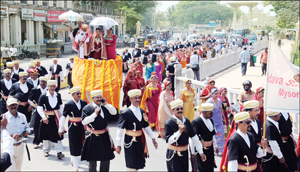
The 20th Hockey Utsav of Kodava families — Shantheyanda Cup Hockey — would start at Field Marshal Cariappa (FMC) College Ground in the city on Sunday.
The hockey tournament would be held at the college ground and the Police Ground till May 8.
A gallery has been set up to accomodate 25,000 spectators at the college ground. More than 30 stalls would put up around the ground. LED screens would also be put up to help the people to watch the tournament.
Utsav Samithi Working President Shantheyanda Veena Acchaiah said the state government has released Rs 40 lakh for the tournament.
The estimated expenditure is around Rs 1 crore for organising the tournament. Funds would be raised from donors, she said.
A total of 281 teams took part in the tournament when Kaliyanda Cup was organised in Napoklu.
The tournament was started by Pandanda Kuttappa to ensure coordination among Kodava families in 1997. It aims to bring together all the Kodava families under one roof.
The Shantheyanda Cup 2016 is expected to bring in a large number of hockey lovers (over 300,000) from across the world.
Shanteyanda family Believed to be the descendant of Palegara (chieftain) with the Coorg Haleri King more than 150 years ago, the Shantheyanda family hails from Badigeri village, known as Mukkodlu now.
The family was named after Shanthaiah, the ‘Guru Karona’ of the family.
It has over 150 members and the family is led by Pattedara’ Shantheyanda B Monnappa and ‘Naad Thakka’ Shantheyanda K Achaiah.
The members of the family are well represented in the fields of sports, politics, business, education and sciences.
Shantheyanda Veena Achaiah, the president of Karnataka State Handicrafts Development Corporation and Shantheyanda Ravi Kushalappa, the former President of Kodagu Zilla Panchayat, are among the notable members of the
family.
Shantheyanda Cup 2016 provides a platform for all men and women hockey enthusiasts to showcase their skills.
With the support of Hockey India and under the aegis of the Kodava Hockey Academy, the Shantheyanda family has been organising various events to train and encourage the budding athletes of the district, a source in the family said.
Mysuru-Kodagu MP Pratap Simha is seen lighting the traditional lamp to inaugurate the two-day State-level Kodava Literary and Cultural Fest at Scouts and Guides Ground in city this morning. Others seen are (from left) former President of Mysuru Kodava Samaja Dr. A.A. Kuttappa, Samaja President M.K. Kuttappa, Regional Commissioner A.M. Kunjappa, Karnataka State Handicrafts Development Corporation Ltd., Chairperson Veena Achaiah, Karnataka Kodava Sahitya Academy Chairman B.S. Thammaiah, Legal Advisor to Karnataka Chief Minister Brijesh Kalappa, former VC of Hampi University Prof. H.J. Lakkappa Gowda, Folklore University VC Prof. Ambalike Hiriyanna, Joint Director of Kannada and Culture Balwant Rao Patil, In-charge Assistant Director of Kannada and Culture Department (Kodagu) S.I. Bhavikatti and Academy Registrar Umarabba.
Mysuru:
Observing that Kodava culture and traditions can be likened to that of Parsi community, which is known for its unity, entrepreneurship and large heartedness, Mysuru-Kodagu MP Pratap Simha said that patriotism runs in the blood of every Kodava.
He was speaking after inaugurating the two-day State-level Kodava Sahitya-Samskruthika Mela at Haradasa Appaneravanda Appachha Kavi Vedike at the Scouts and Guides ground near the Deputy Commissioner’s office here this morning.
Stating that he had great affection for Kodavas, Simha said that however, he has a little grouse against Kodavas for migrating to other places in search of work and other profession, after leaving their homeland Kodagu.
Pointing out that Kodavas celebrate three major festivals in a year — Huthri, Kail Poldh and Cauvery Sankramana — the MP wondered how many Kodavas were really interested in farming and cultivating paddy and other crops.
Noting that Kodava community had given great warriors like Field Marshal K.M. Cariappa and General K.S. Thimayya to the nation, Simha lamented the declining number of Kodavas joining the armed forces of late.
Expressing concern over the sharply declining Kodava influence in the armed forces, Simha warned that one day a gallery of Kodava Army Officers has to be set up for the future generation as reminiscence of the past, if the trend continued.
Expressing disappointment over declining cultural values, traditions and unity among Kodavas, Simha said this can be seen in the lack of development of Kodava Samaja buildings across Kodagu district.
Suggesting creating of an exclusive space at the newly-constructed Kodagu DC Office building at Madikeri for displaying the rich Kodava culture, heritage and traditions to future generation, the MP stressed on the need for inculcating Kodava culture among younger generations of the community.
Highlighting the need for maintaining unity and affection among Kodavas, Simha called for appropriate measures for further strengthening of Kodava culture and traditions.
Earlier, the Reception Committee Chairman Dr. Adengada A. Kuttappa hoisted the flag. Kodava Sahitya Academy Registrar Umarabba welcomed. Academy Chairman Biddatanda S. Thammaiah presided.
Mysuru Kodava Samaja President Moovera K. Kuttappa, Regional Commissioner Appachettolanda M. Kunjappa, Karnataka State Handicrafts Development Corporation Chairman Shantheyanda Veena Achaiah, Legal Advisor to the Chief Minister Palachanda Brijesh Kalappa, former Hampi Kannada University VC Prof. H.J. Lakkappa Gowda, Karnataka Folklore University VC Prof. Ambalike Hiriyanna, Joint Director of Kannada and Culture Balwant Rao Patil, Department of Kannada and Culture Assistant Director (Kodagu) S.I. Bhavikatti and others were present.
The two-day event features a book exhibition, an informative expo on Kodava land, literature, culture and geographical features, Kodava Folk art contests followed by a host of cultural programmes. Tomorrow, the second and concluding day of the Mela, will feature kavighosti at 11 am followed by a seminar at 12 noon.
The valedictory will take place at 4 pm with former Agriculture University VC Prof. P.G. Chengappa delivering the valedictory address.
source: http://www.starofmysore.com / Star of Mysore / Home> General News / March 12th, 2016
It was in December 1946 that a Constituent Assembly was constituted and it took 3 years for the august body to draft the historic document which enshrines the guiding principles of this country. Members who were active in the freedom movement were inducted through indirect elections from the Central and Provincial Assemblies to represent a broad cross-section of the country.
C.M. Poonacha
The Assembly was further strengthened by inducting legal luminaries such as Dr. B.R. Ambedkar, Dr. K.M. Munshi, N. Gopalaswami Ayyangar, K.T. Shah et al, even though they did not participate in the freedom movement. My father C.M. Poonacha, a leading freedom fighter from Coorg, who was the District Board President at the time, represented Coorg. At 36 years of age, he was one of the youngest members in the Constituent Assembly.
One of the earliest decisions taken was to avoid the Constitution being written only by technical experts or the elite-bureaucracy (Pakistan took this route, and their Constitution has been re-written three times!). The Indian Constitution was drafted through a combination of ‘democratic-consensual’ and ‘elite-bureaucratic’ approach. This has resulted in a resilient and all-inclusive document which has stood the test of time for 66 years.
Another unique feature in drafting the Constitution was to pass every resolution unanimously after extensive consultations and debate. Thus, every clause in the Constitution was discussed until all the members of Committees and Sub-Committees agreed without dissent. None of the resolutions were put to vote to avoid ‘tyranny of the majority.’
Final draft
The final draft of the Constitution of India was signed and adopted on 26th November 1949. C.M. Poonacha was one of the 299 signatories to this revered document (see the last signature in the image). The Constitution of India was brought into force on 26th January 1950 when India was declared a sovereign Republic.
One more distinctive narrative in the Constitution of India is that the nation expects excellence from every citizen. Unfortunately, that is least practiced in recent years, especially by the elected representatives!
Now, the tricycle!
During the course of his duties in the Constituent Assembly, my father took us to Delhi a couple of times. My age was in single digit and my sister was an infant. However, I have vivid memories of Delhi at the time.
Most of the Constituent Assembly members, who came from other parts of the country, were housed in the ‘Constitution House’ on Janpath Road (It does not exist any longer). The accommodation was modest — a studio apartment in a double-storied building complex.
One evening we were window shopping in Connaught Place when a toy-shop attracted my attention. I peeled off and stood watching in awe the colourful toys. I then spotted a tricycle which had a wooden horse head and a horn with a rubber bulb, mounted on its handle. I gingerly asked my father if he could buy it for me. “No, No, it’s expensive and I don’t have the money for it,” he said. My eyes welled-up and I beseeched him again.
Just then, the shop-keeper sidled up to us. ‘Your little boy likes the tricycle sir,’ he said to my father and subtly encouraged me. My parents wanted to distract me and exit the shop as soon as possible. Emboldened by the shop-keeper, I started howling and held on to the tricycle. No amount of cajoling would make me relent. Finally, my father tried to pacify me by saying that we would return the following day with the cash.
But I stuck to my guns and yelled, ‘Nakkikkabondu’ (I want it now!) My sister too joined me in crying. Soon we attracted the attention of others in the shop and my parents were thoroughly embarrassed. I kept hollering ‘Nakkikkabondu…’
The clever shop-keeper suggested that the tricycle could be taken and the payment made the following day. My father had no other option! I proudly pedalled my new possession right from the shop to the tonga we took back to the Constitution House!
Back in the Constitution House, I happily rode all along the corridors. Many luminaries framing the Indian Constitution would tousle my hair, chat me up and admire my tricycle!
About the author: C.P. Belliappa writes humour, history and human interest stories, and is a regular contributor to newspapers, websites and magazines. He holds a Master’s degree in Chemical Engineering from Stevens Institute of Technology, USA. Belliappa currently lives in Coorg.
source: http://www.starofmysore.com / Star of Mysore / Home> Feature Articles / February 19th, 2016
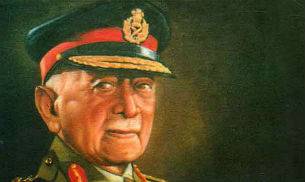
“An Indian and to the last breath would remain an Indian. To me, there are only two Stans – Hindustan (India) and Foujistan (the Army).” – Field Marshal K. M. Cariappa
Famously known as Kipper, Field Marshal K. M. Cariappa was born today, 117 years ago on January 28, 1899. He was the first Commander-in-Chief of the Indian Army and was the first Indian Officer who was given command of a unit before independence.
Some interesting facts that you must know:
– K. M. Cariappa’s full name was Kodandera Madappa Cariappa
– He was born at Shanivarsante in Kodagu, which was a princely state in Karnataka
– Cariappa was selected to the first batch in King’s Commission after the World War I in 1918
– His permanent regimental home was 2nd Queen Victoria’s Own Rajput Light Infantry
In 1933, he was the first Indian officer to undergo the course at Staff College
– Cariappa served in many countries like Iraq, Syria and Burma
In 1949, he was appointed as the first Indian Commander-in-Chief of the Indian Army
– After his retirement, he served as the High Commissioner to Australia and New Zealand till 1956
– He was awarded with the General Service Medal, Indian Independence Medal, Order of the British Empire, 1939-1945 Star, Burma Star, War Medal 1939-1945, Indian Service Medal and Legion of Merit
– He died on May 15, 1993 at the age of 94.
source: http://www.indiatoday.intoday.in / IndiaToday.in / Home> GK & Current Affairs> Listicles : Microfacts / Story / New Delhi – January 28th, 2016
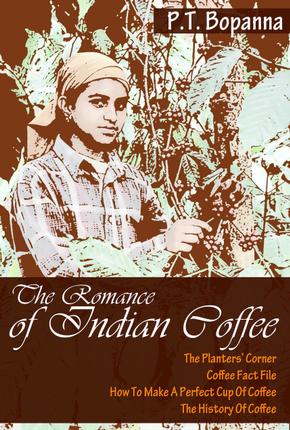
‘The Romance of Indian Coffee’ is the Indian entry to the Gourmand International (Book) Award this time
The jacket of the book ‘The Romance of Indian Coffee’ written by journalist P.T. Bopanna.
The Indian entry to the Gourmand International (Book) Award this time is on what until recently was a south Indian addiction: coffee.
With the coffee culture proliferating across India, thanks to chains like Starbucks, Barista and Café Coffee Day, the routine act of consuming the black decoction stirred in milk, as most people do, and with or without sugar – which again is a personal choice – has acquired an uber-cool image among the Gen Y.
Bengaluru-based journalist P.T. Bopanna has brought alive this unique trait in his book The Romance of Indian Coffee , now shortlisted for the Gourmand International Award, where it will vie for the top honours among coffee books from Brazil, France, China, Thailand, and the U.S., to name a few.
Hailing from Kodagu, which is the home of coffee in India, it was natural for Mr. Bopanna to feel inspired to write on the brew which has a universal appeal.
“My earlier works were Kodagu-centric, but I found a wider canvas in coffee which is also related to Kodagu,” said Mr. Bopanna.
“The book traces the history of coffee in India with interesting titbits about the brew and how its cultivation in the shade lends it a unique flavour, unlike coffee grown in the open in most other countries,” explained Mr. Bopanna, who believes that making coffee is an art. Notwithstanding the proliferation of coffee bars, the best filter coffee, he said, was still prepared in the bylanes of Chennai and elsewhere in Tamil Nadu.
The contribution of Ivor Bull, a British planter, who introduced intercropping and is a legend among the locals, has been highlighted in the book as also recipes for making coffee liqueur.
But ironically, he notes that Kodavas, who market home-grown coffee to the rest of the world and have spanned a coffee culture in India, have taken after the British and prefer tea!
There are entries from as many as 64 countries for the Gourmand awards, started in 1995 as a celebration of global cookbook and wine book publishing. The final results will be announced on May 28 at Yantai, China.
source: http://www.thehindu.com / The Hindu / Home> National> Karnataka / by R. Krishna Kumar / Mysuru – January 31st, 2016
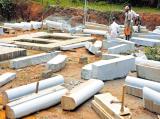
The Srimangala Bhagavathi Temple committee president Mullanda Thimmaiah said that the temple would be renovated.
“The Temple has a history of 300 years. As per the directions of the temple chief priest, the old sanctum sanctorum is being renovated and the idol of the presiding deity Sri Bhagavathi as well as those of Lord Ganapathi and Kethurappa are being worshipped in a small enclosure in front of the temple,” said Thimmaiah.
Explaining further, the president said that a blueprint of the Theertha Mantapa had also been prepared and the ground-breaking ceremony had been conducted for the work.
“Stone foundations have been laid for the new sanctum sanctorum and also the theertha mantapa. Stone pillars have been chiselled for the temple,” he added.
source: http://www.deccanherald.com / Deccan Herald / Home> District / DHNS, Madikeri – November 07th, 2015
The Kodava Sahitya Academy and Arebhashe Samskriti Mathu Sahitya Academy will urge the Ministry of Home Affairs to continue the exemption to possess firearms under Section 3 and 4 of the Indian Arms Act.
At a meeting convened on Wednesday, to collect public opinion on the issue, the Kodava Sahitya Academy president B S Thammaiah said that a delegation under the leadership of MP Prathap Simha would be taken to Delhi to impress upon the Home Ministry.
“The public should give their opinion on exemption to possess firearms in writing. All the written opinions will be compiled and submitted to the Central government,” he said.
Arebhashe Samskriti Haagu Sahitya Academy President Kolyada Girish said, “There are several burning issues in Kodagu. Now, the issue of exemption to possess firearms has appeared. We are not ready to lose the exemption given to us.”
Napoklu Kodava Samaja President Uthappa demanded, “Exemption to possess firearms by every person of Coorg race and every Jamma holder should be continued.”
P J Ayyappa said the circular issued by the British rules mentions the term ‘Coorg race.’ There is a need to define the term ‘race’ to make the officials and the government understand, he insisted.
Kudukuli Bharath said, “All the traditional dwellers of Kodagu come under Coorg by race. I had availed exemption to possess firearms way back in 1976.
“The exemption is not restricted to Kodavas alone. It is related to all the traditional dwellers of Kodagu. We have to protect our rights.”
Kodagu Gowda Vidya Sangha member and Advocate Dayanand concurred, “The exemption to possess firearms has been given to ‘gallant people of Coorg’, according to a circular issued by the British Commissioner Cubbon in 1861. The circular does not mention one community alone.
“The ‘Coorg race’ is not restricted to one caste or creed alone. The circular on Coorg race has been misunderstood by the officials. The exemption enjoyed by the traditional dwellers of Kodagu prior to 1976 should be continued.”
Codava Makkada Coota President Bolajjeera Ayyappa said, “Coorg, by race, is only Kodava community. There is no need to create confusion in this regard.”
List of communities
Kodava Bhashikara Sangha District President Sara Changappa said, “When K G Bopaiah was the Speaker of the Assembly, the State government had submitted a list of communities that come under ‘Coorg by race’ to the Kodagu deputy commissioner. The list includes all the traditional dwellers of Kodagu.”
Advocate Yaladaalu Manoj Bopaiah said, “The exemption given by the British regime is continued by the Central government through a circular. The exemption is not a legislation passed in the Parliament. In case the government feels that the exemption will create discrimination among communities, then it will be withdrawn. The right is not bestowed on a particular community. Instead, it is given to the residents of a geographical area. There is a need to convince the government that the exemption has been availed by the Codavas, Arebhashe Gowdas and other community members in the district.”
Legislators K G Bopaiah and Appachu Ranjan should impress upon the Home Ministry through Union Minister for Law Sadananda Gowda, he said and added, “As we do not have time, we have to act swiftly.
source: http://www.deccanherald.com / Deccan Herald / Home> District / DHNS, Madideri – October 15th, 2015
Centuries-old custom of Kodavas and Jamma land tenure holders in Kodagu
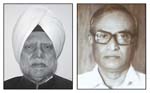
Buta Singh & C. G. Somiah
The issue of Kodavas (a native community belonging to Kodagu district in Karnataka) enjoying the concession to hold guns under the Indian Arms Act without licence along with a few other communities like Amma Kodavas, Kodagu Gowdas, Mapillas also known as Moplah in english, enjoying the special and unique land holding called Jamma tenure, has once again come into public discussion following a PIL filed by one Y.K. Chetan.
Since I had written about it a couple of times in this column, I thought I would ignore it this time but after seeing a letter to the editor written by a Kodava senior advocate of Mysuru, P.D. Medappa, I decided to add my bit to the “gun question” raised frequently by those who are jealous of Kodavas per se and others enjoying the concession in Kodagu. Those who question this privilege bring in such irrational arguments like that this privilege is discriminative in nature in a democracy, it is ultra-virus to the Constitution, it is dangerous to other citizens who do not have the privilege etc.
This privilege issue became so serious about a decade ago when a communal clash in Kodagu resulted in the death of two persons belonging to the Moplah (Malabar Muslim) community. A month after this, Union Home Ministry received a letter from Kerala Chief Minister mentioning the incident and demanding withdrawal of the concession under the Indian Arms Act.
This development at the highest political level had almost led to the withdrawal of the concession but for the intervention of the then Home Secretary C. G. Somiah (who later became the Comptroller and Auditor General of India). C.G. Somiah has written about it in detail in his book titled ‘The Honest Always Stand Alone.’ Let me quote the relevant part from the book:
There was a stray incident of communal disharmony in my home district, Kodagu. It started as a case of eve teasing of a Coorg girl by the youth belonging to the Moplah community, which led to violence and arson in the market area of Virajpet.
The next day a wayside temple was found desecrated and the clashes continued between the two communities resulting in the death of two Moplahs, one of them having suffered gunshot wounds. With a massive show of force, the district administration brought the situation under control and peace returned to the area.
The Moplahs of Malabar in Kerala have lived in peace for centuries in Coorg and they were the main traders of the produce of Coorg — coffee, oranges and spices. They also traded in fish, bringing fish to Coorg from the nearby seaports of Kerala. I was happy that peace had returned to Coorg by the deft handling of the situation by the local administration. A month later we were surprised to receive a letter from the Chief Minister, Kerala, addressed to the Home Minister about the incident and suggesting that gun culture in Coorg had to be curbed. This was to be done by withdrawing the concession under the Indian Arms Act granted to the Kodavas, which permitted them to own guns without a licence under the Arms Act.
The section dealing with the Arms Act was in charge of a Malayali Section Officer and he gleefully supported the proposal, with endorsements from the senior officers, when the file landed on my desk. In the Arms Act enacted by the British Government in India, the Indian Princes and the Kodavas of Coorg owning Jamma land were both exempted from the provisions of the Arms Act. Indira Gandhi, while abolishing the payment of Privy Purses to the Princes whose territories were ceded to India at the time of Independence, got the concession of exemption under the Arms Act enjoyed by them also abolished. This fact was also mentioned in the letter of the Chief Minister of Kerala, who wanted the similar exemption granted to the Kodavas abolished.
I recorded an appropriate note in the file explaining the rationale why this concession was granted to the Kodavas in the first place and also the fact that possession of a gun (which is worshipped) is as sacred to the Kodava inhabitants of Coorg, as it was sacred for a Sikh to possess a kirpan (sword). Buta Singh, Home Minister, readily agreed with me and a suitable reply was sent to the Chief Minister of Kerala. The age-old custom and right of the Kodavas was thus safeguarded.”
Before I revert to the ‘gun question,’ let me allude to the casual, even callous manner the IAS, IPS, KAS and other higher officers work, blindly following the note their subordinates write on the case file. That’s why a citizen fails to get justice and is driven to law courts where many times getting justice is rather dicey!
Here in this gun case, just because C.G. Somiah, as the Home Secretary, took special interest, may be himself as a son of Kodagu, justice was done. Otherwise, one Malayali (Keralite) Section Officer would have succeeded in getting the gun privilege abolished.
Nearer home, let me narrate one instance where injustice was done to Bharatiya Vidya Bhavan (BVB). To cut a long story short, the High Court ordered that BVB should not construct the school building on land granted for playground. But BVB’s school building plan was approved by MCC after collecting about Rs. 8 lakh as fee. Following High Court order, BVB asked for refund of Rs. 8 lakh since it was not going to construct the building as per High Court order. Three successive MCC Commissioners went by the all important ‘note’ written on the file by the Joint Director, Town Planning and wrote back saying no refund is possible.
BVB, a Charitable Organisation, sought legal opinion paying a heavy fee. The legal opinion, running to a few pages clearly said that BVB is entitled for refund since it was the High Court that barred BVB from constructing the MCC approved building. The legal opinion also quoted some High Court decisions in support of its opinion.
The BVB for the nth time approached the MCC with this legal opinion through its advocate. Now, BVB is waiting for a decision after over two years…
Anyway, I have heard that sometimes dog wags the tail but many times it is the tail that wags the dog! Amen.
To revert to the ‘gun question,’ I entirely agree with advocate P.D. Medappa, who has mocked at the PIL and explained the reason that entitled the Kodavas by race and other Jamma land tenure holders to get this concession — religious tradition and the need to protect themselves and their crops from the wild animals that filled the thick, rain forests of the early centuries.
Tailpiece: The truth is that it was neither the 1857 Arms Act by the British nor the 1959 Arms Act of Independent India that should be discussed here. Both these Acts relate only to Kodavas and other Jamma land tenure holders getting concession. The core issue, according to advocate P.D. Medappa is that the Kodavas possessed their own brand of gun known as ‘Tharikal Thok,’ apparently a country-made weapon, which they worshipped along with other traditional weapons like the sword, dagger, bow and arrow, shields and spears even before the Lingayat Rajas came to Kodagu. The Britishers in their fair sense of justice merely respected the sentiments of Kodavas. Hence, it has been part of their religious practice for centuries and now, a right under the Constitution.
e-mail: kbg@starofmysore.com
source: http://www.starofmysore.com / Star of Mysore / Home> Abracadabra…Abracadabra / by K.B. Ganapathy / Saturday – October 10th, 2015
One morning, I came to a place, known as Kakot Parambu, near the town of Virajpet. Parambu, meaning a holy meadow in the Kodava language, is known for its scenic beauty.
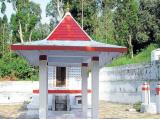
The green landscape stretches over a hillock within a gateway and is visible from the road. Before it stands a school ground and a ceremony hall. At one side within the precincts is a small shrine dedicated to Chavundi (Chamundi), while on the other side is the Kakot Achchayya Temple.
Legend has it that Kakot Achchayya and his sister Kakot Akkavva walked to this place in the ancient times. Kakot Achchayya, also known as Kombu Meeshe (horn moustache) Achchayya, had a manservant called Kari Kotta to attend to them.
They settled down here and a Mahadeva Temple was built for them. Over the years, the Kakot Achchayya Temple came to be known as the Kala Bhairaveshwara Temple.
The Kala Bhairaveshwara Temple has a horse figure representing the kshetrapala, guardian of the region, overlooking it. Behind this temple is the shrine of the kodi beera (war hero). This smaller shrine is dedicated to an ancestor of the Mandetira family who had died a violent death. He is represented by a rock placed upon a platform. To the side of the main shrine is a large tree upon a platform called the Kariyappa Sthana.
Beyond that is the shrine of Akkavva, known as Akkavva Sthana, which has a well near it. Before the Akkavva shrine is a tree with the small figure of a crane under it. Beside this tree is a temple pond which also has a similar crane figurine by its steps.
The Mandetira family is the Deva Takka of the temple. Deva Takka family members are responsible for the management of the temple. According to their family tree, the earliest known Mandetira ancestor is one Bogayya. His son Achchunna was the brother-in-law of Utta Nayaka of Kadnur, a very powerful chieftain in the 1780s. Achchunna went to Tulunad (Dakshina Kannada) and sent an archak (priest) called Sankana from that land.
Sankana and his descendants, the Kukkemane family, thereafter served as the priests of the Kakot Temple. Achchunna never returned. A memorial was built for him there at Kodapada village in Dakshina Kannada. During times of strife and conflict, Achchunna’s son Medayya was beheaded by a king. A memorial, called the Kodi Bira Sthana, was built for him at the place behind the temple where his head fell. Medayya’s young son Subbayya was the last remaining member of his family.
His widowed mother, who was from the Iychettira family, raised him. Upon coming of age, Subbayya joined the Raja’s government and was given his family property. A painting, which shows him paying the Raja his respects, was commissioned in 1805.
Subbayya remained in the government of the Kodagu Rajas for a long while, serving under Dodda Vira Rajendra, Devammaji, Linga Rajendra and Chikka Vira Rajendra. When the British took over the administration of Kodagu in 1834, the native officers were all retained. Unlike his father Medayya who had antagonised the ruling power of his times, Subbayya had remained loyal to the Rajas and later to the British, under whom he came to earn a medallion and pension for three generations. He later retired as parupatyagara, a senior government official.
Much of the family history has been documented by the clan members. The Mandetira, the Kukkemane, the Nellamakkada and a number of other families have helped renovate the temple over generations. Every year, ceremonial dances are held in the Kakot Parambu mand. In 2007, the Mandetira family organised the annual Kodava Hockey tournament.
The Ainmane, the ancestral home of the clan, has a wooden portico and entrance wall. A family tree of the Mandetiras is displayed by the entrance. The beautiful but small and old painting depicting the Kodagu Raja Dodda Vira Rajendra and Mandetira Subbayya is within a wooden frame placed on the wall behind the hanging prayer lamp. The kaimada, a private shrine built in remembrance of clan ancestors, and a sanctuary for el koot murthy (seven spirit-deities) are located nearby.
source: http://www.deccanherald.com / Deccan Herald / Home> Supplements / by M P Nitin Kushalappa / September 29th, 2015
‘Jabhoomi Baalo-2015’ Talacauvery-Bengaluru padayatra leaves city
Mysuru :
“Kodavas should also get the same status and facilities accorded to Parsi community,” opined Mysuru-Kodagu MP Pratap Simha.
He was speaking at a programme organised at Kodava Samaja in Vijayanagar first stage here to mark the arrival of ‘Jabhoomi Baalo-2015’ Talacauvery-Bengaluru padayatra in the city yesterday.
Noting that the Parsi community, a minority community having less population, is playing a key role in the country’s economy and industrial sector, the MP said that many Parsi achievers such as renowned scientist Dr. Homi Jehangir Bhabha and senior advocate Fali S.Nariman have brought honour to the country.
“The Union Government, taking note of the dwindling number of Parsis, has come up with ‘Jiyo Parsi’ campaign for the survival of the community. Likewise, the Government should come forward to save the Kodava community, which has given two Generals, 28 Lieutenant Generals, 5 Hockey Captains and other greats in different fields,” he said and added that he would urge the Union Government to extend the status and facilities accorded to Parsi community to the Kodava community as well.
Noting that Kodagu is a distinct district known for its rich forest cover, culture and geographical features, he said that Kodava culture, land and language was a unique one and the government should take appropriate measures for preserving this.
The MP also stressed for unity among Kodavas to get all due government facilities.
United Kodava Organisation (UKO) Convenor Kokkalemada Manju Chinnappa, in his address, said that the Talacauvery-Bengaluru padayatra, which was launched at Talacauvery on Sept. 18, has been undertaken to draw the attention of State and Union Governments towards their 18-point charter of demands aimed at development of Kodagu district and survival of Kodava race.
The demands include: Bringing a new law on the Kerala-model to check conversion of agricultural land into non-agricultural purposes; Subsidy of Rs. 10,000 per acre for growing paddy; Suitable amendment for replacing Paisari with ‘Takkamaye’ in Section 6 of revenue land schedule; Stop forced eviction of small coffee growers; Drop the Union government’s move to facilitate Foreign Direct Investment (FDI) in coffee cultivation and Legalisation (Sakrama) of lands encroached for growing coffee.
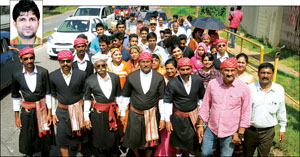
As the padayatra reached Hinkal junction on Hunsur road yesterday, the office-bearers of Mysuru Kodava Samaja joined it and marched along with UKO members to Kodava Samaja in Vijayanagar I Stage where a stage programme was held later.
The padayatra team, which stayed overnight at the Samaja, resumed its march this morning. The team will stay for the night at Baburayana Koppalu in Srirangapatna taluk on Mysuru-Benglauru road. The padayatra will culminate in Bengaluru on Oct.4.
Karnataka Pradesh Hotel Owners Association President M. Rajendra, Mysuru Kodava Samaja President Moovera K.Kuttappa, Vice-President Balyamanda M. Nanaiah, Hon. Secretary Mandira P. Kalaiah, former President Mechanda M. Karumbaiah, former Secretary Kekada M. Belliappa and others were present.
Ponjanda Lovely Appaiah compered the programme.
MLC rues vanishing of Kodava race: MLC G. Madhusudan has regretted the dwindling number of Kodavas in their homeland, which gave hundreds of great warriors to the country.
He was speaking at a programme organised at Kodava Samaja in Vijayanagar here yesterday, marking the arrival of ‘Jabhoomi Baalo-2015’ padayatra to the city.
Appealing the Kodavas not to undergo family planning for the sake of survival of patriotic fervour in the country, Madhusudan expressed concern over the increasing tribe of selfish and anti-development families.
Stating that the migration of Kodava families to cities has resulted in Kodavas losing touch with their rich culture, the MLC called upon all Kodavas to stay in their homeland and strive for enriching the Kodava culture besides reviving the spirit of patriotism.
Noting that Kodagu district geographically resembles Shivalinga figure, the MLC said Kodagu is covered by rich forests and receives heavy rainfall.
Pointing out that Kodagu is the birth place of Cauvery river, which flows through Mandya, Mysuru, Chamarajanagar districts and Tamil Nadu before joining the sea, the MLC said that the river is the lifeline for crores of people. He called upon the expatriate Kodava families to return to Kodagu and strive for Kodagu to regain its past glory.
He also declared that he would extend full support for the ongoing agitation to demand development of Kodagu district and assured that he would raise issues concerning Kodagu district in the Legislative Council.
source: http://www.starofmysore.com / Star of Mysore / Home> General News / September 28th, 2015
WELCOME. If you like what you see "SUBSCRIBE via EMAIL" to receive FREE regular UPDATES.
Read More »