Category Archives: Historical Links / Pre-Independence

New Light on Kodavas of Kodagu – 1, 2 & 3

Review of Kaveri Ponnapa’s book “The Vanishing Kodavas”
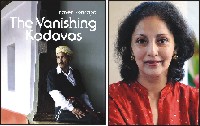
KaveriPonappaKF26sept2015

Title : The Vanishing Kodavas / Author : Kaveri Ponnapa / Pages : 360 / Price : Rs. 7,500 / Publisher: Eminence Designs Pvt. Ltd. [Order from www.thevanishingkodavas.com]

New Light on Kodavas of Kodagu – 1

People are interested in history because they want to know their roots; they want to know who they are; they want to know their progenitor. And with their physical features, colour and gait being different from their immediate neighbours, they want to know the why and how of it. The desire to know their ancestry becomes even more strong if their customs, costumes, culture, cuisine, language, songs of oral tradition and even Gods are different from those of others. The question arises if they could be of the land where they have been living from time immemorial or did they come from another part of this country or from another country traversing thousands of miles by land or sea due to historical reasons? War, pestilence or famine?

The Kodavas of Kodagu district in Karnataka belong to this class of unique people who want to know. Hence, there is an abiding interest among the successive generations of Kodavas, even scholars, to know their ancestry, history of their land of hills and valleys with thick rain forests, criss-crossing rivers and streams, having very high rainfall for over four months in a year. They are the high-landers and hardy people — physically strong and daring at any task and in war.

In retrospect, I myself being the son of that clan and soil, it can be said that these Kodavas lived on this land from the dim past to this day fighting all the time for survival with the nature and wild animals like tigers, elephants and vermins that destroyed their paddy fields and other crops; fighting the local chieftains of their own clans and the invaders from the neighbouring kingdoms till the geographical unity and political stability was attained when Kodagu (with Sulya and Puttur) became a kingdom under the Haleri Dynasty from 1600 to 1834 — 234 years.

In between, there was an interregnum when Hyder Ali and his son Tipu Sultan ruled Kodagu uneasily, under constant armed resistance from Kodava chieftains, for 11 years from 1780 to 1791 when Madikeri was renamed as Zaferabad.

In a classic example of the saying, “My enemy’s enemy is my friend,” the Kodagu Rajahs cultivated British of the East India Company, who were engaged in fighting Tipu Sultan, a sworn enemy of Kodagu Rajahs. So Tipu’s enemy, the British, became the friend of Kodagu Rajahs. But alas, in a tragic play of history, the British were able to de-throne and deport Chikkaveera Rajendra Wodeyar in 1834 after being betrayed by the Rajah’s trusted Dewans Cheppudira Ponnappa and Apparanda Bopu. Despite the Rajah’s army successfully resisting the British at the other two fronts, at the Eastern stockade it was a meek, humiliating surrender by Dewan Apparanda Bopu with a party of 400 Kodavas at the present Kushalnagar to Col. Frazer (hence Kushalnagar was known as Frazer Town).

The Dewan then “led the British troops back to Madikeri where the Union Jack was hoisted on 6th April 1834. The last battle for Kodagu was a sad betrayal,” writes Kaveri Ponnapa in her magnum opus of a book on Kodagu and Kodavas titled “The Vanishing Kodavas,” the book under review.

However, let me submit a caveat here. The records indicate the young King Chikkaveera Rajendra was more into outdoor activity, ironically with visiting Englishmen, of hunting and camping leaving the matters of State in the hands of trusted and able Kodava Dewans and also a Dewan from his own caste Kunta Basava, an evil genius no doubt, and another Muslim Dewan, probably to neutralise the power of Kodava Dewans mentioned above. When the relation between the Rajah and the East India Company got strained on the question of extradition of fugitives and the Kodava Dewans realised the end result of an inevitable war, they counselled the King to negotiate peace. But, the King was adamant. The Kodava Dewans, in the circumstances, decided that ‘discretion was better part of the valour.’ The British had already defeated a more powerful Tipu Sultan than the Kodagu King and as for weapons of war, the Britishers had cannons which the Kodagu Rajah did not have. If only Chikkaveera Rajendra had negotiated peace, he could have continued in the throne like the Mysuru dynasty under the suzerainty of the British Company.

Curiously, a large number of scholars and people, who have read the history of Kodagu written by many, are fed with information that shows the Haleri Kings, specially Doddaveera Rajah, Linga Rajah and the last Rajah, Chikkaveera Rajendra Wodeyar in poor light, as tyrants and mentally deranged towards the end of each one’s rule.

The history of Kodagu commissioned by Doddaveera Rajah in 1807 known as “Rajendranama” and another by Linga Rajah known as “Hukumnama,” the land laws of 1812, can be verified to find out its veracity and the good administration delivered by these rulers. The secret, if the word can be used, of the Haleri Rajahs ruling Kodagu for so long, 234 years, is no doubt because they never interfered with the land holdings of Kodavas, their customs, culture and, in short, Kodavas’ way of life. And Kodavas in return served their Kings loyally till the ‘betrayal,’ for self-preservation of Kodagu and Kodavas, came in 1834.

The proof of the Haleri Kings being good rulers is in the representation made to the British Government on 13th April 1834, just 7 days after the surrender, signed by 400 senior officials of Rajah’s Government, expressing their entire satisfaction with the Rajah’s rule and with grief requesting that the Rajah be allowed to remain in Kodagu.

Kaveri Ponnapa writes, “Despite the fact that he had an infant son, Prince Chitra Shekara, when he was conducted out of his kingdom, no attempt was made by the British to restore Haleri rule by placing a Regent over Kodagu, as had been done in some States, including nearby Mysore.” One would wish the author had given more information on Prince Chitra Shekara. Pray whatever happened to him? Interestingly, the Rajah begot more children in exile — in captivity at Varanasi ! To jest, what else could he have done with nothing else to do !

This book by Kaveri Ponnapa, based on 15 years of research, nearly 200 visits to Ainemanes (ancestral houses), historical locations, sacred places and interviews with elders in Kodagu, debunks many tendentious works on history and culture of Kodavas. The wealth of information, not so much on political history but on other aspects of Kodava life and culture, contained in the book The Vanishing Kodavas astonished me no end.

The book is a treasure trove of many informations hitherto presented in a distorted manner or suppressed from us to justify British occupation of Kodagu. I am reminded of a great Nigerian proverb which says that until the lions have their own historians, the history of the hunt will always glorify the hunter. Let it be.

It is, therefore, necessary for us to question the description of Chikkaveera Rajendra as a bad King in the eponymous novel by Masti Venkatesha Iyengar. No wonder there were protests and criticisms when Masti Venkatesha Iyengar was given Jnanpith Award for this book and when an attempt was made to produce a film-based on the book. ______________________________________

New light on Kodavas of Kodagu – 2

The book, The Vanishing Kodavas, however, does not answer the fundamental question: If not the natives of the land, where did the Kodavas come from? Many have ventured to address this question without any answer, leaving us in a sea of absurd speculations. One had tried to trace Kodavas’ origin to Rajasthan and parts of North India by drawing similarities between names of some clans there to the family (Okka) names of Kodavas. They also link the similarity in the distinct individual Kodava names like Muddappa, Muthappa, Machiah, Ponnappa, Somaiah, etc.

Some have speculated that a breakaway army unit of Alexander-the-Great had trekked to Kodagu from North India looking for a safe haven. Some others speculate Arab descent finding strong similarities between the Arab cultures and social life and that of Kodavas — the headgears (red-check vastra, head scarf) worn while at work and on special occasions, the ornate gold or silver dagger held by the sash (chale) tied around the waist, the white one-piece knee-length upper garment etc., complete with other artifacts.

Yet, some researchers on the origin of Kodavas opine Kodavas are Scythians, Eurasian nomads who landed in Kodagu. A 1398 Kannada dictionary says Kodavas are Mlenchas come from outside the country. Others have told us that Kodavas are Kurds, a hill-tribe of Arabia come here after a long journey by the sea, landing in Malabar coast of Kerala, then making an arduous journey to a safe hilly place inhabited sparsely by the local tribals — Kodagu. Well, if this is so, I doubt, the name Kodagu could not have been derived from the Tamil word ‘Kodimalenad’ — Hill Forest Land, an eponymous name as speculated in the book under review.

Extending this kind of speculation a bit further to Kurds, one can say the name Kodagu might have come after these Kurds (pronounced Koords) occupied this land, suggesting it is the land of Kurds which name, in its corrupt form or with minor distortion in pronunciation, must have become Kodagu the land of Kurds, Kodavas. The English called Kodava as Coorg and in early Church records it is Kurg.

To add to the confusion, of late, we have a Greek come to Kodagu making similar speculation — Mr. Antonios Vasileiadis. He says the customs of the people of Kodagu bear a striking resemblance to those of Ancient Greece. Can we connect this to the earlier speculation of Kodavas being the breakaway warriors of Alexander’s Army? 300 BC!

The book also does not address two other important questions. One, the origin of Kodava language which is a dialect and the other, the origin of the name of each okka clan or family — like Ajjikuttira, Apparanda, Biddanda, Chowrira, Kambiranda, Nadikeriyanda etc. And so far, no one has answered these enigmatic questions including that of our origin. I guess these questions will remain riddles wrapped in mystery inside an enigma even as Kodavas may vanish in the next 100 or so years from their ancient land Kodagu, perhaps, leaving behind their land, language, okka names, personal names, traditional dress, customs etc., in short, the treasure chest of their hoary past. Thereafter, they can be seen or heard only in the digital library or in books like “The Vanishing Kodavas.” Which is why, this book is a wonderful Collector’s Item, specially for Kodavas.

Is the title of the book prophetic? Time alone can say! UNESCO has already sounded the warning saying Kodava language is among the disappearing languages of the world. If so the people who speak the language may also disappear lost in a diaspora. And even as one reflects on the dismal future of this unique race under the sun, one will wonder how was it that these Kodavas whose number is 2.3 lakh (with 1.5 lakh living in Kodagu) survived for centuries as an ethnic people, practising a distinctive life found nowhere else in India or in the world. In a sense, it is providential that Kodavas survived so long in Kodagu in the absence of a religious or temporal head from their own blood-line to hold the flock together and bind them under a singular culture common to all Kodavas.

The book bears the stamp of not only the scholarship of the author, the love of labour of a patriotic Kodavathi but also the tremendous research and leg-work that have gone into its making. It has between its 360 pages, 12 chapters devoted to specific subjects, 300 colour and sepia photographs of superb quality and of archival value, most helpful guide to a reader of this kind of a researched book. The glossary of Kodava words is exhaustive and descriptive to leave no doubt in the mind of a serious reader about the import of those Kodava words and names; the select bibliography authenticates what is researched and will help those who wish to write on Kodavas and Kodagu in future.

Kaveri Ponnapa is beholden to so many who co-operated and helped her in writing this book. A grateful author recognises each one of them and also okkas acknowledging their help — proof of her deep sense of gratitude. I am sure in the next edition some more names will appear should she learn there are omissions! Index to a book of this kind can never be understated but here it is done with such meticulous care one is left wondering at the hard work by the team that put the book through production. Photo credits too are there which is as it should be.

I must mention here the depth and sweep of her work of extraordinary research with just one example. It is about least of an item used by Kodavas to deserve a research. It is about a ceremonial walking stick, made of black wood, known as gejje thand, a waist high staff. Her research finds out that it is made from the male kari mara (botanical name Diospyros ebenum) decorated with strips of beaten silver and tiny bells. She writes in detail about its significance and power as spirit medium and more. I guess Kaveri Ponnapa does not seem to have left a single stone unturned in her research that concerned Kodava life and culture.

At one point she mentions of the precepts delivered by an elder at the time of solemnising the marriage. Readers would wish a sample text of it was published. May be the next edition will find a place for it.

_________________________________________

New light on Kodavas of Kodagu – 3

For those Kodavas, who have been opposing the Jamma tenure of land holding in Kodagu, an act which is self-defeating in the context of the need to keep their land for themselves and thereby their identity as a unique people, here is some food for thought from the book:

“Since time immemorial the ownership of land has been the foundation of Kodava identity, and the thakkas and Haleri Rajahs, in their wisdom, made the Jamma lands inalienable, with reason.”

Lewis Rice, writing in 1878, summed it up best, his words proving to be prophetic in today’s Kodagu: Hence the Coorgs who hold lands on Jamma tenure are prohibited from alienating them, a restriction which was in force in the time of Rajahs, and which is absolutely necessary in order to prevent all the land in the province from gradually falling under the ownership of settlers from the low country. And should the ownership of the soil, which rightly belongs to them as a nation, pass away from the Coorgs… the independence and self-respect of a fine race will be sacrificed…

No wonder Britishers did not interfere with the land holdings in Kodagu. British did not also interfere with the law prohibiting slaughter of cattle and sale of beef that existed during the rule of Haleri Rajahs in Kodagu. I am one of the irrelevant majority of Jamma holding Kodavas, Gowdas, Mapillahs and others in Kodagu who agree with Rice and his warning.

The beginning of the end of Kodagu and Kodavas was when Kodavas felt betrayed by their elected leaders. The book says, Cheppudira M. Poonacha, the then Chief Minister of Kodagu, a Kodava himself, went down in Kodava history as the man responsible for the merger of Kodagu with Karnataka in 1956.

The fate of Kodagu and Kodavas was hermetically sealed by this unholy, sinister merger once and for all accelerating the ‘vanishing’ of Kodavas and Kodagu. According to Kaveri Ponnapa, this political move of merger “cost them (Kodavas) their independence, wrested the control of their land from their hands, severely depleted the natural resources and eroded the Kodava identity.”

Now, after Kodava political leaders gave away Kodagu on a platter to Karnataka for their own selfish political ambitions, the Kodavas and Jamma land owners became victims of the new Land Revenue Act of Karnataka that is often used to keep them under constant threat of eviction from their land — Jamma, Bane, Paisari. Kodagu’s development suffered under Karnataka. The Revenue Department practically rubbished the land records under all pervasive corruption and favouritism. The roads were neglected. For example, Hunsur-Gonikoppa road had remained unmotorable for six years. Many private bus operators stopped service and car owners avoided this road. The high-tension power-line was drawn across Kodagu forests, paddy fields and coffee estates despite objections and agitations. There are more trees in coffee estates today than in the forests. The latest threat to their land holding comes from the UNESCO plan to declare major parts of Kodagu as Eco-Sensitive Zone and the controversial Dr. Kasturi Rangan report that will adversely impact 55 villages. That probably will be the last nail to the Kodagu coffin.

A feeble effort is being made to overcome these dangers by Codava National Council (CNC), led by Nandineravanda Uthappa Nachappa demanding creation of a Kodava Autonomous Region, but there seems to be little hope as Kodavas are divided among themselves.

Now, before I vanish from these columns, a few words about the author Kaveri Ponnapa whom I had the privilege of meeting along with her husband Kambeeranda Naresh Ponnapa, a big-time software industrialist in Bengaluru, at their house of unique architecture in Whitefield. There was very little about her in the book which says that she studied English Literature at Lady Shri Ram College, Delhi and took a Master’s Degree in Social Anthropology in London. Like nature, she wants to remain half-revealed. Let us respect her sentiment but let me reveal that she is the daughter of Lt. Gen. B.C. Nanda, now settled in Kodagu.

The book is too heavy to handle. It is more like a Coffee-Table Book in its style of page layout. The font size needs to be increased. Such small type is harsh on eyes. It is best to have this book in two volumes with photographs compatible only to the text, not to please individuals who might have assisted the author. The next edition needs to take these changes, nay the challenge, seriously to make it reader-friendly. Should the expensive art paper be of that thickness merely adding to the weight of the book?

And finally, my most sincere thanks to Kaveri Ponnapa for giving us this pictorial book which will preserve for posterity the religious, social practices and agricultural activities, with keepsake photographs of Kodavas who are likely to join the ranks of Lost Tribes of the world.

e-mail: kbg@starofmysore.com

source : http://www.starofmysore.com / Star of Mysore / Home> Abracadabra…..Abracadabra / by K.B.Ganapathy / September 26th, 2015
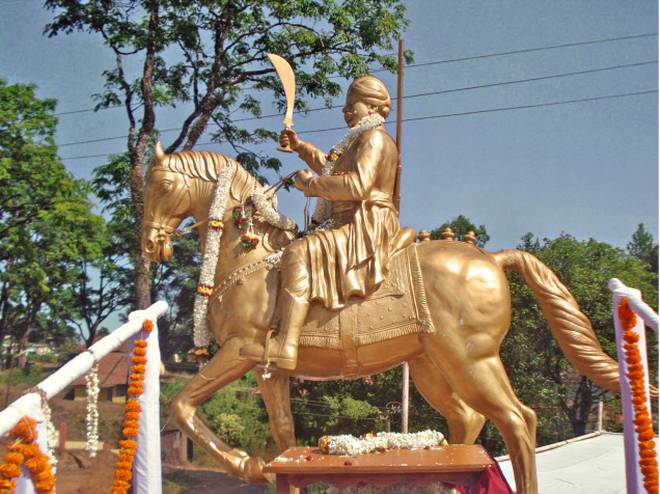
A memorial in honour of Appaiah Gowda

The bronze statue of freedom fighter Guddemane Appaiah Gowda, which was unveiled in Madikeri on Monday.

He was hanged by the British in Madikeri on October 31, 1837

Chief Minister D.V. Sadananda Gowda said on Monday that his government would take steps to initiate the process of development in Kodagu, a land known for its warriors, freedom fighters and natural landscape.

He was addressing a gathering at the Gandhi Maidan here after unveiling a bronze statue of Guddemane Appaiah Gowda at Field Marshal K.M. Cariappa Circle.

Appaiah Gowda was a freedom fighter, who was hanged by the British on charges of sedition on the fort premises here on October 31, 1837.

Mr. Sadananda Gowda’s wife Dotty hailed from Guddemane family. She was also present.

The Chief Minister said that he had taken nearly six months to visit Kodagu as he was being pressured by Madikeri MLA M.P. Appachu Ranjan and Speaker of the Legislative Assembly K.G. Bopaiah to take steps to solve the vexed Jamma Bane issue in Kodagu before the visit.

Responding to the demands made by Mr. Ranjan and M.C. Nanaiah, MLC, Mr. Gowda said that he would take steps to include a proposal to set up a medical college in Kodagu in the next budget.

A sum of Rs. 322 crore had been spent on various development projects such as roads, bridges, and buildings in Kodagu in the past few years. A sum of Rs. 115 crore would be sanctioned to the district in 2011-12, he said.

On considering Mr. Ranjan for inclusion in the next Cabinet expansion, Mr. Gowda said how could he deny it when he himself was the Chief Minister and he was versed with the requirements of Kodagu. All 122 MLAs from the BJP were capable of becoming Ministers, but it was not possible owing to restrictions.

Mr. Gowda, who conducted a progress review meeting involving officers of various departments at the Sudarshan Guesthouse, took exception to the tardy progress in the execution of projects under the Mahatma Gandhi National Rural Employment Guarantee Act (MGNREGA) in Kodagu. He instructed the officials to speed up work on the projects.

Of the 3,850 projects planned under the scheme in Kodagu, only 508 had been completed, according to officials.

Expressing dissatisfaction over the implementation of drinking water projects in the district, Mr. Gowda directed the officials to complete them in a month.

Of the 235 projects, only 22 had been completed in the current year, the officials stated.

Of the Rs. 8.5 crore earmarked for drinking water schemes in Kodagu in the current year, only Rs. 3.75 crore had been spent. Mr. Gowda announced that he would take the issue of lack of progress in the execution of projects in six departments seriously.

Mr. Gowda and Air Marshal K.C. Cariappa (retd.), son of Field Marshal K.M. Cariappa, paid respects to Field Marshal Cariappa’s statue.

source: http://www.thehindu.com / The Hindu / Home> National> Karnataka / by Jeevan Chinnappa / Madikeri – January 03rd, 2012 (updated July 25th, 2016)

Forgotten heroes

The world has a dark fascination about war and particularly the Second World War. The last of the war action may have ended in 1945, but our imagination never seems to stop wondering about the large scale hostilities and the repercussions that wars have come to represent.

HeroesKF31aug2015

Every new book or movie about the Second World War opens us to some aspect of that war not known to people.

Raghu Karnad’s book, Farthest Field – An Indian Story of the Second World War, is what the title suggests and much more. It not only takes us through a journey of three men lost to war, but talks about India’s role in the Second World War and throws in snatches from the country’s nationalist movement that ran concurrently with the war.

Death, we have often believed, has an element of finality. But Karnad says people have two deaths. The first death occurs when they die, and the second when all those who remember them also die. Beautifully put.

The second death is the farthest field from which no one returns, says Karnad, and so the name of his book.

But war, says Karnad, brings the two deaths close, because it “chooses young people most deliberately to die”. A life barely lived, most of these young people lost in wars often end up as photographs.

And it was photographs of three young men that stood on table tops in his grandmother’s house that prompted him to prise open a history unknown not only to him, but to a whole generation of Indians.

These youngsters who stood in the photographs — Bobby Mugaseth, Manek Dadabhoy and Ganny or Kodandera Ganapathy — had their lives intertwined with each other through marriage and through their involvement in World War II. Bobby’s sisters had married Ganny and Manek. Ganny was Karnad’s maternal grandfather, while Manek and Bobby his grand-uncles (his mother’s uncles). Bobby’s sister Nugs (the author’s grandmother) was married to Ganny.

The book opens in Calicut, at the residence of Mugaseths, and follows the personal stories of these three men, a story recreated by the author with the help of research, conversations, chronicles and his own creative mind’s eye.

In the process of recreating the story that started unfolding 80 years ago, Karnad also had to understand the role of Indian Army in the Second World War and the country’s own nationalist movement that was playing out at the same time.

India’s broader role in the Second World War is that it had the largest volunteer army fighting the war for the British Empire. As per Karnad’s estimates, more than two million men and women served in it.

“As a part of the British Empire, India had won its war. Then, ceasing to be a part of the Empire, it won its independence,” says Karnad in his book. To a large extent, one was born of the other and yet India’s part in the world war is absent from its own history, he says.

Bobby’s journey took him to Roorkee training camp and then to Iraq and later to the Burmese frontier to defend India against Japanese forces. Bobby’s life was hell during the last few months with death staring at him daily, but he died of a shot from his own revolver. The gun went off in error was the explanation given. The truth was that nobody would know what caused that death. That was 1944.

By the time Bobby was gone, his brothers-in-law Manek and Ganny were already lost to war. Manek joined the Indian Air Force as a fighter pilot and died in 1943 when he crashed into a mountainside in Manipur. Ganny became an army doctor in North-West Frontier and died in 1942 of bronchitis, at the frontier. “The farthest field is not just a conceit about Bobby’s death but one that applies to all those Indians who were lost to the Second World War,” says Karnad in his afterword to the book.

Undoubtedly, Farthest Field opens up India’s forgotten role in the Second World War and at the same time helps the reader to refurbish memories about the war itself and the events unfolding at home in the country that led to its independence from Britain. The author’s brilliance is evident in the fact that the reader is not only transported to that era, but helps to stay connected with the book until the end.

Delving into the effortless storytelling ability of the book, one can fathom the kind of work the author has put in to bring out this book, probably prompting readers to say that Karnad is a writer to watch out for in the years to come.

source: http://www.deccanherald.com / Deccan Herald / Home> Supplements> Sunday Herald Books / by Latha Venkatraman / August 30th, 2015

167-year-old Praserpett Bridge in Kushalnagar cries for attention

PraserpettBridgeKF31aug2015

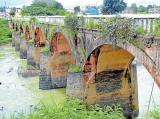
Kushalnagar, which is popularly known as the commercial centre of Kodagu district, has many historical monuments which are in a deplorable condition and crying for attention.

One such structure is the Praserpett Bridge built across River Cauvery, 167 years ago. The bridge, situated near the Kushalnagar Tollgate is 200 metre long and rests upon eight stone pillars of 40 feet wide each. Every pillar is 30 feet far from each other. The specialty of the pillars is that they have been plastered with a ground mixture of sand, eggshell and lime. The pillars from the ground level, are built in the shape of towers.

Every pillar contains valves so as to release the excess water during floods. When River Cauvery is in full spate, people drop by to watch the splendorous scene at the bridge.

The protective walls built on either side of the bridge are built to resemble the constructions in palaces and are intact to this day. The bridge dates back to the regime of Madras Presidency. The then Superintendent of Kodagu W C Hanslow, laid the foundation for the bridge on January 1, 1846. The construction of the bridge was completed in 1848.

The then Madras Governor George Markawis of Twidel and the then Mysore Commissioner Major General Mark Cubbon left the bridge open for public on May 12, 1848. The name of the bridge has been inscribed in English as well as Kannada on marble stone slabs, on either sides of the bridge.

But, after the new bridge was built, the old Praserpett Bridge was completely neglected.

Peepul trees have grown on the protective wall and pillars of the bridge. The people have urged to protect the historical monuments such as Praserpett bridge, Tippu’s Fort and the Old Inspection Bunglow.

Bar Association, Kushalnagar, president R K Nagendrababu urged that the Archeological Dept take an initiative and protect the bridge.

source: http://www.deccanherald.com / Deccan Herald / Home> District / Khushalnagar – DHNS, August 25th, 2015

IMPRESSIONS – When I Was A Prisoner Of War In Pakistan

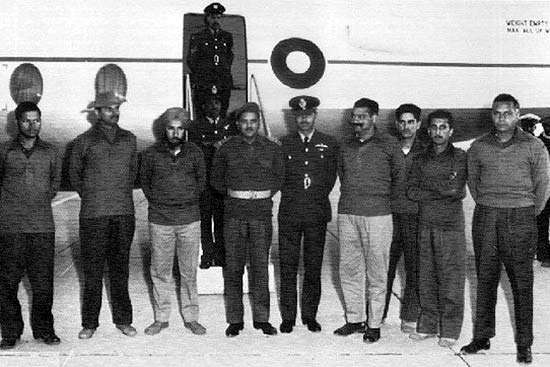
Prisoners of war at Delhi's Palam airport after repatriation on January 22, 1966. The author is second from left
Prisoners of war at Delhi’s Palam airport after repatriation on January 22, 1966. The author is second from left

Fifty years ago, Cariappa’s Hunter aircraft got shot down over Pakistan. This is the fascinating story of the four months that followed…

by Kodendera ‘Nanda’ Cariappa

The second, or could it be called the third, Indo-Pak War was now nearly three weeks old, and there were no talks of a cease fire. To us in the field we did not really have a clear picture of how the war was going, or how either the Army or the Air Force was doing, on the ground or in the air. We knew of Air Force casualties more through the grapevine rather than through authentic sources. Our hope as young fighter pilots was to be detailed for as many operational missions as possible against the enemy. And of course, each of us hoped we would encounter him in the air and to shoot him down.

So it was on 22nd Sep ’65, I was detailed as the leader of what was meant to be a four-aircraft formation of Hunters. We took off at about 0830. Our target was enemy armour in an area some distance South of Lahore. Once the primary mission was accomplished, we could take on any ‘targets of opportunity’ that we might see. Now, in hindsight it would appear that our mission was not going to be as successful as one might have wished. At the take-off point final checks were carried out by the ground crew, rockets were ‘armed’ and the 30mm cannon were made ‘live’. This was when one of the aircraft had to return to dispersal because of a technical snag.

The first few minutes of the mission were over Indian territory, but as always, we were ‘keyed’ up and on the look out for enemy aircraft that might be on a sortie to attack our positions. As always happened, at least where I was concerned, there were butterflies in my stomach. The uncertainty of what awaited us across the border and what enemy opposition we might encounter was at the back of my mind. It was at this point that the pilot of the third aircraft found something seriously amiss with his aircraft and I ordered him to return to Base. And then there were two!

However, once over Pakistan, nothing mattered other than finding the enemy and doing what we could to destroy his armoured formations. We did not see too much by way of enemy activity other than a few dust columns that were kicked up by vehicles that were slow in following the standard dictum of ‘freezing’ in their tracks if enemy air was in the sky. We attacked what little we could see and then decided to return home. On the way back we spotted an enemy target that gave away its position by opening fire on us. We retaliated. Within moments of doing so my aircraft was hit by ground fire.

All the warning lights in my cockpit were illuminated, indicating that many systems and my controls had failed, and also to tell me that my aircraft was on fire. Shrapnel went through my cockpit and I found my controls jammed. My ‘wing-man’ called out on the radio that I was on fire and that I should abandon the aircraft. I acknowledged his transmission and ejected. All I can recall is my boots flying off and within seconds I was on the ground lying in a semi-supine position. Within moments I was surrounded by troops who ordered me to raise my hands in submission, and to stand up. I replied that I could not do so as I was hurting badly, and felt paralysed. The troops were in khaki uniform and for some unknown reason I thought they were Indian. At about that time I could hear artillery opening up and one of the troops said, “Those are your guns firing at us”.

I was a Prisoner of War!

The time was 0904 because my watch had stopped, presumably on impact with the ground. I was asked who I was and from where I had taken off. As per standard procedures, I rather parrot-like gave my ‘name, rank and number’. It was then that I was asked if I was related to General Cariappa. I feigned a faint because of the pain, or maybe I did pass out. The next thing I knew was that I was lying on a litter in the back of a jeep and was being questioned by a Brigadier.

After some first aid I was moved to a rear location, to a place called Luliani where for some time I was left on the floor awaiting treatment and then as it transpired, evacuation to a hospital. I have no recollections of that journey. When I did come to, I found myself in a hospital bed and in excruciating agony. This was the military hospital in Lahore. The following day I was taken to the operation theatre and was told the extent of my injuries. I was impressed by the number of doctors who had returned from abroad to be of service to their nation at this juncture in its history.

I stayed in hospital for about a week during which time General Musa the Pakistan Army Commander in Chief visited. He came to see me, knowing by now that I was General (KM) Cariappa’s son. He asked if there was anything I wanted. All I could think of was being with the other Indian prisoners of war. From Lahore I was flown to Rawalpindi and kept in the hospital there, and it was during this time that I was visited by President Ayub Khan’s son. Treatment and food in the hospital was good, yet being in solitary confinement I was hankering to be with the other Indians.

This happened soon enough and suddenly one fine morning I was discharged from the MH and moved blindfolded to what turned out to be a prison cell. Here I was given a pair of black armoured corps overalls, and a pair of rubber-soled slippers. It was by now almost mid-October with the winter chill beginning to manifest itself. There was one charpoy for furniture and nothing else. I was also given three typical army blankets; one served as the mattress and the other two as a covering. By day the outer wooden doors were closed, I was in darkness with no light penetrating, and by night they were kept open with the single dull electric bulb switched on.

If I wanted to use the toilet I would be taken blindfolded to the lavatory about 50 yards away. There the sentry would wait till I was through, and then would escort me back to my cell. It was here that a Major first interrogated me, and it was here that I really experienced the ‘fear of the unknown’ for the first time as a POW. There is no more frightening condition than being in solitary confinement. I was not subjected to ‘third degree’ treatment, but I was told that I had better answer all questions because if I did not, there would be no hesitation in ‘putting me away’!

I realized then that the standard ‘rank/name/number response would not help and so I did ‘reveal’ what I thought to be innocuous information. This lasted over a period of three days. During this tend days I was incarcerated in the cell I was fed thick wholesome ‘chappatis and dal’ twice a day. There would be a mug of sweet ‘langar’ tea at 0700 and again at 1500. ‘Lights on time’ was 1600. A few days later I was told that I would be moving to the main POW camp. I first moved to a transit camp in Rawalpindi itself where I was kept in ‘solitary’ again for two days. It was here that I met a Pakistan Army JCO who, having learned that I was my father’s son, came up to me and said he heard that I was in the Sadr Kothi (he meant the President’s home). I, of course, denied this.

A train journey to Dargai, throughout which I was blindfolded, to the main POW camp followed. Winston Churchill was supposed to have been billeted here too! Meeting with the 38 other Indian prisoners was a momentous occasion for me, who had, for the preceding six weeks been deprived of any form of company. I was the only airman with that group. I learned later that the others were kept in separate enclosures within in the same complex.

The next few days were filled with getting to know my mates, and settling into some kind routine. Soon thereafter, I joined the other airmen, who were Squadron Leaders Sikand and Pilloo Kakar, and Flt Lieutenants Mani Lowe, Lal Sadarangani, MV Singh and Vijay Mayadev. A third compound housed the twelve Sikh officers who had been segregated for political reasons. Our compound had a small forecourt about thirty feet long and some seven feet across. Then the billet that housed us comprised three rooms. One that had our seven charpoys packed closely together, a dry-toilet facility (more about this later) and our dining area.

We were given three blankets, and an olive green army pullover was all that we had to protect ourselves from the severe winter chill of the NWFP. As a result by 1700 hours we got into our beds and were regaled by stories and experiences by ‘Siki’ Sikand who seemingly had an endless fund of them. He often had us in splits of laughter! In the first week of November, quite inexplicably, Mani Lowe and I were told to ‘pack our bags’ as we were going “somewhere”. Blindfolded, we were put into a van and driven off to a place about two hours South from Dargai and put into two adjacent dank, cold and airless cells, similar to the ‘lock-up’ in our own Air Force Guardrooms.

The toilets were about fifty paces of so from our cells, and as was the practice, we would be blindfolded when being taken to and from there. We were not interrogated, and were unable to figure out as to why on earth we were separated from our mates. All we knew is that we were at an air force base because every evening and through the night we would hear the typical and unmistakable whine of Hercules aircraft starting up, taxiing and taking off. About ten days later we were returned to Dargai, much to our delight, and indeed relief.

The first Red Cross parcels came in on 7th Dec and our lot improved considerably. One packet that thrilled us was that the film star Asha Parekh had sent us dried fruit! Now, we were even provided with a quilt that was paid for from out of the approximately Rs 60 that was our entitlement as prisoners. The arrival of the ‘goodies’ from the Red Cross was an indication that our folks at home knew that we were alive!

Food was always the focus of attention. Breakfast was a boiled egg with three puris and a mug of tea. Lunch and dinner were always, monotonously identical; either lacy, glutinous “lady’s fingers” or well watered turnips to be eaten with chappatis and/or rice. We would be given a mug of tea at about 1500 hours and then we would play quoits for an hour or so. Once a week we had the luxury of a hot bath. Dinner would come by 1700 hrs after which Pilloo (Sqn Ldr Kakkar) would read to us from the Bhagavat Gita that we received with our Red Cross parcels.

Siki our ‘master chef’ was able to convince our ‘minders’ that we needed mustard oil to keep away the winter dryness from our skins. This then was used as a cooking medium and our dinner was a much more palatable meal with fried onions and some condiments being added. Dessert was usually a biscuit sandwich that had cocoa or melted chocolate providing the filling.

As 31st December approached we agreed that we must do something to celebrate New Year’s Eve. The first pre-requisite for a successful party was ‘hooch’! So, we decided to make some moonshine. The main ingredient would be methylated spirits to be purloined from the nursing orderly’s tray when he came every afternoon to dress MV’s wounds and mine. Our stratagem was to keep him distracted somehow, and for this Siki was particularly successful.

I cannot remember what excuse or reason we gave for asking for a pitcher, but we were given one. This was our ‘still’ into which put raisins, the bitter lemon (rind and all, and called for some unknown reason as “mitha”) that was provided as dessert and jaggery. We also added a few chappatis for good measure in the belief that the yeast would cause fermentation and therefore provide the desired ‘kick’ to our hooch. The ‘matka’ was then wrapped in a blanked and placed close to the fireplace where we hoped and believed its contents would mature!

Came New Year’s Eve, Dec 1965, the evening progressed as usual and we looked forward with eager anticipation to the dinner that Siki had planned. Dinner came at the usual time and then our chef got down to work. It is now almost 50 years since then, and I don’t remember too well all that we had to eat. But I do recall the unexpected arrival of the Camp Commandant who turned out to be a very pleasant chap. He wished us and then produced the unbelievable…some mutton, or, was it chicken? He left soon thereafter. We then drank our brew that tasted like nothing on earth, enjoyed a veritable repast, and talked late into the night.

Life carried on unchanging from day to day, when suddenly about the January 10 we received some intelligence that something was afoot. The source of our information was the sweeper who came in every morning to clean our ‘thunder boxes’. He was a Hindu, and therefore it appeared was sympathetic towards us. Given the menial and unpleasant nature of his duties it was not surprising that the guards accompanying him were reluctant to enter the toilets.

Siki ‘cashed’ in on this and wrapping his face securely to keep out the obnoxious smells, he would ‘chat up’ the sweeper. It was he who mentioned that in a few days a tailor would come to take our measurements, but he was unsure as to why. The tailor did arrive and within a few days we were outfitted with warm serge trousers and shirts, and even provided new olive-green pullovers. Events now moved fast, so fast that we did not realize we were being prepared for repatriation!

In fact, I don’t think we knew till the day of departure on 22 Jan 66. We were once again blindfolded, bundled into a vehicle and driven to Peshawar where we emplaned a Fokker F-27 that was going to Delhi to bring back the Pakistan COAS. We crossed the international border at approximately 0905, about the identical time that I was shot down exactly four months earlier.

Thus ended an unforgettable period in our lives. Siki retired as Air Marshal, Pilloo became a Wing Commander but was killed in an HF 24 accident. Lal Sadarangani, Mani Lowe and Vijay Mayadev left the Service as Wing Commanders and joined Air India. MV continued in uniform and retired as Air Commodore.

______________________________________________________

Kodendera Cariappa retired as Air Marshal of the Indian Air Force.

source: http://www.outlookindia.com / Outlook / Home> Magazine> International – Impressions / by Kodendera ‘Nanda’ Cariappa / Web – August 11th, 2015

World Tribal Day

TribalKODAGU17aug2015

Mysuru :

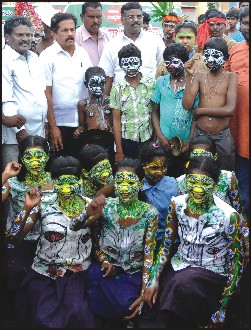
Hundreds of tribals (adivasis) from Mysuru, Kodagu, Chama-rajanagar districts and other parts of the State took part in a colourful procession organised by Karnataka Moola Adivasigala Rakshana Vedike to mark the 21st International Day of World’s Indigenous People (World Tribal Day) in city this morning.

MLA M.K. Somashekar flagged off the procession at Kote Anjaneya Swamy Temple at the North Gate of the Palace.

The procession, accompanied by a number of folk troupes, passed through Hardinge Circle and Nilgiri Road to reach the Dasara exhibition ground where the stage programme was held.

Adivasigala Vedike President J.K. Gopal, Hon. President Dr. C. Madegowda, General Secretary Vijay Kumar, office-bearers Ramanna, Chikkaraju, C. Rajanna and others were present on the occasion.

source: http://www.starofmysore.com / Star of Mysore / Home> General News / August 11th, 2015

Looking back …: An encounter with firebrand Minister B. Basavalingappa

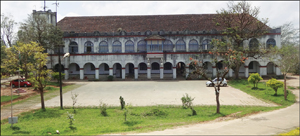
Madikeri Palace (Fort)

The then Deputy Commissioner of Kodagu, A. Bharath, had convened a meeting to discuss the revision of various privileges granted to the people of Kodagu.

This important meeting was chaired by the then Revenue Minister B. Basavalingappa. The meeting was at the highly ornate meeting hall that was earlier a Palace, inside Madikeri Fort.

The Palace and the Fort were constructed by King Mudduraja in 1681 and renovated by King Lingarajendra Wadiyar II in 1813.

Myself and all the District Officers, political leaders and elite public were present at the meeting. As the subject was highly contested, people had assembled in large numbers and the hall was jam-packed.

The meeting started and DC Bharath introduced the subject and highlighted the objective of the meeting. He explained the need for the revision, as many of the privileges were outdated and were out of context. Afterwards, Revenue Minister Basavalingappa expressed the thinking of the Government and wanted the opinion of the public to facilitate issuing a revised order.

As the public were preparing to put forth their arguments, suddenly the Minister shot a question: “Who is the Divisional Forest Officer, Hunsur?”

I got up and after wishing him good morning Sir, introduced myself, ‘Sir, I am A.C. Lakshmana DFO Hunsur.’

Where is the land for rehabilitation of farmers from Nagarahole Wildlife Sanctuary? Where is the money for compensation? came the thundering questions from Basavalingappa.

I was surprised by the unexpected change in the topic of the meeting. By observing his anger, I could fathom his anger, at our proposal. We had proposed rehabilitation of nearly 1,000 people from Nagarahole, which he had rejected outright and ordered for eviction of farmers.

Most of these farmers were welcomed and settled under the “Grow more food campaign” of 1950s. They were granted suitable marshy wetlands in the forest for cultivation of paddy. At that time, there was an acute shortage of food in the country.

When I tried to support my proposals for rehabilitating the farmers in alternate lands and giving some incentives, he shot back: “Where is the land I say?”

I was stung by his pungent remarks but controlled myself. I explained that my predecessor Yellappa Reddy and Conservator of Forests B. Baliah had already earmarked 400 acres of forest land at a Northern corner of Thithimathi forest.

Not satisfied with my explanation, he put a stinging question: “Where is the money? You have asked for nearly Rs. 10 lakh as compensation.”

As government servants, we were never grilled in the public like this earlier by any Minister, and this was a strange situation I was facing.

He continued, “Do you pluck Rs.10 lakh from leaves of forest trees and distribute?”

I felt I am losing a good cause by being polite and submissive and if I do not defend now, the struggle for rehabilitation that was going on for the last six years will be lost forever.

I mustered all my courage and loudly blurted, “Sir, by rejecting our proposal, you are bringing discredit to Government of Karnataka.”

The packed assembly fell into pin-drop silence at this unexpected development. My heart started pounding hard.

Basavalingappa’s voice came piercing like a bullet, “Are you in your right senses while replying to a Minister?” he shouted in a thundering tone.

Me, a trusted blue-eyed boy of the forest department, felt being humiliated in the presence of public. I was defending the voiceless innocent animals and plants and supporting needy farmers. Suddenly, I felt that I should be vociferous and blurted back: “Sir, Karnataka government that was kind enough to release over 3000 acres to rehabilitate Tibetans nearby, if they say no to the local need for 400 acres, how can the Government get a good name?”

I paused for a moment and could see the Minister in a dilemma. I shot off a remedial answer, “Sir if I sell two rosewood trees from my division I can get Rs. 10 lakh. This investment is sufficient to keep all my animals, plants and the concerned farmers happy and at peace.”

The Minister was quick to order me to sit down. He added that we will discuss this matter in the DC’s chambers after this meeting. I felt he wanted to silence me.

I stood my ground firmly and said that as the matter is introduced here in public, it must be resolved here itself.

The Minister ordered in a raised tone, “Sit down.”

I politely disobeyed him and insisted, “Sir, you should solve the problem here and now.”

After seeing my stubbornness, he asked the DC to advise me. Bharath used his goodwill and friendship and cajoled me to sit. Reluctantly, I sat down and the regular meeting started.

After this meeting, we met at the DC’s chambers. The Minister shot another question, “How much of compensation have you recommended per family?”

I replied, “Rs. 5000, Sir.”

“Why have you asked only Rs. 5,000 per family?” asked the Minister; it was an awkward question to me.

I gave an awkward answer, “Sir, for asking Rs. 5,000 you scolded me that much, if I had asked for Rs.10,000 by mistake, you would have thrashed me in the meeting.”

Suppressing his anger and smile, he asked my name again. I replied, A.C. Lakshmana Sir.

Suddenly my stars and luck appeared to have changed, the Minister became cool and suggested that myself and the DC should meet him at Bangalore with a revised proposal.

The Minister could understand my strong support for wildlife sanctuary and the compulsion for supporting the farmers. It is the labour and sacrifice of such farmers that had made this country self-sufficient in food front during the “Grow more food” campaign of 1950s. [PS: Even now I have continued my relationship with these farmers rehabilitated at Channangi-Gudlur area of Thithimathi. Their suggestion is, we should have given 2.5 acres to each family.]

Now the farmers were sacrificing their three decades of hard work in favour of forest and wildlife conservation. The government was bound to support the farmers. After finishing the discussions, he shook hands with us and left for Bangalore.

Next day myself and the DC revised our recommendations increasing the compensation to Rs. 10,000 per family and took it to the Minster at Vidhana Soudha. We gave the letter to him at 11 am. A government order was issued and handed over to us by the Minister promptly by 4pm along with a cup of coffee. The coffee and the government order were both sweet and remained green with us.

Retrospectively, it is an interesting study. The Minister was close-fisted and conservative and hence might have rejected the recommendations for releasing the land and paying compensation. He was aggressive in expressing his displeasure openly at me, feeling that I am liberal or laxative in dolling out favours.

Once he was convinced that I was judicious, he had the conviction and greatness to revise his judgement. What is outstanding here is his statesmanship. The file went from Revenue to Forest and Finance and then back to Revenue and a government order issued in five hours.

I have the experience of working in the Secretariat as Secretary. I know the difficulties in taking quick decisions in an atmosphere where acts, rules, precedents, court orders, government orders bind the Secretariat staff and slows down the speed of disposal. In this backdrop, the administrative skill of Basavalingappa wins the admiration of every person.

After this memorable Madikeri incident, every time Basavalingappa passed through Hunsur, he used to send words for me and shared a cup of coffee at the PWD guest house. It was an everlasting friendly gesture on the part of Basavalingappa.

Basavalingappa left an indelible mark in whatever capacity he worked. Once when he was allotted a less known Environment and Ecology portfolio, as Minister he brought it to the forefront. He awakened the staff, officers, municipalities and industrialists about the need for a clean and green environment. He was a Minister five times and was always in an urgency to deliver.

Earlier, he was instrumental in bringing a legislation bringing dignity and hygiene to the pourakarmikas in Karnataka. It is a landmark legislation that other States and Government of India are struggling to copy. His vision and efficiency should be a model for everyone, particularly the politicians who are tending to be sloppy and lack vision. Basavalingappa fought aggressively for the upliftment of the deprived, downtrodden and socially backward people. He is called the ‘Ambedkar of Karnataka.’ This is the contribution of that firebrand Basavalingappa.

Good administration heaps plenty of benefits to society. The administration is a complex subject and is the result of good co-ordination and understanding between people involved in administration. Here the law of physics ‘Light travels in a straight line holds good.’ If anyone in the line has a dissent, the light will not pass through. This ends up in more correspondence, suspicion, delays and disappointments.

Here it is worth recalling the observation of a British officer who remarked as follows: The process of taking decisions in the Mysore Representatives during the rule of Rajarishi Nalwadi Krishnaraja Wadiyar, was summed “that the administration in Mysore is very good and can match the best administered States in the world. They discussed one subject yesterday at the Representative Assembly and orders are issued today.”

This efficiency is our heritage, let us revive the old glory and take Karnataka to be a model State not just in India but anywhere in the world. We should remember B. Basavalingappa and his valuable contributions to society.

[aclakshmana@yahoo.com]

Camp: New York

source: http://www.starofmysore.com / Star of Mysore / Home> Feature Articles / Sunday – July 05th, 2015

More on General K.S. Thimayya

MORE ON GENERAL K.S. THIMAYYA

Sir,

A few readers have written about General K.S. Thimayya in these columns with reference to your Abracadabra dated May 28. May I add further to some already written.

In 1957, Gen. Thimayya became COAS (Chief of Army Staff) superseding two of his seniors. V.K. Krishna Menon was the Defence Minister, had made a name in UN and other international forums, with high calibre and intelligence. Thimayya’s tiff with Menon was not personal. Whenever Menon visited Army units and interacted with Jawans (soldiers), he used to ask pointed questions on their grouse against any of their officers. It is something not liked by the senior officers who were accompanying the Defence Minister.

It was a question of discipline in the Army. Gen. Thimayya sent his resignation letter to Prime Minister; the rumour was that the other Chiefs were to follow if the resignation was accepted. Prime Minister Nehru tactfully handled the situation; General withdrew the resignation.

Gen. Thimayya wanted to write a book about his experiences in war fronts but the Government did not permit as he was in the service. Thimayya happened to meet one American writer Humpry Evans, who stayed with the General for sometime, made notes and got it published in US. The book “Thimayya of India” having a glossy wrapper on the cover with an impressive photograph of the General reviewing a Guard of Honour presented to him at West Point ( US Academy to train Defence officers).

Though he retired in 1961, his services were requisitioned directly by UN, to head a Peace Keeping Force at Cyprus — a small Island in Mediterranean, off the coast of Turkey and Greek, which had won Independence under Archbishop Makarios from Britain. However, it had to face a civil war between Greek Cypriot and Turkish Cypriot (mostly Muslims). Gen. Thimayya as head of the Peace Keeping Force did very well in separating the warring factions and brought peace.

Gen. Thimayya died in Nicosia (Cyprus) in Dec.1965. His body was brought to Bangalore; his wife and only daughter were there. Last rites were performed and the body was buried with all military honours and 17 gun salute. The Government of Cyprus honoured him by issuing a commemorative stamp and naming a street after him.

Gen. Thimayya was an alumnus of the Bishop Cotton Boys School, Bangalore. The alumni of the school celebrate “Gen. Thimayya Day” every year by arranging lectures by senior Army Officers and other dignitaries.

— Capt. (Retd.) A.K.Char / V.V.Mohalla, 28.6.2015

source: http://www.starofmysore.com / Star of Mysore / Home> Voice of the Reader / Sunday – July 05th, 2015

Writer calls for documenting Kodagu’s tribal culture

Writer J Somanna on Sunday said writers should come forward to document the complete history of Kodagu where people from various communities speaking various languages reside.

The documentation of the district’s history has not been not carried out properly till date, he observed while presiding over the sixth Virajpet taluk Kannada literary conference here on Sunday.

“A lot of work has to be created in the literary world of Kodagu. Apart from the history documented by Christian Missionaries writers, folklorist Nadikeriyanda Chinnappa and D N Krishnaiah, we don’t have any other documentation on the history of the region. Now, Hampi Kannada University lecturer Tambanda Vijay Poonacha is trying to document the history. Young writers should also initiate a move in this regard.”

Somanna said that there was a need to document the culture, attire, tradition of tribals, including that of Kodagu Kembatti, freedom movement, life of soliders and so on. Only a handful of writers like G T Narayana Rao, Kodagina Gowramma, B D Ganapathy, Kakemani I M, Muthanna, Thambanda and Vijay Poonacha have made their names in the literary world, he added. Somanna said Kannada teachers should be trained properly to teach the language in an appealing manner.

The teachers should have an in-depth knowledge on the subject, he observed. He urged the Union government to nationalise educational institutions and frame a uniform education policy for the country.

Tribal academy sought

“The tribals in Virajpet taluk are living in a pathetic condition. The government’s facilities have not reached them yet. There is a need to rehabilitate them on the periphery of the forest. A separate Budakattu (Tribal) Academy should be established to protect the literature and culture of the tribals,” he said. The literary meet passed a resolution urging the government to check elephant menace.

At an open session presided over by taluk Kannada Sahitya Parishat president M P Keshava Kamath, honorary secretary D P Rajesh Padmanabha read out the resolution. It read: “Chennayyanakote is located on the periphery of the forest. The residents are scared following the elephant menace. The forest department should chalk out a plan to check elephant-human conflict.”

The resolution would be submitted to chief minister and forest minister through the deputy commissioner.

source: http://www.deccanherald.com / Deccan Herald / Home> District> Madikeri, DHNS – June 28th, 2015

ASI to take possession of Madikeri Fort, Palace

The Archaeological Survey of India (ASI) hascome forward to take possession of the Madikeri Fort and Palace.

The move was in the wake of relocation of Government offices functioning to Deputy Commissioner’s office recently.

To begin with encroachments at the Fort premises will be evicted by ASI.

A team of officials of ASI led by Chandrakanth, Zonal Officer of ASI, Mysuru, conducted a survey at the Fort premises.

On observing new buildings coming up at the Fort premises, Chandrakanth decided to discuss the matter with District Administration authorities before taking further steps as the new buildings had violated the norms of ASI.

Additional Deputy Commissioner C Satish Kumar, officials of Revenue Department, Taluk and Municipal Office assisted in the survey process.

Speaking to press persons here today, Mr Satish Kumar said that the District Administration had taken the decision to hand over the Fort and Palace to ASI long back after the relocation of government offices.

He added that all encroachments would be cleared.

The Fort and Palace are the living testimonies of the history of kingdom of Haleri dynasty.

In 1924, the then British-ruled government handed over the Palace to the District Commissioner of the then Central Department of Archaeology.

From then till now the government offices were functioning at the Fort premises

UNI BSP MSP GM 1929
source: http://www.news.webindia123.com / News Home> India / Madikeri – Wednesday, June 10th, 2015