The Archaeological Survey of India (ASI) hascome forward to take possession of the Madikeri Fort and Palace.
The move was in the wake of relocation of Government offices functioning to Deputy Commissioner’s office recently.
To begin with encroachments at the Fort premises will be evicted by ASI.
A team of officials of ASI led by Chandrakanth, Zonal Officer of ASI, Mysuru, conducted a survey at the Fort premises.
On observing new buildings coming up at the Fort premises, Chandrakanth decided to discuss the matter with District Administration authorities before taking further steps as the new buildings had violated the norms of ASI.
Additional Deputy Commissioner C Satish Kumar, officials of Revenue Department, Taluk and Municipal Office assisted in the survey process.
Speaking to press persons here today, Mr Satish Kumar said that the District Administration had taken the decision to hand over the Fort and Palace to ASI long back after the relocation of government offices.
He added that all encroachments would be cleared.
The Fort and Palace are the living testimonies of the history of kingdom of Haleri dynasty.
In 1924, the then British-ruled government handed over the Palace to the District Commissioner of the then Central Department of Archaeology.
From then till now the government offices were functioning at the Fort premises
UNI BSP MSP GM 1929
source: http://www.news.webindia123.com / News Home> India / Madikeri – Wednesday, June 10th, 2015
Palangala, a remote village in Kodagu retains its pristine environment, despite creeping urbanisation. Palangala holds a special place in my heart since it is where my mother’s family lived. As children, we used to visit our maternal grandparents, and I have pleasant memories of this village.
One of the happy memories I have is that of a shrine atop a hill named Malethirke. My parents were devotees of this shrine and it was an annual tryst to visit the temple during our summer vacation. The only way to get to the temple those days was by walk through thick wooded mountain terrain. It used to be an arduous walk of more than a kilometre along a winding beaten path.
One particularly interesting story connected with this shrine is the attack by Tipu’s troops during the late eighteenth century. The Kodava warriors were outnumbered and were unable to stop the marauders. They hid in the forest and prayed for divine intervention. Their prayers were answered, and according to lore, swarms of rock-bees attacked the troops and chased them down the ghats. There is evidence of this attack in the form of remnant of an old sword which was abandoned by the soldiers.
I recently visited the shrine with my wife. There is now a reasonably motorable road to the top. The location of the shrine is serene and peaceful. It’s a temple to Lord Shiva, Parvathy and Ganesha. Legend has it that the Pandavas spent their ajnathavasa here. Lord Shiva is said to have appeared to the Pandavas at this spot. Three uneven stones represent Shiva, Parvathy, and Ganesha in an open tree-covered platform. This is the sanctum-sanctorum. There is no set structure. The priest puts it succinctly: “The sky is the roof of this temple, the mountains are the walls, trees are the adornments, and the birds provide the music.” There is also a pond nearby which has potable spring water.
Another interesting story is that of St Annes Church in Virajpet, which was first built in 1792 during Dodda Vira Rajendra’s reign, who welcomed the Christians displaced by Tipu. When the church was under construction, the spire kept collapsing every time it was built. The Italian architect could not figure out what was going wrong.
A local person advised the architect to make an offering of a bell to Malethirke temple, in order to overcome the problem. The architect followed this advice and was amazed when the spire stood steady at the first subsequent attempt. Even to this day, devotees take vows and offer bells to this temple. The surroundings of the temple is full of bells festooned around it.
Another form of offering by the devotees who take vows, is by way of earthenware figurines. There are piles of figurines of horses, cows, dogs, and human forms offered over the centuries. I took in the divine beauty of nature as the priest went about the various rituals. Savouring the payasam as prasada brought back happy memories of my earlier visits to this beautiful shrine.
source: http://www.deccanherald.com / Deccan Herald / Home> Supplements> Spectrum / by C P Belliappa / June 09th, 2015
The annual fair of Emmemadu Dargah Sharif, popularly known as Emmemdau Makham Urs will be held in Emmemadu in Madikeri, Kodagu from February 27 to March 6.
Addressing mediapersons in Mangaluru on Friday, Urs committee member C A Ismail said that The Emmemadu Dargah is visited by the people of all religions and is a centre of religious tolerance. Mass marriage of orphan girls, mass feeding and other programmes will be held as a part of the Urs.
The Urs will be inaugurated on February 27 by Panakkad Sayyid Munavvarali Shaihab Tanjal at 2 pm. On March 3, a religious programme will be presided over by Atakkoya Tanjal at 12 pm.
Inauguration
Muthukkoya Tanjal Jifri will inaugurate. Home Minister K J George, Minister Dinesh Gundu Rao, U T Khader, Khamarul Islam, Roshan Baig, Member of the Parliament Prathap Simha, Member of the Legislative Assembly K G Bopaiah, former Member of the Legislativ Assembly MC Nanaiah, Member of the Legislative Council T John, Adaguru Vishwanath and others will attend.
Bayar Tanjal, Koora Tanjal, Maryad Hamsa Musliar will lead the religious rituals.
Valedictory programme
The valedictory programme will be presided over by Shaikhuna A P Aboobakar Musliar.
Lakhs of people will take part in the mass feeding to be held on March 2 at 4 pm.
The programme will be streamed live at www.yemmemadu.com
source: http://www.deccanherald.com / Deccan Herald / Home> District / DHNS / Mangaluru – February 21st, 2015
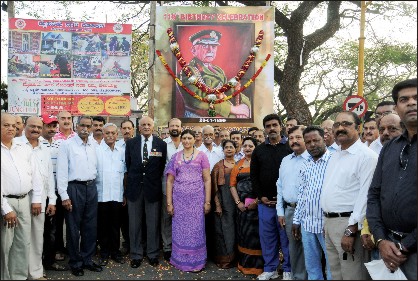
Marking the 116th birth anniversary of Field Marshal K.M. Cariappa, the Mysuru Kodava Samaja had organised a function at Field Marshal K.M. Cariappa Circle (Metropole Circle) here this morning.
Earlier, the gathering offered floral tributes to the portrait of the Field Marshal.
Speaking on the occasion, Maj. Gen. (retired) C.K. Karumbaya said that Field Marshal Cariappa was an epitome of discipline and hard work, who should be taken as a role model by the youth.
Corporator M.J. Ravi Kumar sought a war memorial and a statue of the great soldier in city.
Kodava Samaja President M.M. Karumbaiah, office-bearers and members of the Samaja and also of the Kodava Samaja Cultural and Sports Club were present at the programme along with some public. On the occasion, sweets were distributed.
source: http://www.starofmysore.com / Star of Mysore / Home> General News / January 28th, 2015
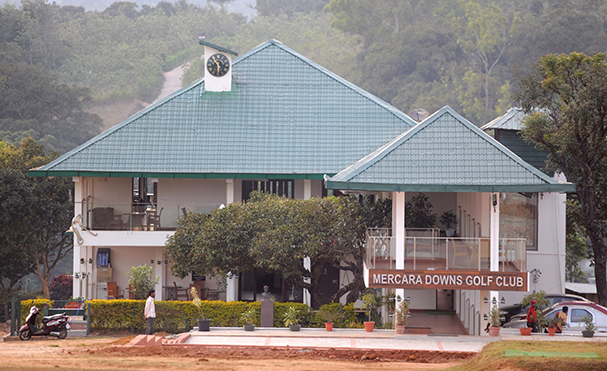
Mercara Downs Golf Club, one of India’s oldest, turns 100
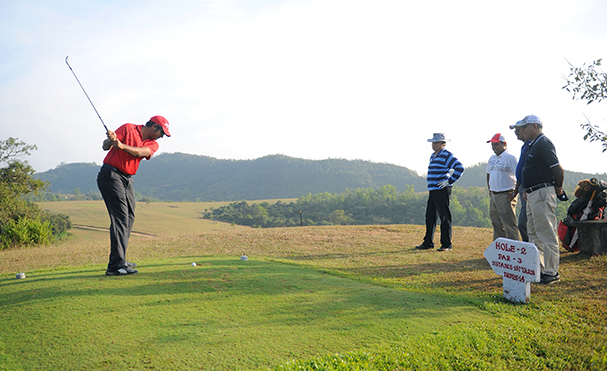
In full swing: Golfers flock to the Mercara Downs Golf Club on weekends. Photo by Bhanu Prakash Chandra
Caddies have it hard at Mercara Downs Golf Club. Spread over 102 acres, its course has water hazards and hillocks and is ringed by woods. Golfers flock here on weekends. Some are on the course at the crack of dawn.
For Ganesh Mahendra, a planter from Coorg, a round of golf in the afternoon is absolutely sacred. “It is a great way to unwind after a long day in the plantation,” says the 37-year-old who cultivates black pepper, cardamom and coffee on his 120-acre estate at Suntikoppa.
Mercara Downs Golf Club
Located in Coorg, the Scotland of India, Mercara Downs is shrouded in mist on most winter evenings. A veil of nostalgia, too, hangs over the place; it is gearing up for its centennial celebrations.
I.K. Anil
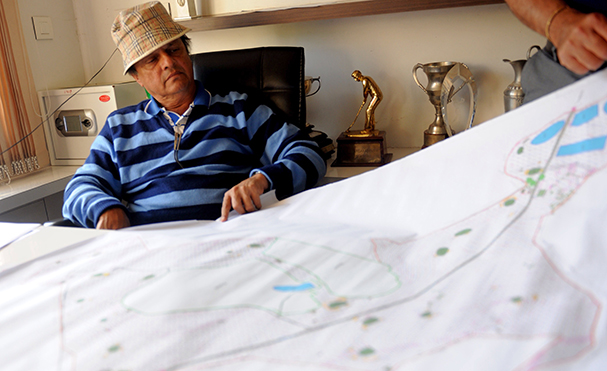
At a hillock near the club house, we meet I.K. Anil, 63, captain of the club. “During the colonial period, only the British could play golf,” he says. “Indians were not allowed, as the club was run by the British and it was their choice who they should have. Later on, a few Indians were taken to the club and were allowed to play. But, they were just less than 10 per cent.” There used to be inter-club tournaments with the Belur Golf Club and the Tata Coffee Golf Club. “We have had expats coming here and saying ‘My grandfather used to play golf here’,” he says.
Anil shows us a tree which used to have a thatched hut under it, where the Brits would party. “We did not have a club house then,” he says, adjusting his hat. Mercara Downs was just nine holes on 30 acres during the British period. “It was all browns then. Now, we have lovely greens,” says Anil. And, 18 holes.
Keeping the course green is a challenge. “It has to be irrigated inch to inch, which is a big constraint in cities,” Anil says. “Luckily, we are blessed with plenty of water. Once the northeast monsoon stops, we start irrigating.”
Harish Appanna finds the greens a real treat to the eyes. He comes to the course thrice a week. His estate is in Chettalli, 20km from Mercara. A hockey player, Appanna took to golf easily. “I took coaching for a week,” he says. “Then I would come here and practise every day. Now, I love golf more than hockey.” The 57-year-old is secretary of Mercara Downs.
Roy Chengappa, 59, loves hanging out on the course with friends. “It helps me connect with nature,” says Chengappa. He shows us a lapwing perched on the course: “These birds lay eggs among pebbles, to keep them safe from predators like foxes.” The lapwing appears on the club logo, too.
A coffee planter, Chengappa never used to play golf earlier. “One day, I just came here and hit the ball. It felt great. Then I became a member,” he says. Now, he plays once a week. “It is an intelligent game,” he says. “You have to hit a stationary ball. It involves a lot of science, especially physics and mechanics, as well as physical and mental abilities.”
Golf is for gentlemen, says Anil who has been playing for the last 35 years. “It is the toughest to play, but the easiest to cheat,” he says. “If the ball goes into a depression, one can take it out without anyone seeing it. We are trying to inculcate certain values in youngsters.”
Mercara Downs will soon be a hot destination for golfers from abroad. “We have a helipad here. A few days from now, Japanese tourists will come here looking at business opportunities,” says Anil. “It is easy to get outstation golfers. In the US they do not have many public golf courses. In Japan, one has to wait years for a round of golf, leave alone membership.”
Outstation golfers can buy a lifetime membership in Mercara Downs for Rs3.5 lakh. For local players it is Rs1.3 lakh, as the club wants to have more regulars around.
Mercara Downs has helped a lot of aspiring golfers take up the game. Two years ago, Mahendra had a hole-in-one. “My first shot on the 11th hole went in phadaak,” recalls Mahendra. The odds of an average golfer hitting a hole-in-one are 12,000:1. He was thrilled and threw a party; the bill came to Rs22,000. The next time he was playing, he hit a shot which rolled close to the hole. “I prayed, ‘God, let this not get in’. I was worried about losing money again!” says Mahendra, who played in the Valentine Team Amateur Golf Challenge in Bangkok.
Ace golfer Trishul Chinnappa, 21, says Mercara Downs is an “out-of-the-world place”. “The sand traps make the course more challenging,” he says. “Similarly, the elevation has an effect on the way you play. You need to use a lot of skill and get creative while playing in Mercara Downs.”
Golf has become quite popular in Coorg. Other courses are at the Tata Coffee Golf Club at Pollibetta and the Coorg Golf Links at Bittangala. Chinnappa was five when he took up the game. “Back then I used to be the only kid in Coorg playing golf,” he says. “But, today I see a lot of youngsters taking up the game. It is indeed good for the sport in our community.”
Chinnappa and other distinguished sportspersons from Coorg district will be honoured at the Mercara Downs centenary celebrations on December 12 and 13. The evenings of glitz and glamour will have live music performances and a fashion show by designer Prasad Bidapa.
source: http://www.week.manoramaonline.com / The Week / Home> Sports / by Mini P. Thomas / Monday – December 08th, 2014
Cottabetta Bungalow. Tata owns seven bungalows in Coorg, and every bungalow is set amidst a 1,000 acre plantation.
COTTABETTA BUNGALOW
SOUTH KODAGU, KARNATAKA
USP: Live the planter’s life
There is freshness in the crisp air caressing your face. Picture-postcard greenery fills your senses. Add to it a welcome shower. There is magic in Coorg, the coffee country.
SMELL THE BEANS At Cottabetta Bungalow. Photos: Special Arrangement
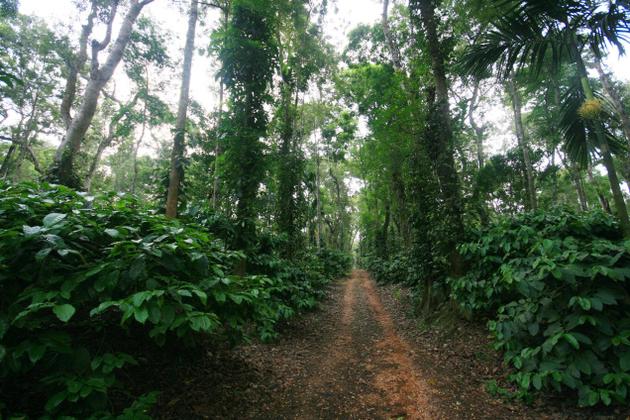
The escape to the Tata plantation coffee trails in Coorg during the monsoon turns out to be a bonanza. After a six-hour drive from Bangalore, past the Mysore Highway, Ranganathittu bird sanctuary, bamboo forests, cinnamon trees interspersed with teak trees on which pepper vines climb to great heights, and the ubiquitous coffee plantations, we reach Tata’s bungalow in Cottabetta (meaning cold mountain).
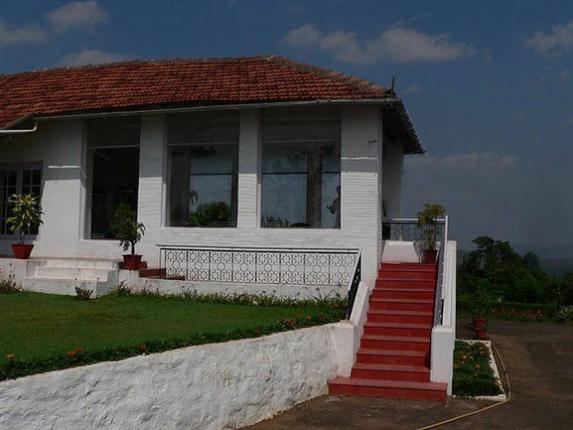
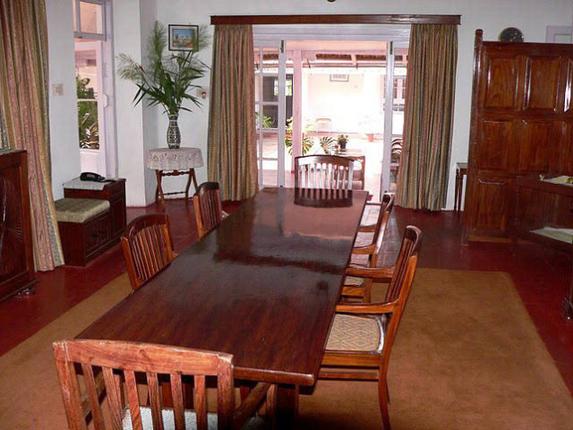
Tata owns seven bungalows in Coorg, and every bungalow is set amidst a 1,000 acre plantation. The three-bedroom and five-bedroom bungalows, occupied by the managers of Tata, have been converted into cottages, superior, luxury and heritage rooms and heritage suites. “The bungalows went vacant after the managers took VRS. As the butlers, cooks and gardeners continued working to maintain the bungalows, our management came up with the idea of homestays,” says K.C. Poovaiah, head of Plantation Trails, Tata Coffee.
Once occupied by British planters, the bungalows are more than 100 years old, but modified suitably for modern-day needs. Every bungalow is built on a higher elevation, overlooking the mountains and the plantations. Cottabetta is one of them. And, what a view! The majestic mountains open up — on the south is Kerala and to the North is Periyapatna, Kushal Nagar and the Madikeri hills.
Once occupied by British planters, the bungalows are more than 100 years old, but modified suitably for modern-day needs.
As you take in the picturesque landscape from the portico, a curved road amidst the Tithimathi forests catches your eye. “It is a part of the Mysore Road,” Poovaiah explains. “When the British planters used to drive down, they would dim and dip the headlights at this point to alert the cooks.”
I check into one of the luxury rooms — the decoration is minimal but it has the comfort of a home. However, the bathroom is lavish with a bath tub. And, there is a beautiful balcony to sit and soak in the silence.
Barbets, drongos, golden orioles, parakeets, red whiskered bulbuls, flower peckers and sunbirds flutter by and feast on the jamuns, guavas, chikkus, mangoes and gooseberries, the inter-crops supported by the plantations.
Our tour of the bungalows begin with Woshulli, known for the spectacular view it offers of the Durbeen (binoculars) Road snaking through the plantations. (Vishal Bhardwaj has shot here for his new film “Saat Khoon Maaf”, starring Neil Nitin Mukesh, Priyanka Chopra and John Abraham.)
At the manicured 25-acre, nine-hole golf course in Polibetta, it is monsoon magic again. As it buckets down, we take cover under the majestic ficus tree, watch the rain pour down in sheets and sprint back to the car.
Then, we set off to Surgi bungalow and the plantation trail at Taneerhulla and Woshulli plantations spread across a sprawling 1,340 acres. “We get tonnes of litchis every year,” says plantation guide M.K. Umesh, pointing to the giant litchi tree (planted by the British) at the bungalow.
Umesh peppers the trail with scary elephant stories, and we stop at intervals to touch and smell coffee beans, pepper and vanilla. The Robusta coffee bushes here are 130 years old. Back at the bungalow, biting into crisp, hot onion pakodas served by the courteous staff, sipping coffee and watching the mist-capped hills is just the perfect way to end a beautiful outing in the hills.
source: http://www.thehindu.com / The Hindu / Home> Features> Metroplus> Travel / by K. Jeshi / August 26th, 2010
The High Court has refused to allow public access to the Kadanga, an ancient war trench, which is part of a private property.
A petition was filed by Iynanda K Chinnappa of Yadoor village in Kodagu district claiming exclusive right over the trench, located adjacent to the land he owns.
It is said one Balachanda Thammaiah, a villager, had appealed against Chinnappa and his sons for obstructing free passage through the trench. Thammaiah claimed that the trench belonged to the government due to its ancient origin.
The revenue officials and the Assistant Commissioner dismissed Thammaiah’s application stating that the trench is now private property. The district court, however, ordered for removal of the obstacles. Challenging the said order, Chinnappa moved the High Court.
Hearing the appeal, Justice Anand Byrareddy said the Kadanga is not public property and that over time, it has merged with the land of the petitioners and been in the exclusive possession of the petitioners for more than 50 years.
He also observed that under the Coorg Land Revenue Regulations, the Karnataka Revenue Survey Manual and the Mysore Land Revenue Code, do not define Kadanga in proper terms. Since there is no practical use of these trenches today, the government has not thought it fit to exercise any exclusive right over it, said the judge. The High Court set aside the order of the district court and said the Kadanga was not meant for public use.
source: http://www.newindianexpress.com / The New Indian Express / Home> Cities> Bangalore / by Express News Service / October 05th, 2014
By Prof. A.V. Narasimha Murthy, former Head, Department of Ancient History & Archaeology, University of Mysore
Victoria Gowramma is an enchanting but a perplexing name as it is a curious combination of western culture represented by Victoria and Hindu culture symbolised in Gowramma. In fact, an old fashioned and devoted Hindu woman with traditional virtues is referred to as Gowramma. Actually Gowri is Parvathy, the consort of Shiva. Slowly the name Gowramma is vanishing from Hindu household in preference to more modern names. However, that name still persists among the Kodavas.
I was re-reading D.N. Krishnayya’s book Kodagina Itihasa (History of Kodagu) in Kannada. It is a good book and reads like a novel but gives authentic history of Coorg. He has devoted many pages for sketching the life of Gowramma. In fact, C.P. Belliappa has made a special research on the charming lady and has written a book titled Victoria Gowramma: The Lost Princess of Coorg, which I have not been able to read unfortunately. Further he has taken the trouble in exploring and locating her cemetery at Brompton in South-West London. Thus Belliappa has given a new lease of life in history to this extraordinary Princess of Coorg and has added a new chapter to the history of Coorg. K.B. Ganapathy has also written about her in his book ‘The Cross and the Coorgs’ and its Kannada version Kodagina Mele Shilubeya Neralu. All these books are useful in understanding the personality of this Princess who passed away when she was just 23 years (1841-63).
Victoria Gowramma was the daughter of Kodagu King Chikka Veerarajendra Odeya, son and successor of King Lingarajendra. He was just 17 years when he became the king and due to bad company he became a cruel and autocratic king and people of Coorg cursed him to the maximum but were scared of him to raise their voice. Killing people when he did not like them or those who did not toe his line had become a daily affair without any mercy. A low class person by name Kunta Basava, who was looking after the Palace dogs rose to the position of a Dewan of the State and encouraged the King in all his atrocious acts. Added to it, he had a strong weakness for women and as soon as he saw a charming woman, he would get her into his harem. The British warned him but he ignored their advice. Finally he submitted himself to the British and became a prisoner in his Palace. He was first taken to Vellore and finally to Kashi where he was kept as a State prisoner. He requested the British government to permit him to take his dear daughter Gowramma with him to England and the British permitted him.
Thus Princess Gowramma went with her father and reached England in March 1852. The deposed King and Gowramma were given a rousing reception at London and Veerarajendra was actively participating in social life of London along with his daughter Gowramma. Suddenly he thought of her future after his own death and wrote a letter to Queen Victoria, requesting her to take Gowramma under her protection and convert her to Christianity and give proper education to her. The queen was very happy and Gowramma was converted to Christianity in Windsor Castle church by Canterbury Archbishop.
Queen Victoria became her guardian and gave her the name Victoria Gowramma. Chikka Veerarajendra was also present on that occasion and he expressed his gratefulness to the queen. The responsibility of her protection and education was entrusted to Major Drummond and his wife. As they did not look after her properly, she was sent to Lady Login and Sir John Login who were proficient in Hindustani. She was not encouraged to meet her father frequently and was allowed to meet him on special occasions only. Gowramma had forgotten Hindustani and Veerarajendra did not know English and hence the father and daughter talked to each other through a bilingual interpreter. Most of the time Veerarajendra was weeping whenever he met his daughter and thought that he was responsible for her plight under the British but it was too late. He became sick and when she came to meet him, he handed over a bag to her which contained a large number of precious stones and rich ornaments and asked her to wear them. Both of them cried.
Veerarajendra died in 1859 in London but Gowramma could not go to the funeral as she was living in White Island, far away from London.
His body was kept in Kansal Green Cemetery and after two years the body was brought to Calcutta through a ship. From there it was taken by road to Kashi and was buried there as per the rituals of Veerashaiva community and a tomb was built over it. The expenditure for all this was Rs. 2500 and the British government sanctioned this amount. When he died he had cash and valuables worth around rupees four lakhs and it was distributed among his relatives. Nothing was claimed by Gowramma as she was under the protection of the queen herself.
Gowramma was under the protection of Mrs. Drummond. The latter had two daughters who were active and were going to school. But Gowramma was always inactive and had no interest in learning. Hence she was being treated badly by the family. She felt that under the influence of Gowramma, her two daughters also may get spoilt and requested the queen to relieve her family from the responsibility of Gowramma. Then Gowramma was entrusted to another European woman by name Lady Login. She had a good knowledge of India, and also had the responsibility of looking after Dilip Singh. He was the first King to be converted to Christianity whereas Gowramma was the first woman to get converted.
As part of the ritual, the queen wanted her to go to Italy. The queen had sent an expensive diamond ear-ring and necklace of pearls and asked her to lead a life acceptable to God. Veerarajendra who was present on the occasion was happy at this gesture. Then Gowramma was taken to Italy (Vatican) by Lady Login and the new climate made her healthy and enthusiastic, regarding the royal life. Though some people tried to get her married to Dilip Singh, the latter did not agree as Gowramma did not come up to his expectations.
Then Gowramma came to England along with Lady Login. The latter wanted to be relieved of the responsibility of Gowramma and she was put under the care of Lady Katharine Harcourt. But the latter put Gowramma under a Junior Governess and Gowramma did not like that. Then she was put under the care of Sir James Wirhog. At that time Colonel Campbell used to visit her house. He was a young widower and showed great interest in Gowramma. They were married and they had a female child who was given the name Edith Victoria Gowramma. Campbell and Gowramma enjoyed fairly good life, visited many places and took part in royal festivals and parties. The queen was very happy and ordered that there should be no deficiency in providing funds and amenities to Campbell and Gowramma. Thus everything looked wonderful to the couple.
Gradually her tuberculosis was becoming severe. Queen Victoria made all arrangements to get her the best medical help. But the medicines did not help and finally she died in 1864 (March 30) when she was just 23 years. As per the desire of the queen her body was buried in Brampton Cemetery in London and an epitaph was carved on the marble stone as follows:
“Sacred to the memory of Princess Victoria Gowramma, daughter of ex-Raja of Coorg, the beloved wife of Lt. Colonel Campbell. Born in India, July 4th 1841, she was brought early in life to England, baptised into the Christian faith under the immediate care and protection of queen Victoria who stood sponsor to her. She died on 30th March 1864.”
After her death, her daughter married Captain Yardley and had a son who died in a road accident. Thus ended the family of Victoria Gowramma. Now she has entered the pages of history, the ultimate of everyone including kings, queens and princesses. But there is something melancholic in her life which makes us to have a soft corner for her. That is the greatness of Victoria Gowramma.
source: http://www.starofmysore.com / Star of Mysore / Home> Feature Articles / August 30th, 2014
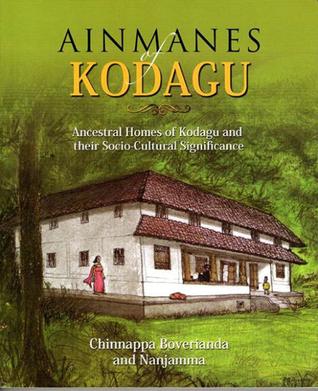
The much-awaited book on ‘Ainmanes of Kodagu’ (ancestral homes), authored by researcher-couple Boverianda Chinnappa and Nanjamma Chinnappa has hit the stands.
The book was written after extensive fieldwork in Kodagu district (Coorg) of Karnataka, to record for posterity the way of life that the culturally-rich ainmanes symbolise.
Speaking to The Hindu, P.T. Bopanna, journalist, who runs Kodagu’s first news portal www.coorgtourisminfo.com, said according to the researcher couple, the book is unique as it traces the origins and antiquity of the ancestral homes of all the native communities of Kodagu.
“It also describes the social and cultural significance of these ancestral homes, which are important elements of the rich heritage of the native communities of this area,” he said.
An ainmane has a verandah, with carved square wooden pillars tapering upwards and wooden seats between the pillars, ornately carved windows and door frames, and specific areas within the ainmane for the performance of rituals.
A ‘functional’ ainmane is where all the members of the okka (patrilineal clan) gather to celebrate important family rituals and ceremonies.
The book describes the ainmanes of the native communities in Kodagu (Coorg) and their socio-cultural significance.
Ainmanes are architectural symbols that bear testimony to the strength and vitality of the okkas of Kodagu.
According to the authors, the ainmanes that are still standing today account for only about 40 per cent of the original number that existed in Kodagu.
Many of them are dilapidated; others have been converted into simple homes. The Chinnappas expressed their apprehension that if this trend continues, these heritage buildings and the unique traditions, customs, festivals and rituals that are associated with them will probably vanish in the not too distant future. If they vanish, so will the heritage of the people, their way of life, they add.
The authors have said their aim is to raise awareness of the cultural significance of the ainmanes of Kodagu and encourage efforts to maintain and preserve these heritage buildings for generations to come.
The cover illustration for the book is by noted cartoonist, Nadikerianda Ponnappa.
The book has been published by Niyogi Books, Delhi. The work on the website www.ainmanes.com is in progress.
source: http://www.thehindu.com / The Hindu / Home> News> National> Karnataka / K. Jeevan Chinnappa / Bangalore – August 23rd, 2014
Udaka Mandala is Karnataka’s other place by the waters that became more famous as Ooty, or Ootacamund thanks to the Brits. Elsewhere, the denizens of John Bull’s Island changed Mumbai to Bombay and Beijing to Peking.
However, like the refreshing confluences of rivers, the close encounters of the cultural kind led to enriching mergers and acquisitions. A fine example is the Omkareshwara Temple at Madikeri, which is not far from the sacred confluence. King Lingarajendra built it in 1820 around a central pool using a mix of Islamic and Gothic styles.
The golden-domed shrine with its whitewashed walls and red borders is dedicated to Shiva in the form of a Linga brought from Benares. Both Lingarajendra and his predecessor Virarajendra are buried in a compound north of Madikeri.
Outwardly, these domed tombs with their short minarets look like Islamic monuments but they are richly embellished inside with Shaivite symbols and imagery. The syncretism that led to the creation of these memorials was definitely ahead of its times.
The revival of Indo-Saracenic style in Bombay, Madras, Calcutta and Delhi came later.
This required a spirit of amity and cultural convergence. This is best summed up in a quote from the Panchatantra engraved on the lintels of the Parliament building designed by Sir Edwin Lutyens and Herbert Baker some 20 years before Independence: “That one is mine and the other a stranger is the concept of little minds . But to the large-hearted , the world itself is their family.”
source: http://www.articles.economictimes.com / The Economic Times / Home> Collections> Bombay / by Vithal C. Nadkarni, ET Bureau / May 31st, 2013
WELCOME. If you like what you see "SUBSCRIBE via EMAIL" to receive FREE regular UPDATES.
Read More »