Category Archives: Coffee News

Artist Creates First “Coffee Print” With Image of Seattle Space Needle

Vero Beach, Florida:

Vero Beach artist Robert Ottesen has created the world’s first serigraph using a repeatable printing process and coffee-based ink. What began as a simple artistic statement led to several innovations that allowed an image of the Seattle Space Needle to be printed in a photo-realistic manner.

According to Ottesen, “I just wanted to make a simple artistic statement – by printing with coffee, I wanted to show its importance to our daily lives. I had no idea, when I started the project, how difficult it would be to create a photo-realistic image from coffee pigment alone.”

The print is already attracting attention from experts in the field.

“This is amazing. Rob has pushed the envelope and developed a new and creative print-making technique,” said Frank Romano, RIT Professor Emeritus and President of the Museum of Printing.

In order to print with coffee, Ottesen needed a coffee-based ink. So he turned to Bob Peterson, a consultant with over 30 years of experience in the ink business. Peterson, after numerous attempts, was finally able to get coffee to mix with a special blend of printing oils.

According to Peterson, “When Mr. Ottesen approached me and explained that he wanted to make an ink from coffee, I told him that it couldn’t be done. However, after listening to what he had planned to use the ink for, I decided to take on the challenge. Creating an ink from coffee grounds has never been attempted, to the best of my knowledge. It was extremely difficult to identify an ink varnish that would allow the coffee grounds to blend with the varnish. Additionally, the time and mechanical force required to blend the coffee with the varnish was ten times more than that of a regular ink. The process definitely required “thinking outside the box”!

Interested parties will soon be able to view a copy of this historic print at the Museum of Printing in North Andover, Massachusetts.

source: http://www.digitaljournal.com / Digital Journal / Home> Press Release / PRWEB.com Newswire / Vero Beach, Florida – April 02nd, 2014

Now There is a Museum of Coffee Machines

coffee-museumKF16apr2014

It used to be that museums were exclusively the purview of dinosaur bones and paintings of old rich dudes. Things have changed, however. Nowadays, there are museums for bad art, tap water and even dog collars. Well, you can add coffee machines to that list.

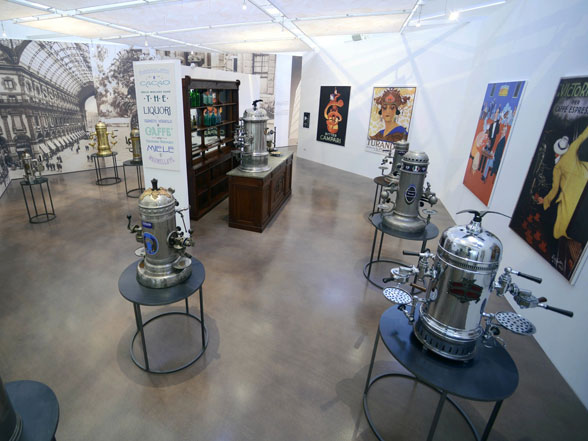
Introducing the Museum of Coffee Machines, located in Milan, Italy. The whole thing is run by Italian coffee machine manufacturer Gruppo Cimbali and features recreations of the kinds of coffee bars that existed through various decades of the 20th century. For caffeine junkies, this could really hit the spot.

So if you ever find yourself in Italy, forget all of those boring cathedrals and sumptuous meals. Go look at some espresso machines instead!

source: http://www.blog.cookingchanneltv.com / Cooking Chanel / Home> Devours the Blog / by Lawrence Bonk / March 29th, 2014

‘Country Store’ Celebrated

New exhibit displays artifacts and reproductions of a bygone era.

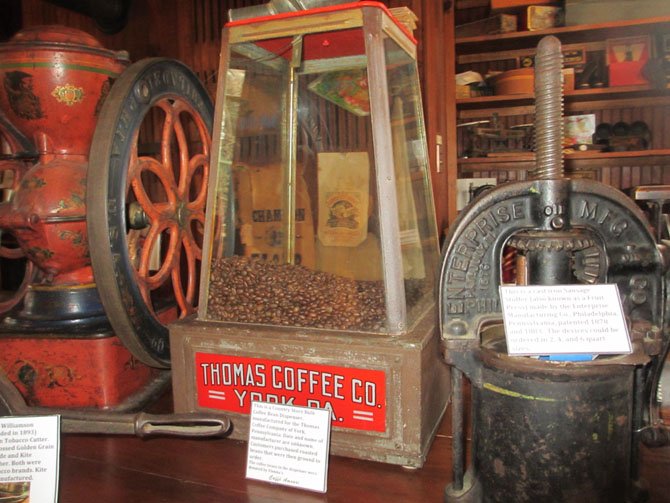
Coffee beans were scooped from this cast iron and glass storage container into a manual coffee grinder.

Although Freeman Store and Museum’s new exhibit, History of the Country Store, opened in early March, Historic Vienna Inc. chose a sunny and warm spring day for its opening reception on April 6. A steady stream of guests filtered through the store and museum examining the artifacts and reproductions on display in the store and upstairs in the museum and parlor. The Freeman Store is listed on the Virginia Landmarks Register and the National Register of Historic Places.

Abram Lydecker himself, who lives as an HVI historian and reenactor in his alternate ego, greeted guests and shared recollections of the birth of his store just before the Civil War broke out, during the war, and post-war business.

Abram and Susan Lydecker moved from New Jersey with their nine children in 1859, founding the community’s first general store. The store was used as a secession vote polling place on May 23, 1861. Vienna was one of the few precincts in Virginia to vote against secession.

“We just moved here from New Jersey and the village is very small,” said “Lydecker, referring to 1859. ”We don’t have many people living here yet but a lot of new agricultural technology was introduced here in Fairfax County.

“It’s nice for me and my family to have store next to the railroad so we can get goods and ship to people.”

Fairfax County welcomed Northerners as long as they didn’t take Abolitionist stands publicly, Lydecker said.

Ken Liu and his 11-year-old son Jason visited the Freeman Store and Museum during the reception. Jason is earning his Boy Scout Citizenship in the Nation badge and the Vienna family recognized Freeman Store’s historic designation. “We’re losing a lot of the original concepts,” said Jason. “Modern technology can help us do things faster but we shouldn’t forget the original ideas.”

Ken Liu said he was particularly struck by “Lydecker’s” conversations, especially when learning that the federal government suspended the Constitution when they took over the store during the war.

The exhibit, History of the Country Store, runs through the year. Counted among the displays are artifacts from the mid-19th century to the turn of the 20th century and reproductions that replicate goods, from feed and food to dry goods. The checkbook and satchel used by Leon Freeman, whose father Andersen Freeman married Abram Lydecker’s daughter, is displayed. Leon Freeman was the first president of the Vienna Bucket Brigade, the precursor to the Vienna Volunteer Fire Department.

“It’s fun to share the Freeman House as an open house,” said HVI Board member, Dave Shelby, who commented that HVI was pleased with the turnout. “It’s nice to show people what the building originally served as and how the world here used to be.”

Freeman Store and Museum is open Wednesday through Sunday, noon to 4p.m. There is no admission charge for exhibition. For information on the exhibit or to enquire about Historic Vienna, Inc., go to historicviennainc.org.

–Donna Manz

source: http://www.connectionnewspapers.com / The Connection / Home / Wednesday – April 09th, 2014

From Araku, the aroma wafts across global frontiers

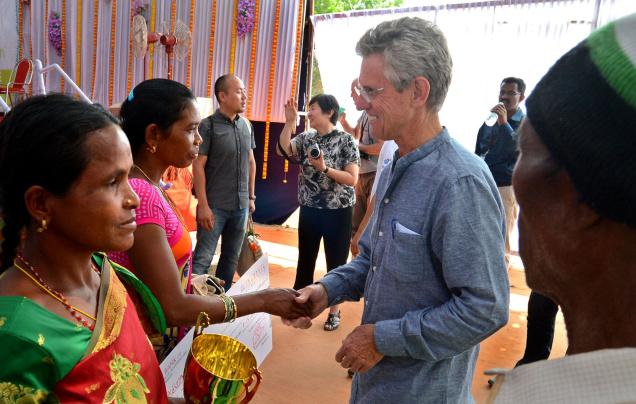
Winners of best the Biodynamic Coffee Growing Villages interacting with Chief Sustainability Officer of the Naandi Foundation David Hogg at Gems of Araku Festival 2014 organised at Thuraiguda in Visakhapatnam district on Wednesday./  Photo: K. R. Deepak / The Hindu

Winners of best the Biodynamic Coffee Growing Villages interacting with Chief Sustainability Officer of the Naandi Foundation David Hogg at Gems of Araku Festival 2014 organised at Thuraiguda in Visakhapatnam district on Wednesday./ Photo: K. R. Deepak / The Hindu

Norway, South Korea, Switzerland, and Japan, among others, keen on a deal on the coffee of the valley

This scenic locale that is a popular tourist destination is on the international map for one more reason – coffee.

The coffee Arabica from Araku is set to sell at Rs. 450-500 per kilo. The premium coffee is grown by the 12,000 small and marginal tribal coffee farmers of the valley and the world’s coffee guzzling nations including Norway, South Korea, Switzerland, and Japan are keen on striking a deal on the produce this year.

Making the world know the existence of Araku Arabica and having it appreciated for its unique taste and flavour is the Araku Originals Limited floated by the Naandi Foundation. AOL is marketing the idea and the coffee by bringing in the discerning international buyers to the Araku Valley to see the cultivation and interact with the farmers.

On the other hand the international recognition has boosted the morale of the farmers who are taking pride in their produce and are willing to walk that extra mile to ensure quality.

What makes the coffee cultivated by the members of Small and Marginal Tribal Coffee Farmers Mutually Aided Cooperative Society in the Valley so unique is the biodynamic cultivation process that avoids use of chemicals, SAMTCFMACS president Killo Kondal Rao of Thuraiguda says.

Competition

The Naandi Foundation, in association with the Mahindra & Mahindra, organised a competition — Gems of Araku 2014 — to recognise and award the best biodynamic farmer and the best biodynamic farming village.

The competition has been designed with an aim to encourage the farmers to adopt the best practices and maintain the quality that is sought after in the international markets, says Chief Sustainability Officer of Naandi Foundation David Hogg.

On Wednesday Rajeev Dubey of the Mahindra & Mahindra along with the CEO of Naandi Foundation in the presence of a number of international coffee buyers gave away the awards to the Best Biodynamic Farmer Janni Budho of Ganjaiguda village, runner-up G. Anantaram of K. Bodapat village; Best Biodynamic Village to K. Bodapat village and runner-up to Ganjaiguda village at a function organised at the Coffee Processing Unit of the SAMTCFMACS at Thuraiguda near here.

source: http://www.thehindu.com / The Hindu / Home> News> Cities> Visakhapatnam / by G. S. Subrahmanyam / Araku Valley (Visakhapatnam District) – March 20th, 2014

Starbucks Says India Operations Fastest Growing in its History

Tata Starbucks currently has presence in Mumbai, Delhi, Pune and Bangalore and has its coffee plantations in the Coorg area of Karnataka. | AP

With 40 stores in 17 months of its operations, India is the fastest growing market in the history of the Seattle-based iconic American coffee chain Starbucks, according to a company statement.

The US-based coffee chain, which had sewed up an equal joint venture with Tata Global Beverages, opened its first outlet in Mumbai in October 2012.

“With 40 stores in four cities (in 17 months) and nearly 1,000 partners, India is the fastest growing market in Starbucks history,” Tata-Starbucks chief executive Avani Davda was quoted as telling Starbucks annual shareholders meet.

Tata Starbucks currently has presence in Mumbai, Delhi, Pune and Bangalore and has its coffee plantations in the Coorg area of Karnataka.

Starbucks globally operates over 20,000 stores across 64 countries, serving over 70 million customers per week.

Starbucks chairman, president and chief executive Howard Schultz told shareholders that the company would continue to reinforce the ongoing investments in 200,000 Starbucks partners (employees), including USD 250 million in their healthcare benefits and USD 234 million in bean stock in fiscal 2013.

He said the company recorded record revenue of USD 14.9 billion, up 12 per cent and record earnings per share of USD 2.261, up 26 per cent, taking its net profit to USD 2.5 billion, a rise of 23 per cent in fiscal 2013.

source: http://www.newindianexpress.com / The New Indian Express / Home> Business> News / by PTI – Mumbai / March 20th, 2014

Coffee festival

Cafe Coffee Day, Kuvempunagar, has organised Coffee Festival to learn the fine art of coffee making and many interesting facets of coffee art from Coffee Evangelist Merlin Raj (National Barista Champion of 2012.

Represented India at World Barista Championship in Vienna, Awarded for best signature beverage in Indian Barista championship) tomorrow at 12 noon.

source: http://www.starofmysore.com / Star of Mysore / Home> In Brief / March 19th, 2014

Tata Coffee sees huge margin upside in instant coffee biz

Tata Coffee expects markets of West Asia, Turkey and Iran to open up and becoming new buyers. It is also witnessing shift in dynamics of its US market business. “We are shifting much of our business from bulk to packaging currently,” said Huq.

Hameed Huq, MD of Tata Coffee said the rally in coffee prices is based on the severe drought in Brazil, the world’s biggest coffee producer.

The prices of Arabica coffee have gone up by 60 percent in the last 6-8 weeks, and this rise is here to stay, says Huq. “While Robusta coffee prices have gone up, they have not moved up as dramatically as Arabica coffee prices,” said Huq. Tata Coffee expects markets of West Asia, Turkey and Iran to open up and becoming new buyers. It is also witnessing shift in dynamics of its US market business.

In an interview with CNBC-TV18’s Reema Tendulkar and Ekta Batra, Huq said, “We are shifting much of our business from bulk to packaging currently.”.

Tata Coffee garners 50 percent of its revenue from instant coffee business. Huq says the company plans to focus more its coffee business and sees no new additions in its tea business. “We are seeing huge upside in margins for our instant coffee business,” he told the channel.

Below is the verbatim transcript of the interview:

Q: We have witnessed sharp increase in coffee prices across 2014, how much does Tata Coffee stand to gain since the company exports a considerable proportion of the produce?
A: The coffee prices in the terminals are determined by two factors. One is a fundamental factor, the other is the funds, etc playing. This rally is based on a very severe drought in Brazil, so this is a rally and Arabica prices have gone up by 60 percent. However, along with anticipated shortfall in Brazil the Robusta prices have also moved up. It has not gone up to the same extent whereas Arabica has moved up by 60 percent; this has moved up by 30 percent odd. So, what does it do for Tata Coffee – essentially we have just completed our harvest. We finished Arabica, we got good crop. Robusta, the crop was marginally lower. We have got all this coffee now to sell in financial year ’14-15. So, to that extent price increase will translate back into the bottom line and the various quarters coming forward.

Q: Analyst views are suggesting fall in coffee prices globally, what is your view?
A: We have to look at what has caused it because a lot of people are analyzing it. Essentially, we were looking at a carry forward, a surplus stock at the end of the next coffee year, about five-six million bags. The crop has come down by 10 million bags. So, from a surplus situation this has gone into a deficit situation on the closing stock. The other thing to understand is what has caused this. If it was simple lack of rainfall, definitely rains would come and things would correct itself but in Brazil what has happened, it was not only lack of precipitation rainfall, it was compounded with very high temperatures which depleted the soil moisture with the result certain amount of damage has been done not only to this year’s crop, people are talking for next year’s crop also being affected. So, if we come out with a deficit situation or a breakeven situation and then come into not a big crop next year; with steady 2 percent rise in consumption, these prices – our understanding will remain whether it will remain at USD 2 or come down, nobody can say but gone are the days what we saw second half of last year of dollar end 5 and dollar end 10 cents to the pound, which is below the cost of production of many producers in the world and everybody will have views on this. Our views are that because this is by fundamental, the retraction will not go back to the levels we saw six months ago.

Q: The fall in coffee prices during 2013 or last year did hit your performance. So, in that sense, can you give us a sense, number wise that if in case there is an improvement in coffee prices, what would be the impact number wise on the profit and loss (P&L) front for Tata Coffee?
A: We generally do not give guidance on principal. There is a normal escalation in cost with the wages and everything else and take the percentage increase because we generally do not give guidance on percentage on improvement on margins. Q: Your Company exported nearly 40 percent in January on stronger prices but how are you seeing the current situation pan out? A: The maximum benefit will come into the next financial year largely on account of – although we are a plantation company, 50 percent of our revenue comes from instant coffee. If you look at it, the Arabica prices have hardened substantially but the Robusta prices have not got up to the extent. Our major competition with low Arabica prices came from the South American producers who use a lot of Arabica in instant coffee. To that extent, we will be much more competitive with higher percentage of Robusta and also having covered our coffee fairly well. In instant coffee business also we are seeing an uptick after this. Last year there was acute competition from producers in Brazil but to that extent Arabica prices have gone up substantially and our competitive pressure also comes down in instant coffee which is significant for our business now almost 50-55 percent of income comes from instant coffee.

Q: During 2013 we did see you enter into the south East Asian markets. What is on the anvil for the international markets at this moment or perhaps in the near future, anything that you have slated in 2014-2015?
A: We have been able to consolidate our position in Japan which is a very difficult market but a remunerative market. Russia, which has given us problem, last year on account of dumping from Ecuador and Brazil is again opening up in spite of the internal problems. However, what is very interesting is that Middle East, Turkey, Iran, they have become new buyers. These are economies that are opening up. So, this is our new thrust. We will consolidate our position in West Africa; we are also entering into Eastern Europe which is roasted ground coffee but instance coffee is there. So, these are the new markets, the new initiatives we have taken on. We have commissioned a very modern packaging unit at our Theni plant. So, we are moving our business more from bulk to the packing. So, these are the two significant steps we have taken and should start seeing the result in the next financial year.

Q: What about the Eight O’ Clock business because it saw a fall close to about 12.5 percent in Q3. Has there been any recovery and would be the expectations be how Eight O’ Clock will perform going ahead?
A: There has been a little change in the market dynamics in the US coffee market. Large reason the shift from black coffee to single serve is very rapid but Eight O’ Clock is in both the segments. So, you may see some volume issues, topline issues but if you look at the overall profitability, the business is very sound. So, we are adjusting to the market dynamics, we have had a major relaunch of our Eight O’ Clock coffee and this way, we started seeing the volumes coming in there but we are fully attune to changing the dynamics from black coffee to single serve but fortunately we are in both the segments so I see the businesses should not be under any pressure in the coming year.

Q: What about your tea business. It contributes to around 5 percent of your revenues at this point. How do you expect to scale it up if in case that is the plan for Tata Coffee going ahead?
A: Not really because we have a tea business, it’s a very small part of the business. Our focus has been on coffee. If you look at margins that we get out of coffee and tea in plantation – it is much easier to add value to coffee. In our Arabica – when the prices were down last year, we had a substantial value by producing very high quality specialty coffee – that protected our bottom line in spite of a difficult year the results that you are seeing are not to that extent. Second, we are committed on going into instant coffee, the soluble coffee business where also we see huge upside on the margins going forward and new markets coming in. Tea is there, we have the estate but we dot not have any vigorous growth plant on tea as we have in coffee.

Tata Coffee stock price

On February 24, 2014, Tata Coffee closed at Rs 916.95, up Rs 1.90, or 0.21 percent. The 52-week high of the share was Rs 1675.00 and the 52-week low was Rs 869.90.

The company’s trailing 12-month (TTM) EPS was at Rs 56.40 per share as per the quarter ended December 2013. The stock’s price-to-earnings (P/E) ratio was 16.26. The latest book value of the company is Rs 280.80 per share. At current value, the price-to-book value of the company is 3.27.

source: http://www.moneycontrol.com / MoneyControl.com / Home> News> Business / Source: CNBC-TV18 / March 10th, 2014
Coffee makes its way into fast-food restaurants

Chennai :

The good ol’ Indian coffee is steadily making its way into the world of pizzas and burgers in India with quick service restaurant (QSR) chains like Pizza Hut and McDonald’s making it an integral part of their offerings. QSR chains, which hitherto focused only on their flagship offerings like pizzas or BigMacs, are diversifying into the cafe concept to lure those customers, who flock to cafes since the concept of coffee and snacks between meals is growing in India.

Over the last two quarters, the QSR segment has been posting low same-store sales growth and companies are working their best to increase volume sales by offering value meals and diversifying store formats to increase footfalls. And with a $300 million Indian coffee market, growing at 17% annually, cafes are a clear option for QSRs.

Yum! Brands’ Pizza Hut has started a Hut.Cafe in a store-in-store format where a Pizza Hut restaurant houses a cafe that serves coffee, tea, smoothies and coolers; and McDonald’s recently brought in its McCafe format to India to sell its range of coffees, pastries, savouries and chilled beverages.

Pizza Hut has launched its Hut.Cafe outlet each in Chennai & Kolkata and this marks Pizza Hut’s foray into a new category of coffees. “During tough times one of the things we have done is to try and reach out to a whole new segment of customers. The Hut.Cafe will help in getting customers who just go out for coffee and snacks between meals,” said Sanjiv Razdan, general manager, Pizza Hut India.

The company now has its own range of products and has worked on specialty Indian coffees, but is also open to working with different brands to bring in their signature products to Hut.Cafe tables, Razdan said. The company has two such outlets and expects to open 10 more by the end of this year.

“McCafe has helped us bring in more customers by building a different day part and increasing footfalls within the McDonald’s restaurants,” Ranjit Paliath, vice president – business operations, McDonald’s India (west & south), said. McDonald’s now has three McCafes in India but plans to open 75-150 more in the next 3-5 years.

Coffee is so dear to the Indian consumer that dessert-chains too are looking at putting ice creams parlors and coffee shops together. American ice-cream brand Mini Melts, which recently made its foray into India, is planning to set up Mini-Melt Cafes where consumers can step in for coffee or tea, have snacks and finish off the mini-meal with ice creams.

“We are working on the design and layout of the cafe and will be launching them in Chennai, Bangalore and Hyderabad in the next three months,” said Syed Salim, chairman, HoneyBee Amusements, which has brought the US-based brand to the Indian market. The company will offer a range of Mini Melts-based dishes like ‘floats’, which will have the Mini Melts ice cream on beverages like Coca-Cola, and also serve regular coffees, is looking at typing up with large cafe chains for the coffee, Salim said.

source: http://www.timesofindia.indiatimes.com / The Times of India / Home> Business> India Business / by Sushma U N , TNN / March 17th, 2014

Smell the oranges (and the coffee!)

SUMMARY
The famous loose-jacketed mandarin orange was as much a part of the fabric of Coorg as the coffee alongside which it was planted.

———————————————————————————-

Owned and managed by the Ramapuram family of Kerala, Orange County Resorts and Hotels is based on the ‘Spirit of the land’ philosophy that showcases the nature and culture of the regions where it is operational. The first Orange County Resort that opened at Coorg in 1994 was built on the theme of coffee, spice and plantation life to reflect the true spirit of Coorg, and is situated amidst 300 acres of coffee and spice plantations. It is flanked on one side by the Dubare Reserve Forest and the river Cauvery on the other.

Link to the land

Reminiscing on the days of old, Cherian Ramapuram, director, Orange County Resorts and Hotels says, “The Orange County – Coorg resort was built on the plantation owned by our family from 1926. In the 90s, Coorg was not known outside Karnataka. The location was extremely beautiful, packed with history and culture. Orange trees are usually inter-planted along with shade trees for cultivating coffee. So like coffee, Coorg produced the best oranges in the country, till a virus attacked them about 18 years ago. The huge, sweet, loose jacket oranges turned into small tight skinned sour ones. The resort was christened when the oranges were good.”

The brand opened its second resort at Kabini in 2007. Inspired by the local ‘Kadukuruba Hadis’, the architecture of this tribal themed resort was crafted to transport its guests into a tribal setting from which they can enjoy the spectacle of Asia’s largest biosphere.

Cherian Ramapuram adds, “With location and luxury coming together in such a happy union, Orange County Resorts offers guests a true ‘Spirit of the land’ experience. Plantation stays are unique because they are a combination of an exclusive lifestyle, while touching the soul of the land. It also gives one an opportunity to see how the precious commodities that they buy or use in the day-to-day life are cultivated. We give the guest a very unique experience of living like a ‘Planter’ for the stay. They get to go for a signature tour of the plantation, plantation trail, nature walk, etc., which are unique to thispart of Coorg.”

The resort’s main target is the discerning traveller. Cherain Ramapuram feels that the guest profile shows a continuous evolution. Today’s guest is more educated tastes become more refined as they travel around the world. While there is no specific special interest groups in this segment, the discerning traveller looks for experiences like this. He says, “We do not promote stays or even holidays. We promote Exclusive Local Experiences.”

Community is core

Orange County’s Kabini property has been selected by National Geographic Traveller among the top 25 Eco Lodges in the world. The company takes guest feedback and suggestions very seriously. “This is evident from the feedback that you can see on sites like Tripadvisor. All these comes wrapped in highest standards of responsibility in tourism,” says the proud hotelier.

His brother Thomas Ramapuram, joint director, Orange County Resorts and Hotels elucidates on the sustainable hospitality measures the company has initiated. “The concept of responsible tourism comes naturally to Orange County Resorts. It is, after all, an extension of the vision and philosophy of the House of Ramapuram whose values are broad, contemporary and inclusive.”

The government has now made CSR mandatory part of a company’s revenues. But Orange County has long supported community development. “Over 60 per cent of our staff at both resorts are from the surrounding local areas. We constantly strive to engage with local village heads in community development programmes. We also conduct Structured Community Development Programmes on an annual basis like for example, scholarships, toilets in villages, road work, etc,” says Thomas Ramapuram.

He adds, “We believe that education is the most powerful weapon which you can use to change the world. So we have formally adopted the local school at Coorg in Karadigod Village. We are also in the process of adopting the school in Kabini (H.D.Kote Village), however we have not received a formal government approval for the same. Through adoption we have implemented various initiatives like computer facilities, better play grounds, hiring quality teachers etc. This is an ongoing continuous process and our vision is to develop these schools into world class institutions of learning.”

The brand has also adopted technological innovations to make the guest experience a seamless one. “Our indigenously developed central reservation systems compares with the best in the industry. It allows for easy storage, access and transmission of information. Our systems allow us to have an intimate knowledge of each of our guests even before they step into our properties.”

It is rare to find a two resort brand in the world today that has 60 per cent of their clients booking directly with us (as opposed to booking through a OTAs or a tour operator). We are able to achieve this through our powerful database management systems and processes.”

Being a traditional brand with a strong focus on ethics, values and other old fashioned ideas, has not stopped the brand from embracing technology and leveraging its tremendous power to deliver a superior guest experience. “Technological innovation is a core value at Orange County Resorts,” reiterates Thomas Ramapuram.

As for the brand’s foray outside Karanataka, Cherian Ramapuram says that it has not been easy to build and run resorts in the state itself. “While we have not yet looked seriously outside, we are keeping our eyes open for opportunities. We have two more locations where we have land in Karnataka. We are looking out for options outside the state and the country too,” he optimistically sums up.

source: http://www.financialexpress.com / The Financial Express / Home> Travel & Tourism / by Steena Joy / Mumbai – March 11th, 2014

Brazilian drought may make your cuppa costlier

India effect On Thursday, prices of key grades of coffee were up by ₹30-40 a kg, almost 20 per cent over the previous week.

Dry weather sets off price rally; global rates increase 45% in a month

New Delhi :

Your cup of coffee is set to cost more, courtesy, the drought in Brazil.

Reports of severe dry weather impacting this year’s Brazilian crop have sparked a sharp rally in coffee prices over the past few days and domestic raw coffee prices have moved up in tandem. Global prices — mainly of the Arabica variety — have risen by 45 per cent in the last one month.

As a result, small and mid-sized domestic roasters, who sell roast and ground filter coffee powder, are thinking of passing on the burden to consumers by increasing prices. This is because of export demand for Arabicas driving up farm-gate prices. India exports two-thirds of nearly three lakh tonnes of coffee it produces every year.

At the weekly auction on Thursday, prices of key grades of raw coffee were up by ₹30-40 a kg, an increase of almost 20 per cent over the previous week.

No option

“Roasters have to increase prices by 20-30 per cent, else quality will take a hit,” said BS Suryaprakash, CEO of Coorg Coffee Supplies, a Bangalore-based roaster and exporter.

“It’s a tricky situation. If we increase the price, there is a chance of losing customers. If we don’t, we’ll have to incur losses as the rise in raw coffee prices has been pretty steep,” he said. Coorg Coffee, which retails powder and speciality blends under the same brand, has already effected a price hike of 20 per cent, he added.

A little over a third of the 300,000 tonnes of coffee produced in India is consumed domestically. The annual growth in consumption is around six per cent, with coffee drinking becoming fashionable among the younger generation through the spread of the café culture.

“This price rise is unprecedented. If the market stays at the current level, we don’t have any option but to increase prices. We will take a call on revising the prices over the next couple of days,” said Shrikant Rao, Director at Bayar’s Coffee.


Watching developments

However, large companies such as Tata Coffee are cautious in reacting to the price rally. “The market has gone up in the past four days. We have to study the market before taking a call on prices,” said Hameed Huq, MD of Tata Coffee Ltd, the country’s largest coffee grower.

Moreover, the lower-than-expected crop size back home is seen supporting prices. The Coffee Board has lowered its estimates by about 10 per cent, pegging the current crop size at 3.1 lakh tonnes as untimely rains in Karnataka, the main producing state, has shrunk the crop. However, growers harvesting their produce said the crop is much lower than the Coffee Board’s estimates.

source: http://www.thehindubusinessline.com / Business Line / Home> Markets> Commodities/ by Vishwanath Kulkarni / New Delhi – February 21st, 2014