Monthly Archives: January 2025

Nagarhole National Park: The ultimate wildlife adventure in Karnataka

Explore Nagarhole National Park’s wildlife, from elephants to tigers. Visit Kabini River, Iruppu Falls, and Brahmagiri Sanctuary for an unforgettable adventure!
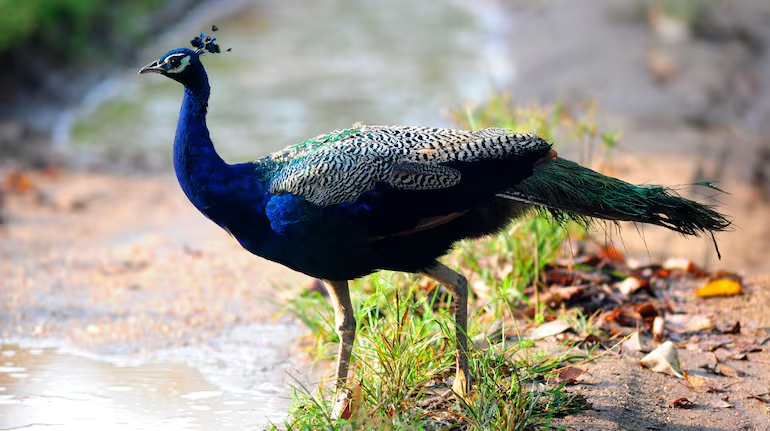
Exploring the natural beauty and wildlife of Nagarhole National Park. (Image: Canva)

Nestled in the lush landscapes of Karnataka, Nagarhole National Park, also known as Rajiv Gandhi National Park, is a treasure trove of wildlife and natural beauty. Located in the stunning Coorg district, this 640-square-kilometer park is part of the Nilgiri Biosphere Reserve and is a must-visit for any wildlife enthusiast or adventure seeker. With its tropical forests, rolling grasslands, and serene swamps, Nagarhole promises an unforgettable experience for those eager to discover the heart of India’s wilderness.

Best Time to Visit Nagarhole National Park
For the best chance to spot the park’s incredible wildlife, plan your visit between October and May, when the dry season takes over and the animals come out to play. The park remains closed during the monsoon months (June to September) due to heavy rains and the risk of flooding, so be sure to plan accordingly!
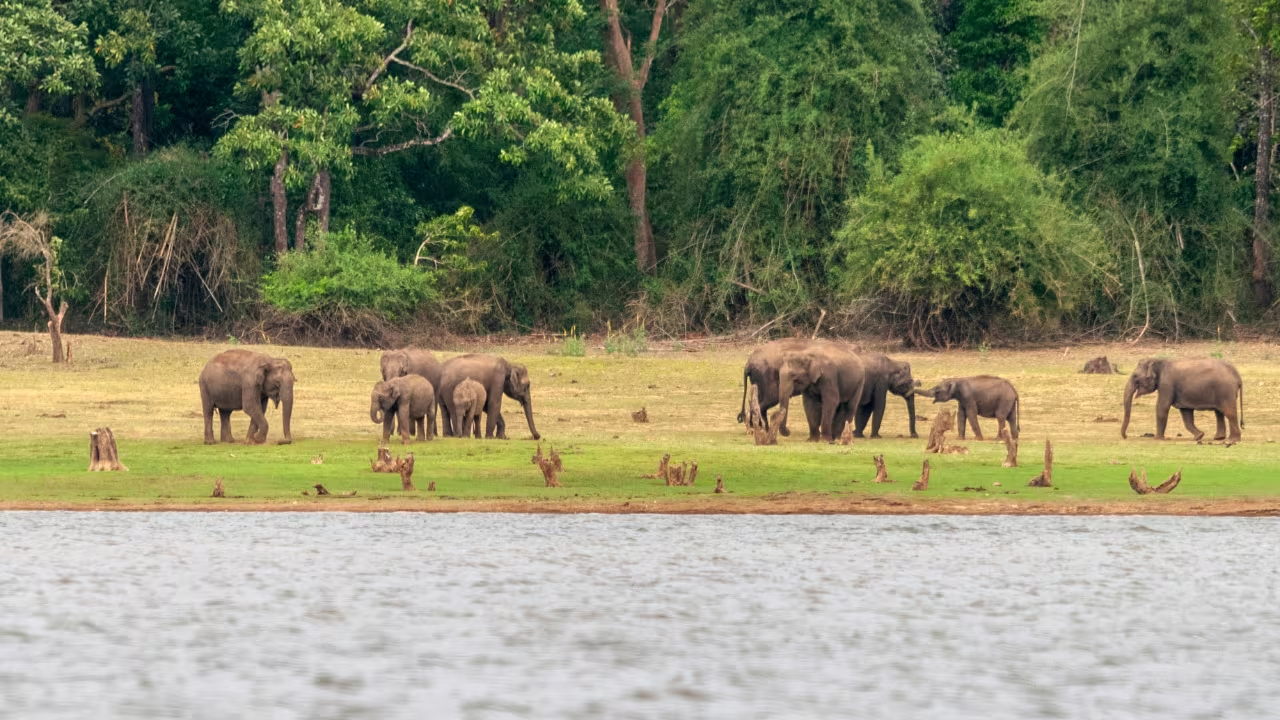
Elephants roaming the lush forests of Nagarhole National Park, showcasing Karnataka’s wild beauty. (Image: Canva)

How to Reach Nagarhole National Park

*By Air: The nearest airport is Mysore Airport, about 95 kilometers away, while Bangalore International Airport (220 km) is a convenient option with well-connected roads.

*By Train: Hop off at Mysore Railway Station, which is well-connected to major cities across India.

*By Road: Nagarhole is easily accessible by road from Coorg (80 km away), with several buses and private vehicles making the journey regularly.

What to Spot Inside Nagarhole National Park
Step into the heart of nature at Nagarhole National Park, where the rich diversity of wildlife thrives in its lush landscapes. Keep your eyes sharp as you embark on a thrilling wildlife experience and look out for:

1. Elephants in Majestic Motion: Graceful Elephants roaming through the dense forests, an awe-inspiring sight that epitomizes the park’s grandeur.

2. Tigers and Leopards in Stealth: The elusive Tigers and Stealthy Leopards, whose silent movements through the shadows make every sighting a rare and unforgettable moment.

3. Indian Bison and Sambar Deer: Majestic Indian Bison (Gaur) and curious Sambar Deer, their imposing presence and calm demeanor adding to the park’s wild charm.

4. Sloth Bears and Wild Dogs: The elusive Sloth Bears, and the intelligent Wild Dogs, whose elusive nature and group dynamics make them exciting to spot.

5. Birdwatcher’s Paradise: A birdwatcher’s haven, with vibrant species like the Indian Peafowl and Malabar Grey Hornbill filling the air with their calls, offering a spectacular birding experience.
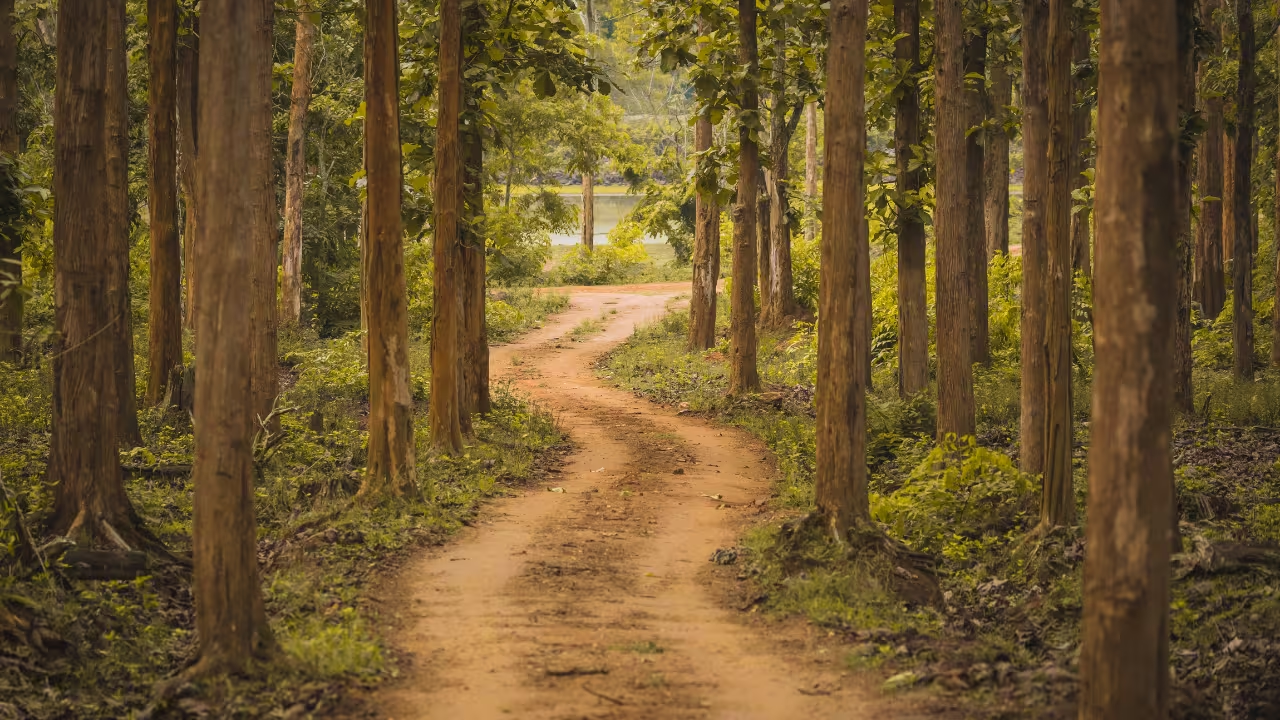
Immerse yourself in the lush greenery of Nagarhole National Park, a haven for nature lovers. (Image: Canva)

The diverse habitats within Nagarhole—from thick forests to open grasslands—create the ideal environment for wildlife, making it a photographer’s dream and a nature lover’s sanctuary. But the adventure doesn’t stop here—once you’ve immersed yourself in the wonders of Nagarhole, there are even more hidden gems nearby that will take your exploration to the next level.

Must-Explore Nearby Attractions
While Nagarhole National Park offers incredible wildlife experiences, there are many more nearby attractions that will elevate your adventure to the next level. Extend your adventure beyond the park with these nearby gems:

1. Kabini River
For a truly immersive experience, take a boat safari along the Kabini River. This peaceful waterway, lined by dense forests, offers glimpses of elephants, crocodiles, and a wide variety of bird species. It’s an intimate way to explore the wildlife of the region and capture unforgettable moments.
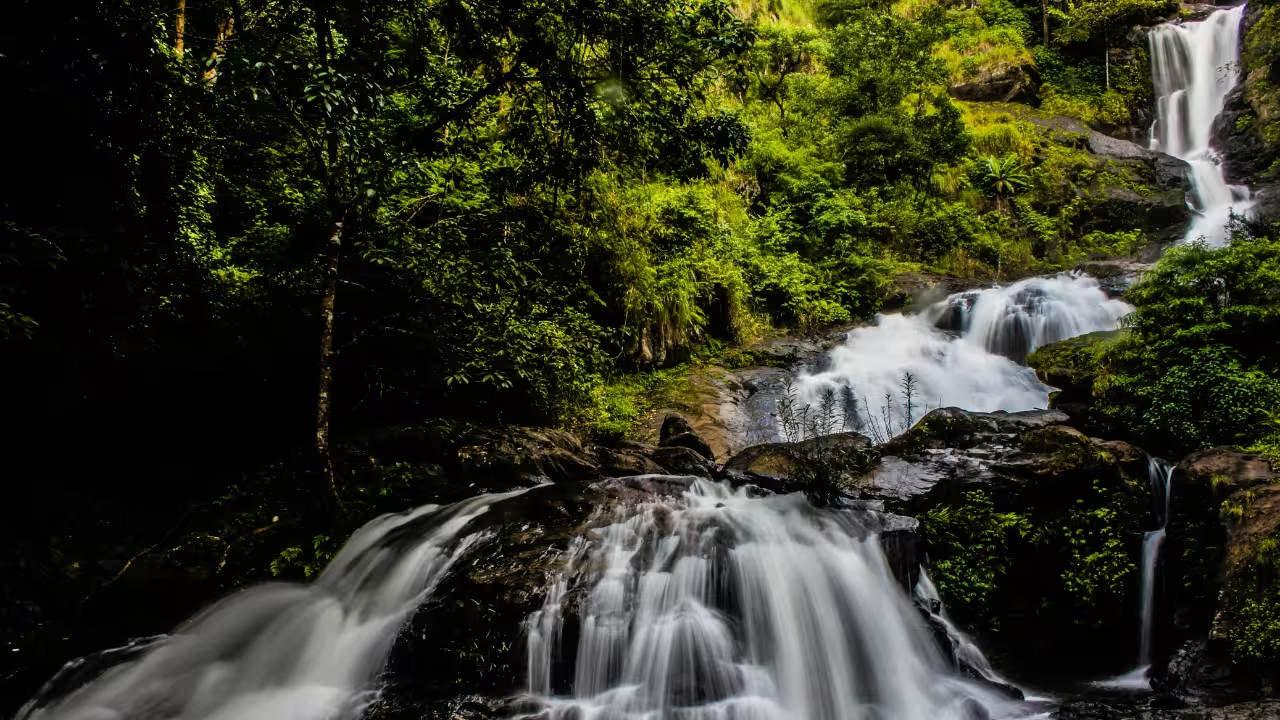
Iruppu Falls (Image: Canva)

2. Iruppu Falls
Situated in the Brahmagiri Range, Iruppu Falls is a stunning waterfall set amidst lush greenery. A popular trekking destination, this picturesque cascade is the perfect spot for a refreshing dip or a peaceful picnic. The journey to the falls is as rewarding as the destination, with breathtaking views along the way.

3. Brahmagiri Wildlife Sanctuary
For a deeper connection with nature, explore the Brahmagiri Wildlife Sanctuary, located near the Coorg and Wayanad borders. Known for its rich flora and fauna, it’s a haven for wildlife enthusiasts and trekkers alike. The sanctuary is home to tigers, leopards, elephants, and a diverse range of birds, making it a great spot for a nature walk or hike.

Whether you’re on a thrilling safari, spotting the ‘big cats’, or simply soaking in the sights and sounds of the jungle, Nagarhole National Park offers an experience that will captivate your heart and soul. Ready to escape into the wild? This park is calling your name.

source: http://www.moneycontrol.com / Money Control / Home> Travel / by Priyanka Roshan / January 09th, 2025
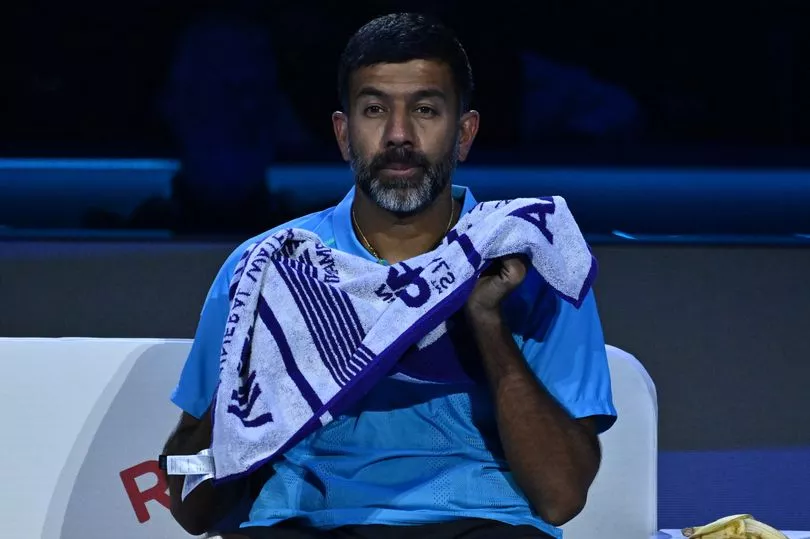
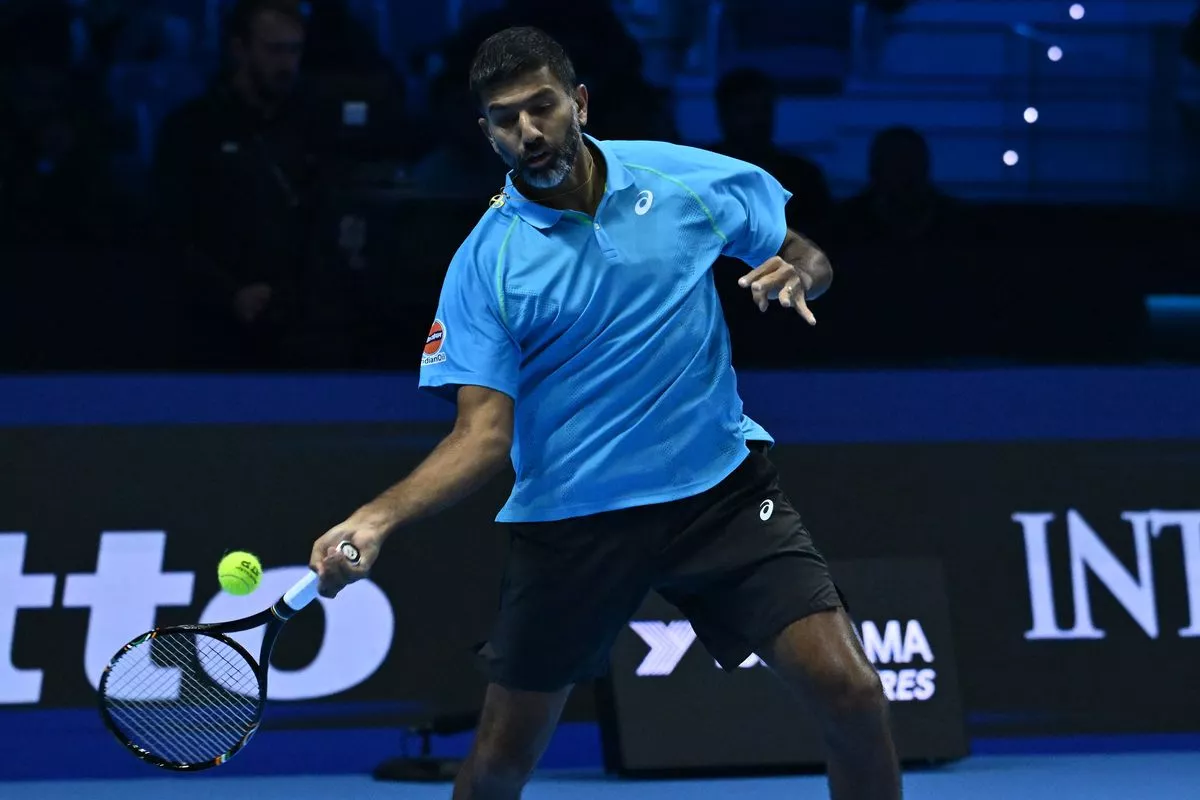
‘I had no cartilage in knees and always took painkillers – but I discovered perfect remedy’

Rohan Bopanna, 44, has enjoyed a glittering career in doubles tennis, winning two Grand Slam titles – but he was forced to consider retirement in 2019 due to having injured knees.

Iyengar Yoga has changed Rohan Bopanna’s life

Tennis pro Rohan Bopanna has opened up about the severe knee issues that almost led him to hang up his racket in 2019 – and the remedy he found to combat the pain.

The Bangalore-born doubles specialist, who boasts an impressive career record of 504 wins against 367 losses, including 26 titles and two Grand Slam victories, faced a major setback when he contemplated retirement due to having no cartilage in his knees.

Bopanna’s career highlights include clinching the mixed doubles title at the French Open in 2017 with Gabriela Dabrowski and securing another Grand Slam win at the 2024 Australian Open with Matthew Ebden. Yet, it was nearly a different story for Bopanna, as he revealed in an interview with Claytenis: “In 2019 I was contemplating retiring because I had no cartilages in my knees. I was in a lot of pain. I wanted to stop at the end of that year.”

He credits a discovery made during the pandemic for his remarkable turnaround, sharing (via Surrey Live): “During the pandemic, actually, I discovered Iyengar Yoga. And this changed my entire journey.

I was having almost two, three painkillers a day because my knees were torturing me so hard. Without being able to play tennis because of the lockdowns I was doing it four times a week, 90-minute sessions. And it really strengthened a lot of my muscles and everything.

“And I went from two, three painkillers a day to no painkillers. From pain to no pain. Because when you have pain as a tennis player, it’s tough. You know, always dealing with that every single day. You don’t want to wake up and be in pain. So now, thanks to Iyengar Yoga and having a good physio to really do a lot of strengthening. It has been incredible.”

Rohan Bopanna considered retiring from tennis in 2019

Iyengar Yoga focuses on detail, precision and alignment and uses longer poses than traditional Hatha Yoga. Meanwhile, props like blocks are often used in the practice, to allow people to adapt to certain poses which may otherwise be difficult in terms of strength and mobility.

Fast forward to 2024, and Bopanna believes that he would best his younger self if they ever met on the court despite his history with injury. Elsewhere in the conversation, he added: “Without a doubt. Experience is so important. I might have had more power, but tennis is not about power. It’s about experience and your mind strength.”

He continued: “I never think of the age, because both of us are there to play tennis in the same tournament. Because even if he’s older than me or younger than me, it makes no difference. Both of us are there to win the match. So I just go there and play my game. I’m not really looking at it as whether he’s young, old, he’s my age, he’s 15 years younger, 20 years younger. It doesn’t matter. Once you cross 18, everybody comes to the real world.”

Rohan Bopanna

Discussing his thoughts on retirement today, Bopanna expressed a desire to keep playing. He said: “As long as I’m enjoying the competition and travel, yeah. Why not? And my family is here in the Grand Slams. My wife is here, my daughter is traveling. I never would have thought my daughter would be watching me play live.

“If I had stopped at 35, this would not have happened. She would have been like, oh, my dad used to play tennis. Today she can say her dad is a tennis player.”

source: http://www.gloucestershirelive.co.uk / Gloucestershire Live / Home> News> Health> Tennis / by Aaron Morris, Sr Sports Reporter & Maria Ortega / January 06th, 2025

A tribute to Nanjamma Chinnappa, chronicler of Kodava heritage

P.T. Bopanna’s book Nanjamma Chinnappa – Chronicler of Coorg Culture looks at how the writer who passed away last year and her husband closely observed and recorded many aspects of the Kodava culture.

P.T. Bopanna | Photo Credit: SPECIAL ARRANGEMENT

The Pattole Palame (Silken Lore), originally compiled by the folklorist Nadikerianda Chinnappa in 1924, is considered a treasure trove of Kodava oral traditions, including songs, rituals, and stories that have been passed down through generations. Originally written in Kodava, it was the late Nanjamma Chinnappa and her late husband Boverianda Chinnappa who translated the work to English in 2003, making this treasured piece of literature accessible for Kodavas as well as others interested in oral literature around the globe.

As the celebrated author passed away in March 2024, writer and journalist P.T. Boppanna is set to release a book honouring her, titled Nanjamma Chinnappa – Chronicler of Coorg Culture. The book is a collage of works of Nanjamma that talks about her setting the image of a quintessential Kodavathi, her work on the architectural heritage of Kodagu, ancestral homes and Coorg cuisine. It is also a personal tribute looking at how the Chinnappa couple guided Bopanna’s journey as an author.

Speaking to The Hindu, Bopanna said that Nanjamma and her late husband worked as a team for various projects and were associated with some of his work too. “The Chinnappas were closely associated with my book and website projects for over 15 years,” he said.  

Book on Nanjamma Chinnappa by P.T. Bopanna. | Photo Credit: SPECIAL ARRANGEMENT

The couple’s journey

“Nanjamma, a statistician of international repute, and her husband Chinnappa, an engineer, left for Cambridge, England, in 1974 where Nanjamma was a visiting fellow of Cambridge University. In 1975, they went to Canada to continue their careers and returned to India in 1995. Their first project after returning from Canada was to translate into English Pattole Palame, a book on Kodava culture, folk songs and traditions, written by their common grandfather Nadikerianda Chinnappa,” he explained.  

Boppanna said that it took Nanjamma and her husband nearly eight years to complete the translation of the book which runs into 700-plus pages and was published in 2003. “The couple will be remembered mainly for their monumental book Ainmanes of Kodagu, on the traditional dwelling places of the original inhabitants of Kodagu. The Chinnappas believed that Ainmanes (house of elders/ancestral home) and their surroundings were sacred heritage sites that need to be preserved for future generations,” he said.

The Chinnappas are said to have visited close to 700 traditional and functional Ainmanes belonging to all communities in Kodagu and clicked 1,500 photographs during their field-work which took them five years. The book was published in 2014. “The couple also put together a website www.ainmanes.com that contains detailed information and photographs of each Ainmane visited, including oral narratives related to the Okka (clan) to whom the Ainmane belongs,” explained Boppanna. 

A personal connect

The couple took a lot of interest in Boppanna’s own work on Kodava heritage and guided him in many ways, he said. “The Chinnappas were associated with my book and website projects since around 2007. They had gone through the manuscript of all my nine books, including my last book Round and About with P.T. Bopanna, published in 2022. They checked my books for grammatical and factual errors and offered suggestions for improving the content. Initially, I used to visit their home in Bengaluru. After they shifted to Mysuru a few years ago we exchanged emails and messages. They wrote the foreword for my book Are Kodavas (Coorgs) Hindus? They also wrote the afterword for my book My Coorg Chronicle,” he explained. 

Boppanna said that one of the highlights of this book is the interview of Nanjamma by Dr. Nervanda Veena Poonacha, an eminent sociologist and women’s studies scholar. Veena had spoken to Nanjamma on the latter’s life journey. The foreword for the book has been penned by Dr. Sowmya Dechamma C.C., Professor, Centre for Comparative Literature, University of Hyderabad.  

In the foreword of the book, Dechamma says that those who are even slightly familiar with the Kodavas of Kodagu and their increased awareness of Kodava language, culture and identity politics in the last three decades or so, would have definitely come across Nanjamma Chinnappa, her work and her ideas.

Context of their work

“On 31st March 2024, Nanjamma left us, leaving a void in the Kodava world. If an earlier generation of Kodava writers and intellectuals like Pandyanda Belliappa, I.M. Muthanna, B.D. Ganapathy, set a foundation for a discourse about the different identities of the Kodava, it was around a time when limitations of literacy and media restricted access to their work and discussions around them. The times in which Nanjamma and her husband and collaborator in her work, Chinnappa, began researching, writing and translating on the Kodavas, their work began appearing during a period of immense growth in media, combined with changes in the larger socio-economic scenario that had bearings on identity politics of the 1990s and thereafter. The opening up of the economy and large-scale migration of the Kodavas into urban centres along with an awareness of a distinct Kodava identity was the context in which Nanjamma and Chinnappa’s works were received,” she says in the foreword. 

What Dechamma finds of immense significance in this volume is the interview of Nanjamma by Veena Poonacha that charts Nanjamma’s life and work. “Her review of works by Nanjamma and Chinnappa are equally valuable. Bringing together in one place the reflections and works by Nanjamma and Chinnappa is one of the best tributes possible to the life and work they were part of. Their effort in spreading indigenous knowledge associated with Kodavas and Kodagu needs us to take their work further,” she says.

Priced at ₹195, the book  Nanjamma Chinnappa – Chronicler of Coorg Culture is published by Prism Books Pvt. Ltd,. and is available for purchase on online stores such as Amazon and Flipkart.   

source: http://www.thehindu.com / The Hindu / Home> News> Cities> Bengaluru / by Yemen S / January 03rd, 2024

Karnataka High Court orders forest dept to refund Rs 4.33 lakh to Kodagu landowner 

Justice Suraj Govindaraj ruled that the state cannot exploit a mistake made by a citizen in categorising the land as ‘sagu bane land’ when it was, in fact, alienated ‘sagu bane land’, and retain the deposited amount.

Representative image showing a forest./ Credit: DH Photo

Bengaluru:

The Karnataka High Court has directed the Forest Department to refund Rs 4.33 lakh, along with 6 per cent interest, to the legal heirs of a Kodagu landowner, Mahabaleshwar Bhat, who had deposited the amount in 1982.

Justice Suraj Govindaraj ruled that the state cannot exploit a mistake made by a citizen in categorising the land as ‘sagu bane land’ when it was, in fact, alienated ‘sagu bane land’, and retain the deposited amount.

Bhat, who owned 38.5 acres in Biligeri Village, Madikeri taluk, Kodagu district, had received permission on February 1, 1983, to cut 349 trees on the property. He subsequently paid Rs 4,33,082, the assessed value of the trees. However, he later realised that the land had been classified as alienated ‘sagu bane land’ since 1897, making the payment unnecessary.

Bhat requested a refund from the authorities, but his plea was rejected by the Forest Department on April 25, 2012, citing the Karnataka Land Revenue Act, 1964, as grounds for denial. After the department’s appellate authority also dismissed his appeal, Bhat moved the high court.

During the pendency of the case, Bhat passed away and his legal representatives were substituted as petitioners in 2023. The court found that the Forest Department failed in its duty to verify the land’s classification.

“In fact, it was for the assistant and chief conservator of forest to verify these from the records concerned and not go by the statement made by the petitioner himself. Whenever any application is filed by any person claiming permission to cut trees, there is a duty imposed on the authority granting such permission to verify the details. If at all the details had been verified, it would have been clear that the land in question is alienated ‘sagu bane land’ and not un-alienated ‘sagu bane land’.

This aspect has been made clear by the deputy commissioner in his order dated March 29, 2010,” Justice Suraj Govindaraj said.

source: http://www.deccanherald.com / Deccan Herald / Home> India> Karnataka / by Subarna Mukherjee , DH Web Desk / January 03rd, 2025

Coffee Board to launch India’s own certification process

It will be a welcome relief for coffee growers as they are currently bound by international standards.

The certification process involves checking if coffee producers follow guidelines that focus on quality, the environment, and social practices.(Representative image)

Bengaluru :

In a first, the Coffee Board is set to introduce India’s own coffee standards and certification process to recognise the country’s unique coffee varieties.

Coffee standards are rules set to ensure that the produce is grown, processed, and sold in a way that is consistent, of good quality, and enjoyable to drink. These standards cover everything from how coffee is grown and harvested to how it is processed and packed and evaluated for taste and aroma. The certification process involves checking if coffee producers follow guidelines that focus on quality, the environment, and social practices.

Till now, Indian growers were bound by international standards that did not account for the unique conditions in which their coffee thrives, such as cultivation under two-tier thick tree shade.

The board has introduced this plan in response to the high costs of certification, which have hindered many growers from showcasing their coffee internationally. With nearly 85% of Indian coffee remaining uncertified due to lakhs of rupees in costs for international certification, the new Indian standards will come as a welcome relief as certification will now be free, offering a significant opportunity for growers.

Dr KG Jagadeesha, secretary and CEO of the Coffee Board of India, told TNIE that the process is currently in its first stage and aims to position Indian coffee as a unique product with its own distinct identity. “Until now, most coffee varieties have been certified under international standards, which group all types of coffee together under the same conditions. However, Indian coffee is grown in special conditions.

This certification process will recognise and highlight these unique growing conditions, helping Indian coffee stand out and gain its own global recognition,” he said.

Dr Jagadeesha said the cost of certifying, as per international standards even for a small five-acre estate, can range from Rs 3-4 lakh, while board’s certification will be of zero-cost. Growers have to meet strict requirements, filling in various gaps to ensure that their plantations are sustainable.

While experts and a technical core team have finished developing documents, industry professionals are currently drafting the implementation modules, which will be completed in four months, Dr Jagadeesha said.

After this, the technical team will hold consultations with stakeholders and innovative growers to assess whether the procedures are feasible. The process will involve meeting several parameters. Once the estate meets the requirements, an external inspector will visit them for a final assessment.

source: http://www.newindianexpress.com / The New Indian Express / Home> Bengaluru / by Rishita Khanna / January 03rd, 2024

Karnataka welcomes new Sterling Brookstone Coorg 

Thomas Cook (India) subsidiary, Sterling Holiday Resorts, has expanded its presence in Karnataka with the launch of Sterling Brookstone Coorg. Located near Madikeri in the Western Ghats, the new property provides villa and cottage-style accommodations, combining modern conveniences with natural beauty.

Sterling Brookstone, a resort in Coorg, offers an array of amenities such as a swimming pool, banquet facilities, and an on-site restaurant. The Planter’s Kitchen caters to all palates, serving both local Kodagu delicacies and international cuisine. The resort also offers easy access to local attractions including Abbey Falls, Madikeri Fort, and Dubare Elephant Camp, positioning it as a perfect destination for leisure travelers.

Sterling Holiday Resorts, which manages over 3,000 keys across 57 resorts, hotels, and retreats in 48 Indian destinations, recently acquired a new property that aligns with its vision of providing memorable experiences at key tourist spots. The company, owned by Fairfax Financial Holdings, operates under two brands – Sterling and Nature Trails, serving various segments including leisure travel, Meetings, Incentives, Conferences, and Exhibitions (MICE), destination weddings, and group tourism. The acquisition of the new property is seen as a significant step in expanding Sterling’s footprint in India’s tourism sector.

Sterling Holiday Resorts has expanded its portfolio with the addition of a new resort in Coorg, demonstrating its commitment to providing exceptional hospitality experiences.

source: http://www.constructionweekonline.in / Construction Week / Home> Projects & Tenders / by Staff Writer / January 04th, 2024

High Court faults forest authorities for refusing to refund amount deposited by land owner while seeking permission to cut trees 

It is the duty of the forest authorities to verify official records before allowing applications seeking permission to cut trees, the High Court of Karnataka has said, while finding fault with the authorities for refusing to refund the amount deposited by a land owner by mistake, though he was not required to deposit it while seeking permission to cut trees on his land.

Justice Suraj Govindaraj passed the order while allowing a petition filed by N. Mahabaleshwara Bhat, a resident of Biligeri village in Madikeri taluk of Kodagu district.

The petitioner, who died during the pendency of petition filed in 2016, deposited ₹4.33 lakh with the forest authorities to seek permission to cut several trees on his Sagu Bane land.

However, he realised later that his was alienated Sagu Bane land for which there was no need to deposit money, and hence he requested the authorities to refund the deposited amount. But the forest authorities rejected his request, stating that he himself had described his land as Sagu Bane land in his application.

Negating the contention of the authorities, the court said that it was for the Assistant Conservator of Forest and the Chief Conservator of Forest to verify nature of the land from the records and not to go by the statement made in the application.

If at all the details of the land had been verified by the forest authorities, it would have been clear that the land in question was alienated Sagu Bane land as this aspect was made clear by the Deputy Commissioner in his order passed in 2010, the court said, while stating that there was a duty imposed on the authority to very the records before granting such permissions.

source: http://www.thehindu.com / The Hindu / Home> News> India> Karnataka / by The Hindu Bureau / January 03rd, 2024

Rathi Vinay Jha chosen as Coorg Person of the year 2024

Retired IAS officer, Rathi Vinay Jha, has been selected as Coorg Person of the Year 2024 in a poll conducted by a news and tourism portal, www.coorgtourisminfo.com.

With her roots in Kodagu district in Karnataka, Ms. Rathi Vinay Jha, a former Union Tourism Secretary, had initiated several projects to “conserve Kodava culture and the martial traditions of the comunity, known for its contributions to the nation in the areas of defence and sports,” author P.T. Bopanna, who runs the portal pointed out.

He said Ms. Rathi was instrumental in setting up the virtual museum of Kodava heritage and culture, the project known as Sandooka — a treasure trove of information.

“The virtual museum is an interactive online space, brought together through material contributed by the Kodava community. Sandooka will be a living museum of Kodava culture and will be useful for future generations of Kodavas.”

“It was at the instance of Ms. Rathi, a model of Kodava ainmane (ancestral house) was inaugurated this October in Dakshinachitra Museum near Chennai,” Mr. Bopanna said.

Dakshinachitra is home to 18 traditional houses that depict the unique culture of South India. The ainmane project involved dismantling a structure built in 1852 in Kodagu and was transported to Dakshinachitra Museum, said Mr. Bopanna.

source: http://www.thehindu.com / The Hindu / Home> News> India> Karnataka / by The Hindu Bureau / January 01st, 2025

16th Isha Gramotsava: Kodagu women’s team champion in throwball, Chikkamagaluru men’s win volleyball

Coimbatore: 

Kanthur Friends team from Murnad (Maragodu) in Kodagu from Karnataka emerged victorious in the women’s throwball championship by defeating P G Pudur team from Coimbatore in straight sets.

Meanwhile, Alif Star team from Chikkamagaluru (seen in picture below) defeated Palli Friends team from Udupi in the men’s volleyball match in a thrilling contest.

The grand finale was held in the presence of the 112-foot-tall Adiyogi at the Isha Yoga Center in Coimbatore. The winning teams won a cash prize of ₹5 lakh, bringing the event to a grand close.

Along with Sadhguru, cricket legends Virender Sehwag and Venkatesh Prasad graced the historic occasion. Thousands of spectators from India and abroad came to watch the event.

Isha Gramotsava is a two-month sports festival held across the South Indian states of Karnataka, Andhra Pradesh, Telangana, Kerala, Tamil Nadu and the Union Territory of Puducherry.

Held in over 162 rural areas, the festival saw the participation of over 43,000 players.

More than 10,000 of them were rural women, most of whom were housewives – volleyball and throwball Participated in matches.

Started by Sadhguru in 2004, Isha Gramotsava aims to bring sports and the spirit of play into the lives of rural communities.

Apart from professional players, the festival provides a platform for ordinary rural people, including daily wage workers, fishermen and housewives, to step away from their daily activities and experience the celebration and unifying power of sports.

source: http://www.mysoorunews.com / Mysooru News / Home> General / by Mysooru News Desk / January 01st, 2025