Monthly Archives: June 2026
KAAPI LEKKA (kaapilekka.com) – For the FIRST-TIME a user-friendly FREE App (kaapilekka.com) has been created in both Kannada and English. Exclusively for the benefit of Coffee Planters of Kodagu by a native-generational Kodagu Planter (2)
by Abdul-Aleem
This Free and easily accessible new product is being introduced for the First time in Kodagu (Coorg) District, Karnataka .
Karnataka produces over 70% of India’s coffee and Kodagu accounts for roughly 50% of the state’s production.
For ease of the reader/user, the following information is divided into 3 (three) parts.
First a simple profile and easy to understand communication on the new App www.kaapilekka.com. Second a brief interview with the App creator, to better understand the App www.kaapilekka.com. Thirdly thumbnail notes on the Ammathi (Virajpet District) Kodagu native ,whose idea it was to benefit the planters of Kodagu with FREE access.
Part 01 (One)
About Kaapi Lekkkaa (www.kaapilekka.com)
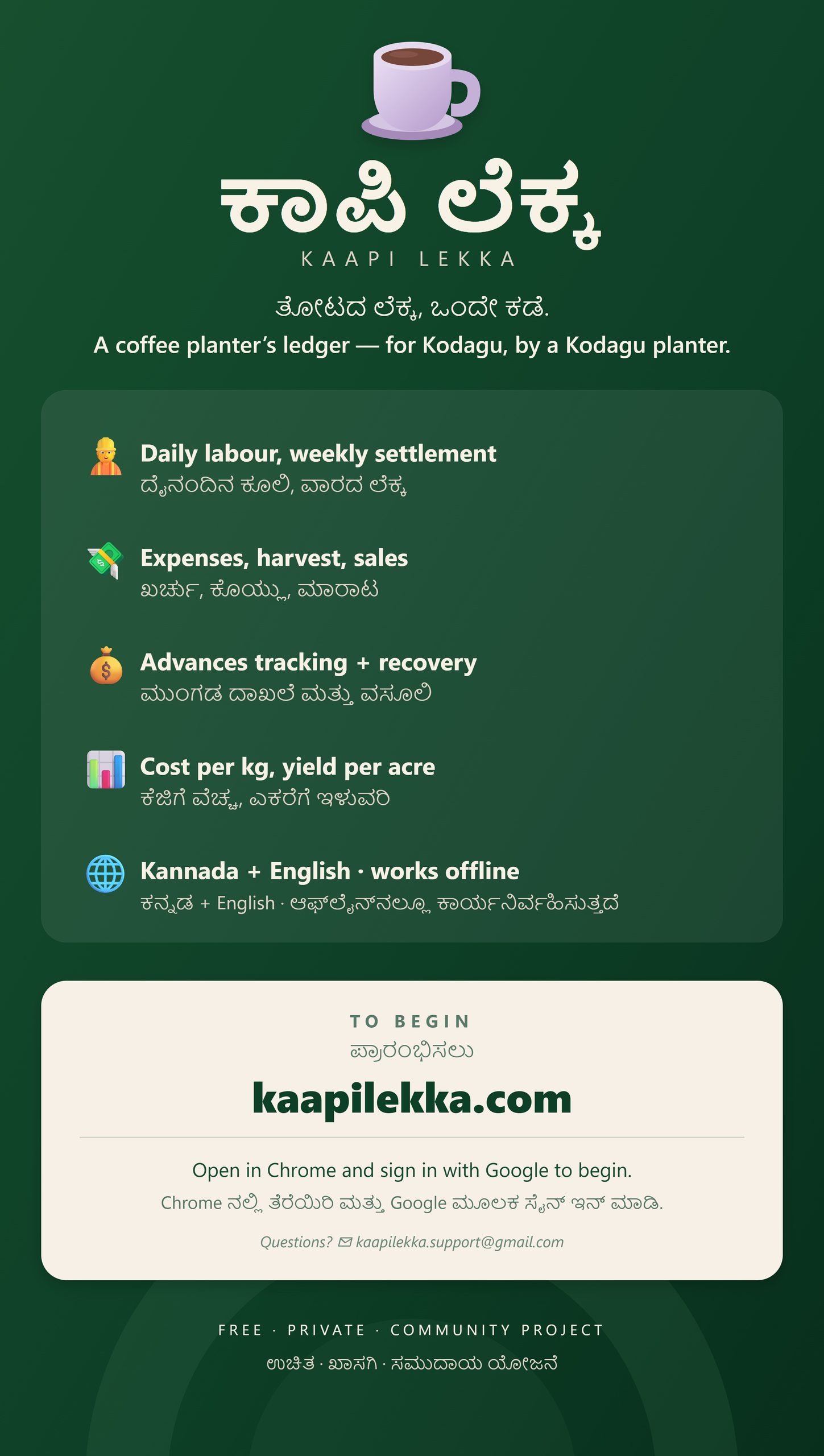
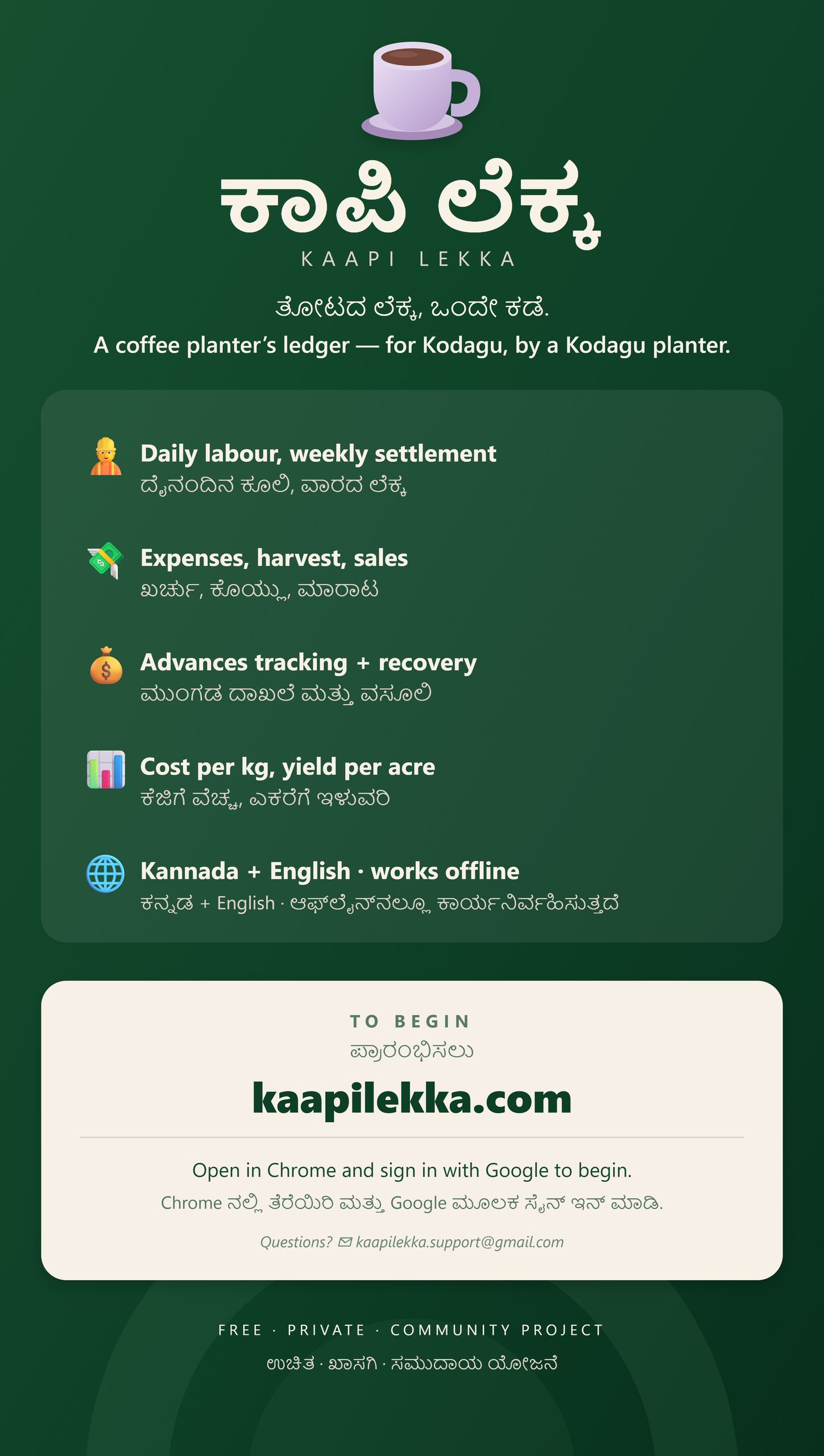
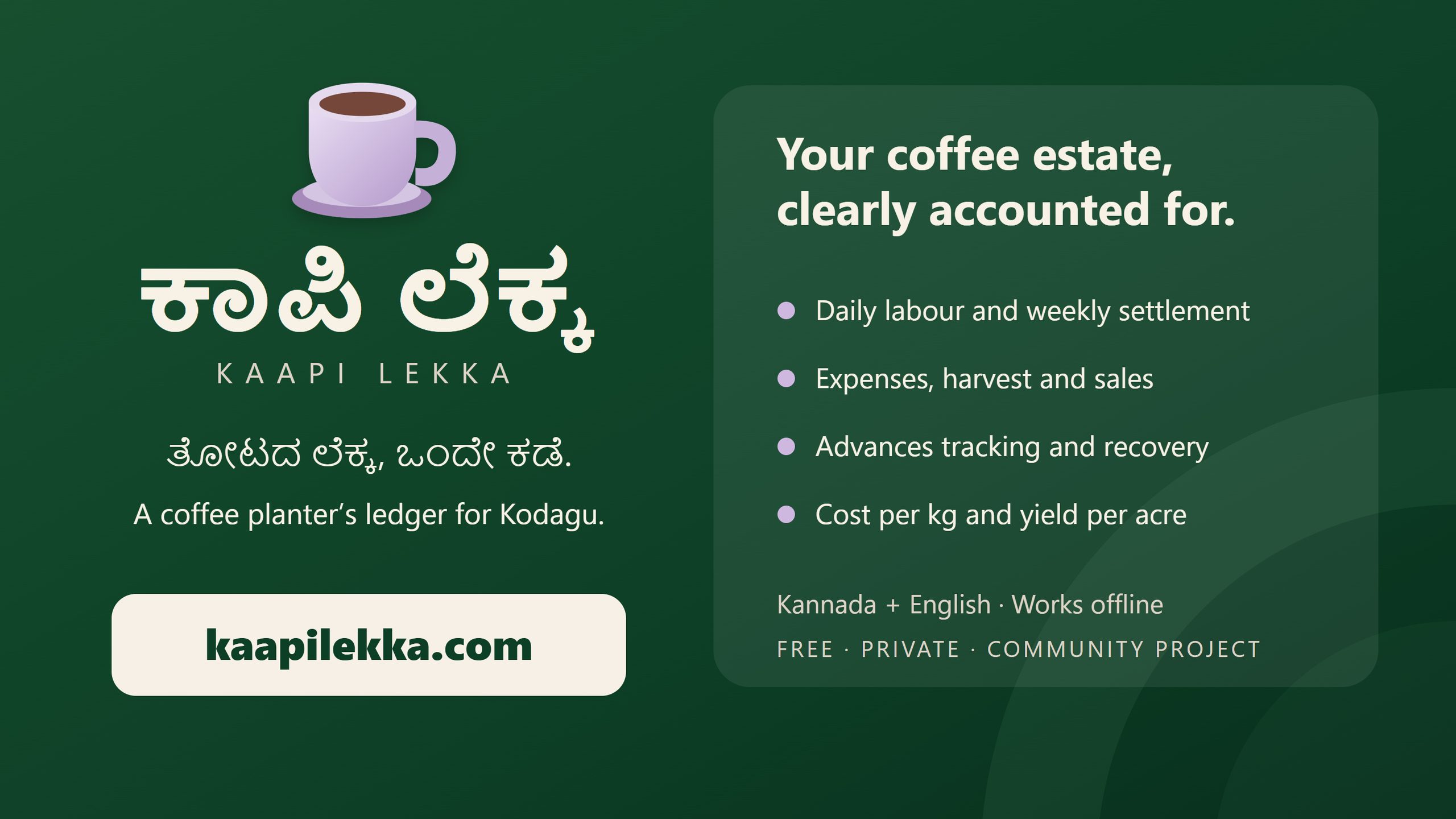
A free digital ledger built for Kodagu coffee planters
In one sentence Kaapi Lekka helps a coffee planter keep labour, advances, expenses, harvest and sales in one private ledger, so the year’s real cost and cost per kilogram become easier to understand.
From one estate ledger to a community tool
Seventeen workers turn up today. Four have advances. One worked a half-day. The brush cutter needs maintenance. Fertilizer must be paid for. Pepper is harvested and coffee goes for curing.
A coffee year advances through hundreds of such entries – each ordinary on its own, but difficult to reconstruct later.
Most planters keep records, but those records are often split between a labour book, diary, spreadsheet, messages and memory.
By the end of the year, one practical question can be surprisingly hard to answer:
what did the year really cost, and what did each kilogram of clean coffee return?
Kaapi Lekka began as a personal estate ledger built to answer that question. It was not conceived as a startup or a commercial accounting package.
The aim was simpler: keep the everyday plantation record in one place and make the running picture of the estate easier to see.
Once the tool proved useful in day-to-day estate work, it was opened to fellow planters as a free community project.
Built around the way an estate actually works
Kaapi Lekka is designed around routine estate decisions rather than formal accounting terminology. It keeps people and payments, estate activity and the running financial picture connected without asking a planter to learn a conventional accounting system.
a. People and payments — daily labour by worker, block and work type; reusable wage rates; receiver grouping; and visible advances and settlements.
b. Estate activity and costs — expenses such as fertilizer, spray and transport, together with harvest and sales recorded as the season progresses.
c. The running picture — a dashboard that brings cost, output, settlements and cost per kilogram together for review.
Especially useful for small and medium planters
Large estates often have established systems, dedicated staff or people assigned to accounts. On a smaller or family-run holding, the planter may be the owner, supervisor, record keeper, buyer and seller at once.
Important information can remain scattered simply because there is no separate person available to organise it.
Kaapi Lekka is intended especially for that situation: discipline without complicated paperwork, and a clearer view of labour, advances, expenses, harvest, sales and profitability while the season is still in progress. It supports the planter’s judgement rather than trying to replace it.
A simpler first-time experience
The current sign-in experience is direct. A new user visits kaapilekka.com, chooses English or Kannada, signs in with a Google account and can start immediately. There is no access request form and no waiting period for manual approval.
A short guided setup then helps the user name the estate, add the first block, optionally add a worker, and optionally record a first activity such as a workday, expense, harvest or sale. The Home screen keeps a simple getting-started checklist so the user can return to unfinished steps later.
Designed for phones, field conditions and local use
Kaapi Lekka works in a web browser on Android phones, iPhones and laptops, and it can be added to a phone’s home screen like an app. The interface is available in English and Kannada. It uses large, direct actions and a guided setup intended to reduce the learning burden for users who do not work with conventional accounting software.
Connectivity on estates is not always reliable. After a successful online sign-in and load, the app can cache work on the device while offline and resume synchronization when connectivity returns. The screen shows whether entries are saved, queued or synchronized so that a planter is not left guessing.
FREE-to-Use & privacy-conscious
Kaapi Lekka is currently offered free of charge as a community project. The Kaapi Lekka Team bears the hosting and maintenance costs and intends to continue doing so in support of the community.
The service has no advertisements, paid tier or sale of planter data. The application uses Google sign-in, Firebase Authentication and Firestore. Security rules separate each signed-in member’s ledger from other members, while the member can use the same Google account across devices.
The current public experience is August 28th, 2026
For more information : contact the Kaapi Lekka Team : email:kaapilekka.support@gmail.com
_____________________________________________
Part 02
An INTERVIEW with the idea and product creator of www.kaapilekka.com – Makeen Khan
” Kaapi Lekka applies the discipline and clarity I learned in large organisations to a very practical problem at home. The aim is not to replace a planter’s judgement, but to make the year’s real costs easier to understand. “ says Makeen
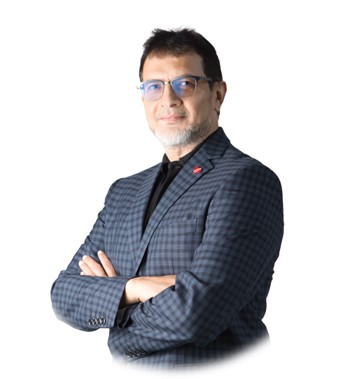
Makeen Khan – Founder, Creator & Project Stewart – KAAPI LEKKA – kaapilekka.com
Interview in Q & A format to address specific issues, one-by-one :
1. What specific problem prompted you to build Kaapi Lekka?
The immediate problem was fragmented estate record-keeping. Labour might be in one notebook, advances in another, expenses in messages or bills, and harvest and sales in separate sheets. That makes it difficult to know the estate’s true running cost or cost per kilogram of clean coffee. Kaapi Lekka began as a practical ledger for one estate and was later opened to other Kodagu planters.
2. How did you validate that a digital app was the right solution?
The first validation came from actual use on the creator’s own estate. The test was not whether it looked modern, but whether it reduced reconstruction at the end of the season and made everyday figures easier to retrieve. A phone-based ledger was useful because the phone is already present when labour, payments and field activity are being recorded. The project is still learning from real use; it does not claim a formal market study.
3. Were local growers or cooperatives involved in design and testing?
The product grew from a planter’s own workflow and early informal feedback from a small number of Kodagu planters, rather than from a formal cooperative-led design programme. That feedback reinforced the need for simplicity, local terminology, clear payment handling and a low-friction first-time experience. Wider planter feedback is now important, but we prefer to describe that process honestly rather than overstate the scale of testing.
4. How does the app handle weak connectivity and synchronization?
After a successful online sign-in and load, the app uses local browser storage and Firestore offline persistence to keep entries available when signal drops. Pending changes synchronize when connectivity returns, and the interface shows whether data is saving, queued offline or synchronized. An internet connection is still needed for the initial Google sign-in and first load.
5. How did you address language and accessibility for non-technical users?
The interface currently supports English and Kannada. A new user chooses a language before sign-in and can change it later. The app uses a guided first-time setup, direct action labels, large tap targets, helpful empty screens and an always-available quick-add action. Kodava Takk is not currently supported, so we would not claim that it is.
6. What technology stack keeps the app affordable enough to remain free?
Kaapi Lekka is a lightweight progressive web app built with web technologies and hosted through Firebase. Google sign-in handles authentication, Firestore stores and synchronizes data, and the app can be installed from the browser without an app-store distribution layer. This serverless approach keeps infrastructure and operational complexity low for a small community project.
7. What metrics are you tracking to measure real-world impact on yield or income?
We do not currently claim a measured improvement in yield or income. The first useful indicators are simpler: whether a member completes setup, returns to the ledger, records activity consistently and can use the resulting cost and settlement information. Administrative monitoring is deliberately limited to activation signals rather than private ledger values. Any future impact study should rely on voluntary, consented feedback rather than inspection of members’ financial records.
8. Since the app is free, how will it remain sustainable?
Kaapi Lekka is maintained as a small community project, and its serverless architecture keeps operating costs modest. The Kaapi Lekka Team currently bears the hosting and maintenance costs and intends to continue doing so in support of the community. No paid tier is planned; the intention is for Kaapi Lekka to remain free and ad-free, without selling planter data.
9. How do you protect privacy and prevent commercial exploitation of planter data?
Members sign in with Google, and Firestore security rules separate each member’s ledger from other members. Data synchronizes only for the signed-in account, and users can export a JSON backup of their own records. Kaapi Lekka does not sell planter data or use it for advertising. Support and activation monitoring are designed around account and onboarding information, not the member’s detailed labour, expense, harvest or sales values.
10. Does Kaapi Lekka address white stem borer, monsoon variation or other local crop challenges?
Kaapi Lekka is not an agronomy or pest-diagnosis app. It does not predict weather or prescribe treatment. What it can do is help a planter record the labour, inputs, dates, blocks and costs associated with estate work. For example, spray-related labour can be recorded against a block and the related expense recorded by date and category, creating a clearer history to discuss with a qualified agronomist. Specialist crop advice should continue to come from qualified agronomists and local institutions.
11. Will the app expand to Chikmagalur, Wayanad or crops such as pepper?
The present focus is Kodagu coffee estates. The ledger can already accommodate mixed-estate activity and planter-defined work or expense categories, but the product has not announced a broader regional rollout. Expansion should happen only if the current Kodagu experience remains simple and dependable and if growers elsewhere confirm that the workflow fits their needs.
Important and Beneficial Facts of kaapilekka.com for the Users:
- Kaapi Lekka is a free, ad-free community ledger for Kodagu coffee planters.
- It covers labour, workers, advances, expenses, harvest, sales and cost-per-kilogram reporting.
- The current interface supports English and Kannada.
- New users can sign in with Google and start immediately; there is no request form or approval wait.
- The app can be added to a phone’s home screen and can queue entries during poor connectivity after an initial online sign-in/load.
Important technical ‘Qualifications ‘ to the Users :
- Proven yield or income gains — no formal impact study has yet established this.
- The app can be added to a phone’s home screen and can queue entries during poor connectivity after an initial online sign-in/load.
- Proven yield or income gains — no formal impact study has yet established this.
- Agronomy advice — the app records estate activity but does not diagnose pests or recommend treatment.
- Always works offline — the initial Google sign-in and first load need connectivity; offline work follows a successful online load.
- Gmail-level security — say that the app uses Firebase Authentication, Firestore and per-user security rules instead.
- Formal cooperative validation — describe the present evidence as own-estate use and early informal feedback from a small number of Kodagu planters.
- Website: kaapilekka.com
- Support contact: kaapilekka.support@gmail.com
_____________________________________
Part 03 (Three)
THUMBNAIL BRIEF on Makeen Khan – the Creator, Founder and Project Stewart of App – Kaapi Lekka
(Notes: Here we can show the picture of the App in English or a different app angle)
Makeen’s roots are in Ammathi, Kodagu, where his family has been landholders for generations. After a long international career in technology and digital transformation, he returned to Coorg following his retirement from Coca-Cola and brought that experience back to a practical challenge at home: helping planters understand the true running picture of their estates.
Professional journey
Across more than four decades in technology, Makeen worked on enterprise systems, data and analytics, cloud technology, cybersecurity, automation and large-scale digital transformation. He spent nearly three decades with Coca-Cola and served as Chief Information Officer. His leadership responsibilities extended across the Middle East and South West Asia, bringing together technology, people and business priorities across different countries and cultures.
He is currently Senior Vice President at eBest Mobile, where he contributes to the company’s growth. His professional background is relevant to Kaapi Lekka not because the project is intended to become a large commercial platform, but because it brings disciplined systems thinking to a familiar local problem.
From Ammathi roots to Kaapi Lekka
After returning to Coorg, Makeen saw how estate information could remain divided between labour books, diaries, messages, bills, spreadsheets and memory. Kaapi Lekka began as a personal estate ledger to connect labour, advances, expenses, harvest and sales in one place and make the cost per kilogram easier to understand. Once the approach proved useful in everyday estate work, it was opened to fellow Kodagu planters as a free community project.
Makeen currently bears the hosting and maintenance costs and intends to continue supporting the service for the community. Kaapi Lekka has no advertisements, paid tier or sale of planter data. The public support channel remains Kaapi Lekka Support, allowing the project to be accountable without exposing personal contact information.
At a glance
- Roots: Ammathi, Kodagu; from a family of landholders across generations.
- Career: More than four decades in technology and digital transformation; former Coca-Cola Chief Information Officer.
- Current role: Senior Vice President at eBest Mobile, supporting the company’s growth.
- Community work: Founder and project steward of Kaapi Lekka, built by a Kodagu planter for fellow planters.
For more detailed information: Website: kaapilekka.com
Support contact: kaapilekka.support@gmail.com
Disclaimer :
Editorial use: Name and the biographical facts in this approved profile may be used with agreed coverage. Personal phone, personal email, home or exact estate location, relatives’ identities, and any photograph require separate approval. Coca-Cola and eBest Mobile are biographical references only and do not imply organisational endorsement of Kaapi Lekka.
(Abdul-Aleem the interviewer, is the founder/creator of the News Aggregators www.karnatakafirst.com (also available on Whats Ap) and www.kodagufirst.in amongst others.He maybe contacted at : aleem.ilmcity@gmail.com).
12
₹22-crore CRF boost for Kodagu’s road infrastructure
Three key highways in the hill district to get upgrade

Mysuru-Kodagu MP Yaduveer Krishnadatta Chamaraja Wadiyar
In a major boost to road infrastructure in tourism-dependent Kodagu district, the Centre has sanctioned ₹22 crore under the Central Road and Infrastructure Fund (CRF) for the development of three key State highways.
Announcing the allocation on Wednesday, Mysuru-Kodagu MP Yaduveer Krishnadatta Chamaraja Wadiyar said the funding would improve connectivity across important stretches in Somwarpet, Madikeri and Virajpet taluks, benefiting residents, farmers, students, businesses and tourists.
Mr. Wadiyar thanked Union Minister for Road Transport and Highways Nitin Gadkari and the Government of India for responding to Kodagu’s long-pending infrastructure requirements.
Of the total allocation, ₹10 crore has been earmarked for the improvement of selected stretches of the Madikeri-Kutta State Highway (SH-89). Another ₹6 crore has been sanctioned for the development of the Kodlipet-Hebbale Road (SH-244) in Somwarpet taluk, while ₹6 crore will be used to upgrade portions of the Talacauvery Road (SH-90) in Virajpet taluk.
According to the sanctioned proposal, works on SH-244 will cover selected stretches between 16.70 km and 30.00 km, connecting Gopalapura, Banavara Hebbale, Mullur and Malambi villages. On SH-89, improvements will be undertaken along different stretches. The Talacauvery Road project will cover selected portions between 51.00 km and 61.00 km.
Mr. Wadiyar said the projects would improve road safety and travel comfort and increase transport efficiency across the district. Better road infrastructure would also support tourism, facilitate the movement of agricultural produce and strengthen local economic activity, he added.
In the recent years, there was a growing demand from the people for improved road connectivity in Kodagu, one of Karnataka’s premier tourist destinations and a major producer of coffee and spices. The Central funding is expected to upgrade several road stretches that have long awaited improvement.
Mr. Wadiyar reiterated his commitment to securing additional infrastructure investments for the Mysuru-Kodagu constituency and added that efforts would continue to bring more development projects to the region.
source: http://www.thehindu.com / The Hindu / Home> News> India> Karnataka / by The Hindu Bureau / June 10th, 2026
Journalists are the eyes and ears of society: Edikeri Prasanna
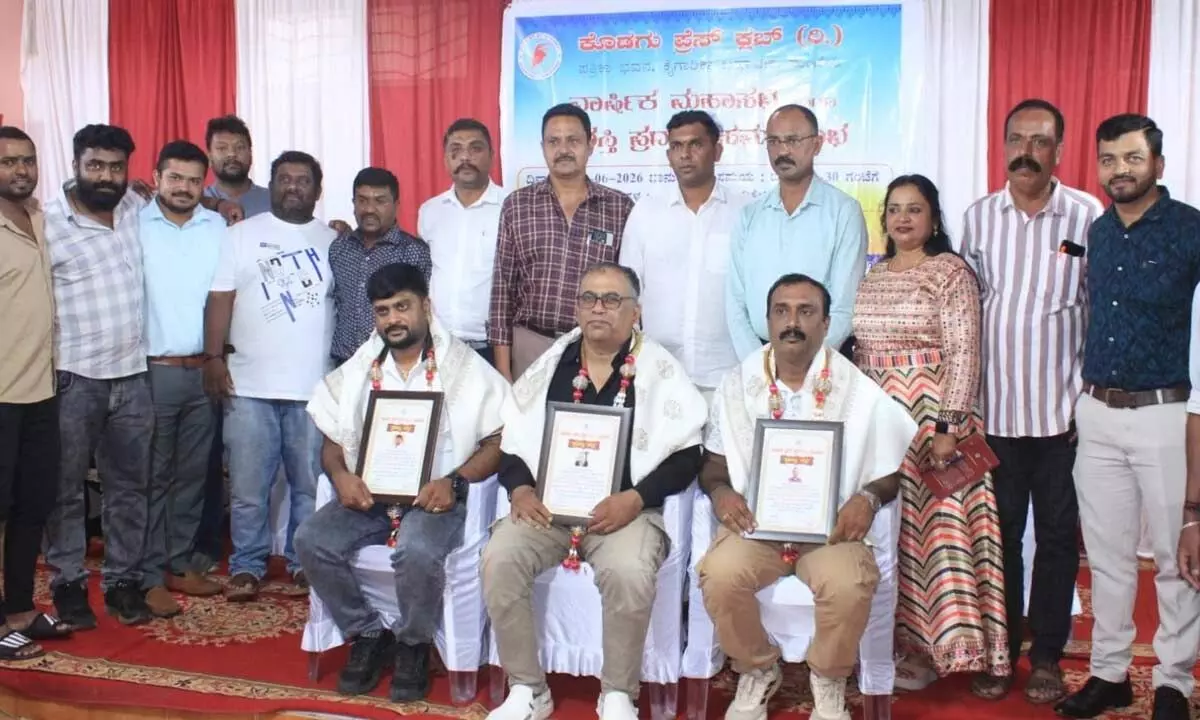
Madikeri :
Journalists play a crucial role as the eyes and ears of society by bringing truth to the forefront and serving as a bridge between the public and those in authority, said social worker and entrepreneur Edikeri Prasanna, Director of Leading Edge Advertising India Private Limited.
He was speaking after inaugurating the annual awards presentation ceremony of the Kodagu Press Club held at the Press Bhavan in Madikeri on Sunday.
Addressing the gathering, Prasanna lauded the efforts of journalists who spend their days chasing stories and informing society. He said it was commendable that media professionals took time once a year to celebrate their contributions and achievements.
“Journalists not only uphold truth but also help wipe the tears of society through responsive and people-centric reporting. Their role in highlighting public issues and bringing relief through media intervention is highly appreciable,” he said.
Prasanna emphasized that social service should be carried out selflessly without expecting rewards. “God always observes the good work we do. Sooner or later, every sincere effort receives its due recognition,” he remarked.
Speaking on the occasion, Ajjamada Ramesh Kuttappa, President of Souharda Sahakari Niyamita and Vice-President of the Karnataka Working Journalists Association (KUWJ), said human beings are social creatures and cannot live in isolation. He noted that the Kodagu Press Club had established a cooperative institution to help journalists lead self-reliant lives.
Recalling the COVID-19 pandemic, he said journalists were among the few professionals who continued working despite widespread restrictions. “During that difficult period, journalists dedicated themselves to safeguarding public welfare and launched media response initiatives to assist people in distress,” he said.
B.R. Savitha Rai, Director of the Karnataka Working Journalists Association, said awards help society recognize the contribution of journalists and at the same time increase their sense of responsibility.
Presiding over the function, Kodagu Press Club President Bollajira B. Ayyappa urged journalists to focus more on issues affecting society. He pointed out that Kodagu district continues to face significant challenges in the fields of education and healthcare and called upon the media to produce more reports that contribute to addressing these concerns.
Bacharaniyanda Anukaryappa, President of the Kodagu District Working Journalists Association, also addressed the gathering.
During the event, several journalists were honoured with annual awards instituted by the Kodagu Press Club. The Coovercolly Pushpalatha Chandrashekar Award was presented to journalist Santosh Rai, while the Annual Press Club Award was conferred on journalist Bacharaniyanda Anukaryappa. The Chandramohan Award was presented to journalist Hirikara Ravi in recognition of his contributions to the field.
In addition, journalists Naveen D’Souza and Hirikara Ravi, recipients of the endowment award instituted by the Kasaragod District Kannada Journalists Welfare Association, were felicitated. Ismail Kandakere, who received a KUWJ award, was also honoured during the programme.
The gathering also felicitated Ajjamada Ramesh Kuttappa on his unanimous election as Vice-President of the state journalists’ association, Bacharaniyanda Anukaryappa on becoming the new district association president, B.R. Savitha Rai for her role as state association director, and entrepreneur Edikeri Prasanna for his contributions to society.
The ceremony witnessed the participation of journalists, media professionals, social workers, and dignitaries from across Kodagu district.
source: http://www.thehansindia.com / The Hans India / Home> News> State> Karnataka/ by The Hans India / June 08th, 2026
Season-2 of KHPL from July 3 to 5
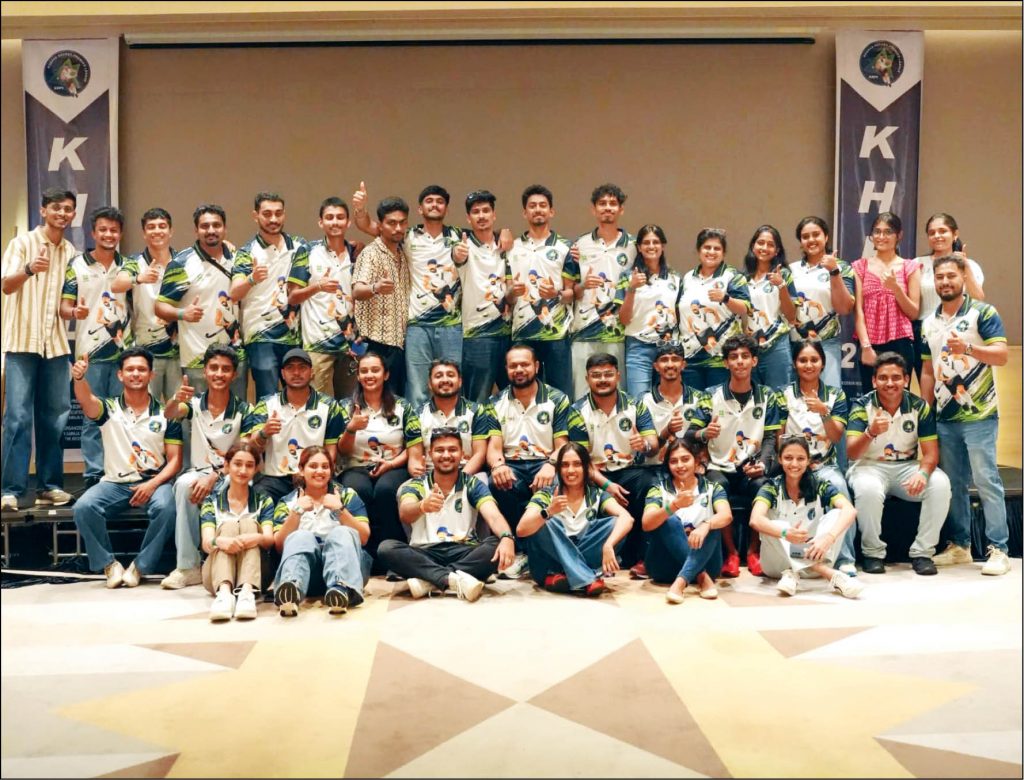
A group photo of the Mysuru Kodava Samaja Youth Wing team, who will be hosting the Kodava Hockey Premier League in Mysuru.
10 franchises take part in players’ auction, total
of 174 players drafted to various teams
Mysuru – The stage is set for the second edition of the Kodava Hockey Premier League (KHPL), with organisers successfully conducting the player auction ahead of the much-anticipated tournament scheduled to be held from July 3 to 5 at the Chamundi Vihar Stadium Hockey Turf in city.
Organised by the Kodava Samaja Youth Wing Mysuru in association with Kodava Samaja, Mysuru, under the aegis of Hockey Mysore, KHPL has emerged as a unique franchise-based hockey competition aimed at promoting the sport while nurturing emerging talent from the Kodava community.
The player auction, held at a private hotel in city, witnessed enthusiastic participation from franchise owners, players, community leaders and hockey enthusiasts.
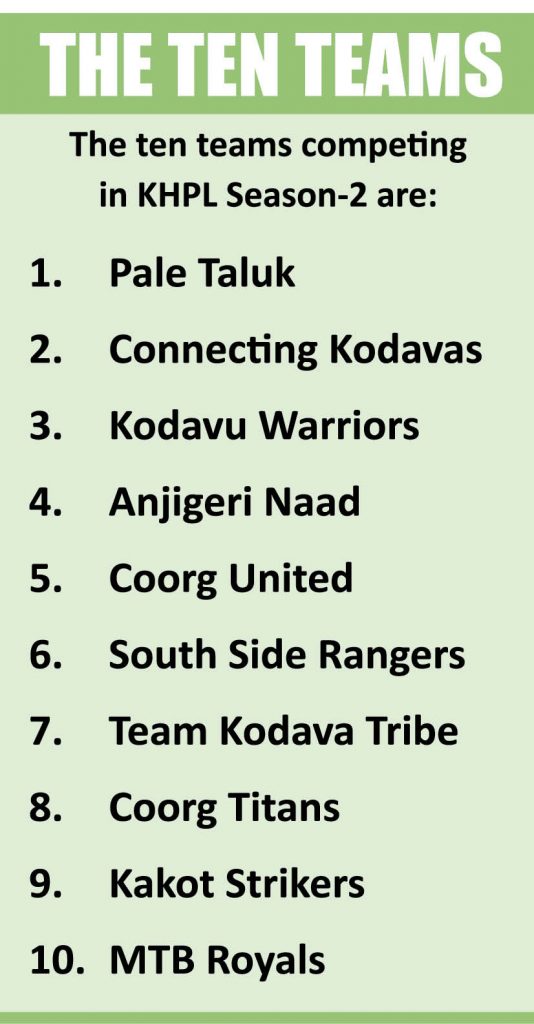
More than 268 players had registered for the league, from which 174 players were drafted across 10 franchise teams, while 30 icon players were retained by their respective franchises.
Every franchise squad comprises 18 players and is mandated to include two U-18 players and one woman player. The format provides young players with an opportunity to share the dressing room and playing field alongside experienced professional and national-level players, thereby gaining valuable exposure, mentorship and first-hand learning experiences.
The auction ceremony was attended by Kodava Samaja Mysuru President Ponjanda Ganapathy, Vice-President Machimada P. Nanaiah, Treasurer Kottangada Pemmaiah, Pandanda Bopanna and Muddanda Rashin Subbaiah besides several office-bearers and members of the Kodava community.
A symbolic highlight of the event was the ceremonial handover of the rolling trophy by Pale Taluk, champions of the inaugural edition, marking the commencement of another competitive season.
Organisers have confirmed that all matches of KHPL Season-2 will also be telecast live on YouTube, enabling supporters and hockey enthusiasts worldwide to follow the three-day tournament.

According to the organisers, KHPL has evolved into more than just a sporting competition, serving as a platform for youth empowerment, grassroots hockey development and community engagement. Several players associated with previous editions have progressed to higher levels of competition, underscoring the league’s growing contribution to the sport.
With an expected footfall of over 8,000 spectators and a projected digital reach exceeding 20,000 viewers through live streaming, KHPL Season-2 is expected to draw significant attention from hockey enthusiasts.
The three-day tournament promises high-quality hockey action, competitive rivalries and a celebration of the Kodava community’s longstanding contribution to Indian hockey.
For further information interested may contact Kodaga Samaja Youth Wing President Varun Nanjappa Hanchettira on Mob: 89519-49351 or e-mail: ksywmysuru@gmail.com
source: http://www.starofmysore.com / Star of Mysore / Home> Sports / June 09th,2026
Roy Coffee Co. Launches Direct-to-Consumer With Indian-Origin Specialty Coffee, Sells Out Initial Inventory in 48 Hours

New York, NY :
Roy Coffee Co., a specialty coffee brand founded by Mounika Devakonda, has launched direct-to-consumer with small-batch, single-origin coffees sourced from India and select global origins. The brand sold out its initial inventory within 48 hours of launch and has announced a second production run.
Roy Coffee Co. launches with two SKUs, both small-batch roasted in Los Angeles and fully traceable from farm to cup. The Signature Espresso Blend ($25 / 8.7 oz) is sourced from India, Guatemala, and Colombian Pink Bourbon. The Rotating Single Origin Subscription ($29 / 8.8 oz) features hand-selected beans curated at peak harvest and rotates seasonally. A decaf SKU is in development. All subscription orders ship free, as do purchases over $50.
Devakonda founded the brand after tasting Indian-origin specialty coffee for the first time on a trip to India in 2022, an experience that led to 18 months of research before launching. The brand is currently evaluating retail and wholesale partnerships, with a New York City presence under consideration for 2026.
“Even if nothing comes of this business, I’m just glad I can get a really good, consistent cup of coffee that I know is ethically sourced and high quality. If people love it as much as I do, that’s just a bonus.” – Mounika Devakonda, Founder & CEO, Roy Coffee Co.
About Roy Coffee Co.
Roy Coffee Co. is a specialty coffee brand founded by Mounika Devakonda, focused on exceptional coffees from unconventional origins, starting with India. Small-batch roasted in Los Angeles, every product is fully traceable from farm to cup and built for the coffee drinker who treats their morning ritual as something worth protecting. Available online at roycoffeeco.com with subscriptions starting at $25/month and free shipping on all subscription orders. Follow @roycoffeeco on Instagram and TikTok.
source: www.bevnet.com / BEVNET./ Home> BevNET / by Press releases posted by Roy Coffee Co & MPR Studios- PR Agency / June 04th, 2026
Bharani Art Gallery to host three-day Art Exhibition

To unveil portrait painting of the Gallery Co-founder late Sheela Kaverappa
Mysuru :
Bharani Art Gallery, Mysuru’s first service-oriented private art gallery, will host a three-day art exhibition from June 7 to 9 at its premises, 3rd Main, 6th Cross, Vivekananda Nagar, Mysuru, bringing together artists and art enthusiasts from across Karnataka.
Established in 1994, Bharani Art Gallery has been dedicated to the promotion and development of visual arts through exhibitions, workshops, artist camps and cultural initiatives. The gallery is recognised for providing artists with a professional exhibition space, modern lighting facilities and free-of-rent residential accommodation for participating artists.
Over the years, Bharani Art Gallery has organised numerous art camps and exhibitions and has played a significant role in discovering and promoting emerging artists from Karnataka.
The gallery has also hosted works by acclaimed artists from cities such as Mumbai, Kolhapur, Sangli, Bengaluru, Udupi and other cultural centres across the State. To date, around 100 art exhibitions have been conducted at the gallery.
The gallery has also achieved the distinction of conducting an art camp, exhibition and discourse of then 10 senior most artists of Karnataka and also hosting, one of the first exhibitions themed ‘Vedic Art’ featuring women artists from Finland and Australia.
As part of the upcoming event, a portrait painting of the Co-founder of Bharani Art Gallery, late Sheela Kaverappa, done by well-known portrait artist Baburao Nadoni of Belagavi will be unveiled during the inauguration ceremony and he will subsequently conduct a live portrait demonstration for visitors and fellow artists.
The exhibition from 11 am to 7 pm will feature artworks by 16 well-known artists, showcasing a diverse range of contemporary and traditional artistic expressions. The event will be inaugurated by Sadhana Ashok Pote, Joint Director, Administrative Training Institute (ATI), Mysuru, at 11 am on June 7.
The portrait will be unveiled by Addanda Cariappa, former Director of Rangayana, Mysuru. Maddikere Gopal, President, District Kannada Sahitya Parishat, Mysuru, will preside over the event.
Entry is free.
For details, contact Bharani Art Gallery Founder & Chief Convenor N.B. Kaverappa on Mob: 94485-54221.
source: http://www.starofmysore.com / Star of Mysore / Home> Feature Articles / June 04th, 2026
Interview | How Sarita Mandanna uses storytelling to make history come alive for young readers
‘I want to create worlds in these books that are an immersive way to learn history without it being forced,’ the author says

The battle between Alexander and Porus forms the backdrop of Sarita Mandanna’s novel The War Elephants of Trigarta. | Photo Credit: Wiki Commons
Sarita Mandanna, author of the 2010 book Tiger Hills, a bildungsroman set in 19th century Coorg, is back with two new books of historical fiction, The War Elephants of Trigarta and Secrets Among the Stars (Aleph Book Company). The difference is that this time, she is writing for a younger audience. The U.S.-based author talks about why she wants children to learn about Indian history, what it means to mix history and science with fiction in politically charged times, and resisting the temptation to write happy endings. Edited excerpts:

Author Sarita Mandanna
 Your previous books, Tiger Hills and Good Hope Road (2015), are also works of historical fiction, but this is your first foray into writing for children. What inspired you to explore this new direction?
 I grew up in a house of books. I attribute my love of the written word, both reading and writing, to my mother, and I’d love to inculcate that in my child as well. My son is in middle school now, and it can be challenging to get him to read. I’m always looking for content that would interest him. Since we live overseas, it’s also important to me that he knows his roots. That was a major motivation.
Also, the way I was taught history in schools was so focused on dates and learning by rote. I had some wonderful teachers, but I think it’s fair to say that people of my generation liked history despite the way it was taught, rather than because of it. I wanted to create worlds in these books that are an immersive way to learn history without it being forced.

How rigorous is the research that goes into a book like ‘The War Elephants of Trigarta’. Of course, Alexander the Great is a household name, but how much of the rest of the book is based on actual history?
It is a mix of both. We grew up hearing that old Hindi song ‘Sikandar Ne Poras Se Ki Thi Ladayi’, so we all know that Alexander fought Porus, but we don’t know who Porus is. We don’t even know if it was his name, or a title. What we know is Alexander fought the Battle of Hydaspes where he faced Porus and his large contingent of war elephants. Therefore, the kingdom was likely to have been fairly large and prosperous. I looked backwards, at the Mahabharata, to research sizeable kingdoms that were there at the time. That’s where the leap of imagination comes into it — Trigarta was an ancient kingdom in the region and I used that as the setting.
There’s also the issue with Alexander — what we know about him is second-hand. So much has been lost to time. I read several books, cross-referenced them, and then tried to find the human motivation through it all. Once you have the scaffolding of facts, then you just overlay that with the story. People haven’t really changed that much. Motivations haven’t changed.

The book ends on a bittersweet note. I found that very interesting since with children’s books, there is sometimes a temptation to force in happy endings.
I would have loved for everyone in the book to have a happy ending as well. War is brutal though. When you live through one of the most epic battles of the time, what does that aftermath look like?
We should give children a lot more credit than we do in terms of how to handle big emotions and large ideas. War is terrible, loss does happen. The challenge is to find your way forward after the battle.
History as a subject has become particularly contentious in India lately. So has the history of science and technology. The Pushpak Vimana, which features heavily in ‘Secrets Among the Stars’, was the subject of controversy when it was brought up as a fact during the Indian Science Congress in 2015. As a writer of fiction, do these complications play on your mind?
It’s important to stick as closely to the facts as possible. What happened happened, and I don’t support excluding or championing episodes of history without factual backing. Now, the further back in antiquity you go, the harder it is to get definitive proof. I do think it’s important to retain a questioning mind. Take the Pushpak Vimana, for instance: to categorically state that this was just the product of someone’s imagination is perhaps reductive. Stating its existence as indisputable fact is sub-optimal as well. The truth is out there, and until there is firm proof one way or the other, why not try and learn more? There is so much in India that is still undiscovered, troves of documents that are still being deciphered. So much has been lost through the millennia, with the various conquests and invasions. I certainly believe there’s room for a lot of questions, and startling answers as well.
What is the future of the Bold Chronicles series that these books are a part of? Are there more books coming?
That’s the idea! These are the two bookends of the series. The War Elephants of Trigarta is set 2,500 years ago, and Secrets Among the Stars is set much more recently during ISRO’s mission to the moon. The rest of the books will be set within this time period. Each one will be standalone, and the books can be read in any order.
Bold Chronicles is a passion project, to showcase this 2,500-year-old subset of the incredibly rich history of India in an easy and accessible manner. The protagonist of each of these books is placed in challenging circumstances, but they are never a victim. They have the ability to make choices and bring about real change. I want the books to ignite in each reader, the spirit of curiosity, questioning and agency. I want them to ignite a sense of lasting pride in our shared heritage and an appreciation for all that has happened before us.
The interviewer is a Mangaluru-based science writer and author, most recently, of ‘ Lab Hopping : A Journey to Find India’s Women in Science’.
source: http://www.thehindu.com / The Hindu / Home> Books> Authors> Interview / by Nandita Jayaraj / June 05th, 2026
IPS officer’s wife killed in wild elephant attack in Kodagu
According to reports, Sandhya had ventured into the coffee estate along with two others.

Forest Department personnel captured an elephant at Chenneyyanakote, Badaga Banangala, in Kodagu district, following the death of a coffee planter in an attack by a wild elephant in March 2026. | Photo Credit: Special Arrangement
The wife of a senior IPS officer was killed in a wild elephant attack in a coffee estate in Konanakatte village near Thithimathi in Ponnampet taluk of Kodagu district, in Karnataka, on June 5.
The deceased Sandhya Achaya (51) is the wife of A. Sunil Achaya, a 1991-batch IPS officer of the Nagaland cadre.
The incident has sent shockwaves across the district, where recurring human-elephant conflict has claimed several lives in recent years. Residents of elephant conflict-prone areas have repeatedly urged the government of Karnataka to implement long-term measures to address the growing menace.
A senior forest officer from Nagarahole Tiger Reserve confirmed the elephant attack.
According to reports, Sandhya had ventured into the coffee estate along with two others. During the visit, a wild elephant suddenly emerged and charged at the group. While the others managed to escape to safety, Sandhya was reportedly attacked by the animal. She sustained grievous injuries, and succumbed while being rushed to a hospital.
The tragedy marks another fatality linked to elephant encounters in Kodagu.
In May, a tourist lost her life at Dubare Elephant Camp near Kushalnagar after being caught in a tussle between two captive elephants. The incident resulted in the closure of elephant camps for tourists as a safety measure until an SOP for visitor safety is framed.
The latest incident at Thithimathi has once again highlighted the issue of human-elephant conflict. Increasing encounters between people and wild elephants continue to pose a serious challenge for forest authorities and local communities across Kodagu, even as the government of Karnataka has assured elected representatives from the district that it will work towards finding a permanent solution to the problem.
source: http://www.thehindu.com / The Hindu / Home> News> India> Karnataka / by The Hindu Bureau / July 05th, 2026

