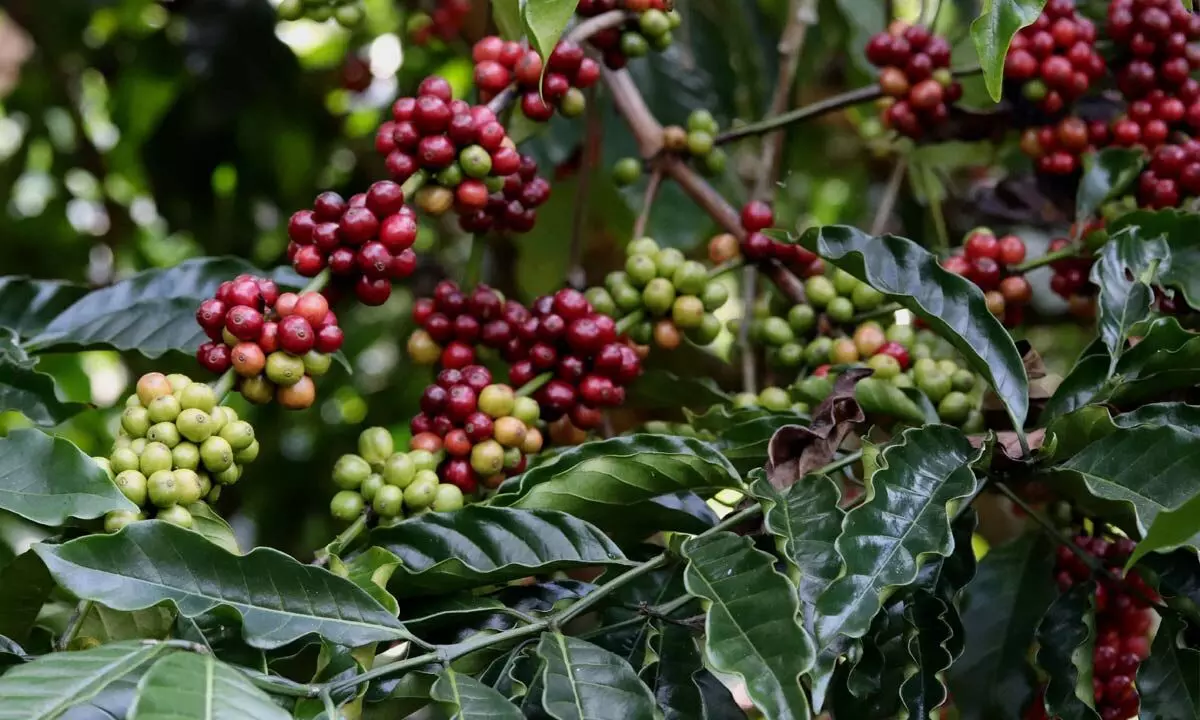
Plans to turn 2400 acres of BBTC Coffee Gardens into large villas and townships have sparked strong opposition and deep concern among locals and environmentalists alike, creating a tempest of controversy around the serene hills of Coorg.
Madikeri:
Plans to turn 2400 acres of BBTC Coffee Gardens into large villas and townships have sparked strong opposition and deep concern among locals and environmentalists alike, creating a tempest of controversy around the serene hills of Coorg.
The proposal, orchestrated by a resort tycoon, has ignited a fierce debate, with critics decrying the potential environmental devastation and cultural erosion that could accompany the transformation of these verdant landscapes. The Codava National Council spearheaded by NU Nachappa has opposed it on two major counts.
“The roots of this dispute delve deep into Coorg’s past, tracing back to the acquisition of the land by the Bombay Burma Trading Corporation (BBTC) during the colonial era. Once communal property of the indigenous Codava tribe, the estate passed through various hands before landing in the possession of a resort magnate, sparking memories of Coorg’s colonial subjugation and indigenous displacement” Nachappa told.
Economic Gain vs. Environmental Loss
At the heart of the controversy lies the stark dichotomy between economic gain and environmental preservation. The sale of the estate, purchased at a fraction of its current market value, has raised eyebrows and suspicions, prompting calls for a thorough investigation into the transaction’s legality and ethical implications.
“The conversion of lush coffee estates into sprawling villas and townships not only threatens to disrupt the delicate ecological balance of the region but also poses a grave threat to vital water sources and biodiversity hotspots. The ramifications extend beyond environmental concerns, touching on the preservation of indigenous culture and heritage, which risks being overshadowed by the specter of unchecked development” Nachappa told in a complaint lodged with the President of India, Prime Minsiter and Chief Secretary of the union government for forests and environment.
A Call to Arms
Following the CNC taking up the issue on a global scale, voices from all over the places where Codava people have migrated and relocated “decisive action to halt the encroachment on Coorg’s natural splendour and cultural heritage. Calls for stringent legal measures echo through the hills, demanding accountability from all parties involved, from buyers and sellers to local authorities and regulatory bodies. “The urgency of the situation cannot be overstated, as Coorg stands at a crossroads, torn between preserving its pristine landscapes and succumbing to the allure of unchecked development. The fate of this idyllic paradise hangs in the balance, with stakeholders grappling with the weighty consequences of their decisions” Nachappa relayed some sentiments of his countrymen.
In the face of mounting opposition, the battle for Coorg’s soul rages on, with the outcome poised to shape the region’s destiny for generations to come. As the debate rages on, one thing remains clear: the future of Coorg hinges on the choices made today.
source: http://www.thehansindia.com / The Hans India / Home> News> State> Karnataka> Bengaluru / by Hans News Service / May 01st, 2024
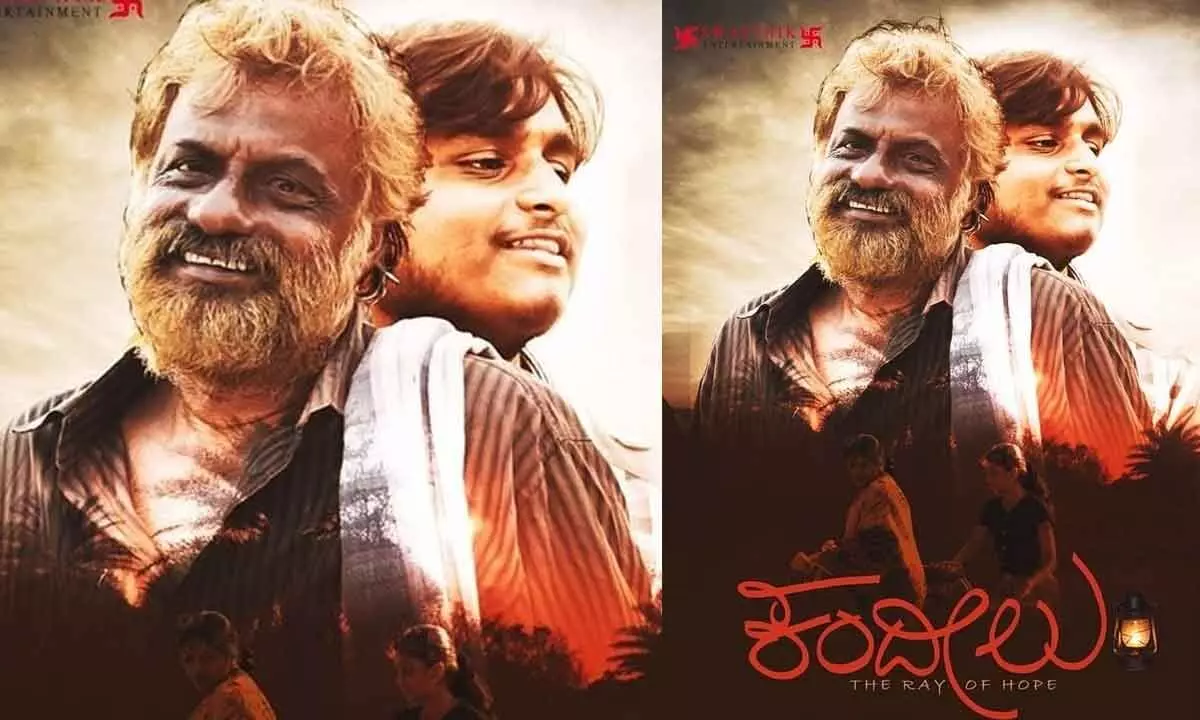
Yashoda Prakash, a distinguished filmmaker hailing from Madikeri, has achieved a remarkable feat as her Kannada film ‘Kandeelu’ secures a coveted spot at the 29th Kolkata Film Festival, scheduled to take place from December 5 to 12. Yashoda, the sole woman director from the district, has not only etched her name in the local film industry but has also brought recognition to Madikeri on a national platform.
‘Kandeelu’ stands out as the only Kannada film chosen to compete among films in various Indian languages during this year’s festival. Yashoda Prakash, a resident of Madikeri, has previously directed and produced numerous films, including three in Kodava and five in Kannada. Her active involvement in the industry has yielded several quality productions.
The storyline of ‘Kandeelu’ unfolds in a village, weaving a narrative around the life of a farmer and his family. Inspired by real-life stories, the film delves into the significance of life amidst myriad challenges across different phases. Yashoda expresses confidence that the movie will be well-received at the film festival, anticipating appreciation for its portrayal of life’s complexities and nuances.
As the only female director representing Madikeri, Yashoda Prakash has not only elevated the cinematic landscape of the region but has also become a trailblazer, showcasing the richness of storytelling and filmmaking from this part of Karnataka. The selection of ‘Kandeelu’ for the Kolkata Film Festival adds another feather to Yashoda’s cap, and she hopes to clinch victory in this prestigious competition.
source: http://www.thehansindia.com / The Hans India / Home> Entertainment / by Coovercolly Indresh / November 18th, 2023
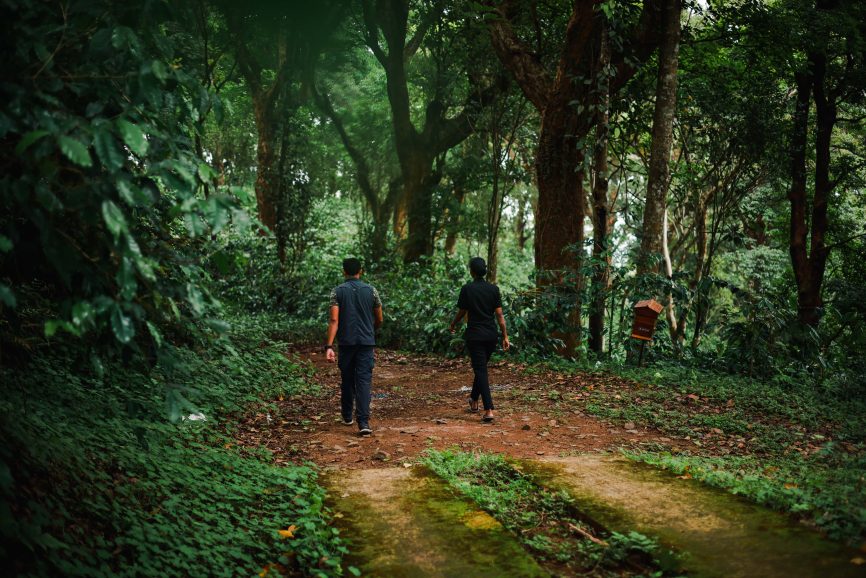
Set in the heart of Kodagu (now Coorg), The Tamara Coorg crafts a scenic getaway for the discerning traveller. Surrounded by nature’s bounty and soaked in tales of history, the property gives its guests a peek into the culture and the livelihood of the people in the region.
When it comes to an experiential holiday in the hills, Coorg is the first destination that comes to mind. Previously known as ‘Kodagu’, this hill station has bragging rights to misty mountains, sprawling coffee plantations, quaint monasteries, pepper vines, and a host of other scenic delights for the discerning traveller.
The etymology of the words “Kodava” (referring to the indigenous people, language, and culture) and “Kodagu” (referring to the land) traces back to the root word ‘Koda’ of uncertain meaning. Some speculate it signifies ‘hills’ while others suggest it signifies ‘west.’ In 1956, Kodagu (now Coorg) was established as a district and became a part of the Karnataka state.
The Land of Coffee
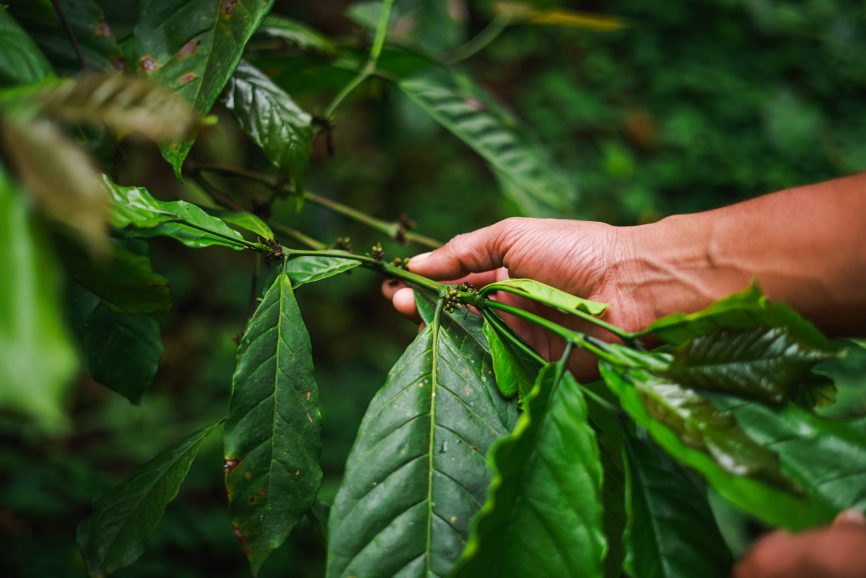
Kodagu thrives as the land of coffee, with the Robusta variety being its primary plantation crop. Notably, Kodagu alone contributes around 33% of India’s coffee production. The region is also renowned for its exquisite wild honey. Nestled within a 184-acre coffee estate, the Tamara Coorg resort stands as a testament to preserving the surrounding ecosystem, untouched by extensive development, making it a truly unique creation in this coffee-rich land.
The flora and fauna of Kodagu
Blessed with three wildlife sanctuaries—Brahmagiri, Talakaveri, and Pushpagiri—and the Nagarhole National Park (also known as the Rajiv Gandhi National Park), located within the Kodagu district, the region boasts an unparalleled wealth of flora and fauna, showcasing its remarkable biodiversity.
Kodava people
The Kodava people, also known as Kodavas, are the inhabitants of this land. They speak the Kodava language and traditionally identify as land-owning agriculturists, following a patrilineal social order deeply rooted in martial customs. Kodavas hold their ancestors and weaponry in high reverence, and uniquely, they are the only community in India permitted to carry firearms without a licence. Kodagu has also produced several notable hockey players.
Kodava festivities
Kodava festivities revolve around their agricultural practices and military traditions. The community celebrates three main festivals that are distinctive to their culture—Kail Podh, Kaveri Changrandi (Tula Sankramana), and Puthari. In recent times, under the rule of the Haleri Rajas, Kodavas have also embraced a few Hindu festivals, including Ugadi, Ayudha Puja, Dussehra, and Mahashivaratri.
Kodava trails at The Tamara Coorg
Embark on our immersive Kodava Cultural Tour and be transported to a bygone era steeped in tradition. Journey to a nearby village, where a guide will accompany you to an Ainmane, a quintessential ancestral home of the Kodava people.
Walk through the halls of the Ainmane, as it unveils its architectural marvels and treasured artefacts. Delve into the essence of Kodava heritage as you learn about their unique way of life.
Indulge in a tantalising Kodava meal that showcases the region’s authentic flavours and local ingredients. Carry with you cherished memories of the warmth and hospitality as you bid adieu to the Kodava people.
In and around Kodagu
Scouting for activities to partake in when in Kodagu? Here’s a list of destinations that are a stone’s throw from the city and are worth a visit:
Abbey Falls | Distance: 44 km
Talakaveri And Bhagamandala | Distance: 40 km
Bylakuppe | Distance: 76 km
Nalknad Palace | Distance: 7.5 km
Padi Igguthappa Temple | Distance: 9.2 km
Chelavara Falls | Distance: 13 km
Omkareshwara Temple | Distance: 38 km
Raja’s Seat and Nehru Mantap | Distance: 38 km
Madikeri Fort And Palace | Distance: 37 km
For more information about planning a Kodagu itinerary and booking a stay at the plush property of The Tamara Coorg, click here.
source: http://www.cntraveller.in / Conde Naste Traveller / Home> India> Hotels & Resorts / Published by The Tamara Coorg / August 04th, 2023
She sits inside a cage, goes down 25-feet deep well to bring back the feline after darting
Mysore/Mysuru:
One of the most challenging and dramatic animal rescue missions has been accomplished by a Kodagu-born veterinarian Dr. Pandikanda Meghana Pemmaiah, now settled in Mangaluru.
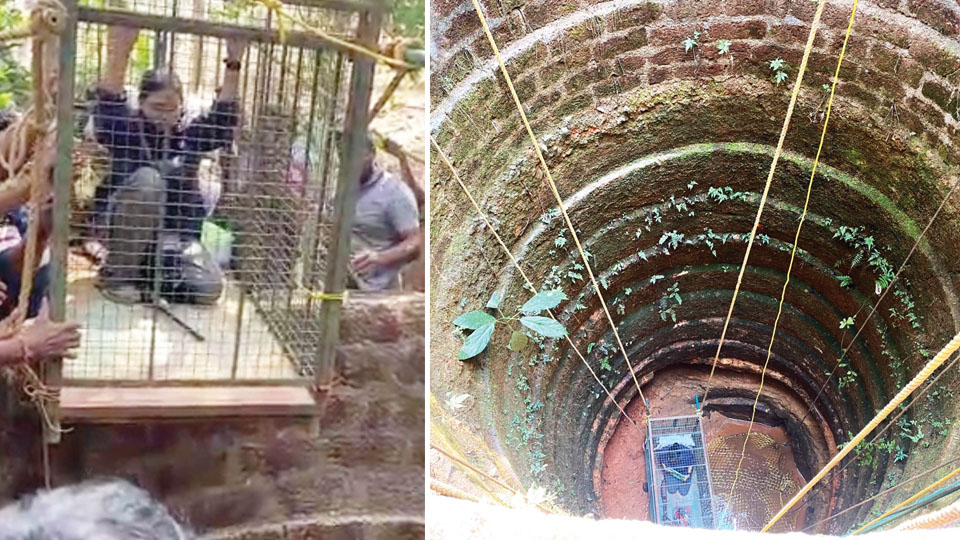
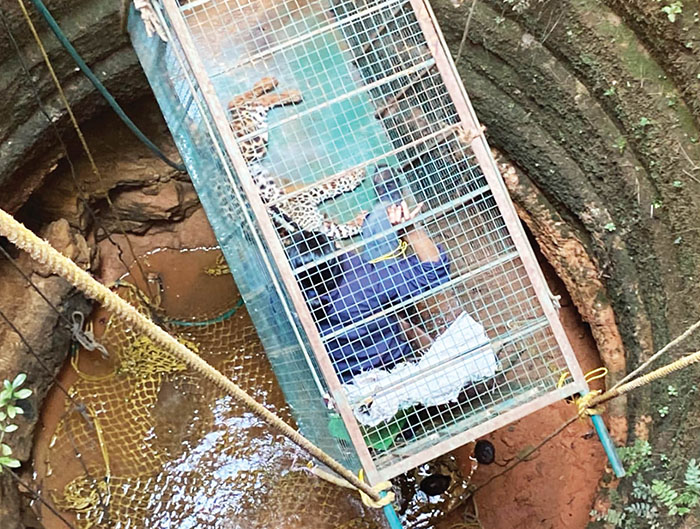
She recently saved a leopard that had fallen inside a 25-feet deep well and performed the act by sitting inside a cage that was lowered into the well to sedate the leopard that was stuck there and starving for 36 hours. She was able to pull the one-year-old feline into the same cage in a tense and dare-devil two-hour rescue operation. Her husband Dr. Yashaswi Naravi too was a part of the rescue mission.
In fact, it was 31-year-old Dr. Meghana, who volunteered to go down the well. She told Star of Mysore that though she was scared as it was deep inside the well and the leopard was not visible from the top, the adrenaline rush to save the starving and stuck animal overcame the fear.
The incident took place near a house in Niddodi near Kateel in Dakshina Kannada, about 35 km from Mangaluru. “We got a call at 9 am on Feb. 12 from the Forest Department. We are a team from Chitte Pilli, a Wildlife Rescue and Research Centre in Mangaluru and the team comprises me, my husband and experts Dr. Prithvi Salian and Dr. Nafisa Kousar. We reached the place at 11 am with some necessary equipment for the rescue,” she said.
After successfully tranquillising the big wild cat, Dr. Meghana being pulled up along with the tranquillised leopard inside the cage.
Failed attempts
The Forest Department had tried to rescue the feline with a ladder and a cage, as in other instances the trapped leopard had walked into the cage when it was lowered inside a well. However, this leopard was unwilling to move, she added.
The leopard was not visible from the top and it had taken shelter at a cosy spot that was shaped like a cave-like cavity — to avoid falling into the water — inside the sturdy well that was built with stones. The leopard was aggressive when attempts were made by the Department to drain the well water.
“Later, a different strategy was adopted and it was decided to lower a cage carrying a person to tranquillise the leopard and bring it back. We had no other choice and someone had to do it. I volunteered despite the dangers involved,” Dr. Meghana revealed.
The leopard being treated after capturing in Mangaluru.
A risky mission
The cage was lowered by villagers, volunteers and the Forest Department staff in a coordinated action and with Dr. Meghana holding the tranquilliser gun. “We did not have a visual of the leopard and as such, it was a risky mission as no one had a clue as to how the leopard would react,” she said.
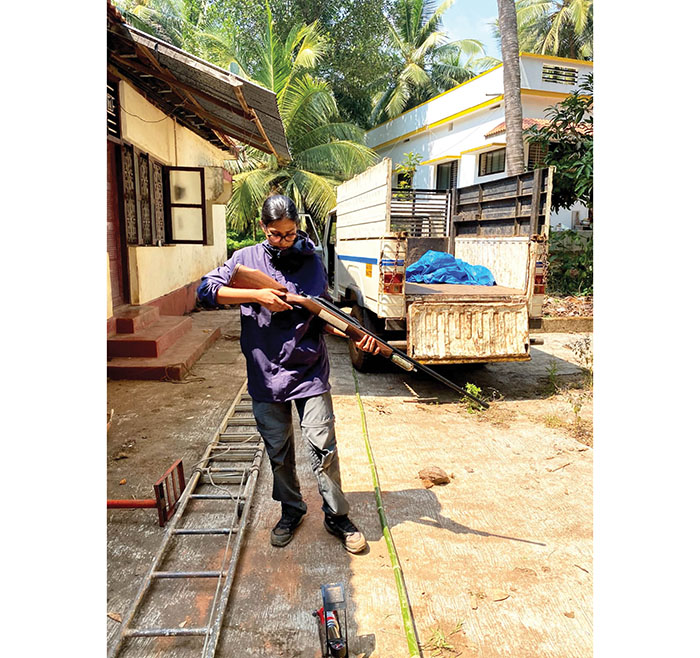
“I waited patiently for a sight of the leopard as the cage was lowered gradually and finally I could spot the animal around 10 to 15 feet inside the well and it was growling at me though it looked exhausted without food and water. I had very little time and hence aimed the dart at the animal and shot at it. Luckily, it was a precision shot and the dart hit the feline’s thigh in the first attempt itself,” Dr. Meghana said.
Meghana had carried about three to four syringes containing the sedating medicine as she did not know about its weight, size, health and other parameters for darting it. If she missed the aim the first time, she could well refill the tranquilliser gun with the second shot but the leopard could have moved away from the initial close proximity and there was more probability of her missing the shot.
Growling leopard
“In fact, I had to sit inside the cage for over 15 minutes for the dart to take effect and the leopard was right in front of me. It was growling and looking at me. Slowly, the sedation process began and I tried to pull it to the cage but could not. Another youth got inside the well and helped me and we both put the 25-kg leopard inside the cage. It was a leopardess. Now when I look back, sometimes I fear what could have happened if something had gone wrong,” she said.
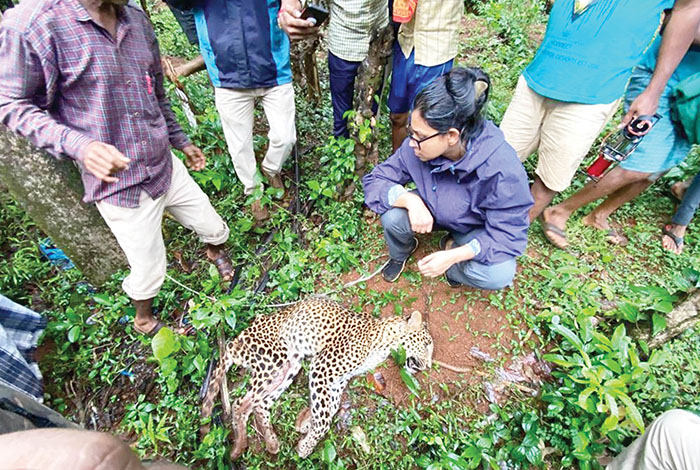
So tense was the situation after the dart was fired that Dr. Meghana sat motionless inside the cage as any movement or noise would disturb the leopard and it would take a long time for the animal to get sedated. Finally, the feline fell unconscious after over 15 minutes. After the leopard was lifted back to the ground, it was checked and the vets found no external injury marks.
“It was a healthy leopard but was exhausted. After administering the required medicines for the feline to rejuvenate and get back its strength so that it has the capacity to hunt on its own, it was handed over to the Forest Department that released it back to the wild,” Dr. Meghana said.
Passion for wildlife keeps her going
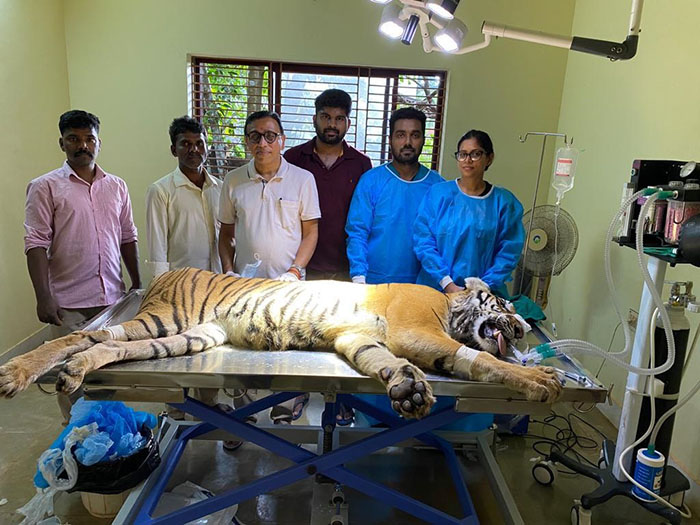
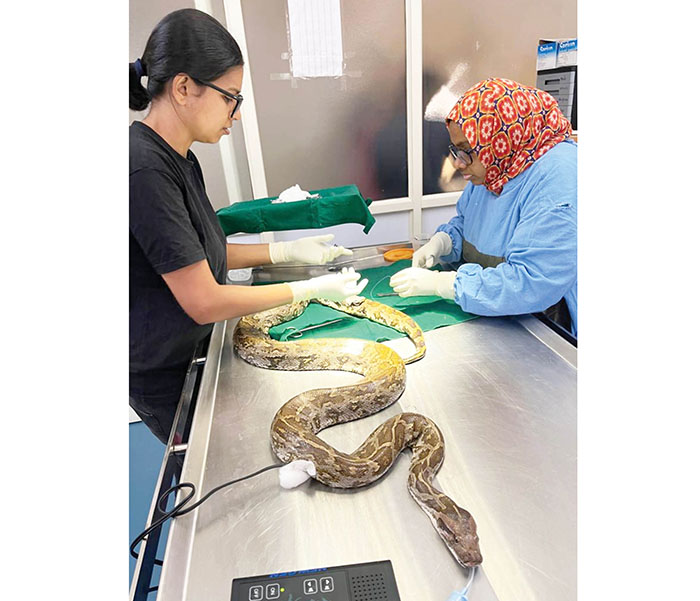
Wildlife rescue operations are nothing new for Meghana and she has been a part of many rescue operations in the last six years in Karnataka. She has been a part of many missions where she has rescued and treated tigers, owls, star tortoises, pariah kites, crows, pigeons, birds and even pythons.
“Passion about wildlife, increasing human-animal conflicts and the resulting rescue mission keeps me going. I dread to see an animal suffering due to injuries,” she said.
Every year, she does almost 10 darting procedures after following the scientific process and protocols. But this was the first time she had to get down into a well, sitting inside a cage to rescue a leopard. She hails from Halugunda village near Virajpet in Kodagu district and studied in Bengaluru.
Dr. Meghana treating a python.
After completing her PUC from Christ College, Dr. Meghana did her BVSc followed by MVSc in Wildlife and Surgery from Veterinary College, Bengaluru. The next four years, she worked in People For Animals (PFA) as a senior veterinarian and this gave her on-hand exposure to animal rescue and medication.
Her father late Pandikanda M. Pemmaiah was a retired Superintendent of Police and her mother P.P. Sarasu and rest of the family live in Bengaluru. She married veterinarian Dr. Yashaswi Naravi of Mangaluru and both have been working at Chitte Pilli — a Wildlife Rescue and Research Centre.
source: http://www.starofmysore.com / Star of Mysore / Home> News> Top Stories / February 21st, 2023
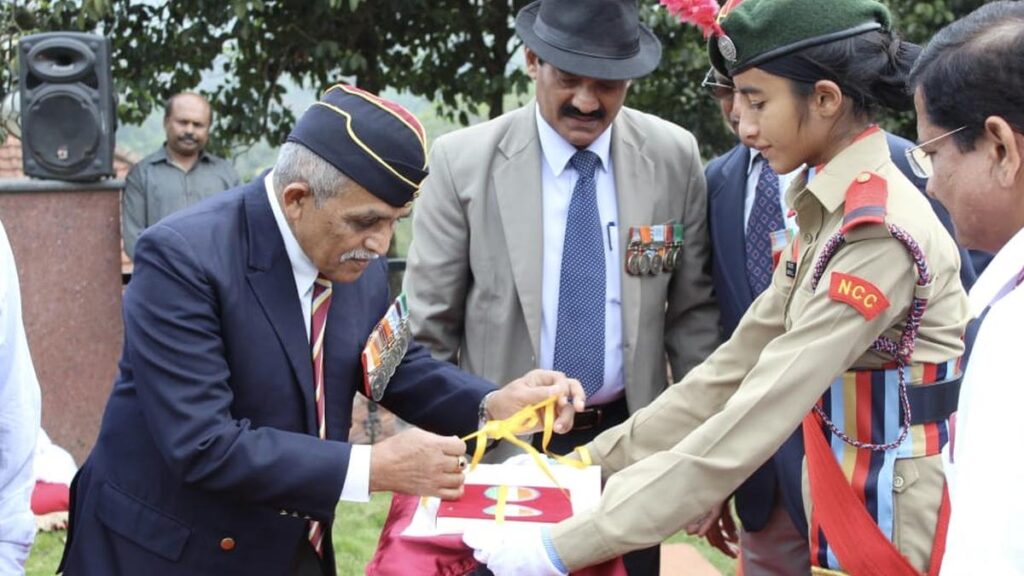
The Armed Forces Flag Day was observed in Madikeri in Kodagu on Wednesday. | Photo Credit: Special Arrangement
The Kodagu district administration and Department of Sainik Welfare and Resettlement observed the Armed Forces Flag Day at General Thimmaiah Memorial Bhavan in Madikeri on Wednesday.
Lieutenant Colonel (Retd) Mahaveer Chakra P.S. Ganapathy, Deputy Commissioner B.C. Satish, Superintendent of Police Capt M.A. Aiyappa, Air Marshal (Retd) Cariappa, Lieutenant Colonel Chacko, Kodagu Zilla Panchayat CEO S. Akash and other dignitaries were present on the occasion.
Every year, December 7 is observed as Armed Forces Flag Day throughout the country to honour martyrs and men in uniform, who valiantly fought and continue to fight on the country’s borders.
source: http://www.thehindu.com / The Hindu / Home> News> India> Karnataka / by The Hindu Bureau / December 07th, 2022
Rs one crore proposal has been forwarded to the state to improve the musical fountain in the area alongside establishing a rain shelter – with nearly 500 seating capacity – across the fountain.
Madikeri:
The Harangi Reservoir in Kodagu will soon witness beautification work to attract more tourists. The reservoir, meanwhile, wears a colourful look as the crest gates have now been equipped with LED lights.
Harangi Reservoir near Kushalnagar is one of the popular tourist destinations in the district and is visited by over two lakh tourists annually. A minimum entry fee of Rs 10 is being currently collected from the visitors. However, steps are now being taken to improve the reservoir to make it aesthetically appealing.
“The LED lights to the crest gates have been fixed using the Annual Maintenance Funds. More beautification works will commence shortly as several proposals have been readied for the development of the reservoir,” confirmed Chennakeshava, the system engineer of Harangi Reservoir.
Meanwhile, the newly appointed Executive Engineer, Puttaswamy confirmed, “Two proposals for the beautification of the reservoir premises have received approval and the work for the same will begin shortly.”
He explained that a Rs 98 lakh project has been approved to fix lighting across the reservoir area. “The garden, drainage gallery, crest gates and the surrounding areas of the dam will be fitted with improved lighting under the project,” he added.
Further, a chain link fencing will be installed across the musical fountain area in the reservoir “A conflict wild elephant had entered the reservoir premises a couple of times. To avoid this in future, Rs 90 lakh has been approved for the establishment of chain link fencing. The funds will also be used to equip the fountain with a diesel generator,” he explained.
Apart from the approved projects, Rs one crore proposal has been forwarded to the state to improve the musical fountain in the area alongside establishing a rain shelter – with nearly 500 seating capacity – across the fountain.
source: http://www.newindianexpress.com / The New Indian Express / Home> States> Karnataka / by Prajna GR, Express News Service / August 25th, 2022
The senior actor talks about his role in Thimayya and Thimayya which not only challenged him as an actor, but also gave him a lot of enjoyment acing it
Legendary actor Anant Nag is set to star in Sanjay Sharma’s debut directorial, Thimayya & Thimayya, and shared that the role was very challenging. “When director Sanjay Sharma told me about this film, I asked him to send the script, and I enjoyed reading it. I was even surprised that such a story was coming from an ad filmmaker, and liked the way he understood the creative process of cinema,” says the actor.
Thimayya & Thimayya is about the bonding between a grandfather and grandson, and the actor plays an arrogant Coorgi person, who has a very unique and complex character arc. “There is a negative trait to the character (Thimayya), who is egoistic and selfish. In fact, I was debating whether to take up this role, but the shades that Sanjay had sketched to this part attracted me. I’m curious to know how the audience will react to this particular character,” says Anant Nag, who also appreciated the art director Vineeta for creating authentic structures that go well with Sanjay’s story.
Anant Nag’s Thimayya is not just wealthy in the film, but is also a good trumpet player. “He is good at playing the trumpet, but uses the same instrument to inflict violence too. He is a control freak, and wants his grandson to obey every order of his. The undercurrent theme of this film adds entertainment value to the script,” says Anant Nag, who was also happy to have learned a new instrument for the role.
Anant Nag is one of those very few actors, who craves to do better with each film and still enjoys everything about acting. Throughout his prolific acting career, he has always had filmmakers of that era develop scripts with him in mind. This constant updating has made filmmakers always approach him with unique roles and interesting stories. Sharing his love for collaborating with fresh talents, Anant Nag says, “I’m glad to know that there are directors who still have me in their minds while writing characters. Having said that, I don’t feel like accepting everything. I love to be part of projects where I can enjoy the character, and also be part of a team that sets a good atmosphere,” he signs off.
Thimayya and Thimayya, bankrolled by Rajesh Sharma, also stars Diganth, Aindrita Ray, and Shubra Aiyappa in the lead cast.
source: http://www.cinemaexpress.com / Cinema Express / Home> Kannada / by A Sharadhaa / November 23rd, 2022
At the first glance it seems to be another piece of metal with the sign of a star embossed on it. The hardly visible recipient’s name along with the date it was received is engraved in a corner. To own this piece of metal is an irrepressible desire of every soldier who goes to war. That’s because it represents valor. It’s the ‘Maha Vir Chakra’, second highest gallantry award given to those who exhibit exemplary courage and valiance. It is the Indian equivalent of the ‘Distinguished Service Cross’ of the British. Since 1947, Only 218 braves of the mighty Indian Army have been the proud recipients of the Maha Vir Chakra. 6 among them have received the Maha Vir Chakra twice, also called the Maha Vir Chakra Bar. Considering this, only two from Karnataka, a state which has given some of the most valiant soldiers and officers to the Indian army, have been the illustrious recipients of this gallantry award.One is Squadron Leader Ajjamada B Devaiah famously known as the ‘Tiger of Sargodha’ and the other is Major (Later Lt. Colonel) P S Ganapathi. While the former was martyred in action during the 1965 war and was awarded the Maha Vir Chakra posthumously, the latter is a living example of unparalleled gallantry amongst us today.
Saga of a living memorial
Unlike the brave souls of Punjab, there have been no books published about this hero. He hasn’t given any interviews to TV channels or attended public events which are flashed all across the media. Almost nothing is known about him yet. He is relatively unknown even in his own hometown, Coorg, the land of the brave warriors. Shy of any kind of publicity and one who lives by the dictum ‘Safeguarding the nation is my duty alone’ is how Lt. Col. Puttichanda Somaiah Ganapathi has led his life throughout. Participating in public events is not at all a difficult task. However, Lt. Col.PS Ganapathi believes that safeguarding the honor of the esteemed medal is his paramount duty and is more valuable than any kind of publicity.
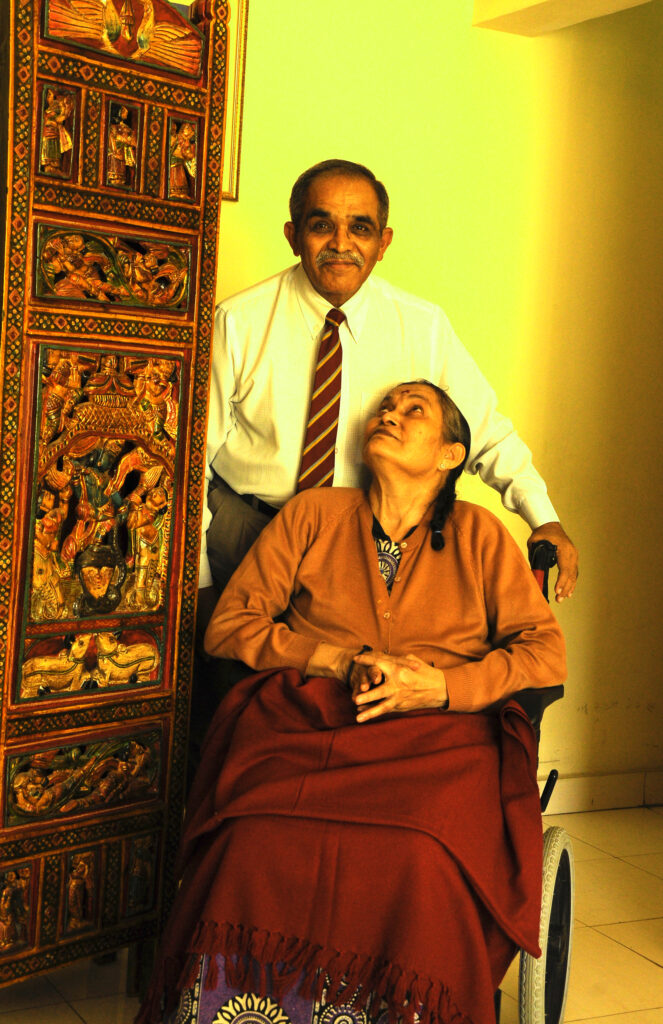
At 73 today, Lt. Col.Ganapathi might not have a large frame but his baritone voice, characteristic of military officers, hasn’t waned a bit. Lethargy that comes with age is alien to him. The agility of his mind is intact despite many years of retired life. Currently residing at ‘Sena Vihar’ in Bengaluru, Lt. Col.Ganapathi’s retired life is anything but idiosyncratic with lives of retired people who prefer a laidback existence.An effervescent man, unlike most people his age, he drives to his hometown in Coorg once every month on his own.His life in the concrete jungles of Bengaluru hasn’t sapped his love for farming one bit.His suave demeanor and absence of any signs of pretension for being the proud owner of a national gallantry award, is the true nature of this hero.
While seated at his home in the multistory apartment complex at the Army’s ‘Sena Vihar’, Lt. Col. Ganapathi began to narrate the stirring story behind his Maha Vir Chakra. He was soon joined by his wife on her wheelchair, with a cup of coffee in her hand. Although, she had heard her husband’s heroic tale umpteen times,her desire to keep listening to the saga made her tolend her ear once again. The showcase behind the Lt. Col. was decked with the upright photo which had captured the invaluable moment when he was presented the MVC by the President. Adjacent to it was the photo of his son, who departed untimely, adorned with a sandalwood garland. The enduring agony of the deceased son was apparent, albeit fleetingly,in the stern battle-hardened face of the Lt. Colonel.
As a worthy prelude to his tale of heroism, Lt. Col. Ganapathi began by recollecting his childhood.
Madikeri Central High school, 1952
After completing his primary education from Napoklu in Coorg, Ganapathi was admitted to the Central School at Madikeri for High school studies. This was the school from where towering personalities like Field Marshal Cariappa and General Thimmayya studied, played hockey and graduated. The Central School was famous all over Coorg for its quality English education, encouragement in sports and its discipline. While most kids ran towards the ‘Mens Compund’ Ground to play hockey as soon as the school bell rang, Ganapathi used to run to the school auditorium to gaze at the large portraits of FM Cariappa and Gen. Thimmayya which were hung on its walls. Years of gazing and drawing inspiration from them, sowed seeds of desire within Ganapathi to join the military and become a decorated officer like the two greats.As soon as he completed the ‘Seventh Form’, he began his preparations and started to spend a lot of time on the ground. He used to sit and listen to the stories of war and valor from retired soldiers in the town. Though many years had passed, the inspirational portraits from his school never ebbed from his mind.
Years later, after completing his college education, Ganapathi joined as a Forrester. While he was posted at Kolhapur in Maharashtra, he attempted to join the military. He failed. He attempted again in Bengaluru and failed yet again. But he did not give up and again attempted to join the military at Bengaluru. He succeeded in this attempt. Ganapathi’s ambition that blossomed at Central High schoolin Madikeri had now come true.He was deputed to the Officers Training Academy (OTA) at Chennai. After the successful training in Chennai, Ganapathi became an officer of the 14th Mahar Regiment.
Within a few days of joining the military, PS Ganapathi duly ingrained the military traits of discipline and diligence. Those portraits of Central High school had only become larger in his mind. He was selected for the Anti-Insurgency battalion formed to tackle the militancy spread in Nagaland and Mizoram. He worked in various areas in the North-East like Palampur, Gangtok, Nathu La, etc. He received further training for a few years in Belgaum. He was then deputed to Assam Rifles. During this period, Ganapathi has served in various regions, under different environments and had experienced adverse conditions from close quarters.
Colombo, 1987 July 29
That was an era during which rivers of blood was flowing all across Sri Lanka. India too bore the brunt of the bloody strife there. Lakhs of people from the affected areas from Sri Lanka sought refuge on the shores of Tamil Nadu daily. The Tamils of Sri Lanka had the sympathy of Indians. India was caught in a quandary over the dispute in Sri Lanka. On the one hand, the Lankan government was adamant on not granting any kind of special status to the Tamils there. The then Prime Minister Rajiv Gandhi, with the arbitration of the then CM of Tamil Nadu MG Ramachandran, invited LTTE’s Chief Prabhakaran to Delhi to deliberate on the Tamil issue. Indian Intelligence institutions had exerted considerable pressure on the LTTE chief. Soon after this, Rajiv Gandhi undertook a tour of Sri Lanka. However, the Tamils of Sri Lanka were displeased at the way their leader was purportedly treated in Delhi. On the very first day of his visit, a Sri Lankan soldier had attacked Rajiv Gandhi with a gun during the ceremonial Guard of Honor. Subsequently, Rajiv Gandhi and the then Sri Lankan President G R Jayavardhane conducted bilateral talks and signed a deal. As per the deal, the Sri Lankan government would recognize the Tamil aspirations and grant special status and privileges to them. India on its part had promised to send its military to Sri Lanka and undertake the task of persuading the Tamils to lay down their arms.
The world assumed that this historic deal would solve the century old dispute and put an end to the 3-decade old cycle of bloodletting in Sri Lanka. India’s initiative to solve the crisis was lauded the world over. It was deemed that the Intervention of India would change the situation in the island nation. Everyone believed that the fighting Tamils would lay down their arms and hoped that the lives of Tamils, who formed 20% of Sri Lanka’s population, would change for the better. Many even penned poems over the cause. Congress leaders in India started to sing paeans to Rajiv Gandhi and even declared that there was no difference between King Ashoka who sent saplings of the Bodhi tree to Sri Lanka and Indira Gandhi’s son Rajiv in their speeches.While all these events were happening, Tamils the world over had exercised a conspicuous silence which was ominous of the lull before astorm. The world had thought that a single treaty would resolve India’s refugee crisis, establish peace in Sri Lanka and assuage sorrows of the Tamils.
Tamilnadu, 1987 August
The Indian troops arrived in Sri Lanka with much zeal to fulfil the obligations of the peace accord. With the over-confidence brought by the success of signing the pact, Indian government sent over ten thousand Indian soldiers to Sri Lanka in the first week of August itself. All the three arms of Indian armed forces crossed the ocean into Sri Lanka. The India troops which consisted of The Sikh Regiment, Maratha Light Infantry, Mahar Regiment, along with battalions of 10th Para Commandos, Armored regiment with U-72 battle tanks, Gorkha and Rajputana battalions, soldiers of 4th mountain division, Chetak and Cheetah helicopters of the Air Force, several units of ‘Marcos’ commandos of the Indian Navy, landed at several places in Jaffna, Trincomalee, Batticaloa, Ampara, and Urumpirai with overweening confidence.
In a land that it did not belong to, in an environment that it was alien to, the Army did not have a faint idea about the war that was about to ensue. The only plan of action in mind was to establish peace. Hence there were no adequate preparations or efficient battle plans. Even the intelligence gathering was not robust enough. The maps of the area were woefully inadequate. In such circumstances, the truth of the grim scenario dawned on the Indian army. The LTTE had armed even the women and children with guns. The LTTE terrorists who had hidden capsules of cyanide, stunned the Indian soldiers. The troops which had arrived with the sole aim of establishing peace in the island, had its plan turn topsy-turvy in just a few days. The LTTE which had mastered the art of subversion, began to hoodwink the Indian Army. At several places, in a beguiling act of reciprocating to the peace accord, LTTE cadres surrendered old and rusted weapons to the Indian Army. A few days later, a leader of the LTTE committed suicide by consuming cyanide. This incident completely grounded any chances of establishing peace in the island nation. LTTE’s Chief Velupillai Prabhakaranused this as an opportunity to declare a direct war against the Indian troops. The war resulted in the martyrdom of 1138 brave Indian soldiers, the same soldiers who had come to the island with an idea of establishing peace. More than 3000 Indian soldiers were critically wounded. By the time the Indian government decided to recall its peace-keeping forces, the Army was decorated with 1 Param Vir Chakra (posthumously) and 6 Maha Vir Chakras. Among the six recipients of the MVCs was PS Ganapathi.
Trincomalee, 1987 July 30
(In first person) I was deputed from the Assam Rifles to the 8th Mahar Regiment. Pursuant to the orders of the government, the first batch of the peace-keeping force was airlifted from Tiruchirapalli to Jaffna on 30th July, 1987. I was in this batch. The dense jungles around Jaffna made me anticipate the struggles we would face in event of a military operation. I had a premonition of the same at the first glance of Jaffna. It did not take many days for my apprehensions to become true. This was because the LTTE waged a direct war against us. Within a few days of our landing, the LTTE attacked the Palali Airbase on the outskirts of Jaffna. The CRPF troops which were part of the peacekeeping force, were also attacked. The Jaffna Radio station was captured. Despite several counter-attacks by our forces, the LTTE did not capitulate easily. Jaffna was LTTE’s bastion and it was fighting to hold on to it at any cost. By this time, we understood that unless the LTTE loses Jaffna, its strength would not be depleted. But the Land mines buried unsuspectingly, suicide squads whose strategies were difficult to comprehend, disheveled all plans of our troops. The situation turned so grave that the then Chief of Army Staff Krishnaswamy Sundarji had to pay a visit to Sri Lanka in October 1987 and guide our troops in the peace keeping operations. The LTTE attacks were so dreadful and brutal that the Sri Lankan army abandoned and withdrew from areas which were the strongholds of LTTE. We were then clear that our next goal was Jaffna.
LTTE had assembled a strong army at a place called Maruthanamadam to defend Jaffna. Unless Maruthanamadam was cleared of the LTTE forces, the path to Jaffna would not be easy. We had to proceed towards Maruthanamadam from our station in Uduvil. Though our troops did not have exact information about this path, we were aware of the fact that LTTE cadres were present on the entire stretch. It was 6AM in the morning of August 11, 1987 when I was summoned by my Commanding Officer of the 8th Mahar Regiment Colonel BS Rathi. He informed me that he was entrusting the task of clearing Maruthanamadam from LTTE militants to me. Maruthanamadam was about 3 KMS from the place we were stationed. Without further delay, I along with 60 of my regiments’ soldiers proceeded towards Maruthanamadam. Our troops were adequately equipped with Medium Machine Guns, Hand grenades, personal weapons and few 106 RCL guns. As we reached Maruthanamadam, we faced heavy resistance. Those 3 KMS we traversed to Maruthanamadam that day is etched in my mind,just like a movie,even to this day.It was an uninhabited area, with kutcha roads.We neared Maruthanamadamaround 7AM. It was an atmosphere of stoic silence characteristic of a graveyard. Though we could see a few houses, no humans were visible. As we mulled over the scenario, a sudden barrage of gun fire fell upon us. We were stunned for a moment. While we deliberated our action, we realized that our estimation
that LTTE had modern weapons was indeed true. We also realized that the gun fire was emanating from within the houses there.Tackling the militants who are hiding inside such houses is a very dangerous operation. We had to overcome the danger at any cost. Lobbing grenades inside the houses through the windows was our only option. I then order my troops to lob 36 High Explosive grenades into the houses. Our soldiers blasted atleast 40-50 houses and destroyed the safe havens of the militants. Havildar Kaka Phule was grievously injured in the operation and attained martyrdom later. He was awarded the Vir Chakra for his courage.
Anaicottai, October 15, 1987
The success of the first operation had given lot of confidence for our troops. Jaffna was still in the hands of the LTTE. We had only advanced by a single step. With each step we took, the dangers only increased. Our next target was the town of Anaicottai. It was also called as Jaffna junction. The path to Jaffna would be easier only if we cleared this junction. LTTE agents were active throughout the path. The stretch was deserted with no signs of human activity. But in the silence that pervaded the area, temple bells used to ring all of sudden. It soon occurred to me as to why the Temple bells tolled when there were no one visible. I had realized at Maruthanamadam that the LTTE was a step ahead of us in gathering intelligence. The temple bells were used from far distances to convey to the LTTE cadres that the Indian Army was approaching Anaicottai. We proceeded with caution after we realized their modus operandi. We now only had enough arms and ammunitions to fight for 12 hours. We did not carry surplus arms as we had expected the 41st Brigade to arrive at Anaicottai by the evening of 16thOctober. As soon as we reached the Jaffna junction where four roads meet, we were attacked by the LTTE with their full might. We had to fight back hard and stop the enemies from advancing further. As the fighting ensued, the sun started to set and darkness had engulfed us. We would not retreat for any reason come what may.By nightfall, it started to rain and our adversaries were merely at a distance of 200 to 300 meters from us. While plain wetlands were behind us, scrub forests lay ahead of us.The ground beneath was sludgy. We were forced to consume rain water itself to quench our thirst.The incessant military operation since morning was taking its toll on our fatigued troops. Everyone ran the risk to slipping into deep sleep if anyone attempted to shut their eyes even for a moment.The gun fire from the enemies used to stop intermittently and start again all of a sudden. This continued throughout the night.I opined that we had to defeat them through the waiting game. I then sent the corresponding message to our headquarters. I received the communication that the 41st Brigade had departed from India and we should keep the enemy engaged until the Brigade arrives. We then received the message that a troop of 1st Maratha Light Infantry commanded by Colonel Oberai and armed with 81MM mortars would come to our rescue. As day and nights passed, we continued to fight the LTTE without as much as battling our eyelids. The putrid rainwater that had accumulated around continued to quench our thirst for days. The LTTE had come as close as 50 meters from us. We could not delay further and began our intense counter attack. Our soldiers fought valiantly like I had never witnessed before. By this time, the 8th Mahar regiment supplemented out efforts with their 81MM mortars and the 31st Light Regiment safeguarded us with their 120MM mortars and they fired upon the LTTE fiercely. While the battle raged on, I was forced to witness the deaths of several of my beloved boys. Unanticipatedly the LTTE fired a large explosive which landed close to me. The intensity of the blast was so deafening that my left ear started ringing. Decades after the war was over and even many years after my retirement, this was the only sound I heard in my left ear. The LTTE forces advanced further maybe after they realized our condition. During one of these nights I positioned myself in the Rifle trench and had my aim directed at the enemy. Despite the incessant and intense gun fire from their side, we did not fire a single shot. Silence from our side gave two soldiers of LTTE the confidence to walk towards our lines with the help of torch lights. I waited in my trench until they came very close to me. When I could see their face clearly, I fired upon them using my Sten machine carbine. Those two bullets I fired at that instant had a tremendous effect on the enemy’s psyche. LTTE’s courage had taken a beating.
The next day, a contingent of 15 soldiers led by Capt. Sunil Chandra arrived to deliver food and ammunitions to our troops. Capt. Sunil was a handsome young man but a tad impulsive, maybe owning to his young blood.While he was conversing with me in the rifle trench, Capt. Sunil got up to light a cigarette. I had forewarned him that lighting cigarettes could be dangerous. He must have taken a puff when his headsurfaced a few inches above the trench. A sniper bullet pierced through his scalp. Capt. Sunil Chandra breathed his last right in front of me. I took a headcount of my troops while lying in the trench itself. 11 of my brave boys had laid down their lives in the battle. I then could feel the heaviness in my heart. Finally on the morning of 19th October, 41st Brigade commanded by Brig. Manjit Singh arrived for our support. By then we had almost vanquished the enemy. A few of them had fled from their positions. For an operation that was supposed to last only 12 hours, we had fought relentlessly for 72 hours.
Uduvil, 25th January, 1988
Pursuant to the operations at Maruthanamadam and Anaicottai, Maj. Ganapathi was deputed to serve at the Army Headquarters at Uduvil. It was 8.30PM in the night of 25th of January. As usual, everyone in the camp were listening to news on the radio. A special bulletin was about to be broadcast. But none were aware of this and were eager to hear the news related to the Republic Day which was a day later.Then the announcement came on the radio that the ‘Indian Government had declared the Maha Vir Chakra for Maj. PS Ganapathi for exemplary courage demonstrated during the operations to clear Jaffna of LTTE militants and for the gallantry displayed during the operations to capture Maruthanamadam and Anaicottai’.
All his friends were elated and joyous. Congratulations poured in from his senior officers and staff. However,Ganapathi was reticent throughout. He neither felt proud for the award nor did he thank anyone.But he asked the only question that was haunting him. “You have bestowed the Maha Vir Chakra on me. But will it be possible to get back those 11 boys whom I lost?”
source: http://www.santoshthammaiah.wordpress.com / December 02nd, 2016
‘Kodava Namme,’ the annual cultural and sports festival organised by the Federation of Kodava Samajas will be held from Nov. 18 to 20 at Balugodu in Virajpet, Kodagu.
The three-day festival will begin with the inauguration of the hockey tournament tomorrow morning while the cultural programmes will be inaugurated at 10 am on Nov. 20.
The finals of hockey match will be held at 2 pm followed by prize distribution, according to a press release from the Federation President.
source: http://www.starofmysore.com / Star of Mysore / Home> In Briefs / November 19th, 2022
Kodagu Mathu Dakshina Kannada Jilla Gowda Mahila Samaja, Mysuru, will be holding its Silver Jubilee celebration programme at its premises in Vijayanagar tomorrow (Nov. 6) at 10.30 am. Pradhan Mantri Poshan Shakti Nirman Scheme, Bengaluru, Assistant Director P.S. Leelavathi will inaugurate while Income Tax Department, Bengaluru, Additional Commissioner K.M. Sulochana will release the souvenir on the occasion.
SAADHYA Trust for Social Development Founder – Head Achuda Arathi Harish will be the chief guest. Samaja President Devajana Geetha Montadka will preside.
source: http://www.starofmysore.com / Star of Mysore / Home> In Briefs / November 05th, 2022
WELCOME. If you like what you see "SUBSCRIBE via EMAIL" to receive FREE regular UPDATES.
Read More »