More than 95 lakh tourists visited the hilly district of Kodagu during the last two and a half years.
According to information provided by officials of the Tourism Department at a recent meeting of the Kodagu District Tourism Development Committee, the district had recorded 43.69 lakh tourists in 2023 and 45.72 lakh in 2024.
Sharing these numbers, Anita Bhaskar, Deputy Director of Tourism, Madikeri, said that Kodagu accounted for 23 out of the 778 tourist destinations identified under the Karnataka Tourism Policy 2020-26.
The tourist destinations in Kodagu included Raja Seat, Madikeri Fort, Abbey Falls, Mandalpatti, Harangi Reservoir, Mallalli Falls, Iruppu Falls, Dubare, Chikkahole, General Thimmayya Museum, and Nagarhole National Park among others.
A request had been made to shift the Talacauvery-Bhagamandala temples from the list of tourist sites to the list of spiritual destinations, the official said.
A total of 2,300 homestays in Kodagu district had been registered online and certified. This is in addition to the 150 hotels and resorts operational in the district, out of which 53 are officially registered on the Tourism Department’s portal.
Mandalpatti
The scenic peaks of Mandalpatti have been selected for development through Public Private Partnership (PPP) under the One District One Destination scheme.
The Galibeedu Gram Panchayat had approved the infrastructure development at Mandalpatti with an allocation of ₹50 lakh. However, as Mandalpatti falls under the Forest Department, cooperation of the Department has been sought for the repair of roads and other related works, the official said.
Referring to Chief Minister Siddaramaiah’s announcement on development of water sports and adventure tourism in his Budget speech of 2024-25 , the official said that Harangi reservoir will be open for such activities under Jungle Lodges and Resorts (JLR), while rafting licenses had been granted for Dubare in Kushalnagar and Barpuhole in Ponnampet.
Ms. Bhaskar said that the Tourism Department had sought approval from the Lake Development Authority to float tenders for rafting, kayaking, canoeing, wind surfing, jet skiing, and water zorbing at Honnamana Kere, a tourist destination in Somwarpet taluk of Kodagu district, which already has attractions like hills and caves.
Children’s mini train
Meanwhile, Deputy Commissioner of Kodagu Venkat Raja, who presided over the meeting, said steps will be taken to start a children’s mini train at Raja Seat after receiving a report from the engineers of South Western Railways.
He said that engineers from the Railways had already inspected the site and gathered details with regard to the proposal to start a children’s mini train.
source: http://www.thehindu.com / The Hindu / Home> News> India> Karnataka / by The Hindu Bureau / July 31st, 2025
Has a place name caught your ear and not let it go? I have always felt that way about the region in Karnataka called Coorg. The name of the hill station is so unusual. It’s mysterious, while still being easy to remember.
This past January, I finally reached Coorg and learned that the name has roots in colonialism alone. In the 1830s, when the British deposed the local Raja, they swiftly annexed the land and renamed the place called Kodagu, which has civilization dating back to India’s Sangam period, 300 BCE.
The land known as Coorg was incorporated into the new state of Karnataka in 1956. Today, Kodagu is the district’s official name, but Coorg is what lots of people still say and write. The area is known for deep green mountains, coffee plantations, and people who are incredibly warm—and physically strong. The regional identity is defined by its minority indigenous community called the Kodava, people who may have originally come as Kurdish exiles from Iraq or with the military forces of Alexander the Great. To this day, the Kodavas are admired for their skills in hunting and military service.
We came from Mysore by car for a two-day visit. The first driving hour was easy on smooth roads. The last two hours were a stomach-testing, bumpy and twisty journey into the beautiful green hills.
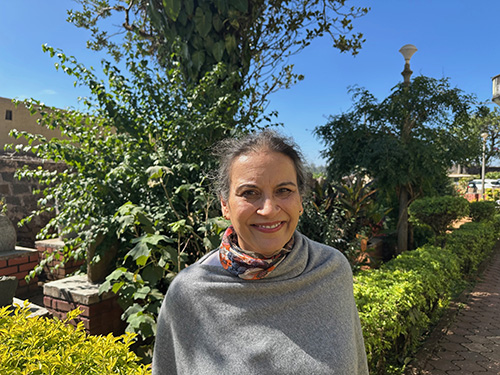
When we got out of the car at the Coorg Wilderness Resort, I realized we had entered the coldest place I’d ever experienced in India, with temperatures in the fifties and sixties daytime. I wrapped up in my cashmere shawl and kept it on for the rest of the stay.
Monkeys were everywhere! The clever girl photographed below became our frenemy. She waited near the suite till we were gone and then jumped down from the roof to our balcony and turned the handle of the closed door to go inside. Indoors, she located a closed can of almonds with a picture of the nuts on the can. She skillfully ripped off the metal lid, devoured the almonds and scampered through the suite, enjoying herself, until she was shooed out by the arriving cleaner. Even after the crime, she lingered near our door, giving cool stares that reminded Tony and me that she had rights to the place.
I’d seen the resort in brochures and online photographs and thought from its appearance that it was a renovated coffee plantation. My eyes had fooled me. The property was just a few years old but built in a convincingly traditional style and furnished with neo-Victorian furniture and textiles. Most rooms were a steep hill walk down from the reception building and hotels, but little electric carts whizzed about by young local drivers took care of any exhausting climbs, especially at night. The hotel buildings were painted cheerful red. Guest suites were almost all located up flights of stairs and had private balconies and terraces overlooking the rolling hills. At least part of my guess was correct: the vast lands included a small coffee plantation with beans being grown, roasted and shared with other properties in their group, the Paul John Hotels.
The food was extremely tasty, with most of the fare South Indian. Large buffet meals were included in most people’s room packages, but we found the hotel’s small restaurant that specialized in Kodava dishes, very enjoyable, both for the food and the company of local people. Local mushrooms, greens, and bamboo shoots were combined in curries that made an intriguing meal that seemed to taste of the mountains.
Hiking, swimming in a pool, visiting the hotel’s farm and learning about coffee production were all offered as activities. Most of the resorts’ clients were multigenerational Indian families. While climbing uphill on a hike to the lookout point shown above, I fell sharply and was worried my throbbing quadricep would prevent me from walking back downhill. One of the tourist families had chartered an all-terrain vehicle going along the same rough path and gave me a seat, for which I was extremely grateful. For the next eight days traveling in India, my bruised thigh slowly healed.
Fortunately, I was still mobile enough to walk short distances. In nearby Madikeri, Tony and I visited a fort dating from the early 1600s that, during British occupation of the early 1800s through 1947, was used for administration, as well as a small Anglican church. Strolling through this church, we studied a plaque engraved with names of British parishioners who’d left the paradise of Coorg to fight and ie in the World Wars. No longer used for services, the small Gothic building had become a museum of Indian history, with cases filled with local archaeological finds, many of them stone tablets and statues of Hindu and local deities.
One of India’s most distinguished military combat officers, General Kodendera Subayya Thimayya, came from a Kodava coffee plantation-owning family. The general, who was known in his youth as Dubbu to his family, became “Timmy” to the British and the outside world.
Gen. Thimayya studied at the Bishop Cotton boarding school in Bangalore, the Prince of Wales Royal Indian Military College, and finally at the Royal Military College in Sandhurst, where he was one of only six Indian cadets. During World War II, Timmy was the only Indian who commanded an Infantry brigade; after the British left, he rose in the Indian Army, becoming the 3rd Chief of the Army Staff of the Indian Army from 1957 to 1961. He retired and then served as Commander of the United Nations Peace Keeping Force in Cyprus, where he died of heart attack while on active duty at the age of 59.
It was delightful to talk with a retired soldier manning the visitor desk at Gen. Thimayya’s childhood home in Madikeri, which is now a museum. I enjoyed walking through and getting the sense of what a wealthy planter’s home was like. I was pleased to see a room devoted to information about the general’s wife, Nina, who was an accomplished dancer and had lived in France before their marriage, and other rooms had displays that told stories about his siblings and his children. The Thimayya house was one of the best sightseeing opportunities in Kodagu, which really doesn’t have the multiple temples, museums and shops in most Indian tourist destinations. Truly, the place is about being away from the world and in nature’s embrace.
In the center of Madikeri town, we sampled delicious cappuccino from local beans and deliberated over the varieties of coffee we would buy and share with friends as we traveled on in India.
It was sad to watch our last sunset from the balcony at the Wilderness Resort. But the long ride down from the mountains had another excitement in store: the Namdroling Monastery, a Tibetan Buddhist refuge and learning center. The monastery was built in 1963 when the Tibetans were welcomed to India after Chinese persecution.
The initial structure for the monastery was just bamboo, and the early monks had to fend of wild animals as they built in the jungle. The community raised money and have built the monastery into a gilded, impressive complex for monks and their families. The day we visited, many monks seemed to be hastening away down the road from the monastery. When we came upon police cars closing off the exit, we learned that the Dalai Lama was visiting for a few days, and the monks were going to meet him. No such chance for us; but we considered it a brush with greatness and another example of how Kodagu might appear like a sleepy mountain hideaway, yet have a powerful impact in the larger world.
source: http://www.sujatamassey.com / Sujata Massey / Home / by sujatamassey.com webmaster / March 26th, 2025
Looking for a peaceful escape from the busy city life of Bangalore? June is the perfect time to take a weekend trip and enjoy the calm beauty of South India. One of the best weekend getaways near Bangalore in June 2025 is Coorg. Also known as Kodagu, Coorg is often called the “Scotland of India” because of its green hills, coffee plantations, cool weather, and peaceful atmosphere. It’s just around 250 km from Bangalore and is ideal for a short break with family, friends, or even solo.
Let’s explore why Coorg is the perfect weekend getaway this June.
Green landscapes and fresh air In June, Coorg becomes even more beautiful. The monsoon begins, and the rains make everything green and fresh. The smell of wet soil, the sound of birds, and the misty hills create a peaceful mood. If you are someone who loves nature, you will enjoy every moment here. The scenic drives through winding roads covered with thick forests and coffee plantations are a treat to the eyes. You can stop at many places on the way for pictures or just to breathe in the clean air.
Popular places to visit in Coorg
Coorg has something for everyone. Here are some must-visit spots:
Abbey Falls – A stunning waterfall hidden in the forest, Abbey Falls is a great place for nature lovers and photographers. The short walk through coffee plantations to reach the falls is a lovely experience.
Raja’s Seat – This viewpoint offers a beautiful view of the hills and valleys, especially at sunset. It’s a peaceful place to sit and enjoy the fresh breeze.
Madikeri Fort – For history lovers, Madikeri Fort gives a glimpse into Coorg’s past. It also has a museum inside with interesting displays.
Dubare Elephant Camp – If you’re traveling with kids or love animals, this camp is a fun place. You can watch elephants being bathed and fed and even take part in some activities.
Talacauvery – This is the birthplace of the river Cauvery. It is also a holy site and offers beautiful views from the hilltop.
Local food and coffee Coorg is also known for its tasty local food. Try dishes like Pandi Curry (pork curry), Kadumbuttu (rice dumplings), and Noolputtu (rice noodles). These are full of local flavors and are best enjoyed at homestays or small local restaurants.
And of course, don’t miss the coffee. Coorg produces some of the best coffee in India. You can visit a coffee plantation, learn how coffee is grown, and sip a fresh cup while enjoying the cool weather.
Where to stay
Coorg has many options for all kinds of travelers. From budget hotels to luxury resorts, and cozy homestays in the middle of coffee plantations, you will find a place that suits your needs. Staying in a homestay will also give you a chance to talk to locals, learn about their culture, and eat home-cooked food.
Perfect weekend itinerary
Here is a sample weekend plan for June 2025:
Day 1 (Saturday)
Leave Bangalore early in the morning
Reach Coorg by noon and check into your hotel or homestay
After lunch, visit Abbey Falls and Raja’s Seat Enjoy local dinner and relax
Day 2 (Sunday)
Visit Dubare Elephant Camp early in the morning
Head to Talacauvery and Madikeri Fort Try local food for lunch
Leave for Bangalore by late afternoon
Tips for travel in June
Carry an umbrella or raincoat, as it may rain suddenly
Wear comfortable walking shoes for sightseeing
Book your stay in advance as Coorg is popular during weekends
Try to leave early from Bangalore to avoid traffic
Why Coorg is perfect for June
June is the start of the rainy season, and Coorg looks like a green paradise. The weather is cool and perfect for walks, sightseeing, or simply relaxing with a hot cup of coffee. It’s close to Bangalore and easy to reach by road, which makes it a great weekend choice.
Whether you’re looking for nature, adventure, food, or just a peaceful time, Coorg gives you all. So, pack your bags and make your June weekend refreshing and unforgettable with a short trip to Coorg.
Get best deals on travel, receive travel tips and travel stories instantly Subscribe to Nativeplanet.
source: http://www.nativeplanet.com / Native Planet / Home> Travel Guide / by Neha Choubey / May 23rd, 2025
Madikeri Fort was first built as a mud fort by Mudduraja at the end of 17th century. He also built a palace inside the fort. It was eventually rebuilt in granite by Tipu Sultan who later named the site as Jaffarabad.
The Madikeri fort had witnessed several fierce battles. In 1700, Doddavira Rajendra took control of the fort. The Palace was renovated by Lingarajendra Wodeyar II in 1812-1814.
The fort encompasses a church which houses the state archaeological museum, and in 1812, when the British took over the territory the fort, the palace and its apartments were all transformed into district offices. Two magnificent mortar elephant figures can also be seen inside the fort. The palace features a stone formation of a tortoise, which has initials of King Vijayarajendra engraved on it.
The palace is built in gothic style, and the church inside is known as the St. Mark’s Church which has been converted into a museum with historical artifacts, along with a section dedicated to Field Marshal Cariappa. Besides museum, this fort also houses a district prison, the Kote Mahaganapathi Temple and the Mahatma Gandhi Public Library.
Coorg located on the Western Ghats around 180 miles from the hi-tech city of India Bangalore, in the state of Karnataka is admired for its enduring beauty. The recorded history of the area says that it was ruled by the Lingayat Rajhas who established their capital at Madikeri where they built a mud fort. The inhabitants of Coorg, Kodavas agitated the Mysore ruler Hyder Ali and Tipu Sultan in the course of random rebellions.
Eventually Tipu marched into Coorg with a large army in 1785 AD and overcome to their little kingdom. But just after four years, with the British assistance, Coorg take back their Kingdom and Raja Veerarajendra set about the task of reconstruction. Yet in 1834 AD, the British captured the Coorg and prosecuted the last Raja Chikkaveera Rajendra and expelled him. With its foggy mountains and opaque jungles, Coorg give the impression like a little corner of to the British and adopted a name as the Scotland of India.
The British left a legacy behind that is still an imperative source of national capital. The well laid coffee plantations by them in Coorg account for almost half of Karnataka’s coffee production and the state goes on with to be the major producer of coffee. Talakaveri, the origin of the River Kaveri is situated in the Brahmagiri hills of Coorg and this area is about 4,500 ft above the sea level. Hence, it is one of the scenic spot in Coorg. A temple and a big tank have been built near the kundike at Talakaveri; the pilgrims’ take bath in the tank prior to praying at the origin of the river.
There are two famous Hindu Temples dedicated to lord Shiva and lord Ganesha and both the temples are open to visitors. Coorg has many verdant hiking routes in the midst of forests and hills, and it’s better to visit in the months from October to February. Misty hills, lush forest, acres and acres of tea and coffee plantations, orange groves, undulating streets and breathtaking views are what make Coorg an unforgettable holiday destination. You can accompany cheap flights to India for exploring this marvelous destination that is definitely going to manage your travel budget in a way you will be able visit much more places of interest.
A breathtaking attraction of waterfalls known as abbey Falls is located at a distance of around four miles from Madikeri town, approaching this attraction is itself an excellent ride experience as the path that you drive on is very narrow with countless turns and twists, ups and downs with a ebullient mother nature greets you at each turn. This famous falls, situated on a private property, attracts a large number of tourists around the globe. There are other famous waterfalls to be explored such as Iruppu Waterfalls, Mallalli Waterfalls and the Chelavara Waterfalls. A nature lovers paradise Nisargadama, an ecological park, this romantic 64-acre island is reachable through a hanging bridge offering immense pleasure to all the Nature and Fun loving tourists to wander around the park. You can also visit various stunning attractions like Nagarahole, Dubare Forest, Harangi Dam, Chiklihole Reservoir, Omkareshwara Temple, Coffee Plantation Farm, Raja’s Seat and Madikeri Fort.
source: http://www.CheapFlightHouse.co.uk / admin> News> / August 28th, 2011
WELCOME. If you like what you see "SUBSCRIBE via EMAIL" to receive FREE regular UPDATES.
Read More »