Tag Archives: Kodavas

Genetic study traces origin of Coorgis to three ancestral populations spanning millennia

The Kodavas, while a socio-culturally homogenous community, have evoked considerable interest among anthropologists as their origins and demographic history are much debated.

The Coorgi, or Kodava, community in Karnataka can trace its origins to at least three different ancestral populations, including as geographically diverse as the Palliyar, a tribe from the South Western Ghats, to north Indian Sikh-Jat. The oldest of these can be traced to roughly 3,000 years ago, and the most recent, to about 330 years, reports a first-of-its-kind study analysing genetic data from native Coorgis.

The study, published in the latest edition of the peer-reviewed Communications Biology, underlines that the several ethnic communities in India are not homogenous and are a result of the mixing of diverse ethnic groups over millennia.

The Coorgis, while a socio-culturally homogenous community, have evoked considerable interest among anthropologists whose origins and demographic history are much debated “due to their stark socio-cultural contrast with surrounding populations”, the study notes.

Their population comprises around 3,00,000 individuals, with 1,200 extended families.

Based on studying the genetic history from 144 individuals, the authors, comprising those from the University of Delhi, South Campus, and the Centre for Cellular and Molecular Biology, Hyderabad, have found that the oldest — called Coorg 3 — had a shared genetic history with the Palliyar population and this lineage came into being about 98 generations before present (GBP).

One GBP is about 25 to 30 years, thus dating them to about 3,000 years ago. Then the Coorg-1 branched away 64 generations, or around 1,900 years ago. The third group, Coorg-2, is relatively recent — about 330 years ago — from the admixture of Coorg-1 and Coorg-3.

The authors came to their conclusions by comparing the frequency of certain genes in the Kodavas to the database of the genetic structure of other caste groups and tribes. The frequency distributions of variations in certain genes enable educated guesses at the times during which certain populations combined, or whether the individuals of a group were largely isolated from surrounding populations.

Traditionally a group of agriculturists with martial customs interlacing their day-to-day lives, the Coorgis practise family exogamy and caste endogamy, the paper notes.

However, the community’s various customs prevalent among the Coorgis “notably deviate from the Hindu way of life” and their cultural origin stories trace them to the Indus Valley during the Mohenjodaro period as well as migratory groups such as the Indo-Greek army of Alexander’s India chapter, pre-Muslim Kurds or pre-Christian Georgian, and an off-shoot of the Indo-Scythian Sakas.

“These being entirely anecdotal or from the early population dating, scientific evidence is lacking,” the authors B.K. Thelma, K. Thangaraj, Anirban Mukhopadhyay, Loumos Kumar, and Kiran Sran note.

“These insights into ancient and diverse genealogies among Coorgis not only explain their unique status in the Indian diaspora but also encourage further research to identify unknown migrations to the Indian subcontinent and thus further unravel its unique demography,” the authors note.

India’s population groups, several of whom maintain distinct physical and cultural practices, trace their ancestry to two large population groups: Ancestral South Indian (ASI) and Ancestral North Indian (ANI). The former trace their lineage to a hunter-gatherer Ancient Ancestral South Indian (AASI) group from 65,000 years and the lineages from the Indus Valley Civilisation. The latter, or the ANI, are a mix of IVC and late Bronze Age Steppe culture (of Central Asian origin).

The mixing of ASI and ANI intermixing between 1,900 and 4,200 years make up the main caste and tribe groups of North and South India.

source: http://www.thehindu.com / The Hindu / Home> News> Cities> Bengaluru / by Jacob Koshy / May 20th, 2025
CM Assures Kodavas To Name A Metro Station After Field Marshal K.M. Cariappa

“The matter to name a Metro Station in Bengaluru city will be placed before the cabinet meeting to arrive at a decision,” said the Chief Minister and exuded confidence that “None will have objection to name a Metro Station after Field Marshal Cariappa.”

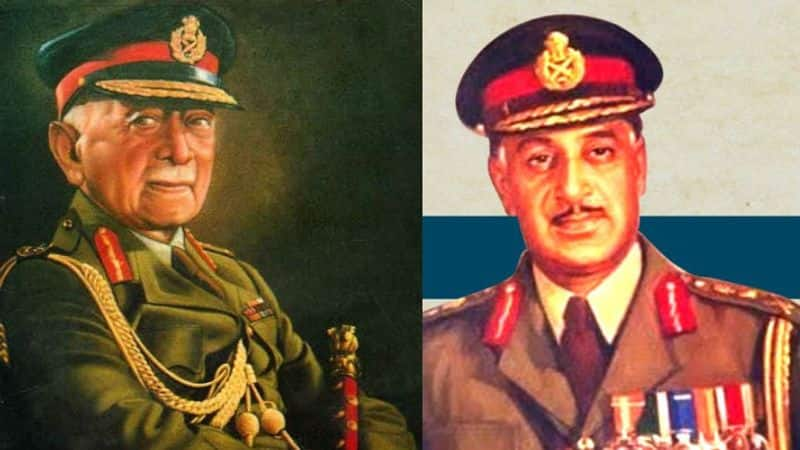
Field Marshal K.M. Cariappa —DC Image

Bengaluru :

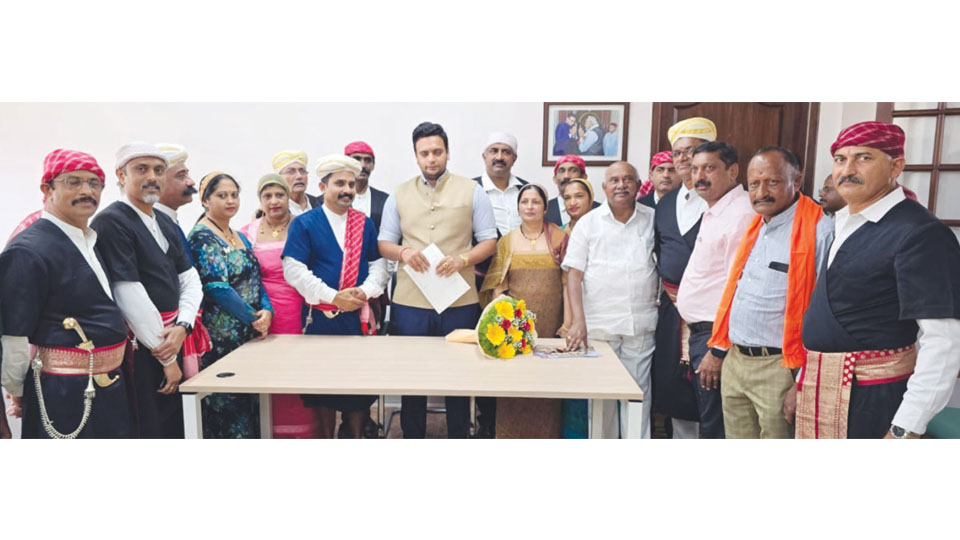
Responding to a plea to name a Station of Bangalore Metro Train Corporation Limited (BMRCL) in Bengaluru city, Chief Minister Siddaramaiah on Sunday assured to fulfill the wish of the Kodavas to name a Metro Station after Field Marshal K.M. Cariappa, the first Field Marshal of independent India. Field Marshal K.M. Cariappa was from Kodagu district.

“The matter to name a Metro Station in Bengaluru city will be placed before the cabinet meeting to arrive at a decision,” said the Chief Minister and exuded confidence that “None will have objection to name a Metro Station after Field Marshal Cariappa.” Though a request has been made to name a Metro Station but have not stated a particular Station.

“I will make an honest effort to name the Metro Station after Field Marshal Cariappa,” Siddaramaiah said at a felicitation programme organized by members of Kodava Samaj in Bengaluru. The felicitation to Chief Minister Siddaramaiah and Deputy Chief Minister D.K. Shivakumar was organized in honour of the State Government allocation of 7 acres for Kodava Samaj in Bengaluru city.

At the function, D.K. Shivakumar assured the Kodava Samaj members that the demand of Kodava Samaj to name a Metro Station after Field Marshal K.M. Cariappa has been received with an open mind and stated “The State Government will make all efforts for the coming generations to remember Field Marshal K.M. Cariappa.”

source: http://www.deccanchronicle.com / Deccan Chronicle / Home> Southern States> Karnataka / by M B Girish / June 16th, 2025

Temple entry row: It is Kodavas vs Arebhashe Gowdas in Kodagu

Kodavas and the Arebhashe Gowdas are two prominent communities in Kodagu, Karnataka.

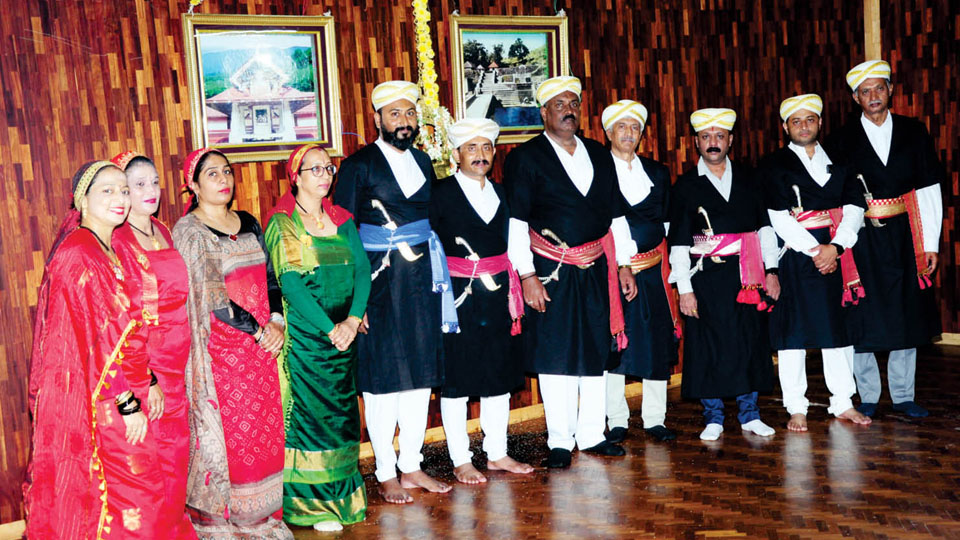
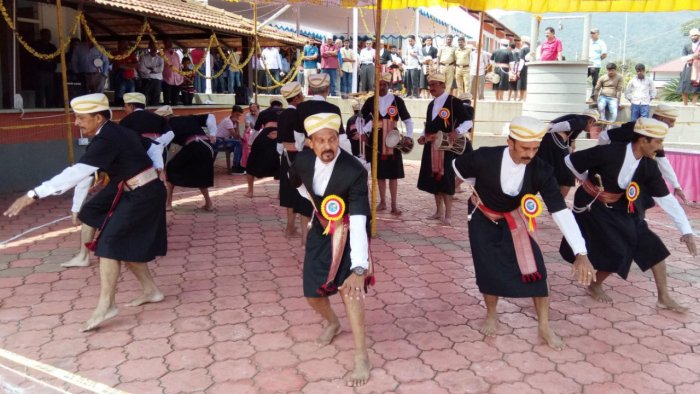
On February 2,  thousands of Kodava men and women in traditional attire took out ‘Kodavaame Baalo’, an 82km, six-day peace march led by the Akhila Kodava Samaja (AKS) in Kodagu, Karnataka. They did so to reassert their distinct identity and to draw attention to the social, religious and political challenges their community faces.

The trigger for the march was a temple entry row that has pitted two prominent communities in Kodagu―the Kodavas and the Arebhashe Gowdas―against each other.

The newly built Sri Mrutyunjaya (Shiva) temple, in Kattemadu village near Madikeri town, is the epicentre of the dispute. On December 27, when some Kodavas turned up for the annual festival in their traditional attire, some Arebhashe Gowdas stopped them from entering the temple. The “common dress code” as per the bylaw did not allow Kodava attire.

The situation escalated with both sides sticking to their guns. They filed separate complaints and announced massive jaathras (marches) in protest, forcing the district administration to intervene and impose prohibitory orders around the temple. The Arebhashe Gowdas held a massive rally in Madikeri, which the Kodavas followed up with their march from Kutta to Madikeri. The run-up to the two marches was marked by a social media war with both sides uploading provocative videos and posts.

“The Kodava community will not take part in any peace process initiated by the district administration till the police identify and arrest those who attacked Kodavas and attempted to restrict their cultural attire at the temple,” said the memorandum submitted by the AKS to Kodagu Deputy Commissioner Venkat Raja.

Said AKS member J. Ganesh Aiyanna: “A few years before the Mrutyunjaya temple incident, we were prevented from entering Talacauvery during ‘Teerthodbhava’ (annual sacred event at the place where the Cauvery is believed to originate) for wearing our traditional attire. We will not tolerate the assault on our tradition and cultural identity.”

Harsha Kodagana, member of the Arebhashe Samaja, said they were just following the rules. “The temple was built at a cost of around 06 crore, which was collected from devotees belonging to all communities. The 43-member temple committee (which includes nine Kodava members) passed a bylaw with 13 points, including the common dress code. This is meant to build a sense of equality among all communities. Some committee members stopped those wearing the Kodava attire as it violated the bylaw. The temple priest was attacked. We want the police to take suo motu action against people posting derogatory posts on social media and making casteist slurs.”

The Kodavas, however, claim that this is not an isolated case. “Some people from a particular community have belittled our icons Field Marshal K.M. Cariappa and General K.S. Thimayya, who are India’s war heroes,” said Aiyanna. “The Kodava community has a long tradition of serving the Indian armed forces. People have also petitioned the courts to curb our gun rights but the court has restored it till 2029. The gun is revered in a Kodava family as it is an integral part of all our customs. We announce the birth of a baby boy with gunshots, and baby girl by beating brass plates. We have never used these weapons for violent purposes. We are nature and ancestor worshippers and are not involved in any politics. But the assault on our culture is growing.”

The memorandum submitted to the deputy commissioner said that the government must ensure a safe atmosphere for Kodavas to practise their traditions on their own land. It also urged the government to take steps to facilitate Kodava community participation in the Talacauvery rituals, extend constitutional protection for Kodava land, culture, traditions, religious practices and social security, and to curb “political oppression” by dominant communities.

The district administration has sought a report from the temple committee, but notably, the elected representatives―Congress MLAs A.S. Ponnanna (Virajpet) and Mantar Gowda (Madikeri), and BJP MP from Mysore-Kodagu Yaduveer Wadiyar―have kept a safe distance from the controversy.

Interestingly, when it comes to elections, the two communities have supported candidates without caste considerations. Previously, BJP leader Appachu Ranjan, a Kodava, had won the Gowda-dominated Madikeri assembly seat three times, while fellow party member K.G. Bopaiah, a Gowda, had won the Kodava-dominated Virajpet assembly seat thrice.

The temple entry episode is the latest incident that could galvanise the Kodavas, who for long have feared losing their identity. The 1.5 lakh-strong population has been dwindling; there has been fragmentation of families because of migration for education and employment, and inter-caste marriages. The community, under the banner of the Codava National Council, has been resisting the change in demography, loss of land and the alienation of the younger Kodavas from their language and culture. The long list of the council’s demands includes geo-political autonomy, inclusion in the scheduled tribe list, exemption from the Arms Act, inclusion of Kodava language in the Eighth Schedule of the Constitution, recognition of river Cauvery as a living entity, UNESCO’s intangible cultural heritage tag, inner line permit system to prevent demographic changes, and greater representation of Kodavas in Parliament.

The influx of people from outside, commercial exploitation of forests for tourism and massive infrastructure projects have resulted in water scarcity, landslides and floods, say locals. The people of Kodagu include Kodava, Arebhashe Gowda and 21 other Kodava-speaking communities who have lived in harmony despite the many challenges.

“After the backlash by Kodavas over Tipu Jayanti celebrations, the Congress government was forced to stop it,” said a local leader who did not want to be named. “But now, some vested interest groups are playing mischief to divide the Hindu community.”

source: http://www.theweek.in / The Week / Home> The Week / by Prathima Nandakumar / February 16th, 2025

Kodavas seek MP’s support for long-pending demands

Mysuru:

The United Kodava Organisation (UKO) has formally appealed to Mysuru-Kodagu MP Yaduveer Krishnadatta Chamaraja Wadiyar to address the long-standing demands of the Kodava  ethnic community.

This appeal follows a meeting of the UKO delegation led by President Kokkalemada Manju Chinnappa with the MP in Mysuru on Friday.

Yaduveer assured the delegation of his unwavering support. He committed to advancing the community’s concerns with dedication, promising to navigate the necessary processes to achieve a positive and effective resolution.

The delegation, which included notable dignitaries such as former Education Minister of Karnataka and current MLC Adagur H. Vishwanath, played a crucial role in highlighting the community’s needs. Vishwanathprovided valuable insights into the issues and stressed the urgency of addressing them.

Three primary demands

• Inclusion of Kodava community in the Central List of Other Backward Classes (OBC) to ensure equitable opportunities in education, employment and governance.

• Inclusion of Kodava Language in Central Scheme for Protection and Preservation of Endangered Languages (SPPEL) and Augmenting Study Materials in Indian Languages through Translation and Academic Writing (ASMITA) Projects to preserve and promote Kodava thakk, which is on the brink of extinction.

• Inclusion of Kodava Language in the 8th Schedule of the Constitution to recognise and protect the linguistic and cultural identity of the Kodava community.

The delegation emphasised the historical struggles of the Kodava community since Kodagu’s integration with Karnataka in 1956.

They argued that these demands are crucial for the preservation of Kodava language and culture and for gaining access to enhanced educational and employment opportunities through OBC status. Constitutional recognition of the Kodava language would further solidify its protection and promotion.

The UKO delegation comprised Cheppudira Suju Karumbaiah, Kallichanda Robin Subbaiah, Nellamakkada Jeffrey Madaiah, Ajnikanda Suraj Thimmaiah, Machamada Ramesh, Boliyangada Bopanna, Pudiyokkada Dinesh, Machanada Aruna Somaiah, Theethimada Bose Aiyappa, Ponjanda Giri, Chiriyapanda Vishu Kalappa, Kotrangada Pemmaiah, Cheppudira Prathima Karumbaiah, Kallichanda Deena Uthappa, Bollachettira Myna Kalappa and Kokkalemada Rathi Kushalappa. 

source: http://www.starofmysore.com / Star of Mysore / Home> News / September 02nd, 2024

Ashwini-Tanisha climb four spots to world no. 28

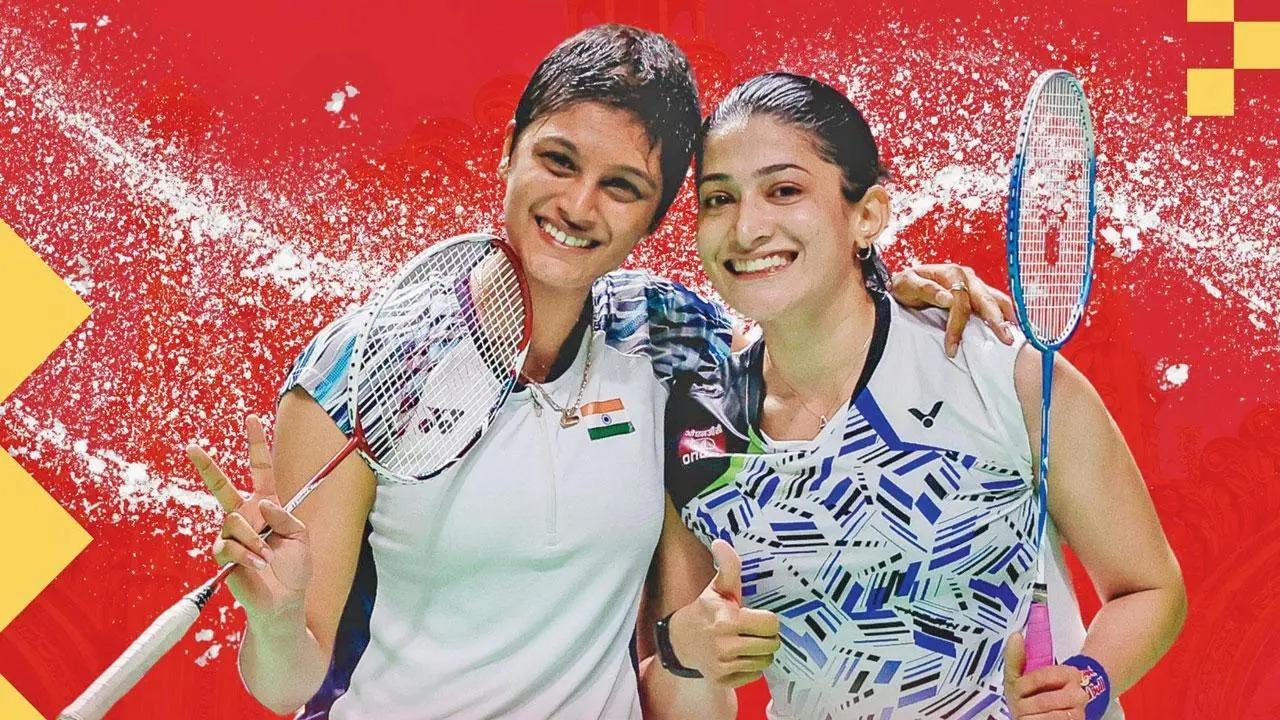
The duo earlier won the Nates International Challenge and Abu Dhabi Masters Super 100. Ashwini, 36, and her 20-year-old partner Tanisha, who started playing together only in January this year, finished runners-up at the Syed Modi International Super 300 tournament in Lucknow on Sunday.

Ashwini-Tanisha climb four spots to world no. 28
India’s women’s doubles pair of Tanisha Crasto and Ashwini Ponnappa (Pic: File Pic)

Indian women’s doubles pair, Ashwini Ponnappa and Tanisha Crasto, jumped four places to reach world number 28 in the latest BWF rankings.

Ashwini, 36, and her 20-year-old partner Tanisha, who started playing together only in January this year, finished runners-up at the Syed Modi International Super 300 tournament in Lucknow on Sunday.

The duo earlier won the Nates International Challenge and Abu Dhabi Masters Super 100.

Priyanshu Rajawat, who had reached the semi-finals in men’s singles, also gained a place to break into the top-30.


All other Indian singles players stayed static with HS Prannoy (8) remaining the top ranked shuttler from the country, followed by PV SIndhu (12), Lakshya Sen (17) and Kidambi Srikanth (24).

Satwiksairaj Rankireddy and Chirag Shetty occupied the world number 2 spot, while Treesa Jolly and Gayatri Gopichand stayed at 19th position.

source: http://www.mid-day.com / Mid-Day / Home> Sports News> Other Sports News> Article / by PTI / December 05th, 2023

AGM Of Pombolak Kodava Koota

Mysore/Mysuru:

The first Annual General Body Meeting (AGM) and get-together of Pombolak Kodava Koota, Mysuru was  held at Kodava Samaja premises in Vijayanagar here recently.

Koota President Mundottira Jaya Chengappa presided.

Theetharamada Dr. Devaki rendered the invocation. Vice-President Thathira Bheemaiah condoled the death of Koota members in the past one year.

Koota’s annual report was read out by Joint Secretary Guddanda Rashmi Uday while the accounts was presented by Treasurer Kullachanda Vinutha Kesari.

The names of new members was read out by Annarkanda Prathima Thimmaiah, who also  compered the programme. 

Committee Member Boppanda Appaji proposed the vote of thanks.

Various sports and games were conducted for the members present by Sports Committee Member Adikera Sajjan Cariappa.

Cash prizes were presented to meritorious students while the Ph.D awardee Dr. Theetharamada Dr. Devaki was felicitated on the occasion.

Hon. Secretary Chottanda Chengappa, Mallengada Sharanu Somaiah, Theethira Beena, Ammanda Somaiah, Mullanda Vinu Cariappa and others were present.

source: http://www.starofmysore.com / Star of Mysore / Home> News / November 02nd, 2023

In the Cauvery’s birthplace, drinking water is just one of many worries for the Kodavas

In the Cauverys birthplace drinking water is just one of many worries for the Kodavas

The passions that have been running high over the Cauvery have eclipsed that the river’s birthplace is in Kodagu district, where it is an integral part of the lives of the Kodavas, but not in terms of drinking water.

Journalist and author PT Bopanna has eloquently spoken about what the Cauvery means to the Kodavas, one of the communities of people who live within Kodagu district. The identity of the Kodavas is deeply linked with the river, which rises in Talacauvery. Ironically, Madikeri city, the district headquarters, frequently faces a drinking water problem.

“The Rs 230-crore Harangi project has been conceived for the benefit of politically powerful Mysore and Hassan districts. Though the Harangi Dam (in picture) is in Kodagu and the major catchment area of the Cauvery is also in Kodagu, the irrigation potential from the project for Kodagu is a measly 607 hectares, out of the 54,591 hectares of total irrigation potential,” Bopanna says on his website Coorgnews.in.

He pointed out that 1,909 acres of land in 13 villages had been submerged by the construction of the Harangi dam in Somwarpet taluk.

“See, we don’t benefit from the Cauvery at all. Every year the river floods and the roads get blocked. We are always inconvenienced by the Cauvery. We just want our basic water needs met, and it’s a small place,” Bopanna says.

Although people are worried about drinking water supply from the Cauvery, Bopanna says that in Kodagu, people are worried more about a larger problem.

“I’m worried about deforestation,” Bopanna says. Falling in the Malenadu region, Kodagu district houses 4,102 sq km of the Western Ghats, making it look as if a green carpet is spread across the land. It is one of the least populated districts in the state.

Referring to the 400kv power line from Yelwal in Mysuru to Kozhikode in Kerala, a distance of 55m, Bopanna said: “This government-sponsored deforestation needs to stop.”

According to some estimates, 55,000 trees will be cut in thick forest areas to set up the line. Activists have alleged that a few thousand trees have been cut in violation of the law.

“When trees were being cut for that power line, not a single politician made any noise. They weren’t bothered. This clearly reveals their short-sightedness and their lack of understanding about the effects of deforestation. Rainfall has become erratic in the region,” Bopanna says.

He advocates a complete ban on tree felling and the conversion of agricultural land for commercial purposes. “But Kogadu’s politicians depend on the timber lobby and sand mining. They have not allowed a discussion on the Kasturirangan report.”

Now he’s worried. Drought-like conditions that occurred only once in five years in the past, are now almost an annual feature. “We need to save the Western Ghats to save the Cauvery (for all of us). That’s the core issue.”

source: http://www.thenewsminute.com / The News Minute / Home> News> Cauvery Dispute / by Aneesha Sheth / September 22nd, 2016

CNC Opposes Genealogy Study Of Non-Kodava Communities

Mysore/Mysuru:

The State Government’s move to release funds for the genealogical study of 18 communities of Kodagu has irked the Codava National Council (CNC) as it has alleged that in the name of studying the genealogy of Kodavas, the Government is cheating the Kodava community by including other non-native communities in the study.

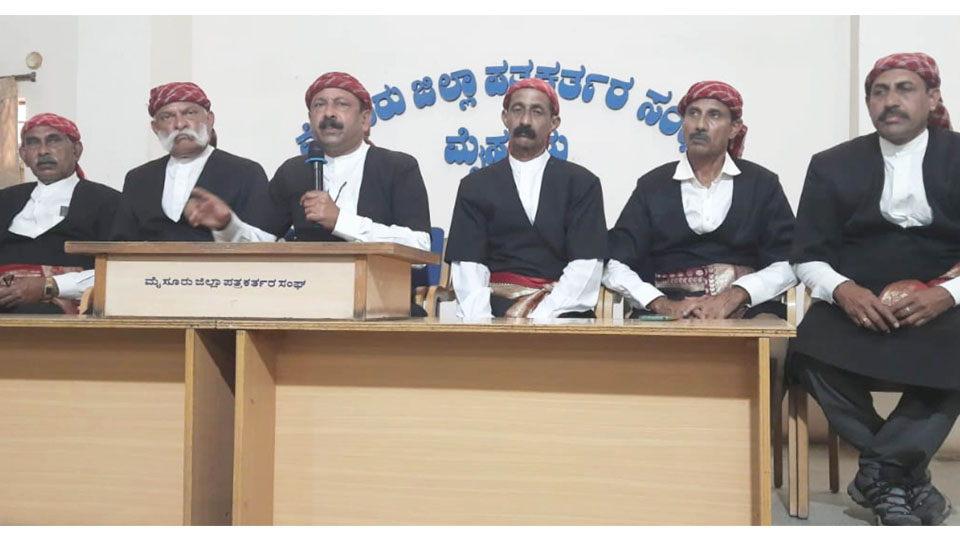
Addressing a press conference at Pathrakartara Bhavan yesterday, CNC Chairman Nandineravanda U. Nachappa said that the State Government must conduct a fair ethnographic study to facilitate the inclusion of the Kodava race under the Scheduled Tribe (ST) list as per the directions of the Karnataka High Court.

Opposing the genealogy study of other communities of Kodagu by suppressing the genuine genealogical study of the Kodava community, Nachappa said that the Kodava race has nothing to do with other communities in Kodagu.

He released a memorandum submitted in this regard to Chief Minister Basavaraj Bommai, Minister for Social Welfare Kota Srinivas Poojari and Chairman of Karnataka Backward Class Commission Jayaprakash Hegde.

Indigenous community

“We don’t have any half-shoots. Kodavas are a single race and a race cannot be multiple communities. How Kashmiri Pundits are indigenous to Kashmir, likewise Kodavas are indigenous to Kodagu. The Kodava race does not come under a quadrilateral caste system and there is no sect, or sub-sect within the Kodava race and do not have multiple communities under its fold,” Nachappa noted.

Those who migrated and settled in Kodagu have copied Kodava culture and are now claiming themselves as Kodavas, the original inhabitants. “They are attempting to delegitimise and uproot the native Kodava race from his soil which is a dangerous act. Under the conspiracies unleashed by them and supported by some elected representatives who have vested interests, the Kodava community is on the verge of losing their unique identity, art and culture,” he said.

Highlighting various documents, gazetteers, census records, Coorg manuals, anthropological surveys and reports, history books, journals and literature from the British era to the Commissions appointed by Governments of independent India like the Havanur Commission  Report, Venkatswamy Commission Report and Justice O. Chinnapa Reddy Commission Report, Nachappa said that there is ample proof to establish Kodavas as a unique and exclusive race that has no relation with other communities of Kodagu who are basically migrants.

Why study the migrant population?

“Instead of conducting a study on original Kodava tribalism, the State Government is planning to conduct a study of migrated population and portray it as the study of Kodavas which is an unjust move aimed at destroying the Kodava community. It is an attempt at Kodava race extermination. Everyone wants to use the ‘Kodava brand’ for their ulterior motives and not for protecting or respecting it,” Nachappa added.

The Kodava race has genetically imbibed unique folkloric culture and formulated its own folk legal systems ages ago. Those who infiltrated into Kodagu and have, over the years, copied and aped Kodava culture cannot be called Kodavas,” he noted.

“Instead of destroying the Kodava race by mixing other non-native cultures, the Government must protect their unique identity without any dilution by including Kodavas in the ST list which will be a befitting tribute to the nationalistic and patriotic Kodava race, thereby abiding by true social engineering to save them from extinction,” he urged.

CNC Members Bepadiyanda Biddappa, Kaliyanda Prakash, Chambanda Janathkumar, Apparanda Poovanna and Areyada Girish were present.

source: http://www.starofmysore.com / Star of Mysore / Home> News> Top Stories / March 18th, 2023

How Kodavas lost their distinct identity – Part I

Can the upcoming Census 2021 and the Karnataka assembly polls bring the spotlight on the decades-old demand of the Kodavas?

Kodavas participate in cultural competitions organised as part of Kodava Namme at Balugodu near Virajpet in October 2017. Credit: DH File Photo

What is a common thread that runs through the following names: Field Marshal KM Cariappa, former Indian hockey team captain MP Ganesh, former Union minister CM Poonacha, sprinter Ashwini Nachappa, and actor Rashmika Mandanna? More than being celebrities in their chosen field of work and belonging to Karnataka, they all trace their origins back to Kodagu district, about 250 kms west of Bengaluru.

Kodavas are a group of people who have a distinct identity — a distinction that is no longer recognised by the State! For decades now the Kodavas have been demanding they be categorised as a distinct group, and two upcoming events could bring to the spotlight on the Kodavas’ cause: the delayed 2021 Census, and the Karnataka Assembly elections.

Unique Identity

The Kodavas were recognised as a distinct ethnic group, even during and much before the reign of the Lingayat rajas who ruled the Kodagu province since the sixteenth century AD. From 1947 till 1956, Kodagu was included in the list of Part C states along with Ajmere, Bilaspur, Bhopal, Tripura, Manipur, Delhi, Kutch, Himachal Pradesh, and Vindhya Pradesh. In 1956, on the recommendations of the States Reorganisation Commission, Kodagu merged with the then Mysore (now Karnataka) state as a separate district.

We do not have evidence as regards the Kodavas’ antecedents, and it is widely believed that they were migrants to the region during the third or fourth century AD. Little is known as to where they migrated from, and what made them settle down in the place they have done so. Going by their physiognomy, and compared with the other communities that inhabit the Kodagu district, the Kodavas are quite distinct and different in many ways.

Language, Religion, Customs

The language they speak, Kodava takk, is undoubtedly a Dravidian language in terms of its grammar and syntax, and is replete with words from the other Dravidian languages, besides words from Urdu, and Farsi.

Their religious practices, traditions, and customary laws too vary a great deal vis-à-vis the other religious groups and castes that are the Kodavas’ co-habitants. The Kodavas’ primary, and almost solitary, religious pursuit has been ancestor propitiation. Every Kodava okka (lineage) traces its descent from its Guru Karanava (common male ancestor) for whom they have a kaimada (shrine) in the vicinity of their ain mane (ancestral house).

The Kodavas do not have temples, nor do they solicit the services of any priests, Brahmin or otherwise, in any of their religious practices or rituals. Their marriages, births, naming ceremonies, deaths, etc, is officiated and performed by one of their own elders, and there is no place in these ceremonies for any Hindu rituals or recitations in Sanskrit or any other language.

In effect, they have no link whatsoever with the practices of the chathur varnas (Brahmin, Kshatriya, Vaishya, Shudra) nor do they have any caste affiliation or internal caste divisions among them, but for a miniscule subgroup known as Amma Kodavas who are, ideally, considered to be vegetarians and teetotallers.

Martial Tradition

The Kodavas have had a martial tradition and have been part of the armies of the Lingayat rajas and later of the British. From the time of the rajas, the Kodavas, along with some other communities, have been the beneficiaries of the lesser taxed jamma land tenure, which mandated that they offer their services to the palace for a few days every month. Details as regards these as also many other matters concerning living conditions and life in general vis-a-vis the rulers were notified as 53 decrees/orders by the penultimate raja of Kodagu, Lingarajendra Wodeyar, in the Hukumnama published in 1811. Jamma landholding conferred the right to possess firearms without licence. This practice is prevalent even today.

The 1941 Census came and went, with most of the Kodavas not realising that they had lost, unreasonably, their unique identity. More about that in Part II.

(MA Kalam, a social anthropologist, is Visiting Professor, Centre for Economic and Social Studies, Hyderabad. The author has been researching in Kodagu since the early 1970s.)

Disclaimer: The views expressed above are the author’s own. They do not necessarily reflect the views of DH.

source: http://www.deccanherald.com / Deccan Herald / Home> Opinion / by MA Kalam / February 23rd, 2023

The Brave Warriors of Coorg: A Salute to the Kodavas

The Kodavas have a unique culture and history rooted in martial traditions, and have made significant contributions to the Indian Armed Forces. Defence and aerospace analyst Girish Linganna explains 

The Brave Warriors of Coorg: A Salute to the Kodavas

The Kodavas, a small warrior community from the Coorg district in southern India, have a long-standing tradition of serving in the Indian armed forces. This is due to a number of factors, including their martial culture, sense of duty and loyalty to the country, and the prestige and honour associated with military service in their community.

The Roots of Warrior Culture 

The Kodavas are an ethnic group with a distinct culture and language. They have been living in the Western Ghats region for centuries, with a history dating back to even before 1100 AD. They have a martial culture, and the men are trained in the use of traditional weapons such as the odi katti (traditional Coorgi sword). They have a rich history of military service, with many Kodavas having served in various conflicts and peacekeeping missions. 

In fact, Coorg is the only district in India to have produced all the ranking officers in the Indian army, despite having a population of just over 1.5 lakh. Coorg was once a state and had its own chief minister. Four diwans served the Mysore maharajas; many held the commander-in-chief position even pre-independence during Mysore rajas’ rule.

Dedication to Duty: The Kodavas in the Indian Army 

The Kodavas have a strong tradition of serving in the Indian armed forces, driven by their martial culture, sense of duty, and desire to protect and defend their country. Many come from families with a history of military service, and it is not uncommon for multiple generations of a family to have served in the armed forces. There are even Kodava couples who have served together in the Indian armed forces. They are also known for their physical fitness and discipline, which makes them well-suited for military service.

In addition, serving in the armed forces is often seen as a way for Kodavas to protect and defend their country, and many view it as a matter of great pride and honour. As a result, many Kodavas are willing to make significant sacrifices, including leaving their families and communities to serve in the armed forces.

Bravery in the Face of Danger: Kodavas in Action 

The Kodavas have a rich history of military service and have played a significant role in defending the country in various conflicts and peacekeeping missions. They have been known for their bravery and dedication in the face of danger. 

One of the most notable Kodavas to have served in the Indian Armed Forces is Field Marshal K M Cariappa, who was the first Indian commander-in-chief of the Indian Army. He played a key role in the integration of the Indian states after independence and was honoured with the Order of the British Empire and the Legion of Merit.

Another notable Kodava is Lieutenant General K S Thimayya, who served as the Chief of Army Staff from 1957 to 1961 and was awarded the Padma Bhushan and the Distinguished Service Order. Other notable Kodavas who have served in the Indian Armed Forces include Brigadier B K Ponnappa, who fought in World War II and the Indo-Pakistani War of 1947, Lieutenant General B K Krishnan, who served as the Director-General of Military Training and the Commandant of the Indian Military Academy, Lieutenant General P K Dewan, who served as the Deputy Chief of Army Staff and the Commandant of the Indian Military Academy, and Major General K S Chandrashekar, who served as the General Officer Commanding of the Indian Army’s Southern Command.

In conclusion, the Kodavas have a unique culture and history rooted in martial traditions and have made significant contributions to the Indian Armed Forces. Their sense of duty and loyalty drives their dedication to the military to the country and their desire to protect and defend their country. 

They have a rich history of military service and have played a significant role in defending India. The Kodavas of Coorg are a shining example of bravery, honour, and sacrifice, and their service to the nation should be revered and celebrated.

source: http://www.newsable.asianetnews.com / Asianet Newsable / Home> English News> India News / by Team Newsable / February 21st, 2023