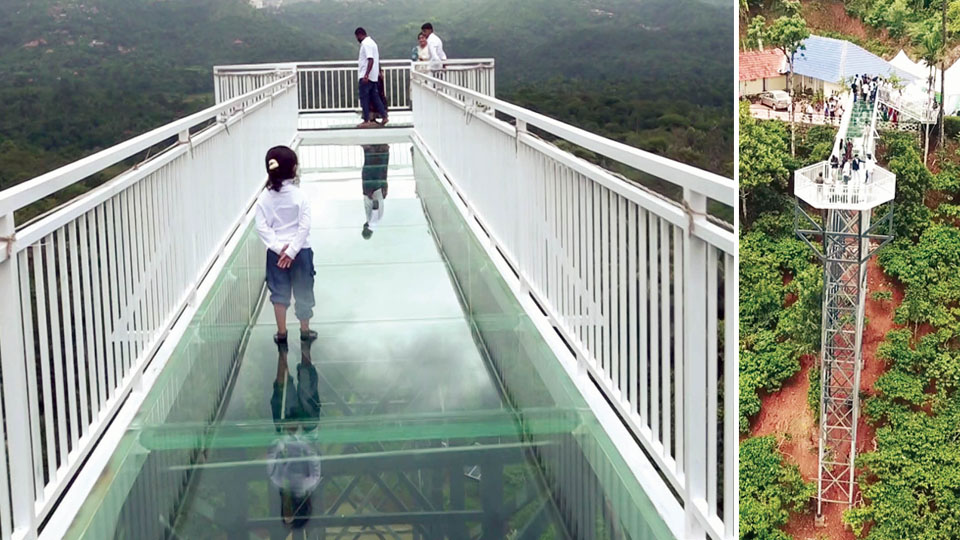
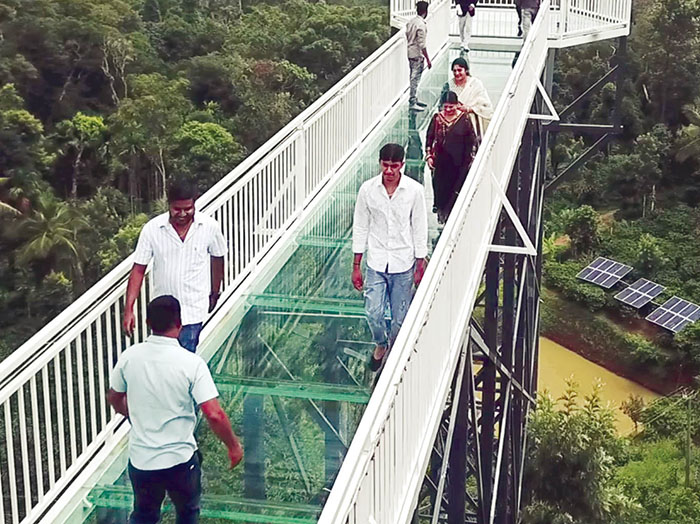
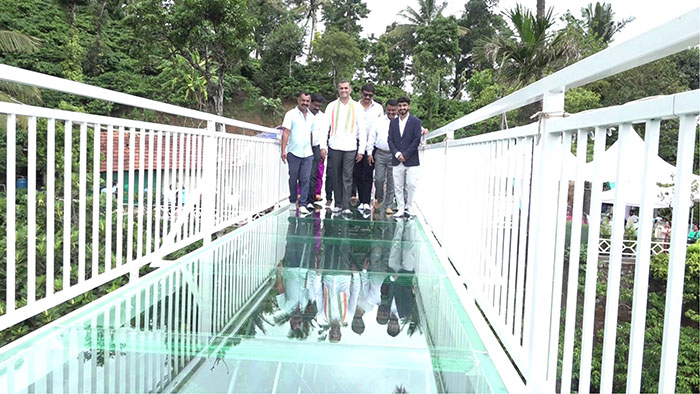
Among the multiple famed tourist attractions in the hill station of Kodagu — a captivating destination for travellers from far and wide throughout the year — is a new must-visit place, a brand-new glass skywalk bridge.
It is made of tempered glass panels or flooring that provide visitors with a thrilling experience of walking above ground level, often offering panoramic views of the surrounding landscape
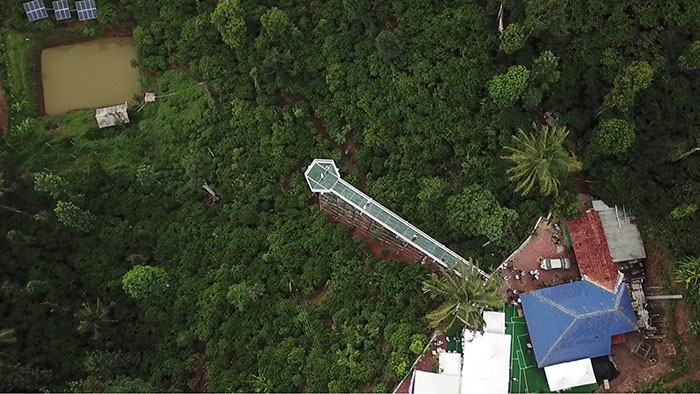
The glass skywalk bridge in the district is the second such attraction in South India, the first one being at Wayanad in Kerala at 900 Kandi Eco Park. This remarkable Glass Skywalk Bridge of Kodagu is nestled amidst the forests and hills of the Western Ghats, attracting tourists like a magnet.
The bridge, standing approximately 78 feet tall, with a length of about 32 metres and a width of 2 metres, has been attracting tourists to the ‘Pappy’s Bridge of Coorg’ at Udoth Motte near Madikeri on the Madikeri-Bhagamandala Road. This bridge, with a capacity to support around 5 tonnes, can accommodate up to 40 to 50 individuals at once, providing them with an opportunity to immerse themselves in the beauty of nature.
Through its stunning natural beauty, the tourism sector in Kodagu has successfully garnered global attention and the newly added glass skywalk bridge further enhances this tourism initiative.
Situated amidst the lush green hills, the bridge offers a breathtaking view. Standing and gazing from the bridge not only evokes a sense of fear but also provides an exhilarating experience. The surrounding hills seem to reach out and beckon, their peaks adorned with greenery.
Looking down from the top feels as if the sky is within reach and stepping on the glass, while enjoying the beauty of nature, brings joy to the visitors. While the natural beauty of Kodagu with its umpteen viewpoints has enchanted the tourists, the bridge, amidst the greenery of the hills stands this remarkable creation, skilfully erected by engineers.
Walking on the transparent glass surface, amidst the verdant nature, offers a thrilling experience that takes it to the next level. The facility, allowing tourists to indulge in the beauty of nature, was recently inaugurated by Virajpet MLA A.S. Ponnanna who also walked along the bridge.
He appreciated the significant contribution of the local community to this tourism initiative and noted that the facility holds significance as a unique attraction in the region, surpassing even the famous glass bridge in Wayanad.
He said that the facility will contribute to the Kodagu district’s development as a nature-friendly tourist destination, without causing any harm to the environment. He also mentioned that the implementation of this unique project will lead to an increase in the number of tourists visiting the district.
Fake image
Yet again an image claiming that cracks had developed on the glass bridge went viral and the video generated panic among tourists. Later it was found to be stable and the photo was confirmed to be fake.
source: http://www.starofmysore.com / Star of Mysore / Home> Feature Articles, Top Stories / July 17th, 2023
MICA College, Mysuru, had organised a State- level Inter-Collegiate Hockey, Cricket, Basketball and Football tournaments in their campus from June 16 to 27.
Sporting teams from Kodagu, Mandya, Bengaluru, Mangaluru and Mysuru fought for the coveted MI trophies and cash prizes.
In the Hockey MI3s tournament, 29 teams participated and Field Marshal K.M. Cariappa (FMKMC) College, Madikeri, defeated St. Joseph’s College of Commerce, Bengaluru to win the trophy and a cash prize of Rs. 15,000. Runners-up were awarded a trophy and cash prize of Rs. 7,000.
In MI Crick, 32 teams participated. In the finals, SBRR Mahajana PG Centre defeated MIT Tandavapura and won a cash prize of Rs. 10,000 with a trophy. Runners-up were awarded cash prize of Rs. 5,000 and a trophy.
A total of 14 teams participated in the MI3s Basketball tournament. In Boys category SJCE, Mysuru defeated MICA Mysuru and won Rs. 10,000 cash prize and a trophy. Runners-up were awarded cash prize of Rs. 5000 and a trophy. In Girls category, NIE Mysuru defeated Sapient College, Mysuru in the finals.
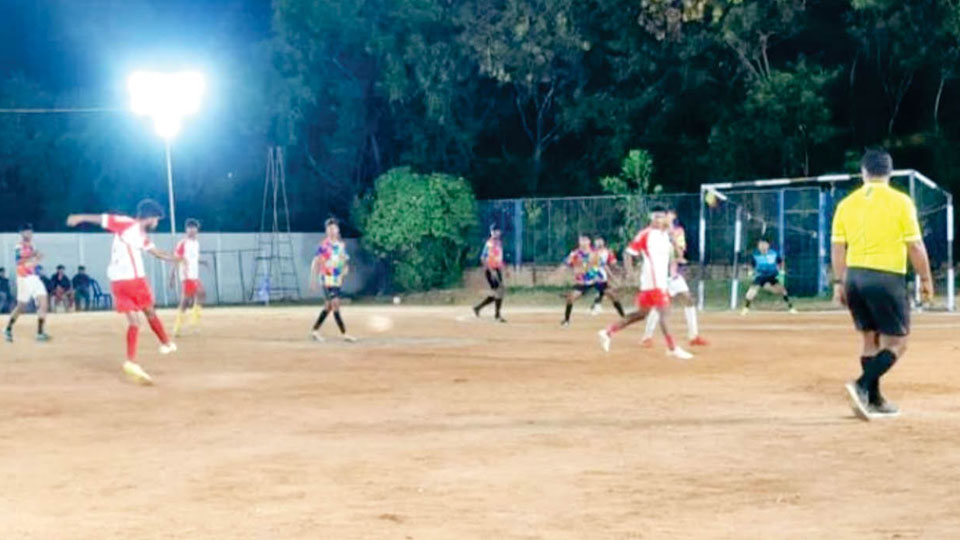
In the flood light MI7s Football tournament, 32 teams participated. Sacred Heart Mangalore defeated FMKMC College, Madikeri to clinch the trophy and a cash prize of Rs. 20,000. Runners-up were awarded cash prize of Rs. 10,000 and a trophy, according to a press release from MICA Principal.
source: http://www.starofmysore.com / Star of Mysore / Home> Sports / July 10th, 2023
Several farmlands in South Kodagu have been abandoned owing to bad weather conditions and the increased movement of wild elephants.
Madikeri:
Paddy cultivation in the district is receding compared to yesteryears as farming is yet to pick up pace this monsoon. Changing weather conditions, natural disasters and increased wildlife conflict are other factors affecting paddy cultivation. It is said that only 48 hectares of land have been cultivated with paddy.
Over six years ago, nearly 35,000 hectares of farmlands across Kodagu were cultivated with paddy crops. But, the extent of the cultivation has diminished over the years as the target for paddy cultivation has now been reduced to 30,500 hectares by the agriculture department.
“The increasing wildlife conflict can be seen as one of the reasons for the farmers to give up paddy cultivation in several farmlands in the district. Further, many farmers have also taken to the cultivation of horticulture crops. Increased conversion of farmlands to areca nut estates has reduced paddy cultivation,” opined Shabana Sheikh, the Joint Director of the Agriculture Department.
A total of 23180 hectares of farmland was cultivated with paddy achieving a target of 76% last year. Over 384 hectares suffered crop loss due to rainfall last year.
The farmers of South Kodagu have increasingly given up paddy cultivation. Out of the 14000 hectares of targeted cultivation, only 9960 hectares were cultivated for paddy last year. Several farmlands in South Kodagu have been abandoned owing to bad weather conditions and the increased movement of wild elephants.
With monsoons delayed in the region this year, the paddy transplantation work is yet to pick up pace in the district. In Madikeri taluk, only 40 hectares of farmlands have recorded paddy transplantation work to date this year. Meanwhile, eight hectares of farmland have witnessed paddy transplantation in Somwarpet taluk. Nevertheless, as per the data recorded by the department, no farmlands have yet been cultivated for paddy due to delayed rains across South Kodagu including in Virajpet and Ponnampet taluks.
source: http://www.newindianexpress.com / The New Indian Express / Home> States> Karnataka / by Express News Service / July 11th, 2023
Vidwath Kaverappa entered the Karnataka pace bowling landscape in a rather tough period after the departure of stalwarts such as R Vinay Kumar, Abhimanyu Mithun and S Arvind.
It might have been tough for a 24-year-old to learn the tricks of the trade almost on his own.
But now, Vidwath has established himself as his the state team’s spearhead and a potential candidate to fill an India spot. In the previous Ranji Trophy season (2022-23) Vidwath bagged 30 wickets, and he has already picked up 14 wickets from three innings in the on-going Duleep Trophy.
The numbers give the picture of a young man who is a quick learner and a keen observer. Vidwath emphasised those aspects as his strong points.
The Karnataka right-arm pacer said he has been absorbing lessons from watching the footage of South African legend Dale Steyn and veteran India bowler Mohammed Shami.
“Since I don’t have the express pace, like Prasidh (Krishna) or Vysakh (Vijayakumar), I need to seek other ways to get purchase from the wicket. So, that’s something I’ve watched great bowlers like Dale Steyn or Mohammed Shami do,” he said.
Vidwath said he has been trying to copy the seam position of those two fine bowlers.
“I have seen a lot of moments of their bowling. So, I can see how good the seam presentation is and what the ball does, even in white ball. So, why not do it in the red ball with a prominent seam, and I know I’ll get a lot more help with it,” he said.
Vidwath has shown that trait all along, even from his junior days for Lions Institutions in Gonikoppal, Coorg, and Presidency College in Bengaluru.
Samuel Jayaraj, a KSCA coach who imparted him the first lessons, remembered watching him in Coorg eight years ago during a talent hunt drive by the state association.
Back then he was pleasantly surprised to see the spirited reaction from youngsters to the camp as Coorg is the stronghold of hockey.
“Vidwath had come as an attentive kid. He never gets tired of bowling at nets and wanted to learn as much as he could. He is a natural bowler and athlete.
“Coming from Coorg, he had that natural aptitude for sports. We just have to give him direction once I saw him during that trial. We were convinced that Vidwath would be an asset to the Karnataka team, and if everything goes well, then even at a higher level,” said Jayaraj.
It was not an empty praise as evidenced by future turn of events. In 2022, Vidwath finished as the second highest wicket-taker in Syed Mushtaq Ali Trophy, taking 18 wickets from 8 matches at an impressive economy of 6.36.
The recognition of that effort came when Punjab Kings picked him up for the IPL 2023 from the mini-auction for his base price of Rs 20 lakh.
Though he did not play a game in this edition, Kings bowling coach Charl Langeveldt is convinced of his ward’s potential
“The team combination is such that it is tough for every player to get a chance to be in the 11. In a tournament like IPL, matches come very fast and you really don’t have time to tinker with 11.
“But this kid is talented and bowls at nets with a wonderful seam (position). He, I am sure, will feature in Punjab’s scheme prominently very soon,” Langeveldt told PTI.
Vidwath knew the importance of waiting for his turn patiently after taking those bold initial steps.
“I feel like I’m learning from every game and that is important at this age for me. I knew even if I didn’t get a chance into the big team this transitional period, my time will come.”
“I’ve watched football a lot, so I know how in a great team new players come when old players leave, you need to be patient with them. So, I had to take my time and perform to the best of my abilities,” said Vidwath.
Vidwath indeed did that. He wrecked a power-packed West Zone batting unit with a seven-wicket haul. His victim list included players like Cheteshwar Pujara, Suryakumar Yadav and Prithvi Shaw.
However, Vidwath, typical of him, did not try to wrap the performance in a magic cloak.
“I’ve always been the kind of guy who likes responsibilities, who likes to take up the heavy load and make the big moments for the team,” he said.
Perhaps, he knows bigger moments are on his way.
source: http://www.rediff.com / rediff.com / Home> Cricket / by PTI / July 14th, 2023
Bandadka village in Coorg, known as the Scotland of India, faces challenges during the rainy season. Lack of road connectivity, proper bridge, electricity, and necessities affect villagers. Despite requests, the authorities have not provided adequate facilities, putting lives at risk.
Coorg is known as the Scotland of India. It shines with lush green vegetation, numerous waterfalls and rich culture. However, during the rainy season – the lack of basic necessities in the villages comes to the fore. One such unfortunate village is the Bandadka village of Sampaje taluk.
The village has no road connectivity to the city. Every rainfall disrupts their peace. Agony takes over as the flow of the river is alarming. The local panchayat has not yet been able to provide the village with a proper bridge.
‘Jeevanadi’ going dry: Coorg suffers in tourism
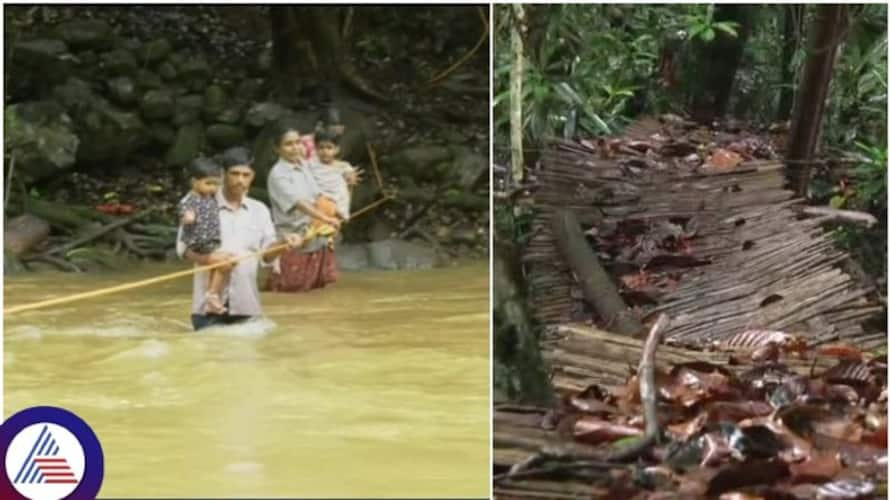
During rainfall, it is risky to cross the Payashwini river, which flows along NH275. If one wants to reach the village, crossing the river while holding on to a rope is mandatory.
The villager’s lack of electricity, road connectivity, and even the link bridge connecting them to the taluk is breathing its last. Surprisingly, even after 75 years of Independence, there are such villages in the state, especially in the tourist hotspot of Coorg, which lack the necessities.
The link bridge connecting the village and outskirts is ready to set sail if the people set their foot on it. There are five families in the village. Three of them comprise of old-aged people who are leading their lives in danger. The river flow during summer is very low, so the villagers’ daily life is not disrupted. Only during the rainy season do they undergo an adventurous river crossing every day. The Payashwini river, called the Chandragiri river, flows across Sullia, Jalsoor, Chengala and Kasargod.
Karnataka: Expect rainfall within 24 hours; ‘Orange’ alert for the coasts
The Panchayat used to construct a small bridge for the villagers once in 3-4 years. This year, the one constructed last time is on the verge of collapsing into the river.
For medication, villagers must walk 2.5 km through the wild forest, which elephants and leopards inhabit. They should walk through the small dam and reach NH 275 for transport. The villagers complain that even after requesting the ministers, Panchayat and District administration to provide them with the facilities, no one seems to care.
source: http://www.newsable.asianetnews.com / Asianet News Able / Home> English News> India News / by Vijaykumar Patil / July 04t, 2023
While 70% of saplings are that of native trees, 30% are crops that have some economic value.
Picture for representational purpose only | (Pic: Express)
The College of Forestry at Ponnampet, in collaboration with Sucden India, is involved in an afforestation drive across Kodagu. The initiative called the Sustain Landscape Project involves the distribution of native varieties of tree saplings among farmers.
Plans are afoot to plant them across sacred groves in the district.
Kari Mara (Diospyros ebenum), ‘Karadimara (Chukrasia tabularis), Dhoopa mara (Vateria indica), Kari Dhoopa (Canarium strictum) to name a few, are native trees that once dotted the Kodagu landscape.
Older generations are familiar with the tree species but these are alien to the present generation. The increased demand for wood and medicines along with galloping urbanisation has led to plummeting of the native trees. To revive the trees, Ponnampet Forestry with support from Sucden India this sustainable plan was devised.
“Community forestry is being promoted through the project with seedlings of the native trees being distributed to the farmers of the district. We have been conducting this initiative for the last three years. Final-year students of the college look after the seedlings of the native trees and a few economic crops, under the experiential learning model. The students receive stipends from Sucden and the seedlings raised in the college nursery are then distributed to farmers,” said K Nanaiah, assistant professor of the college.
Look at the numbers The seedlings are distributed for free to the farmers. While 70% of saplings are that of native trees, 30% are crops that have some economic value, he said. Since 2020, a total of 250 farmers (the majority in South Kodagu) have received the saplings and raised them. The college students have also planted saplings across river banks and other protected areas across South Kodagu.
This year, they plan to expand the initiative across Kodagu, he said. The college has invited the participation of various Sacred Grove Temple committees. “Communities must be involved for this sustainable initiative. If this does not happen, we will devise other plans to plant these saplings,” he said.
The project initiative has achieved a success rate of over 50% with 25,000 to 30,000 saplings have been planted so far. They are now targeting 60,000 plantations by this year.
source: http://www.edexlive.com / Edex Live, The New Indian Express / Home> News> Kodagu / by Prajna GR / July 03rd, 2023
The All India Tennis Association (AITA) on Tuesday unveiled a 12-member squad for the continental quadrennial games. Doubles specialist Rohan Bopanna will once again represent India in the tennis competition at the Asian Games. On September 23, the Asian Games will get underway in Hangzhou.
The potential singles players for the team are Sasikumar Mukund and Sumit Nagal, who both competed in doubles at the 2018 Asian Games alongside Ramkumar Ramanathan. Bopanna, 43, and Ramkumar are most likely to team up. The other two members of the group, Yuki Bhambri and Saketh Myneni , are already paired on the ATP Tour.
Ankita Raina, who won bronze in singles at the 2018 Asian Games, will serve as the team’s captain. Karman Kaur Thandi, Rututaj Bhosle, Sahaja Yamlapalli, Vaidehi Chaudhari, and Prarthane Thombare are the other active members.
The nucleus of the Indian delegation in both the men’s and women’s divisions is essentially unchanged, with Ramanathan, Nagal, and Bopanna also being part of the Jakarta Games team. Ankita, Karman, Ruturaj, and Prarthana are among the four female players that participated in the Jakarta tournament five years ago. Sahaja and Vaidehi are the two new players.
source: http://www.sportscafe.in / Sports Cafe / Home> Tennis> National> News / by Sports Cafe Desk / June 21st, 2023
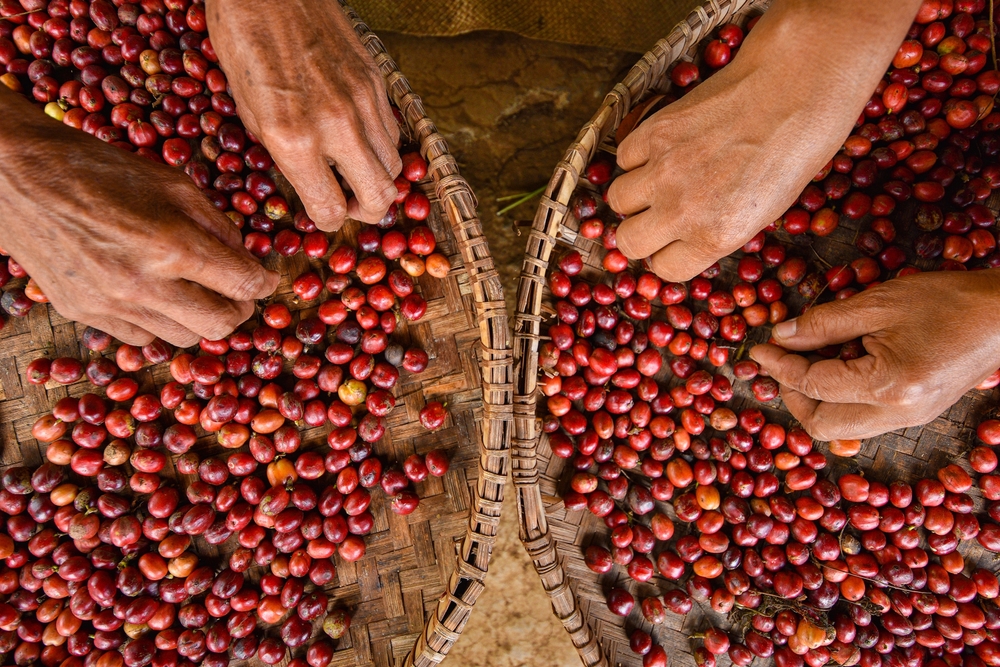
India’s coffee growth is being affected by unpredictable weather patterns, including insufficient rainfall, temperature fluctuations, drought, and heavy flooding.
While Baba Budan, the Sufi monk, planted the smuggled seven coffee beans in the bountiful hills of Chikmagalur, little did he know that India, one day, would be the 6th largest coffee producer, with Karnataka contributing 71 per cent of coffee production to the world. Though the coffee culture has evolved through the years, and there has been a significant boom globally for coffee, the threat for your morning cup is real and is right there knocking on the doors–climate change!
Unpredictable weather patterns are affecting most parts of the world, including India. The country grows a lot of Robusta and Arabica, and both these varieties suffer prolonged periods of inadequate rainfall, temperature rise, drought and heavy flooding.
The Case With Arabica And Robusta Samia Subhani, a fourth-generation coffee planter and the founder of “The Kaimara Belt Coffee,” sounded distressed. Her family has been into coffee growing and trading for over 150 years, and their estate in the Baba Budangiri hills grows Arabica, the most demanding variety. Subhani’s estate has 50-80 farmers working on the plantation daily, all dependent entirely on coffee farming. But with the ongoing effects of climate change, coffee is going through a difficult phase putting all their lives at risk.
Arabica is the most demanding variety of coffee when it comes to cultivation. Photo Credit: Shutterstock
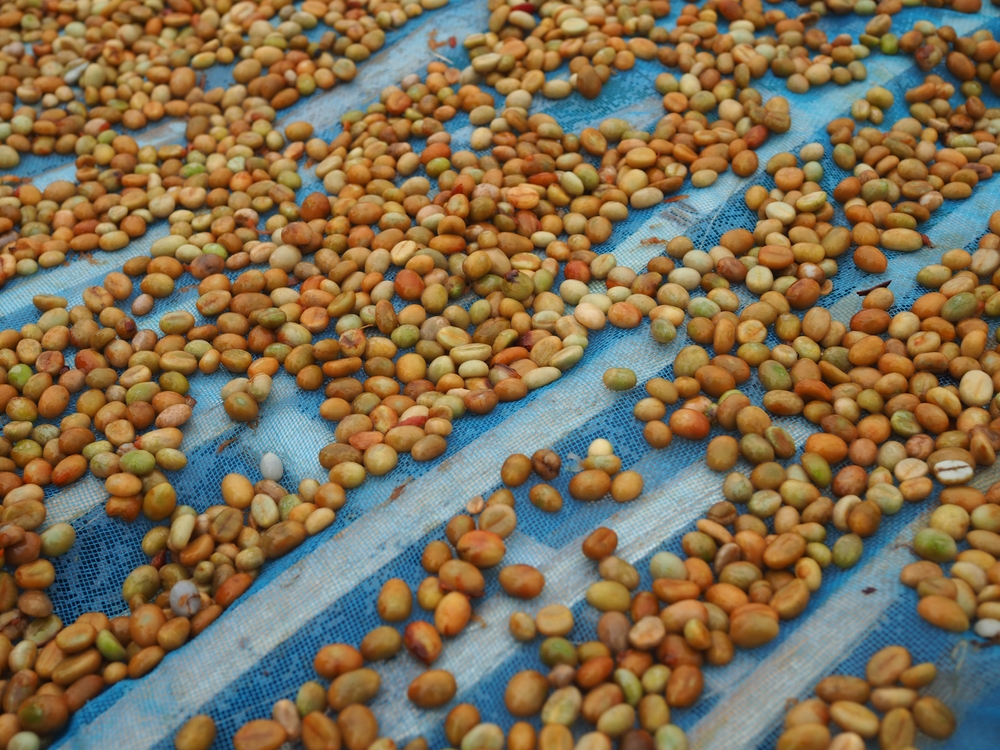
“Climate change causes leaf shedding, reduced coffee plant productivity, and increased vulnerability to pests. Extreme cold delays plant flowering and lowers berry quality. Heavy rains at irregular times cause cherries to burst and drop prematurely. Continuous heavy rains before harvest prevent drying, leading to crop spoilage,” Subhani explained.
But like they say, every solution has a problem. Subhani mentioned that we must dig deeper into our pockets and follow some mitigation measures to maintain the yield and deliver quality coffee to patrons. “So, we provide artificial rains during droughts, maintain proper irrigation in the system, avoid using harmful pesticides to control soil erosion and use only soil-friendly organic fertilisers.”
While this is the situation in an Arabica coffee plantation at Chikmagalur, Coorg, popularly known as the “Scotland of India,” is known to grow more of Robusta.
“Climate change is certain to impact coffee yields due to temperature changes. Coorg is experiencing water scarcity, affecting coffee production. Coffee plants require water, nutrients, rainfall, and sunshine for healthy growth and harvest. Fluctuations in yield have increased, with lower yields in recent years. Delayed monsoons in Coorg will further reduce usable berry production,” said Shruti Shibulal, CEO and Director of Tamara Leisure Experiences.
Though these climatic impacts are less friendly to coffee crops, Shibulal believes they have the advantage of scientific studies to inform how we can prepare for this impending change. Collaboration and knowledge sharing between those with high knowledge of the crop and those with research-driven and technological expertise is vital to assess, test and implement viable solutions.
Robusta is grown extensively in Coorg. Photo Credit: Shutterstock
“The Tamara Coorg is a 100 per cent organic plantation. Therefore, our irrigation is entirely dependent on rainfall. Rainwater harvesting tanks here facilitate the annual reuse of 90 lakh litres of rainwater. These reserves do marginally help us contend with unpredictable weather patterns. However, the coffee trees depend on rain and sunshine in balanced intervals to yield the greatest number of healthy berries,” she added.
According to Shibulal, instead of using measures like industrial fans or increased labour to speed up the drying process of coffee berries, they focus on protecting and nourishing their coffee trees using organic fertilisers and natural supplements. They also prioritise sustainable practices like reusing rainwater for irrigation and actively monitoring soil health. She further emphasised the importance of maintaining a tree canopy structure, which creates a favourable micro-climate for coffee plants and supports biodiversity.
“I would turn my support to local and regional producers or individual plantations (whenever possible). Smaller establishments will face greater challenges during times such as these. As consumers, we must lend our loyalty to those actively pursuing practices that combat climate change in the long run,” Shibulal concluded.
Climate Change Affecting Coffee Planters All Over Tapaswini Purnesh, a fifth generation coffee planter and Director–Marketing & Promotions of Classic Coffee, mentioned that other coffee planters, including the Harley Estate at Sakleshpur in Karnataka, are also battling climate change.
“The worst scenario is the last 4 to 5 years, where we have been experiencing heavy rains during harvest season, i.e., November to February, which normally is a complete dry spell. India is unique to the sun drying of coffee. However, due to unseasonal rains during harvest, plantations are now installing mechanical dryers to avoid quality deterioration,” Purnesh said.
She also stated that coffee production is highly labour-dependent. In the long run, finding labour may become increasingly challenging, an evident trend. As the cost of implementing adaptive measures rises and the arduousness of growing quality coffee amidst climatic pressures is considered, customers must acknowledge that good coffee comes with a price tag. “The coffee growers will be motivated to enhance and refine their coffee cultivation practices if they receive adequate remuneration from the price realisation.”
Meanwhile, the latest estimates warn that climate change may mean that as much as half of the land used for coffee production worldwide may no longer be suitable for it by the middle of the century if global warming continues at this rate. So, as all these coffee planters suggest, every citizen must be more responsible towards our environment, travel responsibly, and follow more sustainable practices to save our environment and the most loved, coffee.
source: http://www.outlookindia.com / Outlook Traveller / Home> Explore> Story / by Deepa Shri Rajan / June 25th, 2023
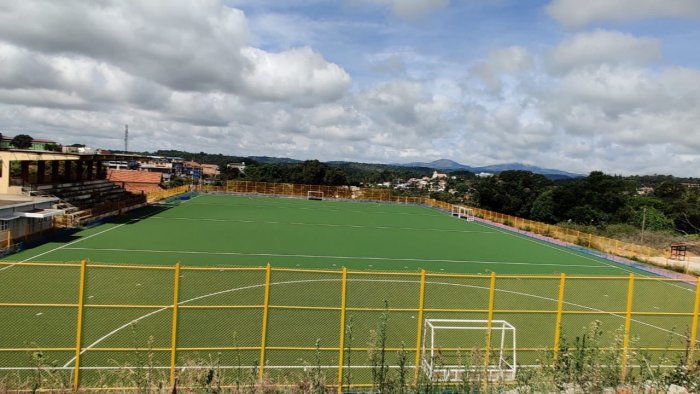
The turf that was laid in 2021 remains unused and in a shambles.
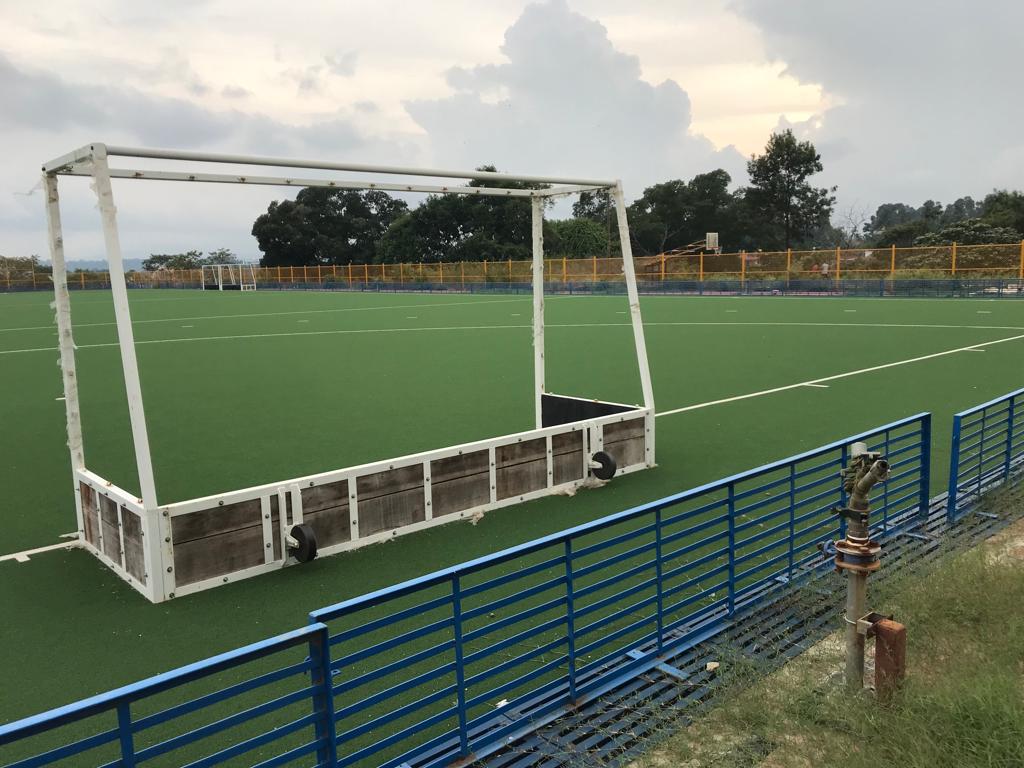
The hockey turf sanctioned by Hockey India way back in 2013 which was completed in 2021 has a deserted look without a single match being played so far. Credit: DH Photo A sprinkler to water the pitch that was wrongly placed behind one of the two goal posts at the hockey arena in Somvarpet. Credit: DH Photo
Synonymous with the region’s love for hockey, the little-known Somvarpet – which translates to Somavara (in Kannada): Monday and pete meaning market – in Kodagu district has produced several Indian players over the years.
While BP Govinda (member of the bronze medal-winning Indian team at the 1972 Munich Olympics) and SV Sunil (two-time Olympian and Arjuna awardee) are the stalwarts, other Indian internationals such as Arjun Halappa, Vikram Kanth, Hariprasad, Abharan Sudev, Roy KP, BM Geeta along with many in the national camps and India A teams have helped put Somvarpet on the sports’ global stage.
Recognising its contribution to Indian hockey and the immense talent pool, it was only apt when Hockey India chose this small town in the western ghats to lay a long-pending demand for synthetic turf – much to the excitement of hockey lovers here.
Though the ‘bhoomi puje’ was done way back on March 14, 2013, work began only in 2018 while the laying of the turf was completed in 2021 at Somvarpet’s Government PU College premises. More than two years later, however, the field remains closed and unused without a single match being played so far.
Surprisingly, around two years ago, HI issued an FIH (International Hockey Federation) certification and declared the turf fit as per international standards even though half the work – undertaken by a Hyderabad-based sports infrastructure company – had remained incomplete. This came as a rude shock to many and their concerns falling on deaf ears.
While defective drainage system and unscientifically built retention walls lead to flooding during monsoon, sprinklers have been placed behind goalposts. Besides, there are no water and electricity connections which have left the turf dry in summers.
“There is weed growing around the mat and in the stands. The newly-built arena has an abandoned look,” rued Ashok HN, director of Dolphin’s Hockey Academy in Somvarpet.
“It has been 10 years and we don’t know how many more years do we have to wait to witness some hockey action here,” he added.
A total of Rs 2 crore was allocated by the DYES initially but the expenditure of the project shot up to nearly Rs 5 crore in the course of time. With the money spent going waste, the stadium with a scenic backdrop fails to paint a pretty picture.
“It is really tragic because Somvarpet is one of the main hockey beds of the State and so much money has been spent,” said AB Subbaiah, secretary of Hockey Karnataka and member of the selection committee of HI.
“The mandate is for the agency to give a minimum guarantee of seven years after the completion of work. The DYES has to hold the contractor accountable.”
When DH contacted Vismayi VT, the assistant director at DYES of Kodagu district, she assured that the turf would be functional soon.
The newly-elected MLA of Madikeri, Mantar Gowda, inspected the facility on Monday and promised to fast track the process of getting the stadium ready and operational. “Around 90% of the work is completed. The interlocking of the surface around the the turf and clearing the weed are the only tasks pending. And about the wrong placement of the sprinkler, we have requested the contractor to shift it. As soon as all this is ready, we will co-ordinate with MLA sir and our head office in Bengaluru to fix an inauguration date at the earliest,” said Vismayi.
If making the turf in Somvarpet – fourth in the district after Madikeri, Kudige and Ponnampet – functional is the immediate priority, maintaining it will be a challenge in the years to come.
source: http://www.deccanherald.com / Deccan Herald / Home> Sports> Other Sports / by Hita Prakash, DHNS, Bengaluru / June 14th, 2023
In this excerpt from his memoir, Sukumaran Chaligatha, a poet who belongs to the Adiya tribe, writes about his experience working in the ginger farms of Kodagu and the exploitation tribal workers faced.
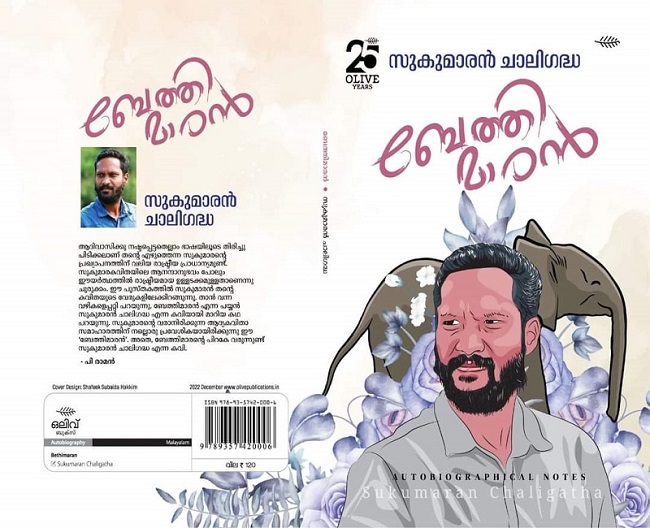
The following is a chapter from poet Sukumaran Chaligatha’s memoir Bethimaran. The chapter, titled Kudannadili Bulenta Injimu Uganda Njathukkallumu (The Ginger Crop of Kodagu and Sustenance of Life), has been translated from Malayalam by Binu Karunakaran.
Like the Bengalis who migrate to Kerala consider the state their ‘Gulf’, the Kodagu district in Karnataka too was ‘Gulf’ for the residents of Wayanad, who were taken there for work in the ginger farms. The journey was compelling. From every ooru (tribal hamlet) they would take five to six jeep-loads of people – men, women and children – jam-packed like cattle. The children felt happy seeing the adults find work and travel because of them.
Most of the workers in the ginger farms of Kodagu were from Kerala. Landlords in Karnataka owned huge farms running into acres. Houses are located five kilometres from each other. The people who take the land on lease for cultivation have specific instructions for Malayali agents, that on this particular day, in a particular colony, you will find good workers.
Each person would have taken 20 to 30 acres of land on lease and would need five or six jeep-fulls of farm workers. We would board the jeeps at around 6 in the evening. If someone eats on the way, it would be noted down in an account book. When it was time for wage distribution, this amount would be deducted. Sometimes our wages were denied. If we needed money, an advance would be given.
Some workers would take Rs 500 as advance and then splurge Rs 300 on drinks. Whatever is left would be shared with the family to meet expenses till the worker is back. One should remember that this money is meant to last the next one or two months. While returning, what remains would be the overhead of credit against one’s name in the ledger. Sometimes we would be told that money is due to them.
The jeeps would reach Kodagu late in the night. The men would be dead drunk by then. Sighting of elephants and bison was common and the front seats of the jeeps were in demand because of this. There would never be enough seats and many would hang on to the rear throughout the journey. We would reach by 2 am and there was no option but to sleep on the ground.
In the morning, the workers themselves would have to build the shed in which they would stay. It was no better than a large cattle shed, built by cutting trees in the farm and using them as poles. The roof was made of palm leaves and grass. The shed would have a kitchen, where two women would be assigned to cook rice gruel and curries. There would be a mesiri (mestri/head workman) to monitor the workers. He would keep an accounts ledger.
The mesiri was entitled to a separate room inside the shed, where liquor was stored in white-coloured pouches called moolavettis (since the corners or moola of the pouches had to be cut to consume the liquor). Anyone who drank the stuff would spin like tops. It was nothing but plain spirit. Once opened, the packets were emptied straight into the mouth without mixing even a drop of water. The women would drink too. It was nothing like the liquor one gets in Kerala.
For men, the daily wage was Rs 75 and for women Rs 55. Each moolavetti was priced at Rs 3 or Rs 4. Men would polish off five or six packets in a day, the price of which would be cut from their daily wage. Apart from the moolavetti, there would be betel quid to chew too. Mesiri would write down everything in his ledger under various overheads. And the food? Rice gruel, rice, dried sardines, and a chutney made of chillies. The menu was the same every day. After the meal, one would have to work till 5 in the evening or 6. In the mornings, work would start at 7 or sometimes 6.
The mesiri would first arrange some workers to plough the field, then decide the date on which ginger is to be planted and take us. The process resembles a burial. Initially long beds are prepared by scooping up soil from two sides on which seed tubers are sown. There would be boys as young as 10 among the workers. They would keep sowing all day from small baskets filled with seeds, all under the fierce sun. The seeds are topped with soil and over it another layer of dried leaves and grass is added. Sprouts would appear in a month’s time. The beds need to be watered regularly.
The real danger, however, was the highly potent pesticide used in the ginger farms. From a single root, 5 or 6 kg of ginger can be obtained. Which is why pesticides are used excessively. If the price for a sack of ginger goes up by Rs 2,000 or Rs 3,000, they would be rich. I have heard old-timers sharing stories of people who became crorepatis by ginger farming. It’s like winning the lottery. For some people, cultivating ginger once is enough to make it big.
The seed tubers are kept immersed in pesticides in large pit-like tanks. Adivasi men, without any kind of safety gear, have to climb down these tanks to take out the seeds. Not even a glove is provided to take out the pesticide-coated seeds or while handling cow dung. When it’s time to eat, everyone washes their hands with a cake of soap. That’s the only safety they have. Tribal hamlets are rife with stories of people who died because of this lack of safety.
Workers are needed to dig trenches. Ten people would dig side-by-side as the work needs to be completed soon. Employers know how many people they need on a particular day. For Adivasis, the work is hellish. On top of that is the sexual harassment of women by the landlords and mesiris. These happenings are narrated as stories by those who have been to Kodagu, when they work in the fields back home. There have been instances where people have been killed when issues arise.
Once the work ends, the workers come back like kings. It’s as if they have returned from the Gulf.
When one planting phase is over, the men are sent back. After a while, weeds would start sprouting and to deal with this, women are hired. After that workers are again hired to build ledges. The ginger beds need to be filled with more soil and for that men are needed. For each phase, people are hired. When it’s time for harvest, men, women, and children are taken together. When it’s time to return, some would call from Kodagu and inform their dear ones they would be returning on such and such a date. Workers would wait with excitement if their return coincided with the Valliyoorkavu festival or with Onam. After all, they did not have much to do. On the day of return, they would be truly happy. The money they earned working for so long would be splurged in a single day. Nothing is saved. The men would spend the entire money on alcohol. Those days Adivasi men were heavily into drinking. The women would buy clothes and goods for the entire family. Then everyone would leave as a group to watch a movie. From a single colony, 10 jeeps would leave for Mananthavady. Some would go to Batheri. The ambience in the ooru would be festive. Absolutely no tension. The happiness of having returned to ooru after all the torture in Kodagu. On that day, anyone else would fail to get a seat in movie theatres in Mananthavady, Batheri or Pulpally. Everything would be booked by adivasis. If someone else enters the theatre and an altercation happens, adivasis would beat them up. Brawls would be endless and many blows would be exchanged.
When I was in Class 4, I remember listening to the stories of those who returned from Kodagu. The stories were amazing. The men would also sing songs, new songs that they had themselves made up. They spoke about places where you can fish and where the river was. It was a kind of knowledge that couldn’t be found elsewhere. I listened to these stories when studying in Class 4 and 5 and felt the urge to travel. When I told my father, he agreed. That my aunt and other family members were there too made it easier. Thus began my journeys traversing many kilometres. Do you know how many places in Karnataka I have been to? The journeys would end in big estates, places that are hard to reach, without access for vehicles. Calling out to a fellow human would often be futile as there would be no one to respond. These are the kinds of places that I worked. To live, one has to…
These were the only kind of jobs available for adivasis at that time. We have been continuously subjected to disdain for being adivasis. People could subject us to anything by spreading the idea that adivasis are not intelligent or resourceful, that there is no harm if they are threatened, beaten up or even killed. Adivasis would come and work. If we had behaved like them, there would have been no settlers in Wayanad today. Isn’t it because we were decent that they continue to live there. What if we were not so…? We became slaves when the settlers arrived. They became landlords.
I was a small child when I went to Kodagu for the first time. The wage fixed for me was Rs 5. I worked for more than two months. They owed me around Rs 800 for various kinds of tasks, but it was never given. They made me, a child, work, and then stole my money. I planted ginger seeds, I dug canals to drain water from the ginger beds. I ate rice gruel, chutney made of chillies, and dry sardines. None of us could breathe well because women, children, and men were forced to stay in a single room. And there were no toilets. We went outside, to a corner of the field to attend nature’s call. If the men fell sick, they drank a packet of arrack. Our hands never felt clean even if we took a bath, they would always look black-coloured. We learned this when comparing them with the rest of our body. How much ever we decked ourselves up, we were never clean. Our bodies and health underwent many changes. The slavery and torture we went through was never talked about in Kerala. Thinking about it even now fills us with sadness. Ithiyammas (grandmothers) would say: “We brought up 10 to 15 kids only for them to work for a single measure of rice.”
Some old-timers who went to work in Kodagu are still alive. Their bodies bear the marks of their experiences. I worked in ginger farms at a place called Hunsur till I turned 15. I was studying in Class 10 when I finally stopped working. The last time I went for slave work other than in ginger farms was at Shanivarashanthe in the Nagarahole area. It was many years later. A forested place with no human habitation. It was a time when I was jobless and had no money. The work assigned was to stand guard at cassava farms on the estate and keep away wild boars and elephants. We couldn’t speak, we were supposed to listen to whatever they told us. Sometimes they would beat us or shower us with swear words. We had to get up early. At times I was full of anger. They would wake us up at 5 am, sometimes at 3.30 am. Mesiri wouldn’t let us sleep. The reasoning was that only those who rise early work. The tasks we did were full of hardship. On some days I said that I won’t work marking it as leave. If you don’t work, there are no wages. Do you know the days I have worked despite being sick? Many, including women and children, have died. Our people did not realise that they were being exploited in Kodagu. Despite all this, our people used to sing secretly. It is through these songs that they rejuvenated themselves. I think all tribal people across the world, including Africa, would have done the same thing. They would have shared stories of their own and sang songs in between. There was no time to rest between work. No one would be allowed to even sit for five minutes after a meal. I wrote a film script titled Shanivarashanthe based on my experience.
A change came after government interventions in 2008. Many organisations took up the cause, visited the ginger farms in Kodagu, and made the reports public. It became news. People began to talk about these matters that were known but no one had bothered about till then. When adivasi organisations intervened, it became serious. It started affecting families and livelihoods. The government started to keep track of people travelling to Kodagu. The local police station was asked to keep a record of their names, phone numbers, and dates of leaving. Until then no one knew such details. People would be stuffed till the vehicles are full. The only document was the ledger kept by mesiris, which would have names. But it would be in their hands. Gradually, the police stopped intervening. Adivasis themselves stopped going for such work. The trips to Kodagu from tribal hamlets came to a stop.
I wrote a poem called ‘Soundless Tata’ based on the experiences in Kodagu. When it first appeared in print, I felt as if the history of Kodagu itself had been documented. The poem was first written in Ravula and then in Malayalam.
Soundless Tata
An Adivasi youth
went to Kodagu
and came back
having lost
his umbrella.
The notes he had,
five or eight
were all green.
The coins, a few
more, all white. Two
dhotis and two
shirts wrapped
in a cover from Geetha
Textiles, bath towel,
a warm blanket and in
his hand a packet
of mixture to snack.
Kids ran to him like
Usain Bolt.
The shy wife
closed her eyes, the hug
was like Dhritarashtra’s.
Mother-in-law had
more work to do
kitchen
courtyard
kitchen
courtyard
munching by kids
ogling by neighbours
ah, you’ve come…?
Having a blast
today, having a blast
tomorrow
Met everyone, need
to leave day after,
heap soil over ginger.
Got as advance Rs 500,
Rs 200 for the wife,
Rs 50 for mother-in-law,
candies for kids,
employer hasn’t
settled the dues, kids
still have their
candies, wife’s face
is all puffed up in anger.
The jeep has come
Kodagu, Kodagu…
Will be there for the festival.
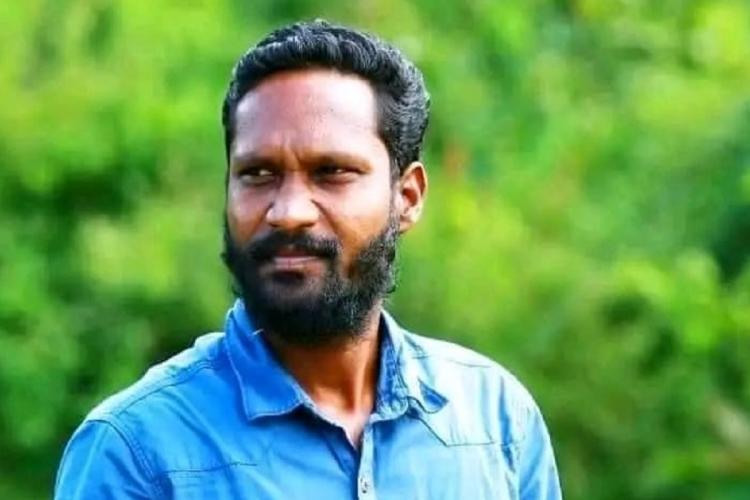
Sukumaran Chaligatha is a poet who writes in Ravula, a tribal language, and in Malayalam. He is currently a general council member of the Kerala Sahitya Akademi and also the ooru mooppan (tribal chieftain) of Chaligatha near Kuruva Dweep in Wayanad. His memoir Bethimaran, published by Olive Books, can be purchased here.
source: http://www.thenewsminute.com / The News Minute / Home> News> Literature / by Sukumaran Chaligatha / June 14th, 2023
WELCOME. If you like what you see "SUBSCRIBE via EMAIL" to receive FREE regular UPDATES.
Read More »



%20and%20Ramkumar%20Ramanathan%20during%20the%204th%20Tata%20Open%20Maharashtra.scorimg.webp)