Tag Archives: Ammathi

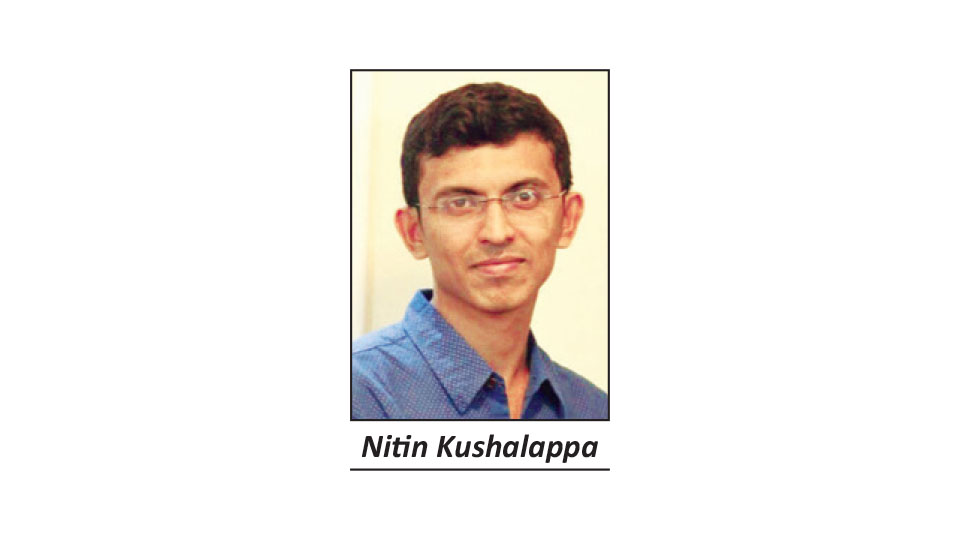
Nitin Kushalappa wins Kendra Sahitya Akademi Bal Sahitya Puraskar

Mysore/Mysuru: 

Kodagu-based author and engineer Mookonda P. Nitin Kushalappa has been awarded the prestigious Kendra Sahitya Akademi Bal Sahitya Puraskar for his latest work, Dakshin: South Indian Myths and Fables Retold, published by Puffin Books in 2023.

The awards were announced in New Delhi on Wednesday (June 18), and Nitin is among 24 writers to receive the Bal Puraskar this year.

The Sahitya Akademi, India’s National Academy of Letters, is the country’s central institution for literary dialogue, publication and promotion, and is the only organisation to conduct literary activities in 24 Indian languages, including English.

These distinguished literary honours recognise exceptional contributions to Indian literature across multiple languages, celebrating diversity, creativity, and the country’s rich linguistic heritage.

Presented annually, the awards honour authors whose works exemplify outstanding literary merit and cultural relevance. This year’s selection showcases a rich tapestry of genres — from poetry and novels to short stories and criticism — highlighting both emerging and established voices.

“Although I have authored seven other books so far, this is my first book for children. Winning this award was unexpected, and I am grateful that my current work has found such recognition. I thank the Sahitya Akademi for conferring the Bal Sahitya Puraskar on me. I am also thankful to my publishers, book agents, relatives, friends, and everyone who supported me on this journey,” Nitin Kushalappa told Star of Mysore.

An engineer by profession, Nitin is widely known for his deep interest in Kodagu’s local history, folklore and fiction. His notable publications include ‘The Early Coorgs’, ‘Long Ago in Coorg’, ‘1785 Coorg’, ‘Kodagu Principality vs British Empire’, ‘The Major Who Kept His Cool’, ‘The House of Awadh’ and ‘The Gandhi of Kodagu’.

His latest work, ‘Dakshin: South Indian Myths and Fables Retold’, reflects his signature storytelling style, which blends regional history with creative retelling. Award winners will each receive a casket containing an engraved copper plaque and a cash prize of Rs. 50,000 at a special ceremony on a later date.

A native of Kodagu, Nitin is the son of Mookonda K. Poonacha (Sunny) and M.P. Damayanthi (Pushpa), residents of Ammathi. He is married to Deepthi Belliappa from the Ketolira family.

He completed his education at Clarence High School, St. Joseph’s Pre-University College, CMR Institute of Technology (B.E.), Kuvempu University (M.A.) and Alliance University (Executive Post Graduate Diploma in Management).

2019 award

In 2019, Codanda Devika Cariapa received the Kendra Sahitya Akademi Bal Sahitya Puraskar for her book ‘A Children’s History of India in 100 Objects’, published by Penguin Random House India.

The book is a compilation featuring 100 objects that hold significant relevance in Indian history, from prehistoric times to modern-day India. The emphasis has been to capture India’s diversity through concise and descriptive texts and beautiful illustrations.

Devika is the daughter of Lt. Gen. Biddanda Chengappa Nanda  (late) and Leela Nanda, and wife of Indian Air Force Group Captain (Retd.) Codanda Chitrajit Cariapa.

source: http://www.starofmysore.com / Star of Mysore / Home> News / June 21st, 2025
Sandooka Virtual Museum Of Kodava Heritage And Culture Launched

Sandooka Virtual Museum of Kodava Heritage and Culture, an informative and interactive platform for the community, the diaspora, researchers and knowledge-seekers, has been launched. One can access it on https://sandookamuseum.org/

The museum has been created with community participation and on the basis of research on existing knowledge of the history of Kodagu, traditions of the Kodava community and unique practices.

Presently, the museum boasts 54 stories categorised into nine themes:

Architecture, Arts and Crafts, Community Histories, Clothes and Jewellery, Cuisine, Customs and Rituals, Festivals, Landscape, Literature and Folklore. The website also includes a glossary of commonly used Kodava terms and a list of recommended books and website resources.

Within the museum’s pages, visitors can explore a brief history of Kodagu in sections like ‘Residences of the Royals’ and the glossary. An outline map in the glossary provides context, illustrating the taluks of Kodagu, its location within Karnataka and its place in India.

The brain behind this ambitious project is Rathi Vinay Jha (Codanda), the erstwhile Chair of the India Foundation for the Arts (IFA). A retired 1967 batch IAS Officer, she served as the Secretary in the Ministry of Tourism, Government of India. In early 2022, IFA issued a call for proposals from multidisciplinary teams to develop the virtual museum.

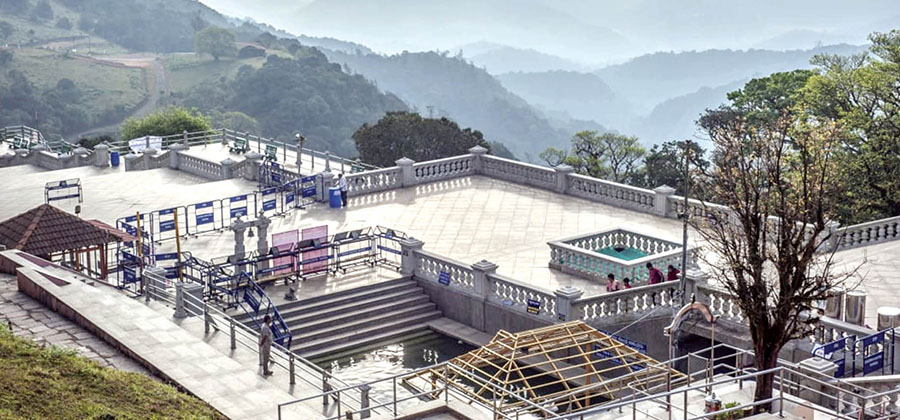
Talakaveri (Talacauvery) – the birthplace of River Kaveri. [Photo courtesy: Kunjiyanda Mahesh Appaiah (Max)]

Stringent scrutiny

Numerous teams from various parts of India submitted their proposals.

The selection process involved the scrutiny of an esteemed jury, including Paul Abraham (Founder of Sarmaya Arts Foundation), Nick Merriman (Director of Horniman Museums and Gardens, London), Sara Ahmed (Founder of Living Waters Museum), Venu Vasudevan, IAS (former Director General of the National Museum) and Hemanth Satyanarayana (CEO, Imaginate).

Following a meticulous evaluation of presentations and interviews, a team led by art museum curator Lina Vincent emerged as the chosen one for the project. The team comprised the dynamic designer duo Upasana Nattoji Roy and Saurav Roy from SWITCH. I was honoured to be invited to spearhead the Research and Coordination for Virtual Museum.

Our team came together in early 2022 and the ensuing two years have been both hectic and gratifying. Our efforts were complemented by a dedicated group handling media resources, including Aiyuda Prasad Ponnappa (videography), Clare Arni (photography), Kalpit Gaonkar (drone videography), Kunjiyanda Mahesh Appaiah aka Max Machu (videography), Chenanda Rohan Ponnaiah (videography), G.S. Bhavani (photography), Dr. Bishan Monnappa (photography) and others. Hasan Shahrukh spearheaded website development, with Samarth Gulati focusing on the front end and Gaurav Nagar on the back end. Additional support came from associates such as Nitya Devayya, Dhriti Belliappa, Nigel Gomes and Christina Dedhia.

The IFA team overseeing the project included former Executive Director Arundhati Ghosh, Executive Director Menaka Rodriguez, members Darshana Dave, Ritwika Misra and C. Suresh Kumar

IFA Advisory Board, consisting of Rathi Vinay Jha, Cheppudira P. Belliappa and Hemanth Satyanarayana, provided valuable guidance.

The editorial advisors, namely Dr. Boverianda Nanjamma Chinnappa, Cheppudira P. Belliappa, Dr. Kodira Monnappa Lokesh and Dr. C.C. Sowmya Dechamma, contributed expertise to the project.

Recaero India predominantly funded the initiative, while Anuraag, a Virajpet-based NGO, played a crucial role in supporting payments to artists, folk singers, dancers, craftsmen and facilitating media documentation.

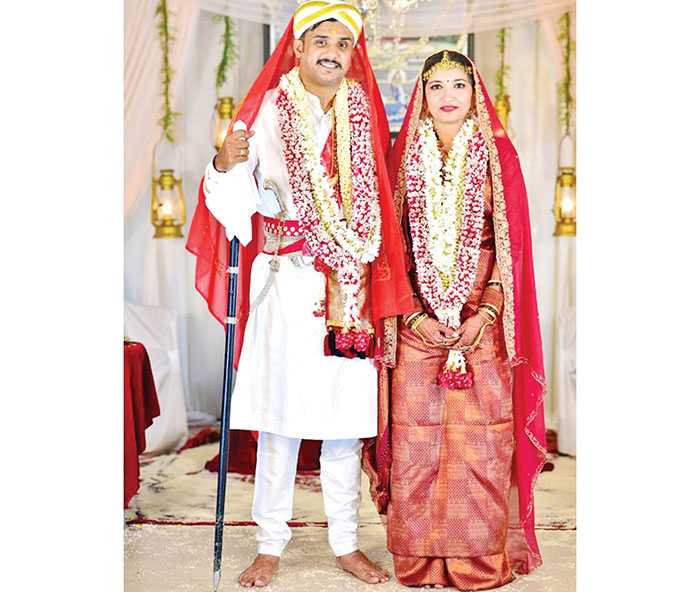
A bride & a groom in traditional attire. [Photo courtesy: Deepthi Puttichanda]

A comprehensive repository of information

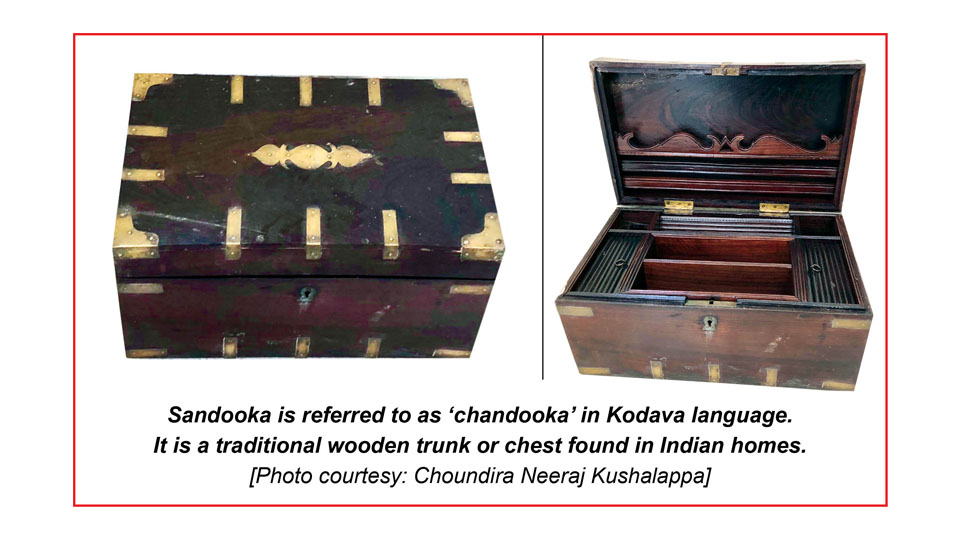
The Sandooka Virtual Museum of Kodava Heritage and Culture stands as a comprehensive repository of information on Kodavas. In the Kodava language, a ‘sandooka’ is referred to as ‘chandooka’, akin to a traditional wooden trunk or chest found in Indian homes.

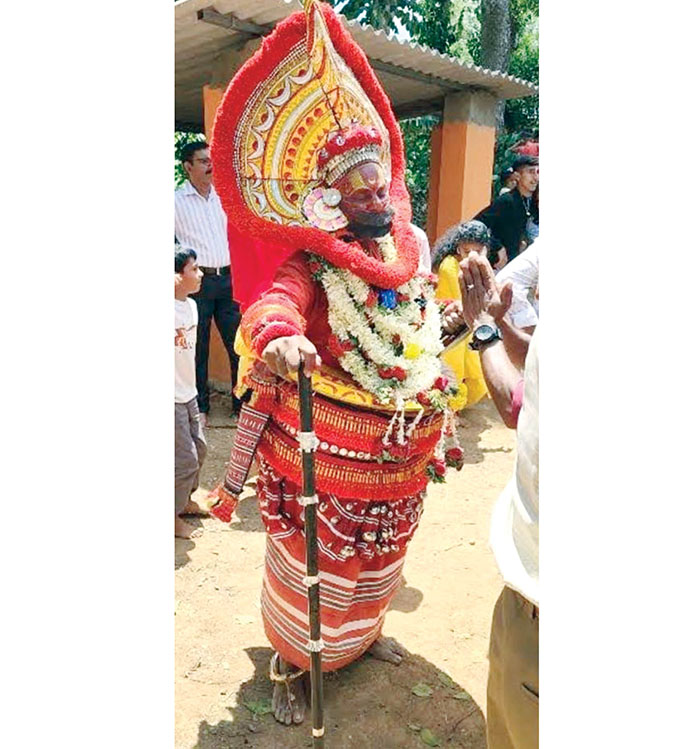
Our documentation efforts included capturing the ‘Kail Podh’ festival of weapons at the Baduvamanda ancestral house in Kavadi, festival sports at Puliyeri village green near Ammathi, the harvest festival ‘Puthari’ at the Padeyanda ancestral house, festival dances at Biddatanda Vaade and Kokeri Bhagwathy temple, and the annual ‘theray’ (a shaman ritual of Kodagu similar to ‘theyyam’ and ‘kola’) at the Nadikerianda ancestral house in Karada

While a substantial population of Kodavas still resides in Kodagu, tens of thousands have migrated to places like Mysuru and Bengaluru. Additionally, Kodava diaspora is seen outside Karnataka in  various parts of India and extending to international locations such as Singapore, the Middle East, Europe, the United Kingdom, Africa, Australia and the Americas.

A picture of ‘theray’ ritual.

To maintain cultural connections, Kodavas have established regional Kootas or Associations, where members gather annually, often during festivals. Kodava Samajas in villages, towns and cities organise Kodava weddings and other social events.

However, the Kodava diaspora faces challenges in preserving their native language and culture. As generations pass, certain traditions risk fading away. Recognising this need for preservation, Sandooka Virtual Museum of Kodava Heritage and Culture acts as a bridge, documenting and safeguarding cultural heritage for future generations worldwide.

Cherishing our legacy

Kodavas are a small community with a vibrant heritage and unique traditions. Kodagu and the Kodavas have always raised the curiosity of not just our own people but of scholars and visitors across the world. Today, with access to technology we can send a message across to our diaspora and the world about our land and its culture. Sandooka Virtual Museum is a repository of such online information on Kodava heritage. Let us cherish our legacy and celebrate our achievements. — Rathi Vinay Jha (Codanda), erstwhile Chair of the India Foundation for the Arts (IFA)

source: http://www.starofmysore.com / Star of Mysore / Home> Feature Articles / by Mookonda Nitin Kushalappa / January 09th, 2024