Tag Archives: Appangala

Ginger under siege: Pyricularia Fungus identified in Kodagu district

A newly identified fungal disease has emerged as a significant threat to ginger cultivation in Karnataka, prompting an urgent advisory from the ICAR–Indian Institute of Spices Research (ICAR-IISR). Researchers from the premier spices research institute have confirmed that the pathogen Pyricularia spp.—typically associated with blast diseases in monocot crops like rice and wheat—has, for the first time, been found infecting ginger crops in the Kodagu district.

The outbreak, which escalated rapidly during the 2024 growing season, has already caused an estimated 30 per cent yield loss in affected farms. The disease manifests initially as leaf yellowing with small dark olive-green to black lesions, progressing swiftly to defoliation and plant collapse. While rhizomes may appear outwardly unaffected, early leaf loss significantly hampers rhizome development, reducing both quality and weight.

The severity of the outbreak has been linked to specific weather conditions during August and September 2024, when intense morning dew in Kodagu created ideal conditions for fungal spore germination and field-level spread. Interestingly, other major ginger-producing belts in Karnataka and Kerala have not reported similar infections, suggesting the outbreak may be microclimate-driven. Researchers at ICAR-IISR’s regional station in Appangala played a critical role in field monitoring and sample analysis, though challenges in preserving infected tissue during transport slowed initial confirmations.

ICAR-IISR has issued comprehensive control recommendations to mitigate the disease and prevent recurrence. These include fungicidal seed treatment of rhizomes using either Propiconazole (1 ml/litre) or a Carbendazim-Mancozeb mix (2 g/litre), followed by storage in dry, ventilated conditions. For standing crops, preventive foliar applications of Propiconazole (Tilt) or Tebuconazole (Folicur) are advised approximately four months after planting. If early symptoms appear—particularly dark pinhead spots with surrounding chlorosis—immediate fungicide application is critical due to the pathogen’s rapid spread. Field observations have confirmed infections in fields up to 20 kilometers apart, indicating strong airborne mobility.

As an interim measure, ICAR-IISR has advised farmers in high-risk zones to suspend ginger cultivation until further assessments are completed. Ongoing research aims to better understand the pathogen’s adaptation to ginger, map its lifecycle triggers, and evaluate long-term solutions, including resistant varieties and sustainable biological controls.

The emergence of Pyricularia on a non-traditional host like ginger has raised new concerns among plant pathologists and agro-climatic researchers. It also underscores the urgent need for robust surveillance systems, climate-linked disease forecasting, and strategic extension services to protect India’s spice economy.

source: http://www.agrospectrumindia.com / Agro Spectrum / Home> Crop Protection / by Crop Protection / July 04th, 2025

Parliamentary delegation visits spices research station in Kodagu

The Parliamentary Standing Committee on Agriculture, Animal Husbandry, and Food Processing, headed by Charanjit Singh Channi, a member of the Lok Sabha, visited the ICAR-Indian Institute of Spices Research (IISR), Regional Station, at Appangala in Kodagu on Friday.

The delegation comprised 12 members of the Lok Sabha, four members of the Rajya Sabha, and officials from the Lok Sabha Secretariat. During the visit, the institute organised an exhibition highlighting the latest varieties and technologies in spice cultivation developed by the ICAR-IISR. Mr. Channi, the chairman of the committee, inaugurated the exhibition.

A meeting was convened, where R. Dinesh, Director of ICAR-IISR, Kozhikode, presented a comprehensive overview of the activities and achievements of the institute.

The committee had discussions with the scientists and officials from the ICAR-IISR. Officials present at the event included Sudhakar Pandey, ADG (FVS&MP), ICAR, New Delhi, S.J. Ankegowda, principal scientist and head, ICAR-IISR, Regional Station, Appangala, and senior officials and staff from the ICAR-IISR and its regional station.

The event also featured an insightful interaction with Prema Ganesh, a progressive farmer from Maragodu, who shared her experiences regarding spice farming in Kodagu.

source: http://www.thehindu.com / The Hindu / Home> News> India> Karnataka / by The Hindu Bureau / May 24th, 2025

Codagu Agritech launches Biocapsules for agriculture

Mysuru:

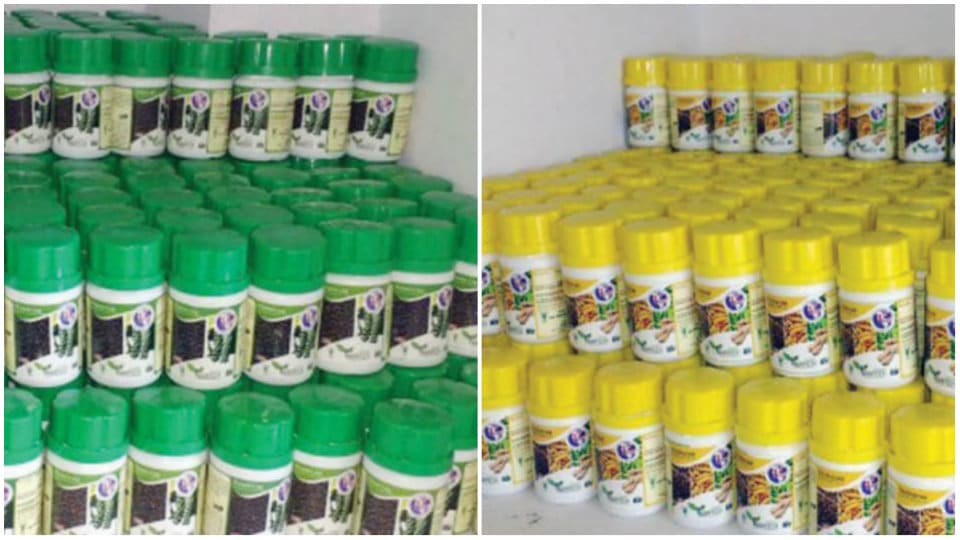
Codagu Agritech at Kudlur in Kushalnagar has come out with Biocapsules for agriculture to provide beneficial bacteria and biocontrol agents to enhance growth, root production, nutrient mobilisation and better yield.

Disclosing this at a press meet at Pathrakartara Bhavan here on Saturday  Dr. Chaitra Narayan of Codagu Agritech said that the biocapsule is the world’s first technology where biocontrol agents like Trichoderma and good bacteria are delivered in capsule form which is convenient as one capsule is equivalent to one kg or litre of formulation and handling is easy along with cost effectiveness.

She further said that the biocapsule technology is researched and patented by Indian Institute of Spices Research (IISR) in Kozhikode, Kerala, invented by former IISR Director Dr. Anand Raj.

Dr. Chaitra added that MP Pratap Simha had launched the biocapsules at IISR in Appangala near Madikeri last year.

Continuing, Dr. Chaitra said that Codagu Agritech is the first and only licensed commercial manufacturer of biocapsules with a wide market base in Kodagu, Chikkamagalur and gaining momentum in Maharashtra and a few other States with positive response from farmers.

She added that the biocapsules also protect crops from soil-borne pathogens and it is eco-friendly, easy to store and handle, with a long shelf-life of one year at room temperature and can be applied through drip irrigation.

She further said that the biocapsules are available in two forms — Trichocap (pure formulation of Trichoderma) and Powercap (combination of three plant growth-promoting bacteria strains).

The website of the company www.codaguagritech.com was launched by Dr. P.G. Chengappa, former Vice-Chancellor, University of Agriculture Sciences, Bengaluru.

Dr. B.C. Nanjappa was also present at the press meet.

source: http://www.starofmysore.com / Star of Mysore / Home> News / July 17th, 2017

Farmer’s Notebook: The Life of a Banker Turned Farmer

Struggling to improve yield levels with traditional methods at his coffee plantation, Hoysala found great success with technological innovations.

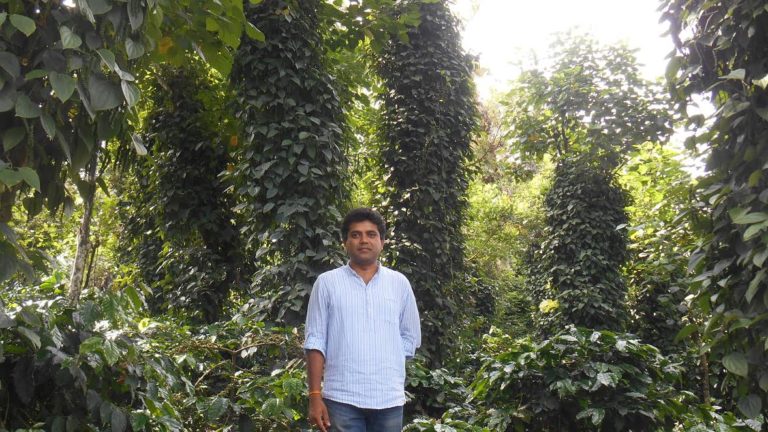
Hoysala at his plantation. Credit: M.J. Prabu

Farming, especially in India, is generally considered to be a traditional field that’s averse to innovation, however  M.G. Hoysala’s successful decision to quit banking for farming with the help of technological innovations, shows that keeping an open mind towards new, nontraditional cultivation techniques and interacting with experts in the field is essential for achieving farming success.

While many come into the profession unwillingly, Hoysala represents a section of people that actually wants to take on the family vocation. After spending five years working at a private bank, Hoysala came to realise the importance that the agriculture and plantation sector held for him. So he left his job and took over his father’s coffee plantation.

Since he took over, the Hoysala’s 40 acre farm in Karnataka’s Kodagu district has become a role-model of sorts for the other farms in the area.

As is common in the region, Hoysala grows Arabica coffee on his farm, but what differentiates his farming practices from the rest is the presence of tall indigenous trees that grow alongside the rows of coffee bushes, their height providing shade for the lower shrubs. Another distinguishing factor is the presence of black pepper vines that cover the trees’ trunks.

Starting off as an amateur, Hoysala initially followed the locally practiced traditional forms of cultivation. However, his lack of experience and the absence of proper guidance worsened his predicament. Disease-damaged crops, low productivity and a lack of knowledge about advanced production technologies were just some of the problems Hoysala faced when he took over the coffee plantation.

Collaborating with experts

Hoysala recalls contacting the Indian Institute of Spices Research around the same time as he started to realise that he would need technology if he wanted to stabilise his plantation’s yield level in a sustainable manner. His association with the institute started when he attended an eye-opening seminar organised by the organisation’s regional station at Madikeri, Kodagu.

That first seminar taught him about the varietal wealth of black pepper along with information on various crop production, protection and processing technologies that were being developed at the institute.

Drawing on his experiences from the banking sector, Hoysala was certain that the timely and meticulous adoption of technologies designed to aid crop production were essential to maintaining a profitable plantation.

“The productivity of vines was below the level of expectation and we could hardly harvest six tonnes from an area of 40 acres. We understood that not adopting recommended measures in time, especially to control diseases, could lead to heavy crop loss,” says Hoysala.

“Moreover, we were unaware that instituting shade regulation before the monsoon and irrigation during the summer months would improve the setting of berries and ultimately increase the yield.” 

After Hoysala had established a close relationship with the regional station’s scientists, he set about addressing his plantation’s problems one by one.

Shade regulation was the first priority, followed closely by the scheduling of fertiliser, increasing organic inputs fortified with growth-promoting organisms, regularly monitoring the crops for diseases and irrigation during the summer months. 

“By adopting these [new and] improved technologies, we have increased the production from six to 12 tonnes. [Which is] on average a two-fold jump within a time span of five years,” said Hoysala.

The plantation’s irrigation system was further strengthened by the construction of water harvesting structures like farm ponds and bore wells. Besides these measures, Hoysala also had pits dug between the rows of coffee plants to harvest run-off water as it also helps with enriching the soil.

The changes extend to pepper cultivation as well. Two years ago, Hoysala took ten acres of land which was used to grow ginger and transformed it into a well-designed pepper plot with silver oaks to serve as standards for the vines and robusta coffee bushes interplanted with the pepper vines.

It currently costs Hoysala a total of Rs 85,000 per acre to implement these measures along with paying the regular operational costs of running the plantation. In return, he earns Rs 1 lakh per acre per annum from the coffee and black pepper grown on the farm, allowing Hoysala to maintain the sustainable, profitable plantation he aspired to.

For further information, contact:  M. G. Hoysala, Sri Siddalingeshwara Estate, Hardur P.O., Suntikoppa, Kodagu, Karnataka–571 237, mobile: 09449682430, Email: hoysala.mg@gmail

and his guide

Dr. S. J. Ankegowda, Principal Scientist and Head, ICAR-Indian Institute of Spices Research Regional Station, Hervanadu Post, Appangala, Madikeri, Karnataka – 571 201, Phone 08272 – 245451; 245514; 298574. Mobile:  09663069241, email: 

source: http://www.thewire.in / The Wire / Home> Agriculture / by M J Prabu / December 29th, 2016