Tag Archives: Coffee

Premium Limited-Edition Single-Origin Yezdi Coffee Launched

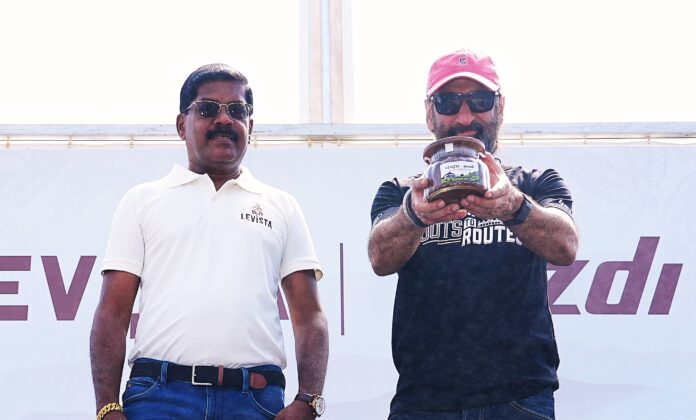
Jawa Yezdi Motorcycles rewrites the brand love playbook once again with a homecoming ride in the atmospheric coffee heartland of Coorg.

The company reignited its iconic Jawa Yezdi Nomads riding program and launched the single-origin, gourmet ‘Yezdi Coffee’ in partnership with Levista Coffee at their SLN Coffee estate.

In 2018, the company marked return of iconic brands Jawa and Yezdi in mid-size segment by launching performance classic motorcycles. Riding off the conventional route, Jawa Yezdi Motorcycles focussed on building communities and subcultures around shared values. The spur? Authentic user experiences that created lasting brand loyalty.

The 2025 Jawa Yezdi Nomads Brewscape, dubbed ‘Roots to Routes’, was an immersive riding experience showcasing its newly launched Yezdi Roadster. The journey began in Mysore, the birthplace of Ideal Jawa, and culminated in Madikeri, Coorg, home to India’s most authentic coffee varieties. This ride offered national media, enthusiasts, and motorcycling experts’ firsthand experience of 2025 Yezdi Roadster while emphasizing the deep bond between heritage, community, and coffee subcultures.

“In motorcycling, building an iconic brand extends far beyond crafting exceptional machines. When we began in 2018, we inherited timeless classics with authentic stories that no manufactured narrative could match. Nostalgia opened doors, but genuine brand love flourished through our customers’ ride experiences,” said Anupam Thareja, Co-founder Classic Legends. “Creating authentic experiences like Nomads rides in Ladakh to Surfing in Covelong, partnerships with the Forces, and heartening customer stories has shaped our journey. The launch of Nomads 2025 and Yezdi Coffee exemplifies our innovative path. Yezdi Coffee, crafted with Levista’s expertise perfectly blends motorcycling and coffee and connects the spirit of exploration with moments of indulgence.”

The Special Edition Yezdi x Levista coffee pack offers two varieties exceptionally crafted to capture the rich coffee expertise of Coorg. One is a 100 percent Arabica, single-origin brew from Mysore Nuggets Extra Bold, AAA-grade beans. Cultivated at an altitude of 1000 metres above sea level in Coorg, it’s a medium roast Chandragiri varietal offers a rich profile of smooth chocolate, toasted nuts, and caramel, with hints of citrus and earthy spices. The second is a perfect blend of top-grade Robusta and Arabica beans. It’s a medium roast soluble coffee and delivers a rich, aromatic flavour with silky smooth texture and a remarkable depth. Together, Yezdi x Levista coffee is an unmatched experience for motorcycling purists who often profess strong affinity for soulful and indulgent coffee.

Available at an introductory price of Rs.1,999/- the special edition Levista x Yezdi Coffee pack can be prebooked on www.jawayezdimotorcycles.com.

The Nomads program has expanded since its inception with the Ibex Trail (Ladakh, 2019), through signature rides such as the Taktsang Trail in Northeast India and Punjab Da Tor, showcasing heartland culture, alongside frequent “Trail Attack” off-road training events. Epitomizing journey, camaraderie, and local immersion while celebrating motorcycling as a way of life.

The company has also avidly associated with rock and jazz music festivals, street art, and surfing, embedding itself firmly in subcultures across India. These associations established its adventurous, nonconformist ethos while celebrating riding camaraderie. Its community givebacks and Army partnerships in Ladakh have repeatedly upheld its beliefs in courage and the spirit of exploration.

As a company committed to promoting motorcycling as a lifestyle, Jawa Yezdi Motorcycles remains dedicated to creating more such associations, providing meaningful and immersive experiences for its riders.

source: http://www.thrustzone.com / Thrust Zone / Home> 2 Wheeler News / by Mohit Soni / October 06th, 2025
Ristretto | Tokyo Coffee


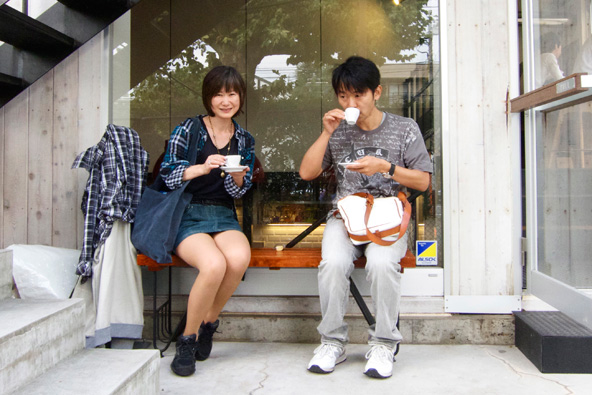
Patrons sit and sip outside Nozy Coffee in Tokyo.
Photographs by Oliver Strand

When I tell people that I went to Tokyo to check out the coffee, I get two reactions. One is bewilderment — as if I went to Denver for the surfing. The other is fascination: those who pay attention to coffee know that Japan is the world’s third-largest importer (after the United States and Germany), with obsessive buyers who regularly land the winning bids at Cup of Excellence auctions, and that it produces the coffee gear everybody wants.

Japan’s interest in coffee isn’t a fad. Dutch traders first introduced the drink a little more than 400 years ago, but it wasn’t until the port of Kobe was pried open in 1868 that coffee became widely available. Soon it was fashionable. Tokyo’s first kissaten, or coffee shop, opened in 1888; by the 1930s there were 3,000 in the city. The supply of beans was cut off during World War II, but once it returned in the 1950s there was another coffee-shop boom. According to Masanobu Kusunoki, director of the UCC Coffee Museum in Kobe, Japan had 160,000 kissaten by the 1960s.

Today, the kissaten are disappearing, replaced by Western-style chain stores and a growing market of home brewing. Still, there are around 80,000 kissaten left in Japan, which are easy to spot in Tokyo. They’re usually small and moody, and have the feel of a bar (stools at a long counter, sunlight kept to a minimum) or a diner (vinyl booths from another decade, lace curtains in the windows). Kissaten are not built for speed — you go to one to collect your thoughts, not for a quick caffeine hit. After you sit down, a waiter shuffles over and puts an ashtray in front of you, then wanders away to give you time to light up before coming back to ask for your order.

And the coffee? Most of what I tasted was dark and strong. Often it was a nel drip, and made with a thick cotton filter. Usually it had all the subtlety of a glass of Jack Daniel’s, which was fine. A kissaten is more about the experience than what’s in the cup.

But a few kissaten are known for the quality of the coffee and the theatricality of the presentation. One of the more regal establishments is Chatei Hatou, which occupies the low-ceilinged ground floor of a nondescript building on a side street in Shibuya.

Chatei Hatou is just a few steps away from Meiji Dori, one of the busiest arteries in Tokyo, but once inside the windowless room you lose all sense of the teeming traffic and L.E.D. billboards that turn the facades of skyscrapers into televisions. There’s classical music playing on vintage speakers, a towering flower arrangement, a wall with hundreds of cups and saucers that range from kitsch (the Beatles) to fine porcelain (Meissen). The best seats are at the bar, where you can watch members of the staff make each cup with the silent focus of a monk at prayer — it’s the posture, the breathing, the unflinching gaze as water is gently poured from a swan-neck kettle into a drip cone. The coffee is prepared with such intensity and grace that it feels as if time has stopped.

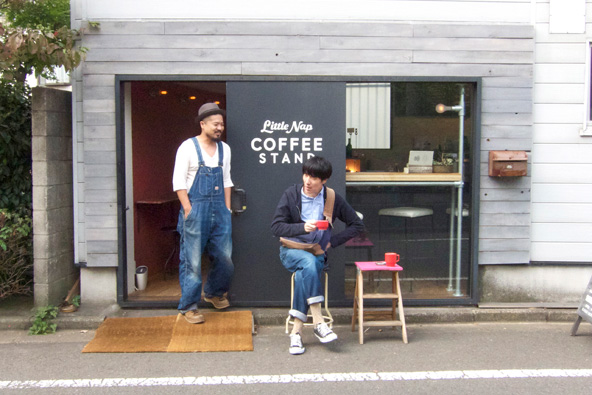
Little Nap Coffee Stand by Yoyogi Park in Tokyo.
Typically kissaten are not so hypnotizing, which could be why Japan’s new coffee generation is captivated by espresso drinks and steamed milk; the land of the rising sun is heavy into latte art.

One exception is Kayaba Coffee, a decades-old shop in a neighborhood behind Ueno Park with hilly streets and walled-in temples that was given a makeover by its stylish new owners. The kissaten is in a 100-year-old house with good midcentury touches — narrow tables and flattering lighting downstairs, tatami mats and Eames chairs on the second floor — and a clientele that ranges from post-university kids in skinny jeans to women of a certain age who have been coming to Kayaba for years. There’s coffee during the day, cocktails at night and video art on the wall.

Most of Tokyo’s notable coffee bars are found in the more fashionable neighborhoods that flank the city’s west. It’s the same story as in San Francisco, or London, or Oslo — they appear where where creative types work (Be a Good Neighbor in Sendagaya), shop (the Coffeeshop in Daikanyama) and live (Little Nap by Yoyogi Park). Some have international followings (Bear Pond Espresso in Setagaya, which was recently profiled in this column), and some soon will (Nozy Coffee in Setagaya).

Some share a storefront with another shop (No. 8 Bear Pond Espresso in Shibuya). And there are those that focus on espresso (Espresso Felice Roaster, in Zoshigaya). There are a handful of syphon bars (Cafe Obscura in Sangenjaya), and a few that put on a show (Streamer Coffee Company in Shibuya and Harajuku), while others are so elegant and pleasant that you don’t mind knowing that what’s in the cup could be better (Omotesando Koffee in Omotesando).

source: http://www.tmagazine.blogs.nytimes.com / FOOD, TRAVEL by Oliver Strand / December 16th, 2011