Tag Archives: Nagarahole Tiger Reserve

52 tribal families refuse to leave Karnataka’s Nagarahole Tiger Reserve, say it’s their ancestral land

Over 150 tribes from Jenukuruba, Betta Kuruba, Yarava and Paniya communities have occupied the forest land in Nagarhole Tiger Reserve, demanding implementation of the Forest Rights Act (FRA).

The tribals talking to forest officials in the Nagarahole Tiger ReservePhoto | Special Arrangement

Madikeri :

The 52 tribal families who entered the Nagarahole Tiger Reserve claiming land rights under the Forest Rights Act (FRA) continue to stay put inside the forest as a way of protest. Meanwhile, the forest department is urging them to vacate, citing legal and implementation hurdles.

Over 150 tribes from Jenukuruba, Betta Kuruba, Yarava and Paniya communities have occupied the forest land in Nagarhole Tiger Reserve, demanding implementation of the Forest Rights Act (FRA).

However, as per the forest department, the status quo has to be maintained until July 25, following the SC order. Further, the foresters are unable to force eviction as 50% of the population of the tribes who have occupied the land consists of women and children.

“We have not occupied the forest land, but we are occupying our ancestral land. We were evicted from the place under the Wildlife Protection Act nearly 45 years ago. After this, we stayed in line houses of the estates in the surrounding areas and we have been living in pitiable conditions since then. Following the FRA Act, we saw hope of reoccupying our ancestral land lawfully. It is a historical injustice that we were thrown out of the ancestral land and we have suffered enough,” shared Jenu Kurubara Shivu, one of the tribal leaders and secretary of Nagarahole Adivasi Tribe Forest Rights Implementation Committee.

He explained that they have been protesting for the implementation of the FRA from 2009-10. “After we learnt about FRA, a total of 52 tribal families put forth applications for the sanction of the forest right,” he explained.

He added that a joint verification process was ordered in 2021 and in 2024, a joint verification by the forest, revenue, tribal welfare and panchayat raj was conducted.

“While the report on the joint verification had to be submitted in four months, the same has been delayed invariably. The joint verification has not been signed by the concerned department officials, highlighting the inefficiency of the government departments,” he alleged.

He explained that numerous protests were led in the recent past and they had been shunned by the officials who he alleged extended false assurances.

“But this time, we have occupied our ancestral land and the indefinite protests will continue until we are granted our rights,” he voiced. The tribes have occupied the forest land for the past five days and have built make-shift structures for their deities inside the forest zone.

Meanwhile, the letter to the CM from retired PCCF BK Singh urged the government to temporarily stop the grant of land under the FRA. Further, Singh has also filed a petition with the SC and status quo of forests has been ordered till July 25, preventing any new activities or changes.

He has urged the state not to treat FRA as a land grant as this would escalate wildlife conflict and urged the government not to sanction land for those who occupied the forest after December 13, 2005.

Meanwhile, the forest department is of the opinion that the applications filed by the tribes for FRA were rejected in 2011. As per the government records, Attur Kolli Forest, the land that is now in conflict under FRA, falls under the Nagarahole Range and as per the previous data, there was no signs of habitat.

While the tribes had applied for rights under FRA in 2009, the same was rejected in 2011. Nevertheless, the SC ordered for a re-verification process of the applications in 2019 and a re-verification was carried out in 2024.

However, the report of the re-verification data has not been submitted by the Sub Divisional Level Committee and the District Level Committee till date, which is being opposed by the tribes.

“The tribes have occupied the forest land and we cannot force them out as there are women and children. Further, status quo has been ordered in natural forests following a petition by retired PCCF BK Singh. The status quo must be maintained till July 25 until further notice,” confirmed Ananya Kumar, Nagarahole Division ACF.

source: http://www.newindianexpress.com / The New Indian Express / Home> Karnataka / by Prajna GR / May 09th, 2025
Human-Elephant Conflict In Kodagu: Thermal Drone Pinpoints Elephant Presence At Night

Helps Forest Officers effectively plan operations and drive pachyderms back into jungle.

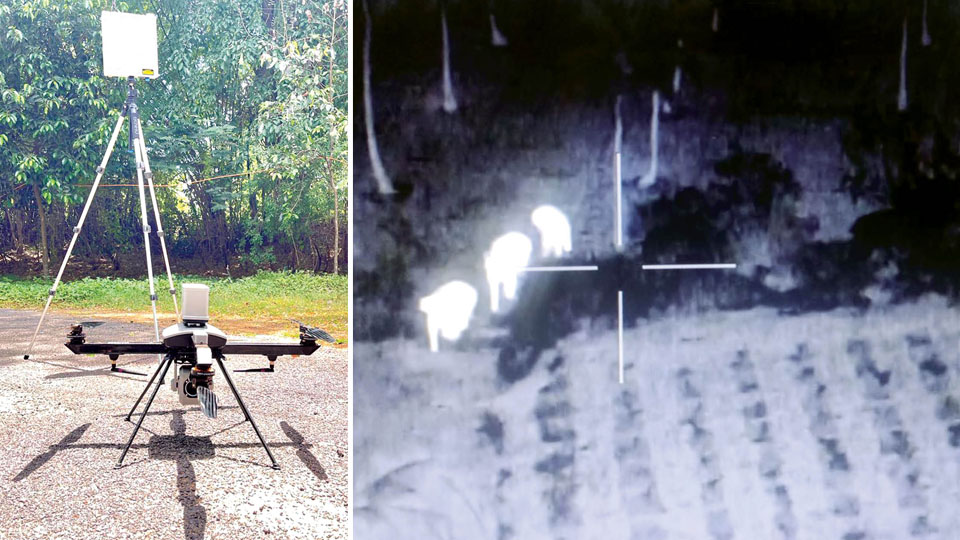
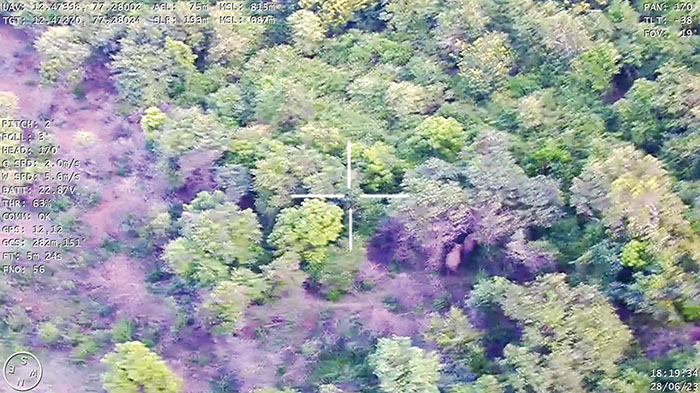
Amid the rise in the human-elephant conflict in some forested pockets of Kodagu along the Nagarahole Tiger Reserve, the Forest Department has deployed a hi-tech thermal drone to keep track of daytime and nocturnal movements of wild elephants inside forest ranges and human habitats.

The drone technology was first used in Nagarahole to control forest fires and now, there are three such drones there. However, a need was felt to acquire a thermal drone due to the increasing human-elephant conflict.

Sources said while managing the human-elephant conflict, the safety of elephants and also humans has been a major concern for the Forest Department and the wildlife activists as deaths of animals are being frequently reported from various parts of the district as they come into contact with live electricity wires.

Due to the need, one thermal drone was brought to Nagarahole in January this year at a cost of Rs. 25 lakh. Monitoring the movement of the elephants has always been a challenge for the Department amid several limitations.

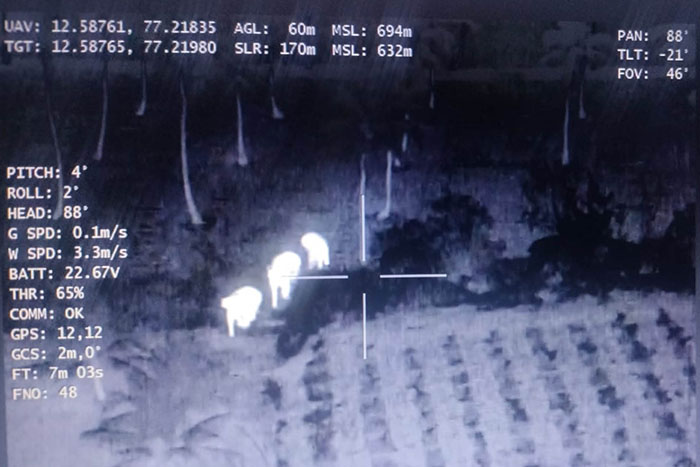
“Now we have been using a thermal drone and it detects live objects through their body temperature and those get flashed on the computer screen. It gives us a proper count of a herd and the number of calves,” Nagarahole Tiger Reserve Director Harshakumar Chikkanaragund told Star of Mysore.

The drone can also be used to drive the elephant herd away from a potential danger area as its location can be pinpointed. The drones are not only helping the staff determine the herd composition and drive them in a desirable direction but also prevent casualties.

Heat signatures of living species

Unlike drones with normal cameras that rely on light signals to capture images, thermal drone cameras pick up heat signatures of living species in motion. This makes thermal drones ideal for deployment after sunset, complementing the use of normal drones during daylight hours.

“By accurately detecting herd movements, determining their composition and tracking elephant directions, objective decisions can be made for deploying elephant squads. Thermal drone cameras have become an invaluable asset for night-time operations. They enhance situational awareness, ensuring efficient management of wild elephant movements and mitigating potential conflicts,” Harshakumar added.

According to Deputy Range Forest Officer (DRFO) Yogeshwari Desai, who has been trained to use the thermal drone, the machine has a 2-km range and can fly 400 metres above the surface. It has a powerful thermal sensor and night vision ‘positive image’ technology cameras. It is convenient to use and the exact location can be ascertained. If one has to do physical combing even for a 2-km range, a lot of manpower and equipment is needed,” she explained. 

Easy navigation inside woods

The camera on the drone operates based on the location information obtained via GPS, enabling easy navigation of the elephants’ whereabouts. Additionally, the drones produce minimal noise, allowing the staff to monitor animals such as elephants, tigers and other wildlife without causing any disturbance

During the night, the thermal drones conduct operations using radar, ensuring that local residents are not inconvenienced. Once the specific location of the elephants is identified, the information is sent to the Task Force and the teams proceed to drive the elephants back into the forest.

It also becomes easy to spot the origin of forest fire and extinguishers can be rushed to the place, she said. The drone has a backup of 40 minutes and after that, the battery must be charged. The drone has three batteries.

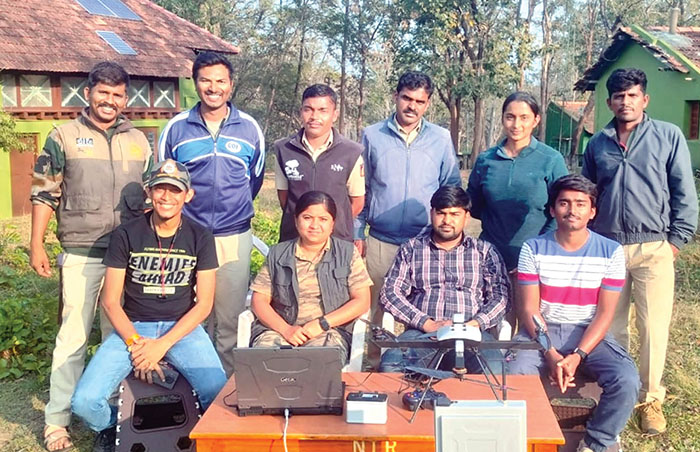
The team that has been trained to operate thermal drone at Nagarahole.

Trained team

Before the drone was deployed, a New Delhi-based team trained eight operators at Nagarahole. They are DRFO Jyothi Kumar and Forest Guard Sunil Nellebidu (Antharasanthe), DRFO B.B. Mahesh Kumar (D.B. Kuppe), DRFO Chethan Kumar Kolur (Nagarahole), DRFO Yogeshwari Desai (Anechowkur), DRFOs K.K. Arpitha and H.N. Madhuprasad (Hunsur) and Forest Guard Basavaraju (Veeranahosahalli).

The operators were trained for six days at Dammanakatte, Veeranahosahalli and Moorkal ranges that abut human habitats. The Nagarahole Director further said that they will seek aid from wildlife-related organisations, NGOs and firms to sponsor more such thermal drones for effective management of conflict zones.

source: http://www.starofmysore.com / Star of Mysore / Home> Feature Articles, Top Stories /July 18th, 2023