Category Archives: Agriculture

Kodagu farmers suffer as Animal Husbandry department has over 75 per cent staff crunch

The over 75% vacant posts in the department have seriously affected the functioning of the department and farmers involved in animal husbandry are unable to treat their cattle.

Cattle Smuggling
Image used for representational purposes only(Photo | Express)

Madikeri :

Primarily an agriculture district, Kodagu farmers are also actively involved in animal husbandry and dairy farming.

However, the farmers of rural areas are unable to avail of proper healthcare facilities for their domesticated animals as the Department of Animal Husbandry and Veterinary Services in the district faces a staff crunch of over 75 per cent.

Dairy farming is one of the main occupations alongside agriculture across several parts of Kodagu – especially in Somwarpet and Kushalnagar taluks. Farmers across Kudige, Kudumangaluru, Seegehosuru, Huduguru, Madapura and surrounding villages are extensively involved in dairy farming and animal husbandry.

“Farmers spend lakhs of money to buy hybrid cattle. However, we are unable to avail proper health care for the cattle as the veterinary hospitals and the veterinary primary clinics across the villages are not posted with doctors,” explained Nagraj Shetty, a farmer in Kudige limits.

The district’s animal husbandry and veterinary services are sanctioned with a total of 306 posts. However, only 76 posts are filled to date. While the department is sanctioned with 50 posts for veterinary doctors, only 18 posts have been filled and this includes the posts of Deputy Director and other authoritative officials. Out of the sanctioned 78 posts for veterinary inspectors, only 29 have been filled.

And only two posts of veterinary helpers out of the sanctioned 43 posts have been filled in the department. The over 75% vacant posts in the department have seriously affected the functioning of the department and farmers involved in animal husbandry are unable to treat their cattle. The farmers cannot avail of private services as the district lacks private veterinary hospitals.

“Several postings were made by the state, but the same was cancelled due to a stay order. Fresh postings have not been made to the department and we are still looking forward to the new postings,” shared Dr Suresh Bhat, the Deputy Director of the department.

He added that the posted doctors are visiting the hospitals once a week and are managing the functioning of the hospitals. While the district has a total of 72 veterinary hospitals including the primary veterinary clinics, they are rendered useless without permanent postings. 

source: http://www.newindianexpress.com / The New Indian Express / Home> States> Karnataka / by Prajna GR / Express News Service / February 22nd, 2023

Saving the koilemeen of Kodagu

Conservationists hope to connect people and the dwindling fish species, to save streams, rivers and otters.

Volunteers conduct survey of the stream to look for signs of Koilemeen and Small Clawed Otters

Madikeri :

Food has a way of bringing people together. Raising awareness using a local delicacy to protect streams and the ecosystem of Kodagu is the unique ‘Koilemeen Project’ — an initiative by conservationist Gopakumar Menon. To understand the motto of the project, it is important to first understand that koilemeen is the Kodava name for freshwater fish, commonly known as Spiny Loach, with the scientific name ‘Lepidocephalichthys thermalis’.

A local variety found in streams and water-filled fields of Kodagu, the koilemeen used to be a popular delicacy in Kodava households during the monsoon. However, the numbers have dwindled over the years due to various reasons, and this is where the ‘Koilemeen Project’ comes into the picture.

The objective is to involve the local community in the conservation of streams and rivers, by connecting the people to their once-popular koilemeen dish, Gopakumar explains. “In the past two decades, there has been a precipitous drop in the availability of Koilemeen. We spoke to several coffee planters and a fish trader in Virajpet, who shared his worry due to the non-availability of koilemeen,” he said.

He explained that the use of chemicals in agriculture and horticulture has severely affected the koilemeen population, which also indicates that stream and river waters are being polluted by chemicals. “Increased use of weedicides, pesticides and other fertilisers have affected the koilemeen, and indicates that our water is polluted. The project addresses the loopholes and tries to bring awareness in the community,” he added. Illegal sand mining across the streams of Kodagu has also affected the koilemeen population.

These tiny fish breed on sand, and with sand illegally mined for commercial purpose, it has affected their numbers. “The fish spawn across paddy fields (during monsoon) and other shallow streams, and swim upstream post the monsoon. However, the use of chemicals, sand mining and deposits of plastic waste across the streams has affected the fish. The project is trying to sensitise locals and get them involved. For the community, koilemeen is an easy logo to enable the conservation process,” he shared.

The group is active across social media platforms, and wants youngsters from the district to get involved in the conservation project. The project team meets small groups of planters and raises awareness on the need to stop the extensive use of chemicals. “We tell planters and farmers about the correct method to use chemicals. We are creating awareness on the hazardous use of weedicide and urging them to use fewer chemicals, while ensuring there is at least a 20-ft gap from the chemical-sprayed area and water source,” he explained.

While the project’s main objective is to protect the streams of Kodagu, the focus is not just the tiny koilemeen fish. The bigger picture includes small clawed otters – a Schedule 1 species under the Wildlife Protection Act, whose habitat is found by freshwater streams of Kodagu.

Small beings in the ecosystem, like small clawed otters, have the same protection right as elephants or tigers, but are less talked about though their existence touches the level of endangerment. Since koilemeen are occasionally hunted, it is being used as a mascot to protect the small clawed otters in their natural habitat of freshwater streams and rivers.

The team — geared in gumboots and equipped with GPS — heads out to survey streams to find signs of small clawed otters. “The signs or presence of otters indicate good health of the ecosystem. We look for droppings or spraint of otters and are collecting data on their habitat,” explained Yashas S, a master’s student, a volunteer for the project. He stresses the need to conserve the riparian habitat to protect small clawed otters.    

The project aims to collect research material on the otters, and find ways to protect them from being poached. “The diet of an otter includes crustaceans and koilemeen. Our aim is to protect the prey which will help conserve the predator. Protecting the prey also means protecting the streams,” explained Gopakumar.

Alongside the community conservation initiative, the project is conducting a baseline analysis on the otter habitat, which will help take an intelligent step towards their conservation.  

Purpose of the project

To involve the community in conservation of fresh water streams, rivers of Kodagu.
Enable conservation by connecting community to their once-favourite delicacy. Protect koilemeen, the prey, in freshwater streams.


Urge planters to opt for organic farming, stop use of harmful weedicides
Protect, conserve vand conduct analysis on small clawed otters, the predator.

source: http://www.newindianexpress.com / The New Indian Express / Home> Good News / by Prajna GR, Express News Service / Februry 26th, 2023

‘Check dam constructed due to vested interests’: Kodagu villagers oppose project across Chikliholey

The villagers stated that they were not taken into confidence before sanctioning the project and said that these dams will severely affect the farmers and villagers living downstream of the Chiklihole.

The check dam project across Chikliholey Stream in Kodagu by the Minor Irrigation Department is under construction. (Photo | Special Arrangement)

Madikeri :

The check dam project across Chikliholey Stream in Kodagu by the Minor Irrigation Department has met with strong opposition from the villagers.

The department has now assured to call off the project as villagers alleged that the check dams are being constructed to help a private estate owner. The project is estimated to cost around Rs four crores. 

The villagers of Horuru, Modur, Abhiyala, Attur and Nallur of Kedakal grama panchayat have strongly opposed the new check dam project upcoming across the Chikliholey stream.

The Minor Irrigation Department has taken up the task of building two check dams – within a span of 100 meters distance – across the Chikliholey stream near D Block of Kedakal Grama Panchayat.

However, the villagers stated that they were not taken into confidence before sanctioning the project and said that these dams will severely affect the farmers and villagers living downstream of the Chikliholey.

They claimed that the check dams also pose a risk of flash floods and landslides during monsoon.  

As sources confirmed, a 128-acre private estate was recently bought by a person from outside the district at the D Block of the panchayat limits.

The villagers allege that due to vested interests, the minor irrigation department has sanctioned the construction of two check dams across the Chikliholey stream, which according to the villagers will only help the D block estate owner.

“The check dams are of no use to the farmers of the village. The planters who have plantations downstream of the Chikliholey will be severely affected by the check dam project as this will stop the free flow of the water stream. The entire Chikliholey dam will be of no use if these check dams are constructed as this will stop water flow from December to May – when people need water the most,” explained Sanju Ponappa MM, vice president of Kedakal Grama Panchayat.

The villagers on Monday called for an emergency meeting that witnessed participation from over 30 villagers alongside the Kedakal Grama Panchayat members. The stir against the construction of the check dams invited the attention of Minor Irrigation Department officials who visited the spot. Following the strong opposition from the villagers, the department has now handed over a letter to the Grama Panchayat assuring them to immediately stop the project.

The construction of the two check dams has been called off following opposition from villagers.

source: http://www.newindianexpress.com / The New Indian Express / Home> States> Karnataka / by Express News Service / February 20th, 2023

In coffee estates, wasp to fight mealybug pests in Kodagu district

The parasitoid can be released across estates during the summer months, which is the breeding time of the mealybugs.

coffee

Madikeri :

Coffee plantations are prone to several diseases and the attack from mealybug pests is among the major reasons for crop loss across estates. However, the Coffee Research Sub Station (CRSS) in Chettalli of Kodagu district has come up with a unique and organic way to fight this pest. Leptomastix Dactylopii, a parasitoid, has been developed at the station that will be effective in culling the mealybugs in the most ecofriendly way. “Mealybugs are major pests affecting coffee and they cause considerable crop loss,” explained Dr Manjunath Reddy, Entomologist at CRSS.

Ovalshaped, soft-bodied insects, the mealybugs are a threat to the pepper vines and other fruit trees in the estates too. The bugs breed during summer and cause immense damage to the crops during monsoon. “The bugs are covered with white mealy wax, making it tough to eradicate them.

Leptomastix Dactylopii (left); File photo of a
mealybug-infested coffee plant

They suck a large amount of sap from leaves and stems with the help of piercing mouthparts, depriving plants of essential nutrients,” he explained. There has been an increased buildup of the mealybugs in the estates and the wild in recent times and Dr Manjunath analysed that this might be due to the abiotic changes in climate and environment. While there are a few chemical sprays to fight the mealybugs, they have been proven ineffective as these bugs infest the estates during the monsoon. However, the CRSS has come up with the most organic way to fight these bugs.

The substation has reared Leptomastix Dactylopii, a parasitoid that attacks and hunts mealybugs. “Female parasitoids lay eggs on the third instar (a lifecycle stage) and young adult mealybugs. A single parasitoid emerges from one mealybug. The parasitoid larvae eat the mealybug from the inside out. After 20-30 days, a young adult parasitoid emerges through a hole on the top-end of the dead mealybug,” he detailed.

A female parasitoid lays 300- 400 eggs,which develop into adult parasitoids in 20-30 days. These adult parasitoids have a lifespan of 2-3 weeks. The Leptomastix Dactylopii can be left in coffee estates that suffer from mealybug infestation and 1,000 Leptomastix Dactylopii are required to be released per acre of estate.

The parasitoid can be released across estates during the summer months, which is the breeding time of the mealybugs. The parasitoids are available at the entomology department at the CRSS in Chettalli and they are priced at Rs 250 per 1,000 parasitoids. This method is seen as the most economical and organic way to fight the mealybugs that infest both Robusta and Arabica varieties of coffee plants.

source: http://www.newindianexpress.com / The New Indian Express / Home> Cities> Bengaluru / by Prajna GR / Express News Service / January 25th, 2023

Flower show at Raja Seat

Tourist footfall at Raja Seat in Madikeri has risen with the top tourist destination and one of the most visited sites in Kodagu hosting a flower show since Friday.

The flower show concludes on February 6.

Nearly 20 species of flowers and about 12,000 plants are part of the show with special floral decorations.

The highlights of the show include varieties of exhibits created in flowers, bonsai plants and others.

The Principal Secretary, Horticulture, Rajendra Kumar Kataria, visited the flower show with Deputy Commissioner B.C. Satish on Saturday.

source: http://www.thehindu.com / The Hindu / Home> India> Karnataka / by The Hindu Bureau / February 04th, 2023

Madikeri’s Raja Seat blooms vibrantly, gears up for Flower Show

The event is being hosted by the Kodagu district administration alongside support from the Zilla Panchayat and the horticulture department.

Raja Seat gearing up for the annual Flower Show event to take place from February 3 to February 6
Raja Seat gearing up for the annual Flower Show event to take place from February 3 to February 6. (Photo | EPS)

The historic mortar at the Raja Seat in Madikeri is blossoming in vibrant colours and happily stepping into the spring season. While greenery covered most parts of the park, it is now filled with brightly coloured, blossomed plants. The iconic tourist destination is now decking up for the annual Flower Show event, which will be held from February 3 to February 6.   

The event is being hosted by the Kodagu district administration alongside support from the Zilla Panchayat and the horticulture department. The flower show will be inaugurated at 4 pm on February 3 with an entry fee of Rs 20.

“Raja Seat is getting ready to host the flower show, with almost 10,000 to 12,000 flowering plants already being set out at the venue,” confirmed Dr BC Sateesha, the Kodagu Deputy Commissioner and District Magistrate. Around 15 to 20 varieties of flowering plants including petunia, canna, salbia, chrysanthemum, marigold, zinnia, calendula, phlox and daliya have been seeded in the park’s garden and are already blossoming in vibrant colours.

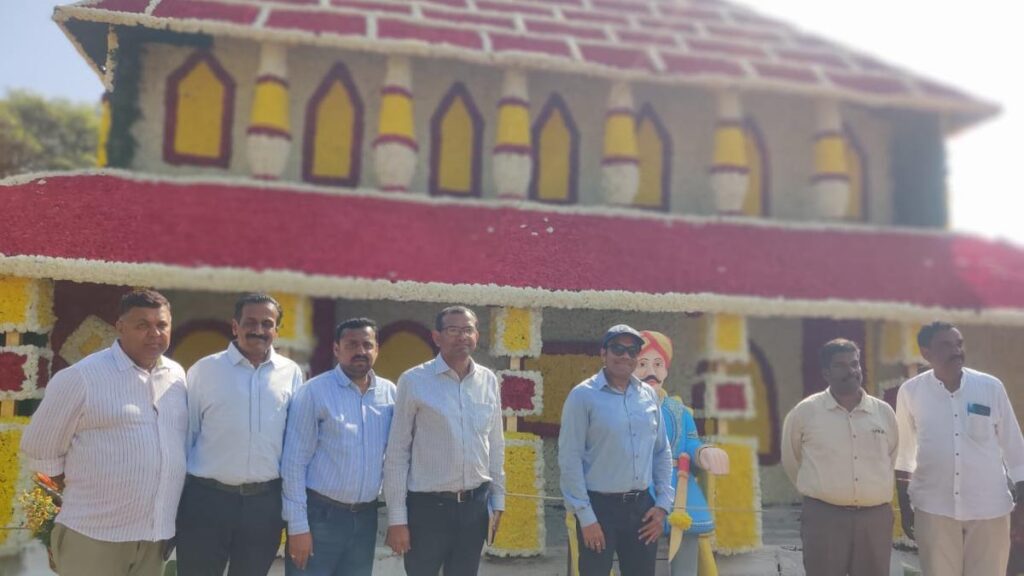
Furthermore, the venue will have historical structures of Kodagu decorated in flowers, including the iconic Nalknad Palace. The event will also create awareness of voting where the ballot unit, VV Pat, control unit, etc. will be recreated using flowers. From cardboard cutouts of superheroes to well-known leaders, everything will be decorated with flowers along with bonsai and anthurium that will deck up the entire venue. 

The event will also provide a platform for the farmers to exhibit their unique products, which will be judged for the competition. A total of 60 shops will be established at the Gandhi Maidan (a few meters away from Raja Seat)consisting of various outlets from various government departments and private partners.

Alongside the flower show, a Wine Utsav will also be hosted which will exhibit both homemade as well as wines from the Wine Board that will be available for tasting activity. The event is seen as a boost to the tourism sector as Rs 15 lakh to Rs 20 lakh has been funded. 

source: http://www.newindianexpress.com / The New Indian Express / Home> States> Karnataka / by Express News Service / January 27th, 2023

Spices Board to hold buyer-seller meet in Madikeri on Jan. 24

It will provide a common platform for buyers and sellers of the spice industry to interact directly and establish effective business linkages.

The Spices Board of India will be holding a buyer-seller meet for spices at Hilldale resorts in Madikeri on January 24.

A press statement from the Assistant Director of Spices Board of India’s Divisional Office in Madikeri said the buyer-seller meet, which will be held between 10.30 a.m. and 5.00 p.m., will provide a common platform for buyers and sellers of the spice industry to interact directly and establish effective business linkages.

The Spices Board India, which functions under the Ministry of Commerce, Government of India, in its statement, pointed out that Karnataka holds a significant position in spice production in India by being a major producer of ginger and black pepper.

Karnataka also produces other spices such as cardamom, chillies, turmeric, garlic, coriander, nutmeg, clove, tamarind etc. During the year 2021-22, the State produced 7,09,546 metric tonnes of spices from an area of 3,75,082 hectares, the statement added.

Spices Board India, a flagship organisation for the development and worldwide promotion of Indian spices, said India’s spices exports with “a volume of 15,31,154 metric tonnes, valued at ₹30,576 crore during 2021-22, scaled the landmark level of USD 4.102 million in value realisation, besides recording a growth rate of 26.76 per cent, 38 per cent in rupee terms and 32 per cent in dollar terms, compared to 2019-20, despite the global pandemic situation”.

source: http://www.thehindu.com / The Hindu / Home> News> India> Karnataka / by The Hindu Bureau / January 21st, 2023

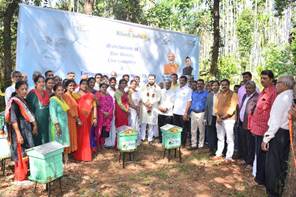
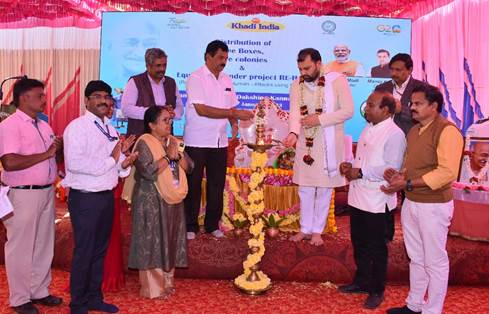
KVIC through RE-HAB project of the Honey Mission Programme aims to reduce elephant attacks on humans and farmers’ crops

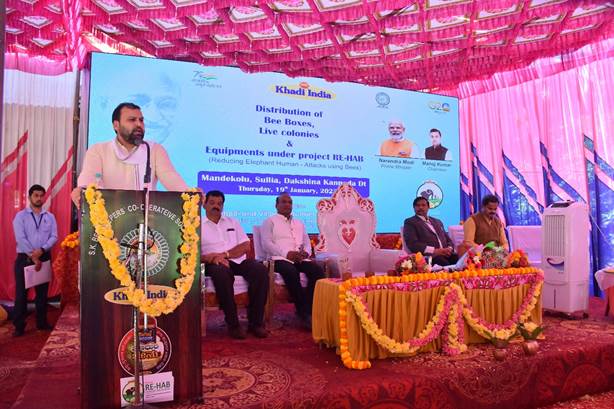
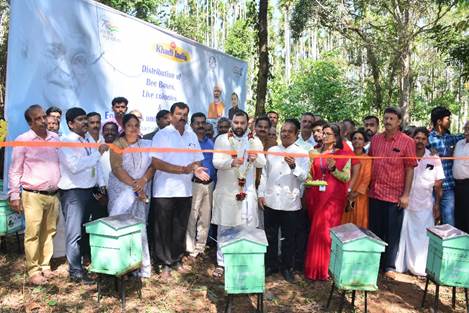
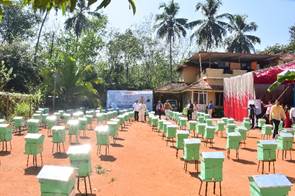
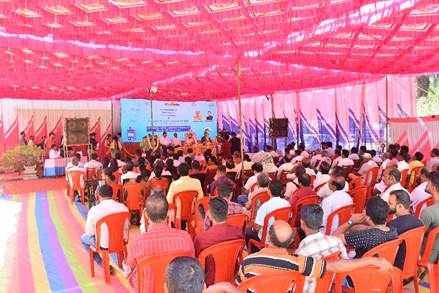
Shri Manoj Kumar, Chairman, KVIC distributed live Bee Colonies, Bee-keeping equipment and 200 Bee-Boxes to the trained beneficiaries at Sulia at Dakshina Kannada, Karnataka under the RE-HAB Project, an initiative under the Honey Mission Programme of Prime Minister Shri Narendra Modi.

Under the Project RE-HAB, “Bee-fences” are created by setting up bee boxes in the passage ways of elephants to block their entrance to human habitats. The boxes are connected with a string so that when elephants attempt to pass through, a tug or pull causes the bees to swarm the elephant herds and dissuade them from moving further.

This is a cost-effective way of reducing human-wild conflicts without causing any harm to the animal. It is scientifically recorded that elephants   fear the bee swarms that can bite their sensitive inner side of the trunk and eyes. The collective buzz of the bees annoys elephants which force them to return.

Speaking on this occasion Shri Manoj Kumar said “It was seen that Bees help the farmers in arresting the encroachment of elephants in their agricultural fields and destroy them.Not only this, some precious lives are also lost in that condition. Taking an initiative, KVIC initiated a pilot project with the Technical assistance of the College of Forestry, Ponnampet, Kodagu District and the results were encouraging. Hence, 6 such projects were sanctioned in the most wanted states namely Assam, Maharastra, west Bengal, Orissa, Uttarkhand apart from Karnataka.”

  Under the RE-HAB farmers are trained in bee-keeping and each of them are supplied with 10 Bee boxes and installed in the elephant corridors so bee boxes and bee hives are placed in the Elephant corridor to restrict elephants from approaching the agricultural field.  This Pilot project has shown very good results in Ponnampet. This project has also helped in the increasing agricultural output due to enhanced pollination as well as Honey Extraction, he informed.

Chairman, KVIC also emphasised the farmers to take benefit of the scheme for it’s long-term advantages. Speaking on this occasion he also shared in details  about the PMEGP Scheme ok KVIC which  has enhanced Loan ceiling  from Rs 25.00 Lakhs to Rs 50.00 by the Prime Minister and encouraged the women and rural youth to take up the scheme.

(Release ID: 1892452)

source: http://www.pib.gov.in / Press Information Bureau, New Delhi / Home / byu Ministry of Micro, Small & Medium Enterprises / January 20th, 2023

Madikeri: New invention – Face mask behind head to avoid tiger attack

Madikeri : 

“Tigers never attack human beings from front. They attack from behind. In order to prevent attack of tigers, people of Sundarbans in West Bengal are using human faced mask on the back of their head and it is found to be successful. This might be useful in Kodagu district also,” said Col C P Muttanna, honorary secretary of environment and health foundation.

Muttanna further said, “Many people have died due to tiger attacks in Sundarbans, area were Brahmaputra river joins Bay of Bengal. Now the incidents have reduced due to people wearing human face mask on the back of their heads.

“In the south part of Kodagu, tiger attacks have increased and five people have already died. So a proposal is sent to the government to provide human face mask made of rubber.

“When one studies the tiger attack cases of the district, it becomes apparent that the tiger attacks people who go for open defecation in the morning. Though it is said that Kodagu district is open-defecation free, there are many areas where people still go to fields to defecate as there are no toilets. The government must provide toilets to households where there is no toilet,” he said.

Col Muttanna also asked people to leave the half eaten carcass of cattle as it is as the tiger will come again to eat the same and it will be easier for forest department to cage it.

source: http://www.daijiworld.com / DaijiWorld.com / Home> Top Stories / by Daijiworld Media Network – Madikeri (MS) / January 12th, 2023

As demand goes up, scientists in Kodagu develop new avocado variety

The new variety will have 80% pulp and is expected to improve coffee based avocado cultivation.

Scientists at Central Horticultural Experiment Station in Kodagu have developed a new avocado variety ‘Arka Coorg Ravi.’ | Photo Credit: DARSHAN DEVAIAH B.P.

Bengaluru:

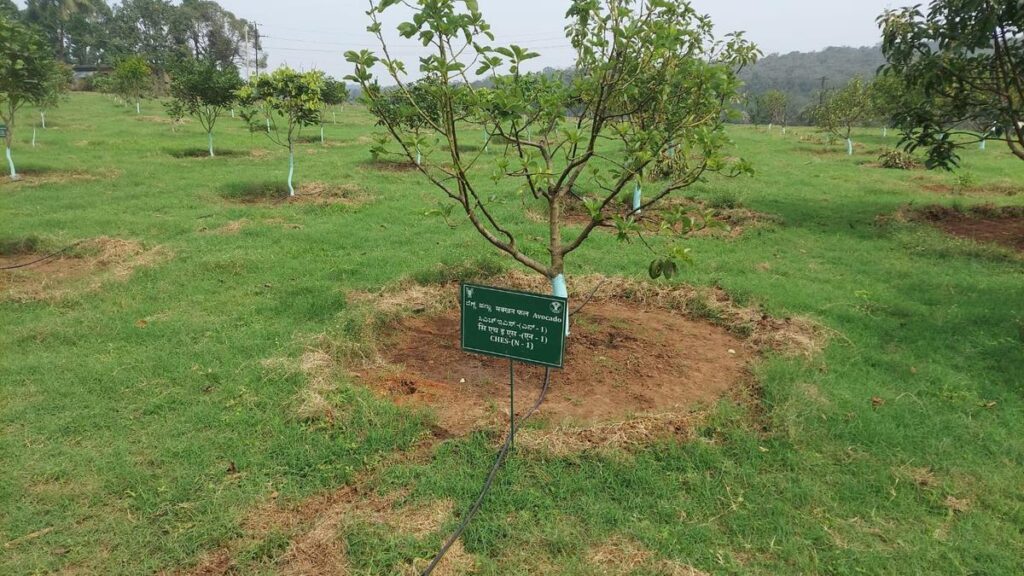
As the demand for avocado, popularly known as butter fruit, is increasing in the cosmetic industry as well as for consumption, scientists at the Central Horticultural Experiment Station (CHES) in Kodagu have developed a new variety called ‘Arka Coorg Ravi’, which will further improve coffee-based avocado cultivation in the district.

According to scientists in CHES, the new variety will have 80% pulp and the rest seed, making the fruit profitable for farmers.

Speaking to The Hindu, Madhu G.S, scientist in CHES, said: “Avocado, which is described as a miracle fruit for its health and nutritional benefits, is now also in huge demand in the cosmetic industry. The fruit is used in many skincare products. We have researched and developed Arka Coorg Ravi, which will help farmers in the district. The fruit is grown on about 500 hectares in Kodagu amidst the coffee plantations and the area of cultivation has seen a rise in recent years.”

The CHES recently started distributing the Arka Coorg Ravi grafts to the farmers. The centre has already developed 30,000 avocado grafts which have been distributed to farmers in the district.

“The new variety developed by the CHES will have at least 450 to 600 grams of weight per avocado, which will make the fruit profitable. Seedlings take 10 years to give yield, while graft plants start yielding from at least in the seventh year,” S. Rajendran, scientist, CHES Chettalli in Kodagu told The Hindu.

Recently, the CHES had a farmer-scientist interaction on the cultivation techniques of avocados in the district. According to CHES, farmers from different parts of Karnataka and also from Kerala, Tamil Nadu, Maharashtra, Andhra Pradesh, and Telangana have been purchasing avocado saplings or grafts to grow in their State.

Since Kodagu district saw two natural calamities in 2018 and 2019, which caused huge losses to farmers, especially coffee growers, they are now growing avocados on the coffee plantations.

“In the last few years, due to the floods in the district, coffee production has come down, and coffee is also not fetching an attractive price now. Hence, I have started cultivating avocados as a mixed crop in my coffee plantation and it is now yielding fruits and it can be a good alternative to offset the losses from coffee and black pepper,” said Roshan Poovanna, a farmer from Virajpet.

According to farmers, Kodagu avocados have a market in Kerala and Maharashtra, apart from Karnataka. “Local varieties yield fruit twice a year, February to May and June to September. Now, we have some more varieties that yield fruits around the year. Now the CHES has developed a new variety. I hope this will produce more avocados from the district and get a good market price. However, the government should promote and create awareness about the growing of mixed crops in coffee plantations so that the farmers can avoid losses from other crops,” said Praveen Nanaiah, a farmer from Madikeri.

Earlier, as part of crop diversification, the farmers in Kodagu were growing ‘Coorg mandarin’ oranges, grown as a mixed crop on the estates along with coffee and black pepper.

However, in the past few years, the Coorg mandarin cultivation is coming down due to the threat of citrus greening disease.

Benefits of avocados

Avocado, botanically known as Persea Americana, is an evergreen plant and can grow in diverse environmental conditions. On average, one avocado tree produces about 120 to 150 fruits annually.

The fruit has a high monounsaturated fat content, which is considered healthy. One fruit contains 25% of the recommended daily amount of saturated fat.

Avocados also have 60% more potassium than bananas and are rich in vitamins B, E, and K. Its juice acts as an antioxidant and its seeds are used to manufacture paper.

source: http://www.thehindu.com / The Hindu / Home> News> Cities> Bengaluru / by Darshan Devaiah B.P. / January 01st, 2023