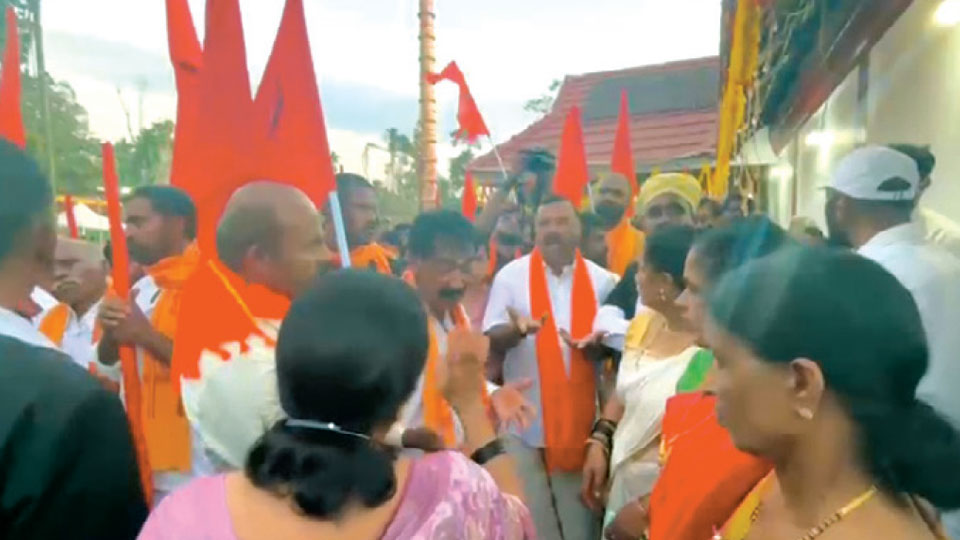
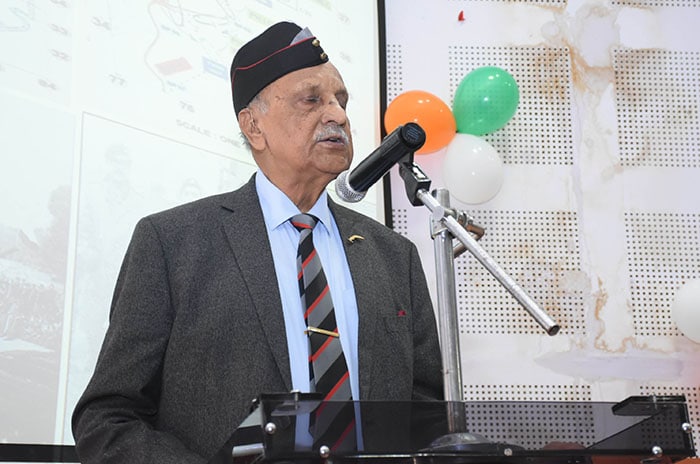
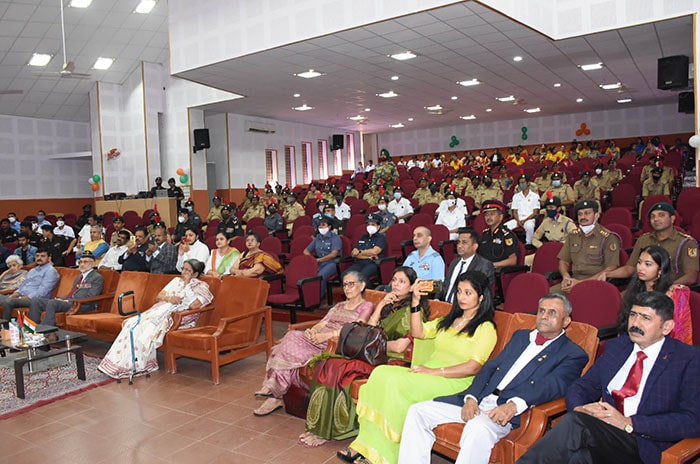
Virajpet MLA A.S. Ponnanna, who also serves as the Legal Advisor to the Chief Minister, Somwarpet MLA Dr. Manthar Gowda and Mysuru-Kodagu MP Yaduveer Krishnadatta Chamaraja Wadiyar have called for peace between communities in Kodagu following tensions at the Maha Mrithyunjaya Temple in Kattemad village on Dec. 27.
The incident occurred when over 20 Kodava community members, including women in traditional attire, were prevented from entering the Temple wearing traditional dresses by individuals from another community, claiming to represent the Temple Management Board.
Reports suggest that individuals demanded Kodavas either remove their traditional attire or leave the Temple premises. The altercation occurred on the final day of the festival at the Mrithyunjaya Temple. It was claimed that the Temple’s by-laws prohibit traditional attire, a contention that Kodava community members vehemently disputed.
The Police intervened to defuse the situation. Both groups filed complaints and counter-complaints at the Madikeri Rural Police Station. Footage of the incident, which has gone viral on social media, has drawn widespread criticism for causing disrespect to the Kodava community in their homeland.
MLA Ponnanna called upon everyone to uphold peace and harmony. “I appeal to the Temple management to revoke this by-law and allow traditional attire from all communities. Historically, traditional attire has been a vital part of the district’s cultural heritage, embraced by various communities,” he said.
MLA Dr. Manthar Gowda also expressed his surprise over the incident, noting that Kodagu is known for its communal harmony and peaceful coexistence among communities. He urged all parties to maintain peace and ensure that the situation does not escalate.
Mysuru-Kodagu MP Yaduveer Krishnadatta Chamaraja Wadiyar strongly condemned the incident and denounced acts of mutual hatred and disruptions to societal peace, emphasising that such incidents should never happen. He called for addressing differences through dialogue and fostering a harmonious environment.
In response to the incident, various organisations have announced plans for a massive march titled ‘Kodava Nadige Kattemadu Kade’ soon.
Virajpet Kodava Samaja’s Honorary Secretary Maletira Srinivas accused certain politically motivated individuals of attempting to strip the Kodava community of their rights and insulting Kodava women.
source: http://www.starofmysore.com / Star of Mysore / Home> News> Top Stories / December 29th, 2024
Cauvery College Gonikoppal, Kodagu District — Oct. 30, 2024
Introduction
During a recent visit to my hometown in Kodagu district, Karnataka, the verdant heart of India’s coffee country, I conversed profoundly with local educators, parents, and community leaders about the future of rural education. These discussions revealed our community’s resilience and the pressing challenges our educational institutions face. As digital transformation reshapes the global landscape, the disparity between urban and rural educational opportunities becomes increasingly apparent, particularly in regions like Kodagu.
The steep valleys and scattered settlements that characterize Kodagu’s geography have long presented unique educational access and quality challenges. However, within these challenges lies an unprecedented opportunity: the potential to harness Artificial Intelligence (AI) not just as a teaching tool but as a comprehensive solution for educational transformation. This transformation extends beyond traditional classroom learning to address two critical aspects — faculty development and student employability — creating a holistic framework for educational advancement.
This article examines how AI technologies can be strategically deployed to revolutionize education in Kodagu’s rural schools, creating a model that could be replicated across similar regions in India. My analysis draws from community consultations, current educational practices, and emerging technological capabilities to propose a comprehensive framework that addresses three interconnected challenges: enhancing student learning outcomes, empowering teachers through continuous skill development, and preparing students for the evolving job market.
Focusing on Kodagu’s unique context while maintaining a broader perspective on rural education in India, this paper presents actionable strategies for leveraging AI to create an educational ecosystem that is not only more equitable and accessible but also aligned with the future of work. The recommendations stem from a deep understanding of local realities and global best practices in AI-enabled education.
Kodagu District: A Unique Educational Landscape
Nestled in the Western Ghats of Karnataka, Kodagu (formerly known as Coorg) is a district that exemplifies both the challenges and opportunities in rural Indian education. This region, celebrated worldwide for its coffee plantations and rich biodiversity, covers approximately 4,102 square kilometers of mountainous terrain. The district’s unique geographical and cultural characteristics significantly influence its educational landscape. With a population of about 68,000 school-age children (6–16 years), Kodagu boasts 924 government schools and an average student-teacher ratio of 35:1. The district’s literacy rate stands at an impressive 82.6%, surpassing the national average, though a significant rural-urban divide persists.
Kodagu’s educational system faces distinctive regional challenges that stem from its geographic and socio-economic realities. The district’s schools are scattered across hilly terrain, with 40% located in remote coffee estates, making access difficult for many students and teachers. Limited public transportation options and intermittent internet connectivity further complicate the implementation of digital learning initiatives. Socio-economic factors also play a crucial role, as seasonal migration during coffee harvesting affects attendance, and there’s a high proportion of students from agricultural families. The district’s mixed economic demographics, ranging from estate owners to daily wage workers, create diverse educational needs and expectations.
The distribution of educational resources in Kodagu presents another set of challenges. Quality educational institutions are largely concentrated in urban centers like Madikeri, leaving rural areas with limited access to modern learning tools and technologies. There’s a notable shortage of STEM and English language teachers and inadequate special education resources. Cultural and linguistic dynamics add another layer of complexity to Kodagu’s educational landscape. The district’s multilingual student population speaks Kodava, Kannada, Malayalam, and other local languages, necessitating a nuanced instruction approach.
The Role of AI in Transforming Kodagu’s Education System
Artificial Intelligence holds significant potential to address many of the challenges faced by Kodagu’s education system, particularly in rural areas. By leveraging AI-powered solutions, the district can enhance personalized learning experiences, bridge resource gaps, and support teachers in their roles.
One of the key areas where AI can make a substantial impact is personalized learning. AI-driven adaptive learning platforms can create customized learning paths for students, tailoring the educational experience to each individual’s needs, pace, and learning style. This approach is particularly beneficial in Kodagu’s rural schools, where classrooms often have students with varying learning abilities. These platforms can provide real-time feedback, guiding students and helping them improve continuously. Additionally, AI can help overcome rural schools’ lack of physical resources by providing virtual alternatives. For instance, AI-powered virtual labs like Labster can allow students to conduct experiments and simulations. At the same time, AI-curated digital libraries can provide free textbooks and resources, eliminating the need for physical books.
AI can also be crucial in supporting teachers by automating administrative tasks and providing data-driven insights into student performance. Tools can be deployed to assist in lesson planning, content creation, and grading. At the same time, AI-driven analytics platforms can help teachers track student progress and identify areas where additional support is needed. Furthermore, AI can address language barriers through language learning applications that provide interactive lessons in multiple languages, including local dialects spoken in Kodagu. The technology can also promote STEM education by introducing students to coding, robotics, and other STEM activities through AI-powered coding platforms and virtual robotics labs. Importantly, AI offers solutions that don’t heavily rely on traditional infrastructure, which is often lacking in rural areas of Kodagu. Mobile-based AI learning apps and offline learning platforms can deliver educational content even in areas with unreliable electricity and limited internet connectivity, ensuring that the benefits of AI in education can reach even the most remote parts of the district.
Case Study: Shiksha Co-pilot in Karnataka
The Karnataka government has taken a significant step forward in educational technology with the launch of Shiksha Co-pilot, an innovative AI-powered digital assistant designed to revolutionize teacher training. This groundbreaking initiative, born from a collaboration between Sikshana Foundation and Microsoft Research India, aims to elevate learning outcomes and empower educators with the tools to create comprehensive, personalized teaching resources.
Shiksha Co-pilot boasts an impressive array of features that promise to transform the teaching landscape. At its core, the system generates high-quality, personalized content tailored to individual teachers’ needs, ensuring educators access relevant and up-to-date materials. The platform also supports the dynamic curation of engaging teaching resources, allowing teachers to find and incorporate diverse materials into their lessons easily. Perhaps most notably, Shiksha Co-pilot includes an interactive chatbot that facilitates teachers’ self-learning and assists in real-time content generation, providing a responsive and adaptable tool for continuous professional development.
The potential impact of implementing Shiksha Co-pilot in Kodagu’s schools could be transformative. This AI-powered assistant could be crucial in addressing the district’s shortage of qualified teachers, particularly in remote areas, by providing robust support and resources to existing educators. By enhancing teacher capabilities and streamlining the creation of personalized learning materials, Shiksha Co-pilot has the potential to improve learning outcomes for students across the district significantly. This initiative represents a promising step towards bridging the educational divide in Kodagu, leveraging cutting-edge technology to support teachers and, ultimately, enhance the quality of education for all students in the region.
Beyond Challenges: The Unique Spirit of Kodagu’s Educational Ethos
In the mist-shrouded hills of Kodagu, where coffee plantations stretch as far as the eye can see, a remarkable educational spirit transcends its apparent challenges. The strength of this region lies not just in its fertile soil but also in the fertile minds of its community and its unwavering commitment to progress.
Walk into any village meeting in Kodagu, and you’ll witness something extraordinary: parents, teachers, and community leaders engaged in passionate discussions about their children’s education. This isn’t just casual conversation — it’s a reflection of a deeply rooted cultural value where education is seen as a collective responsibility. From estate owners opening their properties for mobile learning centers to elderly community members volunteering their time to share traditional knowledge, the spirit of community involvement runs deep.
The Kodava people’s celebrated martial heritage and disciplined approach to life have naturally evolved into a profound appreciation for learning and development. In homes across the district, from modest farm workers’ dwellings to grand ancestral houses, parents prioritize education, often making significant sacrifices to ensure their children have access to better learning opportunities.
Kodagu is special because it seamlessly weaves its rich cultural heritage into modern education. During local festivals like Puthari or Kailpodh, schools integrate traditional celebrations with learning experiences, creating a unique blend of cultural preservation and academic advancement. This cultural integration is a foundation for students to understand their roots while reaching for future opportunities.
The district has also demonstrated remarkable adaptability. In recent years, there’s been a growing recognition among community leaders and educators that traditional educational methods must evolve. This awareness has sparked innovative initiatives, from mobile digital libraries to community-funded smart classrooms. The success of these programs often stems from well-established public-private partnerships, a legacy of Kodagu’s cooperative coffee industry model.
This complex interplay of challenges and strengths makes Kodagu an ideal candidate for innovative educational solutions powered by AI technology. The district’s unique characteristics require customized approaches that respect local traditions while embracing modern educational methodologies. This unique combination of community strength, cultural pride, and openness to innovation positions Kodagu to overcome its educational challenges and potentially emerge as a model for rural education transformation in India. I would like to say, “In Kodagu, we don’t just grow coffee — we grow futures.”
Conclusion
The time for transformative action in Kodagu’s education system is not tomorrow but today. As we stand at the intersection of tradition and technology, artificial intelligence offers us not just a tool but a gateway to revolutionizing how we educate the next generation. This is not merely about adding computers to classrooms but fundamentally reimagining education to honor our heritage while embracing the future.
Consider this: thousands of Kodagu’s children wake up every morning with dreams as vast as our coffee estates. Yet, many of these aspirations remain unfulfilled due to educational barriers that we now have the power to overcome. AI technology isn’t just another educational initiative — it’s the catalyst that can transform these dreams into reality.
The evidence is compelling. Early evidence from AI implementation in rural education across India shows promising results. According to a 2023 study by MIT’s Abdul Latif Jameel Poverty Action Lab (J-PAL) in rural Rajasthan, personalized learning programs supported by technology significantly improved student learning outcomes. While Kodagu’s context is unique, these results suggest the potential impact we could achieve by carefully implementing AI-enabled learning solutions in our district. Imagine every child in Kodagu, regardless of their location or economic background, having access to world-class educational resources, personalized learning experiences, and mentorship opportunities — all through the power of AI.
The cost of inaction is far greater than the investment required for transformation. Every year, we delay, and another cohort of students misses out on opportunities that could define their futures. Our children deserve more than just basic education; they deserve an education that prepares them to compete and excel in a rapidly evolving global landscape.
The roadmap I have outlined isn’t just ambitious — it’s achievable. We can make Kodagu a beacon of educational innovation in rural India by leveraging public-private partnerships, engaging our vibrant community, and implementing a phased approach. This isn’t just about implementing technology; it’s about creating a sustainable ecosystem where every stakeholder — students, teachers, parents, and community leaders — plays a vital role in educational transformation.
The question isn’t whether we should embrace AI in education but rather how we can afford not to. The global economy is rapidly evolving, and our children must have the skills and knowledge to thrive in this new world. By acting now, we can ensure that Kodagu’s next generation isn’t just participating in the future — they’re helping to shape it.
I would like to call upon every stakeholder — from government officials to local community leaders, from teachers to parents — to join us in this transformative journey. The path ahead is clear, the technology is ready, and our community is prepared. Together, we can create an educational revolution that will serve as a model for rural communities across India and beyond.
Let us move forward with purpose and urgency, for the future of Kodagu lies in the education of our children. The time to act is now. The opportunity is before us. The future is waiting.
Will you join us in making this vision a reality?
source: http:// www.medium.com / Medium.com / Home / by Poonacha Machaiah / November 03rd, 2024
This article was written with assistance from artificial intelligence tools. The AI-generated initial drafts provided research assistance and refined language. I have reviewed and edited all content for accuracy and appropriateness.
Dr. M. Senthilkumar, Director of Research, Coffee Board of India, says that India need not worry too much about losing coffee by 2050.
“Of course, climate change is happening not only in India, but around the world but this is not going to make much impact on Indian coffee, when compared with other countries like Brazil and Vietnam. We are a country that does not grow coffee in an open condition. Most of the coffee in India grows in a shaded condition. We are pushing our farmers to grow more traditional and conventional shade trees at the coffee estates – that is deciduous and evergreen trees, which will help create a microclimate that will facilitate comfortable growing of coffee,” Dr. Senthilkumar explained.
India has rainfall from June to September usually, followed by a drought period of 70 days. “Due to climate change, there is a possibility of drought period being extended. If it extends farmers will have to use methods of artificial irrigation encoring more expenditure,” he added.
“By 50-100 years from now, climate change can cause problems at any given point as the temperature is increasing by 1.5 degrees centigrade every year. But again, not for Indian coffee. Indian coffee may benefit because of climate change, as other countries will stop producing coffee. But that does not mean we should stop worrying about climate change,” Dr. Senthilkumar said.
source: http://www.thehindu.com / The Hindu / Home> News> Cities> Bengaluru / by Yemen S / November 29th, 2024
The design and layout of the ground will follow the model of the famous Dharamshala cricket stadium in Himachal Pradesh, though it will be slightly larger than Bengaluru’s Chinnaswamy Stadium
Madikeri:
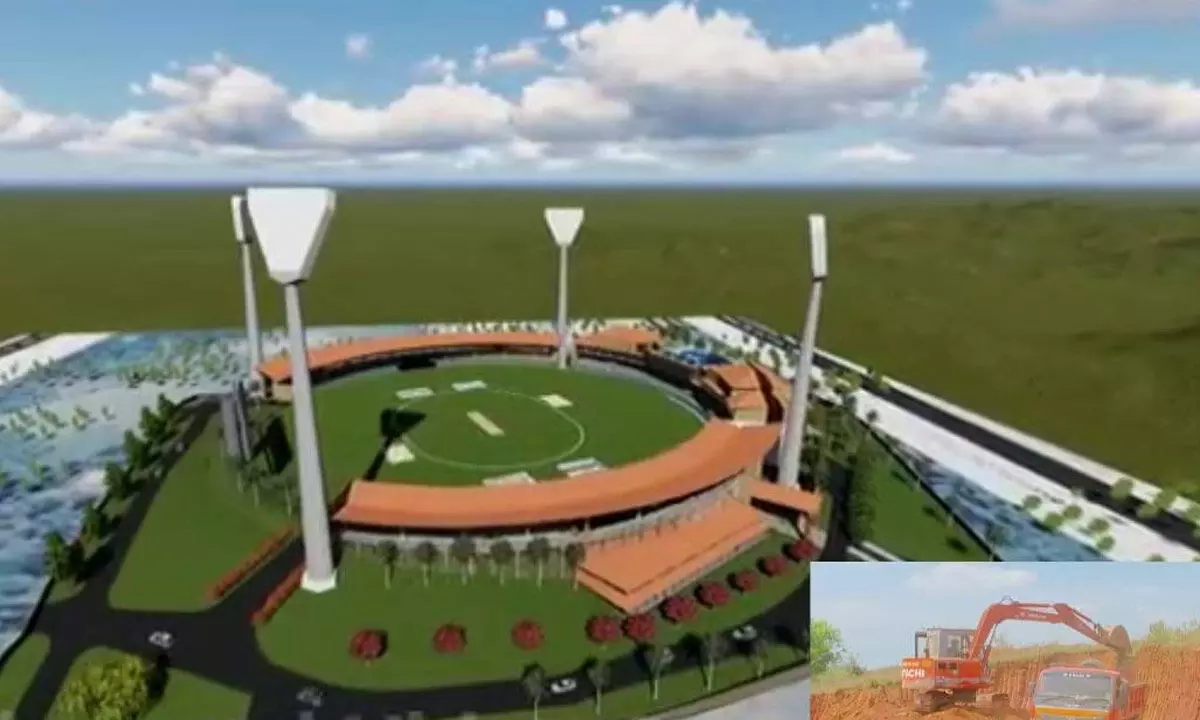
After decades of persistent demand, the long-awaited dream of having a dedicated cricket ground in Kodagu district is finally being realized. Construction work has begun on an international cricket stadium near Palemadu village, situated in the scenic Madikeri taluk. This marks a significant milestone for the region, which has long yearned for a sporting facility capable of hosting major cricket events.
The Kodagu district administration has earmarked 12 acres of land for the construction of the stadium, with the project estimated to cost around Rs 50 crore. The design and layout of the ground will follow the model of the famous Dharamsala Cricket Stadium in Himachal Pradesh, though it will be slightly larger than Bengaluru’s Chinnaswamy Stadium. This ambitious project will involve leveling half of a nearby hill, a complex and costly process to create a world-class sporting venue.
The construction of this stadium has been met with both excitement and opposition. For years, there were protests against the proposed location, primarily due to the presence of a graveyard on the land. Local residents from Paisari village, in particular, were firm in their stance, demanding that no cricket ground should be built over the graveyard. Despite the protests, the project had to be put on hold for some time. However, the issue was eventually resolved when former District Collector Dr. BC Satish intervened and convened a meeting to find a solution. It was decided that one acre of land would be set aside for the cemetery, while the rest would be used for the cricket ground.
Though some residents still insisted on reserving two acres for the cemetery, the Karnataka State Cricket Association (KSCA) was determined to move forward with the project. Their resolve to build the ground regardless of the protests has finally borne fruit. With all hurdles cleared, construction work has now commenced, with heavy machinery such as JCB and Hitachi excavators already working to level the land.
The project is expected to be completed within the next four years, bringing a major sporting facility to the district.
A boon for local sports enthusiasts.
This stadium will be a game-changer for the region, providing a much-needed infrastructure for local sports enthusiasts and opening doors to higher levels of competition. Currently, Kodagu boasts an astro turf hockey stadium, but there has been a glaring absence of facilities capable of hosting even state-level sports events. The new cricket stadium will not only enhance the region’s sports infrastructure but also serve as a hub for aspiring athletes.
While the construction of the cricket stadium is a significant step forward, sports enthusiasts in the district are also calling for the development of other key sports facilities. In particular, there are increasing demands for the creation of an athletics stadium, similar in scope and scale to the upcoming cricket ground, to accommodate track-and-field events and other athletic competitions.
The lack of such facilities has been a hindrance to the growth of athletics in the region, and many believe that the creation of a dedicated athletics venue would be the next logical step in the district’s sporting evolution.
Once completed, the international cricket stadium is expected to attract attention from national and international teams, potentially putting Kodagu on the map as a major sporting destination. It could host not only first-class cricket matches but also training camps, junior cricket tournaments, and a variety of other sports events, providing ample opportunities for local players to showcase their talent. Moreover, the stadium will have a significant economic impact on the area, boosting tourism, creating employment opportunities, and contributing to the development of infrastructure such as hotels, transportation, and sports-related businesses. The local community is expected to benefit greatly from the influx of visitors and sports professionals.
As the work on the cricket ground progresses, the residents of Kodagu have a reason to celebrate, as they will soon have a venue that will foster local talent and bring national-level events to the region. However, the demand for more sports facilities remains strong, and local authorities will likely have to address the call for an athletics stadium and other sporting infrastructure to meet the growing needs of the district’s sports enthusiasts.
In the coming years, Kodagu’s landscape will be transformed into a thriving hub for sports, creating opportunities for youth, bringing pride to the community, and fostering the next generation of athletes. The international cricket stadium is just the beginning.
source: http://www.thehansindia.com / The Hans India / Home> News> State> Karnataka> Bengaluru / by The Hans India, Hans News Service / November 30th, 2024
Renaissance Hotels, part of Marriott Bonvoy’s global portfolio of over 30 extraordinary hotel brands, celebrated its 10th annual Global Day of Discovery on November 19, 2024. In celebration of this special occasion, over 170+ Renaissance Hotels properties around the world came together to reimagine their Evenings at Renaissance program with a unique Evenings Market, spotlighting local retailers and businesses.
Over the past ten years, Global Day of Discovery has been the one day in the year when all 170+ Renaissance Hotels around the world activate an elevated, on-property experience – underscoring Renaissance Hotels as one that connects locals and travelers to the DNA of the neighborhood through its unexpected design, experiential entertainment, and spontaneous discovery. Global Day of Discovery 2024 continues to demonstrate Renaissance Hotels’ promise to making measurable impact through supporting local – not just on Global Day of Discovery, but every day – with the launch of R Finds, a global digital marketplace designed for local discovery.
General Manager Sita Lekshmi and Rishwin Devaya
The event at Renaissance Bengaluru Race Course Hotel featured a journey to the sprawling coffee estates of Coorg , curated by the Riverside Coffee Co. and its founder Rishwin Devaya. An immersive Evening Market experience, guests indulged in the finest manual brew coffees, a meet-and-greet with Rishwin, and a special coffee cupping session.
Guests were also treated to expertly crafted coffee-based cocktails by Shyam Kumar, Bar Manager at R Bar and his team of mixologists.
The Culinary team led by Executive Chef Somasundaram G. and Pastry Chef Manivannan G. delighted everyone with a selection of decadent coffee-inspired desserts, creating a perfect fusion of local craft and culinary artistry.
The event concluded with guests connecting over their shared love for coffee, cocktails and discovery, leaving with a deeper appreciation for Coorg’s coffee culture and the hotel’s commitment to championing the local community.
The Global Day of Discover and the launch of R Finds, our very own global digital marketplace is a joyous moment and one to take immense pride in. Through interactive brewing sessions, exquisite coffee-inspired cocktails, and engaging conversations, we created an evening that blended the warmth of local flavors with the spirit of discovery—a true reflection of what Renaissance Bengaluru Race Course Hotel stands for,” said Sita Lekshmi, General Manager, Renaissance Bengaluru Race Course Hotel.
source: http://www.apnnews.com / APN News / Home> Tourism> Hospitality / by NS / November 21st, 2024
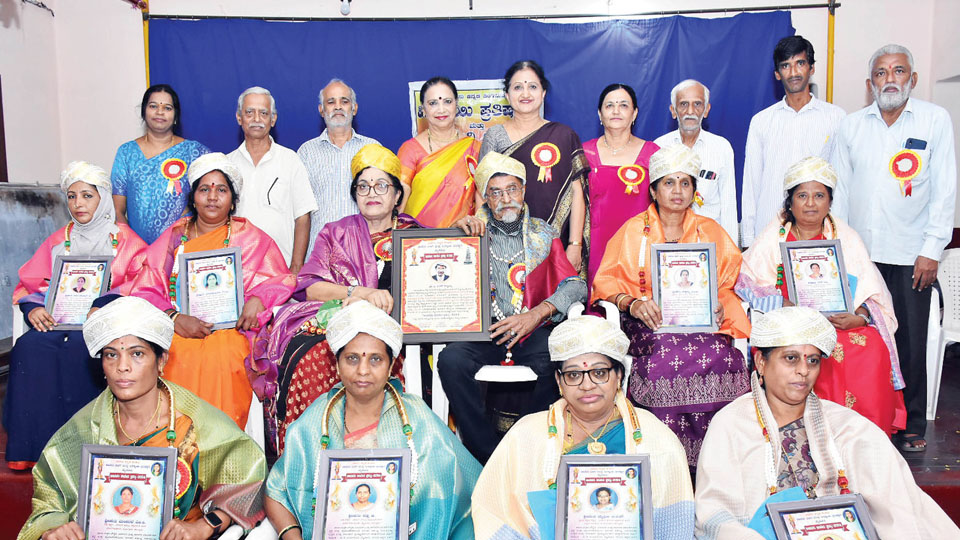
Ten teachers were felicitated and presented ‘Jeevanadi Cauvery’ awards in memory of Nambiyapanda Gowru Ponnavva at a function held in the premises of Akkana Balaga School in Agrahara in the city on Tuesday. The award presentation function was jointly organised by Cauvery Balaga and Hiranmayi Pratishtana.
Speaking at the function, writer Bannur K. Raju said it is essential that education and health must be provided to everyone without any bias like in many developed countries.
“Unfortunately in our country, both these vital sectors are in firm grip of private organisations which has deprived both education and health to poor and middle class people,” he regretted saying it has become essential that these two sectors be nationalised in the interest of majority of people in the country.
Teachers S.N. Janaki of Alanahalli Government Lower Primary School, H.D. Kote taluk; M.P. Manjula, Hunsur Govt. Lower Primary School; K. Parveen Taj, Arenahalli Govt. Urdu Lower Primary School, Periyapatna taluk; G. Ratna, Beeregowdanahundi Government Lower Primary School, Mysuru taluk; M.T. Akkamma, Ammathi Govt. Higher Primary School, Virajpet taluk; M. Rani, Head Mistress, Bharati Sthree Samaja Higher Primary School, Yadavagiri in Mysuru; T.S. Maithili, Physical Education teacher, Government Higher Primary School, Vysarajapura, T. Narasipur taluk and M.T. Saralakumari, Head Mistress, Kajoor, Somwarpet taluk were felicitated at the function with ‘Jeevanadi Cauvery’ awards.
City’s renowned Sculptor Appaneravanda Kiran Subbaiah was given a special award. ana
Noted Danseuse Dr. Tulasi Ramachandra, retired teacher A. Sangappa and artist Dr. Jamuna Rani Mirle spoke at the function.
President of Cauvery Balaga and retired teacher N.K. Kaveriamma, President of Hiranmayi Pratishtana A. Sangappa, Jnana Vignana Samiti District President H.V. Muralidhar, Art teacher Manohar, Social activist Malini R. Palaksha and teacher Anupama were present.
source: http://www.starofmysore.com / Star of Mysore /Home> News / May 23rd, 2024
‘Vijay Shrankla Aur Sankritiyon Ka Maha Sangram’ celebrated
Mysuru/Mysore:
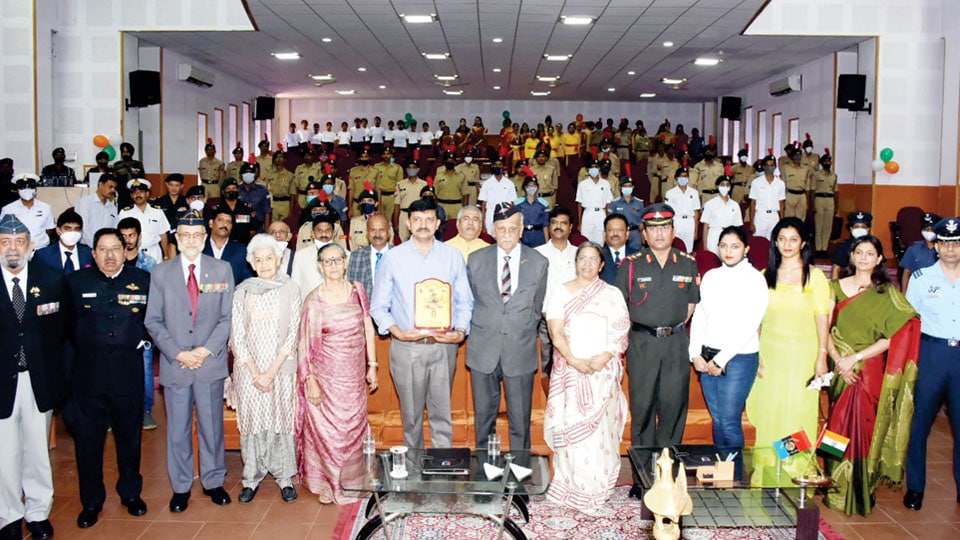
Marking 75 years of Independence as also 50 years of India’s victory over Pakistan in the 1971 war leading to the creation of Bangladesh, the National Cadet Corps (NCC) is celebrating the occasion as ‘Vijay Shrankla Aur Sankritiyon Ka Maha Sangram’ across the country from Nov. 28 to Dec. 19 this year.
As part of the celebrations, the Mysuru NCC Group felicitated the Next of Kins (NoKs) of the two martyrs — Flying Officer K.P. Muralidharan of 20 Air Squadron and Risaldar B.M. Kaveriappa of the 66 Armoured Regiment — at a programme held at Cauvery auditorium in Karnataka State Open University (KSOU) premises on Hunsur Road here this morning.
The NoKs who were felicitated are Lalita Krishna Kumar, sister of Flying Officer K.P. Muralidharan and B.M. Machaiah, son of Risaldar B.M. Kaveriappa.
Maj. Gen. (Retd.) C.K. Karumbaya, SM, was the chief guest. Maj. Gen. (Retd.) S.G. Vombatkere, VSM was the guest of honour.
As part of the celebrations, 75 NoKs of martyrs of 1971 war will be felicitated at 75 locations across the country.
Defence Officers, Junior Commissioned Officers and Other Ranks posted locally at Mysuru including NCC Group Commander Col. R.R. Menon, NCC cadets and Associate NCC Officers, Air Veteran Mandetira N. Subramani, President, VeKare Ex-servicemen Trust, Mysuru were present on the occasion.
About Flying Officer K.P. Muralidharan: Flying Officer Kotteiezath Puthiyavettil Muralidharan hailed from Nilambur Kovilakom in Mallapuram district of Kerala. Born on Oct. 6, 1945, he was commissioned into the India Air Force on Oct. 29, 1966 at the age of 21. During the 1971 Indo-Pak War, Muralidharan was serving with 20 Sqn. known as ‘Lightnings’ and was based at Air Force Station in Pathankot. He took off in his Hunter (A-462) for a mission from Pathankot and was involved in a dog fight with enemy aircraft. He was last seen flying north of Peshawar in combat with a PAF Sabre and was shot down by the enemy Sabre. His aircraft crashed inside the enemy territory.
Risaldar B.M. Kaveriappa: Born on Feb. 4, 1931 at Kadangamarur in Virajpet of Kodagu district, Kaveriappa joined the 66 Armoured Regiment in September 1969 and was appointed as a Troop Leader which he served till the last day of his life.
Kaveriappa was in command of 1 Troop Bravo Squadron. While moving to reinforce 3 Troop, his tank was hit by an enemy RCL Gun and he along with his crew were killed.
source: http://www.starofmysore.com / Star of Mysore / Home> News / November 30th, 2021
Fabriano in Acquarello is the international artistic convention dedicated to water color painting. International Exhibition FabrianoIn Acquarello will be organized with the participation of InArte – International Watercolour Sociaty, Italy and in cooperation Municipality Fabriano, Fondazione Carifac, Fondazione Fedrigoni Istocarta, Rotary and Lions club from 23rd to 26th April 2015 with the participation of the most important watercolor communities from around the world that will allow Italian and foreign watercolorist demonstrate, share and discuss their work in a unique context.
Water Color Society of India, founded by Amit Kapoor in 2013 at New Delhi, a part of International Water Color Society functioning with the aim to promote and popularize water color/water media in every country and to bring the hidden Indian talent at International platform. The society has identified the water color painting of Shri Aimanda Rupesh Nanaiah, resident of Maragodu Village of Kodagu district. Aimada Rupesh Nanaiah is one among the 20 artists representing India for the Fabriano in Acquarello 2015 exhibition at Italy scheduled for April-May 2015. Shri Aimanda Rupesh Nanaiah was born on November 19, 1976. He did his Primary Education at St. Anne’s Convent, Siddapur and Secondary at Siddapur High School, Pre-University at Murnad Pre-university and Bachelor of Fine Arts in Applied arts 1995-2000 at CAVA Mysore.
A Special Cover was released to felicitate water colour painting of Shri Aimanda Rupesh Nanaiah selected for Fabriano in Acquerello 2015 on 14th February 2015 at Madikeri (Special Cover approval no. KTK/28/2015). The cover illustration depicts the water color painting selected for the exhibition with the title “Pathukutti-The Fish Seller”, and scenes of paddy transplantation, Madikeri Town, and other village scenes of Kodagu. The reverse of the cover also features paintings of tractor alongside paddy field and a Kodagu township. The cover was released by Senior Post Master, Madikeri. The cover was received b the Artist Shri Rupesh Nanaiah who and whose family were felicitated on the occasion. The event was held at the Madikeri Head Post Office Premises. The artist also gave a demonstration of sketching by sketching the post masters caricature. My stamp depicting the painting was also launched on the occasion.
Courtesy: Viswas Menon, Madikeri
Special Cover on Kodagina Gowramma – 14th February 2015.
Mrs. B. T. Gopal Krishna (b. 1912 – d. 1939), better known as Kodagina Gowramma, was an Indian writer who wrote in Kannada and lived in Kodagu. She was also a feminist and a supporter of the Indian Freedom Movement. Gowramma was born in 1912 and married to Mr. B. T. Gopal Krishna of Gundugutti village of Somwarpet taluk in Kodagu, then known as Coorg, a province in British India. She invited Mahatma Gandhi to her family house, during his campaign in Coorg, and donated all her gold ornaments towards the Harijan (Dalit) Welfare Fund. She died young, drowning in a whirlpool, at the age of 27, on April 13, 1939.
Gowramma wrote in Kannada and on the feminist ideology using the pen name ‘Kodagina Gowramma’. The stories that she wrote, such as “Aparaadhi Yaaru” (Who is the criminal), “Vaaniya Samasye”, “Aahuthi” and “Manuvina Raani”, were modern and progressive.
On the occasion of 10th District Kannada Sahithya Sammelana, a Special cover was released on Kodagina Gowramma on 14th February 2015 at Madikeri. (Special Cover approval no. KTK/27/2015). The Special Cover depicts the portrait of Gowramma, and photos of her two important books in Kannada “Kambani” and “Chiguru” and the special cancellation depicts the map of Karnataka and the Karnataka mate with 10th District Kannada Sahithya Sammelana in a circle.
Courtesy: Viswas Menon, Madikeri
source: http://www.indianphilately.net / Indian Philately Digest / Home> News> News Archive 2015> February 2015
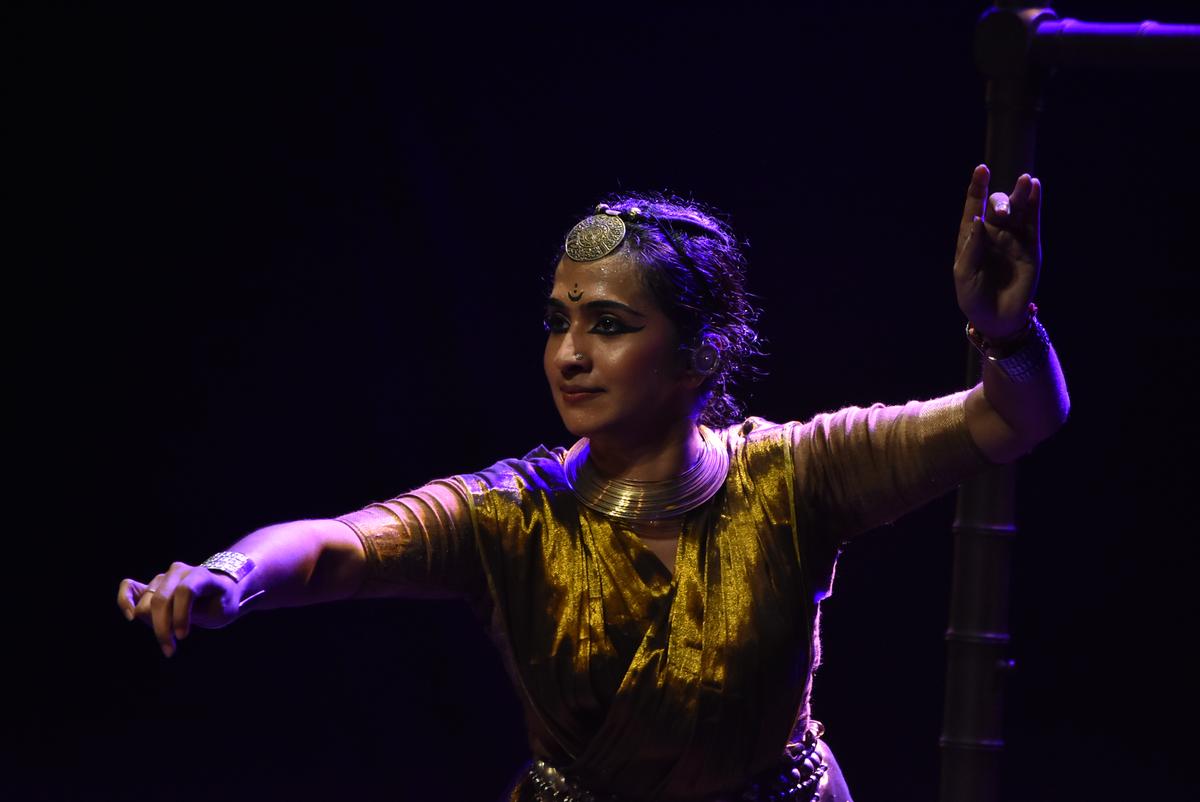
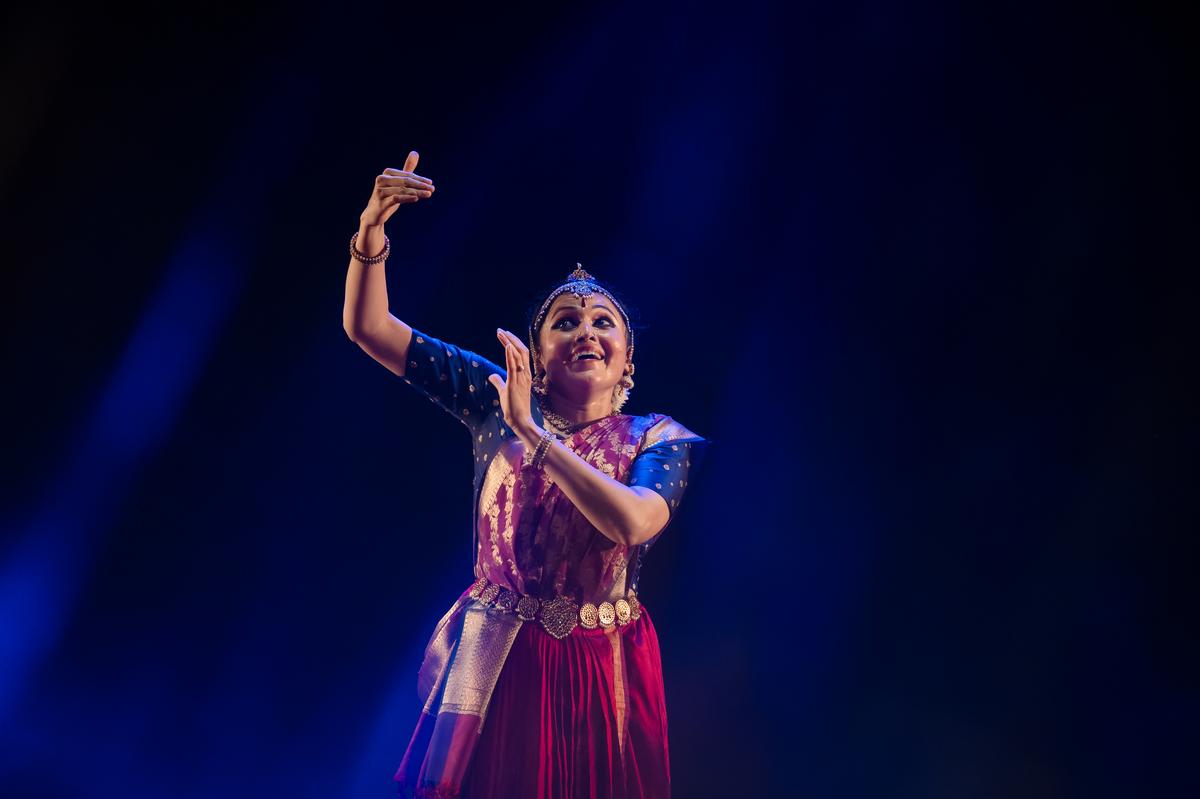
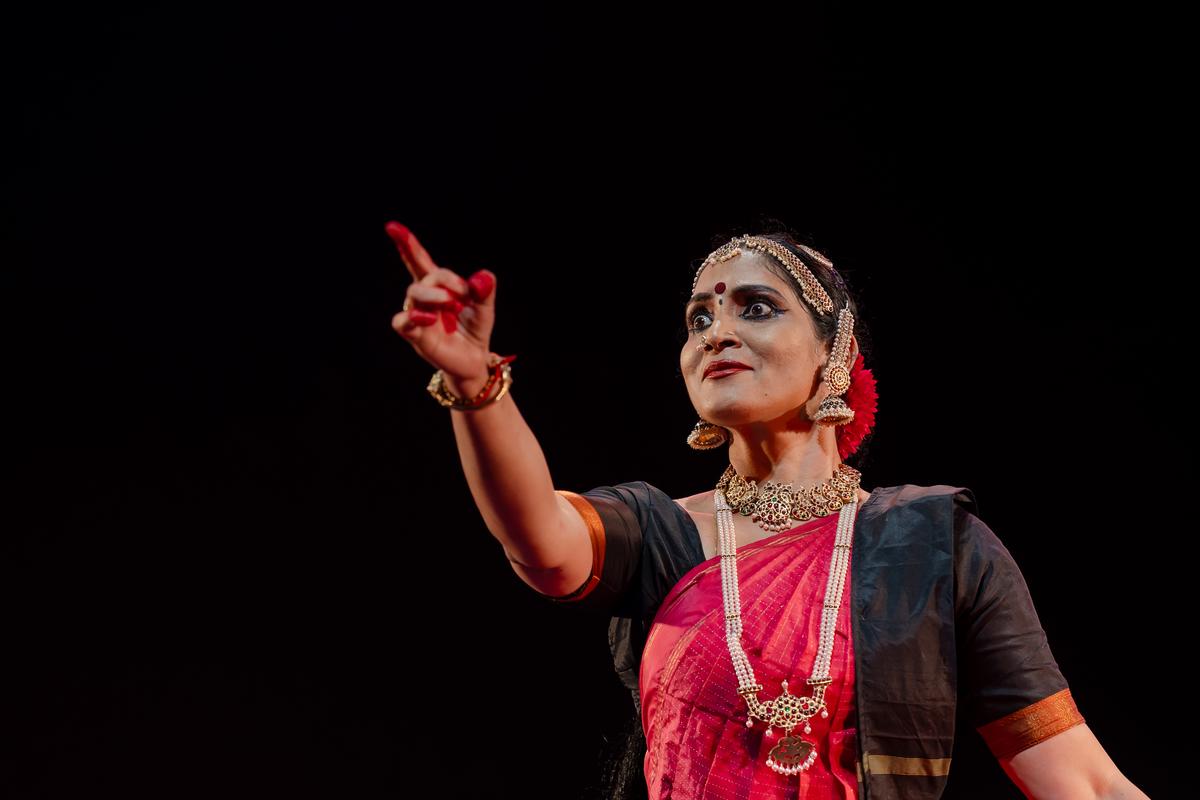
The solo performances at the 10th edition of Manthana in Mangaluru brought the Kodava culture and strong women characters from the epics under spotlight
Shilpa Nanjappa’s presented the ‘Tales of Kodava’ | Photo Credit: Special Arrangement
Shilpa Nanjappa, a Kodava, brought out the rich culture and ways of worship of her people and the greatness of River Cauvery (whose origin is in Coorg) through her ‘Tales in Kodava’. She gave a clear, comprehensive introduction, as the songs were in Kodava.
This was presented as part of the 10th edition of Manthana, organised by Mangaluru’s Nrityaangan, which featured many solo performances.
Shilpa’s entry was full of zest and she lit up the stage with her expressive face and powerful movements. She began with a Kauthuvam in ragamalika that narrated the tale of Ayyappa, with keen focus on Mohini. It was an adaptation from ‘The song of Saastaavu’, a part of the Pattole Palame, a compilation of folklore passed down orally through ancestral songs. She beautifully presented the contrast between the clumsy movements of Bhasmasura and the graceful dance of Mohini.
‘Sri mula kanniye, pommale kodu male’, a patriotic song accepted as the anthem of independent Kodagu, blended the legends about the river goddess Kaveri and her present condition. The way Shilpa portrayed the callousness with which people pollute her pure waters would have melted anyone’s heart. When she stated that this is also the story of every single woman, manipulated and silenced through history, one nodded in agreement.
Before concluding her performance with a self-composed thillana, Shilpa presented a sringara pada ‘Aye, thumbi’, portraying an enraged Kanditha Nayika who is scorned by the man she loves. Her thillana was on the Puthari festival, a ‘harvest festival’ of the Kodavas when they dedicate their rice harvest to Igguthappa, who, centuries ago, taught them the method of cultivating paddy. The choreography of this piece had movements inspired by the indigenous dance forms of the Kodavas.
Shilpa’s performance was followed by four vibrant solo presentations on important female characters from the Ramayana and the Mahabharata.
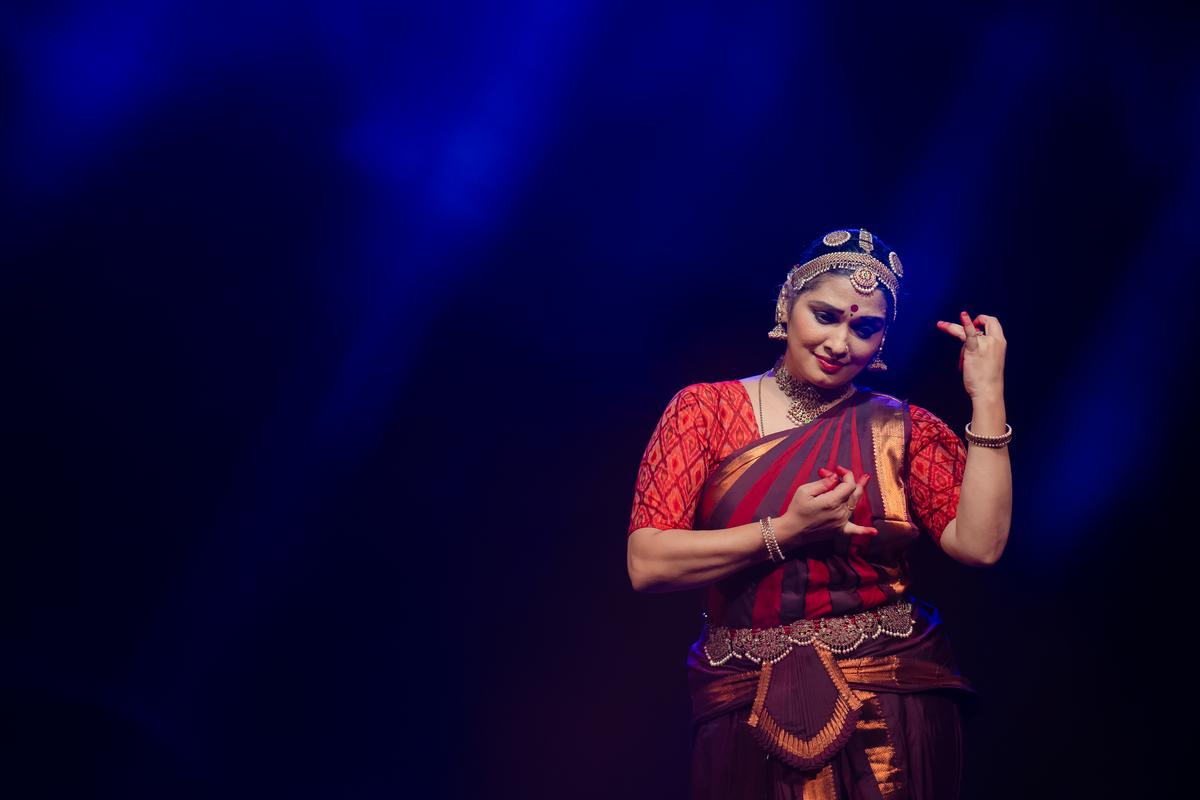
Divya Nair as Chitrangada | Photo Credit: Special Arrangement
Divya Nair was convincing in her portrayal as Chitrangada, the princess of Manipur and the only heiress to the throne, who was brought up by her father as a strong warrior and an able ruler. Though her thoughts and behaviour are unlike those of a woman, tender feelings of love blossom in her heart when she meets Arjuna, the Pandava prince. When her son Babruvahana is born, she transforms herself into a fond mother, too. Divya brought out the nuances of Chitrangada’s character with her lively movements and striking abhinayas. She left the spectators wondering, ‘Who are you, Chitrangada –– a warrior, a lover, a mother, or all of these?’ The lyrics had been composed by Dr. Suneel and were set to music by Sankaran Menon.
Indu Venu beautifully transformed into Kaikeyi | Photo Credit: Special Arrangement
Indu Venu transformed into Kaikeyi, who is torn between her intense love for Rama and her unbearable jealousy when she hears that he will be made king. Kaikeyi fears that once Rama becomes king, she and her son Bharata will have no identity. With Tulsidas’s ‘Tumak Chalat Ramachandra’, Indu Venu brought out the essence of motherly love. Along with Tulsi Ramayan, verses penned by Dr. Himanshu Srivastava were used for Indu Venu’s portrayal of Kaikeyi. Music and rhythmic composition for this was by Sujesh Menon and Vinay Nagarajan.
Manjula Subrahmanyabrought alive Hidimba as a demoness. | Photo Credit: Special Arrangement
Manjula Subrahmanya portrayed Hidimba, the beautiful demoness, who is besotted with love for the tall and well-built Bhima and becomes the eldest daughter in law of the Kuru clan. Her life with Bhima is brief, and when he goes back to his family, she is alone again. When Gatotkacha is born, her motherly instincts are awakened and she is a happy mother. When Bhima returns after many years, she is delighted but soon finds out that Bhima wants their son to participate in the war. Hidimba makes her supreme sacrifice as she willingly gives her son to Bhima and goes back to her life of lonely wandering.
With an intensely expressive face and strong masculine movements, Manjula brought alive Hidimba as a demoness. At the same time, by throwing light on her soft motherly feelings and her sacrifice, she made Hidimba’s personality soar high. Manjula painted a clear picture of the complex character of Hidimba, who is only briefly mentioned in the Mahabharata.
The lyrics for this presentation were by Kavitha Adooru, music by Vineeth Purvankara and jathis by Manjunath Putturu.
Radhika Shetty chose to present a different picture of Manthara | Photo Credit: Special Arrangement
Radhika Shetty, founder of Nrityaangan, presented ‘Manthareya Antharala’, a glimpse into the inner world of Manthara. Not conventionally beautiful, and abandoned by her parents, she finds refuge under Kaikeyi’s father and turns into a mother figure for Kaikeyi. Her actions are based on her boundless love for Kaikeyi and Bharata, who is like her grandson. Did she want anything for herself? Radhika’s expressive gestures and sensitive portrayal presented a different picture of Manthara. By the time Radhika concluded, the spectators were ready to understand Manthara and even sympathise with her.
Radhika’s presentation was based on Kuvempu’s Sri Ramayana Darshanam from which she had taken the lyrics that were set to music by Karthik Hebbar, Bengaluru.
The music ensemble was absolutely stunning. Vidyashree Radhakrishna’s impressive nattuvangam had dignity, strength, clarity and deftness. Nandakumar Unnikrishnan sang with emotion and gave life to the characters portrayed by the dansers. Mridangam by Karthik Vydhatri maintained the liveliness and flute by Nithish Ammannaya added melody and sweetness.
source: http://www.thehindu.com / The Hindu / Home> Entertainment> Dance / by B Ramadevi / November 26th, 2024
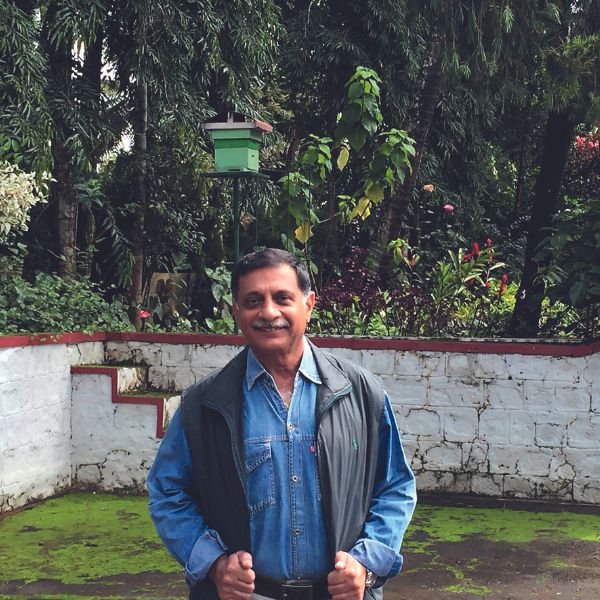
Colonel Cheppudira Muthanna discusses efforts to create a pan-Asian network of organisations to protect the nature and climate of the Himalayas.
Colonel Muthanna is a former President of IUCN Member, Coorg Wildlife Society (cws.in) and founder of the Environment and Health Foundation India
I was in the Indian Army for 24 years and served in the Himalayas for 10 years. I became very concerned about how climate change was affecting the Himalayas, especially the rivers that so many people depend upon. I realised we must act before the change in the region reaches a tipping point.
The rivers that start in the Himalayas – the Ganges and the Mekong – support hundreds of millions of people across South Asia, Southeast Asia and China, representing one-fifth of the entire human population. In many places, where the slopes have been deforested, there are more avalanches because the trees helped hold the snow. Reduced snowfall due to climate change also means the rivers have less water in them. And the tree species are changing too. The outcome is that the water security of a fifth of the world’s population is at risk.
” THE RIVERS THAT START IN THE HIMALAYAS SUPPORT HUNDREDS OF MILLIONS OF PEOPLE “
Cutting down drastically on the production of black carbon locally, combined with extensive forest restoration, could help stabilise the ecosystems here. Black carbon is the name given to the sooty particulate emissions released when millions of cooking stoves light up across these countries. It raises the temperature regionally, in addition to the global effect of CO2 emissions. If we can replace many stoves with more efficient ones, it will quickly reduce the amount of black carbon drifting above the Himalayas. We also need better technology for the brick kilns and road building, which are also major sources of black carbon in the region. Reforestation around urban areas could also help absorb more black carbon.
The Himalayas and the Mekong basin are contiguous and interdependent eco-regions. Therefore it is crucial to form a regional cooperation of our countries to mitigate climate change. This is the essence of the proposed HIMEK (Himalayas-Mekong) Alliance. There are a number of agencies in the region working on reduction of black carbon and forest restoration – but our effort must be to coordinate with them and upscale their initiatives to a regional level.
We have been supported by IUCN, which is very important because all of the relevant countries are Members of the Union. If we can initiate pilot projects in some of the countries, it can then be scaled up across the region. Everyone we have talked to approves of the idea – now we need monetary support.
by – Colonel Muthanna is a former President of IUCN Member, Coorg Wildlife Society (cws.in) and founder of the Environment and Health Foundation India
source: http://www.iucn.org / IUCN / Home> News & Events> Story / by Colonel Cheppudira Muthanna / December 13th, 2023
WELCOME. If you like what you see "SUBSCRIBE via EMAIL" to receive FREE regular UPDATES.
Read More »