During Rajiv Gandhi’s regime in 1980s, Delhi police commissioner Ved Marwah had a “security breach” as his car had reportedly intruded in the route of the visiting Russian Prime Minister. Then home minister Buta Singh almost made up his mind to suspend the senior cop, but it was one influential IAS who persuaded Singh not to punish Marwah. He was CG Somaiah who began his career as an assistant collector in Orissa only to rise up the ladder to become Comptroller and Auditor General of India.
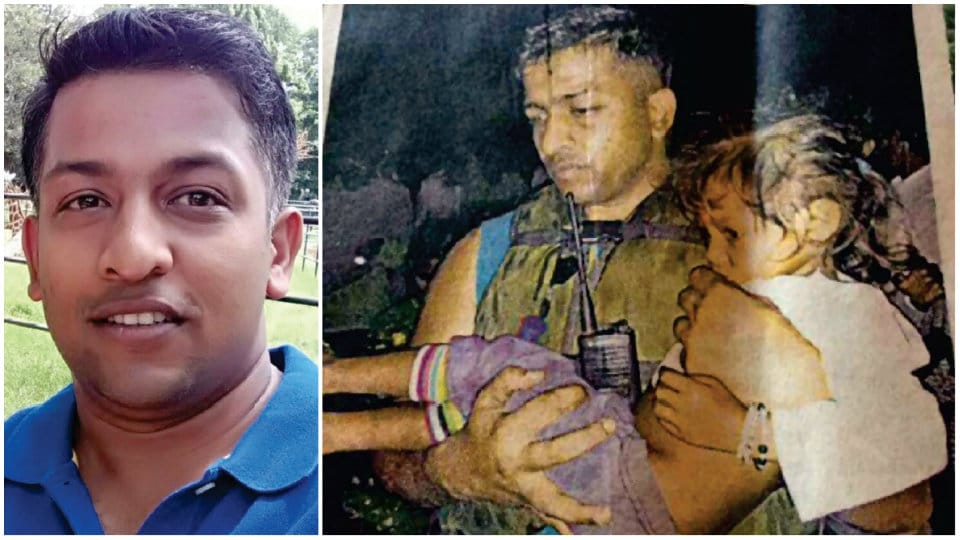
CG Somaiah is no more. Somaiah died in Bangalore on Monday following brief illness. Somaiah, 79, is survived by wife Indira, and one son and a daughter. Incidentally, his daughter Pria (In picture with her father) is married to Nikhil Alva, son of Congress leader and Uttarakhand Governor Margaret Alva.
As the home secretary of the country during Buta Singh’s regime, Somaiah played a key role not only in fighting Punjab terror, but was instrumental in clinching a deal with student leaders from Assam who were agitating against illegal Bangladeshi migrants. He also served as Central Vigilance Commissioner and had a six-year-long tenure as Comptroller and Auditor General of India
Only two months ago, Somaiah’s book titled, “The Honest Always Stand Alone”, was released in New Delhi by former president APJ Abdul Kalam.
STANDING TALL Former President APJ Abdul Kalam releasing C.G.Somaiah’s “The Honest Always Stand Alone” / pix credit: The Hindu (July 21, 2010)
source: http://www.babusofindia.com / Babus of India / Home / posted by BOI Team / September 15th, 2010
Codanda Shiv Cariappa, 72, passed away peacefully on February 9th, 2024, in Northampton (Boston), MA, USA.
Shiv was predeceased by his parents, Lt. Col. Codanda M. Cariappa (Carson) and Dr. Pearl Cariappa, (maiden name: Chendanda Muthama Ponappa), and his brother, Codanda Babla Cariappa.
Following the demise of his father at a young age, he attended Lawrence School in Lovedale and was raised in Chettalli Estate Kodagu by his mother while living together with his uncle and aunt, the late Mr. CP Appanna and late Mrs Seethama Appanna, his brother Babla, his cousin Chandanda Appanna Ponappa (Ponnu), and his grandmother Chendanda Muthama Ponappa.
Shiv Cariappa worked as a journalist for the international Christian Science Monitor newspaper in Boston, MA. Later, Shiv became a Senior Loss Prevention Analyst for the Staples Corporate headquarters in Framingham (Boston), MA. In this position, Shiv was responsible for investigative crime, particularly fraud, intervention and prevention for all Staples stores throughout the US.
Shiv is survived by his community of loving friends and family, including former wife and close friend Ellen Loos, his sister-in-law Victoria Cariappa, his aunt GM Codanda Vani; cousins Peggy Pratap Sunil, Arathi Muddaiah, Kandrathanda Harini Kariappa, Chedrimada Beena Somaya, Pattamada Seetha Kuttappa, Pattamada Kavita Muthana,Deep Chinnappa, Sumitha Somiah, the Chendanda family, Kongetira Gayathri Belliappa, Codanda Ashit, Codanda Chinnappa; and Ponnu Appana’s former wife Vipul Ponappa with their two grown children Gauri Ponappa and Sasha Ponappa.
Shiv will be deeply missed.
A public gathering to celebrate Shiv’s life will be held at Leverett Crafts & Arts Center, 13 Montague Rd., Leverett, MA. 01054 this coming Saturday, February 17, 1:00-4:00.
source: http://www.metrowestdailynews.com / MetroWest Daily News / Home> Life Story / February 15th, 2024 ( published in MetroWest Daily News, Milford Daily News)
The Indian Green Building Council (IGBC) recognised the resort, acknowledging the resort’s net zero energy, net zero water, and zero waste to landfill.
Club Mahindra Madikeri was recognised as India’s first triple net-zero-rated resort by the esteemed Indian Green Building Council. The triple net zero acknowledges net zero energy, net zero water, and zero waste to landfill. The rating sets a benchmark on par with international standards, thus making Club Mahindra Madikeri achieve a significant milestone in sustainable hospitality.
More about net zero certifications:
Net zero energy: This indicates the resort generates as much energy as it consumes. The resort makes optimum utilisation of solar energy and energy-efficient infrastructure, reducing its carbon footprint.
Net zero water: This is a remarkable achievement in water management. It promotes water conservation and security. Club Mahindra’s water conservation initiatives demonstrate its commitment to sustainable practices. Measures include rainwater harvesting, efficient irrigation systems, and water-saving fixtures.
Zero waste to landfill: TÜV SÜD certified the resort for net zero waste in FY23. Comprehensive waste management practices, including segregation at source, composting, recycling, and other measures, help Club Mahindra achieve this.
The resort nestled in the picturesque region of Coorg, Karnataka, is a beacon of luxury, comfort, and responsible tourism, thus contributing to preserving the planet. The resort blends seamlessly with its lush surroundings, supporting local plants and animals, covering a vast area of 126464.26 square metres, with buildings occupying just 22257.7 square metres. By incorporating dense vegetation, insulated roofs, and using local materials, the resort has reduced the surrounding temperature by approximately 3°C. The resort adopts several other energy-saving initiatives, such as motion sensor-controlled washrooms, regulated geysers, timer-controlled external lights, heat pumps, and BLDC fans, which have resulted in an impressive energy performance index of 74.4 kW per m² per year, surpassing the Bureau of Energy Efficiency’s benchmark of 313 kW per m² per year. Moreover, over 70% of the water is recycled and reused for operational purposes at the resort, further emphasising the resort’s commitment to sustainability.
Additionally, under the Mahindra Hariyali project, thousands of trees have been planted, enriching the region’s natural habitat and attracting diverse bird species. This initiative fosters a thriving ecosystem, enhancing the visitor experience with its biodiversity.
Julian Ayers, Chief Resort Officer of Mahindra Holidays and Resorts India Limited, said, “At Mahindra, we recognise the crucial importance of advocacy and partnerships in driving the swift shift towards a sustainable future. Our journey towards a greener future began in 2008. Since then, we’ve embraced a ‘Planet Positive’ approach to sustainability. We’re committed to making our operations eco-friendly, helping industries reduce their carbon footprint, and revitalising nature. Our unwavering commitment to habitat protection and biodiversity at Madikeri has earned us recognition and honour from the IGBC, reflecting our steadfast dedication. We embrace a global responsibility to safeguard diverse ecosystems and achieve carbon neutrality by 2040. As part of Mahindra Holidays’ sustainability journey, we’re committed to innovating and inspiring change within our operations and beyond.”
Mahindra Holidays is India’s first hospitality company to join the global campaign RE100 and EP100. To achieve its zero-energy goal, Club Mahindra implemented an 804-kW solar rooftop photovoltaic plant and solar carports in parking areas. In water conservation efforts, over 70% of water is recycled and reused, with natural streams diverted to a 380 kL capacity pond and 14 rainwater harvesting pits constructed within the resort premises. For zero waste, the resort utilises a bio-digester to convert food waste into biogas, reducing waste, and LPG costs.
With these remarkable achievements, Club Mahindra continues its steadfast journey towards sustainability and biodiversity conservation. By doing so, it provides its members with unparalleled access to some of the most breathtaking and exotic destinations both in India and across the globe.
source: http://www.hotelierindia.com / Hotelier India / Home> Operations / by Staff Writer – Hotelier India / June 07th, 2024
Actor Shubra Aiyappa went off the grid for a month to achieve her wellness dreams.
Shubra Aiyappa receives her certificate after a month of rigorous training
Actor Shubra Aiyappa recently decided to become a certified yoga instructor. Sharing her motivation around this step, she says, “I’ve been practising yoga for a few years now. The benefits of the practice drove me to go deep into it. This was definitely the most rewarding and transformative journey of my life.”
Despite the benefits, becoming a yoga instructor wasn’t an easy stint for the Thimayya & Thimayya (2022)actor. To work on her yoga practice, Aiyappa decided to cut off from the world for a month to join a yoga school in Mysuru. “We weren’t allowed to have our phones except for an hour during the day,” the 33-year-old actor shares, adding, “For the first few days, I couldn’t take this rigorous routine. I had some breakdowns and I kept asking why I chose to do this to myself. But, as time went on, I got used to it.”
In addition to the challenges at the school, Aiyappa admits she was terrified to put her acting on hold for a month. “There’s always an itch which makes you feel you’re missing a call or a scene that can change your life — It was really difficult for me to let that go. I was afraid I’d become irrelevant if I wasn’t active on social media. But that’s never the case. It was all about setting boundaries. I even put a film I’m currently doing on hold for this course,” the Prathinidhi (2014) actor quips.
The actor, now a certified yoga instructor, is happy to impart knowledge about the mind-and-body practice to her family and friends. Ask if she’s ready to take it professionally, she shares, “Teaching it professionally is not on the cards yet. I’ve always wanted to do something in the wellness space. While I don’t know how I’d execute it, I have some ongoing plans,” she signs off.
source: hindustantimes.com / Hindustan Times / Home / by Aayushi Parekh / March 06th, 2024
Courtyard by Marriott Bengaluru Outer Ring Road invites you to a culinary journey through the hills of Coorg at their much-awaited Kodava Food Festival. Nestled in the picturesque landscapes of Karnataka, Coorg’s cuisine is a vibrant reflection of the region’s cultural richness and natural abundance.
Chefs Sugandha Rajappa and Rajani Kariappa, along with Executive Chef Vijay Bhandari, have meticulously crafted a menu that highlights the authentic tastes of Coorg. Their expertise is showcased in every dish, where traditional recipes meet contemporary flair, promising a delightful dining experience.
Treat yourself to a variety of Coorg’s signature dishes, such as the delicious Pandi Curry, Kodava Kummu Curry, Paputtu, and much more.
Each dish, prepared with locally sourced ingredients, captures the essence of Coorg’s rich culinary heritage. The festival guarantees a sensory feast, with aromatic spices and fresh ingredients taking center stage.
Gather with family, friends, or fellow food enthusiasts and visit Momo cafe to experience the essence of Coorg and create cherished dining memories.
For more details and reservations, please contact: +91 95136 53156 or 9513688331.
Where : Momo cafe , Courtyard by Marriott Bengaluru Outer Ring Road
When: 4-8th June
Lunch : 12:30 – 3:30 PM
Dinner : 7:00 PM – 11:00 PM
Price : 2200 INR plus taxes.
source: http://www.apnnews.com / APN News / Home> Life Style> Food & Beverages / June 07th, 2024
Former MLC and International Karate expert from Kodagu, Cheppudira Arun Machaiah has been appointed as the new Joint Chairman of the Technical Commission of Karate India Organisation (KIO).
Director of World Shitorio Karate Council and President of All India Shitorio Karate Organisation, Arun is the first Kannadiga to achieve the highest post of KIO.
From nearly 6.30 am, voters started to queue outside their respective polling stations with much enthusiasm to practice their duty.
Voters from all sections of the society enthusiastically took part in the festival of democracy and cast their votes.Photo | EPS
Madikeri :
Smooth polling was recorded across Kodagu and the district recorded a voter turnout of 70.58% at 5pm.
Voters from all sections of the society enthusiastically took part in the festival of democracy and cast their votes. The district had special polling booths even as foresters guarded the booths located in wildlife conflict zones.
The minor glitches in EVMs were sorted out during the mock voting process held in all polling booths from 6 am to 7 am. From nearly 6.30 am, voters started to queue outside their respective polling stations with much enthusiasm to practice their duty.
A total of 23 special polling booths including Sakhi and Model booths were set up across the district. At Maldare, Nagarahole, Hebbale, Malambi, Heruru and CB Halli, tribal themed polling stations were set up to woo the increased population of tribes.
The tribes in large groups participated in the electoral process enthusiastically. The Sakhi polling stations were decked up in polling centers that had increased women voters even as Kodagu ADC Veena BN opted to vote from one of the Sakhi polling booths in Madikeri. Model polling centers with improved facilities also wooed the voters.
However, the officers on election duty at the interior village of Vanachal were made to suffer for some time due to the unavailability of drinking water.
Nevertheless, the voters of the center helped the officers and arranged for a drinking water facility. In Wildlife conflict zones including regions across Siddapura, Kushalnagar and Virajpet, a Range Forest Officer alongside a Rapid Response Team equipped with weapons were deployed to ensure the safety of the voters. Armed Forces from Gujarat guarded the naxal sensitive booths across the district including at Karike and Sampaje areas.
A tragic incident was, however, reported at a polling station in B Shettigeri of South Kodagu. Manohar (58), a traditional drummer who played the ‘chande’ instrument, died of a heart attack outside the polling station.
Sources confirmed that he waited in the queue and cast his vote. However, he collapsed outside the polling center after he suffered a heart attack and died.
MADIKERI: Smooth polling was recorded across Kodagu and the district recorded a voter turnout of 70.58% at 5pm.
Voters from all sections of the society enthusiastically took part in the festival of democracy and cast their votes. The district had special polling booths even as foresters guarded the booths located in wildlife conflict zones.
The minor glitches in EVMs were sorted out during the mock voting process held in all polling booths from 6 am to 7 am. From nearly 6.30 am, voters started to queue outside their respective polling stations with much enthusiasm to practice their duty.
A total of 23 special polling booths including Sakhi and Model booths were set up across the district. At Maldare, Nagarahole, Hebbale, Malambi, Heruru and CB Halli, tribal themed polling stations were set up to woo the increased population of tribes.
The tribes in large groups participated in the electoral process enthusiastically. The Sakhi polling stations were decked up in polling centers that had increased women voters even as Kodagu ADC Veena BN opted to vote from one of the Sakhi polling booths in Madikeri. Model polling centers with improved facilities also wooed the voters.
However, the officers on election duty at the interior village of Vanachal were made to suffer for some time due to the unavailability of drinking water.
Nevertheless, the voters of the center helped the officers and arranged for a drinking water facility. In Wildlife conflict zones including regions across Siddapura, Kushalnagar and Virajpet, a Range Forest Officer alongside a Rapid Response Team equipped with weapons were deployed to ensure the safety of the voters. Armed Forces from Gujarat guarded the naxal sensitive booths across the district including at Karike and Sampaje areas.
A tragic incident was, however, reported at a polling station in B Shettigeri of South Kodagu. Manohar (58), a traditional drummer who played the ‘chande’ instrument, died of a heart attack outside the polling station.
Sources confirmed that he waited in the queue and cast his vote. However, he collapsed outside the polling center after he suffered a heart attack and died.
Outside a polling centre in Madikeri, the officials forcefully shut down shops that were located within 200 meters from the St Michael School polling station. However, DC Venkat Raja intervened and withdrew the closing down order. He, however, cautioned the shopkeepers not to allow campaigning from political parties at the shops.
Venkat Raja, SP K Ramarajan and CEO Varnit Negi cast their votes at the taluk office in Madikeri and later visited the Raja Seat tourist spot to urge residents to go vote. While most of the tourist centers were open in the district, the Dubare Camp was shut for tourist visits as this was turned into a polling station for the tribal voters.
source: http://www.newindianexpress.com / The New Indian Express / Home> Karnataka / by Prajna GR / April 26th, 2024
A few months back, the actor known for his work in Ram Leela and Dahaad, Gulshan Devaiah spoke to Filmfare. He was honest and did not shy away from answering questions about his relationship with his ex-wife, his equation with Anurag Kashyap and his overall journey in the industry.
When asked about his equation with Sanjay Leela Bhansali and his experience of working with him, the actor said, “ People say Sanjay Leela Bhansali has a short temper, but this is not the case. Like other directors, he does not communicate openly with you. People are hesitant to talk to him. But I would share my ideas with him without hesitation.”
He further went on to add, “He became fond of me. He’d listen to me. He pays close attention to detail. He takes an entire day to frame a single shot. Perhaps some would find this strange, but when the film is finished, the meticulous detailing stands out. As an actor, he allows you to do whatever you want. However, during editing, he will only retain what he has instructed you to do, not what you have done on your own.”
Now, the actor will soon be seen in the Janhvi Kapoor starrer Ulajh. The film is directed by Sudhanshu Saria and will be released in cinemas on July 5.
source: http://www.filmfare.com / Filmfare.com / Home> News> Bollywood / by Filmfare / May 28th, 2024
India’s High Range Coffee Curing is poised to become the first farm verified by the Rainforest Alliance to ship EUDR–ready coffee beans to Europe later this month.
The coffee farm partnered with the Rainforest Alliance to meet the necessary compliance requirements of the regulation.
Established in 1995, High Range Coffee Curing is located in the Periyapatna and Kushalnagar Coorg districts, among 142 hectares of tropical forests, and is known for its quality beans.
The farm supplies coffee to leading global coffee brands, roasters and traders in India, including Nestle , Unilever, E-Com Commodities, Olam, Continental Coffee, Louis Dreyfus Company , Vidya Coffee and Allanasons.
EUDR-Ready Coffee
Zaidan M Saly, director of High Range Coffee Curing stated, “Implementing EUDR [EU Deforestation Regulation] posed significant challenges for our team, but with the invaluable guidance from Rainforest Alliance representatives in our region, we overcame them and gained confidence in the process.
“Their expertise made the seemingly daunting task entirely feasible, facilitating a smooth and successful implementation, which now not only guarantees adherence to EUDR regulations but also sparked a revolution in our approach to traceability.”
Rainforest Alliance certification enables coffee and cocoa farmers to opt in for EUDR-aligned criteria.
This allows companies to source from these farms, track ingredients along their supply chains, and leverage farm data to demonstrate compliance with the regulation’s deforestation risk assessment and mitigation requirements by the deadline, at no additional cost.
‘Sustainable Practices’
Miguel Gamboa, coffee sector lead at the Rainforest Alliance stated, “The EUDR represents an important step forward to shift the global coffee sector towards more sustainable practices.
“Yet, many smallholder coffee farmers need support to align with the requirements, including traceability, deforestation risk mapping, local laws, and practical and technical guidance on key environmental practices.”
The Rainforest Alliance has urged the EU Commission not to dilute or delay the legislation or postpone its deadline in response to calls from some companies and governments.
It has also called on companies not to scale back purchases from smallholder coffee farmers, but rather support them in meeting the deadline of this legislation.
Gamboa added, “We are also piloting a deforestation risk assessment offering for companies buying non-certified coffee and cocoa, which we plan to roll out more widely later this year.
“With this offering, we aim to support more companies in their journey to compliance, but more importantly, to also reach non-certified farmers so their products can still be sold on the EU market.”
source: http://www.esmagazine.com / ESM, European Supermarket Magazine / Home> Supply Chain / by Dayeeta Das / May 06th, 2024
I’m from Coorg, also known as Kodagu. It’s a small, beautiful district in Karnataka (which is in South India). Last month, I had the pleasure of going back there for a few days after a rather long absence. Among many other things, it provided me an opportunity to learn about how the coffee growing works from the perspective of a business. The last few years, have been very difficult for the coffee industry in Coorg.
Many of my relatives are involved in growing coffee and most of what I want to discuss here is likely familiar knowledge to most planters. My primary aim with this article is to organize knowledge that many people already have in their heads — and in doing so make the problem of raising revenue for coffee growers easier to tackle.
Furthermore, I’m by no means an expert in this. Please feel free to comment or respond to me with any critique of the ideas outlined here.
The Obvious Problem, and its implications
The obvious problem is simple. Coffee prices are low, and labour cost is increasing so it is difficult to make profit. On average, the estates just about break even (this is anecdotal, I don’t have stats for it if anyone does, please get in touch!). Many people rely on the one bumper crop every 7 or 8 years in order to build savings and capital to reinvest into the estate.
Naturally, this means that there is a spread — some estates make losses, some make profits. People who make losses end up having to sell their estates and this is slowly leading to a dilution of the culture in Coorg, which from my personal perspective, is a very sad thing.
Today, increasing the profit for planters is an issue that many people are trying to tackle both individually as well as in small groups. There are many ways to increase profits available to planters. The large categories are as follows:
Increase Quality
Eg: Improving the percentage of high quality beans.
Increase Yield per Acre
Eg: Reduce loss of produce to pests etc.
Reduce operating costs
Eg: Use either better practices or investment in technology to reduce cost of growing coffee in all stages.
Improve marketing and go direct to consumer
Eg: Sell coffee on Amazon and advertise on Facebook
Of these, I believe the area which could produce the best results is to improve marketing and go direct to consumer i.e. currently there is a knowledge gap that is preventing planters from getting good prices for their crops, and this is the root issue.
To explain why, we need to visually organize a coffee business and discuss the impacts of each possible way to increase profit.
Deciding on the correct course of action
Let’s go through each one.
Increasing Quality
The hypothesis here is “increasing the quality of coffee produced is the best way to increase profit”.
Of course better coffee will fetch better prices. Also, no matter what other actions are taken, coffee will need to be at least a threshold quality because of how it connects to “reputation”. Soomanna from HumbleBeanCoffee was kind enough to tell me about how important it is to keep abreast with increasing global standards of coffee, stagnation here has a lot of downside risk and is definitely important to focus on, and they’re doing an amazing job from what I can tell.
It’s also true that the taste of coffee is highly subjective and it’s my opinion that there may be a consensus on what “bad coffee” is, but the “best coffee” has no right answer. So the way I see it right now, investing on improving quality is likely to have diminishing returns after a point — where based only on quality alone (and not also other actions) it will take more and more effort (and hence cost) to continue to increase quality. There’s a point when you are already making very good coffee where you should start seeing diminishing returns on further investment if this is not paired with marketing.
Increasing Yield per Acre (increase quantity)
The hypothesis here is “increasing the yield per acre of the estate is the best way to increase profit”.
Similarly to quality, again we have a situation where it will cost increasingly more, and at some point just be impossible to increase yield per acre significantly.
It’s likely that this will require significant capital to even begin tackling (especially on the route of automation and machinery).
If better practices are easy to implement, then they should definitely be put in place — but we still run up against this wall that at some point the costs are just not going to reduce any further.
Marketing and branding
Many people are already taking initiative to improve marketing and in some cases even sell directly to customers. This is possible now because targeted online advertisements have reduced the upfront investment required to reach out to people who are interested in coffee specifically. Indeed, I came across several Indian coffee brands where previously only Coffee Day seemed to exist.
To be clear, there some hurdles to get through in order to successfully do this, because it requires getting into aspects of the coffee supply chain.
Improving knowledge on how to properly roast, package, and deliver
Having enough scale to actually benefit from the increased reach
However, the upside is also very great. Here’s how one can generally expect marketing to impact sales.
It’s important to mention again that basic quality standards must also be in place — marketing coffee that doesn’t taste good might get an initial wave of customers, but people aren’t going to keep buying it.
In my personal opinion, the marketing solution is very underutilized in Coorg right now. Part of it is possibly because the younger Coorgs who have experience in digital marketing and the like, aren’t currently very involved in coffee.
A Way Forward
Ideal goals and reality are different, but my personal experience is that setting lofty and idealistic goals is a great way to start looking for solutions. So I’m going to try to paint that ideal picture and if it makes sense then perhaps we can try to move toward it. Even if it doesn’t work out completely, hopefully the idea can leave us better off than where we are today.
Coorg is a district of great pride and heritage. Given the right contexts, Coorgs can be very passionate about this: just look at the Hockey Festival!
Can we create a similar excitement about Coffee? That sort of passion is what comes before great successes.
Coming together as a community behind the shared banner of “Coorg Coffee” can allow us to reap the greatest reward from any marketing and branding effort. To create a competitive vibe like the Hockey Festival we could do something similar like having multiple family-blends where many estates from the same family pool together to create their own unique blend. This could then be sold in a packing like this which allows both unified brand identity as well as individual expression.
To top it all off, having a yearly Kodava Coffee Festival would certainly keep people awake with excitement.
Coming together as a community to create an image for Coorg Coffee, and a process to back it can overcome the main challenges. Sharing knowledge within the community gives us a larger base to experiment and hence improve processes we use for things like roasting. Delivering the coffee under a shared brand allows us to overcome the limits on quantity that small estates have if they try to market individually.
I must restate: I’m no expert in coffee. There will be innumerable challenges on this road, many of which you have faced and know far better than I do. However, if we could come together as a community with the goal of making coffee growing more lucrative for the whole district, I’m sure we would meet with more success than having multiple disparate efforts to do the same.
Do comment! I know a lot of people feel strongly about this. It would be amazing if there was a healthy discussion in the comments!
source: http://www.medium.com / Medium.com / Home / by Sharat Chinnapa / published in The HumAln Blog / May 23rd, 2021
WELCOME. If you like what you see "SUBSCRIBE via EMAIL" to receive FREE regular UPDATES.
Read More »