“Trace the Cup” new film-led series follows the journey from estate to cup, spotlighting sourcing and flavour.
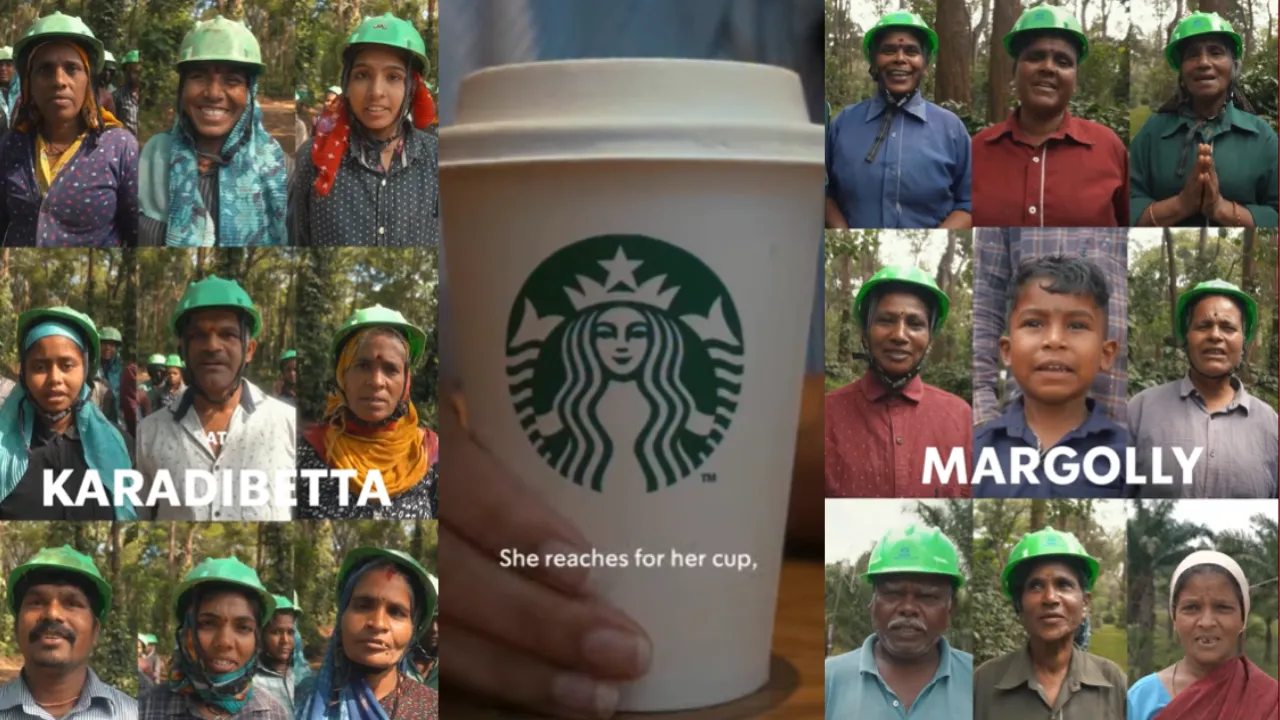
Tata Starbucks is turning the focus to India’s coffee-growing regions with a new film centred on its first estate-specific single-origin offerings.
Sourced from the Nullore, Margolly, and Karadibetta estates in Coorg, Karnataka, the launch marks the brand’s first move into estate-exclusive coffees in India. The initiative puts a spotlight on how factors like origin, altitude, and farming practices influence flavour — elements often discussed in global coffee conversations but less visible to everyday consumers in India.
As part of this, the brand has introduced “Trace the Cup”, a content series that follows the journey of coffee from estate to cup. The idea is to make the sourcing and production process more transparent, while building awareness around Indian coffee and the people behind it.
“Indian single-origin coffees have a distinct identity shaped by their origin and more than that, the people who grow them. ‘Trace the Cup’ helps us bring that story to the forefront, allowing customers to better understand where their coffee comes from, what makes each origin unique and how it all contributes to the signature Starbucks experience, in our stores,” said Mitali Maheshwari, Head of Product & Marketing, Tata Starbucks.
source: http://www.afaqs.com / afaqs! / Home> Advertisins> News / by afaqs! news bureau / April 02nd, 2026
India’s rich coffee heritage took center stage at the AI Impact Summit 2026 in New Delhi, where global leaders and tech CEOs sampled the country’s GI-tagged coffees.
At the India AI Impact Summit 2026 in New Delhi, alongside discussions on artificial intelligence and global collaboration, another distinctly Indian story brewed quietly but powerfully. The Commerce Ministry unveiled the Bharat GI Coffee Lounge, showcasing India’s exclusive Geographical Indication (GI)-tagged coffees.
Leaders including Google’s Sundar Pichai and OpenAI’s Sam Altman sampled these varieties, with Pichai himself praising the Malabar Arabica.
The showcase highlighted how India’s coffee heritage, rooted in specific regions and traditions, is now being positioned as a global brand.
Chikmagalur Coffee: Often called the birthplace of coffee in India, Chikmagalur in Karnataka is where the first coffee beans were planted centuries ago. The GI tag recognizes its unique flavour profile – smooth, mildly acidic, and aromatic. Chikmagalur coffee is prized for its balanced taste, making it a favorite among connoisseurs who prefer a class
Bababudangiris Coffee: Named after the revered Sufi saint Baba Budan, who is said to have introduced coffee to India, this variety comes from the Baba Budangiri hills in Karnataka. It is known for its full-bodied flavour, with notes of chocolate and spice. The GI tag ensures that this historic and culturally significant coffee is protected and celebrated worldwide.
Coorg Coffee: Coorg, also in Karnataka, is famous for its lush plantations and distinctive coffee. Coorg coffee is rich, bold, and slightly bitter, often described as earthy with a lingering finish. The GI tag highlights its regional authenticity, and it remains one of the most exported Indian coffees.
Wayanad Coffee: From Kerala’s Wayanad district comes a coffee that thrives in the Western Ghats’ biodiversity. Wayanad coffee is smooth, with fruity undertones and a gentle acidity. The GI tag emphasizes its eco-friendly cultivation practices, often grown alongside spices, which add subtle complexity to its flavour.
Araku Valley Coffee: Produced by tribal farmers in Andhra Pradesh’s Araku Valley, this coffee is celebrated for its organic cultivation and social impact. Araku coffee is mild, with floral notes and a clean finish. The GI tag not only protects its identity but also supports the livelihoods of indigenous communities, making it a symbol of sustainable agriculture.
Monsooned Malabar Coffee: Though not always listed among the original five, Monsooned Malabar from Kerala and Karnataka has become iconic. Beans are exposed to monsoon winds, swelling and mellowing to produce a unique, low-acid, heavy-bodied coffee with a distinctive flavor. Sundar Pichai’s approving sip at the AI Summit brought this variety into the global spotlight.
source: http://www.news18.com / News18 / Home> Showsha> English edition / curated by Sujata Singh / eidted by Priyanka Das / February 20th, 2026
Meanwhile, the Rotary Misty Hills organisation hosted a unique inaugural event to introduce Coorg Coffee to tourists.
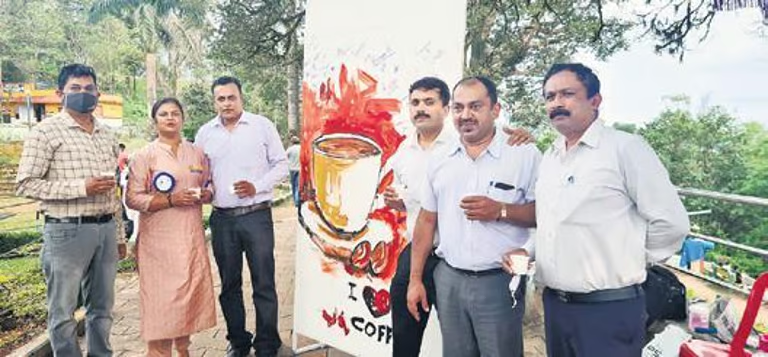
Members of Codagu Women’s Coffee Awareness Body with cups of coffee during the event in Madikeri | express
Madikeri :
International Coffee Day was observed with fervour across Kodagu. While the women of Codagu Women’s Coffee Awareness Body (CWCAB) served hot cups of filter coffee in the morning, the Rotary Club members served coffee to everyone gathered at Raja’s Seat in the evening.
“We want to promote our coffee and we decided to use the opportunity of the International Coffee Day to serve everyone a warm cup of filter coffee,” said Jyothika Bopanna, the Joint Secretary of CWCAB and added that the government needs to support the sector as production has come down. The international coffee day was observed in Madikeri at Coffee Krupa building.
Meanwhile, the Rotary Misty Hills organisation hosted a unique inaugural event to introduce Coorg Coffee to tourists. A total of 1,000 cups of filter coffee was sponsored by Rotary Misty Hills and the event was inaugurated by DC Charulata Somal and ZP CEO Bhanwar Singh Meena, who signed the painting of a coffee cup created by artist BR Satish.
source: http://www.newindianexpress.com / The New Indian Express / Home> Karnataka / by Express News Service / October 02nd, 2021
I’m from Coorg, also known as Kodagu. It’s a small, beautiful district in Karnataka (which is in South India). Last month, I had the pleasure of going back there for a few days after a rather long absence. Among many other things, it provided me an opportunity to learn about how the coffee growing works from the perspective of a business. The last few years, have been very difficult for the coffee industry in Coorg.
Many of my relatives are involved in growing coffee and most of what I want to discuss here is likely familiar knowledge to most planters. My primary aim with this article is to organize knowledge that many people already have in their heads — and in doing so make the problem of raising revenue for coffee growers easier to tackle.
Furthermore, I’m by no means an expert in this. Please feel free to comment or respond to me with any critique of the ideas outlined here.
The Obvious Problem, and its implications
The obvious problem is simple. Coffee prices are low, and labour cost is increasing so it is difficult to make profit. On average, the estates just about break even (this is anecdotal, I don’t have stats for it if anyone does, please get in touch!). Many people rely on the one bumper crop every 7 or 8 years in order to build savings and capital to reinvest into the estate.
Naturally, this means that there is a spread — some estates make losses, some make profits. People who make losses end up having to sell their estates and this is slowly leading to a dilution of the culture in Coorg, which from my personal perspective, is a very sad thing.
Today, increasing the profit for planters is an issue that many people are trying to tackle both individually as well as in small groups. There are many ways to increase profits available to planters. The large categories are as follows:
Increase Quality
Eg: Improving the percentage of high quality beans.
Increase Yield per Acre
Eg: Reduce loss of produce to pests etc.
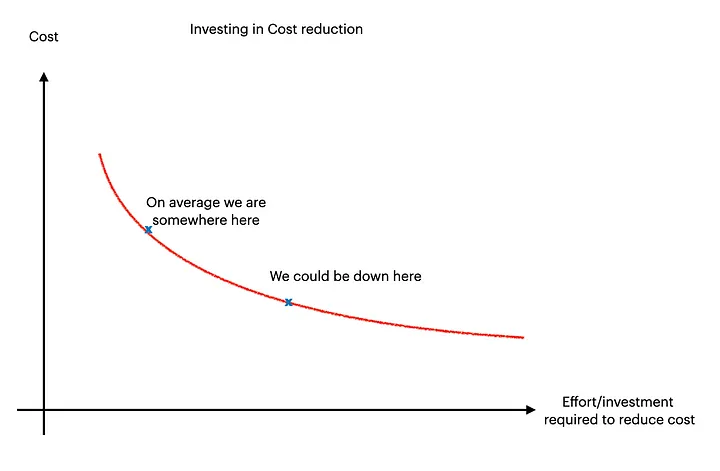
Reduce operating costs
Eg: Use either better practices or investment in technology to reduce cost of growing coffee in all stages.
Improve marketing and go direct to consumer
Eg: Sell coffee on Amazon and advertise on Facebook
Of these, I believe the area which could produce the best results is to improve marketing and go direct to consumer i.e. currently there is a knowledge gap that is preventing planters from getting good prices for their crops, and this is the root issue.
To explain why, we need to visually organize a coffee business and discuss the impacts of each possible way to increase profit.
Deciding on the correct course of action
Let’s go through each one.
Increasing Quality
The hypothesis here is “increasing the quality of coffee produced is the best way to increase profit”.
Of course better coffee will fetch better prices. Also, no matter what other actions are taken, coffee will need to be at least a threshold quality because of how it connects to “reputation”. Soomanna from HumbleBeanCoffee was kind enough to tell me about how important it is to keep abreast with increasing global standards of coffee, stagnation here has a lot of downside risk and is definitely important to focus on, and they’re doing an amazing job from what I can tell.
It’s also true that the taste of coffee is highly subjective and it’s my opinion that there may be a consensus on what “bad coffee” is, but the “best coffee” has no right answer. So the way I see it right now, investing on improving quality is likely to have diminishing returns after a point — where based only on quality alone (and not also other actions) it will take more and more effort (and hence cost) to continue to increase quality. There’s a point when you are already making very good coffee where you should start seeing diminishing returns on further investment if this is not paired with marketing.
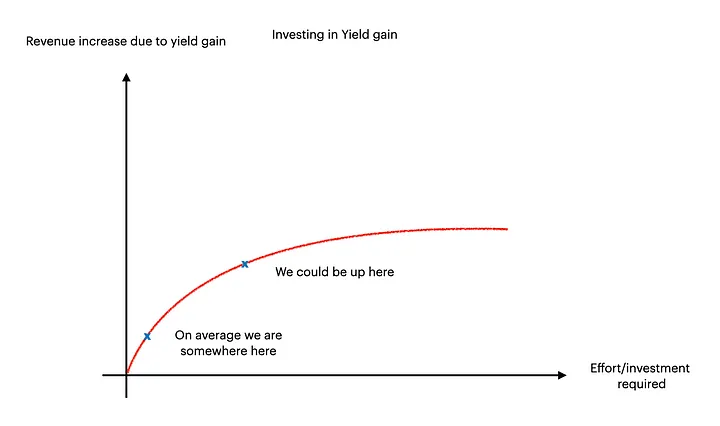
Increasing Yield per Acre (increase quantity)
The hypothesis here is “increasing the yield per acre of the estate is the best way to increase profit”.
Similarly to quality, again we have a situation where it will cost increasingly more, and at some point just be impossible to increase yield per acre significantly.
It’s likely that this will require significant capital to even begin tackling (especially on the route of automation and machinery).
If better practices are easy to implement, then they should definitely be put in place — but we still run up against this wall that at some point the costs are just not going to reduce any further.
Marketing and branding
Many people are already taking initiative to improve marketing and in some cases even sell directly to customers. This is possible now because targeted online advertisements have reduced the upfront investment required to reach out to people who are interested in coffee specifically. Indeed, I came across several Indian coffee brands where previously only Coffee Day seemed to exist.
To be clear, there some hurdles to get through in order to successfully do this, because it requires getting into aspects of the coffee supply chain.
Improving knowledge on how to properly roast, package, and deliver
Having enough scale to actually benefit from the increased reach
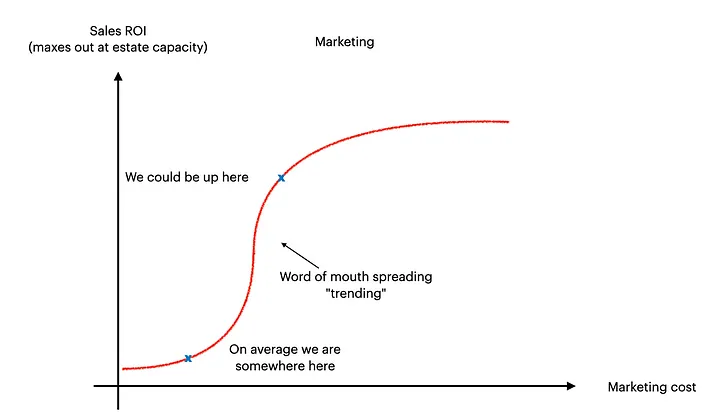
However, the upside is also very great. Here’s how one can generally expect marketing to impact sales.
It’s important to mention again that basic quality standards must also be in place — marketing coffee that doesn’t taste good might get an initial wave of customers, but people aren’t going to keep buying it.
In my personal opinion, the marketing solution is very underutilized in Coorg right now. Part of it is possibly because the younger Coorgs who have experience in digital marketing and the like, aren’t currently very involved in coffee.
A Way Forward
Ideal goals and reality are different, but my personal experience is that setting lofty and idealistic goals is a great way to start looking for solutions. So I’m going to try to paint that ideal picture and if it makes sense then perhaps we can try to move toward it. Even if it doesn’t work out completely, hopefully the idea can leave us better off than where we are today.
Coorg is a district of great pride and heritage. Given the right contexts, Coorgs can be very passionate about this: just look at the Hockey Festival!
Can we create a similar excitement about Coffee? That sort of passion is what comes before great successes.
Coming together as a community behind the shared banner of “Coorg Coffee” can allow us to reap the greatest reward from any marketing and branding effort. To create a competitive vibe like the Hockey Festival we could do something similar like having multiple family-blends where many estates from the same family pool together to create their own unique blend. This could then be sold in a packing like this which allows both unified brand identity as well as individual expression.
To top it all off, having a yearly Kodava Coffee Festival would certainly keep people awake with excitement.
Coming together as a community to create an image for Coorg Coffee, and a process to back it can overcome the main challenges. Sharing knowledge within the community gives us a larger base to experiment and hence improve processes we use for things like roasting. Delivering the coffee under a shared brand allows us to overcome the limits on quantity that small estates have if they try to market individually.
I must restate: I’m no expert in coffee. There will be innumerable challenges on this road, many of which you have faced and know far better than I do. However, if we could come together as a community with the goal of making coffee growing more lucrative for the whole district, I’m sure we would meet with more success than having multiple disparate efforts to do the same.
Do comment! I know a lot of people feel strongly about this. It would be amazing if there was a healthy discussion in the comments!
source: http://www.medium.com / Medium.com / Home / by Sharat Chinnapa / published in The HumAln Blog / May 23rd, 2021
WELCOME. If you like what you see "SUBSCRIBE via EMAIL" to receive FREE regular UPDATES.
Read More »