Mantar Gowda, MLA, directs the officials to coordinate with different departments to mitigate any extremities in weather.
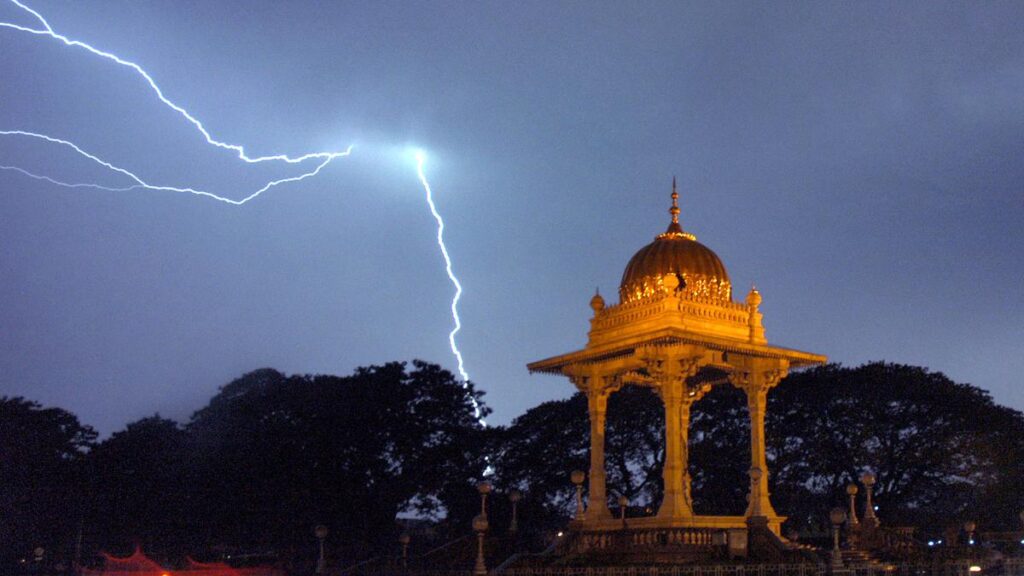
A flash of lightning illuminating the skies in Mysuru. | Photo Credit: M.A. SRIRAM
With the monsoon set to keep its tryst with Kodagu in the next few days, the authorities reviewed their preparations to meet any eventuality.
A meeting was convened in Madikeri on Friday, June 9, and Mantar Gowda, MLA, directed the officials to coordinate with different departments to mitigate any extremities in weather.
He said the revenue, forest, PWD, CESC and other departments should coordinate and ensure that they attend to any problems caused in case of a landslide, uprooting of trees or telephone and electricity poles. The teams constituted for the purpose should reach the affected spots immediately and carry out repairs or any other mitigatory exercise to tide over the crisis.
The MLA said relief centres should be stocked with basic necessities and be equipped to deal with flood victims who could be shifted from their villages.
The officials were also instructed to counsel those affected by floods and infuse psychological strength in them and professional counsellors should be roped in with the assistance of Department of Health.
The nodal officers in charge of different relief centres should ensure coordination among different wings and branches of the district administration, said Mr. Gowda.
The authorities were directed to impress upon the people living in the vulnerable areas to be ready to relocate at short notice. The Chamundeshwari Electricity Supply Corporation (CESC) personnel were directed to ensure that electricity poles that are uprooted are immediately replaced and power supply restored at the earliest. Similarly, the forest department staff were asked to be on alert to clear the roads of any uprooted trees to pave way for traffic movement.
The district health officer was directed to monitor for any outbreak of water-borne diseases during monsoon and ramp up the preparations to handle any epidemic. The Education Department officials were instructed to ensure that no classes are conducted in schools identified to be in dilapidated conditions.
The ZP CEO Shekar said that meetings have been conducted at the Gram Panchayat levels and 19 schools have been identified for conversion as relief centres if need be. The principals of the respective schools will also function as nodal officers, he added.
There is a helpline at every Gram Panchayat and volunteers will also be deployed in case of any emergency, said the official.
Shantilal Jatia, heading the NDRF at Kodagu, said that a team of 24 personnel are stationed in the district and they would be ready for deployment at any time in case of emergency.
source: http://www.thehindu.com / The Hindu / Home> News> India> Karnataka / by The Hindu Bureau / June 09th, 2023
The Thar is so different from my BMW 320d, in all senses, and driving this SUV was indeed a very different experience.
BHPian Dr.AD recently shared this with other enthusiasts.
Three Thars and the Hills of Coorg
First Drive with my New Thar:
Just about three months ago, I would have never imagined I would be writing a Thar travelogue, that too so soon. My road trips used to primarily be with my red BMW 320d, and there was no real plan to do something very different so soon.
But then, as always, life is all about unpredictability and experimentation. In somewhat of an unexpected (to myself) development, and purely as a fun experiment, I bought a brand new Mahindra Thar (Petrol AT 4×4 in Napoli Black) just a couple of weeks ago. From now on, this would be a new companion to my trusted BMW 320d. I plan to create my Thar ownership thread someday. But I thought it would not necessarily be inappropriate to start with a travelogue ahead of the ownership thread.
I always buy cars for long road trips and visit beautiful locations as my primary purpose. And every time I bought a car, I took that car for a long drive pretty much immediately. Thar is no exception. I got the Thar just a couple of weeks ago. In those two weeks, all I had managed was about 200km of driving around (mostly due to busy work schedules and work travels). This first road trip added about 700km to that, and was a perfect introduction for me to the new Thar and its capabilities.
In a nutshell, this trip was memorable to me because this was my drive in the new Thar. Thar is so different from my BMW 320d, in all senses, and driving a Thar was indeed a very different experience. Getting used to the Thar and understanding its capabilities was a big part of the motivation for this drive. Another thing that made this drive special to me was that, unlike my road trips in the 320d, this time, there was plenty of off-roading too. The main purpose of Thar is to explore rough terrains, and we did that on this very first road trip.
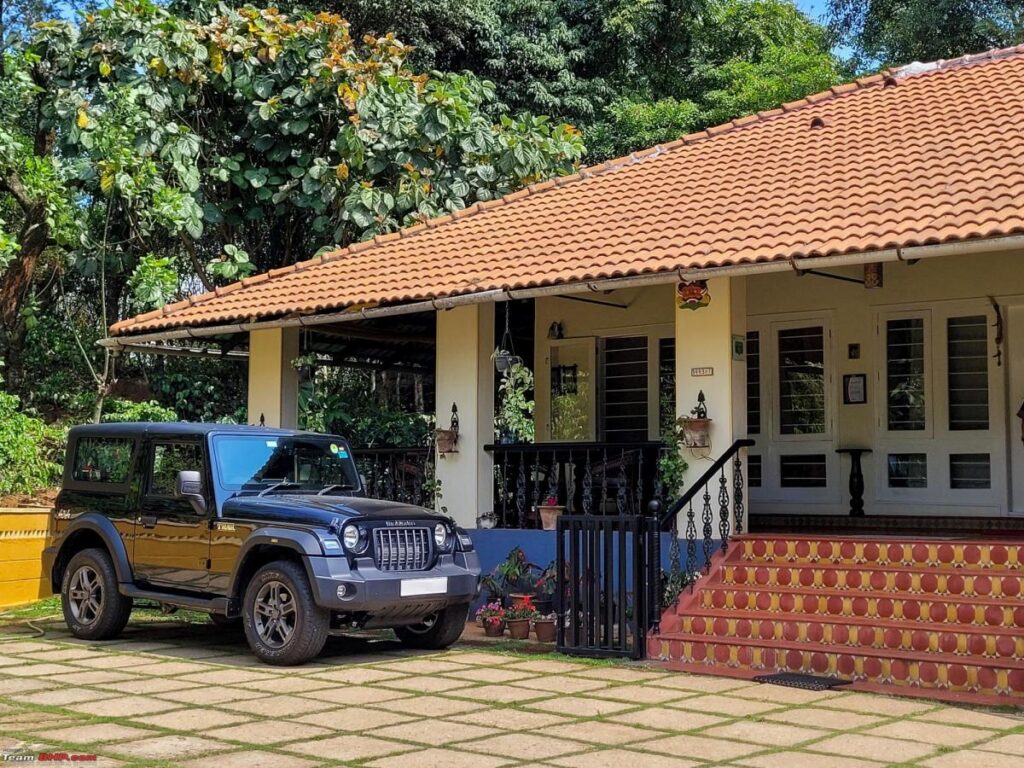
My new Thar in the hills of Coorg:
The Thars, The Crew and the Homestay:
One of the many reasons I love TeamBHP is because of the friends I made thanks to this forum.
My partners in this drive were our close friends Mr. and Mrs. @robimahanta, in their Aquamarine Blue Thar (Petrol 4×4 AT).
But as a bonus, this time, we made new friends.
It was a great pleasure to have Mr. and Mrs. @justwheels, in their Red Thar (Diesel 4×4 AT). We met them for the first time on this drive, and we had a great time together.
And of course, my better half was with me in my Black Thar, and she enjoyed the Thar experience (including some off-roading) even more than I did. I am glad she likes the Thar so much and so quickly that she is hooked on the idea of exploring difficult terrain in a 4×4 vehicle!
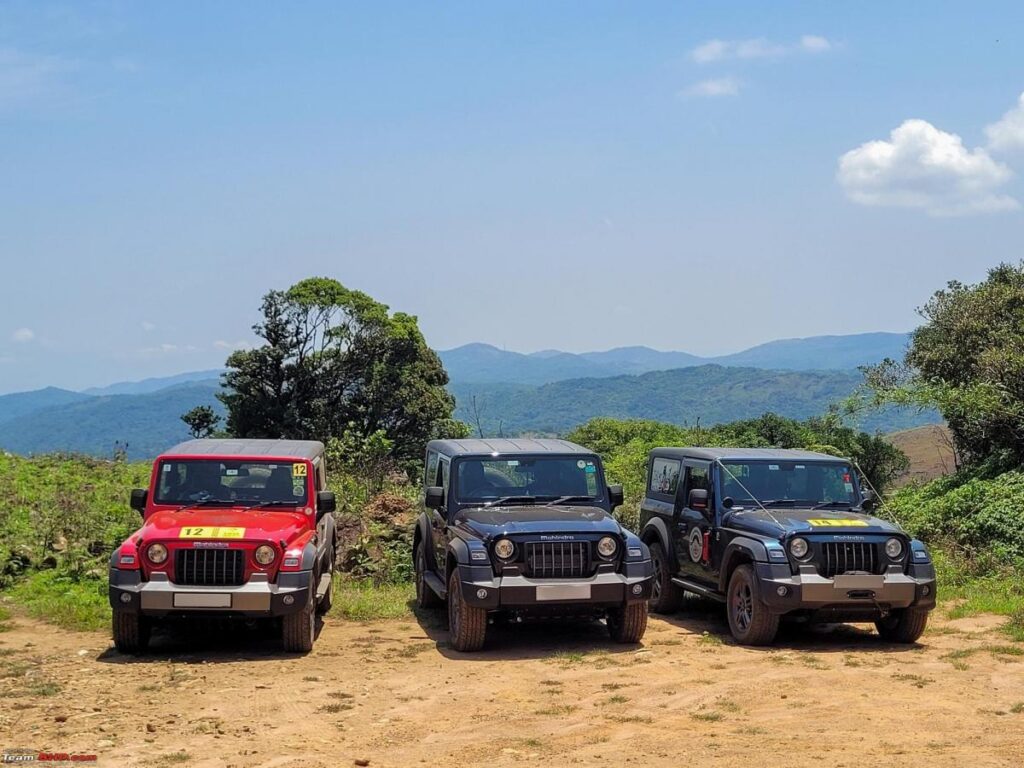
The Three Thars together on the hills of Coorg:
The Homestay:
We stayed at the same homestay where we had stayed back in August 2022 and loved it so much, as I described in my tip report from that time. The homestay is called Green Pastures, Coorg.
The homestay owners and hosts, Hemanth and Tripula, are wonderful hosts and good friends now. Just like my previous experience there, this time too we had a great time at the homestay and had a wonderful experience overall.
The homestay has three rooms, and that was just perfect for the three Thars and three couples traveling together.
Green Pastures is not only a beautiful homestay, but one more speciality of the place is that the owner Hemanth is an off-road enthusiast and a very experienced off-roading expert. He himself owns an old Mahindra MM540 4WD, and also organizes some off-road events in Coorg. He knows the trails and hills of Coorg like the back of his hand. One of the main motivations for visiting his homestay in Thars was to do some off-roading explorations nearby guided by his knowledge of the area. He indeed gave us some great routes to explore and even took out his MM540 and lead us on a beautiful hill trail the first evening we were there. It was a great experience to follow his MM540 and watch it handle the terrain with so much ease and poise.
Anyways, I will stop this prologue here and share the off-roading experiences and photos below.
Exploring Roads and Off-Roads of Coorg
One of the main agendas for me on this trip was to try off-roading in my new Thar. I have done one major off-roading expedition in the past in the deserts of Rajasthan (described in this old travelogue) and then did a couple of small off-roading events here and there. But still, never did any off-roading in my own car. This trip was my first experience of off-roading in my own car in a small private group (without any official “organizer” of the event). Overall, I am still new to this game of off-roading, but thankfully, I had expert off-roaders @robimahanta and @justwheels with me, and their guidance and the tips they shared were also a great learning experience for me.
We did not do any hard-core off-roading on this trip (and that was not the plan anyways), but we did some mild off-roading, and then also drove around on some random hills and some mud paths we saw along the way. All of this gave me a good taste of off-roading in one’s own car and I enjoyed it a lot.
The first evening we were there, Hemanth (the homestay owner and our host) took us to a nice trail in the hills nearby, leading us in his MM540 4WD, at the sunset hour. It was a short drive, but still was a wonderful drive.
The MM540 leading the convoy of three Thars on a nice hill trail at dusk:
It was a short but nice trail. We saw some great views from the viewpoint we reached the top of that small hill. For me, this was also the first time I used 4-wheel drive mode (4H) on my new Thar. It worked well on the first attempt, and everything was fun. I enjoyed this short off-road drive for sure.
The next morning Hemanth suggested a nice circuit that included some off-roading and some driving on lesser-known hill roads that were so broken that it justified having a Thar there. I would have never driven on those broken hill roads in my BMW. But the Thar was totally in its elements on those roads, and we managed to cover both totally broken roads and the off-road hill climbs with ease. Both I and my wife enjoyed this new experience, and we enjoyed this new aspect of motoring.
To start the driving day, we first hit a hill called Kote Betta. We reached the peak and randomly explored some paths nearby.
From Kote Betta, we started driving on some lesser known hill roads and some very narrow country roads. At one point, we found a random mud path leading to some flat grassland, and just randomly drove on those mud tracks. I got another opportunity to use 4H in my Thar and I enjoyed it again.
We continued our drive on the rural hill roads, and at one point, found another hilltop where we could go off the road again.
After driving on these narrow hill roads, we hit a proper off-road trail to reach a hilltop known as Mandalpatti Peak. This is a hilltop with panoramic views all around. And it takes a proper 4×4 vehicle to reach this location as the path to this is a dirt track full of stones, and at a couple of points, requires tricky maneuvers over rocks and a few steep rocky sections.
At the beginning of this off-road trail, there is a check-post which allows only 4×4 vehicles to enter, after paying the appropriate fees.
After some careful crawling on those rocky sections and the stone-filled road, we reached the hilltop.
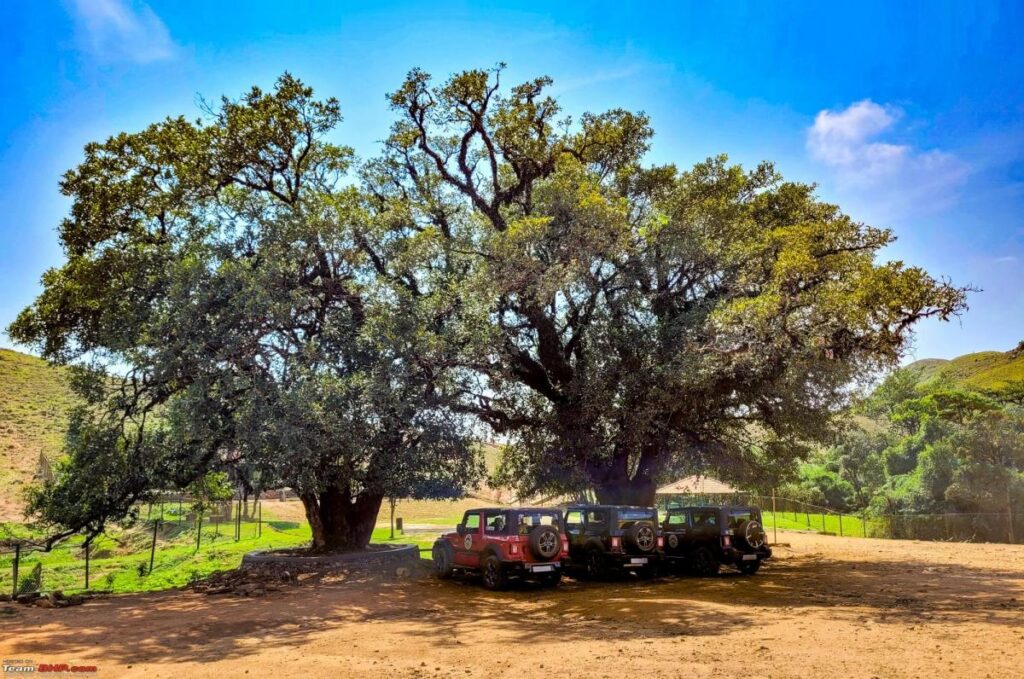
The three Thars at the top of Mandalpatti hills:
This trail was not too difficult for Thar, but yet was just right to give me a good idea of Thar’s capabilities and a preview of what kind of drives I would do in future in my Thar. I used 4H and Hill Descent Control (while coming down the hill), and I was happy that both of these features worked very well. This being my first drive in the new Thar, I was still getting used to handling this vehicle on such hill trails.
But here, @justwheels went ahead of me, and started giving me instructions on radio and I started following the lines suggested by him. Thanks a lot to him for his expert guidance that helped me quickly understand the nuances of handling Thar on such terrain. @robimahanta was behind me and was watching me carefully and giving tips as and when necessary. The three of us were using radios for communication and that was of immense help. Thanks to both of these expert off-roaders for making my first off-roading experience in my own Thar both easy and fun.
Epilogue
It was a short and sweet weekend drive that was made memorable by the beautiful Thars, the great company we had, the idyllic homestay and the wonderful hosts there.
Thanks to all of these for making this trip so much fun. Everything went well except for the weather. We were expecting some rain (common in Coorg at the end of May), and looking forward to driving in the rain and mud on the hills. Unfortunately, we were unlucky with the weather. There were no rains at all when we were there, although it rained before we went there and the forecast showed a lot of rain in the following week. Just the weekend we were there was bone dry and quite hot, something totally different from what we expected.
I was happy that I got to use the Thar well and got accustomed to it quickly. I wanted to try out various mechanisms in Thar, and I got to use 4H and Hill Descent Control on multiple occasions. I also used Cruise Control on the Mysore-Bangalore highway and everything worked fine. The only thing I did not get to use was 4L (given the bone-dry weather, there was no mud or slush anywhere and there was no chance to use 4L). Hopefully, my future trips will give me plenty of opportunities to use 4L.
Personally, for me, it was a new experience for sure. Thar is so different from my BMW 320d that driving it felt like playing a totally new game compared to what I am used to. And honestly, both I and my wife enjoyed this new Thar experience. True that both the ride and handling are quite bad in Thar. However, once you experience and appreciate what Thar is capable of beyond the tarmac and smooth roads, it is easy to look past these shortcomings and start liking the vehicle anyways. The simple joy of motoring with peace of mind on broken roads and wandering around on hilltops without worrying about your vehicle was something that we totally loved. And that exactly is the USP of Thar. Anyways, it is still early days for me with Thar and I will comment more on my Thar experiences after a few more drives.
Of course, I absolutely love driving my 320d too, and I plan to use both the 320d and Thar for different kinds of road trips from now on. Hopefully, I will have more Thar stories and travelogues to share in the future, but for now, this simple weekend drive was the first chapter in a new driving experience for me.
Well, that is all for now. Thank you for reading!
P.S. During my final reading of the travelogue after composing it, I realized that every single photo I included in this travelogue has a Thar in it. Not a single photo without a Thar! This was certainly not by design and certainly not done on purpose, but it just so happened and I myself noticed that only in the end. But this shows the photogenic appeal of the Thar. I just did not bother shooting any landscapes or sunset pictures this time, when I had three beautiful machines to shoot instead.
Check out BHPian comments for more insights and information.
source: http://www.team-bhp.com / Team-Bhp.com / Home> News / by Utkarsh Chaudhary / June 05th, 2023
The decision to cancel the exclusive selection process for Kodagu athletes for state-level teams has irked sports persons in the Kodagu district. As many as 18 students, including three girls, selected at the district-level selection process have been removed.
Kodagu district has players at the state and national level and they have also participated in the Olympics events. An exclusive selection of Kodagu students has been going on for the past 23 years in Ponnampet.
Arun Machaiah, a former MLC, accused senior officials behind the decision to cancel the selection.
A state-level sports school is being run at Kudige and the athletes to play at the state level are selected from there.
While the national-level sports persons are selected from Sai Sports Residential School, Madikeri.
Machaiah said when the selection processes for national and state-level events come together the opportunities for the athletes of Kodagu are likely to decrease.
Zilla panchayat had taken resolution for an exclusive selection of Kodagu students for state teams in Ponnampet School. It was approved by the Karnataka government in 2001.
source: http://www.timesofindia.indiatimes.com / The Times of India / Home> News> City News> Mysuru News / by G Rajendra / May 28th, 2023
Our travel diary from a weekend of bliss at this 125 acre property nestled in the hills of Madikeri.
Baalelle restaurant at The Ibnii in Coorg
Waking up to the sound of birds chirping and the gentle lap of water is what mornings are like at our pool villa at The Ibnii. Turns out we forgot our swimsuit. But a deterrent this is not. With not a soul in sight, except the stunning views of lush green trees that tower up high and coffee plantations in the distance — a 7am dip feels a bit surreal. The air is chilly but the water is warm. Given it is temperature controlled, this is the case even at midnight, we soon discover, much to our delight. For now however, we realise it is our moral imperative to simply soak in the moment. Phone off. Soul turned on. One hundred and twenty five acres of pristine forest land embraces us in response.
Some moments like the one above are suspended in time. While others are steadily threaded into a highlight reel of our days spent at this wellness resort nestled in the hills of Madikeri, Coorg. Right on top of this list is when Priyanka, who is showing us around the property, over a walk, plucks an orange flower and promptly pops it whole, into her mouth. “It’s edible, I eat one every morning,” she says, most matter-of-factly, as though this is as common as a bowl of oats. We are keen to pop a morning flower too! The nasturtium, as it is called, is mild and sweet with an unexpected kick of spice at the end. Definitely our most memorable palate adventure, although the kitchen’s Pandi Curry, comes in a close second.
At the pool villa
Mindful eating To keep waste to a minimum, we find out that this resort has a unique policy — guests need to pay Rs 100 for every 10 grams of food they waste. Bold, but effective we realise, as we find ourselves doubly mindful about what we put on our plate from the buffet. That said, if you do end up paying for food wasted, it is heartening to find out that the funds are donated to an orphanage in Madikeri. Meanwhile, another big surprise is that the drinking water at The Fig, the resort’s multi cuisine restaurant, quite literally comes from the air. We spot a robust air water purifier that does the job in the corner one afternoon, after returning from a relaxing hour spent at the spa. En route, we recall spotting a family of sunbathing monkeys, so perhaps all species at this resort take ‘rest and recharge’ quite seriously.
Forest restoration With an awareness that all natural ecosystems are vanishing all over the world at an alarming rate, the resort has committed a third of its property for the purpose of restoration of forest. Sherry Sebastian, one of the founders of The Ibnii says, “Bringing back a complex ecosystem such as this one within the Western Ghats is a slow process. We have more than 50 species of trees already growing here but the whole understory is choked mostly by coffee plants that are growing densely. We have taken up the mammoth task of selectively removing the invasive plants so natural regeneration can happen.” She adds, “Additionally, this area will be used as a resource to educate our guests about the importance of the natural world.”
Breathe in
■ Electric cars and buggys are used on the property to keep the air clean ■ Guests are privy to a live air quality index monitor at the reception ■ Drinking water at the restaurant is quite literally bottled from moisture in the air with the use of an air water purifier
Kodava lessons A bit of trivia for folks looking at a getaway here soon, apart from nature walks and regional cuisine, you get impromptu language lessons in the local Kodava tongue, courtesy names like Baalelle (banana leaf) for their vegetarian restaurant or Pattole Palome (a collection of Kodava folklore), which is the name of the green building it is housed in. Kaldi Kappee, the resort’s award-winning lakeside coffee shop, however, has been named after the Ethiopian shepherd who discovered coffee beans back in 850 CE. As the story goes, he noticed his goats nibbling on some wild berries, following which they pranced around with more energy than ever, making him curious enough to try the berries himself.
Coffee date While on the subject of coffee, don’t miss the resort’s coffee trail. Ours encompasses the different stages of berries and coffee making and ends with the grand reveal of a prized jar of dried ‘civet poop’. The civet cat better known as the Kopi Luwak roams free on the premises and for conservation purposes, the coffee from their droppings is not sold or monetised. But we do get the unique experience of holding some premium poop in our hands (pre washed of course). And then we’re told to do the oddest thing — shake it. We hold it up to our ear and shake to hear the softest jingle of coffee beans inside.
While civet coffee isn’t available at the resort itself, here’s a golden nugget of trivia for any coffee lover. Apart from those nutty flavour notes, this luxury brew is a great choice for folks who suffer from uncomfortable bouts of acidity. Given that it is essentially pre-digested by the civet cat, you can enjoy your cuppa with no reservations. We have to admit, this coffee date, poop et al, is perhaps one of our most ‘memorable’ and is definitely a change of pace from the Tinder experience.
The Ibnii is a 12 hour drive from Chennai. Accommodation at INR 18,000 onwards.
source: http://www.indulgexpress.com / Indulge Express, The New Indian Express / Home> Travel / by Sonali Shenoy / May 19th, 2023
A land known for its coffee and renowned for its generals and warriors, the history of Kodagu has never been traced to its origins, the thread of descent becoming a tangled knot of colonial theories and hearsays. But history is important for one to realise the essence of culture and one’s own identity. Without this realisation, much is lost, and more is at risk.
Kodagu has always been placed in the category of the areas that complied silently with the British, when in reality, its contributions were simply underplayed and whitewashed. Many braves from all backgrounds had been leaders and warriors in their own right, following Gandhian ideals and fighting passionately for freedom.
The PM’s YUVA Mentorship scheme was an opportunity to shrug off this stereotype and uncover the truth. The Lost Heroes of Kodagu talks of those men and women who looked danger in the eye, unflinching even as blows landed on them left and right. It talks of those who rose and made sure their voices were heard despite attempts to muffle them. Those that history let slip through cracks and crevices, silent and dormant.
Recover them as you read. Watch as they come alive through the pages. Be inspired by their grit and determination, be empowered by their stories. But most of all – remember them, keep them in glorious memory.
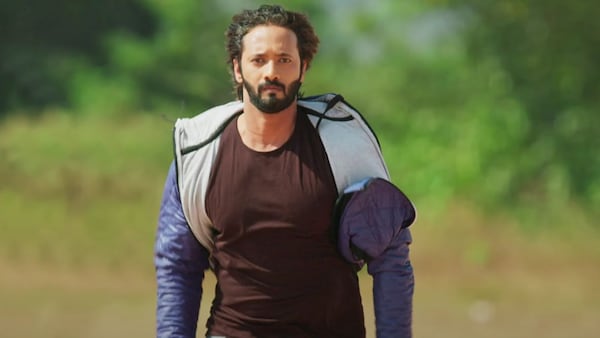
The film, written and directed by the actor, is about a hockey player’s struggle to get into the national side.
Adyah Thimmaiah in a still from the film
Hockey is as much a religion for Kodavas, as cricket is for much of the nation. The passion for the game is such that the Kodagu region hosts an annual hockey tournament, which sees participation from most resident families. Kodagu is, in fact, widely considered the cradle of Indian hockey, what with over 50 men from the area having represented the country at international tournaments, including the Olympics. It is no wonder, then, that debutant Adyah Thimmaiah, who hails from the region, chose the sport as the subject of his launchpad, Jersey Number 10. which he has co-written and directed as well.
“We finished shooting the film a year ago; post-production took time, after which we got it censored. Jersey Number 10 was awarded U/A and we have decided to release the film on May 19. The reason behind the quick decision to bring the film to theatres is that the number 10 is quite powerful and the release date adds up to it. I co-wrote the story of the film sometime ago with my mother and was looking for an opportunity to get into acting. Stunt master Thriller Manju has been my main motivator in getting the ball rolling on my debut film. I did not want to begin my filmi journey with just a love story; it had to be something inspirational, which is why I chose hockey,” explains Adyah.
The film, he adds, is about a youngster, who lives with his grandfather, with the latter a former state-level player who could not make it to the national team and dreams of getting his grandson there. “The grandfather is determined to make his grandson a national level player, but that is easier said than done, so the film follows the trials and tribulations in this journey. However, the film is not all about hockey and has a love track too,” he says.
source: http://www.ottplay.com / OTT Play / Home> News / Team OTT Play / May 16th, 2023
The Systematic Voter Education and Electoral Participation (SVEEP) Committee, Kodagu, will hold ‘Run for Vote’ for the people of Kodagu in Murnadu village of Madikeri taluk at 8 a.m. on May 6.
A statement said the main objective of the run, which will be held from HP Petrol Bunk to Bachetira Lalu Muddaiah Sports Grounds in Murnadu village, is to create awareness about voting and its importance in democracy.
Those interested can reach the starting point by 7.30 a.m. For registration, call 98440-60174 or 99451-23921.
Air show
Meanwhile, the SVEEP Committee is also organising an air show of mini aeroplanes at Karmadu village near Balale in Ponnampet taluk at 10 a.m. on May 6.
source: http://www.thehindu.com / The Hindu / Home> News> India > Karnataka / by The Hindu Bureau / May 06th, 2023
Footloose in Kodagu, where the mercury still hovers around 20° Celsius.
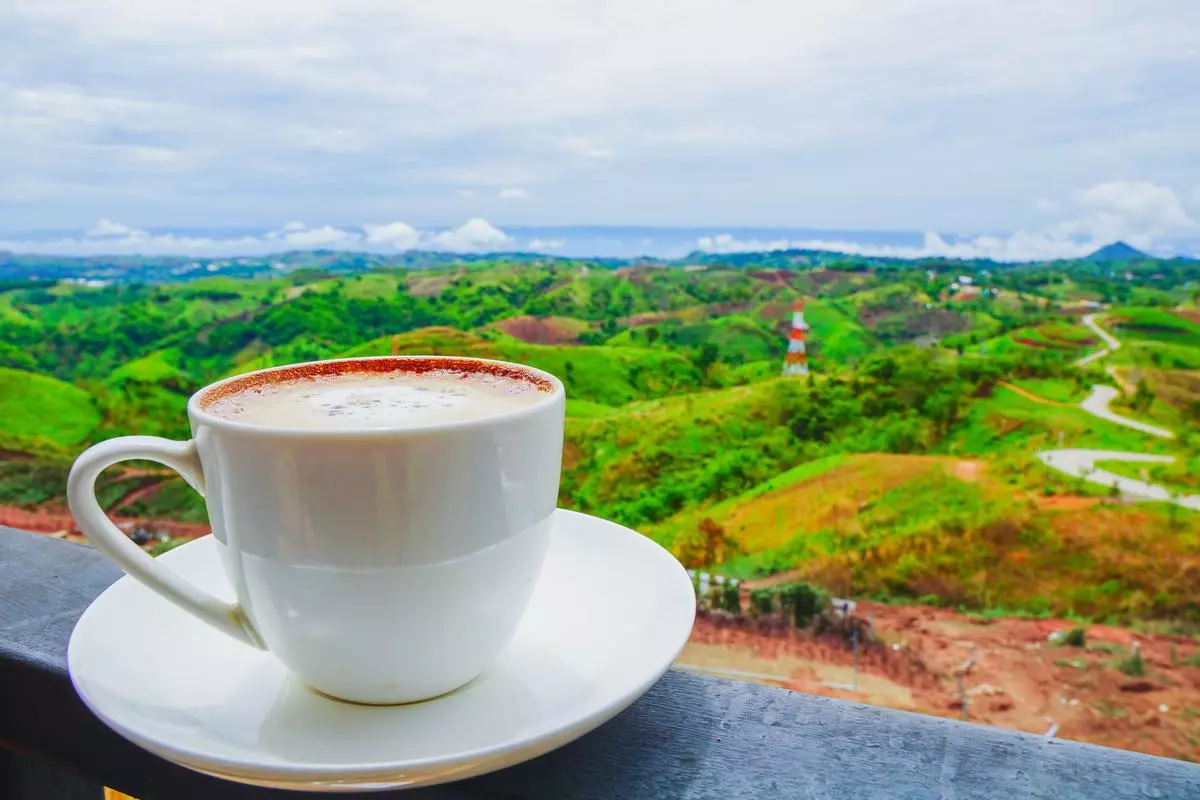
Coffee is one of the mainstays of the local economy. | Photo Credit: Getty Images/iStock
While temperatures go up in the rest of south India with the advent of summer, in Karnataka’s Kodagu district the mercury still hovers around 20 degree Celsius. I sip my delicious freshly brewed, locally grown coffee. Coffee is one of the mainstays of the local economy: the rolling plantations stretch over a quarter of the district, not only up and down the hillsides of the Western Ghats, but also in tiny coffee gardens or even as the isolated backyard shrub.
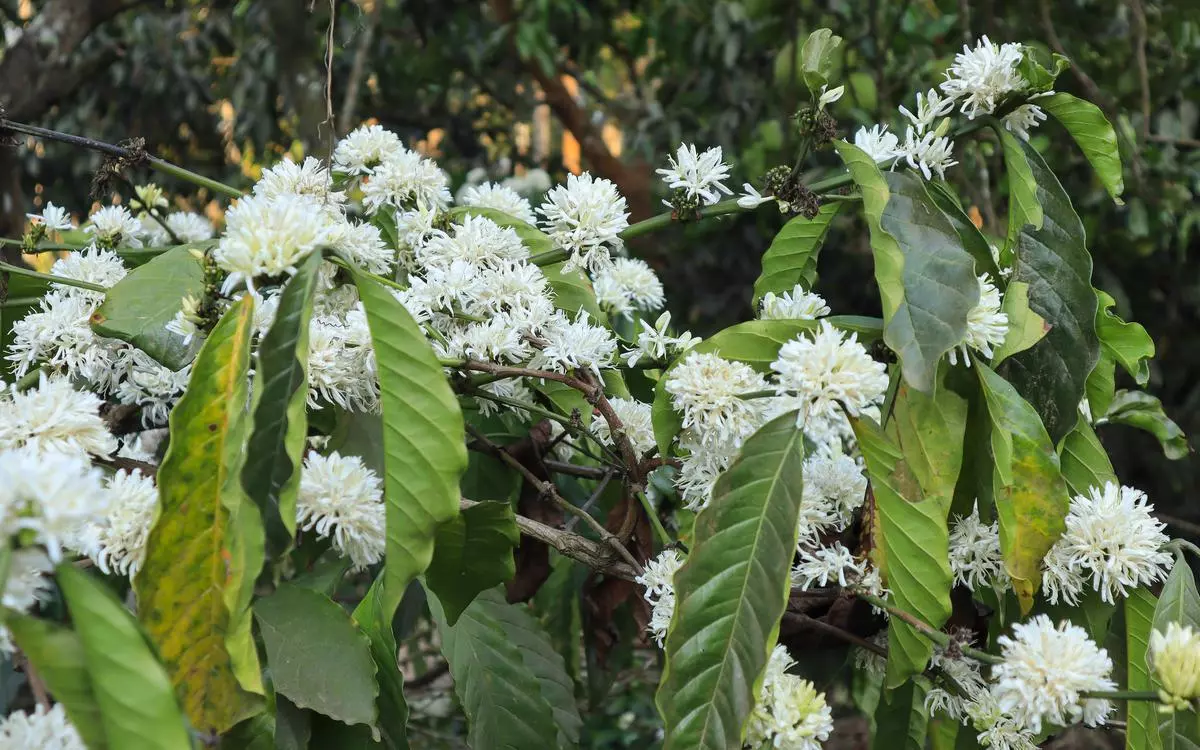
Over 40,000 coffee growers in Kodagu have holdings below 10 hectares. A major portion of the coffee produced in India, both Robusta and Arabica, is grown in Kodagu. With its pretty white flowers and cherry-red berries, the coffee plant has brought prosperity to the district.
Flowers of Arabica in a Kodagu plantation. | Photo Credit: Getty Images/iStock
Sitting in the garden, I try not to be distracted by the anthuriums, peace lilies, Malabar rhododendron, and splendid roses that grow so well in this emerald-green landscape. I am reading a new translation of the short stories of the feminist writer Kodagina Gowramma by Deepa Bhasthi. Gowramma wrote in the early 20th century and her collection was published posthumously. Bhasthi’s translation has been published by the independent Indian publisher Yoda Press.
Kodagu’s Gowramma
In one of the short stories, a young man dreams about going to England to study further. “When I was a little boy, my neighbour’s son went to England to sit for some exam and came back after touring Europe. Then, the respect the villagers gave him, his car, his new fashionable clothes, the way he walked, the way he spoke, all this made me long to go to England and come back like him…. It was because of this fierce longing to go to England that I did not fail even one year in school. I was the class topper; I was a model student in school.”
Bhasthi, who is from Gowramma’s hometown in Kodagu, has written about her unusual life. On a trip to Kashi as a child, Gowramma had the traumatic experience of getting lost in the city before she was reunited with her family at the police station. As a young woman, Gowramma played tennis, loved swimming, and had independent views. As news of the freedom movement spread, she became deeply influenced by the ideas of Mahatma Gandhi and began wearing khadi. Bhasthi describes how, during Gandhi’s visit to Kodagu in 1934, Gowramma reportedly went on a fast and insisted Gandhi should come to her house. She then gifted all her jewellery to the cause.
Gowramma died tragically young, at 27, in a swimming accident. A photograph of the young writer hangs on the wall of the rural library in Ponnampet, located close to the statue of Mahatma Gandhi that marks his visit to the town.
Kodagu’s libraries
Kodagu’s rural libraries are attractive and child-friendly spaces. Library walls often commemorate Kodagu heroes, such as Field Marshal Kodandera Madappa Cariappa, India’s first Army Chief after Independence, and another legend, General Kodendera Subayya Thimayya. The library walls also have pictures of Karnataka’s distinguished Jnanpith Award-winning writers. And in Hoddur village, a tiny rural community located some distance away from the panchayat headquarters has set up a library of its own in an old anganwadi building. It is called the Savitri Bai Phule Community Library.
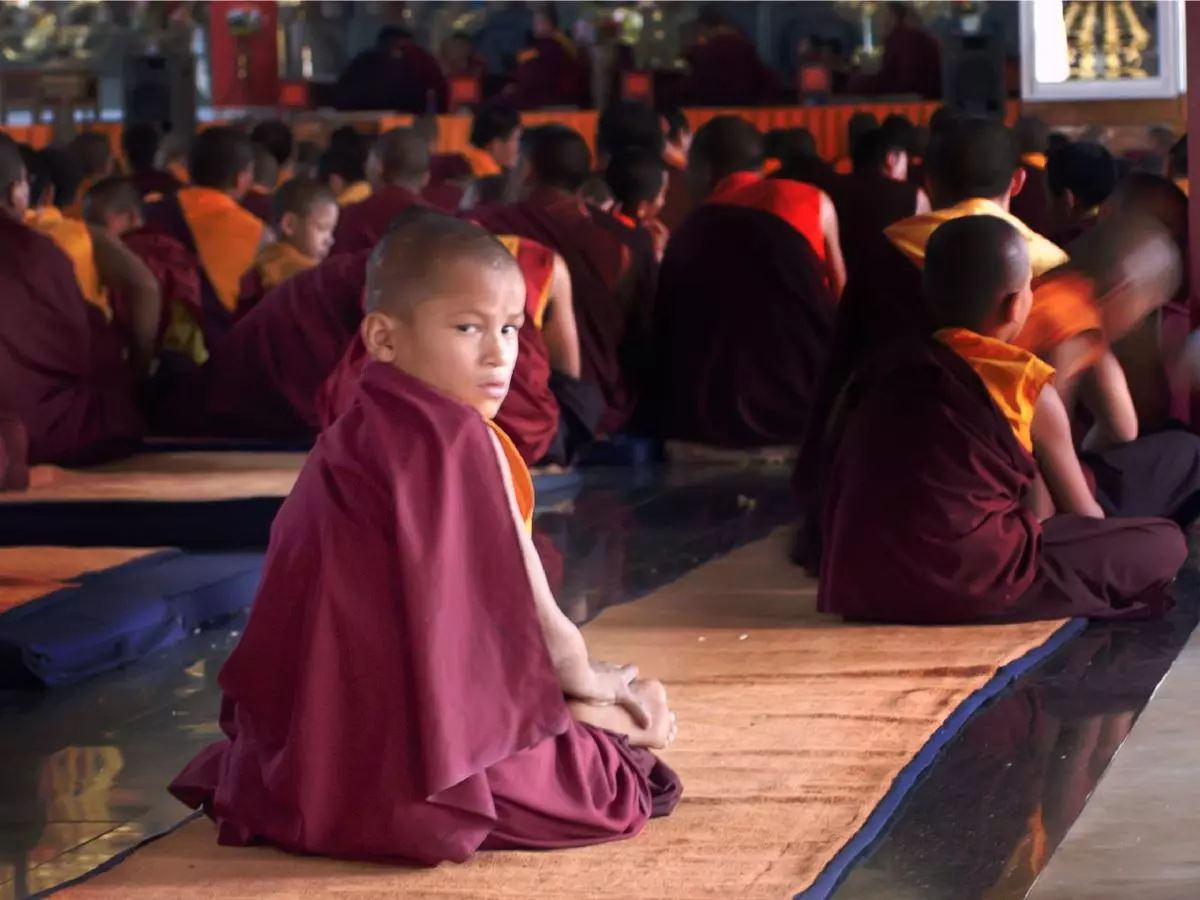
A monk in a Bylakuppe monastery | Photo Credit: Ramesh Meda/ Flickr
In Thithimathi, a tiny village on the outskirts of the Nagarhole forest, the rural library has bright blue benches in its yard. Two schoolboys play chess in a corner. I learn that one of them attends a private school; the other boy is from a tribal community and attends a government school. Here in the village library, it is a small moment of great happiness to see them playing chess together.
No weekend in Kodagu is complete without a few moments of calm in the nearby town of Bylakuppe, which is home to two Tibetan settlements dating back to the 1960s, Lugsung Samdupling and Dickyi Larsoe. The beautiful Namdroling Monastery is also located here. It is lined with prayer wheels and intricate, colourful murals that contrast with the deep red robes of the monks. The monastery reverberates with deep musical chanting, transporting visitors to places not dreamt of in philosophies.
Uma Mahadevan Dasgupta is in the IAS.
source: http://www.frontline.thehindu.in / Frontline / Home> Others> Travel – Diary / by Uma Mahadevan Dasgupta / May 04th, 2023
Kodagu has managed to improve its position in the second PU examinations. It stood third in the State, securing 90.55 per cent results. Last year, it was at sixth place in the State.
Compared to last year, the results have improved by 17.23 per cent, said Puttaraju, Deputy Director of the PU Department, Madikeri.
Out of 4,622 students who appeared for the examination in the district, 4,185 have cleared it.
In the Arts stream, 779 students out of 985 passed the examination, securing 79.09 per cent results. In Commerce, 2,168 students cleared the exam out of 2,347 students, securing 92.37 per cent results.
In the Science stream, Kodagu secured 95.97 per cent results with 1,238 students passing the exam out of 1,290 students who appeared.
Akshata L stood first in Kodagu in Arts getting a score of 578. In Science, Niranjan K. of Kushalnagar stood first in Kodagu with a score of 591 marks.
source: http://www.thehindu.com / The Hindu / Home> News> India> Karnataka / by The Hindu Bureau / April 21st, 2023
Magicsip, the coffee revolutioniser based out of Coorg, is now venturing into functional coffees such as Ashwagandha, Mushroom, and Turmeric instant coffee.
Are you someone who can only function after having a glass of coffee? And, like experimenting with flavours? If that’s the case, you’ll be happy to know you can try several unknown and unusual flavours. Magicsip, the coffee revolutioniser based out of Coorg, is now venturing into functional coffees such as Ashwagandha, Mushroom, and Turmeric instant coffee. You read that right!
The company has announced that it has received an undisclosed amount of funding from its parent company DHS, an establishment in the coffee industry since the 1990s. The strategic investment is aimed at expanding and further developing Magicsip’s business operations, including product development and extending its retail presence across Bangalore and another tier 1 cities.
To understand more about it, we got in touch with Ajash Sait, the Director of Magicsip. Here’s what he has to say:
How do you think coffee consumption has evolved over the years?
Coffee consumption has undoubtedly evolved over the years, with consumers now more discerning and demanding than ever before. Gone are the days of mediocre coffee that simply satisfies caffeine cravings. Today’s consumers crave a coffee experience that is rich, nuanced, and elevates their senses. As a result, we have seen a proliferation of speciality coffee shops and innovative coffee products, all aimed at meeting the sophisticated palates of today’s coffee drinkers.
What’s the USP of Magicsip coffee?
At Magicsip, we pride ourselves on delivering a premium coffee experience that is unmatched in quality and taste. Our coffee is sourced from the lush hills of Coorg, where the ideal climate and soil conditions result in coffee beans of unparalleled excellence. We also use a unique curation process that ensures our coffee is rich, aromatic, and bursting with flavour. In addition, our commitment to sustainability means that our coffee is ethically sourced and environmentally friendly, giving our customers peace of mind with every sip.
What are the flavours? Is it too risky to experiment? What is the market like?
We offer a range of flavours to suit every taste, from classic blends to innovative functional coffees. Our functional coffee range includes Ashwagandha, Mushroom, and Turmeric instant coffee, which offer a range of health benefits in addition to their delicious taste. We believe that it is important to push the boundaries of coffee experimentation, and we are constantly working to develop new and exciting flavours that will excite our customers. The market for specialty coffee is growing rapidly, and we believe that our commitment to quality and innovation will enable us to thrive in this dynamic industry.
How do you manage the funding?
We are fortunate to have the support of our parent company, DHS, which has a long-standing reputation in the coffee industry. This allows us to focus on what we do best, which is delivering premium quality coffee to our customers. We take a strategic approach to funding, using it to invest in product development, retail expansion, and other initiatives that will drive our business forward.
What are your expansion plans?
Our immediate expansion plans involve extending our retail presence across Bangalore and other tier-1 cities in India. We also plan to expand to Amazon US by the end of Q2, allowing us to reach a global audience with our premium coffee products. Beyond that, we are always looking for new opportunities to expand our business and bring our coffee experience to more customers around the world.
How do you manage competition?
We believe that competition is healthy and drives us to continually improve and innovate. At Magicsip, we differentiate ourselves from our competitors by offering a premium coffee experience that is unmatched in quality and taste. Our coffee is rich, aromatic, and bursting with flavour. We also offer innovative functional coffees that cater to the health-conscious consumer. Ultimately, we believe that our commitment to quality, innovation, and sustainability will enable us to stand out in a crowded market and continue to thrive in the years to come.
source: http://www.financialexpress.com / Financial Express / Home> Business News> Lifestyle / by FE Lifestyle / April 25th, 2023
WELCOME. If you like what you see "SUBSCRIBE via EMAIL" to receive FREE regular UPDATES.
Read More »