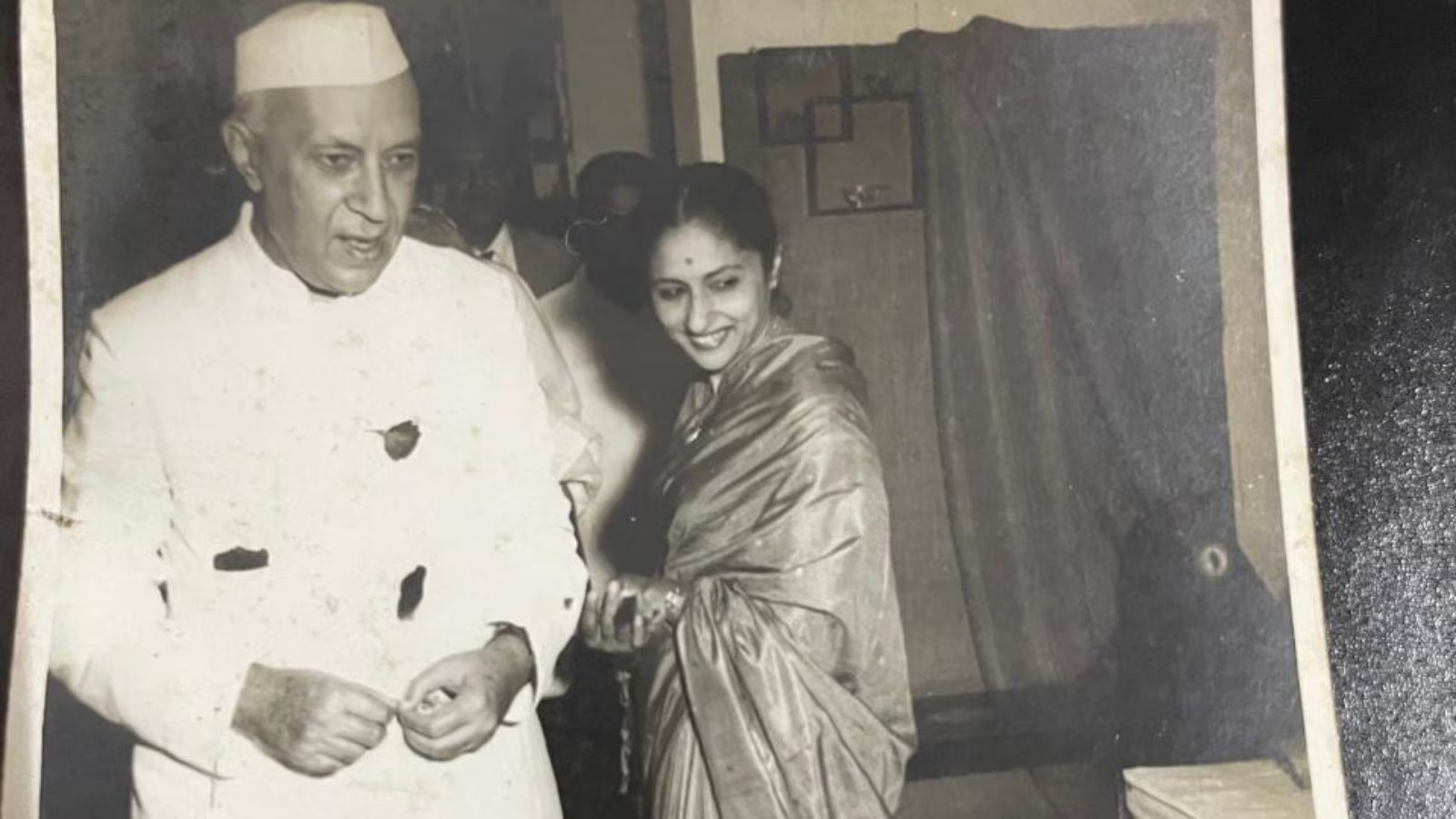
In the early days, says Muddaya, several dignitaries visited Cauvery Handicrafts Emporium and were hosted by Chimy—from Prime Minister Jawaharlal Nehru to Sri Lankan premier Sirimavo Bandaranaike, and even a young Queen Elizabeth.
Chimy Nanjappa’s passion for Karnataka’s textiles and crafts lives on at the Vimor Museum of Living Textiles in Bengaluru.
When one speaks of textiles and fine crafts in Karnataka, the Cauvery Handicrafts Emporium on MG Road in Bengaluru is one of the first places that comes to mind. The shelves of the state-owned emporium are packed with a vast array of the traditional crafts of Karnataka—from intricate silver-based Bidriware items to charming Channapatna toys. However, this wasn’t always so. And one of the people who painstakingly worked to transform the emporium into a showcase of the state’s finest creations was the late Chimy Nanjappa.
Chimy was selected to head the emporium in the late 1950s—then known as Mysore Arts and Crafts Emporium—by its governing board, which included many women, including Sudha Reddy, a proponent of Indian handicrafts.
“It was not a cakewalk for her. In those days, women did not work and close up a place as huge as Cauvery and then walk home at 8 pm,” Chimy’s daughter, Pavithra Muddaya, recalls.
Born in 1928 in Madikeri, Chimy did not have an easy childhood as she lost both parents by the age of nine. She went on to pursue higher education in Chennai, securing a BCom degree, and later settled in Bengaluru after marrying advocate A C Nanjappa. With the family facing financial difficulties in the early days, she began working as an assistant manager at Cauvery Handicrafts Emporium, before being promoted to manager.
“She had nothing by way of a background in the field and had previously done accounts work…but life forces you to take up opportunities,” says Muddaya, adding that her mother always said that women need to work and be financially independent. She also credits her father’s role in encouraging and supporting Chimy, recalling him as a person who held views that would be considered progressive even today.
In the early days, says Muddaya, several dignitaries visited Cauvery Handicrafts Emporium and were hosted by Chimy—from Prime Minister Jawaharlal Nehru to Sri Lankan premier Sirimavo Bandaranaike, and even a young Queen Elizabeth.
In 1963, cultural activist and author Pupul Jayakar, a major mover in the revival of traditional crafts and culture, recruited Chimy to represent Indian textiles at the New York World Fair the next year. It turned out to be a success, says Muddaya, recounting what an IAS officer familiar with the event told her. “Good lord, nobody could go past her without buying something!”
Later, Chimy was offered an opportunity to head an outlet anywhere in the world under the Handicrafts and Handlooms Export Corporation, but declined, refusing to be a “second-class citizen” in a foreign country.
After A C Nanjappa passed away in 1974, Chimy went on to start the Vimor Handlooms, a home store specialising in handloom sarees and textiles. Muddaya remembers, “No one who came to her for help was sent away…she would give weavers’ addresses to people. Freedom fighter and social reformer Kamala Devi Chattopadhyay would say that anyone coming to the Regional Design Centre (on Church Street) without a recommendation could ask my mother for one.” Vimor would go on to revive many traditional sari styles, such as one dubbed the ‘Cubbonpete’ sari.
Those interested in Chimy Nanjappa’s legacy in textiles may visit Vimor Museum of Living Textiles after making an appointment. The exhibits on display include saris up to a century old, in styles that are not often seen today.
source: http://www.indianexpress.com / The Indian Express / Home> News> Cities> Bangalore / by Express News Service / March 13th, 2026

