Tag Archives: Dubare Elephant Camp – Kushalnagar Taluk

Whitewater rafting in Karnataka: Experts urge enforcing safety protocols

While Karnataka is all geared up to welcome whitewater rafting enthusiasts in the monsoon, it is important that adventure activities are conducted in a way that minimises risks and yet provides the benefits of participation, say experts.

Enjoying whitewater rafting in Dandeli, Karnataka / Jungle Lodges & Resorts

With the monsoon in full swing, Karnataka is all geared up to welcome tourists and adventure enthusiasts to experience the thrills of whitewater rafting. As you raft through gushing waters surrounded by dense jungles, you are transported into a world of roaring rapids with sprays of pristine white water and treated to glimpses of wildlife on some stretches of the river.

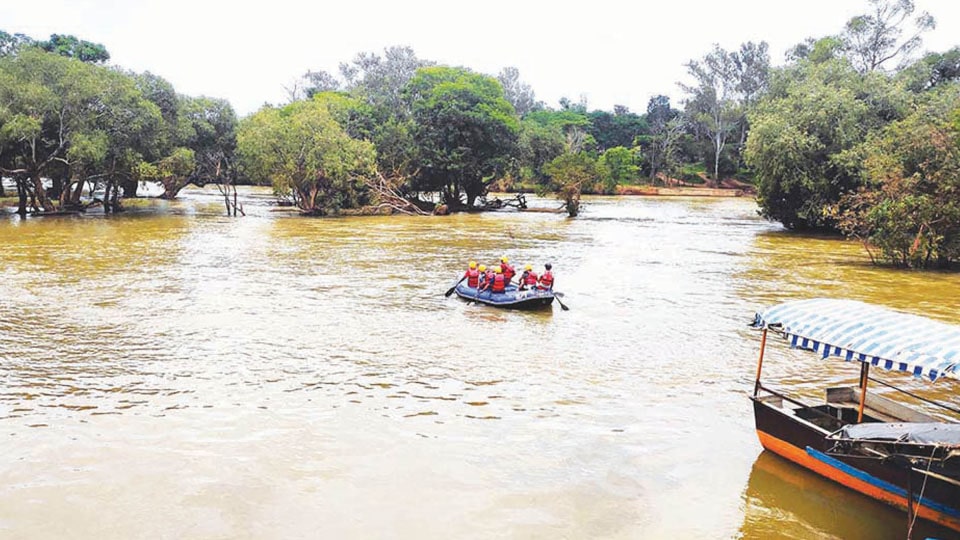
Adrenaline junkies can head to the stretch adjacent to the Dubare Elephant Camp in Kodagu on the River Cauvery and some stretches of the Kali river at Dandeli. The highlight of the season is the 1.5-hour whitewater rafting adventure on the roaring Barapole river, which originates in the Brahmagiri hills and flows towards the Arabian Sea. Rafting enthusiasts can navigate a 4.5 km stretch of the river featuring four iconic rapids with thrilling sections reaching up to Class 4 difficulty level for a duration of four months.

Another rafting destination is Bheemeshwari set on the banks of the Cauvery in the Cauvery Wildlife Sanctuary. Plans are on the anvil to resume rafting in Seethanadi, a swift Western Ghats river known for its challenging rapids and stunning scenery during the monsoon. The run on this powerful river passes through thick evergreen forests that form part of the Western Ghats in the Someshwara Wildlife Sanctuary and the Kudremukh National Park. Rafting on this brilliant 22 km stretch takes four hours to complete.

Streamlining rafting operations

The recently constituted River Rafting Management and Monitoring Committee of Kodagu district has stressed the need for enforcing stringent safety protocols to prevent mishaps during this high-risk adventure activity. The committee has urged all rafting operators in Kodagu district to compulsorily obtain and renew the fitness certificates for their rafts before launching any water-based adventure activity.

The mandatory certification, which must be renewed annually, is issued by the General Thimayya National Academy of Adventure (GETHNAA), a government of Karnataka enterprise for the promotion of adventure sports in the state.

“It is important that adventure activities are conducted in a way that minimises risks and yet provides the benefits of participation. Karnataka Tourism has laid down some guidelines that include obtaining necessary licenses and certifications from relevant authorities and ensuring compliance with safety standards,” says Major General (retired) MN Devaya, advisor to GETHNAA.

Listing the items that are essential for rafting, he adds, “Firmly secured life jackets, crash helmets, rescue floats with unreeling nylon lines, first-aid emergency kit, detailed instructions to the rafters, and an attendant kayak or raft for emergency assistance are mandatory for rafting activity. GETHNAA also has a training centre at Barapole.”

Explaining the measures taken by the committee, Venkat Raja, IAS, Deputy Commissioner (DC), Kodagu district, says, “The committee has taken up the responsibility of upgrading basic infrastructure at rafting sites to improve the tourist experience and enhance safety. Other measures included installation of shelters at the ticket counters, hand railing on the steps, changing rooms for guides, benches, provision of drinking water, toilets, CCTV surveillance, and directional signboards to rafting sites at strategic junctions.”

There are 47 raft operators functioning in the 7 km stretch in Dubare and four operators in the 4.5 km stretch in Barapole. “All the rafts are numbered for authenticity and easy identification. To prevent unhealthy competition, the pricing is flexible and monitored by the committee. Another encouraging factor is the involvement of the local populace, especially tribal residents, in the rafting operations,” adds the DC.

In Dandeli, Jungle Lodges & Resorts (JLR) is the only reliable organisation to conduct white water rafting. “The rafting operations that are currently suspended will resume after the monsoon in September/October. We have outsourced our rafting operations in the Kali river in Dandeli to Manasa Adventures, a professionally experienced adventure company. Strict safety guidelines are adhered to with professional river guides. We have perfected our standing as a whitewater rafting destination with highly qualified river guides and proper equipment,” says Prashanth Shankhinamath, IFS, Managing Director, JLR.

Need for stringent monitoring

Noting that there are many unauthorised rafting operators in Dandeli, Vaibhav Kamat of Jungle County, Dandeli, says, “This has led to protocol breach, which raises concerns over safety. As there is a mad rush during weekends, some of the operators overload the rafts, flouting all safety norms. Crowd control is also woefully lacking and overcrowding can lead to accidents. Some operators send visitors into rafts without safety gear such as life-jackets as they do not have the professional knowledge to operate the services. So there is a dire need for the state administration to monitor these operations.”

Urging a crackdown on illegal operators, he adds, “The safety standards and procedures followed by rafting organisations, including the availability of qualified guides and proper equipment, should be monitored. Action should be initiated against operators for violations. The permission process for raft owners should also be made more stringent.”

It is high time that Karnataka Tourism conducted a safety audit of all the river rafting destinations in Karnataka. This will help identify potential hazards and deficiencies in safety protocols. A social audit should also be conducted to examine the impact of rafting activities on local communities and the environment. This includes assessing benefits like opportunities for locals as well as potential negative impact such as environmental damage, social disruption, and cultural insensitivity. The impact of rafting on local businesses should be assessed.

An environmental impact study of rafting activities is imperative too to assess the impact on river banks, the river ecosystem, vegetation, and wildlife habitats. The effectiveness of waste management practices at rafting sites and the impact on the surrounding areas should be evaluated. The carrying capacity of rafting destinations and whether tourism is being managed sustainably should be determined.

Susheela Nair is an independent food, travel and lifestyle writer and photographer contributing articles, content and images to several national publications besides organising seminars and photo exhibitions. Her writings span a wide spectrum which also includes travel portals and guide books, brochures and coffee table books.

source: http://www.thenewsminute.com / The News Minute / Home> Karnataka / by Susheela Nair / edited by Vidya Sigamany / July 31st, 2025
Schools, anganwadis to remain closed on May 29, 30 in Kodagu

The authorities in Kodagu have declared a holiday for schools, anganwadis, and PU colleges in the district for two days –  on May 29 and 30 – due to incessant rains.

Though schools were scheduled to reopen after summer vacations on May 29 and 30, it has been decided to declare a holiday due to heavy rains. The school authorities have to compensate for the closure by working on other holidays.

However, SSLC examination 2 will be held as scheduled, and there is no change in the timetable, the authorities added.

Meanwhile, the forest department has announced that the Dubare Elephant camp is closed for tourists due to incessant rains, till further orders.

source: http://www.thehindu.com / The Hindu / Home> News> India> Karnataka / by The Hindu Bureau / May 28th, 2025

Dubare’s hanging bridge gets approval

Stronger suspension design unveiled for 210-metre bridge; estimate cost Rs. 6 crore

Kushalnagar:

The ambitious project to construct a hanging bridge over the River Cauvery at Dubare Elephant Camp in Kodagu is poised to further transform this popular tourist destination.

Dubare draws thousands of tourists each month and the addition of a hanging bridge connecting both riverbanks promises to be a significant attraction. Currently, one side of the river is managed by the Tourism Department, while the Forest Department oversees the opposite side, home to the renowned elephant camp.

Presently, tourists can only traverse the river via motorised boats. Due to the high demand for boat rides, many visitors risk crossing on slippery rocks — when the water level is low, leading to accidents and prompting criticism of the Forest Department.

The original hanging bridge plan envisioned a 110-metre structure supported by three columns — two at the ends and one in the centre — with an estimated cost of Rs. 3 crore.

Two poles instead of three

However, the new proposal extends the bridge length to 210 metres, supported by only two poles, eliminating the central column thanks to enhanced suspension wire technology. The revised design will be higher at the centre than at the ends for added stability.

This updated project is estimated to cost Rs. 6 crore. The bridge will have a walking width of 1.5 metres and will be constructed above last year’s flash flood level to ensure safety.

Hanging bridge expert Patanjali Bharadwaj has finalised the design, materials and total project cost, including labour. Unlike the previous proposal where land ownership was shared between the Tourism and Forest Departments, the new project will be built entirely on Forest Department land, streamlining the approval process.

Budget estimate of Rs. 6 crore

The design and location survey have been completed and submitted to the Public Works Department (PWD). A budget estimate of Rs. 6 crore has been forwarded to the Finance Department for final approval. Patanjali Bharadwaj has designed the bridge and calculated the material cost as per the PWD budget list and provided the cost estimate.

The State Government and the PWD have granted in-principle approval and the project has been included in the Forest Department’s Action Plan, receiving sanction from the Forest Minister.

Funding will come from the Kodagu Foundation, which pools entry fees collected at various parks, trekking spots and forest guest houses, supplemented by government funds.

The PWD will supervise the construction, with the tender process set to begin following financial clearance. If funding is timely, the bridge could be completed within six months, with an expected finish date in 2025.

Boating to be discontinued

Bhaskar, Deputy Conservator of Forests (DCF), Madikeri Circle, explained the project’s earlier challenges. “Previously, land issues stalled progress due to the split ownership between the Tourism and Forest Departments, complicating clearances under the Wildlife Act. This time, we selected land solely managed by the Forest Department, eliminating these administrative obstacles. We are committed to seeing the project through. Once operational, boating services will be discontinued, though river rafting will continue,” he said.

For context, Patanjali Bharadwaj is the son of Padma Shri awardee Girish Bharadwaj, known as the ‘Bridge Man’ for constructing over 100 suspension footbridges across India. Girish Bharadwaj founded ‘Rational Engineering Industries’ in 1975 in Sullia, Dakshina Kannada, now known as Ayasshilpa. Patanjali is continuing his father’s legacy with this new project.

Revenue boost

The Dubare Elephant Camp operates daily from 9 am to 11 am and 4 pm to 5.30 pm. Forest officials report that the site welcomes an average of 500 to 700 tourists daily and has four boats for river crossings.

“During festivals and weekends, when over 2,000 tourists visit daily, managing the crowds becomes difficult. Weight restrictions limit boat capacity, forcing many visitors to leave without experiencing the elephant camp. The hanging bridge will resolve these issues and is expected to boost revenue,” officials added.

source: http://www.starofmysore.com / Star of Mysore / Home> News / November 24th, 2024

Mathigodu Elephant Camp In Kodagu Now A Tourist Centre

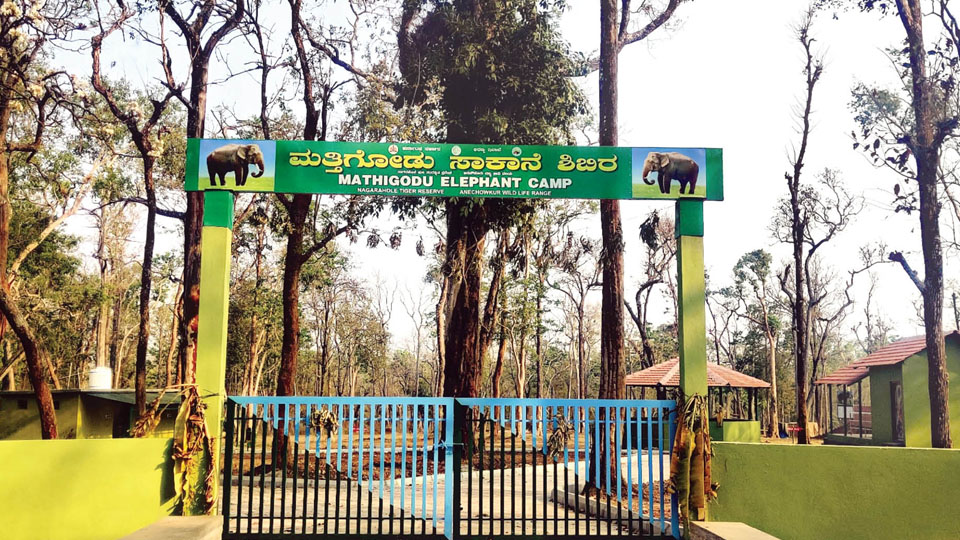
The Mathigodu Elephant Camp, situated a short distance away from the Anechowkur Gate at the entry of Kodagu district from Mysuru, has transformed into a tourist attraction and is set to welcome visitors soon. Among its notable residents are the Dasara Howdah Elephant and the fearless  tusker, Abhimanyu.

Passersby along the Mysuru-Gonikoppal Road often halt their vehicles to have a glimpse these majestic creatures, albeit from a distance, as access to the camp was previously restricted for safety reasons and to maintain its exclusivity.

Capitalising on its popularity, the Forest Department has revamped the Mathigodu Elephant Camp into a tourist hub while prioritising safety measures. This camp falls within the precincts of the Nagarahole Tiger Reserve, adding to its allure. The Forest Department has spent Rs. 1 crore towards its development.

In an endeavour to raise awareness about human-wildlife conflicts, concerted efforts are underway to educate tourists visiting the Mathigodu Elephant Camp about wildlife conservation. This initiative seeks to foster a deeper understanding of the delicate balance between human settlements and wildlife habitats, with the hope of mitigating such conflicts in the future.

Despite being recognised as an ideal habitat for the State’s finest elephants by the Forest Department, the Mathigodu Elephant Camp hadn’t been optimised as a tourist destination. Meanwhile, the Dubare Elephant Camp near Kushalnagar experienced a steady influx of visitors.

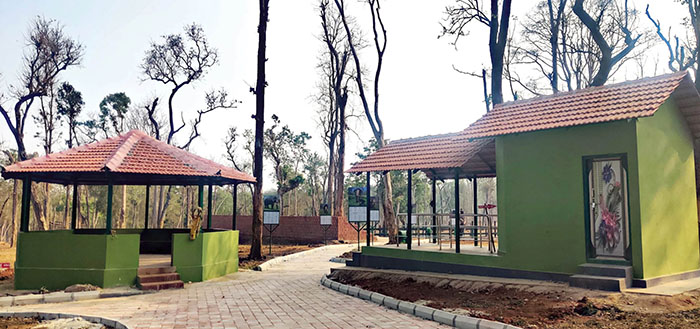
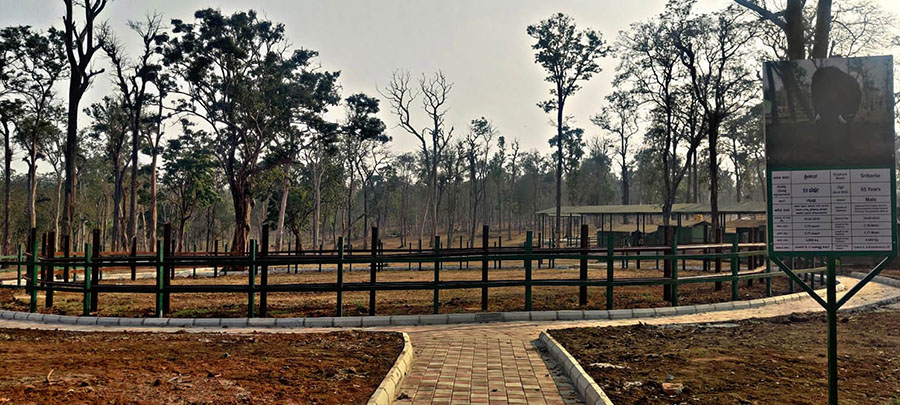
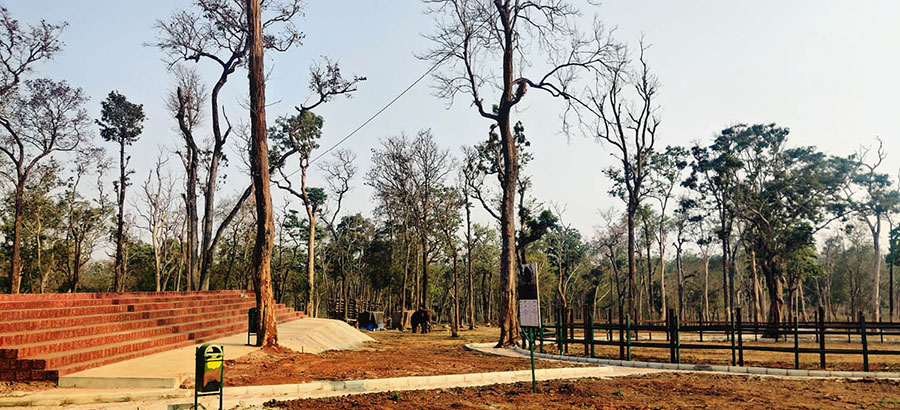
Picture shows the visitor pathway inside the camp.

Located inside a jungle

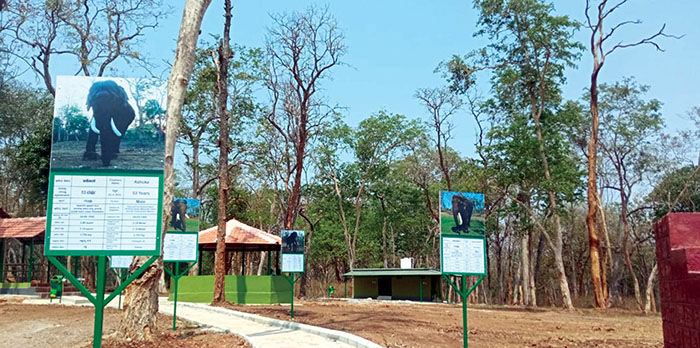
As the camp is located inside a jungle, there is no provision to open shops and hotels here to convert it into a full-fledged commercial centre. However, basic amenities have been meticulously arranged to ensure the comfort and convenience of visitors, including designated parking areas, feeding zones for the elephants and recreational facilities.

To ensure the safety of both visitors and elephants, a railway track barrier gate has been erected, effectively preventing proximity interactions. Additionally, the establishment of two designated parking lots offers travellers ample space to unwind. A dedicated walking path has been constructed, facilitating easy access from the parking areas to the elephant viewing zone.

This setup not only caters to the demand for elephant viewing but also serves as an educational platform for visitors. The place offers comprehensive insights into elephant behaviour, the significance of elephant camps, monitoring protocols, profiles of the famed Dasara elephants, methods of elephant capture, the role of Kumki elephants, feeding practices, distinctions between Asian and African elephant species and other pertinent information concerning the rehabilitation of elephants.

An information centre has been inaugurated, serving as a repository of knowledge on elephants and forest conservation. Equipped with valuable resources, it aims to provide visitors with an immersive learning experience, fostering greater awareness and appreciation for wildlife conservation efforts.

Development works worth Rs. 1 crore have been taken up including a safe elephant feeding area and an information centre.

Home for 17 elephants

Currently, the Mathigodu Elephant Camp is home to a distinguished herd of 17 elephants. Among them are Abhimanyu, Bhima, Mahendra, Ravi, Somashekhar, Masti, Ashoka, Kyaata, Chamundeshwari, Bhuvaneshwari, Srikanta, Abhi (Zoo elephant), Rama, Ekalavya and two forest elephants.

Under the leadership of Range Forest Officer (RFO) D. Devaraj, the well-being and welfare of these magnificent creatures are diligently overseen by a team of DRFOs, dedicated staff members and experienced mahouts and kavadis.

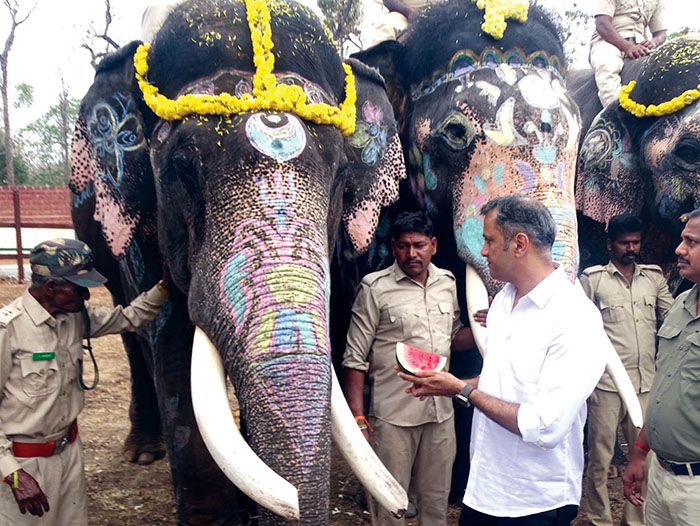
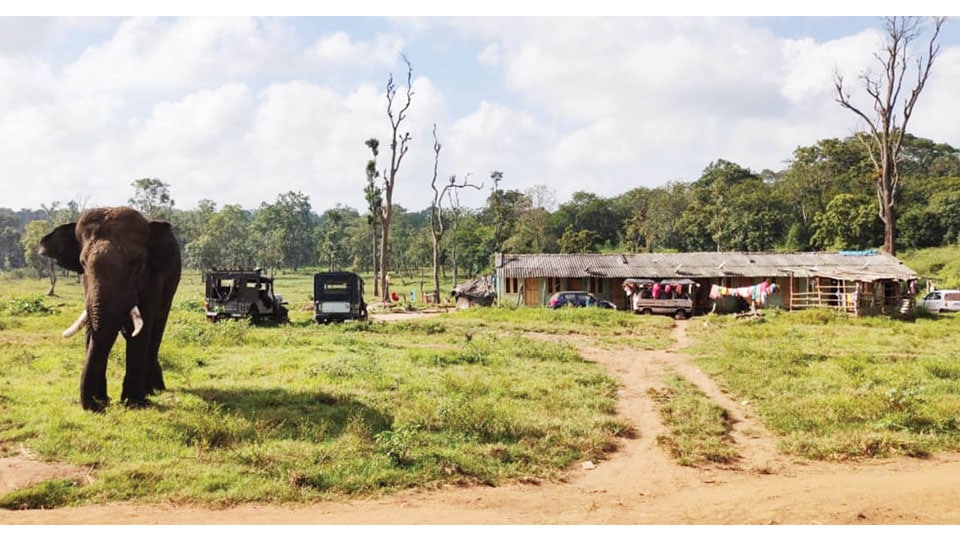
Picture shows Virajpet MLA A.S. Ponnanna feeding watermelon to a tusker during inauguration of the elephant camp recently.

Equipment for surveillance

Visitors have a unique opportunity to witness first-hand the equipment utilised by the Forest Department for managing human-elephant conflicts and operations. Within a designated room, an array of tools is on display, ranging from tranquilliser darts and guns for administering them, to ropes essential for elephant operations.

Additionally, visitors can inspect sophisticated surveillance devices such as camera traps, thermal drones, torches and wireless communication devices utilised in conflict management operations.

This immersive experience will enable visitors to gain a deeper understanding of the intricate procedures and tools employed by the Forest Department. By witnessing these resources up close, visitors can refine their perceptions regarding human-elephant conflict management, appreciating the complexities involved and the efforts undertaken to mitigate such conflicts.

Golden Howdah carriers

The Information Centre showcases a comprehensive list of distinguished  elephants that have had the honour of carrying the 750-kg Golden Howdah during the Dasara festival. Among these pachyderms, Jayamarthanda stands out, having shouldered the Golden Howdah an impressive 45 times.

Other notable elephants who have carried the Howdah are Vijayabahaddur, Nanjunda, Ramaprasad, Motilal Rao, Airavata, Rajendra, Drona (19 times), Balarama (11 times), Arjuna (8+1 times), Abhimanyu (4 times), each adding their majestic presence to the  grand procession.

Entry fee will be charged

The Mathigodu Elephant Camp has been enhanced to accommodate visitors, with all necessary arrangements for their convenience. Following a formal request to the Government regarding the implementation of an entry fee for tourists visiting the elephant camp, the Government has approved the proposal and granted permission. We have taken the necessary steps to prepare accordingly. —Harshakumar Chikkanaragund,Director (DCF), Nagarahole Tiger Reserve

source: http://www.starofmysore.com / Star of Mysore / Home> Feature Articles> Top Stories / by M T Yogesh Kumar / March 19th, 2024

Kavadi Recruitment Begins At Dubare Elephant Camp

Mysuru/Kodagu:

The direct recruitment of Kavadis (elephant caretakers) has begun at Dubare Elephant Camp in Kushalnagar taluk, Kodagu district.

Following the order of the Government, Kodagu Division DCF B.N.N. Murthy kick-started the process of recruitment in the wake of lack of adequate number of Kavadis at the camp, in the presence of Forest Department officers. 

A total of 29 Kavadis from different parts of the State are attending the recruitment, with due preference given to those adept at taming the elephants. The recruitment is being conducted to fill the vacant posts of five Kavadis at Dubare Elephant Camp,” said DCF Murthy.

Deputy Conservators of Forest (DCFs) Shivaram Babu and Sharanabasappa, Assistant Conservators of Forest (ACFs) Gopal, Srinivas Nayak and Nehru, Range Forest Officers (RFOs) Ananya Kumar and Shivaram, Deputy Range Forest Officers (DRFOs) Ranjan, Chetan and Savan and other forest personnel were present on the occasion.

source: http://www.starofmysore.com / Star of Mysore / Home> News / May 18th, 2023