Under the Pradhan Mantri Krishi Sinchayee Yojana (PMKSY) – “More Crop per Drop”, assistance is being provided for installing drip/micro irrigation systems for horticultural crops, said Yogesh, Deputy Director of the Horticulture Department.
He stated that crops such as arecanut, coconut, ginger, banana, palm, black pepper, avocado, sapota, and various vegetables are eligible under the scheme. Farmers belonging to Scheduled Castes/Scheduled Tribes and other categories can receive up to 90% subsidy.
Under the National Horticulture Mission, farmers are given 40% assistance to expand new areas for banana, vegetables, and avocado cultivation. In the rejuvenation program, farmers are provided with free saplings of oranges and pepper, along with organic manure.
Under the Protected Cultivation Program, 50% subsidy is provided for the construction of greenhouses/polyhouses/shade net houses and for plastic mulching. Similarly, 50% subsidy is offered for water storage structures.
For post-harvest management, 50% subsidy is given for the construction of processing units/pack houses/cold storages. Additionally, a 40% subsidy is available for setting up mushroom units.
source: http://www.clnews.in / Coffeeland News / Home> Agriculture> General / by CLN Newsdesk / July 11th, 2025
The Union government should make regulatory changes and include coffee, tea, and rubber under PMFBY, wherein 80% to 90% of premiums are paid by governments, say planters.
A file photo of the ripened coffee berries at a plantation in Kodagu used for representational purpose only. | Photo Credit: The Hindu
The Karnataka Planters’ Association (KPA), an apex body representing growers in the coffee heartlands of Chikmagaluru, Hassan, and Kodagu, which account for more than 70% of India’s entire coffee production, has strongly demanded the inclusion of coffee farms under a weather-linked crop insurance plan.
M. Salman Baseer, chairman of KPA, told The Hindu that the apex body has been requesting the government to include coffee under a climate-linked insurance plan, considering the crop are being badly hit by droughts or floods year after year.
Excessive rain
“We hope the upcoming Budget will hold some good news for coffee farmers in Karnataka in this regard,” anticipated Mr. Baseer, adding that incessant and excessive rains over the last several years have caused havoc on coffee plantations, resulting in significant crop- and plant losses in Karnataka.
Pradeep Poovayya, a coffee farmer from Kodagu and an executive committee member of the Coorg Planters’ Association, said currently, coffee, rubber, and tea are not covered under Pradhan Mantri Fasal Bima Yojana (PMFBY), which provisions 80% to 90% of premium payments by the governments. “These crops come under the Ministry of Commerce and not the Ministry of Agriculture. This is an unfair classification. While black pepper, coconut, arecanut, and paddy are covered under PMFBY, coffee is not,” Mr. Poovayya highlighted.
Arvind Rao, former chairman of KPA, also noted, “Coffee farming in India is completely dependent on rain and shine. However, unpredictable and extreme weather adversely impacts production, and that has been happening every year for the last many years.”
Input and labour costs
According to Rana George, Managing Director of Kelachandra Coffee, which grows Robusta and Arabica across 7,000 acres of land, climate volatility, rising input and labour costs, and new export compliance requirements are increasing pressure across the value chain.
“The Indian coffee sector needs support that strengthens growers while elevating India as a premium global origin. The Budget can make a meaningful difference through focussed investments in climate resilience, crop advisory and irrigation support, research on high-yield and climate-tolerant varieties, and easier access to long-tenure credit for replantation and farm modernisation,” Mr. George added.
Policy-based approach
Mr. Poovayya said farmers’ lands were often subject to the vagaries of nature, such as fire, floods, landslips, and earthquakes. However, the government only offered short-term relief instead of having a policy-based approach.
“We want regulatory changes to ensure coffee is included under PMFBY, and climate-related crop and land losses should be covered under the National Disaster Relief Fund,” he said, adding that farmers currently receive a meagre ₹35,000 (a sum fixed several decades ago) per hectare of farmland lost and ₹7,000 per acre for crop loss. “These are fixed based on archaic calculations,” Mr. Poovayya said.
source: http://www.thehindu.com / The Hindu / Home> News> India> Karnataka / by MIni Tejaswi / January 31st, 2026
Birth anniversary of General KS Thimayya aka Timmy Sahib, a military legend in his own right.
1. He was the first Indian to ever command an Infantry Brigade during the WWII.
2. His elder brother Ponnappa served in the INA, while his younger brother Somaiah was killed in action in Kashmir.
3. In the Army he had a running feud with his British officers over their snobbery and racism.
4. He wanted to quit the Army and join the freedom movement but was however and fortunately dissuaded by PM Motilal Nehru.
5. During Quit India movement he gave orders to the troops not to fire on the protesters.
6. He oversaw the surrender of INA at Rangoon, his brother, Ponnappa was one of the POW(Prisoner of War).
7. After the Korean War, he played a major role in repatriation of POWs, winning plaudits from General Douglas MacArthur.
8. During the first Kashmir War in 1947, personally led from the front, in a tank to capture the Zozi La Pass.
9. He asked Nehru for just three months to beat back the raiders in Kashmir, however the latter (controversial) referred it to the UN.
10. Had a running feud with the Defence Minister VK Menon (Another LUTYENS Roadblock) over undue interference with Army.
11. Had the foresight to recognize the dangers from China, much before any one.
12. His proposal to appoint Lt Gen Thorat as Army Chief was shot down by Nehru, who instead appointed the mediocre Pran Nath Thapar (Also COR of the RAJPUTANA RIFLES).
He spent his last days in Cyprus , as part of UN Peacekeeping Force during the Civil War there.
He passed away in Cyprus in 1965, due to heart attack.
No important person attended his funeral (like Sam’s), he was buried in a nondescript site at Wilson Garden Cemetery.
When the President of Cyprus, came to India, specifically to honour him, our government (then the LUTYENS), woke up and hastily erected a memorial, at ASC center, Bangalore.
When General Thimayya died in Cyprus, the Cyprus Govt declared a 10 day mourning , and their Flag was at Half Mast !
On his birth anniversary please do forward this to as many as you can.
Posted by a proud RIMCOLLIAN, alumnus of RIMC. VIVA RIMC – JAI HIND!.
source: http://www.clnews.in / Coffeland News / Home> Articles / by CLN Newsdesk / March 31st, 2025
Raghu Karnad, in his debut book brings back memories of World War II through the lives of three men from his family.
Hyderabad :
For my mother, who didn’t let me forget,’ reads the dedication to Raghu Karnad’s debut book Farthest Field: An Indian Story of the Second World War.
The much-acclaimed book that hit the stands last year tells us a story, a part of history that almost slipped out of public memory. In his prologue, Karnad writes: ‘People have two deaths: the first at the end of their lives, when they go away, and the second at the end of the memories of their lives, when all who remember them have gone.’
Thus, people also have two burials – one physical and another when their names and then photographs are forgotten. When their memories had become mere pictures in his grandmother’s home in Madras, Karnad discovered the existence of Bobby (Godrej Khodadad Mugaseth), her brother, trying to cross ‘the farthest field of all’, the second death.
In frames alongside his were photographs of his maternal grandfather Kodandera Ganapathy (Ganny) and Manek Dadabhoy, his brothers-in-arms in the Second World War, one of the first things the family recalled about the three.
So Karnad began with the registry of the Commonwealth, visited their graves and retraced their lives through interviews of those who knew them individually or as part of the British armed force. For, he writes, ‘the larger story was the key to retrieving what I could of their private stories’. But somewhere along the way, this became the story of not just the story of three men of his family, but the untold story of the tens of thousands of soldiers who fought for the British in World War II.
Hyderabad Express interviews the author-journalist before he heads to the Jaipur Literature Festival to be part of a discussion on the forgotten role of India in the First and Second World Wars.
Excerpts
How long have you been working on the book?
I spent three years – a year on research, one year writing, and one year editing it, though it wasn’t that clean-cut. I was still interviewing WW II veterans, whenever I could find one, even in the final lap.
How old were you when you first started asking questions about the photos of Bobby, Ganny and Manek in your grandmother’s house?
I’d seen those photographs right through my young life, but I never did ask questions about them – not while my grandmother, who’s at the centre of the story, was still alive. It wasn’t until four years ago, when I was 28 and working in Delhi, that it slipped out as a wisp of anecdote in a family conversation. But even then, it was just a hint of what would turn out to be their full story.
You write that you couldn’t believe you hadn’t noticed you looked like Bobby. After tracing the threads of their lives, how much do you think you and Bobby have in common?
In some ways, not much – Bobby was a wild, reckless young guy by everyone’s account – he liked to gamble, he really liked to tempt fate, and I doubt he liked sitting still. He wouldn’t have made much of a writer. But there’s a deeper level on which I do imagine I share something with Bobby, which has to do with his loose sense of identity – with not feeling like he belongs too firmly to any of the camps around him – in terms of community, language, national identity.
Do you think of these three as family, or as characters you recreated from the brink of their second death?
I struggled sometimes to reconcile the fact that these young people, who felt like my characters, were also close members of my family. But knowing that helped me check myself when I drifted towards clichés, or got carried away by sentiment. It’s easy to take liberties with the lives and deaths of perfect strangers; it’s not as easy when they’re family.
There are moments in their lives, including a secret romance and a shotgun wedding, which some of my relatives think should not have been shared. But to me those moments were the most valuable and the most moving in the book.
Where all did the research take you?
I travelled quite a lot across the country, from Calicut to Chandigarh and Roorkee. And of course to Manipur and Nagaland – the only parts of mainland India that the fighting actually reached. These were most exciting, because in Manipur, the oldest living memory is of the war – for tribal societies, modernity arrived overnight in the form of hideous industrial war machines. The novelist Easterine Kire described it as being, for the Nagas, like the Big Bang.
It was a chance encounter with one elderly man, Yangmasho Shishak, that opened my eyes to some of the themes that run through Farthest Field. He lives in a village near the Burmese border. He was a teenager when the war came, and found himself serving one side – the British – and then the other – the Japanese. A perfect, one-man symbol of Indians in the war.
The Characters
Bobby, or Godrej Khodadad Mugaseth was a Parsi native of Calicut. He was Raghu Karnad’s maternal grandmother Nurgesh’s (Nugs) younger brother. Of the three, Bobby,who studied to be an engineer, saw most action in the war. He signed up with the British Indian Army (Bengal Sappers) in 1942, and went to Sudan, Abyssinia, North Africa, Iran, Iraq, before going towards Imphal, where he is buried. He died in 1944.
Ganny, or Kodandera Ganapathy from a Kodava family, was a Karnad’s grandfather, and studied medicine like his wife. Recruited as a military doctor, he was posted deployed at the Northwestern Frontier, home to the Pashtun tribes, in present-day Pakistan. He died of asthmatic bronchitis in December 1942, a month before his daughter, the author’s mother, was born.
Manek Dadabhoy, also a Parsi, was a friend Bobby made in Madras. He married Nugs’ younger sister Kosh (Khorshed). Always fascinated by speed, and signed up with the RAF as a pilot. He was sent to the Northwest Frontier and later, when the Japanese invaded, to Burma where he died in 1943, when his plane crashed.
source: http://www.newindianexpress.com / The New Indian Express / Home> Hyderabad / by Chetana Divya Vasudev / January 26th, 2016
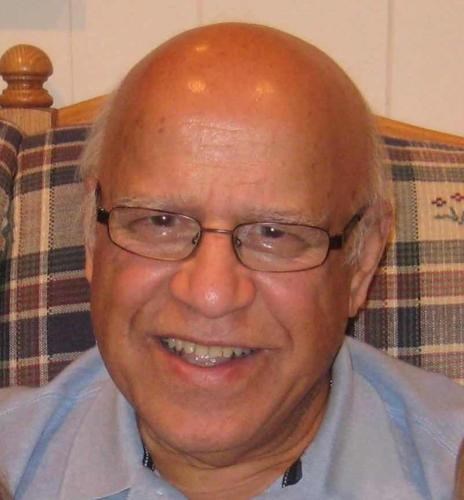
Maletira “Mac” Machayya died January 17, 2026, at Eventide in Fargo, ND. There will be a celebration of life Friday, January 30, from 1 pm to 3 pm at West Funeral Home, West Fargo, ND.
A private inurnment ceremony will take place at Gethsemane Episcopal Cathedral, Fargo.
Maletira Ganapathy Machayya, the son of Dr. Maletira and Bollamma Ganapathy Machayya, was born February 10, 1937, in Madikeri, India.
He earned his medical degree from Madras Medical College, India, in 1960. He completed a General Surgery Residency at Furness General Hospital, Barrow-in-Furness, England, in 1969, and Urology Residency at Preston Royal Infirmary, Preston, England, in 1971.
While in England, he became a Fellow of the Royal College of Surgeons. He completed a rotating internship at Illinois General Hospital in Chicago, Illinois, in 1972.
Mac married Margaret “Maggie” Burns in 1971 in Barrow-in-Furness, England.
In 1972, Mac, Maggie, and newborn son Mark moved to Valley City, North Dakota, where Mac began a distinguished career as a general surgeon. There, they raised their family and made lifelong friends. Mac served the community for many years at Mercy Hospital and Meritcare Clinic, which later became Sanford Clinic. His dedication to patient care earned him the respect and gratitude of countless individuals and families throughout the region.
In his free time, you would find Mac working on a new project around the house, woodworking and creating stained glass art. Mac was also a member of The Lions Club in Valley City. Many memorable summers were spent with family and friends at the cabin on Lake Eunice in Minnesota. Maggie passed away in 2005. In 2013, Mac moved to Fargo to be closer to his family.
He is survived by his three sons, Mark (Katie) with grandchildren Makayla, Dakota, and Memphis, Bemidji, MN; Kevin (Jamie) with grandchildren Josie and Gaby, West Fargo; and Jon (Jill) with grandchildren Ellie, Lincoln, and Vera, West Fargo; sister-in-law June Burns, Barrow-in-Furness, England; and extended family in England and India.
He was preceded in death by his wife; his parents; Maggie’s parents, Edward and Frances Burns; brother Devaiah Ganapathy; sister Maletira Sushiela; and brother-in-law Antony Burns.
Mac’s family is appreciative of the care received from Eventide and HIA Hospice.
In lieu of flowers memorials preferred to Sanford Health Foundation or CHI Mercy Health Foundation Valley City.
Arrangements by West Funeral Home, West Fargo.
To plant trees in memory, please visit the Sympathy Store.
Kodagu district in-charge Minister N.S. Boseraju laying the foundation stone for a police residential quarters project in Madikeri in Kodagu district on January 26. Manthar Gowda, Madikeri MLA and Bindu Mani R.N., Kodagu district Police Superintendent, are also seen. | Photo Credit: Special Arrangement
Kodagu district in-charge Minister N.S. Boseraju laid the foundation stone for a new police residential quarters project near Maitri Police Community Hall in Madikeri on January 26.
The project, which is part of the fifth phase of the Police Housing 2025 scheme, envisages the construction of 12 2-BHK staff quarters and six officers’ quarters.
The work, which is to be executed by the Karnataka State Police Housing and Infrastructure Development Corporation Ltd., Bengaluru, at a cost of ₹5.3 crore, has been entrusted to a private company.
A statement issued by the Kodagu district Police Superintendent Bindu Mani R.N., said the construction of the residential project is scheduled to be completed in 11 months.
Manthar Gowda, Madikeri MLA, S.J. Somashekar, Deputy Commissioner of Kodagu, Anand Prakash Meena, chief executive officer of Kodagu Zilla Panchayat and other officials were present on the occasion.
source: http://www.thehindu.com / The Hindu / Home> News> India> Karnataka / by The Hindu Bureau / January 26th, 2025