Category Archives: Travel, Tourism & Homestays (wef. Oct 03rd, 2021)

Coffee, mountain views, estate walks: The best plantation stays in Coorg

Across Coorg, estate owners are opening up their beautiful homes to guests. A local shares her favourite stays.

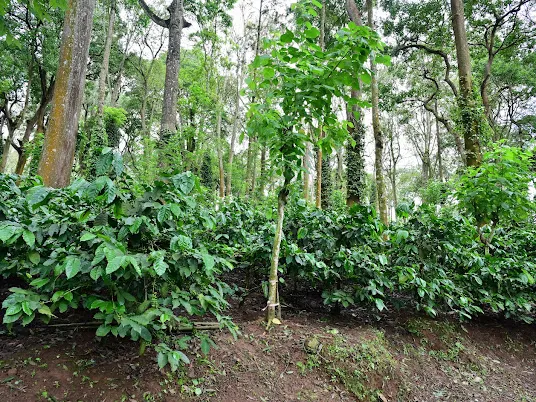
Early mornings  are the busiest hours on the plantations across Coorg. Through the year plantation activities like coffee, pepper and cardamom picking carry on, followed by drying, pulping and roasting that mark the end of the crop harvest. As I walk through the estate, the pulped coffee bean emits a peculiar fermented smell. It eventually grows on you. Soon, with the season of sprinkling and irrigation will deliver a beautiful coffee blossom, and scents of mogra and jasmine will fill the air. It is at times like this when I feel prosperous and grateful for this abundance as a farmer on my estate.
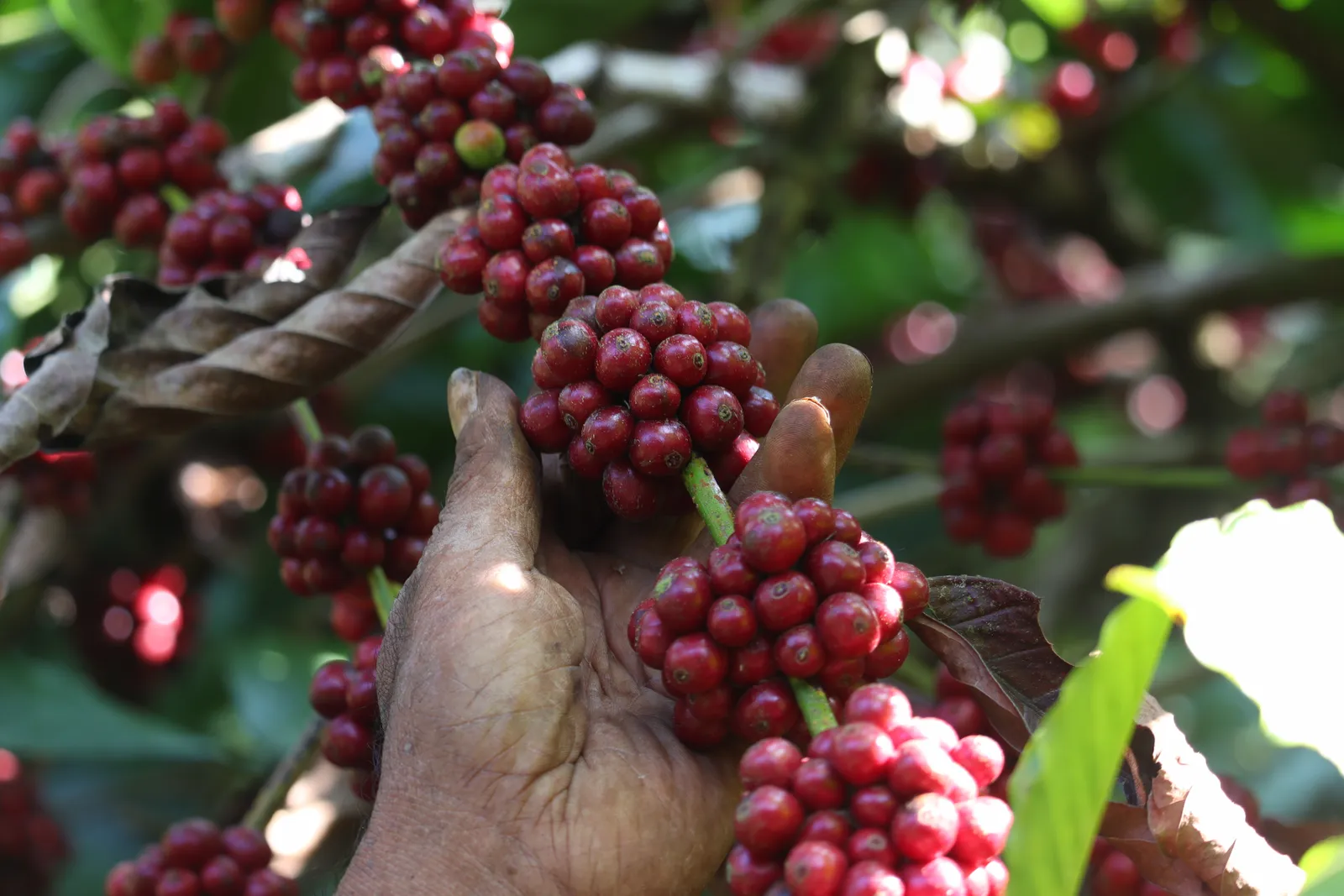
Indian robusta coffee in Coorg /  Pixeled moments/Adobe Stock

There is nothing more fulfilling than enjoying the fruits and crops of your own land. My grandmother would make marmalade from the kaipuli (bitter oranges) on our estate, butterfruit (avocado) with sugar was dessert in the monsoon, rice from our paddy fields made for putts and for tea time she made the best baalé nurk (banana fritters).

By sunset, we’d have to return home from a long day’s work; the fear of wild animals kept us and continues to keep us indoors after dark. The fire is lit to bathe in the traditional bath areas called gudda (with firewood heated water) and cooking for the night commences. Sights of fireflies in the summer and the sounds of crickets in the monsoon are the alarms to finally call it a night on the plantation.
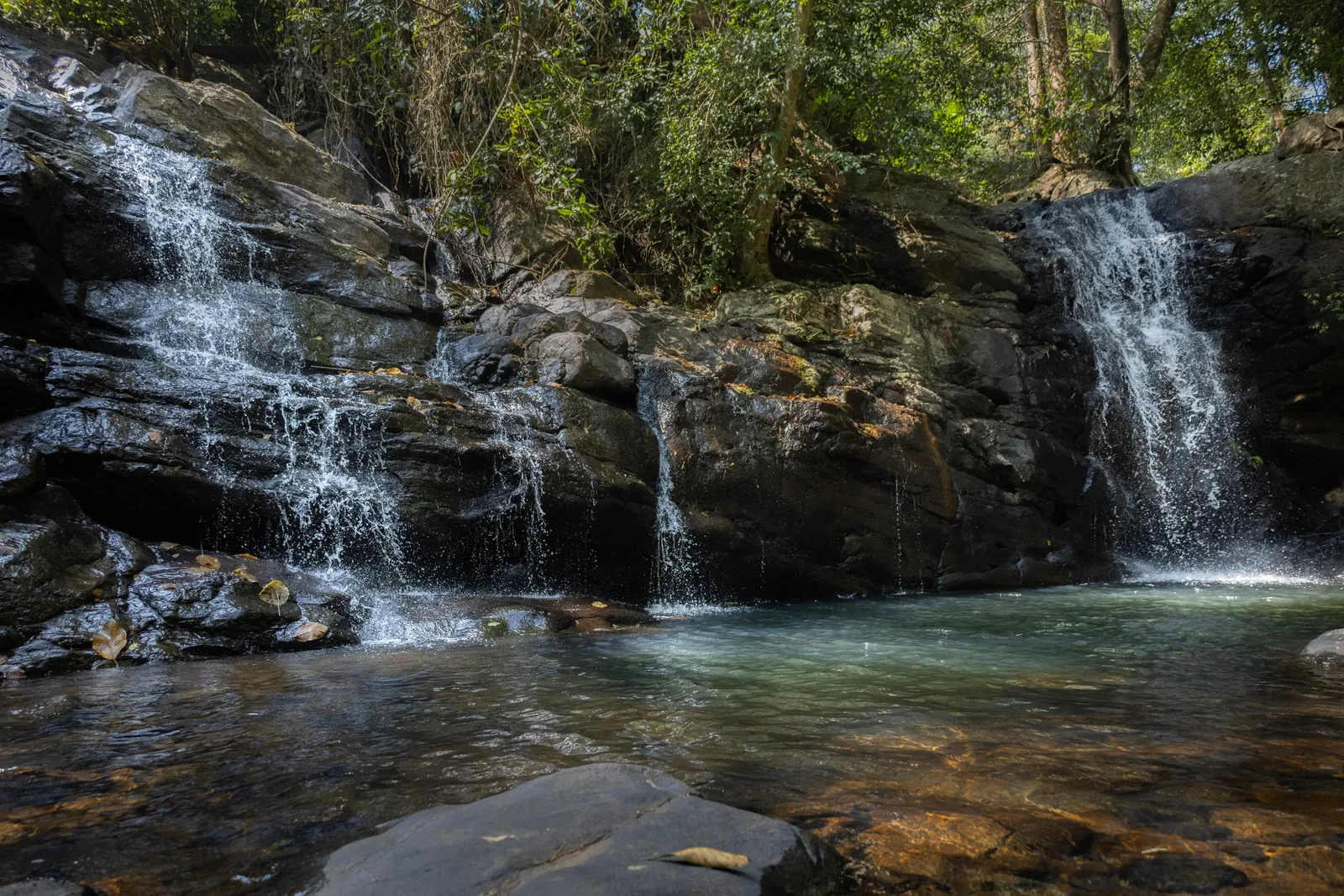
Amni / The Avocado Cows

Most plantation homes are secretly tucked away in the middle of coffee estates and wild foliage. Over here, our nearest neighbour is kilometres away, and roads can be inaccessible. Jeeps and heavy vehicles are our means of transport, gumboots and leeches are our friends, and dogs on the estate are our protectors from wildlife attacking our crops. Over time, plantation owners in Coorg have gone from entertaining friends, relatives and neighbours to extending their hospitality to guests. Homes have expanded, there’s often an annexe, and guests are invited to stay and experience the traditional ‘Coorg life’. Those who used to cook up a storm and have a heaving table for friends and family are now creating food and immersive experiences for guests. Most of these homes, built in Kodava-colonial or traditional styles, have recently become my benchmark for the old ways of Coorg hospitality, and are among my favourite plantation stays in Coorg.

Amni
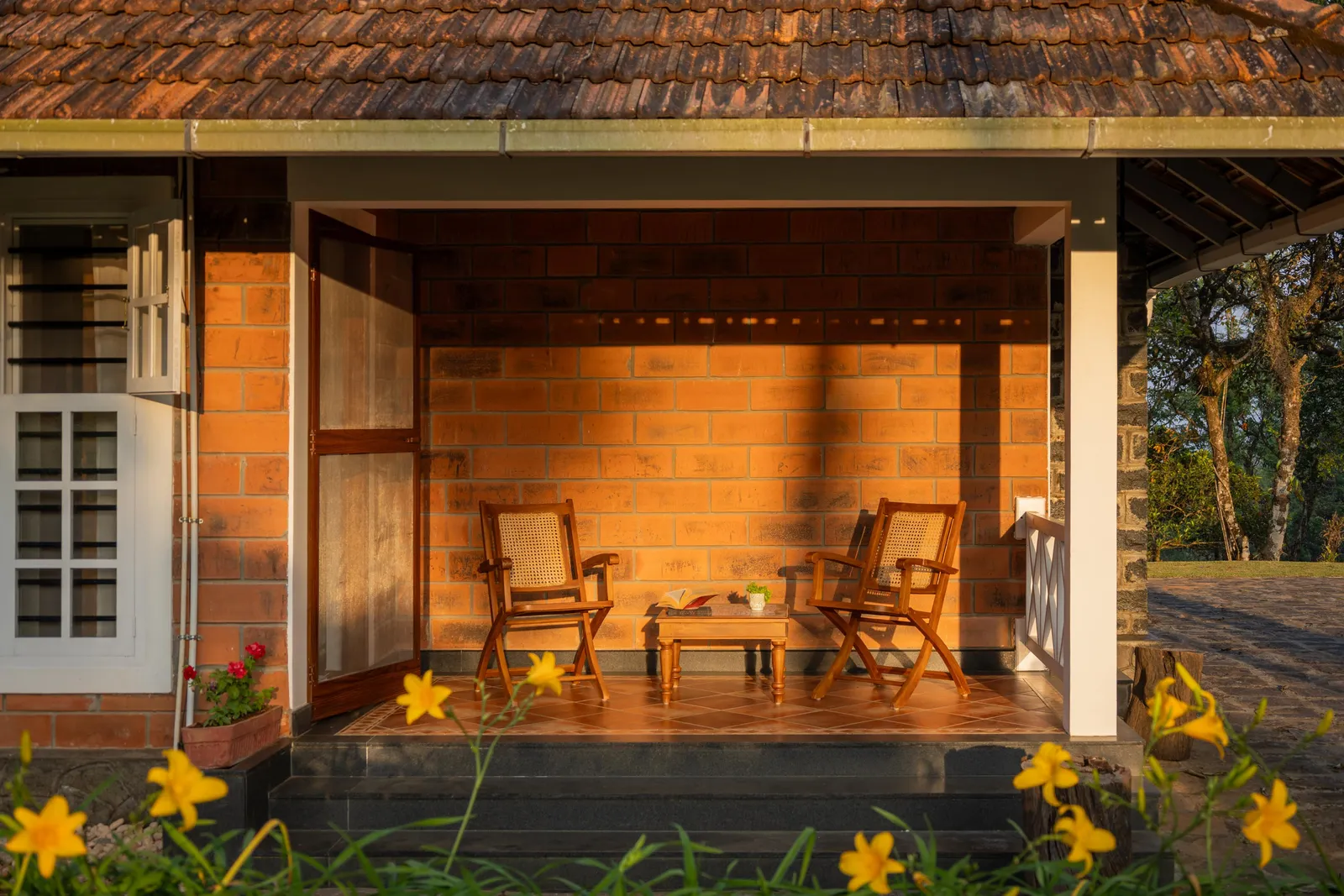
Amni  / The Avocado Cows

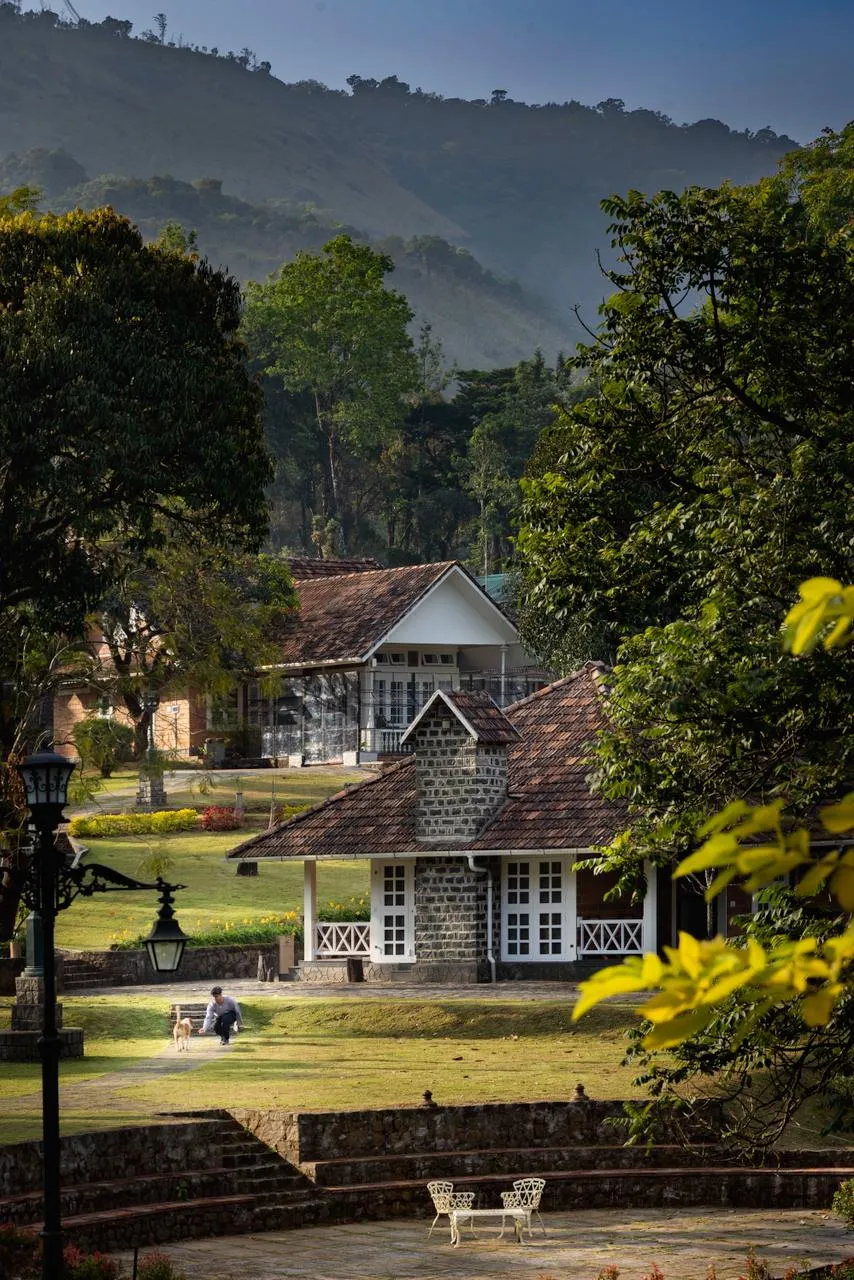
When I first drove towards Amni, Abraham Jose picked me up in his jeep half way. I soon realized the road was not fit for my vehicle. The drive was rocky, and along the way we spoke about all the dishes his mother was preparing for me. Enroute, I was also asked to keep the location of his stay discreet, probably the real reason why he insisted on picking me up, so I would forget the route more easily. The Amni estate is stunning: a charming view of stone cottages across pearl grass, built across multiple levels that look like small grass mounds, where chimneys peep out between the foliage against the backdrop of the Balyaatra range, like something straight out of a Jane Austen novel. Abraham, his parents Rosy and Jose, his two brothers Joseph and Mathew, his wife, Ria, and their grandmother whom they fondly call Ammini, live here. Twenty five years of collecting stone and cast iron antiques like a fountain-mouthed gargoyle, Victorian lamp posts and railway sleepers for a table base add to Amni’s personality. This is a two bedroom stay, equipped with extra beds for a total of five to six members. Overlooking a stone amphitheatre and the Thatacherry estate hills cladded with Arabica and Robusta plantations, the homestay is 30 meters away from the family’s own cottage. A tiled porch with a picket fence offers independent entrances to both rooms. Rooms unfold in a palette of jade frost, pastels, and floral prints. A fireplace in the common room is the cosiest nook for you to curl up in the monsoon and winter months.
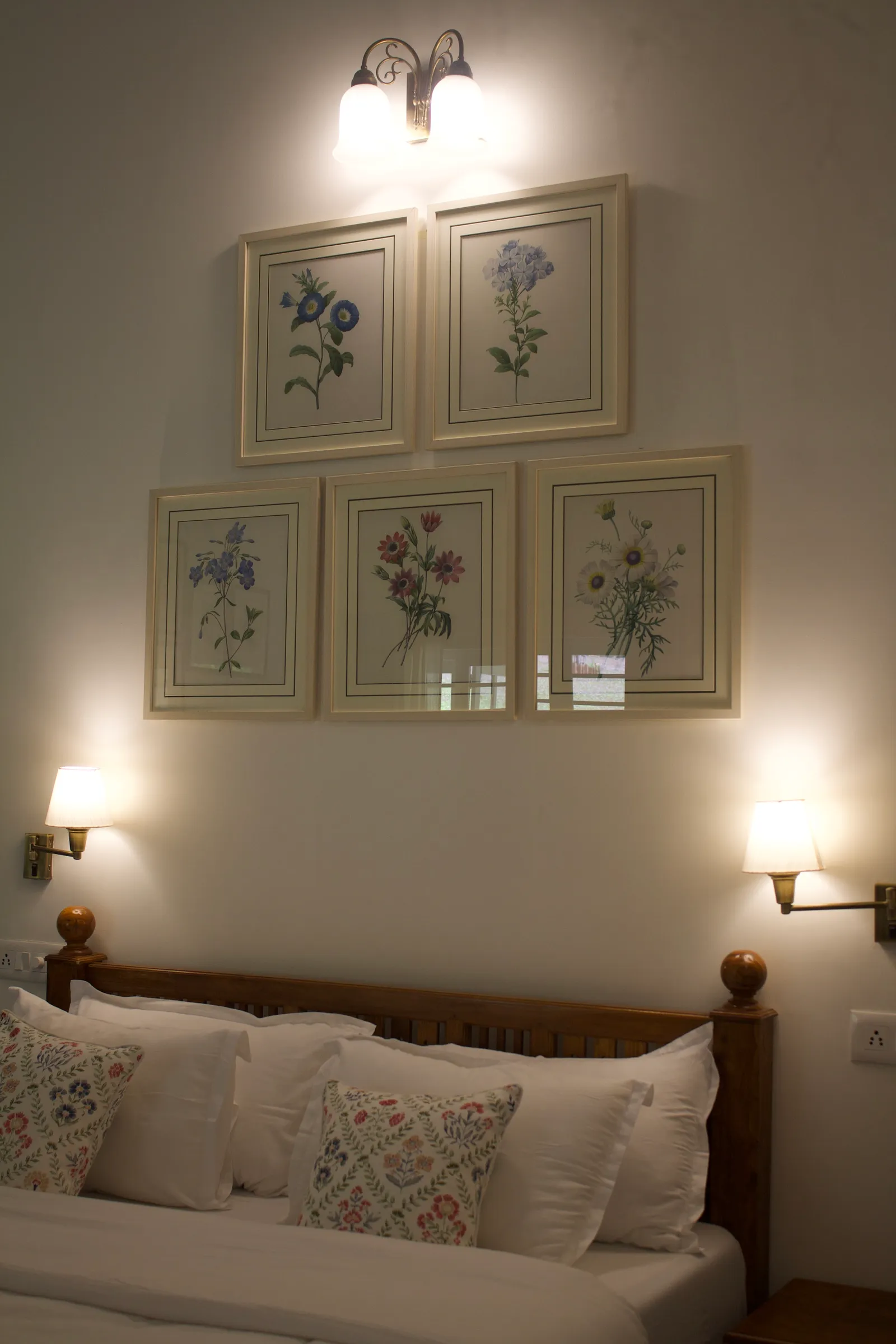
Room details / Sitara Cariappa
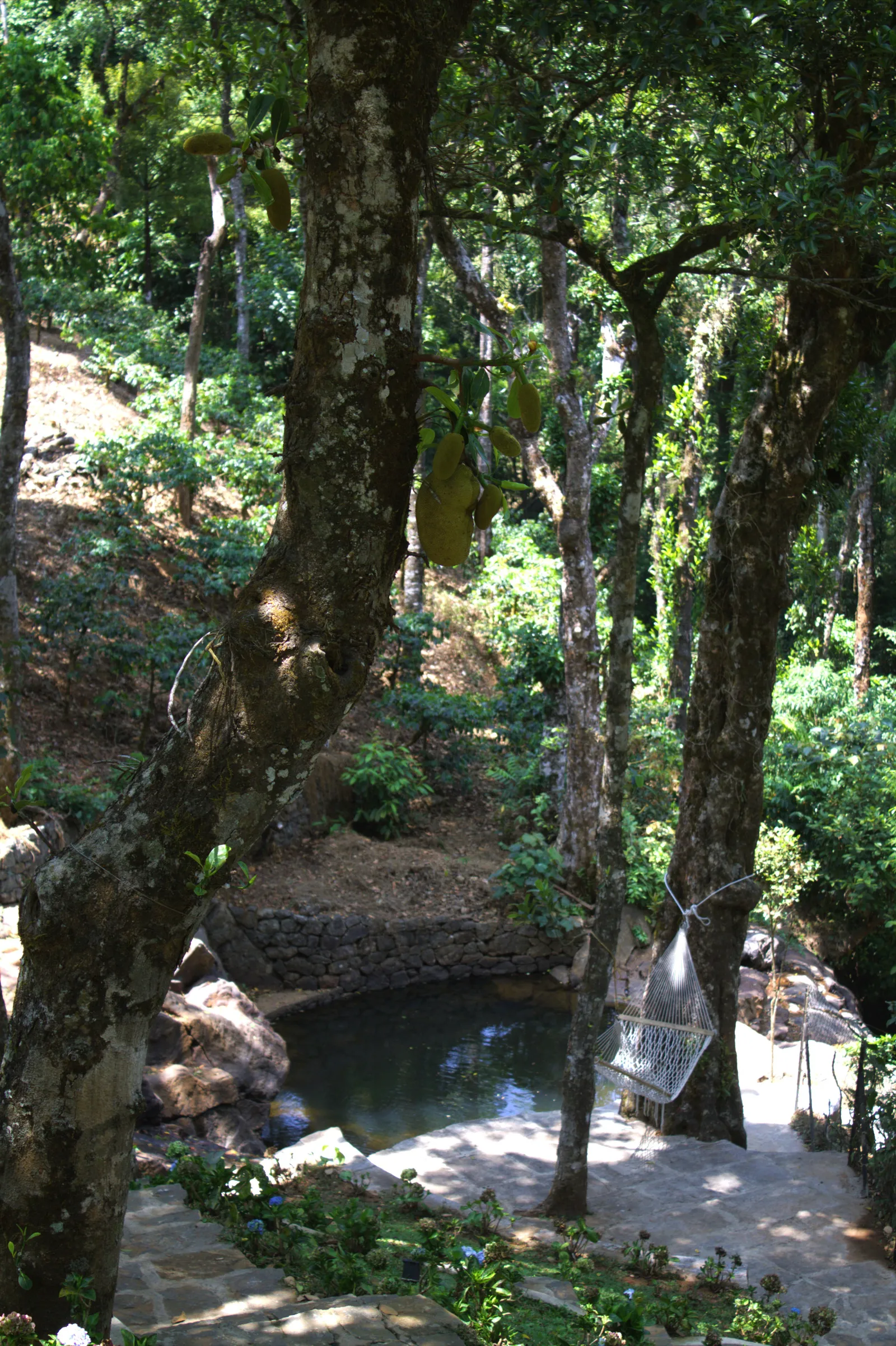
Stone pool at Amni / Sitara Cariappa

The Paati Polé river flows through the check dam in front of their home, with bridges across it leading up to a stone pool at a lower level of the estate. When Rosie Aunty called us back up for lunch, Zeiss, their dog, accompanied us as we walked up the stone pathway. Under the shade of a pine tree is an antique white stone washbasin with floral tiles and brass fittings. Next to it, a heavy wooden table and iron-carved chairs under the dancing branches of a mango tree is the setting for our meal. The spread includes Surmai fry, Prawn gassi, Kaaké Thopp paliya (black nightshade), Rasam and Rice–a typical Syrian Christian spread, inspired from their roots near Kottayam. I ate three servings. As we ate fresh strawberries from their farm behind the house, served with cream, the Jose family told me of their journey from Kannur to Coorg, their love for fishing and cooking; and fulfilment in life with four generations living together in this beautiful estate.
Doubles from Rs 12,000 per night for two (includes all meals, BBQ, immersive experiences like treks, birdwatching, stargazing and jam making, all led by the Jose family)
Location On request; Contact: Abraham Jose, +91 85475 86562; IG: @amni.coorg

School Thota
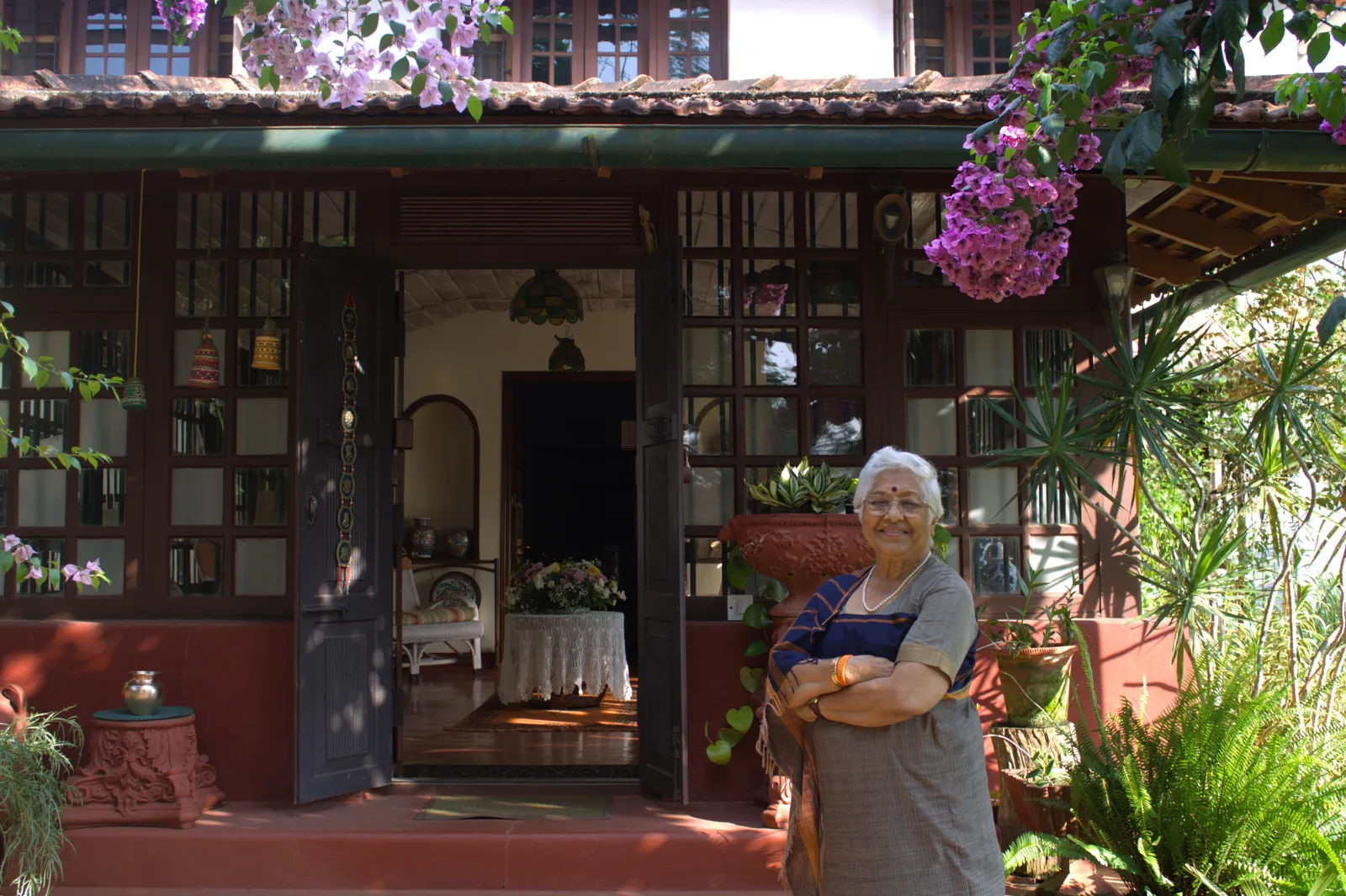
The homestay and host Saraswathi / Sitara Cariappa

My friend Kelapanda Kushalappa, whom I fondly call Sajan, and his mother Saraswathi Aiyappa, have been custodians of the homestay culture in Coorg for the past 15 years. Generations of this family have lived in the Robusta plantation’s home for almost 150 years. This plantation was initially run by the East India Company, who organized coffee cultivation in Coorg and sent the proceeds from these estates or thota to British-run schools in Coorg, hence the name School Thota. Originally the home of Rev. Georg Richter in 1855, the property was bought by Kushalappa’s great grandfather in 1908. Today a portion of the estate is where mother and son reside and continue to manage the plantation operations and run this homestay.

I entered School Thota through the small town of Guyya, crossing multiple TATA-consolidated plantations and arrive at a large bungalow overlooking a garden with a bird bath, an elevated gazebo surrounded by hydrangea, fern and hedge roses, and beyond, the Kelapanda family’s prosperous estate. On a clear day the hills of Mercara are visible too.
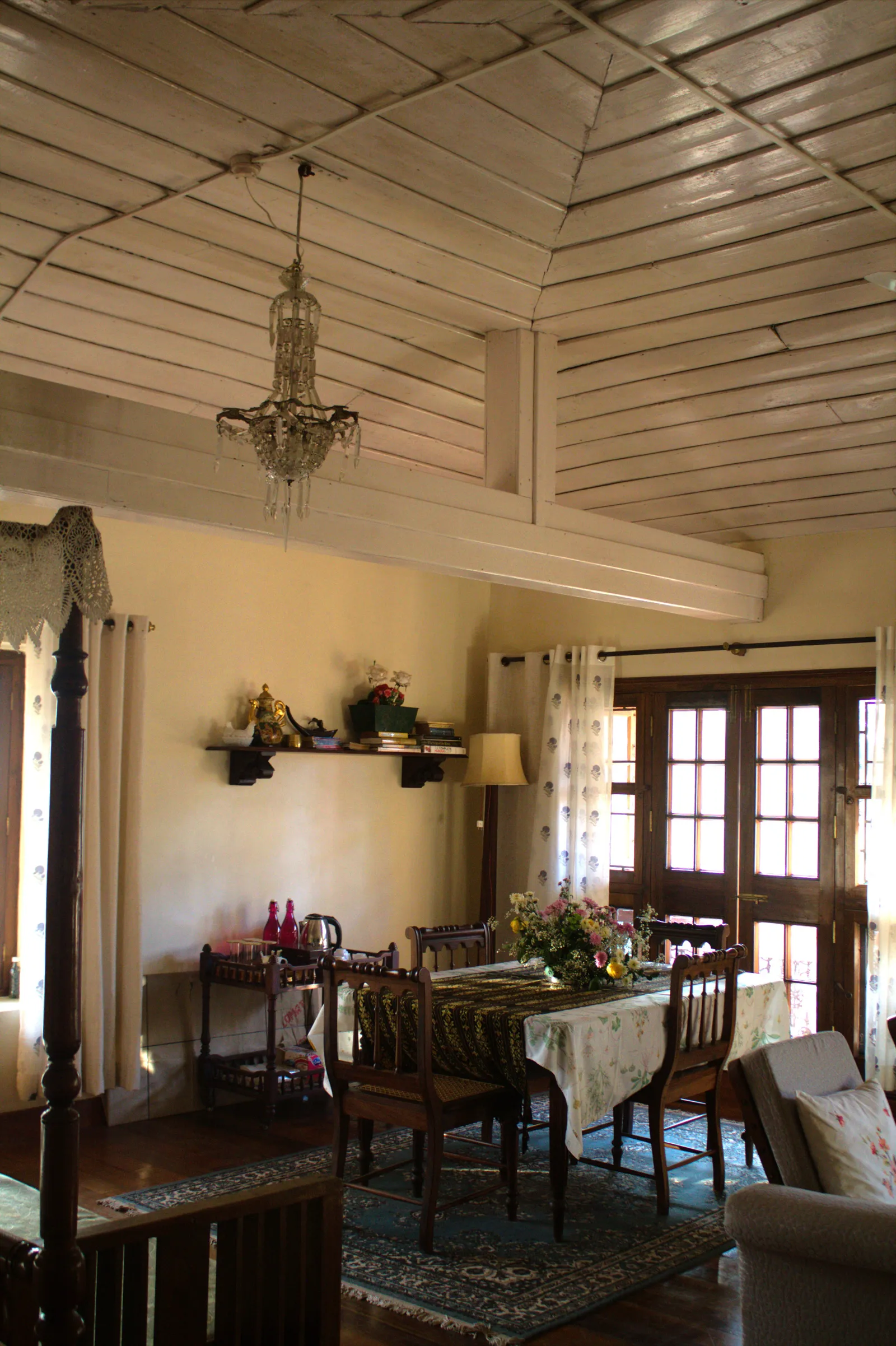
The upstairs bedroom space / Sitara Cariappa
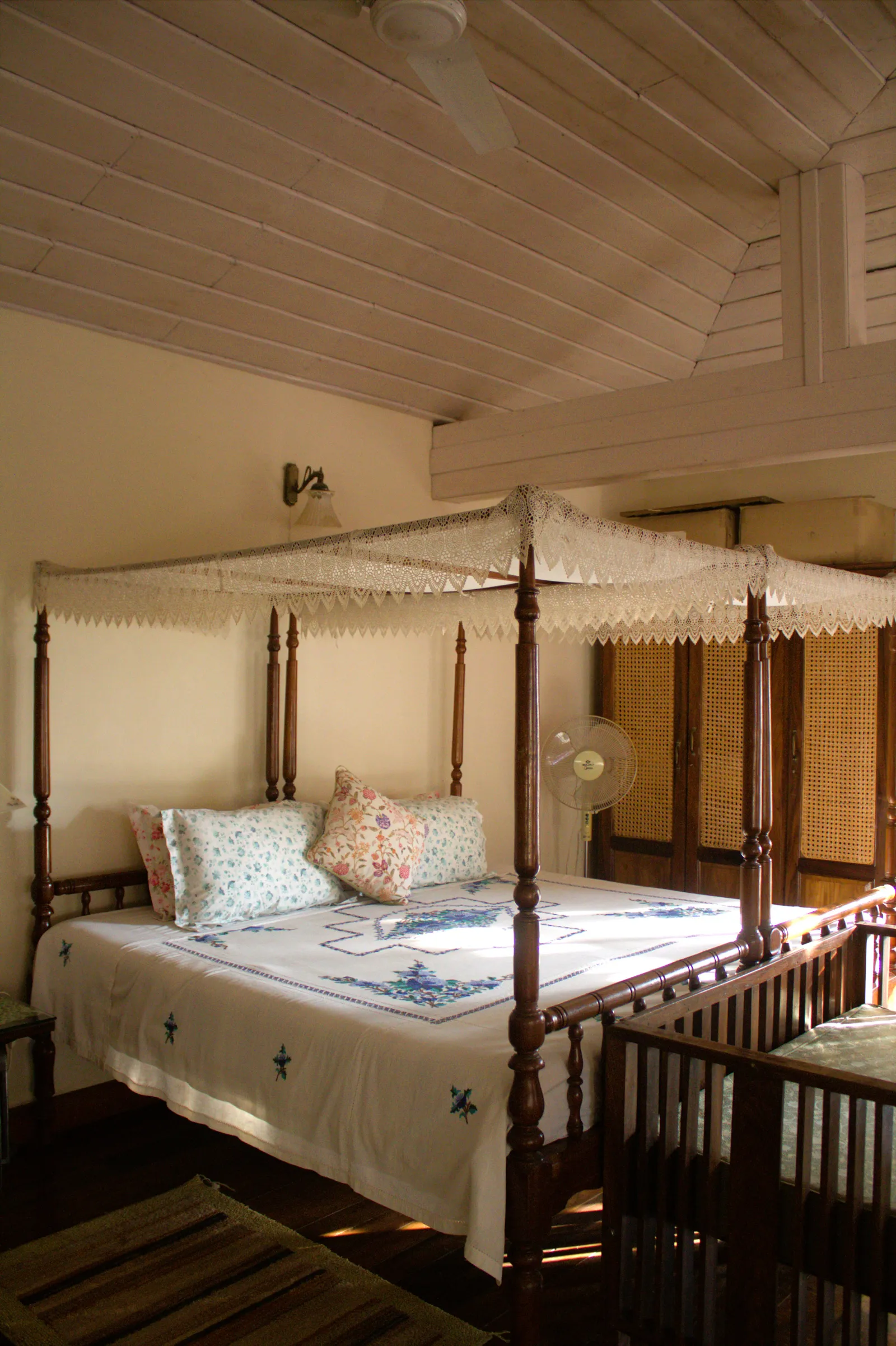
Bedroom School Thota

School Thota is a charming home with three guestrooms (excluding the owner’s space), five bathrooms, an attic and two kitchens. A sun room with square windows is a standout section in this home, at its entrance the bougainvillea trees is where Saraswathi Aunty welcomed me, wearing a Kodava podiya (a Coorg-style draped saree).

This home is studded with antiques, art work by the family, crochet and lace on tables made by Saraswathi Aunty, vintage hat racks and tapestry on the walls. There’s a large fireplace in the drawing room with a mantlepiece lined with family photos, and each room thereafter has height-adjustable chandeliers and pulley lamps. Each guestroom has a four poster bed, dressing table, pull out vintage writing desk, and ceramic animal figurines in the bathrooms.
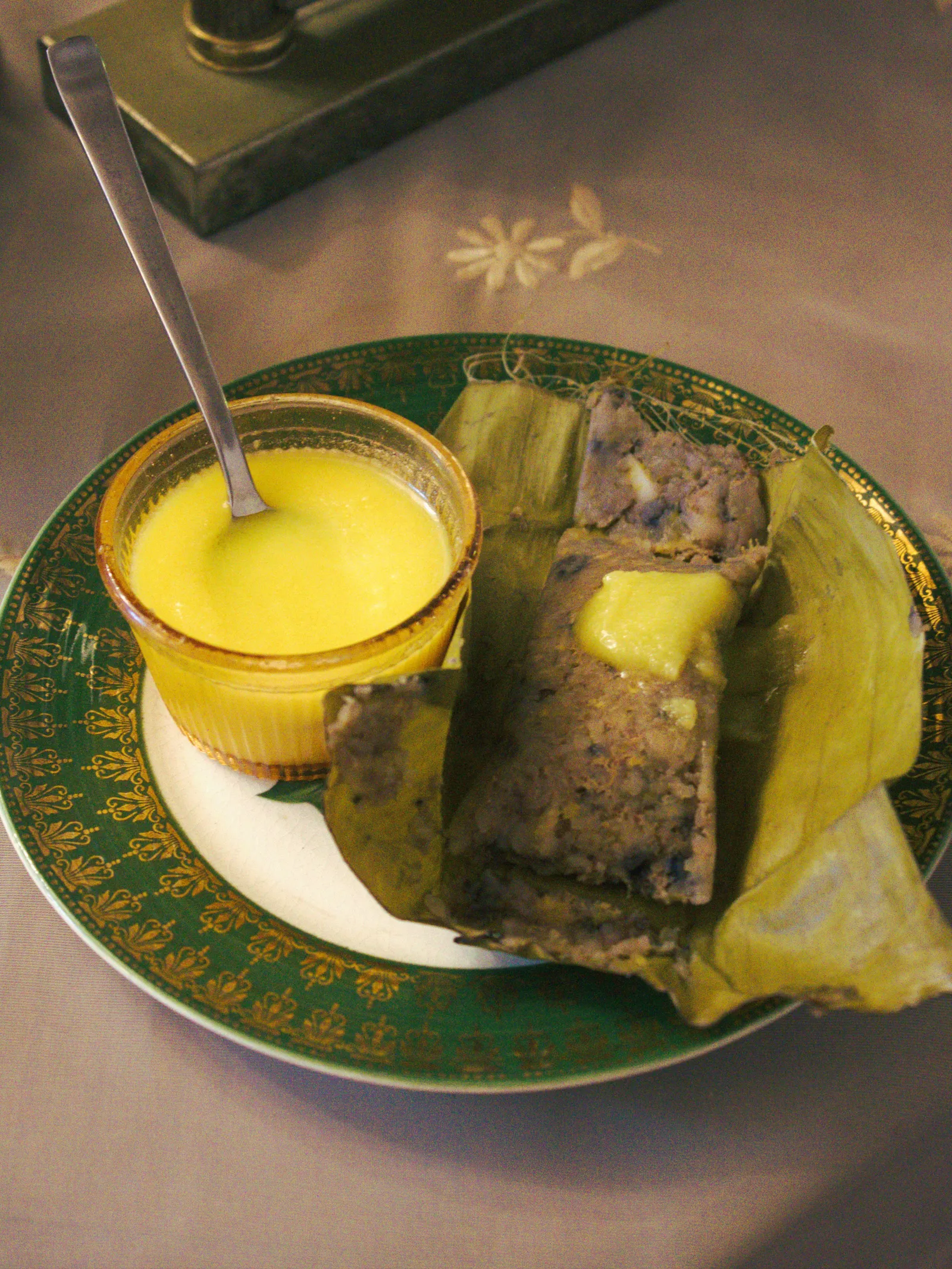
Kooléputt with Ghee / Sitara Cariappa
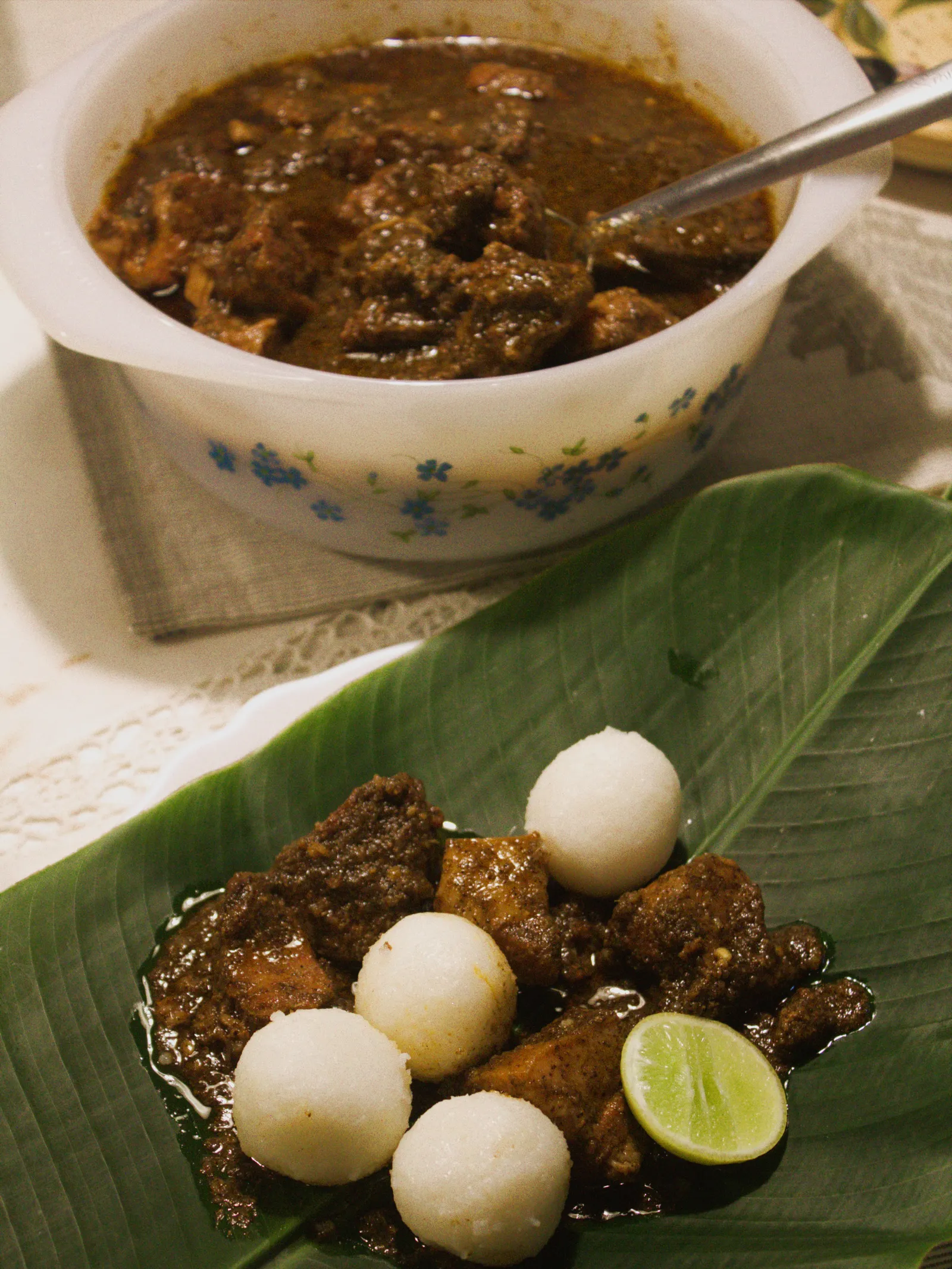
Kadambutt with Pandhi Curry / Sitara Cariappa

At 4.30pm, with murukus and tea, I was served Kadambutt (steamed rice balls) with Pandhi curry (Kodava style pork curry), a very common high tea meal in Coorg. While I moved on to Kooléputt (steamed bananas or jackfruit cakes in banana leaves) Saraswathi aunty started lowering the dining table lamps with a stick before the sun set. The rear of the house has a sunken open courtyard–a green corner that leads to the owner’s living space. This is a homestay for those who want to listen to stories of the old days, the plantation life in Coorg, to admire the architectural transitions between European and Kodava styles, and to cook authentic Kodava cuisine with a legendary grandmother.
Rooms from Rs 9,000 per night per room (includes breakfast & dinner) (extra charges for lunch picnics by the river and cooking session with Saraswathi Aunty)
Location: Ammathi Post, Guyya, South Coorg; Contact: Sajan Kushalappa, +91 9841023770, +91 9481723770 (landline: +91 8274298115); IG: @st571211

Captain K’s Getaway
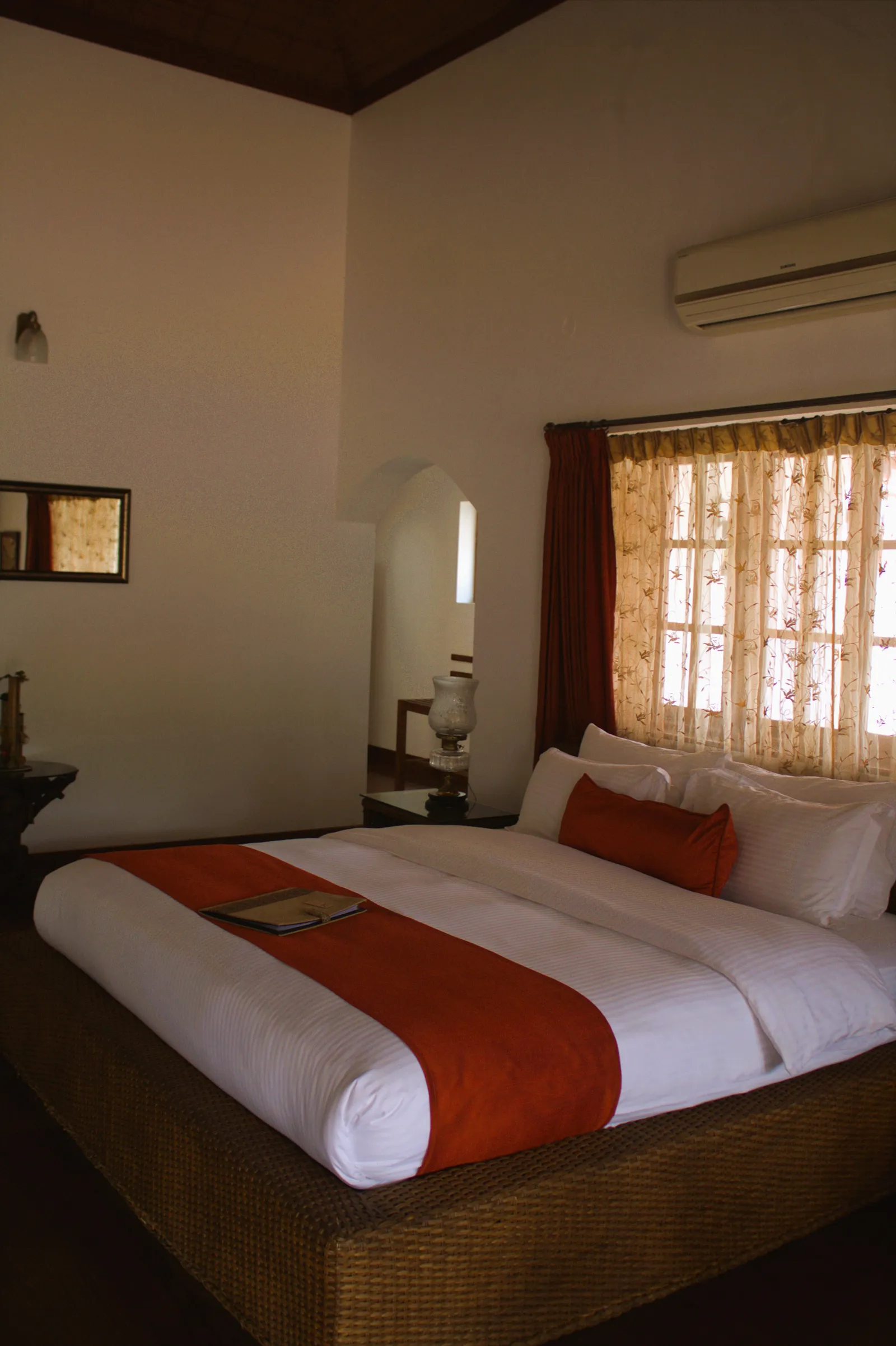
Bedroom / Sitara Cariappa
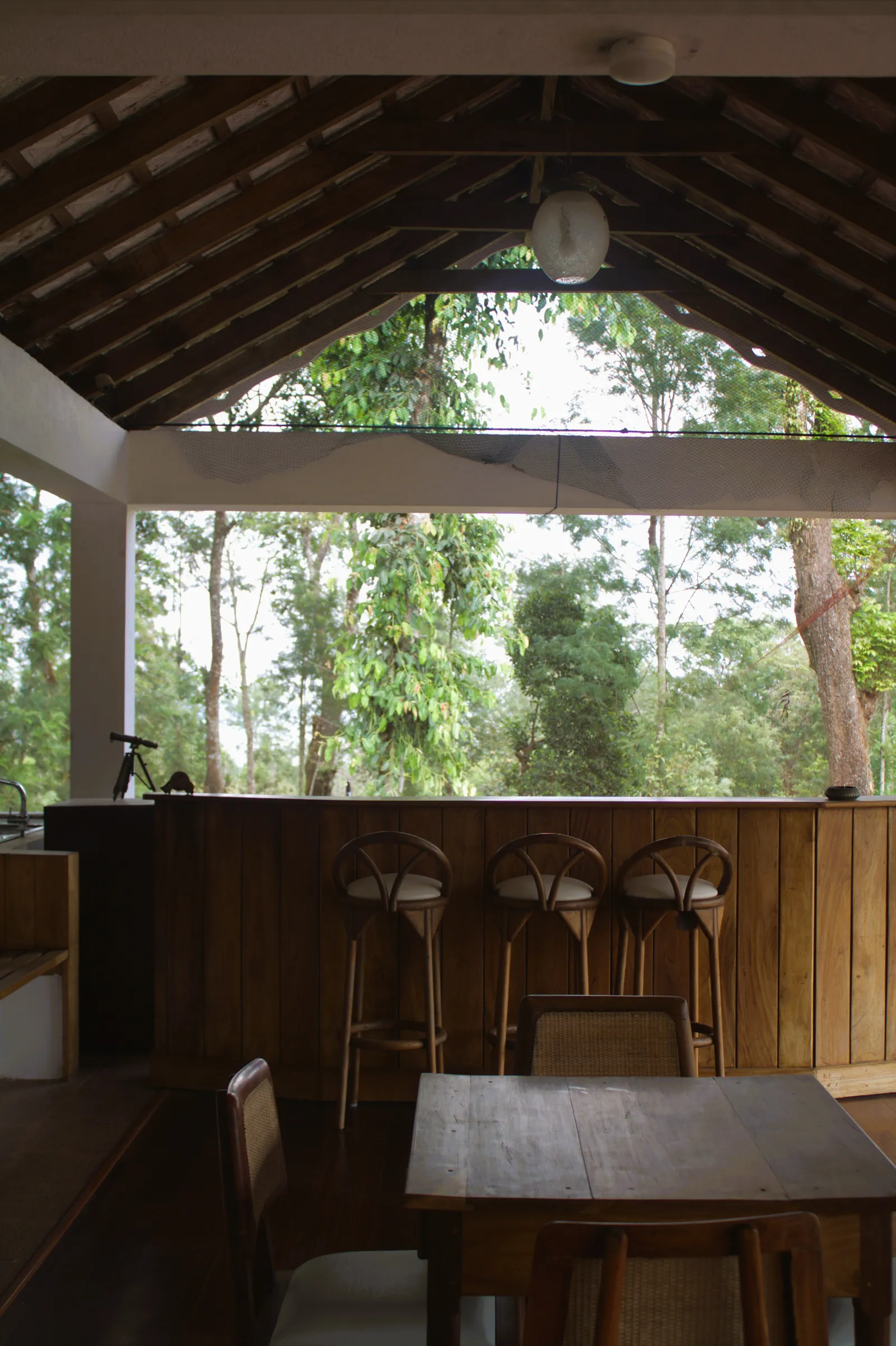
Outdoors bar / Sitara Cariappa

Leila Alvares’s homestay Captain K’s Getaway was named after her late father, Captain Kieren Alvares. He and his wife Lavinia Alvares built a cottage on this 75-acre property and named it Glendale. A few kilometers from the town of Mercara, this is where Lavinia planted a lychee tree 40 years ago that today provides shade to the fine courtyard at the front of their now renovated bungalow that’s cut into the hill.
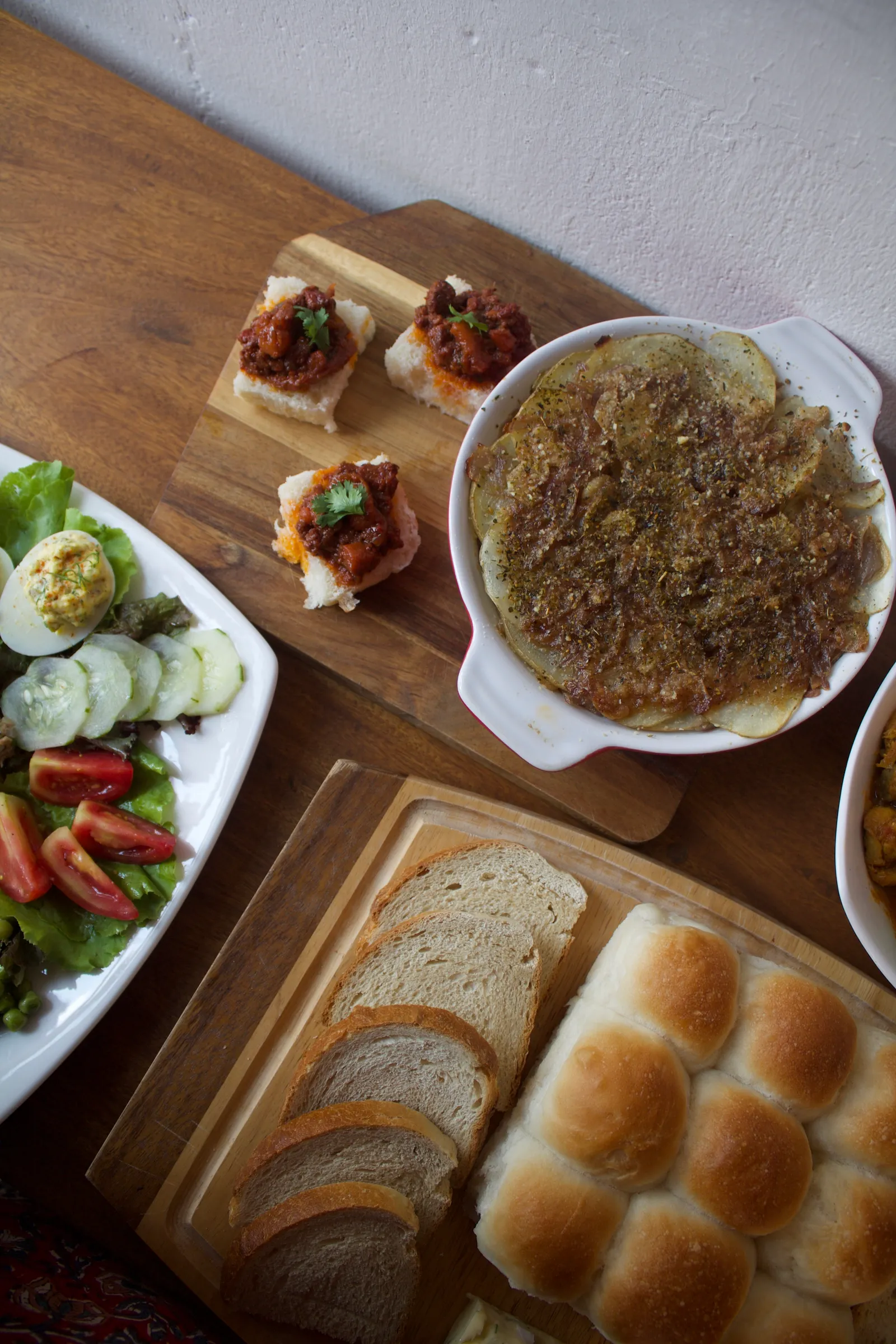
Food at Captain K’s Getaway / Sitara Cariappa

Some years ago, when I met Leila at Captain K, she hosted some of my friends for a grand BBQ evening – pork spare ribs, barbeque chicken legs, creamy corn, potato salad with bacon, fresh salad sourced from the organic garden and chocolate fudge cake with home-made ice cream. After 10 years, nothing has changed. Leila and her children Kieren and Keira continue to cook one of the most lavish spreads from scratch. This time I ate Mangalorean pork baffat, chorizo pork on pav made by Keira and a chocolate mousse by Kieren. Given their Goan-Mangalorean roots and Anglo-Indian exposure, Leila is an exceptional cook specialised in those respective cuisines in addition to Kodava and Mediterranean. Her beautiful kitchen space is always the warmest and always in full swing, especially with her fondest sleeping in this space – Cookie, Sox, Charlie, Julie and Fuzzy.

Her home is grand with fine teak woodwork, beside which is a two-bedroom homestay in an annexe. In this space, each room has a fireplace and overlooks the courtyard in the front, and a majestic coffee estate beyond the vast swimming pool and BBQ deck. Leila’s home and Kieren’s outhouse is wood-paneled on the inside and flooded with books. Her home reminds me of a large country barn, luxurious and well lit, with hidden entrances and exits, sky roofs, marine and beach inspired fixtures and knotted bouquets of paddy around the roof rim to keep bats away. An organic garden stands below the elevated home, next to it a coffee pulper and dryer. Kieren roasts the processed coffee from the estate in his unit next to his living space. Here, I got to try a hot cup of pure Arabica from Glendale estate’s first harvest batch (aero pressed) while he continued to tell me about the coffee tasting experience he provides to guests.
Rooms at Rs 7,500 and Rs 10,000 per night per room (includes breakfast, jeep ride around the estate, a home theatre experience, swimming pool access, coffee tasting) (extra charges for dinner and massages at the deck)

Location: C/o of Glendale Estate, Kadagadal Village & Post, Sidapur Road via Chettalli, Madikeri 571248, Coorg; Contact: Leila Alvares, +91 98860 55868; Website

Jade Hills
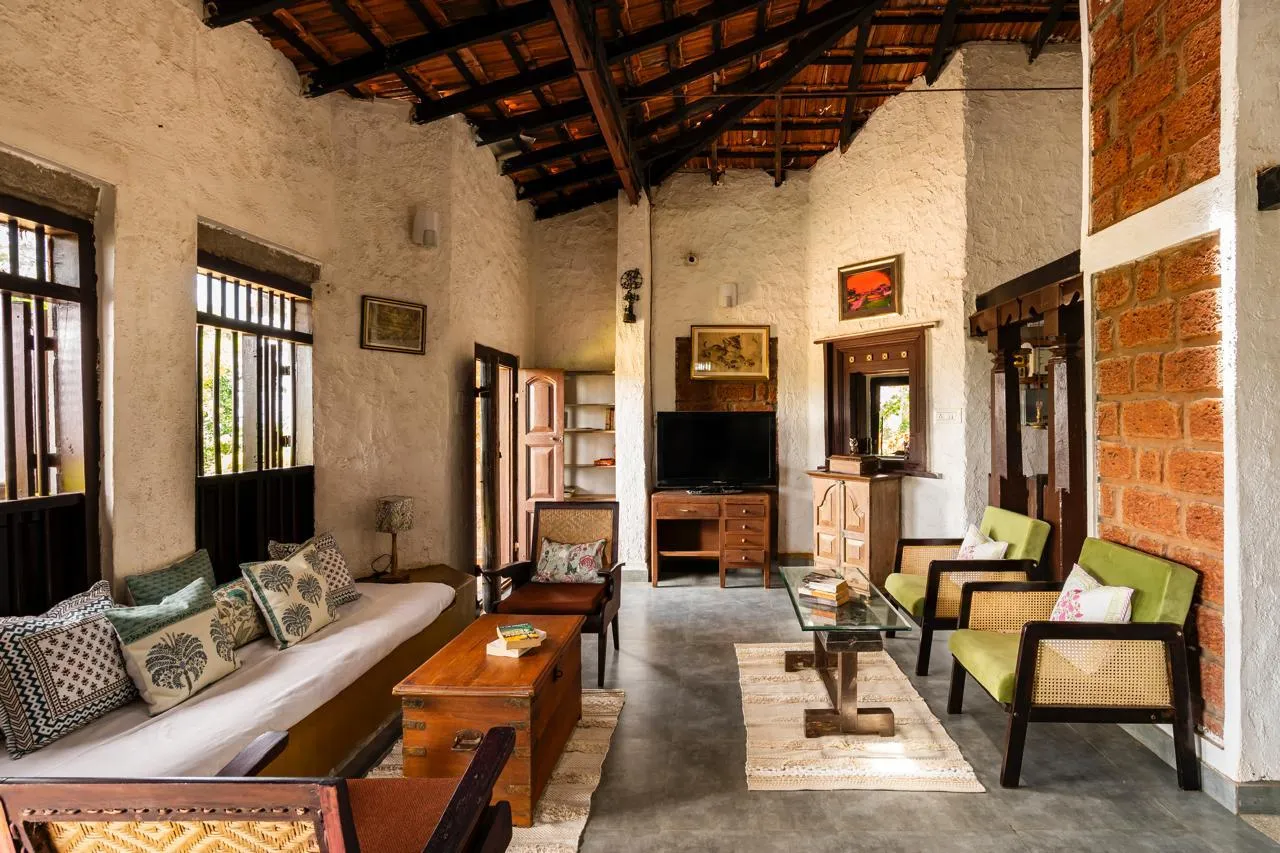
Drawing Room /  Ajay Devasia

When I worked at the Taj Hotels in Gaalibeedu, I would look at the distant hills across the lobby and wonder who lived in the beautiful cottages there. I finally met their occupants this month. Kavya Thimmaiah and Prasanna live on a hillock in the most picturesque part of Coorg. Kavya’s mother Jaji named their estate Jade Hills as an ode to the evergreen ranges all around, and that is what their home and homestay is called today.

Designed by father-daughter duo HC Thimmaiah and Kavya, both architects, this five-bedroom cottage in Gaalibeedu is accessed by a steep winding climb, followed by a clear landing and a dramatic view of the southern Western Ghats and deep valleys. Red clay tiles run through the verandah and the plantation chairs in the sit out overlooks a stone-pillared gazebo at the front and a lawn with a bonfire pit to the left. Porous red brick walls, repurposed and salvaged furniture, and laterite pillars add a raw and earthy feel to the space.
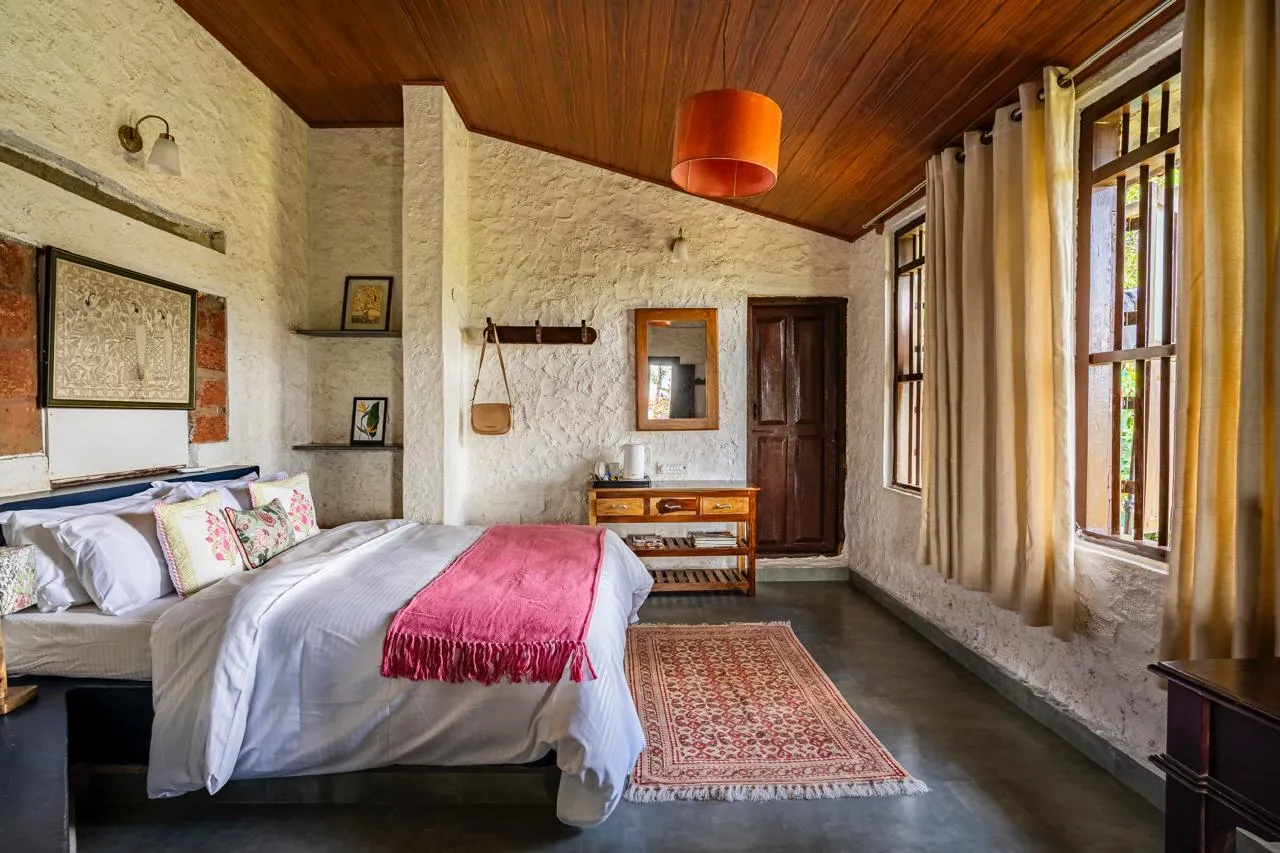
Room at Jade Hills / Ajay Devasia

The owners live in the main cottage in one of the bedrooms and the other four rooms (two at the main house level and another two are built 15ft below the main cottage). Prasanna and Kavya shuttle between Bengaluru and Coorg, but Prasanna is always here to welcome guests. At this altitude, the weather always remains cooler and during the summer months, witnessing the swarm of fireflies is a gift. Rich with Shola forest, this property has been developed with eucalyptus, jackfruit and silver oak trees, a traditional home with a local family who cook up the most delicious Kodava meals. Along with local guides, Prasanna organizes treks, chasing fireflies and picnics. Jade Hills is probably the one place I would go to take refuge in the monsoon months in Coorg. Here the bonfires, pink skies and silhouettes of fig and fern trees sway to the ‘gaali’ (wind) of Gaalibeedu.
Rooms at Rs 10,500 per night per room (includes breakfast) (extra charges for dinner, treks and seasonal firefly chasing)
Location: Kaloor Road Galibeedu, village, District, Madikeri, Karnataka 571202; Contact: Prasanna, +91 98450 04668; IG: @jadehillsmercara

Chengappa Estate Homestead
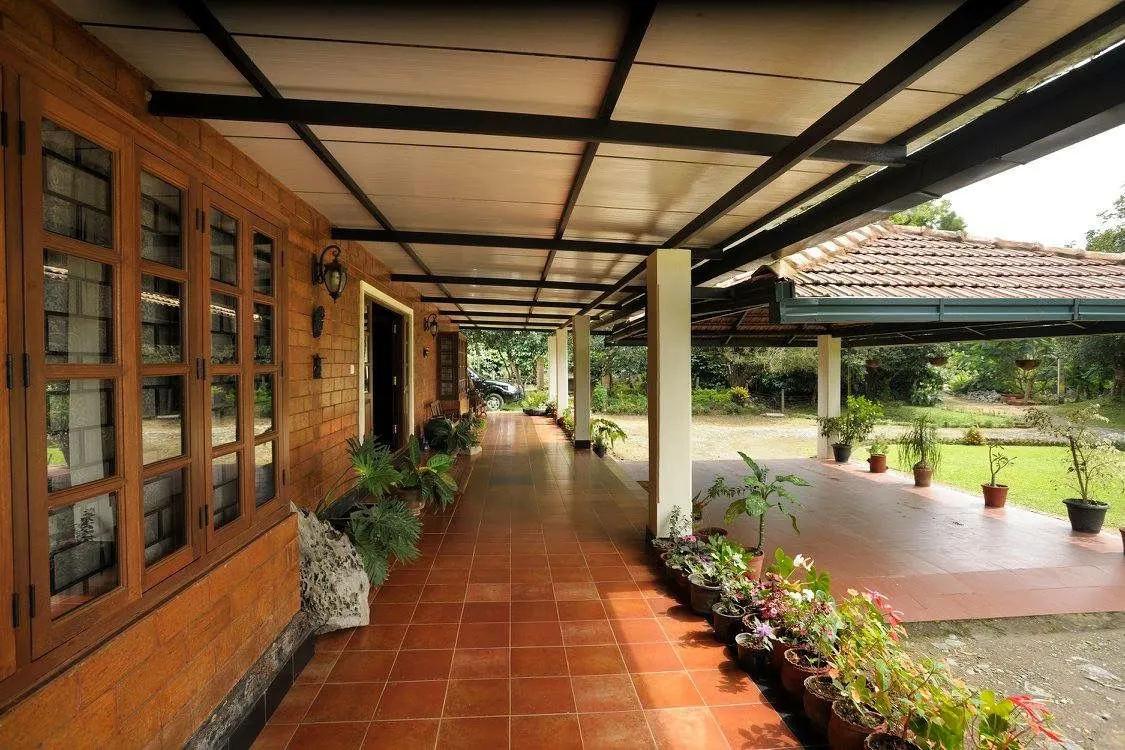
Exterior view /  Sudeep Gurtu

Spending time with Vinoo (KC Aiyappa) involves listening to LPs of Frank Zappa as he narrates stories of the forgotten ways of our Kodava ancestors in the fields of food and hospitality. His 10-acre plantation home and homestay, Chengappa Estate, is a Robusta plantation interspersed with pepper vines and arecanut groves. The house overlooks paddy fields, a water body, and the Kunda betta (hill) beyond. A picket fence and a stone porch lend a storybook feel. A tall Yecchi tree stretches over the house, built in 2014 but peppered with antiques, tools and utensils that are 80 years old. Three guest bedrooms are within the main house and the fourth bedroom is the host’s. So as not to disturb the undulating land, the home is built across three levels, without using cement or plaster, only interlocking laterite blocks. Interiors are warm and cosy, with a wood varnish finish and the three colours of Athangudi tiles–green, ochre and red.
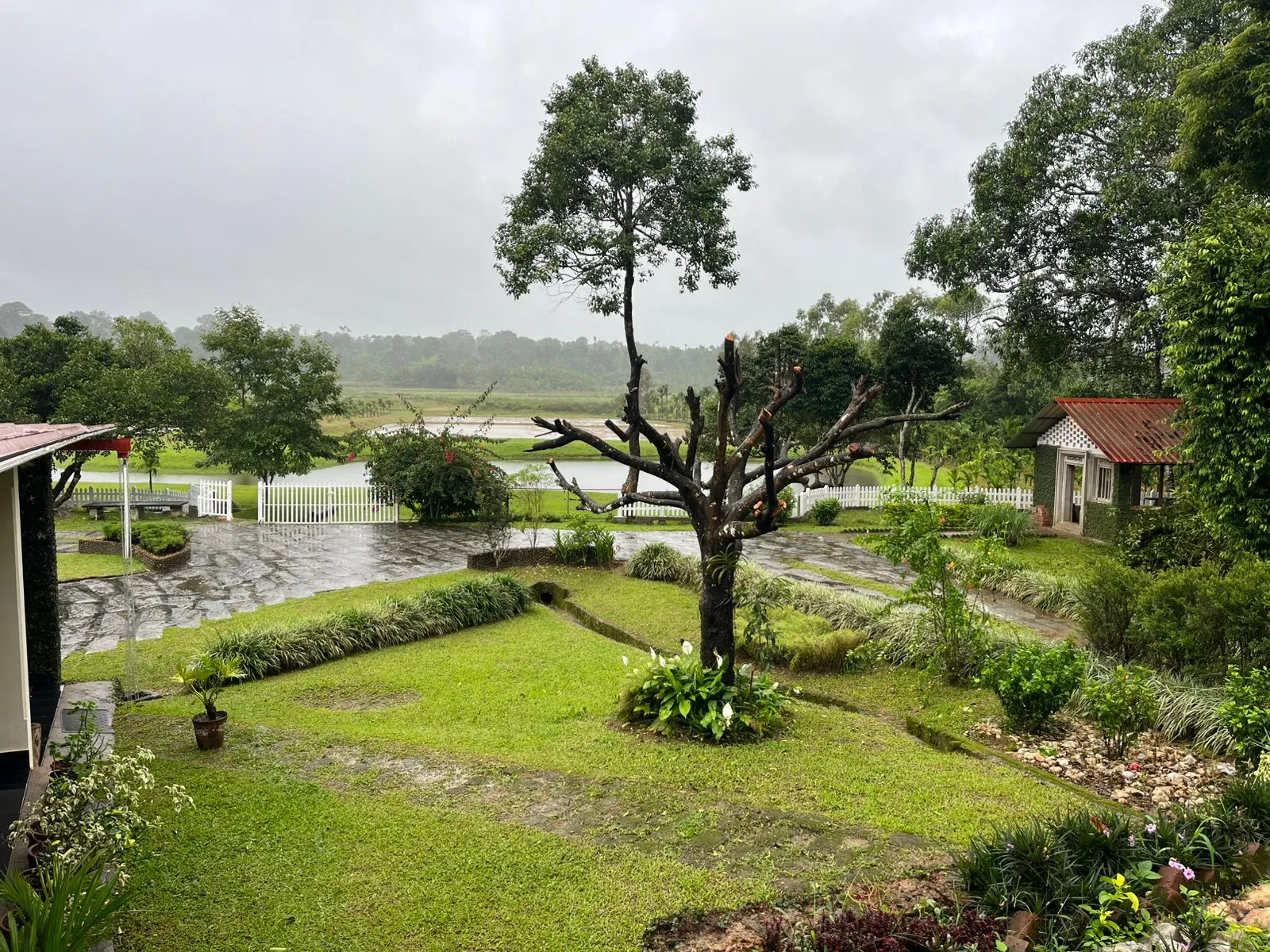
Exterior view /  K.C.Aiyappa

Meenakshi, his oldest staff and cook, prepared the tastiest Kodava meal, a khaima (kheema) curry, mutton chops and nei kul (ghee rice). I am told that for breakfast, akki otti (rice flatbread) is served with euhl pajji (sesame seed chutney)–my grandmother’s favourite. Rice comes from the paddy fields in the front of the homestay.
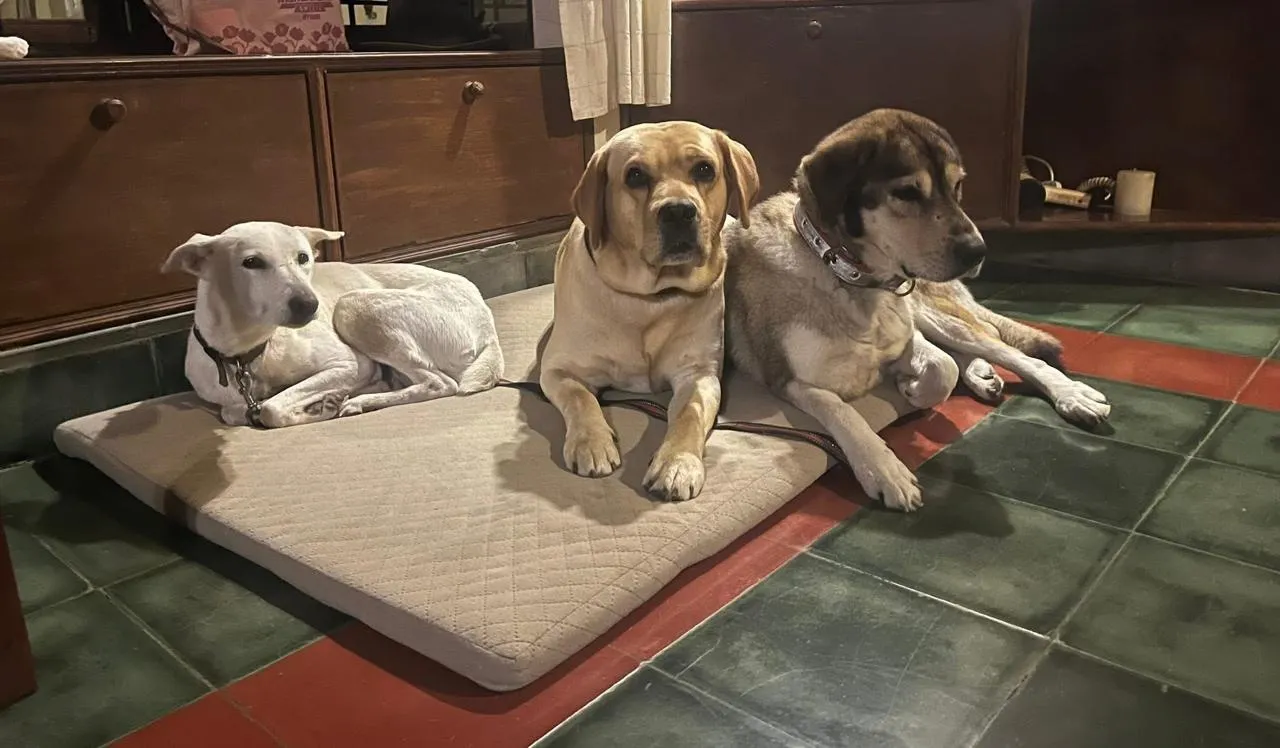
The dogs, Frank Zappa, Muddy Waters and Willy Wanka / K.C.Aiyappa

The three main characters here are his dogs, Frank Zappa, Muddy Waters and Willy Wanka; they accompany you on estate visits and fishing by the pond, where you can use Vinoo’s fishing rods to catch baraemeen, rohu, katla or grass carp. Days on the estate are for foraging, especially when the seasonal pannpuli produce is used to make kachampuli (a black vinegar liquid extract from the pannpuli fruit). Vinoo uses the work shed at the entrance to make bottles to sell. And nights at Chengappa Estate are for the sound of cicadas and the crackle of the bonfire, and an endless expanse of paddy fields above which lie starry skies against silhouettes of the Kunda range.
Rooms at Rs 6000 per night per room (includes breakfast) (extra charges for lunch and dinner)
Location: 5 kms from Ponnampet Town and 1 Km from Kundha School (B Shettigeri Rd.), Kundha, Coorg; Contact: KC Aiyappa, +91 98454 93688; IG: @coorgvillager

source: http://www.cntraveller.in / Conde Nast Traveller / Home> Hotels & Homestays / by Sitara Cariappa / April 20th, 2026
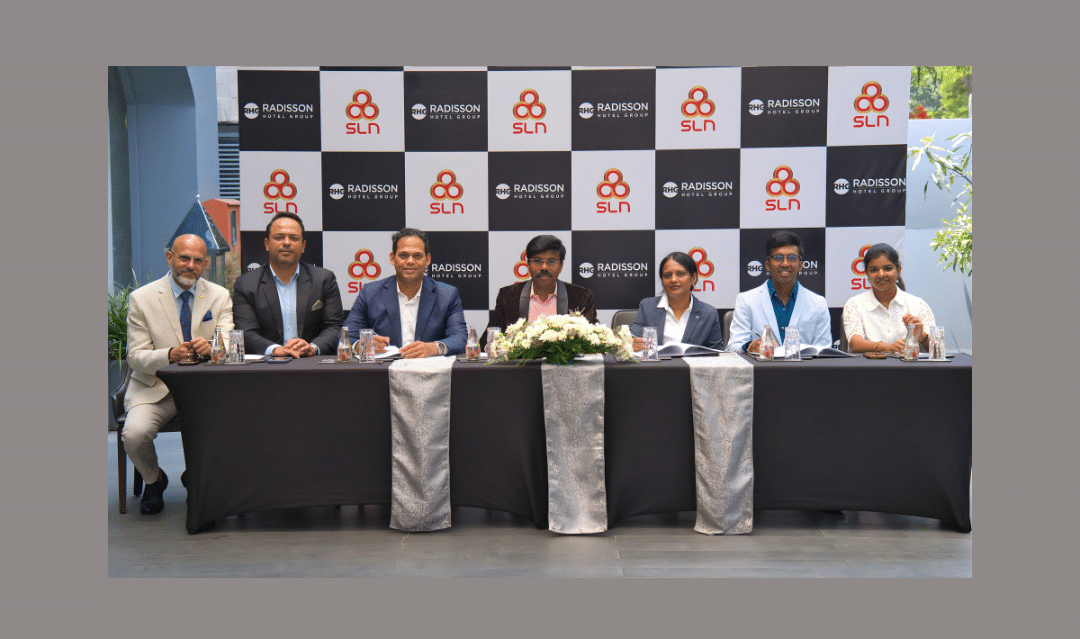
Radisson enters Coorg with dual resort signing

Dual signing introduces two resort properties under Radisson Individuals Premier, marking the Group’s entry into Coorg.

Radisson Hotel Group continues to expand its footprint in India’s high-potential leisure destinations with the signing of Purple Mist Resort & Spa Coorg, A Member of Radisson Individuals Premier, along with Purple Palms Resort & Spa, which will be converted under the same brand.

This dual-deal marks the Group’s entry into Coorg, one of India’s most sought-after leisure destinations, establishing a strong and scalable presence in a market defined by nature-led travel and destination-driven demand.

A nature-led retreat designed for experiential stays

Purple Mist Resort & Spa Coorg, under Radisson Individuals Premier, is a 102-room property with 98 standard rooms and four suites. It will include an all-day dining restaurant, a lobby lounge/deli, two banquet halls with pre-function areas, a fitness centre, and a spa.

Purple Palms Resort & Spa Coorg, under Radisson Individuals Premier, is a 78-room property that will be converted and repositioned under the brand. It includes 74 standard rooms and four suites, along with two restaurants, a banquet hall, a boardroom, and wellness facilities such as a gym and spa.

Together, the two resorts create a strong combined offering in Coorg, addressing demand across leisure stays, destination weddings, corporate retreats, and social events, while allowing flexibility across guest segments.

Expanding in high-potential leisure markets

“With this signing, we are entering Coorg with a differentiated approach that allows us to build meaningful scale in a high-demand leisure market. The dual-resort model enables us to create a strong combined offering, catering to both individual travellers and large-format events. As demand continues to evolve towards experiential and destination-led travel, developments like these allow us to strengthen our presence in emerging leisure markets while leveraging the flexibility of our Radisson Individuals Premier brand,” said Nikhil Sharma, Managing Director & COO, South Asia, Radisson Hotel Group.

Unlocking growth through strategic development

“RHG’s advent to Coorg marks successful implementation of our strategy to spread across key business & leisure destinations of South India. A ready to open resort at a premium leisure destination accelerates our expansion plans by catering to all segments of market by furthering our outreach. The dual signing is also a strong value proposition for the ownership to capitalise on RHG’s brand repute & robust distribution system,” said Davashish Srivastava, Senior Director, Development, South Asia, Radisson Hotel Group.

A shared vision to elevate the destination

“We are delighted to partner with Radisson Hotel Group for this landmark development in Coorg. Our vision is to create a hospitality offering that reflects the destination’s natural beauty while introducing world-class standards and infrastructure. With two complementary resorts in close proximity, we believe this project will redefine the hospitality landscape in Coorg and position it as a preferred destination for both leisure travellers and large-scale celebrations,” said N Viswanathan, Managing Partner, SLN Hotels & Resorts.

source: http://www.hotelierindia.com / Hotelier India / Home> Development / April 24th,2026

Tamara Leisure Experiences puts responsible hospitality and community at its core

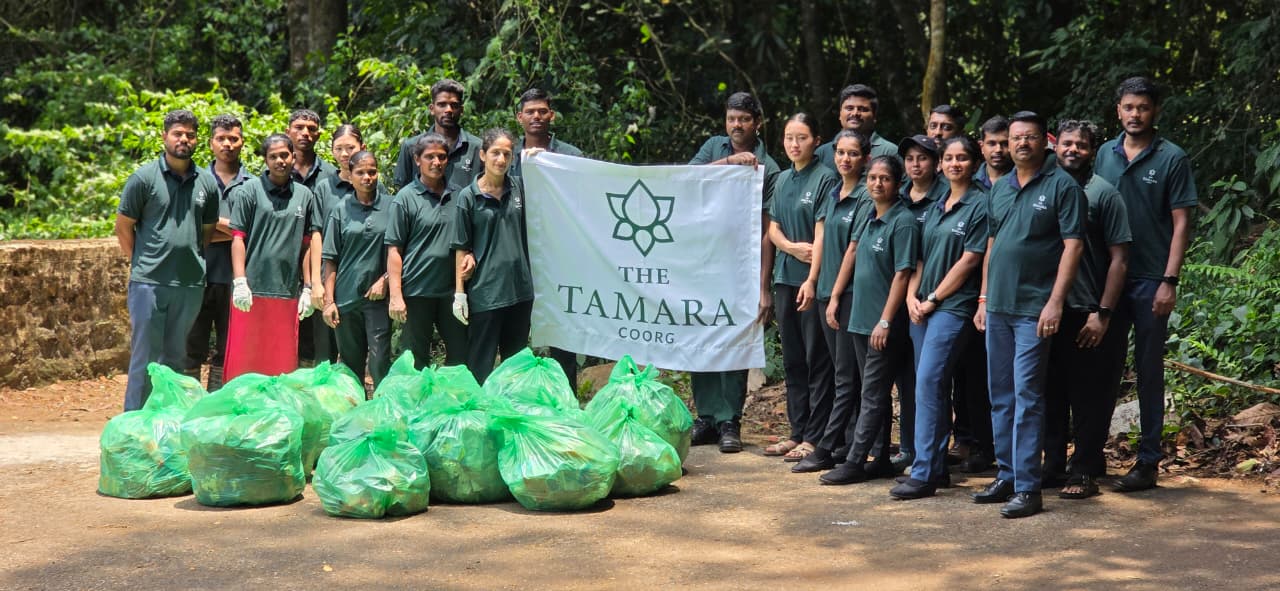
Tamara Leisure Experiences has, since inception, embedded Responsible Hospitality into its core, guided by a clear vision of people, planet, and profit thriving in tandem. Across its portfolio of nine properties, from luxury resorts in Coorg and Kodaikanal to upscale O by Tamara hotels in Coimbatore and Trivandrum, mid-scale Lilac hotels, and its flagship wellness offering Amal Tamara, a NABH-accredited Ayurveda hospital, this philosophy translates into an elevated form of eco-conscious hospitality where design, service, and setting come together to deliver immersive, low-impact luxury. The flagship property, The Tamara Coorg, holds the Global Sustainable Tourism Council certification, underscoring its alignment with global sustainability standards, with a clear roadmap to extend this benchmark across all Tamara properties.

Samir MC, CEO, Tamara Leisure Experiences, said, “Our nine property portfolio is aligned to GSTC principles. And I want to be honest about what that distinction means, because the certification is the outcome, but the real value is in the discipline the journey instills across your entire organisation. This is not a badge. It is a framework to make your circular systems auditable, measurable, and accountable. Our goal is to make that the portfolio standard, not a novelty at one property.”

“Earth Day serves as a timely reminder of shared responsibility towards the planet, and at TamaraLeisureExperiences, this is reflected through on-ground actions across its properties, from farm to table experiences and community clean-up drives to sustainability-led engagements. These efforts extend into Earth Week (22–28 April) through nature-led activities, conscious dining, and community participation, where sustainability is not an add-on but the experience itself. At Tamara, responsiblehospitality is foundational, shaping every stage from design and conceptualization to operations and guest experience. For us, sustainability is not a seasonal campaign, but a part of our daily operating philosophy.”

Here’s how this philosophy comes to life across key pillars:

Sustainability in Design

Each Tamara property is planned with the local environment in mind, designed to retain and work with its natural surroundings, allowing the ecosystem to shape how the space is built and experienced. For example, At The Tamara Coorg, sustainability is a design decision guided by a clear ethos, build less to preserve more. Set across 28 acres of largely untouched landscape, the resort was developed with minimal ecological disruption, felling just 17 trees and consciously scaling down from 60 to 56 cottages to protect even more. Elevated on stilts, each structure sits lightly on the land, allowing the forest to remain undisturbed, where trees are not cleared but seamlessly woven into the architecture and experience.

Rooted in Community care, designed for continuity

At Tamara, sustainability extends to the people who shape the experience, expressed through local immersion, farm to table practices, and menus rooted in regional flavours and wellness, from Kodava cuisine in Coorg to place-led dining across properties. This continues at Verandah, the in-house boutique, where locally inspired crafts, natural wellness products, and plantation-grown spices offer a tangible extension of the region’s heritage.

Guided by community and circular thinking, nearly half the workforce is locally hired and close to 40% of procurement is regional, strengthening livelihoods while keeping operations rooted. This comes through most tangibly in the organic minibar, where every product is local, organic, and traceable, and in the kitchen, where menus are shaped by what is locally and seasonally available, ensuring procurement drives the plate. Ongoing support for education and local institutions reinforces a long-term commitment to community development.

Zero Waste Living

Across Tamara properties, 15-40 tonnes of waste is reimagined as a resource through a closed loop system where nothing is discarded and everything is repurposed. 100% food waste is recycled in house through low impact processes like Bio Manthan, plastic is replaced with glass bottles, stainless steel dispensers and refillable amenities, while circular practices extend to repurposed linen, reused bottles, kitchen gardens, greenhouses and seed saving, with food waste reduced to 0.54 kg per head. With zero significant chemical spills in FY 2024-25, this carries into the guest experience, with leaf coasters, bamboo alternatives, towel reuse, alternate linen changes, and sapling takeaways ensuring the philosophy is both visible and lived.

Mindful use of every resource

Resource conservation is deliberate and deeply local. Natural waterfalls and stream water are left untouched to preserve community sources. While rainwater harvesting systems and tap aerators reduce consumption, LED lighting, heat pumps, lithium battery buggies, key tag controls, EV infrastructure, solar panels and emission management ensure energy optimisation. Behind the scenes, efficiency is engineered into every system, smart laundry and advanced STP and ETP plants enable reuse, while continuous monitoring of water, energy, and carbon, along with thoughtful material reuse, keeps operations tightly optimised and low impact.

Quiet design and conscious tech

Throughout properties, impact is reduced through thoughtful restraint. The absence of DJ music and harsh lighting limits noise and light pollution, while low lux pathways, timers, and sensors minimize ecological disturbance. A seamless tech enabled journey with digital check ins, e-bills, and paperless feedback reduces waste, supported by in-house water systems over plastic. From horn free EV buggies to reusable linen elements and locally rooted touches, every detail is intentional and quietly conscious

At Tamara, responsiblehospitality shapes how we think, design, and operate across the portfolio. It brings sourcing, consumption, and recovery into careful alignment, ensuring that sustainability is quietly built into everyday operations  

source: http://www.businessnewsthisweek.com/ Business News This Week / Home> Business / by Neel Achary / April 22nd, 2026

Minor Hotels Signs Agreements for Anantara Zanti Coorg Resort and Anantara Kolkata Hotel in India

In Brief: Minor Hotels has signed agreements for the Anantara Zanti Coorg Resort and Anantara Kolkata Hotel, marking the first Anantara-branded resort and urban hotel in India.

Rendering of the Anantara Kolkata Hotel – Image Credit Minor Hotels 

Minor Hotels has signed agreements for two new properties in India under its luxury Anantara Hotels & Resorts brand: Anantara Zanti Coorg Resort and Anantara Kolkata Hotel. These will be the brand’s first resort and first urban hotel in the country.

Anantara Zanti Coorg Resort is scheduled to open in 2028 near Madikeri in Coorg, Karnataka, within the UNESCO-recognized Western Ghats. The 69-key resort is being designed by Sri Lankan architect Channa Daswatte and will draw on the region’s natural landscapes, coffee heritage, and Kodava culture. Planned facilities include four dining venues, a swimming pool, a lobby lounge and library, Anantara Spa and wellness center, a fitness studio, meeting and event spaces, and a kids’ club. Zanti Hospitality owns the property.

Anantara Kolkata Hotel is slated to open in 2032 as part of the World Trade Center Salt Lake Kolkata, a mixed-use development. The 170-key hotel is designed to serve the city’s business, meeting, and event needs, with facilities including two restaurants, a lobby lounge, flexible meeting and event spaces, an Anantara Spa and wellness center, a gym, and a swimming pool. The World Trade Center Salt Lake is a joint venture between Aryan Realty and Merlin Group.

These signings expand Minor Hotels’ portfolio in India, following the introduction of the Anantara brand with Anantara Jewel Bagh Jaipur in 2025 and the signing of the first Avani-branded property, Avani+ Sunray Beach Visakhapatnam Resort. The company is progressing toward a target of 50 properties in India within the next decade.

Minor Hotels’ strategy in India includes developing both leisure destinations and key cities, with a focus on its luxury and premium brands such as Anantara, Avani, and NH Collection, as well as select-service brands including NH, Oaks, and iStay. The company has also launched the Minor Reserve Collection and Colbert Collection to provide opportunities for independent hoteliers. Expansion in India is primarily through hotel management agreements and franchise opportunities.

source: http://www.hotelnewsresource.com / HNR Hotel News / Home> All News> Asia Pacific> Development News> Previous Article / by News-Hotel Development India / April 08th, 2026

Taj Madikeri Resort & Spa: Coorg’s Ultimate Eco-Luxury Escape That Will Blow Your Mind!

Image generated with Ai

The Taj Madikeri Resort & Spa,  nestled in the lush landscapes of Coorg, is a pioneering example of sustainable luxury. Developed by Indian Hotels Company Limited (IHCL) under its ESG+ framework, the resort is a perfect blend of environmental conservation, community development, and responsible operations. Built within a sprawling 180-acre rainforest, the resort stands as a testament to IHCL’s commitment to long-term ecological stewardship.

Eco-Conscious Construction Practices

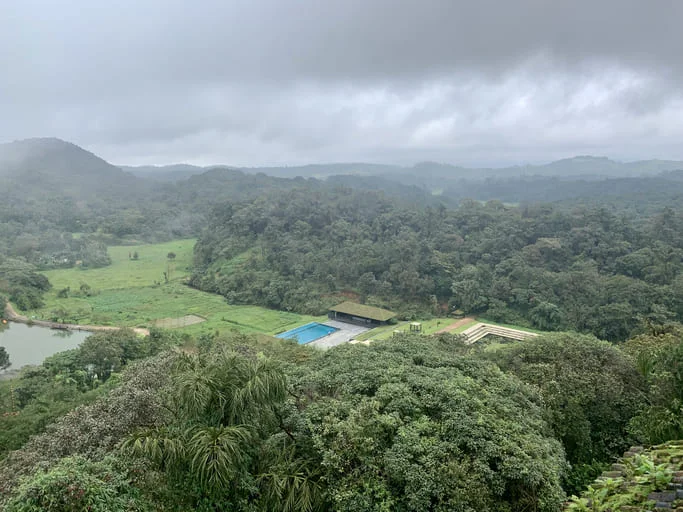
One of the standout features of Taj Madikeri Resort & Spa is its eco-conscious construction. The development process took seven years, with a firm commitment to preserving the natural surroundings. Remarkably, not a single tree was cut down during construction. The resort was built on just 30 acres of land, with careful attention to maintaining the land’s natural contours. Pathways were created without leveling the terrain, and excavated soil was repurposed to form a freshwater lake. This lake now serves multiple purposes, from supporting aquatic life to attracting migratory birds and aiding in rainwater harvesting.

The resort also employed innovative construction techniques to reduce environmental impact. Compressed stabilised earth blocks were produced on-site from displaced soil, which were then sun-dried rather than baked, significantly lowering emissions and leaving a minimal construction footprint.

Thriving Biodiversity and Environmental Integrity

The resort’s commitment to environmental integrity is evident in its thriving biodiversity. Taj Madikeri Resort & Spa is home to 310 species of birds, 68 species of butterflies, 79 species of mammals, and 32 species of frogs. The resort boasts an impressive Air Quality Index consistently below 3, ensuring a clean and healthy environment for both guests and wildlife. Additionally, the property has maintained a plastic-free environment, reinforcing its dedication to sustainable practices.

A unique feature of the resort is its Batracharium, which was established after identifying frog species found on the property. Guests can learn about the region’s ecological richness through guided tours with in-house naturalists. The resort also offers a Biodiversity Photography Club, where both associates and guests are encouraged to capture and appreciate the natural heritage of the resort.

Immersive Nature Experiences for Guests

Taj Madikeri Resort & Spa offers its guests a unique opportunity to engage deeply with nature. Guided forest walks, led by in-house naturalists, provide guests with a chance to explore the rich flora and fauna of the surrounding rainforest. A Butterfly Park, honey cultivation with 32 active bee colonies , and pottery sessions  using natural materials all encourage a deeper connection with the environment.

The resort also highlights the Kodava culture through its heritage conservatory, which celebrates the region’s traditions while connecting cultural preservation with ecological sustainability.

Sustainable Operations and Resource Efficiency

Taj Madikeri Resort & Spa’s commitment to sustainability extends to its daily operations. Public spaces within the resort are naturally ventilated, reducing the reliance on air-conditioning and lowering energy consumption. Natural lighting is maximized, while LED lights and low-wattage outdoor illumination are used to minimize energy use and protect nocturnal species in the area.

The resort goes a step further by treating and reusing all of its wastewater for irrigation and flushing. Over the past two years, more than 84% of the resort’s electricity has been sourced from wind energy. This energy-efficient approach aligns with the resort’s commitment to reducing its carbon footprint and supporting renewable energy initiatives.

Electric Mobility: A Step Towards Zero Emissions

Continuing its sustainability efforts, the resort has recently introduced electric mobility on its estate. After extensive trials to adapt the vehicles to the resort’s challenging terrain, the resort replaced its petrol-driven gypsies with Tata Punch electric vehicles (EVs). These zero-emission vehicles not only reduce the environmental impact but also minimize noise and disturbance to the wildlife. The resort’s focus on safety has led to the installation of reinforced bars, non-slip flooring, transparent rain covers, and weather-resistant interiors, ensuring accessibility for all guests, particularly the elderly.

Community Engagement and Local Development

Taj Madikeri Resort & Spa’s impact extends beyond environmental conservation to community development. More than 31% of the resort’s associates come from neighbouring villages, supporting local employment and skill development. The resort also works closely with artisans and regional producers, ensuring that economic benefits flow into the surrounding community.

The resort’s commitment to community engagement is an integral part of its business model, helping to uplift local communities while promoting responsible tourism practices.

Global Recognition for Sustainable Tourism

Taj Madikeri Resort & Spa’s dedication to environmental and community stewardship has earned it global recognition. The resort has been awarded the EarthCheck Gold Certification, a testament to its leadership in responsible tourism and its commitment to sustainable practices. This prestigious certification highlights the resort’s ongoing efforts to minimize its environmental impact while providing a luxury experience rooted in nature.

Conclusion: A Model for Eco-Friendly Luxury Tourism

Taj Madikeri Resort & Spa, Coorg, sets a new standard for eco-friendly luxury tourism. With its focus on sustainable construction, thriving biodiversity, resource efficiency, and community development, the resort offers an unparalleled experience for guests seeking to connect with nature while enjoying the comforts of luxury. Recognized globally for its commitment to responsible tourism, the resort remains a beacon of sustainability in the hospitality industry.

source: http://www.travelandtourworld.com / TTW / Home> Hotels and Resorts> India / February 17th, 2026

Return of the… Mahseer

A conservation story from River Cauvery.

On 2018, the International Union for Conservation of Nature (IUCN) classified the Orange-Finned or Humpback Mahseer as ‘Critically Endangered.’

Yet, in the protected stretches of the River Cauvery in Kodagu, the species is found in abundance, thanks to the efforts of Coorg Wildlife Society (CWS) and the family of Chendanda S. Ponnappa and his son Chendanda P. Aiyappa. Mahseer conservation in Cauvery has a history that goes back nearly four decades. It began in 1985, when Ponnappa, a member of CWS, asserted at a meeting that Mahseer still thrived in the Cauvery at Dubare and Valnoor.

At the time, doubts were raised about the fish’s presence in the river. To settle the debate, Ponnappa landed a 44-kg Mahseer in July 1985 at Valnoor, conclusively proving that the iconic fish — known locally as ‘Bommeen’ or ‘Boltha Meen’ in Kodava Thakk and ‘Bilimeenu’ in Kannada — was very much alive in the river. The Cauvery is home to Golden, Silver and Black Mahseer.

The river watchers who keep an eye on illegal fishing and other activities that are detrimental to Mahseer conservation.

That single act marked the beginning of organised Mahseer conservation in Kodagu. Soon after, the Coorg Wildlife Society approached the Fisheries Department, which leased a 25-kilometre stretch of the Cauvery, from Siddapur Bridge to Kushalnagar Bridge, to the Society in 1985 and declared it a protected zone for Mahseer.

The move was accompanied by wide publicity against destructive fishing practices such as dynamiting, the use of nets, copper sulphate poisoning and even poisoning with wild fruits, methods that were rampant at the time and posed a serious threat to aquatic life. Once the lease was handed over, such practices were completely banned and strict enforcement followed.

Equally significant was the crackdown on riverbank encroachments. After the declaration of the Mahseer protected zone, previously unreported encroachments were identified and cleared. “The CWS deserves full credit for making the riverbanks along the protected stretch encroachment-free,” Aiyappa told Star of Mysore.

Science-backed conservation model

C.S. Ponnappa oversaw the conservation operations in the initial years, laying the foundation for what would later evolve into a science-backed conservation model. Subsequent studies established that the Humpback Mahseer, endemic to the Cauvery, is among the largest freshwater fish in India, growing up to 63-kg.

“For nearly 20 years, the CWS successfully protected the original 25-km stretch. Encouraged by the results, the Fisheries Department later extended our responsibility to a nearly 100-km stretch of the Cauvery from Bethri Bridge to Kushalnagar and the Barapole River. While we managed and protected about 95-km for a decade, logistical challenges forced us to withdraw from Barapole,” Aiyappa revealed.

“Conservation along the Bethri-Kushalnagar stretch also proved difficult due to dense coffee estates on either side and the influx of a floating population. Eventually, efforts were refocused on the original stretch between Siddapur and Kushalnagar,” he said.

“Over the past decade, this protected stretch was further extended to 35-km, up to Shirangala. Today, Mahseer is conserved from Siddapur Bridge to Shirangala till the River Cauvery leaves Kodagu,” Aiyappa noted.

Radio-collaring efforts

One of the most significant contributions of the CWS has been scientific research. The Mahseer telemetry study conducted was the first-of-its-kind in India.

Over 40 Mahseers were caught, fitted with radio transmitters and released back into the river to study. However, known for their intelligence, the fish often rubbed the transmitters against rocks and managed to dislodge them.

Despite these challenges, researchers were able to gather valuable data on migration patterns and habitat preferences during high-water conditions.

National institutions such as the Central Inland Fisheries Research Institute and the Central Institute of Freshwater Aquaculture undertook five years of research in the region.

“Until then, there was little data on the upper reaches of the Cauvery, covering water quality across seasons, sediment composition, riparian vegetation and fish diversity. We supported these studies by providing staff and access to field locations. The findings, expected to be released soon, will offer deeper insights into the river’s ecology, including its insect and plant life,” Aiyappa revealed.

Ban on mining, fishing

“We also collaborated with Carleton University, Canada, on a study examining post-release mortality of Mahseer. The results were encouraging, showing a survival rate of 99.5 percent among fish that were caught and released,” Conservationist Aiyappa said.
Legal intervention has also played a conservation role. An order was obtained from the Karnataka High Court banning sand mining in Mahseer-protected areas. Four full-time river watchers now patrol the stretch, monitoring illegal activities and gathering information on netting.

“With dynamiting and chemical poisoning classified as serious offences, such activities have virtually disappeared from the protected zones. Public awareness has grown to the extent that locals now alert authorities to any violations,” he noted.

Mahseer, Aiyappa points out, is among the most intelligent freshwater fish. Their survival over millions of years is testimony to their adaptability. The Mahseer derives its name from Sanskrit — ‘mahat’ (big) and ‘śiras’ (head).

Conservation efforts here go beyond a single species. The Cauvery is home to over 100 endemic fish species, all of which are protected under the current ecosystem-based conservation model. By minimising human intervention, aquatic life has begun to thrive across the protected stretches.

Mahseer is not edible. Wherever they thrive, invasive species such as Catfish and Tilapia fail to survive. Eating Mahseer causes persistent vomiting, possibly due to its high protein content or toxic fat composition. Today, the fish is globally renowned as a sport species rather than a food fish.

Since 2018, following directions from the Fisheries Department, Aiyappa has been attempting to breed the Humpback Mahseer and Orange-Finned Mahseer in captivity. Several attempts failed due to unforeseen challenges.

“Currently, juvenile fish have been collected and are being reared in controlled conditions at the Mahseer hatchery in Harangi,” he said.

This effort is ongoing to develop brood stock. Aiyappa remains hopeful. If successful, even 100 fishlings released into the wild would mark the first instance of captive breeding of a critically endangered freshwater fish in India.

The presence of Mahseer of various sizes in the protected areas already points to a positive trend, proof that the species is breeding, returning and repopulating the Cauvery under sustained conservation efforts.

source: http://www.starofmysore.com / Star of Mysore / Home> Feature Articles / by B.C. Thimmaiah / February 16th, 2026

Complete registration and renewal of homestays by March 31: Kodagu DC

pix

Kodagu Deputy Commissioner S.J. Somashekar has directed officials to complete registration of new homestays and renewal of licences for existing units in the district by March 31.

Chairing a meeting of the District Tourism Development Committee in Madikeri on Monday, Mr. Somashekar instructed officials to conduct physical inspections and process approvals through offline procedures, as online registration and renewal services are currently suspended.

Deputy Director of Tourism, Kodagu, Nithin Chakki, informed during the meeting that applications for licences had been received for 100 new homestays as of February 7, while 180 homestays had applied for licence renewal.

The Deputy Commissioner directed officials to personally visit properties to complete registration and renewal formalities and ensure that all pending applications are cleared by the end of March.

Suggestions were also made during the meeting to step up inspections of homestays to help curb issues related to narcotic drug consumption.

Kodagu Chamber of Commerce president Nagendra Prasad and Kodagu Homestays Association president Monty Ganesh, who participated in the discussions, noted that several homestays were forced to shut down during the COVID-19 period, severely affecting livelihoods.

Reviewing development works at Raja Seat and ‘Coorg Village’ — a project aimed at showcasing a traditional Kodagu village and promoting local culture and products — Mr. Somashekar directed officials of the Madikeri City Municipal Council and the Horticulture Department to constitute sub-committees, including stakeholders and traffic police personnel, to strengthen Raja Seat as a tourist attraction.

While Coorg Village was developed to showcase Kodagu’s crafts, spices, and local products, Horticulture Department Deputy Director Shashidhar noted that earlier plans to allot stalls to self-help groups and departments did not attract sufficient response.

Pointing out that thousands of tourists visit Raja Seat during weekends, creating parking congestion, Mr. Nagendra Prasad urged authorities to address the issue. The Deputy Commissioner directed officials to take immediate steps to improve parking facilities and commence related works at the earliest.

Mr. Somashekar also said he would take up the proposal with Railway authorities in Mysuru to expedite the plan to introduce a toy train service at Raja Seat.

Mr. Somashekar further suggested organising World Tourism Day more meaningfully every year and directed officials to launch a ‘Clean and Beautiful Kodagu’ campaign from March 1 to April 1 as part of the efforts to gradually phase out plastic use in the district.

In view of complaints that tourists travelling to Mandalpatti were being overcharged by vehicle operators, the Deputy Commissioner suggested introducing a prepaid vehicle service system from Madikeri.

Misleading product branding

Participants in the meeting also raised concerns over misleading trade practices, where products such as wine, chocolates, spices and even silk were being marketed under Kodagu’s name without authenticity.

Mr. Ganesh urged authorities to curb such practices, pointing out that many products sold under the Kodagu label lacked genuine local origin.

The Deputy Commissioner also noted that wine was being sold cheaply under the label of Kodagu homemade products and stressed the need to ensure that public health and safety standards are maintained.

source: http://www.thehindu.com / The Hindu / Home> News> India> Karnataka / by The Hindu Bureau / February 09th, 2026

Coorg Wilderness Resort & Spa: Blending luxury & wellness with romance in the Western Ghats

The establishment has introduced a Valentine’s special range of stay experiences, including candlelit dinners, couple-focused spa therapies, guided forest treks, yoga and meditation sessions.

Coorg Wilderness Resort | coorgwildernessresort.in

_______________

What You Need to Know

Coorg, a picturesque hill district in Karnataka, known for coffee and natural beauty, is home to Coorg Wilderness Resort & Spa. This luxury retreat offers immersive nature experiences with refined comfort, focusing on “slow luxury” and experiential stays. It provides romantic and wellness-focused offerings, emphasizing connection and renewal for guests.

*AI-generated summary. Check context in original text.

________________

New Delhi: 

Located nearly 250 kilometres from Bengaluru, tucked deep within the Western Ghats, Kodagu—better known as Coorg—remains one of Karnataka’s most evocative hill districts. Largely rural and famed for its coffee plantations and gracious hospitality, the region draws thousands of visitors annually with its rolling estates, wildlife reserves, ancient temples, and historic forts. Often referred to as the ‘Scotland of India’ and the ‘Kashmir of the South’, Coorg’s mist-draped hills and dense forests lend it a timeless, almost cinematic charm.

Amid this serene landscape sits Coorg Wilderness Resort & Spa, a secluded luxury retreat designed to immerse guests in nature while offering refined comfort. A venture by Paul John Resorts & Hotels, the resort is perched high above the valleys, offering expansive views, intimate dining spaces, and an atmosphere that encourages guests to slow down and savour their surroundings.

The establishment has introduced a Valentine’s special range of stay experiences that blend wellness, indulgence and romance. From candlelit dinners beneath starlit skies to couple-focused spa therapies, guided forest treks, yoga and meditation sessions, the offerings are designed to foster connection—both with nature and with one another. The emphasis is on unhurried moments—shared silences, long walks through misty trails, and evenings where time seems to stretch effortlessly.

Each experience is crafted to feel personal and understated, allowing luxury to take a quieter, more meaningful form. The resort’s approach reflects a growing shift in travel preferences towards slow luxury and experiential stays that prioritise wellbeing and emotional connection over excess.

By combining immersive natural experiences with elegant hospitality, Coorg Wilderness Resort positions itself as a destination for travellers seeking depth, intimacy, and renewal—making it a compelling addition to upcoming travel and lifestyle features focused on mindful escapes.

Besides Coorg Wilderness Resort & Spa, Paul John Resorts & Hotels’ varied portfolio includes Kumarakom Lake Resort in Kerala, The Paul Bangalore, the colonial-styled Forte Kochi, and Big Banyan Vineyard & Resort near Bangalore. The properties offer curated experiences, ranging from Ayurveda and wellness retreats to urban luxury stays.

source: http://www.theprint.in / The Print / Home> India / by The Print Team / February 05th, 2026

Here’s Why You Should Take A Nature Trail Through The Spectacular Coffee Plantations Of Coorg

Let me get my coffee first.

My love affair with coffee started during the lockdown; trying new flavours and textures became an escape for me in those tough times, which has now developed into a regular morning comforting ritual with my coworkers. As I sit here penning down a love story to coffee, my colleagues can spot me sipping on a big tumbler of iced coffee. I had the chance to experience a rich story of coffee-making firsthand, one that had me appreciating this beverage even more. A 6-hour drive from Bengaluru brought me to the Tata Consumer’s plantation on the beautiful slopes of Coorg, which gave me an opportunity to discover and learn all about coffee beans.

Coorg is more than a famous hill station; it is also India’s coffee-growing region. For a coffee-lover like me, this trip became a one-of-a-kind core memory. With tiny droplets of rain and stunning natural visuals, I was transported to a rain-soaked fantasy with the fragrant rustling from the coffee plants. Here I saw the labour and commitment that go into each cup. I was lulled into feeling of calmness, one of nature’s offerings that’s impossible to replicate. Strolling down the road that goes through the plantation with miles of trees and coffee plantations in either direction, I was drawn into the story of coffee. The coffee plants are laden with a green and maroon coloured beans which hang thickly from the branches.

The plantation slopes are renowned for their Arabica and Robusta brews and are surrounded by several lakes, verdant hills, and a diverse range of flora and animals. November is considered to be the best time to pick up the berries and witness the harvest. But when a coffee enthusiast like me is roaming around so much coffee, you can’t help but crave the brown beverage. So, while explaining the foundation and motives of their campaigns and crop, the brand served to cure our coffee craving with steaming hot sips of their best-selling filter kaapis.

A 150-Year-Old Legacy

You might wonder what makes Tata Consumer Products different from its competitors. Tata’s association with the beverage dates back more than 150 years when some tenacious planters from the then-state of Mysore in South India planted the first seeds of the estates and brought coffee to the Coorg Hills. These are some of world’s best coffees, produced by the land and most importantly the local people living there.

source: http://www.elle.in / Elle / Home> Food / by Ekta Sinha / October 09th, 2023

Discovering Coorg: Landscapes, Culture, and Resort Experiences

Tucked away in the Western Ghats of Karnataka, Coorg offers a landscape that feels untouched by time. Rolling coffee plantations, mist-covered hills, dense forests, and slow-paced village life define the region’s character. For travelers seeking nature, heritage, and refined hospitality in one place, Evolve Back, Coorg represents the kind of immersive stay that aligns naturally with Coorg’s surroundings rather than competing with them.

Coorg is not a destination built on spectacle. Its appeal lies in subtlety, where scenery, culture, and experience unfold gradually.

Coorg’s Natural Landscape and Sense of Place

Coorg’s geography shapes every aspect of life here. Forests dominate the terrain, broken by coffee estates and rivers that wind through the hills. The region’s elevation keeps temperatures moderate throughout the year, while seasonal monsoons add depth and greenery to the landscape.

This environment encourages slower travel. Visitors often come to disconnect from urban routines and reconnect with nature. Early mornings are marked by birdsong and mist, while evenings bring quiet walks and unhurried conversations.

The land itself becomes part of the experience, influencing how resorts, homes, and daily life are designed.

Coffee Plantations and Everyday Culture

Coffee is central to Coorg’s identity. Plantations stretch across hillsides, shaping both the economy and the visual character of the region. Estate living is deeply rooted in tradition, with generations of families maintaining ties to the land.

Local culture reflects this connection. Cuisine features fresh produce and bold flavors, while festivals and customs are closely linked to agricultural cycles. Hospitality here feels personal, grounded in familiarity rather than formality.

For visitors, engaging with plantation life adds context to the landscape, turning scenic views into meaningful experiences.

Travel Experiences That Define Coorg

Coorg is best explored at an unhurried pace. Nature walks, plantation trails, river viewpoints, and heritage sites form the core of most itineraries. Unlike destinations driven by constant activity, Coorg offers space to pause.

Popular experiences often include guided estate walks, birdwatching, wellness rituals, and learning about local food traditions. These activities are not designed to fill time but to deepen understanding of the region.

Resorts that recognize this rhythm tend to blend more naturally into Coorg’s setting.

Resorts as Extensions of the Landscape

In Coorg, the best resorts function as extensions of the land rather than isolated luxury structures. Architecture often reflects local styles, using earthy materials, open layouts, and natural textures.

Guests are encouraged to engage with their surroundings rather than retreat entirely indoors. Private courtyards, outdoor baths, and plantation-facing spaces help blur the line between accommodation and nature.

This approach enhances the sense of immersion that Coorg is known for.

Evolve Back, Coorg: A Plantation-Led Resort Experience

Evolve Back, Coorg is set within a working coffee and spice plantation, allowing guests to experience estate life as it naturally exists. The resort’s layout reflects the scale and openness of traditional Kodava homes, with pathways winding through greenery rather than formal corridors.

The focus here is not on visual excess but on thoughtful design that respects the land. Privacy, space, and quiet define the experience, aligning with what many travelers seek when visiting Coorg.

Architecture, Villas, and Spatial Design at Evolve Back Coorg

The resort’s villas are designed to echo local architectural traditions while offering modern comfort. High ceilings, natural materials, and open courtyards create a sense of space without disconnecting guests from the environment.

Many villas include private pools or landscaped areas, encouraging relaxation without distraction. Interiors are intentionally understated, allowing views of greenery and sky to remain central.

This balance between comfort and restraint reflects Coorg’s understated elegance.

Wellness and Slow Living at the Resort

Wellness in Coorg is closely tied to environment and pace. At Evolve Back Coorg, wellness experiences draw from traditional practices and natural surroundings rather than packaged trends.

Spa therapies, yoga spaces, and quiet zones are integrated into the landscape. Guests often find that the setting itself contributes as much to relaxation as any formal treatment.

This emphasis on slow living aligns naturally with Coorg’s rhythm, making wellness feel organic rather than scheduled.

Culinary Experiences Rooted in Place

Food in Coorg reflects the land and its seasons. At the resort, dining experiences highlight local ingredients, regional flavors, and estate-grown produce where possible.

Meals are not rushed. Whether enjoyed in open dining spaces or private settings, food becomes another way to engage with the region’s culture. The focus remains on authenticity rather than theatrical presentation.

For travelers, this creates a deeper connection to place through everyday experiences.

Exploring Beyond the Resort

While the resort offers a self-contained experience, Coorg itself invites exploration. Nearby forest trails, viewpoints, and cultural sites provide opportunities to step beyond the plantation.

Guided excursions often focus on understanding ecology, local history, and traditional livelihoods. These outings complement the resort stay rather than competing with it, reinforcing Coorg’s identity as a destination rooted in nature and heritage.

Returning to the calm of the estate afterward reinforces the contrast between exploration and rest.

Choosing the Right Kind of Stay in Coorg

Not all travelers come to Coorg for the same reasons. Some seek wellness and solitude, others nature and culture, and some a blend of comfort and authenticity.

Resorts that succeed in Coorg tend to respect this diversity. They offer flexibility without overwhelming guests with constant programming. The emphasis remains on allowing visitors to shape their own experience.

This approach suits travelers who value depth over pace.

Summary

Coorg’s appeal lies in its landscapes, coffee estates, and quiet cultural richness. It is a destination best experienced slowly, where nature and daily life intertwine. Resorts that align with this character enhance rather than dilute what makes the region special.

Stays such as Evolve Back, Coorg reflect this philosophy by offering plantation-led hospitality that respects local architecture, environment, and traditions. For travelers planning a visit, platforms like Goibibo provide convenient ways to explore accommodation options and organize a journey that matches Coorg’s calm, immersive appeal.

source: http://www.europeanbusinessreview.com / The European Business Review / Home> Blogs> Culture & Lifestyle / January 30th, 2026