Tag Archives: Kadagadal Village

Wake Up In The Coffee Fields: The Charm Of Coorg’s Plantation Escapes

Plantation stays in Coorg offer immersive escapes set within working coffee estates. Blending heritage bungalows, villas and homely retreats, they invite travellers to slow down and experience life shaped by nature, mist, and coffee culture.
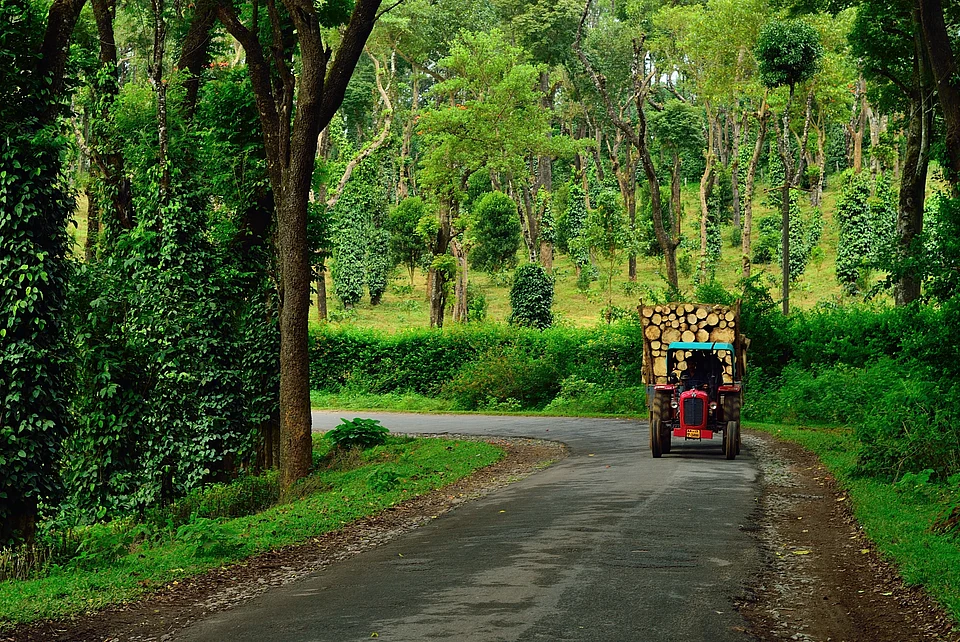
Shutterstock : Book a stay in the coffee and pepper plantations of Coorg

Coorg’s plantation stays sit within working coffee and spice estates, offering quiet retreats shaped by the landscape. From heritage bungalows to hillside cottages, each stay reflects a slower rhythm of life rooted in nature, local culture, and the everyday workings of the plantation.

Old Kent Estates & Spa, Madikeri
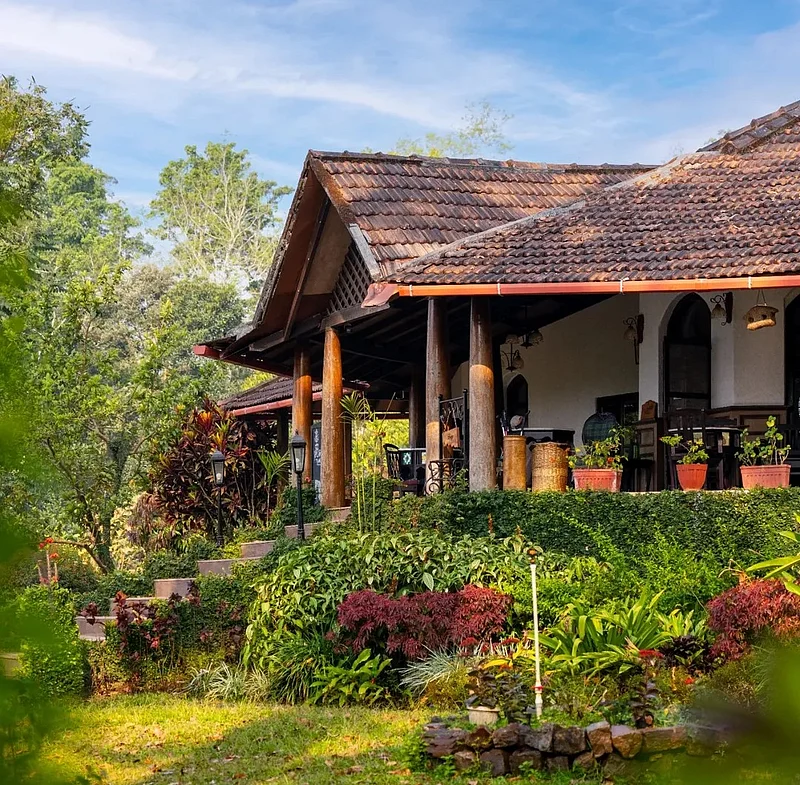
Old Kent Estates & Spa was established in 1864. Photo: oldkentestates/Instagram

Set within a 200-acre coffee and spice estate in Suntikoppa, Old Kent Estates & Spa offers a refined plantation retreat shaped by Coorg’s colonial past. Established in 1864 by British Lieutenant Colonel WR Wright, the property preserves the character of a historic planter’s residence while introducing contemporary comforts. Surrounded by coffee bushes, cardamom groves and towering teak trees, the estate remains deeply connected to the landscape that defines Kodagu.

Design & Spaces

  • The estate blends British colonial architecture with Tudor Revival influences, featuring deep verandahs, period detailing and heritage-inspired interiors.
  • The restored nineteenth-century bungalow, known as The Lodge, houses a library, games room, home theatre, and a formal dining space.
  • Walking trails designed by Italian mountaineer Lorenzo Gariano wind through coffee, cardamom and pepper plantations shaded by teak, rosewood, and mahogany trees.
  • Accommodation includes a mix of heritage lodge rooms and expansive English-style cottages set across the plantation. The cottages feature private gardens, spacious living areas, and large bathrooms equipped with jacuzzis, rain showers, and traditional bucket baths.

Amenities

  • Guests can explore guided plantation trails, birdwatching routes and nature walks across the estate’s 200 acres.
  • The property also offers a spa, movie room, library, outdoor games and telescope-assisted stargazing experiences.
  • Dining at The Perch and Gordon’s Saloon focuses on multi-cuisine fare alongside freshly ground estate coffee and locally sourced ingredients.

The Information

Address: Thaikappa Estate, Horoor Post, Old Kent Estate Rd, Suntikoppa, Kodagu, Karnataka 571237

Room Rates: Approximately INR 7,000–12,000 per night, depending on season, taxes and inclusions

Website: www.oldkentresorts.com

Evolve Back Coorg
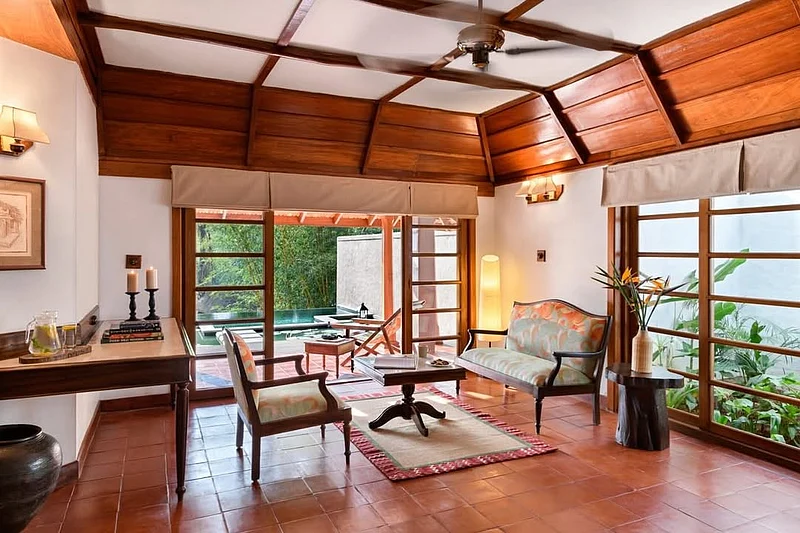
Evolve Back Coorg offers a deeply immersive plantation stay – Photo: evolvebackcoorg/Instagram

Set within a 300-acre working coffee and spice estate near Virajpet, Evolve Back Coorg offers a deeply immersive plantation stay shaped by the landscape of Kodagu. Formerly known as Orange County, the resort combines eco-conscious luxury with traditional Kodava design design and a strong connection to plantation life. Surrounded by dense greenery, the property focuses on quiet, nature-led experiences rather than overt indulgence.

Design & Spaces

  • The resort draws inspiration from traditional Kodava architecture, with tiled roofs, carved wooden doors, rustic interiors and earthy textures that blend seamlessly into the surrounding plantations.
  • Accommodation includes Lily Pool Villas and Heritage Pool Villas, featuring private pools, spacious living areas, four-poster beds, red oxide flooring and plantation-facing sit-outs designed for privacy and quiet.
  • Guided plantation walks, coffeeology sessions and birdwatching trails allow guests to engage closely with the estate’s coffee and spice-growing landscape.

Amenities

  • Dining options include The Granary for multi-cuisine fare and Peppercorn, a speciality grill restaurant overlooking the plantation lake.
  • The property also features the Ayura Ayurvedic centre, infinity and family pools, a reading lounge and a Coffee and Culture Museum dedicated to Coorg’s plantation heritage.

The Information

Address: Chikkana Halli Estate, Karadigodu Post, Siddapur, Virajpet, Kodagu, Karnataka 571253
Room Rates: Rates generally start from approximately INR 29,750–35,000 per night per couple, including accommodation, breakfast, dinner and taxes. Seasonal offers for longer stays may include resort credits and discounted pricing.
Website: www.evolveback.com/coorg/

The Tamara Coorg
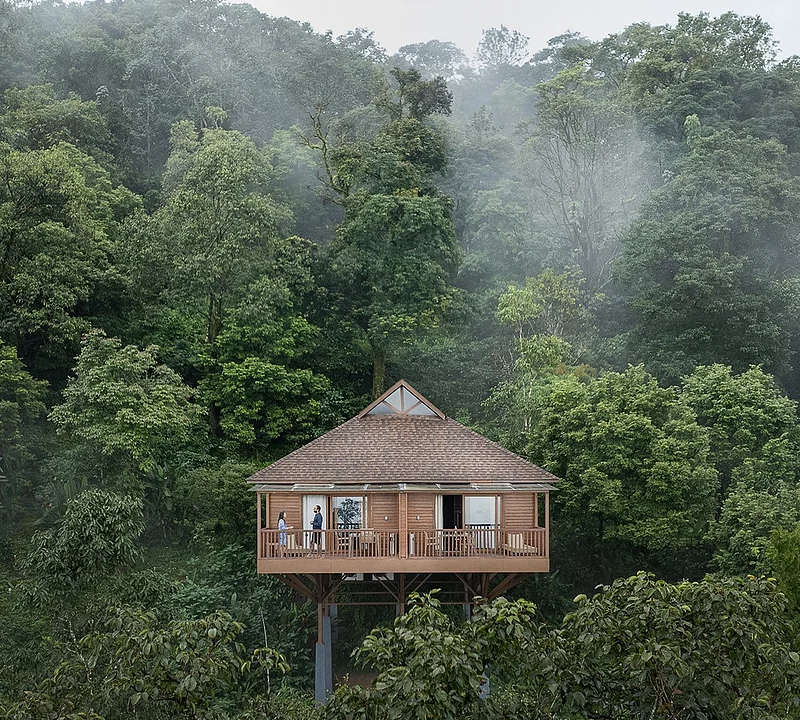
The resort combines eco-conscious luxury with a strong sense of place / Photo: thetamaracoorg/Instagram

Perched more than 3,500 feet above sea level in the Western Ghats, The Tamara Coorg offers an immersive plantation retreat within a 180-acre coffee, cardamom and pepper estate. The resort combines eco-conscious luxury with a strong sense of place, allowing guests to experience the rhythms of estate life while surrounded by dense forest and rolling hills. With sustainability at its core, the property focuses on quiet, nature-led hospitality shaped by the landscape of Coorg.

Design & Spaces

The resort features 56 cottages built on timber stilts to preserve the natural terrain, with architecture inspired by traditional Kerala design and crafted largely from Canadian spruce wood.

Accommodation ranges from Luxury Cottages to spacious suites with private Jacuzzis, all featuring large sundecks overlooking forest canopies, hillsides and seasonal waterfalls.

Plantation walks, coffee-tasting sessions and the signature Blossom to Brew experience introduce guests to the estate’s coffee-growing heritage, while The Verandah — a restored nineteenth-century workers’ residence — now serves as a library and tasting space.

Amenities

Guided treks, birdwatching trails, forest therapy walks and seasonal waterfall explorations form a key part of the experience at the resort.

Dining focuses on fresh, estate-grown ingredients and regional Kodava cuisine, alongside a range of Indian and international dishes.

Sustainability initiatives include organic farming, waste management systems and a no-plastic philosophy integrated across the property.

The Information

Address: The Tamara Coorg, Kabbinakad Estate, Yevakapadi, Napoklu, Madikeri, Karnataka 571212
Room Rates: Rates generally start from approximately INR 25,245 per night for two adults, with pricing varying by cottage category and season.
Website: www.thetamara.com/coorg-resort/

Amni Estate
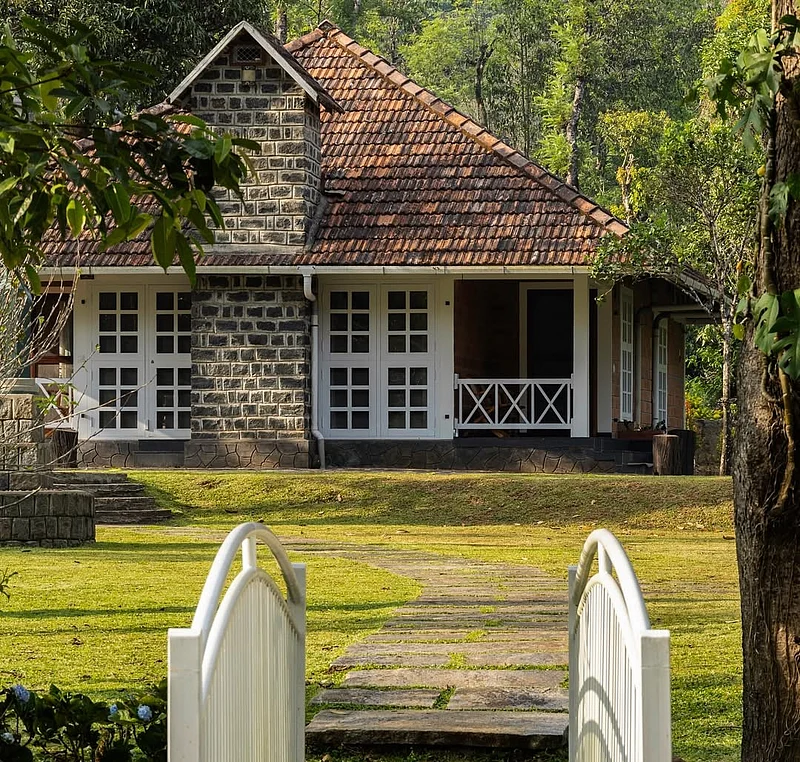
Amni Estates offers a deeply secluded stay centred on simplicity, nature and slow living / Photo: amni.coorg/Instagram

Hidden within a coffee plantation in the hills of Coorg, Amni Estate offers a deeply secluded stay centred on simplicity, nature and slow living. Family-run and entirely off-grid, the property trades conventional luxury for silence, rugged beauty and an intimate connection with the surrounding landscape. With its antique-filled interiors and misty plantation setting, the estate feels closer to a private countryside retreat than a typical homestay.

Design & Spaces

The property features stone cottages built across grassy slopes in the Balyaatra range, designed to blend naturally into the plantation landscape.

Interiors are layered with antiques collected over decades, including Victorian lamp posts, cast iron fountains and reclaimed railway sleepers that give the estate its old-world character.

Accommodation is centred around a two-bedroom cottage suited to small groups, with quiet corners, hammocks and open spaces that encourage guests to slow down and settle into estate life.

Amenities

  • Guided walks through the coffee and spice plantations offer a closer look at the estate’s flora, seasonal produce and surrounding forests.
  • Guests can spend their time fishing in the pond, gathering around bonfires or simply exploring the grounds alongside Zeiss, the estate’s well-known resident dog.
  • Meals are home-cooked and rooted in traditional Kodava cuisine, with family recipes and locally sourced ingredients forming the heart of the dining experience.

The Information

Address: Guyya (near Galibeedu), Madikeri, Kodagu, Karnataka
Room Rates: Rates are generally around INR 12,000+ per night for two, inclusive of meals and curated activities, depending on season and group size.
Website / Instagram: @amni.coorg

Silver Brook Estate
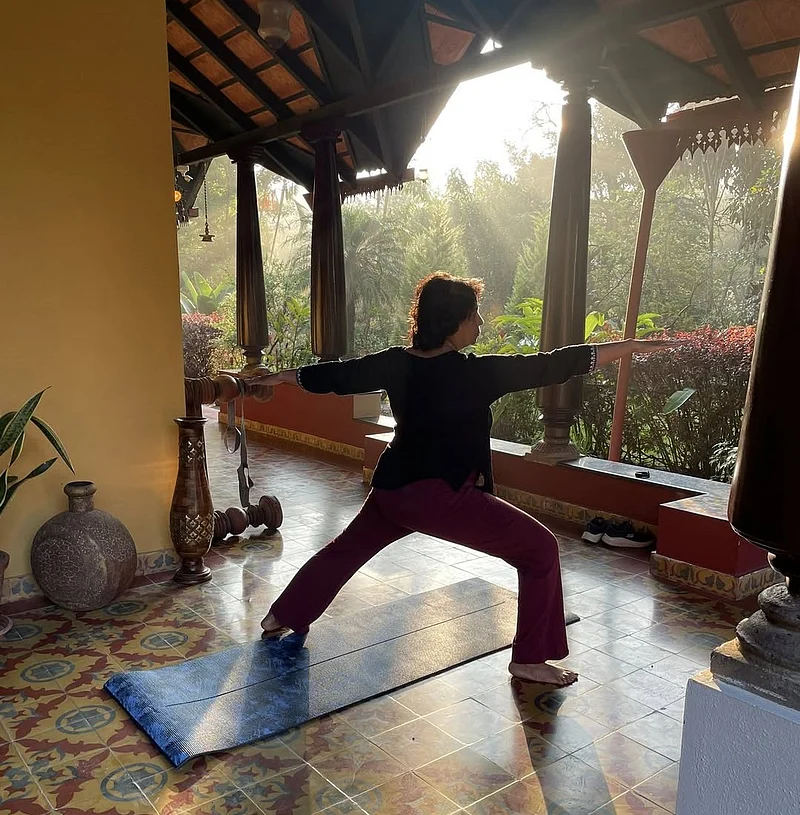
Silver Brook Estate is a quiet homestay shaped by forested greens, silver oaks and a stream / Photo: silverbrook.homestay/Instagram

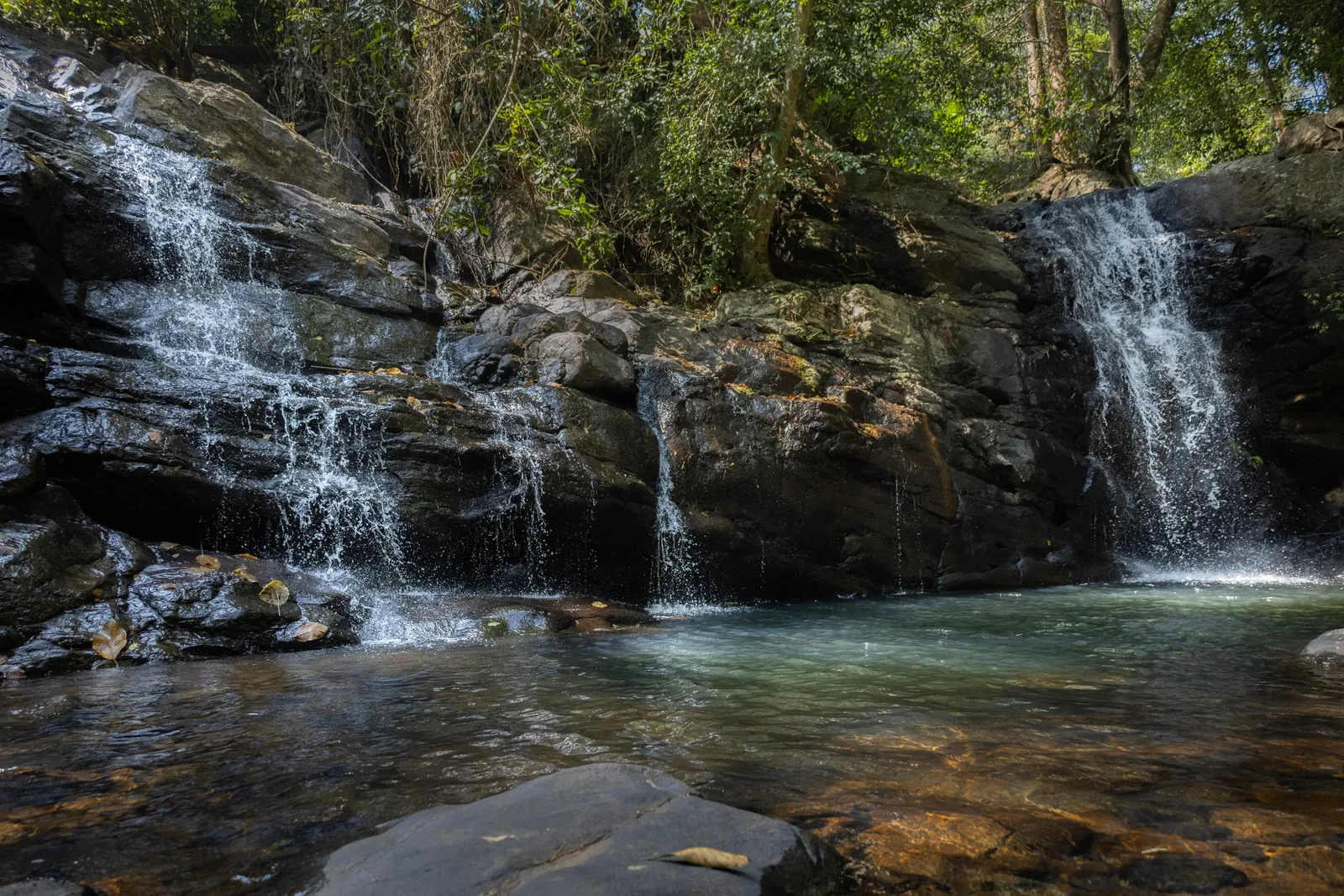
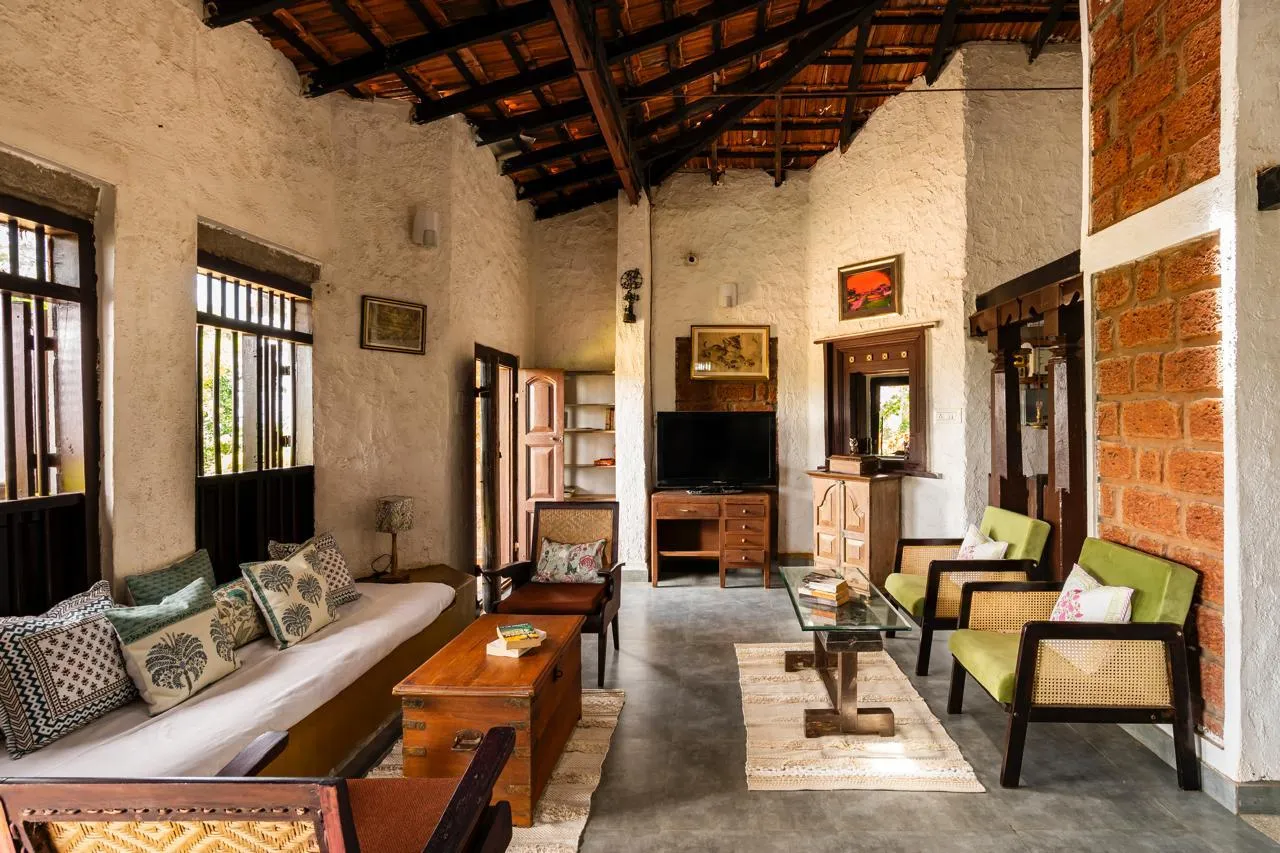
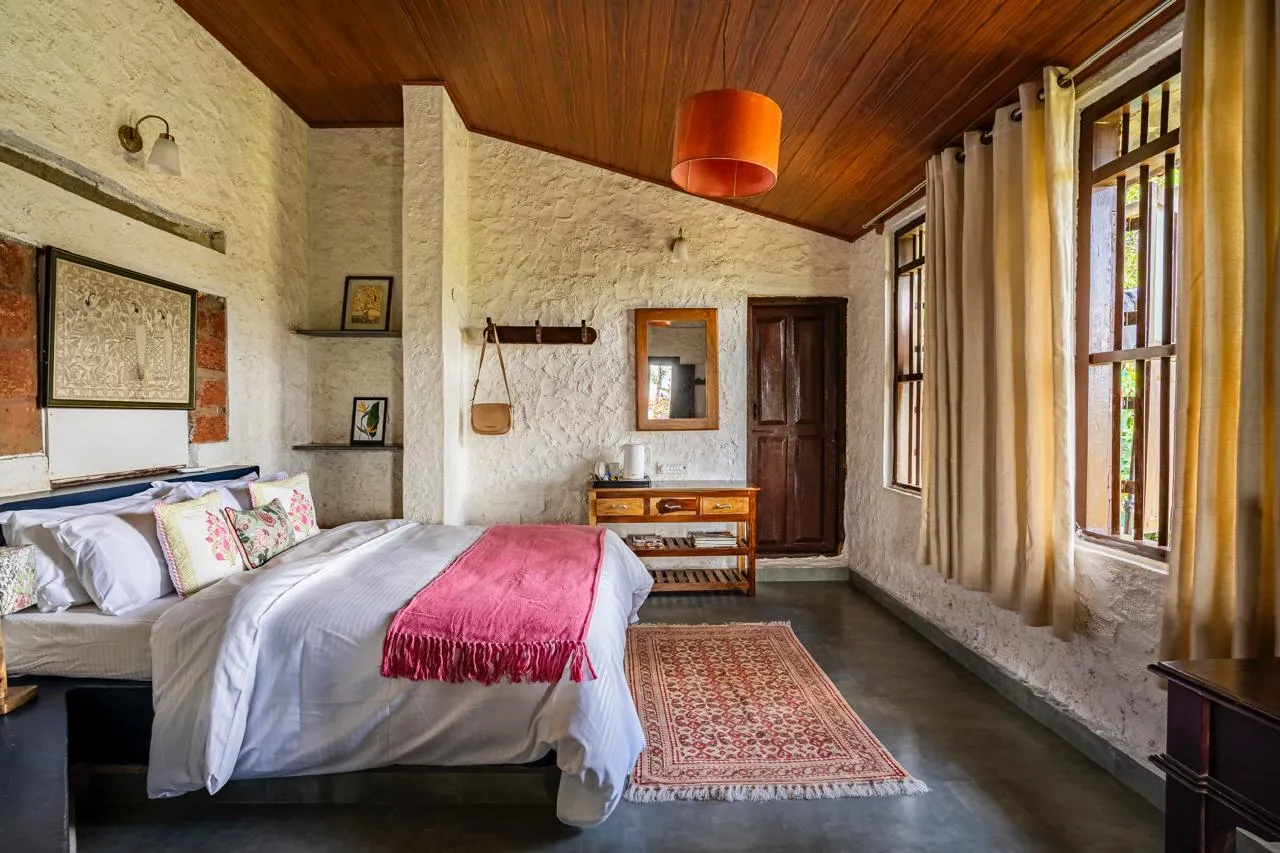
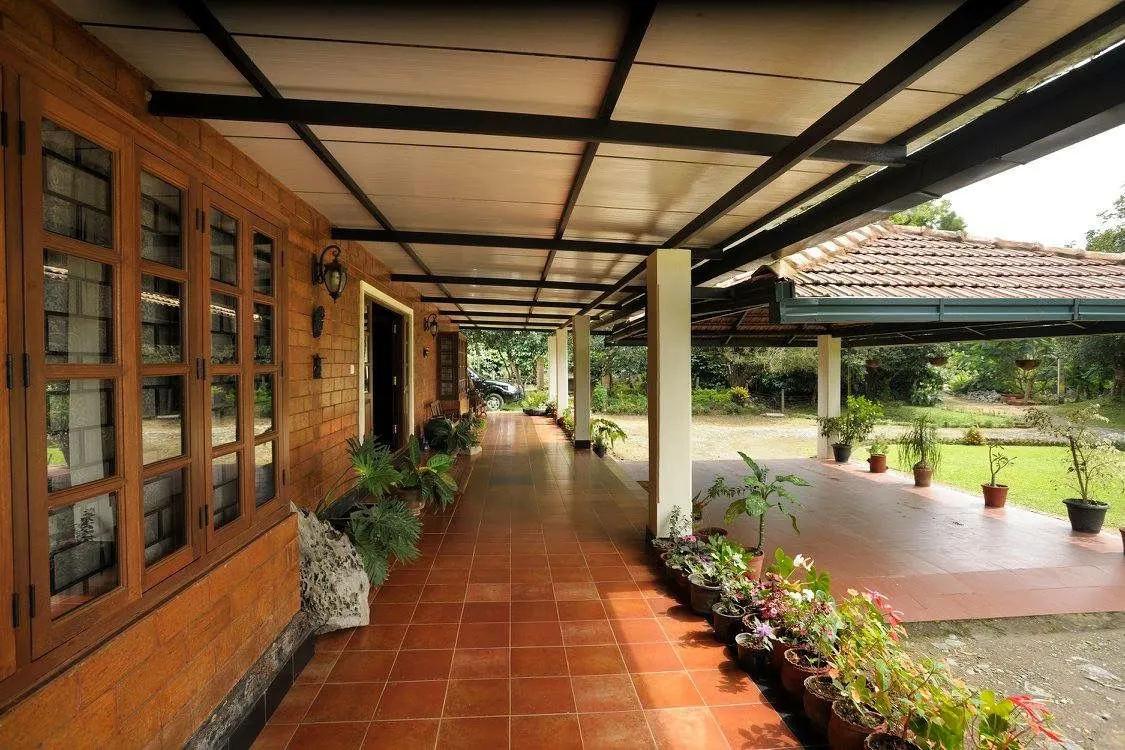
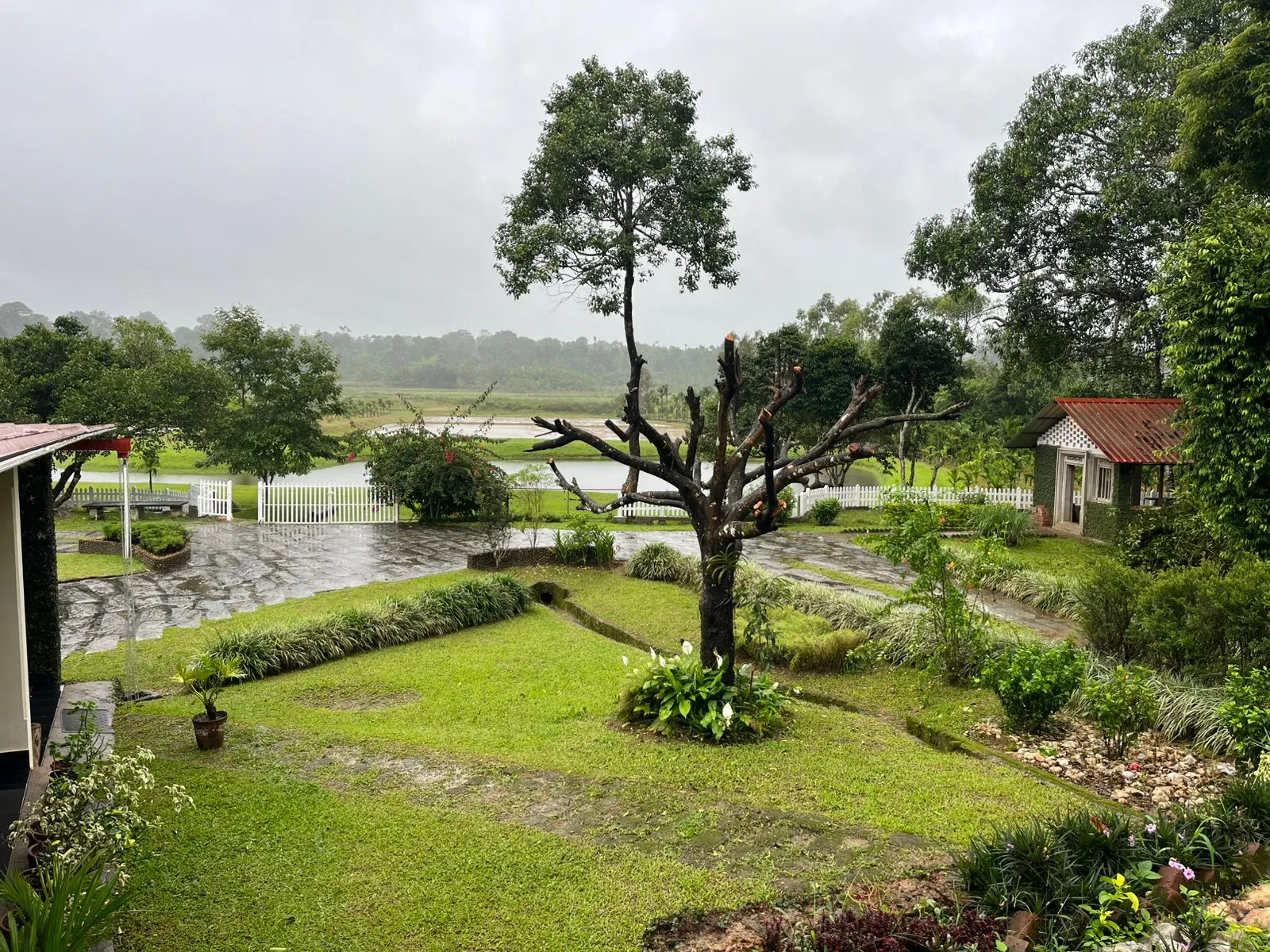
Tucked into a 6-acre coffee plantation in Kadagadal, near Madikeri, Silver Brook Estate is a quiet homestay shaped by forested greens, silver oaks and a stream that runs through the property. The setting feels intimate and unhurried, with bird calls, plantation paths and open sit-outs defining the rhythm of the stay. It is designed for travellers looking for a simple, nature-led break close to town.

Design & Spaces

  • The estate is spread across coffee plantations shaded by silver oak, pepper vines and fruit trees, with a natural brook running through the grounds.
  • Accommodation is set within a main bungalow and select rooms, designed for small groups, couples and families seeking a homely plantation setting.
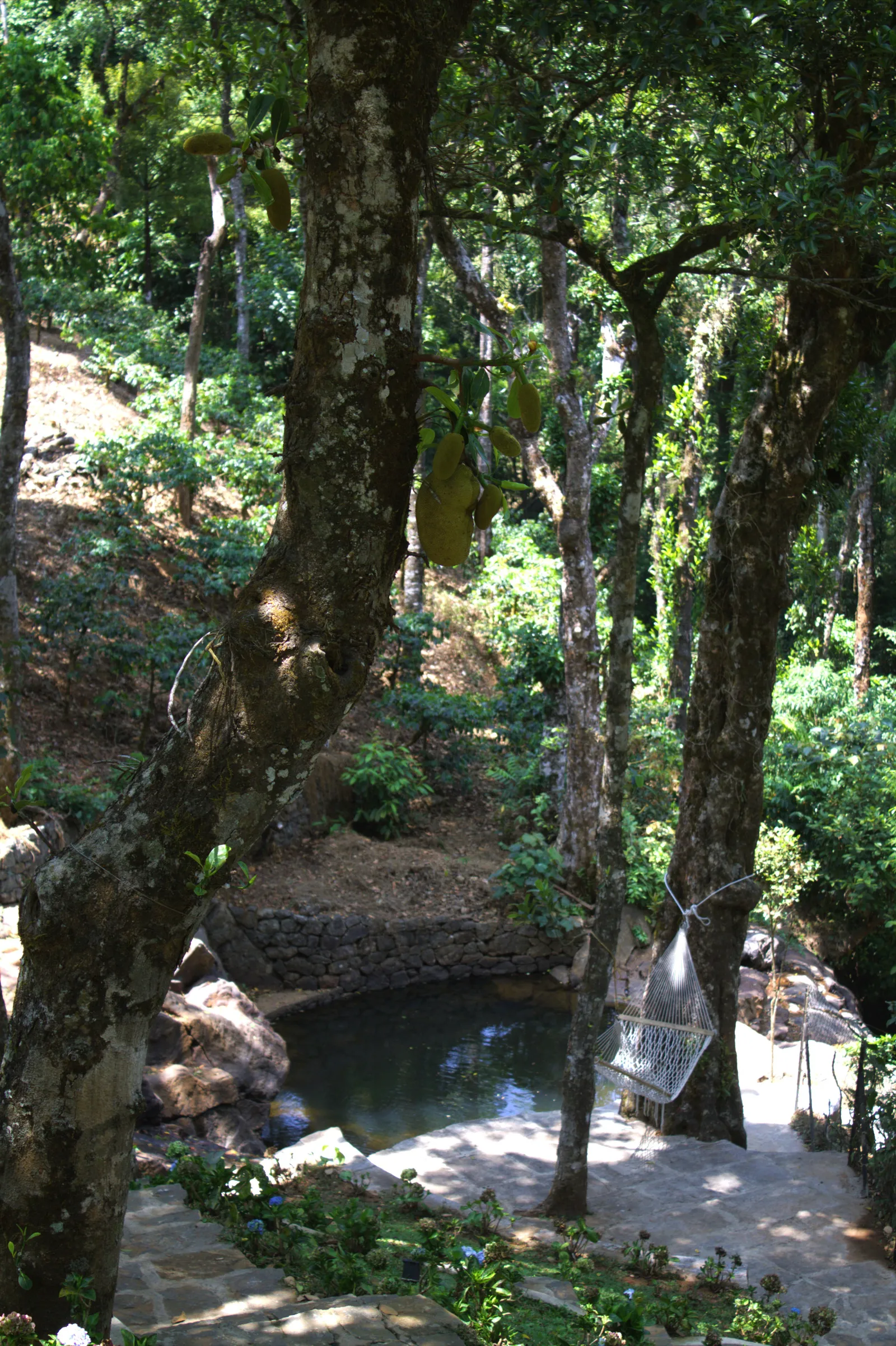
  • Common areas include a library, hammocks and open garden spaces that encourage slow, outdoor living within the estate.

Amenities

  • Home-style Kodava meals are a highlight, with traditional dishes such as pandi curry and pepper chicken served by the hosts.
  • The property supports relaxed activities like estate walks, birdwatching and bonfire evenings in the open courtyard.
  • Its location makes it convenient for day trips to nearby attractions such as Abbey Falls, Dubare Elephant Camp and Nagarhole National Park.

The Information

Address: Kadagadal, near Madikeri, Kodagu, Karnataka

Room Rates: Typically range between INR 5,800–7,400 per night for double occupancy, often including breakfast (season and room type dependent).

Website: www.silverbrookestate.in/home

FAQs

What is a plantation stay in Coorg?
A stay set within working coffee or spice estates, offering quiet surroundings, nature views and a slower pace compared to typical resorts.

Best time to visit?
October to March is ideal for pleasant weather. Monsoon (June to September) is lush but rain-heavy.

How do you reach these stays?
Most require private taxis or self-drive vehicles, as they are located outside town areas and deep within estates.

What activities are offered?
Plantation walks, birdwatching, coffee tours, spa treatments, and nature experiences are most common.

Do I need to book in advance?
Yes, especially during peak season and weekends due to limited rooms.

What should I pack?
Comfortable walking shoes, light layers, insect repellent, and rain protection during monsoon.

source: http://www.outlooktraveller.com / Outlook Traveller / Home> Story / by OT Staff / curated by Anuradha Sengupta / May 18th, 2026
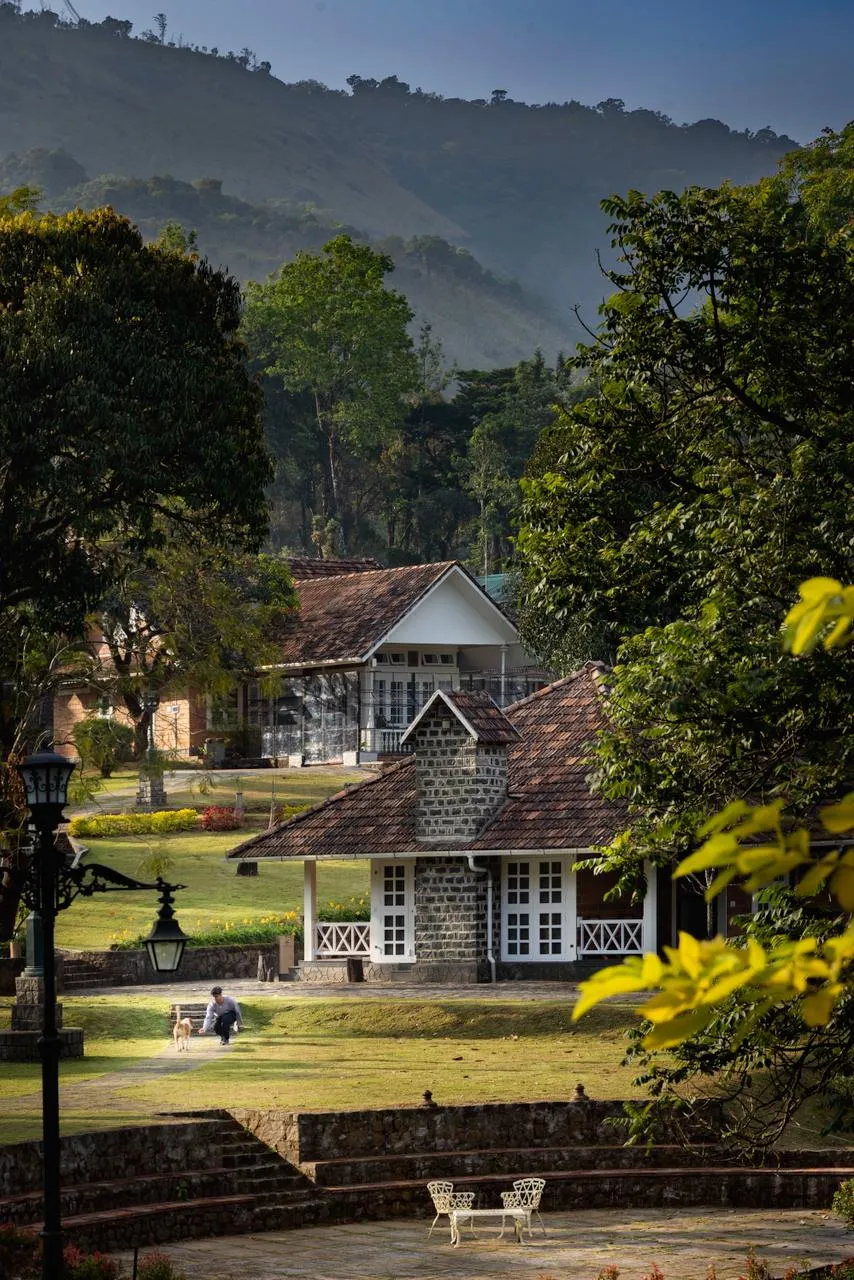
Coffee, mountain views, estate walks: The best plantation stays in Coorg

Across Coorg, estate owners are opening up their beautiful homes to guests. A local shares her favourite stays.

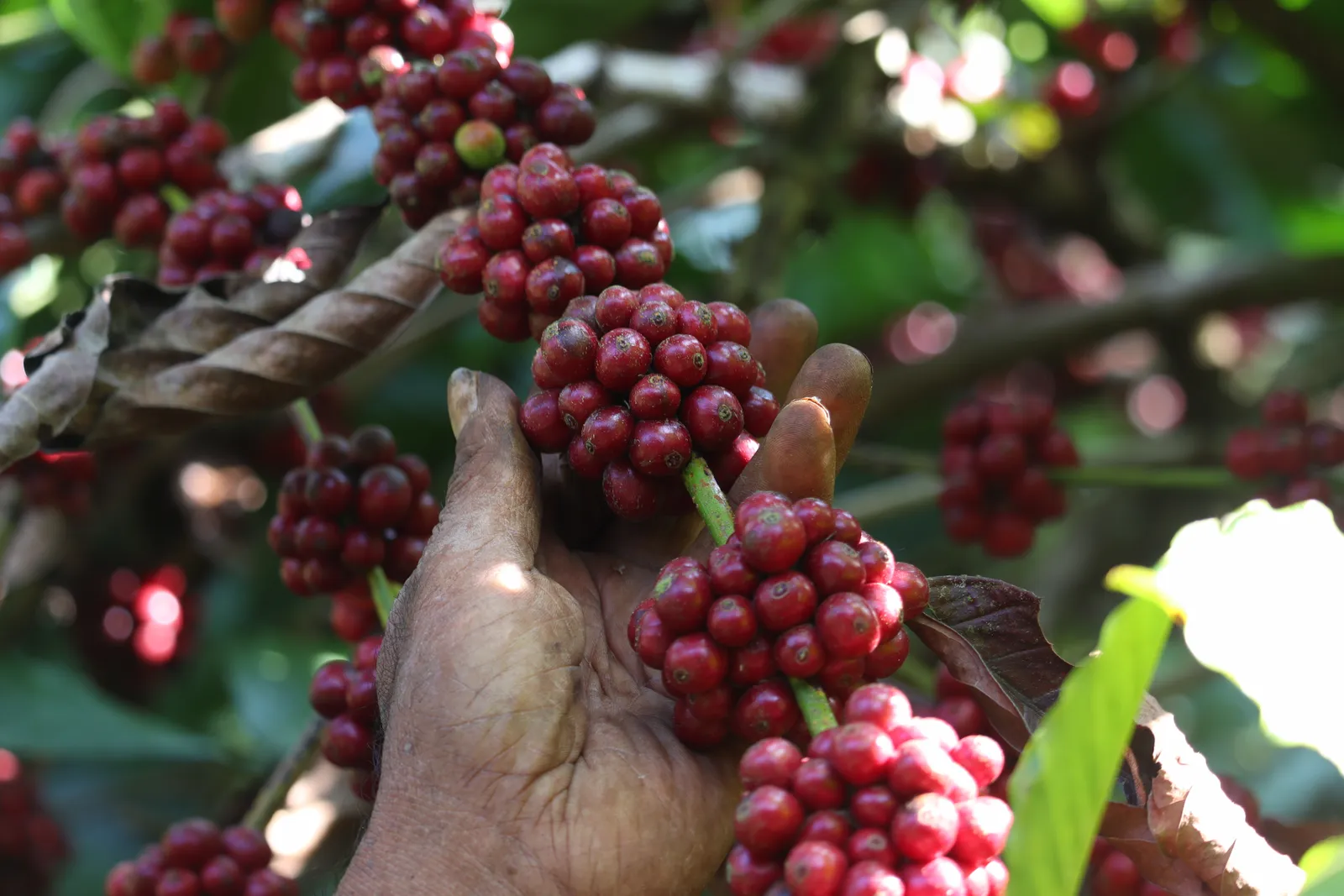
Early mornings  are the busiest hours on the plantations across Coorg. Through the year plantation activities like coffee, pepper and cardamom picking carry on, followed by drying, pulping and roasting that mark the end of the crop harvest. As I walk through the estate, the pulped coffee bean emits a peculiar fermented smell. It eventually grows on you. Soon, with the season of sprinkling and irrigation will deliver a beautiful coffee blossom, and scents of mogra and jasmine will fill the air. It is at times like this when I feel prosperous and grateful for this abundance as a farmer on my estate.

Indian robusta coffee in Coorg /  Pixeled moments/Adobe Stock

There is nothing more fulfilling than enjoying the fruits and crops of your own land. My grandmother would make marmalade from the kaipuli (bitter oranges) on our estate, butterfruit (avocado) with sugar was dessert in the monsoon, rice from our paddy fields made for putts and for tea time she made the best baalé nurk (banana fritters).

By sunset, we’d have to return home from a long day’s work; the fear of wild animals kept us and continues to keep us indoors after dark. The fire is lit to bathe in the traditional bath areas called gudda (with firewood heated water) and cooking for the night commences. Sights of fireflies in the summer and the sounds of crickets in the monsoon are the alarms to finally call it a night on the plantation.

Amni / The Avocado Cows

Most plantation homes are secretly tucked away in the middle of coffee estates and wild foliage. Over here, our nearest neighbour is kilometres away, and roads can be inaccessible. Jeeps and heavy vehicles are our means of transport, gumboots and leeches are our friends, and dogs on the estate are our protectors from wildlife attacking our crops. Over time, plantation owners in Coorg have gone from entertaining friends, relatives and neighbours to extending their hospitality to guests. Homes have expanded, there’s often an annexe, and guests are invited to stay and experience the traditional ‘Coorg life’. Those who used to cook up a storm and have a heaving table for friends and family are now creating food and immersive experiences for guests. Most of these homes, built in Kodava-colonial or traditional styles, have recently become my benchmark for the old ways of Coorg hospitality, and are among my favourite plantation stays in Coorg.

Amni

Amni  / The Avocado Cows

When I first drove towards Amni, Abraham Jose picked me up in his jeep half way. I soon realized the road was not fit for my vehicle. The drive was rocky, and along the way we spoke about all the dishes his mother was preparing for me. Enroute, I was also asked to keep the location of his stay discreet, probably the real reason why he insisted on picking me up, so I would forget the route more easily. The Amni estate is stunning: a charming view of stone cottages across pearl grass, built across multiple levels that look like small grass mounds, where chimneys peep out between the foliage against the backdrop of the Balyaatra range, like something straight out of a Jane Austen novel. Abraham, his parents Rosy and Jose, his two brothers Joseph and Mathew, his wife, Ria, and their grandmother whom they fondly call Ammini, live here. Twenty five years of collecting stone and cast iron antiques like a fountain-mouthed gargoyle, Victorian lamp posts and railway sleepers for a table base add to Amni’s personality. This is a two bedroom stay, equipped with extra beds for a total of five to six members. Overlooking a stone amphitheatre and the Thatacherry estate hills cladded with Arabica and Robusta plantations, the homestay is 30 meters away from the family’s own cottage. A tiled porch with a picket fence offers independent entrances to both rooms. Rooms unfold in a palette of jade frost, pastels, and floral prints. A fireplace in the common room is the cosiest nook for you to curl up in the monsoon and winter months.

Room details / Sitara Cariappa

Stone pool at Amni / Sitara Cariappa

The Paati Polé river flows through the check dam in front of their home, with bridges across it leading up to a stone pool at a lower level of the estate. When Rosie Aunty called us back up for lunch, Zeiss, their dog, accompanied us as we walked up the stone pathway. Under the shade of a pine tree is an antique white stone washbasin with floral tiles and brass fittings. Next to it, a heavy wooden table and iron-carved chairs under the dancing branches of a mango tree is the setting for our meal. The spread includes Surmai fry, Prawn gassi, Kaaké Thopp paliya (black nightshade), Rasam and Rice–a typical Syrian Christian spread, inspired from their roots near Kottayam. I ate three servings. As we ate fresh strawberries from their farm behind the house, served with cream, the Jose family told me of their journey from Kannur to Coorg, their love for fishing and cooking; and fulfilment in life with four generations living together in this beautiful estate.
Doubles from Rs 12,000 per night for two (includes all meals, BBQ, immersive experiences like treks, birdwatching, stargazing and jam making, all led by the Jose family)
Location On request; Contact: Abraham Jose, +91 85475 86562; IG: @amni.coorg

School Thota

The homestay and host Saraswathi / Sitara Cariappa

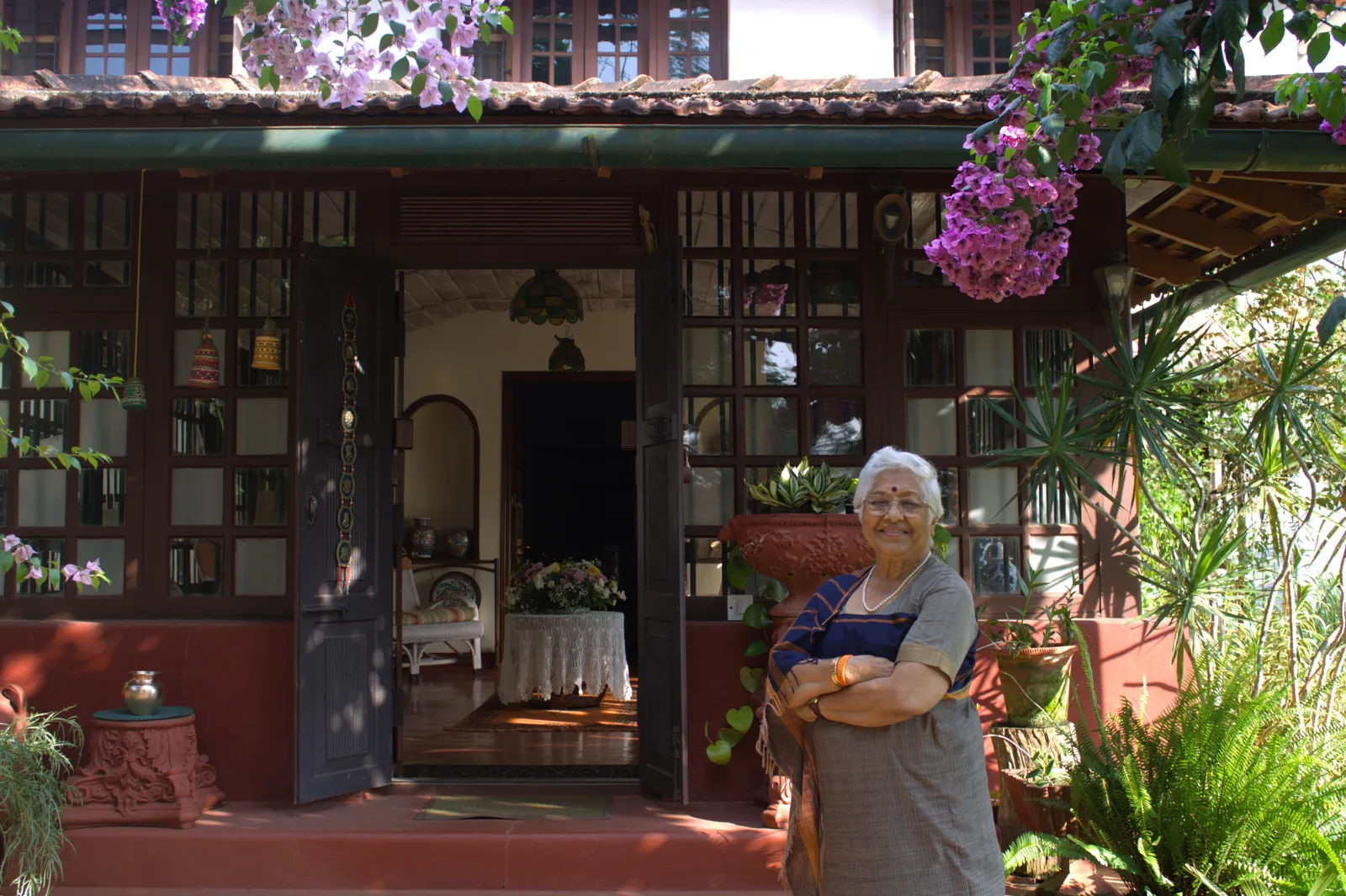
My friend Kelapanda Kushalappa, whom I fondly call Sajan, and his mother Saraswathi Aiyappa, have been custodians of the homestay culture in Coorg for the past 15 years. Generations of this family have lived in the Robusta plantation’s home for almost 150 years. This plantation was initially run by the East India Company, who organized coffee cultivation in Coorg and sent the proceeds from these estates or thota to British-run schools in Coorg, hence the name School Thota. Originally the home of Rev. Georg Richter in 1855, the property was bought by Kushalappa’s great grandfather in 1908. Today a portion of the estate is where mother and son reside and continue to manage the plantation operations and run this homestay.

I entered School Thota through the small town of Guyya, crossing multiple TATA-consolidated plantations and arrive at a large bungalow overlooking a garden with a bird bath, an elevated gazebo surrounded by hydrangea, fern and hedge roses, and beyond, the Kelapanda family’s prosperous estate. On a clear day the hills of Mercara are visible too.

The upstairs bedroom space / Sitara Cariappa

Bedroom School Thota

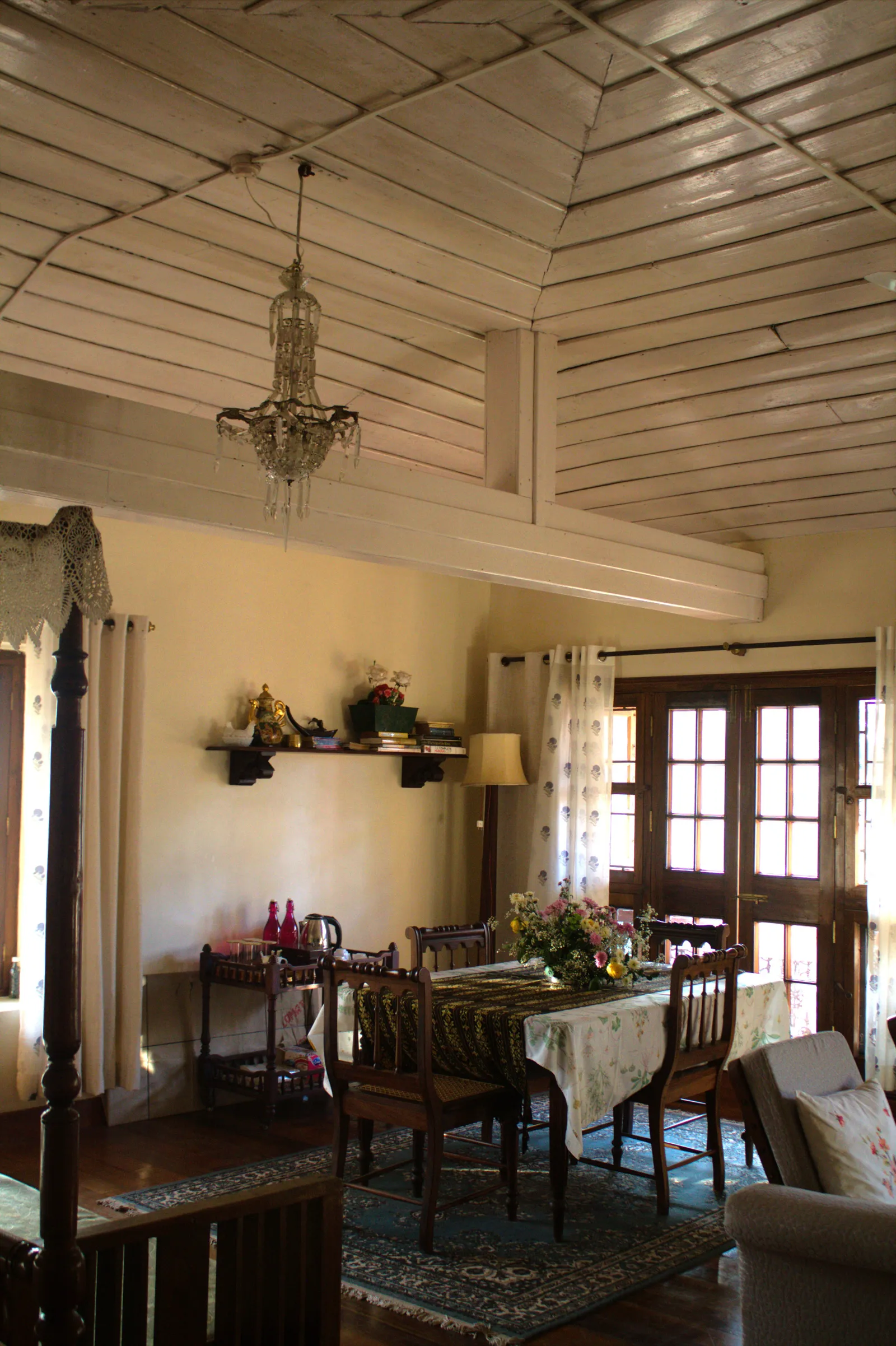
School Thota is a charming home with three guestrooms (excluding the owner’s space), five bathrooms, an attic and two kitchens. A sun room with square windows is a standout section in this home, at its entrance the bougainvillea trees is where Saraswathi Aunty welcomed me, wearing a Kodava podiya (a Coorg-style draped saree).

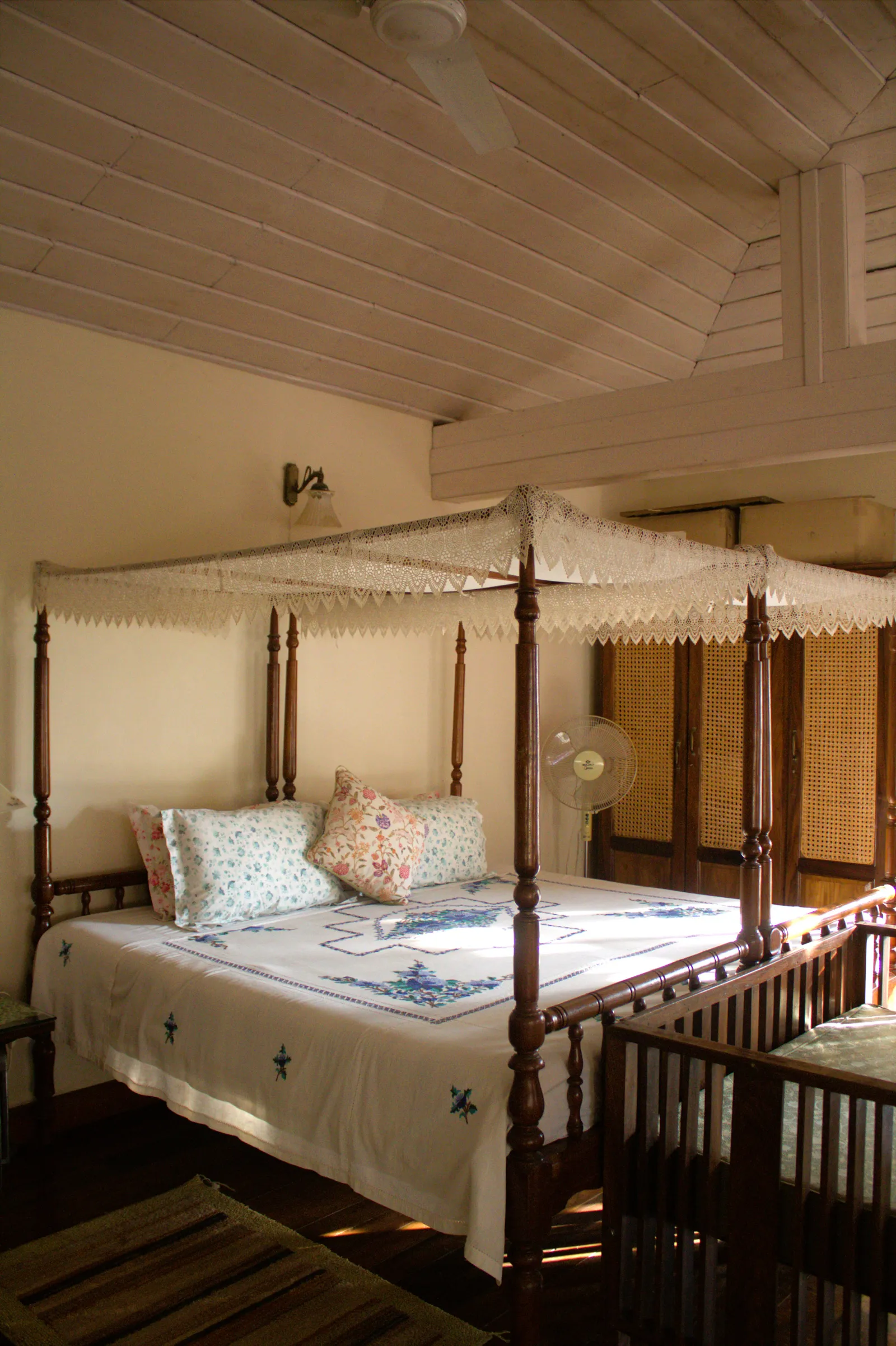
This home is studded with antiques, art work by the family, crochet and lace on tables made by Saraswathi Aunty, vintage hat racks and tapestry on the walls. There’s a large fireplace in the drawing room with a mantlepiece lined with family photos, and each room thereafter has height-adjustable chandeliers and pulley lamps. Each guestroom has a four poster bed, dressing table, pull out vintage writing desk, and ceramic animal figurines in the bathrooms.

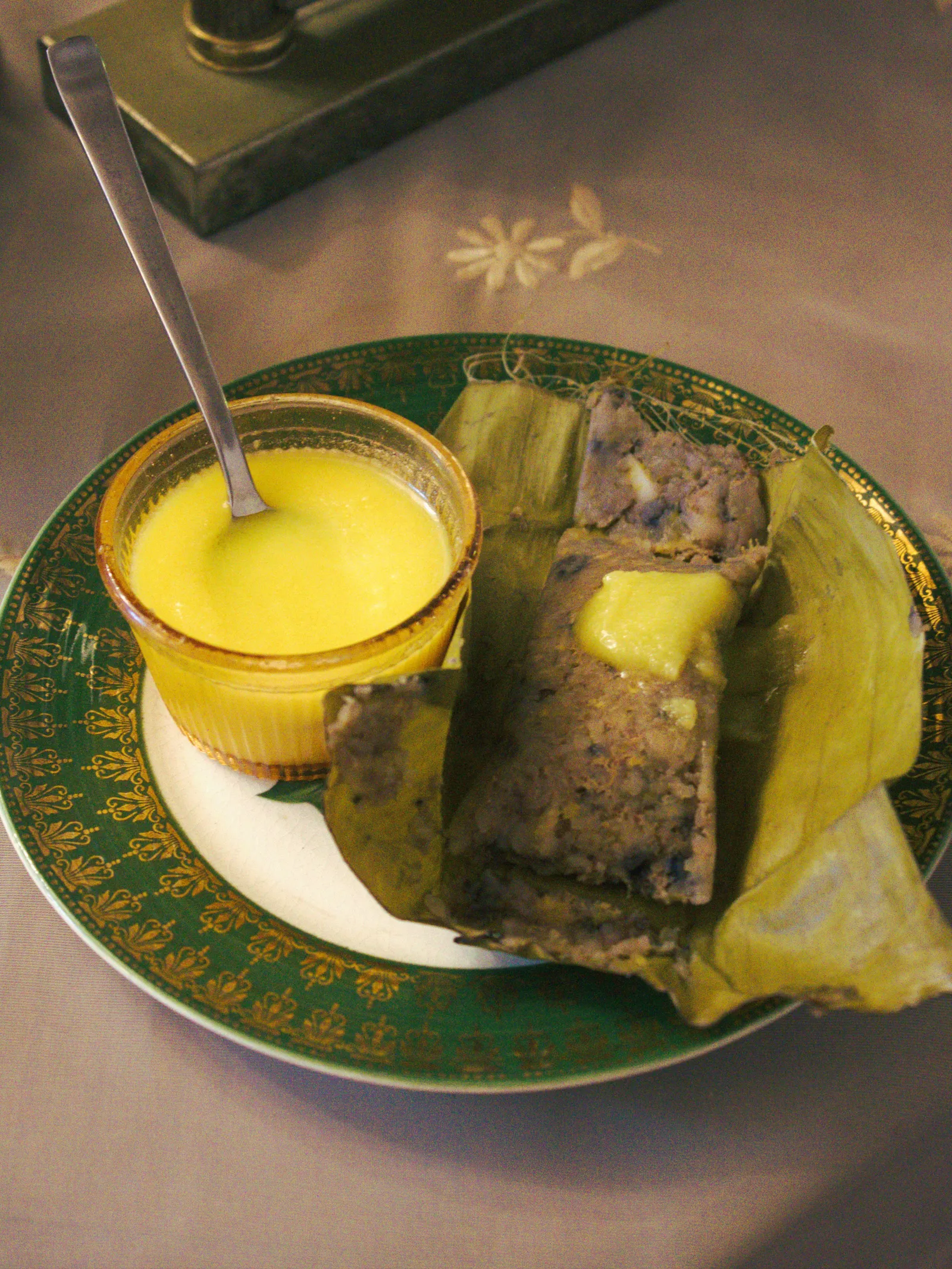
Kooléputt with Ghee / Sitara Cariappa

Kadambutt with Pandhi Curry / Sitara Cariappa

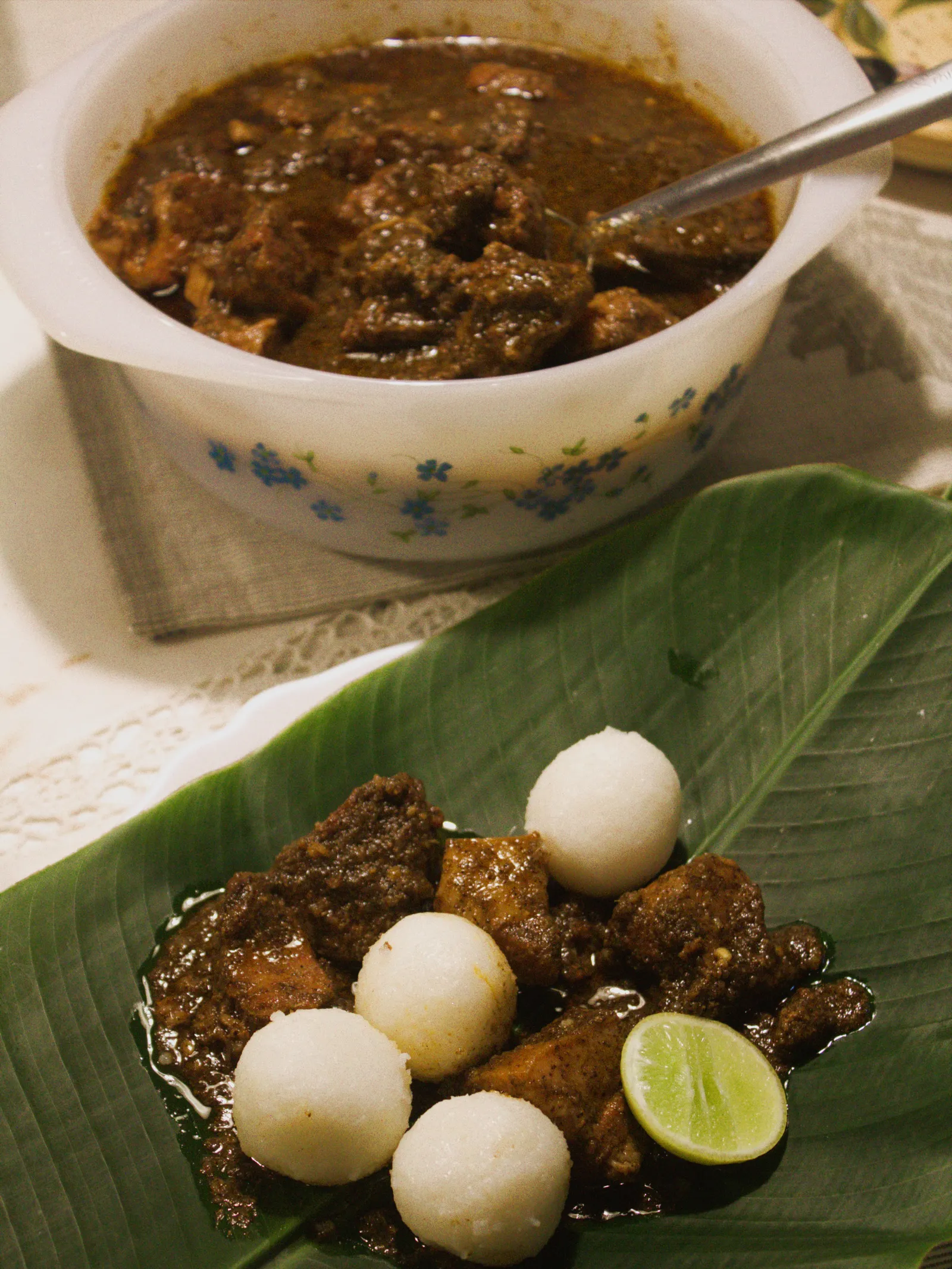
At 4.30pm, with murukus and tea, I was served Kadambutt (steamed rice balls) with Pandhi curry (Kodava style pork curry), a very common high tea meal in Coorg. While I moved on to Kooléputt (steamed bananas or jackfruit cakes in banana leaves) Saraswathi aunty started lowering the dining table lamps with a stick before the sun set. The rear of the house has a sunken open courtyard–a green corner that leads to the owner’s living space. This is a homestay for those who want to listen to stories of the old days, the plantation life in Coorg, to admire the architectural transitions between European and Kodava styles, and to cook authentic Kodava cuisine with a legendary grandmother.
Rooms from Rs 9,000 per night per room (includes breakfast & dinner) (extra charges for lunch picnics by the river and cooking session with Saraswathi Aunty)
Location: Ammathi Post, Guyya, South Coorg; Contact: Sajan Kushalappa, +91 9841023770, +91 9481723770 (landline: +91 8274298115); IG: @st571211

Captain K’s Getaway

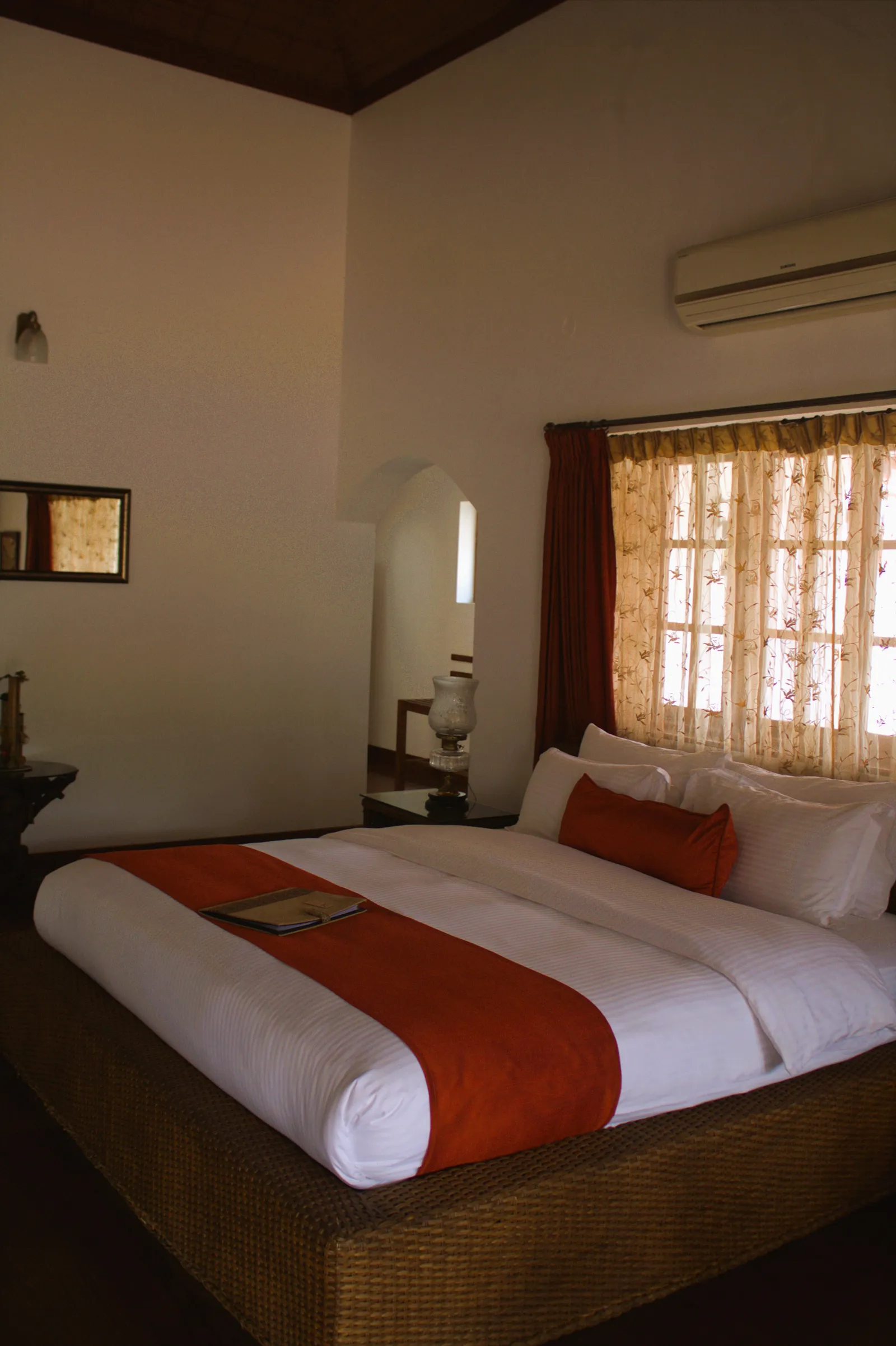
Bedroom / Sitara Cariappa

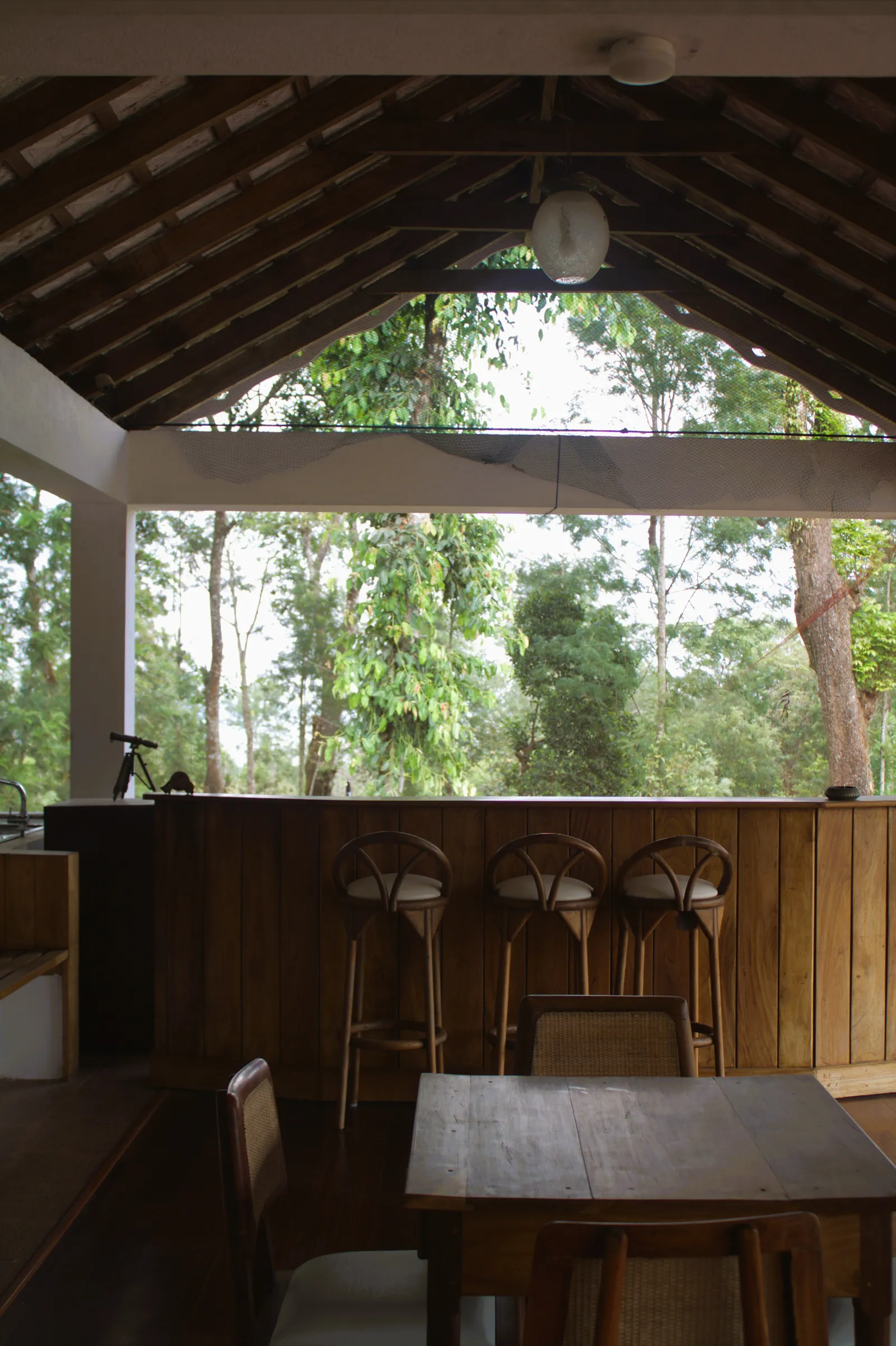
Outdoors bar / Sitara Cariappa

Leila Alvares’s homestay Captain K’s Getaway was named after her late father, Captain Kieren Alvares. He and his wife Lavinia Alvares built a cottage on this 75-acre property and named it Glendale. A few kilometers from the town of Mercara, this is where Lavinia planted a lychee tree 40 years ago that today provides shade to the fine courtyard at the front of their now renovated bungalow that’s cut into the hill.

Food at Captain K’s Getaway / Sitara Cariappa

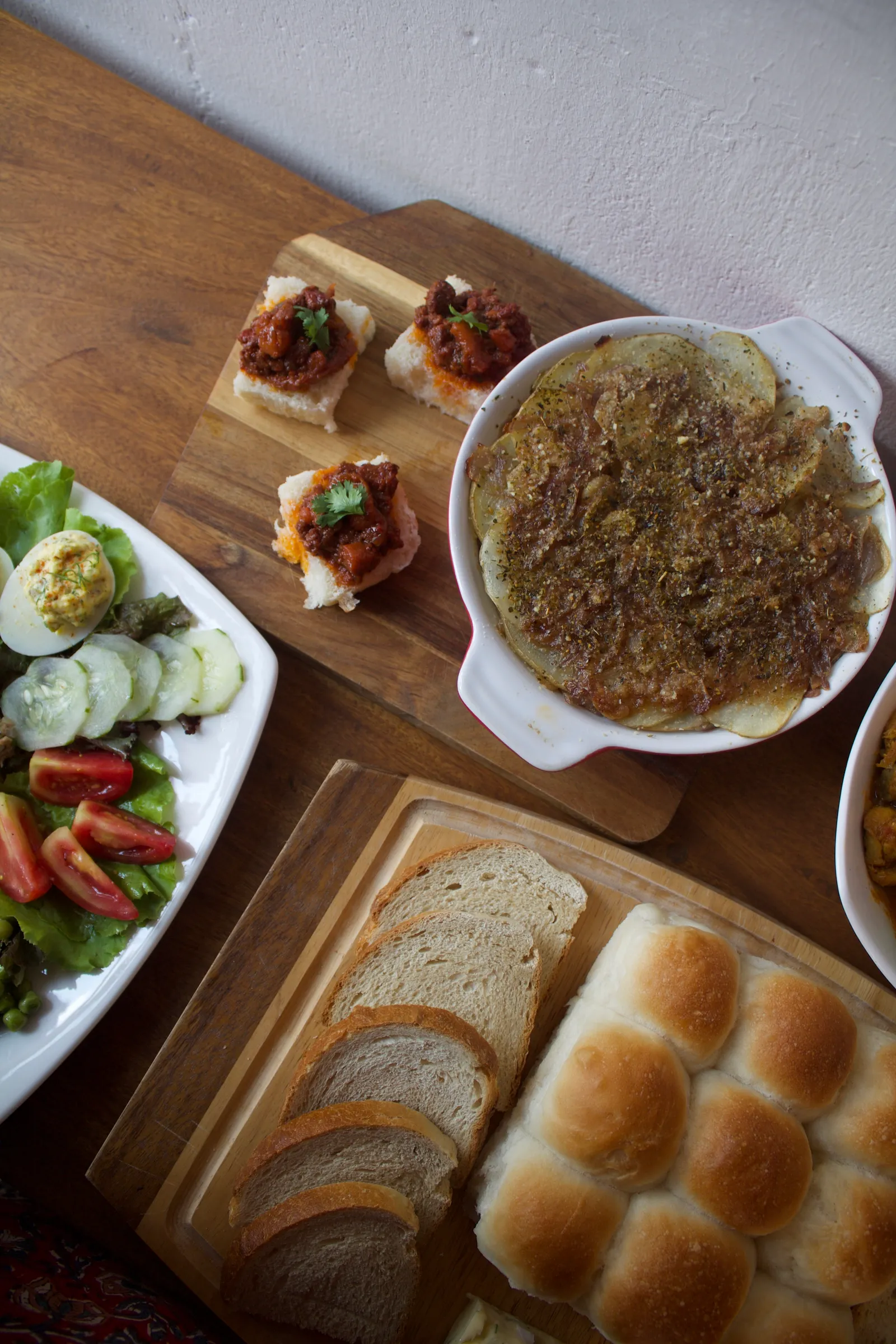
Some years ago, when I met Leila at Captain K, she hosted some of my friends for a grand BBQ evening – pork spare ribs, barbeque chicken legs, creamy corn, potato salad with bacon, fresh salad sourced from the organic garden and chocolate fudge cake with home-made ice cream. After 10 years, nothing has changed. Leila and her children Kieren and Keira continue to cook one of the most lavish spreads from scratch. This time I ate Mangalorean pork baffat, chorizo pork on pav made by Keira and a chocolate mousse by Kieren. Given their Goan-Mangalorean roots and Anglo-Indian exposure, Leila is an exceptional cook specialised in those respective cuisines in addition to Kodava and Mediterranean. Her beautiful kitchen space is always the warmest and always in full swing, especially with her fondest sleeping in this space – Cookie, Sox, Charlie, Julie and Fuzzy.

Her home is grand with fine teak woodwork, beside which is a two-bedroom homestay in an annexe. In this space, each room has a fireplace and overlooks the courtyard in the front, and a majestic coffee estate beyond the vast swimming pool and BBQ deck. Leila’s home and Kieren’s outhouse is wood-paneled on the inside and flooded with books. Her home reminds me of a large country barn, luxurious and well lit, with hidden entrances and exits, sky roofs, marine and beach inspired fixtures and knotted bouquets of paddy around the roof rim to keep bats away. An organic garden stands below the elevated home, next to it a coffee pulper and dryer. Kieren roasts the processed coffee from the estate in his unit next to his living space. Here, I got to try a hot cup of pure Arabica from Glendale estate’s first harvest batch (aero pressed) while he continued to tell me about the coffee tasting experience he provides to guests.
Rooms at Rs 7,500 and Rs 10,000 per night per room (includes breakfast, jeep ride around the estate, a home theatre experience, swimming pool access, coffee tasting) (extra charges for dinner and massages at the deck)

Location: C/o of Glendale Estate, Kadagadal Village & Post, Sidapur Road via Chettalli, Madikeri 571248, Coorg; Contact: Leila Alvares, +91 98860 55868; Website

Jade Hills

Drawing Room /  Ajay Devasia

When I worked at the Taj Hotels in Gaalibeedu, I would look at the distant hills across the lobby and wonder who lived in the beautiful cottages there. I finally met their occupants this month. Kavya Thimmaiah and Prasanna live on a hillock in the most picturesque part of Coorg. Kavya’s mother Jaji named their estate Jade Hills as an ode to the evergreen ranges all around, and that is what their home and homestay is called today.

Designed by father-daughter duo HC Thimmaiah and Kavya, both architects, this five-bedroom cottage in Gaalibeedu is accessed by a steep winding climb, followed by a clear landing and a dramatic view of the southern Western Ghats and deep valleys. Red clay tiles run through the verandah and the plantation chairs in the sit out overlooks a stone-pillared gazebo at the front and a lawn with a bonfire pit to the left. Porous red brick walls, repurposed and salvaged furniture, and laterite pillars add a raw and earthy feel to the space.

Room at Jade Hills / Ajay Devasia

The owners live in the main cottage in one of the bedrooms and the other four rooms (two at the main house level and another two are built 15ft below the main cottage). Prasanna and Kavya shuttle between Bengaluru and Coorg, but Prasanna is always here to welcome guests. At this altitude, the weather always remains cooler and during the summer months, witnessing the swarm of fireflies is a gift. Rich with Shola forest, this property has been developed with eucalyptus, jackfruit and silver oak trees, a traditional home with a local family who cook up the most delicious Kodava meals. Along with local guides, Prasanna organizes treks, chasing fireflies and picnics. Jade Hills is probably the one place I would go to take refuge in the monsoon months in Coorg. Here the bonfires, pink skies and silhouettes of fig and fern trees sway to the ‘gaali’ (wind) of Gaalibeedu.
Rooms at Rs 10,500 per night per room (includes breakfast) (extra charges for dinner, treks and seasonal firefly chasing)
Location: Kaloor Road Galibeedu, village, District, Madikeri, Karnataka 571202; Contact: Prasanna, +91 98450 04668; IG: @jadehillsmercara

Chengappa Estate Homestead

Exterior view /  Sudeep Gurtu

Spending time with Vinoo (KC Aiyappa) involves listening to LPs of Frank Zappa as he narrates stories of the forgotten ways of our Kodava ancestors in the fields of food and hospitality. His 10-acre plantation home and homestay, Chengappa Estate, is a Robusta plantation interspersed with pepper vines and arecanut groves. The house overlooks paddy fields, a water body, and the Kunda betta (hill) beyond. A picket fence and a stone porch lend a storybook feel. A tall Yecchi tree stretches over the house, built in 2014 but peppered with antiques, tools and utensils that are 80 years old. Three guest bedrooms are within the main house and the fourth bedroom is the host’s. So as not to disturb the undulating land, the home is built across three levels, without using cement or plaster, only interlocking laterite blocks. Interiors are warm and cosy, with a wood varnish finish and the three colours of Athangudi tiles–green, ochre and red.

Exterior view /  K.C.Aiyappa

Meenakshi, his oldest staff and cook, prepared the tastiest Kodava meal, a khaima (kheema) curry, mutton chops and nei kul (ghee rice). I am told that for breakfast, akki otti (rice flatbread) is served with euhl pajji (sesame seed chutney)–my grandmother’s favourite. Rice comes from the paddy fields in the front of the homestay.

The dogs, Frank Zappa, Muddy Waters and Willy Wanka / K.C.Aiyappa

The three main characters here are his dogs, Frank Zappa, Muddy Waters and Willy Wanka; they accompany you on estate visits and fishing by the pond, where you can use Vinoo’s fishing rods to catch baraemeen, rohu, katla or grass carp. Days on the estate are for foraging, especially when the seasonal pannpuli produce is used to make kachampuli (a black vinegar liquid extract from the pannpuli fruit). Vinoo uses the work shed at the entrance to make bottles to sell. And nights at Chengappa Estate are for the sound of cicadas and the crackle of the bonfire, and an endless expanse of paddy fields above which lie starry skies against silhouettes of the Kunda range.
Rooms at Rs 6000 per night per room (includes breakfast) (extra charges for lunch and dinner)
Location: 5 kms from Ponnampet Town and 1 Km from Kundha School (B Shettigeri Rd.), Kundha, Coorg; Contact: KC Aiyappa, +91 98454 93688; IG: @coorgvillager

source: http://www.cntraveller.in / Conde Nast Traveller / Home> Hotels & Homestays / by Sitara Cariappa / April 20th, 2026

Mandh, the curator of Kodava culture

While documents mention mandhs as paisari land, they are much more than just a piece of land — they are cultural hubs preserving the rich traditions of the Kodava community.

Two Kodava men perform Pare Kali 
Two Kodava men perform Pare Kali

Madikeri : 

A land narrates the culture of the people who reside on it.

Similarly, ‘mandh’, also known as ‘mandh maani’, are tiny pieces of land found in villages of Kodagu, which intimately recite the identity, culture, traditions and way of life of the Kodava people. Even as these pieces of land are given sacrosanct status in several regions of Kodagu, they come alive with vibrant culture during the festivities of the Kodavas. Rich greenery surrounded by age-old trees and serene mountain peaks and the silence of nature broken by the sound of traditional drums and people dancing in tune with the rhythmic sounds — this is a common sight in the mandh regions after the harvest festival of Puthari across Kodagu. 

While documents mention mandh as paisari lands, they are much more than just a piece of land — they are cultural hubs preserving the traditions of the Kodava community.

“Known as the cultural centres of the Kodava community, mandhs come alive with traditions and culture once or twice each year. Folk dance, art, culture and traditions of the Kodava community are exhibited on mandhs. While mandhs are mostly sacrosanct places, they bustle with activith during Kailpodh and Puthari festivities,” explained Madetira Beliappa, former joint secretary, Madikeri Kodava Samaj, a member of Kodava Sahitya Academy and an artiste at Madikeri Akashvani. He is also president of the uru mandh (village mandh) of Kadagadal village.

A group of men perform Balo Paat, a traditional performance, during a temple festival 

As he explains, mandhs are a connection between an individual and society. They play the role of multipurpose auditoriums and have taken up preserving and promoting the rich Kodava culture. “Mandhs are the first places that introduce the culture of the community to children. They also adorn the role of training spots,” K Shashi Somaiah, a resident of Madikeri, adds.

Promotion of culture, tradition
After Puthari, the community participates in a cultural extravaganza. Cultural programmes are not hosted amid the four walls but on mandhs. Puthari Kolat is a folk dance that is hosted right after a harvest. After paddy is harvested, every village hosts Puthari Kolat aka Puthari Mandh Namme across the mandhs. While Kolata is performed with colourful sticks that are usually short, lengthy canes are used to perform Puthari Kolat. The villagers get together at the mandh even as they take part in the Kolaat.

“During ancestral times, Puthari Kolat used to be hosted across all mandh regions up to five days after Puthari. While the Kolat started off at one mandh, it ended at the main mandh of the district on the fifth day of the festivities. After this, the sound of the canes falls silent,” explains Beliappa. He, however, added that Puthari Kolat is now hosted across the mandhs throughout the month.

Right after the timings are fixed following astrological readings to observe the harvest festival of Puthari, every village prepares to host Puthari Namme across the mandh regions. “Currently, committees are formed by villagers to host these cultural programmes. Every village has a head from one particular Kodava clan and they are called thakkas. They call for a meeting even as finance for it is crowd-funded,” Beliappa adds. While Koalat forms the basis of the cultural programmes, several other folk arts, including Balo Paat (songs in praise of the village, village heads and deities), Bolkaat (traditional lamp dance), Umathaat (a traditional dance performed by women) and Pareyakali (a mock fight with canes to exhibit the warrior culture) also take place.

A group of Kodava men perform Kolaat in their traditional attire

Apart from Puthari, the mandhs also come alive during the festival of Kailpoldh. While Puthari calls for a cultural extravaganza, Kailpoldh festivities call for unique sports activities — from coconut shooting to throwing heavy stones, the mandhs exhibit the warrior culture of the Kodava clans. 

The mandh is also filled with activities during the ancient practice of nari mangala (tiger wedding). As Beliappa explains, “Kodavas were warriors who often hunted in the bygone era. When a warrior kills a tiger, a ritual called nari mangala — where the warrior is married to the tiger he killed – is conducted with unique wedding-like rituals.”

Kinds of mandhs

Mandhs are categorised into different types and have an ancestral history. In ancestral times, mandhs were not just cultural hubs but played a more serious role of courts providing justice. Any village dispute would be settled amicably in mandhs. Like the hierarchy in courts, mandhs were also divided into categories.

Vaade is the mandh attached to the traditional houses of Ain Mane and they are in the possession of a single family. Then there is Keri mandh which belongs to the entire village. Uru mandh falls under two or more villages and the Naad mandh are regions that fall under a cluster of big villages. Seeme mandhs are the biggest mandh regions, which according to community elders, hold the prominence of the Supreme Court that declares the final verdict.

Mandhs started losing their importance a few decades ago. While the district had over 240 mandhs, only 70 to 80 exist now. Encroachment, government possession and other factors led to the deterioration of the sacrosanct mandhs. Nevertheless, the community is now alert about this situation even as several individuals, Kodava Samajas and other Kodava organisations have initiated the task of reviving mandhs. As Beliappa explains, “As per land documents, mandhs are paisari lands that come under the possession of the government. Over a decade ago, several development projects were carried out on village mandhs by the government. However, the community is now alert and several mandhs have been revived. The community will continue to preserve these sacred lands and changes need to be made to land documents to ensure permanent protection.”

source: http://www.newindianexpress.com / The New Indian Express / Home> Good News / by Prajna GR, Express News Service / January 07th, 2024