Category Archives: Women/Girls (wef. Sept 03rd, 2022)

Of lore written on silken leaves

Kodava traditions and celebrations are centred around a rich oral folk tradition. Mookonda Kushalappa tells the stories of those that kept it alive.

During the times of the Rajas, writing was not popular among the Kodavas of Kodagu, who were paddy farmers and cattle herdsmen. 

In the absence of literature, the region was rich in oral folklore. A song was sung for every occasion — songs were sung during the annual village festival and during the harvest festival Puththari. Songs were sung for weddings and funerals. Four singers would carry small hourglass drums called dudi and beat them with small, curved sticks. These rustic songs often had the same rhythm. 

The compiler

A key force in chronicling these oral traditions was Nadikerianda Chinnappa. Chinappa was born in 1875 in Karada village. 

In 1899, he joined the revenue department and wrote an English poem “My position as Shanbhog”. In 1900, he became a Revenue Inspector. In 1902, he joined the Indian Army’s Coorg Regiment and became a Subedar Major. Two years later, the regiment was disbanded and he joined the police department. 
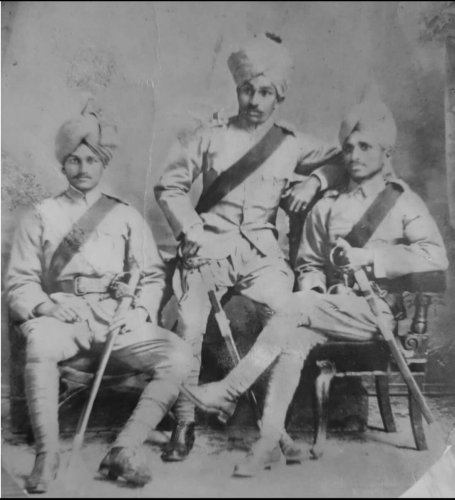
Subedars Codanda Ayyanna, Bolachanda Nanjappa and Nadikerianda Chinnappa of the Coorg Regiment, Fraserpet (Kushalnagar), 1902. Photo courtesy Boverianda Nanjamma Chinnappa

After his training from Vellore, he became an SI in Kushalnagar. Thereafter, he was transferred to Napok, Srimangala and Virajpet until he was made prosecuting inspector in Madikeri. 

In 1917, he created a Kodava prayer called ‘Sri Moola Kanniye’, addressed to ‘the first maiden’ or Parvathi who was incarnated as Kaveri. This came to be known as the Kodava anthem. He also composed a Kannada poem in honour of the deity of Chomamale hill, Somagiri Deva. 

During his free time, he would ride through the countryside on horseback. He would visit folk singers and every time he heard an interesting song, he would bring the singer home. His wife would cook food for the singer, while Chinnappa would offer him toddy. The singer would beat the dudi and sing the song while Chinnappa wrote it down. 

By 1922, he had extensively collected several folk songs which were sung during various ceremonies and festivals such as the Kaveri Song, the Wedding Song, the Funeral Song and the Puththari Harvest Song, along with 750 proverbs and idioms. 

The folk songs were divided into categories based on when they were sung or in praise of whom they were sung — customs and ceremonies, festivals, heroes and deities. He published a compilation, titled ‘Pattole Palame’ in 1924. The Pattole Palame is one of the earliest compilations of folklore in India.

The name Pattole Palame was originally used for old palm-leaf records kept by astrologers in Kodagu. It comes from the words ‘patt-ole’ (silk leaves) ‘palame’ (lore), meaning oral traditions recorded on palm leaves, which were like silk. 

Between 1894 and 1928, G A Grierson, a civil servant, conducted the Linguistic Survey of India. A knowledgeable speaker was invited from every known Indian language. The person had to narrate a translated biblical parable and either sing a song or narrate a story in the language. 

In 1922, Chinnappa was recorded narrating the ‘Prodigal Son’ in Kodava language. He also sang his own composition, ‘Sri Moola Kanniye’. These gramophone recordings were sent to the British Library’s Sound Archives and the Madras Museum. 

The language was recorded as ‘Kodaga’ and wrongly identified as being from Madras. The narrator was uncredited and the song was called ‘Coorg national anthem: Swadesi priya kirtane’. It was in the 1970s that Chinnappa’s voice was identified by his son Subbayya when he listened to the Madras Museum recording. 

In 1929, Chinnappa translated the Bhagwat Gita into Kodava and called it ‘Bhagvathanda paat’. Krishna was called by his Kodava name Kuttappa in this book.

The translators

Chinappa’s legacy has been kept alive by his descendants, including his grandson Boverianda Muthanna Chinnappa, fondly nicknamed Bobjee. After working as an engineer in India and various countries abroad, Boverianda Chinnappa became an entrepreneur in Canada. He married his cousin Nadikerianda Nanjamma, another grandchild of Nadikerianda Chinnappa. 

Nanjamma worked as a statistician and taught statistics in India and Canada. She co-authored a book on Business Survey Methods. In 1993, she was elected a fellow of the American Statistical Association. 

After their retirement, Boverianda Chinnappa and Nanjamma returned to India. Their translation of Pattole Palame into English was published in 2003. Nanjamma’s brother renowned cartoonist N Ponnappa illustrated the cover of the book. 
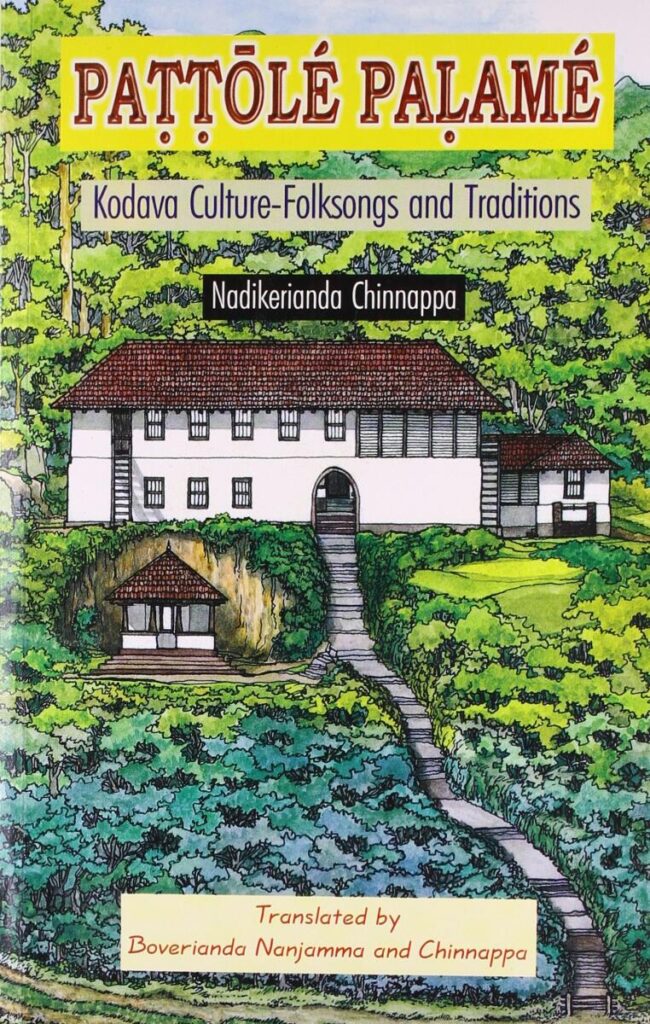
The Pattole Palame book cover

The couple visited nearly 1,720 clans in Kodagu over the years to research ainmanes. Their work was compiled into a book called ‘Ainmanes of Kodagu’ and an online website.
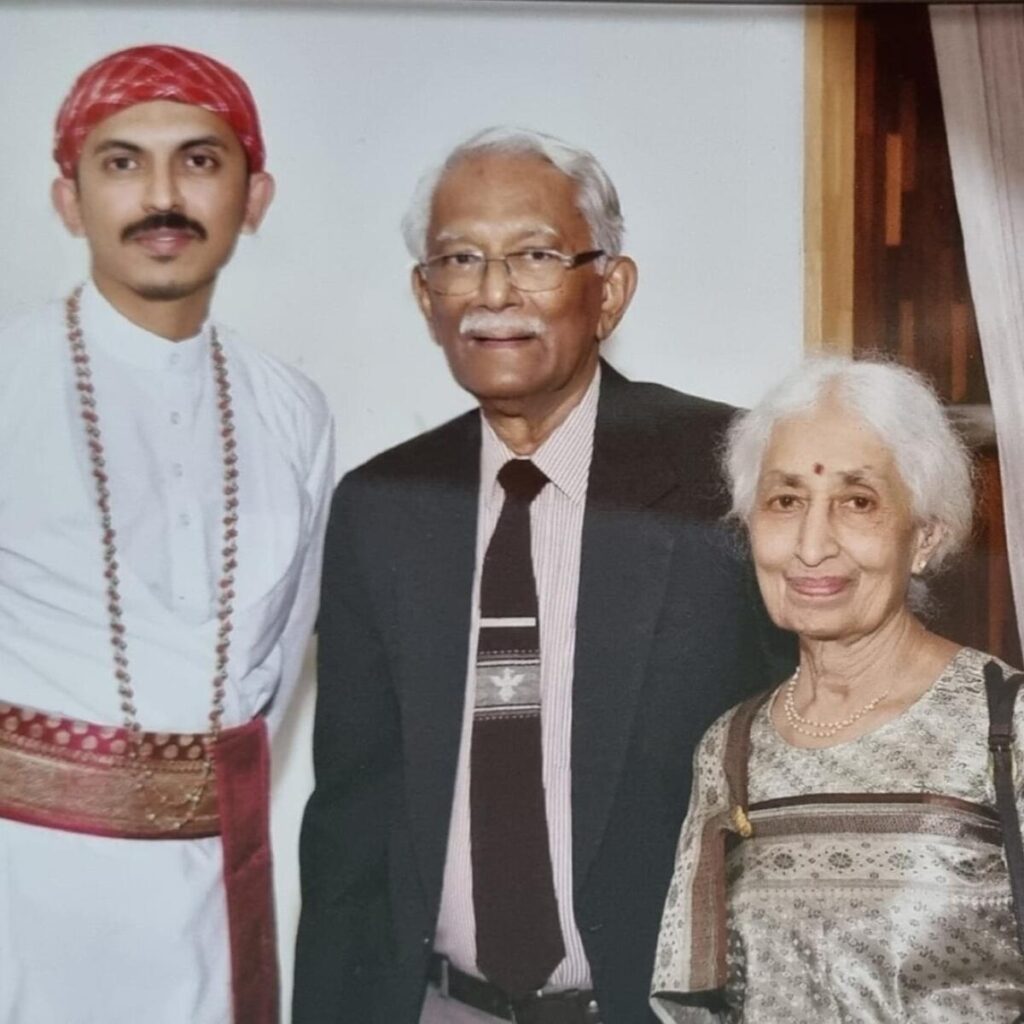
The author (extreme left) with Boverianda Chinnappa and Nanjamma in 2018. Photo courtesy: Iynanda Dinesh Monnappa, Cauvery Studio, Ammathi

In 2006, Nanjamma received a Mangalore University honorary doctorate from the Governor of Karnataka. That same year, she won the ‘Coorg Person of the Year’ award. 

Boverianda Chinnappa passed away on March 10 this year. He is survived by his wife, two daughters and their families.

source: http://www.starofmysore.com / Star of Mysore / Home> Spectrum / by Mookonda Kushalappa / April 05th, 2023

..

Reeshma Nanaiah will portray Queen Macchlakshmi in ‘KD – The Devil’

Spread the love

Reeshma Nanaiah will portray Queen Macchlakshmi in ‘KD – The Devil’

Bengaluru: 

Breaking the lingering suspense over the lead actress in Sandalwood’s pan-India offering ‘KD – The Devil’, the makers have finally introduced the leading lady of the film. Reeshma Nanaiah will be seen opposite Dhruva Sarja as Queen Macchlakshmi.

As Reeshma enters KD’s vintage fold, she looks every bit feisty.

The actress has previously been noticed for her work in movies like ‘Ek Love Ya’, ‘Raana’ and ‘Vamaana’.

Talking about her character, Reeshma said: “The best part about Queen Macchlakshmi is her larger-than-life persona. From the poster you know that she is strong-headed, she is feisty, and playing her role was indeed great. It was challenging but thrilling. What was exciting was to also share the frame with action Prince Dhruva Sarja. I am very excited.”

A period action entertainer based on true events from 1970s Bangalore, ‘KD – The Devil’ also stars Shilpa Shetty Kundra, Sanjay Dutt, and V. Ravichandran.

KVN Productions presents ‘KD-The Devil’ directed by Prem and also produced by Suprith. The pan-India multilingual is all set to release in Tamil, Kannada, Telugu, Malayalam, and Hindi.

source: http://www.mangalorean.com / Mangalorean.com / Home> Fie & Fun> Entertainment / by IANS / April 28th, 2023

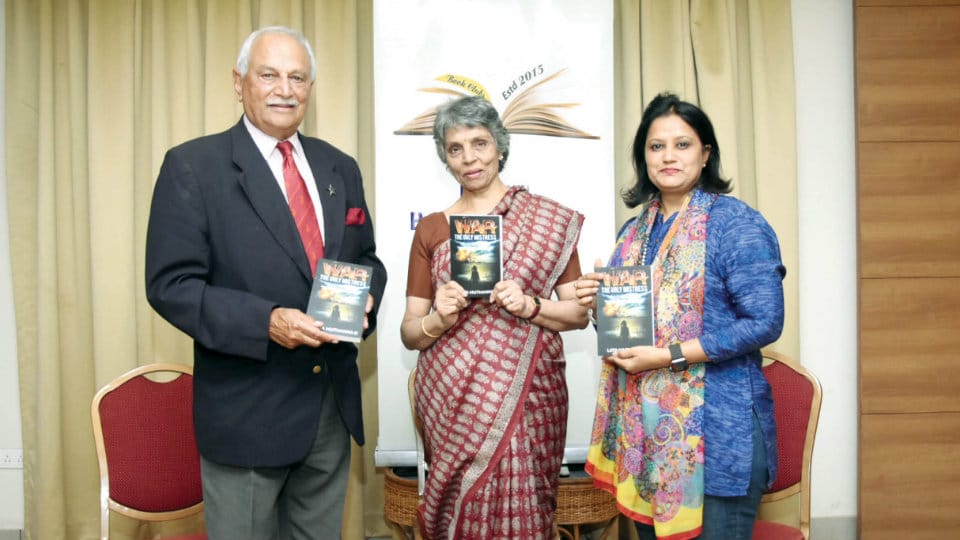
Air Marshal Nanda Cariappa Releases ‘War – The Ugly Mistress’ In City

Mysuru/Mysore: 

Air Marshal (Retd.) K.C. Cariappa (Nanda) released Dr. Lata Muthanna’s novel “War – The Ugly Mistress” at a programme organised by Mysuru Book Clubs-2015 at Sri Kanteerava Narasimharaja Sports Club (Mysore Sports Club) on Lalitha Mahal Road here last evening.

Speaking on the occasion, Air Marshal Nanda Cariappa said that his profession is related to the book. Pointing out that the book has focussed on Indian Navy, he said that it reminds one of the turbulent  times of the war period over 50 years ago.

Noting that the author has vividly explained war scenarios, he said that the book has also highlighted the post-war scenarios.

Recalling his younger days when he dreamt of becoming a pilot, which he realised by joining the Air Force, he said that he was fortunate to get an opportunity to serve the Nation. He further said that everyone should read this book for a better understanding of the serious consequences of war.

Prof. K.C. Belliappa, former Vice-Chancellor of Rajiv Gandhi University, Itanagar, Arunachal Pradesh, who was the chief guest, said one can get a real war experience by reading the book and lauded the author’s contribution to literature though she is a doctor by profession.

Dr. Lata Muthanna, a well-known Consulting Physician,  said the book owes a lot to serendipity. She stated that when she started to draw the outlines of the narrative, the civil war in Sri Lanka was still on. After the civil war ended, she went to Sri Lanka and spent time with the main character of her book, Angeline, a Singaporean, who as a child, had survived the Second World War. The book literally carries her (Dr. Lata) to different places and various periods of time. It was as though she lived through the wars and felt the fear, anger and desperation of all those who were involved in it, she said. Maintaining that no Government has the right to throw its people into the jaws of death, she said that the world citizenry should never allow that to happen.

The book release was followed by a panel discussion, in which retired Statistician Boverianda Nanjamma and retired engineer Boverianda Chinnappa took part. Both are translators and scholars of Kodava studies

Sharada Chengappa, a multifaceted personality, received the first copy of the book. Her husband Chengappa was a well-known freedom fighter, who had the good fortune of caring for Mahatma Gandhi when he visited Kodagu.

Mysuru Book Clubs-2015 Founder-President Shubha Sanjay Urs, Chinimamba Desraj Urs, Sita Bhaskar, Nalini, Kavita Bopaiah and others were present at the event.

source: http://www.starofmysore.com / Star of Mysore / Home> News / February 12th, 2020

Kodagu improves performance in II PU examinations, stands third in State

Kodagu has managed to improve its position in the second PU examinations. It stood third in the State, securing 90.55 per cent results. Last year, it was at sixth place in the State.

Compared to last year, the results have improved by 17.23 per cent, said Puttaraju, Deputy Director of the PU Department, Madikeri.

Out of 4,622 students who appeared for the examination in the district, 4,185 have cleared it.

In the Arts stream, 779 students out of 985 passed the examination, securing 79.09 per cent results. In Commerce, 2,168 students cleared the exam out of 2,347 students, securing 92.37 per cent results.

In the Science stream, Kodagu secured 95.97 per cent results with 1,238 students passing the exam out of 1,290 students who appeared.

Akshata L stood first in Kodagu in Arts getting a score of 578. In Science, Niranjan K. of Kushalnagar stood first in Kodagu with a score of 591 marks.

source: http://www.thehindu.com / The Hindu / Home> News> India> Karnataka / by The Hindu Bureau / April 21st, 2023

Karnataka 2nd PU commerce topper Ananya K.A. says changed question paper pattern helped save time

The new pattern has more number of multiple choice questions compared to the earlier examinations.

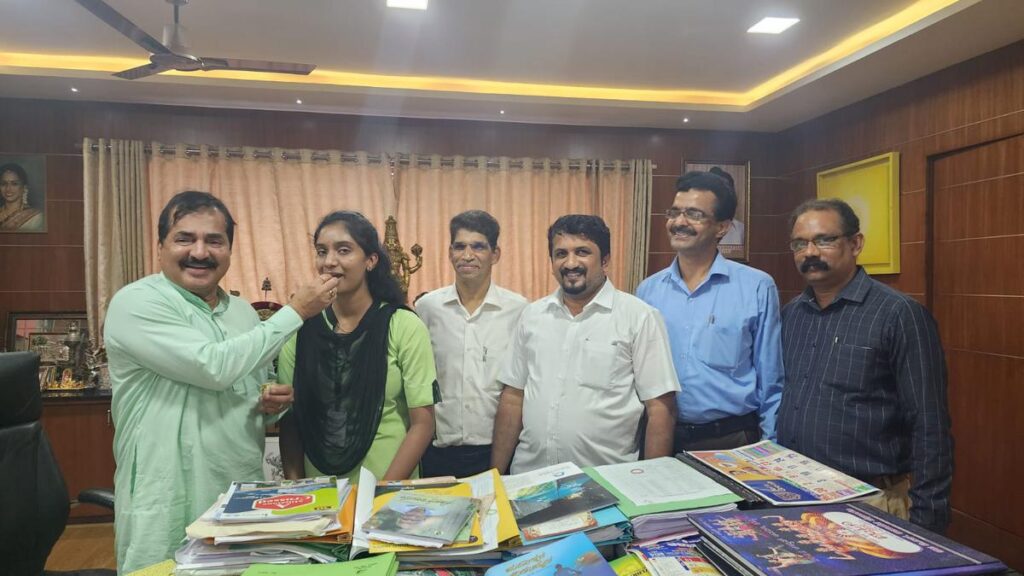
M. Mohan Alva, chairman, Alva’s Education Foundation, Moodbidri offering sweets to Ananya K.A., who topped the commerce stream in the second PU exams in Karnataka. The results were announced on April 21, 2023.

Ananya K.A., topper in the commerce stream of the second pre-university examination, said that the new pattern of the PU exam helped save time in answering the questions.

Ms. Ananya had prepared well for the new pattern that had more number of multiple choice questions compared to the earlier examinations. “I was better prepared,” she told The Hindu.

Ms. Ananya hails from Kushalnagar in Kodagu district. She is the eldest of two daughters of ex-serviceman K. Ashok and government school teacher G. Nalini. She was a student of Adichunchungiri School in Hassan up to class 10. She joined Alva’s Pre-University College, Moodbidri, in Dakshina Kannada district, two years ago under the free education scheme of Alva’s Education Foundation for sportspersons.

“I am a volleyball player. But due to an injury, I had to discontinue sports and concentrate on academics this year,” she told The Hindu.

As she has been staying in a sports hostel since class 8 in Hassan, it was not difficult for her to stay away from her family, in Moodbidri.

She is now preparing for the company secretary entrance examination scheduled on May 1.

Congratulating Ms. Ananya for securing 600/600 marks, M. Mohan Alva, chairman of Alva’s Education Foundation, Moodbidri said this is first time that a commerce student has secured 100% marks in the examination. Mr. Alva said the foundation will continue to offer free education to youngsters with a talent for sports, cultural activities or academics.

source: http://www.thehindu.com / The Hindu / Home> News> Cities> Mangaluru / by The Hindu Bureau / April 21st, 2023

Gold in their golden years: Palekanda brothers return as champs

The brothers are now looking forward to take part in the Master Games Championship in South Korea in May.

(From right) Belliappa, Machamma and Palekanda Bopaiah on an open jeep

Madikeri :

The Palekanda brothers who landed at Kadanuru in Kodagu, went around an open jeep with Australian Master Games Championship medals dangling from their necks. Palekanda Bopaiah (95) and Belliappa (86) won two medals each.

While Bopaiah won gold in the 100-m race category and a silver in the javelin throw, Belliappa’s golden moment came in the 1500-m walking race and a bronze medal in the 100-m race. “My elder brother actually came first in the javelin throw. However, there were some technical problems, which could not be rectified despite our efforts to convince the jury,” said Belliappa. 

“It was tough to get through the registration process,” he said, “because the championship lacked authoritative representation from the nation. Fortunately, Mohan S, a scientist, from Chintamani of Chikkaballapur, helped us.” Mohan bagged a gold medal in the long jump in the 30-plus category. 

“Without Mohan, we would not have won these medals. He helped us with the documentation. We will never forget him,” he said. 

Meanwhile, 77-year-old Machamma also won a silver medal in the javelin throw.  The brothers are now looking forward to take part in the Master Games Championship in South Korea in May. However, they are worried about arranging finances. 

“Australian athletes are supported by their government. We hope that our government also supports us,” Belliappa said.

source: http://www.newindianexpress.com / The New Indian Express / Home> States> Karnataka / by Prajna GR / Express News Service / March 18th, 2023

Nitin Kushalappa’s Book “Dakshin: South Indian Myths And Fables Retold” Launched

Mysuru :

Mookonda Nitin Kushalappa’s English book “Dakshin: South Indian Myths and Fables Retold” was launched at Atta Galatta Bookstore auditorium in Bengaluru on April 2.

The event was attended by Maha Vir Chakra awardee Lt. Col. Puttichanda S. Ganapathi, IRS Officer Preeth Ganapathy, retired Superintendent of Police Mookonda K. Ganapathy, Col. Maddanda Uthappa, Ponnakachira Machaiah, retired Assistant Commissioner of Customs Muckatira Suresh and others.

This book, which was earlier released on Amazon on Feb.13, 2023, is already a bestseller in various book categories. Atta Galatta is located in Indiranagar and has a cafeteria with an auditorium attached to its bookstore.

Presenting the slide show to the audience along with his wife Deepthi, Nitin spoke of the 15 stories in his collection, the regions and sources they came from, the illustrations and the rhymes that support the stories.

Lt. Col. P.S. Ganapathi, MVC, spoke of how he came to meet Nitin a few years ago and how they worked together on a previous book, ‘The Major Who Kept His Cool’ (Col. Ganapathi’s biography authored by Nitin).

Sanjeev Rajarao spoke of how he reaches out to Nitin for any information on Kodagu and Kodavas and how Nitin connects the dots.

Mrs. Leo, Nitin’s school teacher, Preeth Ganapathy, IRS, Bayavanda Monnappa, COO of BHive, Mookonda K. Ganapathy and Vishwanath also spoke. Nitin’s mother Mookonda Pushpa Poonacha spoke about the importance of folklore.

source: http://www.starofmysore.com / Star of Mysore / Home> News / April 07th, 2023

At 79, Padma Shri Ummathat Ki Rani is busy pushing for a Kodava ‘lipi’

Rani’s entire career has been dedicated to preserving and promoting the folk dance form, Ummathat, of the Kodava tradition.

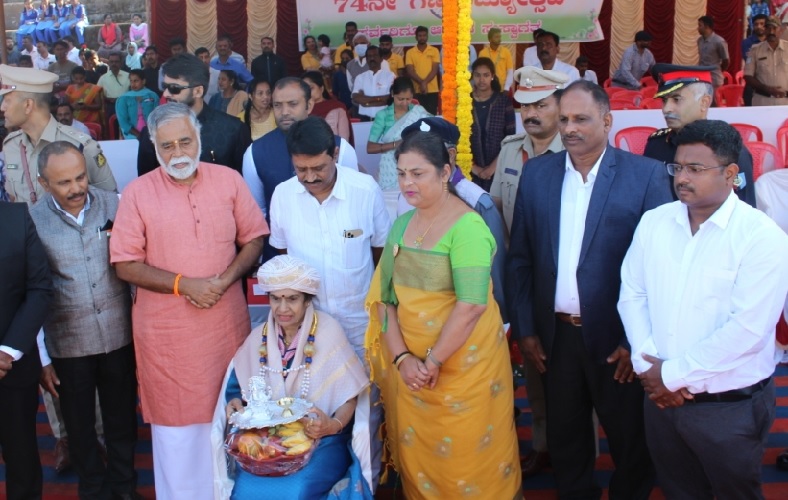
Rani Machaiah (seated) was felicitated at a function in Madikeri on Thursday, 26 January. (Supplied)
Rani Machaiah (seated) was felicitated at a function in Madikeri on Thursday 26 Jan (supplied)

The news came as mellifluous as the song that accompanies Ummathat, the traditional dance form of Kodagu.

Rani Machaiah — better known as Ummathat Ki Rani  — was at her home in Madikeri when she received the news of the nation honouring her with Padma Shri.

Congratulatory calls have been flooding her from relatives, friends, well-wishers, and most importantly, from her large number of students since Wednesday, 25 January.

“A train of thoughts crossed my mind,” the 79-year-old shared her experience with South First. “I have worked for around 50 years, promoting this traditional dance form.”

She has been leading Ummathat since 1984 and she had trained over 10,000 students.

Rani recalled taking her students to different states to showcase the dance form. “Ummathat is performed by a troupe of 20 — two will be singing and the other eighteen will dance to narrate a story,” she explained.

“This dance form is similar to the traditional ones of every other state,” she added.

Creating masters

Rani doesn’t dance anymore. But she still teaches students to master the art form. She had trained several batches of students.

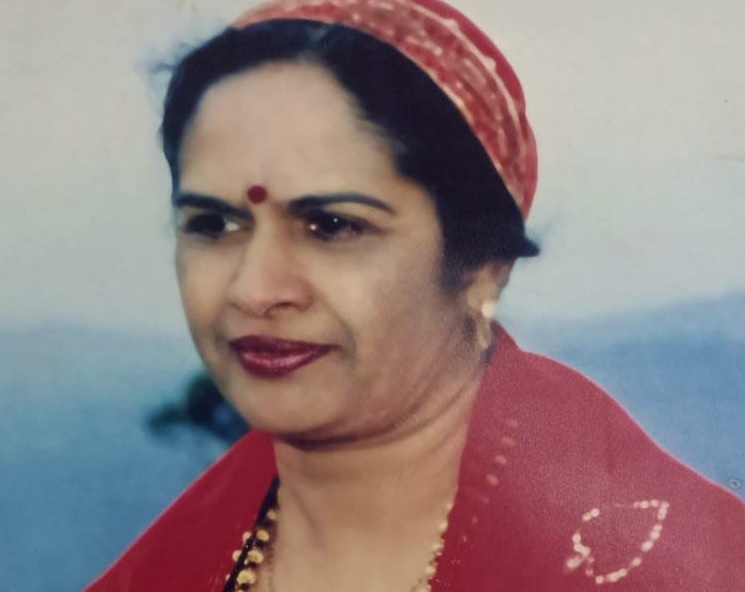
Padma Shri Rani Machaiah. (Supplied)

“Once they get married, they leave and a new batch joins. Girls of any age can join the troupe,” Rani said.

Her students had performed in Lakshadweep, Goa, Chhattisgarh, Himachal Pradesh, Jammu and Kashmir, Haryana, Mizoram, Odisha, Punjab, Maharashtra, Madhya Pradesh, and several places across Karnataka.

“We get invitations from various places and institutions from all over the country and we perform our traditional Ummathat there,” Rani, who has dedicated herself to preserving and promoting the traditional dance form, said.

Rani was born in 1943 in Siddapura in the Kodagu district. Her husband, the late Machaiah, was an advocate, who passed away when she was 65.

Her son, Sathish Machaiah, 55, is a software engineer in Bengaluru. Rani’s daughter, Saritha Devaiah, is a homemaker in Kodagu. Her husband Devaiah owns a plantation.

When asked about her inspiration to take up Ummathat, Rani said it was personal interest.

Now, a lipi

Rani is the chairperson of Kaveri Kalavrunda Sangha, an organisation she founded. She is the recipient of the Rajyotsava Award and many other honours.

She was a former president of Karnataka Kodava Sahitya Academy and at present, she is encouraging groups of Kodavas working on designing a lipi — alphabet or script — for the Kodava language to preserve its literature since the language doesn’t have a lipi now (traditionally, Kodavas use the Thirke script, which is an abugida).

“It will look somewhat similar to Kannada and it will have phonetics and extra words that are used in the Kodava language in Kannada lipi,” Rani said.

source: http://www.thesouthfirst.com / South First / Home> Karnataka / by Bellie Thomas / January 27th, 2023

Two From Kodagu Bag Chief Minister’s Medal

Madikeri:

Two Police personnel from Kodagu have been selected for the Chief Minister’s Medal for their exemplary service in the Department.

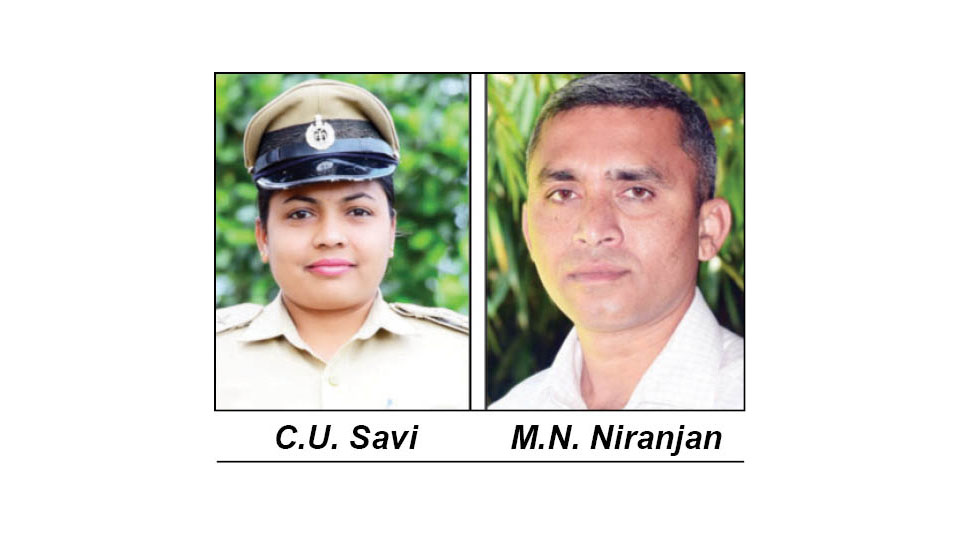
They are Madikeri Division’s CID Forest Mobile Squad Sub-Inspector C.U. Savi and District Crime Detection Unit Head Constable M.N. Niranjan.

Savi has been serving in the Police Department since 13 years and has served at many places including Nanjangud and Bylakuppe and is presently serving in Madikeri Division. She is a native of Kolakeri.

M.N. Niranjan is a resident of Ashokapura in Madikeri and is serving in the Police Department since 22 years.

He had served in various Police Stations including Madikeri Rural Police Station and is presently serving at District Crime Detection Unit.

source: http://www.starofmysore.com / Star of Mysore / Home> News / April 03rd, 2023

In the age of nuclear families, Kodava Keris aim to preserve, pass on culture

With urbanisation and changing social structures, nuclear families, which were intrinsic in preserving tradition and rituals, have replaced joint families.

Women and a child don traditional attire at a Keri function

Madikeri:

With urbanisation and changing social structures, nuclear families, which were intrinsic in preserving tradition and rituals, have replaced joint families. To ensure their culture is not lost, various Kodava families in Kodagu district have joined together under one ‘keri’ (colony).

“The concept of ‘keri’ – synonymous with area or colony – started in Bengaluru among the Kodava community. The concept was adopted in the district too, with the first keri being formed 27 years ago,” says Kayapanda Shashi Somaiah, a resident of Madikeri.

As Kodava families started to move to cities from their native villages, the culture of the community was at stake. To prevent this, the keri concept was introduced in towns of Kodagu, including Madikeri, Virajpet and Ponnampet. “There are a total of 12 keris in Madikeri town. Cauvery Keri was among the first to be established in Madikeri. ‘Dechur Keri’ was established in 1998 and is one of the largest compared to other keris,” explains Madeyanda Ravi Kunjiappa, president of Dechur Keri.

He adds that this keri has over 300 members and an annual meeting is held after Puthari festival, which sees the coming together of all members.

Talking about the purpose of a keri, Shashi Somaiah explains, “For instance, if a death takes place in a Kodava family, members may not be acquainted with the rituals that need to be followed. That is when the keri becomes a second family of sorts.

Before relatives arrive from far off places, keri members who stay in the same area come together to help with the rituals.” Keris have a president and directors who are elected by the members once in three years. Emergency funds too are collected. Shashi says, “Death funds are handed over by the keri trust to family members.” The community also bonds over other matters during keri meetings.

“When people from the same community gather under one roof, talks pertaining to marriage also take place. There are instances where two people have been matched during keri functions,” says Ravi Kunjiappa.

Ravi adds, “During annual meetings, children who have achieved in academics or sports are recognised and felicitated. Similarly, elders who have achieved in government services or youngsters who have excelled in various fields will be felicitated and encouraged. Communities get to share their triumphs and trials.” Apart from being a support system, these keris also help in preserving Kodava culture. “The annual meeting becomes a platform for various cultural activities. Youngsters and children are required to take part in this cultural extravaganza. Children get trained by elders in ‘kolata’, ‘umathat’ and various other cultural activities,” says Ravi.

These skills are then put to test in the form of inter-keri competitions organised in each township once in three years. While inter-keri events have been organised in Madikeri six times, Virajpet town saw its first event this year. “Each keri takes turns to organise this function, which aims to unite Kodava families from different keris. The aim is to promote Kodava culture among the younger generation. This is the best way to teach our children about our traditions,” says Madanda Latha Somaiah, a member of  Dechur keri. 

source: http://www.newindianexpress.com / The New Indian Express / Home> States> Karnataka / by Prajna GR, Express News Service / March 15th, 2020