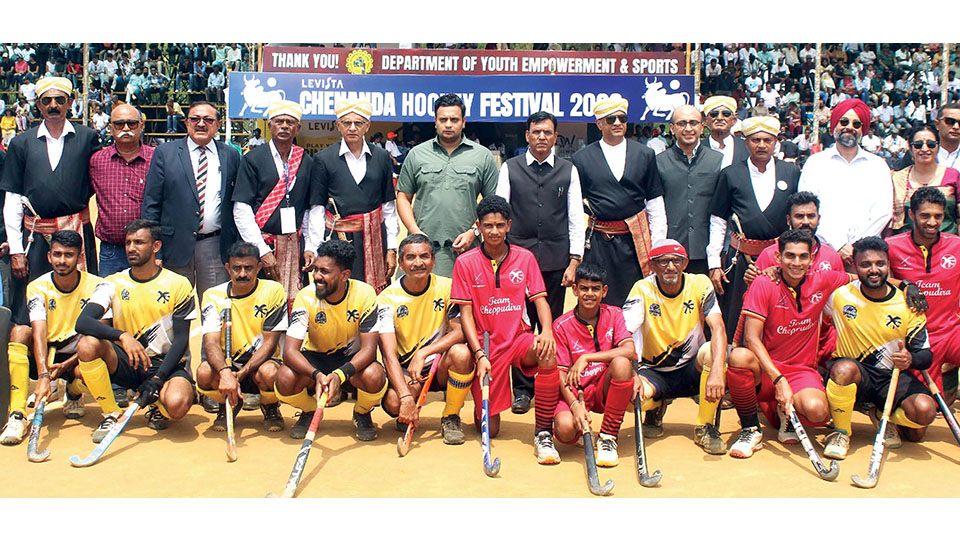
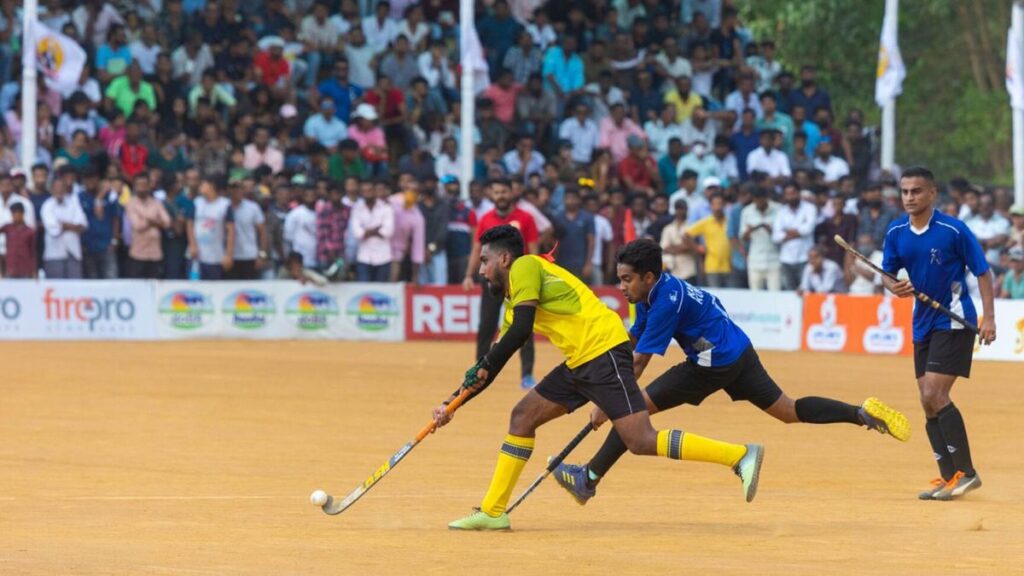
Amid loud cheers from a packed crowd of over 25,000, the Kulletira family team clinched the ‘Chenanda Cup’ at the 26th Kodava Family Hockey Tournament defeating the Cheppudira family 3–1 yesterday.
The final of the month-long Kodava Family Hockey Festival was held yesterday at General Thimmaiah Stadium in Cheriyaparambu near Napoklu. With this win, Kulletira lifted their fourth title in the prestigious tournament.
The summit clash saw an evenly fought first half, with Cheppudira earning several penalty corners but failing to convert them. Both teams scored once in the third quarter to keep the contest open. However, Kulletira took control in the final quarter, striking twice to seal the victory.
Roshan Lokesh, Avaneesh Mandappa and Shubham Chettiyappa scored a goal each for Kulletira, while Vachan Chinnappa netted the lone goal for Cheppudira.
The winning Kulletira family team was awarded Rs. 3 lakh and a silver rolling trophy. Runners-up Cheppudira family received Rs. 2 lakh and a trophy, while Paradanda family, who finished third, received Rs. 1 lakh.
The festival concluded with the ceremonial handover of the flag to the Ajjikuttira family, who will host the 27th edition in 2027. The Chenanda family, organisers of this year’s event, handed over the flag.
Mandaviya assures support
Union Minister for Youth Affairs and Sports Mansukh Mandaviya, who was the chief guest, assured financial support to promote sports, stating that such assistance is the Government’s responsibility and not charity.
He said he had long heard about the Kodava community’s passion for hockey and was glad to witness it first hand. Referring to the International Olympic Committee’s vision of sports as a unifying force, he noted that the Kodava community had upheld this spirit for generations.
“This land has produced 18 Olympians. It is the duty of both the Centre and the State to nurture Kodagu’s sporting talent,” he said. He added that sports should remain free from politics and promised to promote shooting in the region by identifying and training young talent.
Mysuru-Kodagu MP Yaduveer Krishnadatta Chamaraja Wadiyar said the festival reflects the growing sporting culture in the country. Highlighting Kodagu’s contribution to Indian sports, he said the family hockey tradition inspires youth, encourages women’s participation and strengthens national unity.
He urged the Centre to set up a shooting academy in Kodagu under the Khelo India scheme.
Virajpet MLA A.S. Ponnanna termed the festival a model initiative for the district. He said work on an 11-acre sports training centre at V. Badaga village in Virajpet has already begun with State support and appealed to the Centre for assistance in building a stadium.
Kodagu Hockey Academy, President Pandanda K. Bopanna, retired Justice Ajjikuttira S. Bopanna, SLN Coffee CEO Saheed Singh, Dr. Santosh Uthappa of Narayana Hospital, Sports Authority of Karnataka Vice-Chairman Cheppudira Arun Machaiah and others were present.
source: http://www.starofmysore.com / Star of Mysore / Home> Sports / May 03rd, 2026
Inclusion of Kodava language in the Eighth Schedule will provide legal, cultural, and educational benefits to the Kodava community.
CNC members stage a protest in front of the deputy commissioner’s office in Madikeri on Saturday. / Credit: DH Photo
Madikeri:
Marking International Mother Language Day, leaders of the Codava National Council (CNC) staged a protest in front of the Deputy Commissioner’s office here on Saturday, demanding that Kodava language be included in the Eighth Schedule of the Constitution.
CNC President N U Nachappa placed several demands, including the inclusion of Kodava Thakk in the Eighth Schedule as recommended in the report of the Commission headed by noted linguist Pandit Dr Sitakant Mahapatra.
He urged that on the lines of Konkani language model and similar to the proposal for Tulu, Kodava be declared an official language of the state under Articles 345 and 347 of the Constitution, and implemented in administration and education under Article 350.
Inclusion of Kodava language in the Eighth Schedule will provide legal, cultural, and educational benefits to the Kodava community. Official recognition by the Central government will enhance the language’s prestige and prevent it from being treated merely as a dialect. It would also facilitate the introduction of Kodava as a medium of instruction in school curricula.
He also alleged that the names of local Kodava folk villages, hamlets, and even festivals have been altered into Kannada, distorting them. This, he said, reflects disregard for Kodava heritage and uniqueness and amounts to a violation of human rights.
A memorandum was submitted to the government through DC S J Somashekar on the occasion.
source: http://www.deccanherald.com / Deccan Herald / Home> India> Karnataka / by DHNS / February 22nd, 2026
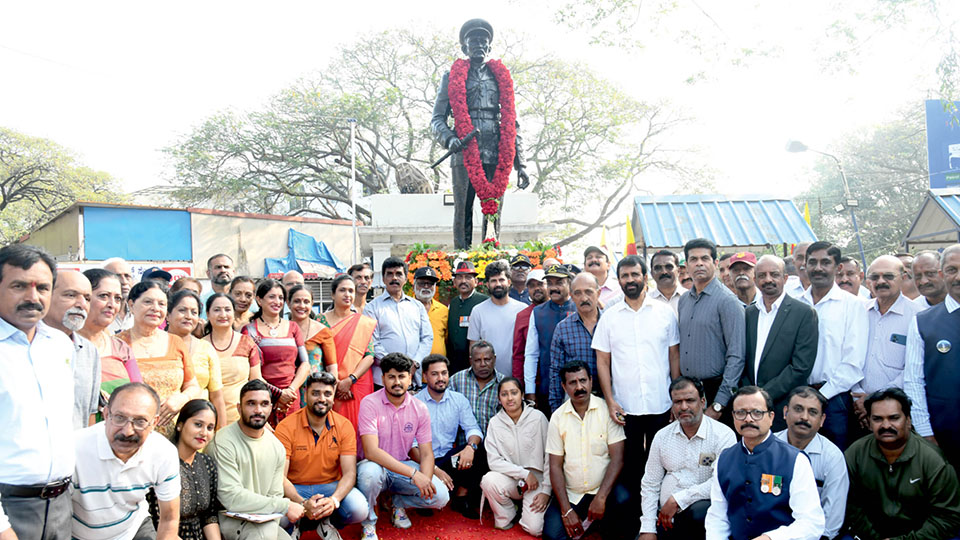
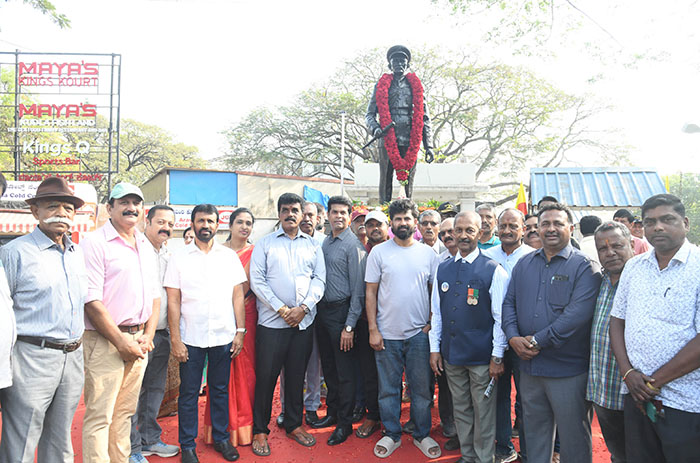
Kodava Samaja, Mysuru, along with the Field Marshal Kodandera M. Cariappa Fans’ Association, Mysuru, celebrated the 127th birth anniversary of Field Marshal K.M. Cariappa.
The programme was organised in front of the statue of Field Marshal Cariappa at the Field Marshal K.M. Cariappa Circle (Metropole Circle) on Vinoba Road this morning.
Former MP Prathap Simha offered floral tributes to the statue and said that celebrating the 127th birth anniversary of Field Marshal Cariappa is a matter of great pride for society. His contributions and valour have earned him immense respect across the nation. Kodagu’s contribution to the country is unparalleled.
He added that no other land could produce patriots and warriors like those from Kodagu. “Patriotism has grown there as a tradition. Though the Kodava community is small, its service to the Armed Forces is immense. It is a privilege for our land to cherish the memory of a leader like Field Marshal Cariappa, born in such a tradition,” he said.
World War II, freedom struggle
Field Marshal Cariappa’s service during World War II and the freedom struggle was exemplary to the world. The rank of Field Marshal is the highest in the Indian Army and it is a matter of pride not only for the Kodava community but also for Karnataka.
“He may not have received the Bharat Ratna, but he was honoured with the rank of Field Marshal,” Simha remarked. He further noted that Cariappa, along with General Kodandera S. Thimayya, gave democratic India a strong shape and direction.
“Even today, the Kodava community has contributed more than 30 Lieutenant Colonels to the Indian Army, five captains to Indian hockey and over 60 players to the sport. “For this, the community must feel proud and continue to grow. As the community grows, so will the nation and patriotism,” he said.
Former MLA L. Nagendra noted that it was Field Marshal Cariappa who made the entire world turn its attention towards India.
“He must be remembered every single day. When his statue was to be installed at Metropole Circle, many obstacles arose, but all were overcome and today the statue stands tall, and this is a matter of immense pride. In the coming years, thousands from the community should gather together to celebrate Cariappa’s birth anniversary on a grand scale,” Nagendra said.
The event was attended by former Mayors M.J. Ravikumar & H.N. Srikantaiah, former Corporators Pramila Bharath & Maletira U. Subbaiah, Mysuru Kodava Samaja President Ponjanda A. Ganapathy, Kodava Samaja Cultural and Sports Club President Mukkatira C. Ashok and Field Marshal K.M. Cariappa Fans’ Association President Nayakanda Thimmaiah among others.
source: http://www.starofmysore.com / Star of Mysore / Home> News / January 28th, 2026
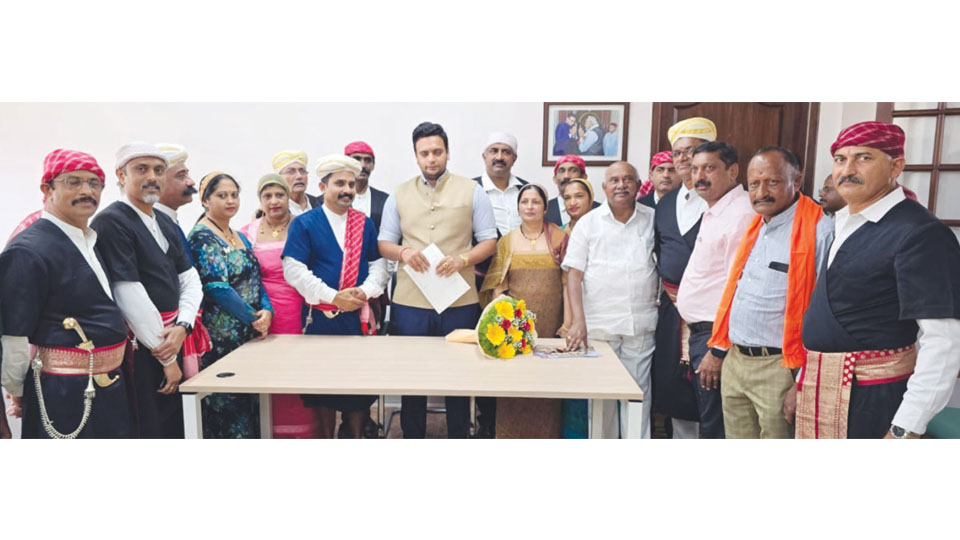
Chief Minister Siddaramaiah on Sunday announced a financial grant of Rs. 1 crore for Chenanda Cup Hockey Festival to be held in 2026 in Kodagu district.
Unveiling the Hockey Festival’s logo at his home Office ‘Krishna’ in Bengaluru, the CM praised Kodava community’s deep-rooted association with the sport.
The 26th Chenanda Cup Hockey will be held at Napoklu from Apr. 5 to May 2, 2026.
“Kodavas mean hockey and hockey means Kodavas,” he remarked, highlighting the region’s legacy of producing national and international-level players, including Asian Games.
Siddaramaiah lauded the Kodava community for preserving its cultural identity while excelling in sports. “Kodava culture has retained its distinctiveness and continues to thrive. It is a matter of pride for our heritage. Their talent and dedication have brought immense honour to the nation,” he said. Pledging Government support, he added, “We will provide Rs. 1 crore for Chenanda Cup Hockey-2026. I will also attend the matches.”
The event was attended by office-bearers of Chenanda Cup, Virajpet MLA and CM’s Legal Advisor Ajjikuttira S. Ponnanna, Kodagu District Minister N.S. Boseraju, Ministers Byrathi Suresh and Shivaraj Thangadgi.
source: http://www.starofmysore.com / Star of Mysore / Home> Sports / November 04th, 2025
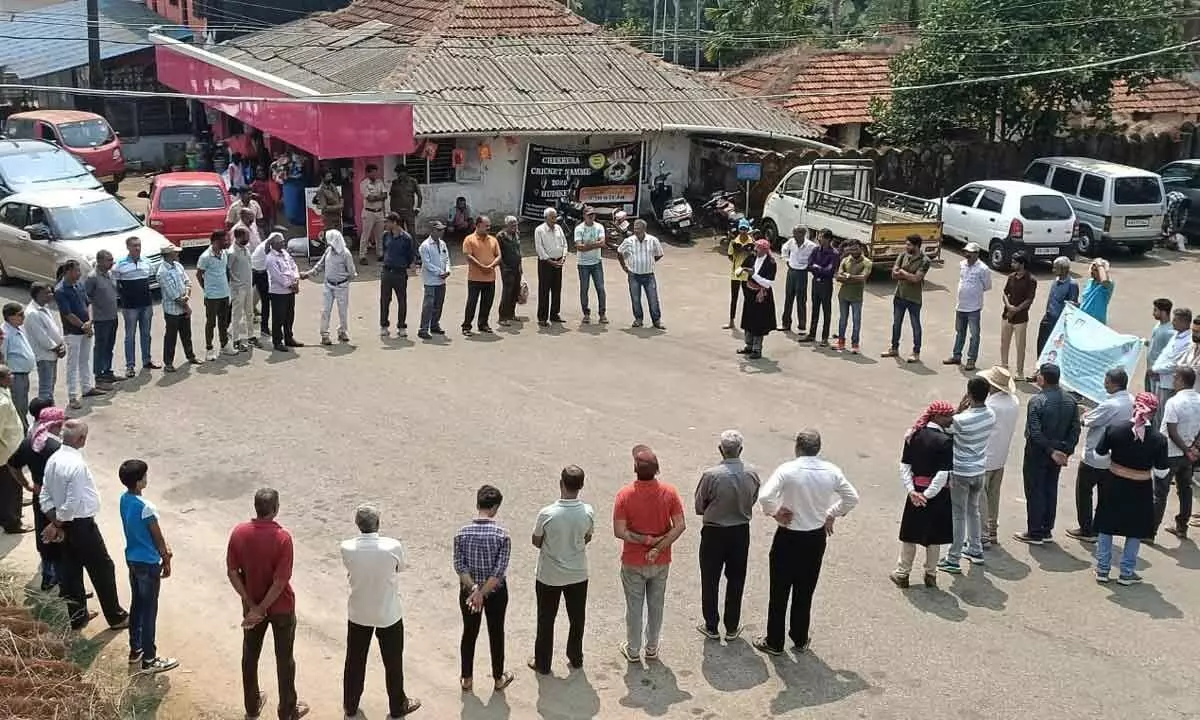
The Codava National Council (CNC) organised a human chain demonstration in Birunani on Monday, urging the Union Government to address their long-standing demands.
Madikeri :
The Codava National Council (CNC) organised a human chain demonstration in Birunani on Monday, urging the Union Government to address their long-standing demands. The primary demand is the creation of exclusive Codava constituencies for the Assembly and Parliament to ensure adequate representation of the community within their traditional homeland.
The CNC expressed concerns that the ongoing delimitation process may overlook the interests of the Codava community. Leaders fear that political influences could result in the merging of Codavaland with neighbouring areas, undermining the representation of the indigenous Codavas.
The CNC has put forward two proposals: carving out dedicated Assembly and Parliamentary constituencies in Codavaland and creating exclusive representative bodies for the Codava community, similar to the Sangha Constituency for the Buddhist monastic community in Sikkim.
The CNC also reiterated its demand for Scheduled Tribe (ST) status under the Indian Constitution, highlighting the community’s distinct identity, culture, and history. The demand is anchored in Articles 244 and 371, along with provisions in the Sixth and Eighth Schedules, which recognise and protect tribal communities and languages.
The CNC argues that this misrepresentation has led to a gradual erosion of the community’s identity, describing it as a violation of international conventions on indigenous rights.
A writ petition filed by former Member of Parliament Dr. Subramanian Swamy in the Karnataka High Court seeks adjudication of the Codavas’ demands. The CNC is also advocating for recognition of Codavas under international frameworks such as the United Nations Declaration on the Rights of Indigenous Peoples.
The CNC has called for the restitution of ancestral lands that were taken over by various rulers, including the Keladi dynasty, British authorities, and subsequent governments.
The CNC remains firm in its demand for recognition as a distinct indigenous community and continues to engage with constitutional and legal avenues to secure their rights. The human chain event at Birunani marked the latest step in the community’s long-standing struggle for recognition and justice.
Is Sullia being pitched to be an assembly segment of Mysuru-Kodagu LS constituency?
In another development, DV Sadananda Gowda (former MP) and Shobha Karandlaje, representing Bengaluru North LS constituency, have been alleged to have brought pressure on the central government to annexe Sullia Assembly constituency, which is currently one of the eight assembly segments in Dakshina Kannada Lok Sabha constituency, to be a part of the Mysuru-Kodagu Lok Sabha constituency. The Codavas point out that this move will further strengthen the Vokkaliga dominance in the Kodagu district and will worsen the Codava community’s representation in the Karnataka assembly. “This is in a preliminary stage, and in the coming days we will further investigate the effects of the inclusion of the Sullia Assembly constituency into the Mysuru-Kodagu Lok Sabha constituency.”
source: http://www/thehansindia.com / The Hans India / Home> News> State> Karnataka / by The Hans India, Hans News Service / March 31t, 2025
Kodavas and the Arebhashe Gowdas are two prominent communities in Kodagu, Karnataka.
On February 2, thousands of Kodava men and women in traditional attire took out ‘Kodavaame Baalo’, an 82km, six-day peace march led by the Akhila Kodava Samaja (AKS) in Kodagu, Karnataka. They did so to reassert their distinct identity and to draw attention to the social, religious and political challenges their community faces.
The trigger for the march was a temple entry row that has pitted two prominent communities in Kodagu―the Kodavas and the Arebhashe Gowdas―against each other.
The newly built Sri Mrutyunjaya (Shiva) temple, in Kattemadu village near Madikeri town, is the epicentre of the dispute. On December 27, when some Kodavas turned up for the annual festival in their traditional attire, some Arebhashe Gowdas stopped them from entering the temple. The “common dress code” as per the bylaw did not allow Kodava attire.
The situation escalated with both sides sticking to their guns. They filed separate complaints and announced massive jaathras (marches) in protest, forcing the district administration to intervene and impose prohibitory orders around the temple. The Arebhashe Gowdas held a massive rally in Madikeri, which the Kodavas followed up with their march from Kutta to Madikeri. The run-up to the two marches was marked by a social media war with both sides uploading provocative videos and posts.
“The Kodava community will not take part in any peace process initiated by the district administration till the police identify and arrest those who attacked Kodavas and attempted to restrict their cultural attire at the temple,” said the memorandum submitted by the AKS to Kodagu Deputy Commissioner Venkat Raja.
Said AKS member J. Ganesh Aiyanna: “A few years before the Mrutyunjaya temple incident, we were prevented from entering Talacauvery during ‘Teerthodbhava’ (annual sacred event at the place where the Cauvery is believed to originate) for wearing our traditional attire. We will not tolerate the assault on our tradition and cultural identity.”
Harsha Kodagana, member of the Arebhashe Samaja, said they were just following the rules. “The temple was built at a cost of around 06 crore, which was collected from devotees belonging to all communities. The 43-member temple committee (which includes nine Kodava members) passed a bylaw with 13 points, including the common dress code. This is meant to build a sense of equality among all communities. Some committee members stopped those wearing the Kodava attire as it violated the bylaw. The temple priest was attacked. We want the police to take suo motu action against people posting derogatory posts on social media and making casteist slurs.”
The Kodavas, however, claim that this is not an isolated case. “Some people from a particular community have belittled our icons Field Marshal K.M. Cariappa and General K.S. Thimayya, who are India’s war heroes,” said Aiyanna. “The Kodava community has a long tradition of serving the Indian armed forces. People have also petitioned the courts to curb our gun rights but the court has restored it till 2029. The gun is revered in a Kodava family as it is an integral part of all our customs. We announce the birth of a baby boy with gunshots, and baby girl by beating brass plates. We have never used these weapons for violent purposes. We are nature and ancestor worshippers and are not involved in any politics. But the assault on our culture is growing.”
The memorandum submitted to the deputy commissioner said that the government must ensure a safe atmosphere for Kodavas to practise their traditions on their own land. It also urged the government to take steps to facilitate Kodava community participation in the Talacauvery rituals, extend constitutional protection for Kodava land, culture, traditions, religious practices and social security, and to curb “political oppression” by dominant communities.
The district administration has sought a report from the temple committee, but notably, the elected representatives―Congress MLAs A.S. Ponnanna (Virajpet) and Mantar Gowda (Madikeri), and BJP MP from Mysore-Kodagu Yaduveer Wadiyar―have kept a safe distance from the controversy.
Interestingly, when it comes to elections, the two communities have supported candidates without caste considerations. Previously, BJP leader Appachu Ranjan, a Kodava, had won the Gowda-dominated Madikeri assembly seat three times, while fellow party member K.G. Bopaiah, a Gowda, had won the Kodava-dominated Virajpet assembly seat thrice.
The temple entry episode is the latest incident that could galvanise the Kodavas, who for long have feared losing their identity. The 1.5 lakh-strong population has been dwindling; there has been fragmentation of families because of migration for education and employment, and inter-caste marriages. The community, under the banner of the Codava National Council, has been resisting the change in demography, loss of land and the alienation of the younger Kodavas from their language and culture. The long list of the council’s demands includes geo-political autonomy, inclusion in the scheduled tribe list, exemption from the Arms Act, inclusion of Kodava language in the Eighth Schedule of the Constitution, recognition of river Cauvery as a living entity, UNESCO’s intangible cultural heritage tag, inner line permit system to prevent demographic changes, and greater representation of Kodavas in Parliament.
The influx of people from outside, commercial exploitation of forests for tourism and massive infrastructure projects have resulted in water scarcity, landslides and floods, say locals. The people of Kodagu include Kodava, Arebhashe Gowda and 21 other Kodava-speaking communities who have lived in harmony despite the many challenges.
“After the backlash by Kodavas over Tipu Jayanti celebrations, the Congress government was forced to stop it,” said a local leader who did not want to be named. “But now, some vested interest groups are playing mischief to divide the Hindu community.”
source: http://www.theweek.in / The Week / Home> The Week / by Prathima Nandakumar / February 16th, 2025
The United Kodava Organisation (UKO) has formally appealed to Mysuru-Kodagu MP Yaduveer Krishnadatta Chamaraja Wadiyar to address the long-standing demands of the Kodava ethnic community.
This appeal follows a meeting of the UKO delegation led by President Kokkalemada Manju Chinnappa with the MP in Mysuru on Friday.
Yaduveer assured the delegation of his unwavering support. He committed to advancing the community’s concerns with dedication, promising to navigate the necessary processes to achieve a positive and effective resolution.
The delegation, which included notable dignitaries such as former Education Minister of Karnataka and current MLC Adagur H. Vishwanath, played a crucial role in highlighting the community’s needs. Vishwanathprovided valuable insights into the issues and stressed the urgency of addressing them.
Three primary demands
• Inclusion of Kodava community in the Central List of Other Backward Classes (OBC) to ensure equitable opportunities in education, employment and governance.
• Inclusion of Kodava Language in Central Scheme for Protection and Preservation of Endangered Languages (SPPEL) and Augmenting Study Materials in Indian Languages through Translation and Academic Writing (ASMITA) Projects to preserve and promote Kodava thakk, which is on the brink of extinction.
• Inclusion of Kodava Language in the 8th Schedule of the Constitution to recognise and protect the linguistic and cultural identity of the Kodava community.
The delegation emphasised the historical struggles of the Kodava community since Kodagu’s integration with Karnataka in 1956.
They argued that these demands are crucial for the preservation of Kodava language and culture and for gaining access to enhanced educational and employment opportunities through OBC status. Constitutional recognition of the Kodava language would further solidify its protection and promotion.
The Kodava community organises the inter-family hockey tournament every year where Kodava players from over 300 families come together to play.
The Kodava Hockey Namme (festival) will be held from March 30 to April 28 in Kodagu (Coorg) district of Karnataka. | Photo Credit: Special Arrangement
For the Kodava community of the small, hilly district of Kodagu in Karnataka, now scattered across the globe, it’s time to return to their roots for an event that’s deeply ingrained in their cultural fabric — the Kodava Hockey Namme (festival). This annual extravaganza brings together families from far and wide to celebrate their love for hockey and their shared heritage.
Organised in the small town of Napoklu, 21 km away from the district headquarters of Madikeri, this festival is no ordinary affair. Recognised as one of the largest field hockey tournaments globally, it has earned a place in the Limca Book of Records.
This year, the excitement is soaring as the Kundyolanda family takes the reins, transforming it into the ‘Kundyolanda Hockey Carnival’. The year’s event will be held from March 30 to April 28.
Fostering community spirit
The Kodava community organises the inter-family hockey tournament every year where players from over 300 local families come together to play. The sporting event has no bar on age or gender. The only rule of forming a team is that all members must be from the same family.
Dinesh Cariappa, convenor of the Kundyolanda Hockey Carnival (KHC), said, “This year, we aim to set a new milestone by hosting the largest field hockey tournament yet. It’s not just about the sport. It’s about fostering community spirit and giving back to our people.”
The organisers have introduced a range of initiatives this year, encompassing career guidance sessions, motivational speeches by experts across different domains, all geared towards empowering the youth. Additionally, free health check-ups, discussions on wealth management, and talks covering diverse topics such as defense, aviation, and agriculture have been arranged for attendees.
Ramesh Muddaiah, president of Kundyolanda Hockey Carnival, said, “We are hopeful that the Karnataka Government will extend its support to the hockey festival, just as it has done for previous editions of the event. Government backing would bolster our efforts to make this carnival a grand success.”
Food festival to cultural extravaganza
With 360 families slated to participate, the enthusiasm is palpable. The carnival promises much more than just hockey matches. A food festival showcasing Kodava delicacies and also other cuisine, matrimonial initiatives, and cultural events celebrating the rich heritage of the community are all part of the extravaganza.
“There are plans for educational sessions on traditional Kodava folk songs, popularly known as Baloo Paat, ensuring the preservation of cultural traditions. Apart from these, two marathons — 5 km and 10 km — are scheduled, selfie points dotted across the venue to capture memorable moments, creating lasting memories for attendees,” Mr. Cariappa said.
The carnival kicks off with much fanfare on March 30 with an inaugural match between the Indian Navy team and the Coorg 11 team. It sets the stage for a month-long celebration of sport, culture, and camaraderie.
Kodava Hockey Festival has come a long way
The late Pandanda Kuttappa started the concept of the Kodava family hockey tournament, which later evolved into a significant sporting event and festival. “Mr. Kuttappa initiated the Kodava Family Hockey Tournament in 1997, organised by the Pandanda family initially, with the belief that harnessing the inherent affection Kodavas have for hockey could foster unity among families and the community,” Mr. Cariappa explained.
From the last one decade, the tournament has emerged as a platform for the community members to discuss trade and business interests, besides scouting for marital alliances, according to Mr. Muddaiah. “In the first tournament, which was organised in 1997, nearly 60 teams took part. The format of the tournament was such that every year, one of the Kodava families had to host the event. Now, over 300 families participate involving 3,000 hockey players,” he added.
Preparation for the 2024 edition is underway at the Napoklu General Thimayya Ground, one of the town’s three mud grounds. Temporary bleachers surround the ground to accommodate approximately 30,000 spectators. Various amenities, including galleries, lighting, speakers, and display boards, have been installed.
source: http://www.thehindu.com / The Hindu / Home> News> India> Karnataka / by Darshab Devaiah B / March 22nd, 2024
The plays will be staged in Kannada and English over three days. Laxmi, who has been performing solo acts for 25 years, has translated and adapted the works.
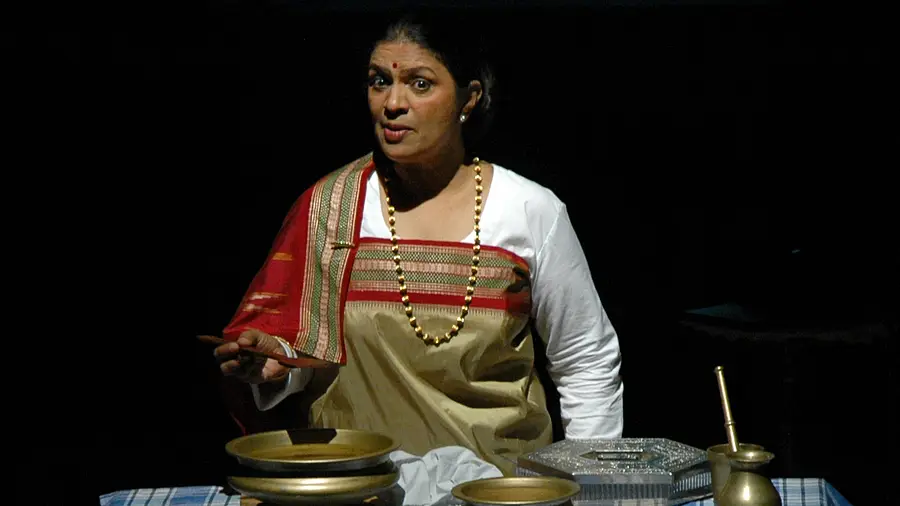
Laxmi Chandrashekar in ‘Kittalemane Kaveri’.
Abhinethri Festival by Kriyative Theatre Trust will present three plays by theatre artiste Laxmi Chandrashekar, this weekend.
The plays will be staged in Kannada and English over three days. Laxmi, who has been performing solo acts for 25 years, has translated and adapted the works.
On January 12, ‘Singarevva Mattu Aramane’ and its English version ‘Singarevva and the Palace’, a play based on Chandrashekhara Kambara’s namesake play, will be staged. “It is about a woman’s frustration and helplessness, being denied the right to motherhood, how she faces exploitation by all the men in her life and the way she asserts herself in the end,” says Laxmi. The play will be directed by Soumya Varma.
The second play, ‘Shakespearana Srimathi’/ ‘Shakespeare’s Wife’, written by Uday Itagi will be staged on January 13. It has been adapted from Robert Nay’s work based on Shakespeare’s sonnets. “I have taken inputs from feminist writer Germaine Greer’s work ‘Shakespeare’s Wife’, and from other sources to create this play. It depicts the Bard’s wife, Anne Hathaway, in a different light,” she explains. “This play looks at Anne as a committed and strong woman, and a loyal wife”, she elaborate . The play will be directed by Vishwaraj Patil.
The final play provides insights into the Kodava community and has been directed by Soumya. ‘Kittalemane Kaveri’/‘Kaveri of Kittale Villa’, an adaptation of ‘Emily of Emerald Hill’, an English play written by Singaporean writer Stella Kon, will be staged on January 14. “I had lived in Singapore for a while, and I got rights from the writer to stage and adapt it accordingly. Set in the Kodava community now, the play captures their culture, food, customs, and costumes,” she tells Metrolife.
From January 12 to 14, Kannada plays will be staged at 3.30 pm and English plays at 7 pm, at B P Wadia Sabhangana, Indian Institute of World Culture, Basavanagudi. Tickets online.
source: http://www.deccanherald.com / Deccan Herald / Home> India> Karnataka> Bengaluru / by Tini Sara Anies, Team Metrolife / January 10th, 2024
While documents mention mandhs as paisari land, they are much more than just a piece of land — they are cultural hubs preserving the rich traditions of the Kodava community.
Two Kodava men perform Pare Kali
Madikeri :
A land narrates the culture of the people who reside on it.
Similarly, ‘mandh’, also known as ‘mandh maani’, are tiny pieces of land found in villages of Kodagu, which intimately recite the identity, culture, traditions and way of life of the Kodava people. Even as these pieces of land are given sacrosanct status in several regions of Kodagu, they come alive with vibrant culture during the festivities of the Kodavas. Rich greenery surrounded by age-old trees and serene mountain peaks and the silence of nature broken by the sound of traditional drums and people dancing in tune with the rhythmic sounds — this is a common sight in the mandh regions after the harvest festival of Puthari across Kodagu.
While documents mention mandh as paisari lands, they are much more than just a piece of land — they are cultural hubs preserving the traditions of the Kodava community.
“Known as the cultural centres of the Kodava community, mandhs come alive with traditions and culture once or twice each year. Folk dance, art, culture and traditions of the Kodava community are exhibited on mandhs. While mandhs are mostly sacrosanct places, they bustle with activith during Kailpodh and Puthari festivities,” explained Madetira Beliappa, former joint secretary, Madikeri Kodava Samaj, a member of Kodava Sahitya Academy and an artiste at Madikeri Akashvani. He is also president of the uru mandh (village mandh) of Kadagadal village.
A group of men perform Balo Paat, a traditional performance, during a temple festival
As he explains, mandhs are a connection between an individual and society. They play the role of multipurpose auditoriums and have taken up preserving and promoting the rich Kodava culture. “Mandhs are the first places that introduce the culture of the community to children. They also adorn the role of training spots,” K Shashi Somaiah, a resident of Madikeri, adds.
Promotion of culture, tradition After Puthari, the community participates in a cultural extravaganza. Cultural programmes are not hosted amid the four walls but on mandhs. Puthari Kolat is a folk dance that is hosted right after a harvest. After paddy is harvested, every village hosts Puthari Kolat aka Puthari Mandh Namme across the mandhs. While Kolata is performed with colourful sticks that are usually short, lengthy canes are used to perform Puthari Kolat. The villagers get together at the mandh even as they take part in the Kolaat.
“During ancestral times, Puthari Kolat used to be hosted across all mandh regions up to five days after Puthari. While the Kolat started off at one mandh, it ended at the main mandh of the district on the fifth day of the festivities. After this, the sound of the canes falls silent,” explains Beliappa. He, however, added that Puthari Kolat is now hosted across the mandhs throughout the month.
Right after the timings are fixed following astrological readings to observe the harvest festival of Puthari, every village prepares to host Puthari Namme across the mandh regions. “Currently, committees are formed by villagers to host these cultural programmes. Every village has a head from one particular Kodava clan and they are called thakkas. They call for a meeting even as finance for it is crowd-funded,” Beliappa adds. While Koalat forms the basis of the cultural programmes, several other folk arts, including Balo Paat (songs in praise of the village, village heads and deities), Bolkaat (traditional lamp dance), Umathaat (a traditional dance performed by women) and Pareyakali (a mock fight with canes to exhibit the warrior culture) also take place.
A group of Kodava men perform Kolaat in their traditional attire
Apart from Puthari, the mandhs also come alive during the festival of Kailpoldh. While Puthari calls for a cultural extravaganza, Kailpoldh festivities call for unique sports activities — from coconut shooting to throwing heavy stones, the mandhs exhibit the warrior culture of the Kodava clans.
The mandh is also filled with activities during the ancient practice of nari mangala (tiger wedding). As Beliappa explains, “Kodavas were warriors who often hunted in the bygone era. When a warrior kills a tiger, a ritual called nari mangala — where the warrior is married to the tiger he killed – is conducted with unique wedding-like rituals.”
Kinds of mandhs
Mandhs are categorised into different types and have an ancestral history. In ancestral times, mandhs were not just cultural hubs but played a more serious role of courts providing justice. Any village dispute would be settled amicably in mandhs. Like the hierarchy in courts, mandhs were also divided into categories.
Vaade is the mandh attached to the traditional houses of Ain Mane and they are in the possession of a single family. Then there is Keri mandh which belongs to the entire village. Uru mandh falls under two or more villages and the Naad mandh are regions that fall under a cluster of big villages. Seeme mandhs are the biggest mandh regions, which according to community elders, hold the prominence of the Supreme Court that declares the final verdict.
Mandhs started losing their importance a few decades ago. While the district had over 240 mandhs, only 70 to 80 exist now. Encroachment, government possession and other factors led to the deterioration of the sacrosanct mandhs. Nevertheless, the community is now alert about this situation even as several individuals, Kodava Samajas and other Kodava organisations have initiated the task of reviving mandhs. As Beliappa explains, “As per land documents, mandhs are paisari lands that come under the possession of the government. Over a decade ago, several development projects were carried out on village mandhs by the government. However, the community is now alert and several mandhs have been revived. The community will continue to preserve these sacred lands and changes need to be made to land documents to ensure permanent protection.”
source: http://www.newindianexpress.com / The New Indian Express / Home> Good News / by Prajna GR, Express News Service / January 07th, 2024
WELCOME. If you like what you see "SUBSCRIBE via EMAIL" to receive FREE regular UPDATES.
Read More »