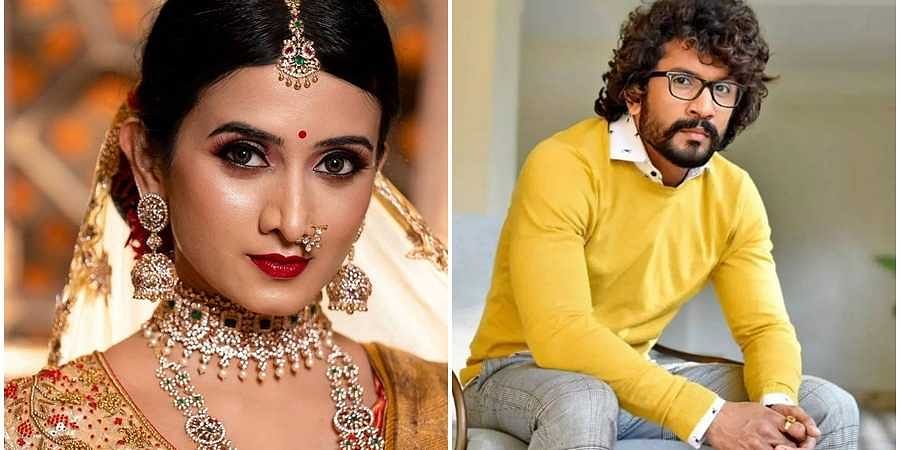
Rumoured couple, Sandalwood actors Harshika Poonachha and Bhuvan Ponnanna are all set to tie their knot on August 24.
Harshika who debuted with ‘PUC’ movie has made a mark of her own in Sandalwood with several movies in her kitty. She has also acted in Hindi, Telugu and other regional languages.
Bhuvan Ponnanna entered Sandalwood with ‘Just Math Mathalli’ movie in 2010. Although, he did appear in several movies, he was shot to fame after he appeared in Bigg Boss Reality TV show.
Interestingly, both Harshika and Bhuvan hail from Kodagu district. They had together carried our several charity works during Lockdown.
It is said that Harshika and Bhuvan will marry in true Kodava style on August 23-24 at Virajpet
source: http://www.mysoorunews.com / Mysooru News / Home> General / by News Desk / August 04th, 2023
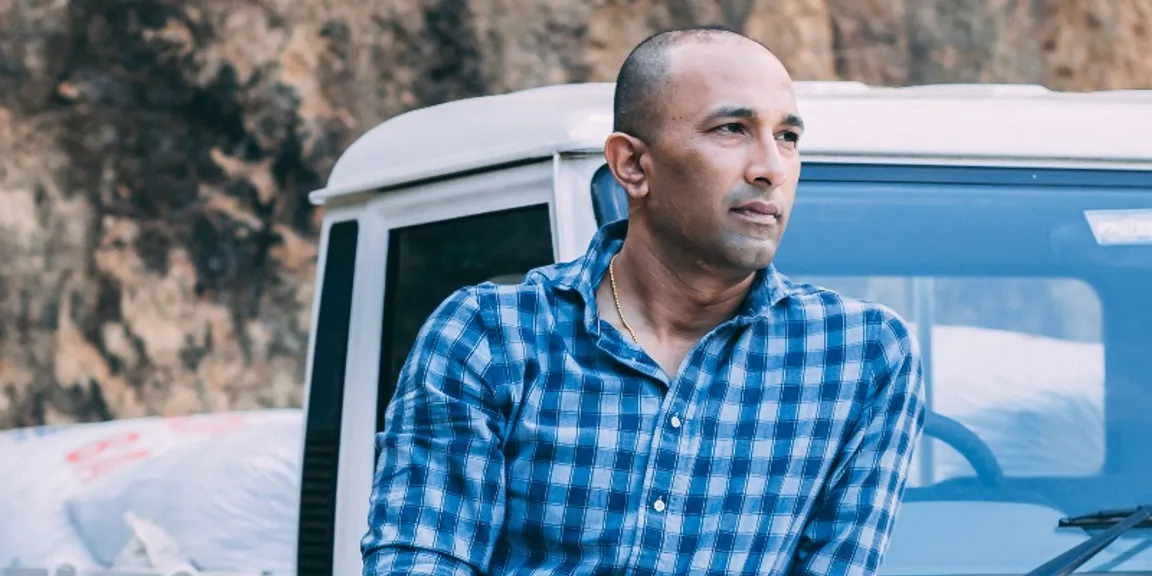
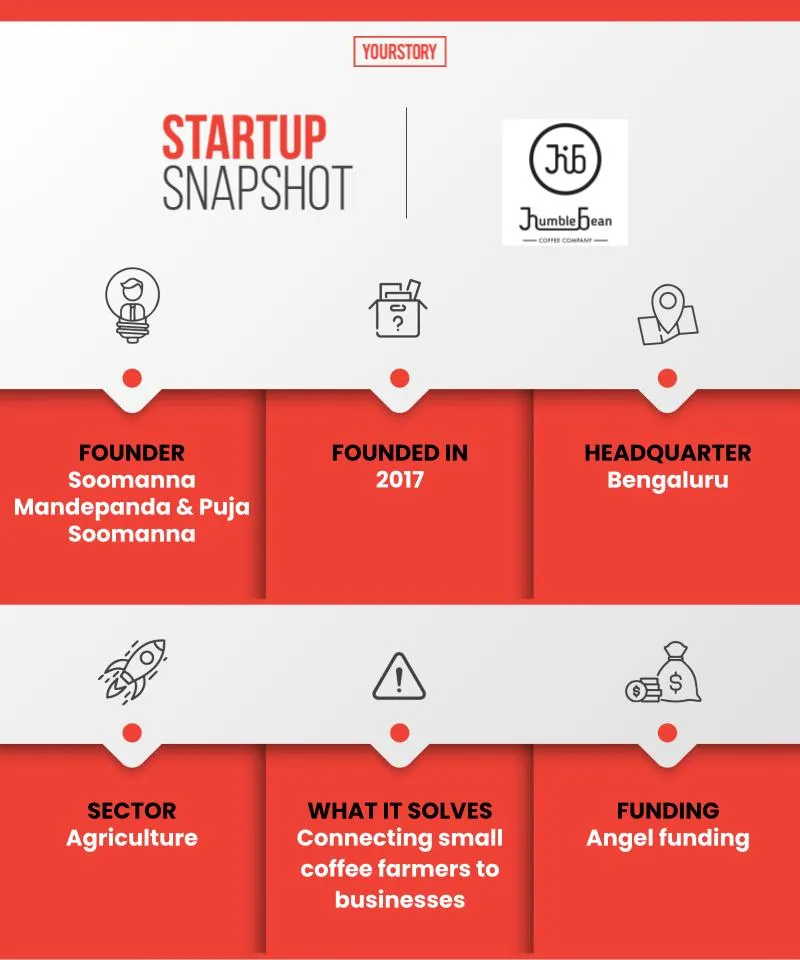
Ex-banker Soomanna Mandepanda and his wife, Puja Soomanna set up their startup Humblebean in 2017 to ensure better prices and reach for small coffee farmers and improve every part of the value chain.
For former banker Soomanna Mandepanda, the motivation for setting up Humblebean was not just to sell the best coffees, but more importantly, uplift the small and medium Indian farmers who grow them.
In the process, he is trying to bring about changes at almost each stage of the business — from cultivation and supply chain to research and education.
Founded in 2017 by Soomanna and his wife and former Yahoo executive Puja Soomanna, Bengaluru-based Humblebean works on an omnichannel model: It ties up with small coffee farmers in south India, roasts and grounds supply, provides the beans to roasters, exports its products, operates brew bars, and has an online presence.
A responsible way to grow coffee
The coffee drinking experience has been gaining traction in India, with the market for the brew expected to record a compound annual growth rate of 7.2 percent during 2021-25, according to a January 2021 Statista report.
Startups including Sleepy Owl, The Flying Squirrel, and Coffeeza, as well as shops such as Third Wave Coffee Roasters are making their presence felt in the market.
India is the world’s sixth-largest producer of coffee and fifth in terms of exports; in fact, 70 percent of its production is exported, says a January 2021 report by the India Brand Equity Foundation. Yet, Soomanna says, “a lot of small and medium farmers and farms aren’t getting the kind of business and reach they should”.
Soomanna would know: he spent most of his childhood on the coffee estates of Coorg and was a small farmer before moving to the world of finance and banking for 13 years. One way to correct the imbalance, he says, is by “making great biodiverse coffee that farms in India are already poised to do”.
According to him, 80-90 percent of coffee farms in India are held by small and medium farmers, whose secondary income comes from crops such as jackfruit, avocado, pepper, and orange that are part of the same farms.
Cultivating other crops alongside coffee “ensures automatic carbon sequestration, top soil replenishment, and lesser need to feed chemicals unlike commercial crops grown in other countries”, says Soomanna. “The mining of the minerals is automatic and you become carbon neutral.”
Puja Soomanna
Advocating farmer-friendly norms
Increasingly popular among young consumers are organic, speciality, and Rainforest Alliance coffees that respectively employ natural methods of cultivation dispensing with harmful chemicals, are of the highest grade being derived from a single origin or single estate, and protect the environment as well as worker rights.
However, in India these certified varieties are grown largely on rich estates; most small and medium farmers cannot afford the costly certifications and grades.
Coffee cultivation and the business are still quite unorganised in India, the certifications cost a lot of money, and need constant follow-ups, says Soomanna.
“The norms are difficult to adhere to for most small farmers. It is a replication of an American model.”
______________________
He says most large corporations in India export to Europe. “The small companies in Hassan, Chikmagalur, etc. certify about 150 estates and add the tags. But the farmer doesn’t get the price because the better prices are still being fetched with the local trader. The local traders are important, but the real traceability is lost.”
As farmers don’t get better prices, there is little driving them to improve their produce, he says. “Speciality coffee is something few farmers can afford to grow.”
Hence, the need to bring in farmer-friendly rules, he says.
The Humblebean coffee
Promoting social value investing
Given the largely unorganised state of affairs, Humblebean focused on getting farmers on board. The team collected random samples, tasted them, and guided farmers on growing the beans in a better way.
By 2018, the team had got 50-60 farmers on board and given them assessment reports free of cost. Until then, the startup was in its pre-revenue stages, bootstrapped with funds from family and friends.
The team then focused on getting roasters to directly buy from farmers. For this, it adopted the idea of social value investing, in which everyone who is part of the value chain comes together to solve a problem and there is money in it for all.
_______________________
“Once we got the farmers on board, we decided to tie up with brands and introduce them to the new portfolios of coffees,” says Soomanna. “We incubated close to four different brands in India from scratch to start a unique brand with a different blend. The idea was to bring in multiple partnerships and inclusiveness in the farming community on one platform.”
Most of the speciality coffee firms have restricted names and types of beans grown on particular estates. “The idea is to bring in more brands that can access different estates, work with them, and encourage the farmers,” says Soomanna.
Humblebean also fulfils the complete roast and ground process for such brands and even gives them a credit facility, he says.
Quality comes with education
Towards the end of 2018 and early 2019, the Humblebean team found that coffees served at most star hotels weren’t up to the mark.
One of the reasons for this, Soomanna says, is that coffee as education is lacking in hotel management schools: one has to go to Italy to learn more about its nuances. The Coffee Board of India mostly takes care of the functionality, he says.
___________________________
“We met a few management schools and after some discussions it was decided that the colleges would look at it as part of the curriculum,” says Soomanna.
Brewing innovative Indian blends
Even as Humblebean works to improve every part of the value chain, it is trying to offer consumers a very Indian coffee drinking experience.
To that end, the startup opened its first Brew Bar in the food experience section of a workspace on Bengaluru’s Residency Road in 2019. Humblebean was one of the early members of that workspace set up by a Singapore-based company.
Puja, who conceptualised Brew Bar, spent time innovating the blends with the use of Indian robustas.
“We don’t serve a single cup of speciality coffee; we wanted to make sure through the brewing methods can small and medium farmers come into mainstream brewing?” says Soomanna.
_______________________
He says these Indian blends “aren’t being used by a single new-age speciality coffee company” as they are considered “harsh and used as a filler across the world. But they are unique and you need great expertise and experience to make a robusta out of them”.
Following research and development, the startup has also come up with its own set of products. Together with B2B partners, it has launched these products online and will soon sell them at other marketplaces. The range is priced at Rs 220-350 for 250 gm for limited editions and depending on the roast.
“Indian coffees can have a global impact,” says Soomanna. “The idea is to be farmer-friendly and also not cause too much environmental damage. We want to bring an amazing cup of coffee from the farms the way it should be drunk.”
Edited by Lena Saha
source: http://www.yourstory.com / YourStory / Home> / by Sindhu Kashyaap / edited by Lena Saha / February 07th, 2021
Karnataka gives impetus to coffee with focus on sustainability through circular economy and regenerative agriculture. The state is the indisputable leader and produces over 70% of the total coffee produced in the country. It produced 2.33 lakh metric tonne of coffee in the last financial year, which is the highest coffee production by any state in the country.
By focusing on sustainability through circular economy approach, the state is implementing practices that aim to minimise waste, maximise efficiency in resources, and encourage environment-friendly practices throughout the coffee production process. In addition, the adoption of regenerative agriculture can enable to restore and enhance soil health leading to a more robust and sustainable coffee plantation.
The key coffee producing districts known as ‘The Land of Coffee’ are Hassan, Kodagu, Shivamogga and Chikkamagaluru. From a national perspective, the key production areas of coffee are Karnataka, Kerala and Tamil Nadu, which aggregate a total production of 92% in the country.
Going by the capability and competence of coffee growers, the state government is looking to unlock access to global coffee markets and tap the promising opportunities. In this regard, Bengaluru is playing host to the 5th World Coffee Conference (WCC) 2023 for the first time in Asia from September 25-28, 2023, at the Bangalore Palace.
The organisers are the International Coffee Organization (ICO), in collaboration with the Coffee Board of India, Ministry of Commerce and Industry, Government of India, Government of Karnataka and the coffee industry provides unparalleled business opportunities for global coffee stakeholders. For the four-day event, WCC has appointed Rohan Bopanna, India’s doubles tennis player & Arjuna awardee as its Brand Ambassador.
Evolving around the theme of the conference: “Sustainability through Circular Economy and Regenerative Agriculture,” the event will feature conference, exhibition, skill-building workshops, CEOs & global leaders forum, growers conclave and a myriad of networking events, all focused on advancing sustainability in the coffee industry.
It will also include producers, curers, roasters, exporters, policy makers, researchers and everyone passionate about coffee from 80+ countries to join at WCC 2023, with a 4-day intensive programme focused on building a sustainable coffee industry through discussion, debate, and collaboration, said the organisers.
During the unveiling of the WCC 2023 Logo and Theme- “Sustainability through Circular Economy and Regenerative Agriculture”, Dr S Selvakumar, Principal Secretary of the Karnataka Commerce & Industries Department, said that, Karnataka is undoubtedly the coffee capital of India. “There is tremendous opportunity for investments across the coffee value chain- from bean to cup right from equipment companies, coffee machines, soluble coffee brands as well as café chains. This in turn leads to increased employment opportunities for our talent from farm to cafes. Therefore, we are privileged to be the host state for this event.”
Dr K G Jagadeesha, CEO and Secretary, Coffee Board of India, said, “WCC 2023 holds great promise for the global coffee sector, specially the Indian coffee industry fostering growth and sustainable practices while showcasing its rich coffee heritage to the world.
WCC 2023 will host an impressive array of participants, including ICO member country representatives, coffee growers, coffee roasters, coffee curers, farm to cup industry, HoReCa, café owners, coffee nations, policy makers, start-ups, R&D and students.
Bengaluru awaits to host this extraordinary global gathering, which will showcase commitment towards sustainability and innovation in the coffee industry. Previous editions of the conference were successfully held in England (2001), Brazil (2005), Guatemala (2010), and Ethiopia (2016), receiving immense appreciation from coffee enthusiasts worldwide.
source: http://www.fnbnews.com / FnBNews.com , Food & Beverage News / Home> Top News / August 02nd, 2023
The Rainforest Challenge India is among the top five toughest motor spots in the world and the rally was held from July 22 to July 29.
Chethan Chengappa teamed up as a co-driver with rallyist Anand V Manjooran and finished second overall. (Photo|Special arrangement)
Madikeri :
A spirited rallyist from Kodagu has finished second overall in the Rainforest Challenge (RFC) India rally held at South Goa recently. Chethan Chengappa, who joined in as a co-driver alongside a Kerala rallyist, came second overall despite complexities.
The Rainforest Challenge India is among the top five toughest motor spots in the world and the rally was held from July 22 to July 29. The RFC recorded 21 participants from across the country.
Chethan Chengappa teamed up as a co-driver with rallyist Anand V Manjooran and finished second overall and second in category, despite the various breakdowns of the vehicle they were driving. The duo were supported by JK Tyres Motor Sports and Vamcy Merla Sports Foundation (VMSF).
The highlight of their win was when Chetan took over the wheels and drove in reverse gear for nearly 3.5 km.
“The RFC has 26 stages and the terrain is really tough. In the twilight zone, the main gearbox of our jeep broke down. At this time, I took over the wheel and drove 3.5 km in reverse gear to finish the stage,” recalled Chethan.
He added that the rally was extremely tough due to incessant rainfall in Goa this year. “In one of the stages where we had to cross a river, our jeep got stuck. I took over the wheels and we finished second overall,” he explained. Chethan has been an active rallyist and he has participated in the RFC India six times. He has won five times in the rally – thrice as overall champion and finished second overall two times.
source: http://www.newindianexpress.com / The New Indian Express / Home> States> Karnataka / by Express News Service / July 31st, 2023
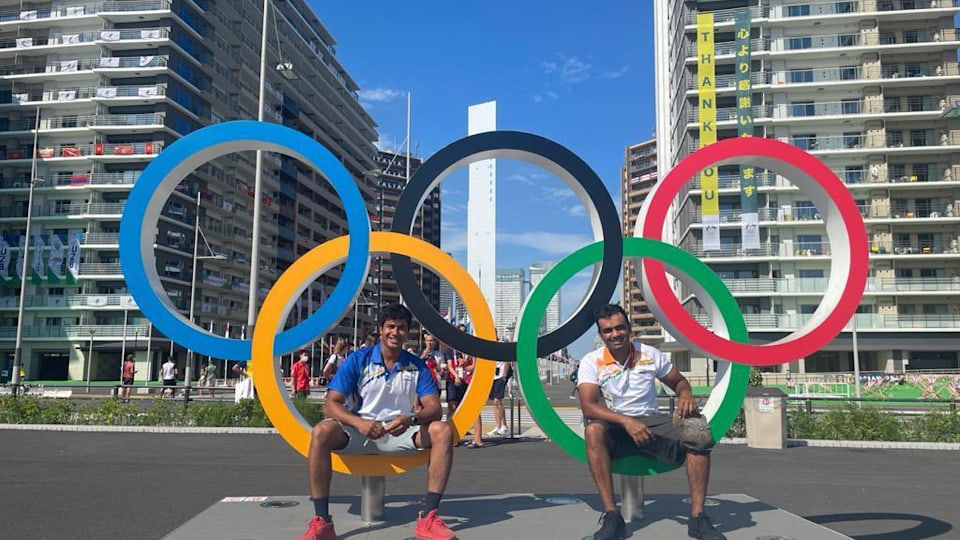
KC Ganapathy will pair up with Varun Thakkar to represent India in the men’s 49er event at Tokyo 2020.
Indian sailing star KC Ganapathy not only made his country proud but also put his community — Kodava — on the sailing map of the world by making a cut in the 49er event (with crew member Varun Thakkar) for Tokyo 2020 at the Mussanah Open Championship earlier this year.
For the uninitiated, the Kodavas are a tribe from the Kodagu region of Karnataka in India, who speak the Kodava language. And the 26-year-old will be the first from his community to represent India at the Olympics.
His journey to the pinnacle of the sporting event has been challenging as after losing his father, Deepak Chengappa, it was his mother Reshma Chengappa, who ran the furniture business for his family in Chennai.
However, his achievement is also fulfilling for his grandmother Padma Prathap, a resident of Kolthodu village near Hatur in South Kodagu, as she has seen Ganapathy overcome all the odds.
“He won the Under-12 National Championship and has come a long way. I pray for his success every moment,” she told the starofmysore.com.
Incidentally, his journey is also inspiring for his Indian sailing contingent teammates, who have seen his never-say-die spirit at close quarters.
It happened so in 2020, that after being reduced to visual training for a major part of 2020 in Chennai, Ganapathy and his crew member Thakkar decided to train in South India in Rameswaram. However, the plan turned out into a disaster, as a bike accident almost reduced his chances of competing any further.
Ganapathy suffered a hairline fracture on the foot along with a soft tissue damage. But he was able to pull off the recovery in no-time, thanks to the doctors and training process he was asked to follow. His teammate Vishnu Sarvanan, a laser radial class sailor, has had a lot of respect for him ever since.
“When I got into sailing for the first time, I kind of looked up to him,” Vishnu told the New Indian Express.
Moreover, Ganapathy also worked on putting up weight to balance his boat (along with his partner), which needs a minimum of 160 kilograms on board. And from quitting school to pursue sailing on a full-time basis, Ganapathy has come a long way in pursuit of making his dreams count
When will KC Ganapathy’s campaign at Tokyo 2020 begin?
Varun Thakkar and KC Ganapathy will begin their campaign at Tokyo 2020 on July 27, Tuesday, in the men’s 49er Race 1.
source: http://www.olympics.com / Olympics.com / by Samrat Chakraborty / July 26th, 2023
Kodagu district is one of the smallest districts in Karnataka. It was a Part ‘C’ State from 1952 to 1956. It was amalgamated with the then Mysuru State (now Karnataka) in 1956.
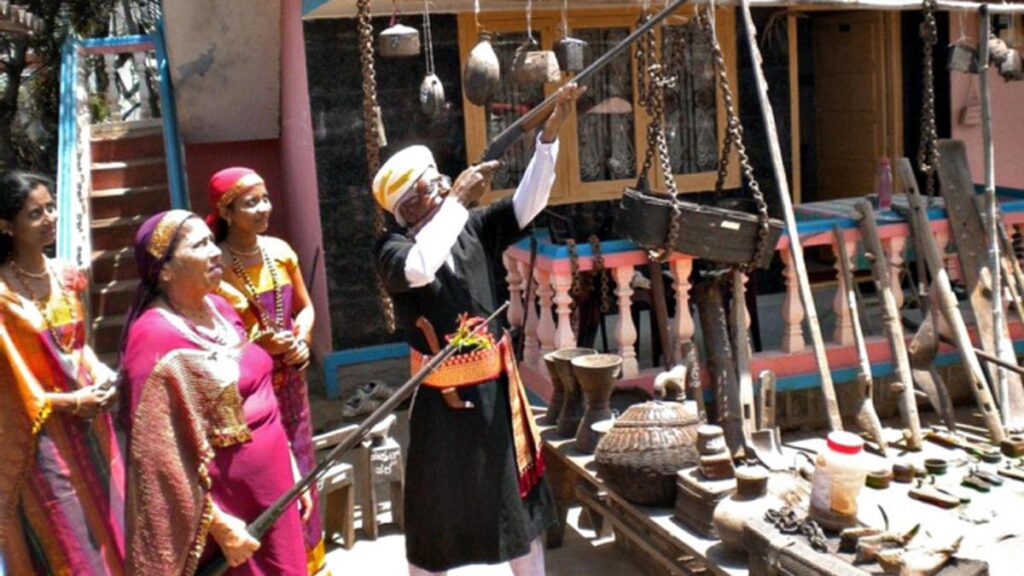
Guns are part of the Kodava culture in Kodagu district of Karnataka. They are used during auspicious occasions.
Members of the Kodava community, in the hill district of Kodagu, are demanding exclusive, intangible constituencies in Parliament and the Karnataka Assembly on the lines of the Sangha virtual constituency for the Buddhist monastic community in Sikkim.
The Codava National Council (CNC), a body fighting for autonomy for Kodava people, fears that the community may lose political representation after the delimitation exercise in the year 2026, since the population of the community is coming down.
Kodagu district is one of the smallest districts in Karnataka. It was a Part ‘C’ State from 1952 to 1956. It was amalgamated with the then Mysuru State (now Karnataka) in 1956.
Recently, CNC members submitted a memorandum to the President, Union Law Minister and Chief Election Commission of India seeking creation of a virtual constituency for the Kodava community.
Nandineravanda U. Nachappa, president of CNC, told The Hindu, “Indian government ratified the rights of Buddhist monastic community through the Sangha constituency, which was created in 1958.” He argued for a similar arrangement for the Kodavas, who are a unique community but are becoming numerically negligible.
What is the Sangha virtual constituency
Sangha Assembly constituency is one of the constituencies in the 32-member Assembly of Sikkim, a State in the northeast region of India.
“The Sangha constituency doesn’t exist on the map. This seat is reserved for the Buddhist monastic community of Sikkim — Buddhist monks and nuns. About 3,293 voters registered with the 111 recognized monasteries in Sikkim State are the only ones who can contest and cast their votes for the Sangha constituency seat.
“Kodavas want a similar seat in both the Karnataka Assembly and in Parliament so that we get our own representation since our population is now down to only 70,000 people,” Mr Nachappa explained.
source: http://www.thehindu.com / The Hindu / Home> News> India> Karnataka / by Darshan Devaiah BP / July 15th, 2023
City’s tennis ace Rohan Bopanna and his wife Supriya Annaiah talk about his successful stint at Wimbledon ’23, maintaining a high level in sport and his final appearance at the Davis Cup.
Bengaluru :
While it is undoubtedly true that Indian tennis ace Rohan Bopanna is in the twilight years of his sporting career, a quick look at his recent achievements denotes he is still far from being finished. The 43-year-old, in the recently-concluded Wimbledon, reached as far as the semi-finals in the doubles category with his partner Australia’s Matthew Ebden.
Getting to the final four of a major at his age is pretty unprecedented. But the laurels don’t end there. Bopanna also rose to no 7 in the ATP rankings for doubles, the first time he reached the number since 2013. Bopanna says the experience at Wimbledon was ‘fantastic’.
“Especially since last year, I did miss Wimbledon. They did not have any ranking points last year, so I decided to skip the event. It’s one of the events which I think every tennis player wants to play. It’s a mecca of our sport. And Matt (Ebden) and I had a pretty successful season so far. We had some tough matches in the beginning, and I think fighting through that was a tremendous achievement for us,” shares the Bengalurean.
Regarding making it into the top 10 rankings, Bopanna elaborates, “It’s really good to be back in the top 10. Especially with the way I’ve been playing. I think the Grand Slams make that difference. You can achieve big points in major events like Grand Slams and Masters. This year, that’s what we have done. And I think it has really shown the difference,” he says.
The pressure of maintaining a high level in sport gets harder as you age, and support from loved ones is crucial. Supriya Annaiah, Bopanna’s wife and a practising psychologist, explains, “I don’t work with him as a psychologist. Ethically, I can’t and personally don’t cross that boundary. Each athlete’s needs and requirements from their spouse varies.
So when I started travelling with him on the tennis tour 12 years ago, it meant understanding his world from scratch, but it was also very freeing – to be able to customise our partnership to pay attention to his needs and performance, while I get to honour my needs and individuality too.” She adds, “Tennis is a sport that demands a lot out of an athlete on and off the court to be at a particular level – I’ve witnessed Rohan go through the grind of it.
So when I cheer for him on and off the court, it is equally (sometimes more) for the man he is behind what he does professionally.” Annaiah believes that the need for an athlete to maintain their mental health is pertinent now, but there isn’t much awareness around it in India when it comes to sport psychology. “There are courses that are being offered, and professionals are being churned out in India.
However, in sport, there isn’t enough awareness and practice in a place where physical health is given attention at par with mental health despite knowing that both go hand in hand. Athletes need to know that they don’t need to reach a tipping point to seek help,” says Annaiah. This year, unfortunately, is the final time Bopanna will play in the Davis Cup in September, a tournament he has been playing since 2002.
“One of the main reasons I decided to stop playing Davis Cup is because I know, this is one place where if I stop, another Indian will be able to take my place. It’s been a long career representing India in the Davis Cup, over 20 years. So, I’m very happy to move on and am very happy that I can bow out of the cup in India,” concludes Bopanna, adding that the one thing that helped him was to have short-term goals.
source: http://www.newindianexpress.com / The New Indian Express / Home> Cities> Bengaluru / by Tunir Biswas / Express News Service / July 29th, 2023
MP urges CM to release an additional sum of ₹70 crore for the 450-bed teaching hospital of Kodagu Institute of Medical Sciences.
Pratap Simha, MP, at the meeting on KIMS in Madikeri on Friday. Deputy Commissioner Venkatraja is also seen. | Photo Credit: SPECIAL ARRANGEMENT
Mysuru-Kodagu MP Pratap Simha on Friday urged Chief Minister Siddaramaiah to release an additional sum of ₹70 crore for the completion of a 450-bed teaching hospital for Kodagu Institute of Medical Sciences (KIMS) in Madikeri. A sum of ₹100 crore had been released for the hospital project and additional funds are essential for completing the works, he added.
Earlier, the MP held a meeting with the officials and doctors of KIMS on establishing a critical care center on the KIMS premises in Madikeri. The proposed center has been estimated to cost₹29 crore, he said.
Engineer Rajesh told the meeting that the critical care center has been proposed on 45-cent land on the KIMS campus and the tender process had also been done. He said the general wards of the teaching hospital of the KIMS are likely to be completed by November. The works need additional funds for completion, he said, adding that the critical care center will be completed in the next 15 months.
Mr. Simha told the officials to send the proposal on a critical care center to the government for the funds. MRI equipment for the teaching hospital and the mother and child hospital for Kodagu has become essential for improving public healthcare services, he added.
The hospital doctors and staff told the MP about the need for constructing quarters for the KIMS staff. In reply, the MP said suitable land for the staff quarters will be provided.
The concerned engineers told the meeting that the land on Murnad Road belonged to the KIMS and the same land parcel can be used for building KIMS’ staff quarters.
source: http://www.thehindu.com / The Hindu / Home> News> India> Karnataka / by The Hindu Bureau / July 28th, 2023
Fulfilling a long-pending demand of Kodavas, the Karnataka Cabinet, which met here on Thursday, agreed to mention as ‘Kodava/Kodavaru’ in the Caste Certificate, instead of ‘Kodagaru,’ who are currently listed in the 3a Category.
Announcing this after the Cabinet meeting here yesterday, Law and Parliamentary Affairs Minister H.K. Patil said the State Government has accepted the recommendations made by the Karnataka Backward Classes Commission to use the words ‘Kodava’, ‘Kodavaru’, instead of ‘Kodagaru’ in the list of Backward Classes and issue a notification in this regard.
The Commission, after a thorough study, in 2005 and 2010, had recommended the Government to use ‘Kodava’ and ‘Kodavaru’ in Kannada and ‘Codava’, ‘Codavaru’ in English, instead of ‘Kodagaru’ in the 3a Category list.
The Karnataka High Court, on Dec.16, 2021, had directed the Government to use the name ‘Kodava’, Kodavaru’ as suggested by the Backward Classes Commission. Justice Krishna S. Dixit had passed the order while allowing a petition filed by Codava National Council (CNC).
The Court then had also cautioned the Government of imposing a heavy cost in the next level of legal battle if it does not comply with the order within an outer limit of three months.
CNC’s effort pays off
The Cabinet decision on Thursday is a victory of sorts for CNC and its President N.U. Nachappa, who had fought over the issue for over a decade.
With the change of Government in the State, Nachappa and other CNC members had met Chief Minister Siddharamaiah recently under the leadership of Virajpet MLA and Advocate A.S. Ponnanna and reiterated the demand for mentioning ‘Kodavaru’ in the Caste Certificate. Nachappa had argued that in the past, it was mentioned as ‘Kodagaru’ in the Caste Certificate, which had an impact on the cultural and social values of the Kodavas.
He further maintained that the CNC had appealed to the Karnataka Backward Classes Commission Secretary to bring in changes in the Caste Certificate issued under Category 3a.
Now, CM Siddharamaiah, responding to the plea, brought the issue before the Cabinet yesterday, which approved using the term ‘Kodava’, ‘Kodavaru’ in the Caste Certificate instead of ‘Kodagaru.’
The Cabinet decision has also called the bluff of former BJP MLAs of Kodagu, who had turned away from their responsibility regarding the issue for years. When confronted over the issue, the former MLAs in the past had constantly argued that the matter does not come under the purview of the State Government and it is the Centre which has to do it.
source: http://www.starofmysore.com / Star of Mysore / Home> News> Top Stories / July 28th, 2023
Nithish PV, a native of Kodagu, has bagged sixth rank in the five-year LLB course (Kannada medium) in the state.
Karnataka State Law University, Hubballi, has announced the tentative list of rank holders.
A student of Vidyavardhaka Law College, Nithish wrote exams in Kannada language and scored 51.28 % marks.
He hails from Abbur Katte village in Somwarpet taluk.
He is the son of farmer couple PD Vijay and MS Shobha, said senior advocate S Lokesh, under whom Nithish is currently receiving hands-on training in Mysuru.
source: http://www.timesofindia.indiatimes.com / The Times of India / Home> News> City News> Mysuru News / July 27th, 2023
WELCOME. If you like what you see "SUBSCRIBE via EMAIL" to receive FREE regular UPDATES.
Read More »