Relentless rains continue to lash Kodagu, pushing rivers and streams well above the danger mark. Authorities have evacuated residents from low-lying areas and declared a holiday for all schools and colleges today, as the region remained under a red alert issued until 8 am this morning.
But as Kodagu battles the fury of nature, its most critical weather monitoring tools are failing. Of the 104 Telemetric Rain Gauges (TRGs) installed across the district, 56 — over 54 percent — are non-functional. Shockingly, there is no clear timeline for when these essential devices will be restored.
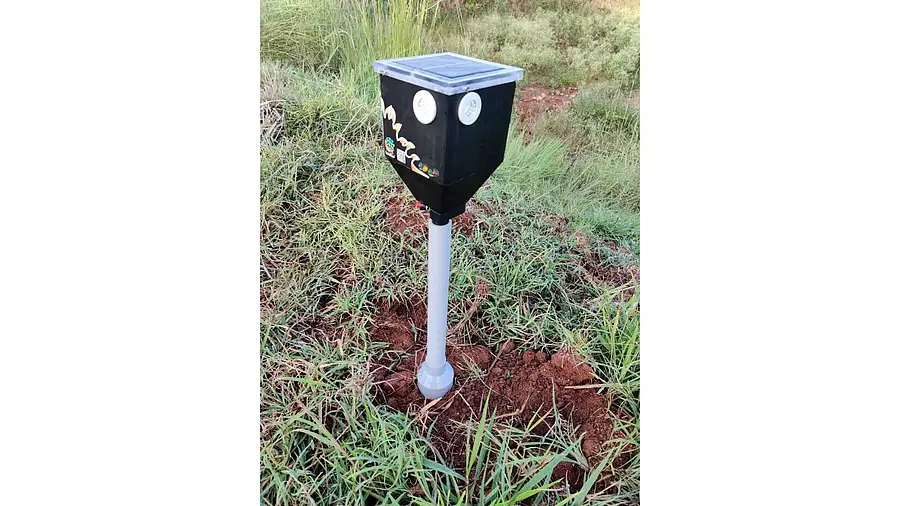
In a glaring act of official negligence, a TRG installed at Kanoor Gram Panchayat in Ponnampet Taluk — an area known for heavy rainfall — has been placed under a roof. Ironically, it is installed to measure rain but placed where it does not rain.
This baffling decision has rendered the gauge completely useless. With not a drop of rain reaching the sensor, accurate data from this high-rainfall zone is lost. Residents said that the TRG was installed two months ago and nothing has been done to rectify the construction anomaly.
Furious residents have flayed the Panchayat for such incompetence, calling out the lack of basic common sense and waste of public funds. TRGs are vital for real-time rainfall data collection and help agencies like the Karnataka State Natural Disaster Monitoring Centre (KSNDMC) issue timely flood alerts and coordinate emergency responses.
With more rain forecast and rivers swelling dangerously, the failure to properly install and maintain these gauges could cost lives, and underscores a disturbing lack of preparedness to face the monsoon.
source: http://www.starofmysore.com / Star of Mysore / Home> News> Top Stories / June 26th, 2025
Using this app, people can update the last location where they spotted a wild elephant, and through an AI-based system, the movement of the elephant will be traced.
The siren system is being installed across 12 conflict zones in Virajpet limits. (Photo | Express)
Madikeri :
A new initiative to prevent untoward incidents related to wildlife movement is being undertaken on a trial basis in Kodagu. Funded by a private company, the early warning system has been installed by Support for Network and Extension Help Agency (SNEHA), an NGO.
An early warning system in the form of a siren to alert residents about wildlife movement within a one-kilometre radius has been installed by SNEHA on a trial basis in wildlife conflict regions across Virajpet in Kodagu.
The NGO is currently in the process of installing 12 such sirens across the conflict zones of Badaga Banangala and surrounding areas. While the initiative is currently at a trial stage, SNEHA plans to expand it further by introducing automated alert systems.
“This initiative is being carried out by SNEHA in Odisha and Kodagu regions. We are looking at developing the system further to ensure an automated alert system,” explained Ramaswamy Krishnan, the Executive Director of SNEHA.
He said the NGO has developed a mobile application called SNEHA Kalpvaig Elephant Tracker, which is being uploaded online to become accessible to all.
Using this app, people can update the last location where they spotted a wild elephant, and through an AI-based system, the movement of the elephant will be traced.
Further, based on the location of the elephant, a siren will be triggered to alert residents within a one-kilometre radius.
“The users who have this application can learn about the movement of the elephant, and this application is linked with the siren system. We have also placed about four camera traps in conflict zones, and these cameras are being monitored by the staff at the office to activate the siren manually,” he explained.
The cameras click pictures every minute, and these photographs are reviewed by the appointed staff, who can activate the siren if an elephant is detected within the designated area.
“We want to make this an automated system, and we are devising plans where the cameras can automatically detect wildlife movement,” he confirmed. When the sirens are activated, a voice alert message is also sent through the mobile application simultaneously.
The alert system is currently being implemented in Kodagu on a trial basis, with the NGO having formed a tracking team to monitor wildlife movements.
A total of 12 sirens have been installed across conflict zones in the Virajpet limits. The initiative is being funded by Sucden Coffee Pvt Ltd and is being implemented in collaboration with the Forest Department.
source: http://www.newindianexpress.com / The New Indian Express / Home> Karnataka / by Prajna GR / May 30th, 2025
RAdm IB Uthaiah, took over as the Director General, Warship Design Bureau, New Delhi, from RAdm Bimal Kumar.
Commissioned into the Indian Navy in Nov 1987, RAdm IB Uthaiah is an alumnus of the Naval College of Engineering, INS Shivaji, Lonavala, and holds an M. Tech and M. Phil degree in addition. In a career spanning over 35 years, he has served the Indian Navy in various capacities; with appointments at the Warship Design Bureau, Training Academies, Naval Dockyard (Vzg), all Naval Commands and the Naval Headquarters.
On being elevated to Flag Rank, the officer has tenanted appointments as Additional Director General (Technical), Project Seabird; Admiral Superintendent, Naval Dockyard, Visakhapatnam, and Chief Staff Officer (Technical), at the Headquarters, Eastern Naval Command, prior taking over his current assignment.
source: http://www.aviation-defence-universe.com / Aviation & Defence Universe / Home> Navy / February 01st, 2023
As part of the National Cattle Disease Control Programme, the 7th round of the foot and mouth disease (FMD) vaccination drive will be conducted in Kodagu district from April 21 for 45 days.
At a recent meeting in Madikeri, Deputy Commissioner Venkataraja instructed officials to make all necessary arrangements to ensure the success of the drive. Stressing the importance of livestock health, he said that FMD poses a serious threat to the farming community by causing significant financial losses. He called on all stakeholders to work together to eliminate the disease through timely vaccination.
Lingaraja Doddamani, Deputy Director of the Department of Animal Husbandry and Veterinary Sciences, noted that FMD is a highly contagious disease affecting livestock such as cattle and pigs. He emphasised that regular vaccination, twice a year, is crucial in preventing the spread of the disease.
Vaccination will be administered to calves older than three months, with a booster dose scheduled three to five weeks after the initial shot. Even pregnant cows and buffaloes can safely receive the vaccine, he added.
Kodagu district is home to 76,920 livestock, and a dedicated team of 75 veterinary staff has been mobilised for the drive. The vaccine is being provided free of cost, and officials have urged farmers and livestock owners to extend full cooperation to the field staff during the campaign.
The vaccination drive is a vital step toward safeguarding animal health and ensuring economic stability for farmers across the district, the officials said.
source: http://www.thehindu.com / The Hindu / Home> News> India> Karnataka / by The Hindu Bureau / April 19th, 2025
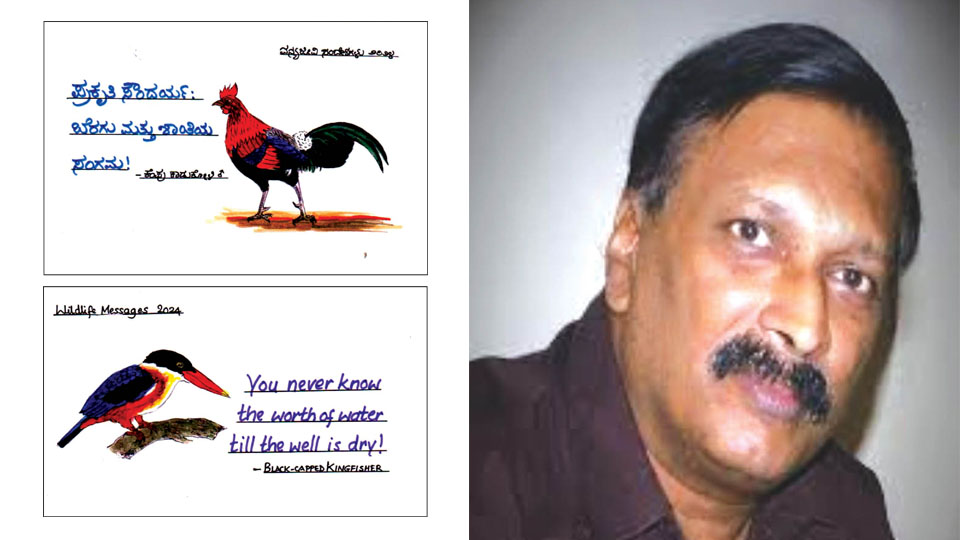
Dr. S.V. Narasimhan, a family physician based at Virajpet in Kodagu district, is an avid birder, nature lover, adept at computers, Karnatak music and astronomy.
Author of Feathered Jewels of Coorg, a field-guide to 310 species of birds found in Coorg, Dr. Narasimhan is the pioneer in spreading wildlife conservation messages through his unique hand-painted Wildlife Message Cards that are sent free to individuals throughout the world to mark the Wildlife Week.
Total number of hand-painted cards made by him this year is 2,180; in 40 years, 81,595 cards. Total recipients this year including Star of Mysore – 1,236; in 40 years – 16,220 persons.
The Special Wildlife Messenger of this year is Red Junglefowl (Gallus gallus). A resident bird of the Himalayan foothills of Assam, Meghalaya, Nagaland States of India, these birds belong to the most beautiful family of pheasants. Males about 70 cms, have a rich mix of colours on their feathers. They are found in the tropical forests of sub-Himalayan States of Assam, Nagaland and Meghalaya. They are found near human settlements and have been domesticated since 7,400 years, forming the primary species of all the domesticated chicken all over the world. Omnivorous, they feed on fallen fruits, seeds, roots and tubers along with arthropods, larvae and earthworms, lizards and insects foraged with its toes.
source: http://www.starofmysore.com / Star of Mysore / Home> News / October 13th, 2024
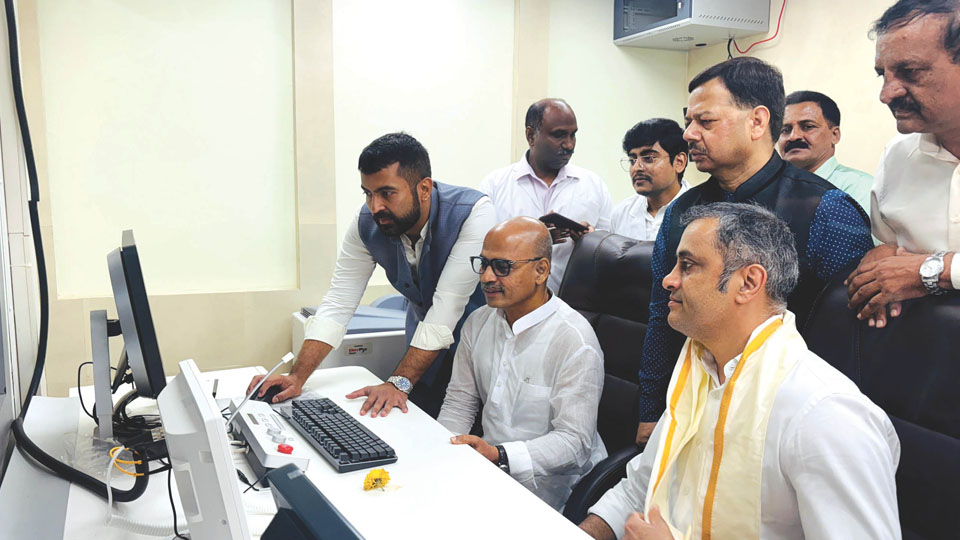
In a significant advancement for the healthcare needs of Kodagu District, an MRI (Magnetic Resonance Imaging) machine was inaugurated in Madikeri on Sunday, fulfilling a long-standing demand from the local community.
This state-of-the-art facility is now operational at the teaching hospital of the Kodagu Institute of Medical Sciences (KIMS).
Minister for Medical Education Dr. Sharan Prakash Patil inaugurated the facility, alongside Madikeri MLA Manthar Gowda and Virajpet MLA A.S. Ponnanna.
Previously, residents of Kodagu had to travel to Mysuru, Bengaluru or Mangaluru to access MRI services, as no such diagnostic facility was available in any Government or private medical centre within the district.
The introduction of the MRI scanning facility at the teaching hospital will enable patients to receive crucial diagnostics right in Madikeri, streamlining their access to necessary medical treatment based on the reports generated.
Minister Patil said that this installation will significantly enhance the ability of patients to undergo essential MRI diagnostic tests locally. He also assured the establishment of a cardiac centre at the District Hospital in Madikeri under a Public-Private Partnership (PPP) model, emphasising the need for improved healthcare facilities in the hilly terrain of Kodagu.
The MRI equipment, initially sanctioned for another location, was relocated to Madikeri due to persistent advocacy from MLA Manthar Gowda. Additionally, Minister Patil confirmed that a proposal for Rs. 60 crore has been submitted to the State Government for the construction of a new building at the District Hospital, which is expected to receive approval soon.
source: http://www.starofmysore.com / Star of Mysore / Home> News / October 03rd, 2024
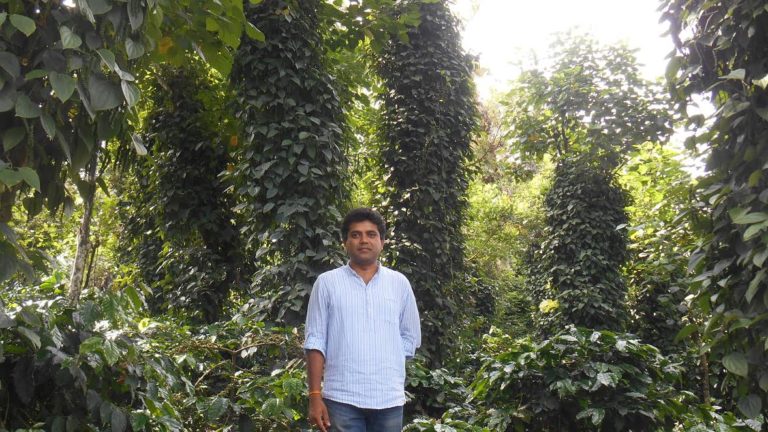
Struggling to improve yield levels with traditional methods at his coffee plantation, Hoysala found great success with technological innovations.
Hoysala at his plantation. Credit: M.J. Prabu
Farming, especially in India, is generally considered to be a traditional field that’s averse to innovation, however M.G. Hoysala’s successful decision to quit banking for farming with the help of technological innovations, shows that keeping an open mind towards new, nontraditional cultivation techniques and interacting with experts in the field is essential for achieving farming success.
While many come into the profession unwillingly, Hoysala represents a section of people that actually wants to take on the family vocation. After spending five years working at a private bank, Hoysala came to realise the importance that the agriculture and plantation sector held for him. So he left his job and took over his father’s coffee plantation.
Since he took over, the Hoysala’s 40 acre farm in Karnataka’s Kodagu district has become a role-model of sorts for the other farms in the area.
As is common in the region, Hoysala grows Arabica coffee on his farm, but what differentiates his farming practices from the rest is the presence of tall indigenous trees that grow alongside the rows of coffee bushes, their height providing shade for the lower shrubs. Another distinguishing factor is the presence of black pepper vines that cover the trees’ trunks.
Starting off as an amateur, Hoysala initially followed the locally practiced traditional forms of cultivation. However, his lack of experience and the absence of proper guidance worsened his predicament. Disease-damaged crops, low productivity and a lack of knowledge about advanced production technologies were just some of the problems Hoysala faced when he took over the coffee plantation.
Collaborating with experts
Hoysala recalls contacting the Indian Institute of Spices Research around the same time as he started to realise that he would need technology if he wanted to stabilise his plantation’s yield level in a sustainable manner. His association with the institute started when he attended an eye-opening seminar organised by the organisation’s regional station at Madikeri, Kodagu.
That first seminar taught him about the varietal wealth of black pepper along with information on various crop production, protection and processing technologies that were being developed at the institute.
Drawing on his experiences from the banking sector, Hoysala was certain that the timely and meticulous adoption of technologies designed to aid crop production were essential to maintaining a profitable plantation.
“The productivity of vines was below the level of expectation and we could hardly harvest six tonnes from an area of 40 acres. We understood that not adopting recommended measures in time, especially to control diseases, could lead to heavy crop loss,” says Hoysala.
“Moreover, we were unaware that instituting shade regulation before the monsoon and irrigation during the summer months would improve the setting of berries and ultimately increase the yield.”
After Hoysala had established a close relationship with the regional station’s scientists, he set about addressing his plantation’s problems one by one.
Shade regulation was the first priority, followed closely by the scheduling of fertiliser, increasing organic inputs fortified with growth-promoting organisms, regularly monitoring the crops for diseases and irrigation during the summer months.
“By adopting these [new and] improved technologies, we have increased the production from six to 12 tonnes. [Which is] on average a two-fold jump within a time span of five years,” said Hoysala.
The plantation’s irrigation system was further strengthened by the construction of water harvesting structures like farm ponds and bore wells. Besides these measures, Hoysala also had pits dug between the rows of coffee plants to harvest run-off water as it also helps with enriching the soil.
The changes extend to pepper cultivation as well. Two years ago, Hoysala took ten acres of land which was used to grow ginger and transformed it into a well-designed pepper plot with silver oaks to serve as standards for the vines and robusta coffee bushes interplanted with the pepper vines.
It currently costs Hoysala a total of Rs 85,000 per acre to implement these measures along with paying the regular operational costs of running the plantation. In return, he earns Rs 1 lakh per acre per annum from the coffee and black pepper grown on the farm, allowing Hoysala to maintain the sustainable, profitable plantation he aspired to.
For further information, contact: M. G. Hoysala, Sri Siddalingeshwara Estate, Hardur P.O., Suntikoppa, Kodagu, Karnataka–571 237, mobile: 09449682430, Email: hoysala.mg@gmail
and his guide
Dr. S. J. Ankegowda, Principal Scientist and Head, ICAR-Indian Institute of Spices Research Regional Station, Hervanadu Post, Appangala, Madikeri, Karnataka – 571 201, Phone 08272 – 245451; 245514; 298574. Mobile: 09663069241, email:
source: http://www.thewire.in / The Wire / Home> Agriculture / by M J Prabu / December 29th, 2016
Speaking to the media regarding the NEET irregularities, the minister demanded stringent action against the culprits.
Sharanprakash Rudrappa Patil during the visit to District Hospital and KoIMS. (Photo |Express)
Madikeri :
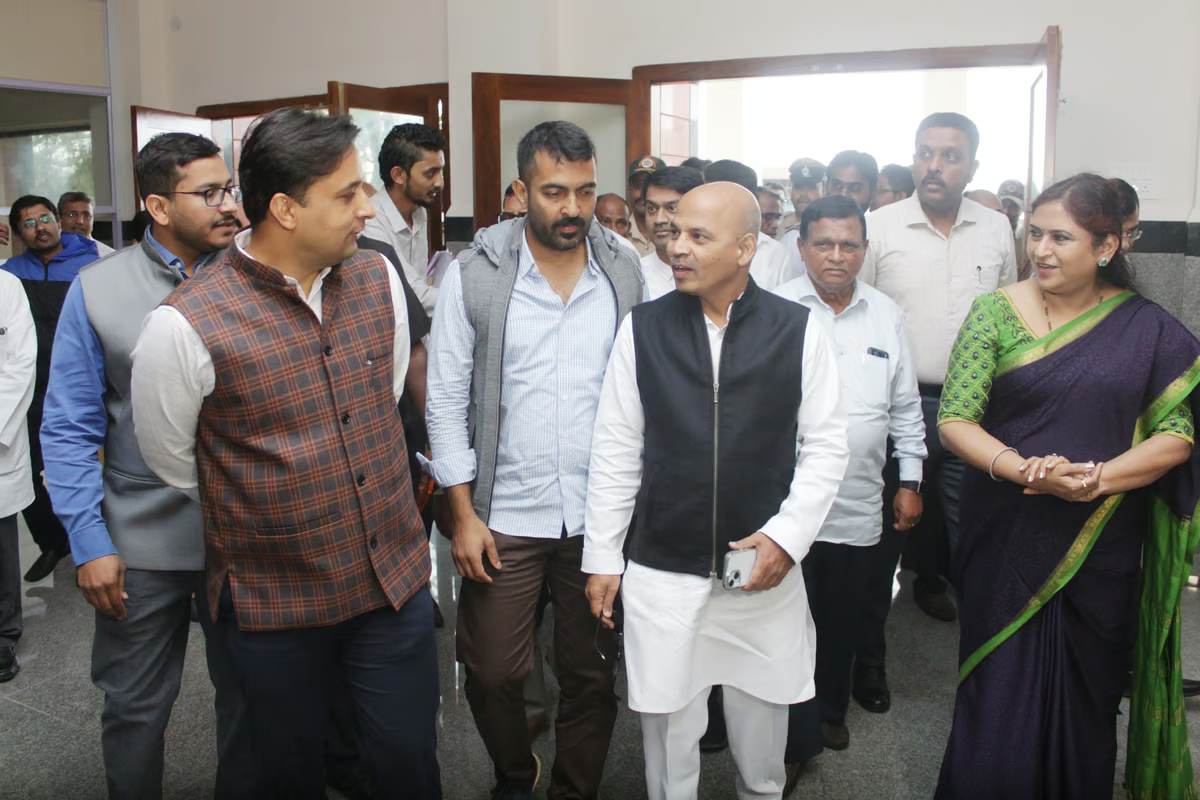
Minister for Medical Education and Skill Development, Dr Sharan Prakash R. Patil, assured the establishment of a heart examination centre in Kodagu.
During his visit to the Kodagu Institute of Medical Sciences (KoIMS) on Friday, he confirmed that the heart examination centre for the district would be announced during the next budget.
“A cardiac care centre under the Public-Private Partnership will be announced in the next budget for the district. Steps will be taken to complete the new hospital building at the District Hospital premises in Madikeri,” the minister confirmed.
He explained that following the efforts of Madikeri MLA Dr Mantar Gowda, an MRI machine has been installed at the District Hospital, and the same will be inaugurated shortly.
He confirmed that Rs 55 crore to Rs 60 crore in funds are required for the completion of the Women and Children Hospital in Madikeri and said, “Steps will be taken to sanction the funds through the finance department. There is a shortage of doctors, and the same will be addressed shortly. Young doctors are keen on working in small districts, and steps will be taken to introduce PG courses in medicine.”
The minister inspected the various ongoing works across the district hospital and observed the functioning of the various units at the centre.
Speaking to the media regarding the NEET irregularities, the minister demanded stringent action against the culprits.
“The government has jeopardized the future of 24 lakh students. The centre has failed to make the examinations transparent. There is absolute transparency when the state conducts the CET examination. The union system has been affected by NEET, and when questioned regarding the same, Rahul Gandhi was insulted by the central government. It is suspected that these irregularities were reported earlier too,” he opined.
He lashed out at the centre, alleging that NEET is the biggest scam of the Modi-led government.
MLA Dr Mantar Gowda, DC Venkat Raja, and others were present during the minister’s visit. The minister also interacted with the KoIMS students and addressed their various problems.
source: http://www.newindianexpress.com / The New Indian Express / Home> Karnataka / by Prajna G R / July 05th, 2024
Each device features four LED lights. The lights are positioned in pairs, in such a way that from a distance they look like a pair of glowing eyes of a predator, founder S R Ayan said.
Parabraksh installed in a farm in Kanakapura.
A Bengaluren has designed a lighting system to help farmers protect their crops and livestock from wildlife, during the night. The innovative product does not harm the wild animals. Katidhan, a five-member startup located on New BEL Road, recently won an investment of Rs 1.5 crore on business reality show, Shark Tank India.
On the show, its founder S R Ayan said farmers in India lose 30-50% of their crops to wildlife. The conventional methods to keep wild animals out include installing electrical fences, planting crude bombs or spraying chemicals. Citing the dangers of such interventions, he said an elephant in Chikkamagaluru died due to electrocution by an electric fence last November.
Ayan says his product, Parabraksh, mitigates the human-animal conflict in a “humane way”. Animals are afraid of other animals and the lighting system is built around this behavioural psychology. “Each device features four LED lights. The lights are positioned in pairs, in such a way that from a distance they look like a pair of glowing eyes of a predator. This scares away the animal.”
The product flashes light in random patterns. Being an autonomous device, it switches on in the dark and switches off as daylight breaks. It runs on solar power but also features a USB charging port for backup.
“Four such lights are needed to protect a farm land of 1 hectare, one in each corner. You can mount them on bamboo sticks or steel poles. The height of the stick or pole will depend on the size of the animal you are targeting,” Ayan adds.
He claims Parabraksh is “over 95%” effective in repelling wild boar, nilgai, elephant, tiger, leopard, and the Himalayan bear. He shares case studies: When these lights were uninstalled from a farm in Tamil Nadu and sent for servicing, elephants returned. For a woman farmer in Maharashtra, crop losses due to wild boars have gone down by 25%. The income of a farmer in Odisha has doubled since elephant invasion stopped.
Ayan says the demand for Parabraksh was more than what his bootstrapped startup could meet, that’s why he decided to raise funds through investors.
It all started with a friend’s SOS call in 2017. “My friend was volunteering with a wildlife organisation in Ladakh. He said villagers were trying to kill the snow leopard that was attacking their livestock. He knew about my background in product design and robotics and asked if I could help,” the 33-yearold recalls.
After a pilot in Ladakh, Parabraksh hit the market in 2020. “Our first taker was a large coffee estate in Kodagu,” he says. About 1,100 units, Rs 9,500 apiece, have been sold since. A majority of the products have been sold to farming and social development collectives in Maharashtra.
“After the show, I am getting enquiries from Kanakapura, Kodagu and Hassan, which see regular elephant movement,” he says.
Monkey chaser
Sensor-based Kapikaat is another product by Katidhan, priced at Rs 5,000 and up. It emits loud sounds to repel monkeys during day time. “It is 70-75 % effective. We reckon that monkeys can get used to the source of the sound and ignore it,” says Ayan.
source: http://www.deccanherald.com / Deccan Herald / Home> India> Karnataka> Bengaluru / by Barkha Kumari / March 27th, 2024
Madikeri, often referred to as the Scotland of India, is set to witness the establishment of a cutting-edge sub-regional science center and planetarium at a projected cost of approximately 12.26 crores, courtesy of the Department of Science and Technology
Bengaluru:
Madikeri, often referred to as the Scotland of India, is set to witness the establishment of a cutting-edge sub-regional science center and planetarium at a projected cost of approximately 12.26 crores, courtesy of the Department of Science and Technology. The foundation stone for this landmark project will be ceremoniously laid tomorrow by the Hon’ble Chief Minister Siddaramaiah.
Nestled across 3 acres of pristine land in Karnangeri village, Madikeri, the facility will feature an 8-meter dome for the construction of the planetarium. Minister of Minor Irrigation, Science and Technology, NS Boseraju, highlighted Madikeri’s unique advantage of minimal light disturbance at night, making it an ideal location for observing stars and planets.
In an official statement, Minister NS Boseraju emphasized the department’s commitment to promoting science and technology, fostering scientific education, cultivating rational thinking, and raising awareness about astronomy. The initiative aims to establish science centers and planetariums across district centers in the state.
Kodagu district, with its unpolluted skies and minimal light interference, provides an exceptional environment for stargazing. Minister Boseraju likened Kodagu to other picturesque locations such as Spiti Valley in Himachal Pradesh, Pangong Tso Lake in Ladakh, Run of Kutch in Gujarat, Nile Island in Andaman and Nicobar, and Matheran in Maharashtra. The sub-regional science center and planetarium project is envisioned to ignite interest in space exploration and provide students in the district with valuable educational opportunities.
The foundation stone laying ceremony, scheduled for tomorrow, February 25, will be graced by the presence of Hon’ble Chief Minister Siddaramaiah.
Minister NS Boseraju expressed optimism about the transformative impact of this initiative on the scientific landscape of the district.
source: http://www.thehansindia.com / Hans India / Home / by Bharath Anjappa / The Hans News Service / January 24th, 2024
WELCOME. If you like what you see "SUBSCRIBE via EMAIL" to receive FREE regular UPDATES.
Read More »