Category Archives: Science & Technology

Hi-Tech Monitoring System For Precise Cauvery Water Data

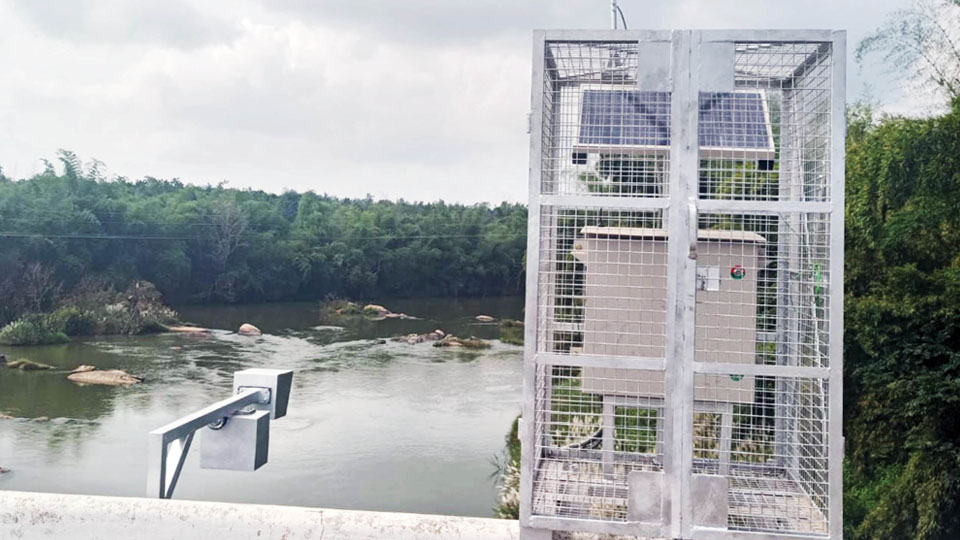
Telemetric Water Monitoring System installed at Koppa-Kushalnagar Cauvery River Bridge

Kushalnagar:

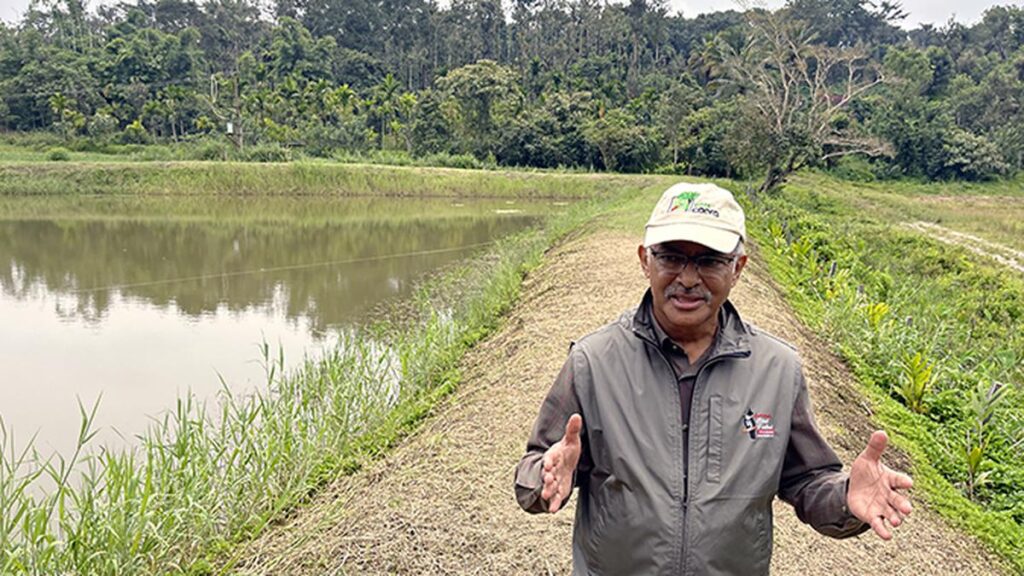
Amid the ongoing dispute between Karnataka and Tamil Nadu over the sharing of Cauvery River water, a state-of-the-art Telemetric Water Monitoring System, equipped with velocity and level sensors, has been successfully installed on a bridge across the Cauvery River at Koppa-Kushalnagar on the Kodagu-Mysuru border.

This sensor-based monitoring system offers automated and    real-time data 24×7, providing precise information regarding the river’s inflow, water level, and velocity.

The system comprises two sensors: one for monitoring the speed of the water flow (velocity sensor) and another for measuring the depth of the river water (depth sensor).

The installation has been carried out by the Water Resources Development Organisation, a Central Government agency operating under the National Hydrology Project. This organisation has an Irrigation Investigation Sub-Division Office in Mysuru that is overseeing the implementation of this sensor-based water monitoring system. Each system costs Rs. 30 lakh and is imported.

A similar system has already been deployed at Bannur, where the Cauvery River flows and approvals are pending for installing two more systems on Lakshmanatheertha River (near Hunsur) and Lokapavani River in Mandya (a tributary of Cauvery).
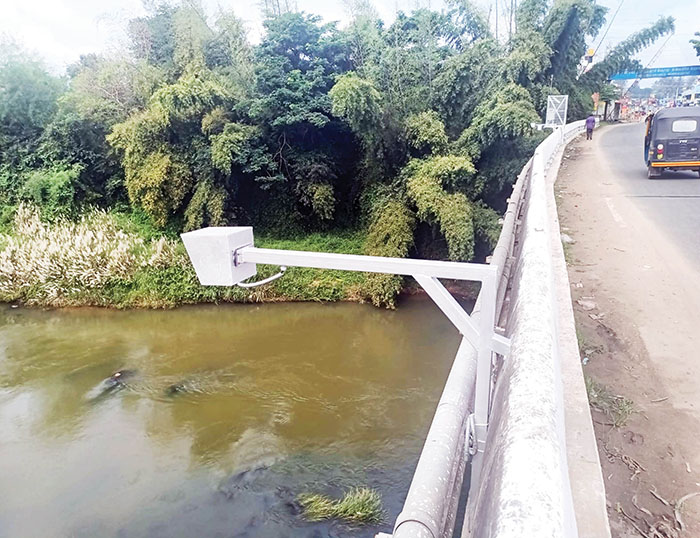
This state-of-the-art sensor-based system provides real-time data every 15 minutes to over 15 agencies in Karnataka and at the national level, including the India Meteorological Department, Cauvery Neeravari Nigam Limited and the Karnataka State Natural Disaster Monitoring Centre.

Additionally, the data can be utilised by regulatory authorities such as the Cauvery Water Monitoring Authority (CWMA) and the Cauvery Water Regulation Committee (CWRC) to determine the water allocation between the Southern States.

Speaking to the Star of Mysore this morning, Santhosh Kumar, Assistant Executive Engineer of the Irrigation Investigation SubDivision Office, mentioned that in the past, water flow data collection was a laborious manual process.

The system measures various parameters related to river level and flow, including water height from the stream bed (stream stage), river velocity (measured by a radar-based surface velocity sensor mounted above the river), and river depth and width. The collected data is then transmitted and made available for viewing and downloading.

This system is designed to monitor water levels in rivers, lakes and streams, predict the potential for flooding and issue alerts accordingly. It not only measures water levels but also assesses water velocity, improving the accuracy of risk predictions, Santhosh explained.

The system operates using solar energy and has been installed by Sun Technologies, Chennai, which is responsible for data transmission, system installation and maintenance for five years.

It may be recalled here that a Telemetric Water Gauge has already been installed at the Krishna Raja Sagar (KRS) Dam in Mandya district and at Harangi Dam in Kodagu to provide sensor-based real-time data on reservoir storage levels, inflow and outflow. These installations are part of an Online Monitoring System for the Cauvery Basin, utilising Telemetry-based Real-time Data Acquisition and Transmission.

source: http://www.starofmysore.com / Star of Mysore / Home> News / November 08th, 2023
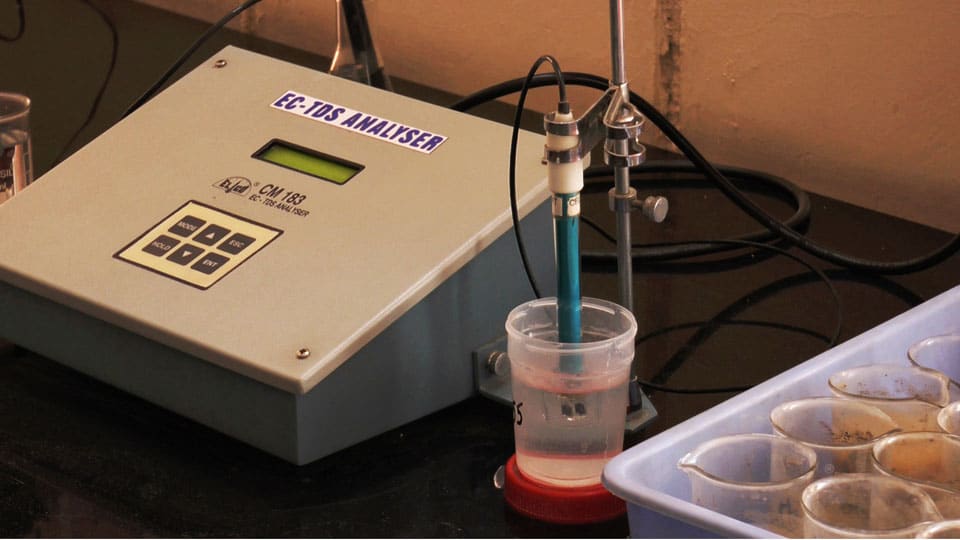
Coffee Board Launches Soil Testing Centre At Gonikoppal

Mysuru:

Thousands of farmers in South Kodagu now look forward to better yield as Gonikoppal gets a new digital soil testing centre. The Coffee Board launched the testing centre last week following demands of farmers and growers.

Earlier, farmers of Virajpet taluk had to travel 50 to 70 kms to give soil for testing centres at Chettalli and Koodige and both the centres are in Somwarpet Taluk. Farmers in Virajpet were deprived of a testing centre.

Coffee Board Senior Liaison Officer said it took two hours to find the potential of hydrogen (PH) value of soil and five hours to find nitrogen, phosphorus and potassium (NPK) in soil.

source: http://www.starofmysore.com / Star of Mysore / Home> News / December 28th, 2017

Biodiversity expert calls for collating rainfall data from farmers

C.G. Kushalappa, scientist and retired dean of College of Forestry in Ponnampet. | Photo Credit: K. MURALI KUMAR

Expressing concern over the change in rainfall pattern and temperature in Kodagu, an expert well versed with the hilly district’s ecosystem has suggested that the government should ask research centres to collate rainfall data from farmers’ rain gauges to study the impact of climate change on the district’s ecosystem as well as catchment area of river Cauvery. 

“Kodagu has a practice of almost all the farmers keeping rain gauges in their estates and maintaining daily rainfall data for several decades. The government should ask reputed research centres to get such data from farmers to assess the impact of climate change,” says C.G. Kushalappa, former dean of College of Forestry, Ponnampet and an expert on Kodagu’s ecosystem. 

“The need of the hour is to study and understand the patterns related to impact of climate change on different areas of Kodagu through micro-level data,” he says. This is because the impact of climate change varies in different areas within the small district. Analysis of rainfall data from 110 farmers had showed a pattern of rainfall going below 50% of average two times once in 12 years.

source: http://www.thehindu.com / The Hindu / Home> News> India> Karnataka / by B S Satish Kumar / October 29th, 2023

How coffee makes concrete stronger

How coffee makes concrete stronger
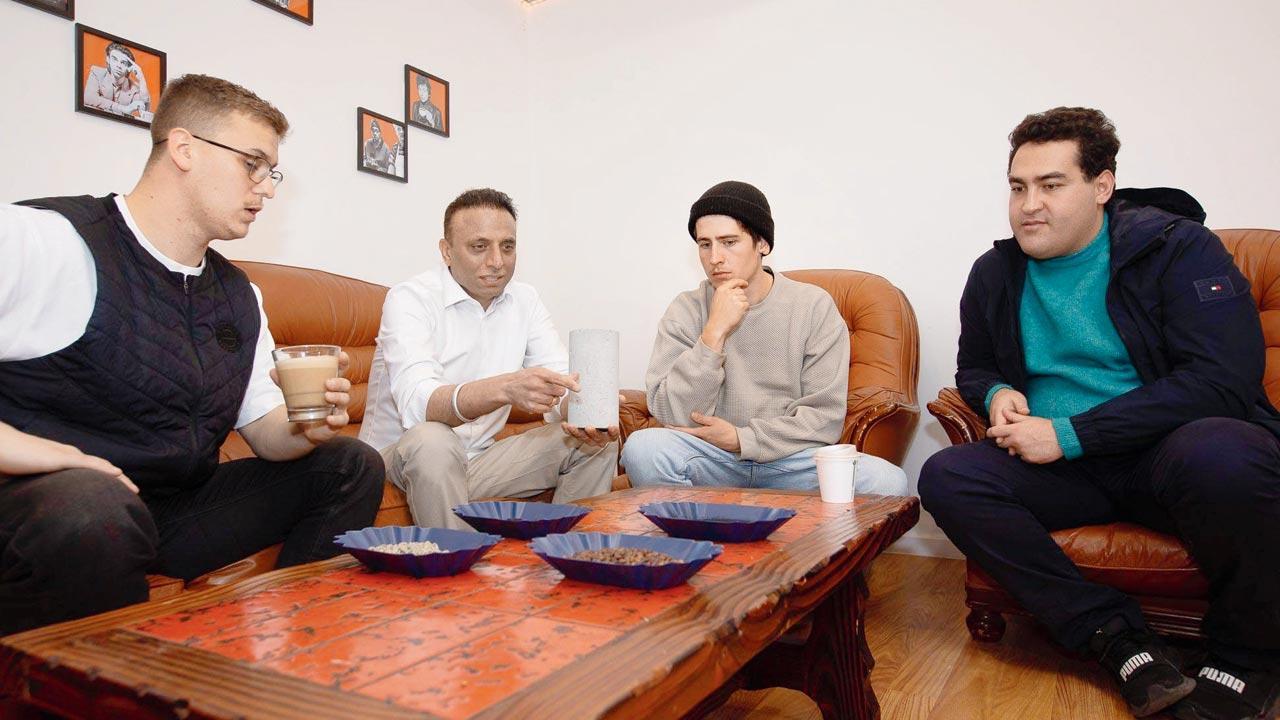
Dr Rajeev Roychand (second from left) and his research team have developed a way to use coffee grounds to strengthen concrete by 30 per cent

It can wake you up, it is an anti-oxidant, it is said to be nature’s best pre-workout drink when it comes to burning fat while working out, and now, it can make stronger houses.

No, this writer has not had too much coffee. Just the usual four cups since morning. The last fact mentioned above is supported by scientific research, detailed in a research paper titled Transforming spent coffee grounds into a valuable resource for the enhancement of concrete strength, published in the Journal of Cleaner Production this year. And the lead author of this research paper is Dr Rajeev Roychand, an Australian national originally from sadda Punjab.

Born in the Gurdaspur district, Roychand grew up in Amritsar and moved to Australia in 2005 for higher studies, after completing his Masters in Civil Engineering.

“I was living a carefree life on my father’s hard-earned money, with absolutely no vision for my future,” Roychand tells mid-day through an email interaction. “It was making my father quite anxious. He finally decided to send me to Australia, hoping that I may become serious when I won’t find anybody to pamper me all the time and when I feel the realities of the harsh life.”

The move came as a blessing in disguise for Roychand, who, for the first time, learned the importance of money during his first job at a restaurant.

“The owner called me for a day. It was a very busy restaurant and I worked from 3 pm to 11 pm. without a single second’s break. I worked so hard that the owner of the restaurant asked me to become a regular employee of the restaurant. This extreme hard work was like a sudden shock for me, and I was not mentally prepared to accept this job offer. Seeing that I wasn’t interested, the owner refused to pay me. I went to the station to go back home and cried a lot at the station,” he recalls

Roychand went on to work as a taxi driver till 2008, during which time he also got his citizenship, and then worked as a structural engineer at a private firm. Research, however, was always his calling.

“I was always fascinated by the research field, so in year 2013, I decided to do my PhD at RMIT University, Melbourne,” Roychand says. “The focus of my research was developing a low carbon footprint alternative to the conventional Portland cement.  By the time I completed my PhD in year 2017, I was successful in developing a high durability zero cement concrete utilising different industrial by-products like fly ash, slag, silica fume and some chemical additives.”

The road to Roychand’s Eureka moment in his latest project, funnily enough, started over a cup of coffee, when the research group he is part of at RMIT met to discuss transformation of different waste materials to strengthen concrete.

“We decided to start with coffee waste, taking it as a challenge. We worked on this project for about a year, and finally we came up with a solution that could transform this waste into a valuable additive for strengthening concrete,” he says.

For the benefit of the lay reader, he breaks down the research into simple words.

“Concrete is made up of cement, water, sand, and gravel. In this project, we found that heating spent coffee grounds at 350°C temperature in the absence of oxygen significantly improves its properties. When this treated coffee waste is used as a replacement for sand, it provides a 30 per cent improvement in the strength of concrete,” he explains.

The team, guided by Professor Jie Li and comprising Roychand and his fellow researchers Shannon Kilmartin-Lynch and Mohammad Saberian, Roychand, made their findings public earlier this month, leading to widespread fame. Apart from several research enthusiasts and experts who spoke about the feat, even the official account of the Australian Consulate in India lauded their achievement.

But for them, the most exciting part is that the waste that was ending up in landfills is now ready to be tried out as a high value by-product for construction applications. But that’s not all. Roychand’s research might soon be coming to India, he reveals.

“No doubt, India could immensely benefit from this research. I will be the happiest person if any of my research could benefit my motherland. We are in consultation with one of the companies from India,” he shares, adding, “I still do miss a lot of things, like Amritsari food,  and visiting friends and relatives during festivals. But my world revolves around science,” he concludes.

source: http://www.mid-day.com / Mid-Day / Home> Sunday Mid-Day News / by Gautam S Mengle / September 10th, 2023

Two-Day Science Fair At Kodagu Model School From Tomorrow

Mysore/Mysuru: 

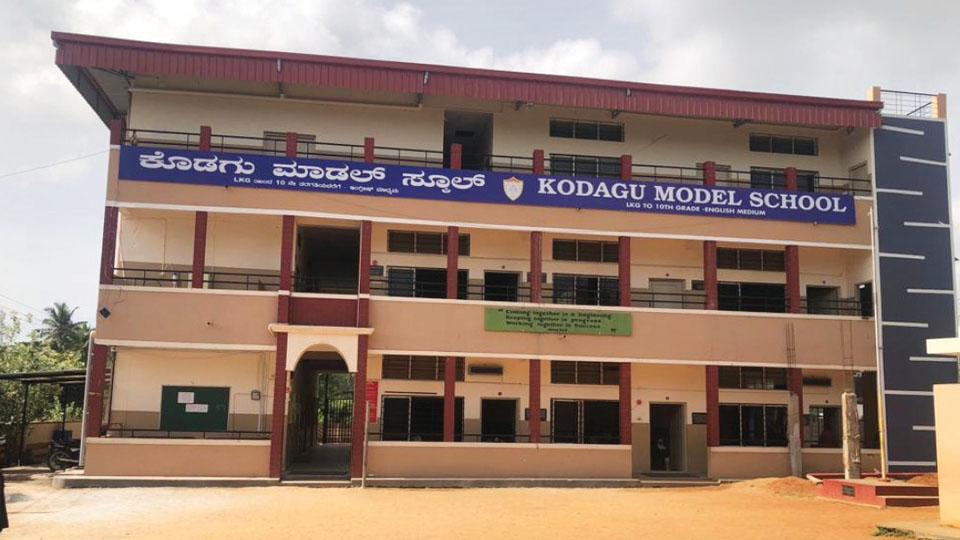
Kodagu Model School, Mysuru, promoted by Sri Kavery Kodava Association, Mysore East, has organised a Science Fair on Sept. 23 and 24 (Saturday and Sunday) at its campus in Vidyashankar-nagar, Mysuru.

This Science Fair will provide a platform for young minds to foster creativity, innovation and scientific temperament. It will  be an interactive forum where students can showcase their scientific prowess, exchange ideas and stimulate interest in the mysteries of science by displaying the science working models.

Vikram Muthanna, Managing Editor, Star of Mysore and Mysuru Mithra, will inaugurate the Fair on Sept. 23 at 10 am along with S. Praveen Kumar, Deputy CEO & Head Education – Swami Vivekananda Youth Movement and Puliyanda S. Devaiah,  President of Kodagu Model School.

Later, there will be a talk on the topic “What after completing grade 10 & 12?” by Shankar Bellur, Academic Coach for Career Guidance, at 2.30 pm. Parents and students of classes 9 to 12 can benefit from the session.

On Sept. 24 at 10 am, a live workshop on ‘Foldscope – An innovative way of preparing paper microscope’ for students of classes 8 to 10 will be conducted by Kollegala Sharma, retired Chief Scientist from CSIR -Central Food Technological Research Institute, Mysuru. This workshop will be conducted for parents’ along with their children.

Science Fair is open to all. Parents and students interested to participate in Career Guidance and Foldscope Live workshop may register their names on Mob: 63636-47704 or 98453-04360.

source: http://www.starofmysore.com / Star of Mysore / Home> News / September 22nd, 2023

Two students from Kodagu selected for NCSC

Two students from Kodagu selected for NCSC

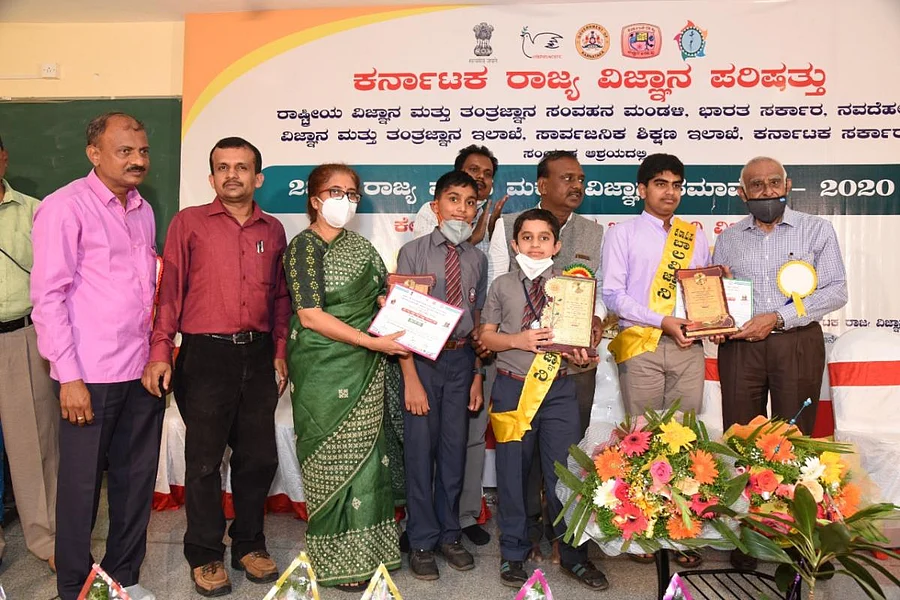
Two young scientists from Kodagu have been selected for the National Children’s Science Congress (NCSC).

National Council for Science and Technology Communication (NCSTC) and Rajya Vijnana Parishat had organised the 28th National Children’s Science Convention.

Owing to the Covid-19 pandemic, the convention was organised on virtual mode.

The selected students are C S Raghuvamshi and K K Mahin from Bharatiya Vidya Bhavan Kodagu Vidyalaya, said convention district coordinator G Sriharsha.

In the state-level junior-level competition held under the theme ‘science for sustainable living’, C S Raghuvamshi and team member N R Samanyu had presented a scientific paper on Shola forest in Kodagu. They prepared their study under the guidance of teacher M S Shruthi.

In the senior category, K K Mahin and team member Purab Ponnappa had prepared a scientific paper on ‘chemical insecticide is boon or bane’ under the guidance of teacher M Lohith Changappa.

Accordingly, Raghuvamshi and Mohin have been selected for the National Children’s Science Congress (NCSC), said Vijnana Parishat programme organiser T G Premkumar.

The state-level competition was held at Vijnana Bhavan in Bengaluru. Senior scientist Dr V K Athre Adamya and Adamya Chetana managing trustee Tejaswini Ananth Kumar felicitated the young scientists.

C S Raghuvamshi is the son of civil engineer C R Shivashankar and teacher P Sandhya while K K Mahin is the son of businessman Krishna Mohan and Sridevi.

Team members Samanyu is the son of artists Ram Gautham and Aruna, while Purab Ponnappa is the son of Mathanda Bab Devaiah and Ponnamma.

Owing to the Covid-19 pandemic, the competition was held on virtual mode. For the state-level contest, 10 junior scientists were selected from Kodagu.

The science Congress is organised to instil scientific temperament and develop creativity in children.

source: http://www.deccanherald.com / Deccan Herald / Home> India> Karnataka / by DHNS / August 23rd, 2021

Appointed As Visiting Fellow At National Institute Of Health

Dr. Cheranda Koushik Ponnanna has been appointed as a Visiting Fellow at the National Institute of Health (NIH), National Institute of Diabetes and Digestive and Kidney Diseases (NIDDK), Phoenix, Arizona.

He will be conducting his Post Doctoral Resarch on the Genetic Basis of Type 2 Diabetes and Obesity. He holds a Ph.D in Genetics from University of Mysore. He is the son of Cheranda Ravi Thimmaiah and Usha from B. Shettigeri, Kodagu.

source: http://www.starofmysore.com / Star of Mysore / Home> In Briefs / August 14th, 2023

Madikeri to get critical care center on KIMS campus

MP urges CM to release an additional sum of ₹70 crore for the 450-bed teaching hospital of Kodagu Institute of Medical Sciences.

Pratap Simha, MP, at the meeting on KIMS in Madikeri on Friday. Deputy Commissioner Venkatraja is also seen. | Photo Credit: SPECIAL ARRANGEMENT

Mysuru-Kodagu MP Pratap Simha on Friday urged Chief Minister Siddaramaiah to release an additional sum of ₹70 crore for the completion of a 450-bed teaching hospital for Kodagu Institute of Medical Sciences (KIMS) in Madikeri. A sum of ₹100 crore had been released for the hospital project and additional funds are essential for completing the works, he added.

Earlier, the MP held a meeting with the officials and doctors of KIMS on establishing a critical care center on the KIMS premises in Madikeri. The proposed center has been estimated to cost₹29 crore, he said.

Engineer Rajesh told the meeting that the critical care center has been proposed on 45-cent land on the KIMS campus and the tender process had also been done. He said the general wards of the teaching hospital of the KIMS are likely to be completed by November. The works need additional funds for completion, he said, adding that the critical care center will be completed in the next 15 months.

Mr. Simha told the officials to send the proposal on a critical care center to the government for the funds. MRI equipment for the teaching hospital and the mother and child hospital for Kodagu has become essential for improving public healthcare services, he added.

The hospital doctors and staff told the MP about the need for constructing quarters for the KIMS staff. In reply, the MP said suitable land for the staff quarters will be provided.

The concerned engineers told the meeting that the land on Murnad Road belonged to the KIMS and the same land parcel can be used for building KIMS’ staff quarters.

source: http://www.thehindu.com / The Hindu / Home> News> India> Karnataka / by The Hindu Bureau / July 28th, 2023

Dr Ramachandra Kamath receives best paper award

Madikeri : 

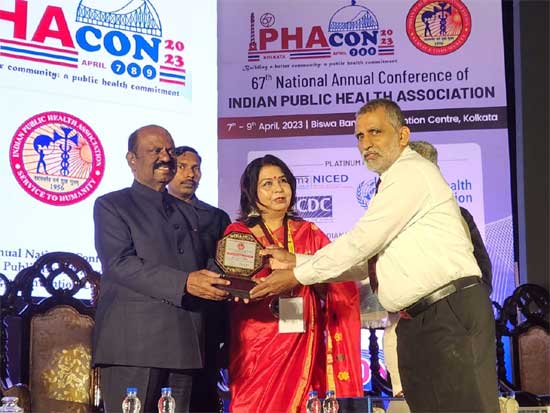
Dr Ramachandra Kamath, professor and head, department of community medicine, Kodagu Institute of Medical Sciences and visiting faculty, Edward & Cynthia Institute of Public Health received the Dr R N Roy best paper award from Dr C V Ananda Bose, Governor of West Bengal recently.

Dr Kamath received the award for his paper titled, ‘Assessment of health status and impact of pollution from thermal power plant on health of population and environment around the plant in Udupi district Karnataka’ published in Indian Journal of Public Health of the year 2022, Vol. 66, Issue 2.

source: http://www.daijiworld.com / DaijiWorld.com / Home> Karnataka / by Media Release / April 12th, 2023

Madikeri, Virajpet hospitals get hi-tech ambulances

Two hi-tech ambulances with one costing ₹42 lakh and another ₹17 lakh were handed over to the Intensive Care Unit of the hospital attached to the Kodagu Institute of Medical Sciences (KIMS) in Madikeri and Virajpet Government Hospital, in Madikeri on Thursday.

Mysuru-Kodagu MP Pratap Simha handed over the two ambulances.

The ambulance that was handed over to the district hospital (of KIMS) is an advanced one equipped to provide ICU care.

The MP said public healthcare was being upgraded providing the hospitals under the government set-up with advanced facilities. The Centre has decided to strengthen the public healthcare post COVID-19. The ambulances that were handed over today were part of the efforts.

He said the government has allocated ₹100 crore to Kodagu for increasing the beds at the district hospital to 450. The expansion of the hospital building is underway. Already, a women’s hospital with 150 beds has been given a start.

Kodagu will get all advanced healthcare services as a trauma care centre has also been sanctioned at a cost of ₹29 crore, he added.

MLAs Appachu Ranjan, K.G. Bopaiah and others were present.

source: http://www.thehindu.com / The Hindu / Home> News> India> Karnataka / by The Hindu Bureau / March 23rd, 2023