India’s High Range Coffee Curing is poised to become the first farm verified by the Rainforest Alliance to ship EUDR–ready coffee beans to Europe later this month.
The coffee farm partnered with the Rainforest Alliance to meet the necessary compliance requirements of the regulation.
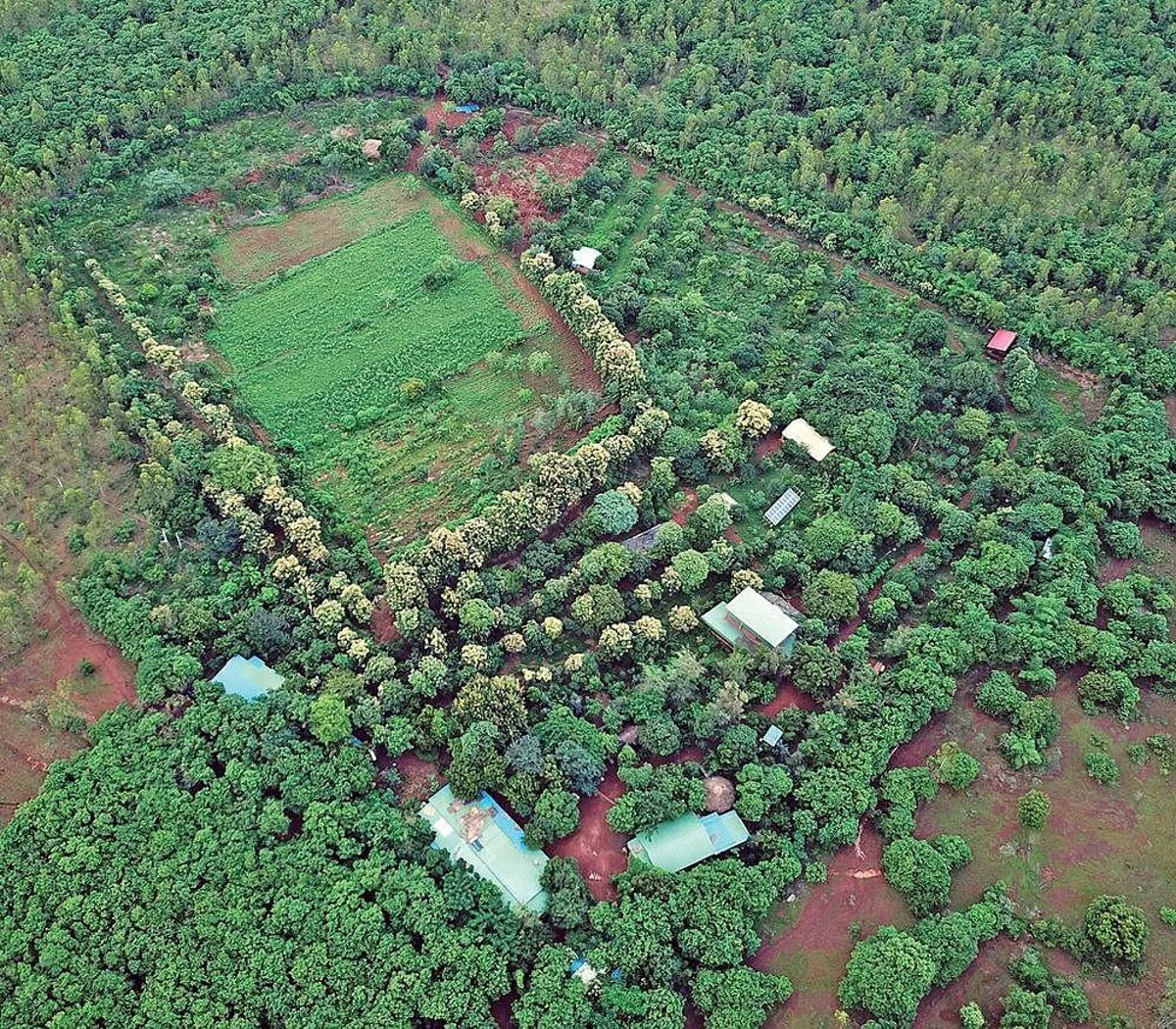
Established in 1995, High Range Coffee Curing is located in the Periyapatna and Kushalnagar Coorg districts, among 142 hectares of tropical forests, and is known for its quality beans.
The farm supplies coffee to leading global coffee brands, roasters and traders in India, including Nestle , Unilever, E-Com Commodities, Olam, Continental Coffee, Louis Dreyfus Company , Vidya Coffee and Allanasons.
EUDR-Ready Coffee
Zaidan M Saly, director of High Range Coffee Curing stated, “Implementing EUDR [EU Deforestation Regulation] posed significant challenges for our team, but with the invaluable guidance from Rainforest Alliance representatives in our region, we overcame them and gained confidence in the process.
“Their expertise made the seemingly daunting task entirely feasible, facilitating a smooth and successful implementation, which now not only guarantees adherence to EUDR regulations but also sparked a revolution in our approach to traceability.”
Rainforest Alliance certification enables coffee and cocoa farmers to opt in for EUDR-aligned criteria.
This allows companies to source from these farms, track ingredients along their supply chains, and leverage farm data to demonstrate compliance with the regulation’s deforestation risk assessment and mitigation requirements by the deadline, at no additional cost.
‘Sustainable Practices’
Miguel Gamboa, coffee sector lead at the Rainforest Alliance stated, “The EUDR represents an important step forward to shift the global coffee sector towards more sustainable practices.
“Yet, many smallholder coffee farmers need support to align with the requirements, including traceability, deforestation risk mapping, local laws, and practical and technical guidance on key environmental practices.”
The Rainforest Alliance has urged the EU Commission not to dilute or delay the legislation or postpone its deadline in response to calls from some companies and governments.
It has also called on companies not to scale back purchases from smallholder coffee farmers, but rather support them in meeting the deadline of this legislation.
Gamboa added, “We are also piloting a deforestation risk assessment offering for companies buying non-certified coffee and cocoa, which we plan to roll out more widely later this year.
“With this offering, we aim to support more companies in their journey to compliance, but more importantly, to also reach non-certified farmers so their products can still be sold on the EU market.”
source: http://www.esmagazine.com / ESM, European Supermarket Magazine / Home> Supply Chain / by Dayeeta Das / May 06th, 2024
The department had proposed for the release of Rs 8.38 crore as a drought relief fund to be distributed among the farmers of the district.
Image used for representational purposes only,(File photo | EPS)
Madikeri :
A total of 17,297 farmers across Kodagu have been distributed with the drought relief fund from the state. Sources confirmed that many other pending applications are still under scrutiny and will be disposed of shortly.
All five taluks in Kodagu were declared as drought-hit regions this year from the state and over 20,000 farmers from the district applied to avail compensation for the crop loss.
As per the applications received by the agriculture department, 7620.74 hectares of paddy farmland and 2170.36 hectares of maize farmland were affected by drought in total across all the taluks.
The department had proposed for the release of Rs 8.38 crore as a drought relief fund to be distributed among the farmers of the district.
However, applications of 17,297 farmers from the district have been approved so far in ten phases and they have been handed over the total drought relief fund of over Rs 2.83 crore.
Joint Director of the agricultural department, Somasundar confirmed that 17,297 farmers have received only part payment of the drought relief even as applications of 3,263 farmers are still under scrutiny and will be finalized shortly. While a few applications are pending due to technical errors, others are under verification process.
Over Rs 5.54 crore funds are still pending to be distributed to the farmers as per the memorandum submitted to the state from the department.
The Ponnampet taluk is the worst hit region in the district as over 3825 hectares of paddy land has been reportedly affected by drought. A total of 5155 farmers from the region applied for drought relief.
In Somwarpet taluk, 1161 hectares of paddy and 470 hectares of maize farmlands have been affected by drought even as over 7,000 farmers applied for the compensation.
1972 hectares of paddy field in Madikeri and 650 hectares in Virajpet were hit by drought even as 1700 hectares of maize farmland was hit by drought across Kushalnagar taluk.
DC Venkat Raja confirmed that Rs 2.83 crore funds have been so far released to farmers and this includes a minimum compensation amount of Rs 1,000 and a maximum compensation of Rs 2,000 to the affected farmers.
source: http://www.newindianexpress.com / The New Indian Express / Home> Karnataka / by Prajna G R / May 29th, 2024
I’m from Coorg, also known as Kodagu. It’s a small, beautiful district in Karnataka (which is in South India). Last month, I had the pleasure of going back there for a few days after a rather long absence. Among many other things, it provided me an opportunity to learn about how the coffee growing works from the perspective of a business. The last few years, have been very difficult for the coffee industry in Coorg.
Many of my relatives are involved in growing coffee and most of what I want to discuss here is likely familiar knowledge to most planters. My primary aim with this article is to organize knowledge that many people already have in their heads — and in doing so make the problem of raising revenue for coffee growers easier to tackle.
Furthermore, I’m by no means an expert in this. Please feel free to comment or respond to me with any critique of the ideas outlined here.
The Obvious Problem, and its implications
The obvious problem is simple. Coffee prices are low, and labour cost is increasing so it is difficult to make profit. On average, the estates just about break even (this is anecdotal, I don’t have stats for it if anyone does, please get in touch!). Many people rely on the one bumper crop every 7 or 8 years in order to build savings and capital to reinvest into the estate.
Naturally, this means that there is a spread — some estates make losses, some make profits. People who make losses end up having to sell their estates and this is slowly leading to a dilution of the culture in Coorg, which from my personal perspective, is a very sad thing.
Today, increasing the profit for planters is an issue that many people are trying to tackle both individually as well as in small groups. There are many ways to increase profits available to planters. The large categories are as follows:
Increase Quality
Eg: Improving the percentage of high quality beans.
Increase Yield per Acre
Eg: Reduce loss of produce to pests etc.
Reduce operating costs
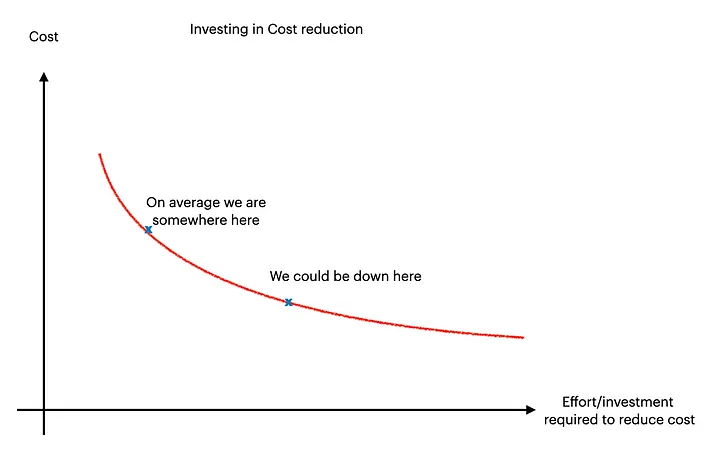
Eg: Use either better practices or investment in technology to reduce cost of growing coffee in all stages.
Improve marketing and go direct to consumer
Eg: Sell coffee on Amazon and advertise on Facebook
Of these, I believe the area which could produce the best results is to improve marketing and go direct to consumer i.e. currently there is a knowledge gap that is preventing planters from getting good prices for their crops, and this is the root issue.
To explain why, we need to visually organize a coffee business and discuss the impacts of each possible way to increase profit.
Deciding on the correct course of action
Let’s go through each one.
Increasing Quality
The hypothesis here is “increasing the quality of coffee produced is the best way to increase profit”.
Of course better coffee will fetch better prices. Also, no matter what other actions are taken, coffee will need to be at least a threshold quality because of how it connects to “reputation”. Soomanna from HumbleBeanCoffee was kind enough to tell me about how important it is to keep abreast with increasing global standards of coffee, stagnation here has a lot of downside risk and is definitely important to focus on, and they’re doing an amazing job from what I can tell.
It’s also true that the taste of coffee is highly subjective and it’s my opinion that there may be a consensus on what “bad coffee” is, but the “best coffee” has no right answer. So the way I see it right now, investing on improving quality is likely to have diminishing returns after a point — where based only on quality alone (and not also other actions) it will take more and more effort (and hence cost) to continue to increase quality. There’s a point when you are already making very good coffee where you should start seeing diminishing returns on further investment if this is not paired with marketing.
Increasing Yield per Acre (increase quantity)
The hypothesis here is “increasing the yield per acre of the estate is the best way to increase profit”.
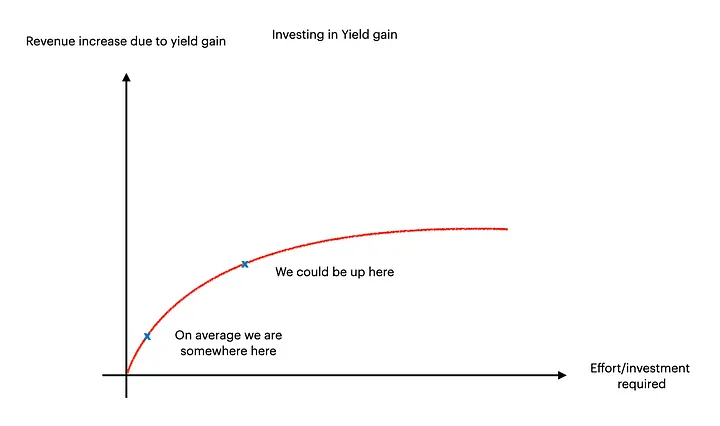
Similarly to quality, again we have a situation where it will cost increasingly more, and at some point just be impossible to increase yield per acre significantly.
It’s likely that this will require significant capital to even begin tackling (especially on the route of automation and machinery).
If better practices are easy to implement, then they should definitely be put in place — but we still run up against this wall that at some point the costs are just not going to reduce any further.
Marketing and branding
Many people are already taking initiative to improve marketing and in some cases even sell directly to customers. This is possible now because targeted online advertisements have reduced the upfront investment required to reach out to people who are interested in coffee specifically. Indeed, I came across several Indian coffee brands where previously only Coffee Day seemed to exist.
To be clear, there some hurdles to get through in order to successfully do this, because it requires getting into aspects of the coffee supply chain.
Improving knowledge on how to properly roast, package, and deliver
Having enough scale to actually benefit from the increased reach
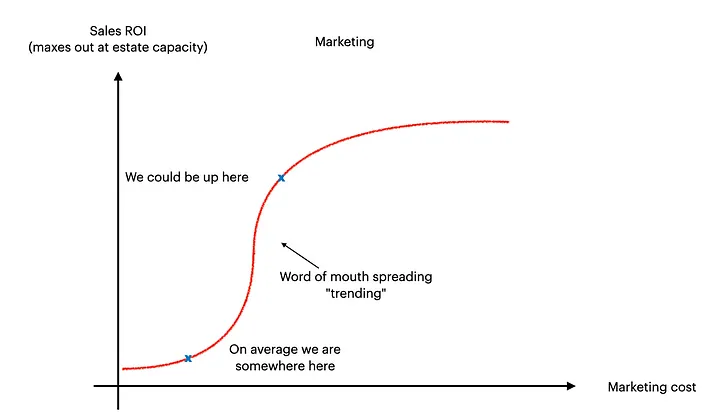
However, the upside is also very great. Here’s how one can generally expect marketing to impact sales.
It’s important to mention again that basic quality standards must also be in place — marketing coffee that doesn’t taste good might get an initial wave of customers, but people aren’t going to keep buying it.
In my personal opinion, the marketing solution is very underutilized in Coorg right now. Part of it is possibly because the younger Coorgs who have experience in digital marketing and the like, aren’t currently very involved in coffee.
A Way Forward
Ideal goals and reality are different, but my personal experience is that setting lofty and idealistic goals is a great way to start looking for solutions. So I’m going to try to paint that ideal picture and if it makes sense then perhaps we can try to move toward it. Even if it doesn’t work out completely, hopefully the idea can leave us better off than where we are today.
Coorg is a district of great pride and heritage. Given the right contexts, Coorgs can be very passionate about this: just look at the Hockey Festival!
Can we create a similar excitement about Coffee? That sort of passion is what comes before great successes.
Coming together as a community behind the shared banner of “Coorg Coffee” can allow us to reap the greatest reward from any marketing and branding effort. To create a competitive vibe like the Hockey Festival we could do something similar like having multiple family-blends where many estates from the same family pool together to create their own unique blend. This could then be sold in a packing like this which allows both unified brand identity as well as individual expression.
To top it all off, having a yearly Kodava Coffee Festival would certainly keep people awake with excitement.
Coming together as a community to create an image for Coorg Coffee, and a process to back it can overcome the main challenges. Sharing knowledge within the community gives us a larger base to experiment and hence improve processes we use for things like roasting. Delivering the coffee under a shared brand allows us to overcome the limits on quantity that small estates have if they try to market individually.
I must restate: I’m no expert in coffee. There will be innumerable challenges on this road, many of which you have faced and know far better than I do. However, if we could come together as a community with the goal of making coffee growing more lucrative for the whole district, I’m sure we would meet with more success than having multiple disparate efforts to do the same.
Do comment! I know a lot of people feel strongly about this. It would be amazing if there was a healthy discussion in the comments!
source: http://www.medium.com / Medium.com / Home / by Sharat Chinnapa / published in The HumAln Blog / May 23rd, 2021
Forest, Environment and Ecology Minister Eshwar B Khandre said Rs 100 crore has been allocated to undertake a sapling plantation drive for this financial year.
Image used for representational purposes only.
Bengaluru :
Forest, Environment and Ecology Minister Eshwar B Khandre on Tuesday said the forest department’s revenue collection has increased and so has recovery of encroached land.
Khandre told the media that revenue has increased from Rs 263.41 crore in 2019- 20 to Rs 417.84 crore in 2023- 24. Reserved forest area has increased by 3395.73 hectares in 2023- 24, and protected area has increased by 184.52 hectares. The department has also recovered 2602.30 acres of encroached forest land worth Rs 1500 crore.
Khandre said the highest land recovery has happened in Kolar division, of 1392.41 acres of encroached forest land. Also, 5.50 acres have been cleared in Madikeri and 17 acres in Bengaluru’s Kothanur forest division. Around 7,500 acres of forest land in Kodagu, Chamarajanagar and Mysuru which were leased to industries and estates by the British will be recovered as soon as their lease period ends. He said companies which occupy these lands have earned crores of rupees.
The minister said Rs 100 crore has been allocated to undertake a sapling plantation drive for this financial year. In the last fiscal, 5.40 crore samples were planted across the state and a three-month audit is being done to know how many of them have survived.
On the task of filing up vacant posts in the department, Khandre said there are around 6,000 vacancies and steps are being taken to fill them up. In the first phase, 310 posts of watchers have been filled up and the process of recruiting 540 guards is under way. Directions have also been issued to conduct quick written exams to fill up posts in 10 forest zones.
source: http://www.newindianexpress.com / The New Indian Express / Home> Karnataka / by Express News Service / May 29th, 2024
Club Mahindra, the leading brand of Mahindra Holidays & Resorts India Limited, proudly announces the prestigious recognition of its Madikeri resort as India’s first triple net-zero-rated resort by the esteemed Indian Green Building Council. The Triple Net Zero acknowledges Net Zero Energy, Net Zero Water, and Zero waste to landfill. The rating sets a benchmark on par with international standards thus making Club Mahindra Madikeri achieve a significant milestone in sustainable hospitality. To achieve carbon neutrality by 2040 Club Mahindra is committed to innovating and inspiring change.
More about Net Zero Certifications:
• Net Zero Energy: This indicates the resort generates as much energy as it consumes. Through optimum utilization of Solar Energy and energy-efficient infrastructure, the resort focuses on reducing its carbon footprint.
• Net Zero Water: This is a remarkable achievement in water management. It promotes water conservation and security. Club Mahindra’s water conservation initiatives demonstrate its commitment to sustainable practices. Measures include rainwater harvesting, efficient irrigation systems, and water-saving fixtures.
• Zero Waste to Landfill: TÜV SÜD certified the resort for Net Zero Waste in FY23. Comprehensive waste management practices, including segregation at source, composting, recycling, and other measures, help Club Mahindra achieve zero waste
The resort nestled in the picturesque region of Coorg, Karnataka is a beacon of luxury, comfort, and responsible tourism, thus contributing to preserving the planet. The resort blends seamlessly with its lush surroundings, supporting local plants and animals, covering a vast area of 126464.26 square meters, with buildings occupying just 22257.7 square meters. Further, incorporating dense vegetation, insulated roofs, and using local materials, the resort has reduced the surrounding temperature by approximately 3°C. Additionally several other energy-saving initiatives such as Motion sensor-controlled washrooms, Regulated Geysers, Timer controlled external lights, Heat Pumps, and BLDC fans have resulted in an impressive energy performance index of 74.4 kW per m² per year, surpassing the Bureau of Energy Efficiency’s benchmark of 313 kW per m² per year. Moreover, over 70% of the water is recycled and reused for operational purposes at the resort further emphasizing the resort’s commitment to sustainability.
Additionally, the Mahindra Hariyali project has led to the planting of thousands of trees, enriching the region’s natural habitat and attracting diverse bird species. This initiative fosters a thriving ecosystem, enhancing the visitor experience with its biodiversity.
Julian Ayers, Chief Resort Officer, Mahindra Holidays and Resorts India Limited, said, “At Mahindra, we recognize the crucial importance of advocacy and partnerships in driving the swift shift towards a sustainable future. Our journey towards a greener future began in 2008. Since then, we’ve embraced a ‘Planet Positive’ approach to sustainability. We’re committed to making our operations eco-friendly, helping industries reduce their carbon footprint, and revitalizing nature. Our unwavering commitment to habitat protection and biodiversity at Madikeri has earned us recognition and honour from the IGBC, reflecting our steadfast dedication. We embrace a global responsibility for safeguarding diverse ecosystems and to achieve carbon neutrality by 2040, we’re committed to innovating and inspiring change within our operations and beyond, as part of Mahindra Holidays’ sustainability journey.”
Mahindra Holidays is India’s first hospitality company to join the global campaign RE100 and EP100. To achieve its zero-energy goal, Club Mahindra implemented an 804 kW solar rooftop photovoltaic plant and solar carports in parking areas. In water conservation efforts, over 70% of water is recycled and reused, with natural streams diverted to a 380 kL capacity pond and 14 Rainwater Harvesting Pits constructed. For zero waste, the resort utilizes a bio-digester to convert food waste into biogas, reducing waste and LPG costs
With these remarkable achievements, Club Mahindra continues its steadfast journey towards sustainability and biodiversity conservation. By doing so, it provides its members with unparalleled access to some of the most breath-taking and exotic destinations both in India and across the globe.
This summer, treat yourself to a remarkable culinary adventure at the Bengaluru Marriott Hotel Whitefield’s Coorgi Food Festival. Under the expert guidance of Chef Smitha Kuttayya Boppanda, a master of spice, embark on a gastronomic journey to the lush landscapes of Coorg with a menu that brilliantly showcases the region’s bold and aromatic spices.
Kick off your dining experience with delightful starters such as the fragrant Chekke kuru fry, the tender Mathi meen barthad, and the unique Kadambutt stuffed with bamboo shoots. Cleanse your palate with the refreshing nallamalu kanni soup and the comforting aadkaal soup.
Dive deeper into the culinary heritage with signature dishes like the iconic Pandi curry, the aromatic Meen curry, and the robust Keema curry. These are thoughtfully paired with cherished dishes like Cheemen pulav, Mutton pulav, otti, Nool puttu, or Thaliyaputt.
For those who prefer vegetarian fare, there is an impressive selection of dishes including the rich Avare kuru curry, the enticing Baimbale curry, and the seasonal kaad Mange curry, accompanied by delightful sides like paalputt and double beans pulav.
This May, gather your loved ones and head to Bengaluru Marriott Hotel Whitefield for a mesmerizing exploration of Coorg’s kitchen traditions with Chef Bopanna’s exceptional culinary creations. Experience the essence of Coorg, where each dish celebrates the region’s flavors and heritage.
source: http://www.travelandtourworld.com / Travel and Tour World / Home> Hotel News / May 09th, 2024
Now, travelling to holy places Talacauvery andBhagamandala becomes hassle-free.
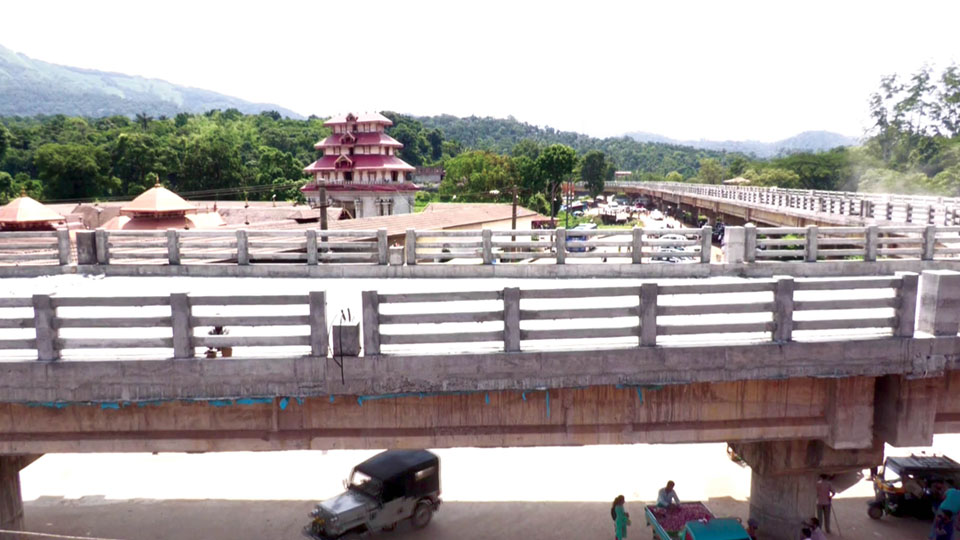
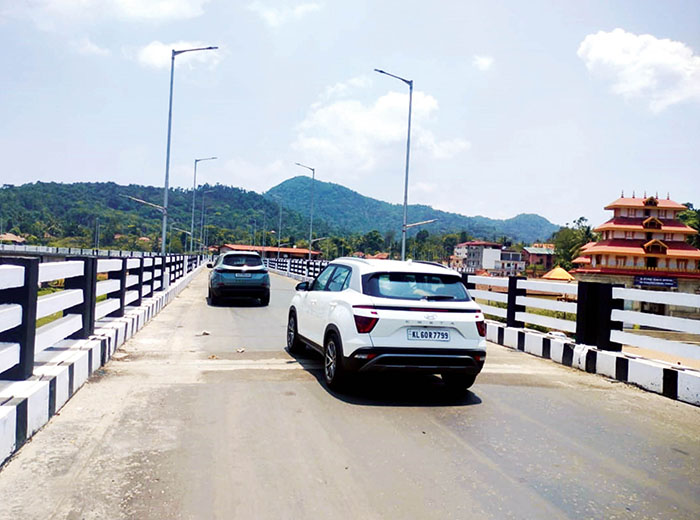
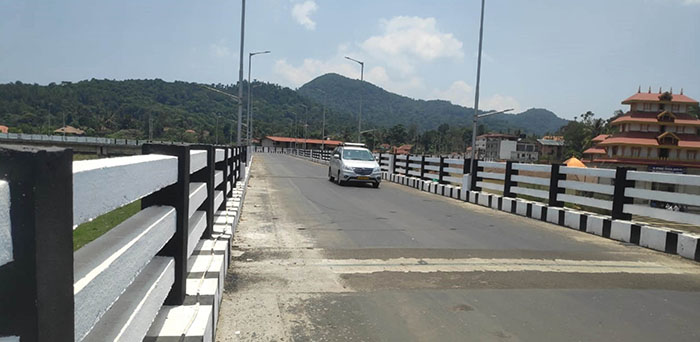
In what is considered a significant relief for travellers and residents, commuting to holy places like Talacauvery and Bhagamandala will now be hassle-free as the authorities have opened the Bhagamandala flyover — Kodagu’s first flyover project — for public use.
The State Government had allocated Rs. 28 crore for the project, which was executed by Cauvery Neeravari Nigam Limited (CNNL). With the completion of the flyover, villagers surrounding Bhagamandala and Talacauvery can now travel with ease, even during heavy rainfall, without fearing floods. However, there has been no official inauguration due to the Model Code of Conduct, which remains in effect until June 4.
No fear of floods
During the rainy season, Brahmagiri Hills, Talacauvery, Korangala, Cherangala, Bhagamandala and surrounding areas experience heavy rainfall, leading to an overflow of water at Triveni Sangama, the confluence of the Cauvery, Kannike and Sujyothi rivers.
This overflow often disrupts vehicular movement on Madikeri-Bhagamandala-Talacauvery and Bhagamandala-Ayyangeri-Napoklu roads. Additionally, heavy rains sometimes result in the isolation of Bhagamandala, effectively turning the town into an island for many days.
The flooded roads render them impassable for vehicles, causing significant inconvenience for residents who struggle to access essential items and groceries. School children are unable to attend classes due to the flooded roads, exacerbating the situation. The completion of the flyover has alleviated these challenges, bringing much-needed relief to the residents of Bhagamandala and surrounding areas.
880 metres-long flyover
The newly-constructed flyover serves as a vital link between the Bhagamandala entrance gate and Talacauvery road, providing connectivity to Napoklu as well. Spanning 880 metres in length, it comprises 36 pillars and includes a 200-metre connecting road with underground drainage (UGD) facilities.
Designed to accommodate vehicles weighing over 60 tonnes, the authorities have set a speed limit of 40 kmph. Streetlights have been installed along with rainwater drainage pipelines and the painting works have been completed.
Causes for delay
Despite receiving approval from the Siddaramaiah-led Government in 2018, the project faced delays due to challenges such as land acquisition, relocation of electric poles and tree removal by the Forest Department. The floods and COVID-19 lockdown further contributed to the sluggish progress of the project.
The flyover construction has been finished ahead of this rainy season. Vehicles of various types and sizes can now traverse the flyover smoothly, ensuring a hassle-free journey for those heading towards Bhagamandala-Talacauvery and Bhagamandala-Napoklu, said Harinarayana, Flyover Project Director.
source: http://www.starofmysore.com / Star of Mysore / Home> Feature Articles> Top Stories / May 06th, 2024
India’s High Range Coffee Curing is poised to become the first farm verified by the Rainforest Alliance to ship EUDR–ready coffee beans to Europe later this month.
The coffee farm partnered with the Rainforest Alliance to meet the necessary compliance requirements of the regulation.
Established in 1995, High Range Coffee Curing is located in the Periyapatna and Kushalnagar Coorg districts among 142 hectares of tropical forests and is known for its quality beans.
The farm supplies coffee to leading global coffee brands, roasters and traders in India, including Nestle, Unileverr, E-Com Commodities, Olam, Continental Coffee, Louis Dreyfus Company, Vidya Coffee and Allanasons.
EUDR-Ready Coffee
Zaidan M Saly, director of High Range Coffee Curing stated, “Implementing EUDR [EU Deforestation Regulation] posed significant challenges for our team, but with the invaluable guidance from Rainforest Alliance representatives in our region, we overcame them and gained confidence in the process.
“Their expertise made the seemingly daunting task entirely feasible, facilitating a smooth and successful implementation, which now not only guarantees adherence to EUDR regulations but also sparked a revolution in our approach to traceability.”
Rainforest Alliance certification enables coffee and cocoa farmers to opt in for EUDR-aligned criteria.
This allows companies to source from these farms, track ingredients along their supply chains, and leverage farm data to demonstrate compliance with the regulation’s deforestation risk assessment and mitigation requirements by the deadline, at no additional cost.
‘Sustainable Practices’
Miguel Gamboa, coffee sector lead at the Rainforest Alliance stated, “The EUDR represents an important step forward to shift the global coffee sector towards more sustainable practices.
“Yet, many smallholder coffee farmers need support to align with the requirements, including traceability, deforestation risk mapping, local laws, and practical and technical guidance on key environmental practices.”
The Rainforest Alliance has urged the EU Commission not to dilute or delay the legislation or postpone its deadline in response to calls from some companies and governments.
It has also called on companies not to scale back purchases from smallholder coffee farmers, but rather support them in meeting the deadline of this legislation.
Gamboa added, “We are also piloting a deforestation risk assessment offering for companies buying non-certified coffee and cocoa, which we plan to roll out more widely later this year.
“With this offering, we aim to support more companies in their journey to compliance, but more importantly, to also reach non-certified farmers so their products can still be sold on the EU market.”
source: http://www.esmmagazine.com / ESM- European Supermarket Magazine / Home> Supply Chain / by Dayeeta Das (headline edited) / May 06th, 2024
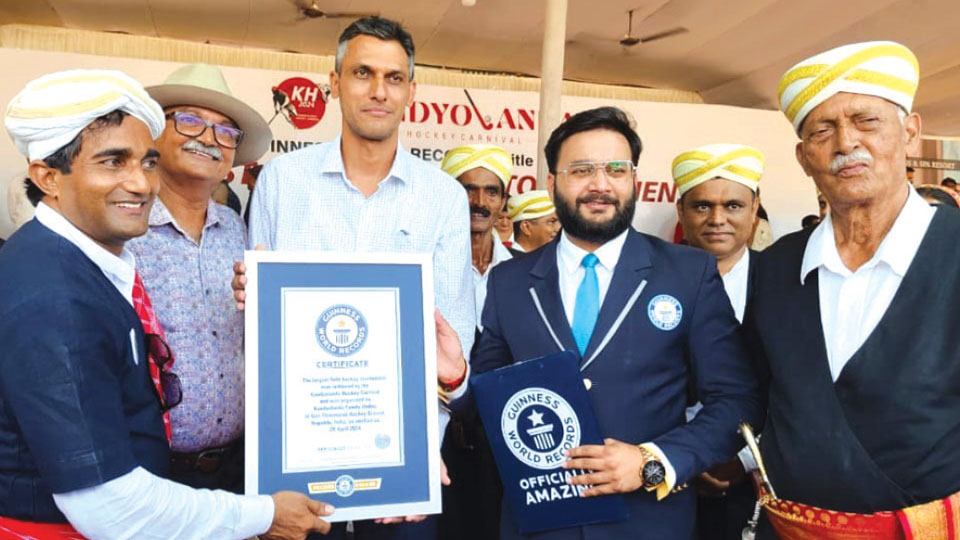
Earns Guinness World Record for largest field hockey tournament
The annual Kodava family hockey tournament, hosted this year by the Kundyolanda family, has made history by earning itself a Guinness World Record for being the largest field hockey tournament.
Originating in 1996 with just 60 teams, the festival has grown exponentially, boasting 360 teams participating this year with over 4,200 players, including men, women and children of all ages.
The achievement of this Guinness World Record is a testament to the dedication and passion of the Kodava Hockey Academy, which has elevated the Kodava hockey tournament to a global level.
The certificate from the Guinness Records Society was presented by Swapnil Dangarikar, official adjudicator and spokesperson for Guinness World Records based in London to Pandanda K. Bopanna, President of the Kodava Hockey Academy.
This year’s tournament also featured various activities such as a food fair, financial literacy camp, health care camp and marathon, organised by the Kodava families, which garnered widespread attention.
source: http://www.starofmysore.com / Star of Mysore / Home> Sports / April 29th, 2024
The 24th Edition of the Kodava Hockey Festival 2024, organised by the Kundyolanda Family under the auspices of the Kodava Hockey Academy, concluded its month-long (Mar. 30 to Apr. 28) Hockey Carnival at the General Thimayya Ground at Napoklu Karnataka Public School in Kodagu district last evening.
The registration of 360 teams marked a historic milestone in the tournament’s history, setting a new record for participation.
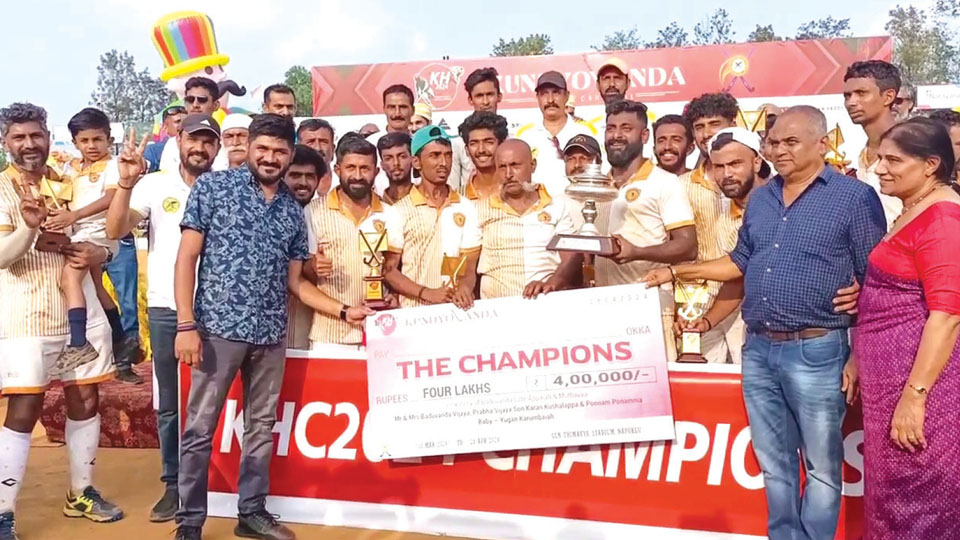
This year’s tournament witnessed the Chendanda family emerging as champions. In a thrilling match between Nellamakkada and Chendanda, Chendanda clinched victory in a nail-biting tiebreaker, with a final score of 8-7.
The Chendanda team has now earned the prestigious title of Kodava Family Hockey Champions for the third time.
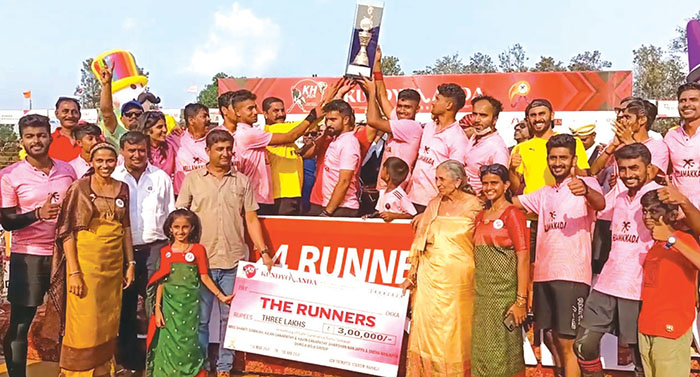
Team Nellamakkada, which settled for runners-up position, seen displaying the trophy and the cheque for Rs. 3,00,000.
Somaiah from Nellamakkada was bestowed with the Man of the Match award. The goal scorers for Chendanda were Nikkin Thimmaiah in the 30th and 38th minutes, while Rohan scored for Nellamakkada in the 44th minute and Mac in the 54th minute.
The Kulletira family secured third place in the tournament by defeating the Kuppanda (Kaikeri) team with a score of 3-2. This match was also decided through a tiebreaker.
The victorious Chendanda team was awarded the rolling trophy and a cash prize of Rs. 4 lakh, while the runners-up, the Nellamakkada team, received a trophy along with Rs. 3 lakh in cash. The third-place holder, the Kulletira team, was awarded Rs. 2 lakh in cash, and the fourth-place team, Kuppanda, received a cash prize of Rs. 1 lakh.
Last evening, a crowd of over 30,000 witnessed the thrilling finale, packing the gallery to its brim. Hockey enthusiasts from across Kodagu as well as from places like Mysuru and Bengaluru stood under the hot sun to witness the matches.
Despite the searing heat, their enthusiasm remained undeterred. Originating in 1997 from the visionary insight of the late Pandanda Kuttappa, affectionately known as Kuttani, a former State league referee, the Kodava Hockey Festival has evolved from its humble beginnings with 60 teams to become a grand event managed under the auspices of the Kodava Hockey Academy.
Following the grand finale and prize distribution ceremony, traditional Kodava music filled the air and the crowd, including men, women and children adorned in traditional attire, danced to the beats, bringing the tournament to an exciting close.
The Kodava Hockey Family Cup has transformed the tradition of families coming together to play hockey into a vibrant celebration akin to a festival.
For the past 24 years, not only the Kodava community but the entire district’s diverse populace, hockey enthusiasts and sports aficionados have eagerly awaited the unfolding of the Kodava Hockey Family Cup.
source: http://www.starofmysore.com / Star of Mysore / Home> Sports / April 29th, 2024
WELCOME. If you like what you see "SUBSCRIBE via EMAIL" to receive FREE regular UPDATES.
Read More »