Kodagu Model School celebrated its 14th Annual Day on Dec.17 at Jilla Shikshakara Sadhana near Milk Dairy, Mysuru.
N.A. Malleshwari, BEO, Mysuru Rural, Rajini Annaiah, Corporator, H.R. Mahadevaswamy, Cluster Resource Person and Dr. M.R. Jayaprakash, retired Principal, were the chief guests.
The celebrations started with the lighting of the lamp by the guests. School President P.S. Devaiah presided. The annual report was readout by Mary Anitha, Head Mistress of the School.
The guests gave away the prizes to the students for their outstanding performance in various curricular and co-curricular activities. The SSLC topper of the academic year 2021-22 K.
Chandana Urs was felicitated by the BEO.
Speaking on the occasion, Malleshwari appreciated the performance of the School in academic and non-academic activities while Rajini Annaiah said that the School was a boon to Alanahalli cluster.
Dr. Jayaprakash said that parents and teachers must equally share the responsibility of instilling values in children at a very young age. The students gave an enthralling cultural performance and the function came to a close with the National Anthem.
source: http://www.starofmysore.com / Star of Mysore / Home> News / December 22nd, 2022
The annual get-together of Sri Kaveri Kodava Association, Mysuru-East, was held at its premises in Vidyashankar Layout in city on Nov. 27. Rangayana Mysuru Director Addanda C. Cariappa was the chief guest. Kodava Samaja Mysuru President Mechanda M. Shashi Ponnappa was the special invitee. Association President Puliyanda S. Devaiah presided over the function.
Three senior members — Kalappanda B. Vishwanath, Kanjithanda K. Aiyappa (ex-President) and Chowrira K. Seethamma (Chairperson – Academic Council) — were honoured by the Association for their selfless contribution.
Also, three members from the Association — Ittira Dr. Priya Uthaiah, Pattamada Dr. Lavya Muthamma and Manduvanda Kumari Ektha Ganapathy — were felicitated for their outstanding achievement in the field of education.
Students who achieved academic excellence were also honoured by the Association. Members gathered in large numbers and made the event a grand success.
source: http://www.starofmysore.com / Star of Mysore / Home> News / December 14th, 2022
From 2000, Cheshire Homes India Coorg has been helping children & adults with intellectual disabilities.
Chairperson Gita Chengappa
Madikeri :
‘Save Soil’, ‘Swachh Bharat’, ‘Atmanirbhar…’ are not just grand slogans here. They are constants that motivate the functioning of Cheshire Homes India Coorg (CHIC), in Pollibetta of Kodagu district. An institution for the specially-abled, it caters to the needs of children and adults with intellectual disabilities – a majority of whom are from economically weak backgrounds.
Started in the year 2000, the centre has helped shape the lives of people with special abilities by providing special education and vocational training for free. Students are provided sustainable education and are involved not just in readying themselves to face a not-so-inclusive society but are also taught to lead a sustainable, eco-friendly life. Apart from special education, vocational training involves recycling plastic, clothes, paper and manufacturing eco-friendly value-added products.
“The institution is run under the umbrella of Cheshire National Council, but we are an autonomous body. The institution supports the strengthening of the National Council so that we have a stronger body for disability in India,” explained Gita Chengappa, chairperson of the institution.
The centre receives support from the state government. “The state releases Rs 19 lakh annually and supports us. However, on an average, the institution requires Rs 40 lakh to Rs 50 lakh, which is raised through various donors. The institution caters mostly to people from very poor economic backgrounds,” added Gita.
Community acceptance While most special schools are residential, CHIC is a day care centre. Each day, five school vans (hired on rent) leave the institution in five different directions. Designated pick-up spots have been drawn up and students are brought to these spots by their parents, where they are picked up and dropped back after school. “We spend over Rs 13 lakh for the van facility annually. Yet, we don’t want to make this a residential institution. We want the community, parents and society to be responsible for children with special abilities,” she opined.
The institution started off with just six students with special abilities. During the initial period, the institution involved itself in Community Based Rehabilitation (CBR) and travelled the length and breadth of Virajpet taluk. “We went door to door, looking for children with special abilities and convinced parents not to keep these children hidden but to admit them to the institution. It was then run in a small building in Pollibetta,” she recalled.
vice-chairperson Punita amaswamy and honorary secretrary Asha Subbaiah
The CBR programme was continued for eight years, and the institution currently operates in a spacious location with improved facilities, with 68 specially-abled students who are diagnosed with intellectual disabilities.
“After Covid-19, the number of students dwindled as many fell sick. But we continued to cater to their needs and are still providing them the required medication,” she said. The institution helps them avail of government schemes for the specially-abled. During the pandemic, the institution supported their families with provisions and monetary help.
Driving force The centre has six special educators. Shivraj, a specialist in visual impairment and mental retardation, heads the team as headmaster. Apart from the special educators, the centre has appointed vocational trainers. “The students are being skilled under different campaigns. While an inclusive society is still a distant dream, we are helping to skill them to earn a living within the boundaries of our institution,” she explained.
Single-use plastics, used papers and newspapers, used clothes and other recyclable plastic waste are turned into value-added products. Children with even severe impairment are involved in vocational activity which can help shape a sustainable, eco-friendly society. Used plastics are cut into pieces and woven (with help from a few women) into aesthetic mats. Used papers are cut into small pieces and processed into eco-friendly reusable paper, which is turned into paper bags and other items, and decorated with indigenous paintings.
From coasters to pillow covers, the talents of the specially-abled not just earn them a good living but help raise funds for the institution. The centre also has a ‘Jumble Sale Room’ where used clothes and other used items are stored and later sold. “We try unique methods to raise funds and build the institution,” explained Gita. The centre has a handloom unit operated by women from economically weak backgrounds, who are paid for their work. They also raise funds through handloom sales.Having addressed the needs of specially-abled people across Virajpet taluk, the institution is slowly expanding to the borders of Somwarpet taluk.
SPECIAL TOUCH
Institution equipped to support needs of specially-abled, has ‘tactile paving’ that helps guide the visually impaired
Toilets fabricated to meet the needs of specially-abled
Institution has full-time physiotherapist and psychiatrist
Helps recycle and upcycle plastic and paper waste, provides means of sustainable earnings to
the specially-abled
Centre has a ‘care unit’ where people with severe intellectual disabilities are cared for and nurtured
Projects of Central government are implemented to empower the specially-abled
source: http://www.newindianexpress.com / The New Indian Express / Home> Good News / by Prajna GR, Express News Service / December 04th, 2022
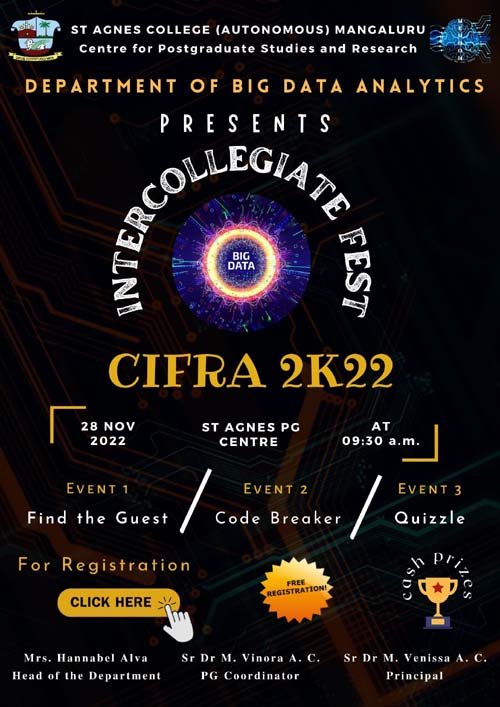
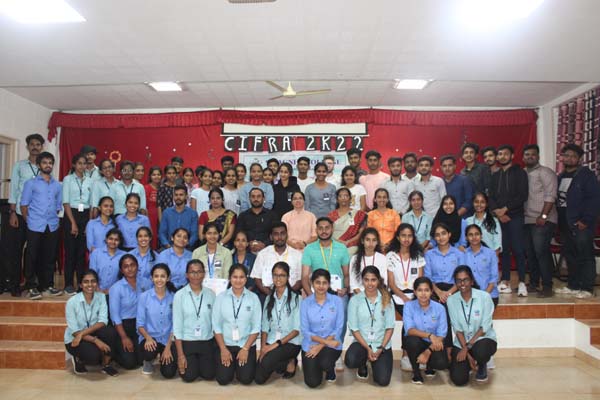
The PG department of Big Data Analytics at St Agnes College (Autonomous) Mangaluru organized an intercollegiate technical fest, CIFRA, on November 28. The fest was held in celebration of Big Data day and brought together a community of students and technologists. The fest was inaugurated by the principal Sr Dr M Venissa A C and the PG co-ordinator Sr Dr M Vinora A C.
Students from various colleges in Karnataka enthusiastically participated in the fest. The technical fest included three major events and each comprising three rounds.
The first event was based on the fundamentals of Computer Science and Data Science, the second event was a programming language-based event, and the third event was a technical quiz.
The participants had the choice of selecting a programming language for the event. The judges for the events were C G Thomas, Senior Software Engineer, Novigo Solutions, Mangaluru, and Akanksha Jadhav, Analytics Engineer, Riskonnect Services Pvt. Ltd.
The observers for the events were Seementhini Fernandes and Nelson Fernandes, assistant professors at St Agnes College.
The valedictory programme included felicitating the winners and the participants.
The first prize was won by the team from Field Marshal K M Cariappa College, Madikeri, the second prize by the team from Vivekananda Degree College, Puttur and the third place was secured by Vijaya College, Mulki.
source: http://www.daijiworld.com /Daijiworld.com / Home> Campus Beat / by Media Release / December 01st, 2022
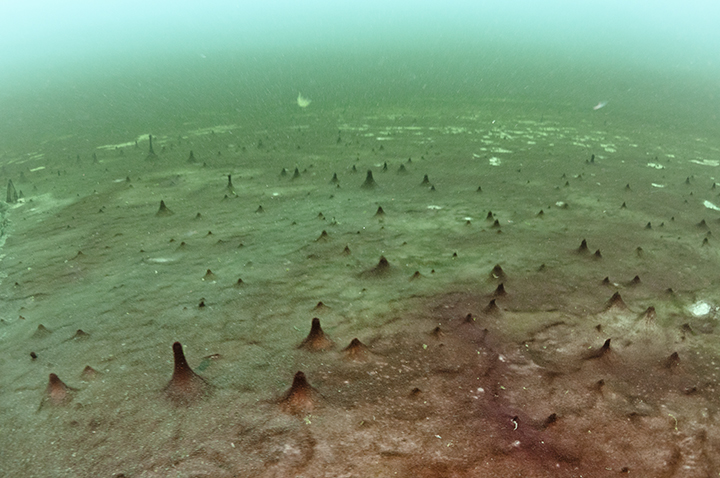
These microbial mats in a Lake Huron sinkhole have finger-like protrusions caused by a buildup of methane gas in small pockets beneath them. Image: Thunder Bay Marine Sanctuary
By Daniel Schoenherr
Special microbial mat systems in Alpena, Michigan, are helping scientists search for extraterrestrial life.
“It’s so different, and feels otherworldly,” said Stephanie Gandulla, a diver with the National Oceanic and Atmospheric Administration’s Thunder Bay Marine Sanctuary. She has sampled the mats near the sinkholes on the lake’s bottom.
You may have seen a microbial mat before — the green algae on wet rocks at the beach is an example.
Algae’s green color comes from chlorophyll — a substance that uses sunlight to turn carbon dioxide into energy. Carbon dioxide and oxygen support most of life on Earth.
But under special conditions, like those at three sinkholes just 2½ miles east of Alpena, primitive forms of microbes called cyanobacteria can survive without either of them.
These are white, not green, and they get energy from chemicals in the water.
“They are everywhere, but they are incredibly hard to find,” said Bopaiah Biddanda, a biologist with Grand Valley State University’s Annis Water Research Institute, who has been studying them for 20 years.
Such mats are normally found in ocean waters over 32,000 feet deep, but they can be found only 80 feet below the surface of what is known as Lake Huron’s Middle Island Sinkhole.
The sinkhole’s biologically extreme environment can help simulate sample collection in extraterrestrial worlds where life is based on similar chemicals. A new study by Biddanda models scenarios where robots could analyze material beneath the water of other planets. It’s based on the work in Lake Huron.
The study focuses on two methods: suction devices for soft mats and coring devices for hard mats.
Click on the photo below to watch a video about these mats:
The sinkholes near Alpena provide sulfuric, oxygenless groundwater that creates the conditions needed for the mats to grow. Filaments of cyanobacteria drift together, creating a wispy white-purple flow.
“It almost looks like a mirage,” Gandulla said.
It could be a long time before the experience from sinkholes in Lake Huron will be used to explore the potential of life on planets elsewhere, but Biddanda’s exploration is yielding other finds now.
Recently, for example, his team found an explanation for the mats’ mysterious ability to change colors overnight.
The purple and white cyanobacteria travel upwards to capture energy from the top of the mat, according to the study. During the day, microbes with color capture the small amount of sunlight reaching the seafloor with chlorophyll.
As the sun sets, the white microbes move to the surface of the mat to absorb chemicals in the sulfuric water for their energy. This continuous, vertical shift in microbes causes patches of the mat to change between purple and white in a daily cycle.
The microbial mats thrive off a special soup of chemicals in the groundwater, but changes in land use could disrupt it in the future.
The Thunder Bay sanctuary is constantly combating such threats to coastal ecosystems such as the one near Alpena.
“Development might choke off the water supply,” Biddanda said.
The marine sanctuary offers educational programs and tours to K-12 students and operates a welcome center year-round.
“We work together to protect it as a community,” Gandulla said.
Scientists hope to sample the oceans of Europa, a moon of Jupiter, for microbes with robots pioneered in Lake Huron. Image: NASA
The characteristics of Middle Island Sinkhole’s cyanobacteria could hold the key to much more than planetary exploration. They could lead to advances in other scientific fields, such as evolutionary biology and medicine.
“We have a library of pharmaceutical value here,” Biddanda said “This could help us down the road.”
And, he noted that they look cool: “There is something fascinating and mesmerizing about these colorful mats.”
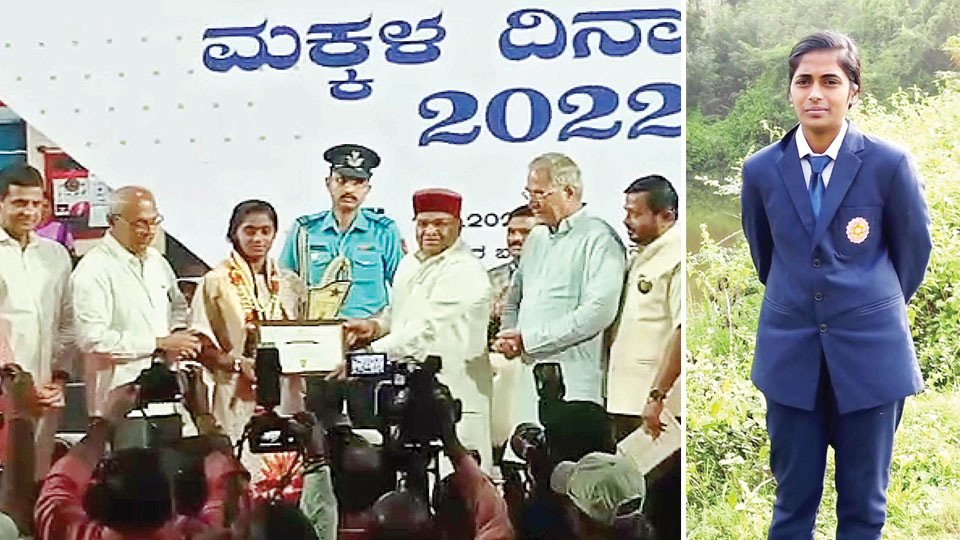
A girl, who had saved an elderly man from drowning in a lake, has been honoured with Keladi Chennamma Bravery Award by Governor Thaawarchand Gehlot at the Children’s Day function held at Jawahar Bal Bhavan in Bengaluru on Nov. 14. The bravery award is instituted by the Department of Women and Child Development.
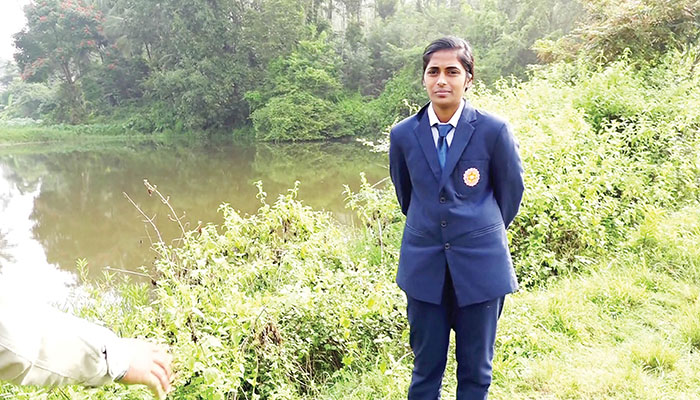
The girl, who bagged the award is Namratha, daughter of Shabareesh and Shantha couple of Seegethodu in Gonikoppal of Kodagu district.
A student of Sarvadaivatha PU College at Arvathoklu in Gonikoppal.
Namratha, on Nov. 6, 2021, was walking towards her home after finishing her college, when she noticed an elderly man drowning in the lake, next to her house. Without thinking twice, Namratha jumped into the lake and dragged the elderly man out of the water, thus saving his life.
The officials of the Department of Women and Child Development, who took notice of this bravery act, recommended the name of Namratha for the Keladi Chennamma Bravery Award.
Namratha has dedicated the award to her parents, College Principal and her School Head Master. Her mother Shantha said she was very happy for her daughter who has saved a life. Namratha has participated in National-level throwball and also bagged many prizes.
source: http://www.starofmysore.com / Star of Mysore / Home> News / November 16th, 2022
In 2018 Kodagu was struck by a rain disaster never heard of or seen before causing landslides, devastating floods and destroying houses and properties of the people, specially in North Kodagu area of Madikeri and Somwarpet Taluks.
Thousands of people were homeless and had to take shelter in schools and public buildings turned into Gruel Centres (Ganji Kendras), where free food was provided. It was a heart-rending sight of hapless, suffering people.
The Government and many NGOs and social organisations rushed to help the victims of the disaster. Among them was also the Bharatiya Vidya Bhavan (BVB), Madikeri Kendra. September 2018 was the month, BVB launched its Bhavan’s Project Coorg to contribute its mite to help the victims of the great natural disaster. This month BVB is completing four years of its service to a section of the victims which is being continued successfully even now and will continue.
For the Bhavan’s Project Coorg initiative, BVB chose one village known as Kalur village which was badly hit with landslides resulting in loss of houses and cultivated lands — coffee estates and paddy fields. It was the worst disaster in the history of Kodagu.
Naturally, several families were in deep shock and limbo as their source of livelihood was completely destroyed. The future looked bleak. How long could they continue in the rehabilitation (relief) camp?
At such a dismal situation, BVB extended its helping hand to the women of Kalur village by taking them under the protective wings of Bhavan’s Project Coorg. It was an initiative to provide both psychological and financial stability to them.
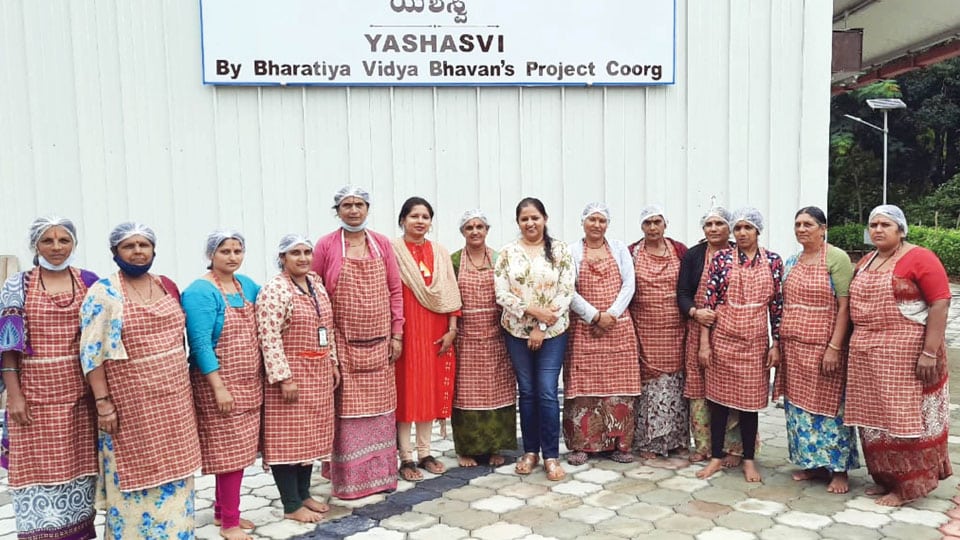
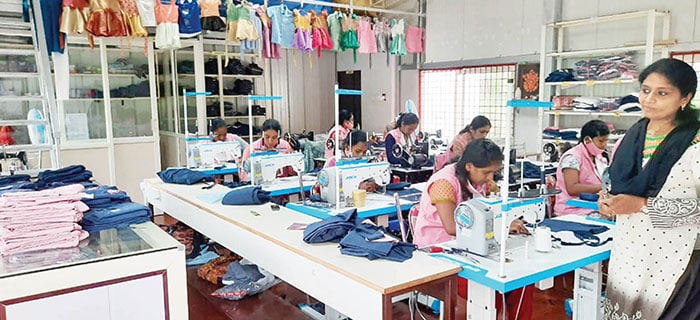
To begin with, BVB started skill development programmes by imparting training in food processing and tailoring to the agricultural women of Kalur village under a programme known as Yashasvi. BVB took 65 women of the village to train them in food processing and tailoring.
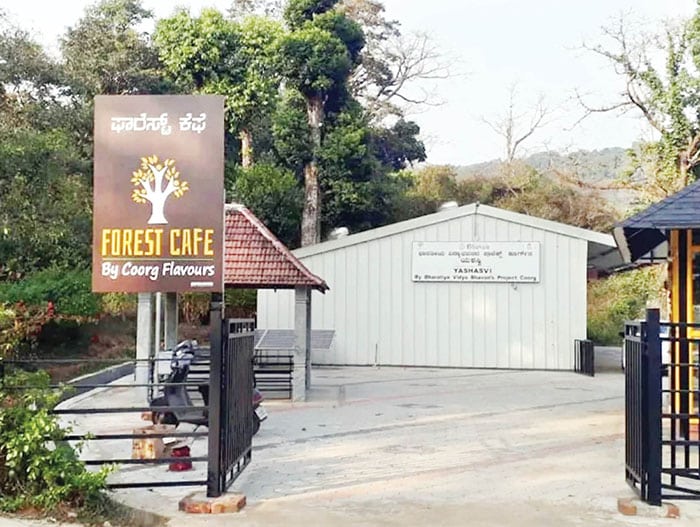
After training, they were provided work on a regular basis and they began to produce a line of packaged high quality masalas, apparently with a Coorg flavour, under the brand name, “Coorg Flavours.”
Simultaneously, Tailoring Unit was set up with sewing machines and required facilities, which now undertakes to produce school and NCC uniforms, uniforms required for Government Departments and private organisations. Every woman working here earns sufficient income because of BVB’s initiative.
Today, Food Processing Unit makes different products like home-made chocolates, masalas etc. BVB’s Project Coorg has two stores, which helps sustaining this project, at Madikeri, capital of Kodagu district. Thus BVB made self-reliance possible for hapless women.
Support from people is needed to make this initiative grow and sustain.
For more information, contact BVB Madikeri Hon. Secretary Balaji Kashyap on Mob: 98458-31683.
source: http://www.starofmysore.com / Star of Mysore / Home> News / By K.B. Ganapathy,Chairman, BVB Mysuru / September 15th, 2022
An advocate by profession, he guides candidates appearing for competitive exams
Mysore/Mysuru:
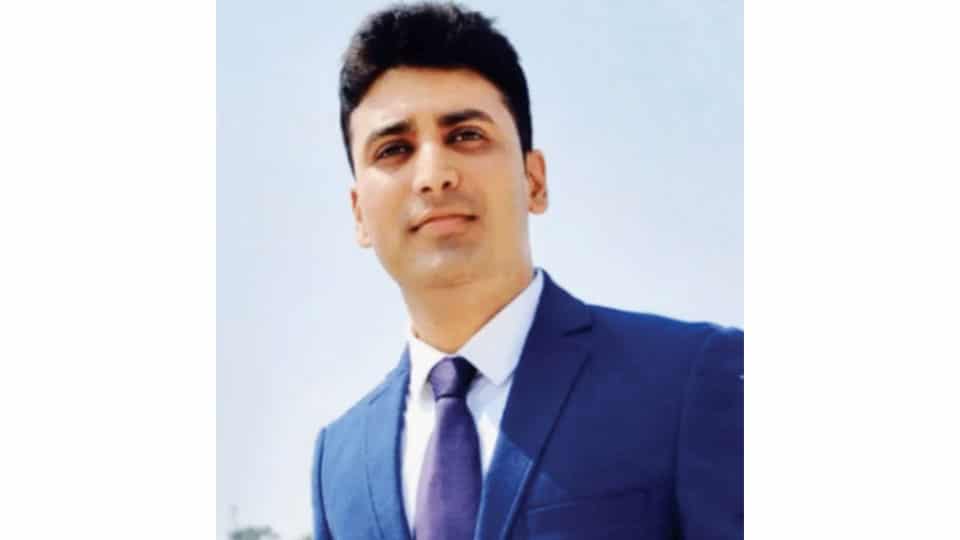
Mundanda Rajesh Ponnappa has cleared IAS by securing 222nd rank in UPSC exams, the results of which were announced on May 30.
Rajesh Ponnappa is the son of Jaya Poovaiah and Sudha (Thamane – Sadera). Hailing from Nelaji in Kodagu, they are now settled in Bengaluru. Sudha is an advocate while Poovaiah is a coffee planter. His younger sister Dhanyata is a journalist.
Ponnappa did his Schooling and Pre-University course at Army Public School, Bengaluru. He then completed B.E. in Mechanical Engineering from Visvesvaraya Technological University topping the Varsity.
He joined Karnataka State Law University again to top the University. He continued studying by completing Post Graduate Diploma course at National Law School of India University in Bengaluru. Presently, he is an advocate by profession in Bengaluru.
Ponnappa appeared for UPSC exams under the guidance of Dr. Arjun Bopanna of Namma KPSC Academy / Bangalore IAS Academy to clear with 222nd rank. He has also competed in Equestrian Sports at National-level. Under the guidance of his mentor and aunt Periyanda late Baby, wife of Appaji, Ponnappa has written and published three books on law. He writes articles for newspapers on how to prepare for competitive exams and guides candidates aspiring to appear for competitive exams.
source: http://www.starofmysore.com / Star of Mysore / Home> News / June 01st, 2022
Category : FACE TO FACE / Author : Sowmya Dechamma
Professor and Head Centre for Comparative Literature, University of Hyderabad
Q. Could you tell us a little bit about your area of research, and why it is of particular interest to you? What has your journey been like?
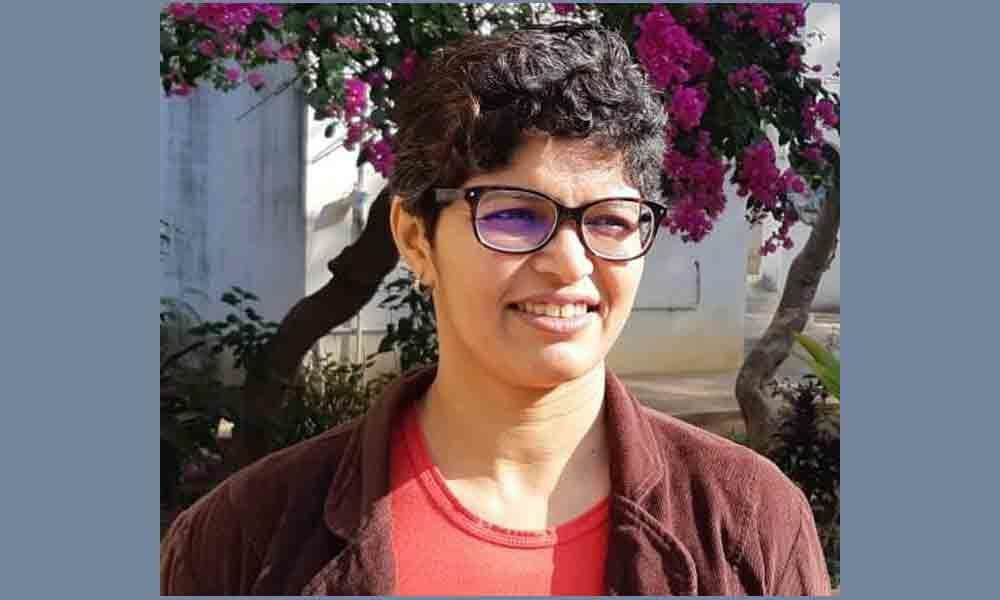
Currently, I am interested in and working on the languages of the minority. While this term ‘languages of minority’ itself demands some explanation, my interest in this springs from the fact that I speak one such language, Kodava, a language that is spoken by many ethno-linguistic minorities in Kodagu, Karnataka. Although I have been interested in the politics of languages ever since I can remember, I began working in this area for the last 5 years or so, especially because the language discourse is so dominated by English Vs. Indian Languages, Hindi Vs. Other Languages, debates around ‘national’ language’ — in which these languages of minorities have become almost invisible, although the number of such languages are many. I also work on Translation Studies and related areas. Language and translation for me are inseparable from other factors that are so decisive in our lives. So, my attempt is to understand how caste, gender, religion, class and other factors frame our histories alongside language and translation.
Q. Coming particularly to the question of language, there has been a concerted attempt to impose certain languages – for instance, the assumption that Hindi is the ‘mother tongue’ and ‘national language’ of the country, neither of which is true. But even on regional levels, there may be further levels of stratification and domination of some languages over others. How does this work, and what has been the result of such policies?
You are right. I had written elsewhere as to how this one nation — one-language, one nation – one religion kind of idea is actually new even to European nations. The nationalization of particular languages in Europe is an exercise in what is known as European modernity. Despite our critique of colonialism, it is ironic that nationalists here in India subscribe to this one nation – one language / religion policy. This as you mention is replicated at the regional levels as well. I am vary of using the term regional, I think Kannada nationalism, Malayalam nationalism, Tamil nationalism are nationalisms that pretty much follow the same pattern, in different contexts. I find that in Karnataka, because Tulu, Konkani and Kodava speakers wield some kind of political pressure, these 3 languages are recognised at some level. But there are innumerable other ‘small’ languages that do not get any recognition in the public at all. The worst scenarios are in Tamil Nadu and Kerala where language and intellectual chauvinism has had huge implications for speakers of smaller languages, (more often than not from the Adivasi communities). This obviously points to the situation of the people and the conditions they live in, not just of the language.
Q. The relationship between the ‘written’ and the ‘spoken’ is often discussed in terms of languages – where only languages with a script are seen as legitimate while others are dubbed dialects or even ‘broken’ languages. How do you see this in terms of your own language, Kodava?
This distinction between a ‘written’ and ‘spoken’ one is so popularized that we forget that almost all languages are spoken and have survived in the spoken form since speech has evolved. Except perhaps in the case of Sanskrit and Latin which are ‘dead’ in their spoken versions and survive only in their written form. So, one has to remember that written is a privileged form that has been associated with powers that began with record keeping, religion, surveillance, in their monarchical and now nation-based contexts. Throughout history, only a miniscule of the population (not more than 1%) have had access to writing. Many productive communities never required the act of writing but have used memory-based performative acts for transmission of knowledge and survivals.
Yes, as long as I can remember, when I say I speak Kodava, people ask “Does Kodava have a script?” This again is a notion that wrongly connects a language with a written script. If we pay attention we realize that most European languages, be it English, Spanish, French, German use the Roman script and this is true for India as well. Hindi, Gujarati, Marathi, Bengali and almost all Indo-Aryan languages use the Devanagari script.
Q. You have been associated with a vibrant and politically diverse campus, HCU. It has also been a space of institutional discrimination and a fightback against this, as in the case of Rohith, Senthil and others. How has this shaped your experience and approach as a teacher and also a member of the academic community?
It has been a learning experience throughout my journey in Higher Education. All the movements you mention have made many of us more aware of the backgrounds students come from and how we need to fine-tune our pedagogy into one that places students at the centre. It also points to the problems with the manner we understand and functionalize the idea of ‘merit’; who is a ‘good’ student and who is not. I think as teachers what we need to focus on is how we shape our curriculum and how we engage with that curriculum and students. Teaching cannot separate itself from the vagaries of our lives and we need to address our experiences in the classroom and outside. It is a lesson we are still learning.
Q. The recent NEP-2020 also had sparked controversy due to its focus on Sanskrit and active ignorance of other languages of cultural and literary value such as Arabic. Do you see this merely as a failure of policy or as reflective of something deeper?
Absolutely. Although the NEP mentions institutionalising ‘mother tongues’, what it means by mother tongue is itself not clear. And how do we plan for the training and required infrastructure for teaching in multiple mother tongues in a classroom? How do we accommodate without appropriating languages like Gondi, Chenchu, Ho, Irula, and such?
Needless to mention, languages like Arabic, Persian, and Urdu which have had a rich history on lines with Sanskrit but different from the ones mentioned above find no place. This only strengthens our argument that it is not language per se, but the people and the history of the language that the NEP and by extension, the government is uneasy about. Languages therefore cannot be thought of in a vacuum, but will have to see how they mutually shape histories, politics, and communities.
Q. Finally – the pandemic is something we cannot escape when we talk about education or pedagogy. What has your experience been, whether as a scholar or a teacher? How have your students coped with the immense challenges and difficulties of it?
As a scholar, teacher, and as a parent, this pandemic has taught us many things. I am acutely aware of how I am able to work with my own children, teaching them a wide range of things — from cooking, gardening, playing sports and academics — all this despite the constant anxiety of our friends and family being ill and sometimes dying. This in itself is distressing because most of my students are undergoing stress, some have lost their dear ones and many do not have the means to access digital education. We have been trying to reach out to students through various means, to enable them both academically and personally. But the anxieties are real and it is not easy to cope. From women students being pressurized to get married, from having no access to digital means, living in a one-room house and sharing one smartphone among siblings for online classes, having to take care of many household responsibilities including financial, having to deal with almost an impersonal mode of pedagogy, what we call academics is undergoing a turbulent phase. I only hope this will make many of us reflect on the state of education in India and push towards an equitable public education that is holistic.
source: http://www.auramag.in / Aura / Home / July 2021
WELCOME. If you like what you see "SUBSCRIBE via EMAIL" to receive FREE regular UPDATES.
Read More »